

















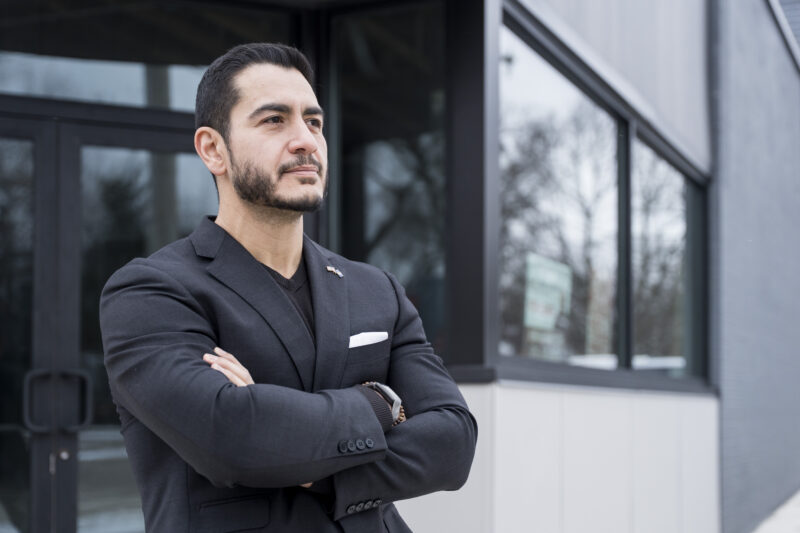


















In an interview with leftist podcasters Matt Bernstein and Emma Vigeland, the Michigan Senate candidate backed Israel’s access to Iron Dome systems, suggested Palestinians should also have them
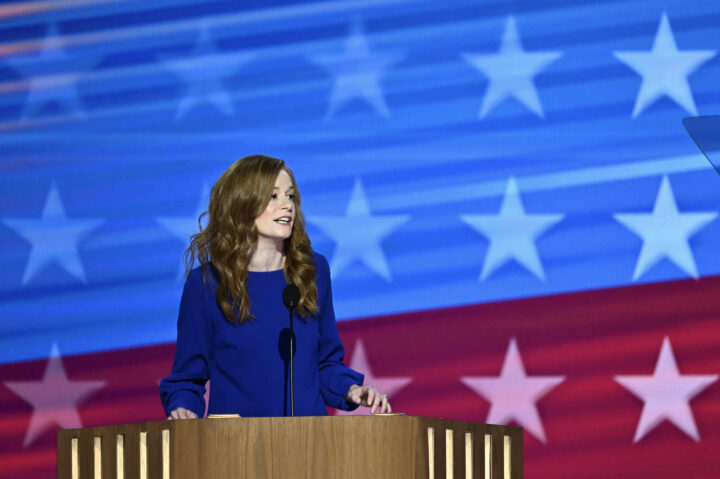
MANDEL NGAN/AFP via Getty Images
Michigan state Sen. Mallory McMorrow speaks on the first day of the Democratic National Convention (DNC) at the United Center in Chicago, Illinois, on August 19, 2024.


 Add JewishInsider on Google
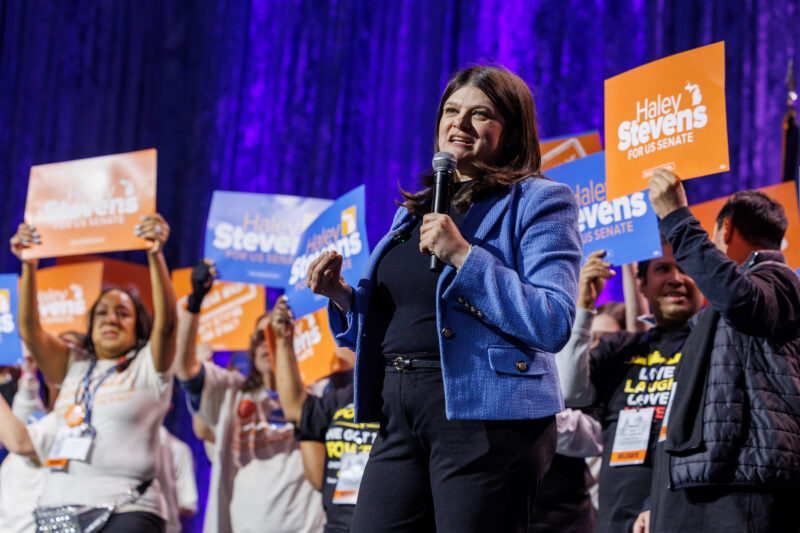
In the tight Michigan Senate race, state Sen. Mallory McMorrow has tried to present herself as a middle-of-the-road Democrat, ideologically situated between Abdul El-Sayed, an anti-Israel progressive, and Rep. Haley Stevens (D-MI), who has been endorsed by AIPAC.
In a recent interview with leftist podcasters Matt Bernstein and Emma Vigeland, McMorrow continued to position herself as an objective observer of the Israeli-Palestinian conflict — and said it’s worth discussing whether the Palestinians should also have access to the Israeli-developed Iron Dome missile-defense technology, which the U.S. partially funds for Israel.
Bernstein, the host of the queer political podcast “A Bit Fruity,” questioned McMorrow about why she supports Israel’s access to the life-saving Iron Dome systems, arguing that it empowers Israel to attack Palestinians without risk of harm to its own population, which is protected by the systems.
While highly effective, the Iron Dome does not provide complete protection and Israelis have continued to be killed and wounded throughout the conflict.
“I don’t think anybody should live in fear of being bombed or killed. I would look at: How do we support defensive systems for Palestinians? How would we support defensive systems for Lebanese?” McMorrow said. When Vigeland sarcastically asked if the Palestinians should get their own Iron Dome, McMorrow said maybe.
“Let’s talk about that as a conversation,” McMorrow said. “I mean, the horror of living in fear of being bombed constantly. Let’s work with the outcome of how do we end the violence, period?
Then backing away from that, how do we protect people?”
She added that she wants to get to a place where Iron Dome systems are “not needed, period, for anybody.”
McMorrow’s interview with Bernstein, which was released on Monday, was initially canceled — according to Bernstein, who said in a post on X earlier this month that her team withdrew after the podcast host told them he wanted to talk about foreign policy — but then rescheduled after Bernstein publicized the cancellation.
Bernstein’s questions to McMorrow reflected his own anti-Israel worldview. McMorrow responded by reiterating her opposition to sending financial aid to Israel, a position that she said has evolved as even Israeli Prime Minister Benjamin Netanyahu now says he wants to end U.S. aid.
“I would support Israel continuing to be able to purchase systems like the Iron Dome defensive systems, but I think it’s in the best interest of the United States in reducing that aid and allowing Israel to do that on their own,” said McMorrow. “I do not support the Netanyahu government. I think that they have continued to push well beyond what is proportionate, what is rational in response to the Oct. 7 attacks, in a way that is horrifying to watch.”
McMorrow said she would have voted with the 40 Senate Democrats who supported a measure last month that sought to block some arms sales to Israel.
“Let’s acknowledge how stunning it is that a year ago that number was significantly smaller than it is today. My views on this have evolved because the reality on the ground has evolved,” said McMorrow.
Mallory McMorrow: "I would have voted alongside the 40 out of 47 senators who voted in the past Sanders' resolution blocking arms sales" to Israel.
— Jewish Insider (@jewishinsider) May 19, 2026
"My views on this have evolved because the reality on the ground has evolved," she said.
Read more about how Michigan Senate… pic.twitter.com/og2dKQ5kIv
When Bernstein and Vigeland pressed McMorrow to describe Israel’s actions in Gaza as a genocide, she said she believes it meets “the legal definition” of the word. But she added that she doesn’t like to use it because of Jewish constituents’ “personal visceral reaction” to the word, due to family members lost in the Holocaust. And avoiding the word, McMorrow said, is a way to build consensus and not alienate voters in a swing state, even as she uses sharply critical language to describe Israel’s actions.
“There is no doubt that war crimes have been committed. There is no doubt that the pain and suffering at the vast expense of our taxpayer dollars, Matt, to your point, that we continue to pay for this, needs to end,” McMorrow said.
Bernstein: "Do you believe Israel has committed — and is committing — a genocide?"
— Jewish Insider (@jewishinsider) May 19, 2026
McMorrow: "I do believe that it meets the [legal] definition."
"What I also heard in response," the Michigan Senate candidate said, "from many of my constituents who had family that they lost in… pic.twitter.com/xCDX2WugoA
“I’m asking for the trust to represent 10 million people in a very diverse state that is a purple state that could very easily go to the Republicans,” added McMorrow, referring to “the goal that I think all of us on this call share: to keep a state like mine together and to not let this issue tear people, apart because if we let it tear us apart, we get [Republican Senate candidate] Mike Rogers. [Donald] Trump gets a win.”
Bernstein has more than 400,000 subscribers on YouTube and 2.2 million followers on Instagram.
‘We won’t support a Democrat who doesn’t represent the views and values of the vast majority of American Jews,’ Halie Soifer said
MANDEL NGAN/AFP via Getty Images
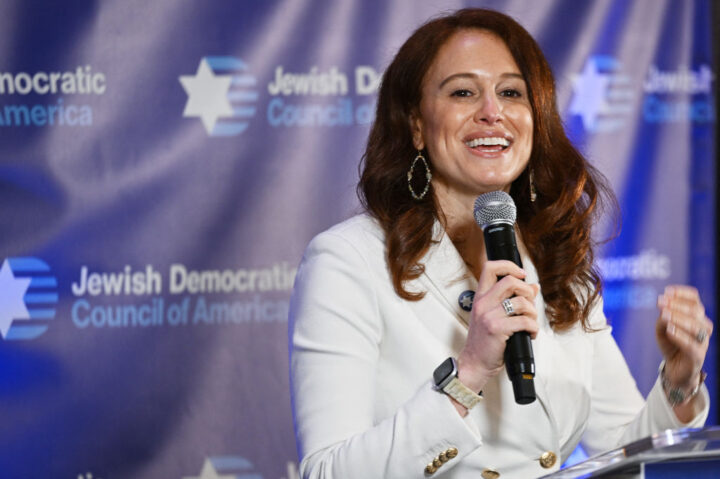
Jewish Democratic Council of America CEO Halie Soifer in Washington on May 24, 2023.
The Jewish Democratic Council of America is not ready to endorse Graham Platner, the controversial presumptive Democratic nominee in Maine’s Senate race, said Halie Soifer, the group’s CEO.
“We won’t support a Democrat who doesn’t represent the views and values of the vast majority of American Jews,” Soifer said in a statement. “JDCA has endorsed more than 120 candidates across the country who are fighting for the issues Jewish Americans care about and standing against antisemitism. It’s those many Democrats who have our backs, and we’ll have theirs as they work to defeat Republicans aligned with this White House whose views are antithetical to our values.”
Soifer additionally told The Forward on Thursday that Platner’s record of incendiary past comments and personal controversies are “reasons for concern” about his candidacy, saying that the far-left insurgent would first need to clarify his views to receive possible consideration from the group.
Reached by Jewish Insider on Thursday, Soifer confirmed JDCA’s position on the race but declined to comment further.
JDCA, a leading Jewish Democratic group, typically endorses most Democrats in major federal races, especially closely contested ones like the Senate seat in Maine.
The group had backed Maine Gov. Janet Mills in the June primary to unseat Sen. Susan Collins (R-ME). But Mills, the establishment favorite, said Thursday that she was suspending her campaign due to a lack of financial resources, clearing the way for Platner to secure the nomination in a race viewed by Democratic leaders as key to regaining control of the upper chamber.
Previously, JDCA had expressed criticism of Platner after it was revealed that he had a Nazi tattoo on his chest for nearly two decades. He has since removed the tattoo and claimed he was unaware of its links to Nazism until recently, even as a former acquaintance told JI that he had long known the icon represented a skull-and-crossbones known as a Totenkopf, adopted by an infamous SS unit.
“Hateful rhetoric and Nazi symbols must have no place in the Democratic Party, the Republican Party, or anywhere in our politics,” JDCA said last year after JI’s report. “Under any and all circumstances, it must be unacceptable to glorify Nazis or Nazism. Period.”
Platner’s hostile approach to Israel and demonization of AIPAC have also faced scrutiny among mainstream Jewish leaders at the state and national levels.
He has repeatedly accused Israel of committing genocide in Gaza and called for blocking U.S. aid to the Jewish state. In a past Reddit post recently uncovered by JI, the Marine veteran voiced admiration for Hamas’ tactics in a violent raid into Israel in 2014.
JDCA’s reservations over Platner’s campaign reflect ongoing discomfort among both Democratic and nonpartisan Jewish organizations that are now reckoning with the implications of his popularity in spite of the tattoo and other issues he has weathered.
The Anti-Defamation League as well as Maine’s Jewish federation have also raised concerns about Platner’s tattoo and past comments.
Platner, for his part, has pledged to engage further with the Jewish community, recently hosting a Seder in Maine that included the state chair of J Street, the progressive Israel advocacy group.
A spokesperson for J Street did not immediately respond to a request for comment on Thursday night about whether it would endorse Platner’s campaign.
The Michigan Senate candidate said Republicans need to do more to counter the anti-Israel trend and rising antisemitism on the right
Sarah Rice/Getty Images
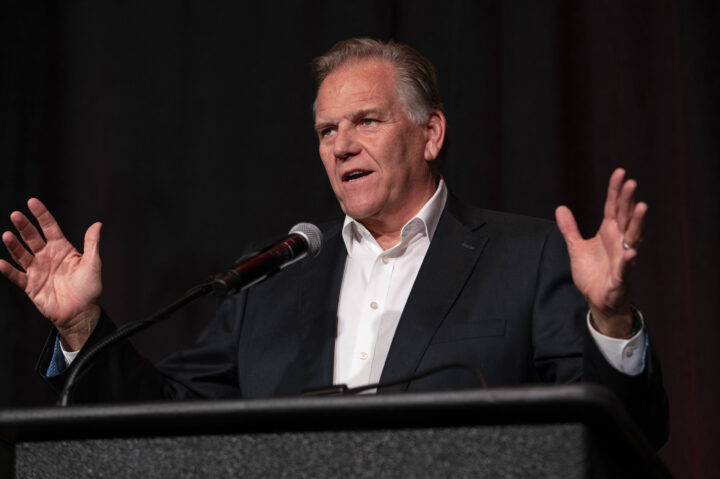
Michigan Senate candidate Mike Rogers speaks at his election watch party with the MIGOP on November 5, 2024 in Novi, Michigan.
COMMERCE, Mich. — As former Rep. Mike Rogers (R-MI) campaigns for the open Senate seat in Michigan, he is not shy about his support for Israel. But he has lately encountered more people pushing back on American support for the Jewish state, and he is worried not enough is being done, including in his own party, to fight that trend.
“I don’t think we have an effort to counter the [anti-Israel] narrative,” Rogers, a former chairman of the House Intelligence Committee, told Jewish Insider in an interview near Detroit last week. “You don’t have to love Israel, but you have to respect the fact that the nation is trying to defend itself and its people who have maybe, probably, the most horrific history of being treated in the world of any other race on planet earth.”
Rogers is the only major Republican candidate in the Senate race, while three Democrats are locked in a tight battle for the nomination, with several months still to go until the August primary. He narrowly lost to Sen. Elissa Slotkin (D-MI) in the state’s closely-contested 2024 Senate election, after having previously served in Congress from 2001 to 2015.
Rogers recounted a recent conversation with a woman who worked in Republican politics and grew up Christian, who told him that she is now not sure whether to support Israel.
“This is her word: ‘I always believed we were supposed to be for Israel. It’s in the Bible, it’s part of our faith. We have to,’” he recalled. “She said, ‘This is the first time I’ve had doubts.’ And I said, ‘Really? Why?’ And she said, ‘Well, my children are coming to me with all of this stuff,’ and it’s all social media driven.”
Asked about the burgeoning influence of far-right antisemitic influencers like Tucker Carlson and Candace Owens, Rogers said he is concerned about growing antisemitism on the right, although he thinks the problem is worse on the political left.
“I do think on the right, we’ve got to be careful it doesn’t creep into the mainstream. I do still think it’s fringe, and we need to make sure that candidates who don’t feel that way, candidates who are more open to conversation about it, get elected, so that we can push back on that,” said Rogers.
President Donald Trump has met with Carlson numerous times in the White House this year. Rogers doesn’t think that’s a problem, though he wants to see Carlson’s ideas disputed.
“I always believe that if I can sit in a room with you, I don’t care how much I disagree with you, you’ll probably find some common ground. I would say we need to keep talking, and we need to make sure that people understand that that’s not right, have that debate — I’m OK with debate,” said Rogers. “We just don’t want him to be a louder voice than his rhetoric would seem, because it’s dangerous.”
Two weeks earlier, an armed gunman drove a truck filled with explosives into Temple Israel, a synagogue in suburban Detroit. He fired at security guards before dying of a self-inflicted gunshot wound in an incident where no one else died, but left the community badly shaken.
“It didn’t take a life, but it’s sure going to have some emotional impacts for people for a while,” Rogers said. “The theme I hear the most is just how antisemitism is becoming more normal. It used to be so ostracized.”
Rogers said fighting antisemitism in the state must begin at universities.
“Once I’m elected, we’re going to sit down with college presidents and we’re going to look at their mitigation plans, and we’re going to talk about it. We’re going to have hard conversations with them,” Rogers explained. “You can’t allow virtue signaling to become a thing, and now it’s where people are, because they want to virtual signal that they’re for the little guy. I’ve never seen such ignorance about an issue in my life, and people so certain about their opinion.”
In recent days, Rogers has criticized Abdul El-Sayed, one of his Democratic opponents, for announcing that he will host campaign rallies at the University of Michigan and Michigan State with the far-left antisemitic streamer Hasan Piker.
“My problem with Hasan is, I think he’s a blatant antisemite, No. 1. But No. 2, he’s anti-American,” said Rogers. “At a time when we have men and women, very brave, courageous men and women standing tall for the United States of America, taking risks in the United States military, they’re on college campuses trying to get kids whipped up about how America is the bad guy.”
Rogers tied the antisemitic attack in Michigan to a broader wave of political violence.
“Just think about the last year. There’s legislators in Minnesota who were hunted down and killed, Charlie Kirk’s assassination,” he said. “Obviously, the Jewish community is a specific target by, unfortunately, extremist voices here in America. But political violence — you look at how it’s crept into the language of people.”
The former congresswoman had a pro-Israel voting record in the House, at times breaking with her party to vote for measures supporting the Jewish state
Tom Williams/CQ-Roll Call, Inc via Getty Images
Former Rep. Mary Peltola (D-AK) poses for a picture in her Cannon Building office on February 9, 2023.
Former Rep. Mary Peltola (D-AK) announced Monday that she’s entering the Senate race against Sen. Dan Sullivan (R-AK) in Alaska, giving Democrats an outside chance of picking up the red-state Senate seat.
Peltola, the first Alaska Native elected to Congress, served for just over one term in the House from 2022 until she lost reelection in 2024, filling the final few months of former Rep. Don Young’s (R-AK) term after he died in office and winning a full term in the November 2022 election. Peltola is the the most recent Democrat to win statewide office in Alaska, and benefited in her House races from the state’s new ranked-choice voting system.
She has been viewed as Democrats’ best and perhaps only hope for unseating Sullivan.
Serving as a leader of the moderate Democrats’ Blue Dog caucus, Peltola was a prominent centrist voice in the House. Her agenda focused primarily on local Alaskan issues, and she was an at times heterodox voice in the Democratic Party. In her launch announcement, Peltola focused on putting aside partisanship and prioritizing quality of life and cost of living issues for Alaskans. “It’s about time Alaskans teach the rest of the country what Alaska First and, really, America First looks like,” Peltola said.
Peltola also maintained a strongly pro-Israel voting record, breaking on numerous occasions with a majority of her party to vote for measures supporting the Jewish state post-Oct. 7. She supported a standalone Israel aid package opposed by many Democrats, as well as a measure to override the Biden administration’s hold on U.S. arms sales to Israel that only a handful of other Democrats voted for.
She also supported a series of measures to combat Iran and its proxies, including stringent restrictions blocking nearly any sanctions relief for the Iranian regime and re-imposing a Foreign Terrorist Organization designation on the Houthis. Peltola also voted in favor of sanctions on the International Criminal Court.
And she supported measures to combat antisemitism, including the Antisemitism Awareness Act, a resolution describing anti-Zionism as antisemitic and a resolution condemning university presidents for their testimony on campus antisemitism before a House committee, though she voted against censuring Rep. Rashida Tlaib (D-MI) for antisemitic and anti-Israel activity.
Sullivan, for his part, has been a hawkish pro-Israel voice in the Senate, pushing for a more aggressive stance toward Iran as well as serving as a top critic of Under Secretary of Defense for Policy Elbridge Colby.
In 2020, Sullivan beat Democratic-backed independent candidate Al Gross by more than 12 points. Democrats still face an uphill battle, but Cook Political Report shifted the race from “Solid Republican” to “Lean Republican” with Peltola’s entry, a signal that Democrats have a fighting chance to flip the seat.
Moulton has a mixed record on Israel votes, but his foreign policy outlook is more moderate than the sitting senator’s
Al Drago/Bloomberg via Getty Images
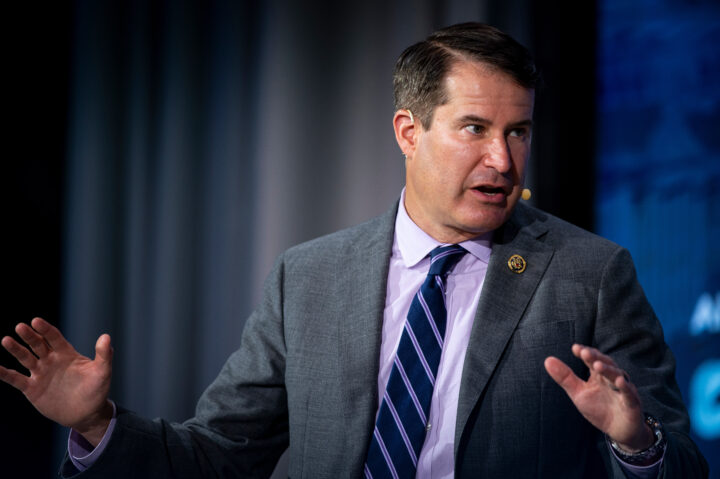
Representative Seth Moulton, a Democrat from Massachusetts, speaks during the US Chamber of Commerce's Global Aerospace Summit in Washington, DC, US, on Wednesday, Sept. 10, 2025.
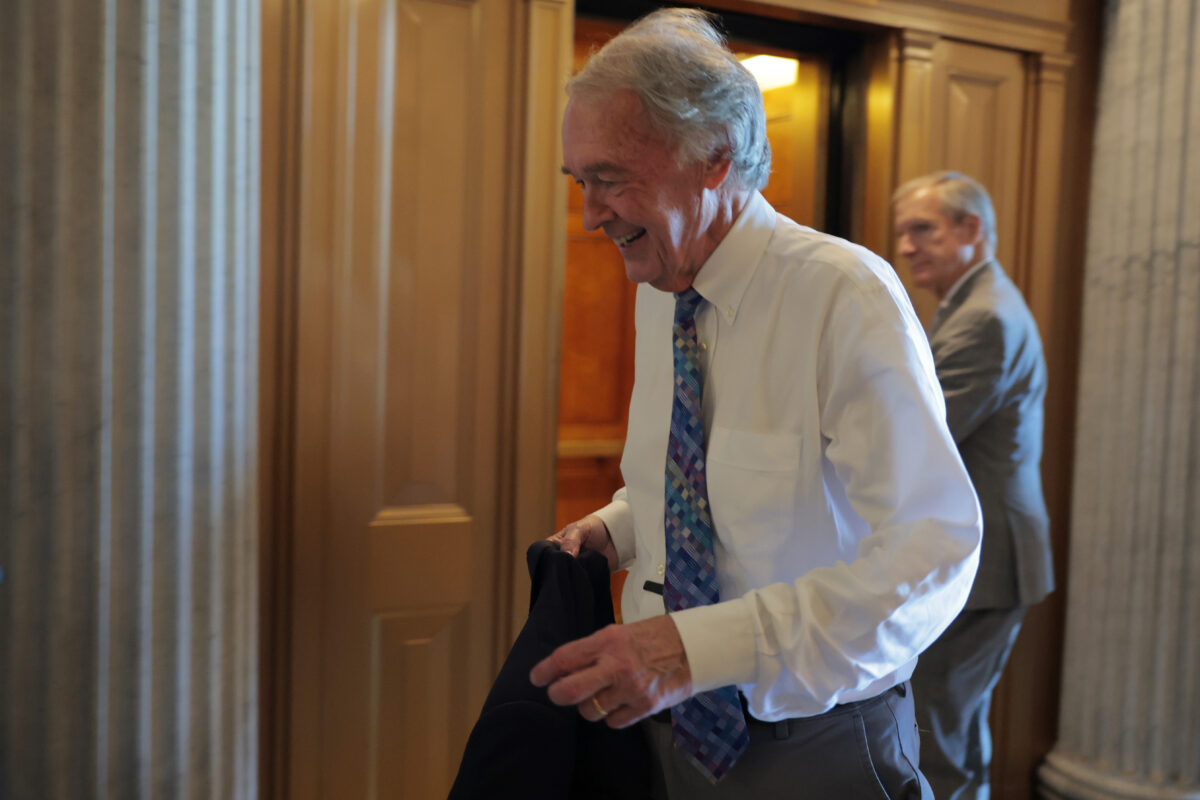
Rep. Seth Moulton (D-MA) announced on Wednesday that he plans to mount a challenge to Sen. Ed Markey (D-MA), grounding his campaign in an argument for generational change.
“I just don’t believe Sen. Markey should be running for another six-year term at 80 years old,” Moulton said in his Senate race announcement. “Even more, I don’t think someone who’s been in Congress for half a century is the right person to meet this moment and win the future. Sen. Markey is a good man, but it’s time for a new generation of leadership.”
But unlike many of the younger challengers taking on older Democratic incumbents in the current election cycle, Moulton, 46, is generally more moderate, including on foreign policy issues, than Markey, an outspoken progressive. While Moulton has been strongly critical of Israeli operations in Gaza, his record as a whole leans more pro-Israel than Markey’s.
Markey faced a similar challenge from former Rep. Joe Kennedy (D-MA) in 2020 — ahead of the current anti-gerontocracy push in parts of the Democratic Party. Young progressives rallied around Markey, who won the race by 10 points. In that campaign, Kennedy sounded more supportive of Israel than the senator he was attempting to unseat.
A recent Fiscal Alliance Foundation poll of the Senate race found that 63% of Massachusetts voters think Markey should not run for another term. In that same survey, Moulton led Markey, 38-30% among Democratic primary voters.
Markey is a prominent progressive voice in the Senate and voted seven times in the last year in favor of resolutions led by Sen. Bernie Sanders (I-VT) to block various weapons transfers to Israel. He memorably faced boos at a pro-Israel rally just days after the Oct. 7, 2023, attacks when he called for de-escalation between Israel and Hamas.
He also joined a letter accusing Israel of violating U.S. arms sales conditions imposed by the Biden administration, and pushed to incorporate those conditions into the supplemental aid package for Israel and other allies.
Markey called the U.S. strike on Iran’s nuclear program “illegal and unconstitutional” and said the attack “holds dangers for all Americans.”
“This attack may set back but will not stop Iran’s efforts to get a nuclear bomb. The regime can rebuild its program and will now be highly motivated to do so. A diplomatic solution remains the best way to permanently and verifiably prevent Iran from acquiring a nuclear weapon,” Markey continued. “Trump’s illegal actions raise the risk of escalation into a wider regional war with grave risks for U.S. troops and personnel and civilians in the region.”
During a committee markup of the Antisemitism Awareness Act earlier this year, Markey led an amendment opposing the revocations of visas, detentions and deportations of students and faculty based on “protected conduct under the First Amendment,” one of a series of amendments that helped torpedo the bill.
Markey appeared on the streaming show of Hasan Piker, a far-left commentator who has repeatedly faced criticism for antisemitic rhetoric and support for terrorism, during last year’s Democratic National Convention.
While Moulton, a Marine veteran, has been critical of Israel’s war operations in Gaza and called for increased humanitarian aid, he has not backed congressional efforts to condition, withhold or end U.S. aid to Israel since Oct. 7. He voted — with most House lawmakers — in favor of supplemental aid to the Jewish state last year.
After a meeting in May 2024 with then-Israeli Ambassador to the U.S. Michael Herzog, Moulton said he opposed Israel’s plans to launch a full-scale invasion of the southern Gazan city of Rafah and backed President Joe Biden’s threat to withhold weapons if Israel proceeded with that operation. In 2019, prior to the recent war in Gaza, Moulton offered support for a bill that would have placed restrictions on the use of U.S. military aid to Israel.
In July 2025, Moulton said in a statement that it is “a moral imperative for the Netanyahu government to alleviate this suffering” in Gaza and that “Hamas bears primary responsibility, but Israel has the ability and the obligation to help.”
“I want Israel to succeed in defeating Hamas and bringing the hostages home. But that won’t happen if its policies undermine its own mission, and you cannot win a war against terror by allowing civilians to starve,” Moulton continued, citing his own experience serving in Iraq. He said he told the Israeli ambassador directly that “what’s happening in Gaza is unacceptable.”
Weeks after the Oct. 7 attacks, Moulton cautioned Israel against launching an operation in Gaza without a robust plan for what would come after the war.
Moulton voted against several Republican-led measures — which split the Democratic caucus — that would have tightened U.S. sanctions on Iran and limited presidential authority to waive such sanctions, as well as against sanctions on the International Criminal Court.
At the same time, he voted in favor of redesignating the Houthis as a Foreign Terrorist Organization, having previously led a letter to the Biden administration supporting such action, and was a lead co-sponsor of a bill to expand funding for a cooperative counter-tunneling program with Israel.
Moulton stopped short of the blanket condemnation that many Democrats expressed for the U.S. strikes on Iran, saying, “One of the reasons I was reticent to just immediately condemn the strikes is because anything that gets us back to the negotiating table is helpful — that’s where we need to be at the end of the day,” though he said he would not have voted to provide congressional approval for those strikes.
He subsequently accused administration officials of “outright lying about things that we just don’t know yet” for declaring shortly after the strikes that the U.S. had completely “obliterated” Iran’s key nuclear facilities.
On antisemitism, Moulton voted in favor of the Antisemitism Awareness Act, as well as for resolutions describing anti-Zionism as antisemitic, calling for college presidents to resign over their testimony to Congress on campus antisemitism and for a GOP-led resolution condemning the firebombing of a hostage advocacy rally in Boulder, Colo., which also praised Immigration and Customs Enforcement.
Shortly after the Oct. 7 attacks, when a coalition of Harvard University student groups issued a statement condemning and blaming Israel for the event, Moulton, a Harvard alumnus, said that he “cannot recall a moment when I’ve been more embarrassed by my alma mater” and later condemned then-Harvard President Claudine Gay’s comments at a House hearing on antisemitism.
Both Markey and Moulton have supported expanded funding for the Nonprofit Security Grant Program to help protect Jewish and other nonprofit institutions.
The former TV news anchor boasts a consistently conservative, pro-Israel voting record, and has a history of winning tough races
Scott Olson/Getty Images
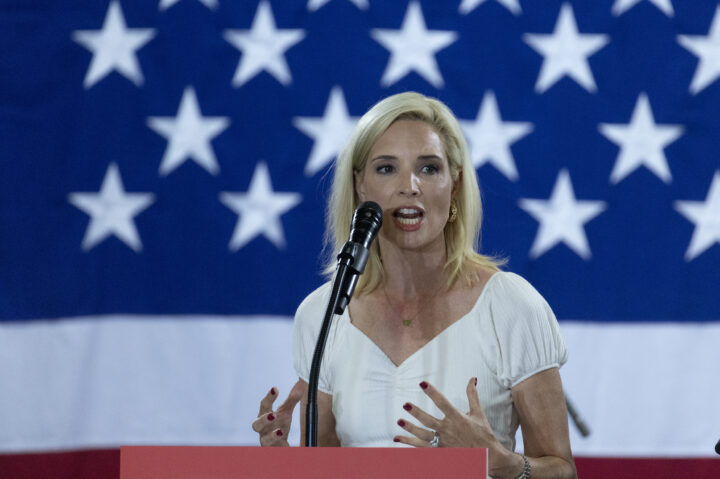
U.S. Rep. Ashley Hinson speaks to guests during her Ashley's BBQ Bash fundraiser on August 23, 2025 in Cedar Rapids, Iowa. The event was the fifth annual, which she holds to support Iowa Republican causes and candidates.
Rep. Ashley Hinson (R-IA) has emerged as the front-runner in the contest to replace retiring Sen. Joni Ernst (R-IA), with national Republicans swiftly coalescing around her bid for the GOP nomination as they look to avoid a messy primary battle.
Hinson, a politically tested lawmaker who has long been viewed as a potential successor to Ernst, launched her Senate campaign within hours of Ernst’s announcement last Tuesday that she would not seek a third term.
Hinson, in her candidate announcement, said that she would be President Donald Trump’s “strongest ally” in the Senate and would work to “deliver the America First agenda.” She also praised Ernst for her military service and time in public office, saying that, “Our country and state are better off because of Joni’s selfless service.”
Hinson, a prolific fundraiser who entered the race with a $2.8 million war chest, began racking up endorsements shortly after her campaign launch. Trump endorsed Hinson on Friday, as did Senate Majority Leader John Thune (R-SD) and Sen. Tim Scott (R-SC), chairman of the National Republican Senatorial Committee, Senate Republicans’ campaign arm.
Trump described Hinson as “a wonderful person” whom he knows “well,” and praised her devotion to her family before touting her commitment to “our incredible Iowa workers.”
“She is working hard to Create Jobs, Cut Taxes, Promote Products and Services MADE IN AMERICA by our incredible Iowa Workers, Support our Great Farmers and American Agriculture, Champion Innovation, Continue to Help Secure our now very Secure Southern Border, Stop Migrant Crime, Murderers, and other Criminals from illegally entering our Country, Strengthen our Military/Veterans, and Defend our always under siege Second Amendment,” Trump wrote of Hinson on his Truth Social platform.
“From a foreign policy perspective, or even culturally with respect to antisemitism and all that sort of thing, I don’t think that you’re going to see a lot of difference between Joni Ernst, who’s been a strong supporter of Israel and who I think has been a really effective leader on the national stage, and Ashley,” David Kochel, a veteran GOP campaign operative, told JI.
Ernst and Hinson are close professionally and personally; in addition to being friends, the two have long been aligned on foreign and domestic policy and worked together on scores of bicameral legislative efforts.
Both lawmakers have been repeatedly endorsed by AIPAC and the Republican Jewish Coalition, though neither organizations have officially gotten behind Hinson’s Senate bid yet. While Ernst hasn’t endorsed in the race either, Hinson is the candidate she is most aligned with ideologically.
“From a foreign policy perspective, or even culturally with respect to antisemitism and all that sort of thing, I don’t think that you’re going to see a lot of difference between Joni Ernst, who’s been a strong supporter of Israel and who I think has been a really effective leader on the national stage, and Ashley,” David Kochel, a veteran GOP campaign operative, told Jewish Insider.
“On issues of concern to Jewish Americans, Ashley Hinson has been an absolute stalwart,” Sam Markstein, who serves as national political director for the RJC, told JI.
Markstein described Hinson as “an incredibly strong voice in Israel’s defense,” citing her “calling Hamas’ terror attack ‘evil,’ and affirming Israel’s right to defend itself immediately” after the Oct. 7, 2023, attacks on Israel as examples. He also noted that she has “consistently voted for vital military aid to Israel and Iron Dome defense systems,” and pointed to her cosponsoring legislation “to pressure the Biden administration to deliver critical aid that they were holding up as the Jewish state was fighting a seven-front war.”
“She has stood strongly against the Iranian regime by supporting measures to reinstitute maximum pressure and reimpose crippling sanctions. Ashley Hinson also has a very strong record on combating antisemitism. Notably, unlike some on the neo-isolationist far right, when Ashley Hinson says, ‘America First,’ for her, and for the RJC, that means standing strongly with our allies, like Israel, peace through strength, using decisive military action when necessary and rejecting forever wars,” Markstein said.
The swift action on Hinson’s part in launching her campaign and locking down major endorsements has propelled her campaign to front-runner status in the race, and a smooth primary contest could benefit what are already strong general election chances for Republicans in the Hawkeye State.
“Ashley’s been pretty good on the Trump record,” Kochel said. “I think things are going to consolidate pretty quickly around her.”
“She is definitely going to be the leading candidate in the Republican primary, and she’s going to be a very tough candidate in the general election as well,” he told JI.
Thus far in the primary, Hinson is facing Jim Carlin, a Republican former state senator who initially entered the contest to challenge Ernst from the right after winning 27% of the vote against Sen. Chuck Grassley (R-IA) in a 2022 primary, and Joshua Smith, a former libertarian and podcast host who is a sharp critic of the U.S.-Israel relationship.
Smith has espoused virulently anti-Israel beliefs on social media, posting in March of this year on X that Israel is a “fake state of anti Jesus heathens who are fine with killing children” and claiming in a post last May that Jewish people suffer from a “Jewish victim complex.”
Hinson began her career in local television as a broadcast journalist in Cedar Rapids, Iowa, and went on to win two Midwest regional Emmy Awards and become a health reporting fellow for the Radio Television Digital News Association. She entered politics in 2016, when she won a competitive seat in the Iowa state House of Representatives representing the purple Cedar Rapids area by a two-to-one margin.
Hinson was elected to the House in 2020 after defeating former Rep. Abby Finkenauer, a Democrat who flipped Iowa’s 1st Congressional District blue in 2018, by more than two points.
The other rumored candidate looking at the race is U.S. Ambassador to NATO Matt Whitaker, Trump’s former acting attorney general during his first term who lost to Ernst in the GOP primary for her Senate seat in 2014. But with Trump and leading Republicans rallying behind Hinson, the prospects of Whitaker running has dimmed.
The Democratic side of the aisle has a crowded field of candidates competing for the party’s nomination, including state Rep. Josh Turek, state Sen. Zach Wahls and Jackie Norris, chairwoman of the Des Moines Public Schools board.
“Whoever wins the Republican nomination for U.S. Senate in Iowa will have a very, very strong chance of succeeding Joni Ernst,” Sam Markstein, who serves as national political director for the RJC, told JI. “Regarding Ashley Hinson specifically, ask yourself what the telltale signs of a well-run operation are, and you’ll see she is clearly checking all of the boxes: the speed and efficiency of her campaign launch, announcing support from President Trump, as well as House and Senate leadership.”
Democrats have expressed an interest in contesting the open Senate seat in Iowa, a now reliably Republican state that was a battleground before Trump’s political ascendance.
The party has some renewed confidence in their political standing in the state, after Democrats flipped a state Senate seat in a special election last month. The state currently has one state elected official that’s a Democrat: State Auditor Rob Sand.
Whether national Democrats will allocate resources to the Hawkeye State remains to be determined, but winning statewide as a Democrat in deep red Iowa will be a difficult challenge. Democrats haven’t won a Senate race in Iowa since 2008, when former Sen. Tom Harkin handily won a fifth term, prompting Republicans to dismiss the notion that this race will be competitive.
“Whoever wins the Republican nomination for U.S. Senate in Iowa will have a very, very strong chance of succeeding Joni Ernst,” Markstein told JI.
“Regarding Ashley Hinson specifically, ask yourself what the telltale signs of a well-run operation are, and you’ll see she is clearly checking all of the boxes: the speed and efficiency of her campaign launch, announcing support from President Trump, as well as House and Senate leadership. This, and more, illustrates that she’s focused, organized, and has an excellent team around her, all of which is needed to win,” he continued.
The NRSC sent a memo to donors last week expressing confidence that Democrats would face an uphill slog in Iowa, and touted Hinson as a “formidable contender” who “would be exceedingly difficult for any Democrat to challenge.”
A source familiar with how the NRSC is viewing the contest told JI that, “Democrats are trying really hard to say that Iowa is in play and that it is a competitive race. That’s just not electorally where we view it.”
“It’s also just not ultimately what the field on their side signals. They have a very messy, competitive primary right now. It does not appear that [Senate Minority Leader Chuck] Schumer is going to be able to clear the field. That is obviously a direct contrast to what we’re seeing so far on our side,” the source said, noting the growing support for Hinson on the GOP side of the aisle.
Kochel noted that, “Iowa historically was a swing state. [Former President Barack] Obama won it twice and Trump’s won it three times, but certainly the registration advantage that Republicans have has been growing. As the electorate has changed in the last 10 years, more non-college [educated], white, working-class voters are becoming more and more Republican. We’ve got a lot of those in Iowa.”
“Demographically, Iowa is kind of getting away from the Democrats a little bit,” he continued, predicting, “We’ll see this race settle into a pretty familiar framework.”
Rep. Ashley Hinson is seen as a likely front-runner for the GOP nomination to succeed retiring Sen. Joni Ernst

Steve Pope/Getty Images
Supporters of U.S. Senator Joni Ernst (R-IA) cheer at a watch party on November 3, 2020 in Des Moines, Iowa.
The newly open Senate race in Iowa could pit a House Republican seen as a conventional conservative against challengers likely to attack her from the right. The race could also be an early bellwether of the GOP’s direction as it moves toward the post-Trump era.
Multiple outlets reported on Friday that Sen. Joni Ernst (R-IA) will drop her bid for reelection in 2026 and retire from the Senate at the end of her current term. A member of the Senate Armed Services Committee, Ernst has been a staunch ally of Israel and an Iran hawk in the upper chamber, traveling to the region repeatedly since Oct. 7, 2023, and serving as a co-chair of the Abraham Accords Caucus.
Ernst has been vocal in calling for ramping up U.S. pressure on Qatar to squeeze Hamas to release the hostages being held in Gaza, and has been a champion of efforts to integrate American, Israeli and Arab defensive systems in the region, including air and missile defense.
Rep. Ashley Hinson (R-IA), a former local news anchor and state representative elected to Congress in 2020, is widely seen as likely to make a run for Ernst’s seat. She’s been an ally of Ernst as the senator has faced right-wing attacks..
In the House, Hinson has a consistent record of support for the U.S.-Israel relationship and legislation to combat antisemitism, and has signed onto congressional letters criticizing international legal cases against Israel and supporting the Abraham Accords. She supported the U.S. strikes on Iran earlier this summer.
Hinson called the U.S.-Israel relationship “absolutely imperative … for both of our countries,” in 2020. “We look at not only the partnerships for security, but also for economic development, research, medicine. There are so many ways our countries are helping each other, and I think that relationship is invaluable both from the past and going forward.”
Hinson has been endorsed in previous races by AIPAC and the Republican Jewish Coalition.
Her House campaign did not respond to a request for comment.
Should she enter the race, she’ll face the prospect of running against lesser-known, right-wing Republicans like Jim Carlin, a former state senator who entered the race to challenge Ernst from the right.
Carlin has framed himself as a “reliable ally to President [Donald] Trump, not an adversary.” He has attacked Ernst for decisions including her vote in support of additional U.S. support for Ukraine.
“America First isn’t a slogan — it’s a governing philosophy. It means protecting American borders before foreign ones. It means putting our economy, our people, and our future ahead of global interests,” Carlin’s campaign site reads. “We need our allies to step up and pay their fair share.”
He added that European allies should “[pay] their fair share and [handle] their own issues. We’ve given them enough,” opposed additional aid to Ukraine and said that the “war must stop now!”
Carlin put up a meager showing in a primary challenge against Sen. Chuck Grassley (R-IA) in 2022, picking up just 27% of the primary vote.
NBC News reported that Matthew Whitaker, the U.S. ambassador to NATO and former acting attorney general, may also be interested in the seat. He ran against Ernst in the 2014 GOP primary, only winning 8% of the vote. But as a Trump loyalist, he could have a shot at landing Trump’s endorsement, which could prove a problem for other potential candidates.
Whitaker, prior to his service in Brussels, had little foreign policy experience or record, but during his confirmation hearing said the Trump administration’s commitment to the mutual defense agreements enshrined in Article V of the NATO treaty were “ironclad.” He has also called on European allies to spend more on their own defense and provide additional support to Ukraine.
Joshua Smith, a former libertarian and podcast host, also declared his candidacy against Ernst. On his X account, Smith has been a critic of the U.S.-Israel relationship, saying “Joni definitely stands with Israel (money),” Israel is a “fake state of anti Jesus heathens who are fine with killing children” and “Iran is not a threat to America. Palestine is not a threat to America.”
Smith has opposed U.S. aid for Israel, suggested Israel is attempting a genocide, said that “you can’t be antiwar and support the continued support of the US for Israel,” claimed that Jews suffer from a “Jewish victim complex” and alleged that the U.S. attempted to “make Christianity antisemitic and outlaw criticism of Israel.”
Democrats are expected to make an aggressive bid for the seat in the general election, and several have already entered the primary race, including state Rep. Josh Turek, state Sen. Zach Wahls and Des Moines School Board Chair Jackie Norris.
David Yepsen, a longtime former political writer, editor and columnist at the Des Moines Register, told Jewish Insider that Hinson is the likely favorite if she gets in the race, but that she could face a real challenge from her right.
Yepsen said that Hinson had previously been seen as more of a moderate, though she has recently made efforts to align herself more closely with Trump and the MAGA wing of the GOP.
Yepsen predicted a “really good race” in the general election, given that Democrats have already fielded several contenders, have put up strong showings in recent state special elections, have been energized by opposition to the Trump administration and have an advantage in the midterms.
Yepsen added that, given the open Senate seat, an open gubernatorial race, multiple competitive House races and the developing presidential primary race, the coming cycle is likely to be an “unprecedented race in modern Iowa politics.”
“There are plenty of Iowa Republicans who are not MAGAs, who are not Trump people, who just wanted somebody else,” he said. “It’s going to be played out on the ground, these early things about what the Republican Party is, what it stands for, what it’s going to be going forward. There are national implications to what goes on here in Iowa.”
Yepsen said that Ernst’s retirement is not likely to be a surprise to many in the state, given her clashes with Trump-aligned conservatives in the state and other recent scandals and public missteps. Democrats, he added, have seen her as vulnerable.
Dooley, the football coach-turned-candidate, has already begun Jewish outreach in the pivotal swing-state Senate race

Michael Allio/Icon Sportswire via Getty Images
New York Giants Tight Ends Coach Derek Dooley looks on before the NFL football game between the New York Giants and the Miami Dolphins on December 5, 2021, at Hard Rock Stadium in Miami Gardens, Florida.
With the entry this week of Derek Dooley, a friend of Gov. Brian Kemp who hails from college football royalty in Georgia, the Republican field in the Georgia Senate race is taking shape.
Dooley, whose father coached the Georgia Bulldogs and who spent several years leading the rival Tennessee Volunteers, announced Monday that he’d be running against Reps. Buddy Carter (R-GA) and Mike Collins (R-GA) in the Republican primary to take on Sen. Jon Ossoff (D-GA), Republicans’ top-targeted incumbent.
Kemp, a popular Republican governor, was seen as Republicans’ best chance of ousting Ossoff. Some prominent Jewish former Ossoff donors in the state reached out to Kemp late last year urging him to run against Ossoff, frustrated by the senator’s votes last year to block some weapons transfers to Israel. But Kemp ultimately passed on the race. Ossoff has worked to rebuild trust with disaffected Jewish voters, but those efforts were hampered by his vote last week to block a shipment of assault weapons to Israel.
Kemp has family ties to Dooley, who has brought on top Kemp advisors, is likely to receive the governor’s backing and pursue a center-right lane in the race, while portraying himself as a political outsider. All the candidates have been making the pivotal pitch for President Donald Trump’s backing in the race and tying themselves closely to him, hoping that key endorsement will help them clear the field.
With Kemp’s help, Dooley could potentially peel off support from moderate Jewish Democrats still frustrated by Ossoff, though Jewish leaders in the state told Jewish Insider last week that they’re not yet making any commitments in the race. They say they’re waiting to see who emerges from the Republican primary and how Ossoff’s record shapes up over the coming months before they decide whether to support the incumbent next November.
Dooley, for his part, is wasting little time in courting their votes.
“I stand with our ally Israel and firmly believe they should have the necessary resources to defend themselves against terrorists,” Dooley said in a statement to JI. “While Jon Ossoff continues to vote against Israel and American national security interests, I will be a leading voice for a strong America and a strong Israel in the Senate.”
Emanuel Fialkow, a prominent conservative member of Georgia’s Jewish community, said that Kemp’s team connected him to Dooley and the two spoke at length on a variety of issues, including antisemitism and Israel. Fialkow said he was previously part of a group of Jewish donors who urged Kemp to run against Ossoff.
Fialkow said that Dooley had asked him about a range of issues including Israel policy, the war in Gaza and antisemitism, and that he subsequently agreed to help Dooley develop an Israel position paper, which Fialkow described as very strongly pro-Israel. He said that Dooley “will have a backbone” in support of Israel.
He subsequently organized a lunch meeting at his home to introduce Dooley to a small group of others in the state, many of them Jewish, including both traditional Republicans and Democrats. Fialkow said that the group discussed a range of issues and came away seeing Dooley as honest, humble, inspiring, engaging and curious to learn more. He praised Dooley as a proven leader and a “really good guy” who can speak to people from a range of backgrounds, and is interested in listening to and learning from people.
He said other Jewish leaders in the Atlanta area are also in discussions with and about supporting Dooley. Others said they haven’t been in touch with Dooley or his surrogates yet.
Fialkow said that he and some other Jewish leaders in the state see Ossoff’s relationship with them as broken beyond repair, and said they can’t trust him going forward to be a reliable supporter of Israel. He argued that Dooley is the “only chance” for Zionist voters who put support for Israel first.
Ossoff, for his part, maintains some vocal supporters in the Jewish community.
Cary Levow, a supporter of pro-Israel causes and candidates, told JI last week, “I support Senator Ossoff and know of other Jewish Georgians who understand that Jon’s approach to the Gaza humanitarian issue is genuine.”
“Senator Ossoff has voted for over $20 billion in aid to Israel, has family living in Israel and has spent a significant amount of time in the country,” Levow continued. “I think Jon has represented the Jewish community well and I have zero concern about a senator who is critical of how [Israeli Prime Minister Benjamin Netanyahu] Bibi is waging this war.”
Fialkow argued that the only way for a Republican to win is for both Kemp and Trump to be aligned behind the same candidate, and that a hard-right Republican can’t win statewide in Georgia, meaning that Dooley gives Republicans their best chance to beat Ossoff.
Fialkow said he’s spoken to Collins and is confident that he would never vote against U.S. support for Israel, due to his own religious convictions. Collins has voiced the same view in confrontations with anti-Israel activists.
Speaking at an Oct. 7 memorial ceremony in 2024, Collins called the U.S. Israel’s “greatest friend” and said that the Oct. 7, 2023, Hamas attacks had only strengthened the relationship between the two partners. He said he would work to make sure Israel receives all the support it needs to defend itself.
“Hamas not only attacked the peaceful people of Israel that day, but they launched an assault against the idea of free and fair democracies in the Middle East,” Collins said.
But some elements of Collins’ record on antisemitism could raise red flags for others in the Jewish community. Last year, he refused to apologize for and doubled down on engaging with an antisemitic, racist Twitter account that was attacking a reporter for being Jewish. And he voted against the Antisemitism Awareness Act, and has a record of engaging in otherwise extremist rhetoric online.
“Mike Collins has condemned the hate speech seen on college campuses and around the globe, and has been an ardent supporter of Israel in Congress. While Jon Ossoff capitulated to woke activists and voted to cut aid to Israel, Mike Collins has stood strong and protected its right to exist,” a Collins campaign spokesperson told JI, when asked about his online history and vote on the antisemitism bill.
Carter, who is close with some Atlanta-area Jewish leaders, has been a vocal supporter of pro-Israel and Jewish causes in the House, including leading pushes for funding and support for Holocaust education programs, calling on colleagues to address antisemitism in health care, leading legislation to support U.S.-Israel cooperative programs, urging support for the snapback of U.N. sanctions on Iran and calling for Qatar and Turkey to expel Hamas leaders. He also supported the Antisemitism Awareness Act, unlike Collins.
Carter’s campaign did not respond to a request for comment.
Other than Collins’ vote against the Antisemitism Awareness Act, both Carter and Collins have records of supporting legislation backing Israel and combating antisemitism, including voting for supplemental aid to Israel and a resolution describing anti-Zionism as antisemitic.
But his initial reticence in speaking out against anti-Israel Democratic leaders in his state could become a vulnerability in the red-state contest

Allison Joyce/Getty Images
Former North Carolina Governor Roy Cooper
Former North Carolina Gov. Roy Cooper’s decision to seek the Democratic nomination for North Carolina’s open Senate seat has equipped the party with a moderate standard-bearer with a strong relationship with the state’s Jewish community.
But his handling of anti-Israel activism within the North Carolina Democratic party is expected to become an issue in the Senate race, one that Republicans are already seeking to exploit.
Cooper served two terms as North Carolina governor, winning close contests even in elections when President Donald Trump carried the state. He previously served four terms as the state’s attorney general, where he compiled a tough-on-crime record that allowed him enough bipartisan support to win in a red-leaning state. In his nearly four decades in state politics, Cooper has never lost a race, notching a 16-0 record.
In recent years, Cooper has been forced to address issues of antisemitism among political leaders in the state — one against a Republican rival, and one involving activists within his own political party.
Cooper said he decided to pass up consideration for the role of Vice President Kamala Harris’ running mate because he didn’t want former Lt. Gov. Mark Robinson, a Republican with a history of posting racist and antisemitic content online, to temporarily assume the governor’s responsibilities. (North Carolina’s constitution states that the lieutenant governor, who is elected separately from the governor, assumes power in an acting capacity when the governor leaves the state.)
Cooper told Politico last July that Robinson, who has quoted Adolf Hitler, downplayed the Holocaust in social media posts and referred to himself as a “black Nazi” in an online porn forum, had previously claimed he was the acting governor while Cooper was traveling to Japan on official business.
“I was on a recruiting trip to Japan,” Cooper said, referencing a trip in October of 2023. “He did claim he was acting governor. He did a big proclamation and press conference while I was gone. It was something about support for the state of Israel. It was obviously to make up for all of his antisemitic comments that he’d made, his denial of the Holocaust that he’d made over the years.”
But when confronted with anti-Israel extremism within his own state party, Cooper has been more cautious.
The former governor did not initially weigh in on the resolution passed by the North Carolina Democratic Party last month calling for an arms embargo on Israel, as well as on the other anti-Israel measures adopted by the state party. An advisor to Cooper told CNN at the time that the former governor “generally does not opine on party resolutions.”
Reached for comment on the state party measures by Jewish Insider on Monday, Cooper said in a statement that he opposes the resolutions.
“I don’t agree with the party resolution, and Israel is an important ally. Israel needs to take seriously the job of getting humanitarian aid into Gaza right now. The hostages must be returned and I continue to pray for a swift end to this war and a meaningful peace in the region,” Cooper told JI.
Former Rep. Wiley Nickel (D-NC), who was considering running for the Senate before Cooper announced his candidacy, had condemned the resolution as an “extreme” measure that amounted to a “death sentence for thousands.”
North Carolina Gov. Josh Stein, a Democrat and the state’s first Jewish governor, similarly expressed disapproval with the resolutions to JI on Monday.
“I disagree with the party’s anti-Israel resolutions and believe that our state party should focus on issues we’re facing here in North Carolina like the high cost of living, harmful cuts to people’s health care, and rising levels of antisemitism, Islamophobia, and other forms of hate. What’s happening in Gaza is devastating. Israel must allow in food and humanitarian supplies; Hamas must free the hostages; and they must work to achieve a just and lasting peace,” Stein told JI.
The National Republican Senatorial Committee, Senate Republicans’ campaign arm, have repeatedly hammered Cooper over his initial silence on the matter.
“Cooper’s silence exposes his true character as a radical, pro-Hamas leftist and sends a clear message to Jewish North Carolinians that he’s with the extremists in his party and not them,” Nick Puglia, NRSC’s regional press secretary, said in a statement at the time of the vote.
Cooper offered his thoughts on Israel’s war with Hamas during an interview with the Technician, North Carolina State University’s news site, last March that has since been scrubbed from their website but is available through online archival services, stating that he believes, “This war is devastating. We’re seeing innocent civilians killed.”
“What you have is a terrorist organization, Hamas, that runs Gaza, who invaded Israel and committed atrocities, still holds hundreds of people hostage. At the same time, in Israel’s attempts to defend itself and to rid itself from Hamas, you’re seeing devastating consequences to civilians, women and children,” Cooper told the outlet. “I know that the president is working very hard toward a ceasefire, toward providing aid to Gaza, and that there’s so much hard work going on behind the scenes and now even more publicly, to make sure that the hostages are released, and to make sure that peace is brought to this area of the world.”
“There needs to be a two-state solution here. We need the Arab countries to come together. But I do know that this Biden administration will work hard toward peace. You’re not going to see that from Donald Trump, who talks about how much he admires dictators across the world. That’s not going to be the solution to this,” he continued.
Pointing to the anti-Israel protests taking place on campuses last spring, Cooper added that, “It’s wonderful to live in a democracy when people’s voices can be heard and they’re unafraid to protest. In many countries, that’s not the case.”
In his tenure as governor, Cooper made North Carolina the 37th state in the nation to adopt the International Holocaust Remembrance Alliance’s working definition of antisemitism. Cooper signed the SHALOM Act, which adopted the IHRA language as the state’s official definition of antisemitism, last July after it passed the state House and Senate in bipartisan fashion.
“Defining antisemitism is important to stopping it, and this new law helps do that as antisemitic incidents are on the rise. While we protect the right to free speech, this legislation helps to make our state a more welcoming, inclusive and safe place for everyone,” Cooper said in a statement on the bill.
In the month after the Oct. 7, 2023 attacks on Israel, he co-signed a letter with 10 fellow Democratic governors to congressional leaders urging more funding for the Federal Emergency Management Agency’s Nonprofit Security Grant Program, amid an uptick in “threats in the Jewish and Muslim communities,” according to a press release from his office.
“Many houses of worship in North Carolina rely on the Nonprofit Security Grant Program to protect their congregations, and I encourage Congress to pass more funding for this vital program during this time of increased threats. The right to worship freely and without fear is fundamental to our country, and we are doing everything we can to protect that here in North Carolina,” Cooper said in a statement on the letter.
Please log in if you already have a subscription, or subscribe to access the latest updates.
 Continue with Google
 Continue with Apple