




















Sebastian Gorka said the administration intends to target other branches with the goal of destroying the entire Muslim Brotherhood
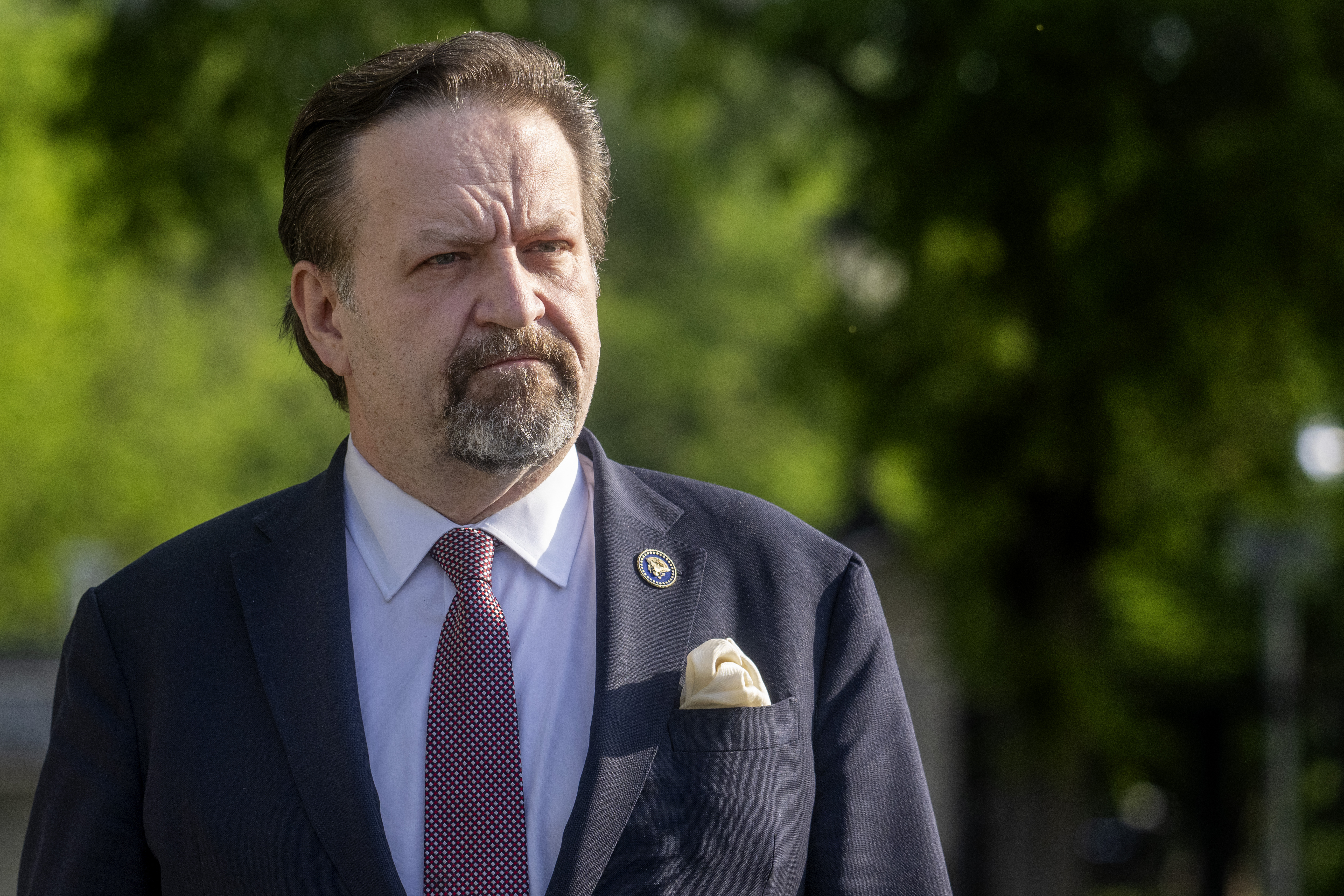
JIM WATSON/AFP via Getty Images
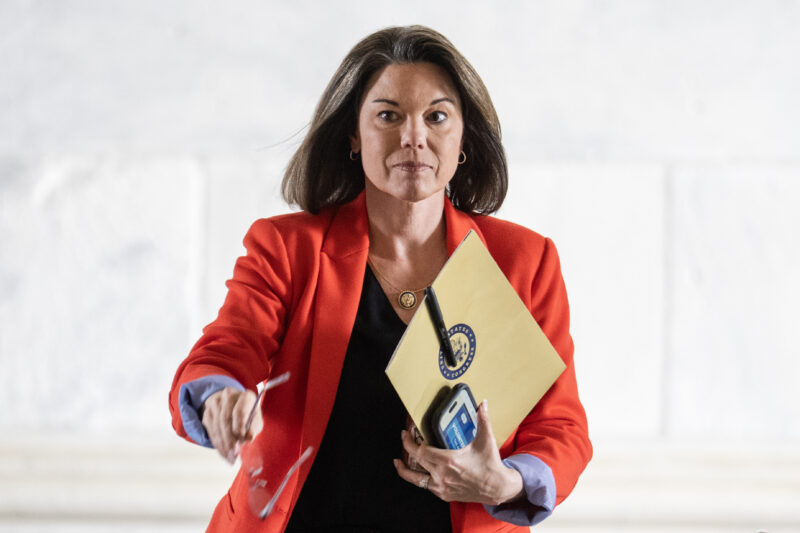
U.S. Senior Director for Counterterrorism Sebastian Gorka walks outside the White House in Washington, DC, on May 7, 2025.


 Add JewishInsider on Google
Sebastian Gorka, the National Security Council’s senior director for counterterrorism, defended the Trump administration’s executive order mandating the assessment of certain branches of the Muslim Brotherhood for designation as foreign terrorist organizations, which some critics have argued does not go far enough.
Gorka, speaking at a Hudson Institute conference on antisemitism on Friday, said that the administration is following the procedures and limitations laid out in federal law relating to terrorism designations, and said that the administration fully intends to target further branches of the Muslim Brotherhood with the ultimate goal of destroying the entire organization.
Analysts have criticized the administration for only naming the Egyptian, Lebanese and Jordanian branches of the Muslim Brotherhood for potential designation, not mentioning Turkey and Qatar’s backing of the group and not designating the entire Muslim Brotherhood from the start or explicitly laying out an intention to do so.
“It’s a statement of designation to occur, not a de facto designation, because we follow the law in the Trump administration. We believe in the Constitution and the statutes agreed upon by Congress and signed by the president. We don’t just do stuff because we want to,” Gorka said.
“FTO designation has to be done according to the law. According to the law a foreign terrorist organization must have killed Americans or must have gravely affected the national security of the United States, and that must be proven with predominantly unclassified information that stands up in a court of law and which is less than three years old,” he explained.
The NSC official said that the administration’s executive order had been “woefully misinterpreted and misrepresented by the clickbait prostitutes of social media, some of whom paint themselves as MAGA, who just need the clicks,” making specific reference to “Laura” — likely far-right influencer Laura Loomer, and “Mr. Carlson” — Tucker Carlson.
Gorka said that the three branches named in the executive order are “slam dunk cases,” and that the administration plans to go after additional branches.
“For the record, this is not the end, it is just the beginning, and we are assiduously working on the next tranche of designations right now,” Gorka said.
The executive order, on its own, does not designate branches. It names branches within the three countries to be assessed for potential designation.
“Please read the statute, you cretinous individuals. We’re not designating states, it’s organizations,” Gorka continued. “So if you think, ‘Oh my gosh, you left this country out,’ that’s because you cannot call a country a foreign terrorist organization by American law. Do your homework unless, of course, you’re in it for the ads and the clicks.”
He emphasized that the administration is “committed to one thing: destroying the Brotherhood, its offshoots and global jihadism writ large — and suppressing it to a point at which it is no longer a strategic threat.”
Some allies of the administration like Sen. Ted Cruz (R-TX) have said the administration intends to take a “bottom-up” approach to ultimately designate the entire organization.
Gorka said that the Muslim Brotherhood’s antisemitism is a key part of the reason the administration is going after the group.
“Rejection of the Jew is rejection of the West is the rejection of Christianity as well,” Gorka said.
“The Muslim Brotherhood is the progenitor of all modern global jihadism and the propagator, the transmission belt of the most heinous antisemitic Jew hatred today across the region and sadly in America as well,” Gorka continued.
Addressing antisemitism more broadly, Gorka said that some hide their hatred “behind geopolitics.”
“‘I just don’t like the government of [Israeli Prime Minister] Bibi Netanyahu’ — no, you’re a Jew hater, because there’s only one Jewish state,” Gorka continued. “It embeds itself in international organizations, in the curricula of our colleges and universities, in the voices of some who hide behind social media and even openly espouse this ancient poison. Quote, ‘From the river to the sea.’”
Citing the May murder of Israeli Embassy employees Yaron Lischnisky and Sarah Milgrim just minutes away from the conference’s location in the name of anti-Israel ideology, Gorka characterized antisemitism as a serious security threat to the homeland.
Jewish Insider’s senior national correspondent Gabby Deutch contributed reporting.
Legislation that would ban the group has received bipartisan support in both the House and Senate
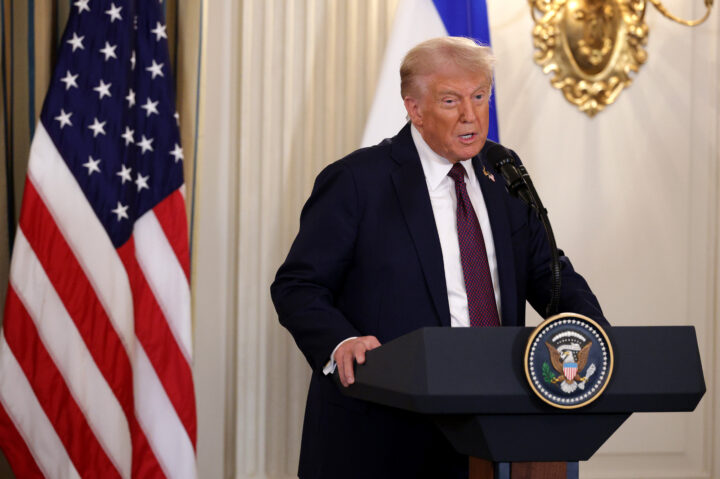
Alex Wong/Getty Images
U.S. President Donald Trump delivers remarks at the White House on September 29, 2025 in Washington, DC.
President Donald Trump announced on Sunday that he plans to designate the Muslim Brotherhood as a Foreign Terrorist Organization following months of bipartisan calls for his administration to target the group.
Trump announced the move in an interview with journalist John Solomon of the conservative outlet Just the News on Sunday morning, saying that an executive order is being prepared for his signature.
“It will be done in the strongest and most powerful terms,” Trump said. “Final documents are being drawn.”
The White House did not respond to Jewish Insider’s request for comment on the announcement or details of the order being drafted for the president.
Trump considered designating the Brotherhood as a Foreign Terrorist Organization (FTO) during his first administration, though that effort never materialized. Sebastian Gorka, who serves as Trump’s deputy assistant for national security affairs and senior director for counterterrorism at the National Security Council, has been publicly and privately urging the president to do so since returning to office, as have a chorus of GOP lawmakers, along with a handful of Democrats in Congress.
Gorka posted on X on Sunday that the “time has come” to designate the group, which he called “the progenitor of all modern Jihadist terror groups, from al Qaeda to HAMAS.”
A Senate bill that would designate the Muslim Brotherhood as a terrorist group, led by Sen. Ted Cruz (R-TX), has 11 co-sponsors, including Sen. Tom Cotton (R-AR), Sen. Rick Scott (R-FL), Sen. Dave McCormick (R-PA) and Sen. John Fetterman (D-PA). The House version of the bill has 19 co-sponsors, including four House Democrats.
Trump’s announcement comes less than a week after Texas Gov. Greg Abbott, a Republican, issued a declaration designating the Muslim Brotherhood and Council on American-Islamic Relations as foreign terrorist groups and transnational criminal organizations, a move prohibiting both groups from buying land in Texas and allowing the AG’s office to sue to shut them down.
Secretary of State Marco Rubio said in August that the FTO designation was “in the works” for the Brotherhood.
“Obviously, there are different branches of the Muslim Brotherhood, so you’d have to designate each one of them,” Rubio told right-wing talk show host Sid Rosenberg on his radio program at the time, adding that the State Department needed to go through a lengthy “process which I didn’t fully appreciate until I came into this job.”
News of Trump’s comments was met with praise in the U.S. and in Israel, even as the details are still fuzzy over what he will be signing.
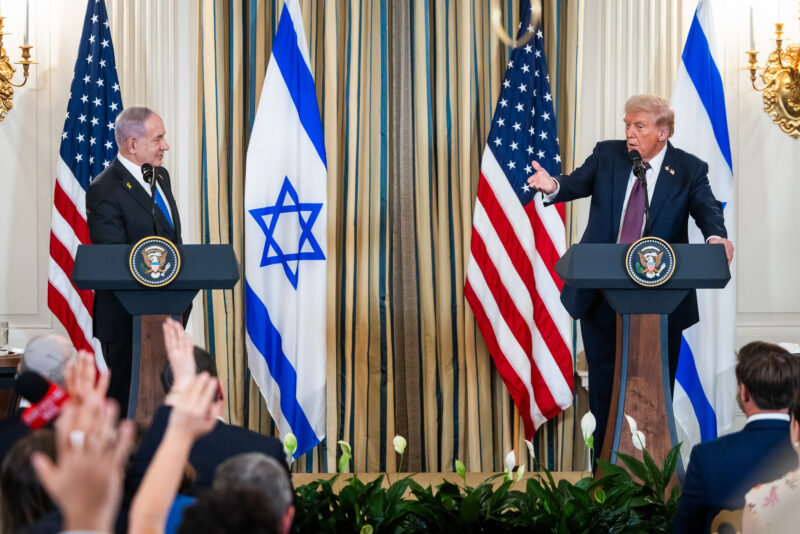
Israeli Prime Minister Benjamin Netanyahu said on Sunday that he wanted to “commend President Trump on his decision to outlaw and designate the Muslim Brotherhood organization as a terrorist organization.”
“This is an organization that endangers stability throughout the Middle East and also beyond the Middle East. Therefore, the State of Israel has already outlawed part of the organization, and we are working to complete this action soon,” Netanyahu said.
The Institute for the Study of Global Antisemitism and Policy (ISGAP) released a statement commending “the fact that the threat posed by the Muslim Brotherhood’s ideology is now being taken seriously at the highest levels of the U.S. government.”
“We welcome President Trump’s statements and the growing recognition that the Muslim Brotherhood, its ideology and network pose a serious challenge to the United States and democratic societies,” Charles Asher Small, ISGAP’s executive director, said to Jewish Insider..
“A formal U.S. designation would represent an important first step to confront the Muslim Brotherhood in the United States,” Small added. “This will require sustained, evidence-based policy, serious scrutiny of its affiliated structures and funding streams, and long-term investment in democratic resilience.”
Dan Schlessinger, the lead attorney for the Boim family in their lawsuit against American Muslims for Palestine regarding the murder of American teenager David Boim in 1996, told JI in a statement: “This is welcome news for many including the Boim family. The next question is what does this mean for U.S.-based, Hamas adjacent groups like American Muslims for Palestine and Students for Justice in Palestine. Our hope is they will be included in this designation as well.”
Schlessinger and his team have accused AMP in court of acting as an “alter ego” of a now-defunct group that shut down after it was found to have provided support to Hamas.
Trump’s senior director for counterterrorism: ‘I was worried by this neo-Buchanan isolationism, but I look at President Trump's actions, they have no hold on him’
JIM WATSON/AFP via Getty Images
U.S. Senior Director for Counterterrorism Sebastian Gorka walks outside the White House in Washington, DC, on May 7, 2025.
Seb Gorka, the White House senior director for counterterrorism and a deputy assistant to the president, aired his grievances with the anti-Israel faction within the Republican Party on Tuesday, alleging that the wing of the GOP aligned with podcast host Tucker Carlson is “basically Pat Buchanan in a new guise.”
Gorka made the comments in a conversation on counterterrorism and U.S. strategy at the Hudson Institute after being pressed on the foreign policy disputes within the MAGA movement and Carlson’s grievances with President Donald Trump’s decision to strike Iran’s nuclear facilities in June.
Asked by moderator Michael Doran, a Hudson senior fellow and director of the Center for Peace and Security in the Middle East, if he was comfortable addressing the growth of anti-Israel, antisemitic sentiment on right-wing podcasts and social media, Gorka replied, “Yeah, I am, because it bothers me immensely, but I’ve come to a certain realization with regards to that, that this wing of isolationism is nothing new. We had this 100 years ago.”
“This is just a poor, substandard repackaging of neo-Buchananite isolationism,” Gorka said, referencing Buchanan, the former Nixon communications director who became an outspoken critic of Israel. “It’s actually a more shallow version. Pat is far smarter than this version of isolationism.”
Gorka said that he is “actually in a better place with” the onslaught of anti-Israel rhetoric from Carlson’s wing of the party than he was previously, explaining that he realized that most of the rhetoric was coming from “probably half a dozen very loud people on Twitter and Rumble,” the right-wing video platform.
“You get out of the miasma, the cesspit that is social media, and you talk to representative MAGA voters, of the 80 million that put the president back in the White House, they don’t think that we should pull down the shutters on the Pacific and the Atlantic coast,” Gorka explained. “They don’t think that Israel is the reason for Oct. 7. They actually have a very special place in their heart for Israel, and they don’t think that hospitals being bombed in Ukraine is a good thing because somebody offered NATO membership to Ukraine, allegedly, a decade ago.”
“As an immigrant to this country, a legal immigrant to the United States, one of the most trenchant indicative characteristics for me of the American people is common sense. They understand who is responsible for Oct. 7. They understand who [Russian President] Vladimir Putin is. And as such, I was worried by this neo-Buchanan isolationism, but I look at President Trump’s actions, they have no hold on him,” he continued.
Gorka then pointed to the early days of the first Trump administration, alleging that at the time, then-Defense Secretary James Mattis and Secretary of State Rex Tillerson expressed hesitation about moving the U.S. Embassy in Israel to Jerusalem out of fear that doing so would cause a third world war.
Gorka said that Trump told concerned members of his Cabinet at the time that they were going through with the move because, “A) We promised the people of Israel 23 years ago, and we’ve broken that promise every six months of 23 years. B) I promised the American electorate in the campaign. We’re doing it. And C) It’s the right thing to do.” He argued that the “moral clarity” shown by Trump on issues impacting Israel highlighted the contrast between the president and his detractors on foreign policy matters.
Earlier in the program, Gorka told Doran that the president’s approach to the Middle East was heavily focused on combating Iran.
“You need to understand one thing: When the president looks at the region, he doesn’t slice it down into cylinders of excellence. He doesn’t care if you’re the Syrian desk officer or the natural resources expert. He has one overlay for the whole AOR [Area of Responsibility], and that one metric, that one prism, is Iran, and he’s absolutely right,” Gorka said. “Iran is front and center in everything we do in the region, because they remain the greatest state sponsor terrorism, and the world would be a much safer place if that were not the case.”
Gorka noted that when Trump is asked by reporters about anything related to national security, “more than 50% of the time … the president will bring up Iran,” adding that this was “especially” the case “before [Operation] Midnight Hammer, because it really is on his mind that this is the threat. A nuclear Iran, an ideologically Islamo-fascist regime that wishes to acquire the most dangerous weapons in the world, is a threat to all decent peoples.”
Turning his attention to Israel, Gorka argued that the Jewish state’s “post-Oct. 7 operations have rewritten the map of the Middle East for the next 50 to 100 years.” He praised Israel’s military moves in Syria and Lebanon, crediting the IDF with taking down the Assad regime in Damascus and significantly weakening Hezbollah.
As for whether the U.S. will undertake additional operations in the region to target Iranian proxies, Gorka said the “jury is still out on that,” but praised Trump’s strikes against the Houthis.
“We had great success with our operation against the Houthis. Again, it wasn’t well understood by the so-called experts. For the president, the action against the Houthis was about one thing and one thing alone. When we told him there had been 150 attacks against U.S. vessels going through the Straits and that they’d actually fired on naval vessels as well, he said, ‘Well, that will not be allowed to stand.’ It’s not just about U.S. interests [but] about global freedom of maritime transport. So all of these things are connected,” Gorka said of Trump’s motivation to strike the Iran-backed Yemeni terror group.
Gorka also disputed the notion that the president was tied down by ideological labels, but rather that he’s focused on achieving results and fixing problems: “Here’s the trouble for the Beltway with understanding the current commander in chief: there is no ideological taxonomy into which he will fall.”
Gorka also discussed efforts to designate the Muslim Brotherhood as a terrorist organization and end Qatari and Turkish support for Hamas
JIM WATSON/AFP via Getty Images
U.S. Senior Director for Counterterrorism Sebastian Gorka walks outside the White House in Washington, DC, on May 7, 2025.
Sebastian Gorka, the White House senior director for counterterrorism and a deputy assistant to the president, said Wednesday at the Foundation for Defense of Democracies that the U.S. is not seeking regime change in Iran, but will maintain its maximum-pressure campaign on Tehran.
Gorka also said that he supports efforts to designate the Muslim Brotherhood as a terrorist organization, suggested that he’s pursuing efforts to convince Qatar and Turkey to cut ties with Hamas and said the U.S. wants to see Syrian minority groups come to the table and join with the new Syrian government.
He said that the Trump administration views Iran as the paramount threat and focus in the Middle East, and that its strategy toward Iran is “max pressure, no regime change,” with the goal of stopping Iran’s nuclear program and ending its support for terrorist proxies.
“We are not in the business of deploying the 82nd Airborne to do regime changes anywhere. We don’t believe in that,” Gorka said.
In the long term, he added, “we would like the people of Persia, including the minorities of Persia, to eventually liberate themselves.”
Trump had publicly floated the possibility of regime change in Iran after the U.S. strikes on the country last month, but subsequently said he does not seek regime change. Some administration officials had also floated the idea of sanctions relief for Iran.
Gorka said he backs efforts to designate the Muslim Brotherhood as a terrorist organization, describing the group as the “granddaddy” of all of the terrorist organizations that have attacked the United States and its allies for decades.
“If we can designate, as we have, Hamas, which in its founding charter from 1984 says, ‘We are a chapter of the Muslim Brotherhood,’ then why haven’t we designated the Brotherhood itself?”
“So what I’ll say right now,” Gorka said, clearing his throat, is, “I like the idea,” he finished in a whisper.
Asked by Jewish Insider about whether the administration is working to end Turkey and Qatar’s sponsorship of Hamas, he said that he is “imminently traveling to that part of the world, so that should tell you something.”
He added that Turkey is an “important nation, it’s a geopolitical nation, it has a role to play with us as a NATO nation, but there are things I will be discussing with Ankara that I find leave me with a sense of unease,” including the Turkish government’s relationship with Hamas as well as reports that ISIS terrorists have been moving through Turkey.
“There has to be a balance between their conceptualization of the PKK threat,” Gorka said, referring to the Kurdish militant group, “and threats that we share, such as ISIS. I think that’s where the rebalance has to come.”
“With regards to Qatar, Qatar has … a very simple choice it has to make. Do you give any kind of succor to those who do not help in the stabilization of the region? That’s all I’m going to say,” he continued.
In Gaza, Gorka said that there “are a lot of good things happening at a tactical and operational level” on the ground, in that the U.S. is working to train anti-Hamas police and security units and that those units are “working quite closely with Israel.”
But, he said, “as far as I’m concerned, none of that goes anywhere until the political leadership changes,” saying that the “cultural issue” of widespread support in Gaza for Hamas and the Oct. 7, 2023, attacks on Israel is a problem that cannot be solved by a police force. “We need some brave men and women to say, ‘I am here to help fix Gaza.’”
Gorka framed President Donald Trump’s proposal for the U.S. to take over Gaza and relocate the Palestinian population as a negotiating tactic to motivate Middle Eastern countries to step up to take responsibility and invest in Gaza — though that investment hasn’t yet come to fruition.
Gorka, who said he regularly watched videos of ISIS and Al-Qaida’s brutal torture and murder of their victims, described footage of the atrocities committed by Hamas on Oct. 7 as far beyond anything he had ever seen before. “Nothing I’d watched in my two decades prepared me for what I saw that day.”
“I praise the government of Israel. I praise the IDF because what they have done in response is a redrawing of the map of the Middle East that will change your politics for at least a century,” Gorka said. “One of the greatest things they have done is to ensure that the strategic threat of Iran is now incapable of resupplying its proxies in the territory of Syria. God bless Israel for doing that. Now we have to finish the job. We have to make sure Iran stops supplying its proxies. We have to stabilize Syria.”
He added that, “despite the ideological way it has been exploited by certain actors here and elsewhere, the response to Oct. 7 has actually benefited us, because people have woken up to the horrors of modern … Jew hatred.”
The White House advisor said that the administration has told Syrian President Ahmad al-Sharaa that the U.S. “want[s] him to make Syria great again,” and that doing so will require bringing all elements of Syria to the table, including Kurds, Christians, Alawites and Druze. Additionally, the U.S. has told those minority groups, including Kurdish allies, that it does not support them making pushes for autonomy.
“Come to the table, because this is your shot,” Gorka said. “Get in on that deal, because it’s the only time it’s going to happen.”
In the short term, he said, the administration wants to make sure those minority communities can protect themselves and to “make sure the state sees an end to the massacre of whichever confessional community.”
Asked by JI about the possibility of Iranian retaliatory attacks in the United States, Gorka said that “because of how we boxed in Iran, they are basically forced to use surrogates. … They can’t deploy their own assets, which is a good thing. Beyond that, we take it very seriously and that’s all I can say right now.”
He highlighted other recent intercepted plots, including one in the United Kingdom, where Iran has attempted to utilize Iranian expatriates to attack the Israeli Embassy, adding that the group has also sought to employ domestic criminal groups to carry out operations on its behalf.
Gorka praised Israel’s operations against Hezbollah in Lebanon, and noted that the country’s new president, Joseph Aoun, studied under him at the National Defense University.
“The relationship is positive but it could be improved in terms of matching verbiage to actual results,” he said.
Gorka previewed U.S. plans for a “series of short efforts, high-intensity efforts to make the leading terror threats to America combat-inneffective, at which point our friends, our allies, our partners in the Middle East and elsewhere pick up the terrorist suppression operations.” The goal, he explained, is to prevent terrorist groups from being able to carry out operations on U.S. soil.
He said that the U.S. does not want to maintain a global presence permanently to counter terrorism, though he added that the U.S. is willing to maintain a “small footprint” in certain locations to address specific threats.
He also emphasized the need for the U.S.’ Muslim partner nations to lead efforts to counter jihadist narratives and recruiting efforts, and poke holes in jihadist ideology.
Please log in if you already have a subscription, or subscribe to access the latest updates.
 Continue with Google
 Continue with Apple