










































































Mayor Brett Smiley, who converted to Judaism while in office, faces a Bernie Sanders-backed democratic socialist in Wednesday's Rhode Island primary, with an anti-Israel divestment referendum looming over the race
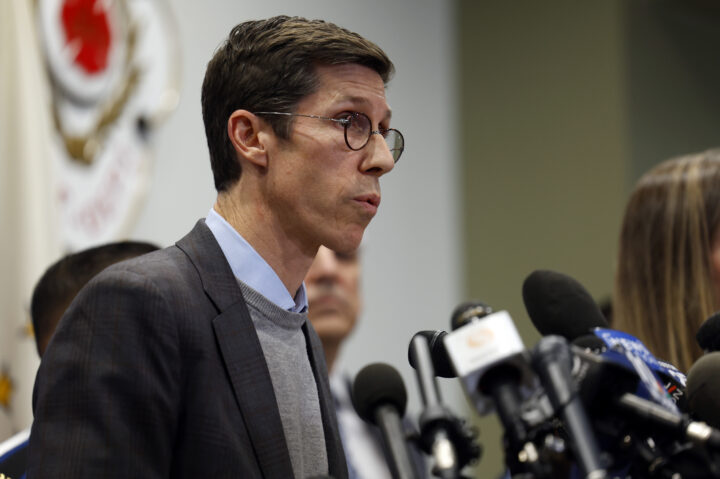
(Danielle Parhizkaran/The Boston Globe via Getty Images)
Providence Mayor Brett Smiley answers questions during a press conference at the Providence Public Safety Complex on December 16, 2025.


 Add JewishInsider on Google
In the upcoming Democratic mayoral primary in Providence, R.I., on Wednesday, Israel and antisemitism have claimed prominence as unusually divisive sources of debate for a municipal race, raising concerns among Jewish leaders who worry the focus on Middle East policy in particular will only contribute to further polarization on a sensitive issue.
The election is pitting Mayor Brett Smiley, 47, a first-term incumbent who converted to Judaism while in office in 2024, against state Rep. David Morales, a 27-year-old democratic socialist backed by Sen. Bernie Sanders (I-VT) and leading progressive groups including the Working Families Party.
One of the top subjects of debate is a controversial ballot initiative up for a vote in November that — if passed — would require Providence to refrain from investments in “foreign countries conducting ethnic cleansing, apartheid, illegal military occupation or genocide.”
Even as the ballot measure does not name Israel, unlike recent efforts explicitly targeting the Jewish state in Pittsburgh as well as Somerville, Mass., the referendum was driven by local anti-Israel activists, leaving Jewish leaders now rallying to oppose it with little doubt over its subtext. Smiley, a vocal supporter of Israel, has opposed the referendum, saying it could run afoul of state law, while Morales has been among its key defenders, framing the effort as a moral cause.
In a statement shared with Jewish Insider, Smiley noted “the city’s legal department has determined that this ordinance is both unenforceable and likely in violation of existing state law,” while adding the effort “is consuming resources that should be spent protecting the integrity of our elections.” He called the referendum “unproductive” and “burdensome to our election officials,” warning that it “will harm the finances of our city.”
Morales, in an interview with JI on Friday, said he believed the successful effort to secure ballot access for the referendum was a step toward ensuring “that in no way, shape or form is Providence contributing to” what he described as “apartheid, illegal military occupation or genocide.”
“The fact that we are actively having this type of conversation, I think, speaks to the broader question of who do we want representing us? Who do we want making decisions out of City Hall, the Statehouse or to the walls of Congress?” Morales added, pledging to use his “platform as mayor of Providence” to push for federal opposition to “unconditional military aid” for Israel.
The heated atmosphere of the election underscores the degree to which rising Democratic divisions over Israel are now shaping even local races for roles with no direct ability to influence foreign policy outcomes. In another demonstration of how such elections have gained a more nationalized valence, Morales has also won praise from Track AIPAC, an extreme anti-Israel account, even as AIPAC itself does not engage in city or state races.
As leftist candidates have increasingly linked their opposition to the war in Gaza to a broader suite of social justice causes on the domestic front, Israel is emerging as a significant issue animating an activist base that has helped fuel a growing number of major upsets at both the state and federal levels this cycle.
While there is no independent public polling on the race, a survey released last week and commissioned by a group tied to a supporter of Morales showed the Democratic insurgent leading by 10 points, with 48% of the vote.
A spokesperson for Smiley declined to share internal polling but expressed skepticism of the recent survey, noting that it was commissioned by a group affiliated with Jorge Elorza, a former Providence mayor who is backing Morales.
Morales, who has sought to channel the energy of Zohran Mamdani’s campaign for mayor of New York City — where the state legislator hosted a fundraiser in July — has also notably denounced his opponent’s attendance at a conference sponsored by the Combat Antisemitism Movement, where Smiley is chair of the mayoral advisory board.
The conference, Morales argued in December, is organized by “outside donors pushing a national agenda,” which he claimed was “designed to chill political speech” and to crack down on “expressing solidarity with Palestine.” The mayor, who has also faced protests outside his home over a trip to Israel, has rejected that characterization, while pointing to what he casts as a “double standard” for supporters of the Jewish state.
“In my darkest days as mayor,” Smiley told JI last week, “I have found strength and resilience through my faith and my community, and I will continue to work every day to ensure that Providence Jews are able to gather, worship and celebrate safely and free from hatred and discrimination.”
“That’s why I have spoken out against antisemitism” and joined “conferences focused on understanding and combating antisemitism — conferences that my opponent has repeatedly condemned,” he said in the written comments.
Against the backdrop of such tensions, some of Smiley’s campaign signs were recently defaced by antisemitic imagery — including devil horns and a Hitler mustache — in an incident that turned up the temperature of an already contentious race.
“While campaigns can often get heated, there is no excuse for targeted attacks and hate speech in our political dialogue,” Smiley wrote in the statement to JI. “Actions like this are about more than one person — they send a message to an entire community that they are not safe or welcome here. That is not how we treat our neighbors in Providence, and it’s incumbent on all of us to disavow hate speech in all its forms.”
Speaking more broadly, Smiley said antisemitism “is on the rise around the country, and our community is feeling that here in Providence,” which is home to an estimated 15,000 Jewish residents.
“No one should ever have to ask if it’s safe to put a mezuzah on their door or display a menorah in their window, and yet these conversations are happening more and more often in our city,” the mayor told JI.
Morales, for his part, condemned the vandalism last month, while urging residents to oppose “all forms of bigotry,” a sentiment he reiterated to JI on Friday.
Despite concerns among local Jewish leaders who feel his rhetoric against Israel is sowing unneeded tensions, Morales vowed to engage proactively with community members who do not share his stances.
“When I talk about building a Providence for all, it’s not just about building a city for people I agree with,” he clarified in the interview. “It’s about engaging with neighbors from all walks of life and all backgrounds, and so I will certainly be engaging directly with our Jewish community, and ensuring that they feel safe and welcomed.”
Morales has faced attacks from the mayor over his past support for defunding the police, a position he has said he no longer holds. He emphasized to JI that as mayor, “when there is a need for additional police details for gatherings and events” at synagogues and other institutions, he will be “ready to deploy those additional forms of security measures and support.”
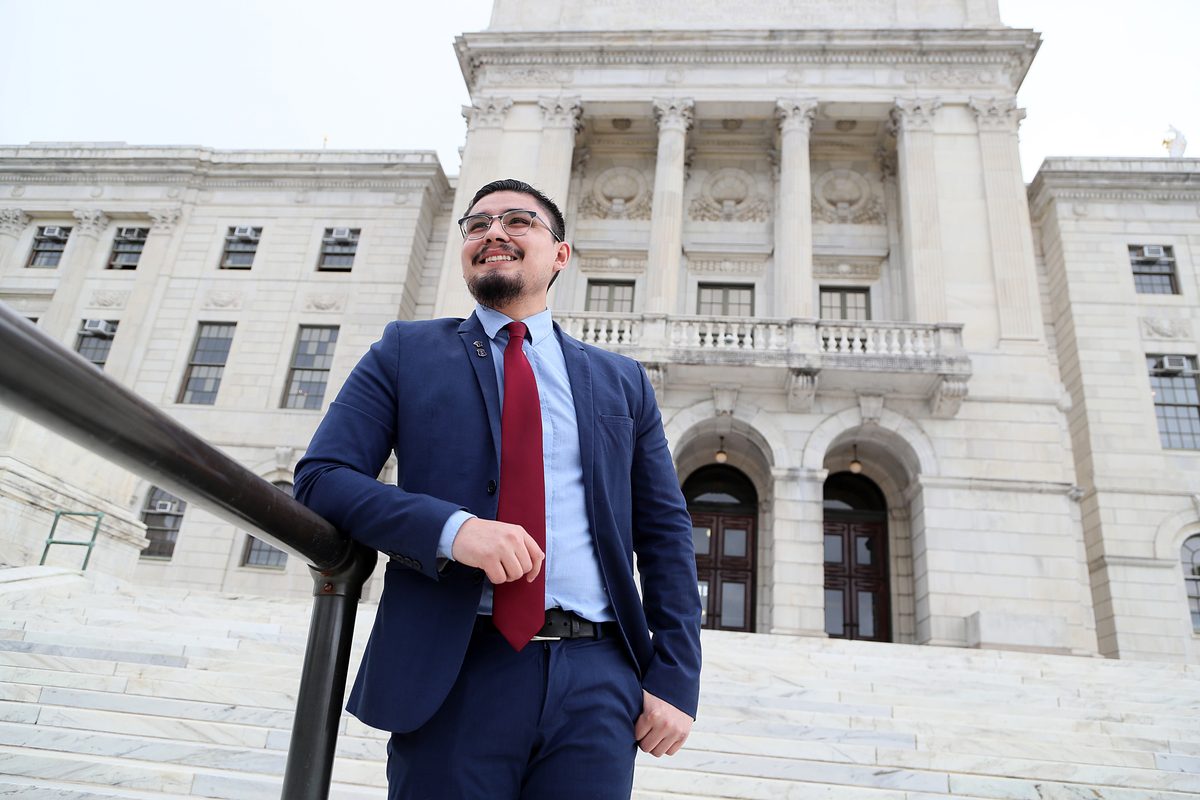
Still, Jewish leaders indicated they were far from reassured by such promises, largely citing Morales’ vocal support for the ballot initiative they view as a thinly disguised effort to institutionalize the Boycott, Divestment and Sanctions campaign against Israel at the municipal level.
“Providence’s investment decisions should be driven by what’s best for Providence residents,” said Steven Baker, president and CEO of the Jewish Alliance of Greater Rhode Island, “not by divisive political tests that make our community more polarized and less united.”
Avi Nevel, the founder and CEO of the Rhode Island-Israel Collaborative, said he was “extremely concerned about what we are seeing in this race, and I think what has happened was totally uncalled for.”
“I definitely feel that there is a wave of anti-Israel sentiment that is also coinciding with antisemitism. Unfortunately, past experience has taught us that the two can often overlap, and I believe we need to take this very seriously,” he told JI last week.
Ken Schneider, the president of the Rhode Island Coalition for Israel, said the “mayoral race is of great importance to the Jewish community in Providence.” He called the ballot referendum both “anti-Israel and anti-Jewish” and said the city “should not insert itself in international politics.”
“The community has mobilized against this,” he told JI last week, while vowing that members of his group “will be at the polls” on Primary Day “to point out the major differences between Smiley and Morales.”
The winner on Wednesday will face Republican candidate Dave Talan as the prohibitive favorite in November. Providence has not elected a GOP mayor in nearly half a century.
Tony Affigne, a professor of political science at Providence College, said debates over Israel “aren’t the concerns that animate most Providence voters,” noting that “a critical shortage of affordable housing, school funding and effectiveness, anxiety about local ICE actions, property tax rates and community safety are top of mind for our local electorate.”
He framed the race as a fight for generational change, describing Morales as “an energetic, insurgent young candidate” who is “promising a focus on affordability and a clean break with the past.” He called the mayor a “well-connected, well-financed incumbent,” saying Smiley has been both “administratively experienced and policy oriented — if somewhat uninspiring on a personal level.”
“Either could win based on their relative strengths, depending somewhat on turnout for this and the other races on the ballot this year,” Affigne told JI.
Plus, Rabbi Shemtov's Hanukkah hop

Olivier Touron / AFP via Getty Images
Attendees listen to conservative political commentator Ben Shapiro during Turning Point's annual AmericaFest conference in remembrance of late right-wing political activist Charlie Kirk, in Phoenix, Arizona on December 18, 2025.
👋 Good Monday morning!
In today’s Daily Kickoff, we talk to Jewish leaders in Texas concerned about Democrat James Talarico’s rhetoric on Israel as he mounts a Senate bid in the Lone Star State, and spotlight Providence, R.I., Mayor Brett Smiley‘s efforts to lean on his Jewish faith as the city reels from the shooting at Brown University. We interview Rabbi Levi Shemtov as the rabbi concludes a week of criss-crossing the District to celebrate Hanukkah, and talk to AJC CEO Ted Deutch about the need for Jewish communal unity on security issues in the wake of the Bondi Beach attack. Also in today’s Daily Kickoff: Josh Blackman, Seymour Hersh and Sen. Lindsey Graham.
Today’s Daily Kickoff was curated by Jewish Insider Executive Editor Melissa Weiss and Israel Editor Tamara Zieve, with an assist from Marc Rod. Have a tip? Email us here.
What We’re Watching
- We’re continuing to monitor developments in Australia. At a Sunday vigil in Sydney for the victims of last week’s Bondi Beach attack, Australian Prime Minister Anthony Albanese was jeered and booed over what the country’s Jewish leaders have derided as inadequate efforts to address antisemitism before and since the attacks.
- Earlier today, an Australian court released police charging documents for the alleged shooter who was not killed during the attacks. The documents noted that Naveed Akram and his father had also hurled explosive devices into the crowd that had failed to detonate, and prior to the attacks had recorded a video explaining their motivations while standing in front of an ISIS flag.
- In Israel, Tel Aviv University’s Institute for National Security Studies, in collaboration with the Ruderman Family Foundation, is hosting a conference this afternoon examining the U.S.-Israel relationship, including the connection between Israel and American Jewry.
What You Should Know
A QUICK WORD WITH JI’S Josh Kraushaar
The kids aren’t alright.
That’s the unmistakable takeaway from a weekend filled with shocking developments surrounding the views of young conservatives, punctuated by a Turning Point USA conference that turned into a proxy war between mainstream voices led by Ben Shapiro, looking to create guardrails against antisemites and conspiracy theorists within the MAGA movement, against a growing cadre of bad-faith right-wing influencers leading the charge to embrace extremist voices into the conservative coalition.
The conference concluded with Vice President JD Vance all but taking the side of the extremists, while offering fulsome praise to his friend, Tucker Carlson, as an essential part of the Republican Party coalition.
The last several days also featured news of an eye-opening Manhattan Institute focus group of Gen Z Nashville-area conservatives reluctant to offer any negative reaction toward Adolf Hitler and sharing numerous antisemitic stereotypes about Jews. (One 29-year-old woman offered this representative reaction about Hitler: “I think he was a great leader, to be honest. I think what he was going for was terrible, but I think he showed very strong leadership values.”)
The weekend ended with a Jewish Insider scoop that a Trump administration nominee for a senior position at the State Department has a long track record of making derogatory comments about the Jewish community, characterizing Jews as religiously incorrect and in need of conversion.
This moment was further underscored by the hideously antisemitic tirade that Candace Owens went on over the last few days, barely eliciting any serious pushback from conservative movement leaders. Meanwhile, former journalist Megyn Kelly, during her own speech Friday at the TPUSA conference, chose to go after Shapiro and CBS News Editor-in-Chief Bari Weiss even as Kelly has publicly steered clear of criticizing Owens, citing the fact that she’s a young mother and a personal friend. (Shapiro, she said, is no longer a friend after he criticized her in his speech Thursday night.)
Shapiro, long one of the leading voices on the right, opened the conference with a warning that the conservative movement is in danger from “charlatans who claim to speak in the name of principle but actually traffic in conspiracism and dishonesty, who offer nothing but bile and despair.”
He called out Tucker Carlson, Owens and Kelly by name. “We must not let fear of audience anger deter us from telling the truth; we must not let fear of other hosts deter us from telling the truth,” Shapiro warned. “The fact that Candace has been vomiting all sorts of hideous and conspiratorial nonsense into the public square for years on end while others fly cover for her is … cowardly.”
TALARICO TALK

Jewish leaders in Texas are growing increasingly concerned about Democratic Senate candidate James Talarico’s comments on Israel, with four members of the community telling Jewish Insider’s Marc Rod that without concerted outreach from Talarico, they’re likely to back Rep. Jasmine Crockett (D-TX) in the Democratic primary. Their frustrations came to a head after Talarico accused Israel of war crimes in response to a general question on foreign policy at an event last week. “I will use every bit of financial and diplomatic leverage that this country has to end the atrocities in Palestine,” Talarico vowed to do if elected. “I will not use your tax dollars to fund these war crimes. I will vote to ban offensive weapons to Israel.” He also said he’d refuse to accept support from AIPAC.
Calling him out: Art Pronin, who leads the Meyerland Area Democrats Club, a largely Jewish Democratic group in the Houston area, told JI he’s known Talarico for years and the candidate has spoken to the Meyerland Democrats group. Pronin has repeatedly expressed concerns to Talarico directly and to the campaign about his Israel rhetoric, to little effect. “I told him … ‘You’ve got to stop singling out one group,’” Pronin said, referring to AIPAC. He said that Talarico had apologized and said he would modify his rhetoric, but offered similar comments, unprompted, at the Houston town hall last week.
BUOYED BY BELIEF

As the Rhode Island capital has found itself a fixture in the national news following the recent mass shooting at Brown University, where a gunman killed two students and injured nine more, Providence Mayor Brett Smiley has also found himself in the spotlight. “I think my job in the days to come is to help our community heal, to process the trauma that they’ve been through,” Smiley said at a vigil last Sunday. A long-planned communal holiday gathering, meant to be a Hanukkah celebration and a Christmas tree lighting, had turned into a place for people to grieve together, Jewish Insider’s Gabby Deutch reports.
Healing together: On Friday, Smiley sat in his dark City Hall office before dawn, describing the surreal saga following the end of the dayslong manhunt, in an interview with a local NBC affiliate. “Everything about this situation is tragic, but at least we now know there is a definitive end to it,” Smiley said, sitting in front of a Hanukkah menorah. “Now we can start the healing process as a community.” The mayor leaned on his own faith in the days afterward. Aside from taking part in the menorah lighting, he stopped by his synagogue, Temple Beth-El, and spoke several times last week to Rabbi Sarah Mack. “He’s a lovely, wonderful person with deeply rooted morals and values, and he has found his Jewish faith to be incredibly meaningful to him,” Mack told JI on Thursday.
MENORAHS ON THE MALL

One of Washington’s few remaining bipartisan traditions is the annual clamoring for a ticket to the White House Hanukkah party — an affair that was smaller than usual this year after the Trump administration tore down the East Wing, prompting disappointment even from some Republican allies who did not score an invite. If you’re a member of the opposing political party, forget about it. But even as power changes hands in Washington, one person is a fixture at Republican and Democratic White House Hanukkah parties, as well as Hanukkah gatherings all across the Beltway. That’s Rabbi Levi Shemtov, the executive vice president of American Friends of Lubavitch (Chabad), the Washington arm of the global Chabad movement, and Washington’s unofficial menorah-lighter-in-chief, Jewish Insider’s Gabby Deutch reports.
Expression of pride: “I was raised during the Bicentennial, and I got a very patriotic education in our day school. I felt very American, and I thought this was a strong public expression of a deep Jewish pride that I was able to enjoy,” Shemtov said during Hanukkah last week. “I come from grandfathers on both sides of my family who were arrested and imprisoned, tortured and exiled for being Jews and for practicing Judaism and for leading Jewish communities. So I wasn’t going to let the freedom we are so fortunate to have here just pass without my active participation in it.”
ON THE HILL
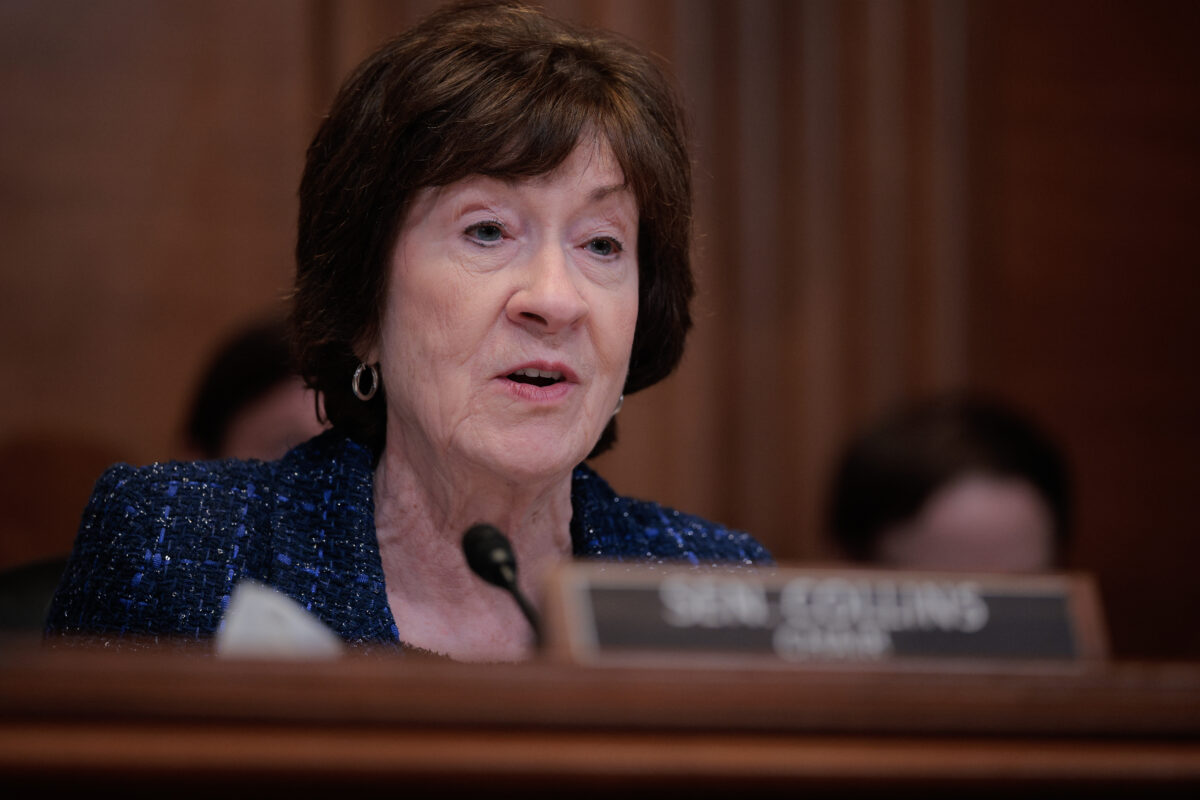
Senate Appropriations Committee Republicans, in a long-delayed Homeland Security funding bill released on Friday, proposed a modest increase in funding for the Nonprofit Security Grant Program to $330 million, Jewish Insider’s Marc Rod reports.
State of play: The program was funded at $274.5 million in 2025 — not counting supplemental funds included in the 2024 national security supplemental bill. The Senate’s proposed increase comes in far below the $500 million to $1 billion that Jewish community advocates and supporters of the program on Capitol Hill have called for. The proposal is also slightly below the $335 million approved by the House in its version of the bill earlier this year. The Senate proposal sets off a sprint to finalize 2026 government funding when Congress returns in January, ahead of an end-of-month deadline.
CALL TO ACTION

Following the shooting at a Sydney, Australia, Hanukkah event in which 15 people were killed, American Jewish Committee CEO Ted Deutch said that it’s critical for Jewish communal organizations to join together around a campaign to protect the Jewish community worldwide and win over allies in that fight, Jewish Insider’s Marc Rod reports.
Coming together: “The community organizations need to come together around an immediate effort to respond to Bondi Beach. This is urgent for us,” Deutch said. Even if various groups have different approaches to their work, “we’ve got to show the Jewish world” and the philanthropists who back them “that we can actually work together, all of us, in ways that will protect the Jewish community in response to what happened at Bondi Beach.” And he said that the Jewish community needs to stand its ground and be clear that it has the right and expectation to have its concerns and security “treated as seriously as other communities” and the “expectation that when we’re at risk, there will be action, rather than asking that everyone please consider our plight.”Read the full interview here.
SIGHTS ON SYRIA

A group of 136 House Republicans released a joint statement on Friday calling for increased oversight of and accountability from Syria, days after voting to repeal the last major sanctions package on the country as part of the 2026 National Defense Authorization Act, Jewish Insider’s Marc Rod reports.
What they said: The lawmakers said that the “the mass murder of the Syrian Christians, Druze, Alawites, Kurds, and other religious and ethnic minorities must be a thing of the past” and that they are “committed to keeping a watchful eye on the new al-Sharaa Administration to ensure protections for religious and ethnic minorities.” They said they had received assurances from the administration and House leadership that sanctions would be re-imposed if the Syrian government breaches the non-binding conditions laid out in the bill, that the House would hold a hearing on the treatment of religious minorities in Syria and that they would like to visit Syria to personally observe the situation on the ground.
Worthy Reads
Sounding the Alarm: In The Times, Deborah Lipstadt, the Biden administration’s special envoy to monitor and combat antisemitism, argues that efforts by governments and leaders to “engage in pieties but not action” that see officials ignore antisemitic elements in their coalitions will lead to more attacks on Jewish targets. “However, unlike the neo-Nazis of previous generations, the extreme right-wing of today looks quite respectable. Think of the influencer Nick Fuentes or the YouTube host Candace Owens. No sieg heil salutes. No Nazi-like uniforms. But the hate they spew is as dangerous as that we heard in years gone by. It may even be more dangerous than its predecessors, because it sounds rational. There is, of course, also a very real problem on the left, which we have seen playing out at universities in recent years. … Islamists have made common cause with the left. This alliance persists even though both groups’ views on democracy, LGBTQ identities, gender equality and much more are at opposite ends of the spectrum.” [TheTimes]
Parental Guidance: In The Wall Street Journal, former U.S. Ambassador to Japan Rahm Emanuel, who served as chief of staff in the Obama administration, reflects on the parenting choices he and his wife, Amy, made as they raised their three children. “Our first principle, perhaps the most important, is a tribute to my Jewish mother: Meals matter. If you want to raise successful children, families have to eat together. No matter my job, Amy and I made it a practice to carve out at least four evenings a week for dinner. Knowing that Shabbat dinners often run long, President [Barack] Obama would sometimes text me late on Friday nights: ‘Is it safe to call yet?’ I wasn’t only insisting on time alone with Amy and the kids; Amy and I were signaling to the kids how important they were to us and how important the Shabbat meal was to our family.” [WSJ]
Primary Problems: CNN’s Sarah Ferris and Manu Raju report on concerns among Capitol Hill Democrats over far-left primary challenges to sitting party members as the 2026 midterms gear up. “Democrats in Washington say primaries are simply part of life in a big-tent party. But privately, many see the surge in far-left challengers as an expensive headache that distracts from the party’s goal of seizing control of Congress next November. And it has infuriated some Democrats — including among the most vulnerable members — who fear the party will have to divert money away from the bigger fight against the GOP to protect incumbents in safe seats. ‘I think we’ve got individuals who might be caught up in the moment, caught up in the internet,’ said Rep. Greg Meeks, a fellow New York Democrat who has watched liberal challengers line up against many in his home state delegation.” [CNN]
‘Free Pass’ for Antisemitism: In the Deseret News, Nathan Diament, the executive director of the Orthodox Union Advocacy Center, calls for the protection of religious gatherings and places of worship in the wake of protests at synagogues in Los Angeles and New York and the recent attack in Bondi Beach. “It is crucial that society be honest about who and what we are dealing with. The ‘protestors’ are not genuine proponents of free speech. Their vile and violent chants are clear: They seek to dismantle, disrupt and deny Jewish religious life. They want to use their absolutist claim on free speech to annihilate the equally important right to freedom of religion. We are witnessing the natural consequence of two years of refusing to hold bad actors accountable. The vast majority of campus protestors and rioters were given a free pass by local politicians and prosecutors even though they assaulted students, destroyed private property and clearly violated Jews’ civil rights. They were essentially told society doesn’t care enough about those rights.” [DeseretNews]
Word on the Street
Israel is cautioning the U.S. that a recent missile drill conducted by Iran could be part of an effort to prepare for another military conflict with Israel, six months after the 12-day war between the countries…
White House Special Envoy Steve Witkoff and Jared Kushner, assisted by senior White House aide Josh Gruenbaum and other administration officials, are promoting their “Project Sunrise” plan to develop Gaza into a coastal metropolis; under the terms of the plan, the U.S. would contribute about 20% of the reconstruction costs over the next 10 years…
Sen. Lindsey Graham (R-SC), visiting Israel on Sunday, said that Hamas is “absolutely not” prepared to disarm, despite the move being a key stipulation of the Trump administration’s 20-point peace plan; Graham added that the terror group is “rearming” and “consolidating power” in the Gaza Strip…
The U.S. launched airstrikes on dozens of ISIS targets in Syria on Friday in response to an attack last week in which two U.S. troops and an American civilian interpreter were killed by a member of the Syrian security forces whom Syrian and American officials said had ISIS sympathies…
The Wall Street Journal interviewed U.S. Ambassador to Israel Mike Huckabee about the Republican Party’s divide over Israel…
Rep. Elise Stefanik (R-NY) announced on Friday that she was ending her campaign for governor of New York, an abrupt and unexpected move that comes just over a month after the Republican congresswoman launched her bid to unseat Gov. Kathy Hochul, Jewish Insider’s Emily Jacobs reports…
Los Angeles Rams wide receiver Puka Nacua was fined $25,000 by the NFL for comments made on a livestream last week in which the football player criticized the league’s officiating; Nacua was not fined for having made an antisemitic gesture on the same livestream…
The New York Times reviews “Cover-Up,” a documentary by Laura Poitras and Mark Obenhaus about the work of investigative journalist Seymour Hersh…
Josh Blackman announced his resignation as senior editor of the Heritage Foundation’s Heritage Guide to the Constitution, amid a wave of departures as the think tank’s leadership, staff and board clash over CEO Kevin Roberts’ embrace of Tucker Carlson…
The Financial Times spotlights Israeli-Arab MK Mansour Abbas as the Ra’am party leader works to again position himself as a kingmaker in next year’s elections…
An estimated 20,000 Saudi forces are amassing near the Gulf country’s border with Yemen amid efforts to force the Southern Transitional Council separatist group to relinquish its recent territorial gains…
Rabbi Emily Korzenik, who, as one of the first female ordained rabbis, presided over the first bar mitzvah in Krakow, Poland, since the Holocaust in 1985, died at 96…
Art historian and photographer Allan Ludwig, whose book Graven Images: New England Stonecarving and Its Symbols, 1650-1815 brought new interest to the field of Puritan funerary art, died at 92…
Stock trader and art dealer Robert Mnuchin, the father of former Treasury Secretary Steve Mnuchin, died at 92…
Pic of the Day

William Daroff, the CEO of the Conference of Presidents of Major American Jewish Organizations, lit Hanukkah candles in Jerusalem with freed hostages Keith and Aviva Siegel at the J50 gathering of Jewish leaders, representing the 50 largest Jewish communities in the world.
Birthdays
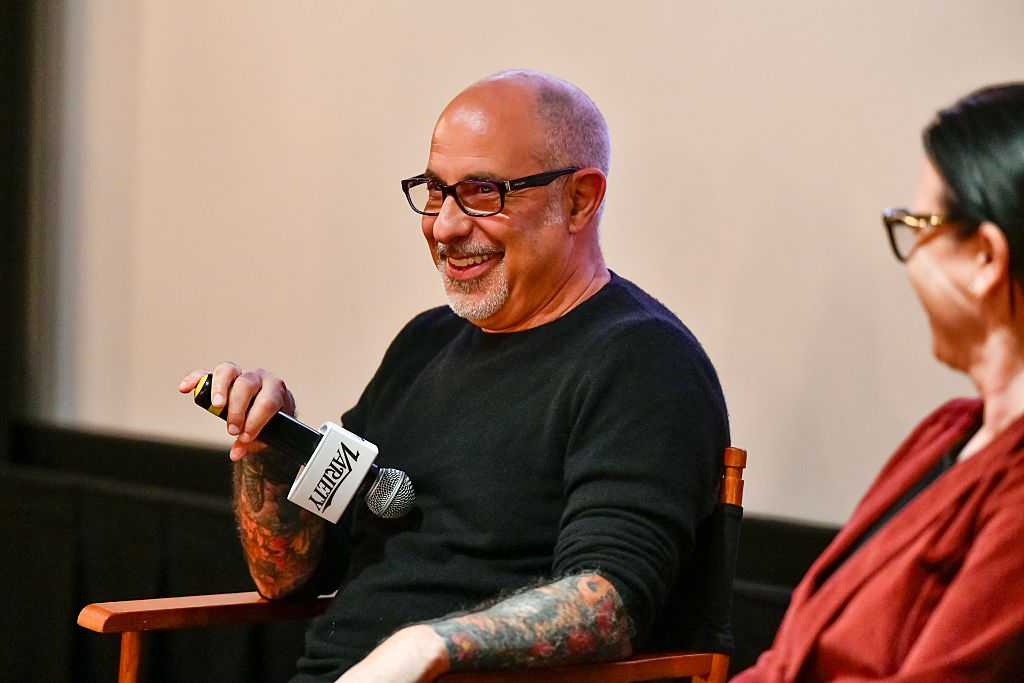
Filmmaker, novelist, video game writer and comic book writer, David Samuel Goyer turns 60…
Retired New York Supreme Court judge, Arthur J. Cooperman turns 92… Former president of the World Bank, U.S. ambassador to Indonesia, U.S. deputy secretary of defense and dean of JHU’s Nitze School of Advanced International Studies, Paul Wolfowitz turns 82… NYC-based political consultant, ordained as a Rabbi by Chabad in 2011, his early career included stints as a policeman, taxi driver and bounty hunter, Henry “Hank” Sheinkopf turns 76… Retired assistant principal from the Philadelphia school district, Elissa Siegel… Associate at Mersky, Jaffe & Associates, he was previously executive director of Big Tent Judaism and VP of the Wexner Heritage Foundation, Rabbi Kerry Olitzky turns 71… Rosh yeshiva at the Rabbi Isaac Elchanan Theological Seminary of Yeshiva University, Rabbi Michael Rosensweig turns 69… Cardiologist and professor of medical engineering at MIT, Elazer R. Edelman turns 69… Retired Israeli brigadier general who then served as the national CEO of the Friends of the IDF, Yehiel Gozal turns 68… Senior managing director in the D.C. office of Newmark where she is responsible for investment sales and commercial leasing transactions, Lisa Benjamin… Former CFO of Enron Corporation, Andrew Fastow turns 64… Rabbi at Temple Sinai of Palm Desert, Calif., David Novak turns 63… NPR correspondent covering the State Department and Washington’s diplomatic corps, Michele Kelemen turns 58… Film and television actress, Dina Meyer turns 57… CEO of Next Titan Capital until four months ago, Michael Huttner… U.S. senator (R-TX), Ted Cruz turns 55… CEO of American Council of Young Political Leaders, Libby Rosenbaum… Columnist and best-selling author, James Kirchick turns 42… Writer and editor from New York City, Sofia Ergas Groopman… Business development representative at HiBob, Carly Korman Schlakman… Head of philanthropy and impact investment for EJF Philanthropies, Simone Friedman… Liberty Consultants’ Lisa Brazie…
A clear template is emerging of what the White House views as the ideal outcome here: deals, deals, deals — in classic Trump fashion
CHARLY TRIBALLEAU/AFP via Getty Images
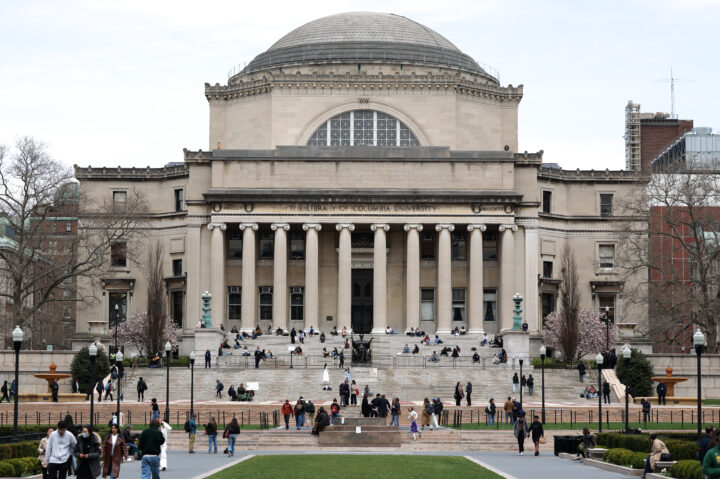
Students are seen on the campus of Columbia University on April 14, 2025, in New York City.
This week, the Trump administration demonstrated its endgame in its fight against campus antisemitism: hefty financial settlements.
Columbia University agreed to pay $221 million to the federal government to settle the administration’s civil rights investigation, and Brown University will pay $50 million to Rhode Island workforce development agencies to put a federal civil rights investigation to rest. Harvard is reportedly willing to spend up to $500 million on a settlement that is in the works. In return, frozen research grants to the tune of billions of dollars from the National Institutes of Health and the Department of Health and Human Services will be reinstated.
What these early settlements have made clear is that antisemitism is only one small part of President Donald Trump’s fight against elite universities. The agreements offer a window into the other right-wing culture war issues driving his administration’s hard-charging negotiations with America’s top academic institutions. The lengthy documents also have the universities ceding to White House demands on diversity, equity and inclusion programs, race-based hiring standards, transgender issues and international students.
In its agreement with the White House, Columbia pledged to hire an administrator to “serve as a liaison to students concerning antisemitism issues,” and promised other sought-after changes, such as the hiring of new faculty members in the Israel and Jewish studies department and additional oversight of the school’s Middle East studies program.
But the propositions agreed to by Columbia go much further. The school pledged not to use racial preferences in admissions and promised to share admissions and hiring data with the federal government. The university also said it will allow any women who want it to have access to “single-sex housing” and “all-female sports, locker rooms and showering facilities,” a reference to Trump’s opposition to the inclusion of transgender women in women’s sports.
Brown’s settlement agreement is much more overt about the transgender issues — they’re the first issues addressed, above antisemitism. Below, Brown promised to take “significant, proactive, effective steps to combat antisemitism and ensure a campus environment free from harassment and discrimination.” Like Columbia, Brown will provide the federal government with admissions and hiring data.
A clear template is emerging of what the White House views as the ideal outcome here: deals, deals, deals — in classic Trump fashion. The most important question for Jewish students to consider as they return to campus in the next few weeks, though, is whether these deals will bring meaningful change for them. Some pro-Israel students at Harvard and Columbia told Jewish Insider this week that they’re worried the financial settlements may not do much to create real change.
Trump can now boast that he’s racked up wins with Columbia and Brown, and maybe even Harvard soon. Whether the deals lead to a calmer campus environment next year free of discrimination against Jewish students remains to be seen.
Rep. Seth Magaziner initiated the joint statement condemning Tucker Carlson’s interview with a Holocaust revisionist

Tom Williams/CQ-Roll Call, Inc via Getty Images
Rep. Seth Magaziner, D-R.I., leaves a meeting of the House Democratic Caucus about the candidacy of President Joe Biden at the Democratic National Committee on Tuesday, July 9, 2024.
Rep. Seth Magaziner (D-RI) was home in Rhode Island during the congressional recess late last week, “stewing” about Tucker Carlson’s widely viewed interview with a vocal Holocaust revisionist.
In response, he sent a text to a group chat of Jewish Democratic members of the House suggesting they speak out, which led, in a matter of days, to a joint statement from all 24 Jewish House Democrats, a rare example of unanimity from a group including members from both ends of the Democratic Caucus.
“My concern was that this kind of embrace of literal fascism is happening in plain sight on the far right, and people have become so desensitized to it that they are treating it as normal, and we cannot let it become normal,” Magaziner told Jewish Insider on Tuesday.
He emphasized that he was concerned not only about the interview itself, which garnered millions of views, but also that it was promoted by Elon Musk and that Republican vice presidential nominee Sen. J.D. Vance (R-OH) refused to condemn it.
Magaziner said he drafted a statement on Friday and his colleagues were eager to join the statement.
“I’m very pleased that we were able to come together as a group, because it is an extremely ideologically diverse group, even when it comes to matters related to Israel, related to antisemitism, related to what it means to be Jewish in America,” Magaziner said. “It’s a very diverse group with often diverging opinions. But I’m glad that we were able to come together on this and come together quickly.”
Magaziner said there had been some discussion among the members of whether to mention Musk in the statement, given that the X owner deleted his post promoting the interview, but said the lawmakers ultimately decided to include the tech billionaire because he “never disavowed what Carlson and Cooper said” and “this is — just to be blunt — not the first time that Musk has dabbled with antisemitic ideas and statements.”
Magaziner acknowledged that Jewish House Democrats haven’t spoken in a similar unified voice to condemn antisemitism on the left, explaining that it was “easier in this case to find language that all members were comfortable with.”
But he said that he believes each of the Jewish Democrats has condemned antisemitism on the left “in the way that they felt was appropriate,” although there are differences of opinions of when and how to do so, and “what rises to the level of antisemitic versus perhaps misguided.”
Magaziner said, “we hope we can get our colleagues on the other side of the aisle” to speak out about Carlson and the interview, but noted that the Democrats didn’t reach out to their Jewish Republican counterparts about joining the statement.
“I thought it was important that J.D. Vance be included in the statement because he is running to be vice president,” Magaziner said. “And the reality is that our Republican colleagues were not going to sign on to a statement that was critical of J.D. Vance.”
Reps. David Kustoff (R-TN) and Max Miller (R-OH) declined to comment last week on the Carlson interview, and didn’t immediately respond to requests for comment about the statement.
Magaziner, when running for Congress, said he does not practice Judaism and highlighted his mixed heritage — his father is Jewish and his mother is Catholic. But he’s been involved with various efforts by Jewish House Democrats, particularly since the Oct. 7 attack on Israel. His office described the statement on Carlson as a “statement from Jewish members of the House.”
The Rhode Island Democrat explained that other Jewish Democrats approached him early in his term about joining regular informal meetings and discussions among Jewish Democrats.
“I said to them, ‘I don’t know whether or not it’s appropriate for me to be a part of that,’” but the lawmakers “were very welcoming, and they recognized that even though I don’t practice, that I do have Jewish heritage, that my family has experienced the antisemitism and the many traumas that have come with being Jewish through the years and and they welcomed me into those discussions.”
He said he would have deferred to a more senior member if they had wanted to lead the Carlson statement, but the lawmakers asked him to draft it.
Please log in if you already have a subscription, or subscribe to access the latest updates.
 Continue with Google

 Continue with Apple