


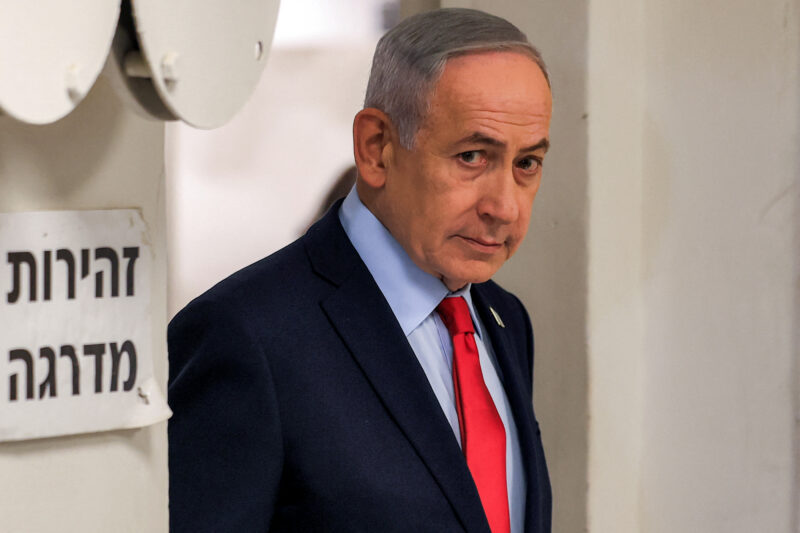





































The resolution included language praising Immigration and Customs Enforcement, which Krishnamoorthi’s opponents have seized on
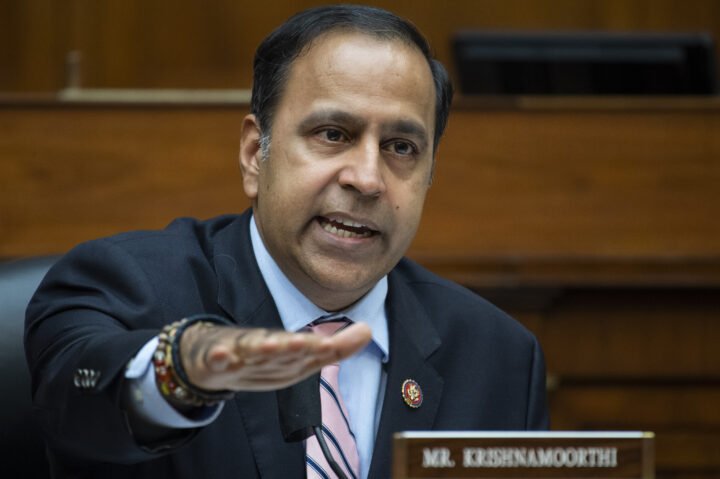
Tom Williams/CQ Roll Call/Bloomberg via Getty Images
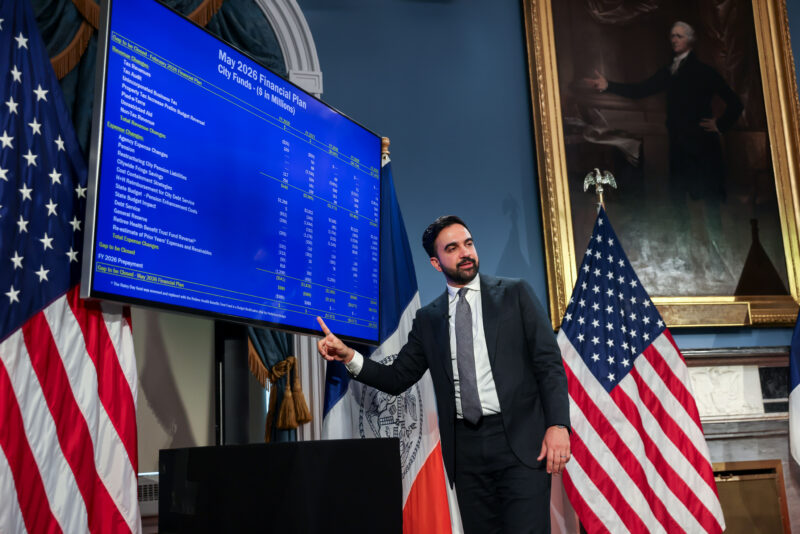
Representative Raja Krishnamoorthi, a Democrat from Illinois


 Add JewishInsider on Google
In the increasingly heated Illinois Democratic Senate primary, one claim has become a familiar refrain from Lt. Gov. Juliana Stratton and her allies, that Rep. Raja Krishnamoorthi (D-IL) “voted to thank” Immigration and Customs Enforcement.
But the criticisms don’t tell the full story. They refer to a resolution that was principally focused on condemning the firebombing attack on an Israeli hostage awareness march in Boulder, Colo., last summer, which also included language about immigration enforcement.
“I want to abolish ICE. My opponent voted to thank them,” Stratton has repeated in at least four separate interviews and candidate forums over the past few weeks.
It’s an attack that has also been repeated in an ad campaign against Krishnamoorthi by Illinois Future PAC, a super PAC largely funded by Gov. JB Pritzker and others in his family. “[Krishnamoorthi] even voted to honor ICE,” the ad states. “When Illinois needed a fighter, Raja Krishnamoorthi sold us out.”
The resolution condemned the attack in Boulder and offered prayers for the victims, while also focusing in part on the fact that the accused attacker, Mohamed Sabry Soliman, had overstayed his visa and work permit. It urged “free and open communication” between state and federal law enforcement” and “expresse[d] gratitude to law enforcement officers, including U.S. Immigration and Customs Enforcement personnel, for protecting the homeland.”
At the time, some Democrats criticized Republicans for the ICE language, seeing it as a deliberate political gambit by Republicans to provide fodder for accusing Democrats of being weak on antisemitism, expecting many to vote against the resolution over the ICE language.
Ultimately, the resolution split Democrats, with 75, largely moderates and pro-Israel members, supporting the legislation and 113 Democrats opposing it.
Krishnamoorthi pushed back on the attacks in a recent debate, responding to Stratton, “That resolution, Lieutenant Governor, you know was about condemning antisemitism, and that’s something that I will always do.”
The Stratton campaign said that the lieutenant governor “will always speak up and condemn antisemitism and would have proudly supported [a separate bipartisan resolution] condemning antisemitism, politically motivated violence, and the terror attack in Boulder that passed in the House the same day. House Minority Leader Hakeem Jeffries called the second resolution, HRES 488, an ‘unserious effort.’ Expressing gratitude to ICE at a time when Chicago’s immigrant communities were already under attack is a line that Juliana would not cross.”
Stratton did condemn the attack in Boulder at the time.
The resolution came at a particularly tense moment, as ICE was undertaking some of its first major deportation efforts of the Trump administration, in Los Angeles, prompting protests and condemnations from many Democrats.
Both Stratton and the Illinois Future PAC are also hitting Krishnamoorthi over past votes for ICE funding and donations he has received from Palantir, a tech firm that contracts with ICE.
Pritzker, who is Jewish and seen as a potential 2028 presidential contender, also recently grabbed attention with comments, through a spokesperson, condemning AIPAC for having “abandoned its bipartisan principles and become a pro-Trump organization.”
The billionaire Pritzker was a onetime AIPAC donor.
Pritzker did not respond to a request for comment. Illinois Future PAC could not be reached for comment.
Lt. Gov. Juliana Stratton seems to be running to the congressman’s left on Israel, even as Rep. Robin Kelly is the most outspoken critic of Israel in the race
Tom Williams/CQ Roll Call/Bloomberg via Getty Images
Representative Raja Krishnamoorthi, a Democrat from Illinois
Democrats running for the open Senate seat in Illinois are increasingly trying to differentiate themselves on Israel policy ahead of next month’s primary. In the final weeks of the campaign, Illinois Lt. Gov. Juliana Stratton appears to be trying to straddle a line on Israel policy between Rep. Raja Krishnamoorthi (D-IL), who has a largely pro-Israel record, and Rep. Robin Kelly (D-IL), who has been increasingly critical of Israel.
Stratton, of the three, has the least established record on Middle East policy issues, and her approach was on display at a debate last week with fellow candidates, where she did not offer direct answers to questions on whether additional conditions should be applied to U.S. aid to Israel or whether the war in Gaza constituted a genocide.
Asked about conditions on aid to Israel, Stratton said that the “devastation” both on Oct. 7, 2023, and during the ensuing war in Gaza has been “horrifying” and she wants to “see the suffering end.”
“I can tell you that as our democratic ally in the Middle East, I believe that Israel has a right to safety and security, but at the very same time, I totally disagree with the way that [Israeli Prime Minister Benjamin] Netanyahu has responded to those attacks, and I believe that he should be removed from power, or he should step down, and there should be elections, as the people have been calling for,” Stratton said.
Israel is set to go to elections in October.
Stratton also called for aid to Gaza and for Palestinian leadership that can push toward a two-state solution.
Asked whether she would vote for a resolution led by Rep. Rashida Tlaib (D-MI) describing the war in Gaza as a genocide, Stratton said the war was “devastating and it was horrific” and that “we must do everything we can to make sure that we can be on a real, sustained path to peace,” but avoiding directly answering the question.
Krishnamoorthi emphasized that U.S. aid to Israel and all other allies is already subject to various conditions, which he said should be enforced. He “strongly condemned” both Hamas for the Oct. 7 attacks and Netanyahu for Israel’s conduct during the war.
“We need to take the next step,” Krishnamoorthi said. “That means Israel needs to withdraw from the Gaza Strip. Hamas needs to be demilitarized. An international stabilization force has to arrive, and then massive construction aid has to come in, to the point where we have a chance at a road to a two-state solution of Palestinian and Israeli states living side by side.”
When asked about classifying the war as a genocide, he said that the parties in the region “don’t agree on a credible assessment of what exactly happened” and suggested that debate over or the use of the term would be an obstacle to progress in the ceasefire agreement first implemented in October 2025.
“I want to see the language [of the Tlaib resolution], but I need to be comforted right now that this type of resolution doesn’t get in the way of progress right now for Gazans, because right now they’re going through hell as it is, and we got to get to a better place,” he responded, when pressed on whether he would vote for the Michigan congresswoman’s resolution.
Kelly touted her support for the Block the Bombs Act that would place sweeping restrictions on U.S. arms sales to Israel, and joined Stratton in calling for Netanyahu to resign, calling his leadership a “reign of terror.”
“A lot of people would say what happened on Oct. 7 was horrible, but there were a lot of things that happened before Oct. 7 also,” Kelly said. “I’m the only one on this stage that supported something like Block the Bombs and I’m the only one on the stage that said, it may not have started off like this but … genocide was the result.”
All three candidates said that a preemptive U.S. strike on Iran without congressional authorization would be illegal.
Krishnamoorthi emphasized that Iran cannot obtain a nuclear weapon, but argued that the U.S. must find a diplomatic solution to address the Islamic Republic’s nuclear and ballistic missile programs.
He added that any military action must be authorized by Congress and that he plans to support an upcoming war powers resolution to block military action against Iran without such authorization.
Stratton said that “we certainly don’t want to see a nuclear Iran … but what we also can’t have is a president who just decides whenever he gets a whim … and threatens to strike or commit some act of war. We need Congress to rein him in.”
Kelly accused Trump of seeking out war as a “distraction” from alleged failures on the home front, and demanded a diplomatic path using any tools and partners available.
Stratton is supported in the Senate race by Gov. JB Pritzer, who last week condemned AIPAC as a “pro-Trump organization.”
A Democratic strategist in the state said that it’s hard to tell where the race stands, but that public polling has put Krishnamoorthi in the lead. He noted that Krishnamoorthi is running an ad contrasting him with Stratton, indicating his campaign thinks Stratton may be making up some ground.
Pritzker’s super PAC recently began spending big backing Stratton and attacking Krishnamoorthi.
The strategist said that Kelly hasn’t been keeping up with the other two candidates in television advertising, but there are still opportunities to make up ground and increase her vote share. Kelly has largely been trying to court the most progressive voters and carve out the left-most lane for herself, but otherwise, the strategist said, there’s been little ideological difference among the candidates overall.
Rep. Raja Krishnamoorthi and Lt. Gov. Juliana Stratton opposed the Sanders-led resolutions, but Rep. Robin Kelly (D-IL) said she would have voted for them
Tom Williams/CQ Roll Call/Bloomberg via Getty Images
Representative Raja Krishnamoorthi, a Democrat from Illinois
A divide is emerging in the Democratic Senate primary in Illinois over resolutions the Senate voted on earlier this week to block certain arms sales to Israel.
Lt. Gov. Juliana Stratton’s campaign and Rep. Raja Krishnamoorthi told Jewish Insider on Friday that they wouldn’t have supported the resolutions led by Sen. Bernie Sanders (I-VT), even as they condemned the humanitarian crisis in Gaza.
But Rep. Robin Kelly (D-IL) announced earlier in the day that she would have voted for the resolutions if she’d been in the Senate.
The split could help shape the potentially crucial Jewish community vote in the upcoming Senate primary.
“As a mother, it’s heartwrenching to see images of children forced to go without food. Israel and the United States need to take every possible step to end the humanitarian crisis and ensure aid is immediately and widely made available,” Stratton said in a statement to JI. “I continue to pray for a ceasefire that ends the suffering in Gaza, for the return of the hostages still held by Hamas to their families in Israel, and for lasting peace in the region.”
Stratton’s campaign elaborated that the lieutenant governor believes, “[w]e should all be speaking with a clear voice that the Netanyahu administration must be doing more to get food and aid to the citizens of Gaza right away, but Juliana believes that cutting off U.S. military aid to Israel could risk standing in the way of the ultimate goals of a true ceasefire and sustained peace.”
The campaign also said that Stratton believes in Israel’s “right to defend itself as one of the United States’ closest allies and the only democracy in the Middle East.”
The campaign said Stratton “strongly disagrees” with how the Israeli government led by Prime Minister Benjamin Netanyahu has executed the war in Gaza, but she “has been vocal in her support of Israel in the wake of the horrific terrorist attacks by Hamas on October 7th.”
Krishnamoorthi — who, in an interview with JI earlier this year, said he did not support efforts to cut off or condition U.S. aid to Israel — said Friday that the Sanders resolutions would not have solved the humanitarian crisis.
“We need an immediate ceasefire brokered by the U.S. and regional partners and that is swiftly accepted by Hamas, along with the release of the remaining hostages and the emergency provision of humanitarian aid,” Krishnamoorthi said in a statement to JI. “The U.S. must use all of its diplomatic influence to make that happen as quickly as possible. Ultimately, the only path to a lasting peace is a two-state solution. The first step and my focus today is ending the current humanitarian disaster and getting food in as quickly as possible. Wednesday’s resolutions did not right that wrong.”
He said that he has “long been a steadfast supporter of our nation’s alliance with Israel” and that it “had every right to defend itself,” but said that “[w]hat we see going on today in Gaza is a moral catastrophe.”
“As Americans, we can never sit by and allow widespread starvation and disease among a civilian population that includes the elderly, the disabled, women, and children,” Krishnamoorthi continued.
He highlighted that he wrote to Secretary of State Marco Rubio and Special Envoy Steve Witkoff on Friday, urging them to surge aid into the strip and to ensure accountability that it reaches its intended recipients.
He said in the letter that, despite acknowledging the starvation in Gaza, the administration has not done enough to remedy the situation. Krishnamoorthi also urged others in the region, including Hamas, to cooperate in the proper delivery of aid.
Kelly, meanwhile, said in a statement Friday that she would have voted for the resolutions.
“Israelis and Palestinians must work to secure a path forward where both peoples can live in peace, safety and security,” Kelly said in a statement. “I have supported Israel, but in this moment, I cannot in good conscience defend starving young children and prolonging the suffering of innocent families. Now is the time for moral leadership in the U.S. Senate.”
Both Sens. Dick Durbin (D-IL) — who is retiring — and Tammy Duckworth (D-IL) supported the resolutions.
Durbin has supported every similar effort Sanders has made since November to block various arms sales to Israel, but Duckworth had voted against them in the past and, in fact, argued forcefully against them in a letter to constituents.
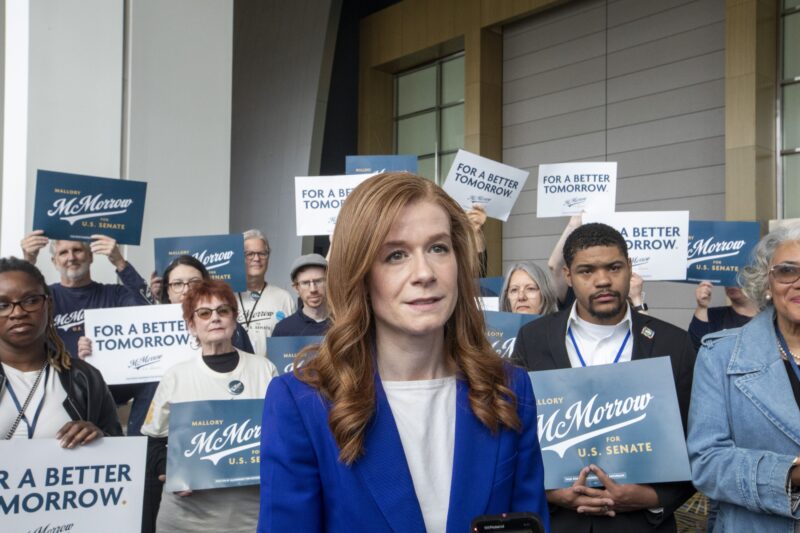
The votes on Sanders’ proposal to cut Israel aid are also proving to be a dividing line in Michigan’s Senate primary: Rep. Haley Stevens (D-MI) announced Friday that she would have opposed them, while state Sen. Mallory McMorrow said she supported them.
One Jewish Democratic strategist said that none of the three major candidates have deep ties to the Jewish community, leaving Jewish voters up for grabs

Pete Marovich/Getty Images
Ranking Member Lauren Underwood (D-IL) questions acting FEMA Administrator Cam Hamilton as he appears before a Homeland Security Subcommittee Hearing on Oversight on Capitol Hill on May 7, 2025 in Washington, DC. Hamilton is testifying about the administration's disaster relief efforts, including why it has frozen nearly all FEMA's grant funding.
Rep. Lauren Underwood (D-IL) said on Monday that she would pass on an anticipated run for the Illinois Senate seat being vacated by Sen. Dick Durbin (D-IL) in 2026, leaving what’s likely to be a three-way race among Lt. Gov. Juliana Stratton and Reps. Raja Krishnamoorthi (D-IL) and Robin Kelly (D-IL).
“Our work is not done, and I’ve decided the most powerful way for me to defend our values and hold Donald Trump accountable is to help Democrats win back the House,” Underwood said in a statement, highlighting her leadership roles in the House Democratic Caucus and the Democratic Congressional Campaign Committee.
Stratton is backed by billionaire Illinois Gov. JB Pritzker, as well as Sen. Tammy Duckworth (D-IL), while Krishnamoorthi has $19 million in the bank for the race and members of the Congressional Black Caucus are backing Kelly.
Pritzker could put significant funding behind Stratton’s run and reportedly worked behind the scenes to block Underwood and other candidates from entering the race. Underwood, on CNN, denied that Pritzker had forced her to stay out of the race.
A Jewish Democratic strategist, speaking on condition of anonymity to discuss the race candidly, told Jewish Insider they see the Chicagoland Jewish vote — a sizable community — as largely still up for grabs given that none of the candidates have particularly deep ties to the Jewish community coming into the race. They said Jewish voters will likely take time to evaluate each of the candidates.
“I think there’s a lot of inroads for them to make,” the strategist said. “None of these have that long history with the Jewish community … [and] don’t come from natural Jewish areas.”
Kelly and Krishnamoorthi have mixed voting records on priority legislation for the Jewish community, having both opposed several bills and resolutions to combat antisemitism, counter Iran and sanction the Houthis and the International Criminal Court, among other issues.
On the handful of occasions the two have diverged on votes, Krishnamoorthi has generally come down on the side of Jewish and pro-Israel groups — for instance, he supported the Antisemitism Awareness Act, while Kelly opposed it.
The strategist said Kelly may have a shot at gathering Jewish voters’ support given that she has some existing connections with community leaders, from her time as state party chair in 2021 and 2022.
Krishnamoorthi does not currently represent a sizable Jewish community and has not been prominently involved in Jewish issues, the strategist added.
While Pritzker, who is Jewish, has strong ties to the Jewish community, he has led most of the Jewish outreach from the governor’s office, leaving less of a role for Stratton. The strategist said that Stratton “has a lot of room to grow, especially with Pritzker backing her,” and predicted she’ll make a play for the Jewish vote. “She has a very compelling story that I think will resonate with the Jewish community also.”
Chicago also has one of the nation’s largest Palestinian communities, potentially creating competing political incentives for candidates if Israel policy becomes a prominent issue in the race.
Frank Calabrese, a Chicago-based political strategist, said he sees Stratton and Krishnamoorthi as the likely frontrunners in the race overall at this early stage, with Stratton having an advantage given her relationship with Pritzker.
He said that Underwood’s decision not to run caught many, even well-connected political figures in the state, off guard. Calabrese said Underwood likely felt she would not be able to match Stratton and Krishnamoorthi in fundraising, even though she could have been an “ideal type of candidate.”
“I believe Robin Kelly is the weakest of the three just because it’s going to come down to fundraising,” Calabrese said, adding that Pritzker and his political operation have made strong inroads with the Black community, leaving Kelly at a disadvantage with a potential base. He noted that Kelly and Pritzker have preexisting tension — Pritzker forced her out as state party chair in 2022.
But Calabrese said that Stratton’s close ties to the state’s Democratic establishment — Pritzker and Duckworth — could end up being a liability with some Democrats and progressives, particularly the wing of the party that supported Sen. Bernie Sanders’ (I-VT) presidential campaigns. That said, Krishnamoorthi is not strongly aligned with the Sanders wing of the party either, he noted.
Tom Bowen, a Democratic strategist in the Chicago area, argued that the outcome of the race will ultimately be shaped by events over the course of the coming year and that early metrics are often unreliable, especially in multi-candidate races. He predicted that Democratic voters would “take their time” in deciding.
“It’s very obvious the governor’s hand is at work in this, and that he has a preference for the woman he believes should lead the state,” Bowen said. But he argued that might not help Stratton as much in a cycle when some Democrats are looking for big changes. “I’m not sure anybody else’s opinion but their own is going to be the deciding factor here.”
He said that candidates’ backgrounds, endorsements and fundraising are “not insignificant, but voters pay pretty close attention when there’s a moment of crisis, so the one who meets the moment is going to be the one who is successful.”
The Jewish Democratic strategist said they believe the field may not yet be entirely set, noting that businessman Chris Kennedy — brother of Health and Human Services Secretary Robert F. Kennedy Jr. — may also enter the race.
The strategist said that Underwood’s decision not to run makes sense given that she would have been competing against Stratton and Kelly, two other Black women, she is gaining seniority in the House Democratic Caucus and she is young, giving her time to continue to build her national profile.
They said that it’s likely a wide-open race at this point, adding that, while Kelly may currently be the underdog, there’s plenty of runway for her to gain ground if her allies in the CBC put significant backing behind her.
“Most people have no clue who these people are,” the strategist said, “Money helps, but at the end, they have to connect with the voters. And it’s such a diverse state.”
Please log in if you already have a subscription, or subscribe to access the latest updates.
 Continue with Google
 Continue with Apple