












































Plus, Sine die dayenu

Mike Stewart/AP
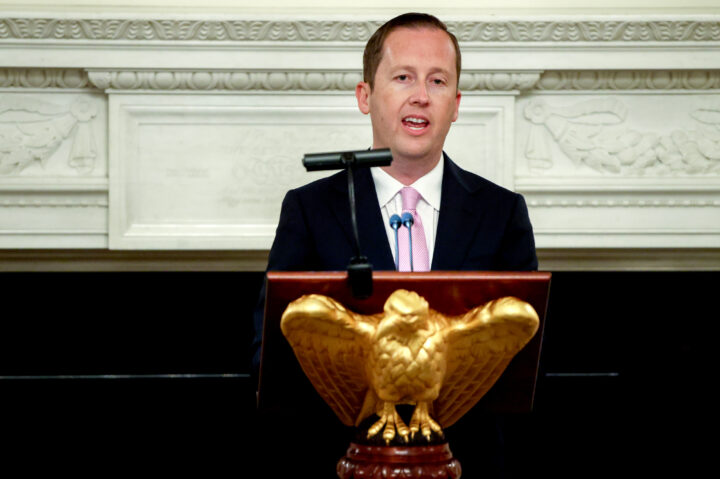
Republican Clay Fuller speaks to supporters after learning he would advance to a runoff election during an election night watch party, Tuesday, March 10, 2026, in Rome, Ga.


 Add JewishInsider on Google
👋 Good Tuesday morning!
In today’s Daily Kickoff, we report on President Donald Trump’s doubling down on his threat to strike Iranian power plants if Tehran does not reopen of the Strait of Hormuz by tonight’s 8 p.m. deadline, and look at how Iran’s closure of the key waterway is forcing countries to consider alternatives, such as the proposed India-Middle East-Europe Corridor. We preview today’s special election runoff in Georgia to fill the rest of former Rep. Marjorie Taylor Greene’s term, and report on plans by Texas Democrats to vote on a series of anti-Israel and anti-AIPAC resolutions at their upcoming party convention. Also in today’s Daily Kickoff: Esther Panitch, John Kirby and Bill Ackman.
Ed. note: In observance of Passover, the next Daily Kickoff will arrive on Friday, April 10.
Today’s Daily Kickoff was curated by JI Executive Editor Melissa Weiss and Israel Editor Tamara Zieve, with assists from Danielle Cohen-Kanik and Marc Rod. Have a tip? Email us here.
What We’re Watching
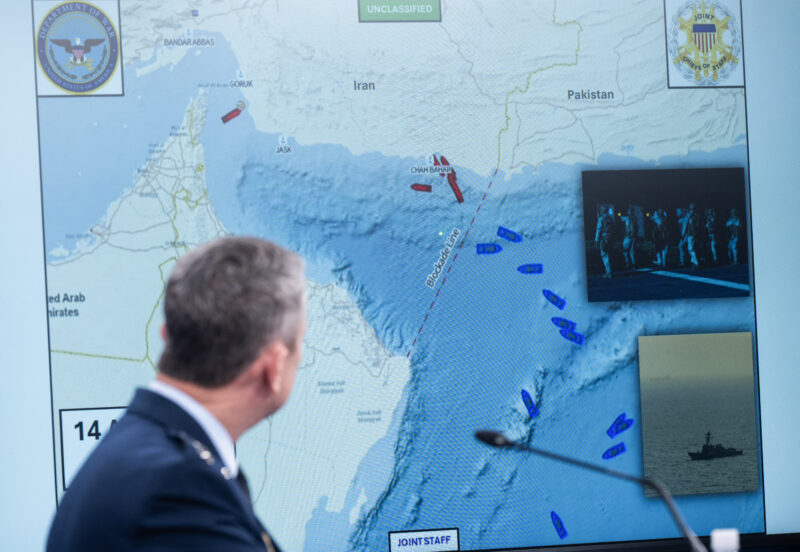
- President Donald Trump’s deadline for Iran to reopen the Strait of Hormuz — or face attacks on its power grids and bridges — expires at 8 p.m. ET. Earlier today, the IDF reportedly warned civilians to stay away from trains, an indication that the Islamic Republic’s infrastructure could be targeted. More below.
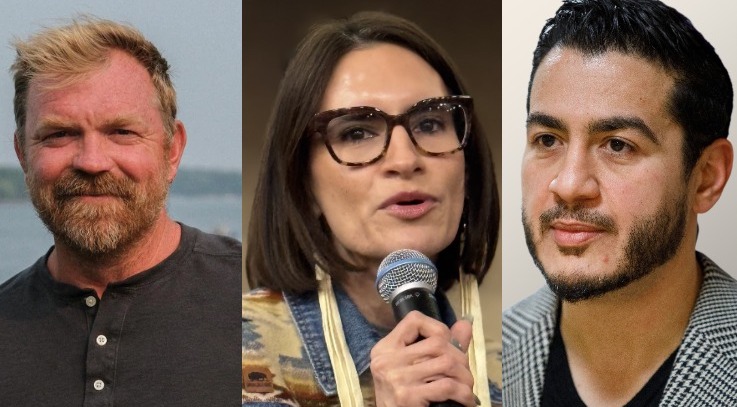
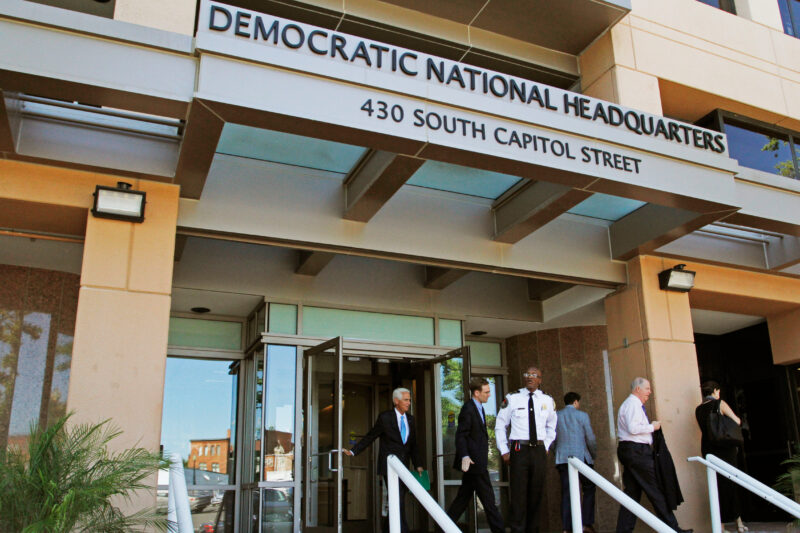
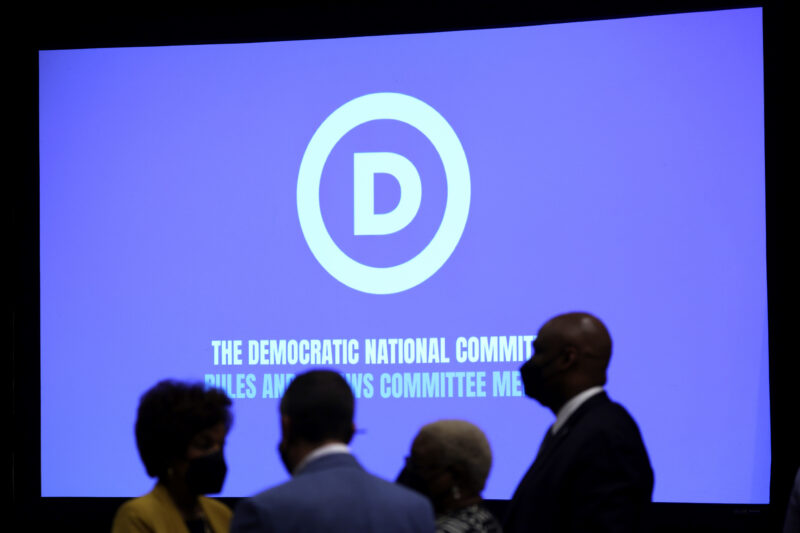
- Members of the Democratic National Committee are kicking off a five-day meeting today in New Orleans, where the DNC’s resolutions committee is set to consider resolutions condemning AIPAC and Israel. The resolutions were proposed by a Florida delegate who last year attempted to push through a resolution calling for an arms embargo on Israel. Read more here.
- Voters in Georgia’s 14th Congressional District head to the polls today for the special election runoff to choose a successor to fill out the remainder of Rep. Marjorie Taylor Greene’s (R-GA) term. District Attorney Clay Fuller, a Republican, is the favorite against Democrat Shawn Harris — but will likely need a decisive win today to stave off potential primary challengers in the GOP primary for the regular election later this spring. More below.
- In Michigan, Democratic Senate candidate Abdul El-Sayed and Rep. Summer Lee (D-PA) will hold rallies on the University of Michigan and Michigan State University campuses with far-left streamer Hasan Piker, who is coming under increasing criticism for his antisemitic and anti-American rhetoric.
What You Should Know
A QUICK WORD WITH JI’S JOSH KRAUSHAAR
Today’s special election runoff in Georgia between Republican Clay Fuller and Democrat Shawn Harris to determine the successor to former Rep. Marjorie Taylor Greene (R-GA) isn’t much in doubt. The northwestern Georgia district that Greene represented backed President Donald Trump by 37 points in 2024, one of the largest GOP margins in the country.
What makes the otherwise sleepy contest significant is the potential for the results to indicate if there are any fissures within the MAGA coalition, ones that may represent Republican discontent with Trump’s hawkish turn amid the Iran war. In this race, the margins will be as notable as the winner.
Greene, since leaving Congress, has emerged a loud Republican voice against the Iran war and against Trump’s strong alliance with Israel. Fuller, a military veteran with a background in counterterrorism operations and district attorney for the Lookout Mountain Judicial Circuit, has been a stalwart supporter of Trump’s military operations in the Middle East, and Trump has endorsed him in the race.
Harris, the Democrat, holds foreign policy views closer to the isolationist Greene, attacking the pro-Israel advocacy group AIPAC and describing Israel’s war against Hamas as a “genocide” — views which place him on the left flank of the Democratic Party. This despite Harris’ time serving as defense attache in Israel during his years in the National Guard, work history that he has not publicized during the campaign.
It’s worth noting that Greene, since she was first elected to the seat in 2020, has underperformed Trump’s standing in the district, only winning 64% of the vote against Harris in 2024 — four points below Trump’s 68% showing at the top of the ticket. And since breaking with Trump in his second term, her political standing has taken an even bigger hit.
Greene has not endorsed either candidate in the race.
WAY OF WATER
Strait of Hormuz closure raises opportunities for alternative shipping routes

With Iran’s closure of the Strait of Hormuz roiling energy markets, other countries in the region may begin to pursue alternative routes to transport energy and other goods, but they are far from ready to be put into use, experts told Jewish Insider’s Lahav Harkov this week.
Back in focus: One of the highest-profile routes is the India-Middle East-Europe Corridor (IMEC), proposed by the Biden administration in September 2023 as a route for trade, energy and more; it would go from India, through Saudi Arabia, the UAE, Jordan and Israel, then across the Mediterranean to Europe through Greece. Now that the Iranian threat to block the strait has been realized, IMEC and other alternative routes to ship oil and gas from the Gulf are back in focus. Gabriel Mitchell, an expert on energy security and a visiting fellow at the German Marshall Fund, told JI that “the threat and challenge posed with the Strait of Hormuz has raised questions about East-West shipping, traffic and global energy trade to the maximum.”
TEXAS TURMOIL
Texas Dems to consider resolutions on Israel arms embargo, blasting pro-Israel groups
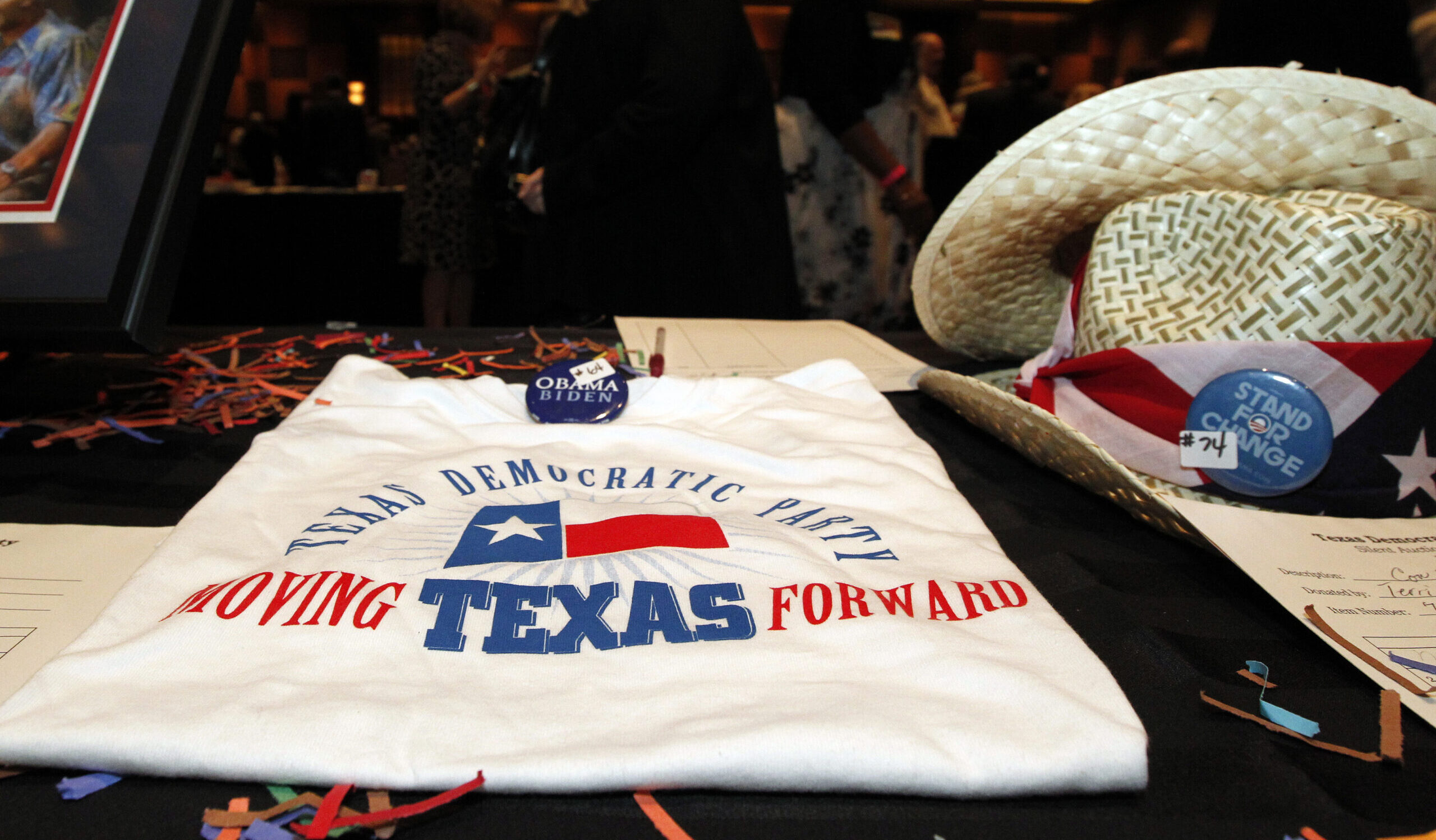
Texas Democratic Party activists are set to consider a series of resolutions condemning Israel for alleged genocide and pushing for an arms embargo, as well as criticizing pro-Israel involvement in U.S. politics — characterizing it as foreign influence in American elections — and urging penalties for candidates who accept their support, Jewish Insider’s Marc Rod reports.
What they’re doing: One resolution on AIPAC and Democratic Majority for Israel would set as party policy that Texas Democrats should reject campaign contributions, endorsements and other support from pro-Israel groups. Several of the resolutions accuse Israel of apartheid and genocide, and urge Democratic lawmakers from the state and nationally to support a halt to not only U.S. financial aid to Israel but also any shipments of weapons purchased from the U.S. and logistical support provided to Israel until international human rights groups declare that Israel is no longer engaged in apartheid or genocide.
TOUGH TALK
Trump reiterates threats to hit Iran’s economic engine if no deal reached by Tuesday
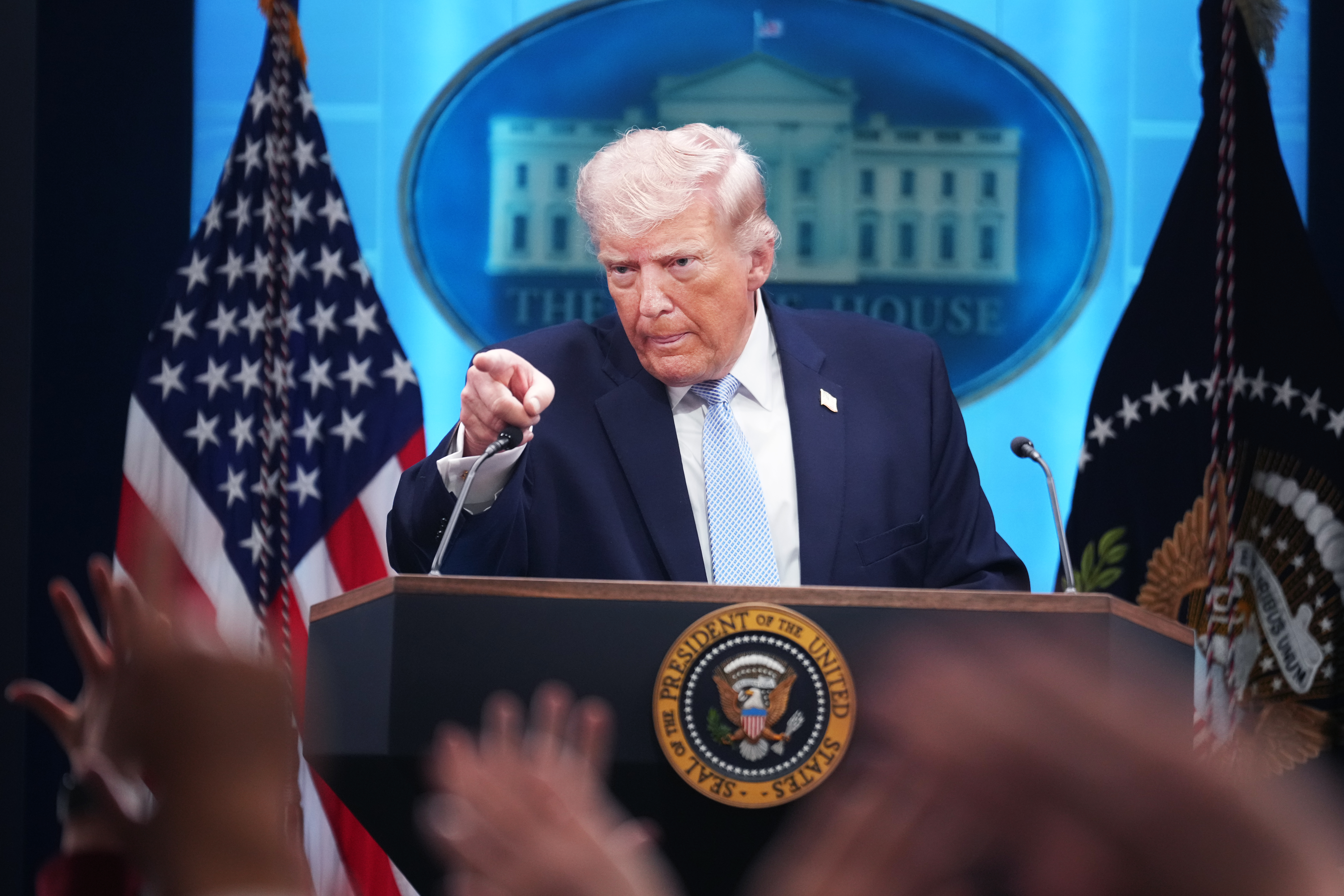
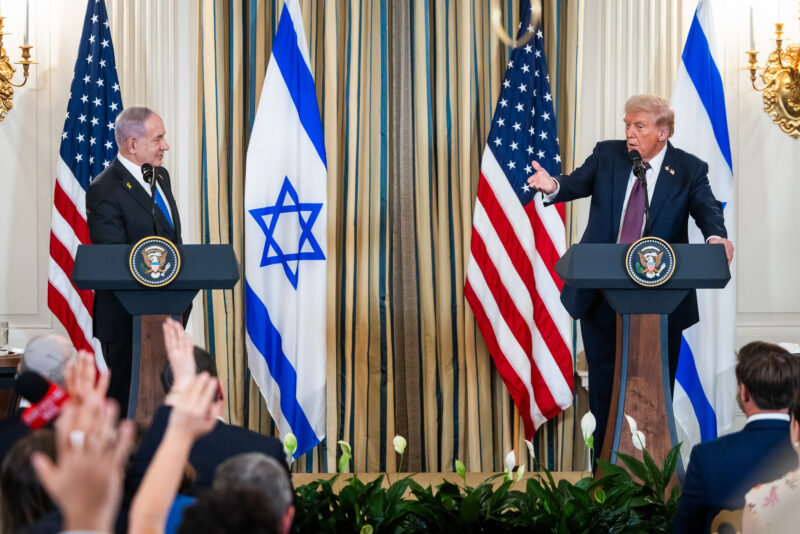
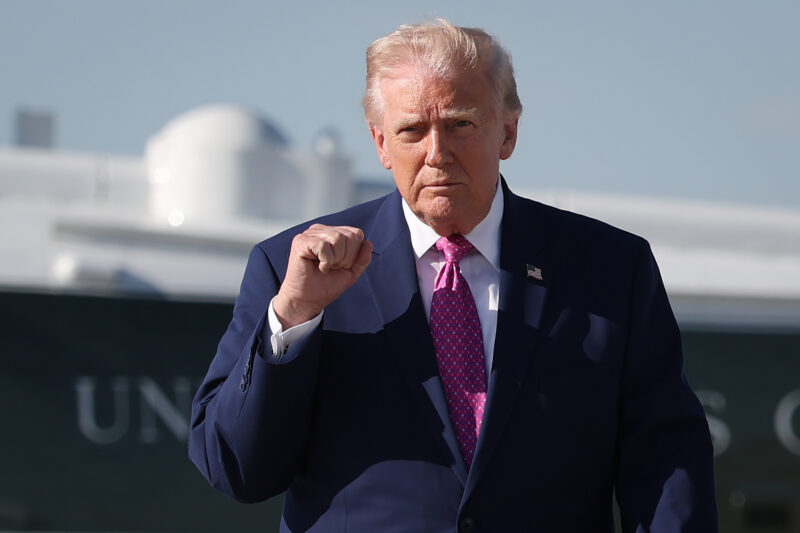
President Donald Trump doubled down on his threats to escalate the war in Iran on Monday if Iranian leaders do not agree to a broad ceasefire deal that includes reopening the Strait of Hormuz by his Tuesday evening deadline, warning that the U.S. would target every bridge and power plant still standing in the country, Jewish Insider’s Emily Jacobs reports.
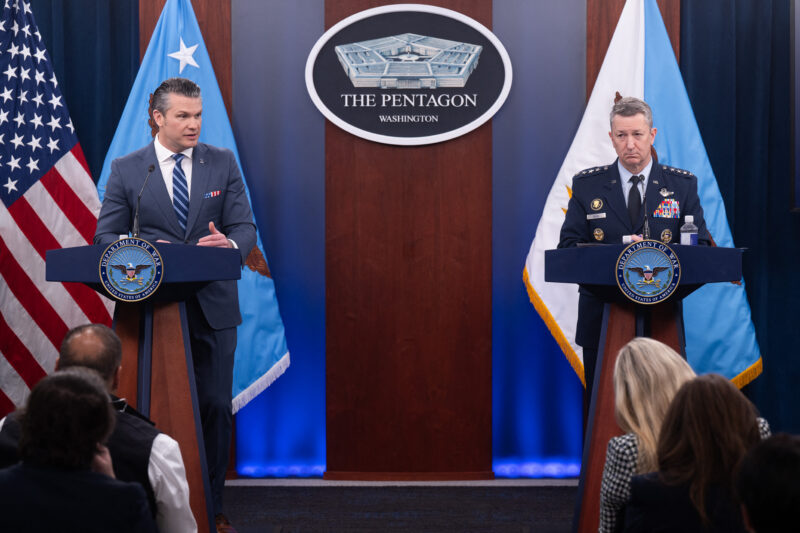
What he said: Trump took a hawkish posture while speaking to reporters at the White House alongside senior U.S. defense officials about the ongoing war and diplomatic efforts to bring it to a close, warning that the U.S. has a plan to take out Iran’s entire transportation and energy infrastructure within “four hours” if Iran did not make a deal. “I can tell you they’re negotiating, we think, in good faith. We’re going to find out. … After [8 p.m. ET on Tuesday], they’re going to have no bridges. They’re going to have no power plants. Stone ages,” Trump said, referring to the deadline he set for Iran to agree to his terms, which has now been postponed three times.
FACT CHECK
Former intelligence official Joe Kent amplifies false Iranian propaganda about U.S. war

Joe Kent, the former director of the National Counterterrorism Center who resigned over his opposition to the Iran war, shared a post on social media spreading false claims from Iranian state-linked media and Drop Site News that the U.S. was attempting to kill the servicemember whose fighter jet was shot down over Iran over the weekend prior to him being rescued, Jewish Insider’s Matthew Shea reports.
Propaganda post: The initial statement on Saturday from Drop Site, a far-left news outlet sympathetic to Hamas and totalitarian regimes, cited a report by Tasnim News, which is linked to the Islamic Revolutionary Guard Corps, claiming that the U.S. had “lost hope” of recovering an airman whose jet was downed over Iran on Friday and was instead “attempting to kill him.” The post was then amplified by Kent with the message: “Praying for the rescue of our downed pilot & the safe return of our Special Operators going in to get him back. [U.S. Air Force Pararescuemen and Combat Search and Rescue] Air crews are top notch.”
SEDER AT THE STATEHOUS
Georgia politicos gather for first-of-its-kind ‘Sine Die Seder’
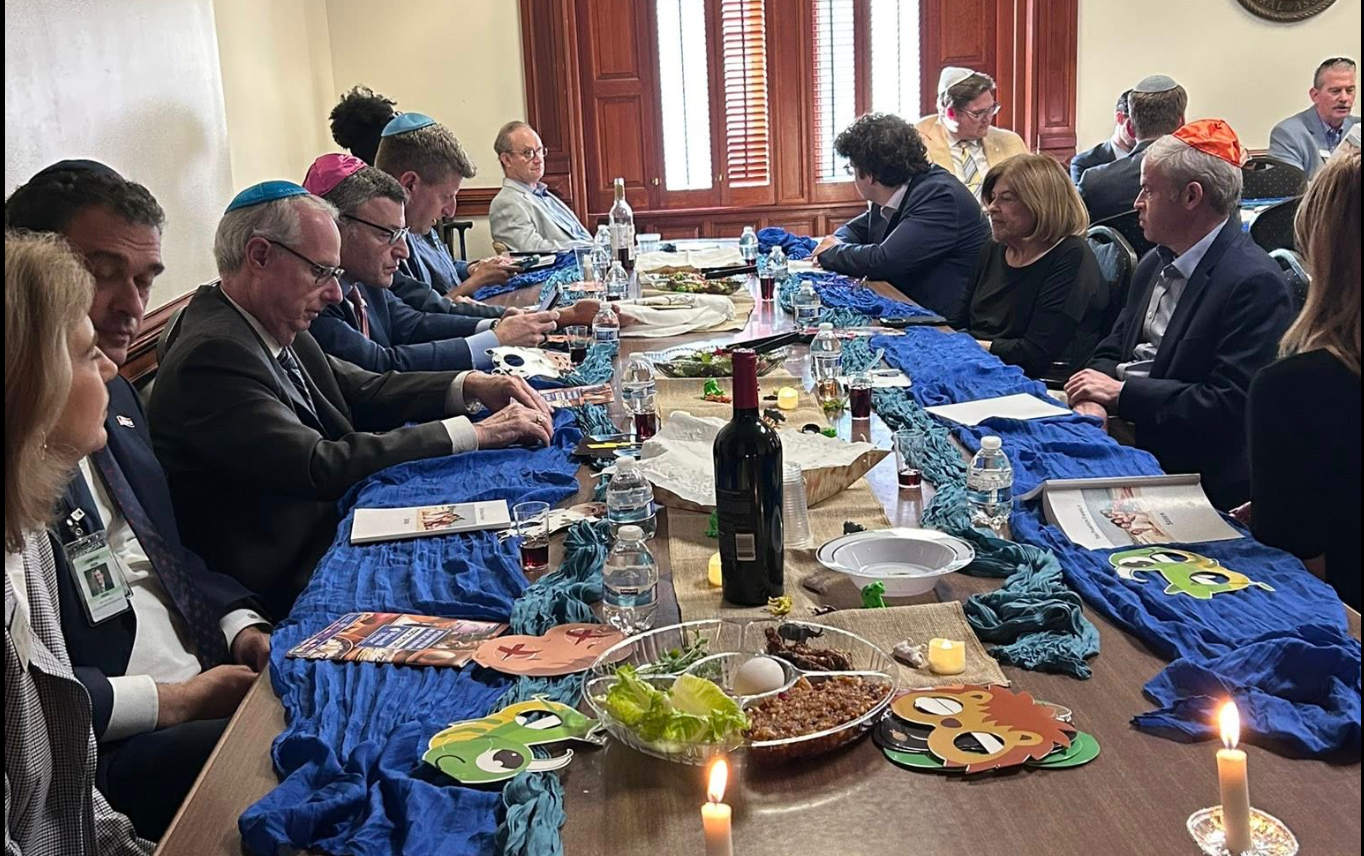
On Thursday, a group of Jewish Georgia politicos gathered for a first-of-its-kind-event at the Georgia Statehouse: the “Sine Die Seder,” Jewish Insider’s Marc Rod reports. Organized by state Rep. Esther Panitch, a Democrat and the only Jewish member of the Georgia General Assembly, the event brought together around 30 Jewish staffers, journalists, lobbyists, interns, a former attorney general and more to celebrate Passover on the final night of the legislative session, known as sine die.
In the room: Panitch said that she had asked the House majority leader to cancel the House session on Wednesday, the first night of Passover — and he obliged — but the House was still scheduled to be in session for the second night. “And so I said, ‘Well, we’re going to be at the Capitol on the second night. Why don’t we have a Seder for probably the 10 of us in the building that are Jewish,’” Panitch told JI, referring to herself and a handful of interns, staff and reporters, during the hourlong dinner break during the session. Interest in the event ballooned, with the group ultimately growing to around 30.
NOT CONVINCED
Fox Nation highlights post-Oct. 7 surge in Jewish engagement as part of new series on religion

From mass baptisms to packed pews, a new Fox Nation documentary chronicles a profound spiritual awakening it suggests is sweeping America. The five-part series, “Revival with Lawrence Jones,” includes a spotlight on the renewed embrace of religious identity among Jews following the Oct. 7, 2023, terrorist attacks in Israel, Jewish Insider’s Haley Cohen reports.
Embrace of Jewish life: Episode 3 of the new series, “Jewish Identity,” highlights the record-breaking “Big Shabbat” held in New York City last November. It also features a conversation between “Fox and Friends” co-host Lawrence Jones, the series’ host, and Israeli activist Noa Tishby about her own Jewish identity; and an interview with Rabbi Joshua Davidson, who leads Temple Emanu-El, the oldest Reform congregation in New York City, which organized the “Big Shabbat.” “There’s no question that since Oct. 7 there has been a resurgence of interest in Jewish life and commitment to the organized Jewish community,” said Davidson.
Worthy Reads
Groypers Gripes: The New Yorker’s Antonia Hitchens examines the degree to which the far-right fringe is entrenching itself in Republican politics. “I asked a political consultant in Washington to summarize. ‘Groypers are about demographic change,’ the consultant said. ‘It’s a sovereignty issue. It’s literally, like, “Who runs my f***ing country? Why do all these people get access to my birthright — not just before me but that might be denied to me? Do I get a deal better than somebody who runs across a border?”’ [Nick] Fuentes offers a more concise gloss. ‘There are basically two things that are going on,’ he said recently. ‘White genocide and Jewish subversion.’” [NewYorker]
Everyone’s War: In The Wall Street Journal, Walter Russell Mead posits that “every great and near-great power is adjusting its foreign-policy strategies” in response to the Iran war. “The war shows us all that the security of the Gulf matters to everyone. If at the end of the war Iran retains the ability to close the Strait of Hormuz, every country on earth will need Tehran’s blessing to access vital fuel and supplies. Whatever one thinks of Mr. Trump and his decision to initiate hostilities, a quick and comprehensive American victory offers the best hope for a peaceful future in the Gulf and beyond.” [WSJ]
Mind the Gap: In his Substack “Between Us,” Nadav Eyal considers the disconnect between Israeli and Diaspora Jewry as the two become increasingly distant even as both face steep challenges. “But diaspora Jews represent the ability to survive and flourish over thousands of years, sometimes in difficult conditions, and above all with a remarkable preservation of their identity. They have successfully created communities with thriving institutions based on self-generated investment. The call to recognize the deep and independent value of Jewish life in the diaspora is not a rejection or dilution of the Jewish right to Eretz Yisrael. It is simply a correction of an error — one that Israelis cannot afford to make.” [BetweenUs]
Word on the Street
The Trump administration’s Board of Peace has given Hamas until the end of the week to accept a disarmament proposal, with Nickolay Mladenov, the board’s director-general, warning on X, “He who will not cross the river will drown in the sea”…
The Wall Street Journal looks at Israeli and U.S. efforts to target Iran’s economy as Washington and Jerusalem appear poised to strike key Iranian infrastructure…
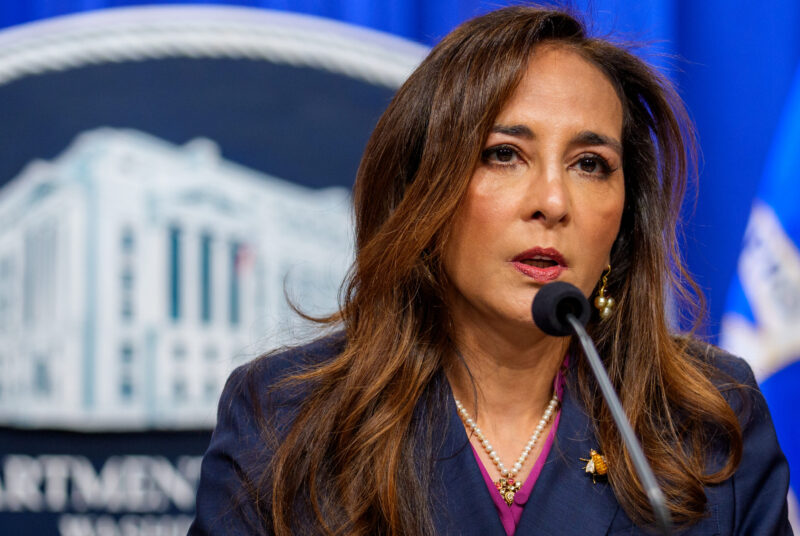
Politico profiles Harmeet Dhillon as the Justice Department’s assistant attorney general for civil rights is rumored to be under consideration to replace former Attorney General Pam Bondi or to be tapped for another senior Justice Department role…
Rep. Yassamin Ansari (D-AZ), the first Iranian American Democrat to serve in Congress, announced she was introducing articles of impeachment against Defense Secretary Pete Hegseth over the war in Iran, citing his “reckless endangerment of U.S. servicemembers and repeated war crimes”…
An appellate court reinstated a $656 million judgment against the Palestinian Authority and Palestine Liberation Organization following a 2025 Supreme Court ruling allowing American victims of Palestinian terror to sue the groups under the 1992 Anti-Terrorism Act…
The New Yorker does a deep dive into OpenAI CEO Sam Altman’s professional trajectory and leadership of the artificial intelligence company…
Bill Ackman’s Pershing Square Capital made a bid for Universal Music Group, valuing the company at $63.5 billion; if successful, the acquisition would merge Universal with Pershing Square Sparc Holdings and move its stock listing to the New York Stock Exchange…
The head of the University of Washington’s Middle East Center was removed from his leadership position shortly after sending an email through the center’s listserv criticizing the war in Iran; Aria Fani will continue to hold his position as an associate professor at the school…
A private Catholic school in Fairfield, Conn., said it had disciplined students who were involved in a series of antisemitic social media posts targeting a rival school’s hockey team…
U.K. Education Secretary Bridget Phillipson called on organizers of this summer’s Wireless Festival to drop Kanye West as the concert’s headliner over his past “completely unacceptable and absolutely disgusting” antisemitic comments, as U.K. officials reportedly consider revoking permission for West, who offered to meet with the British Jewish community, to enter the country…
Meanwhile, the festival’s promoter defended West’s “legal right to perform” in the U.K., as Diageo and Anheuser-Busch InBev joined PepsiCo in dropping their sponsorships of the summer concert series…
Ret. Rear Adm. John Kirby, who served as White House national security communications advisor in the Biden administration, is joining MS NOW as a national security analyst…
Pic of the Day
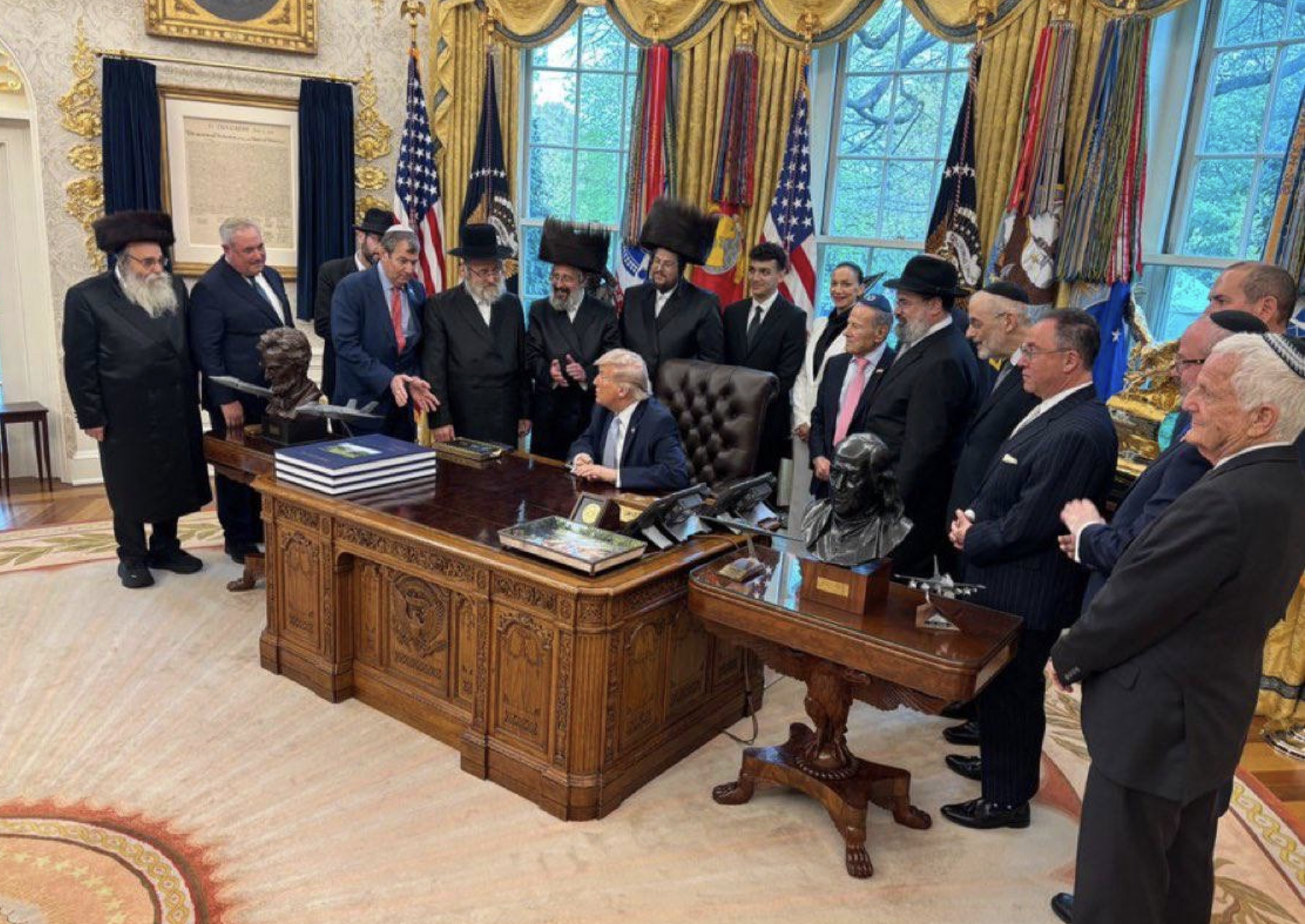
Prominent Jewish figures and senior Trump administration officials gathered at the White House on Monday afternoon for an event hosted by President Donald Trump commemorating the Passover holiday, Jewish Insider’s Emily Jacobs reports.
Administration officials in attendance at the event, which was closed to the press and took place in the Indian Treaty Room, included Commerce Secretary Howard Lutnick; White House Staff Secretary Will Scharf; James Blair, the White House deputy chief of staff for legislative, political and public affairs; Jacob Reses, chief of staff to Vice President JD Vance; Environmental Protection Agency Administrator Lee Zeldin; Martin Marks, the White House Jewish liaison; and Rabbi Yehuda Kaploun, the Trump administration’s special envoy to monitor and combat antisemitism.
Others spotted at the event were Rabbi Moshe Margaretten, president of the Tzedek Association; Matt Brooks, CEO of the Republican Jewish Coalition; William Daroff, CEO of the Conference of Presidents of Major American Jewish Organizations; Jeff Miller, chairman of the United States Holocaust Memorial Council; Jonathan Burkan, United States Holocaust Memorial Council member; Rabbi Levi Shemtov, the executive vice president of American Friends of Lubavitch (Chabad); Paul Packer, the former chairman of the U.S. Commission for the Preservation of America’s Heritage Abroad; Rabbi Chaim Dovid Zwiebel, executive vice president of Agudath Israel of America and Rabbi Meir Soloveichik, member of the Religious Liberty Commission and vice chair of the United States Commission on International Religious Freedom. Read more here.
Birthdays

Professional golfer who joined the PGA Tour in 2015 when he won Rookie of the Year, he has since won four tournaments, Daniel Berger turns 33…
Professor emerita of philosophy at Vanderbilt University, Marilyn Ann Friedman turns 81… President of Yale University for 20 years, then CEO of Coursera, an education-focused technology company, Richard Charles “Rick” Levin turns 79… Consultant on aging, longevity, law and policy, Naomi Karp turns 76… Software engineer at FlightView, Jonathan Ruby… Professor at the University of Wisconsin Milwaukee, he was born in Haifa, Israel, Simon J. Bronner turns 72… Los Angeles-based casting director, Jane Sobo… Former director of project staffing at Tower Legal Solutions in Addison, Texas, Ilene Robin Breitbarth… Former member of the House of Commons of Canada from the Winnipeg area, Martin B. Morantz turns 64… Screenwriter, actress and director, Andrea Berloff turns 52… White House and Congress editor for USA Today, Darren Samuelsohn… Chicago-based progressive activist, he is a co-founder of Project Shema, Oren Jacobson… Principal owner of JRL Strategy, helping expats relocate overseas, Justin Ross Lee… Senior director of communications at Leidos, Gregory Hellman… Reporter covering the White House and Washington for Politico, Daniel Lippman… Executive director of Camp Seneca Lake for the JCC of Greater Rochester (N.Y.), she was previously an associate director of communications at AIPAC, Marissa Wizig Klegman… Managing partner of Reno-based Mazal Capital, David Farahi… Pitcher and first baseman for Team Israel at the 2020 Summer Olympics, Ben Wanger turns 29…
The India-Middle East-Europe Corridor, originally viewed as an alternative to China’s Belt and Road Initiative, is being considered as another passage for trade

JULIEN DE ROSA / AFP via Getty Images
A person points at a page on the Marinetraffic website that shows commercial boats traffic on the edge of the Strait of Hormuz near the Iranian coast, in Paris on March 4, 2026.
With Iran’s closure of the Strait of Hormuz roiling energy markets, other countries in the region may begin to pursue alternative routes to transport energy and other goods, but they are far from ready to be put into use, experts told Jewish Insider this week.
One of the highest-profile routes is the India-Middle East-Europe Corridor (IMEC), proposed by the Biden administration in September 2023 as a route for trade, energy and more; it would go from India, through Saudi Arabia, the UAE, Jordan and Israel, then across the Mediterranean to Europe through Greece.
While Iran has threatened to block the Strait of Hormuz and obstruct oil shipping for decades, the Islamic Republic was not the main reason for considering another route of transportation — it was initially conceived as an alternative to China’s Belt and Road Initiative.
But now that the Iranian threat has been realized, IMEC and other alternative routes to ship oil and gas from the Gulf are back in focus.
Gabriel Mitchell, an expert on energy security and a visiting fellow at the German Marshall Fund, told JI that “the threat and challenge posed with the Strait of Hormuz has raised questions about East-West shipping, traffic and global energy trade to the maximum.”
”If you look at it from the perspective of India on one end, Europe on the other and anywhere in between, they are thinking they need to create as much redundancy as possible for commercial shipping for their own economic security,” Mitchell said. “It doesn’t make a difference whether you’re Emirati or Qatari or just an international shipping company with a base of operations in [the UAE’s Port of] Fuajirah, you’re asking the same questions.”
Mitchell said the idea of redundant shipping routes initially came from a desire to lower costs and increase speed of delivery, and grew more popular due to challenges with the Suez Canal during the COVID-19 pandemic. Now, in light of Iran’s obstruction of the Strait of Hormuz, “the argument in favor of IMEC [and] creation of redundancy has increased significantly.”
Increased regional connectivity can “take away Iran’s lever of closing the Strait of Hormuz,” Joseph Rozen, a senior fellow at the Misgav Institute for National Security and the former director for Asia-Pacific in Israel’s National Security Council, told JI. (The writer is a senior fellow at the Misgav Institute.)
Rozen said that “IMEC is a buzzword; the focus needs to be on inter-regional connectivity,” and noted that the Trump administration may be hesitant to adopt a Biden-era initiative, though it seemingly supports increasing connectivity more broadly through the Board of Peace.
Regional connectivity can increase stability and growth, Rozen said, and more countries can be brought in than those initially on board, such as Oman, Iraq, Syria, Egypt and even Gaza.
“The Iran war increased American involvement and its push for connectivity initiatives,” Rozen said. “Before the war [President Donald] Trump expressed interest, but now, the U.S. is more invested, and that encourages countries in the region to invest in regional connectivity if they know there’s an American security umbrella … over their investments and development.”
Rozen argued that existing infrastructure should be improved in the short term. The Saudi and Emirati pipelines combined can only transfer about 8.5 million barrels’ worth of oil per day, 42% of what passed through the Strait of Hormuz each day before the current war with Iran, he said. Another short-term move Rozen proposed is to continue to grant countries waivers to buy Russian gas, though this effort has seen resistance from members of Congress.
Mitchell said that IMEC faced a lot of skepticism when it was proposed, and none of its challenges have been resolved.
The commercial viability of alternative pipelines and routes is in question, Mitchell said: “Who is going to pay? Who is going to secure it? Which available ports will be able to manage that intake?”
Companies may prefer to try to find quick fixes rather than make multibillion-dollar investments that take a decade or more to bring returns, Mitchell argued, and the private sector and states will have to work together to make them viable. “I believe that will tip the scales in favor of these kinds of projects, but which end up getting green lit is yet to be determined.”
Some of the geopolitical challenges have grown more difficult since the Oct. 7, 2023, Hamas attacks on Israel, weeks after IMEC was announced. In addition, Mitchell pointed out that Turkey has obstructed joint energy projects between Israel, Greece and Cyprus in the past decade, demanding to be involved, and would likely do the same with IMEC.
”It’s hard to get everyone involved in one project … It’s hard to say how we are going to set aside our differences for these sets of initiatives … [and] what combination of carrots and sticks will convince people to pursue diversification. … I think in the end the answer will be yes, but it will take time to get there,” Mitchell said.
When Indian Prime Minister Narendra Modi visited Israel earlier this year, IMEC was part of the public conversation, but diplomats from both countries told JI on condition of anonymity that Saudi Arabia was hesitant to proceed because of Israel’s involvement — even though both countries were part of the plan from its inception.
Rozen said that Riyadh and Jerusalem can be part of the same project as long as the focus is on practical steps that serve the Saudis’ interests and not summits and bombastic statements that would “do more harm than good.”
”I understand their interest to maintain a certain kind of rhetoric, but there are other interests,” he said. “The more we advance through channels that are not political and are lower profile … I think the Saudis would be willing to do it. It can happen at any level of IMEC or other connectivity plans, in energy, trade and digital services. Cooperation led by the business sector would not carry the same political baggage … and under the current political circumstances it may be better for it not to be government-led.”
Mitchell also said that disputes between Saudi Arabia and the UAE that surfaced late last year could get in the way of developing IMEC, though in “a situation like now, when everyone is economically bleeding, there should be room for creative solutions.”
Israeli officials have made many positive statements about IMEC and Israeli Foreign Minister Gideon Sa’ar took part in a summit last year with his counterparts from involved countries, but no progress has been made on the ground.
Rozen said that Israel will likely wait to develop the necessary infrastructure “as long as there is no commitment from Arab States, such as Jordan, to invest on their side.” However, he added that, in the interim, Israel can “focus on the technological aspects” of regional connectivity at a lower cost.
Mitchell said the big challenge for Israel is that other countries will be competing to be involved in connectivity projects. Egypt, he said, has been pushing to be the gateway to the Mediterranean, with support from France.
”The argument in Israel’s favor is the security-related coordination [with Arab states] that is happening informally in a lot of ways. We need to concretize that,” he said. “One would assume that Israeli companies would have the opportunity to present their offerings for cybersecurity infrastructure.”
”The real thorn in Israel’s side since Oct. 7 is the diplomatic element. Can Israel manifest any kind of diplomatic initiative or momentum to patch together meaningful cooperation?” Mitchell questioned. “It seems that as of right now, nobody is willing to meet in the middle, which is challenging if you’re Israel, but it’s also challenging for the U.S., which is trying to work with everybody in parallel and has struggled to bring them around the table [together].”
In an interview with JI, Amb. Reuven Azar says joint manufacturing ‘means that, during times of need, we can supply things to each other, unlike what happened [with other countries] during the war’
PRAKASH SINGH/AFP via Getty Images
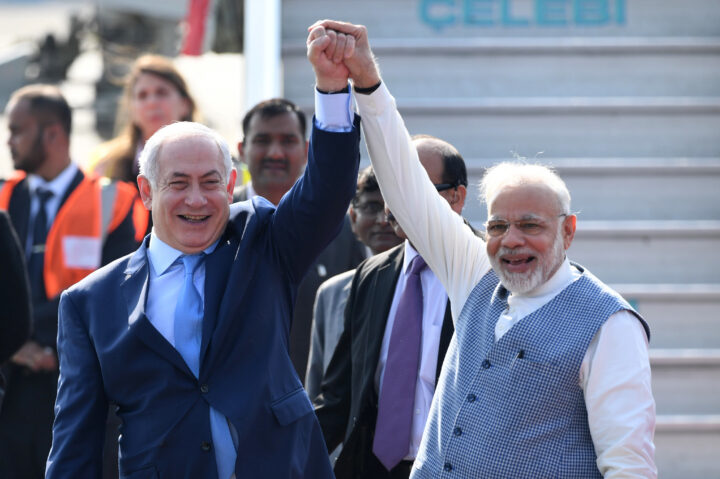
Indian Prime Minister Narendra Modi (R) and Israeli Prime Minister Benjamin Netanyahu pose for photographers after Netanyahu arrived at the Air Force Station in New Delhi on January 14, 2018.
Indian Prime Minister Narendra Modi is set to arrive in Israel on Wednesday to address the Knesset and head an innovation event in Jerusalem, as part of what Israeli Ambassador to India Reuven Azar told Jewish Insider is an “upgrade” in relations between the countries “to a new, strategic level.”
The visit of the head of the world’s most populous nation, whose relations with Israel have grown stronger since Modi became prime minister in 2014, has important implications for the Jewish state’s security, geopolitics and trade, Azar said.
Modi last visited Israel eight years ago. At the time, a photo of the Indian leader and Israeli Prime Minister Benjamin Netanyahu wading barefoot in the Mediterranean Sea during a visit to a desalination plant went viral.
His trip this week, during which he will address Israel’s Knesset, comes amid rising tensions across the Middle East — and as Israelis prepare for a potential attack from Iran.
India has been the Israeli defense industry’s largest customer in recent years, with arms sales totaling $20.5 billion during 2020-2024. The countries have reportedly closed deals worth $8.6 billion since the beginning of 2026.
During his visit, Modi plans to sign an “updated security agreement to allow the private sector to work on more sensitive products when it comes to joining production,” Azar, who has been Israel’s envoy to India since September 2024, said. “The updated protocols will allow us to work on more sensitive technology. It will create a lot of action.”
Netanyahu and leading Israeli defense figures have spoken about moving toward greater self-sufficiency in arms manufacturing. Delhi has long had a “Make in India” campaign to increase local production, requiring Israeli arms companies to open production lines in India in order to sell to the country, and the agreement means that joint production “will get a significant upgrade, because we are expanding both the scope and range of technologies we can apply,” Azar said.
“Both Israel and India want to be more independent and self-reliant when it comes to production and less reliant on foreign supply. Producing things together means that, during times of need, we can supply things to each other, unlike what happened during the war [in Gaza] … in which we had interruptions in supply from different countries,” Azar said.
Economically, Israel and India are working on a free-trade agreement, and hope to expand their cooperation on emerging technologies, as well as large infrastructure projects. Azar said that he worked to bring Indian companies to bid on tenders relating to the ongoing Tel Aviv Metro subway project, and that 15 have already applied.
The U.S. has long expressed concern about security risks related to Chinese companies working on major infrastructure projects in Israel. Companies from India, which views China as an adversary, have been considered as a potential competitive alternative.
Though Azar, a former deputy national security advisor for foreign policy, served as head of the Israel-U.S.-China Internal Task Force Israel’s Foreign Ministry at the beginning of the decade, he declined to comment on that aspect, preferring to focus on Israel-India bilateral relations.
With regard to the India–Middle East–Europe Economic Corridor (IMEC), a trade route meant to pass through Israel, among other countries in the region, and compete with China’s Belt and Road Initiative, Azar said that “we need to wait for the right geopolitical moment to make it happen. … It needs to happen, but evidently, it won’t now.”
“Currently, there is some movement of merchandise, but to see it become massive, we need some change in Saudi Arabia,” Azar said.
Saudi Arabia and the U.A.E., both points on the IMEC route, are facing increased tensions between them. Riyadh has pointed some of its ire at Jerusalem, and has been growing closer to India’s historic foe, Pakistan.
Azar was enthusiastic about an Israeli Cabinet decision approved on Sunday in which Israel plans to allocate over $48 million to cooperation with India in a variety of spheres. Half of the funds come from individual government ministries seeking the cooperation, and the other half was specially allocated by the Finance Ministry.
“The most important is upgrading research and development with funds from the Israel Innovation Authority, and academic cooperation. Israeli universities are all over India now, getting into agreements to exchange students and transfer technology and innovation offices. They feel very welcome in India,” he said.
Asked if that means India has become an alternative to much of the West, where Israeli academics have faced hostility in recent years, Azar said that India and Israel “don’t have challenges in this realm and continue working together to discover the joint resilience so needed in times of war.”
At the same time, he added, “it’s important for any country to diversify. We feel we have so much in common with India, which is a rising force in the world. It’s natural, and it’s not only Israel. Last week, 20 heads of state and 50 foreign ministers went to an AI summit in India. … Everybody is chasing India now.”
Though India-Israel relations were worse before Modi’s rise, Azar said they have the potential for longevity.
“We are now building the pillars of relations that are going to last,” he said. “We are trying to get bipartisan support. There is a lot of support for Israel, not just in [Modi’s Bharatiya Janata Party]. The general public feels it, and we have a high appreciation of that. There are some parties, like the communists, that are more critical, but I think this relationship is going to last.”
Gor’s isolationist litmus test made it more challenging for mainstream conservatives to serve in the Trump administration
Samuel Corum/Bloomberg via Getty Images
Sergio Gor, director of the White House presidential personnel office, during a Kennedy Center Board dinner in the State Dining Room of the White House in Washington on May 19, 2025.
Sergio Gor’s expected departure from a key role in the White House, where he has vetted thousands of candidates for political jobs as the influential leader of the Presidential Personnel Office, is raising some questions about how his litmus tests and isolationist views will compare to his newly announced replacement, particularly with regard to national security hires.
Gor, 38, was nominated by President Donald Trump last week to be U.S. ambassador to India. If confirmed by the Senate, Gor, who was also tapped as special envoy for South and Central Asian affairs, will leave behind a powerful post at which he built a reputation as an ideological gatekeeper.
Throughout his time in the White House, Gor has drawn attention for his unyielding focus on loyalty to Trump and — more singularly — a fierce commitment to elevating national security and foreign policy hires who share his skepticism of American engagement abroad.
His successor, Dan Scavino, as the White House confirmed this week, is likewise a longtime Trump confidant who now serves as White House deputy chief of staff. But unlike Gor — whose background suggests an interest in imposing ideological litmus tests on job applicants — Scavino, 49, “has no ideology other than Trump,” according to a former top administration official.
Even as Gor has won plaudits from a range of high-ranking officials in the administration, the former official, who spoke anonymously to address a sensitive subject, suggested his approach to the White House role has been driven by his foreign policy worldview as well as his allegiance to the president, a tension that is unlikely to be replicated by Scavino.
“Sergio brought his own world with him to the job, not just Trump’s,” the former official told Jewish Insider on Wednesday. “Loyal to Trump, yes — loyal to a Paul-Tucker-Koch world ideology, I think yes as well,” he added, referring to Gor’s former boss Sen. Rand Paul (R-KY), podcast host Tucker Carlson and the activist network linked with Charles Koch, a leading conservative donor who has opposed Trump.
By contrast, Scavino, a former Trump golf club manager who has previously run the president’s prolific and unfiltered social media, seems to have few, if any, competing interests at stake. “There’s a reason Dan has a seat in the Situation Room when the toughest decisions are made,” the former Trump official elaborated. “Sergio never did. This should be a positive development for vetting and placement.”
It remains to be seen which positions Scavino will still need to help staff when he fully assumes Gor’s duties — especially with “over 95%” of departments and agencies now “filled,” according to a statement from Trump last week, which could not be verified.
“There is much still to be done, and Dan’s leadership will ensure the highest quality, most dedicated workforce ever,” Karoline Leavitt, the White House press secretary, said in a statement, calling Scavino “one of Trump’s most trusted and longest serving advisors.”
In his tenure, Gor, a former top aide to Paul, the libertarian Republican from Kentucky, has helped weaken the National Security Council and worked to install Pentagon officials who have pressed for a reduced U.S. military presence in the Middle East — fueling concerns among pro-Israel leaders who have questioned if such views were aligned with Trump’s approach.
The personnel chief, whose efforts highlighted an intra-party battle between warring traditional and MAGA Republican factions that has recently grown less fractious as the administration has taken shape, also promoted officials affiliated with the libertarian Koch network, in spite of a directive from Trump upon his reelection to avoid “people who worked with, or are endorsed by” the Charles Koch or his political advocacy group.
More recently, Gor has prominently clashed with some top Trump allies, including Elon Musk and Michael Anton, the State Department’s director of policy planning who served as a technical lead amid failed nuclear negotiations with Iran. Anton, who is now expected to leave the administration soon, has reportedly grown frustrated with Gor’s rejections of his proposed hires, among other sources of tension first detailed by Politico on Wednesday.
“He has the power to can people and for them not to get through,” one Trump official who has interacted with Gor and was not authorized to comment on the record said of his current role.
Meanwhile, Gor has advanced some officials widely criticized for espousing racist and antisemitic views, including Darren Beattie, who was fired in Trump’s first term for speaking at a white nationalist event and is now a top official in the State Department.
Beattie’s promotion, along with others who have drawn scrutiny for extreme views, underscores how Gor has been “clearing people who are unclearable,” said a former senior Republican Hill aide, who was granted anonymity in order to speak freely. “Sergio is obviously fine with that,” he said of Beattie’s past comments.
Trump, who in a social media post announcing his nomination last week called Gor’s time in the White House “essential” to upholding the administration’s agenda, said the personnel director would remain in his current role until his confirmation in the Senate, which has not yet scheduled a hearing.
A White House spokesperson confirmed to JI on Wednesday that Gor will stay in his post pending Senate approval for the ambassadorial role, which comes amid growing tensions between the United States and India, a major ally, over Trump’s tariff threats.
As Gor now prepares to leave the White House for a more public role, Danielle Pletka, a senior fellow at the American Enterprise Institute, suggested his approach to hiring ultimately demonstrated how he struggled to evolve with the administration on key issues.
“I think that the Trump administration has settled into a routine, and I think that people who are very ideologically rigid are finding less and less space for themselves,” Pletka told JI. “The president is not an isolationist, and those who are are discovering quickly that he does not appreciate being told how his staff have a stronger America first agenda than he does.”
Please log in if you already have a subscription, or subscribe to access the latest updates.
 Continue with Google
 Continue with Apple