






























Rogers, a former House Intel Cmte chair: ‘I was for all of this when it wasn’t very cool to be for all of this’
AP Photo/Paul Sancya, File
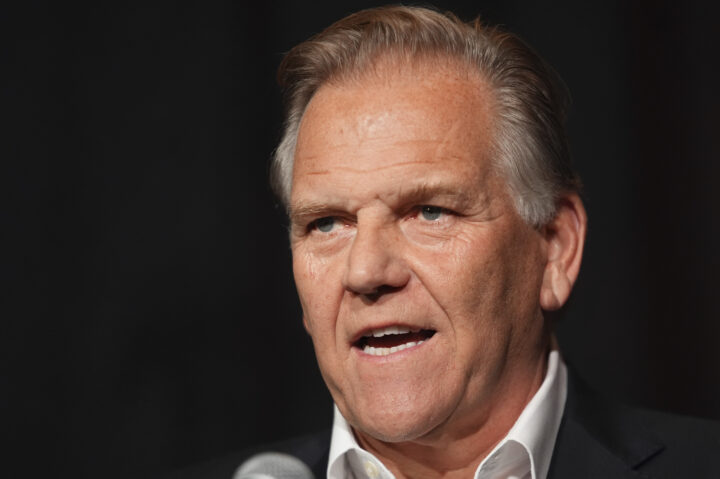
Republican Michigan Senate candidate Mike Rogers speaks during an election night watch party, Nov. 5, 2024, at Suburban Showplace Collection in Novi, Mich.


 Add JewishInsider on Google
Former Rep. Mike Rogers (R-MI), making his second bid for Michigan’s Senate seat, is leaning into his support for the Trump administration’s decision to strike Iran’s nuclear program on the campaign trail.
Rogers emphasized, in an interview with Jewish Insider last week, that he has long been suspicious and concerned about Iran’s nuclear program and other malign activities dating back to his time as the chairman of the House Intelligence Committee in the early 2010s, when he had access to highly classified information.
“I couldn’t have supported [the operation] more,” Rogers, who served in the House from 2001 to 2015, said. “I was for all of this when it wasn’t very cool to be for all of this.”
The former lawmaker said he believes that Iran was much closer to a nuclear weapon than many believe, noting that its development of advanced supercomputers would likely have allowed it to reliably simulate a nuclear weapons test, an undetectable alternative to actually testing a nuclear bomb.
“I believe, on the day that Trump went in, that they had all three components” of a nuclear weapon: highly enriched uranium, a weapon and a delivery system using a ballistic missile, Rogers said. “They just didn’t have them assembled.”
He said that the “urgency of which Israel undertook their mission” suggests to him that Iran was working to bring those three elements of a nuclear weapon together.
Rogers added that the U.S. and Israel need to take seriously Iran’s threat to wipe out Israel if it obtains a nuclear weapon.
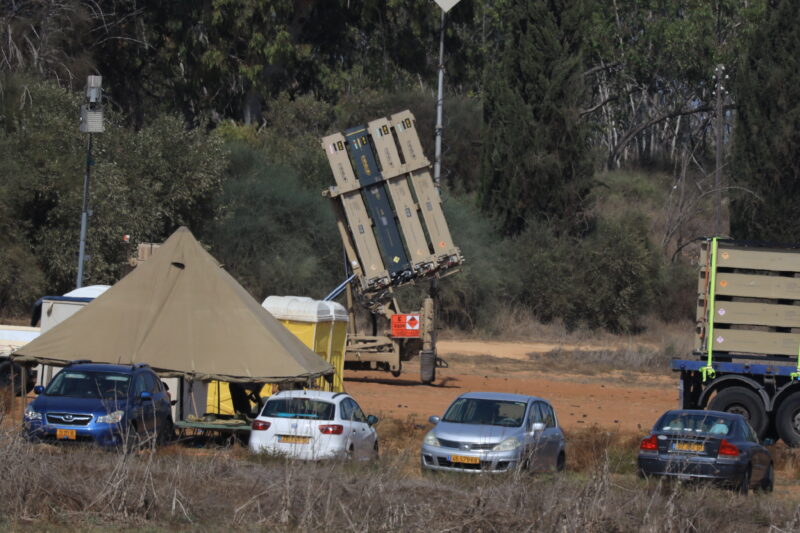
Rogers said that the destruction of much of Iran’s enrichment capacity — particularly the strikes on Fordow — and many of its missile launchers, as well as its anti-aircraft capabilities, put Iran on its back foot if it attempts to reconstitute its program. He predicted it would take Iran years to regain access to Fordow, if it attempts to do so.
“What I have said publicly is, I believe we should leave the option on the table for another round of attacks targeted at their nuclear capability,” Rogers continued. “I don’t care if it’s in uranium enrichment stockpiles, delivery equipment … there’s always the possibility you might find another centrifuge effort somewhere.”
He said that making clear that the U.S. is prepared to act again will help force Iran back to the negotiating table and rebut Iranian deception and stalling tactics in negotiations.
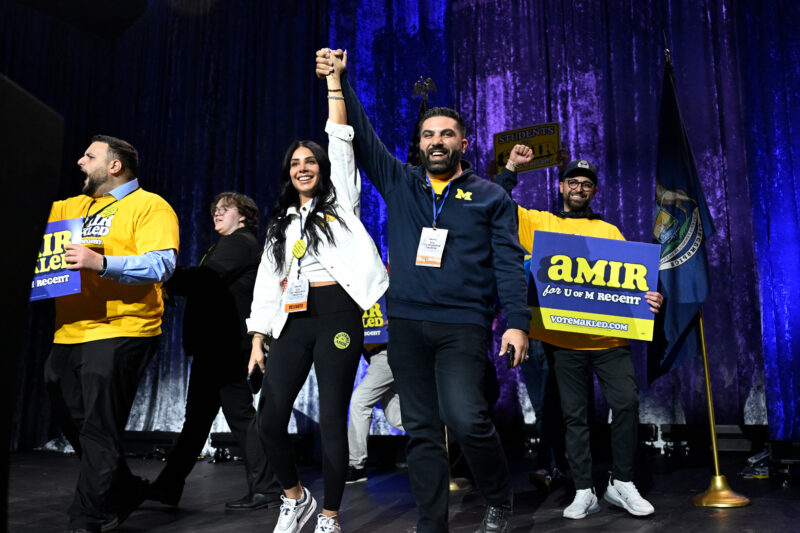
The U.S. strikes could create heated political dynamics in Michigan in the upcoming election cycle, as the war in Gaza did in the 2024 election, in the Jewish, Muslim and Arab communities.
When speaking to Arab and Muslim voters, Rogers said he emphasizes the ways that the Iranian regime has hurt the Muslim world, saying it has killed many more Muslims and Americans than it has Jews and that its support for groups like Hamas and Hezbollah has destabilized the region and undermined opportunity and prosperity.
“My argument is this may be the first step. I think this is the most consequential time in American, Israeli and Middle East politics in my lifetime, because I think the president set the tone for real peace,” Rogers said.
Rogers added: “I am against military adventurism, I think it’s a terrible idea for the country. What you saw here, and this is how I explain it to them — this is very surgical. … If you’re going to tout peace through strength, you have to show the strength path. Iran was undeterred up to this point.”
He described potential future talks with Iran as on a fundamentally different footing than they have been in the past: now, he argued, the debate is not over details like International Atomic Energy Agency inspection schedules, but a more comprehensive and permanent solution and peace.
Rogers added that he keeps his message on Middle East policy consistent regardless of whether he’s addressing Jewish or Muslim audiences.
“You can’t say one thing to one group and another thing to another. It never works,” Rogers said. “But if they know where you’re at and they can articulate why you’re there and why support of Israel is so important, both to me personally, but I think to the country … and Republicans, we talk about it too, that’s this debate, should we or shouldn’t we.”
Rogers is looking like the early favorite to emerge as the GOP nominee for the seat of retiring Sen. Gary Peters (D-MI). He is backed by Senate Republican leaders, as well as Trump campaign co-manager Chris LaCivita. But Rep. Bill Huizenga (R-MI) is considering challenging Rogers in the primary.
Rogers described himself as “one of the first folks” to raise alarms about the Joint Plan of Action, the precursor to the Obama administration’s nuclear deal, during his time in the House.
“I thought we were engaging and empowering Iran in a way that seemed to me that the Obama administration just didn’t understand, or didn’t want to understand, who Iran is, what their intentions are, and when they say they want to wipe Israel from the face of the earth, they actually mean it,” Rogers said.
He also said that he was among the first to sound the alarm about the Houthis, in 2013 or 2014.
“I said that if we don’t do something about the Houthis … we’re going to have a problem, and it’s going to be a problem for Israel, our greatest ally in the region, and our security as well,” Rogers said. He visited Yemen at the time and said he watched in real time as the group grew its capabilities and deepened its ties to Iran, at the same time that the situation in Yemen deteriorated.
“We couldn’t get people interested in [it] enough to understand what the threat was,” Rogers said. Going forward, “I would make sure that the Houthis understand what U.S. intention and Israeli intention is, if they continue to shoot at our sailors in our commercial enterprise in the region.”
“Those attacks on Fordow, that was the U.S. showing strength,” Rogers continued, invoking the motto of “peace through strength.” “Now let’s get to the peace part, but you also may have to reduplicate that in a few places to get people’s attention.”
Prior to his service in Congress, Rogers was an FBI agent, during which time he said he was involved in tracking down Iraqi agents inside the United States, during the first Gulf War. He said that there are some parallels between those “sleeper cells” and Iran’s more recent efforts to infiltrate and carry out operations in the United States.
“Here’s what I worry about — the difference between the Iraqi operations and what I know that Iran had the capabilities then as well,” Rogers said. “The Iranians will be, I think, more loyal to their mission than the Iraqis. … By the time [the Iraqis] lived here for 10 years, they thought, ‘This America thing is pretty good. I don’t know if I want to screw this up.’ I think the Iranian threat is much worse than the Iraqi threat at that time because they’re more passionate about it.”
He emphasized that Iran’s operations globally, including in the U.S., have been “pretty aggressive,” and serious in their planning and intentions and have disregarded potential civilian casualties.
“You need to reassign some agent manpower here to make sure you’re dealing with it” and get ahead of the Iranians before they can execute their plans, Rogers said. “Sometimes just including letting them know, ‘We know who you are, we know where you live, we know what you’re doing.’ That stuff can be a pretty good deterrence sometimes.”
Please log in if you already have a subscription, or subscribe to access the latest updates.
 Continue with Google
 Continue with Apple