








































Plus, a profile of UNESCO’s Audrey Azoulay

SAUL LOEB/AFP via Getty Images
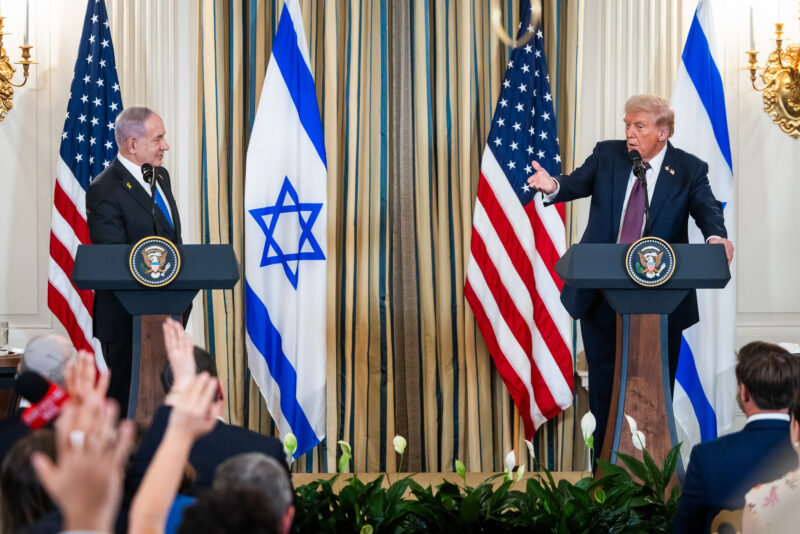
President Donald Trump with Israeli Prime Minister Benjamin Netanyahu during the signing of the Abraham Accords.


 Add JewishInsider on Google
Good Thursday morning.
In today’s Daily Kickoff we profile Audrey Azoulay, the Jewish French-Moroccan leader of UNESCO and report on last night’s Senate votes to block U.S. aid to Israel. We also detail comments by House Speaker Mike Johnson expressing strong concern about the humanitarian situation in Gaza. We cover Liam Elkind’s announcement that he will challenge Rep. Jerry Nadler (D-NY) in the Democratic primary and talk to Republican Sen. Thom Tillis about his decision to join Democrats in voting against Joe Kent to be director of the national counterterrorism center. We have the scoop on a move by Harvard to cover all security costs for the university’s Hillel and talk to Michael Masters, the CEO of the Secure Community Network, about his sit-down with Secretary of Homeland Security Kristi Noem last week. Also in today’s Daily Kickoff: Sen. Elissa Slotkin, David Barnea and Sen. John Fetterman.
What We’re Watching
- Middle East envoy Steve Witkoff arrived in Israel today for his first visit in several months, amid rising bipartisan concern about the humanitarian crisis gripping Gaza and a continued stalemate in ceasefire negotiations.
- The Senate Appropriations Committee will mark up its Defense and Education funding bills tomorrow. We’ll be keeping an eye on allocations for cooperative programs with Israel and for the Department of Education’s office for civil rights.
- The Heritage Foundation and the Conference of Christian Presidents for Israel are hosting an event today called “Peace Through Strength: U.S. Policy on Israel and the Middle East.” Featured speakers include: Rev. Johnnie Moore, head of the Gaza Humanitarian Foundation; U.S. Ambassador to Israel Mike Huckabee; Ellie Cohanim, former deputy special envoy to monitor and combat antisemitism; and Aryeh Lightstone, an advisor to Witkoff.
- Moore will also be speaking at Sinai Temple in Los Angeles today for a conversation moderated by Sinai Temple Co-Senior Rabbi Erez Sherman about the humanitarian crisis in Gaza.
What You Should Know
A QUICK WORD WITH ji’s josh kraushaar
A new Gallup poll underscores the degree to which Israel’s security is now dependent on support from President Donald Trump and the Republican Party, the Jewish state having drained much of its political capital from both Democrats and independents amid the ongoing war against Hamas in Gaza and the resulting humanitarian crisis.
The numbers are clear: Support for Israel is now becoming a partisan issue after the Jewish state enjoyed decades of bipartisan support in the United States. Anti-Israel activists on the left, looking to exploit the moment, are working to win over Democratic lawmakers to their side — and are finding some unlikely allies moving in their direction amid the sustained pressure.
The data is sobering: Only about one-third of Americans now support Israel’s military action in Gaza, with 60% disapproving. At the beginning of the war, exactly half of Americans supported Israel’s war against Hamas. The drop-off has come entirely from Democrats (36% supported in November 2023, while 8% do now) and independents (47% supported in November 2023 while 25% support now).
Among Republicans, however, support for Israel’s military efforts has remained significant. The exact same share of Republicans who backed Israel’s war against Hamas in November 2023 (71%) continue to support Israel’s efforts today. Trump’s decision to strike Iran’s nuclear facilities has, if anything, bolstered GOP support for Israel and undermined the isolationist and small anti-Israel faction within the party.
loud and clear
Majority of Senate Democrats vote to block U.S. aid to Israel

Twenty-seven Senate Democrats, a majority of the caucus, voted Wednesday night for at least one of two resolutions to block shipments of U.S. aid to Israel, Jewish Insider’s Marc Rod reports.
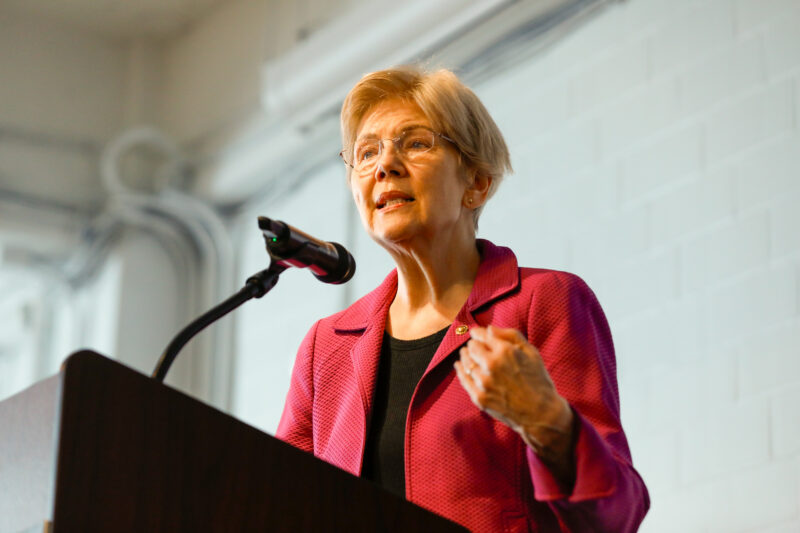
Whip list: Sens. Bernie Sanders (I-VT), Tim Kaine (D-VA), Jeff Merkley (D-OR), Jack Reed (D-RI), Chris Van Hollen (D-MD), Peter Welch (D-VT), Dick Durbin (D-IL), Ed Markey (D-MA), Angus King (I-ME), Raphael Warnock (D-GA), Jeanne Shaheen (D-NH), Patty Murray (D-WA), Brian Schatz (D-HI), Elizabeth Warren (D-MA), Lisa Blunt Rochester (D-DE), Tammy Baldwin (D-WI), Amy Klobuchar (D-MN), Martin Heinrich (D-NM), Andy Kim (D-NJ), Chris Murphy (D-CT), Tina Smith (D-MN), Mazie Hirono (D-HI), Tammy Duckworth (D-IL), Angela Alsobrooks (D-MD), Sheldon Whitehouse (D-RI), Jon Ossoff (D-GA) and Ben Ray Lujan (D-NM), voted for the first of the two, relating to automatic weapons that supporters said were destined for police units controlled by Israeli National Security Minister Itamar Ben-Gvir. Reed, Whitehouse and Ossoff flipped on the second vote on bombs and bomb guidance kits, opposing freezing that tranche of aid.
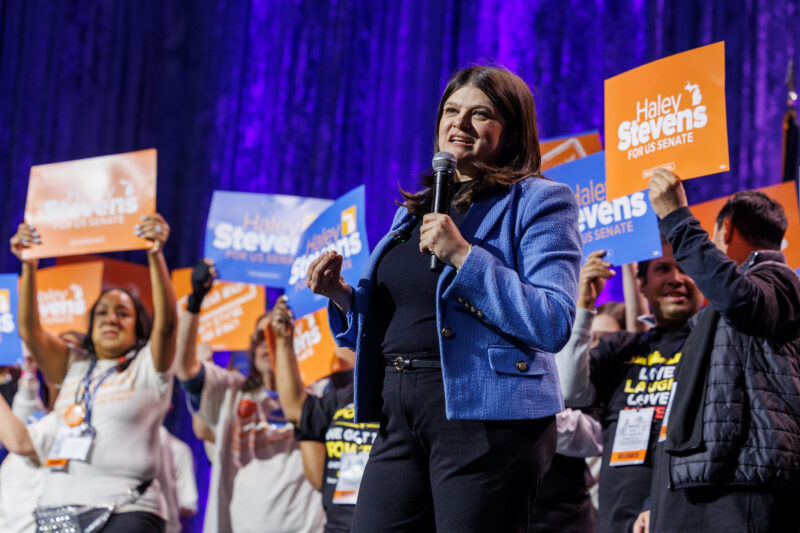
Playing to the base: Sen. Elissa Slotkin (D-MI) indicated in an interview on the “Breaking Points” podcast on Wednesday that she’s open to considering cutting off offensive weapons sales to Israel and distanced herself from “Jewish group[s]” like AIPAC and J Street, Jewish Insider’s Emily Jacobs and Marc Rod report. Slotkin was not present for either vote yesterday but spent part of the day taping an interview on Stephen Colbert’s late night television show, during which she said, while defending Israel’s right to respond the Oct. 7, 2023, attacks, “the way that this is being carried out now, particularly some of the very right wing, very open statements by people of the Netanyahu government, to me is harming the long-terms interests of the State of Israel.”
from all directions
Mike Johnson: ‘Suffering and misery’ in Gaza is ‘quite alarming to see’

House Speaker Mike Johnson (R-LA) expressed strong concern about the humanitarian crisis in Gaza in an appearance on CNN’s “The Lead” on Wednesday, Jewish Insider’s Marc Rod reports.
What he said: Johnson’s comments indicate growing concern even among pro-Israel Republicans about the humanitarian situation in Gaza. “I do hope it comes to an end soon,” Johnson said about the war in Gaza, “and we bring an end to this suffering and misery, because it is quite sad and quite alarming to see.”
CHANGING OF THE GUARD
Nadler draws primary challenger calling for generational change

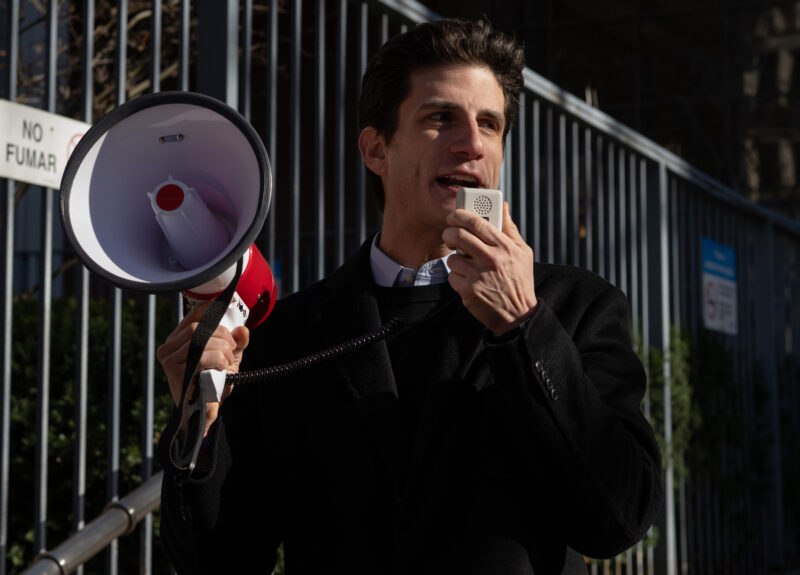
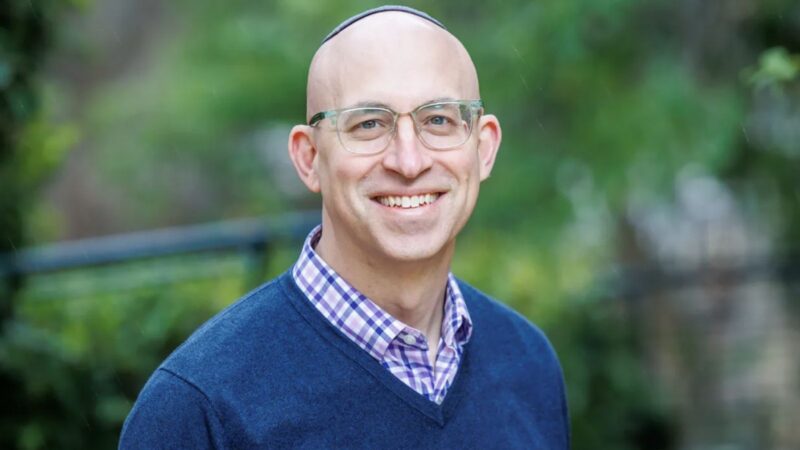
Liam Elkind, a Jewish nonprofit leader in New York City, announced a primary challenge on Wednesday to Rep. Jerry Nadler (D-NY), calling on the veteran lawmaker to step aside to make room for a younger generation of Democratic activists who have grown impatient with the party’s largely aging leadership, Jewish Insider’s Matthew Kassel reports.
New wave: Elkind, a Yale graduate and Rhodes Scholar who leads a nonprofit organization he launched during the COVID pandemic to deliver food and medicine to vulnerable New Yorkers, is part of a new wave of Democratic primary challengers raising frustrations with the party’s elderly membership in Washington and its efforts to oppose President Donald Trump as he enacts his sweeping agenda.
KENT’S CONFIRMATION
Tillis votes with Dems against Joe Kent for top counterterrorism job

Sen. Thom Tillis (R-NC) voted with Democrats against Joe Kent, the administration’s controversial nominee to be director of the National Counterterrorism Center, though Kent was nevertheless confirmed with support from all other Senate Republicans, Jewish Insider’s Marc Rod reports. Kent has come under scrutiny for past links to white supremacists and neo-Nazis and promotion of conspiracy theories, among other issues.
Red line: Tillis told JI he voted against Kent because of his past comments on the Jan. 6, 2021, attack on the U.S. Capitol. Kent has defended rioters involved in the attack on the U.S. Capitol, claimed the FBI was involved in the attack and said it should be dismantled. “It’s the Jan. 6 tripwire,” Tillis said. “I don’t even get to the other things that I think probably add an argument. People make comments about conspiracy theory, all that stuff — [Jan. 6] is a red line for me. … I take personal[ly] dismissing something that endangered police officers. So — that simple.”
culture chief
Audrey Azoulay, UNESCO’s leading Jewish lady
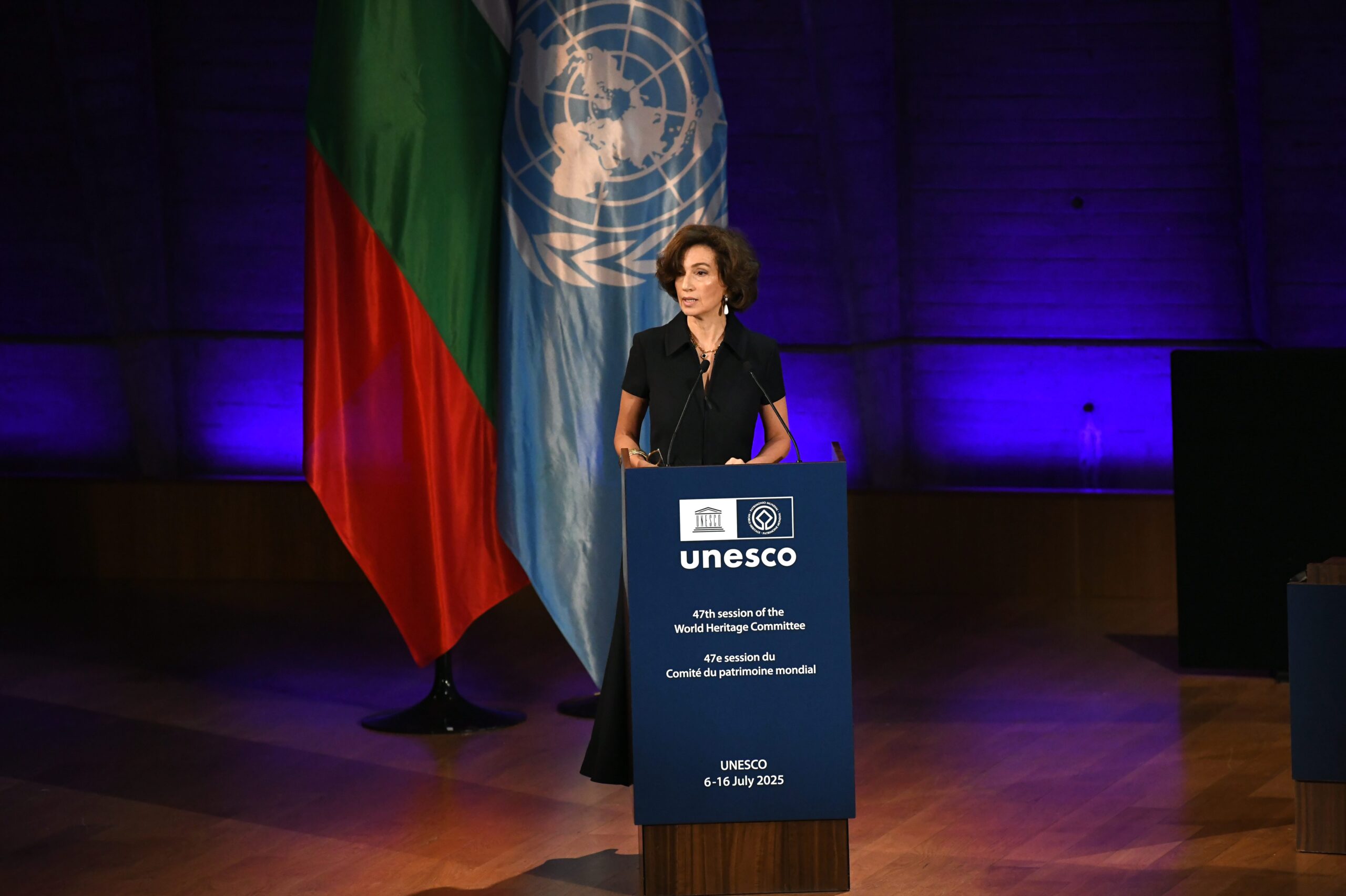
When Audrey Azoulay was elected director-general of the United Nations Educational, Scientific and Cultural Organization in 2017, many U.N. watchers — including some of its staunchest critics — were pleasantly surprised that UNESCO’s members had selected a Jew to lead the organization for the first time since it was founded in 1946. The timing of Azoulay’s come-from-behind two-vote victory over a Qatari competitor came with a tinge of irony: Just one day earlier, the United States and Israel had each announced their intention to withdraw from the body, citing its persistent anti-Israel slant and “extreme politicization.” Now her leadership is in the spotlight, after the Trump administration said last week that it would again depart the body, following President Joe Biden’s decision to reenter UNESCO in 2023, Jewish Insider’s Gabby Deutch reports in a profile of the organization’s French-Moroccan leader.
Responding to the backlash: Azoulay, a former French culture minister who comes from an illustrious Moroccan Jewish family, said in a statement last week that “the situation has changed profoundly” since the U.S. departed UNESCO in 2018 and highlighted “UNESCO’s efforts, particularly in the field of Holocaust education and the fight against antisemitism.” UNESCO declined to make Azoulay available for an interview, but a spokesperson noted that “the level of tension” within the body on Middle East issues “has been reduced, which is a unique situation in the U.N. system today.” Deborah Lipstadt, the former U.S. special envoy to monitor and combat antisemitism — who has worked with Azoulay on antisemitism-related programming since 2018, told JI: “She really came into office intent on changing UNESCO’s public image and internal work. I think she recognized the flaws that had been prevalent before, and I think she was really trying to turn things around, and she deserves great credit for that.”
SCOOP
Harvard agrees to cover security costs for campus Hillel

Harvard University, in a move long sought-after by advocates for Jewish college students, agreed on Thursday to cover all security costs for the university’s Hillel ahead of the upcoming academic year, Jewish Insider’s Haley Cohen has learned. “By taking on responsibility for security at Hillel, Harvard University is making a powerful statement: Harvard is committed to the safety of Jewish students,” Rabbi Jason Rubenstein, executive director of Harvard Hillel, told JI.
Community needs: Security costs “represent a significant part of our annual budget,” Rubenstein said, declining to provide figures. The agreement is slated to run through the rest of Harvard President Alan Garber’s tenure, which is set to conclude at the end of the 2026-27 academic year. “Harvard University’s commitment to the safety and well-being of members of our Jewish community is paramount,” a Harvard spokesperson told JI. “Recent tragic events in communities across the country are evidence of the growth in antisemitism and further Harvard’s resolve in our efforts to combat antisemitism on our campus.”
Protection strategy: Michael Masters, the CEO of the Secure Community Network, sat down last week with Secretary of Homeland Security Kristi Noem amid a push from Jewish community groups for additional security resources to address rising levels of antisemitism, Jewish Insider’s Marc Rod reports. The meeting was among the most high-level sit-downs between Noem and Jewish communal leaders since she took office.
Worthy Reads
The Case for Ending the War: The Times of Israel’s founding editor, David Horovitz, lays out why Israel must now take the “least bad of the lousy options” to end the war in Gaza: “an international governance mechanism, with an American role in oversight and participation by regional players. … Israel’s leveraging of aid to try to pressure Hamas, and the pictures and clips coming out of Gaza that have convinced even Trump that starvation is real, have in the past few days helped bring Israel’s international standing to a new low — truly a pariah state at this point, with its government simply not trusted by even close allies to maintain humane policies in its conduct of the war, and Israelis and the Jewish world anguished, torn and increasingly critical. Hamas started the war almost 22 months ago with an unprovoked invasion in which it massacred primarily civilians with monstrous brutality, abducted 251 hostages and still holds 50, turned Gaza into a terror state, cynically abuses its populace as human shields and propaganda pawns — but Israel is now regarded as the prime villain. The damage is generational.” [TOI]
The French-Gaza Connection: Simone Rodan-Benzaquen, managing director of the American Jewish Committee’s European branch, writes on her Substack about the connection between France’s widening of asylum protections to Gazans and rising antisemitism in the country: “France insists its selection process is thorough. But ideological vetting — of beliefs, social media activity, or past glorification of terrorism — is not part of the current protocol. France’s obligation to shelter those fleeing violence is real. But so is its duty to protect its own citizens — especially its Jewish citizens, who are facing unprecedented levels of hate. … France is extending taxpayer-funded welcome to individuals who share ideological affinities with those behind the October 7 massacre. Why? Because humanitarianism, for many French elites, has become a form of moral performance. Because bureaucratic systems are not built to detect ideological extremism. Because suffering is mistakenly assumed to neutralize hatred. But ideology doesn’t dissolve at the border. It doesn’t disappear with a visa. It travels in minds, not in suitcases.” [Substack]
Squeezing al-Sharaa: Ahmad Sharawi, a research analyst at the Foundation for Defense of Democracies, urges the Trump administration to “pressure” Syrian President Ahmad al-Sharaa to reform the Syrian military. “Before consolidating power, Mr. Sharaa declared that Syria deserves a system in which no ‘single ruler makes arbitrary decisions.’ As interim president, however, he has seized control of every pillar of government, culminating in an interim constitution that grants him executive, legislative and judicial authority for five years. … The Trump administration has been solicitous of Mr. Sharaa, lifting key sanctions that had weakened the Syrian economy and publicly backing his vision of a unified government and army. This support alone won’t bring stability. Peace and balance can’t be achieved by rewarding militia leaders who defy orders. Changes to the new Syrian military must begin with the removal of foreign jihadist fighters from its ranks. Ultimately, however, the U.S. must be willing to sanction the military units and commanders responsible for the massacres.” [WSJ]
Word on the Street
Brown University reached a deal with the Trump administration to restore its federal funding, the university announced on Wednesday, after the government said in April it would cut $510 million in Brown’s research funding. The Rhode Island school agreed to pay $50 million to state workforce development programs over the next 10 years, coming on the heels of Columbia University’s agreement to pay $200 million to the federal government…
The Treasury Department announced on Wednesday that it sanctioned an illicit Iranian shipping empire run by Mohammad Hossein Shamkhani, the son of a prominent Iranian government official. According to officials at the Treasury Department, the new sanctions — targeting more than 115 individuals, entities and shipping vessels — represent the largest Iran-related action since 2018, Jewish Insider’s Gabby Deutch reports.
On the heels of Tuesday’s France and Saudi Arabia-sponsored conference at the United Nations on a two-state solution, Emmanuel Nahshon, the Israeli Foreign Ministry’s former deputy director for public diplomacy and a former ambassador to Brussels, told Jewish Insider’s Lahav Harkov that 11 countries saying they’ll recognize a Palestinian state in one week creates “a slippery slope” towards diplomatic isolation for Israel…
Canadian Prime Minister Mark Carney also announced Wednesday that Ottawa will recognize a Palestinian state ahead of the U.N. General Assembly in September. Carney said he spoke with Palestinian Authority President Mahmoud Abbas ahead of the pronouncement and emphasized to him that Canada’s recognition would be premised on the PA committing to governance reforms and to hold general elections in 2026…
President Donald Trump wrote on Truth Social that Canada’s decision “will make it very hard for us to make a Trade deal with them. Oh’ Canada!!.” …
Israel has reportedly issued Hamas with an ultimatum that if it doesn’t accept the existing ceasefire and hostage release proposal in the coming days, Jerusalem will annex parts of Gaza…
The United States Commission on International Religious Freedom released a report on Iran this week, which found that the Iranian government’s “antisemitic rhetoric not only continued to threaten Jews in Iran but also legitimized criminal networks’ targeting of Jewish sites around the world, particularly in Europe.” …
The Houthis released a video earlier this week of 11 hostages they took from a cargo ship sailing through the Red Sea that they attacked and sank earlier this month. It is not clear when the video was filmed. The Houthis said they targeted the ship because it was sailing to Israel…
NOTUS investigates the state of the U.S.’ munitions stockpile, after Secretary of Defense Pete Hegseth said he was pausing weapons shipments to Ukraine to assess the existing supply…
Amid reports that Israeli Ambassador to the United Arab Emirates Yossi Shelley is due to be replaced in light of “undignified” behavior in a bar, an official told The Times of Israel that the envoy crossed “a huge red line in a place like Abu Dhabi.” An official also told the Times of Israel that “the Emiratis did not want Shelley as ambassador and rather wanted a former senior defense official, such as Avi Dichter or a retired general.” …
Yevgeni “Giora” Gershman, suspected to be a senior member of an Israeli organized crime group, was arrested on Wednesday in connection with an alleged illegal poker ring hosted by former NBA star Gilbert Arenas…
C-SPAN CEO Sam Feist, former executive producer of CNN’s combative political show “Crossfire,” is set to launch a new weekly show this fall called “CeaseFire,” aimed at highlighting bipartisan dialogue and personal connections between lawmakers across party lines. The program will be hosted by Politico’s Dasha Burns…
Cybersecurity giant Palo Alto Networks announced yesterday that it will acquire Israeli software company CyberArk for a deal valued at approximately $25 billion — the second largest exit in Israeli history…
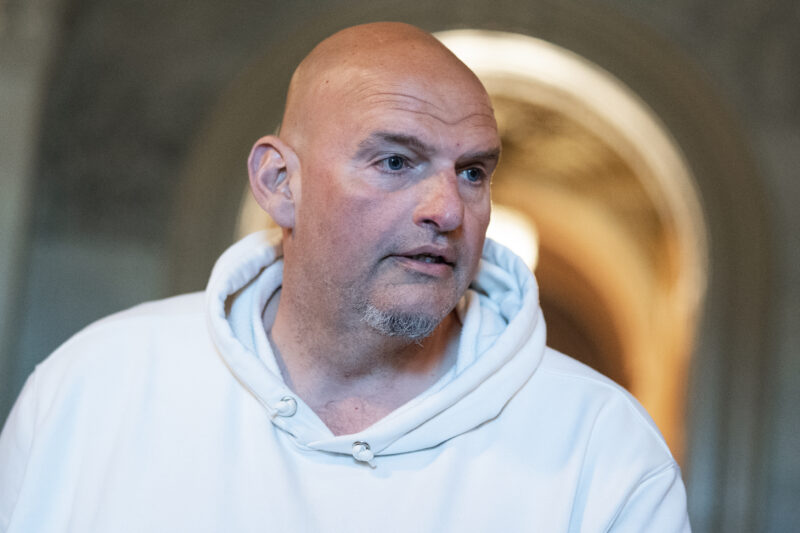
Sen. John Fetterman (D-PA) announced yesterday that his memoir Unfettered, will be released in November. “My public service path, the stroke, depression—UNFETTERED lays it out and pays it forward for anyone dealing with mental health challenges,” Fetterman wrote in X post.…
The Cut profiles CEO of Clarify Clinics Yael Cohen, spotlighting her pivot from cancer advocacy to launching a high-end London startup that claims to filter microplastics from the blood — a $13,000 procedure she says supports longevity and has drawn interest from both celebrities and biohackers…
Israeli Mossad chief David Barnea was spotted at the Lubavitcher Rebbe’s Ohel in Queens, N.Y., yesterday…
Pic of the Day

A new exhibition, “Rising from the Ashes: Archaeology in a National Crisis,” opened this week at the Jay and Jeanie Schottenstein National Campus for the Archaeology of Israel in Jerusalem, showcasing the role played by the Israel Antiquities Authority in documenting the destruction wrought by the Hamas-led terror attacks on Israel on Oct. 7, 2023.
Birthdays
Scholar, professor, rabbi, writer and filmmaker, who specializes in the study of the Holocaust, Michael Berenbaum turns 80…
British judge and barrister, he served as a justice of the Supreme Court of the United Kingdom, John Anthony Dyson turns 82… Actress, who went on to become CEO of Paramount Pictures and president of production at 20th Century Fox, Sherry Lansing turns 81… Nobel laureate in economics in 1997, known for his quantitative analysis of options pricing, long-time professor at both Harvard and MIT, Robert C. Merton turns 81… Founder of Apollo Global Management, in 2015 he bought a 16th century copy of the Babylonian Talmud for $9.3 million, Leon David Black turns 74… Software entrepreneur, he is president of Ameinu and serves on the Board of Governors of the Jewish Agency, Kenneth Bob… Author of 36 best-selling mystery novels, many with Jewish themes, Faye Kellerman turns 73… Manhattan-based criminal defense and civil rights lawyer, radio talk show host and television commentator, Ronald L. Kuby turns 69… Chairman at Haifa-based Twin Digital Healthcare, Guido Benjamin Pardo-Roques turns 69… Principal owner of the NBA’s Dallas Mavericks until its sale to Miriam Adelson in 2023, he was a “shark” investor on the ABC reality program “Shark Tank” from 2011 until earlier this year, Mark Cuban turns 67… Israeli attorney, real estate developer and entrepreneur, Ilan Shavit turns 67… CEO at Leenie Productions, she serves on the advisory board of the Northbrook, Ill.-based Haym Salomon Center, Helene Miller-Walsh turns 66… Technology investor and social entrepreneur, he is the founder and chairman of Tmura, Yadin B. Kaufmann turns 66… Israeli libertarian politician and activist, he was previously a member of the Knesset, Moshe Zalman Feiglin turns 63… Adjunct professor at USC, UC Berkeley and Pepperdine, Dan Schnur… Born into a practicing Catholic family in Nazareth, Israel, investor and owner of the Detroit Pistons, Tom Gores turns 61… Assistant general manager of MLB’s Miami Marlins, he was an MLB outfielder for 13 seasons, the first player known as the “Hebrew Hammer,” Gabe Kapler turns 50… Author, actor and comedian, Benjamin Joseph (BJ) Novak turns 46… Founder and creative director at Wide Eye Creative, Ben Ostrower… Political activist and the founder and president of Stand Up America, Sean Simcha Eldridge turns 39… Head of global communications, social and film at Zipline, Danielle Meister… Program director of the Ohio-Israel Ag and CleanTech Initiative, Aryeh Samet Canter… Adam Rosenberg… David Goldenberg… Richard Rosenstein..
In a letter, GOP senators urge France, Germany and U.K. to utilize the snapback provision in UNSC Resolution 2231

Al Drago-Pool/Getty Images
Ranking member of the Senate Foreign Relations Committee U.S. Sen. Jim Risch (R-ID) speaks during a Senate Foreign Relations Committee hearing on April 26, 2022 in Washington, DC.
A group of Senate Republicans sent a letter to French, German and U.K. officials this week urging them to immediately reimpose U.N. Security Council sanctions on Iran for the regime’s violations of the 2015 nuclear deal and the Treaty on the Non-Proliferation of Nuclear Weapons.
Six GOP senators, led by Sen. Jim Risch (R-ID), chairman of the Senate Foreign Relations Committee, urged French Foreign Minister Jean-Noël Barrot, German Federal Foreign Minister Johann Wadephul and U.K. Foreign Secretary David Lammy to utilize the snapback provision in UNSC Resolution 2231, which would reimpose all the sanctions lifted on Iran as part of the 2015 deal in response to any violations of the agreement.
“Initiating the snapback process would be the right — and long overdue — move and would deny Iran the resources it uses for its terror agenda. The 2015 deal flooded Iran with cash while allowing it low-level enrichment, a clock to simply wait out, no limitations on ballistic missiles, and nothing to rein in terror proxies. Years down the line, the sanctions relief Iran received from this deal directly funded Iran’s terror proxies and led to Hamas’ October 7 attack on Israel,” the senators wrote.
“Iran’s ejection of the International Atomic Energy Agency from its facilities marked the latest in a long chain of violations to Iran’s nuclear commitments. These actions confirm what we have known all along: the Iranian nuclear program is not civilian; it is the pursuit of a bomb to destroy Israel and threaten U.S. national security interests in the region. The international community must not tolerate this activity any longer,” they continued.
The letter was co-signed by Sens. Ted Cruz (R-TX), Pete Ricketts (R-NE), John Cornyn (R-TX), Steve Daines (R-MT) and Bill Hagerty (R-TN).
French Foreign Minister Jean-Noel Barrot warned on Tuesday that the E3, the European countries party to the 2015 Iran nuclear deal known as the Joint Comprehensive Plan of Action, will trigger the snapback mechanism, reimposing all U.N. sanctions, if a new agreement is not reached.
The senators encouraged the recipients of their letter to go beyond simply initiating the snapback sanctions, which takes 30 days and would likely need to be completed before Russia takes over the presidency of the UNSC in October, the same time that the snapback mechanism is set to expire.
“The decision to initiate the snapback process is only the beginning. The UNSC must fully process and formally re-instate UN sanctions without delay. This will take several weeks, and the October expiration of the snapback mechanism is looming. Furthermore, once sanctions are back in place, we must commit to their enforcement. Chinese purchases of Iranian oil and illicit oil smuggling through third countries have long violated existing U.S. secondary sanctions. Once UN sanctions return, all member countries will have a duty to crack down on this illegal activity,” the group wrote.
“President Trump has instituted a maximum pressure policy to bring Iran to the negotiating table. It is our sincere hope that our allies will stand side by side with America as we counter Iran’s threat to regional and global security for good,” they continued.
Please log in if you already have a subscription, or subscribe to access the latest updates.
 Continue with Google
 Continue with Apple