










































Washington Institute expert witnesses argue that the U.S. should condition security assistance to Lebanon on further progress in disarming Hezbollah
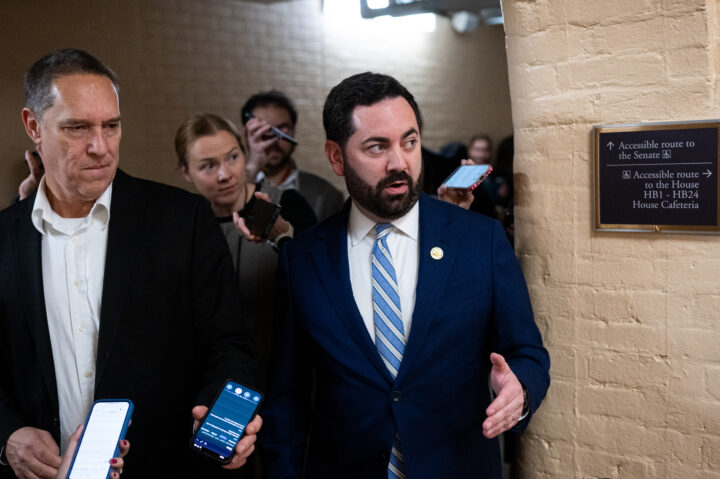
Bill Clark/CQ-Roll Call, Inc via Getty Images
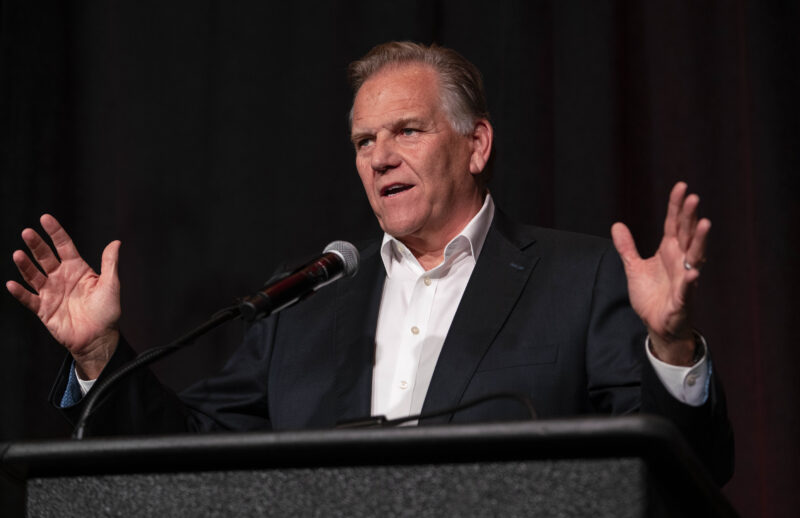
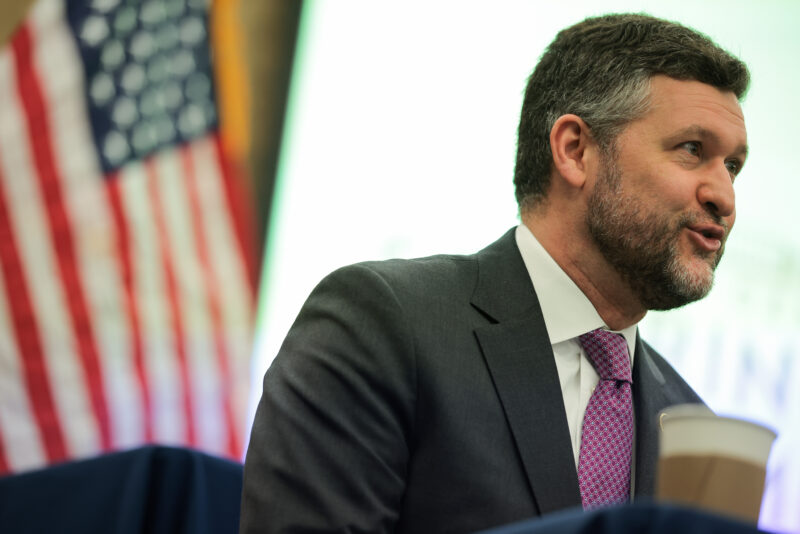
Rep. Mike Lawler (R-NY) speaks to reporters as he leaves the House Republican Conference meeting in the U.S. Capitol on December 10, 2025.


 Add JewishInsider on Google
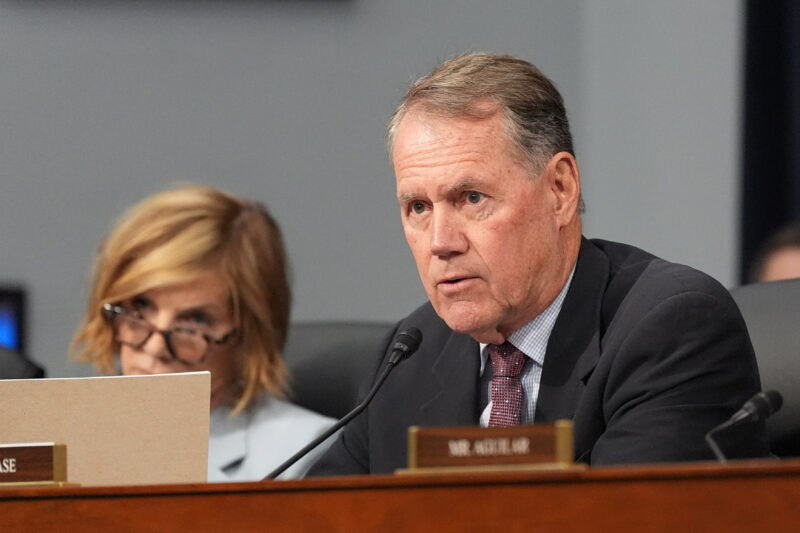
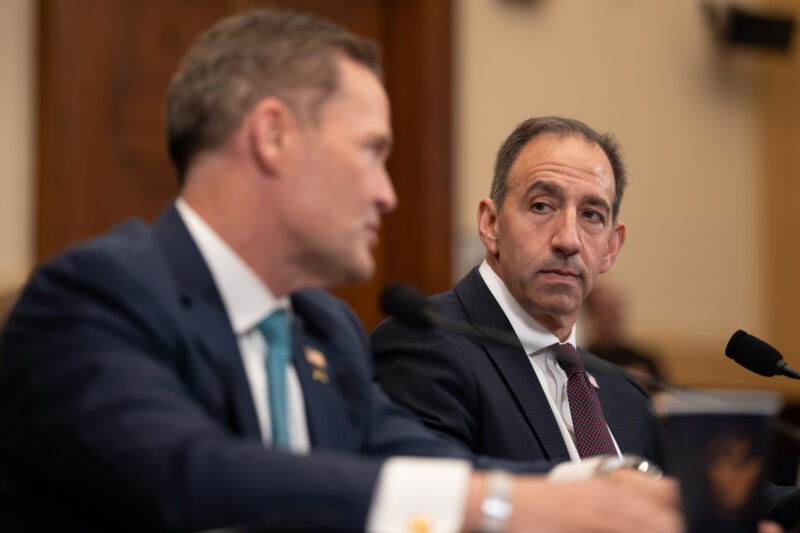
Lawmakers and expert witnesses at a House Foreign Affairs Committee subcommittee hearing on Tuesday highlighted the ongoing challenges and delays in the disarming of Hezbollah in southern Lebanon, but also argued that there is tremendous opportunity in the country if Hezbollah’s influence can be defeated — including potential moves in the near term toward normalization with Israel.
“Right now, we have the chance to help this government break free of the shackles of Iran’s malign influence. Hezbollah’s influence is vastly diminished thanks in large part to decisive Israeli action. But difficult choices now need to be made to permanently block Hezbollah’s path to power,” Rep. Mike Lawler (R-NY), the Middle East subcommittee chair, said in his opening statement.
He said that the Lebanese Armed Forces have made strides in disarming Hezbollah but the ceasefire plan’s implementation “has been haphazard at best,” also emphasizing the ongoing economic difficulties and widespread corruption that continue to plague the country and provide Hezbollah and its Iranian backers opportunities to rebuild.
Lawler also emphasized that significant reforms are needed, particularly in southern Lebanon, to ensure that the same corrupt systems that allowed Hezbollah to flourish do not return. In the long term, Lawler said that he hopes to see Lebanon become a “true partner” in the region and normalize its relationship with Israel.
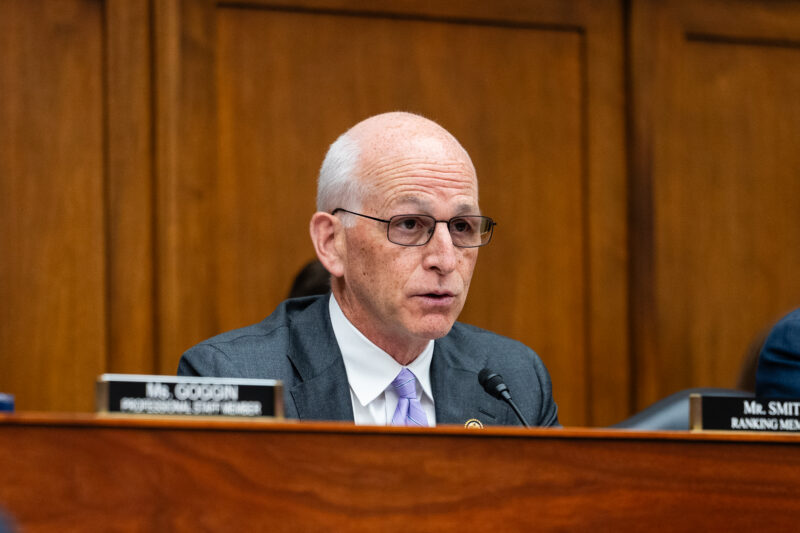
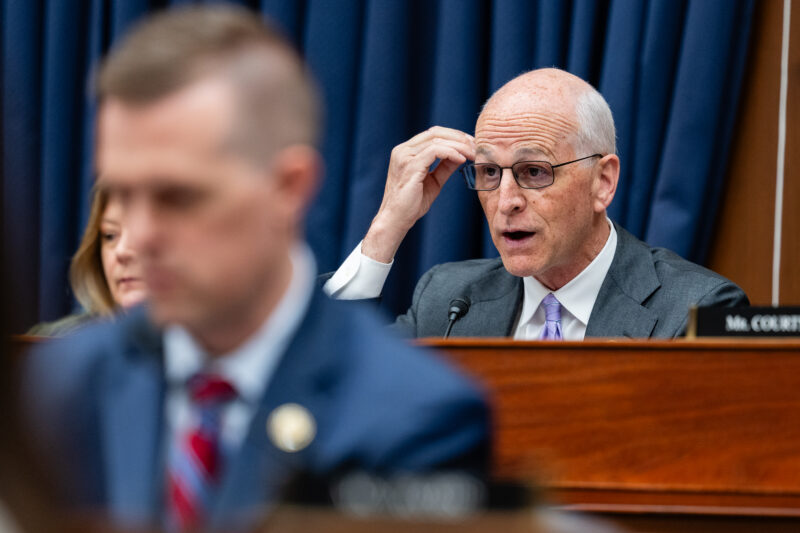
Rep. Brad Sherman (D-CA), the ranking member, said that there is a “historic opportunity” in Lebanon but “[t]hat window of opportunity, however, is narrow. Hezbollah is working hard to rebuild, rearm and to reconstitute itself as a major terrorist organization.”
Sherman accused the Trump administration of a “lack of urgency and a lack of the necessary support” to groups working to counter Hezbollah in the country, particularly following cuts to foreign assistance.
He said that comments by the Trump administration “have often sent the wrong signals, particularly when Special Envoy Tom Barrack downplayed Hezbollah and described it as a political party that also has a — let me quote him exactly — ‘a political party that also has a militant aspect to it,’” Sherman continued.
During the hearing, expert witnesses, all from The Washington Institute for Near East Policy, warned that the disarmament process is not proceeding smoothly or entirely as expected. All three agreed that the U.S. should condition security assistance to Lebanon on progress in disarming Hezbollah, among other steps. And they each said the U.S. should ramp up its sanctions efforts, targeting Hezbollah and malign actors in the Lebanese government.
David Schenker, a senior fellow at The Washington Institute and former Trump administration official, emphasized that the Lebanese Armed Forces (LAF) are encountering ongoing obstacles including Hezbollah’s use of human shields, a lack of political will, ongoing Hezbollah penetration of the LAF, ongoing LAF deference to Hezbollah and threats to LAF forces’ safety.
He said the Lebanese government has not deployed as many troops to southern Lebanon to carry out the disarmament mission as it had promised.
Hanin Ghaddar, a senior fellow at The Washington Institute and longtime Lebanese journalist, said that the lack of a concrete timeline for disarmament “has produced a de facto freeze,” in which neither the LAF nor Hezbollah are moving forward. She called for outside pressure, including conditions on U.S. aid, to pressure the LAF into continuing with its obligations to disarm Hezbollah.
Dana Stroul, the research director at The Washington Institute and a former Biden administration official, said that defanging Hezbollah requires not only disarming the group but also “addressing the political, social and economic system within which Hezbollah has thrived.” She called for expanded U.S. engagement in the country outside of the security realm.
Stroul, differing from the other witnesses, argued that the U.S. should offer reconstruction assistance — in addition to military aid — to offset the unconditional aid flowing in from Qatar and Turkey and ensure oversight and safeguards. She said that waiting to contribute to reconstruction efforts until after disarmament is complete risks locking the U.S. out of the process and preventing it from enforcing its own conditions.
Schenker argued that the current “division of labor” between the LAF and Israel, which maintains positions inside Lebanon and continues to carry out strikes on Hezbollah outposts, should continue pending further LAF progress. He said that many in the LAF are quietly “very pleased” about the Israeli action, in contrast with their public protests.
In spite of the ongoing issues, the witnesses said that the new Lebanese government is an improvement over previous ones and that there are people within the Lebanese government with whom the U.S. can work and who are making real strides. The witnesses noted that other regional and global developments are also depriving Hezbollah of its key allies.
Schenker and Ghaddar said that, if the Iranian regime were to fall, Hezbollah would be significantly weakened, though Schenker warned that it would not fully disappear due to its various money-generating ventures inside Lebanon and foreign supporters.
The witnesses said that Lebanese normalization with Israel could be achievable.
“Peace between Lebanon and Israel is not separate from this effort, it is what sustains it,” Ghaddar said, adding that such an outcome is “closer than many may assume” but only with a forceful U.S. policy approach. She said that “peace is no longer taboo” and that the “Lebanese street is ready” for such a step. She said that the peace process should begin immediately.
“Peace raises the political cost of re-armament, strengthens state legitimacy, unlocks economic recovery and deprives Hezbollah of its core justification. Without a credible peace horizon, disarmament and economic reform will be temporary,” Ghaddar continued. “With one, they become structural.”
She said that the U.S. should focus on eroding the Lebanese anti-normalization law by offering incentives to not enforce the law, and sanctioning those involved in its enforcement. She also called for continued discussions on economic cooperation between Lebanon and Israel.
Stroul similarly said that a Lebanese government publicly considering normalization with Israel is “not any policy opportunity that, before Oct. 7, we could have imagined,” providing a “tremendous reason for hope,” alongside other improvements in the leadership in Beirut.
Rep. Ryan Zinke (R-MT) raised concerns about the role of the Muslim Brotherhood, backed by Turkey and Qatar, in Lebanon.
Schenker said that the Muslim Brotherhood-affiliated party in Lebanon has been “making slow but steady progress.” Ghaddar said that Turkey and Qatar “play a very bad role in Lebanon in terms of supporting the Muslim Brotherhood” and that the Muslim Brotherhood branch, which she described as “Lebanese Hamas,” is a “very dangerous phenomenon.”
Ghaddar added that the Muslim Brotherhood has been treating Hezbollah as a “strategic ally” and that they might form an alliance in the upcoming elections.
Lawmakers and experts highlighted those upcoming Lebanese elections as a potential pivot point for anti-Hezbollah efforts.
Ghaddar warned that, if Hezbollah is able to win all of the Shia seats in the next parliament and the Iranian regime does not fall, the political situation would functionally return to the pre-Oct. 7 status quo.
Stroul said the “U.S. must do more than insist that elections take place on time. Signaling U.S. interest in a parliamentary outcome that demonstrates a break with the pre-Oct. 7 governmental paralysis is critical. The worst case outcome would be a parliamentary makeup that leaves in place Hezbollah-affiliated politicians.”
Ghaddar and Schenker emphasized that the Lebanese diaspora could be a key deciding factor in the upcoming election, but it is unclear if they will be able to vote as required by Lebanese law. The millions of Lebanese citizens living abroad “will have a real impact on whether this government stays or whether we go back to business as usual,” Schenker said.
Rep. Darrell Issa (R-CA) highlighted legislation he introduced with Rep. Darin LaHood (R-IL) ahead of the hearing to authorize sanctions on any individuals involved in blocking Lebanese citizens abroad from voting in the elections or who are otherwise obstructing the Lebanese elections.
Schenker called for the U.S. to press allies to fully designate Hezbollah as a terrorist organization and repudiated Barrack’s comments about Hezbollah having political and military elements — a stance mirroring that of some European countries.
He said the U.S. needs to be clear that the entire group is a terrorist organization if it wants to see its allies agree to such a designation. But he was skeptical that France, in particular, would be willing to proceed with such a step.
Stroul argued the U.S. needs more technical experts and diplomats focused on Lebanon, noting the repeated turnover in U.S. envoys working on the portfolio. She also urged the Trump administration to welcome Lebanese President Joseph Aoun to the White House for a meeting.
A Trump administration source characterized Netanyahu's statement to JI as a minor issue that would likely be smoothed out within days
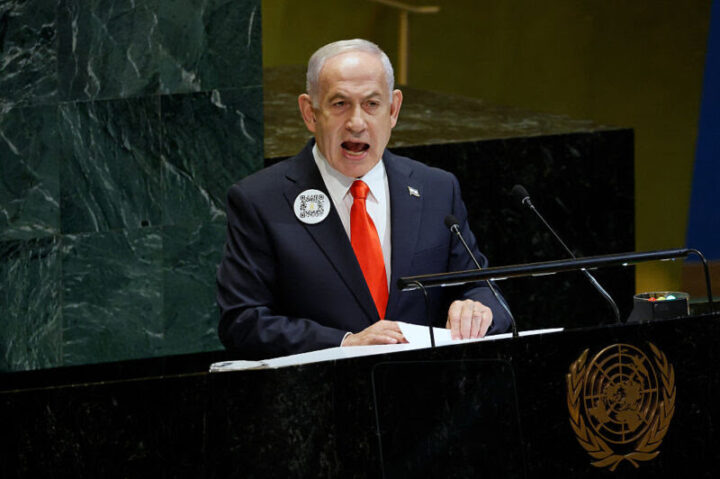
Taylor Hill/Getty Images
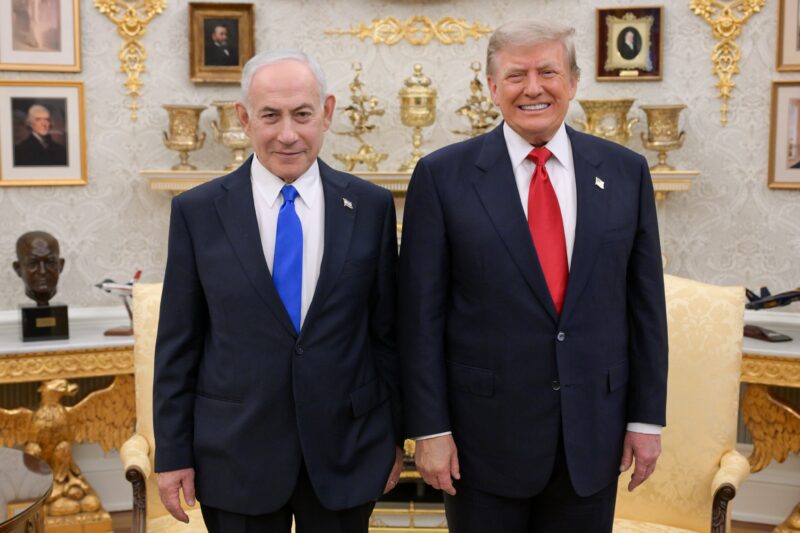
Prime Minister of Israel Benjamin Netanyahu speaks during the 80th session of the UN’s General Assembly (UNGA) at the United Nations headquarters on September 26, 2025 in New York City.
Israeli Prime Minister Benjamin Netanyahu opposes the composition of the executive board meant to oversee the rebuilding of Gaza, his office said on Saturday.
“The announcement regarding the composition of the Gaza Executive Board, which is subordinate to the Board of Peace, was not coordinated with Israel and runs contrary to its policy,” the Prime Minister’s Office stated. “The Prime Minister has instructed the Foreign Affairs Minister to contact the U.S. Secretary of State on this matter.”
Netanyahu emphasized his objection in a speech to the Knesset on Monday, saying that “there will be no Turkish or Qatari soldiers in Gaza. We are currently in a dispute with the U.S. over the makeup of the advisory council for Gaza.”
Though Netanyahu said the board was not coordinated with Israel, he spoke with President Donald Trump twice in recent days, and Mossad Chief David Barnea met with White House Special Envoy Steve Witkoff on Friday. The calls and meetings were reportedly about Iran.
The White House announced on Friday that several committees to govern Gaza and oversee its reconstruction and administration had been formed, including the Gaza Executive Board.
The Gaza Executive Board is meant to support the office of the high representative for Gaza and the National Committee for the Administration of Gaza, which is made up of Palestinian technocrats. It includes Witkoff, Jared Kushner, former U.K. Prime Minister U.K. Tony Blair, Apollo Global Management CEO Marc Rowan, Israeli-Cypriot businessman Yakir Gabay, head of Egyptian intelligence General Hassan Rashad, UAE Minister for International Cooperation Reem Al-Hashimy, U.N. Special Coordinator for the Middle East Peace Process Sigrid Kaag, and the previous holder of that position, Nickolay Mladenov, who will serve as the high representative for Gaza.
The board also includes Turkish Foreign Minister Hakan Fidan and Qatari diplomat Ali Al-Thawadi. Israeli officials have previously spoken out against Turkish involvement in Gaza’s reconstruction. Qatar has funded Gaza reconstruction in the past, with significant funding and dual-use materials reaching Hamas; the terrorist group’s leaders have also resided in Doha.
A Trump administration source characterized Netanyahu’s statement to Jewish Insider as a minor issue that would likely be smoothed out within days.
The source noted that Turkish and Qatari representatives were key to negotiating the ceasefire in Gaza, which took effect in October, and that they call Witkoff and Kushner daily, and therefore have an influence on the process regardless of the titles they are given. He also added that Netanyahu has a direct line to Trump.
“It’s all based on whether Hamas demilitarizes or not,” he added. “If Hamas demilitarizes, that is what’s most important [above the composition of the board]. If Hamas doesn’t demilitarize, none of this matters. … The prime minister has a commitment from the president that Hamas will demilitarize.”
Israeli Opposition Leader Yair Lapid said that “Netanyahu is allowing Turkey and Qatar into Gaza. That endangers Israel’s security. That is not what our brave soldiers fought for for two years.
“Instead of releasing panicky statements of protest, Israel should offer a clear alternative, for Egypt to administer Gaza for the next 15 years, for Hamas to be disarmed, and work with American partners to strengthen Israel’s border,” Lapid added.
Israeli National Security Minister Itamar Ben-Gvir said that he supports Netanyahu’s “important message.”
“Gaza does not need an ‘executive board’ that will supervise its ‘rehabilitation,’ it needs to be cleaned of Hamas terrorists who should be destroyed, along with encouraging massive voluntary emigration, in accordance with President Trump’s original plan,” Ben-Gvir said. “I call on the prime minister to instruct the IDF to prepare to go back to war in Gaza using great force in order to achieve the central goal of the war, the destruction of Hamas.”
The White House also announced the members of the founding executive board of the Trump-chaired Board of Peace, whose purview is not limited to Gaza. Netanyahu told the Knesset on Monday that the board is meant to serve as an alternative to the United Nations, 66 of whose organizations the U.S. left earlier this month. The board is composed of Secretary of State Marc Rubio, Witkoff, Kushner, Blair, Rowan, World Bank President Ajay Banga and Deputy National Security Advisor Robert Gabriel.
Canadian Prime Minister Mark Carney and Argentinian President Javier Milei also accepted invitations from Trump to join the board, while Egyptian President Abdel Fattah al-Sissi and Turkish President Recep Tayyip Erdogan had yet to respond. French President Emmanuel Macron declined to join. Netanyahu was invited to join or send an Israeli representative, according to Ynet. Russian President Vladimir Putin was invited, as was President Alyaksandr Lukashenka of Belarus; Ukrainian President Volodymyr Zelensky received an invitation on Tuesday, Ukrainian Ambassador to Israel Yevgen Kornichuk told JI. China, Germany, Australia, Albania, Jordan, Egypt and Bahrain reportedly received invitations, as well.
Membership on the Board of Peace is for three years; Trump asked countries to pay $1 billion for a permanent seat, Bloomberg reported.
Trump appointed Aryeh Lightstone and Josh Gruenbaum, members of Witkoff’s team, to be special advisors to the Board of Peace, “leading day-to-day strategy and operations, and translating the Board’s mandate and diplomatic priorities into disciplined execution,” the White House stated.
The freshman New York congressman also said that Israel must do more to pursue an end to the war, make its case to the world and provide aid in Gaza

Spencer Platt/Getty Images
Westchester County Executive George Latimer speaks to supporters after winning his race against Democratic incumbent Representative Jamaal Bowman in the 16th Congressional District of New York's Democratic primary.
Having recently returned from a trip to Israel, Rep. George Latimer (D-NY) is emphasizing that Israel’s critics in the United States and around the world are overlooking Hamas’ key role in perpetuating the conflict and contributing to the humanitarian issues in Gaza, strengthening the terrorist group’s position and insulating it from external pressures.
At the same time, the New York Democrat also said that Israel must do more to pursue an end to the war, make its case to the world and provide aid in Gaza.
Latimer, speaking to Jewish Insider last week, said that the trip, organized by the AIPAC-affiliated American Israel Education Foundation for Democratic freshmen and leading Democratic lawmakers, had reinforced his view that the situation on the ground is more complicated than the more simplistic narratives demonizing Israel that have been spread by some critics and media.
“When you see on the ground, you understand it is not a simple black-and-white situation,” Latimer, a first-term congressman from Westchester County, N.Y., who sits on the House Foreign Affairs Committee, said. “People come up to me and say, ‘Israel is practicing genocide. What they’re doing is evil and we need to stop it.’ And then you get on the ground and you realize how much more complicated it is than that.”
He said that American critics of Israel fail to acknowledge Hamas’ “role in all of this and its contributory actions.” He said he sees a “lack of appreciation here in the United States that Hamas is committed — has shown no signs to want to sit, talk peace, have a cessation of hostilities. … That makes it very, very hard to plot a strategy, if the other side is completely intransigent.”
Latimer said the situation is comparable to overlooking the fact that the U.S. entered World War II because Japan bombed Pearl Harbor, or that the U.S. invaded Afghanistan because of the 9/11 attacks. He said that the “mindset” that motivated such attacks doesn’t disappear overnight, and can take protracted conflict to address.
At the same time, he said that “there’s a gap between what [the Israeli government] needs to be doing and what it is doing, and it’s a serious gap.” He said he doesn’t see proposals to relocate the population of Gaza out of the enclave, discussed during a meeting with Israeli Prime Minister Benjamin Netanyahu, as “workable” or “humane.”
He addressed friction within Israeli society over Israel’s war plans in Gaza, and said that Netanyahu’s decision-making may be shaped by his far-right coalition members, adding that “if there’s no movement from Hamas, what can you ask Israel to do unilaterally?”
“So Netanyahu’s strategies present as intransigent in the face of intransigence on the other side,” Latimer continued. “You need some joint breakthrough where both sides step back from the path that they’re on, and both sides have to be willing to do that, if you can expect the other side to also then do that.”
He noted the difficulty of forcing a dug-in enemy like Hamas to surrender, comparing it to the challenge of forcing a Japanese surrender during WWII.
Latimer unseated Rep. Jamaal Bowman (D-NY), a vocal Israel critic, in the 2024 Democratic primary, boosted by significant support from his district’s Jewish community as well as national pro-Israel groups.
Latimer told JI he thinks Israel has not done enough to try to win over or influence global opinion in its favor. Latimer said he believes that the Israeli government views such efforts as a lost cause and not worth attempting.
“There’s a case to be made [for Israel]. But in lieu of that, the rhetoric is all what Israel is doing and not doing, and how evil they are, when, in fact, all of this came from an attack that was horrific on Oct. 7,” Latimer said.
He said that there have been “atrocities” on the Israeli side, pointing broadly to settler violence in the West Bank, but said that “the question is, overall, are you weighing all of these things together, or as the world opinion, and much of the United States opinion, particularly among younger people, has been framed completely around ‘Israel bad,’” ignoring the “evil that’s been done on behalf of the other side of this. That is a contributing reason why we’re in the situation we’re in.”
“The fact that people are starving is horrific. But as long as the world blames Israel for it solely, Hamas is winning. Why would they change any strategies?” Latimer said. “The leaders of Hamas are not sitting in the tunnels. … They’re sitting in the safety of the protection of [Turkish President Recep Tayyip] Erdogan or over in Qatar. Therefore, they’re not under the pressure.”
Latimer said that the food supply in Gaza was a key issue he examined on the trip, calling starvation in Gaza a “legitimate” problem.
He said that the current four Gaza Humanitarian Foundation aid distribution sites are “nowhere near enough,” given the “massive number of people that need to be fed and housed.”
But he added that Hamas being “unwilling to cooperate” in the safe delivery of aid is an impediment to efforts to improve the humanitarian situation and that the United Nations “in the eyes of the Israelis, has lost credibility.”
He said that the best path forward would likely be for a coalition of Arab countries to take the lead of a humanitarian aid distribution entity: “We need to have a third party that has credibility.”
“Israel is not doing enough to solve the problem, and Hamas is doing things to prohibit the problem from being solved,” Latimer said, calling on Israel to work to increase the number of food distribution centers and strengthen supply lines and on Hamas to stop attempting to intercept food and sow chaos at distribution sites.
“The fact that people are starving is horrific. But as long as the world blames Israel for it solely, Hamas is winning. Why would they change any strategies?” he said. “The leaders of Hamas are not sitting in the tunnels. … They’re sitting in the safety of the protection of [Turkish President Recep Tayyip] Erdogan or over in Qatar. Therefore, they’re not under the pressure.”
“What I saw in September 2005 gave me hope. What I see when I go back 20 years later is, you shake your head and you go, ‘Why did it turn out this way?’” Latimer said. “Did it turn out this way because Israel wanted it to turn out this way? Israel didn’t want Oct. 7. Israel didn’t want all of its young men in the reserves and active duty, constantly on a wartime footing.”
He declined to weigh in definitively — citing the limited information at his disposal and his limited power as a lone congressman — on whether the U.S. needs to increase pressure on its allies in Turkey or Qatar to expel or detain those Hamas leaders, but said that “clearly there has been insufficient pressure on Hamas” because its leaders have shown no urgency to return the hostages, negotiate in good faith or participate in un-corrupted food distribution.
Latimer said he first traveled to Israel two decades ago, just after the Israeli disengagement from Gaza, and that there was hope at the time that the Israeli withdrawal would “allow the opportunity for Gaza to experience peace and some kind of growth.”
“What I saw in September 2005 gave me hope. What I see when I go back 20 years later is, you shake your head and you go, ‘Why did it turn out this way?’” Latimer said. “Did it turn out this way because Israel wanted it to turn out this way? Israel didn’t want Oct. 7. Israel didn’t want all of its young men in the reserves and active duty, constantly on a wartime footing.”
He said that if Gaza’s leaders had pursued growth and development over the past 20 years, “we could be in a very different place today,” but instead Hamas seized power and used Gaza as a platform to attack Israel.
Asked about recent decisions by European countries to unilaterally recognize a Palestinian state, which came around the time of Latimer’s trip, the congressman said that he supports a two-state solution, but one that “comes out of a negotiated process,” noting the many outstanding issues to be worked through.
“You cannot expect Israel to survive with a hostile entity interspersed with its borders, and yet be its own country. And there has to be a sense that this country can function and provide its services to its people and maintain civil control. None of those things are automatically in place yet, so I don’t know what we’re recognizing in substance,” Latimer said.
“I think what we’re recognizing in symbolism is European countries that basically are saying, ‘We need to have a two state solution,’ and probably their population is reacting to what’s happening in the moment and putting pressure on their governments to do this,” he continued.
“The Palestinian Authority certainly has a steep mountain to climb, but right now, they’re the best hope that you have of a presence — and certainly it’s not Hamas, it’s certainly not coming out of any of the groups that Iran is backing or has backed,” Latimer said.
Based on the delegation’s meeting with Palestinian Authority leaders, Latimer said that he believes there is an “intent” and “willingness” in the PA to pursue needed reform and bolster credibility with the Palestinian population.
“How much success they’re going to have with the civilian population to accomplish those things — it’s going to be a tall task,” he said.
At the same time, he noted that some Arab governments such as those in Jordan and Egypt maintain cooperative relationships with Israel even as many of their citizens remain hostile.
“The Palestinian Authority certainly has a steep mountain to climb, but right now, they’re the best hope that you have of a presence — and certainly it’s not Hamas, it’s certainly not coming out of any of the groups that Iran is backing or has backed,” he continued.
In the long term, Latimer added, the Abraham Accords represent a path forward for the region, and said that moderate Sunni Arab states want to see a viable and demilitarized Palestinian Authority government that can credibly govern the Palestinian people.
Please log in if you already have a subscription, or subscribe to access the latest updates.
 Continue with Google
 Continue with Apple