





































The longtime Commentary editor’s passionate defense of Israel helped shape the Republican Party of the time

(Photo by David Howells/Corbis via Getty Images)
American neoconservative theorist and writer Norman Podhoretz at home in New York City.


 Add JewishInsider on Google
Norman Podhoretz, the pugnacious editor and neoconservative pioneer who died on Tuesday at the age of 95, charted a protean trajectory through American politics and intellectual discourse, rising to prominence as a leading champion of a muscular foreign policy vision conjoined with a fierce support for Israel that influenced such presidents as Ronald Reagan and George W. Bush.
Despite his early political conversion from staunch liberal to conservative trailblazer, Podhoretz — the always-ambitious son of a Yiddish-speaking milkman from Eastern Europe who was born in Brownsville, Brooklyn — remained consistent in his commitment to defending Israel as well as promoting the Jewish ideals that guided his social and professional ascent.
During his 35-year tenure helming Commentary— from 1960 to 1995 — he established the periodical as a lightning rod of disputatious ideas that helped drive the conservative movement, while at the same time building his reputation as an estimable thinker in Jewish American debate of the mid-20th century.
Under his editorial stewardship, Podhoretz transformed the magazine — then published by the American Jewish Committee — into a pro-Israel force that significantly shaped American foreign policy in the Middle East while helping steer the GOP to a more instinctive embrace of the Jewish state as a key ally.
“The neoconservatives played a pivotal role in providing the intellectual firepower for the case for Israel,” Jacob Heilbrunn, the author of a book about the movement Podhoretz founded, They Knew They Were Right: The Rise of the Neocons, told Jewish Insider in an interview on Wednesday. “They did that not only by arguing that Israel was a vital outpost in opposing the spread of communism in the Middle East, but also in forging and defending the rise of the evangelicals who supported Israel.”
Absent Podhoretz and his ideological comrades including Irving Kristol, another neoconservative leader, “I don’t think that you would have had the intellectual justification for defending Israel inside the GOP,” Heilbrunn said, noting that the party had previously been “hostile to Israel.”
Podhoretz, who wrote a dozen books including his score-settling debut memoir, Making It, published in 1967, was an erstwhile liberal who abandoned the left-wing New York intellectual milieu that nurtured his rise and turned to neoconservatism in the 1960s, after growing disillusioned with a counterculture he viewed as increasingly hostile to Israel following the Six Day War.
“Podhoretz was the founder of neoconservatism,” Joshua Muravchik, an author and like-minded foreign policy expert, told JI, noting that the “role is sometimes ascribed to Irving Kristol. In truth, there were two strands.”
Kristol, he argued, “led a group of thinkers who reckoned with the limits of social engineering and the welfare state” — while Podhoretz “led a deeper project, the rediscovery or reassertion of the moral greatness of America, of democracy and of Western civilization.”
“This made him not only a great American patriot but a great Jewish patriot,” he said, “because Israel is a precious, against-all-odds outpost of Western civilization and because the roots of American civic culture and Western civilization are found in the Hebrew bible.”
In publishing major articles by the likes of Daniel Patrick Moynihan and Jeane Kirkpatrick as well as Norman Mailer and Philip Roth, Podhoretz “set a high standard for Jewish intellectual periodicals” while also playing “a role in opening up the Jewish community to more conservative views that had not previously been admitted,” said Jonathan Sarna, a professor of American Jewish history at Brandeis University.
“Even those who didn’t agree with him I think respected his standard,” Sarna, who published his first article in Commentary in his mid-20s, told JI in an interview. “I’m sure I’m not the only one who feels indebted to Norman.”
Mark Gerson, an author and businessman who interviewed Podhoretz while working on his 1997 book, The Neoconservative Vision, called the late editor “a towering intellectual” and a “great man of ideas who made Commentary, when he took it over, one of the best magazines or publications ever.”
“It was always interesting, always intellectually serious, always rigorous, always challenging,” he said. Podhoretz, who was otherwise recognized as an astute if often acid-penned literary critic, “had a unique ability to come up with the most interesting ideas, to tell the most visceral truths and to recruit some people who became defining the writers of his generation,” Gerson told JI.
The magazine is now edited by Podhoretz’s son, John, who wrote in a tribute on Tuesday that his father’s “knowledge extended beyond literature to Jewish history, Jewish thinking, Jewish faith, and the Hebrew Bible.”
“Norman believed that words matter, and arguments matter, and his leadership of Commentary was a 30-year effort at putting forward the best arguments in defense of America, Israel, the West and the Jews,” said Elliott Abrams, a senior fellow at the Council on Foreign Relations and Podhoretz’s stepson-in-law. “He looked for the best writers and champions of this cause, from Moynihan and Kirkpatrick to dozens of young voices, and he engaged them in this noble cause.”
“There was no magic formula beyond logic, language and unwavering moral commitment,” Abrams told JI.
Podhoretz, of course, had many critics on the left and right — including among some former writers. Robert Alter, the renowned biblical translator who frequently contributed to Commentary, said he had “mixed thoughts about Norman.”
“Early in his career, he was admirable in attracting promising young writers,” he told JI on Wednesday. “His staunch defense of Israel, as the American left moved toward anti-Israel positions after 1967, was politically valuable.”
But while Podhoretz had “made Commentary the central journal in American intellectual life” during the 1960s, his politics had, by the end of the decade, “hardened into a rather rigid neoconservatism,” he added. “The eventual result was that Commentary became a kind of sectarian publication with a much smaller readership.”
In recent years, the movement Podhoretz led has also faced backlash from isolationist and America First conservatives who have pejoratively invoked the term “neoconservative” as representative of the sort of hawkish interventionism that helped lead the U.S. into war in Iraq and other quagmires across the Middle East.
Though his movement was usurped by President Donald Trump, Podhoretz — unlike other fellow neoconservatives — backed his campaign in 2016, citing concerns about Hillary Clinton’s support for the Iran nuclear agreement which he viewed as disastrous. In a characteristically cutting explanation, Podhoretz said at the time that he skeptically viewed Trump as “Pat Buchanan without the antisemitism,” underscoring the extent to which his attachment to Israel fueled his political thinking.
But even as the ideals that Podhoretz had long championed have largely “been steamrollered now by Trump,” said Heilbrunn, the scrappy editor and public intellectual “will be there in the conservative pantheon” and “played a key role in reshaping the Republican Party.”
“And who knows, neoconservatism is a protean movement,” Heilbrunn speculated. “It can always make a comeback.”
OU Executive VP Rabbi Hauer unexpectedly passed of a heart attack earlier this week
Screenshot/Youtube
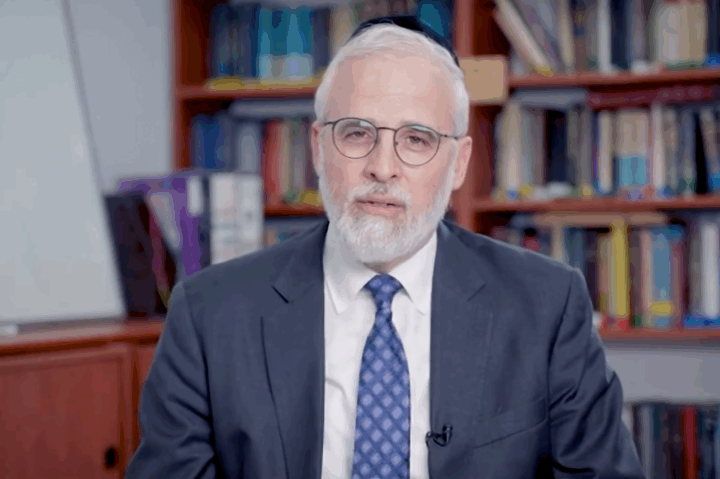
Rabbi Moshe Hauer
Rabbi Moshe Hauer, the executive vice president of the Orthodox Union, died suddenly on Monday evening after suffering a heart attack, his organization said. He was 60.
Jewish communal leaders remembered Hauer as a friend, a bridge-builder, a faithful and committed leader and a source of wise counsel.
Hauer had served in his role at the OU since May 2020, acting as the organization’s professional and rabbinic leader and primary spokesperson, as well as helping to lead the organization’s outreach to U.S. administration officials and lawmakers.
“Rabbi Hauer was a true talmid chacham, a master teacher and communicator, the voice of Torah to the Orthodox community and the voice of Orthodoxy to the world. He personified what it means to be a Torah Jew and took nothing more seriously than his role of sharing the joy of Jewish life with our community and beyond,” OU President Mitchel Aeder and Chief Operating Officer Rabbi Josh Joseph said in a joint statement.
“Rabbi Hauer’s leadership was marked by unwavering dedication, deep compassion, and a vision rooted in faith in Hashem, integrity, and love for Klal Yisrael,” Aeder and Joseph continued. “Whether through his inspiring words, thoughtful counsel, powerful advocacy, or quiet acts of kindness, Rabbi Hauer uplifted those around him and made an impact on every person he encountered.”
Prior to his role at the OU, Hauer served for more than 26 years as the lead rabbi at Bnai Jacob Shaarei Zion Congregation in Baltimore.
William Daroff, the CEO of the Conference of Presidents of Major American Jewish Organizations, told Jewish Insider he was “shattered by the sudden passing of my dear friend and partner, Rabbi Moshe Hauer.”
“We just spoke this past Friday and texted on Monday, when he was overflowing with joy at the miracle of the hostages’ freedom and the unmistakable hand of Hashem in it. Rabbi Hauer was a trusted advisor, cherished colleague, and wise counselor to me, a bridge-builder whose faith, humility, and moral clarity inspired all who knew him. His loss leaves a deep void for all who loved and learned from him,” Daroff continued.
“He was a wise and thoughtful leader for so many dimensions of the OU’s activities — That included his partnership with me in advocacy,” Nathan Diament, the OU’s executive director of public policy, told JI. “Rabbi Hauer deeply believed in the imperative for the Orthodox community to be fully and proactively engaged with the world at large — not isolated from it. And for us to work to better society by advancing Torah values. In fact, the last time I was with him in person was just a couple of weeks ago — we met with senators and senior White House officials to discuss key issues and values.”
Israeli President Isaac Herzog mourned Hauer as “a true leader and teacher in the Jewish world,” in a post on X.
“Each and every conversation I was privileged to have with him was so very meangiful [sic] and showed his warmth and kindness, and his unwavering love for Torah, Israel, Zionism, and the Jewish people,” Herzog wrote.
Despite ideological and theological differences, Hauer maintained friendships and partnerships with Jewish leaders across the ideological spectrum and rejected claims that progressive and liberal Jews were “self-hating,” telling eJewishPhilanthropy last year that he “bristle[s] and object[s]” to the canard.
Sheila Katz, the CEO of the National Council of Jewish Women, said in a Facebook post, “Some leaders shape institutions. Others shape hearts. Rabbi Moshe Hauer did both.”
“After October 7, we found ourselves advocating side by side at the Department of Education and Department of Justice, in Congress, in the White House, and in the Knesset, determined to show what Jewish unity could look like,” Katz said. “It wasn’t unity for its own sake, but unity in service of the Jewish people, to advocate together for Jewish women, for the Orthodox community, and for all of us. Him, an Orthodox male rabbi. Me, a Reform Jewish progressive woman. Together, we were an unlikely duo that came together to advocate against antisemitism, to promote safety in Israel, and for the return of the hostages.”
“I’m grateful he lived to see all the living hostages come home. But I’m heartbroken that we won’t get to be with him for all that’s next, for the rebuilding, the hope, and the unity he modeled so powerfully,” Katz continued. “All we can do is continue to build a better world with love, and with Jewish life and wisdom, to honor the memory of our dear friend, Rabbi Hauer.”
Hauer was ordained at Ner Israel in Maryland and received a graduate degree from Johns Hopkins University.
According to the OU, during his time at Bnai Jacob Shaarei Zion he “was active in local communal leadership in many areas, with an emphasis on education, children-at-risk, and social service organizations serving the Jewish community… led a leadership training program for rabbis and communal leaders, and was a founding editor of the online journal Klal Perspectives.”
eJewishPhilanthropy‘s Judah Ari Gross contributed to this report.

(AP Photo/Eyal Warshavsky)
Kirk Douglas walks with his wife Anne in the Old City of Jerusalem during a 2000 visit.
Hollywood legend Kirk Douglas died yesterday at age 103. The Jewish actor enjoyed a long, varied and storied career, including many iconic Jewish roles.
Bio: Douglas was born Issur Danielovitch in New York in 1916, the son of Russian Jewish immigrants. He grew up with little religious influence in his life, but began to embrace Judaism when he was in his 70s, after a near-fatal helicopter crash in 1991. He began studying the religion, and at 83 he held a second bar mitzvah in Los Angeles, telling the attendees “Today, I am a man.”
On-screen Semite: In 1966, Douglas portrayed Colonel Mickey Marcus in the big-budget film “Cast A Giant Shadow,” which was shot in Israel. Douglas played a fictionalized version of the real-life American army colonel who joined Israeli forces as a general during the 1948 War of Independence, and was killed by friendly fire. He also starred in the 1976 made-for-TV movie “Victory at Entebbe,” filmed less than six months after the Israeli raid on the hijacked plane in Uganda took place.
Book shelf: Douglas starred in dozens of critically-acclaimed films, and later enjoyed a second career as a writer, penning 11 books, including 1997’s Climbing the Mountain about his “quest for spirituality and Jewish identity,” the children’s Holocaust-themed novella The Broken Mirror and 1999’s Young Heroes of the Bible.
Friend of Zion: The actor visited Israel many times over the years, shooting several films there including 1953’s “The Juggler,” a tale of a Holocaust survivor arriving in Israel soon after the war — which was the first Hollywood feature to film in the nascent state of Israel. In 1982 he flew in to visit soldiers and civilians wounded in the Lebanon war. In the 90s, he contributed $2 million toward building a theater at Aish HaTorah, overlooking the Western Wall in Jerusalem’s Old City.
Tributes: Israeli Prime Minister Benjamin Netanyahu said he “mourns the loss” of the “legendary actor, a proud Jew and a great friend of the Jewish state.” Director Steven Spielberg said he was “honored” to have worked with Douglas and witnessed “his wisdom and courage,” while actor Ed Asner tweeted: “May your memory forever be a blessing.”
Please log in if you already have a subscription, or subscribe to access the latest updates.
 Continue with Google
 Continue with Apple