




















Rabbis, historians and communal leaders told JI that the nation’s semiquincentennial offers an opportunity to celebrate America’s promise even as they confront the antisemitism and political currents challenging Jewish life today
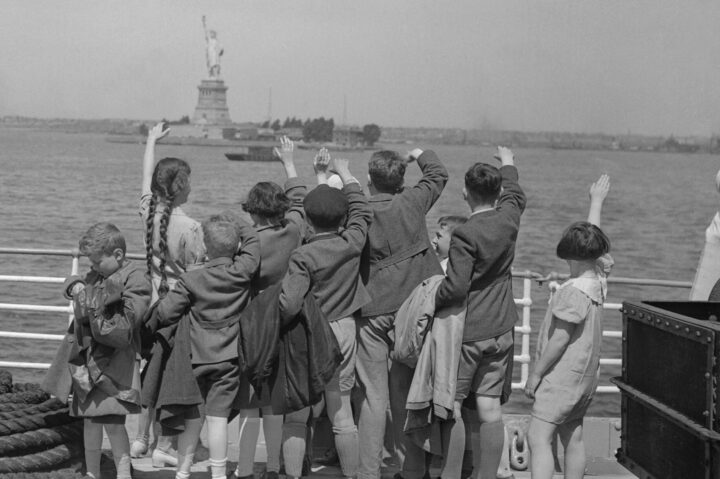
A group of young Austrian immigrants wave to the Statue of Liberty upon their arrival in America aboard the S.S. Harding. The fifty Jewish children, who were greeted by their new adoptive families, were fleeing Nazi persecution in their homeland.


 Add JewishInsider on Google
In the run-up to America’s 250th anniversary, the Jewish community finds itself navigating a best-of-times, worst-of-times, head-spinning paradox — standing nervously between the promise of an ideal America and the peril of today’s America.
In conversation after conversation, Jewish thinkers who spoke to Jewish Insider about this unique moment expressed fear and concern about the increasingly precarious situation facing American Jews in one breath. In the next, they spoke glowingly about the unique gifts this country’s democracy has given to the Jews who live here.
In spite of this deep ambivalence, or perhaps because of it, the Jewish community is all-in on the 250th.
As one might expect of the city that arguably jump-started the American Revolution, no expense or antic is being spared to celebrate the country’s birthday in Boston. At the Esplanade, a park along the Charles River, comedian Jane Lynch is emceeing an evening of festivities that will feature musical performances by several Grammy winners. A revolutionary-themed drone show will be followed by a massive fireworks display with an orchestral accompaniment, all live-streamed on CNN. Revolutionary War re-enactors will, naturally, be on hand. (And playing the bugle.)
In the nearby suburb of Newton Center, Rabbi Benjamin Samuels of Congregation Shaarei Tefillah is devising a memorable July Fourth celebration, though without the theatrics that typically accompany the holiday. Independence Day falls on Shabbat this year, so the usual hubbub and pyrotechnics will be inaccessible for Orthodox Jews like Samuels who do not drive, cook or use electronics on the Jewish Sabbath.
Shaarei Tefillah congregants can expect something a little different. They will enjoy a July Fourth barbecue, though without the open flame; all the food will be grilled the day before and kept warm overnight. Brandeis professor Jonathan Sarna, the preeminent historian of American Jewish history and a member of Shaarei Tefillah, will deliver the sermon at Saturday morning services. Any kids who join their parents at synagogue will get a red, white and blue ring pop.
Samuels has lately spent a lot of time considering what it means to be a patriotic American — in particular, a patriotic American Jew — at a moment when large parts of the American Jewish community feel as though they are under attack. He recently edited an entire issue of an Orthodox journal, Tradition, on the topic.
Antisemitism is at levels not seen in generations. The future of the Jewish state has become a political lightning rod that is increasingly a decisive, and divisive, issue in major political campaigns. Eight in 10 American voters believe democracy in America is being threatened, according to a recent Georgetown University poll.
It’s a fraught time for American Jews to be throwing the country a 250th birthday party. Or, at least, it would be easy to think that.
But conversations with nearly two dozen rabbis, writers, historians and Jewish leaders from across the political and religious spectrum reveal a shared sense of hope in the American project — and a belief that this milestone semiquincentennial celebration presents a unique opportunity for American Jews to hold their heads high and reflect on what this democracy, even if flawed, has given to them.
“I think it’s the right thing to be patriotic and participate in a celebration,” Samuels told JI recently. “For all of us who put an Israeli flag, or a ‘We stand with Israel’ poster, or a blue or yellow ribbon around our light post the past few years, put an American flag on your lawn. Every synagogue should have a program on July Fourth, which is on Shabbos this year, dedicated to the American Jewish experience, and celebrate the semiquincentennial.”
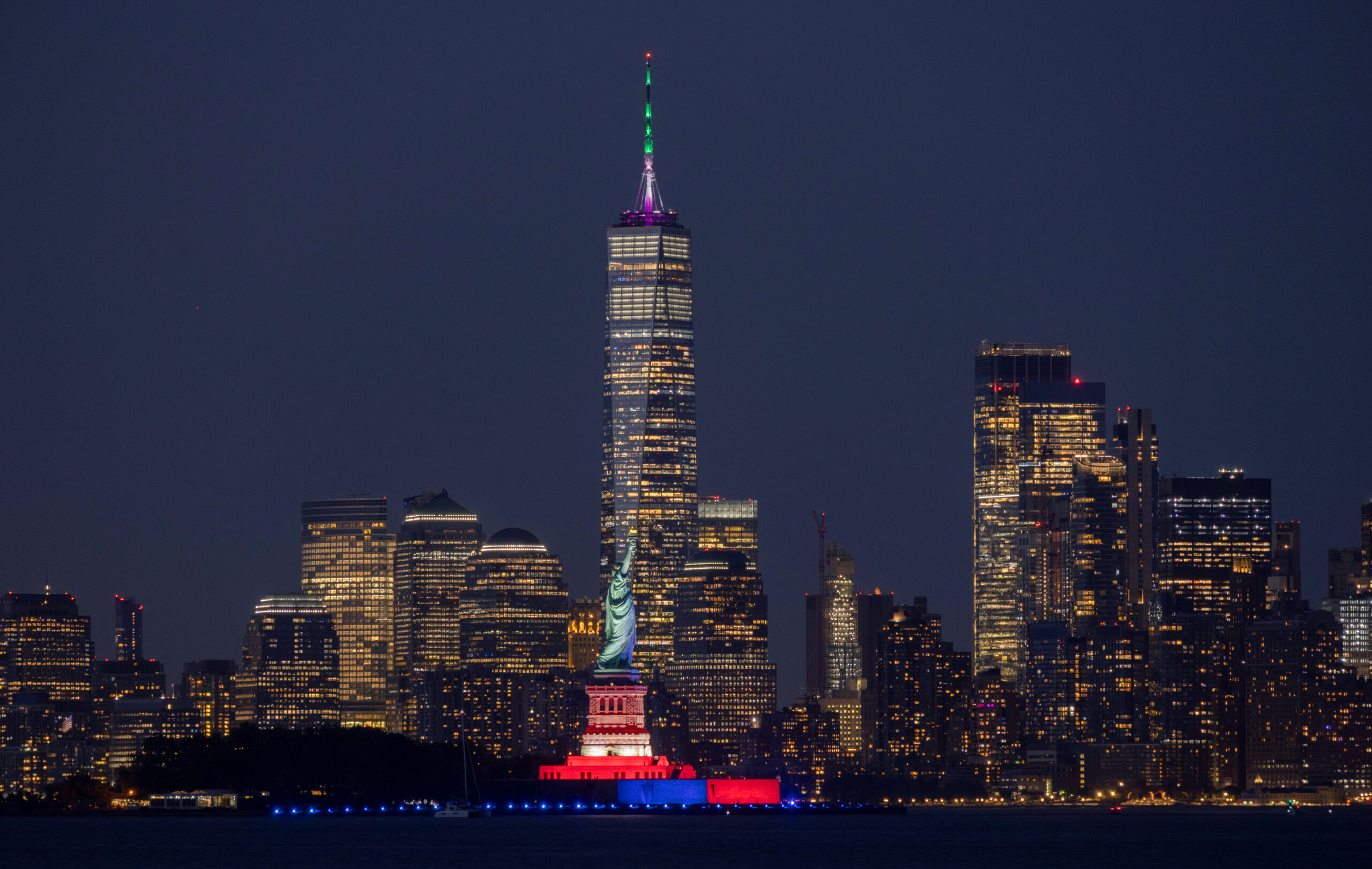
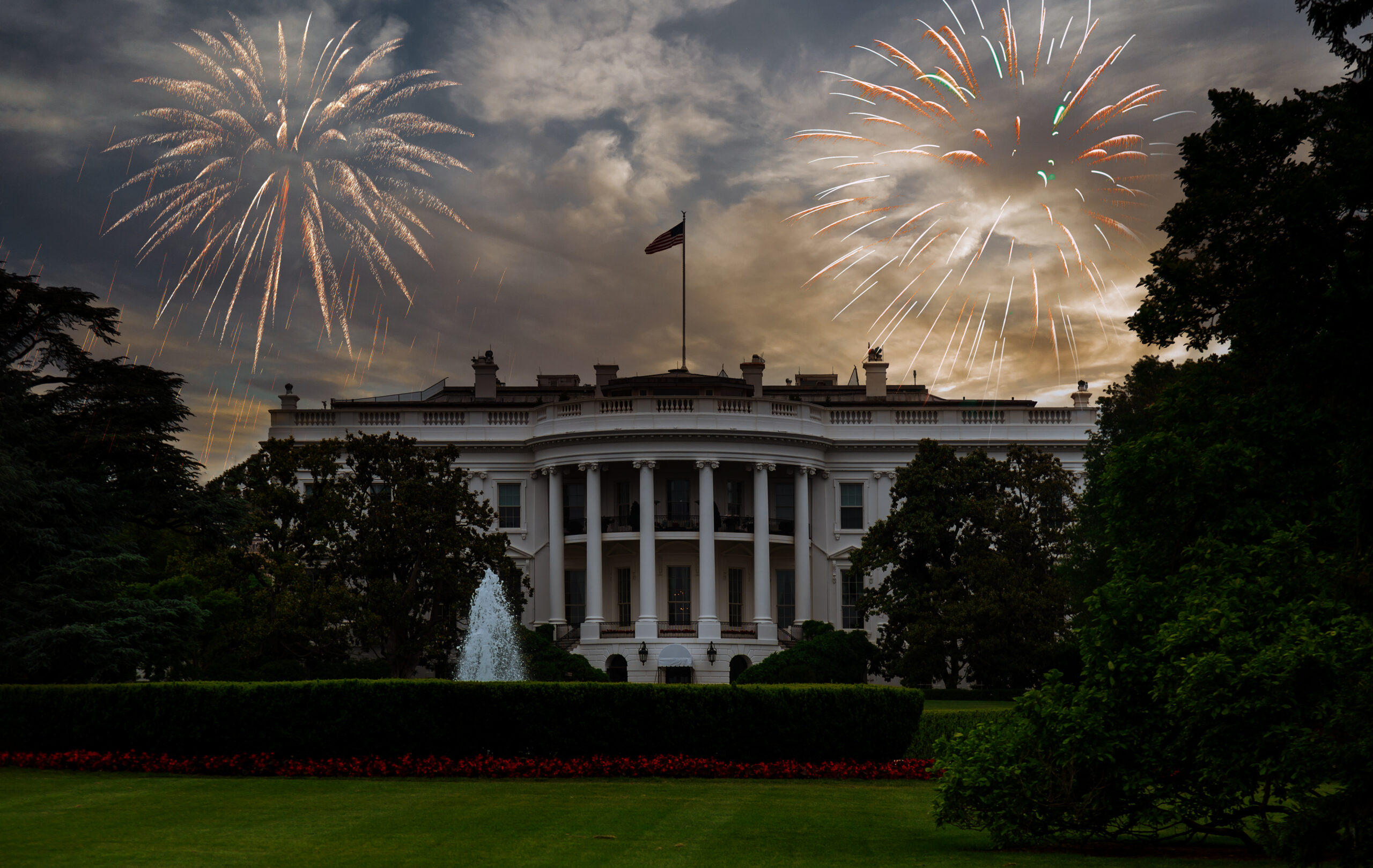
Anyone who steps outside their house on July Fourth is likely to stumble upon one of the hundreds of celebrations of America’s 250th anniversary that will take place in neighborhoods, downtowns, boardwalks, parks and military bases across the country. They’ll be hard to miss; in Washington, the annual fireworks show on the National Mall is expected to use 40 times more fireworks than in typical years.
Some Jewish thinkers believe American Jews have a particular obligation to engage with this anniversary not just as Americans, but as Jews.
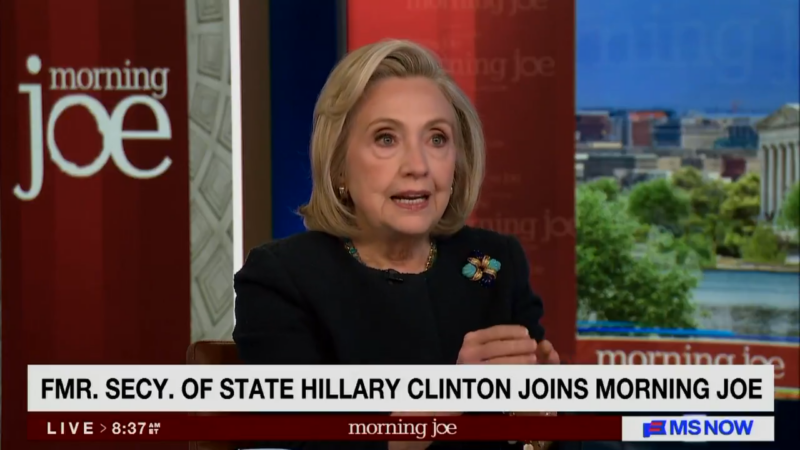
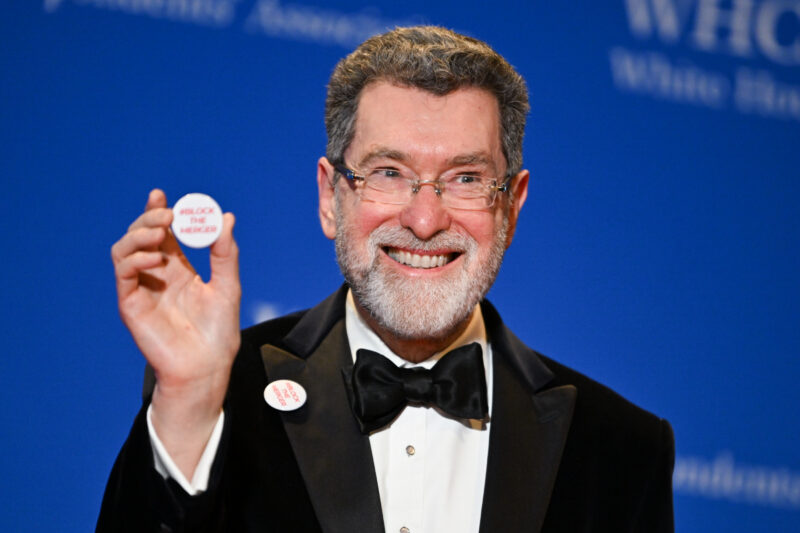
“An anniversary is a good occasion to put things in historic perspective. As bad as things may feel in the moment, they’re still pretty great relative to the bulk of not even just Jewish history, but also American Jewish history,” said Franklin Foer, a journalist at The Atlantic who wrote a provocative cover story two years ago arguing that the “golden age” of American Jews is ending. “All the ways in which Jewish values and American values are not just compatible, but overlap and extend one another, is something that I think is really important to cultivate within American Jewry and within American Jewish education.”
Rabbi Rick Jacobs, the president of the Union for Reform Judaism, said he expects many Reform rabbis to address the 250th in their sermons this week.
“I think we’re renegotiating what it means to be a person of deep Jewish faith and a person of deep American patriotism. How am I going to make those not just coexist but really strengthen each other? And I think that’s the big question for this 250th,” said Jacobs. For his part, he drafted a lesson applying a Haftarah reading from the Book of Isaiah to the Fourth of July, and used it to raise questions about the legacy of slavery in this country.
Rabbi Michael Holzman, who leads Northern Virginia Hebrew Congregation, created an interfaith initiative called Faith250 that inspired dozens of synagogues to study America’s foundational texts with the rigor that Jews usually apply to Torah study. At Boca Raton Synagogue, in Florida, Rabbi Efrem Goldberg devoted the congregation’s all-night learning program on Shavuot in May to a series of classes about the past, present and future of Jews in America. (The final class, about spirituality in the U.S., did not begin until 5:00 a.m.)
Every bunk at Camp Ramah in Wisconsin will be spending Shabbat on July Fourth doing age-appropriate learning on the theme of being Jewish in America at the country’s 250th, including exercises in writing their own prayer for the country. (Only English will be used on July Fourth at the camp, which usually sprinkles in Hebrew words for summer-camp words like “cabin” and “lake.”) Members of Kesher Israel, a synagogue in Washington, D.C., will lay a wreath at the Tomb of the Unknown Soldier on July 5th.
The idea behind all of this is to get people to engage deeply with what it means to be American, an exercise they may be more used to doing in a Jewish context.
“When you ask people, ‘Tell me about your American identity,’ they have a hard time answering the question,” said Rabbi Charlie Savenor, executive director of an organization called Civic Spirit, which helps faith communities promote knowledge of civics. He visited Ramah Wisconsin to help organize the Fourth of July programs.
“If I asked you that question about your Jewish identity, would your answer come quicker? 99% of the time people are like, ‘Yes. Passover, Seder, Shabbat. My bar or bat mitzvah.’ You name it, they’ve got something to say,” Savenor continued. “Part of what’s happened is that the American Jewish community — this ranges from unaffiliated all the way to Orthodox — has really invested the energy that we have a stake in this thing that we call Jewish life. And how much you choose to participate, at least you have some sense of where you fit into that picture. But America, which has become so divided and polarized — what it means to be American today has become somewhat confusing.”
Uncertainty about what it means to be an American in 2026 is hardly just a Jewish concern. 77% of Americans say that the signers of the Declaration of Independence would be disappointed in how the country has turned out, according to a Gallup survey. 53% of American adults say they are very or extremely proud to be American — down from 81% a decade ago and 85% in 2006, Gallup found. Educators and politicians often lament the decline or even death of civics education, though Harvard professor Danielle Allen recently argued in The New York Times that, after slumping a decade ago, civics education is on the upswing.
“An anniversary is a good occasion to put things in historic perspective. As bad as things may feel in the moment, they’re still pretty great relative to the bulk of not even just Jewish history, but also American Jewish history,” said Atlantic journalist Franklin Foer.
Rising political polarization complicates Americans’ feelings about how they relate to the country and how, or whether, they feel proud of it. And on top of that, a bipartisan, congressionally funded project to celebrate America’s 250th was sidestepped by President Donald Trump in favor of a more partisan effort called Freedom250.
“I think there has been an increasing linkage between patriotism and partisanship. There’s a sense that if the president I like is in office, then I’m patriotic, and if the president I don’t like is in office, that I’m less patriotic,” said Tevi Troy, a presidential historian and former senior official in the George W. Bush administration.
Chanan Weissman, who leads the institute that publishes the journal Sapir, argued that a crucial project is to figure out how to “recreate the value of nonpartisan patriotism, as challenging as that may be.”
“A flag should not connote a party. It should connote a people. And more than any other group, the Jews should be advancing this,” said Weissman, who served in the Obama and Biden administrations. “We have to make sure that America is not just good for the Jews, as we say, but good for the type of place that a Jewish community can live and thrive and flourish in.”
At 2% of the population, Jews are not going to solve the major education-policy debates in this country, but there is a burgeoning push to help American Jews better understand the ideals and history of this country, and to do so as Jews. Organizations including A More Perfect Union, which promotes democracy as a Jewish value; the Shalom Hartman Institute of North America, a pluralistic Jewish education center; the Tikvah Fund, a right-leaning “ideas institution”; and Pardes, an English-language pluralistic yeshiva in Jerusalem, released source materials about America250, often putting Jewish texts and values in conversation with America’s founding documents.
“Civics education has declined pretty considerably, so it’s not even like this is what you learn in your civics classes,” Hartman President Yehuda Kurtzer told JI. “It has definitely declined as a notion of something I’m supposed to specifically learn as a Jew, that I’m actually responsible as a Jew for this place, for America, and I’m responsible to think about my commitments to America as a Jewish imperative.”
A collective recognition seems to be emerging that this major anniversary, coming as it does at a moment of challenge for American Jews, might actually present an opportunity for renewal, and for reclaiming a common narrative: that this country belongs to the Jews as much as it does to anyone else, but only if they don’t give up on it.
“When Benjamin Franklin was leaving the Constitutional Convention, he was asked by somebody, ‘What kind of government are we forming?’ He says, ‘A republic, if you can keep it,’” said author Dara Horn. “To me, the important word of that sentence is ‘you.’”
A republic is built on the premise that its core rights belong to every citizen equally. Religious freedom, pluralism, full citizenship in a representative democracy — these are values that, while not always fully realized for all Americans, have been the North Star that allowed Jewish life to flourish here.
“Having known the weight of persecution and exclusion, Jews recognized in America’s founding ideals something rare in human history: the possibility of belonging without surrendering our identity,” a group of Jewish leaders, including the heads of several major organizations, former U.S. ambassadors and a number of prominent academics, said in an open letter marking America’s 250th.
“This is not toleration,” said Elliott Abrams, a longtime Republican foreign policy official. “Jews have the same rights as everyone else. This goes back right to the beginning.”
In 1790, President George Washington traveled the country after the Constitution was ratified. Following his visit to Rhode Island, he received a letter from the leader of Touro Synagogue, in Newport, explaining that Jews should have the same rights as other religious groups in America. Washington was so moved that he responded immediately in a now-famous letter espousing his belief in the principle of freedom of religion, including for Jews.
“May the Children of the Stock of Abraham, who dwell in this land, continue to merit and enjoy the good will of the other Inhabitants; while every one shall sit in safety under his own vine and figtree, and there shall be none to make him afraid,” Washington wrote, referencing the Book of Micah. One year later, the Bill of Rights — cementing religious freedom as a core American right — was ratified.
What followed was not a straight line. Slavery undermined the universal values of the Constitution and the Declaration of Independence, and Jim Crow undercut the promise of emancipation. Jewish immigrants escaping pogroms in Europe came to America in massive numbers in the late 19th and early 20th centuries, marveling at the Statue of Liberty as they arrived at Ellis Island, before a jingoistic Congress severely cut back on immigration a century ago. In the 1920s and 1930s, as Nazism progressed in Germany, public figures like Father Charles Coughlin and carmaker Henry Ford spread antisemitic messages to the American masses on the radio and in the newspaper.
“This isn’t the first time that the country has been through an era when it seems not to be living up to its principles,” said Jamie Kirchick, a journalist who has published books about democratic backsliding in Europe and state-sanctioned discrimination against gay people working in the government. “I think that it’s just important to maintain an understanding and a belief in those principles.”
Sarna, the Brandeis historian, put it simply: “In America, we have very short memories.”
“Look at the persecution of German Americans in World War I, or Japanese Americans in World War II. But they recovered. The same was true in the 19th century when Catholics were so mistreated, and now look today at the vice president. So when you look at the long term, there is a lot of reason for hope,” Sarna told JI. “I don’t know that I personally will live to see it, but looking further ahead, I could see things change pretty rapidly, and we will look back and be embarrassed at some of what’s going on.”
Still, just because antisemitism and hatred have existed in America since before its founding does not make this particular revival any more palatable.
“I do think that we have responsibility, while being grateful and feeling responsible, to participate, advocate, vote, do civic duties and so on, but also realize that the lot of the Jew in exile is to constantly sleep with one eye open,” said Rabbi Efrem Goldberg, an Orthodox rabbi in Florida, offering a skeptical rejoinder.
Horn, the author, said she is often cast as the “prophet of doom,” having warned of modern antisemitism even before the Oct. 7, 2023, attacks on Israel and the ensuing war in Gaza touched off the current wave. But she knows that title doesn’t tell the full story.
“Think about the 150th anniversary of the United States, 100 years ago. 1926. Think about the situation of the Jewish community in America then. Pretty crap,” Horn said. Congress had just, essentially, closed the borders. Ford was spreading The Protocols of the Elders of Zion. “It didn’t magically go away. It’s not because people were so good … and they rejected hate. That’s not what happened. This is the height of the [Ku Klux] Klan. What happened was American Jewish activism.”
That’s the message Horn has for the high school and college students she addresses regularly.
Lean in even further to the civic pathways on offer in this country. Run for office. Speak up. Change things. The most important attribute, she tells young people, is courage.
“I think it’s a human instinct to say, ‘Well, we should just hunker down with our people, because that’s who we feel comfortable with.’ My message is no, no, we should not do that,” said Shuly Rubin Schwartz, who retired as chancellor of the Jewish Theological Seminary this week. “Thank God we are citizens. We can use our leverage here. We have the right to protest, we have the right to vote in the people that we want, and we have the opportunity, always, to be building bridges with others.”
Rabbi Goldberg, at Boca Raton Synagogue, offered a skeptical rejoinder, citing a Talmudic teaching about being both respectful and suspicious. “I do think that we have a responsibility, while being grateful and feeling responsible, to participate, advocate, vote, do civic duties and so on, but also realize that the lot of the Jew in exile is to constantly sleep with one eye open,” said Goldberg. American University historian Pamela Nadell called this duality “the paradox of the American Jewish experience.”
In the three years since Oct. 7, the old canard of dual loyalty has come to the fore in American politics with a renewed vigor. An anti-Israel political movement that has been building for years is now making a dent in American politics, pushing the argument that supporters of the Jewish state are driven by the malign influence of a foreign nation and, thus, are insufficiently American. The vast majority of American Jews still maintain a connection to the state of Israel, so one question that Jewish leaders are considering is how to make sure that young Jews are taught to fully inhabit both identities.
Nina Cohen, a history teacher at the Frisch School, a Modern Orthodox day school in New Jersey, developed a course on citizenship and belonging to dig into that tension.
“The ‘dual loyalty’ accusation assumes a zero-sum relationship between Jewish identity and American citizenship,” Cohen wrote in an article last year in Hartman’s Sources journal. “Jewish high schools must teach students to recognize and navigate multiple loyalties — to family, faith, community, nation, and Jewish peoplehood — as a civic strength that enriches democratic participation rather than undermines it.”
The promise of America, according to Jack Lew, a former treasury secretary, U.S. ambassador to Israel and chief of staff to President Barack Obama, requires that Jews not be forced to make that choice, or even to see it as a choice.
“We should be teaching people to be proud of being Americans, and proud of being Jewish, and proud to support Israel as a Jewish democratic state,” Lew told JI. “Those things, if they become choices, undermine the 250 years of progress and success.”
Lew devoted his career to public service, a path that he recognizes was only made possible because his grandparents and his father came to this country from Europe to create a new and better life for their children.
“I think that transition in one generation, from arriving not speaking a word of English to having a son, a child, who can serve at the highest levels of government, is an American story,” said Lew, who is now a professor at Columbia University.
Anne Neuberger, who served as a deputy national security advisor in the Biden administration, argued in a Sapir essay titled “The Jewish Case for Public Service” that raising one’s hand to serve their country is the best antidote to antisemitism.
“Rather than walking away, we should be investing our hearts, our intellects, and our labor into making this nation the sanctuary it was always meant to be,” Neuberger wrote. “Every young person should be encouraged to think seriously about how he might best contribute to that sanctuary.”
For Rabbi Scott Klein, his sanctuary is wherever his soldiers are. As a U.S. Army chaplain at Fort Bragg, in North Carolina, his job is to advise soldiers, most of whom are not Jewish, on ethics and morality; when their unit has to jump out of a plane, for instance, he is right there with them, providing spiritual guidance.
As Klein prepares to celebrate 250 years of America with his soldiers and the local Jewish community in Fayetteville, N.C., he thinks the ethos of the Army offers a useful teaching for all Americans — Jewish and otherwise — at a moment that, for some, feels less celebratory than strained.
“I think that the military remains one of the very few places where Americans from every zip code, background and belief system live, train and bleed together, and it proves that pluralism isn’t a source of weakness,” Klein said. “I hope to remind the Jewish community in the nation that religious freedom is not a passive luxury. It’s actively defended.”
“Rather than walking away, we should be investing our hearts, our intellects, and our labor into making this nation the sanctuary it was always meant to be,” said Anne Neuberger, a deputy national security advisor to former President Joe Biden. “Every young person should be encouraged to think seriously about how he might best contribute to that sanctuary.”

Twelve years after the signing of the Declaration of Independence, when the gunpowder of the Revolutionary War had cleared and the American experiment was still very much an experiment, something momentous happened: the Constitution was ratified. The document that laid out the governing structure of American democracy would, at last, be implemented.
The streets of America filled with parades of citizens cheering on the occasion. The Grand Federal Procession, the country’s official celebration, took place in Philadelphia on July 4, 1788. The spiritual leader of Congregation Mikveh Israel, a Philadelphia synagogue that still operates, marched arm-in-arm at the parade alongside one of the best known ministers in the young country.
A feast was laid out after the parade. One of the tables was filled with kosher food — pickled salmon, bread, almonds, crackers and raisins. The full and enthusiastic inclusion of Jews in the festivities to ring in the ratification of the new Constitution marked a small, if meaningful, inflection point for religious minorities.
“That symbolizes it to me: We always want to be American, fully American, embracing our role as citizens, our privilege and responsibility as citizens,” said Shuly Rubin Schwartz, the former JTS chancellor. “And we want to do so proudly as Jews.”
Absent from the festivities was New York City Mayor Zohran Mamdani, while former Mayors Eric Adams and Mike Bloomberg marched in the procession
Haley Cohen
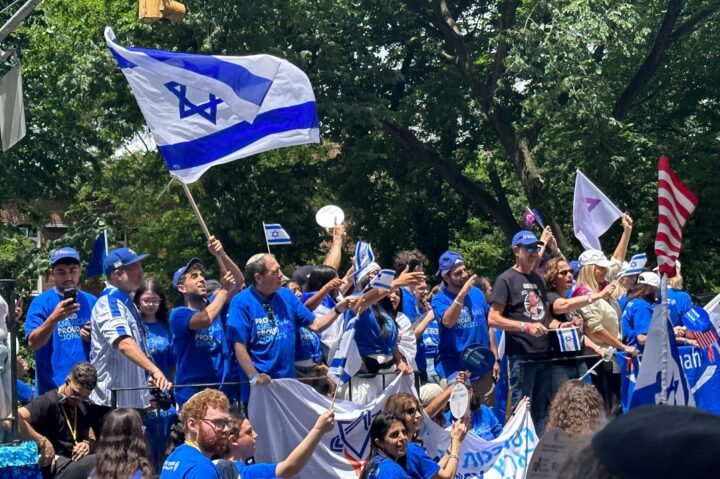
Israel Day parade in New York City on May 31, 2026.
As an estimated 50,000 New Yorkers stretched along Fifth Avenue waving Israeli and American flags and Hebrew music echoed through the streets, this year’s annual “Israel Day on Fifth” parade carried a palpable sense of relief. For the first time since the Oct. 7, 2023, terrorist attacks, attendees could swap out their hostage pins and “Bring Them Home Now” signs for simple flags — marking the first parade since the attacks in which all hostages held by Hamas have been released and Israel’s war in Gaza has ended.
Yet, the festivities unfolded against a remarkable backdrop: For the first time in more than six decades, the city’s mayor was notably absent from the bipartisan tradition.
At a press conference at One Police Plaza on Thursday, New York City Mayor Zohran Mamdani affirmed his longstanding vow to boycott Israel Day parade, organized by the Jewish Community Relations Council of New York, which every Gracie Mansion occupant since Mayor Robert Wagner has attended, starting in 1965.
“I said on the campaign trail that I wouldn’t be attending the parade, and I’ve made my views on the Israeli government abundantly clear,” said Mamdani, who ran on an anti-Israel stance in last year’s election. “While I will not be attending, our administration has been preparing for weeks to ensure the parade is safe for all those who take part.”
Mamdani’s police chief, Jessica Tisch, a self-proclaimed Zionist from a prominent New York Jewish family, served as grand marshal. Tisch and Mamdani together pledged a “comprehensive security plan” at the press conference to protect the celebration.
Tisch said this year’s parade saw the “largest number of officers ever assigned to the event,” which included NYPD patrol units, plainclothes cops and teams from the intelligence and counterterrorism bureaus, amid a heightened threat environment, including the recent federal indictment of a Kataib Hezbollah commander for a thwarted plot to bomb at a prominent Manhattan synagogue. Every participant, spectator and vendor along the parade route, which stretched from East 62nd Street to 74th Street, underwent metal detector screening, and steel barricades were installed along several of the city’s major avenues, obstructing pedestrians.
The Jewish community also mobilized its own security teams, deploying hundreds of volunteers from the Community Security Service, Community Security Initiative and Shomrim as well as Hatzalah emergency medical response.
“We are grateful that tens of thousands of participants and spectators were able to gather safely and proudly in the heart of New York City,” Mitchell Silber, CEO of CSI, a joint program of JCRC and UJA-Federation of New York, told Jewish Insider. Silber called the day a “success” and credited the NYPD for “ensuring that everyone could celebrate without disruption or intimidation.”
“The ability of the Jewish community and its supporters to come together openly and confidently is something we never take for granted. Today’s parade was a powerful demonstration of community pride, resilience and unity, and we thank all those who helped make it a safe and successful day,” said Silber, former director of intelligence analysis at the NYPD.
While Mamdani’s boycott was intended to make a strong statement — and received widespread criticism from mainstream Jewish groups — attendees appeared largely unfazed. Some parade participants even mocked the absence by carrying cardboard cutouts of Mamdani and his wife, Rama Duwaji, who is a fellow Israel critic. Instead, attendees seemed focused on the notable figures marching — from politicians from both parties to social media influencers and the largest-ever delegation from the Knesset, including Speaker Amir Ohana and members of both the governing and opposition parties.
“Today, we delivered a resounding answer to all those who hate Israel. This was the largest and most significant parade ever,” said Ofir Akunis, consul general of Israel in New York.
Spotted on the Jewish Agency’s float — receiving perhaps the loudest applause of the day — were Ronen and Orna Neutra, the parents of Omer Neutra, an Israeli American IDF officer killed on Oct. 7.
State Assemblymember Alex Bores, who is running in the Democratic primary for the 12th Congressional District, was in attendance. Former New York City Comptroller Brad Lander, who is challenging Rep. Dan Goldman (D-NY) in the 10th District, boycotted the event, stating he would not attend “so long as Israel continues violating international law and Palestinian human rights in Gaza and West Bank.”
Goldman and former New York City Mayors Michael Bloomberg and Eric Adams marched in the parade.
“This is Bloomberg sticking it to Mamdani,” a source familiar with the parade’s planning told the New York Post.
Moshe Davis, former executive director of the Mayor’s Office to Combat Antisemitism under the Adams administration — who marched Sunday alongside Adams — told JI, “There’s nothing like marching up Fifth Avenue at the Celebrate Israel Parade, tens of thousands of New Yorkers standing shoulder to shoulder for the unbreakable bond between Israel, the Jewish people and this city … To everyone who leads this city: this is what partnership looks like. This is what strength looks like. And it’s what builds a future for all New Yorkers.”
Surrounded by city leaders — including New York City Council Speaker Julie Menin and UJA-Federation of New York CEO Eric Goldstein — Sen. Chuck Schumer (D-NY) addressed attendees.
“Today is a special day. We have this great parade, which I always attend, and it’s my granddaughter’s 4th birthday. The two are related,” said Schumer. “We must fight for her to grow up in a world that’s safe for the Jewish people. And I worry deeply about the future that they’re going to inherit.
“The Holocaust showed the world what Jews have known for millennia — that our security and safety is never safe as long as we lack a place of refuge, a homeland. We’re seeing an ugly resurgence of antisemitism across the world, driven by the same lies and libels that have tormented the Jewish people for generations. Except now, they’re transmitted at the speed of a fiber optic internet connection in 30-second clips on a phone in your pocket.”
Looking out into the sea of blue and white, Schumer continued, “This is why a Jewish state is as important as ever. Antisemitism isn’t going away; it always lingers, always stalks in the shadows, waiting for the right conditions to explode into violence.”
After a series of targeted attacks in Toronto and beyond, Jewish leaders are raising the alarms on Canada’s failure to properly protect its Jews amid ‘systemic’ antisemitism
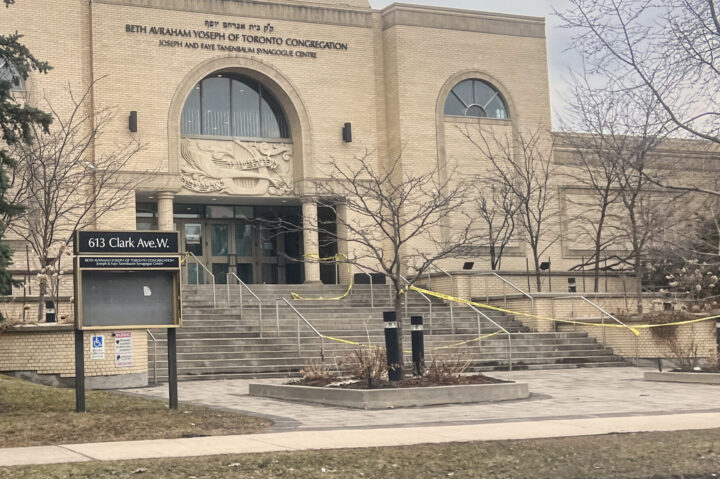
Creative Touch Imaging Ltd./NurPhoto via Getty Images
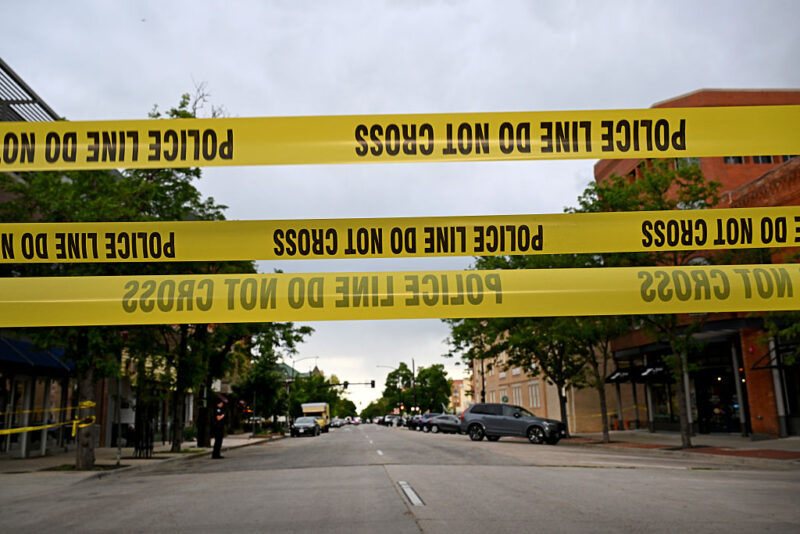
Police tape is seen outside the Beth Avraham Yoseph of Toronto (BAYT) synagogue following overnight gunshots fired at the building in Vaughan, Ontario, Canada, on March 21, 2026.
As Canadian Jewish families began celebrating the holiday of Passover, a commemoration of Jewish persecution and redemption, many found the ancient narrative colliding with a modern reality of rising fear at home.
Early Friday, a Jewish-owned restaurant in Toronto was struck by gunfire for the second time in weeks — a targeted, 14-bullet assault that police called a “glaring example of domestic terrorism.”
The incident marks the latest in a wave of antisemitic attacks, highlighting what Jewish leaders describe as “systemic” Jew-hatred in Canada. And it is even leading some Jewish Canadians to consider their own kind of exodus from their country, with one communal leader saying that “the promise” that Jews could practice their faith openly in the country “has been broken.”
“There’s a real sense — and I don’t want to overstate it — but that the Jewish community in Toronto has felt under siege since [the Oct. 7, 2023, terrorist attacks in Israel],” Rabbi Debra Landsberg, who leads Temple Emanu-El, a Reform synagogue in Toronto’s North York district, told Jewish Insider.
On March 2, Landsberg’s congregation was shot at several times, as her family and at least one staff member remained near the building following a Purim celebration. No injuries were reported, but the exterior and front lobby sustained significant damage.
The shooting was the first in a series of three synagogue attacks in Toronto last month. One week after Temple Emanu-El was targeted, the front doors of Shaarei Shomayim Synagogue and The Beth Avraham Yoseph of Toronto were shot at in the middle of the night, causing damage to both buildings.
In another recent incident, Canadian law enforcement arrested three Toronto-area men accused of planning violent kidnappings targeting women and members of the Jewish community.
Israel’s ambassador to Canada, Iddo Moed, said that last week’s restaurant shooting “the 12th incident of its kind in the latest wave of antisemitism and violence against the Jewish community in Canada.” UJA Federation of Greater Toronto warned that the incident should cause “all Canadians to be extremely concerned by what’s happening in our country right now.”
Toronto police have responded to the surge of violence by deploying armed officers at Jewish institutions around the city, an effort that was ramped up during the Passover holiday.
Canada has experienced some of the most severe manifestations of the global surge in antisemitism since Oct. 7. — with higher rates of antisemitic incidents than other countries but lower conviction rates.
In the first two months of 2026 alone, 22 antisemitic incidents were reported in Toronto, representing approximately 62% of all reported hate crimes in the country, according to police. Based on population, a Jewish Canadian is 25 times more likely to experience a hate crime than any other Canadian, according to the Centre for Israel and Jewish Affairs (CIJA).
Some Jewish leaders told JI they have come to expect sluggish or nonexistent responses from law enforcement and political leadership, a failure that they say exacerbates the problem.
One month after the synagogue shootings, no arrests have been made. Police say investigations are ongoing.
A spokesperson for the Toronto Police Department told JI last week that “the synagogue shootings are being examined for potential links … information, evidence, and intelligence are being shared to determine whether there are any connections.”
“There has been a systemic failure across jurisdictions to face antisemitism,” said Richard Marceau, senior vice president of strategic initiatives and general counsel at CIJA, an agency of the Jewish Federations of Canada. Marceau asserted that society has “a complete misunderstanding” of what antisemitism is, whether it stems from “the far left, far right [or] Islamic circles.”
“There’s also a reluctance to act,” he said. “There’s a desire to say ‘we’ll just let a little steam out and the pressure will go away.’ There’s no consequences to what’s happening [so] people feel emboldened.”
“In terms of fighting on the criminal legal side, the police are reluctant to press charges and go from a ‘let’s keep the peace’ mentality to ‘let’s enforce the law,’” continued Marceau, a former Bloc Québécois member of parliament. “Charges are dropped by the prosecution for no good reason. Often judges don’t understand what antisemitism is.”
“If there’s one thing that should be clear it’s that Jews are under threat and this type of thing should not take such a long time,” Marceau said of the investigations into last month’s synagogue shootings. “There should be infrastructure to make sure that the people who attack are quickly found and identified.”
“There’s also a reluctance to act,” Marceau said. “There’s a desire to say ‘we’ll just let a little steam out and the pressure will go away.’ There’s no consequences to what’s happening [so] people feel emboldened.”
Marceau noted some positive movement since the Toronto synagogue shootings. Bill C-9, which would amend the criminal code to strengthen penalties against hate-motivated crimes, protect religious spaces and ban public display of hate symbols, passed in the House of Commons last month. Marceau called for the Senate “to quickly pass it.”
“All around, the authorities have been given a failing grade on this. All the lights are flashing on Canada’s dashboard — things need fixing and the fixing needs to happen now,” said Marceau.
Landsberg, former president of the Toronto Board of Rabbis, said that among her congregants, “everybody is just a little jumpier” since last month’s attack. “The police are responsive but not forthcoming with information. Visible police presence has been noticeable here and at other Jewish institutions. The care and concern from our police has been real.”
But many questions remain, said Landsberg. “Whether or not they are able to solve this — and what it will take — and do they have the clear support of political leadership, to make Jews safe and feel safe? As time goes on, one imagines that we might live without ever having someone brought to account for this.”
“The political response has been complicated and underwhelming,” continued Landsberg. “Since Oct. 7 at least, the question of whether laws on the books are being implemented when it comes to hate crimes against Jews is an open question. I don’t know many people who are convinced that the law has been applied during some of these protests when there is classic imagery of Jews as rats.”
Few Jewish institutions have been targeted as severely as Kehillat Shaarei Torah, a Modern Orthodox synagogue that has endured 10 separate attacks in the last two years alone. The congregation is also located in North York, but about 2.5 miles from most of Toronto’s Jewish life.
Geographic distance hasn’t spared the synagogue from becoming a target of antisemitic incidents, the first of which occurred the Thursday before Passover two years ago when “about six or eight of our windows were smashed by somebody with a hammer who came in the middle of the night,” the congregation’s leader, Rabbi Joe Kanofsky, told JI.
“We got through Pesach and then there was another by the same person, judging by the security tapes, who came back to get what he missed,” said Kanofsky. “He missed our doors, he came back to smash our glass doors and some more windows. We had a couple more things throughout the summer into the next year.”
Other incidents included a sign outside of the synagogue calling for the release of the hostages kidnapped by Hamas on Oct. 7 being set on fire and dead animals being thrown onto the property. The windows were also smashed several more times.
Frustrated, synagogue leaders installed a black iron fence around the perimeter of the building in December 2024. That “slowed things down” until November 2025, said Kanofsky, “when we had somebody, possibly the same person, come smash the windows with a hammer again. That was our most recent and brought us up to 10 figures all together.” No arrests have been made in any of the attacks.
Canada operates under three levels of government — federal, provincial and municipal — and Kanofsky expressed dissatisfaction with the political response, noting that certain branches have performed worse than others.
“The municipal government seems to be wishing the problem away,” he said. “If they close their eyes they imagine it’s not so bad and maybe they’ll give a little money for increased security so the Jews can take care of that.” In March, days after the Toronto synagogue shootings, the Canadian government announced a new $10 million investment through the Canada Community Security Program to help Jewish institutions enhance security.
“I haven’t heard much from the provincial government until the three shootings in March happened. Right after that happened, the provincial government called the meeting of rabbis. [Doug Ford,] the premier of Ontario, asked a lot of questions and listened, sharing his plans for beefing up security. After a long time, finally there was some attention from the provincial government, which oversees prosecutions. That’s where things are falling apart, things do not go to trial and if they do they are dropped.”
“From the federal government, our representatives in Ottawa have been fairly supportive. There’s a bit of a degree of ‘it’s somebody else’s job’ and everyone points to someone else,” continued Kanofsky. “But the police are always there for us before and after we call. If the rest of the levels of government were as determined as the police, we probably would not have this problem.”
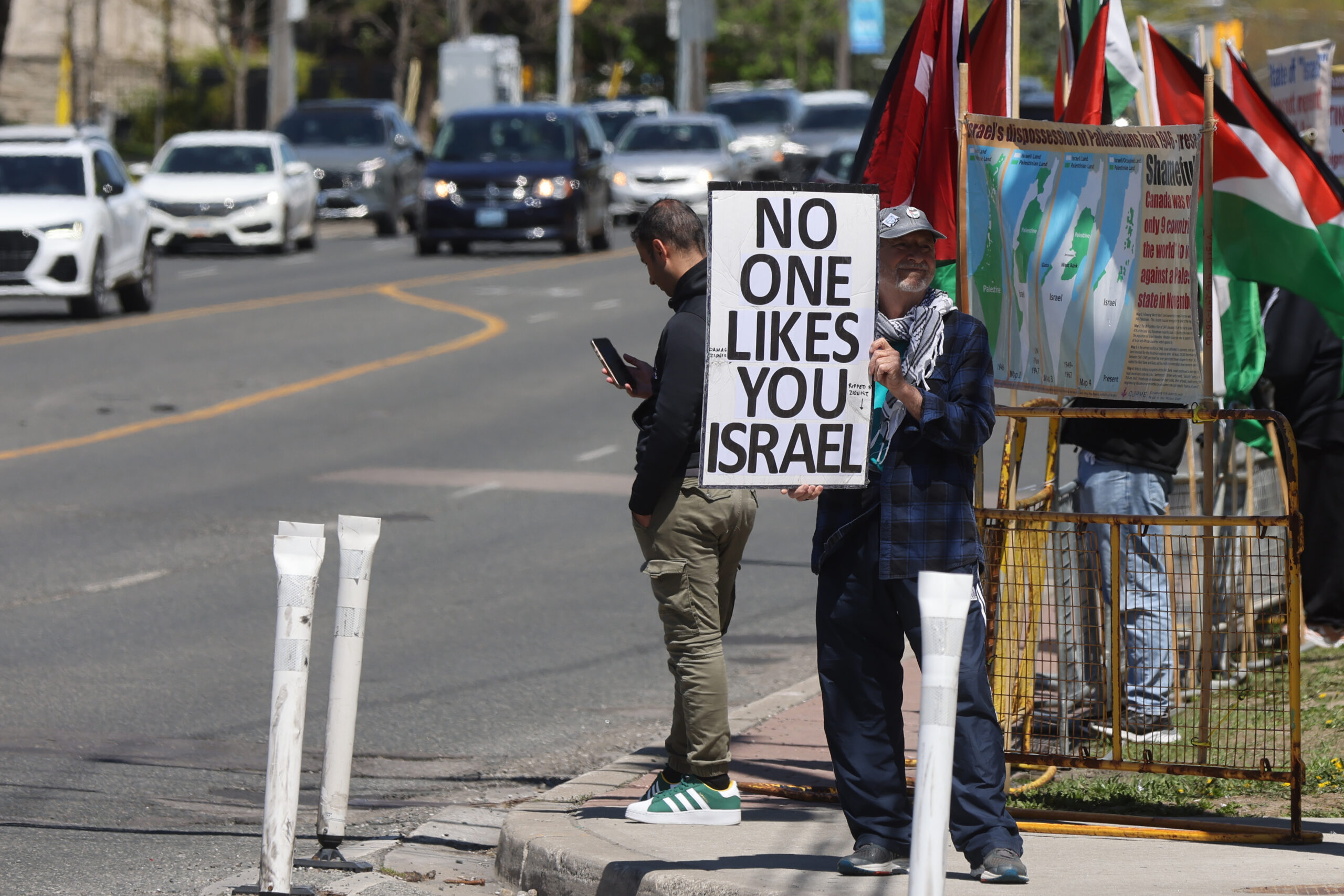
While nearly half of Canadian Jews reside in Toronto — which is home to about 150 Jewish institutions — the problem extends beyond Canada’s largest city. In Ottawa, the country’s capital, a Jewish grandmother was stabbed in August while shopping at a kosher supermarket. In 2024, Jews in Montreal were granted an injunction to prohibit the spate of anti-Israel protests, which included chants of “death to the Jews” in Arabic outside of a school, occurring within 50 meters of dozens of Jewish institutions.
In what The Atlantic recently called “Canada’s Polite Pogrom,” many incidents targeting Jews have been quieter, without broken glass or bones, but disruptive and exclusionary nevertheless.
Eighty percent of Jewish doctors and medical students surveyed by the Jewish Medical Association of Ontario reported experiencing antisemitism at work after the Oct. 7, 2023, attacks. In 2024, more than 100 Jewish doctors stopped acknowledging their affiliation with the University of Toronto’s Temerty Faculty of Medicine in protest of what they saw as the school’s failure to protect Jewish students and faculty. Almost a third of Ontario’s Jewish doctors say they are considering leaving Canada because of hostile work environments, according to the JMAO survey.
A group of Jewish teachers in British Columbia filed a human rights complaint against their own union, accusing the BC Teachers’ Federation of excluding, harassing and silencing its Jewish members. A federal investigation into Ontario’s K-12 schools found nearly 800 antisemitic incidents reported in elementary and high schools since 2023, many stemming from teachers’ conduct. The Toronto International Film Festival briefly dropped a documentary from its lineup that chronicled an Israeli grandfather’s experience rescuing his family from Hamas on Oct. 7, before a global effort successfully pushed for its reinstatement.
Jewish life in Canada wasn’t always this way, said Irwin Cotler, Canada’s former justice minister.
“When I was in the Ministry of Justice, at that time we had nowhere near the levels of antisemitism we’re witnessing now,” Cotler, who served as a member of Parliament, attorney general and Canada’s first special envoy on combating antisemitism, told JI. He called the current situation “an unprecedented explosion.”
“One would have thought that the times since [Oct. 7] would have resulted in actions to combat antisemitism. We’ve had on a public level, tragically almost, denials that Oct. 7 took place or support and justification — even celebration — for it in the public squares,” he said.
Upon completing his term as Canada’s special envoy on combating antisemitism in 2023, just before the Oct. 7 attacks, Cotler recalled reporting that “the conventional paradigm for combating antisemitism on the far right and far left was still true.” But, he continued, “the most important finding I had was that we were witnessing an increasing mainstream normalizing antisemitism and particularly in the campus culture, with an absence of outrage underpinned by indifference and a failure to appreciate that antisemitism is not only increasingly threatening Jews but that it’s toxic to democracies and an assault on our human rights values.”
If not addressed quickly, Cotler warned that there’s “a ticking bomb here in Canada for what will be the Bondi massacre occurring in Canada,” a reference to the December 2025 mass shooting at a Hanukkah gathering at Bondi Beach in Sydney, Australia, that killed 15 people.
“The synagogue shootings here are part of a pattern. We are experiencing not only the highest level of antisemitic incidents since tracking began in the 1970s, but the real disturbing data has been the dramatic increase in hate crimes targeting Canadian Jews. Hate crimes are different from other forms of antisemitism because they are identity crimes that target the whole community and reverberate within the whole community,” continued Cotler.
Cotler described law enforcement and government as ineffective. “Arrests are not made or if they are made then charges are not laid. If charges are laid, prosecutions are not proceeded with, or if prosecutions are proceeded with the courts do not sustain it,” he said.
Canada “needs a wake up call,” continued Cotler, “and it needs a whole government commitment at [all] levels to combat antisemitism. If the government gives a 10 percent increase in community security it’s basically telling Jews to protect themselves and giving a little more money to do that. That’s not a response. If you don’t have leadership at the governmental levels, lack of leadership will trickle down and start to become part of the culture of inaction. What we’re witnessing from the government are performative tweets and virtue signaling, but not effective leadership and action on the ground.”
Last month, frustration with political leadership deepened for many Jews with the election of Avi Lewis, a far-left Jewish anti-Zionist, as the leader of the New Democratic Party, widely described as Canada’s democratic socialist party.
“We are left with a deep sense of sadness,” Marceau and Rachel Chertkoff, senior vice president of community engagement at CIJA, said in a joint statement following the March 29 election. “When a leader declares that Zionism is inseparable from ethnic cleansing, he is not engaging in legitimate policy critique. He is telling Jewish Canadians that a core part of their identity is illegitimate. That is exclusion.”
Cotler, who was friends with Avi Lewis’ father, Stephen Lewis, said the election left him “concerned — not about criticism of Israel, but engaging in obsessive preoccupation in calling out alleged Israeli genocide.”
As a member of Parliament, Cotler said he was “close” with the NDP. “The astonishing difference [is] now we’ve gone down the road where NDP is no longer a place Jews feel they can be at home,” said Cotler. “It’s tragic because of the important role Jews played in the founding of the NDP.”
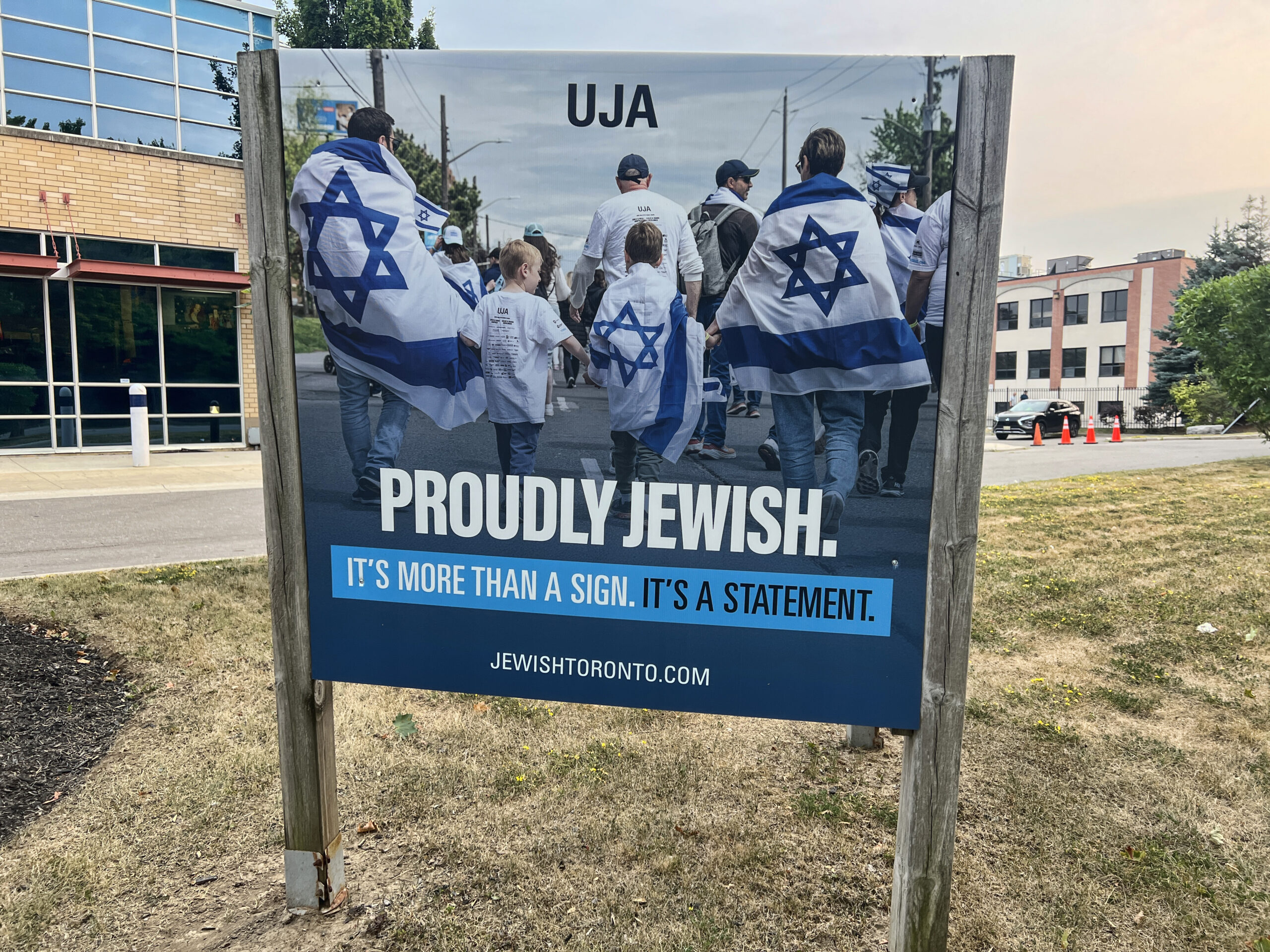
Landsberg noted that the writing was always on the wall: Canadian Jews would face a harsher reality than their American counterparts.
Canada is “50-plus years slower in reaching integration. In many ways the American story — of freedom and exodus — has been integrated naturally, the early Civil Rights Movement, for example,” Landsberg said. “There isn’t that comparable norming of the Jewish story [in Canada]. The first Jew who made it into a political cabinet position wasn’t until the late 1960s, decades after there were Jews on the Supreme Court in the U.S. Same thing with leadership in medicine and universities. It’s much later here. It’s a much smaller community that is made up of many more immigrants. It’s a different community in that this is home but these are people who have had to flee homes already. Canada’s understanding of Jewish citizens as part of the multicultural story that it has been trying to create has played out differently.”
Marceau, who splits his time between Montreal and Ottawa, has three friends who have left Canada because of antisemitism. “In discussions around Shabbat tables or at synagogue, [fleeing] is a constant conversation that is happening,” he said. “The promise that everyone could be openly themselves in Canada, to practice whatever faith they want — has been broken — certainly for Jews.”
Similarly, Kanofsky said that among his 200-family congregation, “people have already received second or third passports through their parents or grandparents. People are gathering their documents. Younger families are looking into Central America or other places that might be more hospitable. These are people that if you would have asked five years ago would have said they have deep roots and are not going anywhere for the long term. The Canadian Jewish community had a very deep-seated feeling of being part of society and being protected. A lot of that has been deeply damaged by the complacency of the government over the last couple of years.”
“Jewish communities will for sure learn from mistakes from the past and no one will stay longer than is necessary. People in our congregation have already gone on aliyah,” continued Kanofsky. “In a hurry, everybody gained a sense of mobility when they saw the inaction of the government.”
But, even when describing the boarded-up front lobby of her congregation — where leaders are still debating the type of shatterproof glass to install — Landsberg painted a picture of a resilient community with hope for the future.
“This is probably the same for Jews in the U.S.,” she said, “but there’s a sense of clarity that many people are really feeling a deep discomfort with how society here is handling this, and also the sense of strength [because] the Jewish people have been through a lot.”
Jerry Nadler protege Micah Lasher: ‘The spread of violence against Jews is intertwined with the social acceptability of violent rhetoric directed at Jews’
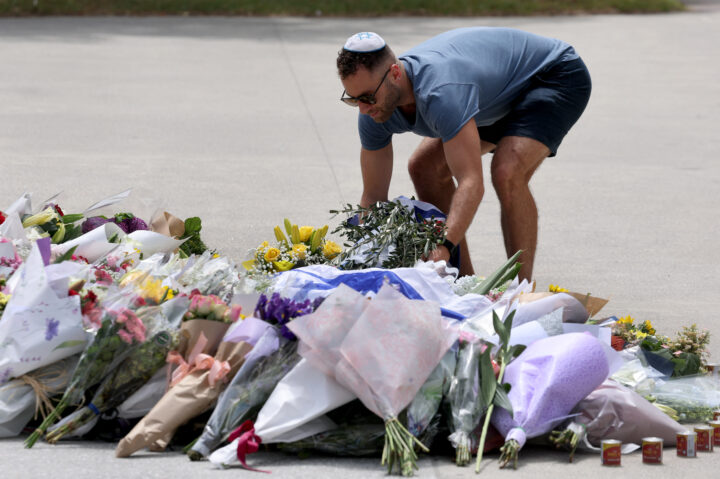
(Photo by DAVID GRAY / AFP via Getty Images)
A man lays flowers at the Bondi Pavillion in memory of the victims of a shooting at Bondi Beach, in Sydney on December 15, 2025.
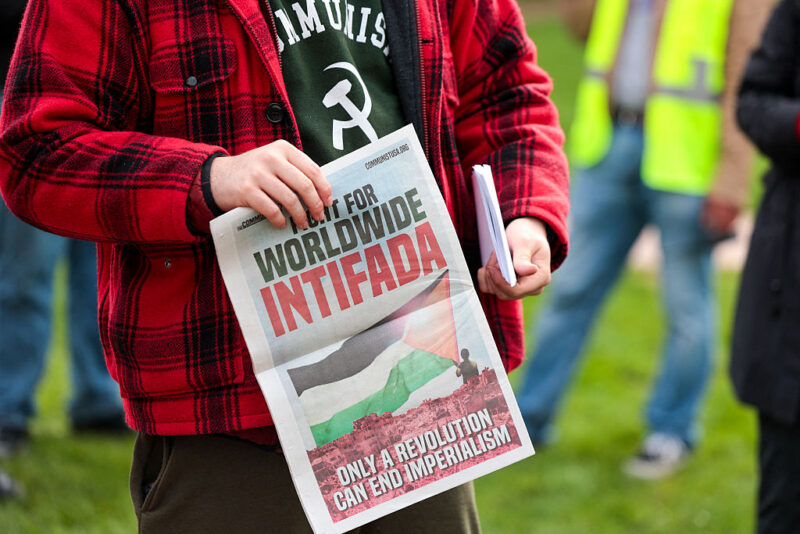
The deadly terrorist attack during a Hanukkah celebration in Australia on Sunday is sparking a renewed debate within the Democratic Party over anti-Israel slogans including “globalize the intifada,” and whether such extreme rhetoric fuels antisemitic prejudice that can lead to violence against Jews.
Some candidates and elected officials in New York City, where recent anti-Israel demonstrations have raised alarms within the largest Jewish community in the world, are tying such rhetoric directly to the carnage at Bondi Beach in Sydney — after two gunmen killed at least 15 people and wounded more than three dozen in the deadliest attack against the Jewish community in Australian history.
Eric Adams, the outgoing mayor, said on Sunday that “the attack in Sydney is exactly what it means to ‘globalize the intifada,’” and cast the shooting as “the real-world application of that call to violence.”
Erik Bottcher, a city councilman who is among several Democrats now competing to succeed Rep. Jerry Nadler (D-NY) in a heavily Jewish district in Manhattan, said that, in the wake of “an attack like Bondi Beach, we should be unequivocal: antisemitic violence is unacceptable, full stop.”
“And we should also be honest that slogans like ‘globalize the intifada’ don’t advance justice, they escalate hostility and make Jewish communities feel targeted,” Bottcher continued in a statement shared with Jewish Insider on Monday. “Leaders should be lowering the temperature.”
Alex Bores, a state assemblyman also seeking to replace Nadler, called the attack “horrifying and despicable” and said “antisemitism is a growing threat around the world,” while noting that “New York City has a special responsibility to confront it head‑on.”
“Any rhetoric or actions that dehumanize Jews, incite violence or put Jewish communities at risk must be called out and stopped, without exceptions. I have repeatedly condemned the use of the slogan ‘globalize the intifada,’” Bores told JI. “I believe that phrase, regardless of a specific speaker’s intent, has been tied inextricably to violent attacks, strikes fear in many New Yorkers and has no place in our city.”
Micah Lasher, a Jewish state assemblyman and another Democrat in the race, asked rhetorically in a social media post Sunday whether there was “any question” that “the spread of violence against Jews is intertwined with the social acceptability of violent rhetoric directed at Jews.”
“People of good will must confront this reality,” he concluded.
Such discourse is likely to intensify in next year’s primaries, where several anti-Israel candidates in New York City are seeking to challenge incumbent Democrats over their positions on Gaza and ties to AIPAC, the pro-Israel advocacy group increasingly demonized by the far left.
For now, however, those challengers were largely reluctant to weigh in on the heated rhetoric used by anti-Israel protesters — including just last month at at a synagogue in Manhattan where demonstrators chanted such phrases as “globalize the intifada” and “death to the IDF” — and if such language deserves further scrutiny amid heightened security concerns in the Jewish community following the Bondi Beach attack.
Darializa Avila Chevalier, an organizer in Harlem who helped to lead anti-Israel protests at Columbia University and recently launched a bid to challenge Rep. Adriano Espaillat (D-NY), did not respond to a request for comment.
Michael Blake, a former state assemblyman who is now challenging Rep. Ritchie Torres (D-NY) in the Bronx and who has drawn charges of hypocrisy for pivoting from his past outspoken support for Israel and close relations with AIPAC, also did not return a request for comment — even as he condemned the shooting in Australia.
For his part, Torres, a pro-Israel stalwart and top ally of the Jewish community, described the attack as “part of a global surge in antisemitism fueled by an ever-escalating campaign of demonization and dehumanization.”
A spokesperson for Brad Lander, the outgoing city comptroller mounting a newly launched bid to unseat Rep. Dan Goldman (D-NY) in a left-leaning district covering Lower Manhattan as well as parts of Brooklyn, likewise declined to comment, instead referring to his “several public comments about the Sydney shooting.”
The spokesperson also cited previous remarks in which Lander voiced reservations about calls to “globalize the intifada,” shortly after Zohran Mamdani, who is now the mayor-elect of New York City, had faced widespread backlash for refusing to denounce the slogan.
“Maybe you don’t mean to be saying it’s open season on Jews everywhere in the world, but that’s what I hear,” Lander, a top Jewish ally of Mamdani, said in comments in June. “And I’d like to hear that from other people.”
A spokesperson for Goldman, a pro-Israel Jewish Democrat, also declined to weigh in on the matter.
Mamdani, who condemned the Bondi Beach attack as a “vile act of antisemitic terror” in a social media post on Sunday, has refused to denounce the phrase “globalize the intifada,” but has vowed to discourage its usage.
In a Friday interview with WCBS in New York, Mamdani responded to feedback from a prominent local rabbi, Ammiel Hirsch, who expressed concern about the mayor-elect’s “ideological hostility to the very existence of Israel” and said that “anti-Zionist rhetoric and anti-Israel policies will threaten Jewish safety” in the city.
“Rabbi Hirsch is entitled to his opinions,” Mamdani stated. “The positions that I’ve made clear on Israel and on Palestine, these are part of universal beliefs of equal rights and the necessity of it for all people everywhere.”
A spokesperson for Mamdani did not respond to a request for comment.
Despite reluctance among Mamdani and some of his allies to now more openly grapple with rhetoric many Jews have found threatening, one progressive challenger to Rep. Grace Meng (D-NY), a pro-Israel incumbent in Queens endorsed by AIPAC, said that he has come to view phrases such as “globalize the intifada” as harmful, thanks to conversations with his Jewish friends.
Chuck Park, a former City Council aide and foreign service officer who has criticized Meng’s donations from AIPAC, said “Jewish people around the world — from Bondi Beach to Bushwick — are very scared right now,” while adding “it is the job of non-Jewish leaders like myself to listen to them.”
“When I listen to my Jewish friends,” he said in an interview with JI on Monday, “they tell me that they hear” the phrase particularly “as a call to violence against them.”
“The swastika is no longer a Buddhist symbol of good fortune, right?” Park added. “The pointed white hood is no longer a Catholic symbol of penance. And in a very similar way, that phrase is not a call for the liberation of an oppressed people, and I think it has instilled and maybe even inspired dangerous attacks on Jewish people around the world.”
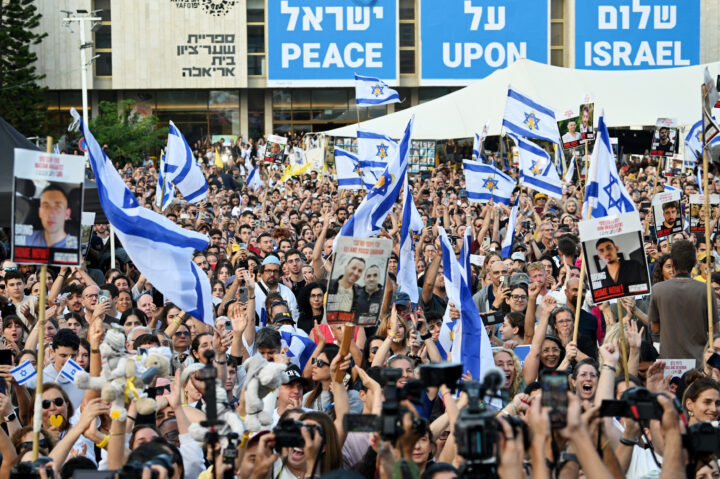
Thousands had already assembled by dawn at Tel Aviv’s Hostages Square — where some had slept overnight — for the release of the last remaining hostages known to be alive
(Photo by Alexi J. Rosenfeld/Getty Images)
People gather to watch the hostage release live stream at Hostages Square on October 13, 2025 in Tel Aviv, Israel.
It was the day that Israelis have waited for after more than two years — or two years exactly by the Hebrew calendar. Thousands had already assembled by dawn at Tel Aviv’s Hostages Square — where some had slept overnight — for the release of the last remaining hostages known to be alive. Shortly after 8 a.m., the first seven hostages — Omri Miran, Matan Angrest, Ziv Berman, Gali Berman, Guy Gilboa-Dalal, Alon Ohel and Eitan Mor — were released to Red Cross custody.
“Habayta,” meaning “home,” the unofficial anthem of the hostage families, played over a montage of photos of the 47 men and one woman who have spent the last 738 days in captivity — a scene that has repeated itself in the square every Saturday night for two years.
Israeli networks split coverage between the live festivities across the country, in-studio reporting and interviews with hostage families and former hostages. Former hostage Emily Damari called into Israel’s Channel 12 upon the release of her neighbors and friends, twins Zvi and Gali Berman, and said the Shehecheyanu prayer giving thanks — a prayer also recited by the thousands thronging in and around Hostages Square. The crowd erupted in joy at the sight of the two brothers being reunited.
By just before midday, the 20 living hostages — also including Avinatan Or, Bar Kupershtein, Ariel and David Cunio, Eitan Horn, Elkana Bohbot, Evyatar David, Maksym Harkin, Matan Zangauker, Nimrod Cohen, Rom Braslavski, Segev Kalfon and Yosef-Chaim Ohana — were on Israeli soil.
The first images of the men trickled out over the course of the morning: Miran, flanked by his wife and father, wearing a shirt with artwork by his two young daughters; the Berman twins in Maccabi Tel Aviv jerseys; Ohel, pale but smiling and standing on his own, with sunglasses to protect his damaged eyes.
In contrast to previous hostage release, as dictated by the agreement, there were no propaganda ceremonies staged by Hamas as they handed over the captive Israelis. Instead, Hamas made video calls to the hostages’ relatives, who spoke to their loved ones as they stood beside their masked and uniformed captors.
Amid the hostage releases, President Donald Trump descended from Air Force One to the tarmac at Ben Gurion Airport on Monday morning, where he was greeted by Prime Minister Benjamin Netanyahu and President Isaac Herzog. White House Special Envoy Steve Witkoff, Jared Kushner and Ivanka Trump — who spoke at Saturday night’s hostage rally in Tel Aviv. Read our coverage of their speeches at the rally here.
Signing the Knesset’s guestbook after his arrival, Trump wrote, “This is my great honor — a great and beautiful day, a new beginning.”
With the release of the last living hostages, and later today the remains of four of the 28 deceased hostages, Israel will begin the process of releasing close to 2,000 Palestinian prisoners in accordance with the first phase of the deal. After that, attention will turn to negotiations surrounding the deal’s second phase.
After addressing the Knesset, Trump will travel to Sharm el-Sheikh, Egypt, for a signing ceremony that will also include Palestinian Authority Mahmoud Abbas. Trump’s speech was delayed due to a call with Egyptian President Abdel Fattah el-Sisi, who extended an invitation to Netanyahu to join the ceremony. Netanyahu’s office released a statement saying that the prime minister thanked Trump for the invitation, but won’t be able to participate due to the close timing with the beginning of the Simchat Torah holiday this evening.
It was a day of celebration after two years of pain, longing, fear, anxiety. It was the first time in two years that Israelis were able to wholeheartedly greet each other with ‘Chag Sameach‘ — a greeting that took on a double meaning on the eve of Simchat Torah, which begins this evening.
But the day will take a heavier turn this afternoon when the remains of just four of the deceased hostages are expected to be returned to Israel, bringing a combination of pain and closure to their loved ones who will finally be able to give them a proper burial. Meanwhile, the 24 other hostage families — who were shocked to learn this afternoon of the low number of bodies that will be released — will be left waiting for the remains of their loved ones to be located and returned home. The Hostages Families Forum called the development a “blatant breach of the agreement by Hamas,” and called on the Israeli government and the mediators to “take immediate action to rectify this grave injustice.”
The Boulder firebombing is the latest in a wave of attacks putting Jewish communities on edge.

ELI IMADALI/AFP via Getty Images
An Israeli flag is fixed to a street sign as police stand by off Pearl Street on the scene of an attack on demonstrators calling for the release of Israeli hostages held in Gaza, in Boulder, Colorado, on June 1, 2025.
The holiday of Shavuot is one of prayer and celebration, marked by all-night learning, indulging in cheesecake and communal events.
But across the U.S., this Shavuot was marked with a fear and unease that has become abnormally normal in recent months, following the Passover arson at the home of Gov. Josh Shapiro and the murders of two Israeli Embassy employees outside the Capital Jewish Museum last month, and deepened further by the horrific attack in Boulder, Colo., on Sunday in which an Egyptian national threw homemade Molotov cocktails at marchers calling for the release of the remaining 58 hostages being held in Gaza. Twelve people, including a Holocaust survivor, were injured.
The reverberations from the attack are already being felt in Washington, where legislators are reviving a bill to designate the Muslim Brotherhood as a terrorist organization.
Two days before the attack, JI reported on the Trump administration’s full FY 2026 budget request for Congress — which did not recommend an increase in funding to the Nonprofit Security Grant Program, instead holding it at its current level of $274.5 million. Fewer than half of the requests — which are submitted by organizations at elevated risk of being targeted in a terrorist attack — were fulfilled in 2024.
The attack in Boulder is likely to garner additional calls from the Jewish community for increased funding for the program. In the wake of last month’s deadly attack at the Capital Jewish Museum, a coalition of leading Jewish groups called for the federal government to increase NSGP spending to $1 billion. “The rising level of anti-Jewish incitement, which inevitably leads to violent acts … requires governmental action commensurate with the level of danger,” the organizations said.
In the wake of Sunday’s attack, many legislators condemned the attacks, most denouncing the antisemitic nature of the firebombing. But three Squad members — Reps. Rashida Tlaib (D-MI), Ilhan Omar (D-MN) and Summer Lee (D-PA) — condemned the attacks without mentioning Israel or antisemitism. President Donald Trump, in his response, did not mention Israel or antisemitism either, choosing instead to rail against former President Joe “Biden’s ridiculous Open Border Policy, which has hurt our Country so badly.”
The identities of the victims of the attack and the perpetrators’ declared motivations are political inconveniences to legislators and activists on both sides of the political spectrum — and their decision to erase both perhaps reverberates the loudest.
Other lawmakers focused their comments on the shooter’s immigration status. Mohamed Sabry Soliman had come to the U.S. in 2022 and received a work visa, which expired earlier this year. That the attack was perpetrated by an individual who had been approved for a visa by the Biden administration and remained illegally under the Trump administration is expected to produce more calls for stricter immigration policies. Last night, Homeland Security Secretary Kristi Noem said that Soliman’s wife and five children had been apprehended by immigration officials and faced potential deportation.
But while politicians debate the best approaches — from designating terror groups to calling for immigration crackdowns — Jewish communities remain on edge, feeling unsafe and unheard.
Perhaps nothing underscores Jewish communal concerns at this moment better than an op-ed published in The New York Times on Tuesday by National Council for Jewish Women CEO Sheila Katz.
“When antisemitism emerges within progressive spaces, cloaked in the language of justice, too often it is met with silence and discomfort, creating echo chambers where dangerous ideas are amplified rather than confronted,” Katz wrote. In response to sounding the alarm about antisemitism in left-wing circles, she said, “we have been gaslit, ignored and told that our fear is overblown, our outrage unjustified. Among many groups that have fought to secure and reclaim civil rights, voting rights and reproductive rights, we have seen antisemitism dismissed as not bad enough to matter, our grief met with cynicism, our safety treated as optional.”
Some Americans waking up to their morning news on Tuesday saw “Jews Are Afraid Right Now” as the Times headline accompanying Katz’s piece. But for the first several hours it was posted, the op-ed had a different headline: “American Jews Are Paying for the War in Gaza” — an approach to both the Israel-Hamas war and antisemitism in America that plays into the dual-loyalty tropes that American Jews have fought long before the Oct. 7 attacks.
The Times quietly changed the op-ed’s headline to the milquetoast “Jews Are Afraid Right Now” — which, while correct, missed Katz’s core point: “At rallies and on campuses, in coalition rooms and online spaces, slogans sometimes directly drawn from Hamas’s terrorist manifesto have been chanted and painted on placards, and shouted from stages and in the streets. ‘Globalize the intifada.’ ‘By any means necessary.’ ‘From the river to the sea.’ ‘Zionists out.’ These are not simply words; they can be interpreted as calls for violence.”
The Boulder attacker told investigators he wanted “to kill all Zionist people” — not dissimilar from comments made by the Capital Jewish Museum shooter, who declared, “I did it for Palestine, I did it for Gaza,” after gunning down Yaron Lischinsky and Sarah Milgrim. The arsonist who set the Pennsylvania governor’s mansion on fire said he committed the crime because of what Shapiro, one of the most prominent Jewish politicians in the country, “wants to do to the Palestinian people.”
From academia to activism to journalism, there is a reticence in left-wing circles to acknowledge that inciting language around the Israel-Hamas war can have a dangerous impact.
A year and a half ago, Ivy League administrators were pressed on whether “From the river to the sea” was a genocidal chant. The response, given by the since-ousted presidents of Harvard and the University of Pennsylvania, was that “it depends on the context.”
In this case, the context is the firebombing of elderly Jews calling for the release of hostages in Gaza. Last month, the context was the gunning down of a young couple outside a Jewish organization’s event focused on humanitarian aid in Gaza. In April, the context was the arson of the residence of a Jewish governor on the first night of Passover.
The recent attacks in Harrisburg, Washington and now Boulder are not surprising. They are what happens when ideology-driven activism trumps ethical journalism, when antisemitism becomes a political football and when the boundaries between free speech and calls for violence blur — creating a dangerous and deadly reality for American Jews.
Please log in if you already have a subscription, or subscribe to access the latest updates.
 Continue with Google
 Continue with Apple