

























































Smotrich, Ben-Gvir remain key parts of Netanyahu’s bloc despite widespread condemnation
‘We are together and we are staying together,’ Netanyahu reportedly told the far-right ministers, whose parties held roughly steady

GIL COHEN-MAGEN/AFP via Getty Images
Israeli Knesset member and head of the far right Jewish Power (Otzma Yehudit) party Itamar Ben-Gvir (L) and head of the Jewish Zionism (Zionut Datit) list Bezalel Smotrich (C) talk to reporters as they visit Sheikh Jarrah on May 10, 2021.


 Add JewishInsider on Google
Far-right Israeli Finance Minister Bezalel Smotrich and National Security Minister Itamar Ben-Gvir’s policies and rhetoric have been flashpoints for the current Israeli government in its relations with the world and Diaspora Jewry, sanctioned by several European countries that accused them of encouraging settler violence and a target of the Biden administration, which also considered punitive measures.
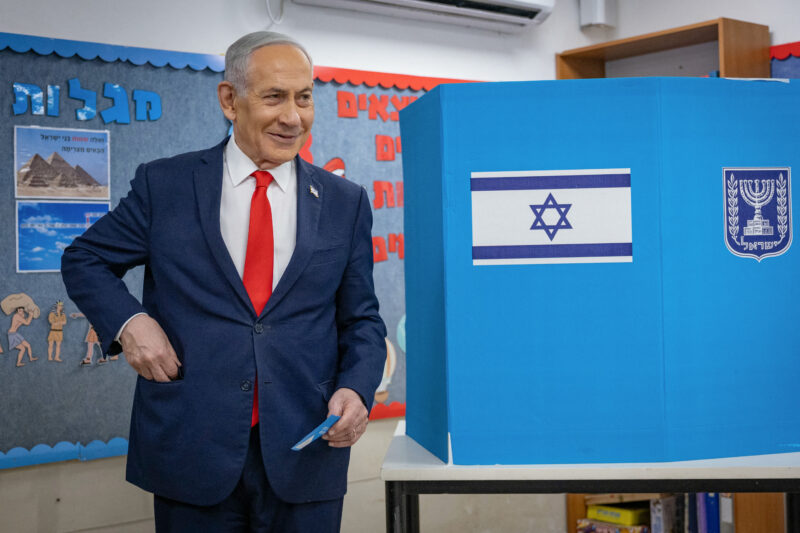
But in Israel, the ministers’ bases of support have largely continued to back them; the international condemnation may have even prompted the men to dig in their heels. And Prime Minister Benjamin Netanyahu reportedly said that he will continue his partnership with them as he tries to cobble together a ruling coalition.
In Tuesday’s election, Ben-Gvir and Smotrich together won 13 seats, which, because of the increase in turnout, translates into more raw votes than they received four years ago. Smotrich’s Religious Zionism, running this time with Moshe Feiglin’s Zehut, slipped from seven seats to six, with supporters touting his work as a minister in the Defense Ministry, his approval of over 100 outposts in the West Bank that had previously been considered illegal, as well as the establishment of over 150 farms in Area C that serve as buffer zones to help secure settlements.
Voters for Ben-Gvir’s Otzma Yehudit, meanwhile, lifted him from six seats to seven, supporting his tough talk against Palestinians, including a promise to dig a moat with crocodiles around the prison holding Oct. 7 terrorists.
While international media and the Israeli left have a tendency to lump Smotrich and Ben-Gvir together, there are some key differences between them and their bases of support.
Smotrich voters come from the mainstream of religious Zionist communities in Israel, which overwhelmingly lean right and support settlements. While there was some talk in religious Zionist media about rejecting him because he was too soft on Haredi parties that didn’t want their constituents to serve in the IDF — religious Zionists, in contrast, disproportionately serve in combat roles and do reserve duty — that ultimately did not come to fruition. Ben-Gvir, however, while presenting as a religious Zionist in a crocheted yarmulke, draws from the most extreme elements in the community, plus poor and marginalized Jewish communities — disaffected Shas and Likud voters, to a great extent.
Smotrich, for the most part, follows the rules of order in the Knesset. Ben-Gvir, however, is populist in his presentation and does not hesitate to shout at, insult and threaten those with whom he disagrees.
And while they share many views and policy positions, Smotrich has shown more willingness to compromise. In 2023, they both started out opposing the deal to release the women and children held hostage in Gaza in exchange for Palestinian terrorists and a brief pause in the war in Gaza, but Smotrich was persuaded to vote in favor of it.
Those differences make Smotrich a more natural partner for Netanyahu, while the Israeli leader treats Ben-Gvir more like someone he is forced to deal with, going so far as to avoid being photographed with him or issuing joint statements.
During the election campaign, Netanyahu and Smotrich worked closely together, with Likud and the Religious Zionism Party sharing an Election Day ground game team. Ben-Gvir, on the other hand, repeatedly warned that Netanyahu was trying to leave him out of his future coalition — an allegation the Likud campaign denied.
While Ben-Gvir is a more difficult partner for Netanyahu, he does not have many to choose from, with Netanyahu’s bloc of parties dropping to 53 seats from 64 in 2022.
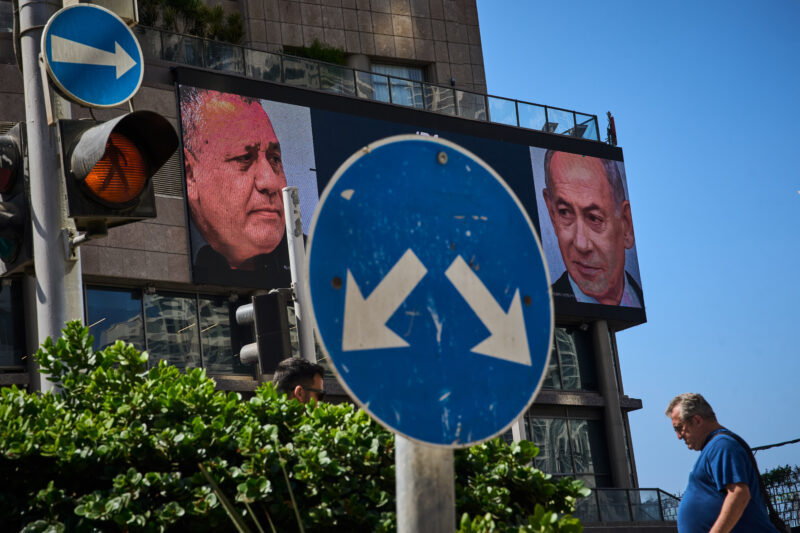
One of the few options to form a coalition is for Netanyahu to work with his rival, Yashar leader Gadi Eisenkot, but the distrust between them is so deep that he may not be willing to drop the parties to his right in order to do it.
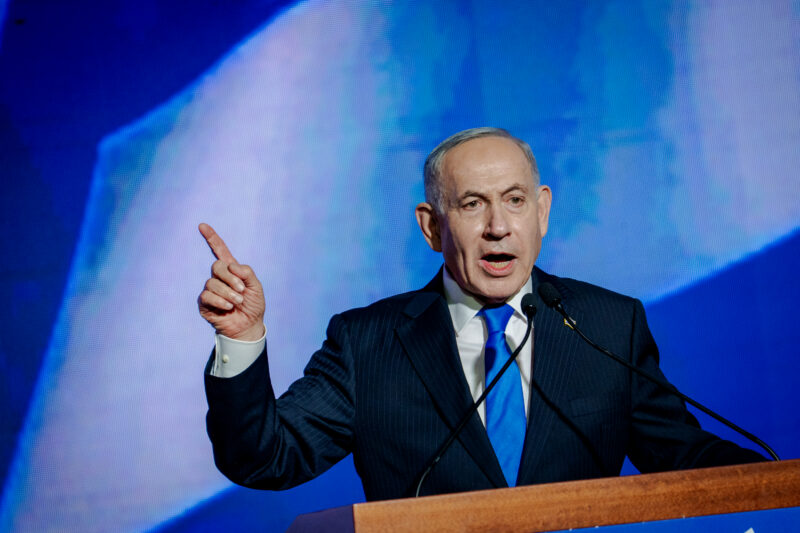
”We are together and we are staying together,” Netanyahu told Smotrich and Ben-Gvir on Wednesday night, according to pro-Netanyahu Channel 14, reassuring them that he would not drop them in order to work with Eisenkot.
Netanyahu pioneered the “bloc” strategy of Israeli politics because he could trust the far right and Haredi parties to stick with him, since they had little to no other options to retain power, as opposed to the rotating cast of centrist leaders who have sought to take his place at the top of the pyramid over the last decade.
Netanyahu may even choose another election over betraying his current coalition partners, rather than give Eisenkot the keys to the Prime Minister’s Office. Another election would keep him prime minister — of a caretaker government, but still prime minister — for several more months.
More Stories

MENDING FENCES
Haley Stevens to campaign for El-Sayed after fiancé backs Rogers
ECONOMIC ANGST
Netanyahu predicts end of U.S. military aid, calls for plan to circumvent potential sanctions

FOLLOW THE MONEY
El-Sayed super PAC gets $50K from firm in Armenian mob money-laundering scheme

RABBIS’ REBUKE
Nonnegotiable campaign says El-Sayed needs to do more to condemn antisemitic ad

Daily Kickoff
Bibi’s bloc-buster?
state of play
What to watch on Israel’s Election Day
Please log in if you already have a subscription, or subscribe to access the latest updates.
 Continue with Google

 Continue with Apple