










































































El-Sayed campaign distances himself from antisemitic ad promoting his campaign
The ad, tied to podcaster Cenk Uygur, blames U.S. aid to Israel for the price of groceries
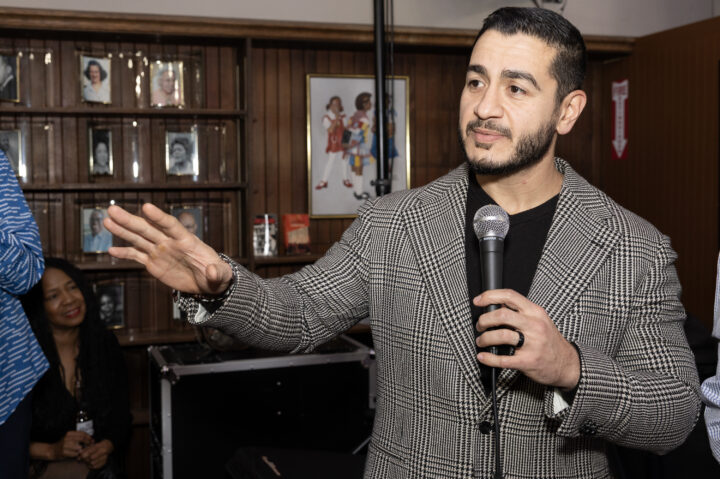
Monica Morgan/Getty Images
Abdul El-Sayed at the Bridge Center on Dec. 16, 2025, in Detroit, Michigan.


 Add JewishInsider on Google
Democratic Michigan Senate nominee Abdul El-Sayed’s campaign distanced itself from an ad circulated by anti-Israel commentator Cenk Uygur and an affiliated PAC supporting El-Sayed, as the ad faced widespread condemnation over what critics said was a blatantly antisemitic message.
The ad was posted by Uygur on X on Friday, describing it as a “new [Rebellion PAC] ad dropping in Michigan,” adding, “We have to suffer here at home, so Israel can get all its wars. That’s why they buy politicians like [El-Sayed opponent] Mike Rogers.”
Uygur followed up a day later with an appeal for funding to run the ad more widely.
The ad features two actors in a grocery store blaming U.S. aid to Israel — which constitutes a small fraction of U.S. foreign funding — for the price of groceries in the U.S.
“This ad is not affiliated in any way with the Abdul for Senate campaign,” El-Sayed spokesperson Roxie Richner said in an emailed statement. “Abdul is focused on pushing back against Trump’s agenda that is raising prices for Michiganders. No one speaks for Abdul but himself and his campaign.”
The majority of the ad was first produced in connection to Uygur’s Democratic presidential campaign in 2024. The latest version of the ad features an addendum accusing pro-Israel groups of trying to buy the seat, connecting the Iran war to high gas prices, attacking Rogers and supporting El-Sayed.
Rebellion PAC, a progressive campaign group, has not placed significant money behind the ad. The group reported having spent $10,000 last week on texting advertisements and just $1,000 on digital advertising for El-Sayed in recent weeks, a small sum in the scope of the Senate race.
“This type of fearmongering about Israel is wrong. It is not a winning strategy for any state. It does nothing to help Michigan Democrats win up and down the ballot in eight days,” Rep. Haley Stevens (D-MI), who ran against El-Sayed for the Democratic nomination, said.
She said that “blaming the high costs of our goods on the only Jewish homeland in the world” will not help bring down costs and said that Democratic success requires “keeping our focus on lowering costs for Michigan families and reining in this out-of-control President.”
Anti-Defamation League CEO Jonathan Greenblatt called the ad “desperate” and said it is “just another example of scapegoating the Jewish state” and a “case study in antisemitism.”
Uygur has remained defiant, calling critics of the ad “cult” members who have “lost your mind” and think that “Israel is owed all the money it wants from US.”
Jamie Harrison, the former chair of the Democratic National Committee, called the ad counterproductive for El-Sayed and described it as ad odds with the campaign’s own efforts.
“This Senate seat is crucial to stopping Trump. Abdul is working hard to bridge divisions and build a diverse, winning coalition. This doesn’t help him do that. Not one damn iota,” Harrison said.
“We are on the eve of an election with serious consequences for both Muslim and Jewish communities,” he continued. “We need leadership that finds common ground and brings people together. Pouring gasoline on those divisions makes his job harder. If you truly want to help Abdul, stop making his race about your fights. Let him run it.”
Rebellion PAC was first founded in 2020 by Uygur and activist Brianna Wu as a progressive media group to leverage their mailing lists and networks from their respective congressional campaigns. Wu, who disavowed and condemned the ad, told Jewish Insider that the group’s work included promoting former President Joe Biden in the 2020 election.
Wu told JI she has not been involved with Rebellion PAC since 2022. Wu has emerged as a vocal progressive voice in support of Israel and in defense of the Jewish community since the Oct. 7, 2023, Hamas attacks on Israel — a stark contrast to the anti-Israel Uygur, who has spread overtly antisemitic messages.
“I’m not Jewish, but the heartbreak I feel with a lot of Jews is, after Oct. 7, seeing what so many people I love and treasure think about Jews in Israel, and it breaks my heart because I don’t know how to separate people that I thought were good human beings from their opinions on this, and I wrestle with that, and I don’t have any answers,” Wu told JI. “So this is obviously a wildly antisemitic message, and I wish this ad did not exist. And I unequivocally denounce it.”
More Stories
RABB RESPONDS
Rabb declines to condemn rally targeting Jewish-owned businesses, criticizes counterprotesters

CAIR-ING REVERSAL
Texas Gov.-elect Hinojosa to reverse state designation of CAIR as terrorist organization
MONEY MATTERS
Trump’s demand for $350 billion in additional defense funds meets GOP skepticism

PAGE TO SCREEN
Gal Gadot to bring Golodryga and Levi’s ‘Don’t Feed the Lion’ to the big screen
FUNDING FIGHT
Top Senate Dem says ‘looking at all options’ to end Iran war ahead of December funding deadline

DOUBLE FAULT
JINSA leaders decry mismanagement of U.S.-Israel relationship — on both sides
Please log in if you already have a subscription, or subscribe to access the latest updates.
 Continue with Google

 Continue with Apple