














































Former Haley Stevens campaign chair and prominent Democratic fundraiser says he plans to vote for Rogers
David Kramer, who was also finance chair for Sen. Elissa Slotkin, said he remains a ‘proud Democrat’ and harbors concerns, but felt voting for Rogers was more impactful than leaving the race blank
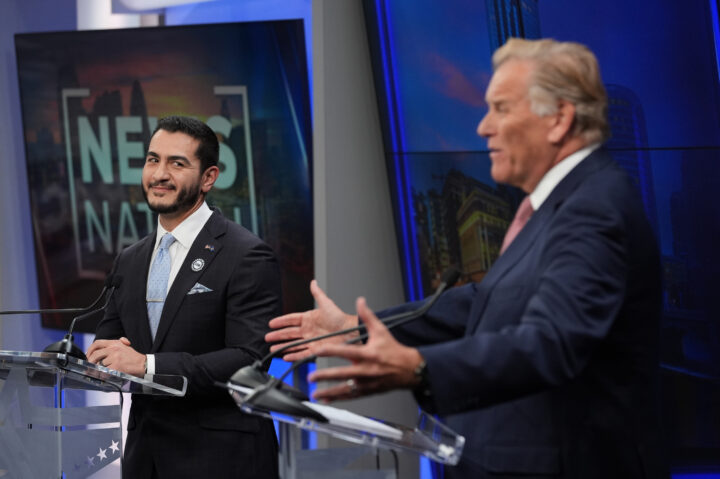
Paul Sancya, Pool/AP
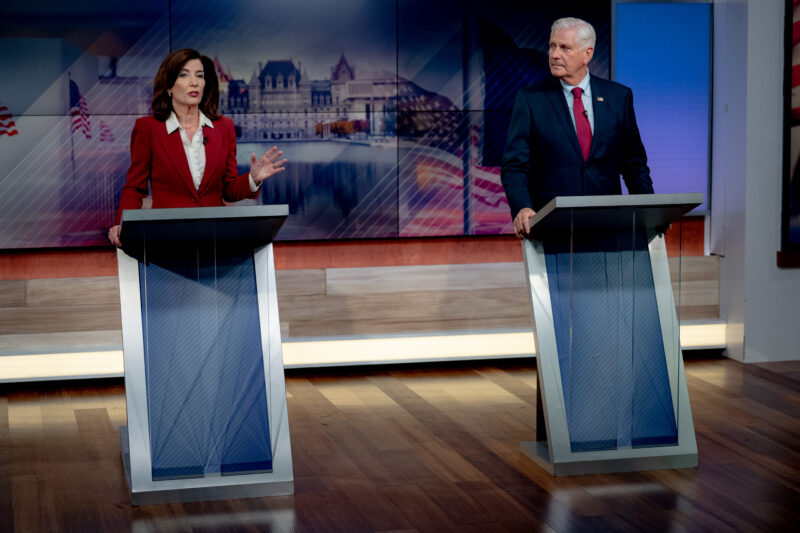
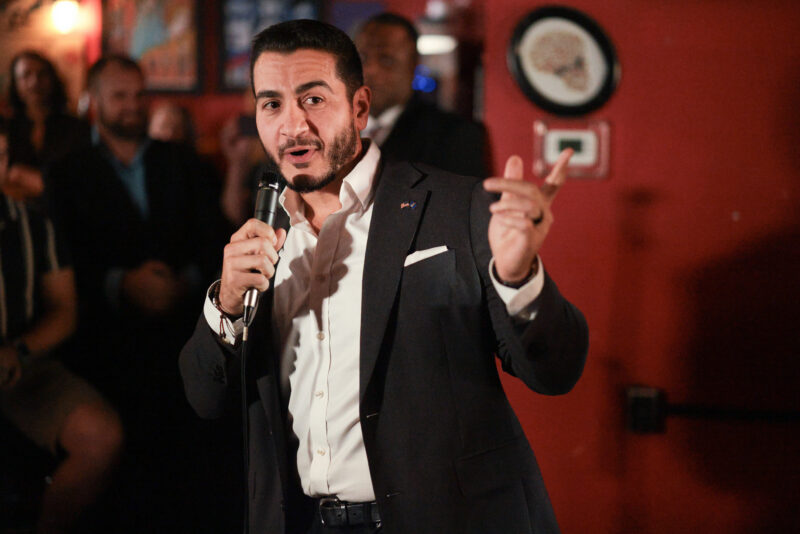
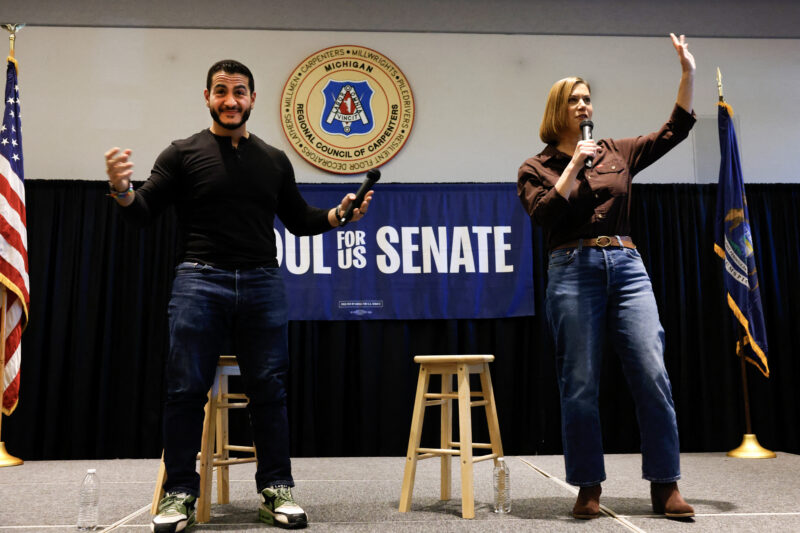
Republican nominee for U.S. Senate Mike Rogers, right, speaks during a televised debate with Democratic nominee for U.S. Senate Abdul El-Sayed on Oct. 8, 2026, in Grand Rapids, Mich.


 Add JewishInsider on Google
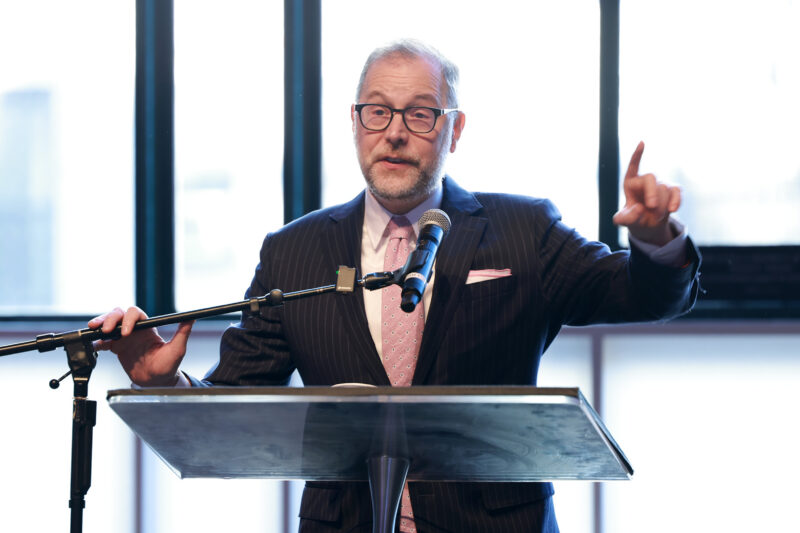
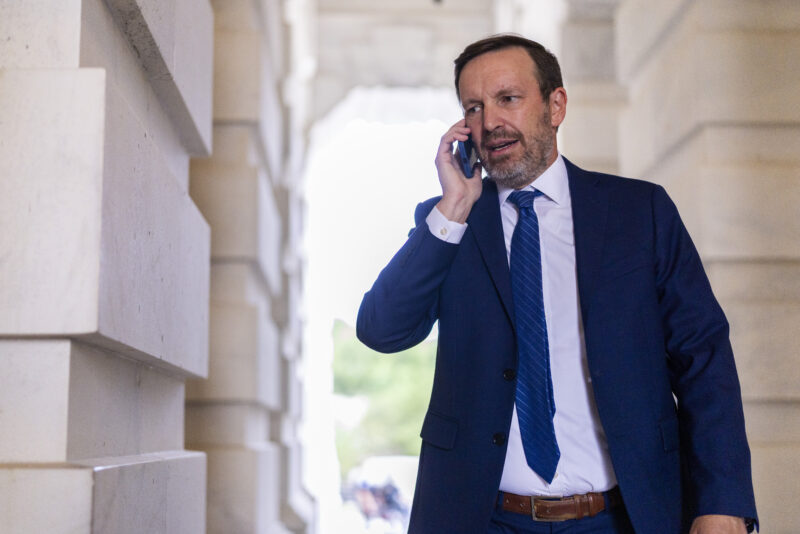
David Kramer, a prominent Michigan Democratic fundraiser who served as the chair of Rep. Haley Stevens’s (D-MI) Senate campaign, told Jewish Insider on Monday in an interview and written statement that, despite reservations, he plans to support Republican former Rep. Mike Rogers in next week’s Michigan Senate election.
Kramer, who also previously served as finance chair of Sen. Elissa Slotkin’s (D-MI) Senate campaign, said he had been wrestling with whether to vote for Rogers or leave the Senate race on his ballot blank, but that Democratic nominee Abdul El-Sayed’s recent rhetoric provided a final push.
“As we get closer and closer to the general [election], it’s become clearer to me that Abdul is certainly not moderating at all, and I think really becoming more extreme and more dangerous and less responsive to the Jewish community,” Kramer told JI, while emphasizing that he remains a “proud Democrat” working to elect other Democrats on the ballot next week.
He said that he ultimately felt that it was more impactful to vote for Rogers than to leave the Senate race blank, and to publicize his decision to do so.
“I have lots of issues with Mike Rogers, and I’m not even willing to use words like ‘support,’” Kramer said. “But I’ve made peace with voting for him because I do think that he at least does care about Jews being safe and participating in public life, and he seems to know the difference between an enemy of ours in Iran and an ally of ours [in Israel].”
Kramer said that El-Sayed’s recent comments arguing that Israel is not a friend or ally of the United States and is instead a threat to it, in his view, went beyond even the candidate’s previous rhetoric and were a “bridge too far.”
But he characterized it as the culmination of a consistent pattern of “this blood libel of ‘the Jews are to blame for everything’” from El-Sayed’s campaign.
“[El-Sayed] has repeatedly linked America’s problems to Israel, and by extension to Jews. Abdul strongly implies that Jews are to blame for higher prices and that … the middle class [has failed] to get ahead because Jews (AIPAC, Netanyahu, etc.) have strong-armed the American government into sending billions of dollars to Israel in aid and into fighting an unnecessary war in Iran,” Kramer explained in his statement.
He added that El-Sayed’s characterization of Israel as genocidal labels the majority of American Jews as supporters of “indiscriminate killing of innocent people,” and that “the result of these policies and this rhetoric is to embolden people to harm Jews. Abdul acknowledged as much when he offered justification and context for the attack at Temple Israel.”
El-Sayed condemned the Hezbollah inspired terrorist attack that took place in suburban Detroit last March but said, referring to the attacker, “hurt people hurt people,” a comment that many in the Jewish community felt rationalized the attack. He subsequently apologized for those remarks.
Kramer emphasized that he has been working hard to elect and fundraise for other Democrats on the ballot including Secretary of State Jocelyn Benson, the Democratic gubernatorial candidate; state Sen. Jeremy Moss and prosecutor Christina Hines, who are running for the House; Reps. Kristen McDonald Rivet (D-MI) and Hillary Scholten (D-MI); and several state House and Senate candidates.
“I feel very vested in these elections for Dem[ocrats] up and down the ballot, but I feel incredibly emboldened to vote against the Democratic candidate in this one particular race,” Kramer explained. “I’m a Dem[ocrat] who is proud to support Dem[ocrats] and works hard for Dem[ocrats], and [El-Sayed] is just a wholly different candidate here.”
Kramer told JI he has no plans to raise money or campaign — or even put up a lawn sign — for Rogers, but said the Republican had “at least met a basic decency test that allows me to vote for him as a vote against Abdul.”
Even as he plans to vote for the GOP nominee, Kramer said that he remains concerned about Rogers’ allegiance to President Donald Trump, disagrees with him on various policy issues and will not characterize himself as a “proud ‘Democrat for Mike Rogers.’”
A lifelong Democrat and vice chair of the Michigan Democratic Jewish Caucus, Kramer said this is the first time he can recall voting for a Republican for federal office, “and, by the way, I hope it’s the last time, and that we don’t have other candidates like this.”
Alongside Lon Johnson, a former Michigan Democratic Party chairman, Kramer authored a recent op-ed expressing support for Michigan Democrats who plan to leave the Senate race blank — leading Rogers to directly reference Kramer from the debate stage last week.
Kramer said he stands by that op-ed and, for people who “absolutely can’t stomach voting for either” El-Sayed or Rogers, leaving the race blank is still an option.
“But I’ve come to believe that a stronger repudiation of Abdul is to vote for the Republican, and if you can get comfortable with at least the fact that Mike Rogers has a commitment to Jewish safety and participation in in American life, I think it’s worth considering a vote for him,” Kramer said.
Kramer said in his written statement that his “identity begins with my Judaism,” as the grandson of Holocaust survivors, the son of someone who was born in a displaced persons camp in Germany, someone who has held leadership roles in Jewish organizations and “someone who feels a deep connection to my Jewish faith.”
“For me, ensuring that Jews have a place in American life and can be safe and secure is a threshold issue. Until now, I have not had to choose between my Jewish identity and my political affiliation,” Kramer wrote. “That has changed in the Michigan Senate contest. Abdul El-Sayed’s statements and positions are wholly antithetical to Jewish safety and security.”
He told JI that one El-Sayed supporter had offered him a chance to meet with the Democratic nominee, but he never heard directly from El-Sayed’s team. He said that he ultimately decided it was not worth it to seek out a meeting because he had spoken to other members of the Jewish community who said that El-Sayed had not “moved the needle one inch from his public statements” in their own private meetings and “they felt absolutely no better after they met with him.”
Kramer was a prominent signatory to the Nonnegotiable Michigan petition seeking to pressure El-Sayed to make commitments to fighting antisemitism and recognizing Israel’s right to exist.
He said that, if El-Sayed wins, he believes that there must be a relationship between El-Sayed and the Jewish community, “even if we vehemently disagree. … There’s a difference between having a dialogue and thinking someone is a friend or having a relationship of any sort with them.”
Bobby Schostak, a former Michigan Republican Party chair and finance chair for Rogers’ campaign, told JI he thinks Kramer’s position points to a broader shift in the Jewish community and among Democrats generally. Schostak predicted that a sizable portion of traditional Jewish Democrats will ultimately vote for Rogers.
“David’s decision is reflective of a broader sentiment, of the feelings in the Jewish community, and amongst moderate Democrats as well, that El-Sayed is not who they want representing them, does not represent their values,” Schostak said.
Kramer’s announcement to JI came just a day after Stevens declined to explicitly affirm her own support for El-Sayed. Stevens endorsed El-Sayed immediately following the primary, but has not campaigned alongside him.
Asked on CNN on Sunday if she was still “fully behind” El-Sayed, Stevens responded, “I’m on the Democratic ticket, I can’t say that I agree with everything that’s gone on. I wish that first debate had been more about that rubber stamp for Trump.”
Stevens said that she was more focused on competitive House races and supporting Benson’s gubernatorial campaign. “I’m not looking to be front-and-center right now,” she said.
She specifically called out El-Sayed’s repeated comments about Israel not being an ally of the U.S. “I don’t want to debate who’s the enemy of the United States — it’s very clear that Iran is. I didn’t run my campaign on foreign policy issues — but that was litigated in my primary,” she continued.
And Stevens said that she thought El-Sayed needed to do more to reach out to the Black community.
More Stories
CAMPUS CLASH
Georgetown Law student association brands Cruz aide Islamophobic after lecture on Muslim Brotherhood
BIPARTISAN BOOST
Trump administration’s Board of Peace taps Biden’s Jewish liaison to leadership role

TIES THAT BIND
Jewish Federations survey finds deepening ties between U.S., Israeli Jewish communities

UNSPORTSMANLIKE CONDUCT
St. Louis Blues condemn antisemitic banners at home game
SANCTIONS SUPPORT
Lander endorses settlement sanctions bill while on West Bank trip
MED MISSION
Rick Scott says Israel, Greece, Cyprus trip ‘reinforced’ his critical approach to Erdoğan
Please log in if you already have a subscription, or subscribe to access the latest updates.
 Continue with Google

 Continue with Apple