





























































McCormick warns an El-Sayed victory could lead to France-like chaos in America
McCormick, on the Michigan Senate race: ‘This election is for the heart and soul of the country in many ways because you see the choice’

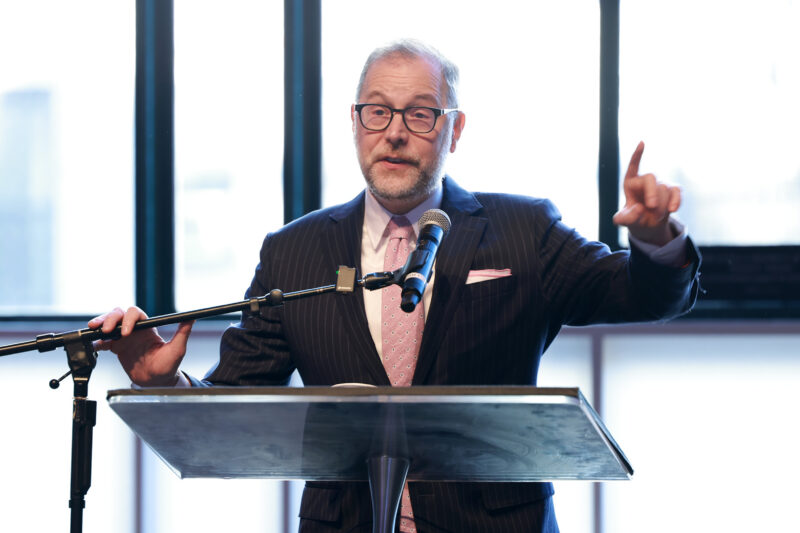
Paul Morigi/Getty Images for Puck
Sen. Dave McCormick speaks onstage at the Puck Power Breakfast at the Riggs Washington D.C. on July 21, 2026 in Washington, DC.


 Add JewishInsider on Google
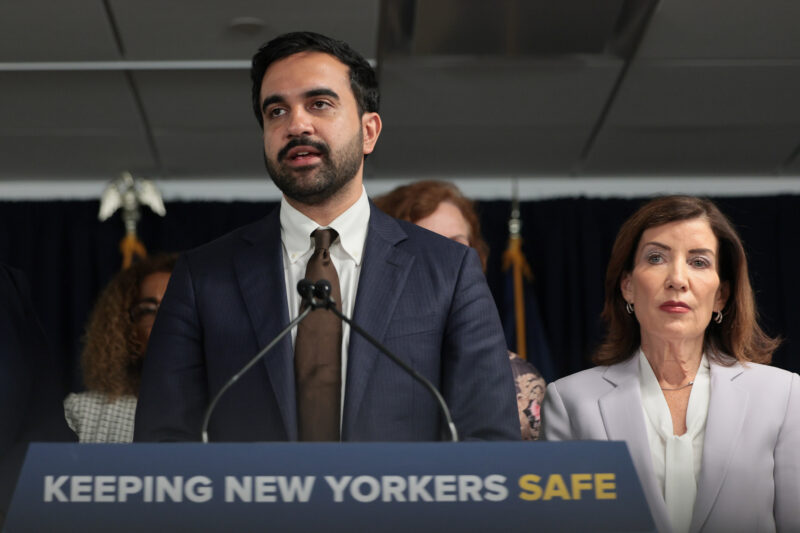
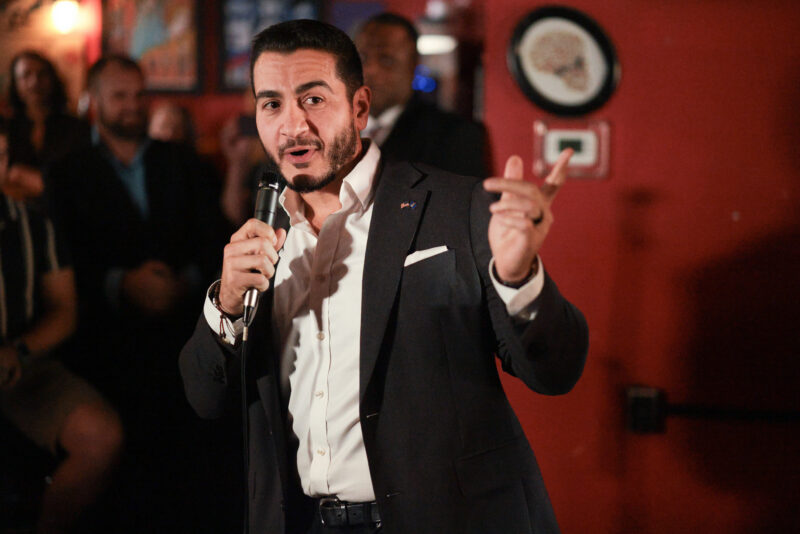
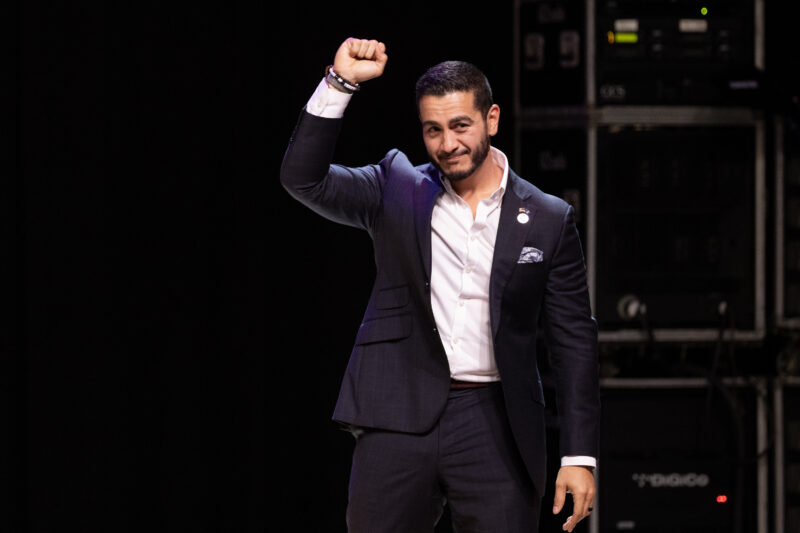
Sen. Dave McCormick (R-PA) warned on Wednesday that a victory by Michigan Democratic Senate nominee Abdul El-Sayed would place the U.S. on the same trajectory as France, where violent anti-government riots have recently swept cities across the country.
McCormick made the comments while appearing at Sen. Jim Banks’ (R-IN) Northeast Indiana Defense Summit during a conversation with Roger Zakheim, the director of the Ronald Reagan Presidential Foundation.
Asked by an audience member if he was concerned about the increasing number of political candidates who support “defunding the military, defunding police, antisemitic things that used to be fringe,” McCormick pointed to El-Sayed’s candidacy as an example of “a real world experiment playing out on television” that would help decide “the future of America.”
“If you want to know where this ends, if these folks win, just turn on the television,” McCormick said. “You see burning down beautiful buildings in Paris, one of the most beautiful cities in the world. You see people throwing stones and bottles at law enforcement. That’s what happens if you embrace these bad ideas and this terrible ideology. Listen, it goes back to the basic premise of America: We’ll get what we deserve, and if we put the wrong people in office leading our country, we’re going to get bad policies that destroy the country.”
The Pennsylvania senator, who campaigned for El Sayed’s GOP challenger Mike Rogers this week, argued that the only way to defeat El-Sayed or candidates like him was to present a positive vision for why voters should make “peace through strength, secure borders, conservative common sense policies versus a set of radical ideas which are gaining ascendance.”
“We can’t win, in my opinion, elections or the future of America by just saying how bad the other guys are,” McCormick said. “They’re terrible, but we can’t just solely do that. We have to say: ‘And this is better, and this is why it helps you, this is why it brings opportunity to America, this is why it promotes America’s interest.’”
“When I was a captain, I guess lieutenant, and the Cold War ended, I was 25. I never imagined I’d be 60, standing in front of 25-year-olds, trying to explain to them why socialism and communism were bad ideas, that they wouldn’t bring people out of poverty, they wouldn’t help working families,” he continued. “No, these ideas belong in the dustbin of history, and yet they keep resurrecting themselves. That’s why we’ve got to beat them back.”
McCormick went on to describe El-Sayed as “antisemitic,” “anti-military,” “anti-law enforcement” and “anti-business,” adding: “This election is for the heart and soul of the country in many ways because you see the choice.”
At another point in the conversation, McCormick expressed confidence that President Donald Trump’s allies would be able to “build a national consensus” that strength abroad creates the conditions for peace, as a counter to left-wing critics.
“We can build a national consensus, and we’ve had in the past, around the notion of peace through strength,” McCormick said. “In other words, the best way to avoid sending our young men and women into harm’s way is to be strong, because our strength deters bad guys in the world from challenging American interests at home or abroad.”
McCormick argued that projecting strength on the world stage serves as an “insurance policy” for the U.S. because it deters adversaries from challenging U.S. interests. “In the course of American history, when we’ve been weakest, American interests have been most compromised, and young men and women are pulled into harm’s way because of that,” he said.
McCormick also defended the U.S. operation last year targeting Iran’s nuclear program, saying that Trump’s decision was “for our kids, because a nuclear-armed Iran, a country that said it wanted to destroy America, is a risk that can’t be tolerated.”
“Now, that’s different from a foreign entanglement where we spend the next five years in the Middle East, and that’s where I think the American people have lost their patience in the past and maybe now,” McCormick said.
Zakheim asked McCormick about the political unpopularity of the U.S. war in Iran, and how those advocating for military intervention should tailor their arguments to better reach an American public that has grown skeptical of foreign engagement, especially in the Middle East.
McCormick replied by noting his own support for the U.S. war in Iraq while urging nuance when assessing the foreign policy worldviews of individual political figures.
“I think that argument gets caricatured. You’re either an isolationist or you’re a neocon who wants to send American forces into every conflict in the world. That’s the way it’s characterized,” McCormick said.
“We should just have humility about sending men and women into harm’s way.”
More Stories
CHAIN REACTION
Bank of Israel rejects Netanyahu’s suggestion to circumvent sanctions with cryptocurrency
ALLIES APART
Competing Middle East frameworks put U.S. allies on rival tracks, experts say
SOCAL SHOWDOWN
Anti-Israel encampment member emerges as far-left threat to Rep. Jimmy Gomez

Penalty Box
St. Louis Blues condemn antisemitic banners at home game

BLIND SPOT
New study finds younger Americans struggle to recognize antisemitism on social media
CAMPUS CLASH
Georgetown Law student association brands Cruz aide Islamophobic after lecture on Muslim Brotherhood
Please log in if you already have a subscription, or subscribe to access the latest updates.
 Continue with Google

 Continue with Apple