









































































End of U.S. aid to Israel not surprising, but timing of Trump’s announcement rankles
Former Israeli Ambassador to the U.S. Michael Oren, who has advocated for an end to military assistance since 2021, called the timing ‘such a cynical move by Trump’
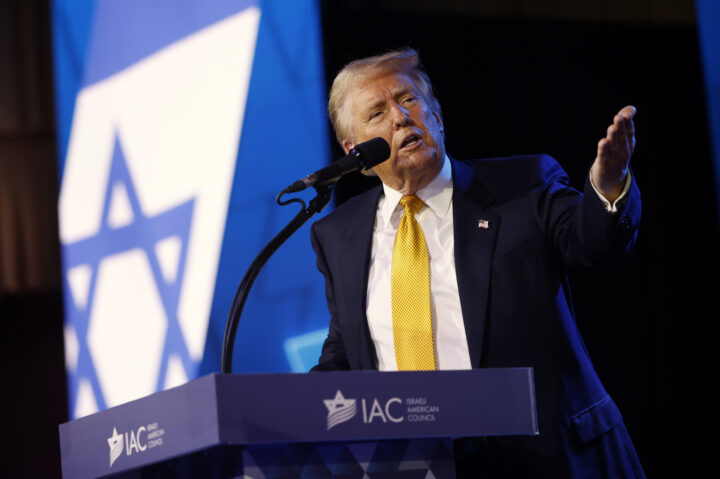
Kevin Dietsch/Getty Images
President Donald Trump delivers remarks at the Israeli American Council National Summit at the Washington Hilton on September 19, 2024 in Washington, DC.


 Add JewishInsider on Google
President Donald Trump’s announcement on Tuesday that U.S. military aid to Israel would end by the end of 2026 is consistent with statements Israeli Prime Minister Benjamin Netanyahu has made in the past year, but experts said the timing of the announcement on the morning of the midterm elections may be a reason for concern.
“Bibi Netanyahu and I have made a deal that — we give Israel $4 billion a year, and we made a deal months ago that we’re stopping, and they’re find with it, because, you know, they’ve become a very successful country. We’ve already agreed that by the end of this year we won’t be paying Israel,” Trump told “Fox and Friends” on Tuesday.
Trump also said that Netanyahu initially brought up the idea, and promised that the U.S. will still “help Israel if they need it.”
In January, Jewish Insider reported that Netanyahu had suggested to Trump at a meeting at Mar-a-Lago the month prior that Israel may not accept the military assistance it was set to receive in 2027 and 2028 under the current Memorandum of Understanding.
In June, Netanyahu said in an interview with CNBC that he plans to wind down aid “in the last two years of the Trump administration,” including changing the terms of the current MOU. And earlier this month, Netanyahu told Israel’s Channel 10 that U.S. security assistance “won’t keep coming because America has changed, not because Israel has. It’s over and it will be over, it’s just a question of time.”
The U.S. provides Israel with $3.8 billion in annual military aid, all of which must be spent in the U.S., as part of a 10-year MOU that was set to expire in 2028.
Trump was surprised by Netanyahu’s initial suggestion to wind down aid in December and did not immediately support it, according to sources who spoke with JI after the meeting. While Netanyahu told Trump at the time that ending aid would improve Israel’s standing with the U.S. public, the president was skeptical that the move would work.
However, by the summer, the Israeli Ministry of Defense and Trump administration began talks on a “new security cooperation framework” to replace the current MOU, which would “strengthen the IDF’s qualitative military edge through expanded joint investment in research, development and co-production,” and “deepen the U.S.-Israel partnership.” The new framework would “gradually transition from aid to a completely reciprocal relationship,” the Defense Ministry stated.
The Prime Minister’s Office had no comment on Trump’s latest remarks. Anonymous Finance Ministry and Defense Ministry sources told Hebrew media that they were surprised by the announcement.
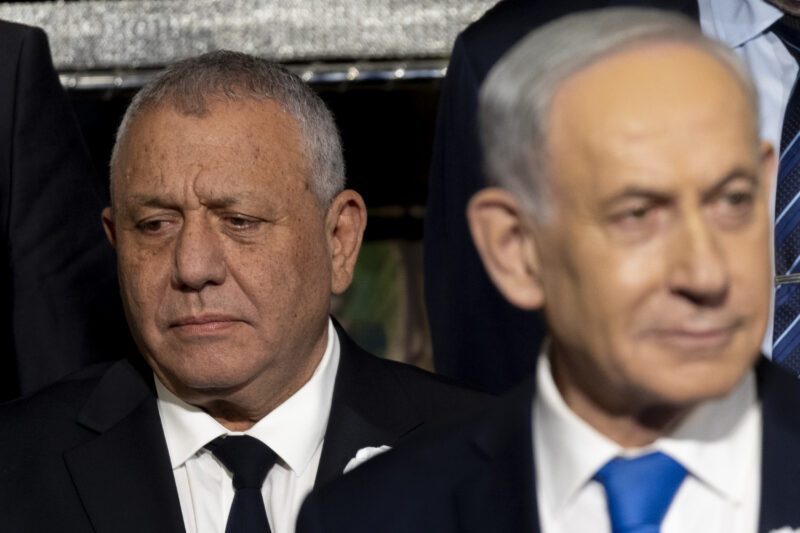
Yashar leader Gadi Eisenkot, a former IDF chief of staff, did not directly state his view on the ending of American military assistance to Israel, but he argued that Netanyahu was insufficiently transparent with the Israeli public about it and — despite the talks that began in June — claimed the military high brass was caught unaware.
”The special relationship with the U.S. is a central component of Israel’s national security,” Eisenkot wrote on X. “The fact that the security establishment heard, together with the citizens of Israel, from the media shows what a danger Benjamin Netanyahu’s behavior is. We cannot trust him anymore and he must be replaced. Once again, the prime minister of Israel is unable to look the citizens of Israel in the eyes and say the truth.”
Israeli Democrats party leader Yair Golan called the end of U.S. aid “another massive failure” by Netanyahu, which would cause “heavy damage to Israeli security and quality of life in the country, because the need for security funding is so critical and will fall only on the Israeli public.”
Experts speaking to JI on Tuesday were more concerned about the timing of Trump’s announcement, on the morning of the U.S. midterm elections.
When announcing the end to military assistance, Trump said that the funding was “the best talking point that these lunatics on the left have. … It’s almost too easy a target.” He specifically mentioned Michigan Democratic Senate nominee Abdul El-Sayed, who campaigned against aid to Israel.
Ofer Shelah, a former Knesset member and director of the Institute for National Security Studies at Tel Aviv University’s National Security Policy program, told JI that phasing out aid may not harm Israel’s national security, and noted that the details of the plan remain unclear.
”But from the perspective of Israel’s position [in the U.S.], the fact that [Trump] is saying this on the day of the midterms is worrying,” he added.
Former Israeli Ambassador to the U.S. Michael Oren, who has advocated for an end to military assistance since 2021, called the timing “such a cynical move by Trump.”
Oren expressed hope that if Democrats win one or both chambers of Congress, and therefore control the budget, that they don’t interfere with the process of phasing out aid as negotiated between Israel and the U.S.
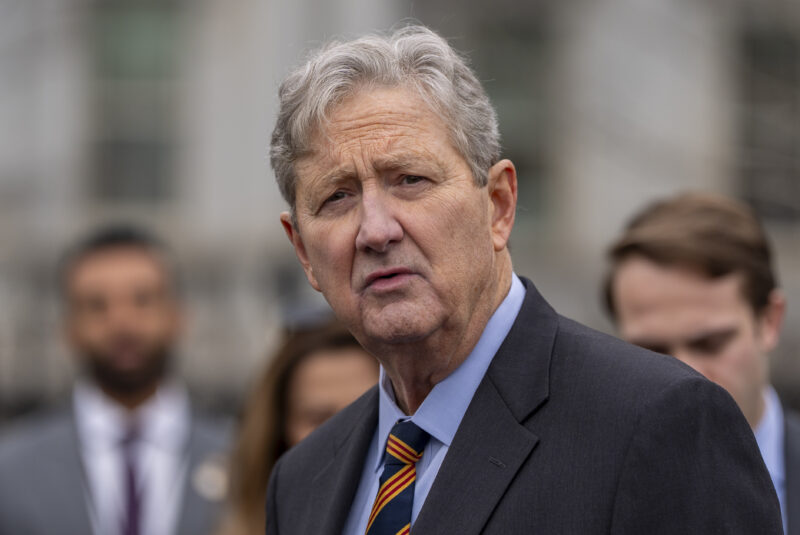
”The bottom line for Democrats right now is stopping military aid. Every Democrat except [Pennsylvania Sen. John] Fetterman will vote for this and at least one Republican, if not more,” he said. “The rest is downhill from here.”
Trump “tried to take the argument from El-Sayed and others [but] they don’t care. For them, it’s not about the aid. It’s about any relationship between the U.S. and Israel,” Oren added.
Oren also noted that Trump only mentioned ending aid and did not say that Israel and the U.S. are moving to a partnership, saying that “partnership won’t play well in the midterms.”
“If anyone doubted that we are in a different era of U.S.-Israel relations, here we have it. A policy that continued for 50 years is now ending. Ultimately, I think it’s a good thing, but I fear it doesn’t stop with military aid. There are many things coming down the pike and we [in Israel] have to prepare ourselves,” Oren said.
More Stories
FUNDING FIGHT
Top Senate Dem says ‘looking at all options’ to end Iran war ahead of December funding deadline

COURTROOM CLASH
Brandeis Center sues to compel release of Department of Education foreign funding report
Blue Dogs of War
Democratic Senate sweep puts Schumer back in the saddle
POLICY PLATFORM
J Street memo calls for pause on weapons sales to Israel, conditions on cooperative programs

SHOW OF SOLIDARITY
Philadelphians rally in support of Jewish businesses threatened by antisemitic bike protest
LOOKING AHEAD
Jewish Federations of North America confronts ‘challenge and opportunity’ of a much-changed Congress
Please log in if you already have a subscription, or subscribe to access the latest updates.
 Continue with Google

 Continue with Apple