







Irish Jewish leader says Dublin hotel canceled guest rooms for conference on fighting antisemitism
The incident is the latest in a growing number of antisemitic discrimination incidents in Ireland
Getty Images
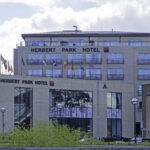
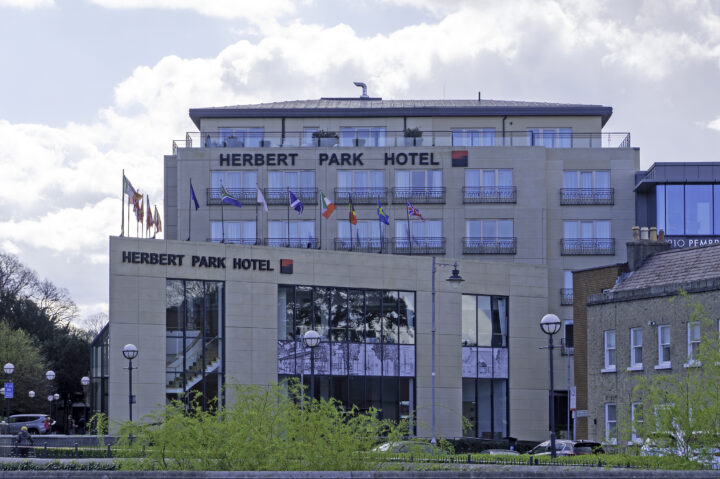
The Herbert Park Hotel in Ballsbridge, Dublin, Ireland.


 Add JewishInsider on Google
A Dublin hotel canceled 70 rooms booked for participants in an international conference of envoys for combatting antisemitism, attendees and organizers said on Tuesday.
Maurice Cohen, the head of the Irish Jewish Representative Council, said at the opening gathering of the summit that the Herbert Park Hotel canceled the group’s reservation made in May, after finding out the nature of the event. The hotel’s manager also asked if the conference was connected to the IDF. The Herbert Park Hotel declined to comment.
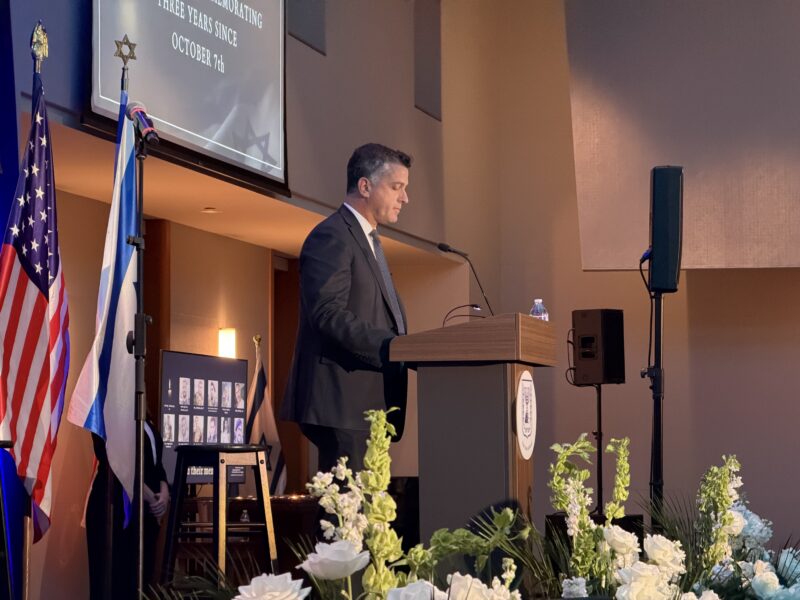
The event, which was held on Tuesday and Wednesday in different locations in Dublin, convened government envoys and coordinators for combatting antisemitism, as well as leaders of Jewish organizations around the world, including the J7 Task Force Against Antisemitism, which includes major organizations representing the Jewish communities in the U.S., U.K., Canada, France, Germany, Argentina and Australia. Irish Taoiseach (Prime Minister) Micheál Martin met on Tuesday with J7 representatives, including Anti-Defamation League CEO Jonathan Greenblatt, Conference of Presidents of Major American Jewish Organizations CEO William Daroff and European Commissioner Coordinator on Combating Antisemitism Katharina von Schnurbein.
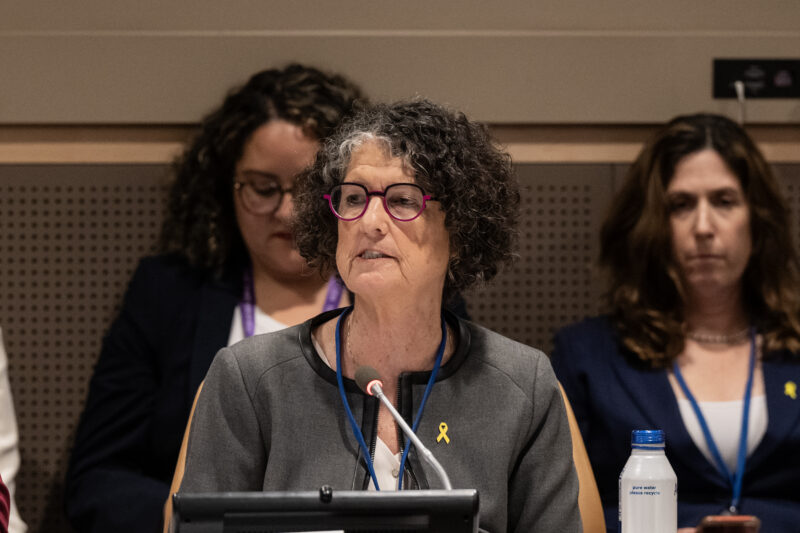
In his remarks to the conference, Maurice Cohen, president of the Jewish Representative Council of Ireland, recounted that he had celebrated his mother’s birthdays at the Herbert Park Hotel for years, but that it has since “acquire[d] a very different place in my memory.”
He met with the general manager of the hotel after reserving the rooms, and she asked what the abbreviation used to describe it, SECCA, stood for. When he told her the answer — Special Envoys and Coordinators for Combating Antisemitism — and explained who would be attending, he “noticed her manner change. There was a tension that had not been there before.”
She asked, “Will the IDF be involved?” Cohen recalled.
“Nothing I had said had anything whatsoever to do with the Israeli army, yet somehow that was where the conversation had gone,” he added.
The manager then said she had to consult with the hotel’s owners, and soon after canceled the reservation.
“Contemporary antisemitism does not always arrive wearing the language of the past. It does not always announce itself with a slur, a threat or a placard. … It begins by treating Jewish identity as evidence of political allegiance. It turns Jewish people into representatives of a foreign state, Jewish gatherings into security concerns, and ordinary acts of welcome into decisions requiring special permission,” he said.
Cohen added: “That is the danger of antisemitism today: not only that it excludes Jews, but that it makes their exclusion appear reasonable.”
Former Irish Justice Minister Alan Shatter wrote on X that the incident was “a vile illustration of the issue to be addressed.”
Ireland has long been one of the European Union countries most critical of Israel, and antisemitism has spiked in recent years. Israel closed its embassy in Dublin in 2024 after Ireland joined South Africa’s genocide charges against Israel at the International Court of Justice.
Irish President Catherine Connolly has said Israel is a “Jewish supremac[ist]” state, and said that Hamas should be accepted as part of a legitimate Palestinian government. As a parliamentarian, she protested the Irish Embassy to Israel commemorating Holocaust Remembrance Day.
Last month, the Irish national soccer team faced calls from fans to boycott its match against the Israeli team, and the Irish players refused to shake hands with the Israelis.
In addition, Dublin nearly removed former Israeli President Chaim Herzog’s name last year from a public park adjacent to the city’s only Jewish school. Herzog was the son of Ireland’s Chief Rabbi Yitzhak HaLevi Herzog, who later became Israel’s first chief rabbi, fought in the British Army in World War II, taking part in the liberation of Bergen-Belsen, and was the head of IDF intelligence and Israeli ambassador to the U.N. — famously tearing up its “Zionism is racism” resolution — before serving as Israel’s sixth president in 1983-1993. His son, Isaac Herzog, is Israel’s current president.
More Stories
DIPLOMATIC PUSH
Miliband agrees to host international antisemitism meeting at urging of J7 Task Force
PEACH STATE POLITICS
Ossoff defers to ICC on Israel genocide accusations, but says IDF violated int’l law
TOEING THE LINE
Menin, Levine call for ‘focus’ on Oct. 7 victims — but don’t condemn Mamdani
Daily Overtime
Jewish leaders press Miliband on U.K. antisemitism
EXCLUSIVE
Lawmakers call for Congress to mandate creation of Pentagon hate symbols policy
Arrivederci, Reggio
Jewish preschool educators forced to condemn Israel to attend Reggio Emilia conference
Please log in if you already have a subscription, or subscribe to access the latest updates.
 Continue with Google
 Continue with Apple