






























Rising Jewish Democrat in Michigan won’t endorse El-Sayed
State Rep. Noah Arbit said El-Sayed aligns with people who want to ‘purge the Democratic Party and American life of Zionists and, therefore, most Jews’
Courtesy
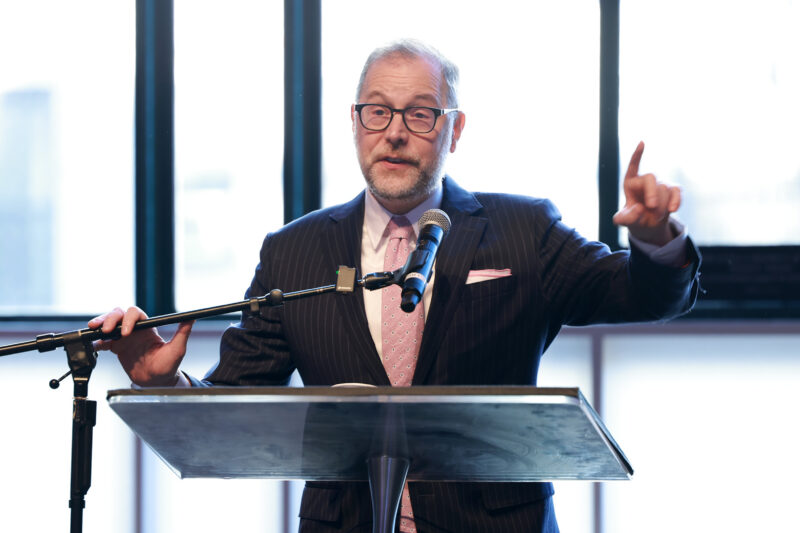
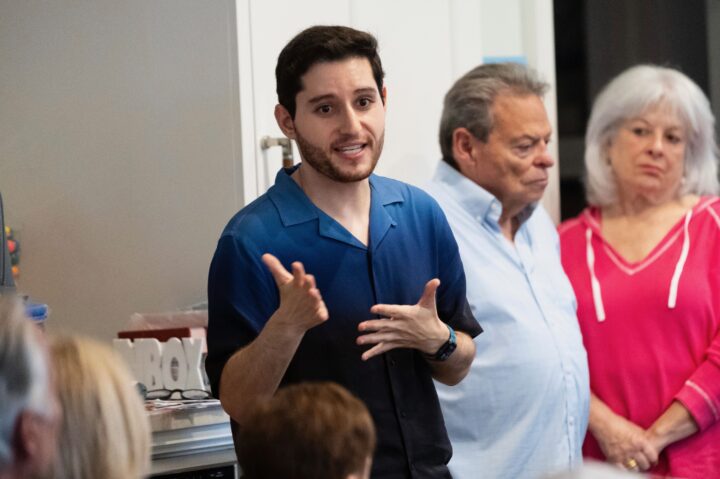
Michigan state Rep. Noah Arbit


 Add JewishInsider on Google
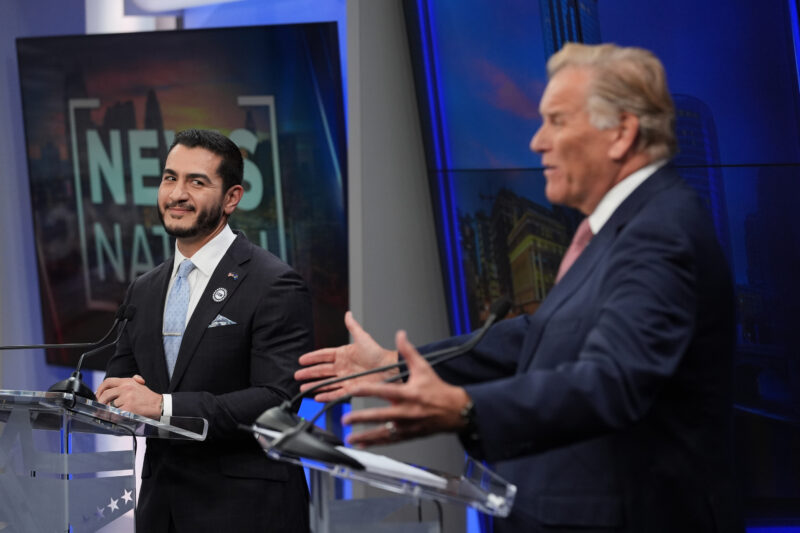
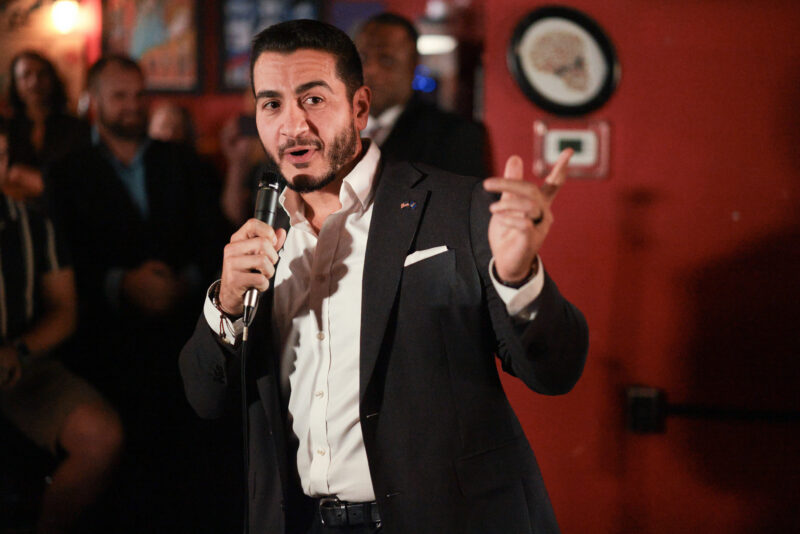
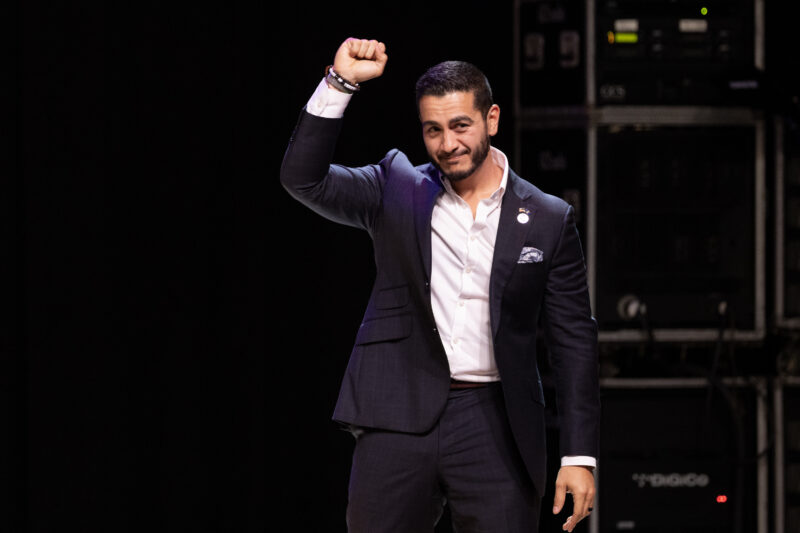
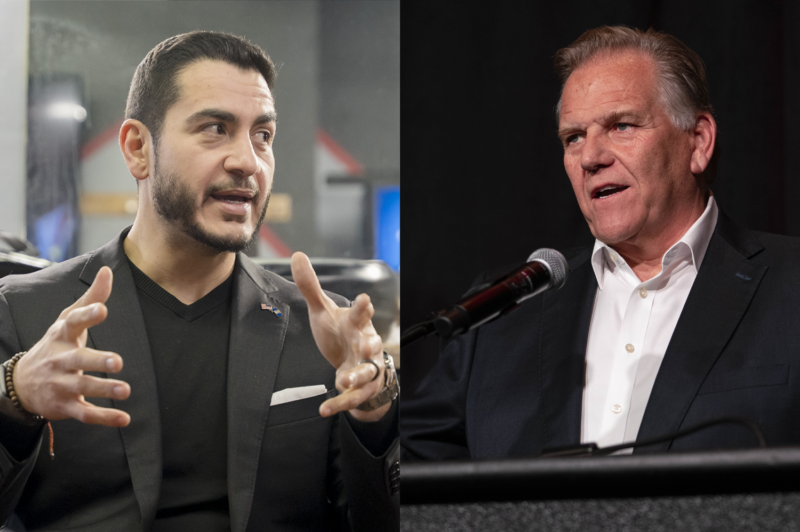
Noah Arbit, a rising Jewish Democrat in Michigan’s state Legislature, has been a vocal critic of Abdul El-Sayed, a fellow Democrat whose Senate campaign in the key battleground state has exposed deep divisions within the Jewish community.
But until now, Arbit had not yet publicly clarified if he is willing to set aside his differences and endorse El-Sayed, like some prominent Jewish Democrats in the state who have recently announced their support despite reservations with his hostile stances on Israel and approach to countering antisemitism.
In an interview with Jewish Insider on Monday, Arbit, 31, confirmed that he would not be endorsing El-Sayed, pointing to what he called the nominee’s promotion of antisemitic conspiracy theories and affiliations with extremist figures on the far left, among other issues he cast as deal-breakers in the closely contested race.
“At the very least,” El-Sayed “aligns himself with people who want to purge the Democratic Party and American life of Zionists and, therefore, most Jews,” Arbit said. “That is unacceptable.”
Asked if he believed El-Sayed himself is antisemitic, Arbit referenced a fiery speech he had delivered last week on the floor of the state House in which he had argued there was no longer a meaningful distinction between anti-Zionism and anti-Jewish prejudice at a moment when “the logical leap to justifying violence against Israelis and all Jews becomes so tiny as to be invisible.”
“The definition of antisemitism as just a shorthand for hating Jews is useless because you don’t have to hate Jews to be a vector for conspiracy theories,” he told JI. “I think it’s very, very clear that the fulcrum of Abdul’s campaign was an antisemitic conspiracy about AIPAC being the No. 1 obstacle toward universal healthcare, better schools and better roads in Michigan and in America.”
“It’s just a dog whistle,” Arbit said of El-Sayed’s demonization of AIPAC, the pro-Israel group that spent more than $30 million opposing his primary campaign and is now backing his rival, former GOP Rep. Mike Rogers. “It is a neat, clever argument. You take an unpopular policy and you say this is the reason why you don’t have nice things. It is the demagogue’s oldest trick in the book.”
While Arbit declined to share how he will vote in the November election, which could help decide control of the Senate, he strongly suggested he would not be casting a ballot either for El-Sayed or Rogers, calling both candidates “unacceptable options for Michigan” who “threaten” his constituents. “That,” he said, “is a tragic place to be.”
“I feel that it is a moral question for each voter to answer as to who is frankly less threatening to them,” said Arbit, who on Monday joined the Nonnegotiable Michigan campaign laying out a series of demands to El-Sayed related to Jewish safety and Israel’s right to exist. “For me personally,” Arbit noted, “I don’t know how to choose between” El-Sayed and Rogers, whom he condemned as a “bootlicker” for President Donald Trump.
His struggle to reckon with a polarizing election reflects the difficult choices and sense of alienation now facing many Jewish Democrats in the state who have begun to question their place in a party to which they have long been loyal.
“We have a group text with a number of Jewish Democratic elected officials where it’s basically one long commiseration session about everything going on,” Arbit said. “How we feel under siege and under assault by people we consider friends and ideological allies and basically watching the radicalization of our party.”
“It’s a very difficult position to be in as a liberal Jewish Democrat,” he explained.
With just over a month until the general election, Arbit stands out as one of the most prominent Jewish Democrats withholding support for El-Sayed, even as the Democratic nominee has ramped up his efforts to mend fences with skeptical Jewish voters who remain uncomfortable with his views and feel he has not fully addressed their concerns.
Even though El-Sayed has condemned antisemitism while pledging his commitment to Jewish safety, his uncompromising stances on Israel have continued to raise questions among critics. He has also faced some scrutiny from Jewish Democrats who have cast doubt on the sincerity of his recent apology for equivocating over the attack in March against a synagogue in West Bloomfield, a heavily Jewish Detroit suburb in Arbit’s legislative district.
Despite his criticism of El-Sayed, Arbit, who is running for reelection this cycle, said he believed the Democratic nominee will claim victory in the Senate contest. But while Arbit predicted he himself would “probably win West Bloomfield by double digits,” he envisioned El-Sayed prevailing in the community by just a couple of points, “if he wins” the area at all.
“I think that there is going to be a massive underperformance by him in communities he hasn’t entirely successfully worked to feel comfortable with his candidacy,” Arbit elaborated, pointing to what he characterized as “an unwillingness to be accountable for your statements and actions.”
“Abdul consistently judges pro-Israel Jews in Michigan, and the entire Zionist movement, by Israel’s most extremist elements, such as [Itamar] Ben-Gvir and [Bezalel] Smotrich,” Arbit said, referring to far-right ministers in Israeli Prime Minister Netanyahu’s coalition, “yet gets very indignant when people judge him by the most extreme statements of Hasan Piker,” a Twitch streamer who has espoused antisemitic rhetoric and with whom El-Sayed campaigned during the primary.
“I have a huge problem with that hypocrisy,” Arbit added. “Should you judge a movement by its fringes or shouldn’t you? Which is it?”
Arbit, who has long warned of antisemitism in his party, said he did not judge Jewish Democrats who have recently backed El-Sayed — such as Michigan’s attorney general, Dana Nessel, who had voiced strong reservations with his candidacy before endorsing him last week.
“I empathize tremendously with people in the Jewish community,” he said, while acknowledging that there are many voters in the state who “simply do not want to risk a Republican Senate” and have been weighing the contest accordingly. “Every vote is like comparing apples and oranges,” he noted. “Everyone is weighing different factors.”
Arbit said he sat down with El-Sayed after he had won the Aug. 4 primary and “explained to him very earnestly” about his upbringing and “understanding of Zionism.”
He said it had been “framed by the understanding that minority groups are only safe under conditions of democracy, freedom and the rule of law, and also how that understanding really led to my empathy for Palestinians and their dispossession in 1948,” which had led him to believe that “the best way to right that is a two-state solution.”
It was challenging to find common ground, he said. “I think it’s very difficult because he won’t even commit to a two-state solution, where one of those two states is Jewish,” Arbit explained. “We have fundamentally different positions on that.”
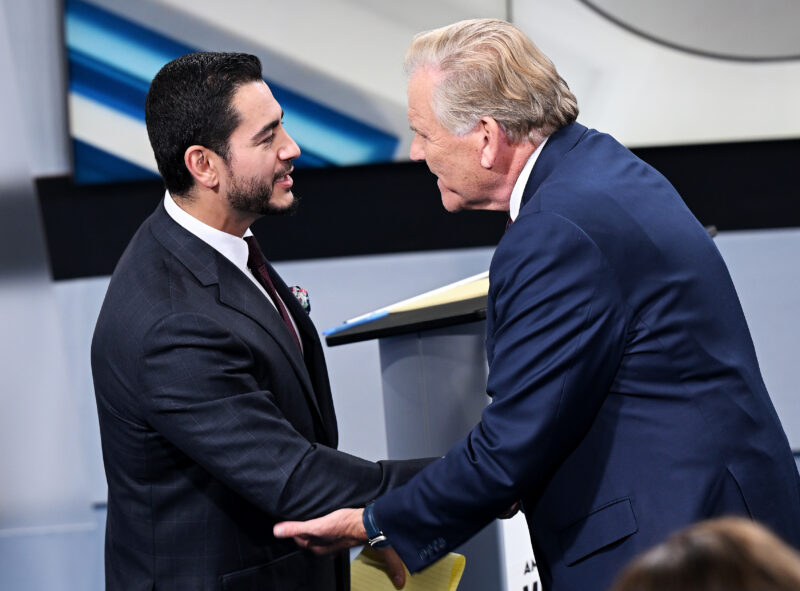
Still, he credited El-Sayed for speaking with him in spite of their profound disagreements. “I’ve obviously criticized him publicly,” he told JI. “I think that it is a sign of a mature leader for someone who is willing to have a conversation with people who don’t agree with them.”
“If Abdul wins,” he told JI, “my constituents will be his constituents, and it’ll be up to him to demonstrate he is also representing all people in West Bloomfield — including the Jewish community — with faith and fidelity. That is a challenge that I would put to him.”
For his part, Arbit said his own mission is “to put sand in the gears of both the far right and the far left.” His floor speech last week was born out of rising frustration with what he characterized as a growing radicalization on the far left after Hamas’ Oct. 7, 2023, terror attacks in Israel. “This conflict has colored my entire tenure,” he told JI, “because I took office in January 2023.”
“I think that most criticism of Israel these days is not just about Israel’s policies, but is calling into question the very foundation of the state,” he said. The far left, he argued, has “no agenda to improve the rights and lives of Palestinians. It is all about hating Israel, and that is what makes this movement so vacuous and so dangerous.”
With regard to El-Sayed’s potential elevation to the Senate, Arbit clarified that he was “not really worried about” Israel’s future. “I’m worried about the climate for Jews in in Michigan and in the Democratic Party.”
“This is an incredibly obviously uncomfortable time to be a liberal Zionist Democrat,” Arbit told JI. “We are about to find out whether there is enough space in the party for those of us who are good Democrats but also are unwilling to relinquish our connections and commitments to our homeland — to Israel.”
More Stories
FOLLOW THE MONEY
Brandeis Center, FDD urge federal court to allow disclosure of campus foreign funding data

analysis
Is Israel’s anti-Netanyahu bloc fracturing?
PREDECESSOR PROBLEMS
The Lander policy at the heart of Levine’s Israel bonds reversal
SUNSHINE STATE RETREAT
House GOP leadership super PAC pulls ad spending against Jared Moskowitz
Regional Responsibility
Amb. Tom Barrack: It’s ‘not America’s job’ to combat Iran-backed threats in the Middle East
analysis
Democrats hope to ride a historic Senate wave, but face several speed bumps
Please log in if you already have a subscription, or subscribe to access the latest updates.
 Continue with Google
 Continue with Apple