





























Jewish podcast ‘Chosen People Problems’ finds new home with Ark Media
The show, which bridges Orthodox and secular perspectives with humor, will expand its reach through the production company behind Dan Senor's 'Call Me Back’
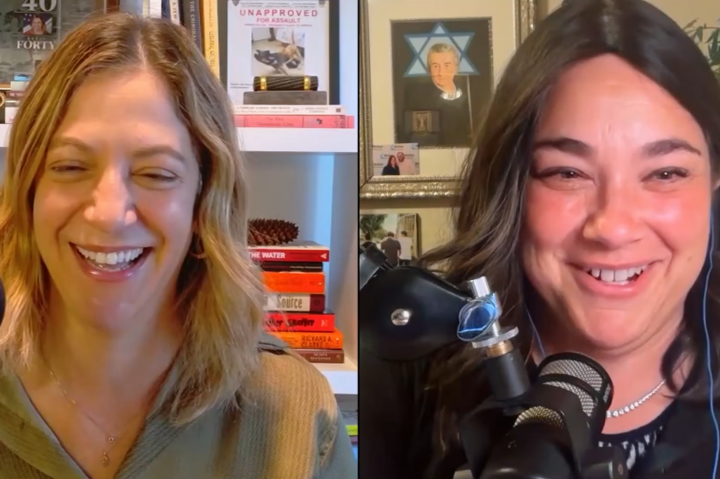
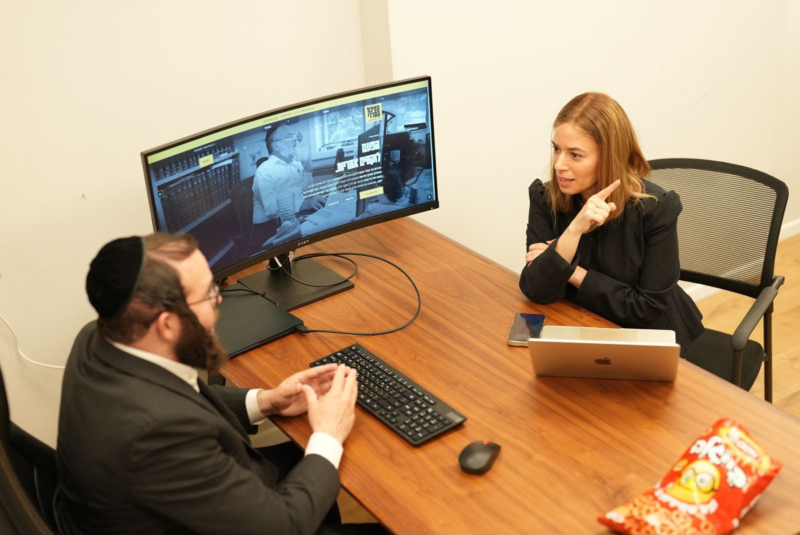
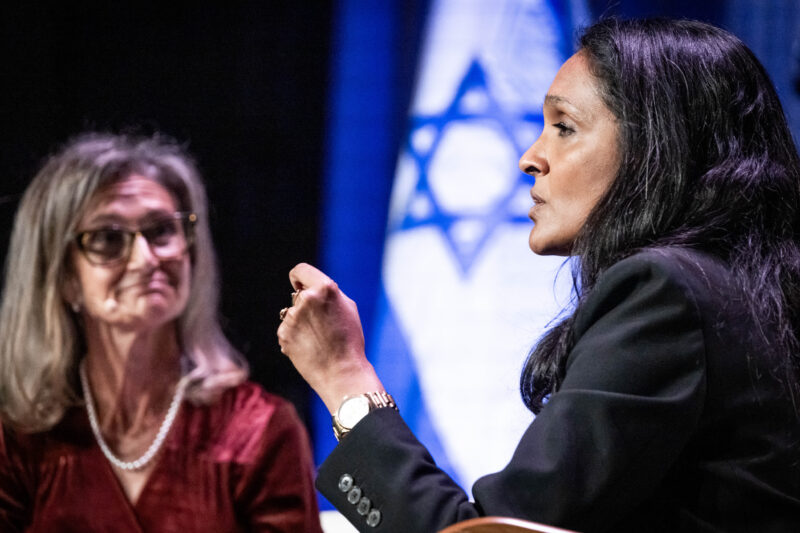
ChayaLeah Sufrin and Yael Bar Tur


 Add JewishInsider on Google
There aren’t many places where an Orthodox Chabad mother of four and a secular Israeli social media strategist can debate Jewish life, Israel and dating — and still leave the conversation laughing.
That’s the premise behind “Chosen People Problems,” the podcast hosted by ChayaLeah Sufrin and Yael Bar Tur, whose friendship grew after they appeared on another podcast together.
For the past four years, the two have built an audience by bringing their very different perspectives to conversations about the Jewish world, with the goal of making listeners — about a third of whom they said are not Jewish — feel less like they’re tuning into an interview and more like they’re overhearing friends at the dinner table. No topic is off that table: from Holocaust jokes to debating which Houthi terrorists are attractive.
“And serious stuff, too,” Sufrin told Jewish Insider in a recent interview. “Oh, very serious stuff, too. But three years post-Oct. 7 we think everyone deserves a laugh,” added Bar Tur.
Now the podcast is getting a bigger platform. “Chosen People Problems,” formerly called “Ask a Jew,” is relaunching with Ark Media, the media company behind Dan Senor’s podcast “Call Me Back.” Moving forward, listeners can expect a new weekly free episode alongside a second, exclusive “Ask Me Anything” episode for Ark+ subscribers.
“This is a dream come true for us that they approached us,” said Bar Tur. “We’re big fans of Dan [Senor] and Ark Media. We listen to ‘Call Me Back.’ We’re bringing in humor and saying the things people usually don’t say out loud, for better or worse.”
Beyond being “funny and not giving a sh*t,” as Bar Tur puts it, the duo’s appeal comes from the fact that they occupy “two parts [of Judaism] that don’t really talk to each other a lot.” That divide is not incidental to the podcast; it is what gives their conversations tension — and, they say, the potential to build bridges.
“I think that Yael really sees herself as an Israeli in a way that I can’t relate to,” Sufrin said. “I see myself as a Jew and I don’t have that Israeli identity. Yael comes at things most often from an Israeli perspective. As an Orthodox Jew, I’m often coming at things from a religious perspective, and that sometimes makes Yael uncomfortable. Sometimes the things that she says about how she views Jewish ritual or practice, I’m confused. But we talk through these things so much that it’s becoming normal.”
What keeps those differences from becoming divisive, Sufrin said, is a shared sense of what they ultimately want for the Jewish community. “The best part is both of us understand that we have the same goal in mind, and that’s to have a strong, safe, thriving Jewish world, whether it’s in Israel or the U.S.”
That combination of disagreement and common ground is also central to how they think about the podcast. “Someone described the podcast as ‘light but not shallow,’” Sufrin said. “We’re really talking about things that Jews around the country, and around the world, are talking about at their dining room tables. We’re just making it a public conversation.”
The hosts say they have found themselves agreeing more since the Oct. 7, 2023, Hamas attacks, but their differing vantage points remain part of what makes the conversations interesting. “We come from such different parts of the Jewish world that it brings something different: an added layer of bridge-building and seeing the other perspective,” Sufrin said.
When “Chosen People Problems” first launched, its conversations most often centered on pop culture or finding meaning in Jewish rituals and practices. But Oct. 7 changed the tenor of the show — and, the hosts said, the audience they were speaking to. In the aftermath of the attacks, they saw a surge of interest in Judaism from people who had previously engaged with their Jewish identities only occasionally, as anger, grief, confusion and a desire for community brought Jewish identity to the forefront of their lives.
“We were just talking about those things bluntly and it resonated,” Sufrin said. Bar Tur said many listeners felt isolated after Oct. 7, and that one of the best compliments they receive is, “I feel like I’m overhearing friends talking.” The relaunch with Ark, she said, is an effort to extend that sense of community beyond the two hosts themselves — creating a space for the Jewish diaspora to see itself as a single, if complicated, people. “It’s not just the Israeli people, or Orthodox people, or secular people,” she said. “It’s all of us.”
“Chosen People Problems” has featured guests — not always Jewish — from a broad range of backgrounds, including rabbis, journalists, political commentators, activists and comedians.
“The best guests are ones we can be ourselves with, and they can be themselves. We want people to feel like they’re listening to a conversation, not an interview,” said Bar Tur.
While not much is off limits for the show, Sufrin said a boundary is that they won’t bring on anti-Zionists. “We’re happy to talk with people who are thinking about the problems we’re facing right now, and sometimes just to laugh about it. It’s important to acknowledge there’s a problem and then be able to laugh,” she said.
Their lineup has already featured prominent figures including CNN political analyst Scott Jennings, Foundation for Defense of Democracies CEO Mark Dubowitz and Senor. So if they could have any Jewish person in the world — living or dead — sit down for an episode, who would it be?
Sufrin said she would love to talk with sex therapist Dr. Ruth Westheimer, who died in 2024.
“I would want to talk to her about choosing to be a public Jew and holding on to her passion and Jewish pride, throughout all the different iterations in her life. She went from being a fighter in the [Haganah] to being a sex guru. Her Judaism always seemed centered and central to her identity. I would just love to have a conversation with her.”
Bar Tur’s pick is Irving Berlin, the Jewish songwriter behind the iconic holiday classic “White Christmas.” She even keeps a photograph of him in her apartment.
“I love his music,” she said. “A lot of these songs written by Jews were actually about the fantasy or yearning of what it would be like to celebrate Christmas. I’d just love to hear about that time and industry, and compare notes from today.”
More Stories

Go Blue, but blue and white?
Michigan Hillel’s break with Israel advocacy groups raises questions about where it stands
DOHA DEALINGS
Moskowitz challenger visited Qatar in 2024, photographed with Qatari official

DIPLOMATIC PUSH
Miliband agrees to host international antisemitism meeting at urging of J7 Task Force
NOT ON BOARD
Lansing Mayor Andy Schor, a Jewish Democrat, says he’s not supporting El-Sayed

Daily Kickoff
Chris Murphy’s Doha double standard
analysis
MBS bet Saudi Arabia’s future on economic transformation. The Houthis are testing that wager
Please log in if you already have a subscription, or subscribe to access the latest updates.
 Continue with Google
 Continue with Apple