

























Israel-Lebanon talks face key test as ceasefire expiration looms
The State Department-hosted discussions are expected to focus on extending the ceasefire, due to expire Sunday, and a U.S. request that Beirut repeal laws criminalizing contact between Lebanese citizens and Israelis
Andrew Harnik/Getty Images
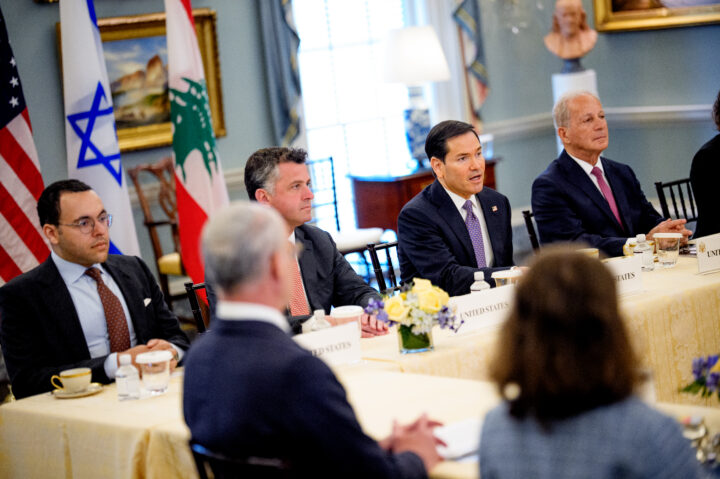
U.S. Secretary of State Marco Rubio (2nd-R), accompanied by U.S. State Department Counselor Michael Needham (C), and U.S. Ambassador to Lebanon Michel Issa (R), speaks as they begin working-level peace talks with Lebanese Ambassador to the U.S. Nada Hamadeh Moawad and Israeli Ambassador to the U.S. Yechiel Leiter at the U.S. State Department on April 14, 2026 in Washington, DC.


 Add JewishInsider on Google
The Trump administration’s latest push to ease tensions between Israel and Lebanon faces another key test this week as diplomats prepare for the second round of direct talks between the two countries on Thursday.
The State Department-hosted discussions are expected to focus on extending the current ceasefire, which is due to expire Sunday, and a reported U.S. request that Beirut repeal long-standing laws that criminalize contact between Lebanese citizens and Israelis. Lebanese President Joseph Aoun has said his aim in the talks is to see the IDF withdraw completely from the country.
The discussions follow a historic first meeting last week — the highest-level direct dialogue between the two nations in over 30 years. Since the ceasefire went into effect shortly after the meeting, Hezbollah has repeatedly fired on Israeli troops, provoking retaliation by the IDF. Both sides have accused the other of violating the ceasefire agreement.
Over the weekend, Hezbollah killed two French soldiers who were part of the U.N. peacekeeping force, prompting some leading Republican lawmakers to call for conditioning future U.S. support for the Lebanese Armed Forces on tangible action in disarming Hezbollah.
The talks also come as President Donald Trump extended the fragile ceasefire between the U.S. and Iran indefinitely until negotiations between Tehran and Washington are complete. Should the current halt in hostilities fall apart, experts suggested to JI, Hezbollah may reignite hostilities with Israel on an even broader scale.
Rep. Tim Burchett (R-TN) told Jewish Insider that he wants to see “peace” between Israel and Lebanon, adding that it would be a “great alternative” to the status quo.
“We’ve just got old leaders on all sides and all they want is war because it keeps them in power,” Burchett said. “Old men make decisions and young men die. I think they [Lebanon] are realizing maybe capitalism is probably a better route and not killing all their people.”
Burchett also expressed that he would “absolutely” back the U.S. pushing Lebanon to repeal its anti-contact laws. “I love the First Amendment, and I like it all over the world,” he said.
Rep. Jared Moskowitz (D-FL) shared the sentiment, telling JI he hopes “we can get a deal there,” adding that he would like to see a ceasefire extension to help achieve that.
“If the Lebanese people have made a decision that they don’t want Hezbollah in their country anymore, they don’t want the Iranians having control over their country, I think that’s great news for Lebanon,” Moskowitz said. He also expressed support for the U.S. urging Lebanon to repeal anti-normalization laws, stating, “If repealing the law is a step to get a deal, then I support it. There needs to be a deal.”
Rep. Brad Sherman (D-CA) said he is hoping to see the ceasefire extended, adding that “we all hope for the disarmament and hopefully disbanding of Hezbollah.”
“We’ll see whether the Lebanese government is going to make good on its promises to have a monopoly of force in its own territory,” Sherman said. He added that should the U.S. push Lebanon to repeal its anti-normalization laws, it would be an “excellent step.”
“It would be a good idea and hopefully done in coordination with other good steps by both Israel and Lebanon,” Sherman said.
Rep. Mike Lawler (R-NY) also agreed that such action “would be a positive step forward toward long-term peace and stability.” He added that he would like to see the current ceasefire between Israel and Lebanon be extended.
“Obviously we want long-term peace and stability,” Lawler said. “Talks have been going relatively well. We will see what comes next.”
Robert Satloff, executive director at The Washington Institute for Near East Policy, said he anticipates that the meeting “will be the bridge between last week’s historic opening on Lebanon-Israel direct talks and the start of formal negotiations between the two sides.” He said that it is “quite likely the two sides will agree to extend the ceasefire.”
“One can also expect discussion of other elements that will contribute to the success of the talks, including a possible meeting between U.S., Lebanese and Israeli leaders, the U.S. request that Lebanon repeal repressive laws that ban contact between citizens of the two countries and measures the Lebanese army and security forces should take to signal that this ceasefire will produce a better outcome for all parties than what followed the November 2024 ceasefire,” Satloff added.
Rachel Brandenburg, a senior policy analyst at Israel Policy Forum, said “the mere fact of a second meeting is a positive sign.”
“Top priority for Israel is the disarmament — and more so, dissolution — of Hezbollah, and retaining the freedom of action to continue to strike Hezbollah where and when they determine necessary for their own self defense,” Brandenburg said. “For the Lebanese government, sitting at the table with the Israeli government is both politically risky and an important opportunity for them to be recognized as and assert their place as the only recognized authority of the Lebanese state.”
David Daoud, a senior fellow at the Foundation for Defense of Democracies, meanwhile, said that expectations for talks “should be kept low” and expressed skepticism over whether Beirut would truly work to disarm Hezbollah. He argued that Lebanon is seeking a return to the status quo, noting that despite Trump’s intentions to bridge ties between the two nations, “President Aoun declined to speak with [Israeli Prime Minister Benjamin] Netanyahu and sources close to Aoun have rebuffed the possibility of a meeting between the two leaders as ‘premature.’”
“The question is whether Lebanon is seeking this breathing room as an end in and of itself or to begin gradually acting against Hezbollah,” Daoud said. “As matters stand, I see no indication of the latter.”
Daoud noted that Lebanon has had a “strong reluctance to call out Hezbollah by name since the ceasefire took effect” and also referenced a statement from Salam in which he said the country is “not seeking confrontation with Hezbollah.”
Yoni Tobin, a senior policy analyst at the Jewish Institute for National Security of America, also called for caution in optimism over the talks, stating that a ceasefire “does not constitute progress,” also noting that past ceasefires that halted fighting between Israel and Hezbollah “only kicked the can down the road in terms of disarming Hezbollah.” He also expressed skepticism over Lebanon repealing its anti-normalization law.
“Beirut repealing its law criminalizing communications should be a clear-cut U.S. demand in talks, but I haven’t seen any evidence to suggest that is on the table right now — though it should be,” Tobin said. “As one of the main funders of Lebanon’s military, Washington has the leverage to compel Beirut to reverse this arcane law, which remains an obstacle to what is squarely in the American interest: a normal, productive relationship between Israel and Lebanon.”
More Stories

FIRING FALLOUT
Hillels of Georgia claims fired Emory rabbi not ‘truthful or transparent’ during hiring process

UNHOLY ALLIANCE
New El-Sayed ad features Tucker Carlson, far-right podcaster’s attack on Mike Rogers
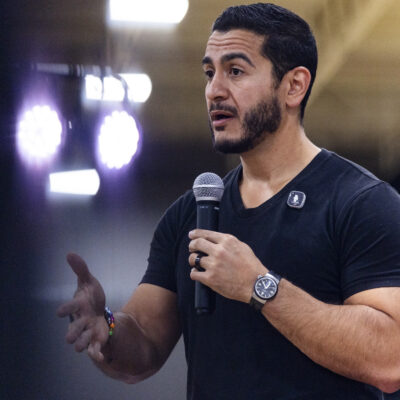
MAIL FAIL
El-Sayed letter to Jewish community on antisemitism fails to reassure skeptics
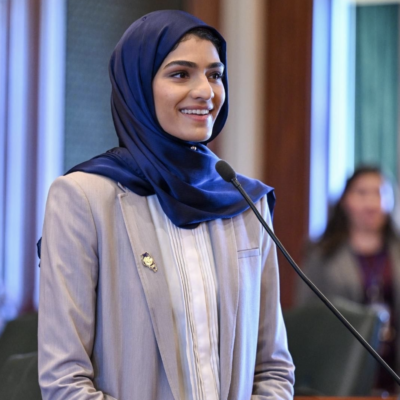
PRAIRIE STATE PRIORITIES
Illinois Democrats spend big for anti-Israel candidate running for state Senate

VATICAN VISIT
Pope Leo affirms commitment to fighting antisemitism in meeting with AJC leaders

SPEAKING OUT
Jewish groups call for apology after educators asked to condemn Israel to attend Italy trip
Please log in if you already have a subscription, or subscribe to access the latest updates.
 Continue with Google
 Continue with Apple