








































WH religious freedom hearing goes haywire over Israel
Plus, new survey shows heightened fears of antisemitism


 Add JewishInsider on Google
👋 Good Tuesday morning!
In today’s Daily Kickoff, we do a deep dive into the results of the American Jewish Committee’s annual report on the state of antisemitism, and report on yesterday’s White House Religious Liberty Commission meeting in which a member of the coalition defended antisemitic conspiracy theorist Candace Owens. We talk to Keith and Aviva Siegel about their work with IsraAid and recent visit to a refugee camp in Kenya, and have the scoop on a new letter from Senate Democrats concerned over the Pentagon’s use of the Grok AI chatbot. Also in today’s Daily Kickoff: Patrick Drahi, Alon Ohel and Jody Rabhan.
Today’s Daily Kickoff was curated by JI Executive Editor Melissa Weiss and Israel Editor Tamara Zieve, with assists from Danielle Cohen-Kanik and Marc Rod. Have a tip? Email us here.
What We’re Watching
- Israeli Prime Minister Benjamin Netanyahu departed for Washington earlier today ahead of tomorrow’s White House sit-down with President Donald Trump. Jewish Insider’s Lahav Harkov is traveling with the prime minister and will be reporting the latest developments over the next few days.
- Vice President JD Vance is traveling to Azerbaijan after meetings in Armenia.
- The House Foreign Affairs Committee is holding a hearing on Syria with testimony from The Washington Institute for Near East Policy’s James Jeffrey and Andrew Tabler; Nadine Maenza, the former chair of United States Commission on International Religious Freedom; and Mara Karlin, the former assistant secretary of defense for strategy, plans, and capabilities, who is now at the Brookings Institution and Johns Hopkins’ SAIS.
- The House Ways & Means Committee is holding a hearing on foreign influence in American nonprofits, while the House Judiciary Committee is holding one on Sharia law and political Islam.
- The Jewish Community Relations Council of Greater Washington is hosting its Virginia Jewish Advocacy Day. Gov. Abigail Spanberger will be the event’s keynote speaker.
What You Should Know
A QUICK WORD WITH JI’S JOSH KRAUSHAAR
Nearly two-thirds of Jewish Americans say they feel less safe than a year ago, according to the American Jewish Committee’s newly released annual survey of Jewish public opinion, reflecting a heightened fear of antisemitism in the aftermath of several high-profile attacks against Jews and Jewish institutions.
As notable: About one-third of American Jews reported being a target of antisemitism — whether it was physical or in a virtual space. Nearly one-fifth said they would consider leaving the country as a result of antisemitism, a number that’s been on the rise over the last several years (up from 6% in 2024).
Young American Jews between the ages of 18-29 have faced the brunt of rising antisemitism, with 47% saying they were a target of antisemitism over the last year, compared to 28% among those 30 and over.
At the same time, about two-thirds (65%) of Jews overall said they felt safe attending Jewish institutions, while 60% said they were not worried about being a victim of antisemitism in the next year.
The polling, conducted by SSRS between September and October 2025, shows that both reported antisemitic incidents and fear of facing antisemitism have plateaued but are still near historic highs, when compared to the AJC’s previous surveys. (SSRS surveyed 1,222 Jewish respondents in one survey between Sept. 26-Oct. 29; it separately surveyed 1,033 U.S. adults between Oct. 3-5.)
Antisemitism continues to be particularly prevalent on college campuses, where 42% of students have reported anti-Jewish hate during their time in school — up from 35% in the AJC’s 2024 survey. The vast majority of Jewish parents (80%) said that the level of antisemitism on a campus plays a role in deciding where their student will attend college.
COMMUNAL RECKONING
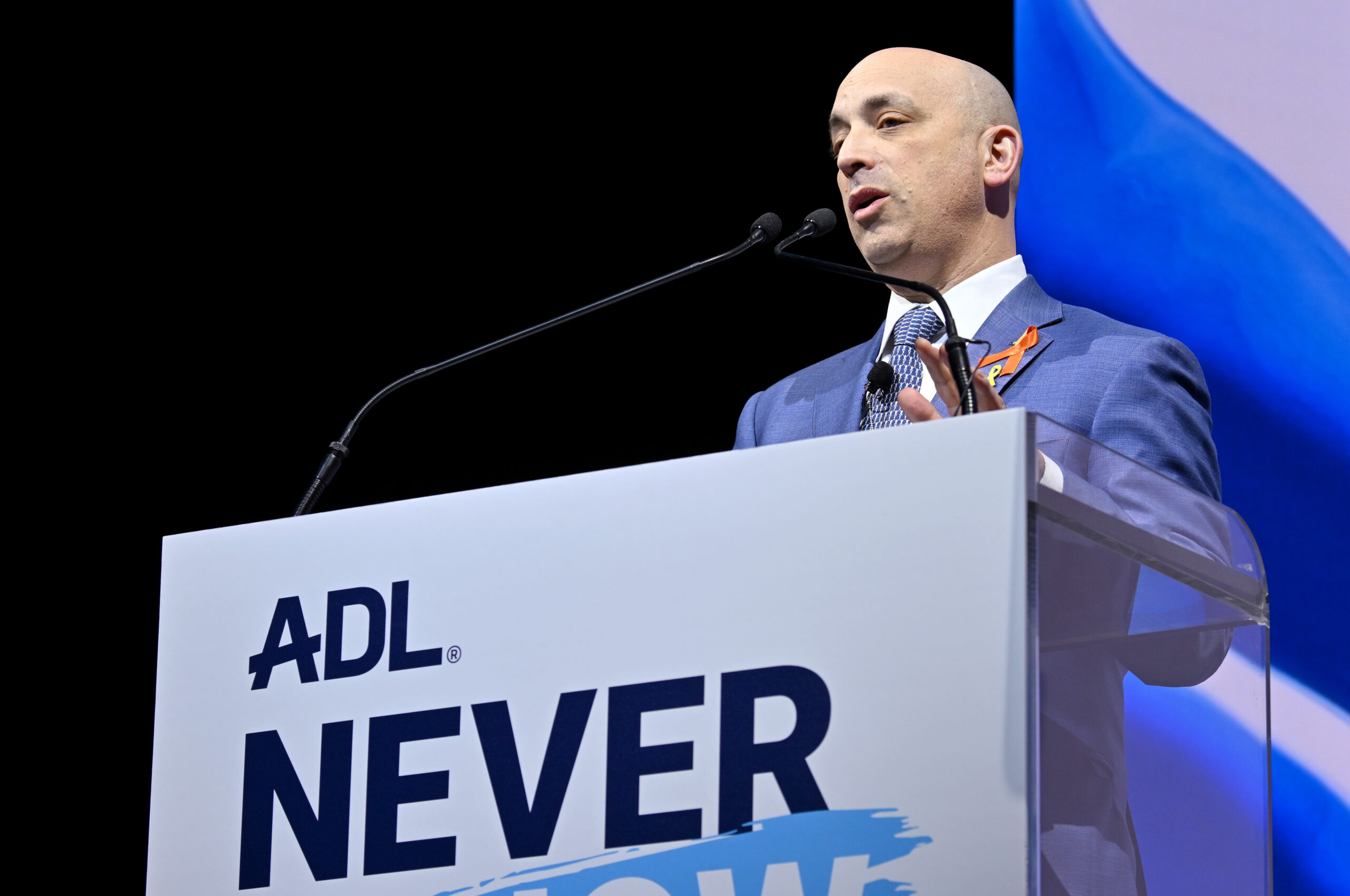
An emerging fault line over how — or whether — to confront rising antisemitism is roiling the organized Jewish community, as some prominent groups have pushed back against sharp criticism questioning the effectiveness of their strategies. The latest salvo comes from Jonathan Greenblatt, the CEO of the Anti-Defamation League, which has recently found itself in the spotlight, Jewish Insider’s Matthew Kassel reports.
The debate: In an essay in eJewishPhilanthropy published Monday, Greenblatt defended his organization’s approach to combating antisemitism — after New York Times columnist Bret Stephens called for the group to be dismantled and to reallocate its resources to focus on building Jewish identity rather than combating antisemitism. Greenblatt dismissed Stephens’ argument as misguided, even as he said the speech had appropriately identified a “pathology” that can afflict those who define opposition to antisemitism as their “primary organizing principle.” Greenblatt said, “It can turn Jewishness into a defensive crouch — more alarm system than civilization.” Still, Stephens’ new “framing risks replacing one error with another,” he insisted, describing the fight against antisemitism and efforts to promote Jewish communal life not as binary choices but as mutually reinforcing objectives.
FAITH FLASHPOINTS
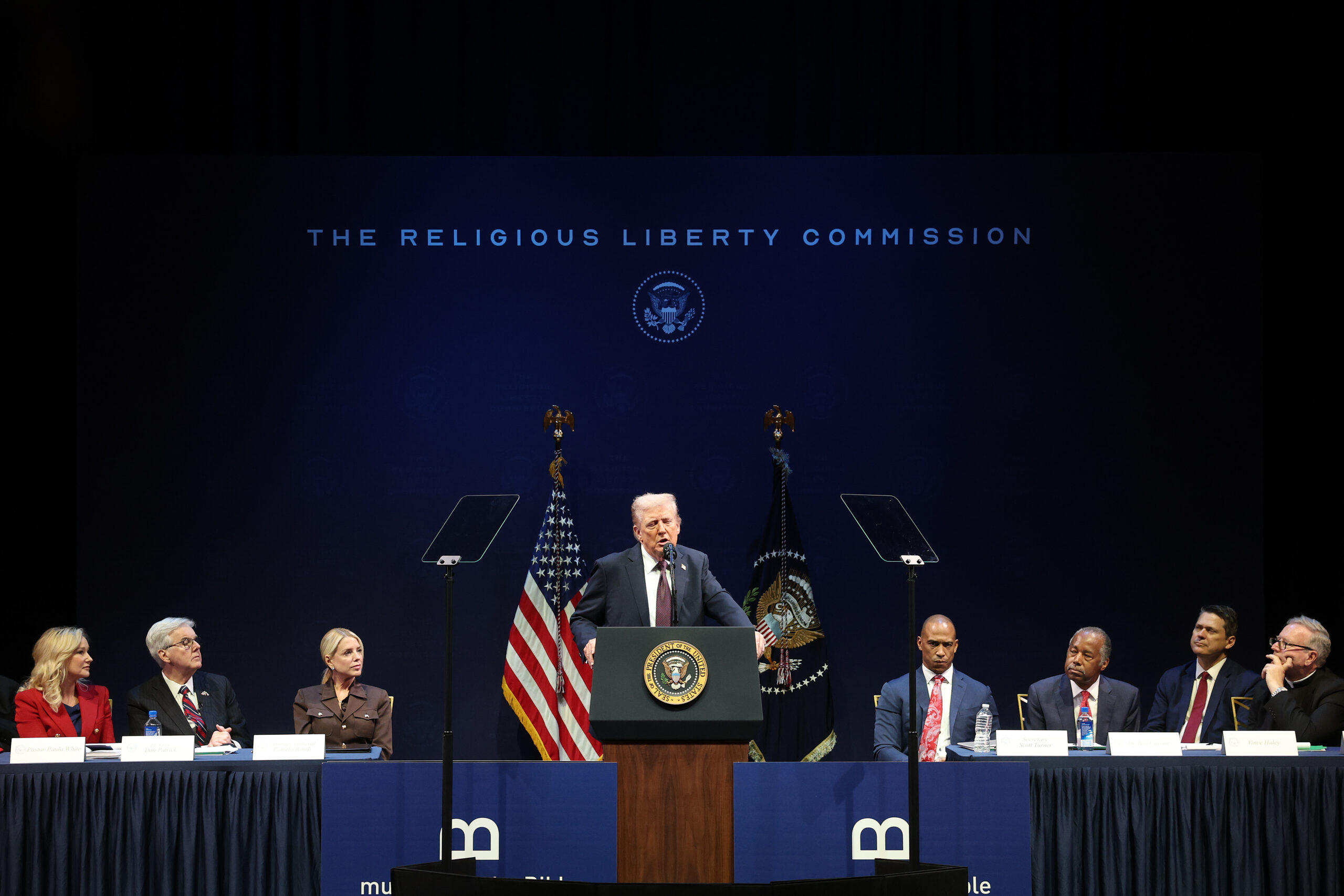
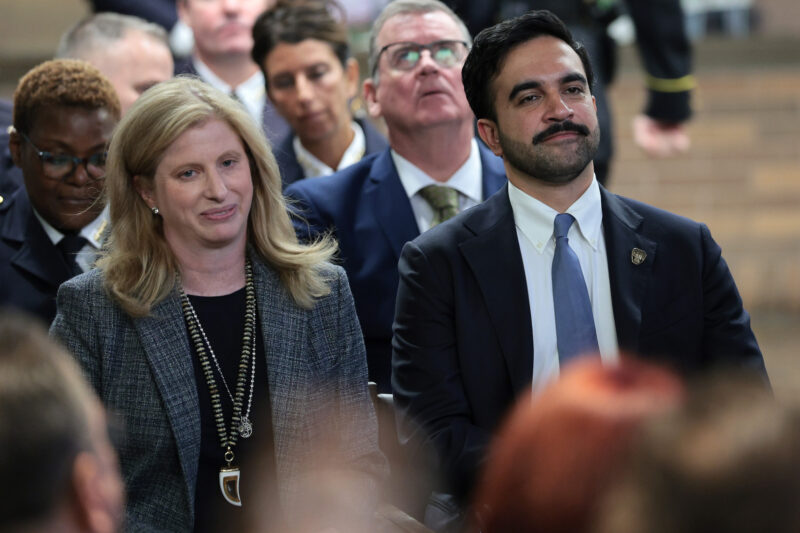
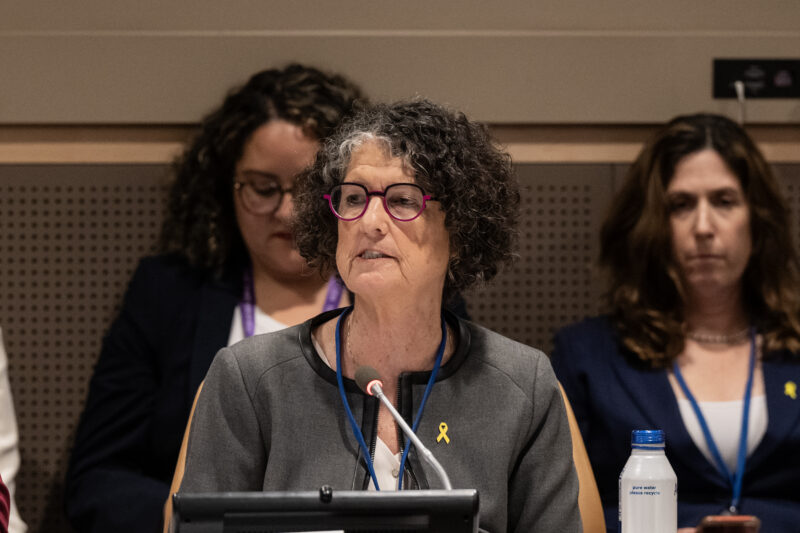
When the White House Religious Liberty Commission gathered in Washington on Monday for the body’s first public hearing focused on antisemitism, attendees expected an informative if subdued meeting, meant to gather testimony from Jewish Americans who have faced antisemitism. The commission’s members are tasked with drafting a report with recommendations for President Donald Trump about how to promote religious liberty. The conversation was largely friendly, barring one member of the commission, Catholic conservative activist and former Miss California Carrie Prejean Boller, who acted as more of an interrogator, Jewish Insider’s Gabby Deutch reports.
Pushing back: Prejean Boller pushed back on witnesses’ testimony, arguing that they had defined antisemitism too broadly and questioning whether she would be considered an antisemite because she does not support Zionism and because she believes the Jews killed Jesus. She also defended right-wing influencer Candace Owens from accusations of antisemitism. “I listen to her daily,” said Prejean Boller, who appeared to be wearing a Palestinian flag pin. “I haven’t heard one thing out of her mouth that I would say is antisemitic.”
TEHRAN TALK

Republicans lawmakers continued on Monday to dismiss the idea that a nuclear deal with Iran is achievable, in spite of comments by President Donald Trump over the weekend, Jewish Insider’s Marc Rod and Emily Jacobs report.
What they’re saying: “Iran’s not going to make a deal with us,” Sen. John Kennedy (R-LA) said. “The ayatollah is [as] crazy as a bed bug. And he’s never going to give up any hope that he has of nuclear weapons. He’s never going to stop killing his people and drinking their blood out of a boot, and he’s never going to stop funding Hamas and Hezbollah.” He predicted that Iran will need a “curbstomping” and that the administration is currently formulating a plan for an attack. Sen. Tim Kaine (D-VA), meanwhile, said he is waiting to call up a war powers resolution blocking military action against Iran pending the negotiations.
Read the full story here with additional comments from Sens. Rick Scott (R-FL) and James Lankford (R-OK).
Postwar problems: The White House launched Phase 2 of President Donald Trump’s 20-point Gaza peace plan last month, intending to transition the enclave toward demilitarization, technocratic governance and reconstruction. But experts told Jewish Insider’s Matthew Shea that the administration’s expectation that Hamas can be persuaded to voluntarily hand over its weapons is detached from the group’s incentives and its perception of the war’s outcome.
PAC PUSH

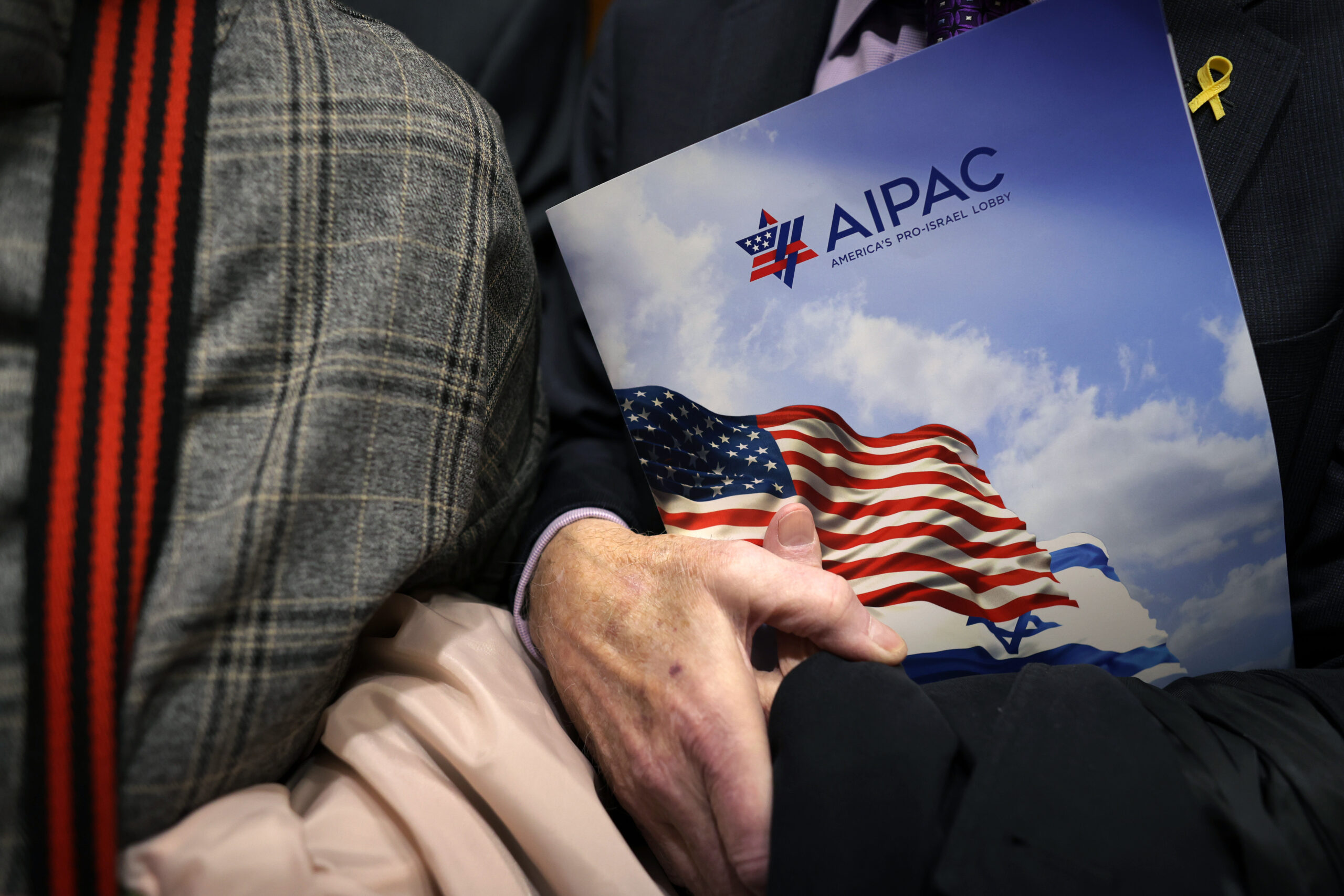
The United Democracy Project, the AIPAC-linked super PAC, launched a $500,000 ad campaign on Monday supporting Chicago Treasurer Melissa Conyears-Ervin, a Democrat, who is running in one of a series of hotly contested Chicago-area congressional primaries, Jewish Insider’s Marc Rod reports.
State of play: Conyears-Ervin faces, among others, Kina Collins, a Justice Democrats-backed, anti-Israel progressive candidate who ran for the seat twice before. The ad highlights Conyears-Ervin’s background as the daughter of a single mother reliant on public assistance and supporting a sister with disabilities who also depends on federal medical assistance programs. It frames her as a committed fighter against President Donald Trump.
EXCLUSIVE

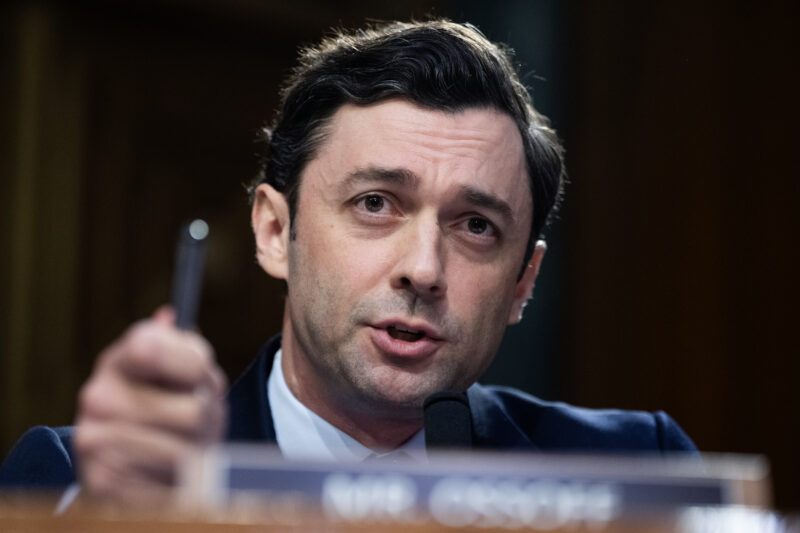
In a letter sent to Secretary of Defense Pete Hegseth on Monday, a group of Senate Democrats raised concerns about the Pentagon’s decision to use xAI’s Grok chatbot in Department of Defense networks, Jewish Insider’s Marc Rod reports.
Flagging concerns: The senators said that Grok’s record of producing antisemitic content — pointing in particular to an antisemitic tirade by the chatbot in 2025 — as well as its more recent history of generating non-consensual pornographic images of people, including children, raises concerns about the Defense Department’s use of the model.
POST-TRAUMA ACTIVISM

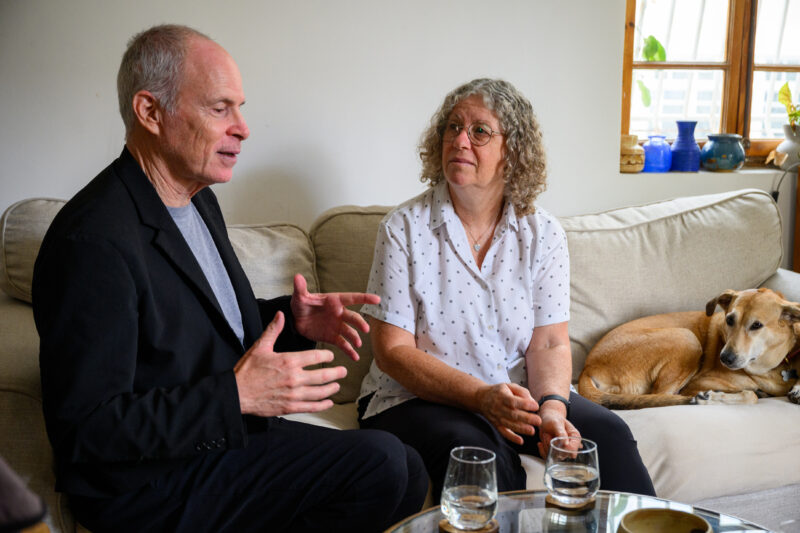
Keith and Aviva Siegel have seen the horrors of war up close and personal — torn from their home in Kibbutz Kfar Aza and taken hostage into Gaza, where Aviva would spend nearly two months and Keith would be held for more than a year. And yet, little could have prepared them for what they would encounter at the Kakuma refugee camp in Kenya, where they spent five days last month volunteering at one of the world’s largest refugee settlements with the Israeli humanitarian group IsraAid. The people they met at the camp, Aviva told Jewish Insider’s Melissa Weiss earlier this week, were “screaming out with no voice to tell how bad the situation is there. It took me to Gaza, to those moments, and so many moments and so many days of not knowing if I’ll ever live, if I’ll make it, if I’m visible, if anybody is doing anything they could to take me out of there.”
Sharing stories: The couple exchanged experiences both with refugees in the camp and IsraAid staffers — many of whom are refugees themselves. “I really felt like it was like a mutual understanding,” Keith said. “And also feeling like all of us, them and Aviva and I, have experienced suffering. All of us have experienced being hungry because we didn’t have food to eat, being thirsty because we didn’t have water to drink. Just the uncertainty, the lack of security and feeling like death could be imminent.”
Worthy Reads
Regional Realignment: In The Wall Street Journal, Walter Russell Mead examines the shifting power dynamics in the Middle East, where a weakened Iran has empowered a grouping of Sunni countries, including Saudi Arabia and Qatar, that are increasingly antagonistic toward Israel. “Many in Israel and the U.S. hoped that a deeper focus among the Arab states on economic modernization would lead at last to Israel’s integration into the region. Israel’s economic and technical achievements, as well as the prospect of easier access to American tech and trust, would win over Arab states seeking modernization and development. … These arguments still have weight, but for now they land with less force than Israelis would like. That is partly because some Arabs have found that tech and weapons access can be quietly negotiated with Trump friends and family members no matter what Israel thinks. And it’s partly because many Arabs now believe that regional stability is more threatened by Israeli resistance to the idea of a Palestinian state, even as a distant future prospect, than by the feeble moves of the moribund regime in Tehran.” [WSJ]
Target on His Back: The Times columnist Daniel Finkelstein, whose mother survived the Holocaust, reflects on his experience as the target of antisemitic vitriol from followers of conspiracy theorist Nick Fuentes. “The problem was not really about how the story would be told, but how it would be received. To a rising generation, what happened to my parents had become distant history, like the Battle of Waterloo or the American Civil War. A subject to be read about in a textbook or revised for an exam. … In so far as [Fuentes] had an argument, it was that the Holocaust was completely irrelevant to him and his generation. There was nothing to be learnt from it. He wasn’t going to be put off blaming the Jews for all societies’ ills by the fact that at some point in history a similar argument had led Hitler to kill some British bloke’s grandmother. Almost instantly I was flooded — on social media, on my email — with taunting messages. There were thousands of them. It went on for weeks. And I am still getting them.” [TheTimes]
Word on the Street
The U.S. Maritime Administration issued a public notice warning U.S.-flagged ships to stay “as far as possible” from Iranian waters and for captains to decline permission to Iranian forces seeking to board the vessels…
The Network Contagion Research Institute accused the Democratic Socialists of America, in a report released in late January, of activities that may run afoul of the Foreign Agents Registration Act — alleging that the far-left group may be acting as an unregistered agent of various U.S. adversaries, Jewish Insider’s Marc Rod reports…
Rep. Jerry Nadler (D-NY), who is retiring at the end of this year, endorsed New York state Assemblymember Micah Lasher, who previously worked for Nadler as an aide, as his successor in the state’s 12th Congressional District…
Campaign finance documents filed this week revealed that former New York City Mayor Michael Bloomberg donated $2.5 million to Pennsylvania Gov. Josh Shapiro‘s reelection campaign in October…
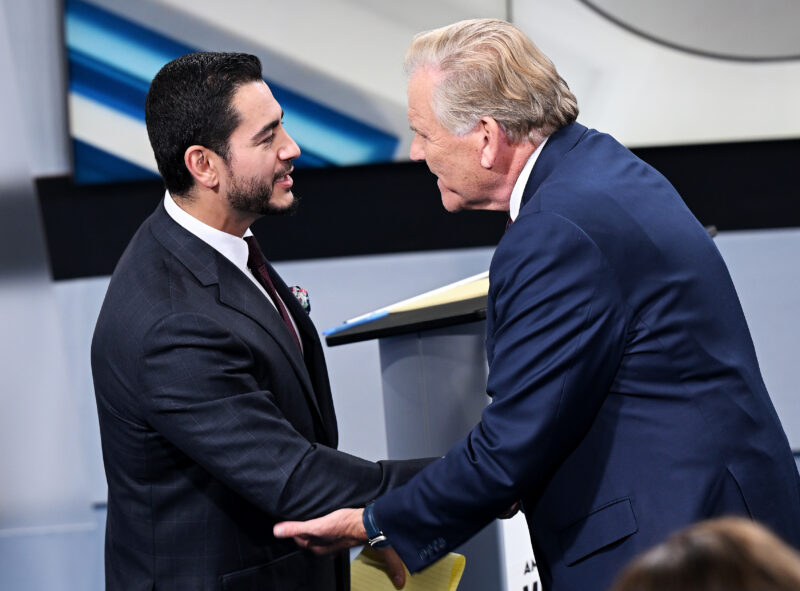
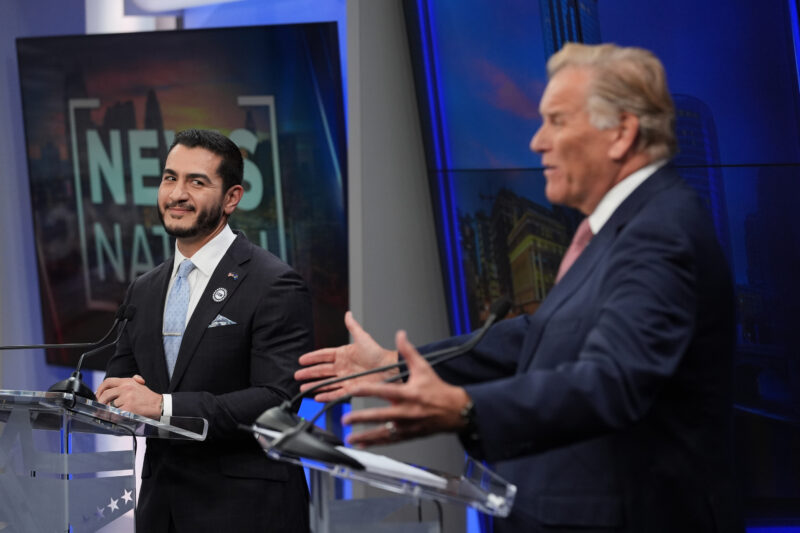
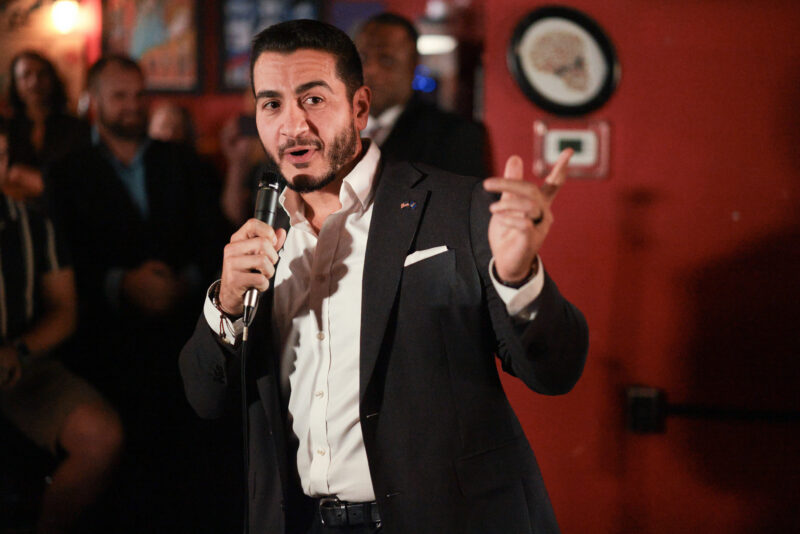
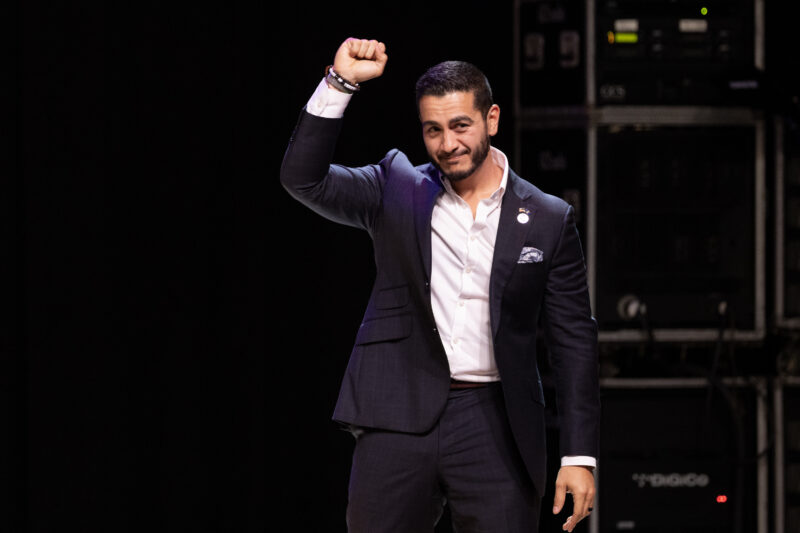
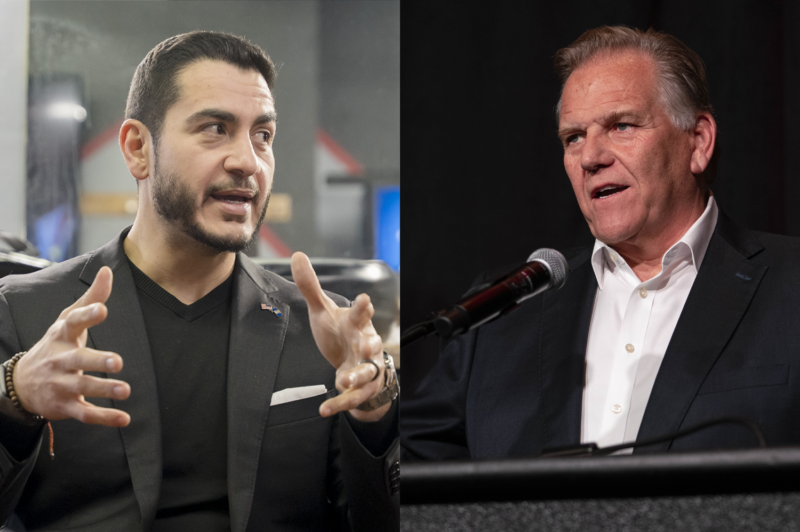
Puck reports on concerns among Democratic operatives in Michigan that negative ads from Rep. Haley Stevens (D-MI) and state Sen. Mallory McMorrow targeting each other could inadvertently boost far-left candidate Abdul El-Sayed to victory in this year’s Senate primary…
New Jersey legislator Rosy Bagolie, a Democrat, is mulling a run for the House seat previously represented by Gov. Mikie Sherrill, providing moderate Democrats a potential alternative to Analilia Mejia, who won the Democratic special election primary to serve the rest of Sherrill’s current term and is planning to run for the full term later this year…
The Met Council’s David Greenfield, Rabbi Moishe Indig, Rabbi Rachel Timoner, Jews For Racial & Economic Justice’s Audrey Sasson, United Jewish Organizations’ David Niederman, JCRC-NY’s Mark Treyger, Agudath Israel’s Yeruchim Silber, Teach Coalition’s Sydney Altfield, Flatbush Jewish Community Coalition’s Josh Mehlman, Marks JCH of Bensonhurst’s Alex Budnitsky were named to City & State New York’s Brooklyn Power 100 list…
The immigration case against Rümeysa Öztürk, a Turkish graduate student at Tufts University, was dropped nearly a year after she was first arrested by immigration officials after co-authoring an op-ed critical of Israel in the Tufts student newspaper…
The Oklahoma State Charter School Board rejected a proposal for a Florida-based Jewish charter school that sought to open a virtual school in Oklahoma, a year after the Supreme Court blocked a similar effort by a Catholic school…
The Gevura Fund and the National Jewish Advocacy Center filed a federal lawsuit against the city of Medford, Mass., over its recently adopted “Values-Aligned Local Investments Ordinance” that backs divestment from companies that operate in Israel…
Mark Zuckerberg purchased a home in the exclusive Indian Creek village in South Florida’s Miami-Dade County…
Len Blavatnik’s Access is set to accept an offer from i24 News owner Patrick Drahi to purchase Israeli television channel Reshet 13 in a deal estimated to cost $40-50 million…
Former Washington Post book critic Becca Rothfeld is joining The New Yorker days after Post management shuttered the paper’s books department and laid off hundreds of staffers across the publication…
Longtime National Council of Jewish Women staffer Jody Rabhan was named the organization’s new CEO, succeeding Sheila Katz, who stepped down in October, eJewishPhilanthropy’s Nira Dayanim reports…
Pic of the Day

Former Israeli hostage and pianist Alon Ohel played alongside Idan Amedi and a number of other high-profile Israeli musicians at a one-night concert in Tel Aviv on Monday evening, titled “Alon Ohel, Playing for Life.”
Birthdays
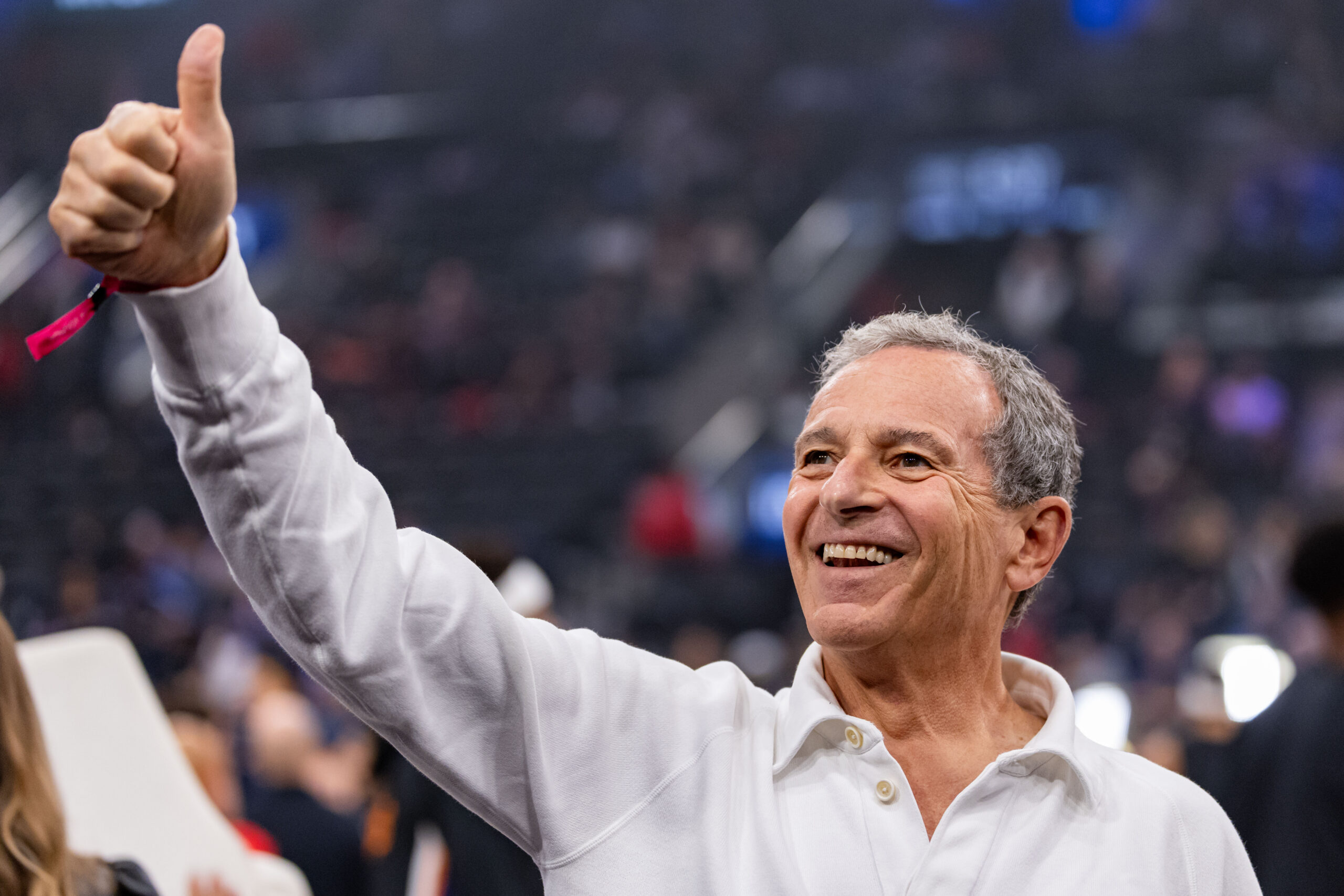
Outgoing CEO of the Walt Disney Company, Robert Allen “Bob” Iger turns 75…
English businessman, who is the founder and owner of the River Island fashion brand and clothing chain, Bernard Lewis turns 100… CEO of privately held Metromedia Company and a board member of cruise line operator Carnival Corporation since 1987, Stuart Subotnick turns 84… Rabbi in Vienna in the 1980s, in Munich in the 1990s and in Berlin since 1997, Yitshak Ehrenberg turns 76… Swimmer, who won seven gold medals at the 1972 Summer Olympics in Munich, Mark Spitz turns 76… Miami-based philanthropist with interests in aviation, real estate development, agriculture, silviculture and fixed income, Jayne Harris Abess… Host of CNBC’s “Mad Money,” James J. “Jim” Cramer turns 71… CEO emerita of D.C.-based Jewish Women International, Loribeth Weinstein… Ethiopian-born, former member of Knesset for the Likud party, he is an activist for the Falash Mura community, Avraham Neguise turns 68… Syndicated newspaper columnist for the Boston Globe, Jeff Jacoby turns 67… U.S. senator (D-DE), Lisa Blunt Rochester turns 64… Former NASA astronaut, famous for his mezuzah in the International Space Station, he is a professor of astronautical engineering at the University of Southern California, Garrett Reisman turns 58… Member of the Maryland House of Delegates since 2003, Anne R. Kaiser turns 58… Senior director of philanthropic engagement for the central division of the Anti-Defamation League, Matthew Feldman… Executive director of Ohio Jewish Communities (the community relations voice of Ohio’s eight Jewish federations), Howie Beigelman… Israeli pop star (having sold over 1 million albums) and part of the duo “TYP” also known as The Young Professionals, Ivri Lider turns 52… Co-founder and principal at the bipartisan public policy firm Klein/Johnson Group, Israel “Izzy” Klein… Israeli rock musician, David “Dudu” Tassa turns 49… CEO at Citizen Data, she was a candidate for VPOTUS as the running mate of Evan McMullin in 2016, Mindy Finn turns 45… COO of Richmond-based Untangled Media Group, Michelle Levi Noe… Partner in the Washington office of Venable where he leads the firm’s autonomous and connected mobility group, Ariel S. Wolf… Revenue operations manager at Sygnia, Avital Mannis Eyal… Retired NFL quarterback, he was the 10th overall pick in the 2018 NFL Draft, now an MBA candidate at Wharton, Josh Rosen turns 29… Israeli singer, songwriter and dancer, Jonathan Ya’akov Mergui turns 26…
Recent Daily Kickoff Newsletters




Please log in if you already have a subscription, or subscribe to access the latest updates.
 Continue with Google
 Continue with Apple