









































The conservative movement’s Gen Z problem
We’re seeing a preview of where our country could be headed without a change in direction
Olivier Touron / AFP via Getty Images
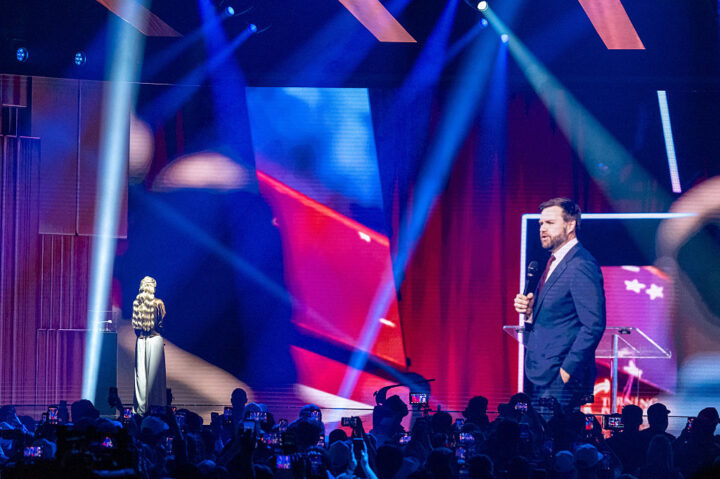
CEO and Chair of the Board of Turning Point USA Erika Kirk introduces US Vice President JD Vance at the Turning Point's annual AmericaFest conference, in Phoenix, Arizona on December 21, 2025.


 Add JewishInsider on Google
The kids aren’t alright.
That’s the unmistakable takeaway from a weekend filled with shocking developments surrounding the views of young conservatives, punctuated by a Turning Point USA conference that turned into a proxy war between mainstream voices led by Ben Shapiro, looking to create guardrails against antisemites and conspiracy theorists within the MAGA movement, against a growing cadre of bad-faith right-wing influencers leading the charge to embrace extremist voices into the conservative coalition.
The conference concluded with Vice President JD Vance all but taking the side of the extremists, while offering fulsome praise to his friend, Tucker Carlson, as an essential part of the Republican Party coalition.
The last several days also featured news of an eye-opening Manhattan Institute focus group of Gen Z Nashville-area conservatives reluctant to offer any negative reaction toward Adolf Hitler and sharing numerous antisemitic stereotypes about Jews. (One 29-year-old woman offered this representative reaction about Hitler: “I think he was a great leader, to be honest. I think what he was going for was terrible, but I think he showed very strong leadership values.”)
The weekend ended with a Jewish Insider scoop that a Trump administration nominee for a senior position at the State Department has a long track record of making derogatory comments about the Jewish community, characterizing Jews as religiously incorrect and in need of conversion.
This moment was further underscored by the hideously antisemitic tirade that Candace Owens went on over the last few days, barely eliciting any serious pushback from conservative movement leaders. Meanwhile, former journalist Megyn Kelly, during her own speech Friday at the TPUSA conference, chose to go after Shapiro and CBS News Editor-in-Chief Bari Weiss even as Kelly has publicly steered clear of criticizing Owens, citing the fact that she’s a young mother and a personal friend. (Shapiro, she said, is no longer a friend after he criticized her in his speech Thursday night.)
Shapiro, long one of the leading voices on the right, opened the conference with a warning that the conservative movement is in danger from “charlatans who claim to speak in the name of principle but actually traffic in conspiracism and dishonesty, who offer nothing but bile and despair.”
He called out Tucker Carlson, Owens and Kelly by name. “We must not let fear of audience anger deter us from telling the truth; we must not let fear of other hosts deter us from telling the truth,” Shapiro warned. “The fact that Candace has been vomiting all sorts of hideous and conspiratorial nonsense into the public square for years on end while others fly cover for her is … cowardly.”
Shapiro received a characteristically warm reception for calling out the crazy, but the fact that he was outnumbered by voices whose extreme views would have long been marginalized by the conservative movement but are now tolerated, if not embraced, is a sign of our times — and a warning of where the MAGA movement could be headed without more leaders speaking up.
Outside of Shapiro, there weren’t many leaders following suit.
Vance, the favorite to win the GOP presidential nomination in 2028, sided with the extremists during his Sunday address to close out the conference. “President Trump did not build the greatest coalition in politics by running his supporters through endless, self-defeated purity tests,” Vance said to applause.
In an interview with Unherd’s Sohrab Ahmari, he offered fulsome praise to Carlson: “The idea that Tucker Carlson, who has one of the largest podcasts in the world, who has millions of listeners, who supported Donald Trump in the 2024 election, who supported me in the 2024 election — the idea that his views are somehow completely anathema to conservatism, that he has no place in the conservative movement, is frankly absurd. And I don’t think anybody actually believes it.”
He also appeared to defend both anti-Israel Democrats and Republicans for their antipathy towards the Jewish state, saying nearly of the critics were not motivated by antisemitism. “99% of Republicans, and I think probably 97% of Democrats, do not hate Jewish people for being Jewish. What is actually happening is that there is a real backlash to a consensus view in American foreign policy.”
Culture is typically a leading indicator of where our politics is headed. The developments of the past week offer numerous real-life examples that back up the polling that shows that younger Americans hold overwhelmingly more critical views of the Jewish people than other generations, with antisemitic beliefs strongest among the most conservative cohort. One characteristic example: A recently-conducted Manhattan Institute poll found that over half of Republican men under 50 “believe the Holocaust was greatly exaggerated or did not happen as historians describe.”
We’re seeing a preview of where our country could be headed without a change in direction. And while that may sound pessimistic, the reality is there’s a lot more that can be done to deal with the growing Gen Z radicalism — like scrutinizing the social media platforms that incentivize hateful content and singlehandedly create a marketplace for such extremism.
More Stories
PROBLEMATIC POST
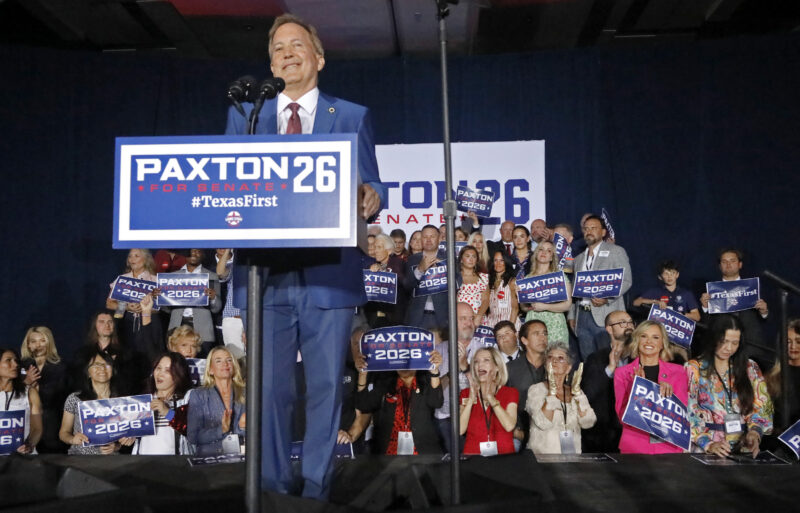
Paxton senior advisor endorsed antisemitic slur on social media
Daily Overtime
Mamdani resists DSA over Tisch tensions

PLATFORM CHECK
Where Israel’s parties stand on the Diaspora — in their own words

EMPIRE STATE EXCHANGE
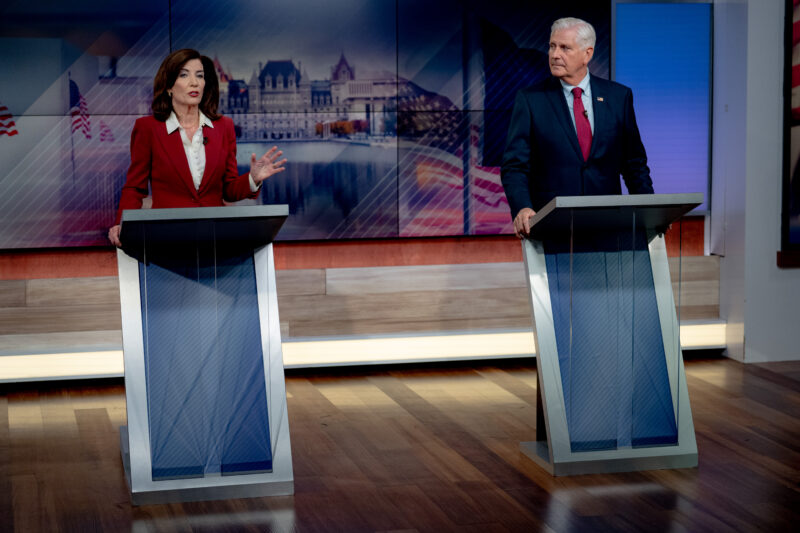
Debating Hochul, Blakeman reiterates graphic warnings about anti-Israel protesters
UNSETTLED POLICY
Trump WH sends mixed signals over response to European sanctions against Israeli settlements

Daily Overtime
Dublin hotel dumps antisemitism conference
Please log in if you already have a subscription, or subscribe to access the latest updates.
 Continue with Google
 Continue with Apple