
































If Darline Graham falls short on Tuesday, it could be an indication that a Trump endorsement is no longer the automatic ticket to victory
SAUL LOEB / AFP via Getty Images
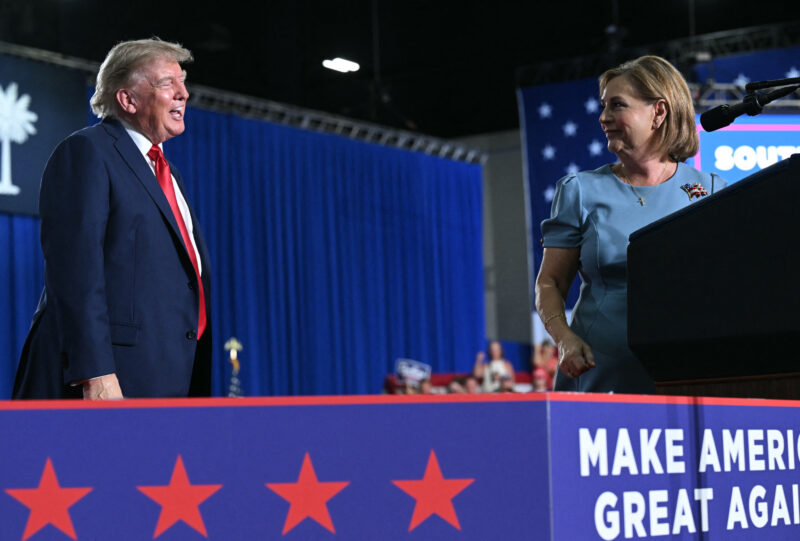
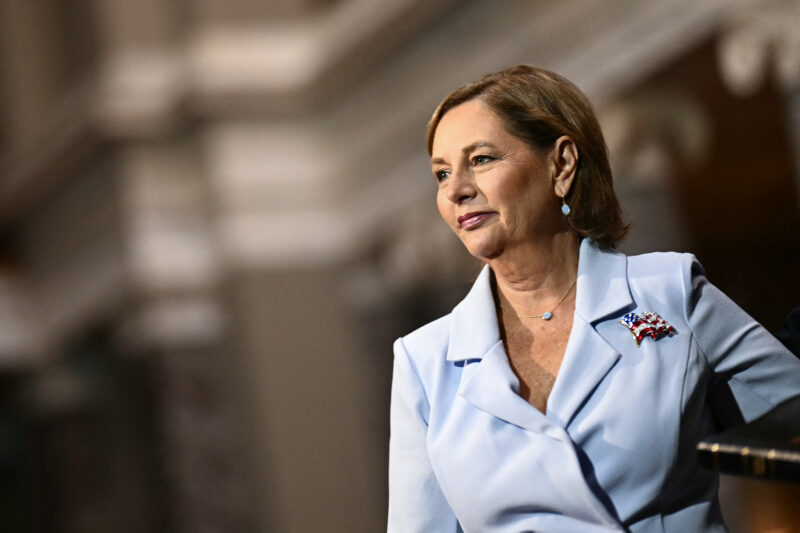
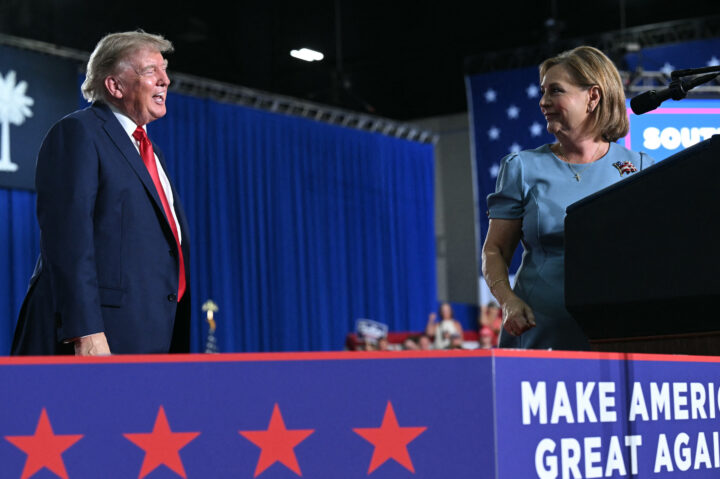
President Donald Trump congratulates Sen. Darline Graham after she spoke during a campaign rally at Myrtle Beach Convention Center in Myrtle Beach, South Carolina on August 21, 2026.


 Add JewishInsider on Google
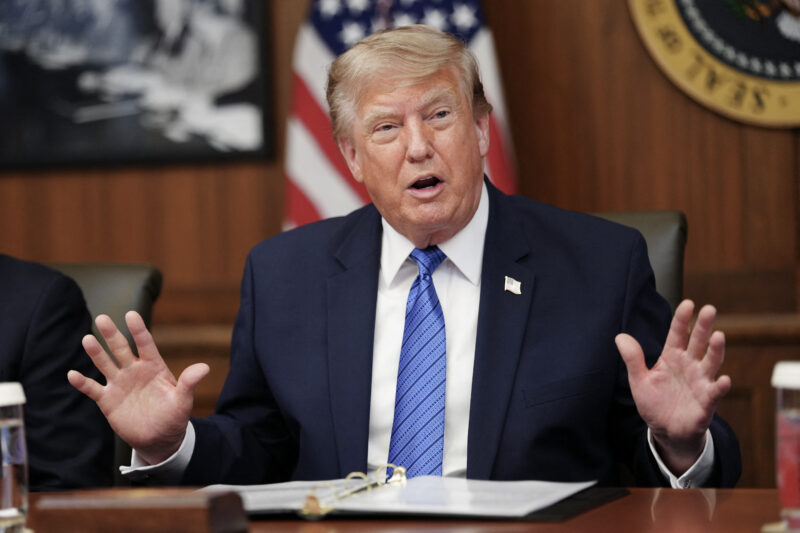
Today’s special election GOP runoff for Senate in South Carolina between appointed Sen. Darline Graham and five-term Rep. Ralph Norman (R-SC) will be a clear test over just how much juice President Donald Trump’s endorsement carries within the Republican Party, at a time when his overall political standing has been on the decline.
Graham has struggled through the shortened campaign to fill the seat of her late brother, dodging the media spotlight (unlike her brother) and sticking to generic talking points in talking about the issues. She faced blowback after admitting she didn’t know enough about foreign policy to answer a debate question about Taiwan — underscoring how much of a novice she is on an issue that defined Lindsey Graham’s legacy.
But Trump has been a loyal backer, holding a rally last Friday for her campaign, which featured appearances from the state’s Republican leadership, including Gov. Henry McMaster and Sen. Tim Scott (R-SC), who is also the chairman of the National Republican Senatorial Committee.
Norman also hardly fits the profile of the up-and-coming challenger. He’s 73 and would be one of the oldest freshman senators in recent memory. And for more-moderate Republicans, his record of antagonism towards House Republican leadership and support for declaring martial law in the days leading up to President Joe Biden’s 2021 inauguration make him a deeply flawed choice.
For national security hawks, Norman’s votes against several Israel aid packages and opposition to Ukraine assistance are also some notable red flags that make Darline Graham the candidate more aligned with her brother’s worldview.
Trump’s endorsement record has been mixed this year, initially backing the losing gubernatorial candidate (Lt. Gov. Pamela Evette) in South Carolina — while endorsing unsuccessful candidates for governor in Georgia, Iowa, Minnesota and Wyoming. All told, he’s backed 10 unsuccessful candidates in primaries this cycle. But the president’s record in Senate races this year is still perfect, having successfully backed insurgent challengers to Sens. Bill Cassidy (R-LA) and John Cornyn (R-TX).
In fact, only three of Trump’s Senate endorsees throughout his political career have lost in primaries (Alabama GOP Sen. Luther Strange in 2017; West Virginia Senate candidate Evan Jenkins in 2018; Utah Senate candidate Trent Staggs in 2024).
Graham is hoping to avoid joining that club, and despite her flubs, she’s still got a strong chance of prevailing. She won the first round of balloting with 33% of the vote — eight points ahead of Norman — and finished a respectable second place in the northeastern corner of the state that makes up Rep. Russell Fry’s (R-SC) home base. (Fry endorsed Graham’s candidacy after finishing in third place in the primary.)
But if Graham falls short, it would not just be a sign that South Carolina voters were wary of her policy inexperience. It would be an indication that the Trump endorsement, while still valuable in Republican primaries, isn’t the automatic ticket to victory that it was for so long.
Melissa Hernandez was backed by the United Democracy Project super PAC, which helped her draw closer to Aisha Wahab in the final count than some observers had initially expected
Tayfun Coskun/Anadolu via Getty Images
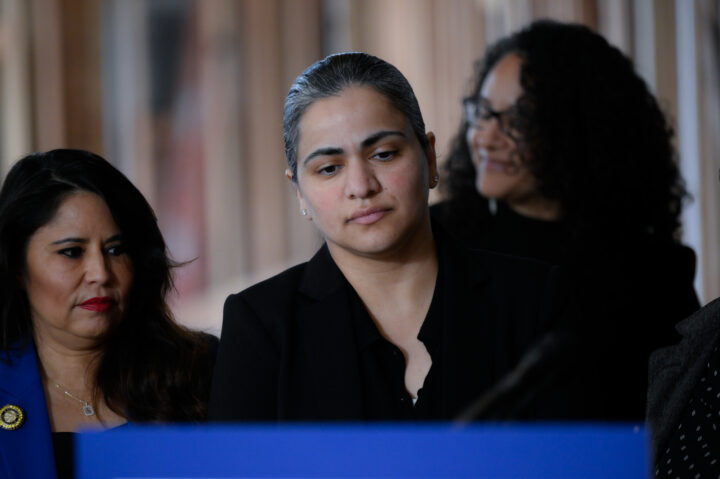
California state Sen. Aisha Wahab attends a press conference in Hayward, Calif., on March 2, 2026.
Aisha Wahab, a progressive California state senator, narrowly defeated former local mayor Melissa Hernandez in a special election in California’s 14th Congressional District, and will replace former Rep. Eric Swalwell (D-CA) in the House.
Hernandez was backed by more than $2.5 million in spending from the AIPAC-linked United Democracy Project super PAC, among other outside groups, which helped her draw closer to Wahab in the final count than some observers had initially expected.
Ultimately, Wahab finished with 53% to Hernandez’s 47%, pulling ahead after the two were neck-and-neck for much of the count. The two are set to face off again in November in the regular general election to serve out a full term in Congress.
The results are the latest stumble for UDP in a cycle where its track record has been decidedly mixed. UDP did not immediately respond to a request for comment on whether it intends to remain engaged in the district in the general election contest.
Wahab’s positions on Israel and antisemitism legislation had worried some leaders in the Jewish community, though another argued that she was not as extreme as members of the anti-Israel Squad. On her campaign website, Wahab included a page naming specific pro-Israel donors who were supporting Hernandez’s campaign.
“My record speaks for itself: I have consistently stood against antisemitism, supported the safety and security of Jewish communities, worked in partnership with Jewish colleagues, and defended Israel’s right to exist — while also maintaining that as an American elected official, I have both the right and the responsibility to question the policies of any foreign government and to speak out when innocent civilians are suffering,” Wahab said in a statement to Jewish Insider.
Over one-third of the vote remains to be counted in the too-close-to-call race
Tayfun Coskun/Anadolu Agency via Getty Images
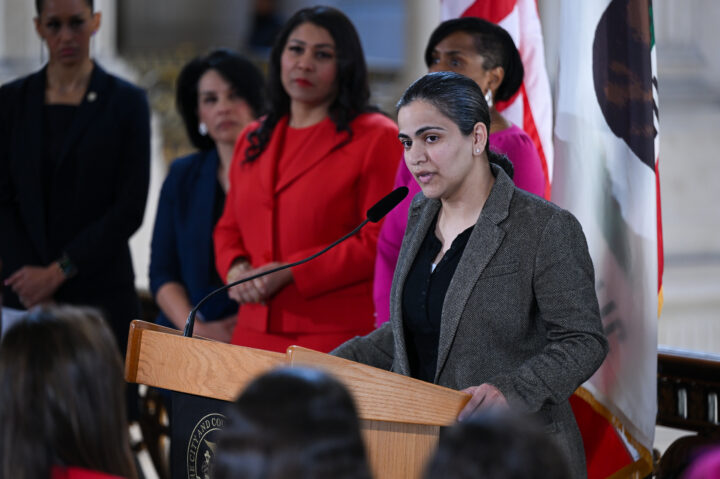
State Sen. Aisha Wahab speaks during the Bay Area Abortion Rights Coalition (BAARC) and commemoration of the 50th Anniversary of Roe v. Wade event at the City Hall in San Francisco, California, on January 25, 2023.
Aisha Wahab, a progressive state senator from California, held a narrow lead on Wednesday over Melissa Hernandez, a moderate former local mayor, in the special election runoff for an East Bay House seat that drew a late surge of outside spending from AIPAC.
With 62% of the vote counted in Tuesday’s election, Wahab had 51%, leading Hernandez, at 49%, by just two points or 1,356 votes, according to the unofficial initial returns. The preliminary figures — with about 40,000 votes yet to be tallied — largely accounted for early mail ballots. Experts said that the late mail and Election Day votes would, in the coming days, paint a clearer picture of the direction of the race.
The early count suggested Hernandez benefited in part from the district’s estimated 73,000 Republican voters, whom AIPAC’s super PAC, United Democracy Project, had courted in the closing stretch of the race to help boost her campaign.
Wahab, the first Afghan American and Muslim to serve in the California state Senate, was viewed as the favorite, after she finished with double-digit leads over Hernandez in the special and the regularly scheduled primary elections. Hernandez won just 17% in the top-two special primary, trailing Wahab by more than 25 points. But two Republicans on the ballot tallied about 25% — indicating the GOP vote was likely to swing heavily to the more moderate Hernandez in Tuesday’s election.
The runoff in California’s progressive-leaning 14th District, which could take several days to be tallied, will decide who completes the remainder of former Rep. Eric Swalwell’s (D-CA) term, after he resigned from Congress amid sexual abuse allegations that he has denied.
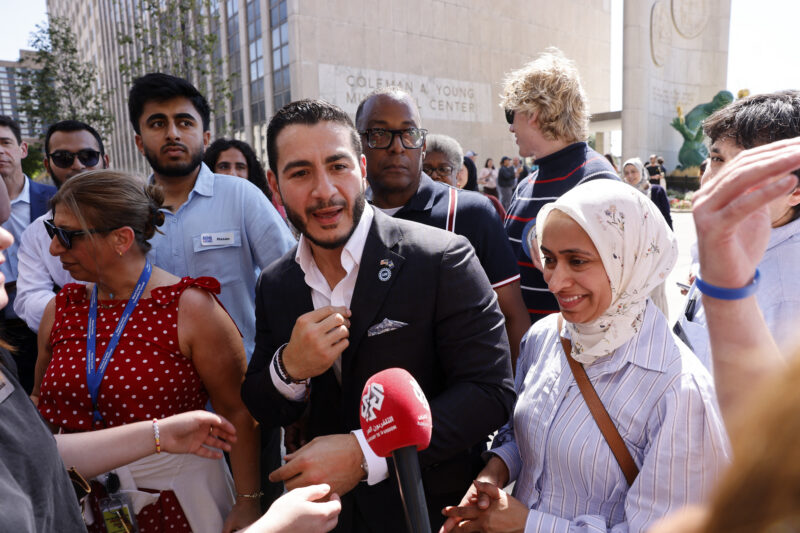
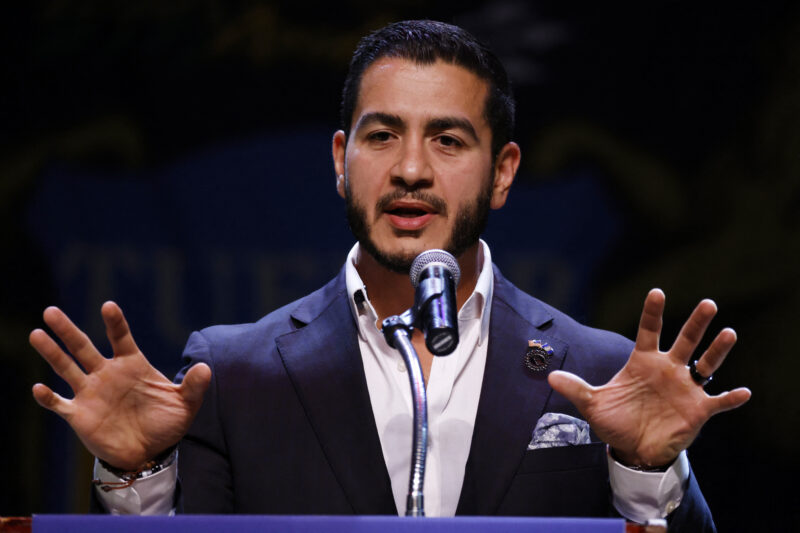
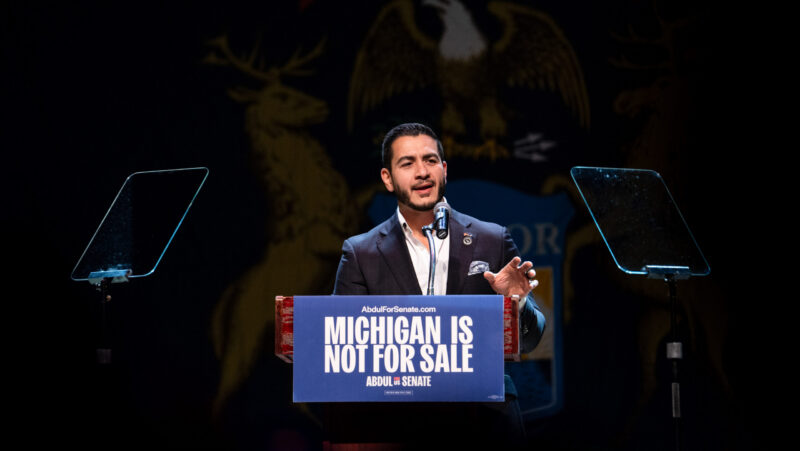
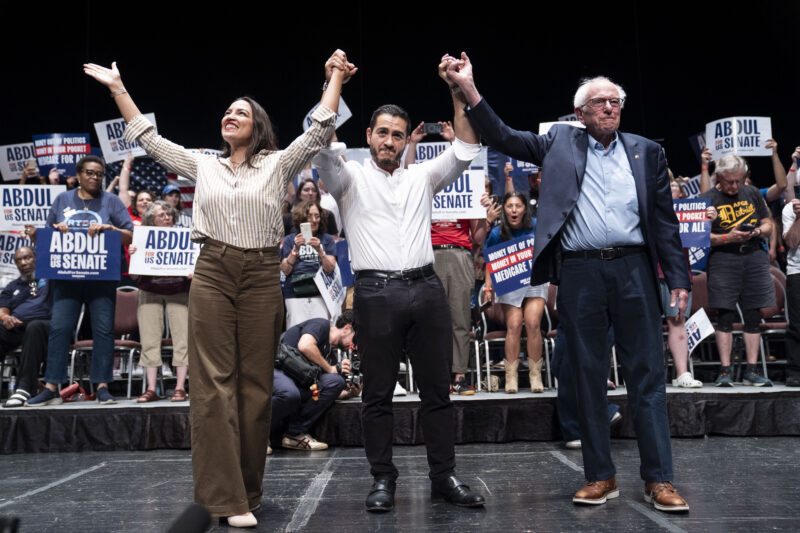
The race had flown under the radar until UDP and other allied groups began spending for Hernandez, drawing national attention to the increasingly bitter contest. In just over two weeks, UDP invested nearly $2.5 million in the runoff. UDP’s spending — which appears to be its final investment before the general election — came after the group had failed to thwart Abdul El-Sayed, the far-left Democratic nominee in Michigan’s costly Senate race.
Some Jewish community leaders and Democratic strategists who followed the East Bay contest had questioned UDP’s last-minute decision to spend in the primary, seeing Wahab as practically unbeatable.
Still, one Democratic strategist told Jewish Insider before the election that outside polling had shown a tighter race than expected, suggesting that UDP had seen a plausible path to victory that was borne out in Tuesday’s results.
“We made a race that wasn’t close when we started into a nail-biter,” Patrick Dorton, a spokesperson for UDP, said in a brief statement to JI on Wednesday.
UDP’s spending also drew opposing expenditures from J Street, the progressive Israel advocacy group, and American Priorities, a new anti-Israel super PAC created to counter AIPAC — both supporting Wahab.
In a statement on Wednesday, American Priorities said it expected Wahab would prevail “once every ballot is counted.”
“Aisha Wahab ran a great campaign and she is leading today because voters in this district know her and trust her,” the group added, while accusing UDP and its allies of spending “millions trying to buy a different outcome.”
In contrast with the Michigan Senate primary and other Democratic races this cycle, Israel and Middle East policy were not among the top issues of debate in the runoff, despite some key differences between the candidates.
Wahab criticized Hernandez for having “denied the genocide in Gaza,” for example, and during a recent interview with the antisemitic streamer Hasan Piker expressed support for the Block Bombs Act — which would impose restrictions on weapons sales to Israel.
One Jewish leader who met with Wahab, however, told JI she was “not someone who wants to see Israel disappear” and had expressed interest in developing a “strong relationship with the Jewish community.” He raised concerns that UDP’s attacks could end up pushing Wahab to more hostile positions on Israel policy.
“My record speaks for itself,” Wahab said in a statement to JI before the runoff. “I have consistently stood against antisemitism, supported the safety and security of Jewish communities, worked in partnership with Jewish colleagues, and defended Israel’s right to exist — while also maintaining that as an American elected official, I have both the right and the responsibility to question the policies of any foreign government and to speak out when innocent civilians are suffering.”
No matter the outcome of Tuesday’s runoff, the two candidates will face off again in the general election this November for a full two-year term.
While Jewish community leaders expressed concerns about Aisha Wahab, one said they were skeptical that she was beatable and that the AIPAC spending risked further alienating the potential nominee
Tayfun Coskun/Anadolu via Getty Images
California state Sen. Aisha Wahab attends a press conference in Hayward, Calif., on March 2, 2026.
After a night of mixed results in Tuesday’s primary elections, AIPAC’s United Democracy Project super PAC is turning its eyes toward the special election runoff in California’s 14th Congressional District, where progressive state Sen. Aisha Wahab and moderate local mayor, Melissa Hernandez, are competing to replace disgraced former Rep. Eric Swalwell (D-CA).
Wahab entered the race as the heavy favorite and dominated the primaries for both the regular and special elections. In the special election primary, Wahab finished with 43% to Hernandez’s 17%, and led Hernandez 38%-17% in the regular primary. The special election runoff is set for Aug. 18.
Her record raises concerns for some members of the Jewish community — she has not been supportive of numerous priority bills and resolutions aimed at tackling antisemitism and has been a vocal critic of Israel, including describing the war in Gaza as a genocide and championing legislation in the state Senate on the issue.
UDP’s initial ad buy in the race totaled $1.2 million.
One of UDP’s ads accuses Wahab of being soft on crime — pointing to an amendment she led to a sex trafficking bill — and describes Hernandez as tough on crime and supported by police. Other pro-Hernandez groups are running with a similar message. Another highlights her background and work on affordability issues.
In a page on her website responding to attacks, Wahab’s campaign accused Hernandez of “relying on misleading attacks and AIPAC-linked dark-money PACs to tear Aisha Wahab down.” The page takes aim at Hernandez for having “denied the genocide in Gaza” — she declined to provide a yes-or-no answer on the subject at a candidate forum — and shared a spreadsheet naming all of the individual “AIPAC-linked donors” supporting Hernandez’s campaign.
“Wahab has accused Israel of committing genocide and has separately published the names of Jewish donors to her opponent on her website. She’s pretty extreme in her points of view on Israel,” UDP spokesperson Patrick Dorton told Jewish Insider. “It’s a race where Wahab is talking about ideological issues and Hernandez is talking about economic and affordability issues that are important to voters in the district.”
Bold America PAC, linked to the Congressional Hispanic Caucus, has spent more than $2 million so far attacking Wahab and supporting Hernandez. The group has taken some donations from an AIPAC-affiliated group. A new pro-Hernandez group, Safer Alameda County, has spent $51,000 so far.
Daniel Klein, the CEO of Jewish Silicon Valley — which is nonpartisan and does not take stances in elections — said that Jewish community leaders are paying close attention to the race, and he has heard significant concern about Wahab’s votes on major antisemitism legislation and her close relationship with state teachers’ unions, which have opposed antisemitism bills.
“That is, I think, creating some angst — or at least more attention to this race — amongst many members of the Jewish community and Jewish communal organizations,” he continued, relating conversations he’s had with members of the community. “These are pieces of legislation that are intended to protect our children, right? They should be fairly non-controversial.”
Wahab was one of three senators who voted against SB 1287, which required overhauls of campus codes of conduct to address antisemitic and anti-Israel demonstrations, and abstained from a floor vote on AB 715, which aimed to address antisemitism in K-12 schools.
Klein said he has not had the opportunity to meet with Wahab personally and is happy to meet with any elected leader. He said he had spoken with Hernandez, who seemed to him primarily focused on local issues and national partisan politics, rather than foreign policy, though he said that she seems to understand the Jewish community’s concerns about antisemitism and is receptive to hearing from the community.
“My record speaks for itself: I have consistently stood against antisemitism, supported the safety and security of Jewish communities, worked in partnership with Jewish colleagues, and defended Israel’s right to exist — while also maintaining that as an American elected official, I have both the right and the responsibility to question the policies of any foreign government and to speak out when innocent civilians are suffering,” Wahab said in a statement to JI.
Though she did not support the two bills mentioned by Klein, she has supported other priority legislation for the Jewish community in the state Senate. She also introduced a resolution in 2025 with Jewish state Sen. Scott Weiner calling for the release of hostages and an end to the humanitarian crisis in Gaza.
Another Jewish leader said Hernandez had attended various Jewish community events and generally has good relationships with the community but isn’t particularly involved with its issues. The district itself is not home to a sizable Jewish community.
Oleg Ivanov, executive director of StandWithUs Northern California, said, “We’re of course concerned that as a state senator, Aisha Wahhab has called Israel’s defense against the Hamas attack [on Oct. 7, 2023,] genocide. So we’re concerned that she is spreading this debunked blood libel about Israel, which we feel all that does is it makes Jews and Israelis here in her district unsafe. As we’ve seen in many cases, this kind of irresponsible language has led to direct violence against Jews and Israelis.”
Ivanov said he hasn’t had any interaction with Hernandez, but praised her for declining to describe the war in Gaza as a genocide. He also criticized Wahab’s opposition to antisemitism-related legislation.
But another Jewish leader in the district, who requested anonymity to speak candidly, said that the strong consensus among political observers in the area is that Wahab “pretty much [has] this in the bag, and that Hernandez is a lazy campaigner.” Other moderate groups that had looked at the district “just have not been impressed with Hernandez,” the leader continued.
The Jewish community, the leader said, doesn’t want Wahab to win, but that might already be a foregone conclusion.
“I’m not in principle against AIPAC getting involved in these kinds of primaries like some other people [are], but based on all the local knowledge that we’re hearing from politicos, it’s not a good use of time or money,” the leader said. “People are kind of scratching their heads — not because there aren’t concerns about Wahab … but let’s play where we can win.”
The leader said they’re also concerned that AIPAC’s involvement risks pushing Wahab further to left, describing Wahab currently as a less-than-ideal choice but necessarily aligned with the Squad — i.e., not opposed to Israel’s existence or outright at odds with the Jewish community.
The leader noted Wahab abstained on, rather than outright opposed, AB 715, one of the antisemitism bills. They also noted that Wahab’s family are refugees who escaped radical Islam in Afghanistan during the Soviet-Afghan war. Wahab has relationships with some Jewish community groups in the Bay Area, particularly social services organizations that have been involved in Afghan refugee resettlement work.
“I don’t like the idea that the pro-Israel community is jumping into a race they can’t win against the presumptive winner and potentially pushing her into the arms of the worst members of Congress,” the leader said. “I think that people need to play their cards carefully here. There’s shades of gray at play.”
Polls show she’s largely unknown to South Carolina voters as she struggles to win a majority of Republican support
Kent NISHIMURA / AFP via Getty Images
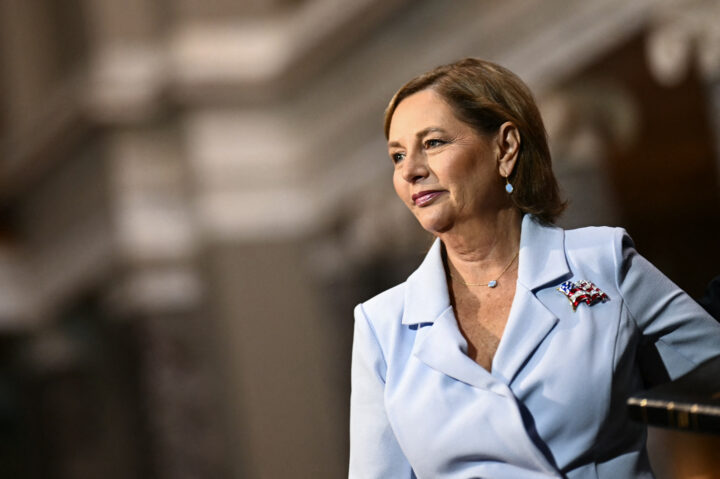
Darline Graham, sister of Lindsey Graham, looks on during her ceremonial swearing in to become a U.S. Senator on July 14, 2026.
Sen. Darline Graham’s (R-SC) bid to succeed her late brother in the Senate is facing growing skepticism from Republican operatives and lawmakers who say President Donald Trump’s endorsement is unlikely to spare her from a runoff in South Carolina’s special GOP primary next week.
Over the last week, six senior GOP campaign operatives and Republican lawmakers told Jewish Insider that they believe a runoff is all but certain after the Aug. 11 special election primary, with most predicting Graham will not be able to clinch a majority of the vote to avert one as her brother, the late Sen. Lindsey Graham (R-SC), did with his June primary victory.
While Republicans believe Graham will be one of the top two candidates in the race, thus allowing her a spot in the Aug. 25 runoff, they are still unsure whether she will face Rep. Ralph Norman (R-SC) or Rep. Russell Fry (R-SC) in that contest. Those who spoke to JI expressed skepticism that Graham could win a head-to-head showdown, despite having Trump’s coveted primary endorsement.
“The sense that this is going to go to a runoff seems pretty clear,” Doug Heye, a Republican strategist who served as communications director for the Republican National Committee and a deputy communications official for former House Majority Leader Eric Cantor (R-VA), said. “What happens after that is anyone’s guess.”
“Ultimately, it’s going to be a question of what Republican voters in South Carolina want to do and how they view the new Sen. Graham,” he continued. “You can’t really factor in what she’s done yet, but you know what she says she’s going to do. She doesn’t have a high name ID, although that is increasing every day, whereas the others who are running have much higher name ID and not just necessarily in their districts.”
The uncertainty surrounding the race has caused some to worry about Graham entering a competitive election contest, which will require her to develop a full policy platform and hit the campaign trail as she mourns her brother’s recent death.
“It’s being said and unsaid by a lot of people on Capitol Hill right now. Up to this point, most people here have been more concerned about her personally than figuring out her political philosophy, asking if it’s fair to her to put her in this situation,” a Republican senator told JI. “This has got so many consequences. I’ve been very concerned about it. The people who express concern the most are still mainly worried about her personally, which is heartwarming, but the stakes are also very high.”
Four sources noted that Trump’s support for Graham did not deter Norman or Fry from entering the contest, nor has it hurt either of their performances in recent primary polling.
“There really is an appetite for change, but also for someone who is known, who has a proven record,” a GOP campaign source said. “Love them or hate them, folks know what Ralph and Russell’s records look like. Love them or hate them, you know where they stand. Darline is largely an unknown.”
Republican sources pointed to issues around voter turnout, Graham’s ability to fundraise quickly enough on the compressed campaign schedule, her lack of political background or voting record and the possibility of her losing support if portrayed to voters as being anointed to the role.
Darline Graham should be able to benefit from some of the leftover cash in her brother’s campaign account. Lindsey Graham’s campaign filed a statement with the Federal Election Commission after his death reporting $2.3 million in remaining funds.
Lindsey Graham’s campaign was able to transfer some of that money to the National Republican Senatorial Committee, the Senate GOP campaign arm, for Darline Graham to use for her campaign, according to two sources with direct knowledge of the situation. The figure expected to be transferred is under $1 million, one source confirmed, leaving Darline Graham with a possible cash disadvantage for the primary and the general election, where the Republican nominee will face Dr. Annie Andrews, a pediatrician who handily won the Democratic primary in June and has proven to be a strong fundraiser.
Prior to Lindsey Graham’s passing, Andrews drew attention for outraising the incumbent senator in the first two quarters of 2026. Despite the fundraising success, national Democrats declined to commit resources to the race against Graham, which the Cook Political Report continues to rate as solid Republican even after his death.
Sens. Rick Scott (R-FL) and Mike Lee (R-UT) got behind Norman’s campaign before Graham had entered; once she did, she quickly secured her own endorsements from three members of Senate GOP leadership: Senate Majority Whip John Barrasso (R-WY); Senate Republican Conference Chairman Tom Cotton (R-AR); and Senate Republican Policy Committee Chairwoman Shelley Moore Capito (R-WV).
Senate Majority Leader John Thune (R-SD) said after Graham announced her candidacy that he would not be weighing in with an endorsement, though he praised the incumbent senator as a “strong candidate” who “obviously carries on Lindsey’s legacy.”
Beyond those who have already endorsed her, Graham does not appear to have asked her other Republican colleagues in the Senate for their backing, according to two Republican senators and one senior GOP Senate staffer. The senators suggested that perhaps Graham was not in the right frame of mind to ask about endorsements herself, though both senators expressed surprise that no one from Graham’s campaign had made those overtures on her behalf.
“Many of us had never met her before. All I knew was how much Lindsey adored her. He talked about her a lot. He referenced her a lot. He’d take her call whenever it happened to be,” a GOP senator told JI of Graham. “But we don’t have a clue how Republican she is. I don’t have the faintest idea what her basic philosophies are.”
“She hasn’t asked me or the members that I’ve talked to,” one GOP senator told JI on condition of anonymity of Graham seeking out endorsements late last week. “If she isn’t asking and nobody is asking on her behalf, she sure as heck won’t get a lot of them. Maybe she’ll get around to that next week now that she’s on the job full time. It’s kind of a pivotal week, I would say.”
Graham has picked up one House endorsement from Rep. William Timmons (R-SC), who opposes Norman’s candidacy, while Norman has been endorsed by Rep. Nancy Mace (R-SC) and former Rep. Bob Good (R-VA). He also has the support of former White House Chief of Staff Mark Meadows, who served with Norman in the House.
The slow drip of congressional endorsements have since ground to a halt, as it became clear that Graham’s surprise campaign launch and Trump’s support for her candidacy had not deterred her Republican opponents or hurt their polling numbers.
“Many of us had never met her before [she was sworn in to serve out the remainder of her brother’s term]. All I knew was how much Lindsey adored her. He talked about her a lot. He referenced her a lot. He’d take her call whenever it happened to be,” a GOP senator told JI of Graham. “But we don’t have a clue how Republican she is. I don’t have the faintest idea what her basic philosophies are.”
“She’s still grieving,” a senior GOP campaign official involved with the race told JI. “Nobody wants to be seen hitting someone whose brother literally just died — and then was vaulted into a very public, very national spotlight — but at some point the gloves are gonna have to come off at least somewhat.”
“I suspect that being through what she’s been through the last couple of weeks, reliving his whole life basically in written word and broadcast and even just storytelling, she’s probably getting a pretty good lesson if she’s still forming her positions,” the senator continued. “I doubt she’s 180 degrees from him, but I don’t know what’s in her heart.”
Several Republicans have expressed concern that voters would respond poorly to the idea of Graham running while mourning the loss of her brother. They also worry about the possibility that the contest turns negative and the consequences of that shift.
“She’s still grieving,” a senior GOP campaign official involved with the race told JI. “Nobody wants to be seen hitting someone whose brother literally just died — and then was vaulted into a very public, very national spotlight — but at some point the gloves are gonna have to come off at least somewhat.”
One Republican senator told JI that they were “afraid it could be a brawl before it’s over, especially if her opponent feels like they’re up against a wall and corners her. We know how this goes.”
“If they get to a runoff, at that point, it is a whole new ball game and she’s no longer a grieving sister. She becomes a semi-incumbent obstacle to whoever wants to win,” the senator said. “These things happen faster nowadays. We have short memories.”
The South Carolina senator faced her four leading opponents in a televised debate on Monday evening. Graham was joined on the debate stage by Norman, Fry, former Gov. Mark Sanford (R-SC) and Mark Lynch, a MAGA-aligned businessman who lost to Lindsey Graham in last month’s primary by 30 points.
The debate was largely respectful, though Graham called out Lynch in her closing statement for repeatedly criticizing her late brother while on stage. “I don’t know if I can rebut, but Mr. Lynch mentioned Lindsey Graham multiple times. I don’t know if he’s just afraid Lindsey beat him and now his little sister is going to beat him, but I just don’t like hearing that,” Graham said.
Graham used the debate to highlight where she and her late brother agree and disagree on policy matters, emphasizing their shared support for the U.S. war in Iran and how they diverge on the filibuster, which Darline Graham said she supports abolishing to pass the Save America Act despite her later brother’s opposition to the move.
It is unclear if the two candidates who advance to the runoff, should one be triggered, will hold another debate.
“Lindsey just made his way through a pretty contentious primary himself, and there is a degree of the primary electorate that was not a fan of his. I think that segment will still be very much adamantly opposed to this because they’ll see it as a continuation of the policies that they don’t support,” a senior GOP campaign source said. “Ralph Norman is a little bit better positioned to capture some of these hardcore conservative voters. I think she’ll have a difficult time even with the president’s endorsement.”
“This is potentially a race where debates could have a real impact, in part because this would be part of her introduction statewide as a candidate,” Heye said. “In moments like that where you have somebody in that situation, it’s very important for the other people on stage, including the moderators, to be appropriately respectful.”
While several Republicans acknowledged Trump’s endorsement as a key booster for Graham, they pointed out that her late brother, who was known to be close to the president, struggled in his own primary.
“Lindsey just made his way through a pretty contentious primary himself, and there is a degree of the primary electorate that was not a fan of his. I think that segment will still be very much adamantly opposed to this because they’ll see it as a continuation of the policies that they don’t support,” a senior GOP campaign source said. “Ralph Norman is a little bit better positioned to capture some of these hardcore conservative voters. I think she’ll have a difficult time even with the president’s endorsement.”
Heye noted to JI that, “Not everything that happens in a Republican primary is about Donald Trump. His endorsement is always a boost, but that’s it.”
Reached for comment, Graham campaign press secretary Abby Zilch told JI in a statement, “Sen. Darline Graham has had to work hard for every single thing she’s ever done — running for the United States Senate will be no different. That’s just one of the many reasons why President Trump has endorsed her and why so many South Carolinians see a true fighter in this campaign.”
Reps. Russell Fry and Ralph Norman have also entered the race for the late Sen. Lindsey Graham’s seat
Kent NISHIMURA / AFP via Getty Images
Darline Graham, sister of Lindsey Graham, looks on during her ceremonial swearing in to become a U.S. Senator on July 14, 2026.
Sen. Darline Graham (R-SC) said that she will run in next month’s special election to replace her brother, the late Sen. Lindsey Graham (R-SC), on the ballot as the GOP nominee for Senate in November.
Graham, who was appointed last week to serve out the remainder of her brother’s term in the Senate, announced her decision to run for a full term in an interview with Fox News’ Sean Hannity on Monday.
“I’ve made a decision,” Graham said. “I’m in.”
Graham told Hannity, a friend of her late brother’s, that she had been “praying a lot” and “talking to my family” about the decision, which she acknowledged she needed to make at an expedited pace due to the week-long filing period for candidates beginning on Tuesday.
“With the love of my family, with the support of his staff, I know I’m a hard worker. I learned that from Lindsey. He cared about the people of this state. I’ve worked for almost 30 years for the people of this state,” Graham said. “I feel like I can do it. I feel an inner peace about it. Will it be difficult? Yes, absolutely.”
President Donald Trump publicly called on her to run in the special election after meeting her at the White House last week, promising his endorsement if she got in the race.
“These are just the laws of South Carolina. The filing begins tomorrow. I think you have a week, and by that time, the funerals won’t even have taken place,” Hannity said. “Then the president putting an ask on you — well, put it that way, it’s a lot of pressure.”
“It’s a tremendous amount of pressure,” Graham acknowledged in response.
Two sources familiar with Graham’s thinking told Jewish Insider on Friday that she was not interested in running for a full term when she initially agreed to accept the appointment last Sunday. The South Carolina senator began considering a bid over the course of last week, the sources said.
Reps. Russell Fry (R-SC) and Ralph Norman (R-SC) have also entered the contest, as has Mark Lynch, who lost to Graham in last month’s primary by 30 points and has committed $5 million of his own money to his campaign for the special election. Lynch ignored Lindsey Graham’s repeated calls during the primary to fire his political director despite the staffer’s record of making antisemitic statements, including posting a photo to social media last June of a boot stepping on the Talmud and calling it a “hate filled book” and “what drives today’s Judaism.”
Norman has been endorsed by Sens. Rick Scott (R-FL) and Mike Lee (R-UT). Rep. Nancy Mace (R-SC), who expressed interest in the Senate race, announced Monday that she won’t be running for Graham’s seat.
After Graham’s announcement on Hannity began circulating on social media, Senate Majority Whip John Barrasso (R-WY) and Sen. Tom Cotton (R-AR) quickly endorsed her bid.
“Darline Graham is an excellent senator. She’ll continue to be an excellent senator,” Barrasso said in a statement. “She has my full support.”
“I’m proud to join President Trump and endorse Darline Graham,” Cotton wrote on X. “She’ll be a principled conservative leader and a strong advocate for South Carolina families.”
Senate Majority Leader John Thune (R-SD), meanwhile, said on Monday that while Graham was a “strong candidate” who “obviously carries on Lindsey’s legacy,” he was not endorsing any candidates in the race “at the moment.”
“She’s a strong candidate. Sounds like the field is taking shape, and we’ll let the voters in South Carolina decide it,” Thune told reporters. “She obviously carries on Lindsey’s legacy and I think she’s a very accomplished person in her own right.”
The president said he’d give Darline Graham his ‘complete and total endorsement’ if she enters the special election to succeed her late brother
Tom Williams/CQ-Roll Call, Inc via Getty Images
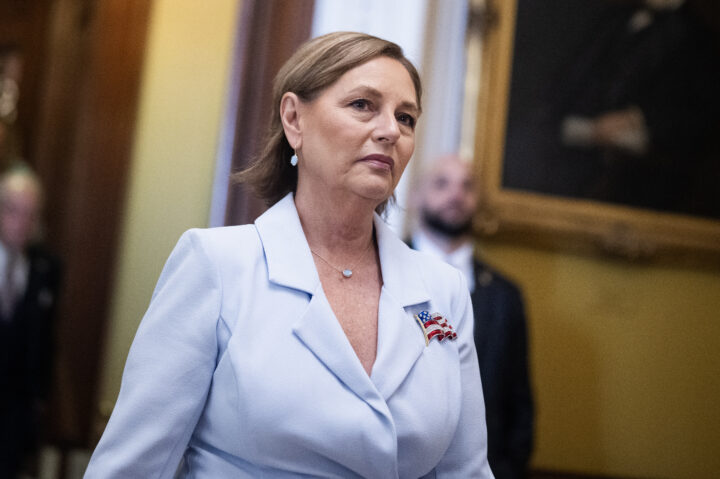
Sen. Darline Graham (R-SC) makes her way to a swearing in ceremony in the U.S. Capitol after she was sworn in on the Senate floor on Tuesday, July 14, 2026.
President Donald Trump said on Friday that he has asked newly appointed Sen. Darline Graham (R-SC) to consider running in next month’s special Senate election for the full term of her late brother’s seat.
Trump wrote on Truth Social that he had encouraged Darline Graham, who was appointed to serve out the remainder of her brother’s term following his unexpected passing last weekend, to run in the race to succeed Lindsey Graham during her visit to the White House on Thursday for their first meeting since she was sworn in.
The president said that Darline Graham would receive his endorsement should she decide to seek a full term in the Senate.
“During her visit, I asked Darline, for the Good of our Nation, to run for the U.S. Senate in the Special Republican Primary on Tuesday, August 11, 2026,” Trump wrote. “I hope Darline does this, in that there would be nobody better to honor the legacy of her beloved brother, Lindsey. Darline, who comes from an absolutely incredible family, has been a WINNER all of her life, and should she accept, has my Complete and Total Endorsement in the Special Election for U.S. Senate in South Carolina.”
Trump said he has known Darline Graham “for a long time” and called her “a spectacular person, and a true American Patriot. Lindsey was one of the greatest people and Senators I have ever known, and his sister shares his deep love of our Country, and the State of South Carolina.”
“SHE WILL NEVER LET YOU DOWN,” he wrote. “RUN, DARLINE, RUN!”
South Carolina Gov. Henry McMaster announced on Monday that he was appointing Darline Graham to serve out the remainder of her older brother’s Senate term, which ends in January. The announcement came hours after Trump publicly declared that Darline Graham was his preferred choice to represent South Carolina on her brother’s behalf until the conclusion of his Senate term.
At the time, Darline Graham had not expressed any interest in running in the special election next month to be the GOP nominee, prompting other Republicans in the state to start engaging with the White House and the National Republican Senatorial Committee about possibly getting into the race.
Two sources familiar with Darline Graham’s thinking told Jewish Insider that she was not interested in running for a full term when she initially agreed to accept the appointment on Sunday. While the sources confirmed she is now considering entering the race, they stressed that she has not made a final decision.
Among those who began fielding calls were Reps. Russell Fry (R-SC), Ralph Norman (R-SC) and Nancy Mace (R-SC) and former Rep. Trey Gowdy.
Mark Lynch, who lost to Graham in last month’s primary by 30 points, has already entered the special election and committed $5 million of his own money to the campaign. Lindsey Graham attacked him for using antisemitic rhetoric during this year’s regularly scheduled GOP primary.
Fry reportedly emerged as a top contender for the president’s endorsement, though roadblocks emerged midweek as it became clear that any House Republican seeking to run for the seat would make it harder for House Speaker Mike Johnson to secure enough GOP votes to secure legislative majorities.
Darline Graham’s office did not respond to JI’s requests for comment.
The result of the special election signals Council Speaker Julie Menin’s growing political clout, but doesn’t guarantee an override of Mamdani’s veto of her buffer zone legislation
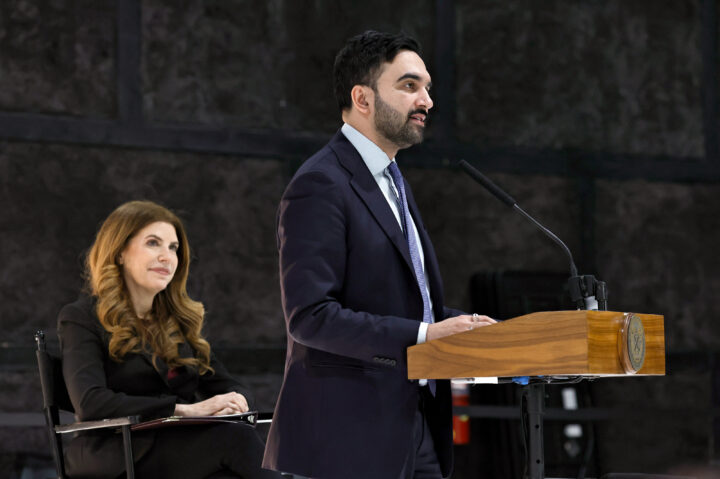
John Lamparski/Bloomberg via Getty Images
Julie Menin, speaker of the New York City Council, left, and Zohran Mamdani, mayor of New York, during an announcement in Brooklyn, New York, on Jan. 12, 2026.
New York City Mayor Zohran Mamdani took a hit to his political credibility on Tuesday when his endorsed candidate in a special election for City Council went down in overwhelming defeat — but it’s not clear if the loss will lead to an override of his veto of school buffer zone legislation or further stall his political momentum.
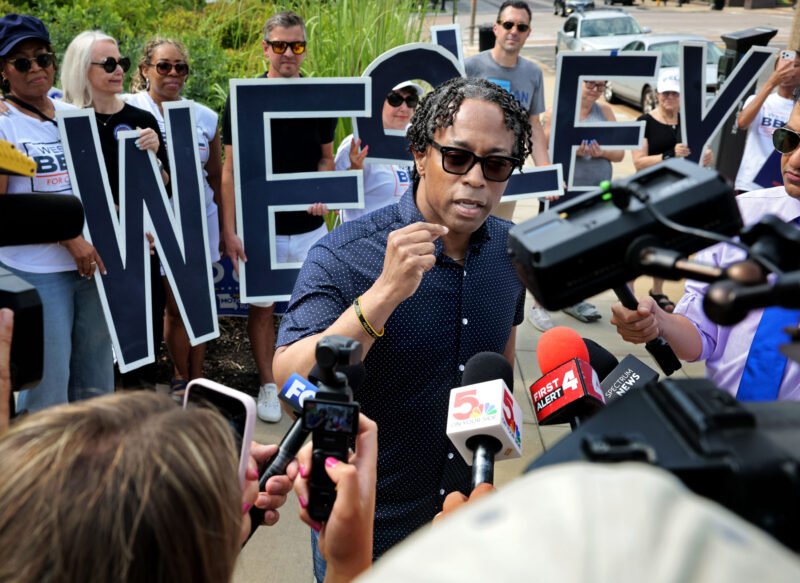
Legislative aide Carl Wilson’s trouncing of Mamdani-backed Lindsey Boylan in a West Side district was not just a loss for Mamdani but a triumph for Council Speaker Julie Menin, sources told Jewish Insider, noting she had lent Wilson not just her endorsement but an effective ground game turning out his voters.
“It was a resounding dominant victory,” said Jewish Community Relations Council of New York CEO Mark Treyger, himself a former city councilmember. “It’s not just about one seat. It’s about the message it sends to the body, and the message it sends to New York, not to underestimate her and her operation.”
Other sources, some of whom requested anonymity out of a need to preserve professional relationships, noted that Mamdani himself had carried the district in the 2025 primary — and suggested his success last year looks more like the consequence of unique circumstances than proof of overwhelming political support. This, they suggested, meant that members of the council going forward would be more susceptible to Menin’s influence than the mayor’s.
“The mayor got a lot of votes in June from a lot of people who weren’t socialists, because they couldn’t vote for [former New York Gov.] Andrew Cuomo,” said one insider, noting that the seat was outside the areas of Brooklyn and Queens where the Democratic Socialists of America are strongest. “His endorsement just didn’t carry the weight in non-DSA areas that he hoped.”
Treyger read Wilson’s win as an optimistic sign for City Council legislation that would compel the NYPD to develop a protocol for establishing security perimeters to guarantee access and egress from education facilities during protests. The measure, part of the Menin’s signature package of legislation intended to combat antisemitism, came in response to demonstrations targeting yeshivas and gathering places for Jewish students.
Mamdani vetoed it last week on the grounds that it defined educational facilities too broadly and might impinge on union activities, even though the bill contained an explicit carveout for organized labor. The legislation originally passed with the support of 30 councilmembers, four shy of the votes necessary to overcome his opposition.
As a candidate, Wilson said he’d vote to do so, though he backed off this declaration after winning the election — and then reversed to support it again a few hours later.
Treyger argued that with councilmembers more likely to defer to Menin than Mamdani now, the likelihood of an override increases.
“It adds many more options and tools in her toolbox in regards to how she wants to move forward on this issue and others,” he said. “I think there is significant interest on how to find a path forward on this.”
Others weren’t so sure. Sources noted that Gov. Kathy Hochul has endorsed her own buffer zone legislation, which would impose felony penalties on any protester who comes within 25 feet of the doors or driveways of an institution that holds regular prayer — which would cover religious schools. They also pointed to the city’s multibillion-dollar fiscal shortfall, which has already delayed the municipal budget and become a major point of contention between the Council and the mayor’s office.
“It’s not about ‘can she,’ it’s about ‘will she,’” a source said of Menin’s ability and inclination to force an override vote.
Veteran political consultant Hank Sheinkopf was more blunt.
“It’s probably the wrong fight,” he said, noting Menin successfully pushed through a separate measure to formalize police buffer zone policy at houses of worship. “You gotta pick your battles.”
Sheinkopf agreed that the special election had wounded Mamdani’s credibility, but warned the damage was “overstated.” He asserted that the true challenge for the mayor and his foes will be the upcoming congressional primaries, where Mamdani has backed Assemblymember Claire Valdez and former city Comptroller Brad Lander in a pair of left-leaning House districts.
“The real test will be in June,” Sheinkopf said.
Carl Wilson’s victory over Lindsey Boylan, who was endorsed by the mayor, marks a triumph for Council Speaker Julie Menin, Next NYC PAC and buffer bill legislation
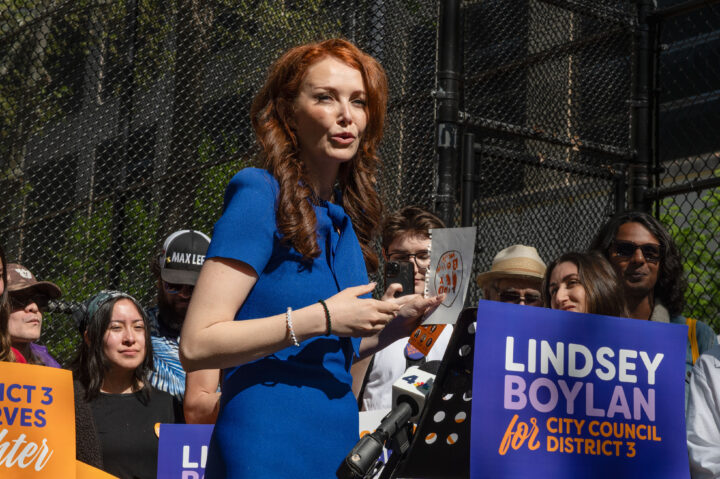
Laura Brett/Sipa USA via AP Images
On the first day of early voting in a special election, Lindsey Boylan receives the endorsement of city elected officials including Mayor Zohran Mamdani in her run for City Council District 3 at a rally in Chelsea Park, in New York, NY on April 18, 2026
New York City Council candidate Lindsey Boylan, who was backed by New York City Mayor Zohran Mamdani in this week’s special election, was resoundingly defeated on Tuesday night by community activist Carl Wilson — a result that also marks a step forward in the evolving fight over a buffer zone bill vetoed by Mamdani last week.
With 99% of the vote in, Boylan received just over 25% in the contest for the Manhattan district, while Wilson, the preferred candidate of Council Speaker Julie Menin, had clinched a plurality of 43%.
Wilson also had the backing of Next NYC PAC, which Jewish Insider reported last month represented a coalition of forces linked to two men Mamdani defeated on his path to City Hall: former Gov. Andrew Cuomo and former City Comptroller Scott Stringer.
Wilson’s win is also a victory for legislation Mamdani vetoed last week over the objections of Jewish community groups: a bill that would compel the NYPD to establish formal protocols for security perimeters around educational institutions during protests. Wilson alone among the four candidates for the seat vowed to vote to override the mayor’s veto: if the measure retains the support it passed the Council with last month, it needs only three more votes to overwhelm Mamdani’s opposition.
The other two candidates split the remainder of the more than 14,000 ballots cast in the race to fill the seat of former councilman and now-state Sen. Eric Bottcher, who won election to the state Legislature last fall. The district covers areas of lower Manhattan, including the Stonewall Inn, central to the gay rights movement.
But in the past week-and-a-half, after Mamdani endorsed Boylan — the first woman to accuse Cuomo of sexual misconduct — the race took on the character of a power struggle, pitting the mayor and Brad Lander — a Mamdani ally and the city’s former comptroller now challenging Rep. Dan Goldman (D-NY) from the congressman’s left — against Menin, local politicos, Next NYC PAC and Rep. Nydia Velazquez (D-NY).
Mamdani has backed Lander against Goldman and endorsed Assemblymember Claire Valdez for the seat held by Velazquez, who is retiring, over the congresswoman’s favored candidate, Brooklyn Borough President Antonio Reynoso.
While Democrat Analilia Mejia comfortably won the special election to succeed Mikie Sherrill, Jewish voters swung to the right
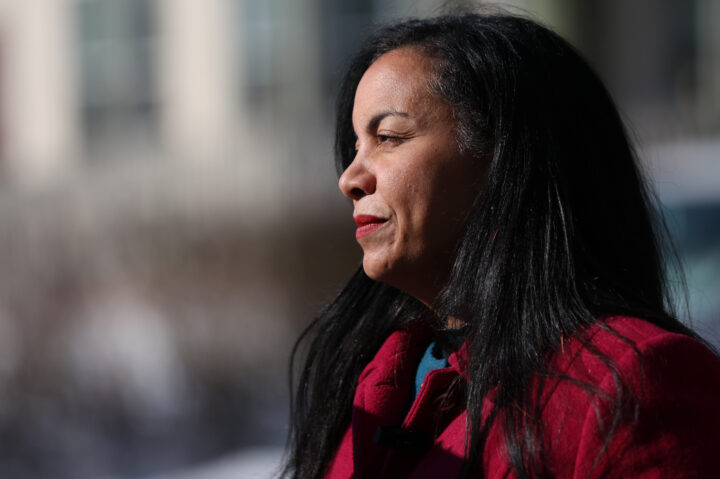
Heather Khalifa/Bloomberg via Getty Images
Analilia Mejia, US Democratic House candidate for New Jersey, speaks to members of the media outside of the Montclair Municipal Building on the first day of early voting in Montclair, New Jersey, US, on Thursday, Jan. 29, 2026.
Rep.-elect Analilia Mejia (D-NJ) cruised to victory in last Thursday’s special election for New Jersey’s 11th Congressional District, but the results showed notable defections among Jewish Democrats — an early warning sign for both the left-wing Mejia and her party.
Mejia ran significantly behind other recent Democratic candidates in two municipalities that have traditionally strongly favored Democrats — Livingston Township and Millburn Township — both areas with significant Jewish populations. In Millburn, Mejia lagged 22 percentage points behind former Vice President Kamala Harris’ performance in the 2024 presidential election, and 17 percentage points behind Harris in Livingston.
Dan Cassino, the director of the Fairleigh Dickinson University Poll, said that, given that Livingston favored Democrats by 34 percentage points but Mejia won it by just two, “you could count [that] as a 32-point underperformance.”
Joe Hathaway, the GOP nominee against Mejia, worked during his campaign to attract Jewish voters, casting himself as a moderate centrist and Mejia as an antisemitic extremist.
Jeff Grayzel, the deputy mayor of Morris Township who ran in the Democratic primary against Mejia, said that the special election presented an “actual Sophie’s choice” for Jewish Democrats.
“Some Jews surely voted for her because of their anger with President [Donald] Trump. But many Jewish Democrats I spoke to refused to support Mejia because of her genocide position,” Grayzel, who had hoped to rally support from Jewish voters across the district in the primary, said. Mejia accused the Jewish state of genocide shortly after the Oct. 7, 2023, Hamas attacks on Israel.
“So some Jewish Democrats voted for Hathaway, which was evidenced by the result in Livingston, and others simply stayed home,” Grayzel continued. “We will see from voter turnout data how many Jews actually sat out this election. Unfortunately, our voice is our vote, and declining to vote will only hurt the Jewish community in the long run.”
Jason Shames, the CEO of the Jewish Federation of Northern New Jersey, said “it’s disappointing to see someone representing New Jersey or any district in America who not only doesn’t fight antisemitism but seemingly aligns with those who delegitimize Israel. Her comments on Israel’s self defense to the horrific terror attack by Palestinians [are] alarming and should not be dismissed.”
Cassino said that while Mejia outperformed other Democrats who have run in this district, she “did slightly worse than we would have expected from a generic Democrat in the special election,” given that the environment strongly favored Democrats.
Cassino said that it’s a “reasonable hypothesis” that attacks on Mejia’s stance on Middle East policy drove Democrats in Millburn and Livingston to vote for Hathaway.
“I would be really cautious, though, about saying that her stance on Palestine, or any other issue, cost her any particular number of votes, because all of these numbers are conditional on turnout,” he added, noting that all of the voters who turned out for Mejia might not have turned out for a different Democratic candidate.
Cassino said that strategists are likely to read the results to mean that attacks on Mejia’s stance on Israel were effective.
“Maybe the most important thing here is that strategists — Democrats and Republicans alike — are going to look at these results and conclude that the attacks on Mejia worked, and ramp them up in November,” he added. “They’re also likely to try and use them against any candidate where they might plausibly stick. So, I hope voters liked those ads, because they’re going to be seeing a lot more of them.”
Micah Rasmussen, the director of the Rebovich Institute of New Jersey Politics at Rider University, said that the apparent protest votes in the Jewish community “could … matter in a different election,” but this time, “Mejia picked up other votes in their place.”
“A lot is being made about these 900 or so votes, and I want to be balanced about how I see them. Yes, they were certainly noticeable. Yes, you can never take any voting bloc for granted,” Rasmussen added. “But electoral coalitions do shift. What can’t be denied is that Mejia’s current margin of 19.5 percent is larger than any other candidate for federal or statewide office since [former Rep.] Rodney Frelinghuysen’s (D-NJ) 25.2 percent win over Mark Dunec in 2014.”
What makes the otherwise sleepy contest significant is the potential for the results to indicate if there are any fissures within the MAGA coalition that may represent discontent with Trump’s hawkish turn amid the Iran war
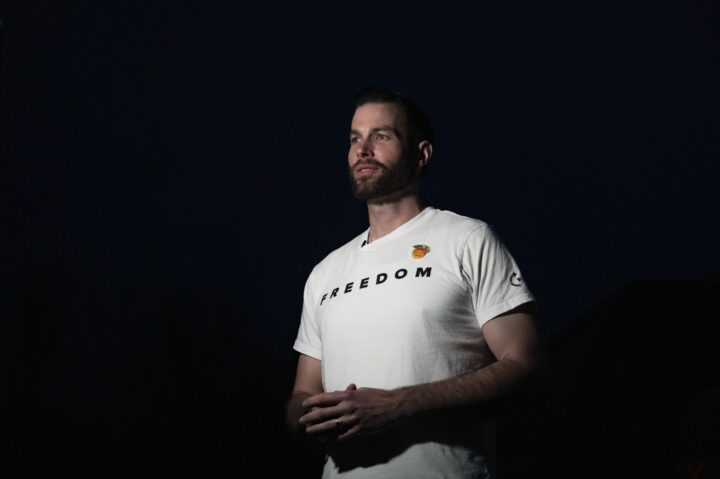
Megan Varner/Getty Images
Clay Fuller, Trump endorsed Republican candidate for Congressional district 14, speaks to members of the media after arriving early to his voting precinct to cast his vote on March 10, 2026 in Lookout Mountain, Georgia.
Today’s special election runoff in Georgia between Republican Clay Fuller and Democrat Shawn Harris to determine the successor to former Rep. Marjorie Taylor Greene (R-GA) isn’t much in doubt. The northwestern Georgia district that Greene represented backed President Donald Trump by 37 points in 2024, one of the largest GOP margins in the country.
What makes the otherwise sleepy contest significant is the potential for the results to indicate if there are any fissures within the MAGA coalition, ones that may represent Republican discontent with Trump’s hawkish turn amid the Iran war. In this race, the margins will be as notable as the winner.
Greene, since leaving Congress, has emerged a loud Republican voice against the Iran war and against Trump’s strong alliance with Israel. Fuller, a military veteran with a background in counterterrorism operations and district attorney for the Lookout Mountain Judicial Circuit, has been a stalwart supporter of Trump’s military operations in the Middle East, and Trump has endorsed him in the race.
Harris, the Democrat, holds foreign policy views closer to the isolationist Greene, attacking the pro-Israel advocacy group AIPAC and describing Israel’s war against Hamas as a “genocide” — views which place him on the left flank of the Democratic Party. This despite Harris’ time serving as defense attache in Israel during his years in the National Guard, work history that he has not publicized during the campaign.
It’s worth noting that Greene, since she was first elected to the seat in 2020, has underperformed Trump’s standing in the district, only winning 64% of the vote against Harris in 2024 — four points below Trump’s 68% showing at the top of the ticket. And since breaking with Trump in his second term, her political standing has taken an even bigger hit.
Greene has not endorsed either candidate in the race.
If Harris wins over 40% of the vote in this ruby-red district, it’s a sign that Democrats are making inroads into rock-ribbed conservative turf, potentially over frustrations with rising gas prices and the Iran war. But if he doesn’t perform much better than he did in 2024 — and he only won 37% of the vote in the first round of balloting, compared to the 36% he tallied two years ago — it’s a sign that the media hype over a MAGA fissure is greatly overstated.
The election also carries some relevance for another big political showdown in Georgia later this year: Sen. Jon Ossoff’s (D-GA) reelection campaign. Given a divided GOP primary field and an unfavorable national environment for Republicans, Ossoff starts with some advantages in what otherwise looks like a tough reelection.
If the GOP base turns out strongly for Fuller, it’s a sign that Republicans will still be able to rely on conservative voter enthusiasm and engagement in the run-up to the closely watched Senate battleground.
But if there are signs of GOP weakness in one of the reddest parts of the state, it would be evidence that Trump’s political problems aren’t just limited to swing voters, but could extend to even redder states and districts on the battleground map.
The only debate in the race — held during Passover — came as Jewish voters are up for grabs in the special election
Analilia Mejia, US Democratic House nominee for New Jersey's 11th District, speaks to supporters and members of the media at Paper Plane Coffee Co. in Montclair, New Jersey
Joe Hathaway, the Republican nominee in the special election in New Jersey’s 11th Congressional District, repeatedly accused Democratic nominee Analilia Mejia, a progressive organizer, of espousing antisemitism and taking stances that would make the district’s sizable Jewish community unsafe, during their sole debate earlier this week.
Hathaway, in his opening statement, said that Mejia would “demonize thousands of members of our Jewish community.” The Randolph, N.J. city councilman has leaned into outreach to Jewish voters during the campaign.
Mejia, who won the special election primary in part because of significant United Democracy Project spending against the frontrunner, former Rep. Tom Malinowski (D-NJ), is favored to win in a district that backed Kamala Harris by eight points.
Though she had described the war in Gaza as a genocide less than a month after the Oct. 7, 2023 Hamas attack, Mejia stopped short of using that word during the debate. Instead, she said that “many individuals are feeling conflicted about what we are seeing in Gaza,” while accusing Israel and its prime minister of having committed war crimes.
“I believe that criticism of Benjamin Netanyahu and his administration is not anti-Israel any more than criticism of Donald Trump is anti-American,” Mejia said. “Neither man deserves a blank check or a blind eye.”
Hathaway responded by highlighting past instances in which Mejia has accused Israel of genocide, in spite of her dodge on the issue during the debate, and said that her positions are “radically out of touch with a district that has a thriving Jewish community that is made less safe, more dangerous by this extreme rhetoric. It has to stop.”
He accused Mejia of blaming Israel for the Oct. 7, 2023 Hamas attacks — something she denied. On Oct. 10, 2023, Mejia said that “Every fiber of my being is horrified beyond words at what is furthering in Gaza. Yet again we see how oppression & dehumanization leads to despair & unthinkable destruction,” without making direct mention of Hamas’ attack.
He also highlighted that she said during a primary candidate forum that she felt “incredible discomfort” with the idea of Israel being a Jewish state.
“I’ll stop calling you an antisemite when you stop saying things that are antisemitic and when you stop taking money from people … who shout that Jews in Israel are the same things as Nazis in Germany,” Hathaway said. “You take money from these people, you support their policies. It is completely out of touch with this district that has a thriving Jewish population. This isn’t a district where you can make those kinds of comments and people are going to be okay with it.”
He claimed that his campaign is seeing mass defections from Democratic voters “because the Jewish people of this district know there’s only one candidate they can vote for if they care about their safety and their children’s safety.”
Mejia responded by accusing Hathaway of “fearmonger[ing]” and misrepresenting her record and past statements.
“I would say it’s laughable except it’s one of the most serious topics,” Mejia said. “As a member of Congress, I would use every legislative power at my disposal to protect the rights of Jewish constituents and convene spaces to educate and to fight antisemitism because I know it’s real. … But that doesn’t mean that we cannot call the question on violations to international law and human rights.”
“We should be able to criticize the actions of a government without being called a person of hate,” she said. “We should be able to support freedom and protect our nations without turning to the very thing that we say we fight against. We have to uphold human rights, and if that’s the worst thing that I could be accused of, then I will stand with it, because I believe we have to fight for the freedom and justice of every human being.”
Hathaway fired back that “antisemitism is a bad thing to be accused of.”
Mejia responded, “and that is why I am disgusted by the fact that you are unable to see that criticism of a prime minister does not equal hate. It is disgusting and it is beneath you.”
The two candidates also debated the issue of congressional war powers, in the context of the ongoing war in Iran.
Mejia said she would not support “illegal and endless wars” or wars “without a plan to keep Americans safe.” She focused her comments primarily on the Trump administration’s posture toward America’s European allies, highlighting that the administration had lifted sanctions on Russian oil.
“I believe that we have to fight [Iran’s] nuclear threat, but more bombs do not equate [with] peace. We have to ensure that we’ve exhausted diplomacy and sanctions to keep Americans safe,” she said.
Hathaway said that Iran cannot have nuclear capabilities and that he would like to see diplomacy work, but that he supported the military action the U.S. took when diplomacy failed, praising the effectiveness of the U.S. operations.
He said he’s hopeful that the war will end soon and said he would not support deploying U.S. ground troops. He alleged that Mejia’s stance on Israel “renders her completely unable to make the right decisions for America and for our allies in Israel when it comes to a nuclear-capable Iran.”
Throughout the debate, Hathaway characterized Mejia as a radical leftist out of step with the district, and himself as a moderate who will work across the aisle. Mejia denied that she identifies as a socialist, emphasizing her longtime role as a Democratic county committee member.
Former Lt. Gov. Tahesha Way announced she would not run for the seat, allowing Mejia to run essentially uncontested in the upcoming regular election Democratic primary
Heather Khalifa/Bloomberg via Getty Images
Analilia Mejia, Democratic House candidate for New Jersey, speaks to supporters and members of the media at Paper Plane Coffee Co. in Montclair, N.J., on Jan. 29, 2026.
Analilia Mejia, a progressive activist and organizer who won a surprise victory in the special election primary in New Jersey’s 11th Congressional District, looks to be on track to win the district’s regular election Democratic primary after several of her potential opponents declined to run.
In the days after Mejia’s surprise victory over former Rep. Tom Malinowski (D-NJ) and other more moderate candidates, there was speculation over whether she might be vulnerable to a one-on-one challenge in the regular primary on June 2. United Democracy Project, the AIPAC-linked super PAC that inadvertently helped boost Mejia, teased the possibility of further involvement in the subsequent primary.
But former Lt. Gov. Tahesha Way announced Sunday that she wouldn’t run against Mejia for the seat, leaving Mejia with no major Democratic competition; other moderate candidates in the special election primary also declined to run again, and Assemblywoman Rosaura Bagolie briefly considered a run, but decided not to pursue a bid as elected Democrats in the state quickly coalesced behind Mejia.
Several of the other Democratic special election candidates pledged not to run for the full term if they lost the special election — but Way had not made such a promise.
“Since the special primary, I have been deeply humbled by the outreach of so many who encouraged me to run in the June primary for Congress in NJ-11,” Way said in a statement. “The confidence and belief so many friends and neighbors have placed in me means more than I can say. After many conversations with my family, who are my greatest calling, and a lot of prayer, I have decided that this is not the right moment for another campaign. But make no mistake: I am not going anywhere.”
Even as the Democratic field has cleared for Mejia, her campaign has in recent days found itself at odds with the League of Women Voters.
The nonpartisan organization canceled its scheduled district-wide candidate forum — set to feature Mejia and Republican nominee Joe Hathaway, the former mayor of Randolph, N.J. — because the LWV and Mejia “could not reach an agreement with Mejia’s campaign and still maintain the League’s nonpartisan debate policy,” according to an LWV statement.
Mejia asserted that the LWV had refused to commit to diversity among the debate moderators; the LWV refuted her claim, stating its moderator is indeed a person of color but Mejia wanted to personally approve of them, which it would not allow. Hathaway accused Mejia of trying to “mislead voters and frame it as a diversity issue.”
Mejia’s stance has elicited criticism even from some fellow Democrats, including Bagolie, who criticized her comments about the LWV.
“If someone believes a debate is not worth their time, say that, it’s honest. But throwing the League under the bus is not okay,” Bagolie said. “I understand the instinct to rally behind a Democrat at all costs. I do. But we cannot excuse behavior that mirrors what we say we are fighting against.”
Hathaway, in a long-shot bid for the blue seat, has leaned into efforts to attract Jewish and pro-Israel voters in the district, and is pitching himself as a moderate with cross-party appeal.
Plus, the Jewish siblings atop Anthropic

Mandel NGAN / AFP via Getty Images
President Donald Trump steps off Air Force One at Palm Beach International Airport in West Palm Beach, Florida, on February 27, 2026.
👋 Good Tuesday morning!
In today’s Daily Kickoff, we preview today’s special election in Georgia to succeed former Rep. Marjorie Taylor Greene, and spotlight the high-stakes GOP primary in Kentucky, where Ed Gallrein, with backing from President Donald Trump and the Republican Jewish Coalition, is aiming to unseat Rep. Thomas Massie. We report on a threat from a group of six Senate Democrats to obstruct Senate proceedings in order to force hearings and debate on the Iran war, and spotlight siblings Dario and Daniela Amodei, the co-founders of Anthropic, as the AI company confronts the federal government. Also in today’s Daily Kickoff: Argentine President Javier Milei, Ari Emanuel and Lt. Gen. Joshua Rudd.
Today’s Daily Kickoff was curated by JI Executive Editor Melissa Weiss and Israel Editor Tamara Zieve, with assists from Danielle Cohen-Kanik and Marc Rod. Have a tip? Email us here.
What We’re Watching
- Today is the special election in Georgia’s 14th Congressional District for the seat that was previously held by former Rep. Marjorie Taylor Greene (R-GA). More below.
- Secretary of Defense Pete Hegseth and Chairman of the Joint Chiefs of Staff Gen. Dan Caine are slated to give a press briefing at 8 a.m. ET.
- The Senate Armed Services Committee is holding a classified briefing today on the U.S. and Israel’s military campaign in Iran.
- The Senate is voting this morning on the nomination of Lt. Gen. Joshua Rudd to be director of the National Security Agency and commander of U.S. Cyber Command.
- National Review and the Republican Jewish Coalition are co-sponsoring a daylong symposium on antisemitism. Speakers include Sens. Jim Banks (R-IN), Tom Cotton (R-AR) and Ted Cruz (R-TX), White House antisemitism envoy Rabbi Yehuda Kaploun, the Justice Department’s Leo Terrell, the Department of Education’s Noah Pollak, Brandeis Center founder Ken Marcus and Texas Lt. Gov. Dan Patrick.
What You Should Know
A QUICK WORD WITH JI’S MARC ROD
Voters are casting ballots today in the special election for the ruby-red House seat previously held by Rep. Marjorie Taylor Greene (R-GA), but the final outcome will likely remain uncertain for another month.
With 17 candidates on the all-party ballot, the race is expected to go to a runoff — unless any candidate receives 50% or more of the vote, making today’s race effectively a competition over which two candidates are likely to finish with the most support.
On the GOP side, the race is dominated by two candidates. The first is Clay Fuller, a local district attorney, veteran and former White House fellow who is backed by President Donald Trump.
The second, former state Sen. Colton Moore, a hard-line conservative rabble-rouser often at odds with his own party’s leadership, is running as the anti-establishment populist — a profile that more closely matches Greene’s.
The district is one of the most Republican in the country: Trump carried the district by 37 percentage points in 2024, and paid a visit to the district in late February to throw his support behind Fuller.
A third Republican candidate, Brian Stover, a local businessman, has raised a significant amount of campaign cash and is a wild card.
On the Democratic side, the likely leader is Army veteran Shawn Harris, who lost to Greene in 2024 by nearly 30 points. He’s pulled in $4.2 million from Democrats outraged by Greene and who’ve been attracted by a far-fetched pitch that he can flip the seat. But he’s likely to secure a runoff spot, given how many Republican candidates are on the ballot.
Fuller’s campaign has been touting Trump’s endorsement, and his own military service. Fuller’s Air Force career included work on counterterrorism operations, and he was deployed in 2024 to the Al Udeid airbase in Qatar supporting U.S. Central Command operations. He also has the support of the conservative Club for Growth.
He has backed the U.S.-Israeli offensive against Iran, and expressed support for Israel. “President Trump tried the peace route with Iran not once, not twice, but THREE separate times—and they refused. He’s the peace President, but you can’t negotiate with a death cult,” Fuller said, emphasizing he had supported operations against Iran and that the regime and its proxies had killed many Americans.
MIXED MESSAGES
Trump calls war ‘complete’ but also ‘just the beginning’
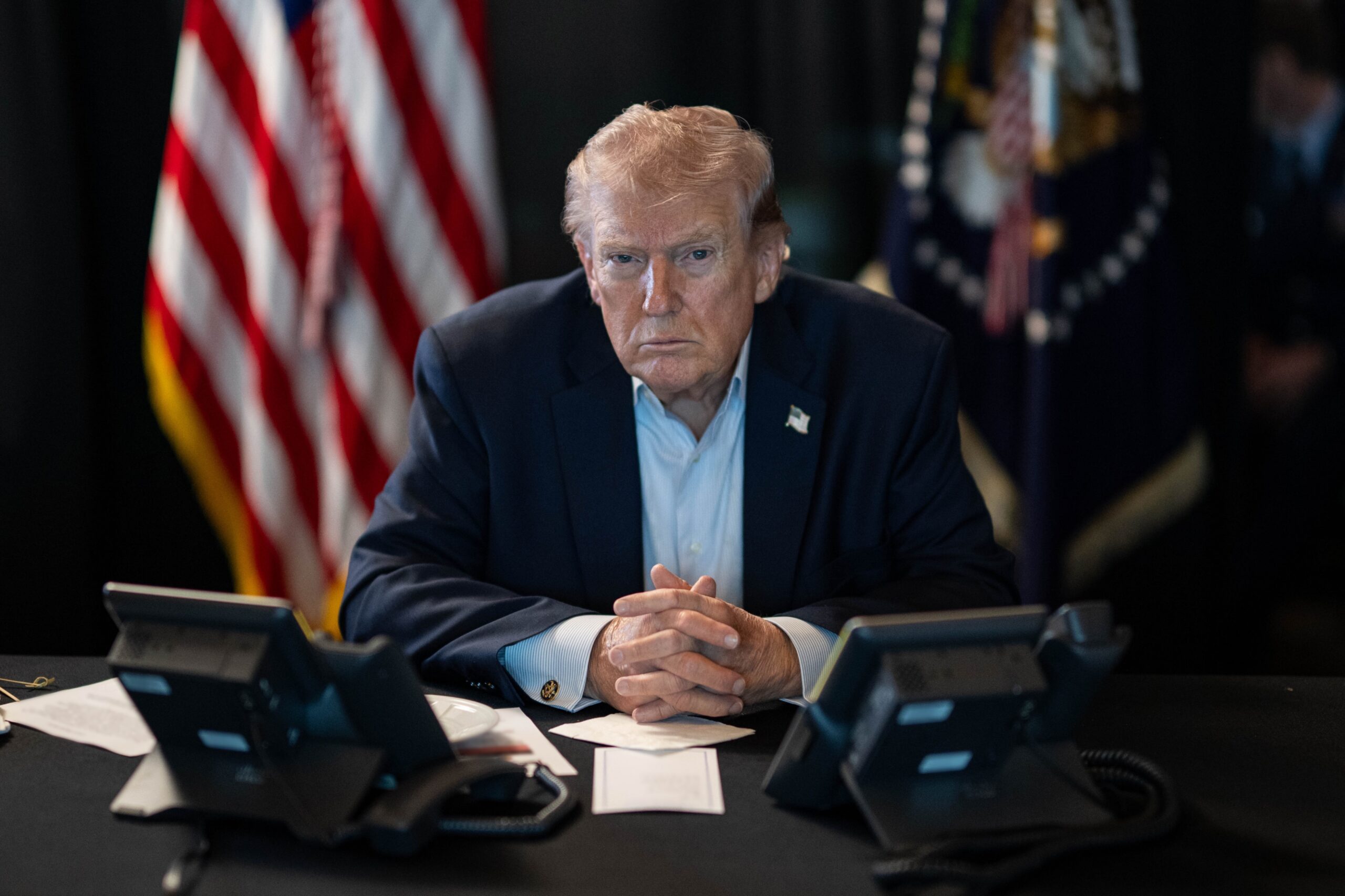
President Donald Trump drew two contradictory timelines for the ongoing war in Iran in remarks on Monday, saying that the conflict was both drawing to a close and in its early stages, Jewish Insider’s Lahav Harkov reports. In a call with CBS News, Trump said, “The war is very complete, pretty much. [Iran has] no navy, no communications; they’ve got no air force. Their missiles are down to a scatter. Their drones are being blown up all over the place, including the manufacturing of drones. … There’s nothing left in a military sense.”
Timeline talk: The war has progressed faster than initially expected, the president added: “We’re very far ahead of schedule.” Also Monday, the Department of Defense posted on X that “we have only just begun to fight, with a graphic of a missile interceptor and the text: “No Mercy.” At a news conference after his CBS News interview, Trump was asked whether the war is “very complete” or “just beginning.” The president responded, “I think you could say both. It’s the beginning of building a new country. We could call it a tremendous success right now, or we could go further.” Trump added, “And we’re going to go further.”
More from Trump: The president also said repeatedly on Monday that he believed the Iranian regime was going to “take over the Middle East” and would have obtained a nuclear weapon “within weeks” had he not ordered the U.S. military operation against Iran, JI’s Emily Jacobs reports.
BLUEGRASS BATTLE
Thomas Massie’s opposition to Iran war could cost him reelection
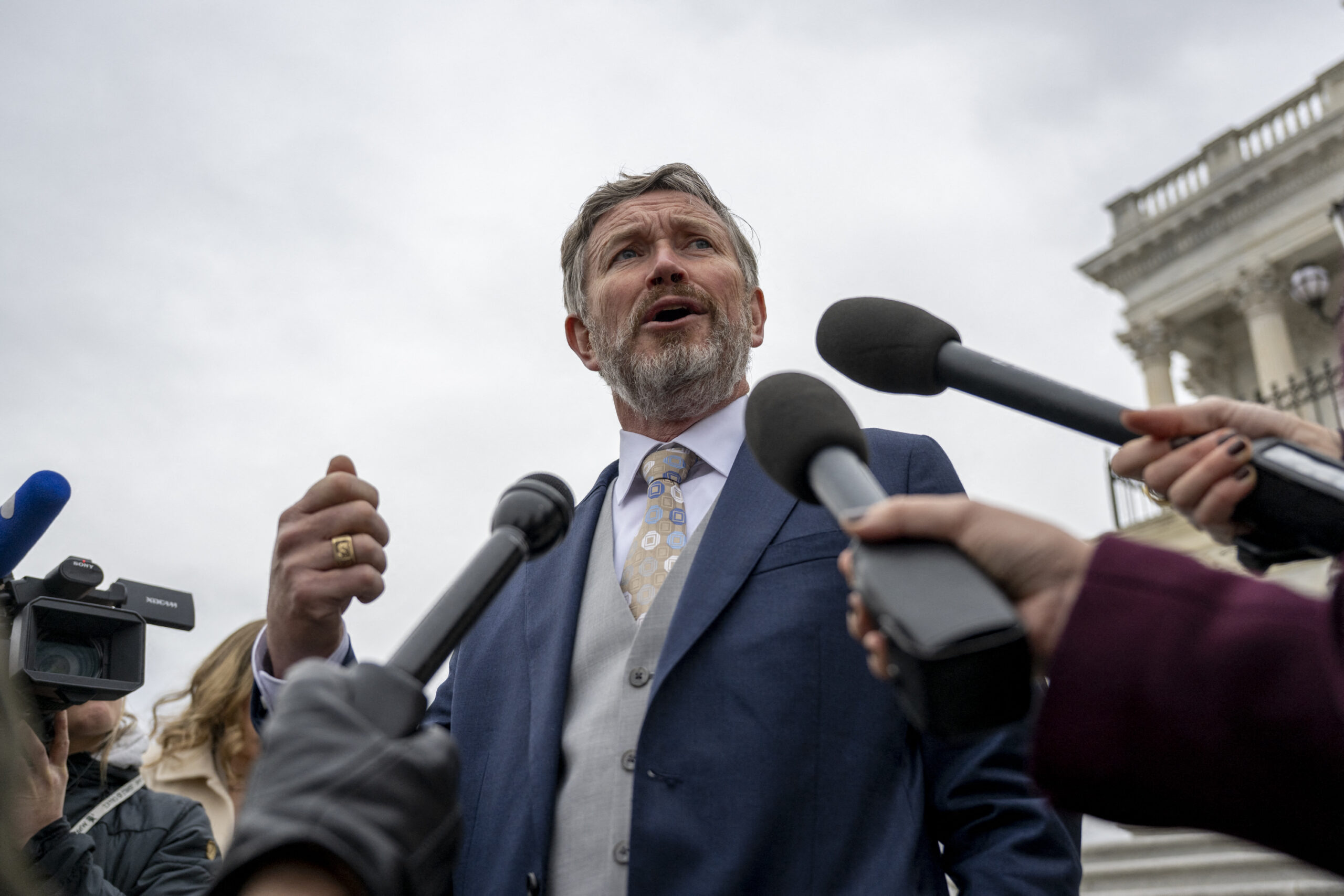
President Donald Trump is headed to Kentucky this week to rally with Ed Gallrein, his endorsed candidate to take on anti-Israel and isolationist Rep. Thomas Massie (R-KY) in the increasingly heated primary between the two men, Jewish Insider’s Marc Rod reports.
The latest: The campaign stop comes at a time when Massie has made himself the face of GOP opposition to the war in Iran — among the litany of other issues on which he has also broken with the president. Massie was one of two lead sponsors of a failed effort in the House last week to stop the war in Iran, while Gallrein said in a statement that the war was justified and would prevent further attacks on U.S. servicemembers and the nation. In a ruby- red district, Massie’s opposition to the war could cost him politically, as polling shows Republicans have rallied strongly behind the administration and its efforts. For its part, the Republican Jewish Coalition is taking aim at Massie over his opposition to the war in a significant ad campaign.
EXECUTIVE ACTION
White House moves to designate Sudanese Muslim Brotherhood as terrorist group
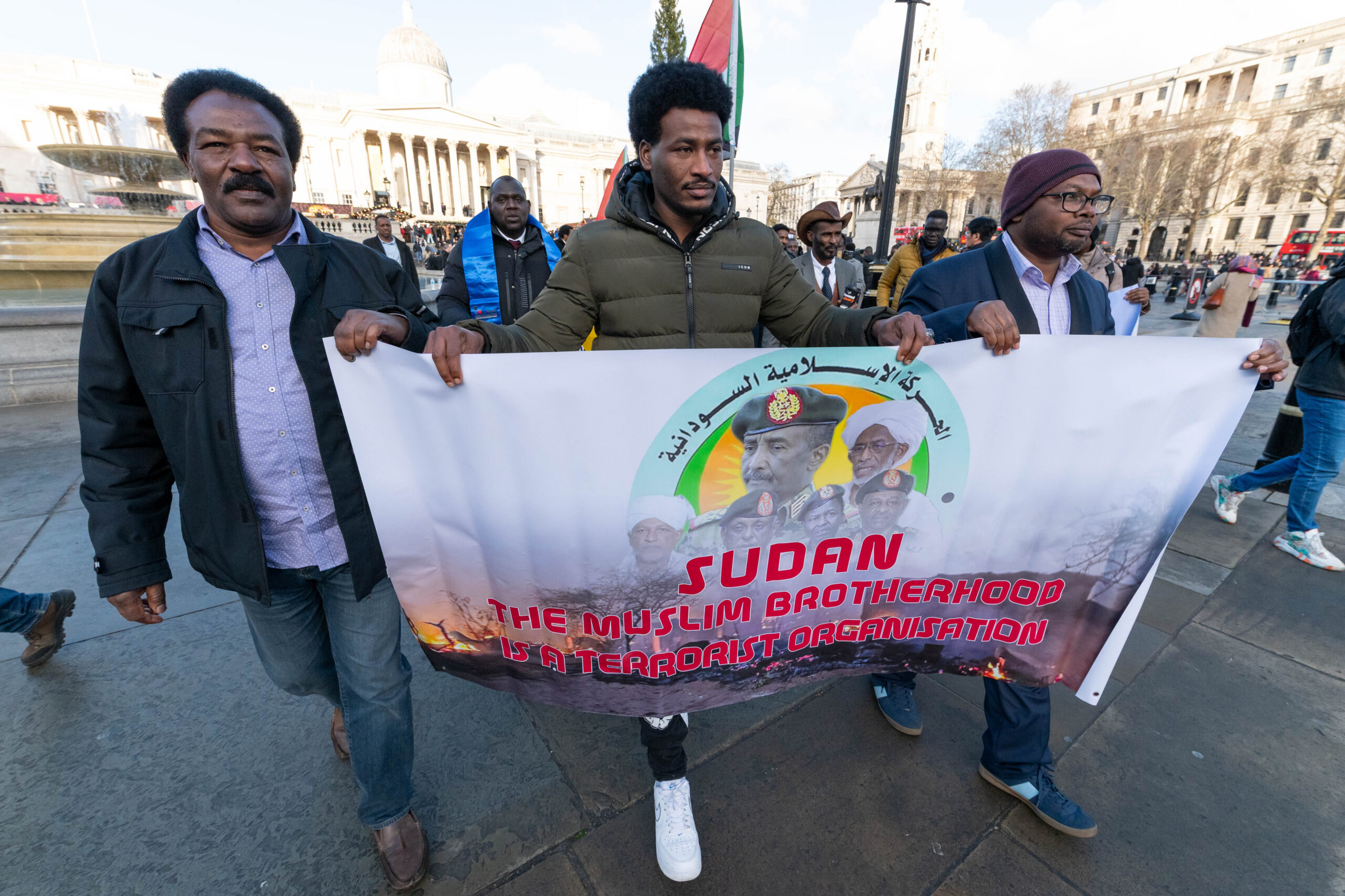
The Trump administration on Monday moved to designate the Sudanese Muslim Brotherhood (SMB) as a Specially Designated Global Terrorist (SDGT) entity and announced plans to impose a Foreign Terrorist Organization (FTO) designation on March 16, Jewish Insider’s Matthew Shea reports.
Rubio’s statement: “The Sudanese Muslim Brotherhood uses unrestrained violence against civilians to undermine efforts to resolve the conflict in Sudan and advance its violent Islamist ideology,” Secretary of State Marco Rubio said in a press release. “The United States will use all available tools to deprive the Iranian regime and Muslim Brotherhood chapters of the resources to engage in or support terrorism.” Experts have previously told JI that the Sudanese Armed Forces (SAF) is heavily influenced by the SMB, working alongside several Islamist militias and receiving attack drones from Iran’s Islamic Revolutionary Guard Corps (IRGC), which has been designated as a terrorist organization by both the U.S. and the European Union.
CLAUDE’S PARENTS
The Amodei siblings leading Anthropic clash with the White House over AI safety

Siblings Dario and Daniela Amodei are like countless other Americans who have built a family business together. Except that the business the Jewish siblings have built is artificial intelligence giant Anthropic, one of the fastest- growing companies in America — and in the five years since they left cushy jobs at rival OpenAI to start it, they have each amassed billions in wealth. But a dispute over Anthropic’s stated commitment to safety has now put the company squarely in conflict with the Trump administration, Jewish Insider’s Gabby Deutch reports.
Legal battle: On Monday, Anthropic sued Secretary of Defense Pete Hegseth, Secretary of State Marco Rubio and several other Trump administration officials over Hegseth’s decision to designate Anthropic a national security “supply-chain risk” last month, after the company told the Pentagon that it would not allow its technology to be used for mass domestic surveillance or in fully autonomous weapons. Hegseth is “within his right to cancel the contract. But I think that the people in the Department of War, they’re trying to turn the screw. They’re trying to make it tough for Anthropic to survive,” Will Rinehart, a senior fellow at the American Enterprise Institute who researches tech policy, told JI.
RUNNING INTERFERENCE
Group of Democrats threatens to obstruct Senate business to secure hearings, debate on Iran war
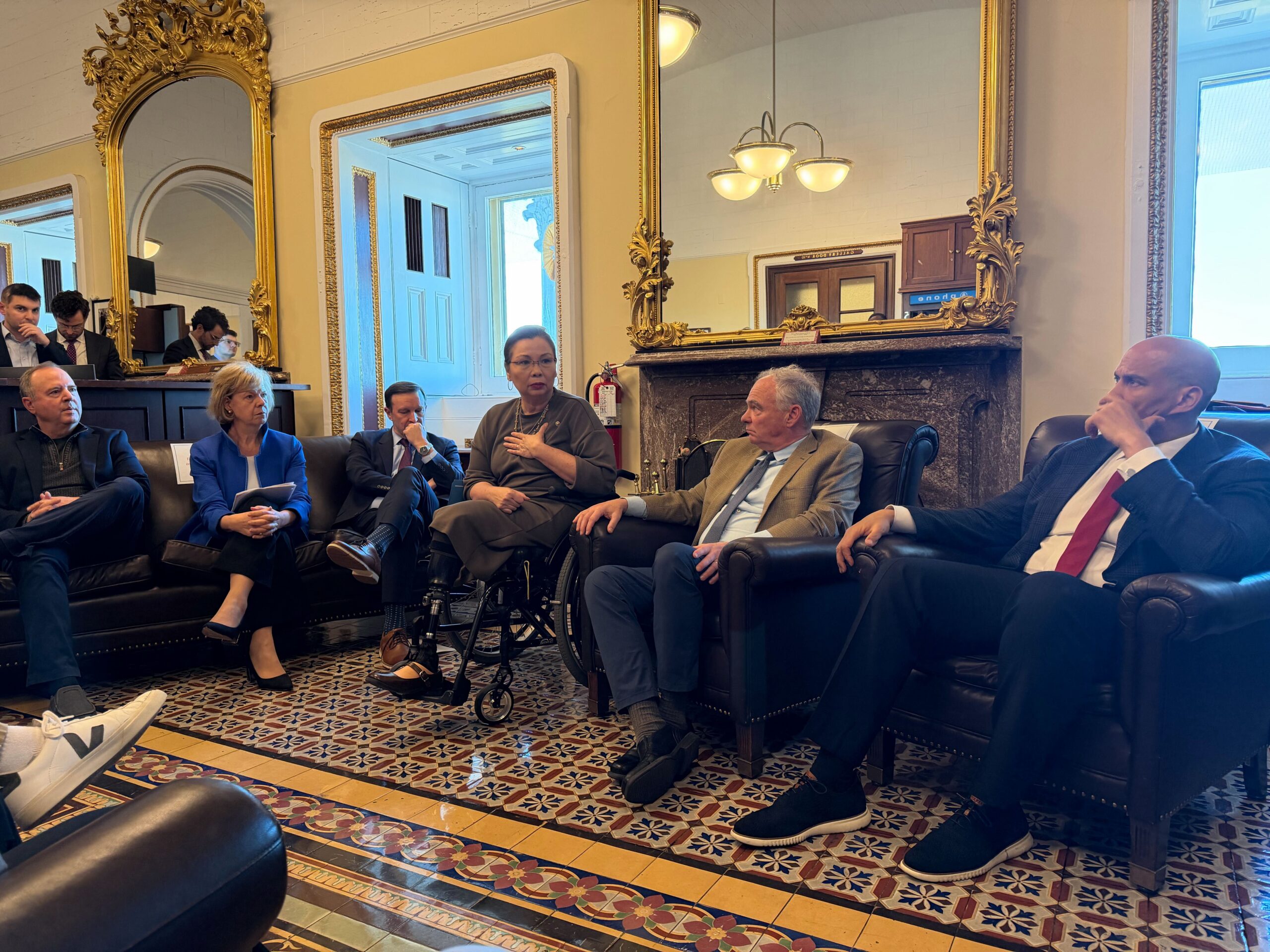
A group of six Senate Democrats is threatening to immediately begin obstructing proceedings on the Senate floor in order to force public hearings in the Senate Armed Services Committee and Foreign Relations Committee and debate on the chamber floor on the war in Iran, Jewish Insider’s Marc Rod reports.
The plan: JI first reported that several of those lawmakers — including Sens. Cory Booker (D-NJ), Tim Kaine (D-VA), Tammy Duckworth (D-IL), Chris Murphy (D-CT), Tammy Baldwin (D-WI) and Adam Schiff (D-CA) — introduced a series of five new war powers resolutions late last week. The senators indicated in a meeting with reporters on Monday that they plan to force votes on those, and possibly additional, war powers resolutions when they become eligible for votes next week, but that those resolutions are just part of a broader strategy to disrupt normal Senate business in an attempt to force greater public discussion about the war in Iran.
TERROR PROBE
Alleged perpetrators of attempted bombing at anti-Mamdani protest claim ISIS as inspiration
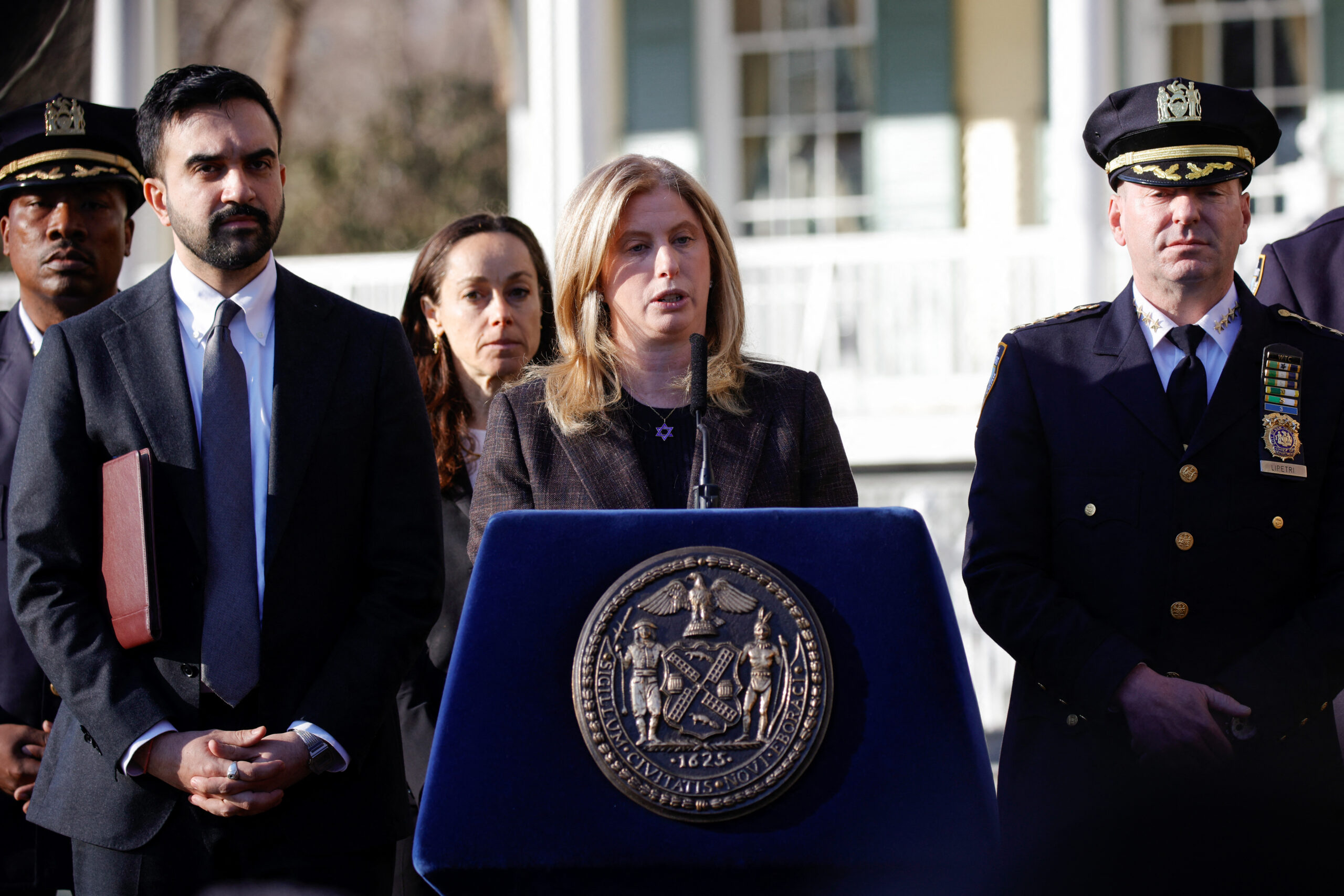
The two Pennsylvania men who allegedly hurled improvised explosive devices toward a protest against New York City Mayor Zohran Mamdani will face federal charges for “ISIS-inspired terrorism,” NYPD Commissioner Jessica Tisch revealed Monday, Jewish Insider’s Will Bredderman reports.
ISIS inspiration: Mamdani and Tisch addressed the press near the scene of the crime, the mayoral residence of Gracie Mansion, where far-right provocateur Jake Lang held a protest on Saturday to “Stop the Islamic takeover of New York City.” Tisch said Lang and his supporters were the targets of two homemade bombs that Emir Balat, 18, who had traveled from Pennsylvania with his accused accomplice Ibrahim Kayumi, 19, flung from amid the counter-demonstration. Tisch confirmed earlier reporting that the Islamic State appears to have inspired the alleged perpetrators’ actions — but maintained nothing at present pointed to any link between the attempted attack and the ongoing U.S. and Israeli military campaign against Iran.
Bonus: Mamdani posted a photo of his wife, who has come under fire in recent days for her social media support for Hamas’ Oct. 7 attacks, and former Columbia protest leader Mahmoud Khalil, who is facing potential deportation for his role in anti-Israel activity on the campus, having an iftar meal at Gracie Mansion.
Worthy Reads
Wolpe’s Wit: In a tongue-in-cheek essay in The Atlantic, Rabbi David Wolpe responds to a statement from California Gov. Gavin Newsom’s office reaffirming his belief in Israel’s right to exist, issued after the governor came under fire for a series of anti-Israel remarks. “Given this statement, I feel it is appropriate to affirm that I believe that Gavin Newsom also has the right to exist, and I further believe that California itself has the right to exist. And the right to defend itself, specifically from Nevada, but not necessarily from Oregon. … As a spiritual leader, it is my responsibility to follow my conscience and not the shifting polls, which, coincidentally, currently align with my conscience. Yes, this position may arouse some ire. Many insist that California is a colonial enterprise, and much of it was stolen from its original inhabitants, the members of the liberal-arts faculty of UC Berkeley.” [TheAtlantic]
Chaos Be Damned: In The Washington Post, Douglas Feith, who served as undersecretary of defense for policy from 2001-2005, posits that President Donald Trump is attempting a new strategy in Iran. “Trump shows no concern about chaos. He is giving the Iranians a chance to take control away from the ayatollahs. Trump sees that as a gift — he doesn’t think the U.S. owes Iranians an on-the-ground effort to prevent chaos or to make their country stable, let alone democratic and prosperous. The president’s goal is to deprive Iran of the power to hurt the U.S. and its interests. If dangers develop down the road, he expects to be able to deal with them far more easily than if he had left in place the Islamic regime that was pursuing nuclear weapons and developing ever-longer-range missiles.” [WashPost]
Doha’s Decision: In his Substack “The Abrahamic Metacritique,” Hussein Aboubakr Mansour observes the developing inflection point in Qatar as the Arab state’s leaders determine its political and diplomatic future. “The question we should ask is whether Qatar will use this moment of crisis to do what its critics have demanded for years: sever its ties to political Islam, expel the Muslim Brotherhood networks it has funded and housed since the 1990s, abandon the Hamas patronage that made it indispensable as a mediator but also made it a target, and, perhaps, reposition as a clean, reliable American partner. The question sounds simple, but the answer is not.” [AbrahamicMetacritique]
Ari the Interviewer: The New York Times’ Brooks Barnes spotlights former Endeavor CEO Ari Emanuel following the launch of the Hollywood agent’s new podcast, in which he takes center stage as an interviewer. “For people who have dealt with the combative Mr. Emanuel over the decades, this can be a bit like watching a body-swapping comedy: Who are you, and what have you done with Ari Emanuel? In contrast to his reputation, Mr. Emanuel comes across on ‘Rushmore’ as eminently likable. He’s polite and thoughtful. He’s able to maintain his focus for more than 90 seconds. Mr. Emanuel even allows himself brief moments of vulnerability — when the armor slips, and he’s not the alpha.” [NYTimes]
Word on the Street
The Wall Street Journal does a deep dive into President Donald Trump‘s potential backing of either Vice President JD Vance or Secretary of State Marco Rubio — the latter of whom the president has expressed a growing preference for — as the GOP’s 2028 presidential candidate…
Politico looks at the diplomatic efforts of White House Special Envoy Steve Witkoff and Jared Kushner as they represent a presidential administration that “views diplomacy like a real-estate venture, requiring a business mindset and a small team tasked with securing a big development deal”...
The Wall Street Journal spotlights the Florsheim loafers being gifted by Trump to all manner of White House visitors, noting that while at the White House in January, far-right commentator Tucker Carlson was given a pair of brown wingtips…
The Atlantic’s Jeffrey Goldberg reflects on the consequences of “Signalgate” a year after he was accidentally added to a group chat of senior Trump administration officials ahead of and during a U.S. operation targeting the Houthis…
Led by Sen. Chris Van Hollen (D-MD), 31 Senate Democrats pressed the administration for accountability for the death of a U.S. citizen in the West Bank, writing that there has been “a consistent pattern in which Americans are being killed in the West Bank by settlers or the IDF without justice or accountability, despite promises from U.S. officials”…
The Oklahoma Statewide Charter School Board rejected for the second time in as many months a proposal for a virtual Jewish charter school, citing a state Supreme Court ruling that charter schools must be non-sectarian…
A mayoral candidate in Ann Arbor, Mich., featured an open Hamas supporter in his campaign video, JI’s Haley Cohen has learned…
A kosher concessions stand is setting up shop at Camden Yards for the Baltimore Orioles’ upcoming season; Birdland Kosher will sell ballpark and American Jewish fare, including hot dogs, chicken nuggets, soft pretzels, hot pastrami sandwiches on rye, potato knishes and chocolate chip cookies…
Australia will grant asylum to five members of Iran’s national women’s soccer team who had been in the country when the war broke out; the move came after President Donald Trump called on Canberra to help the women and offered them asylum in the U.S….
Team Israel was eliminated from the World Baseball Classic following its 10-1 loss to the Dominican Republic on Monday; the Israeli team will still play against the Netherlands today in Miami…
Comic book colorist Tatjana Wood, who survived the Holocaust in hiding at a Quaker school in the Netherlands before immigrating to the U.S. and becoming an award-winning artist, died at 99…
Pic of the Day
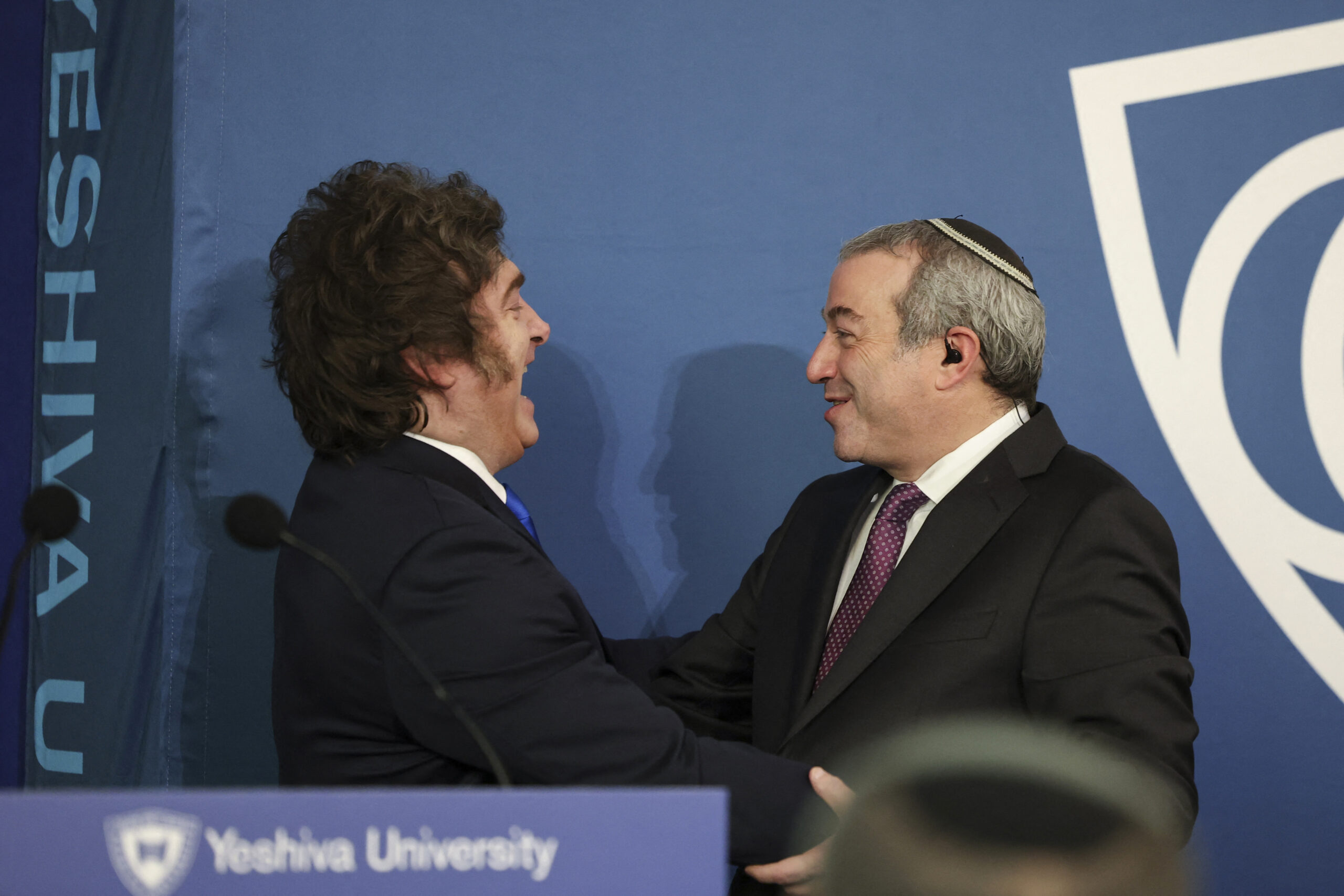
Argentine President Javier Milei was the featured guest at Yeshiva University last night for the latest in its “Great Conversations” series hosted by the school’s president, Rabbi Ari Berman (right).
Birthdays

Co-founder of Twitter and then Jelly, which he headed from 2014 until its acquisition by Pinterest in 2017, Christopher Isaac “Biz” Stone turns 52…
Member of the Pro Football Hall of Fame, he played for the San Diego Chargers of the AFL and then for the Oakland Raiders of the NFL, Ron Mix turns 88… Long Beach, Calif., general surgeon, Leonard M. Lovitch, MD… Former chairman and president of Purdue Pharma, he and his family are the subject of multiple lawsuits relating to the opioid crisis, Richard Sackler, MD turns 81… Author and publisher of the Phoenix Scottsdale Jewish Friendship Trail Guidebook, Michael Alan Ross… Senior cryogenics engineer at Raytheon Missile Systems in Tucson, Ariz., he is also an adjunct professor at the University of Arizona, Lawrence Sobel… Founder and CEO of Cambridge, Mass.-based Pegasystems, Alan N. Trefler turns 70… Editor-at-large of Mishpacha Magazine, Binyamin Rose turns 70… Founder of two Israeli companies, Strategy3i Ltd. and Fluenzy, Jeffrey Kahn turns 68… Winner of four gymnastics medals in the 1984 Summer Olympic Games, now in the reverse mortgage business in Sarasota, Mitch Gaylord turns 65… Record producer, former co-president of Columbia Records and a co-founder of Def Jam Records, Frederick Jay “Rick” Rubin turns 63… Financial journalist for CNBC and one of the co-hosts of its morning show “Squawk on the Street,” David Faber turns 62… Executive director until 2024 of the America Israel Friendship League, Wayne L. Firestone turns 62… Stage, screen and television actor, he is the son of novelist Norman Mailer, Stephen Mailer turns 60… Investigative reporter for The New York Times since 2000, Danny Hakim… Former White House official in the Clinton administration, she is now the first lady of Pennsylvania, Lori Shapiro turns 53… Real estate agent on Bravo’s “Million Dollar Listing,” Josh Altman turns 47… Former IDF officer, then a financial executive, Aliza Landes… Former deputy assistant secretary at the U.S. State Department, now executive director at The Vandenberg Coalition, Carrie Filipetti… Actor and director, he is the son of Kate Capshaw and Steven Spielberg, Sawyer Avery Spielberg turns 34…
Greene has stayed on the sidelines in the race to replace her, not endorsing or rallying for any of the candidates, as she continues to air her disappointment with Trump and the GOP leadership
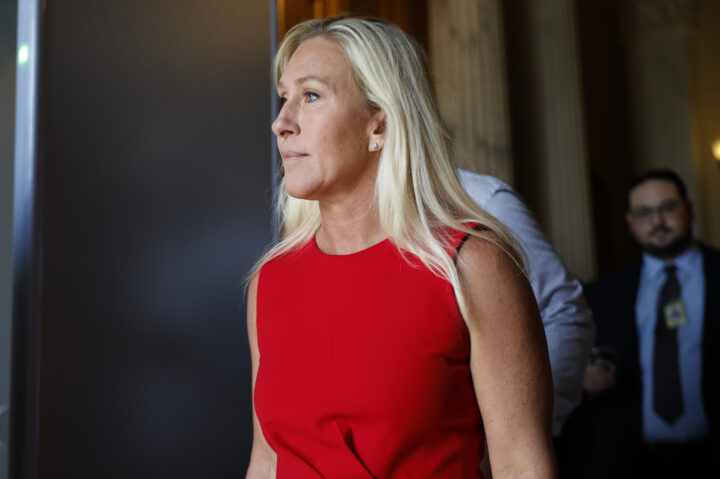
Chip Somodevilla/Getty Images
Rep. Marjorie Taylor Greene (R-GA) leaves the House Chamber following the last vote of the week at the U.S. Capitol on September 12, 2024 in Washington, DC.
Voters are casting ballots today in the special election for the ruby-red House seat previously held by Rep. Marjorie Taylor Greene (R-GA), but the final outcome will likely remain uncertain for another month.
With 17 candidates on the all-party ballot, the race is expected to go to a runoff — unless any candidate receives 50% or more of the vote, making today’s race effectively a competition over which two candidates are likely to finish with the most support.
On the GOP side, the race is dominated by two candidates. The first is Clay Fuller, a local district attorney, veteran and former White House fellow who is backed by President Donald Trump.
The second, former state Sen. Colton Moore, a hard-line conservative rabble-rouser often at odds with his own party’s leadership, is running as the anti-establishment populist — a profile that more closely matches Greene’s.
The district is one of the most Republican in the country: Trump carried the district by 37 percentage points in 2024, and paid a visit to the district in late February to throw his support behind Fuller.
A third Republican candidate, Brian Stover, a local businessman, has raised a significant amount of campaign cash and is a wild card.
On the Democratic side, the likely leader is Army veteran Shawn Harris, who lost to Greene in 2024 by nearly 30 points. He’s pulled in $4.2 million from Democrats outraged by Greene and who’ve been attracted by a far-fetched pitch that he can flip the seat. But he’s likely to secure a runoff spot, given how many Republican candidates are on the ballot.
Fuller’s campaign has been touting Trump’s endorsement, and his own military service. Fuller’s Air Force career included work on counterterrorism operations, and he was deployed in 2024 to the Al Udeid airbase in Qatar supporting U.S. Central Command operations. He also has the support of the conservative Club for Growth.
He has backed the U.S.-Israeli offensive against Iran, and expressed support for Israel. “President Trump tried the peace route with Iran not once, not twice, but THREE separate times—and they refused. He’s the peace President, but you can’t negotiate with a death cult,” Fuller said, emphasizing he had supported operations against Iran and that the regime and its proxies had killed many Americans.
Despite not receiving Trump’s support, Moore is also trying to tie himself closely to the president, describing himself on his campaign website as “Trump’s #1 Defender” and “a Proven Warrior for President Trump” — pointing to his vocal efforts to contest the results of the 2020 election and opposition to subsequent investigations of Trump and his allies — and using the campaign slogan, “God. Guns. Trump.”
Moore has repeatedly found himself at odds with Georgia’s GOP establishment, having been expelled from the Republican caucus, banned from the Statehouse floor and arrested when he tried to enter the 2025 State of the State address.
Moore doesn’t appear to have addressed the war in Iran, but said, days after the Oct. 7, 2023, Hamas attacks, “The Jewish people are the indigenous people of Israel.” And according to a candidate questionnaire from 2022, he is a longtime supporter of Israel, having attended AIPAC conferences and, as a college student, having served as co-chair of the University of Georgia AIPAC chapter. “There is no Palestinian land, it is all the land of Israel,” he said in the questionnaire.
So despite his MAGA bona fides, his record appears decidedly more supportive of Israel than Greene, who has advanced antisemitic conspiracy theories and became one of the few anti-Israel Republicans in Congress.
However, Moore was also the only Republican member of the state Senate to vote against a bill in 2024 codifying the International Holocaust Remembrance Alliance’s working definition of antisemitism — echoing Greene’s stance on the Antisemitism Awareness Act in the same year.
As of Feb. 18, Stover had raised $940,000 (around two-thirds of that was in the form of a personal loan to his campaign), Fuller $787,000 and Moore $342,000.
The normally voluble Greene has stayed on the sidelines in the race to replace her, not endorsing or rallying for any of the candidates, as she continues to air her disappointment with Trump and the GOP leadership.
Already several members of the state’s congressional delegation have begun to coalesce around Mejia’s campaign
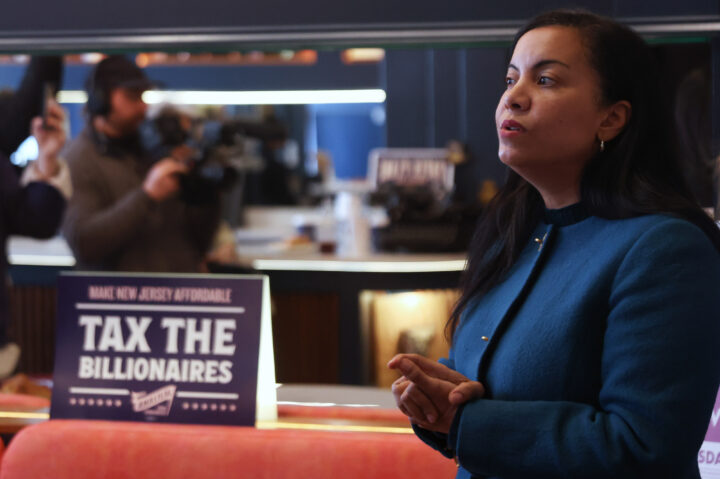
Heather Khalifa/Bloomberg via Getty Images
Analilia Mejia speaks to supporters and members of the media at Paper Plane Coffee Co. in Montclair, N.J., on Thursday, Jan. 29, 2026.
With progressive activist Analilia Mejia’s expected victory in the special election Democratic primary in New Jersey’s 11th Congressional District, attention is now turning to the upcoming April special general election and the June regular election primary as the last chances for moderates and pro-Israel groups to defeat her.
AIPAC’s super PAC, the United Democracy Project, which spent $2.3 million attacking former Rep. Tom Malinowski (D-NJ), said in a statement that its “focus remains on who will serve the next full term in Congress” and that it will be “closely monitoring … the June NJ-11 primary, to help ensure pro-Israel candidates are elected to Congress.”
Mejia is on track to receive less than 30% of the primary vote in a relatively moderate suburban district, creating an opportunity for a moderate candidate to challenge her. But several Jewish leaders, as well as a local analyst, said that that will be difficult to achieve.
“June is potentially irresistible for the other candidates who ran … if any of these candidates could get a one-on-one shot at making it in June,” Micah Rasmussen, the director of the Rebovich Institute for New Jersey Politics at Rider University, said. But unless the field can consolidate, Rasmussen said, it’s hard to see how the result would be any different in June.
Rasmussen said he doesn’t share the view of some Democrats that voters would be frustrated with a Democratic candidate who decides to challenge Mejia.
Though they haven’t formally endorsed her yet, other members of New Jersey’s congressional delegation appear to be coalescing around Mejia — Reps. LaMonica McIver (D-NJ), Bonnie Watson Coleman (D-NJ) and Rob Menendez (D-NJ) participated in a town hall focused on Immigration and Customs Enforcement organized by Mejia on Saturday, and Menendez — a relative moderate aligned with the state’s party machine — posted a photo with her on Sunday.
Malinowski has not yet conceded the race, but said during the primary that he would not run again in June if he lost. Essex County Commissioner Brendan Gill also does not plan to run again. That leaves the most likely moderate challenger as former Lt. Gov. Tahesha Way, who was endorsed by Democratic Majority for Israel and is believed to be AIPAC’s choice in the race.
Way is holding in third with 17% of the vote. Her campaign did not respond to a request for comment on whether she plans to run again.
Local Jewish leaders on Friday were generally pessimistic about the chances of taking Mejia down in the June primary — for the full term in Congress — but there could be a path to defeating the ascendant progressive.
“I sat on a debate stage with Analilia Mejia when she said that Israel has a right to exist, but not as a Jewish state,” Jeff Grayzel, a local Jewish leader who ran for the seat with ambitions of uniting the Jewish community behind his campaign, said. “It is said that Jews will be blessed when they stand together and will experience misfortune when they are divided. My pleas for Jewish unity in this race went unheeded. In my messaging to the Jewish community, I warned of a repeat of New York City in NJ-11, and this result is a consequence of a house divided. I pray our people can unify to find a path forward.”
Rasmussen said that Malinowski, who came closest to beating Mejia, would be the strongest candidate in a head-to-head race against Mejia in June, and Rasmussen said he could envision a scenario in which Malinowski ultimately took another shot at the seat despite his previous pledge not to.
“I think it’s a little bit tougher for Tahesha Way to do that,” Rasmussen said. “She would very clearly have outside spending with her. She’d very clearly have fundraising with her. But it’s a little tough to go from a 17% result to a majority result. We’ll see what happens. It doesn’t mean she shouldn’t think about it, she shouldn’t consider it, but it’s probably a stretch.”
Jeff Grayzel, a local Jewish leader who ran for the seat with ambitions of uniting the Jewish community behind his campaign, lamented Mejia’s victory as a disappointing development for supporters of Israel, and said the Jewish community needs to come together.
“I sat on a debate stage with Analilia Mejia when she said that Israel has a right to exist, but not as a Jewish state,” Grayzel said. “It is said that Jews will be blessed when they stand together and will experience misfortune when they are divided. My pleas for Jewish unity in this race went unheeded. In my messaging to the Jewish community, I warned of a repeat of New York City in NJ-11, and this result is a consequence of a house divided. I pray our people can unify to find a path forward.”
Though Mejia is well to the left of candidates that the district typically picks, Rasumussen said that it’s “hard to come up with a situation” where the district — drawn to favor Democrats with a highly motivated Democratic voter base in a midterm year — would become competitive for Republicans in the April 16 special general election to fill out the remainder of Gov. Mikie Sherrill’s House term.
“However, that’s not to say that Republicans won’t try,” Rasmussen said. “If I were a Republican who had the ability to invest resources, I would certainly be taking a very close look at this race on these next three elections that are going to be happening this year in this district, and trying to see if I can take advantage of the very particular circumstances.”
“I think it’s pretty clear why voters went to Mejia, and it’s not because she is a socialist or because she is the most left of any candidate in the race,” Micah Rasmussen, the director of the Rebovich Institute for New Jersey Politics at Rider University, said. “Voters were driven away from Malinowski because of that advertising. They did not view a machine candidate as a viable alternative. They saw Mejia as the candidate in the race who could most stand up to Trump … the candidate who had the clearest position on ICE.”
Rasmussen said that UDP’s advertising against Malinowski “very clearly … worked,” citing the significant drop in Malinowski’s share of the vote from the first early votes to be submitted — where he was receiving 60-70% of the vote — and votes submitted later in the cycle, as well as votes on election day.
“It’s pretty clear that the reason they went in [Mejia’s] direction is because she carved out a different position on ICE, which is very clearly on voters minds, and just convinced voters that she was the person who could best stand up to Trump, and that, it seems is what Democratic voters are looking for,” Rasmussen said.
He was skeptical of the narrative that the result was a sign of a broader voter appetite for socialist or socialist-adjacent policies in moderate suburban districts.
“I think it’s pretty clear why voters went to Mejia, and it’s not because she is a socialist or because she is the most left of any candidate in the race,” Rasmussen said. “Voters were driven away from Malinowski because of that advertising. They did not view a machine candidate as a viable alternative. They saw Mejia as the candidate in the race who could most stand up to Trump … the candidate who had the clearest position on ICE.”
The race also saw substantially higher turnout than most anticipated — surpassing 2024 primary turnout levels in not just the 11th District but every congressional district in New Jersey, according to Rasmussen — a sign of strong Democratic motivation to vote, likely spurred by President Donald Trump.
Gill’s fourth-place finish — despite entering the race as the favorite given the backing he received from New Jersey Democratic institutions — is a clear signal that the state’s Democratic machine has largely lost its ability to shape elections to its will, Rasmussen added.
‘There are several candidates in this race that are far more supportive of the U.S.-Israel relationship than Tom Malinowski,’ United Democracy Project spokesperson Patrick Dorton told JI
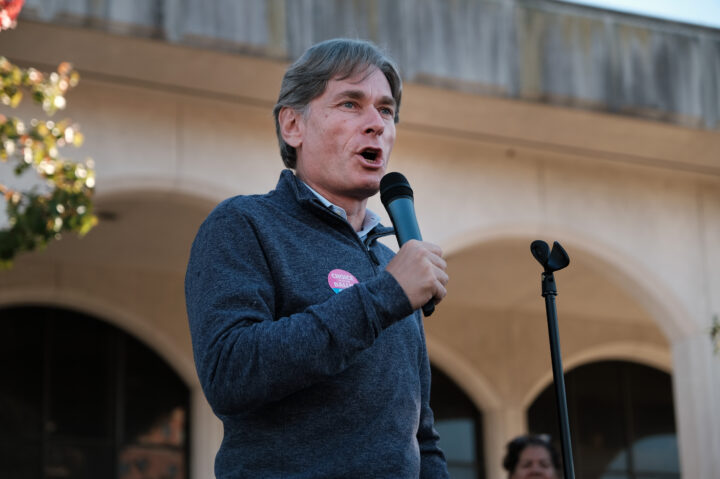
Spencer Platt/Getty Images
Former Rep. Tom Malinowski (D-NJ) participates in a get-out-the-vote event on October 29, 2022 in Rahway, New Jersey.
The AIPAC-affiliated United Democracy Project super PAC launched a $500,000 ad campaign this weekend targeting former Rep. Tom Malinowski (D-NJ), who is running in a special election for the seat formerly held by Gov.-elect Mikie Sherrill.
The ads highlight Malinowski’s vote in favor of additional funding for Immigration and Customs Enforcement years ago, while he was in office representing the neighboring district. The vote also received support from a majority of Democrats.
“There are several candidates in this race that are far more supportive of the U.S.-Israel relationship than Tom Malinowski,” UDP spokesperson Patrick Dorton told Jewish Insider. Dorton also confirmed the size of the ad buy.
Its decision to aggressively single out Malinowski is unexpected given that he has not expressed the same sort of caustic anti-Israel views that many of the candidates the super PAC traditionally targets have espoused. Malinowski, a former State Department official, was a prominent voice on foreign policy matters during his time in Congress and maintained a pro-Israel record.
“The ad itself is obviously — and unforgivably — cynical and dishonest. The strategy behind it is inexplicable. If AIPAC’s definition of pro-Israel now excludes even someone like me, who passionately supports Israel but won’t commit to a blank check for anything [Israeli Prime Minister Benjamin Netanyahu] might want, there won’t be enough pro-Israel people left in America to sustain the relationship,” Malinowski said in a statement to JI. “I’m confident people will see through this. But if they were to get away with it here, they will do the same to many other Democrats who at some point voted for border funding.”
Various lawmakers — Democrats and Republicans — who AIPAC supports also voted for the border funding package.
In a recent interview with JI, Malinowski described himself as pro-Israel and expressed support for the Trump administration’s Gaza peace plan and strikes on Iran’s nuclear program. But he also said he’s open to policies conditioning or restricting aid, and said the U.S. should act as “counterweight” to the Israeli far right. He added that U.S. aid shouldn’t be used to facilitate Israeli actions that the U.S. itself doesn’t support.
Multiple other candidates in the Democratic primary for the 11th Congressional District have expressed more critical views of Israel, including Analilia Mejia, who leads a progressive advocacy group. Mejia suggested in a candidate forum last week that Arab Israelis do not enjoy the same level of citizenship as Jewish Israelis and indicated she would not support sending offensive weapons to Israel as a member of Congress.
She’s endorsed by a series of progressives critical of Israel including Sen. Bernie Sanders (I-VT) and Reps. Alexandria Ocasio-Cortez (D-NY), Pramila Jayapal (D-WA), Ro Khanna (D-CA), Maxwell Frost (D-FL), Delia Ramirez (D-IL), Greg Casar (D-TX), Ayanna Pressley (D-MA) and Chuy Garcia (D-IL), as well as the Working Families Party and the Congressional Progressive Caucus PAC.
Other candidates in the race include Essex County Commissioner Brendan Gill, who expressed support for continued and unrestricted U.S. aid to Israel in a recent interview with JI; Lt. Gov. Tahesha Way, who voiced her support for the U.S.-Israel relationship in a recent candidate forum; and Jeff Grayzel, the deputy mayor of Morris Township whose path to victory relies upon the support of Jewish voters in the district.
Gill, backed by Gov. Phil Murphy, and Malinowski have generally been seen as the front-runners.
‘It is pathetic that in the state with the fourth largest Jewish population in the United States, we don't have that,’ local Jewish leader Jeff Grayzel said
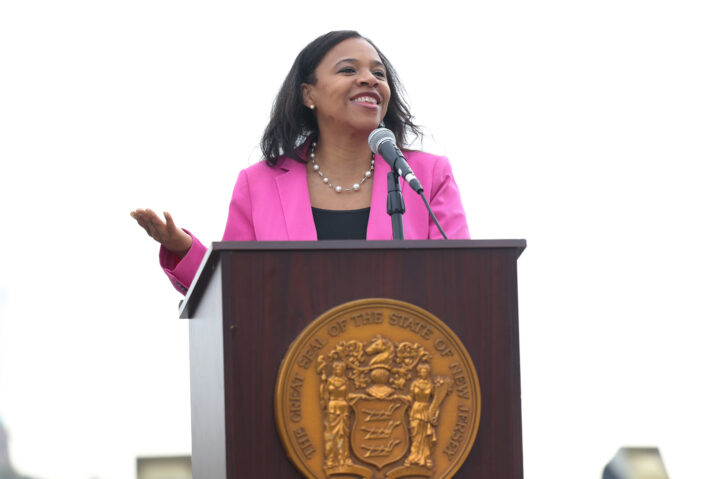
Michael M. Santiago/Getty Images
New Jersey Lt. Gov. Tahesha L. Way, speaks during a Naturalization Ceremony at Liberty State Park on September 17, 2024 in Jersey City, New Jersey.
Two Democratic candidates running in the crowded special election to replace New Jersey Gov.-elect Mikie Sherrill, including the state’s current secretary of state and lieutenant governor, criticized the state Assembly for failing to pass legislation codifying the International Holocaust Remembrance Alliance’s working definition of antisemitism.
Their comments came during a virtual forum hosted by the Jewish Democratic Council of America on Tuesday evening with most of the candidates in the race for the northern New Jersey House district, though some including Essex County Commissioner Brendan Gill, the likely front-runner, were missing; Gill was expected to join but organizers said he had unexpected family obligations.
“I, too, take offense that my own state did not adopt IHRA, and I will definitely move this forward as your congresswoman,” New Jersey’s lieutenant governor and secretary of state, Tahesha Way, said.
Multiple sources blamed the state’s governor and other senior Democratic officials for killing the bill due to concerns about political blowback from progressives targeting Democratic lawmakers who would vote for it.
Way issued a statement expressing similar support last week after the legislation failed to move forward in the legislature. “As we witness an alarming rise in antisemitism across our country, we must be unequivocal: hate has no place in our society. I will always stand by the Jewish community, and I support legislation adopting the International Holocaust Remembrance Alliance’s working definition of antisemitism in the New Jersey Assembly and will wholeheartedly support similar federal legislation if elected to Congress.”
Candidate Jeff Grayzel, the deputy mayor of Morris Township and a local Jewish leader who testified before the New Jersey Assembly in support of the bill, also expressed frustration that the legislation had failed, when similar legislation has passed in a majority of states.
“It is pathetic that in the state with the fourth largest Jewish population in the United States, we don’t have that,” Grayzel said.
In addition to her comments on the IHRA legislation, Way also emphasized her work with the New Jersey-Israel Commission, which falls under her purview as secretary of state, to address campus antisemitism, and said she would back efforts to “streamline access” to Nonprofit Security Grant Program funding.
She said that her trip with an American Jewish Committee delegation to Israel in 2019 “really underscored … the strong alliance between the U.S. and Israel,” and emphasized the need to rebuild Gaza without Hamas and to expand the Abraham Accords, as well as pursue a two-state solution.
Former Rep. Tom Malinowski (D-NJ), viewed as another top contender in the field, said that leaders need to police antisemitism on their own sides, while arguing that the far left “hates our leadership” and that the far right leads the GOP. He also called for proper resources and funding to combat domestic extremism, an effort he said is being undermined by shifting federal resources to immigration enforcement, and called for regulation of social media.
He said that he had a “perfect pro-Israel voting record in Congress as a pro-Israel Democrat,” while accusing Israeli Prime Minister Benjamin Netanyahu of dragging the war in Gaza out for his own interests, and calling for more pressure on both sides to continue the ceasefire agreement.
Grayzel, in his opening statement, described himself as a “proud Jew and a proud Zionist” and declared unequivocally that “anti-Zionism is antisemitism,” adding that he is running for Congress in part to stand up for the Jewish people.
He pushed back on suggestions from a fellow candidate that Israel is depriving members of its Arab population of equal rights, and emphasized his support for unconditional aid to the Jewish state.
Passaic County Commissioner John Bartlett noted that he had spent a year living in Israel studying at Hebrew University, experiencing the daily security threats that Israelis face. He said that he supports the continued U.S.-Israel relationship and rejected “arbitrary distinctions between offensive and defensive weapons.”
“I recognize the relationship between the United States and Israel as fundamental and rooted in shared democratic values. I’ve also heard loud and clear from you, your kids and your rabbis that families need to feel safe right here in New Jersey again. You can count on me to be a consistent and outspoken ally in Congress,” Bartlett said.
He also condemned those who are targeting the Jewish community over political differences with Israel, and said that he supports the IHRA working definition and the Antisemitism Awareness Act.
Army veteran and venture capitalist Zach Beecher noted that his wife is Jewish and they are raising their son Jewish, and highlighting his experience in combat in the Middle East. He called for expanded NSGP funding and greater Holocaust education.
He said he “categorically support[s] security assistance and the right of Israel to defend itself” following the Oct. 7, 2023, Hamas attacks on Israel.
Other candidates took a more hesitant stance toward support for Israel while expressing support for its right to exist.
Analilia Mejia, who leads a progressive advocacy group, said, “Israel has the responsibility to ensure freedom for all those who live within it,” and said U.S. funding should go “towards peace” and defensive systems “and not bombs.”
Community advocate Anna Lee Williams said, “I’m someone who really promotes peacebuilding and long-term diplomatic strategies so that we can properly support that. I think that’s the main thing — I just want to move forward in terms of, how do we use our partnership to value human rights and make sure that we are holding the Israeli government accountable when they are hurting people.”
Attorney J-L Cauvin, who has gone viral for his impersonations of President Donald Trump, said Netanyahu is “something of a monster,” and had “spit in the face of Joe Biden and is dragging America’s moral authority through the gutter.” Cauvin said that he wants to see less U.S. aid flowing to Israel.
On antisemitism, Cauvin highlighted his own experience with discrimination as the son of an immigrant and as a mixed-race person, arguing that he knows “how to fight it probably better than most people in this race.” He said that he had personally broken with a friend over his “disgusting” reaction to Oct. 7. He largely blamed Trump for the rise in antisemitism, saying he had given a “license to discriminate and speak horribly.”
Williams said her longtime partner is Jewish, and that they have had conversations about the fear that the Jewish community is feeling. She called for steps to make the Jewish community feel safe, to combat antisemitism online and in AI and to improve education.
Throughout the event, several of the candidates described the Trump administration’s policies, particularly its deportation efforts, as fascist and drew comparisons to the Nazi regime.
Grayzel said that the Jewish community “knows where fascism leads. We have an experience of what happened in Germany, and what happened in Minnesota last week is the next step in that fascist process,” referring to the killing of a woman by an Immigration and Customs Enforcement officer.
“We all know how the Nazis terrorized Jews in Germany, and ICE is now terrorizing our immigrants here in this country,” Grayzel said. “But I am so scared, so, so scared as a Jew of where this country is headed and how ICE is treating people and terrorizing them. It absolutely needs to stop.”
Malinowski agreed, describing the ICE arrests as “proto-fascist operations that we’re seeing on our street.”
Williams said, of recent ICE raids, “For those of us who are part of the Jewish community, and for anyone who studies history, alarm bells should be going off.”
Beecher alleged that a slogan displayed behind Homeland Security Secretary Kristi Noem at a news event this week echoed SS rhetoric, a characterization disputed by historians.
The results of the Tennessee special election show that the type of left-wing politics that can play in the city is a political turnoff for persuadable suburban voters
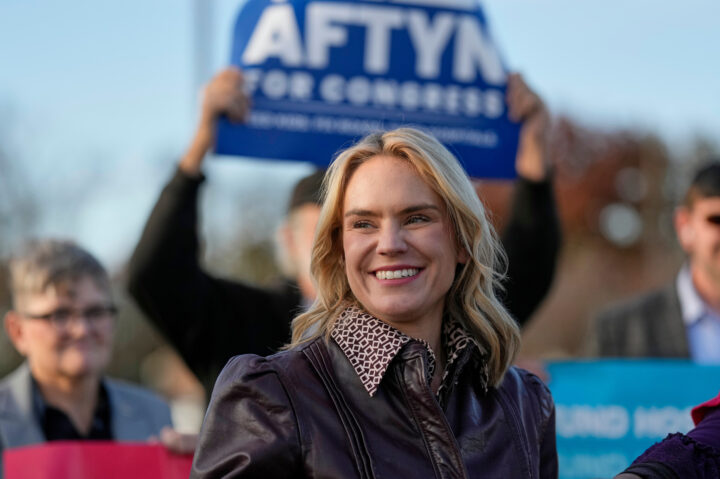
George Walker IV/AP
Democratic congressional candidate State Rep. Aftyn Behn, D-Nashville, attends a campaign event during the special election for the seventh district, Thursday, Nov. 13, 2025, Nashville, Tenn.
If there’s a lesson for Democrats from the GOP’s nine-point victory in the Tennessee special election on Tuesday night, it’s that the type of left-wing politics that can play in the city is a political turnoff for persuadable suburban voters. Nominating a telegenic candidate with ideologically radical views — à la Zohran Mamdani — might not matter to many urban Gen Z voters, but it does matter everywhere else.
In the big picture, Republican Matt Van Epps’ single-digit margin of victory in a district that President Donald Trump carried by 22 points is a sign of a strong Democratic environment heading into the midterms. Democrats should feel confident about their chances of winning back control of the House, even with increased gerrymandering. But look a little more closely at the results, and there are signs of an urban-suburban divide in the district, indicating that Democrat Aftyn Behn’s outspoken progressivism cost her badly in the affluent, conservative-minded suburb of Williamson County.
Take a look at the stark urban-suburban divide by the numbers: Behn won by 56 points in the city of Nashville, outperforming Kamala Harris’ margin in the country by a whopping 20 points. But in the Nashville suburbs, Behn barely outperformed Harris, losing Williamson County by 23 points (while Harris lost the county by 30 in 2024).
Behn was tagged as the “AOC of Tennessee” by Republicans, and she didn’t shy away from that comparison during the campaign, even inviting Rep. Alexandria Ocasio-Cortez (D-NY) to participate at a virtual rally for the Democratic candidate. Her anti-police rhetoric, antipathy towards her home city of Nashville, along with her record of hostility against Israel all underscored she was on the far left wing of her party.
Just as New York City Mayor-elect Zohran Mamdani’s anti-Israel and left-wing views were toxic enough that suburban New York City Democratic lawmakers — like Reps. Tom Suozzi (D-NY) and Laura Gillen (D-NY) — spoke out against his mayoral campaign, Behn’s suburban struggles underscore that swing-district Democrats who adopt the agenda of their party’s far-left activists will face consequences at the ballot box.
At the same time, Behn’s appreciable gains in Nashville and small inroads in the heavily Republican working-class rural counties of the district indicate that the Democratic message of affordability is outranking other more-ideological issues for voters facing challenges paying their bills. With fears of rising prices amid a volatile economy, Republicans risk losing a little support from their working-class base that could prove costly in the 2026 midterms — and beyond.
All told, the results should be encouraging for Democrats, even as their overly exuberant expectations led them to invite polarizing figures like Harris and AOC to boost turnout, despite the district’s strong conservative bent. But a more moderate nominee would likely have improved the party’s standing in the suburbs, and taken better advantage of the favorable overall political environment for the opposition party. It’s another reminder that moderation is the winning formula for the party to win back power in the future.
The race between Republican military veteran Matt Van Epps, a former state Cabinet secretary, and Democratic state Rep. Aftyn Behn is highly competitive
Brett Carlsen/Getty Images/George Walker IV/AP
Republican military veteran Matt Van Epps and Democratic state Rep. Aftyn Behn
Today’s special election in Tennessee’s 7th Congressional District — covering parts of Nashville, its conservative suburbs and rural counties in middle Tennessee — was expected to be a sleepy affair, given that the district backed President Donald Trump with 60% of the vote in 2024. The state’s aggressively partisan redistricting in 2021 was intended to guarantee GOP dominance of the state’s congressional delegation, leaving just one Democratic district in Memphis.
But in a sign that Trump’s growing unpopularity is creating unforeseen problems for Republicans in conservative constituencies, the race between Republican military veteran Matt Van Epps, a former state Cabinet secretary, and Democratic state Rep. Aftyn Behn is highly competitive.
The fact that polls show the race tightening — with one Emerson College poll showing Van Epps in a statistical tie with Behn — is a sign of just how treacherous the political landscape has become for Republicans. Gallup’s latest survey found Trump with a 36% job approval, close to an all-time low throughout his two terms in office.
If Republicans are nervous about holding a seat that Trump won by 22 points, there’s a growing likelihood of a blue wave that would give Democrats comfortable control of the House and an outside shot at a Senate majority. (One useful benchmark: Sen. Marsha Blackburn (R-TN) carried the 7th District by just two points in her 2018 Senate race, the last election year when Democrats rode a wave to win back the House.)
The fact that Republicans are struggling to make the case that the unapologetically progressive Behn holds views out of step with the conservative district on everything from anti-police rhetoric to antipathy towards her home city of Nashville to a record of hostility against Israel is also a sign of how nationalized our politics have become. In today’s tribal world, candidate quality and specific policy views mean a lot less than the overall political mood (vibes) and the popularity of the president.
Once someone wins their party’s nomination, the penalty for holding ideologically extreme views isn’t as costly as it once was. Just look at incoming Virginia Attorney General Jay Jones and New York City Mayor-elect Zohran Mamdani’s showings in the November elections. Despite their substantial baggage, both candidates received a level of political legitimacy after winning their primaries.
Getting Trump voters to show up when the president isn’t on the ballot is also looking like an immense challenge that the closer-than-expected Tennessee race is showing — a dynamic that will continue past next year’s midterms. Part of it is the nature of off-year special elections, which less-engaged Republican voters aren’t likely to participate in. But some of the slippage in this race is also a sign of declining enthusiasm for the Republican Party even with more reliably GOP voters.
The district is anchored by the affluent Nashville suburb of Williamson County, which stuck with Trump even as most other suburban areas swung towards Democrats over the last decade.
Gallup found Trump dropping to 84% support among Republican voters, a decline of about 10 points in the last couple of months. If Republicans are slipping with their own voters, amid signs of cracks within the MAGA coalition, it would truly be a warning sign that the party’s vaunted unity under Trump could be dissipating as his final term progresses.
Odds still favor Van Epps in tonight’s special election, given the district’s solidly conservative bent. But if a progressive like Behn can make this race close — within single digits — it will serve as a flashing red light about where the political winds are heading for the White House, at least without a course correction.
Aftyn Behn’s bid has attracted significant interest and support from national Democrats hoping for a show of Democratic strength in an upset victory
George Walker IV/AP
Democratic congressional candidate State Rep. Aftyn Behn, D-Nashville, attends a campaign event during the special election for the seventh district, Thursday, Nov. 13, 2025, Nashville, Tenn.
Far-left Tennessee state Rep. Aftyn Behn, making a bid for the open 7th Congressional District seat in next week’s special election, has staked out strongly anti-Israel positions during the course of her campaign and political career.
Behn’s race in the deep-red seat, against West Point graduate and military veteran Matt Van Epps, a Republican, has long been seen as a long shot, but it has attracted significant interest and support from national Democrats hoping for a show of Democratic strength in an upset victory.
Former Vice President Kamala Harris rallied with Behn in Tennessee earlier this month, and Behn has outraised Van Epps, $1.2 million to $993,000. Former Rep. Mark Green (R-TN), who vacated the seat earlier this year, won in 2024 by 20 points, but polls show Van Epps leading by just 8.
Behn called for a ceasefire between Israel and Hamas, and described the war in Gaza as a genocide as early as Oct. 29, 2023, weeks after Hamas’ Oct. 7 attack on Israel, shortly after she was elected to the statehouse.
“I can’t sit on the sidelines, as so many of our elected officials have done the past few weeks. Their silence is deafening. Our struggles are global and inextricably linked as our liberation is bound together,” Behn said. “The United States is funding a genocide in Gaza right now, and this is a moment when we, as Tennesseans, need to care loudly for Palestinians as we do for marginalized communities in Tennessee.”
She expressed support for a House resolution led by far-left lawmakers calling for an immediate ceasefire.
“If you don’t live in Memphis, continue showing up to rallies and vigils in support of Gaza and Palestine, stand in solidarity with our Jewish allies who are, through their grief and loss, are calling for an end to the occupation, and link arms with our Muslim neighbors whose suffering is being unrecognized by those in power. None of us are free until we’re all free,” she continued.
In April 2024, Behn opposed a resolution expressing support for Israel and its right to defend itself and condemning the Oct. 7 attacks. “Israel is committing genocide, funded by the United States, and this resolution condones genocide,” Behn said in debate on the resolution.
She also visited the anti-Israel encampment at Vanderbilt University in Nashville, describing it as “well organized, grounded in liberation politics.”
“Solidarity with these students and all of those across the country standing up to state violence and calling for the end of genocide,” Behn wrote on X.
Last summer, Behn signed onto a letter calling on the Democratic National Convention to host a Palestinian speaker.
“The pain and suffering of hostage families have been rightfully highlighted and acknowledged on national platforms,” the letter reads. “We believe that it is equally important to create space for the Palestinian experience, which has been marked by decades of hardship, loss, and displacement.”
Behn also received an endorsement from Track AIPAC, an anti-Israel group that conditions its support for candidates on rejection of support from pro-Israel groups and support for declaring Palestinian statehood, among other criteria.
Her campaign has also been supported by the Democratic Socialists of America.
Behn’s campaign did not respond to a request for comment.
Please log in if you already have a subscription, or subscribe to access the latest updates.
 Continue with Google
 Continue with Apple