




















The mayor lauded visiting former Irish President Mary Robinson and her controversial tenure as U.N. high commissioner for human rights
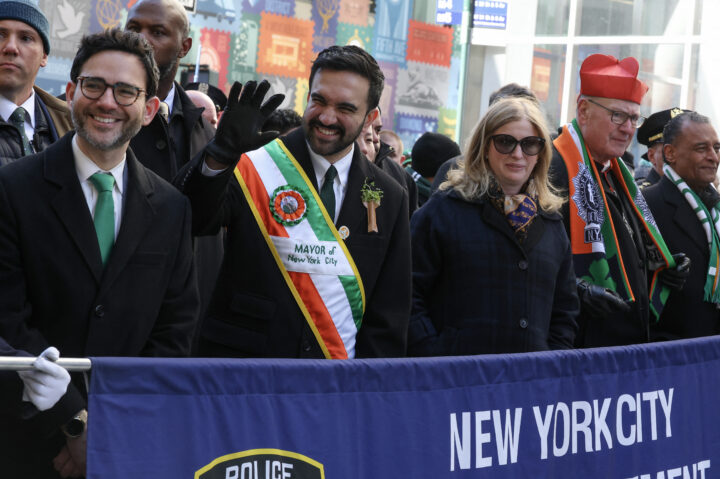
TIMOTHY A. CLARY / AFP via Getty Images
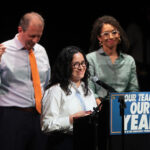
New York City Mayor Zohran Mamdani (2L), New York City Police Commissioner Jessica Tisch (2R) and Cardinal Timothy Dolan (R) participate in annual St. Patrick's Day Parade in New York on March 17, 2026.


 Add JewishInsider on Google
New York City Mayor Zohran Mamdani took the occasion of St. Patrick’s Day and the presence of former Irish President Mary Robinson in New York to talk Middle East politics and praise Robinson’s controversial tenure as the United Nations’ high commissioner for human rights.
Speaking at a breakfast at Gracie Mansion, Mamdani acknowledged Robinson from the lectern and lauded her record of advocacy, particularly singling out her stance on Israel. The Irish presidency is a largely ceremonial role.
“I think also of how she stood steadfast alongside the people of Palestine,” the mayor said in listing Robinson’s accomplishments. “I say this as over the past few years as we’ve witnessed a genocide unfold before our eyes, there has been deafening silence from so many. For those who have long cared about universal human rights and the extension of them to Palestinians, silence, however, is nothing new. For Palestinians are so often left to weep alone. Yet former President Robinson has never been silent.”
During her tenure at the U.N., Robinson chaired a preparatory meeting for the 2001 World Conference against Racism, Racial Discrimination, Xenophobia gathering in Tehran that blocked the participation of the Simon Wiesenthal Center and representatives from the persecuted Baha’i faith. Robinson blamed the obstruction on “procedural and technical” issues, though she voiced support for the general right of such groups to take part.
The eventual conference, held in Durban, South Africa, was a notoriously disorganized fiasco that led to the end of Robinson’s commissionership. The conference saw the withdrawal of American and Israeli delegations over draft document language from Arab governments attempting to reinstate a repealed U.N. resolution that declared Zionism to be a form of racism and to compare Israeli policy to the Holocaust.
She was a founding member of The Elders, a group of veteran global leaders promoting “peace, justice, human rights and a sustainable planet,” and became the group’s chair in 2018. In 2014, she co-authored a Foreign Policy opinion piece with former President Jimmy Carter amid the 2014 Israel-Gaza war that called for “recognizing Hamas as a legitimate political actor.”
Plus, Ro Khanna’s new challenger
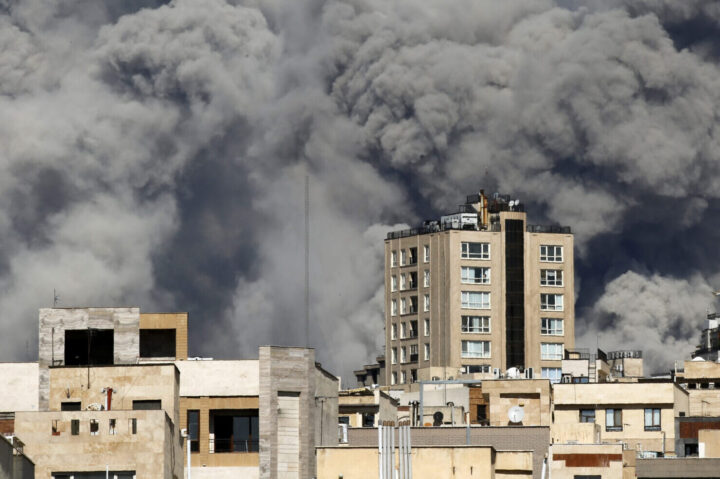
Fatemeh Bahrami/Anadolu via Getty Images
Smoke rises from the area after it was targeted in attacks as a series of explosions are heard in Tehran, Iran on March 01, 2026.
👋 Good Monday morning!
In today’s Daily Kickoff, we look at the divergence in opinion on the war in Iran between the Israeli opposition and the American left, and do a deep dive into the U.S. and Israeli end goals of the conflict, now in its third week. We interview tech entrepreneur Ethan Agarwal, who is mounting a challenge to Rep. Ro Khanna (D-CA), and look at the outpouring of “thoughts and prayers” in response to the attack last week on a Michigan synagogue. Also in today’s Daily Kickoff: Rep. Yassamin Ansari, Rabbi Ammiel Hirsch and Oren Kessler.
Today’s Daily Kickoff was curated by JI Executive Editor Melissa Weiss and Israel Editor Tamara Zieve, with assists from Danielle Cohen-Kanik and Marc Rod. Have a tip? Email us here.
What We’re Watching
- President Donald Trump will attend a Kennedy Center board meeting this afternoon. The president confirmed on Friday that Richard Grenell was exiting his role as president of the arts center after just over a year in the position.
- New York City Mayor Zohran Mamdani is slated to briefly meet today with a group of largely local Orthodox Jewish leaders in the city, following a series of incidents in which Mamdani has had to address antisemitism in the context of his wife’s professional work and social media activity. Mainstream groups, including the Anti-Defamation League, the Jewish Community Relations Council-New York and the American Jewish Committee, were not invited to the meeting, which is expected to last between 15-20 minutes. Satmar leader Rabbi Moshe Indig and United Jewish Organization of Williamsburg’s Rabbi David Niederman are expected to attend.
- The Anti-Defamation League’s Never is Now conference begins today in New York. Speakers at today’s opening session include ADL CEO Jonathan Greenblatt, GAP President and CEO Richard Dixon, actor Jerry O’Connell and Bravo stars Meredith Marks and Jackie Goldschneider.
- The Jewish Funders Network annual conference continues today in San Diego. Read more from eJewishPhilanthropy’s Jay Deitcher here.
What You Should Know
A QUICK WORD WITH JI’S MARC ROD AND lahav harkov
The ongoing war in Iran is highlighting a widening gulf between center and center-left voters in Israel and Democrats in the United States. While Democrats in the United States are mostly opposed to the war, Israelis are overwhelmingly supportive of the effort.
Recent polling from Israel has shown that 92.5% of Jewish Israelis and 81% of Israelis overall support the war.
The divide was particularly evident in an exchange on X this week between Yair Zivan, a centrist and top advisor to Israeli Opposition Leader Yair Lapid, and Matt Duss, a foreign policy advisor to Rep. Alexandria Ocasio-Cortez (D-NY) and a former confidante of Sen. Bernie Sanders (I-VT), whose post prompted the exchange.
Sanders, on X, condemned the Israeli operations against Hezbollah in Lebanon, saying, “The U.S. cannot continue to be complicit in Netanyahu’s wars.”
Zivan said in response that he was writing from a bomb shelter and that Israel “is under attack by fanatical terrorists who want to murder us,” arguing that Sanders’ “humanity never seems to extend to Israeli lives.”
CHICAGO SHOWDOWN
In Illinois’ Democratic primaries, a test for the pro-Israel community
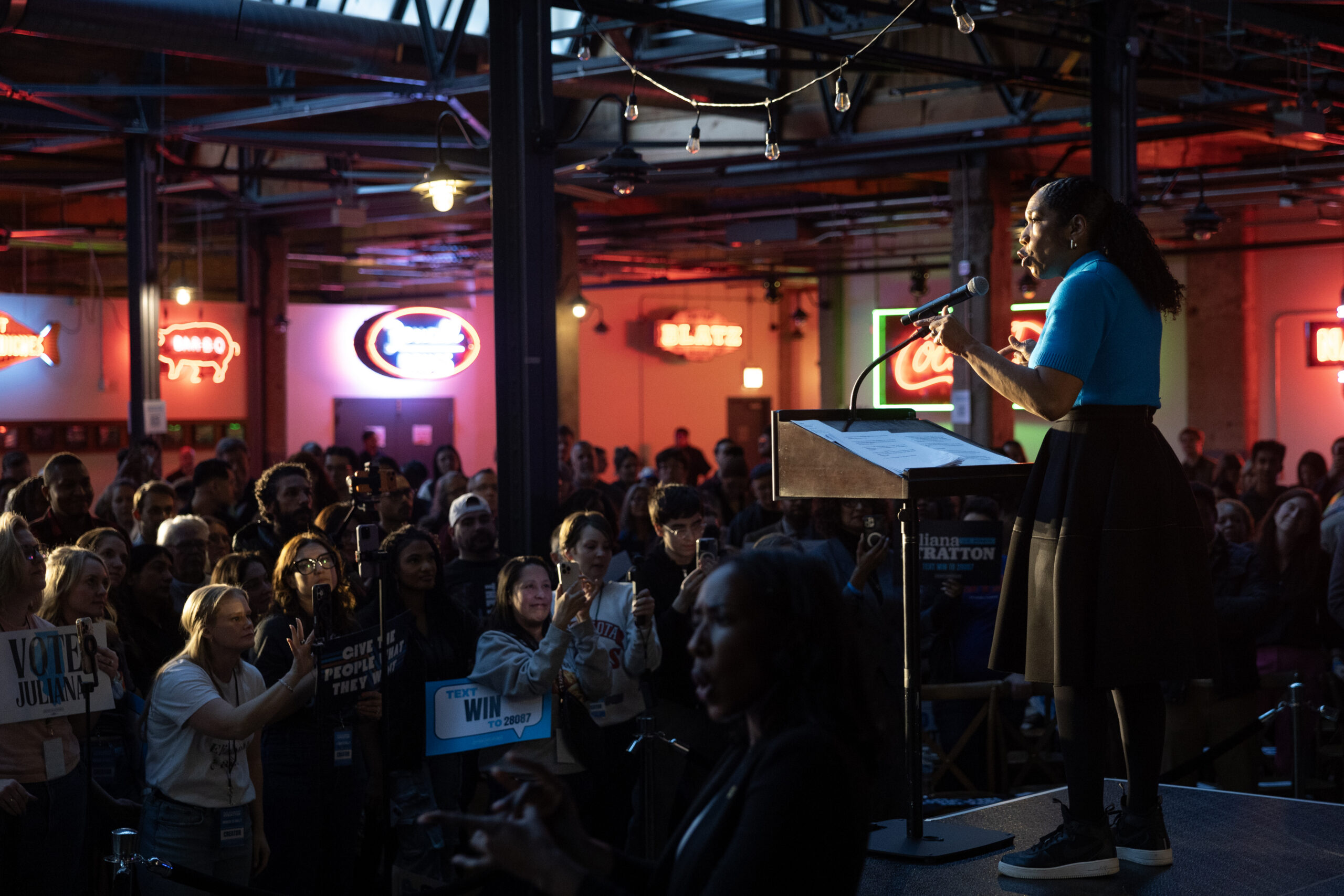
After months of an increasingly bitter campaign characterized by tens of millions in outside spending and increasingly heated debate over Israel policy, Democrats in the Chicagoland area head to the polls tomorrow, with the outcome of the primaries potentially reshaping the political landscape in one of the most Jewish cities in the country, Jewish Insider’s Marc Rod reports.
Why it matters: The four open House races are also set to be a test of AIPAC and the pro-Israel community’s political strategy and heft. Broadly, a source close to AIPAC said, the group’s primary goal in the primaries is to prevent six candidates — state Sen. Robert Peters in the 2nd, activist Kina Collins in the 7th, activist Junaid Ahmed and Hanover Park Trustee Yasmeen Bankole in the 8th and influencer Kat Abughazaleh and Skokie School Board member Bushra Amiwala in the 9th District — who it believes would be aligned with the far-left Squad on Israel policy issues, from being elected.
MEETING ADJOURNED
Rep. Ro Khanna facing new Democratic challenger hitting him from the political center
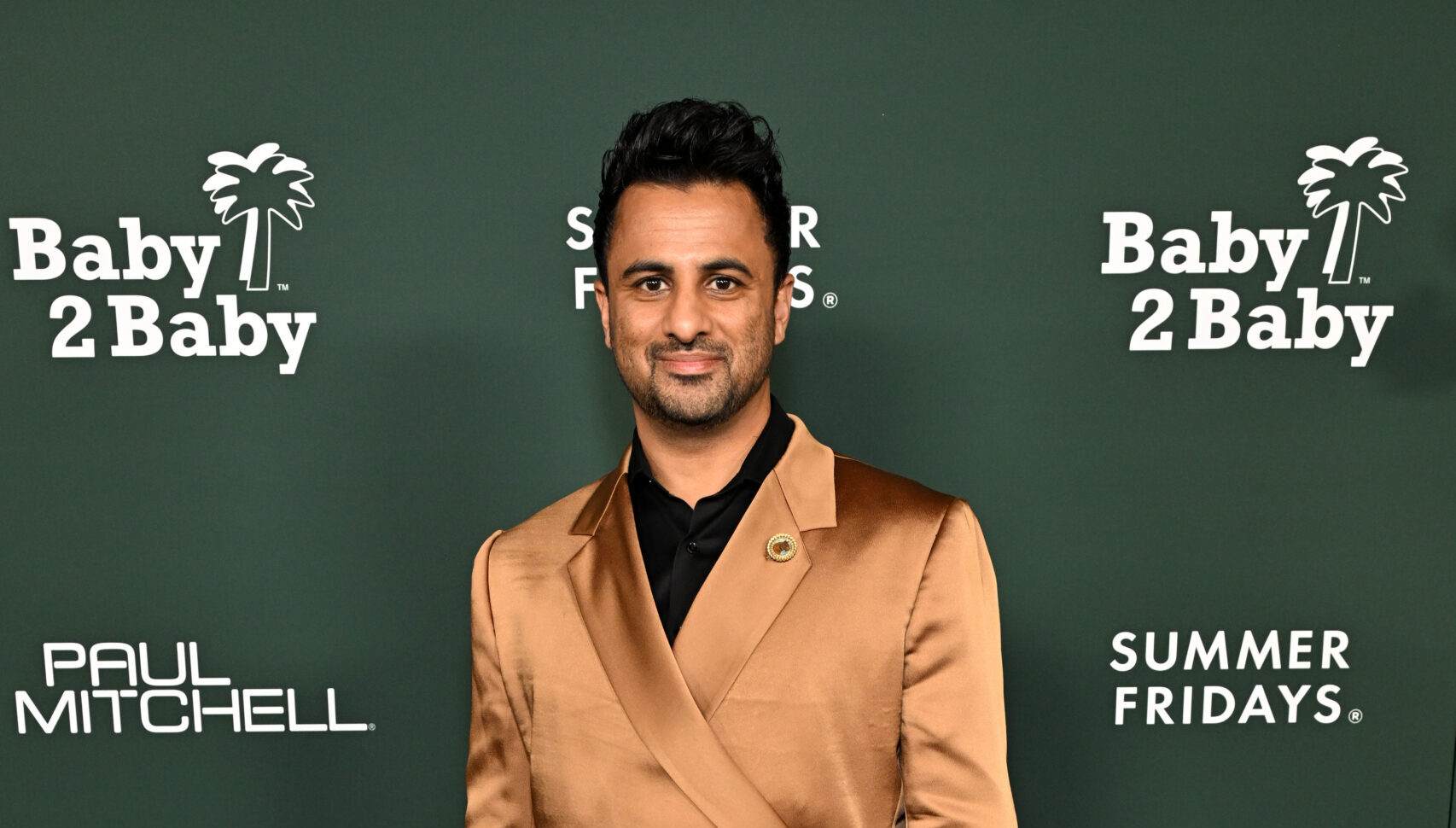
Rep. Ro Khanna (D-CA) has become one of the harshest critics of Israel in the House, in recent months associating with some of the leading anti-Israel figures within the party — at one point proudly declaring his ties to a far-left antisemitic podcaster, Jewish Insider’s Marc Rod reports.
New challenger: As a result, he is facing a primary challenge from tech entrepreneur Ethan Agarwal, who is accusing the congressman of embracing far-left views to seek national attention for a potential presidential campaign — at the expense of focusing on constituents back home in the Silicon Valley-based district. Agarwal argues that Khanna’s rhetoric has directly contributed to antisemitic violence in his district and elsewhere in the country.
BREAKING POINT
Antisemitism meets America’s ‘thoughts and prayers’ ritual
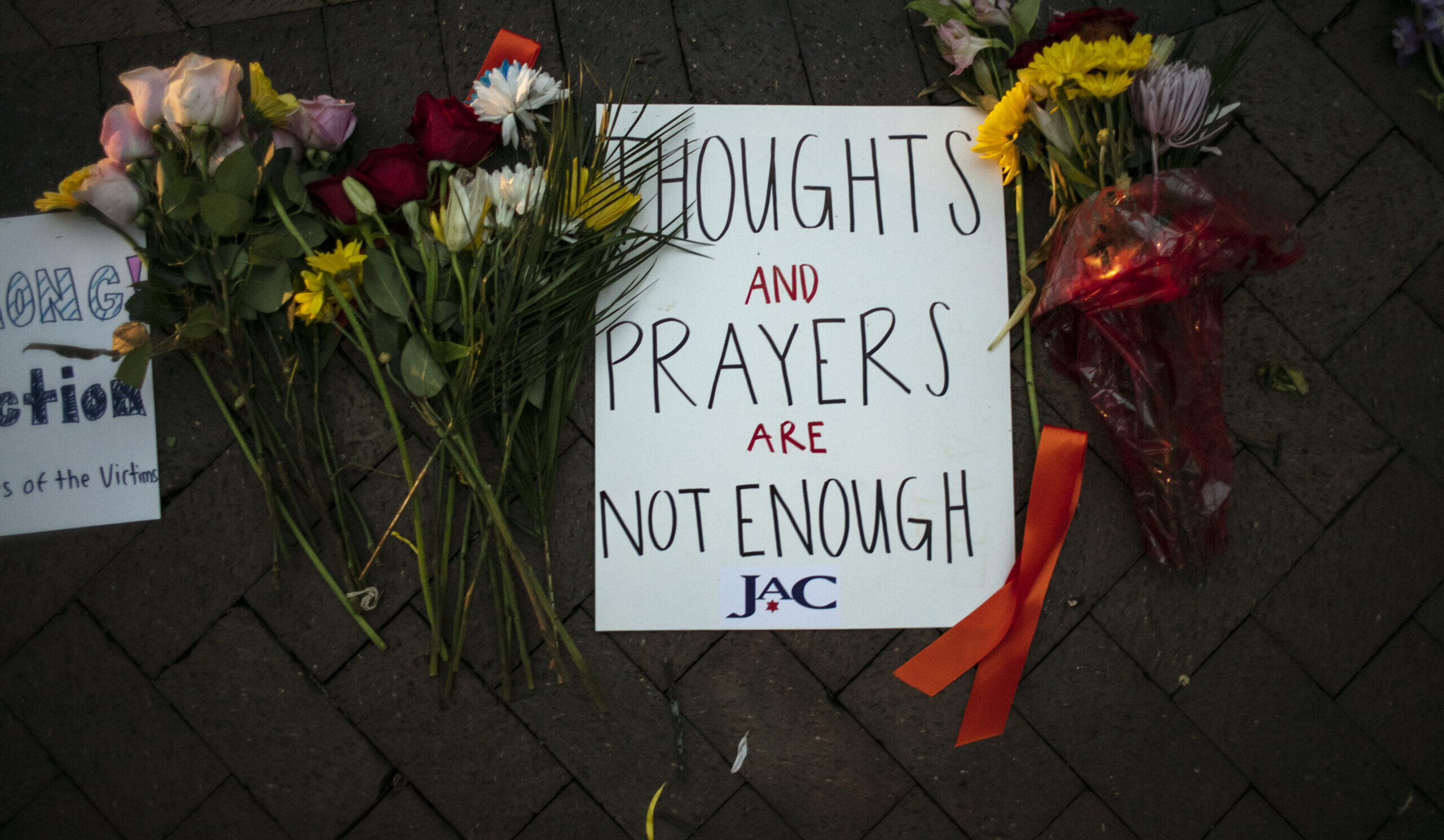
American antisemitism is having its “thoughts and prayers” moment. Whenever there is a mass shooting in the United States, the immediate reaction has become something of a meme. “Sending thoughts and prayers,” politicians — mostly Republicans — will inevitably write in a social media post expressing grief at the murder of innocent people at an elementary school, in a bowling alley or at a Walmart. Gun violence prevention advocates roll their eyes. They see the oft-repeated sentiment as disingenuous, given how little action Congress has taken to enact gun control measures. A similar phenomenon was on display after a heavily armed man drove a car into a synagogue in suburban Detroit on Thursday, Jewish Insider’s Gabby Deutch reports.
‘Crocodile tears’: Afterward, politicians with a history of promoting antisemitic tropes began bemoaning antisemitism. And Jewish politicians and activists in the Democratic party who had grown exasperated over the hypocrisy of it all started calling them out. Noah Arbit, the Jewish state representative whose district includes West Bloomfield Township, where the attack took place, called out Democratic Senate candidate Abdul El-Sayed for his “crocodile tears” expressing concern about the shooting. Arbit grew up attending Temple Israel. “Amazed by the crocodile tears from someone who’s done more than most to stoke & inflame hatred against Jews. It’s a very small logical leap from ‘AIPAC controls the US government,’ ‘Israel is committing genocide,’ ‘Zionists kill Arab babies’ to ‘kill Jews in West Bloomfield,’” Arbit, a Democrat, wrote in a post on X replying to El-Sayed.
Security success: Six weeks ago, Danny Phillips, the director of security at Temple Israel in West Bloomfield Township, Mich., arranged for the FBI to hold an active-shooter training for the congregation, one of the largest Reform synagogues in the county. That training potentially saved the lives of 140 children and their teachers on Thursday when an assailant rammed a truck full of explosives and weapons into the building, Temple Israel leaders told JI’s Haley Cohen.
FROM THE PULPIT
Rabbi Ammiel Hirsch urges Mamdani to denounce ‘anti-Israel hate’ after Michigan synagogue shooting
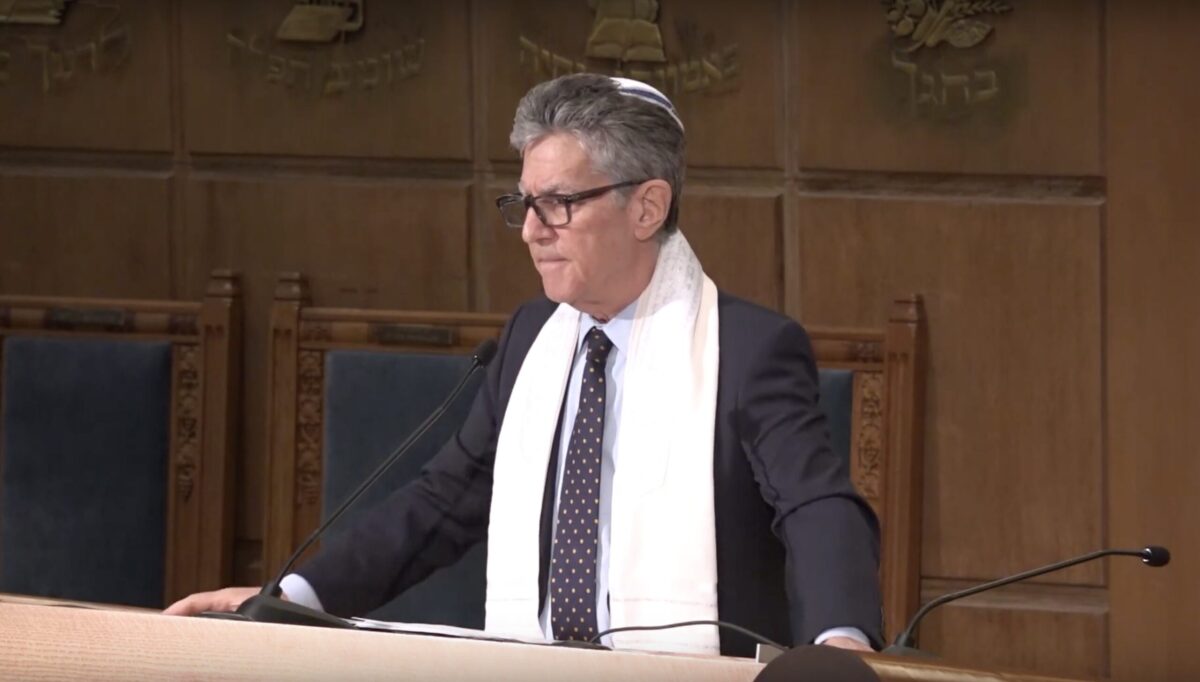
The vehicle ramming and shooting attack on a Michigan synagogue last Thursday was the latest example of a “direct connection between hatred of Israel and hatred of Jews,” Rabbi Ammiel Hirsch, a prominent Reform rabbi who leads Manhattan’s Stephen Wise Free Synagogue, said during a sermon on Friday evening, Jewish Insider’s Haley Cohen reports.
What he said: From the pulpit, Hirsch urged both the Jewish community and U.S. elected officials — including New York City Mayor Zohran Mamdani — to take seriously the “moral and political blindness” that is “casting a darkening shadow over all that we hold dear. We must grapple seriously with this phenomenon of antisemitism; not only for the sake of the Jews, but for the sake of America.” In comments directed at Mamdani, Hirsch said, “What about committing to using the bully pulpit of the mayor to influence greater tolerance for Jews in this city? What about castigating anti-Israel hate that so influences anti-Jewish hate? Help us understand why the attempted murder of children at Temple Israel is so morally clear while the actual murder and hostage-taking of children in their living rooms in Israel is so morally opaque?”
Toxic text: Mamdani on Friday condemned online commentary from a prominent Palestinian writer and activist who labeled Jewish people “parasites” and “demons” whose book Mamdani’s wife, Rama Duwaji, provided an illustration for, JI’s Will Bredderman reports.
THE POLITICS OF WAR
U.S., Israel largely aligned on Iran war aims, but public opinion and political timelines diverge
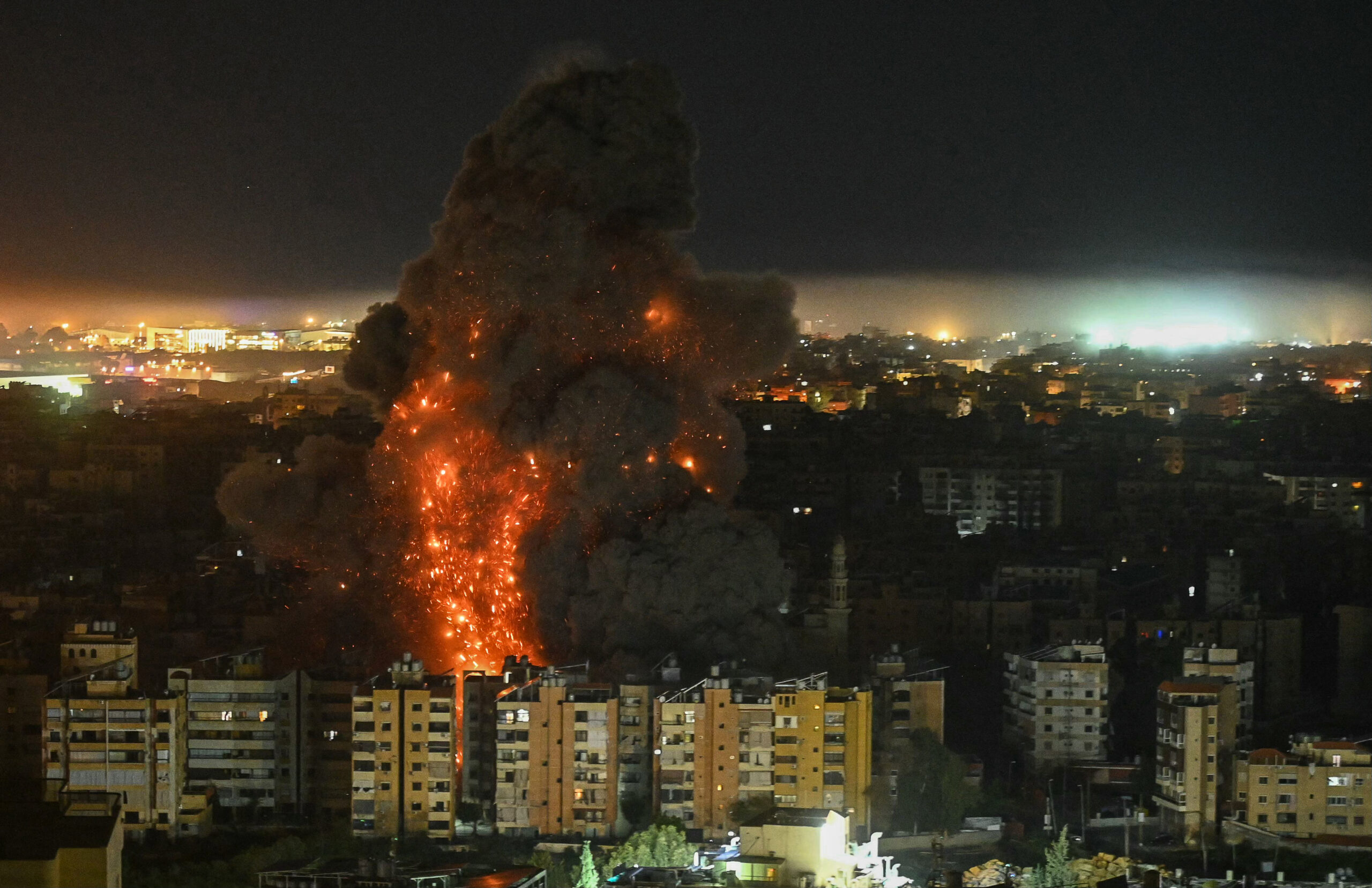
Over two weeks into the war with Iran, American and Israeli leaders’ public statements about the effort and their goals remain largely in sync, with President Donald Trump praising Israel on Sunday for helping secure the Strait of Hormuz, while other countries with greater oil interests in the region have yet to offer to help. However, the populations of the two countries have markedly different views of the war, which is popular in Israel while most Americans oppose it, which likely puts Trump and Israeli Prime Minister Benjamin Netanyahu on different timelines. That, in turn, could impact the level of cooperation moving forward, Jewish Insider’s Lahav Harkov reports.
Same but different: Assaf Orion, a senior researcher at the Institute for National Security Studies at Tel Aviv University, said that “it’s clear that even though this is a joint operation embarked on together, there are significant differences. In the end, it depends on Trump.” Dan Diker, president of the Jerusalem Center for Security and Foreign Affairs, said that “it is our sense [in Israel] that Trump is on the same page about staying the course,” with goals including “the complete neutering and elimination of the ballistic and nuclear programs as we’ve known them, but also to locate and get rid of the 440 kilograms of highly enriched uranium,” as well as to “assist the regime to collapse and change.” Diker said the differences between the U.S. and Israel are mostly in their political timelines.
KHALIL’S COMMENTS
Mahmoud Khalil, at South By Southwest, says claims of antisemitism are ‘being weaponized’ by Jews
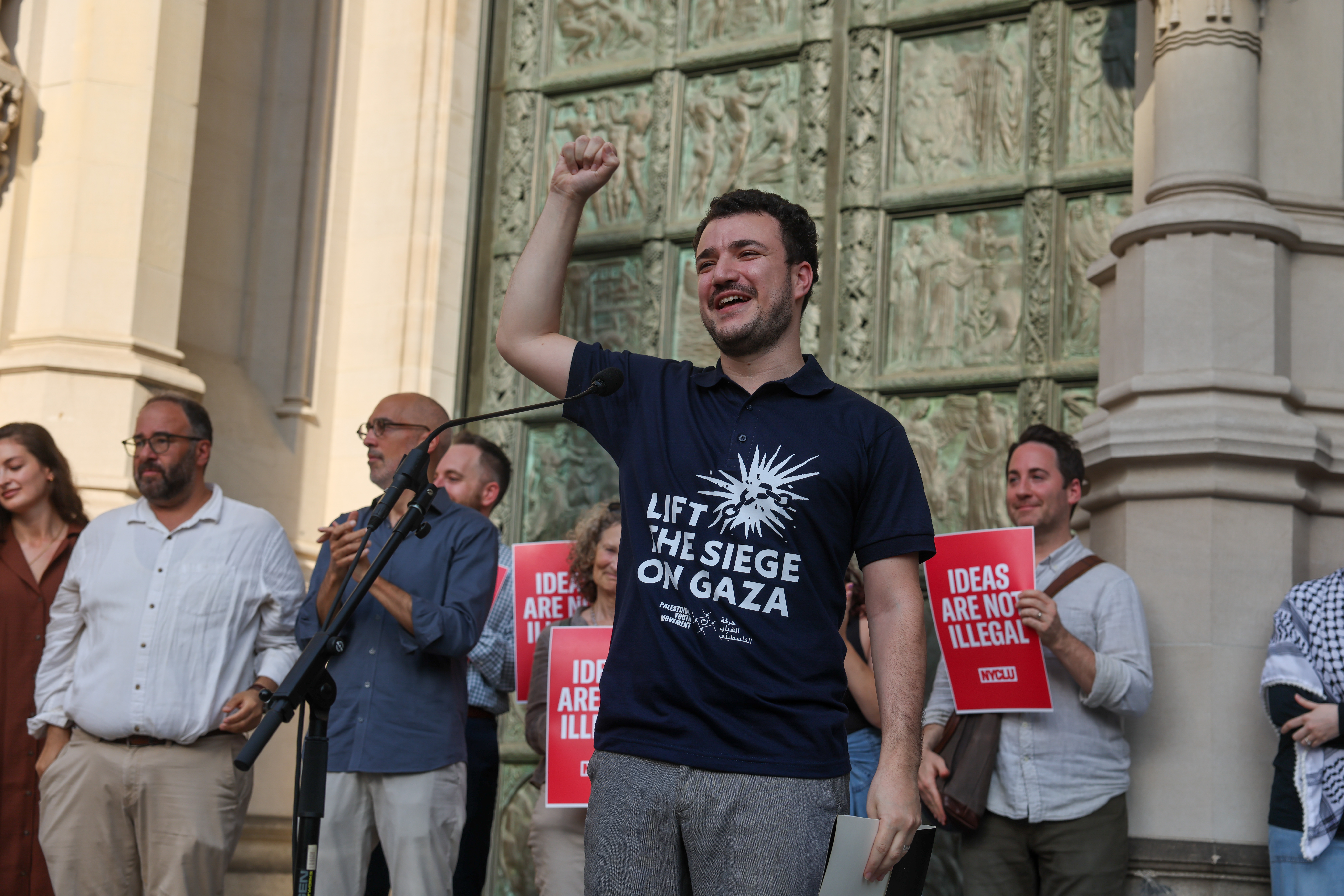
The anti-Israel campus protest movement is facing “fear and exhaustion” amid the Trump administration’s crackdown, Mahmoud Khalil, who led demonstrations against Israel on Columbia University’s campus in the aftermath of the Oct. 7, 2023, terrorist attacks and the ensuing war in Gaza, said on Sunday at the annual South by Southwest (SXSW) festival in Austin, Texas, Jewish Insider’s Haley Cohen reports. “With the Biden administration, you protest because you feel you can move the needle a little bit,” said Khalil. “But with Trump, it’s like plain tyranny. They would not listen.”
On antisemitism: Khalil, who spoke three days after an attempted terrorist attack at a synagogue in Michigan, noted that “antisemitism is real in this country” and condemned “violence against civilians.” At the same time, he argued that “claims of antisemitism are being weaponized to silence any critique of the U.S. support to Israel.” He spoke in an hourlong conversation “on the cost of dissent,” with The Guardian editor Betsy Reed and Baher Azmy, legal director of the Center For Constitutional Rights who was a lawyer for Khalil in his ongoing deportation proceedings.
Worthy Reads
Dubai Dissonance: The Atlantic’s Graeme Wood considers the ways that Dubai, which has faced ongoing Iranian attacks since the start of the war last month, is the antithesis of the Islamic Republic. “Dubai is what Iran is not. It has largely rejected government intrusion into the private life of its people. It is open to the world. There is no geographical advantage that makes Dubai a thriving metropolis while Bandar-e Abbas, the Iranian city across the Gulf, remains a suffocating industrial town unlikely to attract Tom Cruise, no matter how many impossible missions he chooses to accept. … So often, this dynamic of defiant contrast underlies hostility between countries. Iran does not like Dubai, because Dubai shows that doing the opposite of what Iran does yields good results.” [TheAtlantic]
Larijani Looms Large: Haaretz’s Gid’on Lev profiles Ali Larijani, the head of Iran’s National Security Council and the “most powerful man” in the Islamic Republic. “On the one hand, a portrait emerges of a pragmatic man who does not hesitate to level sharp criticism at the authorities in his country, who aspires to a modern and developed society, and who writes about freedom of expression and democracy. On the other hand, there emerges the clear figure of a ‘fundamentalist’ Muslim, as he defines himself, who preaches for religious ideological leadership.” [Haaretz]
Beijing’s Battle: In The Wall Street Journal, John Spencer looks at how the war in Iran is causing harm to the global standing of China, which has long been a key ally of Tehran. “For decades Beijing has marketed its weapons systems as alternatives to Western equipment. If Iranian defenses influenced by Chinese technology prove ineffective against U.S. and Israeli forces, countries considering Chinese weapons will take notice. The conflict highlights another vulnerability: China, which imports roughly three-fourths of the oil it consumes, depends heavily on maritime supply routes. … For years Beijing expanded its influence while assuming the U.S. lacked the will to challenge aggressive regimes or disrupt China’s geopolitical partnerships. The war with Iran suggests otherwise.” [WSJ]
Protein Shake-up: The Information’s Jemima McEvoy spotlights efforts by Sweetgreen co-founder and CEO Jonathan Neman to address the company’s declining revenue by appealing to the Silicon Valley wellness set. “In reaching for a little love from Silicon Valley, Neman is betting he can win over the type of young people who drive internet conversation around brands and set cultural cachet from their keyboards. It is part of a larger shift in popular perception of the tech masses, from a bunch of shunnable nerds to honest-to-goodness tastemakers. … Neman’s brother-in-law, Sequoia Capital partner Shaun Maguire, sure thinks Sweetgreen is on the right track. ‘They’ve been innovative in thinking about how food connects to health and performance,’ said Maguire, ‘long before those conversations became mainstream.’” [TheInformation]
Word on the Street
President Donald Trump warned that NATO could face “a very bad future” if Washington’s allies don’t assist in efforts to reopen the Strait of Hormuz…
Israel’s Army Radio reports that former Israeli Strategic Affairs Minister Ron Dermer, who stepped down in November but returned to the Prime Minister’s Office to assist amid the war with Iran, traveled to Saudi Arabia to discuss with Saudi officials a potential deal between Israel and Lebanon…
Reports of Dermer’s visit come as France denied a report that it had drafted a proposal to end the conflict in Lebanon that included Beirut’s recognition of Israel…
Israeli Prime Minister Benjamin Netanyahu posted a video of himself at a Jerusalem coffee shop in response to internet rumors that he’d been assassinated…
Tucker Carlson’s claim that the CIA is “preparing some kind of criminal referral” against him related to the former Fox News host “talking to people in Iran before the war” is being refuted by senior Trump administration officials; they told Axios that there is no CIA probe into Carlson and rejected subsequent online chatter speculating that Trump was “participating in an op” that utilized Carlson’s purported communications with the Iranians to trick the regime into thinking an attack was not imminent…
In a Truth Social post, Trump defended conservative radio host Mark Levin against recent attacks from elements of the far right, saying that “[t]hose that speak ill of Mark will quickly fall by the wayside, as do the people whose ideas, policies, and footings are not sound. THEY ARE NOT MAGA, I AM, and MAGA includes not allowing Iran, a Sick, Demented, and Violent Terrorist Regime, to have a Nuclear Weapon to blow up the United States of America, the Middle East and, ultimately, the rest of the World”…
FCC Chairman Brendan Carr threatened not to renew the licences of some broadcasters whom he accused of “running hoaxes and news distortions” in their coverage of the war in Iran; Carr issued the warning while amplifying a post from Trump on his Truth Social site that criticized The Wall Street Journal’s coverage about attacks on U.S. refueling planes in Saudi Arabia…
Sen. Ron Johnson (R-WI) pushed back on Carr’s comments, saying he was “in big support of the First Amendment”…
A new poll from NBC News found that two-thirds of Democrats side with the Palestinians over the Israelis, a marked shift from past polls that showed more support for Israelis…
The New York Times interviews Rep. Yassamin Ansari (D-AZ), the only Iranian-American Democrat in Congress, about the “wide range of mixed emotions” she feels regarding U.S. military action in Iran, where she still has relatives…
The Wall Street Journal looks at how Israelis are adjusting to a “new normal” amid the constant interruptions from missile fire from Iran…
The University of Florida forced the school’s chapter of College Republicans to disband after the release of a photo of one of the chapter’s leaders doing a Nazi salute…
Authorities in Amsterdam are investigating an explosion at a Jewish school in the city, days after an arson attack at a synagogue in the Dutch city of Rotterdam…
French officials arrested two Moroccan-Italian brothers who had been planning what prosecutors described as a “deadly and antisemitic” plot…
An investor group led by the co-founders of Wiz, who last week finalized the $32 billion sale of their company to Google, reached an agreement to acquire Len Blavatnik’s shares in Israel’s Channel 13 worth $20-25 million, with plans to put more than $125 million into the company over the next three years…
The acquisition is the third time in recent weeks that a planned acquisition has fallen through in favor of another buyer, after Paramount’s successful takeover of Warner Bros. Discovery that scrapped a planned Netflix sale, and Axel Springer’s purchase of The Telegraph after the Daily Mail had been set to acquire the company…
A new poll from the U.K.’s Union of Jewish Students found that a quarter of all students surveyed — regardless of religion — observed antisemitic behavior, while 1 in 5 said they would be reluctant or would refuse to have a roommate who was Jewish…
The premier of Australia’s New South Wales condemned the “horrific rhetoric” at Sydney’s Biennale arts festival after a DJ playing a set at the festival’s opening night referred to a “Zio-Australian-Epstein empire,” but said he would not cut future funding for the arts event…
Four additional members of Iran’s national women’s soccer team withdrew their requests for asylum in Australia, days after another member of the team opted to return to Iran; two of the original seven players who sought asylum while the team was in Australia for a tournament have chosen to remain there…
Palestine 1936 author Oren Kessler is joining Georgetown University as the school’s Goldman Visiting Israeli Professor for the 2026-2027 academic year; read our interview with Kessler here…
CNN anchor Jessica Dean announced that she is expecting her first child with her husband, Blackstone executive Alex Katz…
Elik Topolosky, the brother of Rabbi Uri Topolosky, died at 39…
Lewis Lehrman, whose 1982 gubernatorial bid in New York was largely financed by the fortune Lehrman amassed transforming his family’s local discount chain into Rite Aid, died at 87…
Author and ecologist Paul Ehrlich, whose best-selling book The Population Bomb predicted global famines, died at 93…
Pic of the Day
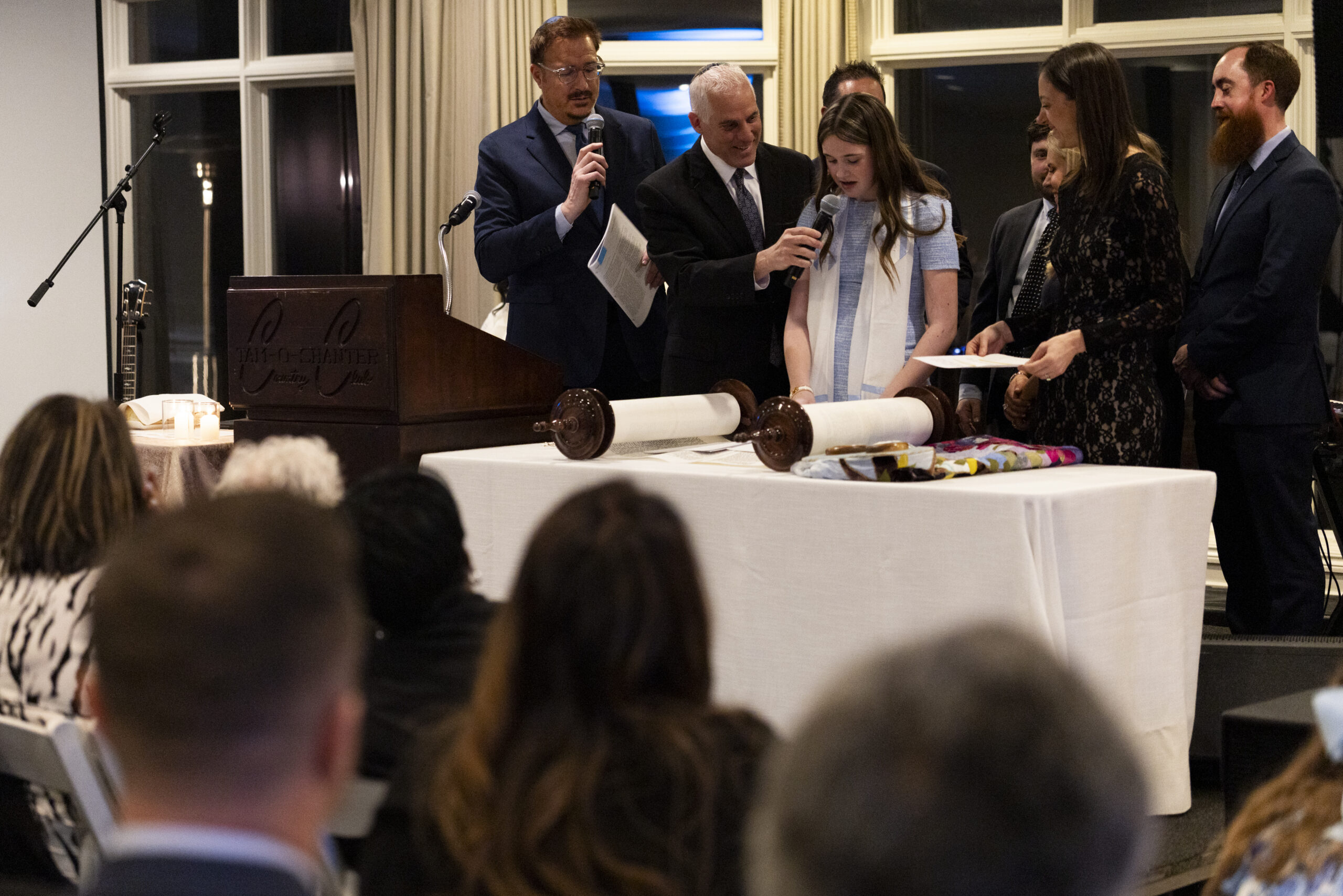
Sydney Cox, a member of Temple Israel in West Bloomfield Township, Mich., which was targeted in a terror attack last week, on Friday celebrated her bat mitzvah — which had been slated to take place at Temple Israel the day after the attack — at the nearby Tam O’Shanter Country Club.
Birthdays
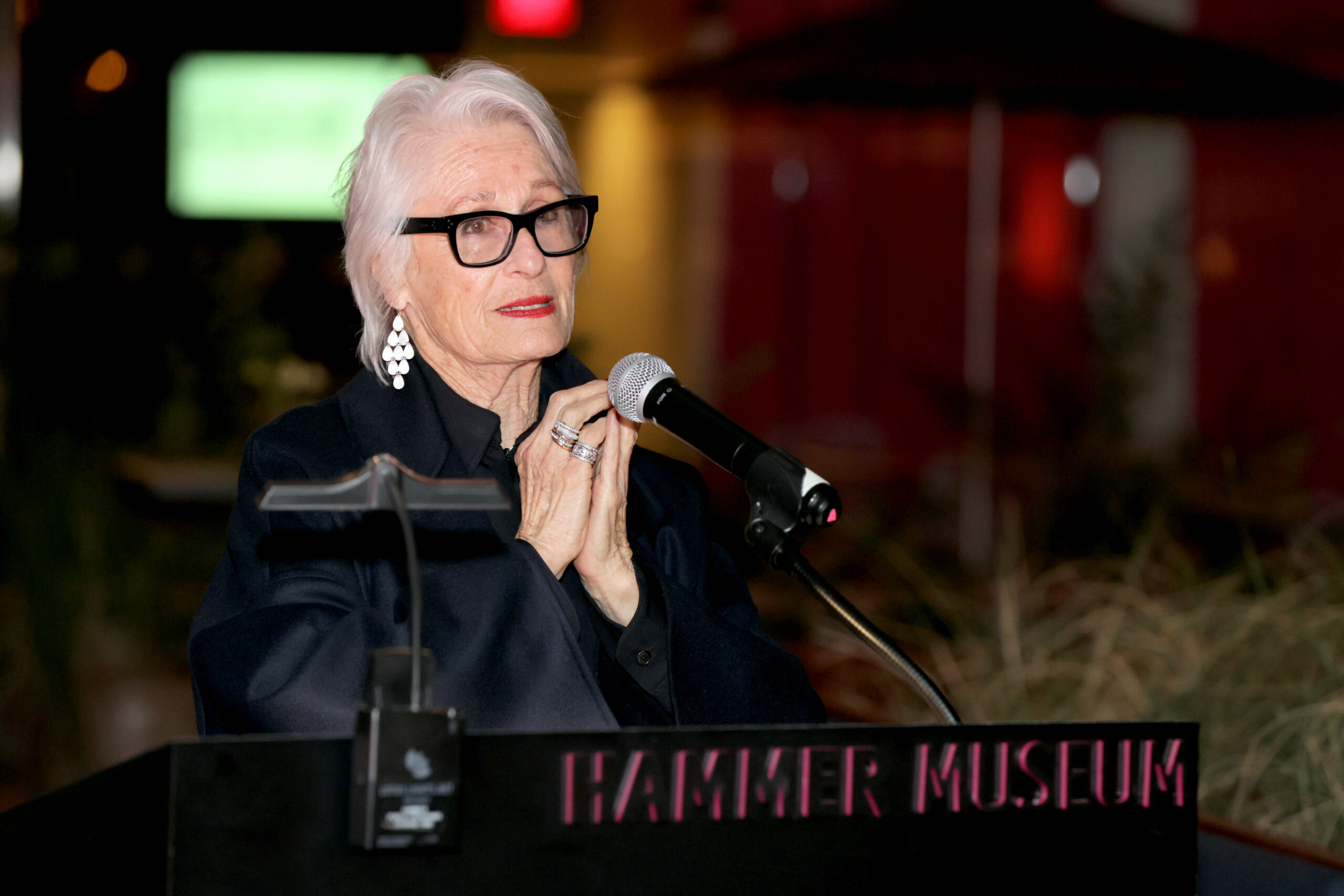
Actress and film director, she was married to Leonard Nimoy from 1989 until his death in 2015, Susan Linda Bay Nimoy turns 83…
Former CEO and chairman of Citigroup, Sanford I. “Sandy” Weill turns 93… Dean emeritus and founder of the Los Angeles-based Simon Wiesenthal Center and its Museum of Tolerance, Rabbi Marvin (Moshe Chaim) Hier turns 87… NYC tax attorney and litigator, he served as a tax assistant to the solicitor general of the U.S., Stuart A. Smith turns 85… Computer scientist, he is a professor emeritus at the Vrije Universiteit Amsterdam in the Netherlands, Andrew S. Tanenbaum turns 82… Israeli singer, best known as the original singer of “Jerusalem of Gold” (Yerushalayim Shel Zahav), Shulamit “Shuli” Natan turns 79… Film, stage and television actor and singer, Victor Garber turns 77… Customer service associate at Jewish Free Loan Association of Los Angeles, Judith “Judy” Karta… Mathematician, technology innovator (with 260 patents) and founder of four technology companies, Philippe Kahn turns 74… Peabody Award and Emmy Award-winning NPR journalist since 1977, now a host of NPR’s “Weekend Edition Saturday,” Scott Simon turns 74… Retired VP of external affairs and government relations at the Jewish Federation of Cleveland, Amy Reich Kaplan… Film producer, production designer and adjunct faculty member at Chicago’s Columbia College, Gail Sonnenfeld… Adjunct professor at both George Washington University Law School and Stanford In Washington, Andrew D. Eskin… Dean of NYU’s Wagner Graduate School of Public Service, Polly Ellen Trottenberg turns 62… Head of special projects at Disney / ABC Television Group, Eric Avram… President of the Ruderman Family Foundation, Jay Ruderman turns 60… Actor and comedian, best known for playing the role of writer Frank Rossitano on the NBC sitcom “30 Rock,” Judah Friedlander turns 57… Senior producer of “The Last Word with Lawrence O’Donnell” at MS NOW, Amy Shuster… Head of the financial services practice at the BGR Group, Andy Lewin… Former speechwriter for President Joe Biden at The White House, now a partner at Bully Pulpit Interactive, Jeff Nussbaum turns 51… Co-founder of Chochmat Nashim, Shoshanna Keats Jaskoll… President and board member at My Warchest, Jason Rosenbaum… Winemaker at Covenant Wines and Hajdu Wines, Jonathan Hajdu… Retired soccer player in the Israeli Premier League who is now the first team manager of Maccabi Tel Aviv, Yoav Ziv turns 45… Detroit-based founder and managing partner of Ludlow Ventures, Jonathon Triest… Public policy director at Meta/Facebook’s Israel office, Jordana Cutler turns 44… Partner at FGS Global, he was previously a public affairs official at the Pentagon, Adam Blickstein… Head of U.S. government affairs at American Express, former counsel to Treasury Secretary Janet Yellen and Senate Minority Leader Chuck Schumer (D-NY), Alvin Isaac “Zack” Rosenblum… Senior director of global corporate partnerships at Global Citizen, Alexandra Stabler… Pulitzer Prize-winning investigative reporter at The New York Times, Brian M. Rosenthal turns 37… Director in the New York office of the Jewish National Fund, Sarah Azizi… Spiritual leader and co-founder of Lower Manhattan’s Downtown Minyan, Mijal Bitton… First baseman for MLB’s Texas Rangers, Ryan John “Rowdy” Tellez turns 31… Associate in the Philadelphia office of Morgan Lewis, Nathan Bennett… Jackie Stern… Jeremy Levin…
Plus, Suozzi re-ups Cuomo endorsement
Win McNamee/Getty Images
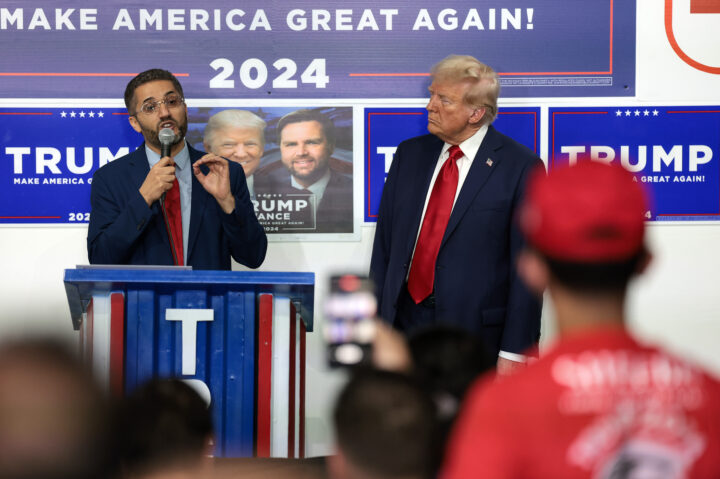
Hamtramck, Mich. Mayor Amer Ghalib introduces President Donald Trump, as Trump visits a campaign office on Oct. 18, 2024, in Hamtramck, Michigan.
Good Wednesday afternoon!
This P.M. briefing is reserved for our premium subscribers like you — offering a forward-focused read on what we’re tracking now and what’s coming next.
I’m Danielle Cohen-Kanik, U.S. editor at Jewish Insider and curator, along with assists from my colleagues, of the Daily Overtime briefing. Please don’t hesitate to share your thoughts and feedback by replying to this email.
📡On Our Radar
Notable developments and interesting tidbits we’re tracking
The White House has told Republicans that President Donald Trump will not pull the nomination of Amer Ghalib, the mayor of Hamtramck, Mich., to be U.S. ambassador to Kuwait and wants the Senate Foreign Relations Committee to hold a vote on his candidacy, despite the growing bipartisan opposition to his nomination, Jewish Insider’s Emily Jacobs reports.
White House officials have communicated to committee Republicans in recent days that Trump would not withdraw Ghalib’s nomination because the president credits the Democratic Hamtramck mayor with helping him win the state of Michigan in the 2024 presidential election by turning out the state’s Arab American vote, two sources familiar with the ongoing discussions told JI.
“If Trump wants his friend to go down that way, that’s OK. He can go down that way,” one Republican on the committee said, expressing confidence that Ghalib had no path to advance out of committee…
Rep. Tom Suozzi (D-NY), who represents a Long Island-based swing district on the outskirts of New York City, today endorsed former New York Gov. Andrew Cuomo in the general election for New York City mayor. Suozzi had endorsed Cuomo in the Democratic primary and announced last month that he would not be endorsing Zohran Mamdani after he secured the party’s nomination.
In Suozzi’s decision to re-up his support for Cuomo, now running as an independent, less than a week out from the election, he distanced himself from Mamdani’s political leanings: “I’m a Democratic Capitalist, not a Democratic Socialist. I endorse Andrew Cuomo. I can not back a declared socialist with a thin resume to run the most complex city in America”…
Time magazine profiles New York City Mayor Eric Adams, where he recalls hosting Mamdani and his father, Mahmood Mamdani — a professor at Columbia University with a long record of anti-Israel commentary — for dinner in 2023. “The frightening thing is, he really believes this stuff! Globalize the intifada, there’s nothing wrong with that! He believes, you know, I don’t have anything against Jews, I just don’t like Israel. Well, who’s in Israel, bro?” Adams said…
Elsewhere in New York, the Democratic race to clinch the nomination for retiring Rep. Jerry Nadler (D-NY)’s seat gained another candidate today: Cameron Kasky, a Jewish gun control activist who survived the Marjory Stoneman Douglas High School shooting in 2018. Kasky, who recently started co-hosting the “For You Pod” with The Bulwark, frequently criticizes Israel and AIPAC in public statements, including accusing Israel of carrying out a genocide in Gaza and not being committed to the ongoing ceasefire with Hamas.
The field to succeed Nadler, a progressive Jewish lawmaker whose district has one of the largest Jewish constituencies in the country, has already drawn several candidates, including his former longtime aide, Micah Lasher…
Another candidate with harsh words for AIPAC is Rep. Seth Moulton (D-MA), challenging Sen. Ed Markey (D-MA) for his seat. Moulton, considered more moderate than Markey, continued to appeal to his left flank this week, appearing on a podcast hosted by Jack Cocchiarella, a self-described “progressive Gen Z political commentator” who frequently engages in harsh criticism of Israel on social media.
Moulton — who recently decided to return AIPAC’s donations and pledged not to take its support going forward — said his split with the group could continue to feature in the race depending “a lot on what happens in Gaza and Israel. … I certainly hope … we don’t resort to more violence, and if that’s the case, I think we’ll be able to talk about other issues in this campaign. Sadly, if it’s not, then I’m sure this will keep coming up.”
Moulton did not push back on Cocchiarella’s assertion that AIPAC, which he said has ties to the “Netanyahu regime,” should “be registered as a foreign lobby.” (Accusations from both political fringes that AIPAC — whose members are American citizens — constitutes a foreign influence operation have often invoked antisemitic dual loyalty tropes)…
The Anti-Defamation League today removed a section called “Protect Civil Rights” from its “What We Do” webpage, the Jewish Telegraphic Agency reports, shortly after it pulled down its “Glossary of Extremism and Hate” amid conservative attacks on the organization. The group appears to be pivoting after FBI Director Kash Patel recently cut the bureau’s ties with the ADL, calling it “an extreme group functioning like a terrorist organization”…
Spotted in Riyadh, Syrian President Ahmad al-Sharaa spoke today at the Future Investment Initiative summit, with front-row spectators Donald Trump Jr. and Saudi Crown Prince Mohammed bin Salman…
Also in the region, U.S. envoy Morgan Ortagus visited Lebanon today to push the Lebanese government to speed up efforts to disarm Hezbollah, with a goal of total disarmament by the end of the year, The New York Times reports.
The Lebanese Armed Forces have seized 10,000 rockets and 400 missiles from the terror group as part of disarmament efforts already, though Israeli and American officials told the Times it’s not sufficient, with Hezbollah moving to rebuild its stockpile…
⏩ Tomorrow’s Agenda, Today
An early look at tomorrow’s storylines and schedule to keep you a step ahead
Keep an eye on Jewish Insider tomorrow morning for an interview with California Democratic state Sen. Scott Weiner, running to replace former House Speaker Nancy Pelosi (D-CA), who is rumored to be announcing her retirement plans shortly.
Tomorrow, the N7 Foundation and Polaris National Security Foundation are hosting the invite-only Washington Prosperity Summit, with attendees including Trump administration officials, bipartisan lawmakers, foreign dignitaries from the Middle East and business executives, “to explore policies to advance prosperity in the region.”
The Simon Wiesenthal Center is hosting its 2025 Humanitarian Award Dinner in Los Angeles tomorrow, honoring Warner Bros. Discovery CEO David Zaslav, CNN anchor Dana Bash, Oct. 7 survivor Aya Meydan and former Israeli hostage Omer Shem Tov. Director Steven Spielberg will present Zaslav with this year’s Humanitarian Award, the center’s highest honor.
In Washington, Sony Pictures Entertainment, the Motion Picture Association and the German Embassy will host a special screening of “Nuremberg,” a new feature film on the Nuremberg Trials.
Also tomorrow, the World Zionist Congress wraps up in Jerusalem and the Future Investment Initiative summit comes to a close in Riyadh.
Stories You May Have Missed
JUSTICE, JUSTICE HE PURSUES
New U.S. Attorney in Minnesota Daniel Rosen sees history of antisemitism repeating itself
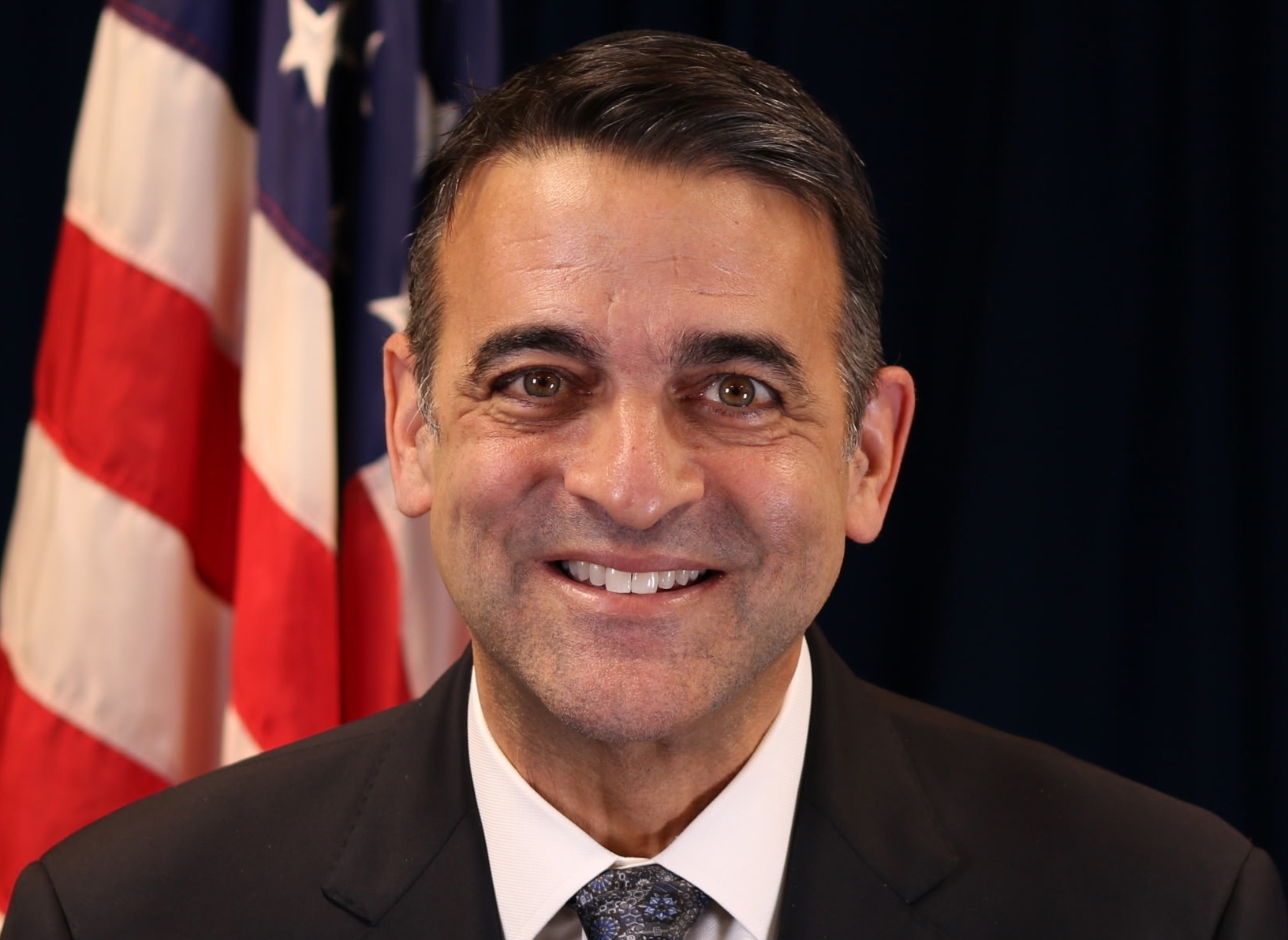
In an interview with JI, the Minnesota prosecutor and Jewish community leader said he was motivated to seek the role because of the ‘rapid escalation of violent antisemitism’
TIKTOK TALK
Jewish leaders, tech experts hopeful, but realistic about TikTok deal’s impact on online antisemitism
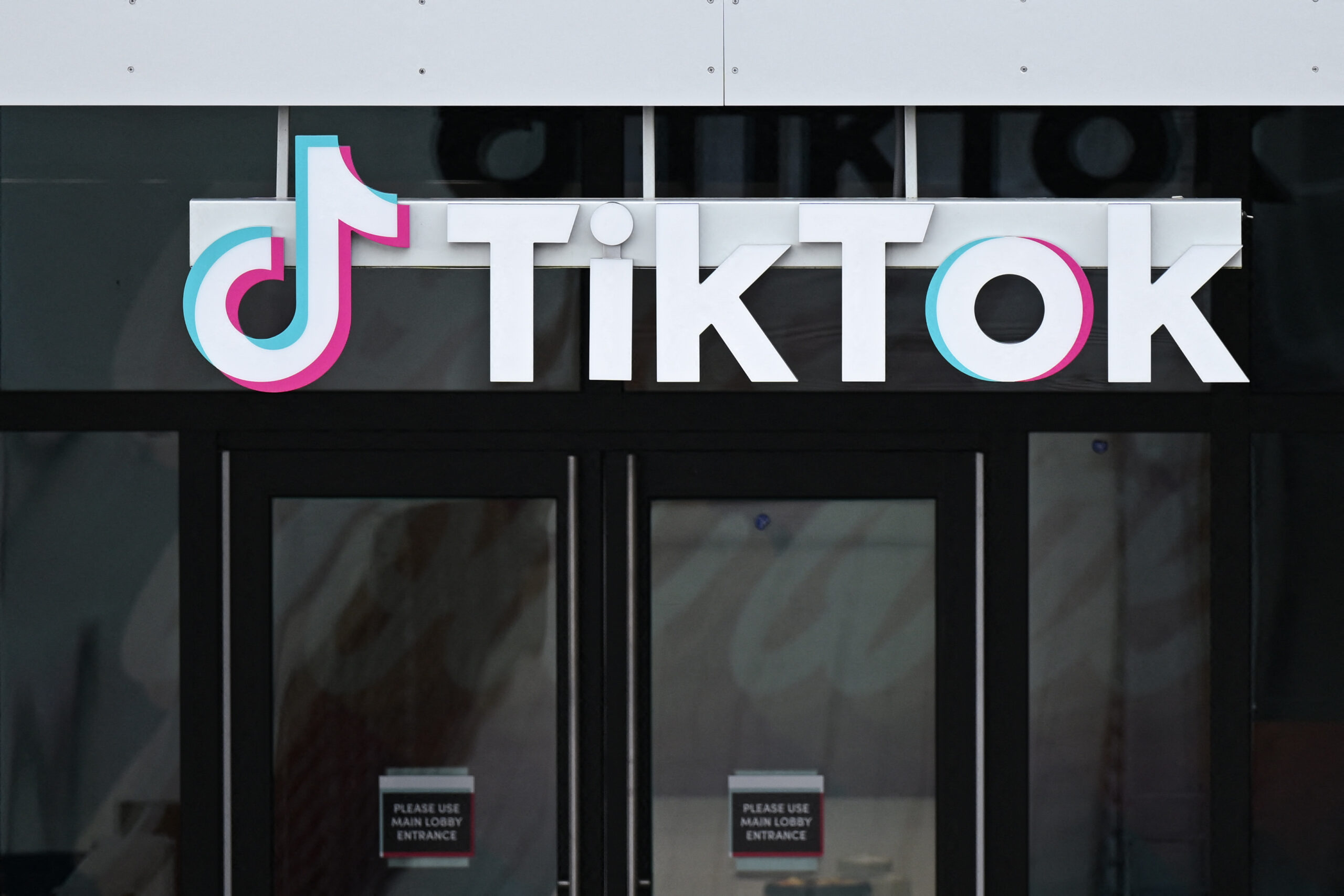
JFNA CEO Eric Fingerhut cited TikTok’s new owners’ ties to the Jewish community as an an encouraging sign
With the historic stop, Trump may have opened the door for Saudi Arabia and others to consider similar steps towards religious pluralism

Win McNamee/Getty Images
U.S. President Donald J. Trump tours the synagogue at the Abrahamic Family House during a cultural visit on May 16, 2025, in Abu Dhabi, United Arab Emirates.
Before President Donald Trump departed the Middle East last week, his motorcade made one final stop in Abu Dhabi, United Arab Emirates, before heading to the airport: a visit — the first by a U.S. president — to the Abrahamic Family House, a multifaith complex with Muslim, Christian and Jewish houses of worship.
His tour, with stops inside the mosque, church and synagogue, underscored the message of tolerance that he shared in an address at a Saudi investment forum earlier in the week.
“From the United States’ point of view, that is a signal to everybody he met in the region that week, and to people he didn’t yet meet, that religious freedom and tolerance is absolutely crucial going forward,” Rabbi Abraham Cooper, associate dean and director of global social action at the Simon Wiesenthal Center, told Jewish Insider last week.
Trump had just wrapped up a four-day visit to Saudi Arabia, Qatar and the UAE, and all week he had spoken about the Gulf nations’ efforts at modernizing and moving away from sectarian divisions.
“Before our eyes a new generation of leaders is transcending the ancient conflicts of tired divisions of the past and forging a future where the Middle East is defined by commerce, not chaos; where it exports technology, not terrorism; and where people of different nations, religions and creeds are building cities together, not bombing each other out of existence,” the president said at the forum.
Trump used the speech to call for Saudi Arabia to normalize ties with Israel, following the lead of the UAE, as well as Bahrain and Morocco. So could the Saudis similarly follow suit by creating an Abrahamic Family House of its own, or something similar to advance religious pluralism?
Religious freedom experts say that’s highly unlikely. After all, it is only in recent years that people of other religions have even been able to legally practice their faiths at home, behind closed doors, in Saudi Arabia, part of the wide-ranging reforms implemented by Crown Prince Mohammed bin Salman. But as a monarch with near-unlimited authority as well as near-unlimited resources, MBS’ next move is anyone’s guess — and that pertains to religion, too, even in this deeply religious country where the vast majority of people practice Sunni Islam.
“I think you won’t see a version of the Abrahamic Family House in another country. I think what you will see is each country, in their own way, doing similar things in the years to come,” said Johnnie Moore, an evangelical leader who met with MBS in 2018 as part of the first delegation of evangelical leaders to Saudi Arabia. “Obviously in Saudi Arabia, the baseline is different.”
As the home of Mecca, the birthplace of Islam, Saudi Arabia has long been viewed as the standard-bearer for the Muslim world. In the UAE — a much smaller nation, where nearly 90% of residents are foreigners there for business purposes or as laborers — Islamic law has never been applied as strictly.
“The strategy of letting expatriates worship as they like or other cultural practices that aren’t inherently Islamic looks very different in a country where the majority of those residing in it are expatriates, versus the majority of those residing in it are Arab Muslim,” said Moore.
MBS has made clear his desire to turn Saudi Arabia into a global business and tourism hub. Part of that mission involved his 2016 decision to sharply curtail the powers of the religious police, who for decades had regulated every facet of daily life in the country, in a bid to make the country more appealing to foreigners.
The Muslim World League, a major Islamic NGO, hosted a forum in Riyadh in 2022 for a diverse array of global religious leaders that included Jews, Muslims, evangelicals, Catholics, Orthodox Christians, Buddhists and Hindus. Saudi Arabia has also made efforts in recent years to rid textbooks of negative references to Jews and Christians.
Houda Nonoo, a former Bahraini ambassador to the U.S., touted “the presence of interfaith houses of worship across the GCC [Gulf Cooperation Council]” as “a powerful symbol of coexistence and mutual respect.” The king of Bahrain has promoted religious tolerance in the small island nation, situated between Saudi Arabia and Qatar.
“Building houses of worship for all religions is a meaningful step toward making people of all faiths feel seen, respected and truly welcome,” Nonoo told Jewish Insider last week, declining to specifically comment on whether Saudi Arabia should adopt a similar approach.
Overall, true religious pluralism in Saudi Arabia remains far afield. The State Department has designated Saudi Arabia a “country of particular concern” on matters of international religious freedom since 2004, alongside China, Cuba, Iran, North Korea and Russia, among others.
A U.S. delegation to the country last year departed early when Saudi officials asked Cooper, the then-chair of the U.S. Commission on International Religious Freedom, to remove his yarmulke. The Saudi Embassy in Washington acknowledged the flub, describing the incident as “unfortunate” and “the result of a misunderstanding of internal protocols.”
But despite Saudi Arabia at times facing global censure for such incidents and for other human rights abuses, the country is guaranteed to be a major figure in shaping the changing face of the Middle East, particularly in relation to Israel’s standing in the region.
“Without question, the most important address on this issue about how we move forward on the peace end of things is Saudi Arabia,” said Cooper. “Expect that whatever the Saudis do will have a Saudi, if you will, stempel” — Yiddish for “stamp” — “and imprint. It won’t look like whatever anybody else has done.”
The Simon Wiesenthal Center raised a record $2.2 million at its annual National Tribute Dinner held at the Beverly Wilshire Hotel Tuesday night according to The Hollywood Reporter.
Jeffrey Katzenberg, CEO of DreamWorks, presented Jim Gianopulos, CEO of Fox Films, with the Center’s Humanitarian Award. The list of the evening’s co-chairs included Gianopulos’ boss, Rupert Murdoch, Chase Carey, Eddy Cue, Bob Iger and Ron Meyer.
Rabbi Marvin Hier, who founded the center that furthers the work of the renowned Austrian Holocaust survivor and hunter of Nazi war criminals, said “The Center is thrilled to honor Jim Gianopulos, one of the giants of the entertainment world, for his leadership and generous support of our institution and many other worthwhile humanitarian causes.”
For his part, the 20th Century Fox Film CEO spoke of his most recent visit to the center’s Museum of tolerance on Pico Blvd. in West Los Angeles and recalled the a story involving Simon Wiesenthal himself. “When Wiesenthal was asked why he did not return (after the war) to being the architect he had worked so hard to become before the horrors of the Holocaust denied him the opportunity, he answered simply: ‘When we come to the other world and meet the millions of Jews who died in the camps and they ask us, ‘What have you done?’ There will be many answers. You will say, ‘I became a jeweler.’ Another will say, ‘I have smuggled coffee and American cigarettes.’ Another will say, ‘I built houses.’ But I will say, ‘I did not forget you’…”
“His message must be a call to action for all of us,” Gianapulos concluded, “especially for those of us who live lives so often insulated from the suffering of others, when it is easy to turn away and immerse ourselves in our work and our families and pretend it’s not our problem.”
The Wiesenthal Center’s operations include the Museum of Tolerance, classes on the Holocaust for school children across Southern California, a facility and soon-to-be-opened museum in Jerusalem, and a film division whose documentaries have won two Academy Awards. The Center has long been a favorite cause of A-list Hollywood stars and executives.
Please log in if you already have a subscription, or subscribe to access the latest updates.
 Continue with Google
 Continue with Apple