




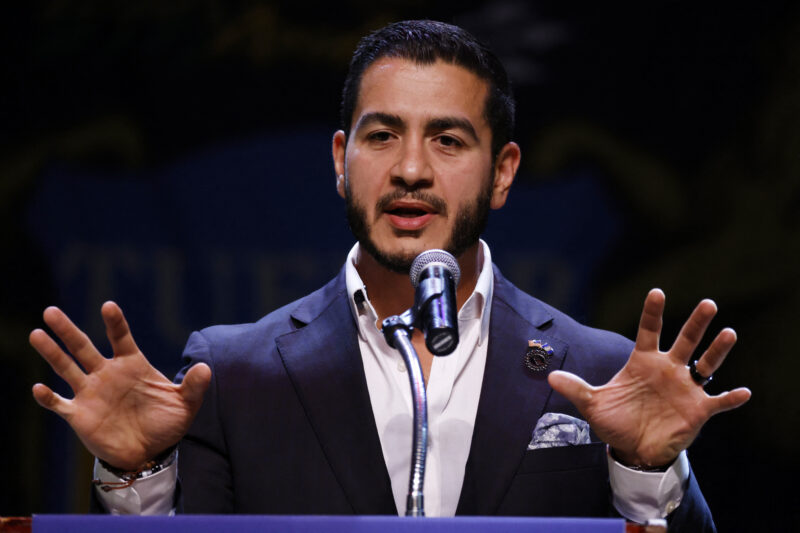
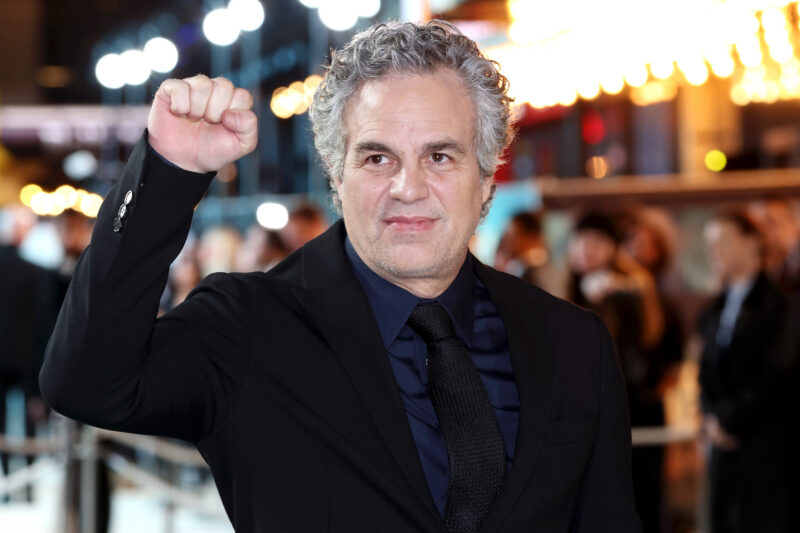


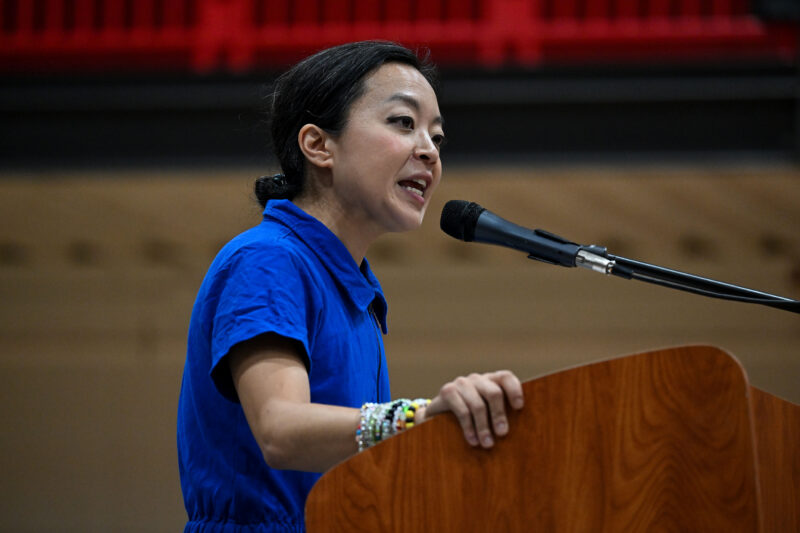



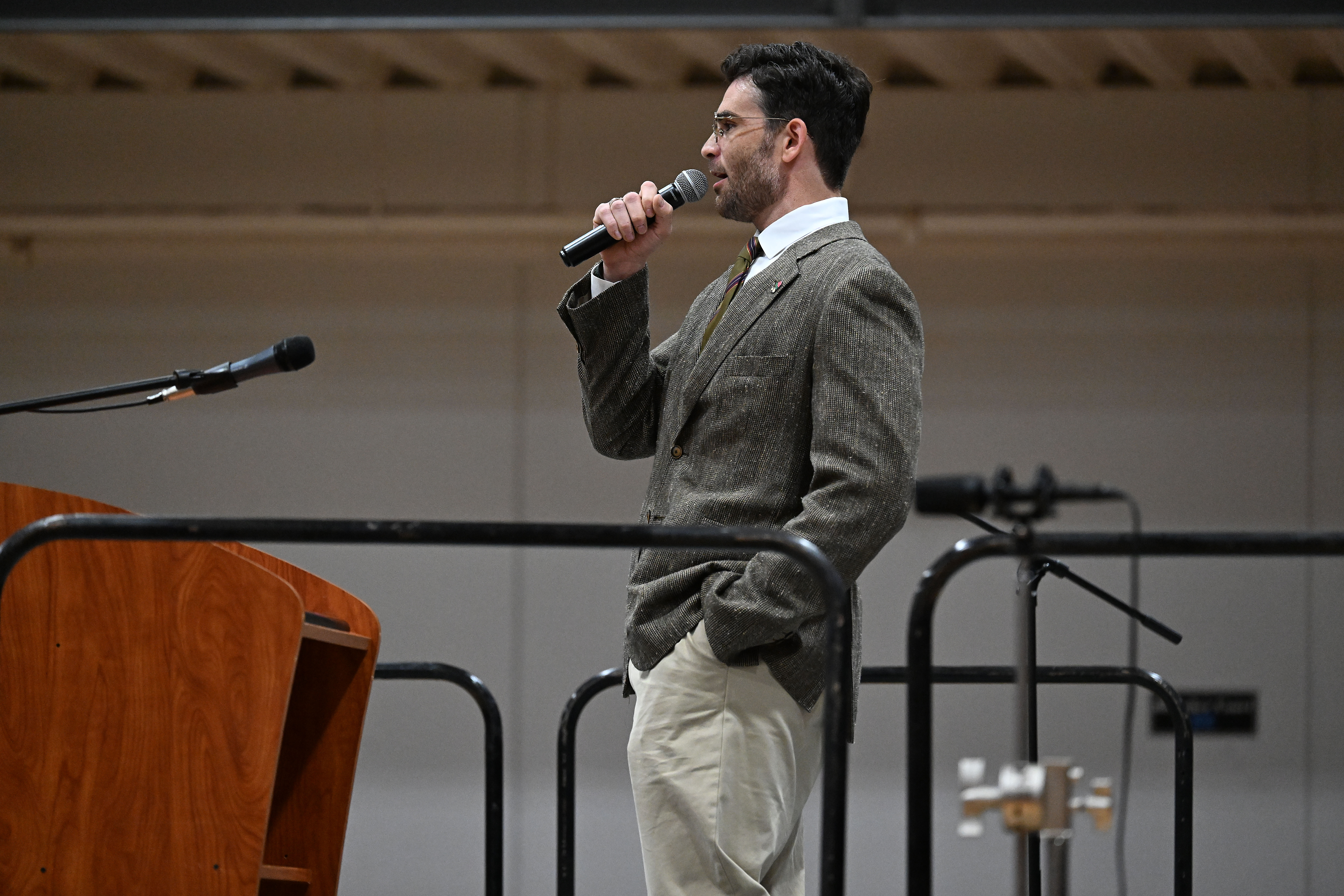


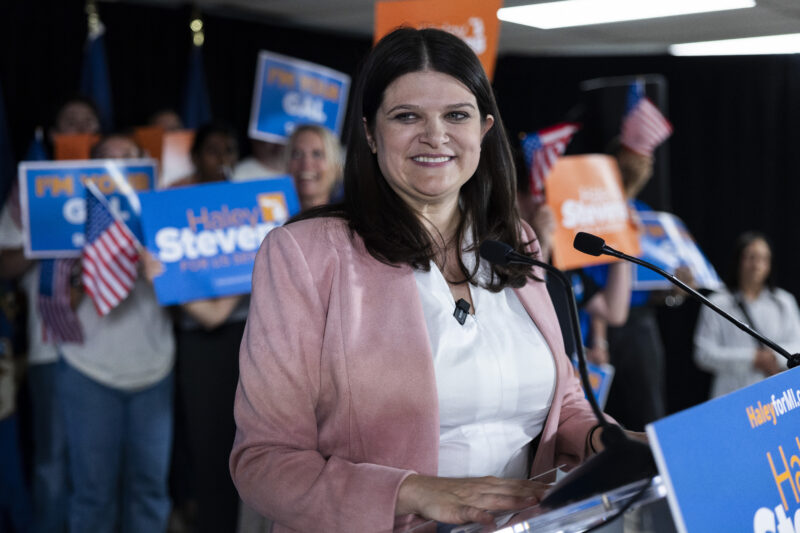
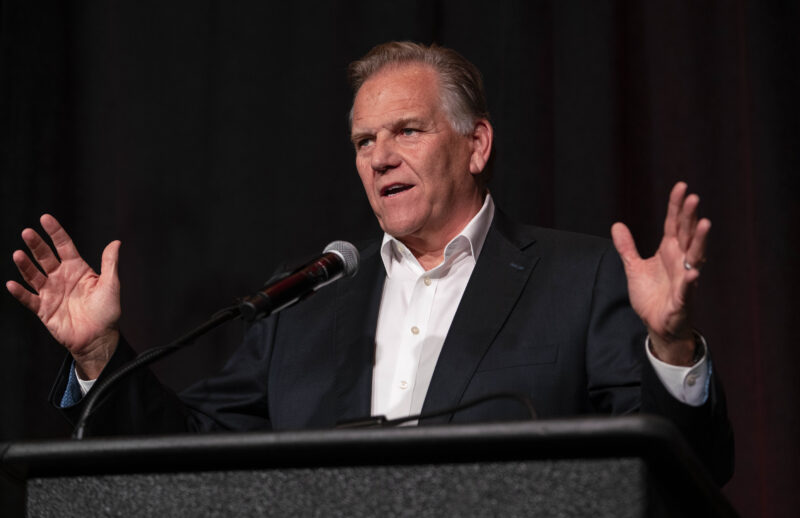


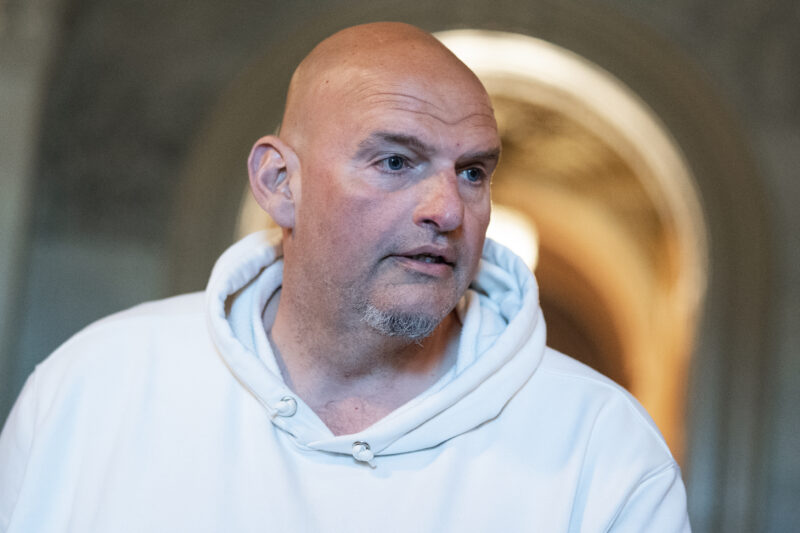
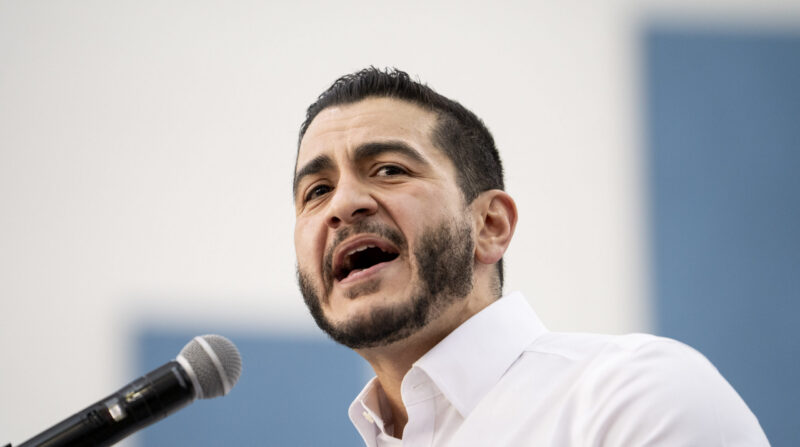
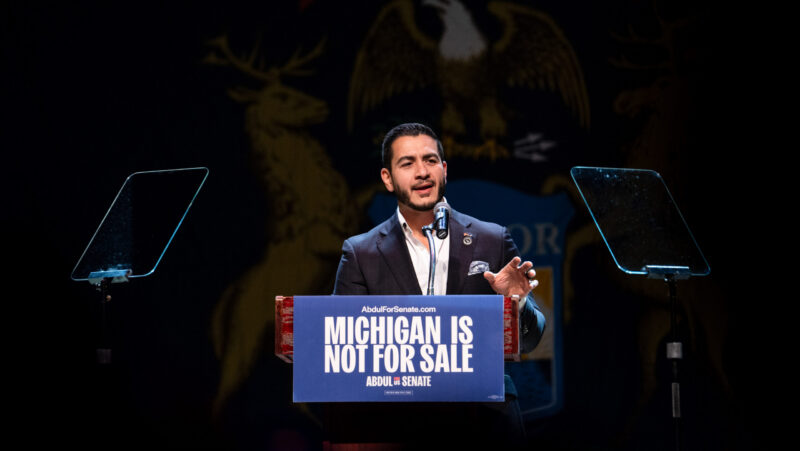








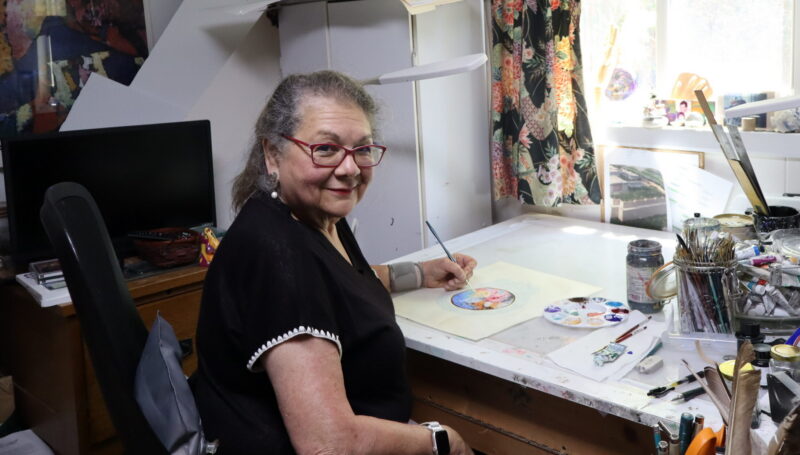
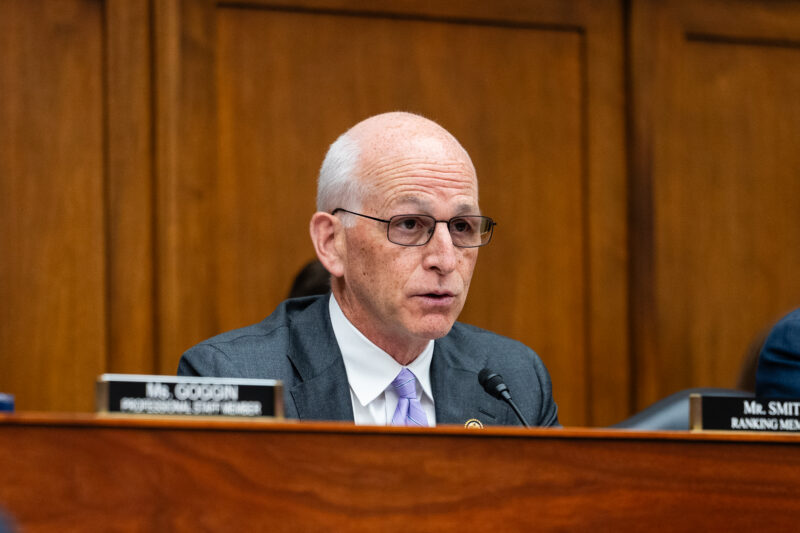



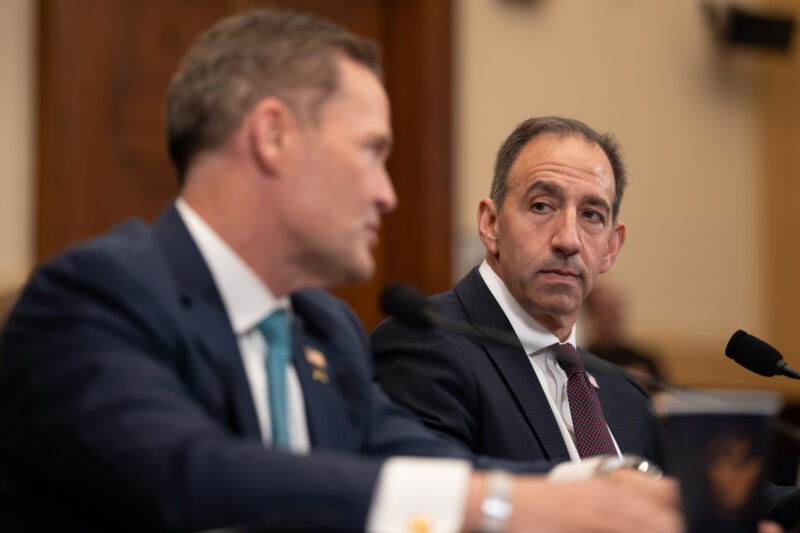
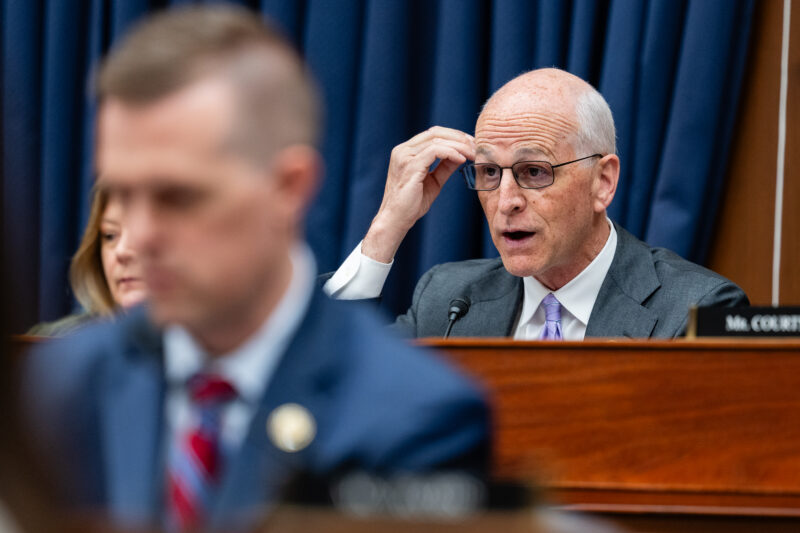
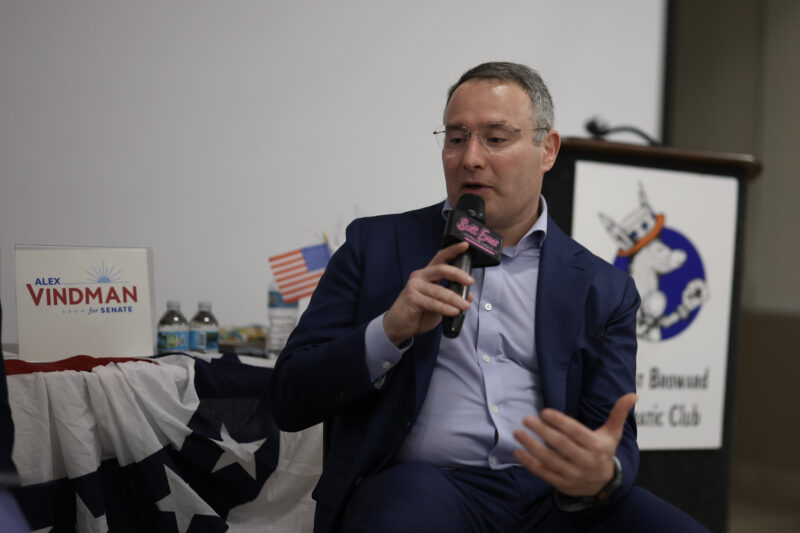












Chan's opponent, state Sen. Scott Wiener, has been harassed by far-left activists shouting antisemitic slurs at him
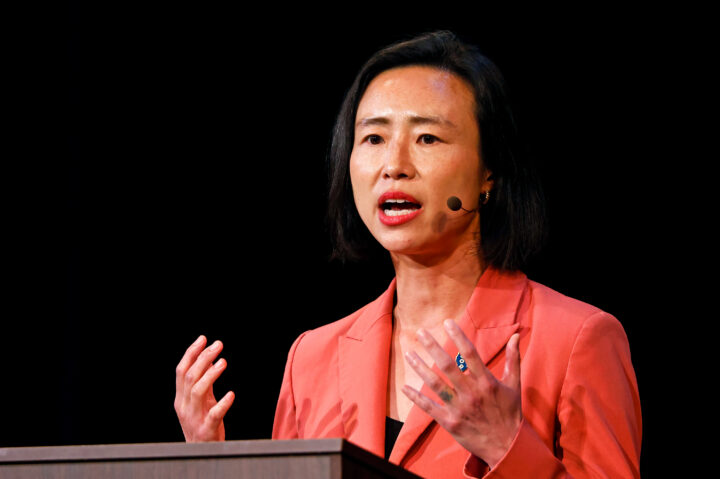
Carlos Avila Gonzalez/San Francisco Chronicle via Getty Images
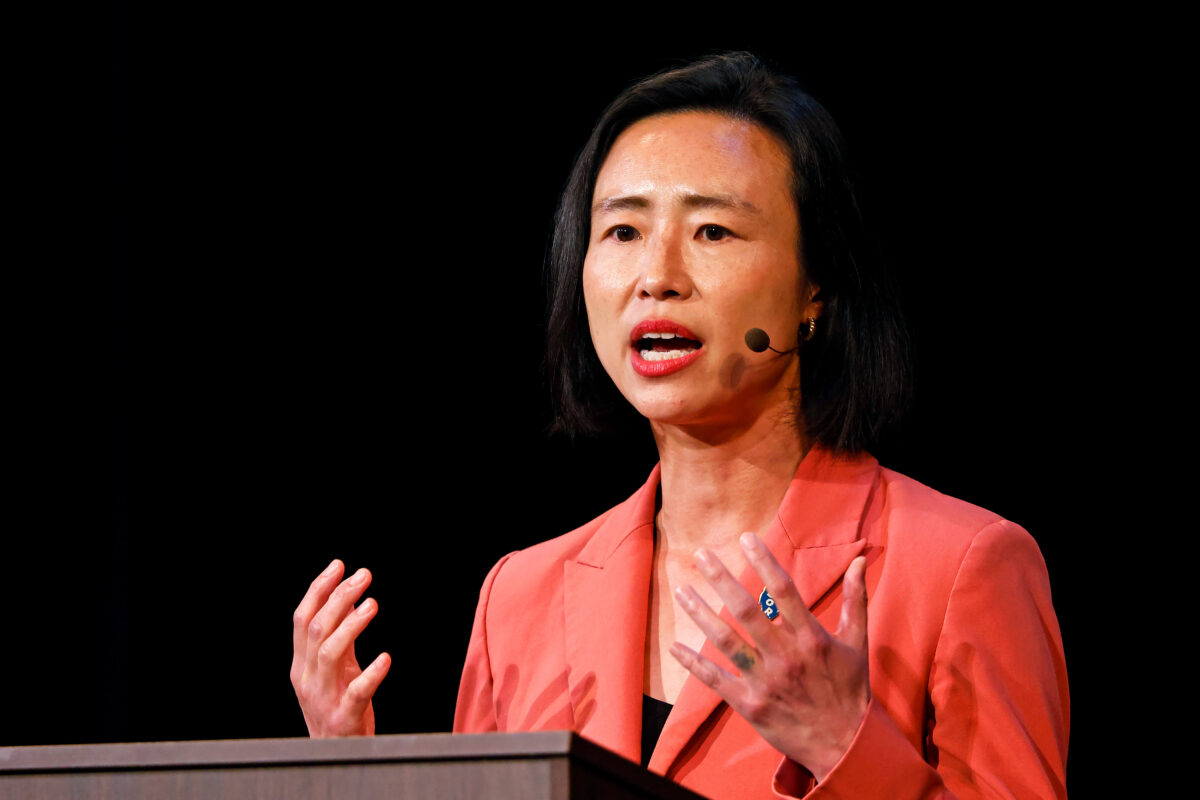
Connie Chan debates Saikat Chakrabarti and Scott Wiener for California's 11th Congressional District at the Sydney Goldstein Theater in San Francisco on March 31, 2026.


 Add JewishInsider on Google
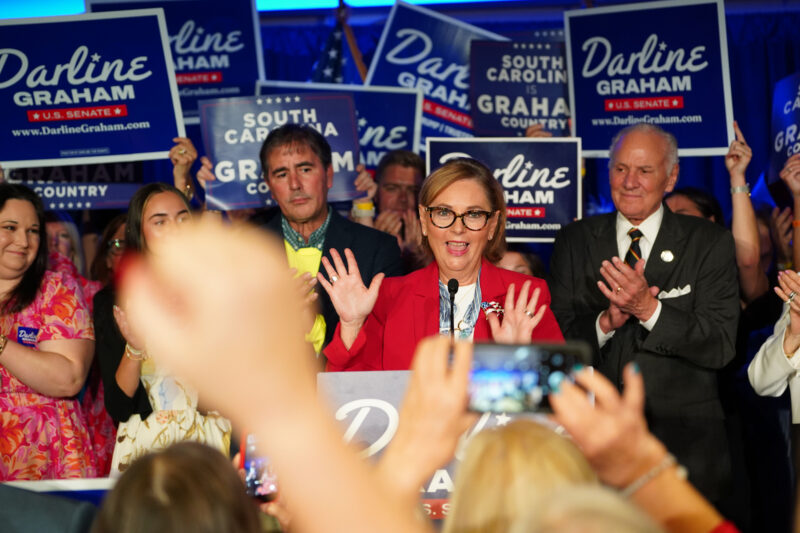
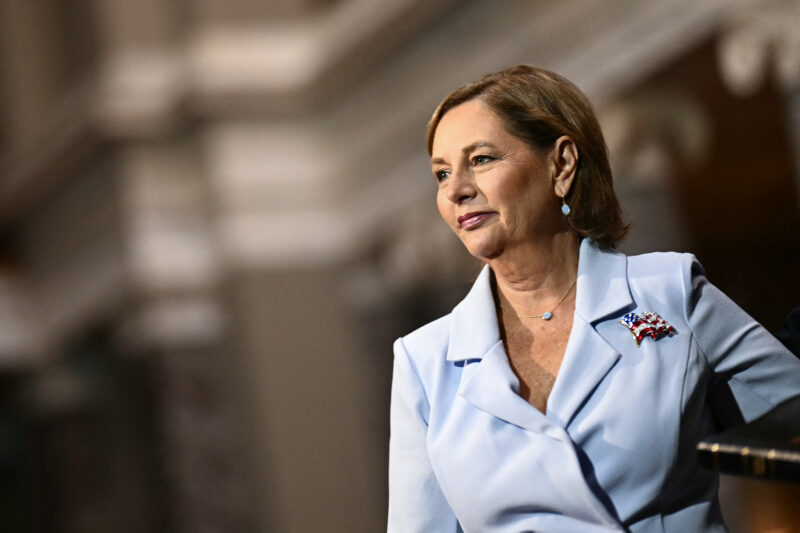
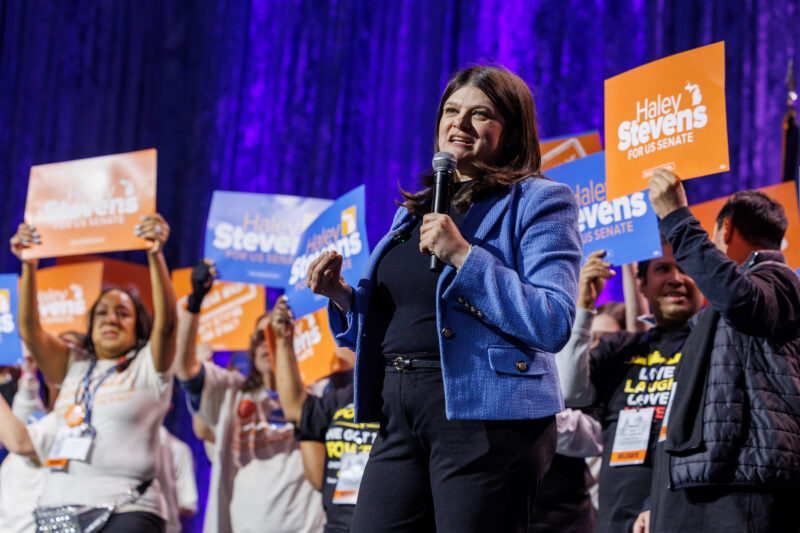
Connie Chan, a progressive member of the San Francisco board of supervisors running to succeed retiring Rep. Nancy Pelosi (D-CA), claimed an endorsement on Tuesday from Track AIPAC, a virulently anti-Israel group that has faced accusations of spreading antisemitism.
In a statement posted to social media, Track AIPAC said Chan had completed its candidate questionnaire “affirming that Israel is committing genocide against the Palestinian people and that Congress must end U.S. complicity in it and hold those responsible to account.”
Additionally, the group said, Chan vowed to back “a total arms embargo on Israel,” reject “support from AIPAC and the rest of the Israel lobby” and push for the pro-Israel group to register as a foreign agent — a spurious claim that has drawn scrutiny as a cover for invoking antisemitic tropes concerning dual loyalty.
While Chan had already expressed her alignment with several of the commitments she made in the questionnaire, Track AIPAC had apparently been skeptical of her candidacy until relatively recently.
Chan is also supported by a number of Democrats who have been endorsed by AIPAC, including Pelosi, the former House speaker, and Sen. Adam Schiff (D-CA), among others in California and beyond.
Representatives for Pelosi and Schiff did not return requests for comment about Chan’s friendly rapport with the anti-Israel group, which has drawn criticism for backing extreme candidates, demonizing Zionism and using flawed methodology to distinguish among differing Israel advocacy groups such as J Street and Democratic Majority for Israel.
Both Pelosi and Schiff have been targeted by Track AIPAC for contributions from pro-Israel sources.
The new endorsement, however, comes amid recent tensions between Pelosi and AIPAC, whose political action committee last week chose to remove language from its online endorsement portal that had thanked the veteran congresswoman for her “ongoing support for the U.S.-Israel relationship,” after she voted along with more than 100 House Democrats to end U.S. aid to the Jewish state.
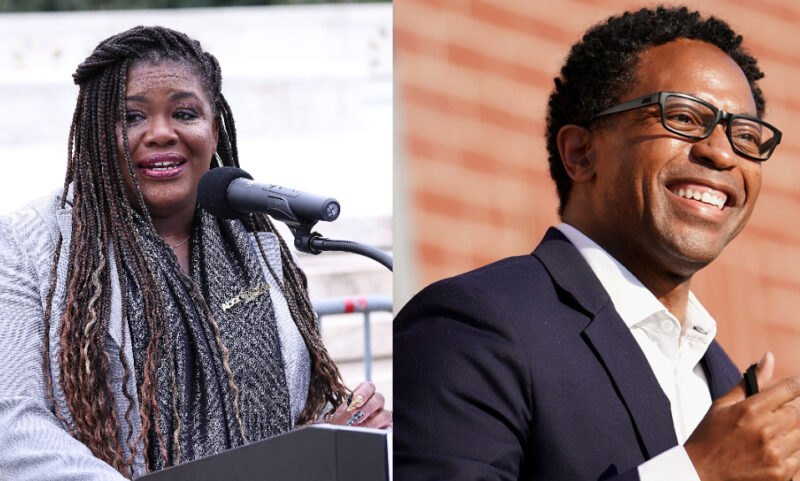
In the top-two primary election last month, Track AIPAC had backed Chan’s far-left opponent, Saikat Chakrabarti, who came in a distant third place. He has since endorsed Chan, who came in second with 30% of the vote — trailing state Sen. Scott Wiener, a Jewish Democrat, by 11 points.
Like Chan, Wiener has said he supports the Block the Bombs Act, which would impose sweeping conditions on weapons sales or transfers to Israel, but carves out an exception for U.S. assistance to help fortify Israel’s defensive systems.
Even as Wiener has also echoed Chan in accusing Israel of genocide in Gaza in an effort to placate the far left in California’s deeply progressive 11th Congressional District, he has continued to face harrassment from anti-Israel activists. Most recently, the veteran lawmaker was chased from a trans rights march in San Francisco by protesters who called him “terrible on Gaza” and said he had “Zionist handlers,” in an incident that drew national media attention.
While Chan broadly condemned the episode, which was captured on video, her statement made no direct mention of Wiener and she did not join local political leaders in signing a community letter denouncing the harassment.
In its statement, Track AIPAC argued that Wiener’s positions on Israel “have been continuously unclear, and where he has taken a stance, he has stopped well short of what accountability requires.” The group also stated that Wiener “has not taken” the opportunity to respond to its candidate questionnaire.
Wiener did not return a request for comment.
Chan’s campaign did not respond to a request for comment about the endorsement from Track AIPAC, which operates a political arm called Citizens Against AIPAC Corruption.
“In Congress, we will oppose any aid to Israel and do everything in our power to stop their government’s genocidal actions against the Palestinian people,” Chan said in a statement to The Intercept. “We are proud to stand with groups like End Citizens United and Citizens Against AIPAC Corruption to fight to fix our democracy.”
The California lawmaker was forced to leave a transgender community march amid harassment from anti-Israel activists shouting antisemitic slurs at him
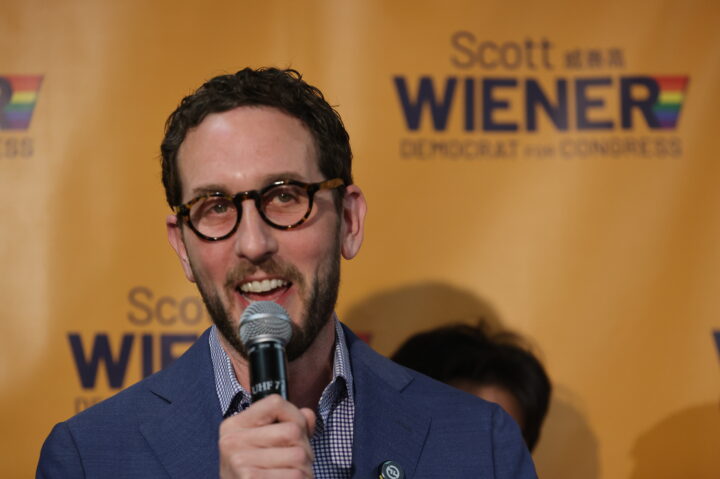
Gabrielle Lurie/San Francisco Chronicle via Getty Images
California state Sen. Scott Wiener's election party at his congressional campaign headquarters on election night in San Francisco, Calif. on June 2, 2026.
California state Sen. Scott Wiener, the front-runner to succeed retiring Rep. Nancy Pelosi (D-CA) in Congress, has become the target of antisemitic harassment twice in the last week in his San Francisco district, marking the latest example of a high-profile progressive Jewish politician being singled out and facing threats for his background.
The latest episode occurred Friday when Wiener, who was on his way to participate in a Pride Shabbat service at a transgender community march in San Francisco, was chased out of the event by anti-Israel activists following the state lawmaker and shouting antisemitic slurs at him.
In a video posted by one local anti-Israel activist, the activist follows Wiener around, attacking him for “being terrible on Gaza,” adding, “You do not belong here anymore, Scott. And it breaks my f—ing heart.” Soon after the initial engagement, other even-more hostile activists start cursing at Wiener, with one calling him a “genocidal piece of sh—” and another saying, “F— you and your Zionist handlers.”
Wiener is a longtime supporter of the transgender community, noting in a statement on Saturday about the incidents that he’s attended the march he was harassed out of every year since it began in 2004.
Two days earlier, Wiener, while watching a World Cup game with staffers at a local bar, was berated over his support for Israel by another anti-Israel activist who demanded he say the words “Free Palestine” on camera. The same individual, Wiener said, had stalked him on a plane several years earlier, shouting obscenities about his “tainted bloodline.”
”I have no objection whatsoever to anyone disagreeing with me, opposing me, or protesting me. All of that is core to democracy,” Weiner said, as videos of the confrontations went viral on Saturday.
“But when opposition and disagreement transition to harassment, including cornering me, touching me, or trying to physically bully me out of a public event, that crosses a line. We’re living in a time when violence is all too often threatened or used against people in public life. In San Francisco, we’re better than that.”
Wiener, a progressive stalwart in the California state legislature who has worked closely with the Jewish community the Bay Area, called Israel’s war against Hamas a “genocide” earlier this year after facing intense pressure from left-wing activists to do so. At the time, Wiener was facing primary opposition from a candidate who was attacking him over his support for Israel.
He stepped down as co-chair of the California Legislative Jewish Caucus, after his decision to placate progressives drew opposition from the state’s sizable Jewish community.
Activists have continued to harass the lawmaker even as he finished in first place in the state’s June Democratic primary. (He is facing San Francisco supervisor Connie Chan, who has Pelosi’s endorsement.)
The antisemitic threats against Wiener come after Rep. Dan Goldman (D-NY), who lost a primary last week amid relentless attacks over his support for Israel, faced online harassment from a Brooklyn coffee shop owner after he bought a drink in the store.
“We see that you stopped by our shop today for a coffee. Do you see how it doesn’t taste like genocide juice?” Poetica Coffee wrote in an Instagram post with an image of Goldman standing at the register. “We don’t need your money (it’s probably coming from AIPAC anyways). Don’t ever come to Poetica.”
The Department of Justice’s Civil Rights Division is investigating Poetica Coffee for possible discrimination.
State Sen. Scott Wiener has called Israel’s actions in Gaza a genocide and is open to conditions on offensive aid to the Jewish state, but is still derided as a ‘Zionist’
ROBERTO SCHMIDT/AFP via Getty Images
Rep. Nancy Pelosi (D-CA) attends a press conference with House Minority Leader Hakeem Jeffries (D-NY) on the steps of the U.S. Capitol in Washington, D.C., on October 15, 2025.
A solemn California state Sen. Scott Wiener looked directly into the camera.
He was recording a video to “clarify” whether he believed Israel had committed genocide in Gaza. Four days earlier, he wavered on that question in front of a live audience during a candidate forum for the race to fill the seat of Rep. Nancy Pelosi (D-CA) in California’s 11th Congressional District.
Both of his opponents had quickly answered “yes,” that Israel had committed genocide. Wiener did not answer “yes” or “no,” drawing loud jeers.
“For many Jews, associating the word genocide with the Jewish State of Israel is deeply painful and frankly traumatic,” Wiener said in the follow-up video. Wiener grew up in a Conservative family in New Jersey, supports a two-state solution to the Israeli-Palestinian conflict and has long been a critic of the government of Israeli Prime Minister Benjamin Netanyahu. “We all have eyes,” he continued, “and we see the absolute devastation and catastrophic death toll in Gaza.”
Referring also to what he described as “genocidal statements” from Israeli officials, he said the Israeli government had “tried to destroy Gaza and to push Palestinians out. That qualifies as a genocide.”
The striking about-face, which drew swift rebukes from mainstream Jewish organizations in the Bay Area, was indicative of the immense pressure on Wiener, a gay, progressive Jew who has often been assailed as a “Zionist” by the far left in San Francisco, but who is also harshly critical of the Israeli government’s policies.
One of Wiener’s top challengers for the San Francisco seat, Saikat Chakrabarti, is running a well-funded campaign closely aligned with the anti-Israel left, embracing some of the most extreme voices in that camp.
The race has become somewhat of a proxy battle in the war for the identity of the Democratic Party, where describing Israel’s war in Gaza as a genocide, supporting arms embargoes to Israel and attacking Zionism as a racist ideology have become much more common since the Oct. 7, 2023, Hamas terrorist attacks and the subsequent war in Gaza. The outcome of the race to succeed Pelosi will help answer an important question: Can a progressive candidate still win in a deep-blue district like San Francisco without fully embracing the politics of the anti-Zionist left?
The race is by most accounts a three-way contest between Wiener, Connie Chan, a progressive member of the San Francisco Board of Supervisors who has the backing of major labor organizations but has struggled to compete in fundraising, and Chakrabarti, a wealthy tech entrepreneur who entered progressive politics working for Sen. Bernie Sanders (I-VT) during his 2016 presidential bid and later served as Rep. Alexandria Ocasio-Cortez’s (D-NY) chief of staff.
Chakrabarti has attacked Wiener for being too supportive of Israel, describing him as “horrible on Palestinian rights” in an interview with Zeteo’s Mehdi Hasan.
Wiener had already been sharply critical of Israel’s tactics in Gaza prior to the controversy in January. He had called for a ceasefire early in the conflict, and has described Israel’s actions as a “moral stain” and “indefensible.”

Amid the controversy of his embrace of the term genocide and the ensuing fallout with mainstream Jewish community organizations in the Bay Area, Wiener stepped down as co-chair of the California Legislative Jewish Caucus.
Chakrabarti, for his part, has raced to the left of Wiener and embraced far-left streamer Hasan Piker as a prominent campaign supporter, appearing on Piker’s stream and inviting Piker to campaign with him at a rally in San Francisco last week.
Earlier this spring, in a video the Chakrabarti campaign published on social media, the candidate and Piker sat down for dinner in San Francisco so Chakrabarti could make his pitch to Piker’s audience of millions of mostly young viewers. Behind them sat a poster showing the outline of the map of Israel, the West Bank and Gaza — the entire map filled in with the colors of the Palestinian flag.
“There’s this massive change moment. There’s a bunch of popular outrage,” Chakrabarti said in between bites of food. “We could channel that into an actual political revolution.”
As a wealthy former tech entrepreneur who has poured millions into his own campaign, Chakrabarti might seem like an unusual candidate for that role. But he is banking on enthusiasm from the progressive left in an insurgent campaign for a seat that has not been vacant for a generation.
He is described as a “centimillionaire” in the local press and was an early employee at Stripe, the payment processing company. But his campaign has touted his progressive bona fides as a co-founder of Justice Democrats, the organization built to recruit and elect progressives.
Ocasio-Cortez has repeatedly declined to endorse her former top staffer, dealing a blow to his efforts to consolidate the left behind his campaign.
Jewish community leaders have at times described the race in stark terms, painting Chakrabarti as a threat.
Speaking about what he called the “extreme story” that Chakrabarti is telling voters, Tyler Gregory, CEO of the local Jewish Community Relations Council, said, “this is more than a policy difference [in the] race at this point. There is someone scary, who is actually going to undermine Jewish safety if elected.”
The Chakrabarti campaign did not respond to an emailed list of concerns raised by Jewish groups.
Polling shows Chakrabarti making inroads but lagging behind Wiener. An EMC Research poll conducted in early May and commissioned by a pro-Wiener super PAC showed Wiener at 38%, Chan at 22% and Chakrabarti at 21%. Polls sponsored by Chakrabarti’s campaign, however, show a much slimmer margin; one conducted in early April by Data for Progress had Wiener only leading Chakrabarti by five points, 33-28%.
The top two vote-getters, regardless of party, will move to a runoff in November, meaning the race is unlikely to be decided until the general election.
Close observers of San Francisco politics say the race reflects political divides that have long been salient in the city, but have intensified in recent years amid widespread dissatisfaction on issues such as street crime, public drug use, homelessness and disorder more broadly.
Chakrabarti is “running against the establishment, when people feel like it’s not working for them,” said Gregory. “San Francisco has been tacking to the middle in recent cycles,” Gregory added, pointing to the 2024 election of Daniel Lurie to be the city’s mayor and the 2022 recall of progressive prosecutor Chesa Boudin.
“Are we in an anti-establishment cycle, or are we in a moderate cycle?” Gregory said. “We’ll find out.”
Chakrabarti’s campaign has decisively outspent his opponents, according to the most recently available campaign filings, though Wiener has also raised millions of dollars. As of the most recent filing deadline, the Chakrabarti campaign raised about $5.2 million, of which $4.82 million came via a loan from the candidate himself. Wiener’s campaign had raised about $3.5 million as of the last filing deadline, but had only spent around $900,000 relative to Chakrabarti’s nearly $5 million. Chan’s campaign was lagging with just $459,000 in money raised.
Chakrabarti opposes all U.S. military funding to Israel, including for the Iron Dome missile-defense system, and said during a candidate forum that he supports “breaking the Israel lobby’s hold on our government.” For his part, Wiener said he supports funding for Iron Dome but also would support congressional efforts to block the sale of offensive weapons to Israel.
Chakrabarti also opposes a new California law aimed at combating antisemitism in K-12 schools that critics, including anti-Zionist activists, say infringes on the free speech of teachers. Chakrabarti has attacked Wiener for being an outspoken supporter of the measure, describing it as a Trump-like effort to tamp down on pro-Palestinian speech.
Wiener called AB 715, which establishes a statewide antisemitism prevention coordinator and seeks to curb teacher activism in the classroom after the proliferation of anti-Israel material across California, “a big step for the Jewish community.”
Raising concerns among Jewish community groups, Chakrabarti enthusiastically accepted an endorsement from the Arab Resource and Organizing Center Action, the political arm of the city’s most prominent anti-Zionist activist group, which helps organize rowdy anti-Israel protests in the Bay Area.
“In Congress, I look forward to working with AROC Action as we fight to end our country’s complicity in genocide and apartheid and pursue a just future for all,” Chakrabarti’s campaign wrote on Instagram last month.
Mail-in voting has already begun for the open primary, which takes place on June 2.
Among Wiener’s campaign supporters are wealthy tech and venture capital figures including Garry Tan, CEO of the prestigious VC firm Y Combinator, Yelp co-founder Jeremy Stoppelman and tech investor Chris Larsen.
Political insiders in the city say that Wiener will almost certainly be among the top two vote getters and advance to the general. Chan is popular with a number of established progressive institutions. Chakrabarti’s success will depend in part on whether he is able to get out voters who have not consistently participated in midterm elections.
Wiener “has a very strong base of frequent voters, in the LGBTQ community, in the YIMBY community, and with the majority of moderate — by San Francisco standards — voters in the city,” said Sam Lauter, a political strategist with BMWL public affairs and a Democratic activist who sits on the board of the Democratic Majority for Israel.
“Connie Chan has a passionate base within the politically engaged progressive community,” he added. “The unions, for example.” He added that he expects Chan to have considerable support from the Chinese American community.
Chakrabarti’s support “seems to be coming from people who haven’t, to date, frequently turned out to vote. Progressives who aren’t in tune with the established progressive community,” he said.
“Having said that, he certainly has increased his name recognition significantly with his personal spending,” Lauter added. “I think he has a very good shot of being in the final two.”
Among Chakrabarti’s top aides is the consultant and activist Nadia Rahman, an outspoken anti-Zionist who serves as the campaign’s political director. Rahman, who publishes a stream of harsh critiques of Israel, Zionism and Zionists on her social media feeds, attributed the Democrats’ loss in the 2024 presidential election to what she described as the party’s refusal to “break from genocide, militarism and imperialism.” She recently reposted an X post stating that “Zionism is racism,” and in another post criticized how “entrenched Zionist ideology is in many California state legislators.”
Wiener is endorsed by the state’s Democratic Party and has been a fixture in San Francisco city politics since his election to the city Board of Supervisors in 2010. Still, he has not won the endorsement of Pelosi, who appeared at a Chan fundraiser but has declined to endorse anyone.
On Jewish support after Wiener’s genocide statement, Gregory said donors fell into three camps. Some continued to back Wiener without hesitation. Others “needed to take a beat and process what happened.” The third group “hasn’t come around,” but Gregory added, “I’m becoming more and more confident they are going to come home” to Wiener.
Gregory added of Chakrabarti, considering the tendency for left-wing candidates to turn out low-propensity voters, “Our community would be foolish to underestimate him.”
The former House speaker, who announced she is not seeking reelection, received plaudits for her support of the Jewish state, even as her positions changed during the Gaza war
ROBERTO SCHMIDT/AFP via Getty Images
Rep. Nancy Pelosi (D-CA) attends a press conference with House Minority Leader Hakeem Jeffries (D-NY) on the steps of the U.S. Capitol in Washington, D.C., on October 15, 2025.
Rep. Nancy Pelosi (D-CA) announced on Thursday that she would not seek reelection, ending a nearly 40-year career in Congress and earning plaudits across a wide spectrum of Jewish voices, from J Street to AIPAC and many in the San Francisco Jewish community who have worked with her since the 1980s.
Pelosi, who is 85, rose to become the first and only female speaker of the House, a position she held from 2007-2011 and again from 2019-2023, when she presided over a divided caucus and a resurgent far-left flank of the party. Pelosi was known for keeping tight control over congressional Democrats and squashing intra-party squabbles.
“In my view, she was able to keep a pro-Israel consensus in the caucus, but it certainly came at a time when there was more angst around the issue,” said Tyler Gregory, CEO of the Bay Area Jewish Community Relations Council. “While we haven’t always seen eye-to-eye with her on specific policies, she’s always been pro-Israel, and I don’t think anyone can question that.”
Pelosi spoke several times at AIPAC’s annual policy conference. One year, she invoked her father, a former Baltimore mayor and Democratic member of Congress from Maryland, who she said “had a love for the idea of a Jewish state in what was then called ‘Palestine.’”
“Her love and close connection to the Jewish community started in Baltimore, with her father, the mayor,” said Amy Friedkin, a former AIPAC president and a close friend of Pelosi’s. “She used to say that the founding of the State of Israel was the most profound achievement of the 20th century.”
Marshall Wittmann, an AIPAC spokesperson, said that during her tenure as speaker, Pelosi “helped ensure that Israel had the resources to defend itself, which advances American interests and values.”
She sometimes diverged from pro-Israel advocates, particularly in 2015, when she championed the Iran nuclear deal as the leader of the Democratic caucus in the House.
“Nancy Pelosi was an early and steadfast supporter of J Street and a champion of diplomacy,” J Street President Jeremy Ben-Ami said in a statement. “She played a pivotal role in securing congressional support for the Iran nuclear deal and consistently advanced pro-Israel, pro-peace policies aimed at strengthening Israel’s security and promoting safety, dignity and self-determination for the Palestinian people.”
Like many Democrats, Pelosi began to take a more critical stance towards Israel during its two-year war in Gaza following the Oct. 7, 2023, Hamas terror attacks.
In April 2024, she signed onto a congressional letter urging the Biden administration to withhold some weapons transfers to Israel after the killing of World Central Kitchen aid workers in Gaza, a public condemnation of Israel that went further than previous actions by the former speaker.
“There are actions and statements that she made that I would disagree with, but when it came down to what was most important, which is Israel’s ability to be a Jewish, democratic state and live in peace and security — never a moment of wavering. Not even the thought process of wavering,” said Sam Lauter, a former longtime AIPAC activist and co-founder of Democratic Majority for Israel. Growing up in San Francisco, Pelosi’s family lived across the street from Lauter’s childhood home.
“Nancy Pelosi wasn’t just a friend of our community. She was part of our community,” said Lauter. “No one had to teach her about Zionism. She grew up believing in it.”
Weiner, a longtime California state senator, could face a crowded field of Democrats if Pelosi retires — including AOC’s former chief of staff
Russell Yip/San Francisco Chronicle via Getty Images
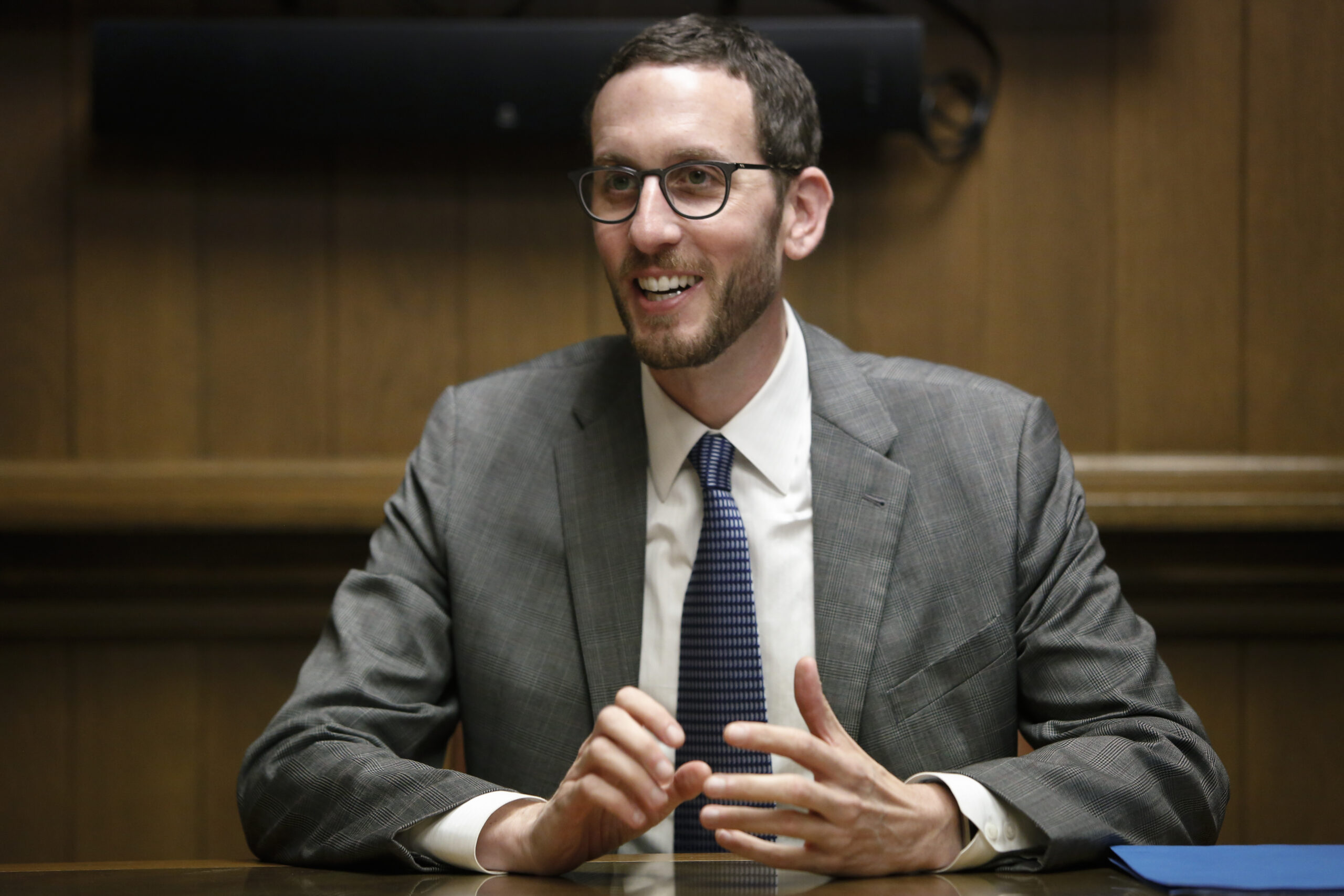
California State Senator Scott Wiener addresses the SF Chronicle Editorial Board on Thursday, Jan. 18, 2018 in San Francisco, Calif.
Scott Wiener, a veteran California state senator from San Francisco, has long coupled his lifelong support for Israel with vocal opposition to Israeli Prime Minister Benjamin Netanyahu and far-right members of his governing coalition.
Now, the 55-year-old Jewish Democrat finds himself navigating delicate political terrain as he balances those competing views while mounting a new campaign to replace Rep. Nancy Pelosi (D-CA) in the Bay Area congressional seat that she has held for nearly four decades.
With Pelosi rumored to soon announce she will retire at the end of her current term, Wiener has been fielding attacks from a far-left primary rival, Saikat Chakrabarti, as Israel and Gaza emerge as a source of division in the nascent race that is already shaping up to be among the more bitterly contested Democratic battles of the upcoming election cycle.
Chakrabarti, 39, a former chief of staff to Rep. Alexandria Ocasio-Cortez (D-NY), is a fierce critic of Israel who has called its war in Gaza a genocide and pushed for ending all military funding to the Jewish state. He has also backed a controversial House bill, called the Block the Bombs Act, that aims to impose severe restrictions on U.S. weapons sales to Israel — and is needling Wiener for so far declining to clarify his own position on the measure, which is not likely to pass.
In an interview with Jewish Insider earlier this week, Wiener continued to deflect when asked for his stance on the matter, saying only that, if elected next year, “there will be new bills introduced” when he serves in the House. Despite treading cautiously around the legislation, however, Wiener confirmed that he is broadly in favor of withholding offensive arms to the current Israeli government that, in his view, “is not committed to peace or democracy.”
The U.S.-Israel alliance, Wiener emphasized, “is incredibly important, and the U.S. should continue to support Israel’s defense,” such as funding for its Iron Dome missile-interception system. But he said he could no longer justify sending weapons to Israel because of his increasing disgust with Netanyahu’s government.
“I have been very clear and consistent for years, going back before Oct. 7, that I think the current government of Israel is horrific,” he said. “It’s an extremist, messianic government that, in addition to destroying Gaza and upending the West Bank, is harming Israel by upending Israel’s standing in the world and undermining democracy in the country — and it’s very troubling to me.”
Even as he endorsed a measure that represents a red line for many pro-Israel advocates, Wiener has continued to show his support for the Jewish state, co-leading a legislative delegation to Israel last year, where he visited sites targeted by Hamas in the Oct. 7, 2023, terror attacks and met with Israeli leaders, including President Isaac Herzog.
His evolving views on the Middle East policy underscore a broader shift within the Democratic Party in the wake of the war in Gaza, as a growing number of candidates and elected officials embrace efforts to impose conditions on military aid to Israel that, until recently, had seen more narrow support among anti-Israel detractors on the far left.
“I pray the ceasefire holds and we can move toward a more durable peace,” Wiener told JI. “But we also have a situation where you have Netanyahu and his government, and you have Hamas, so the situation is being driven by extremes. I hope that changes.”
In a heavily progressive city like San Francisco, Wiener’s more pointed views on Israel are hardly unusual — even if his approach is unlikely to satisfy the hard-line activists who, in the months after Oct. 7, frequently accosted him in public and accused him of supporting genocide.
Wiener, who co-chairs the California Legislative Jewish Caucus, believes much of the rhetoric that he faced was antisemitic and that protestors failed to recognize he had voiced support for an end to the fighting, as well as the release of all hostages, going back to the fall of 2023. “For some people, it’s never going to be good enough, unless you call for Israel’s elimination,” he said.
“I pray the ceasefire holds and we can move toward a more durable peace,” Wiener told JI. “But we also have a situation where you have Netanyahu and his government, and you have Hamas, so the situation is being driven by extremes. I hope that changes.”
“Without judgement, I don’t think that he’s in a different place than a lot of his would-be colleagues, and that is something the Jewish community has to grapple with,” Tyler Gregory, who leads the Jewish Community Relations Council Bay Area, told JI, referring to changing attitudes toward Israel among Democrats.
Tyler Gregory, who leads the Jewish Community Relations Council Bay Area, described Wiener as “the Jewish community’s champion” and said that “he has taken so many hits” that Jewish community members feel “a protective instinct” and “a strong sense of loyalty to him and what he has represented since Oct. 7.”
He called Wiener “firmly pro-Israel,” even if “a lot of people in our community may not be fully aligned with his politics.”
“Without judgement, I don’t think that he’s in a different place than a lot of his would-be colleagues, and that is something the Jewish community has to grapple with,” Gregory told JI, referring to changing attitudes toward Israel among Democrats.
Wiener said he has not yet engaged in discussions with pro-Israel groups like AIPAC — as Democratic candidates have faced pressure to swear off donations from the lobbying organization over its support for the Israeli government. “Obviously I have some disagreements with AIPAC,” Wiener told JI. “I’ll leave it at that.”
While he has been seen as a progressive leader in the state for his advocacy on such issues as LGBTQ rights and criminal justice reform, Wiener, who has said he moved to San Francisco nearly 30 years ago so that he could live more openly as a gay man, has faced local backlash from the left over his efforts to promote increased real estate development, fueling attacks that he is aligned with corporate interests.
But as the city’s voters have recently shown an appetite for more measured local representation, Wiener could find a more receptive audience than his chief opponent, Chakrabarti, who is running an insurgent campaign to push Pelosi into retirement.
Asked to comment on a recent social media post in which Chakrabarti said that “legislators continue to give Israel a blank check because of money from the Israel lobby,” Wiener said “that kind of rhetoric can tip into antisemitism.”
“There are times when some of those criticisms basically are like attacks on people for accepting contributions from Jewish community leaders,” he told JI, citing a recent questionnaire distributed by the California Faculty Association asking political candidates if they had ever accepted money from AIPAC or the Jewish Public Affairs Committee of California.
“I have a real criticism of what the government of Israel is doing today, and I do not believe our government should be complicit in it,” Chakrabarti said in a statement to JI. “I have a criticism of lobbying groups that spend huge amounts of money in our elections to influence our foreign policy. And it is precisely because we have a real issue with antisemitism today that I hope Sen. Wiener does not use this campaign to conflate a criticism of Israel with antisemitism to score political points.”
Such instances, Wiener argued, “can very quickly bleed out into attacking candidates because they have support in the Jewish community and receive contributions from respective leaders in the Jewish community — and then that gets lumped in as, ‘Oh, that’s the Israel lobby,’ and that can be antisemitic.”
“I hope this doesn’t go there,” he said of the race. “But we will see.”
In a statement to JI on Wednesday, Chakrabarti said that he “will always call out antisemitism no matter where I hear it, and I would hope we can all agree that we should never target any group with hate. This should be a basic American value.”
“I have a real criticism of what the government of Israel is doing today, and I do not believe our government should be complicit in it,” he added. “I have a criticism of lobbying groups that spend huge amounts of money in our elections to influence our foreign policy. And it is precisely because we have a real issue with antisemitism today that I hope Sen. Wiener does not use this campaign to conflate a criticism of Israel with antisemitism to score political points.”
Wiener, who says he raised $730,000 in the 24 hours after launching his campaign last week, has long been interested in running for Pelosi’s seat and created an exploratory committee two years ago to plant a marker in the district as he waited for her to retire.
But he moved forward with his bid rather than deferring to Pelosi’s schedule after Chakrabarti, a wealthy former tech entrepreneur, entered the race last February and drew national attention.
Wiener’s top priorities include housing, healthcare, clean energy and “always standing up for the Jewish community” amid a rise in antisemitism “across the political spectrum,” he said.
Pelosi, who is expected to announce her plans for the coming election cycle early next month, “is fully focused on her mission” to pass a state redistricting measure in the Nov. 4 election, a spokesperson told JI.
Her daughter, Christine Pelosi, is among other potential primary candidates viewed as eyeing the House seat.
“We’re ready to go,” Wiener said of his fledgling campaign. “I’ve been in this community, working in this community, representing this community, for a long time. I feel great about our support.”
Owner Manny Yekutiel: ‘There is no justification for attacking me other than the fact that I am Jewish’

Screenshot/JCRC Bay Area on X
Manny's, a Jewish-owned community center, is vandalized during anti-ICE riots in San Francisco on June 9, 2025.
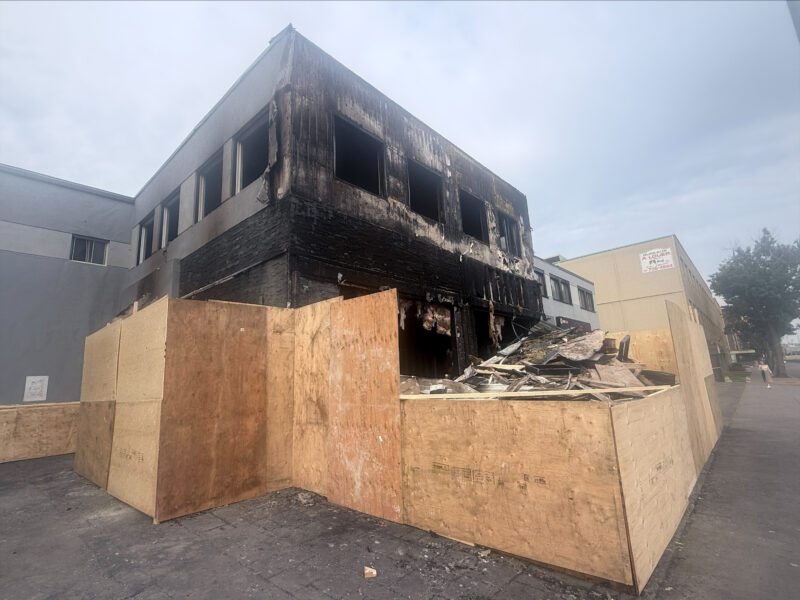
Protests against Immigration and Customs Enforcement deportations that have engulfed San Francisco’s streets this week took an antisemitic turn on Monday night when a local Jewish-owned civic engagement hub and community space had its windows smashed and walls defaced with slurs including “Die Zio,” “The Only Good Settler is a Dead One,” “Death 2 Israel is a Promise” and “Intifada.”
“There is no justification for attacking me other than the fact that I am Jewish,” Manny Yekutiel, owner of the Mission District event space Manny’s, which is in disrepair following the vandalism and break-in, told Jewish Insider. “My business is not a pro-Israel business. I am not Israeli. This is not a space that represents Israel in any way.”
The space was also the target of antisemitic graffiti in October around the one year anniversary of the Oct. 7, 2023 terrorist attacks. The most recent attack is currently being investigated as a hate crime.
In the Bay Area, over 150 people were arrested on Sunday and Monday following protests against President Donald Trump’s travel ban, latest immigration policies and ICE raids. Similar protests spread across the country — including in Los Angeles where 4,000 National Guard members and 700 U.S. Marines were deployed on Monday.
Yekutiel believes the protests against ICE are “necessary” because ongoing deportations are “stoking hatred” and “we need to stand with immigrants.” While Yekutiel says he will continue identifying with left-wing causes, he also said the attack on his business makes the protests concerning for Jews.
The attack on Manny’s “undermines the very values such movements claim to uphold” such as “justice and welcome the stranger,” the Jewish Community Relations Council Bay Area said in a statement.
Monday’s vandalism in San Francisco comes as the Jewish community faces an “elevated threat” following a surge of violent antisemitic attacks across the country in recent weeks, the FBI and Department of Homeland Security warned last week. Last month, two Israeli Embassy employees were killed in a shooting in Washington. Days later in Boulder, Colo., 15 people advocating for the release of hostages in Gaza were injured in a firebombing by an Egyptian national who overstayed his visa in the U.S.
Trump announced his travel ban — which bars nationals of 12 countries from entering the U.S. — last week following the Boulder attack.
“The recent terror attack in Boulder, Colorado has underscored the extreme dangers posed to our country by the entry of foreign nationals who are not properly vetted, as well as those who come here as temporary visitors and overstay their visas,” Trump said. “We don’t want them.”
Dr. Rupa Marya frequently targeted Jewish and Israeli colleagues and students on her social media posts

Smith Collection/Gado/Getty Images
Front entrance at the Parnassus Heights campus of the University of California San Francisco (UCSF) hospital in San Francisco, California, January 5, 2017.
A University of California, San Francisco, medical school professor whom Jewish colleagues allege has routinely posted antisemitic content on social media during the Gaza war has been fired by the university, more than a year after concerns about her behavior first surfaced.
Dr. Rupa Marya worked at UCSF for 23 years, beginning as a resident before becoming a professor of internal medicine and a regular lecturer on social justice topics. With an active social media presence, Marya began posting about Israel’s war against Hamas soon after the Oct. 7, 2023, terror attacks. Her posts included attacks targeting Jewish and Israeli colleagues and students.
In a federal lawsuit filed against UCSF this week, Marya alleged that the university violated her constitutional free speech protections by firing her in a retaliatory fashion over posts published on her personal account, which Marya claimed the university wilfully misconstrued. She asserted that “neither her views nor her posts are antisemitic.”
In January 2024, Marya published a blog post attacking by name a Jewish colleague who had urged a hospital antiracism task force not to issue a statement calling for a ceasefire, saying it would empower Hamas. She had been criticizing him on social media for weeks. (Marya’s account on X, once a very active home for her commentary, has since been disabled.)
Marya also published a thread on X arguing that Zionism should not be present in medicine, calling it a “structural impediment to health equity.”
“There are so many Jewish doctors who don’t espouse an ideology of supremacism and justification of land theft, apartheid and genocide. They are not the issue here,” she wrote in January 2024. “The issue is Zionist doctors who will sit in an ‘antiracism task force’ meeting” — a clear reference to the doctor she later named in her blog — “and try to stop brown doctors who want to issue a Ceasefire statement by saying that a ceasefire would be a bad thing (read: let’s keep killing brown people in Gaza).”
This post from Marya earned a rebuke by the university — UCSF posted on social media soon after about a “tired and familiar racist conspiracy theory … stating that ‘Zionist’ doctors are a threat to Arab, Palestinian, South Asian, Muslim and Black patients, as well as the U.S. health system.” The university called it a “sweeping, baseless and racist generalization” that “must be condemned,” and identified the trope as antisemitism.
In September 2024, Marya announced that she had been suspended from her faculty position. The news came after she had raised concerns about an Israeli student attending the medical school. Students are “asking if he participated in the genocide of Palestinians in the IDF before matriculating into medical school in CA,” she wrote. “How do we address this in our professional ranks?” She was fired in May, nine months after her suspension.
A UCSF spokesperson declined to comment.
Please log in if you already have a subscription, or subscribe to access the latest updates.
 Continue with Google
 Continue with Apple