
































The Senate majority leader also said the deal triggers requirements for the administration to provide Congress with the opportunity to review the agreement under INARA

Kayla Bartkowski/Getty Images
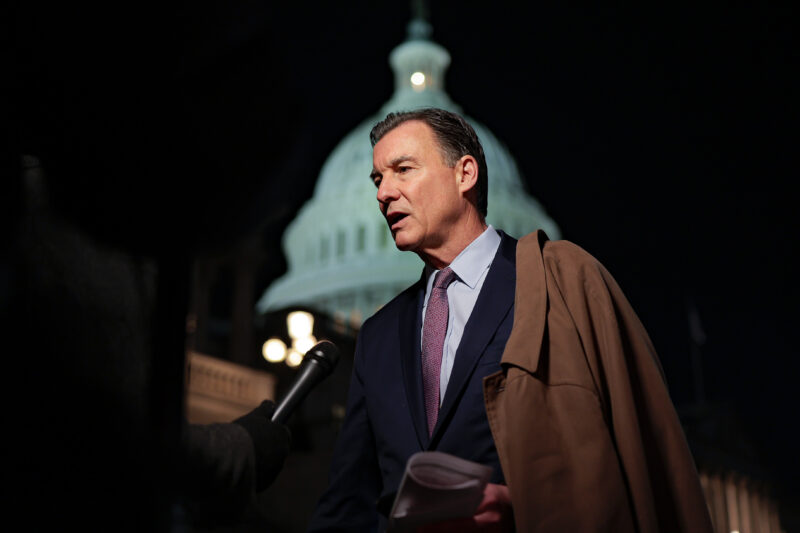
Sen. Majority Leader John Thune (R-SD) calls on reporters following the weekly Senate Republican caucus policy luncheon at the U.S. Capitol on January 14, 2025 in Washington, DC. Senators spoke about the Laken Riley Act which was named after a nursing student who was murdered in February 2024 by Jose Ibarra, a migrant from Venezuela who crossed the border in September 2022, that could give state attorney generals far-reaching veto power over federal immigration policy.


 Add JewishInsider on Google
With scant details provided by the Trump administration about the contours of the peace deal with Iran, Senate Majority Leader John Thune (R-SD) said on Monday afternoon that he doesn’t yet know enough about the administration’s deal with Iran to determine whether it is a good deal that will prevent Iran from acquiring a nuclear weapon.
“I don’t know enough about it to say,” Thune told reporters. “I think the issues are going to be compliance, and how you can enforce that, and what are the financial incentives that the Iranians have from our country, and what are they conditioned upon.”
The South Dakota Republican said that a positive deal would include financial incentives that are conditioned upon Iran winding down its nuclear program, the disposal of Iran’s enriched uranium and Tehran giving up its capacity to have a nuclear program in the future.
Thune also indicated that he believes the deal should be submitted to Congress for review under the Iran Nuclear Agreement Review Act.
“There are some requirements that are triggered because of the nuclear components of the deal, in terms of notification or informing Congress,” Thune said. “I know there is probably some expectation that there may be a vote at some point, whether that’s on a resolution of disapproval or something. We’ll see. I just don’t know enough about it yet. And I don’t think even the people who follow this stuff closely up here know that much.”
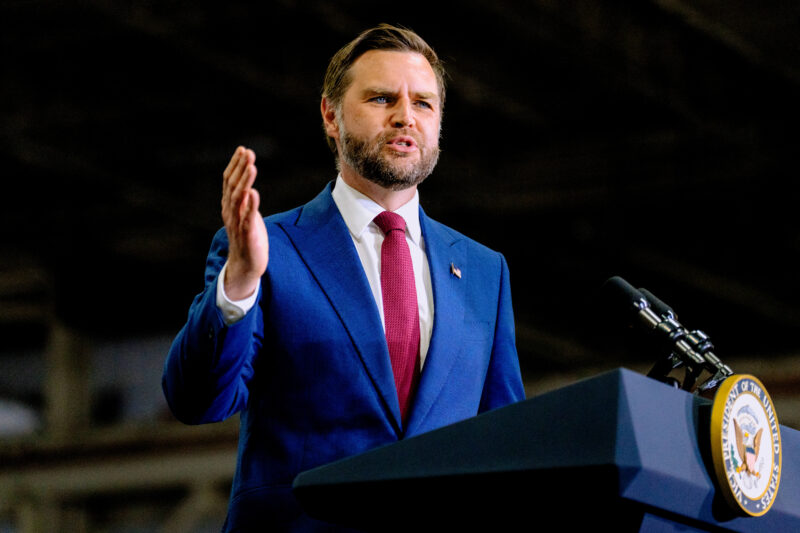
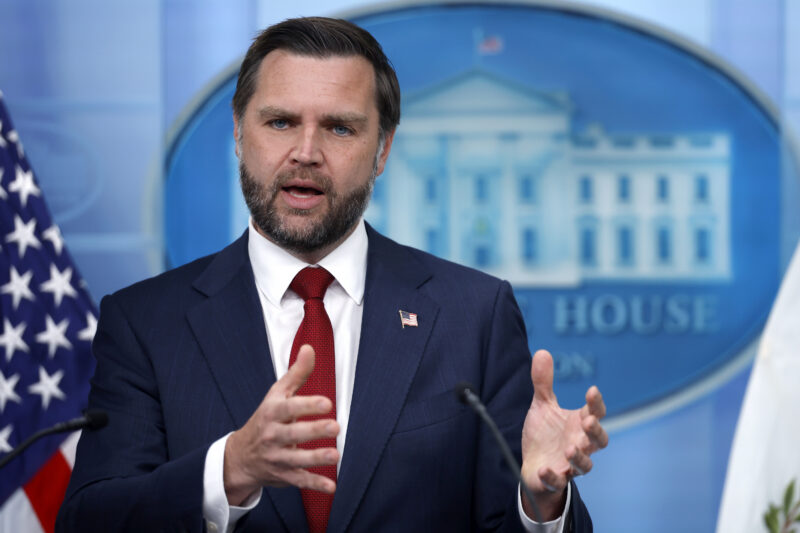
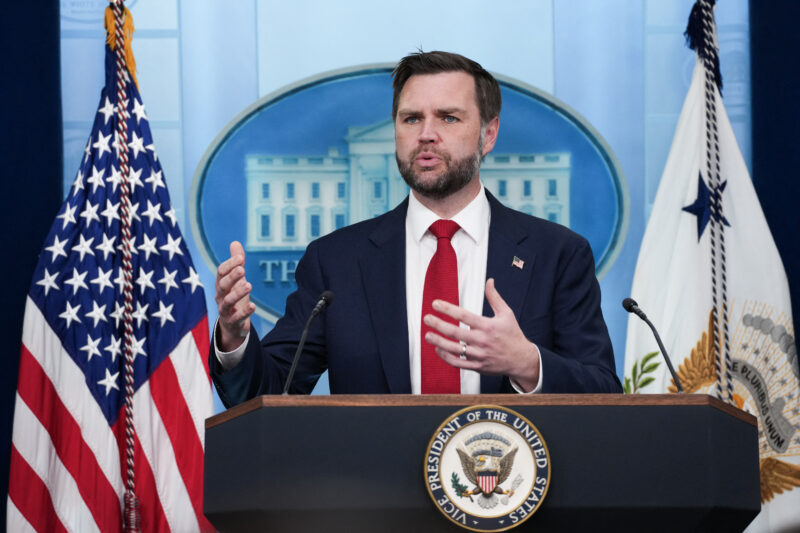
The administration hasn’t publicly commented on the issue of INARA yet, and has offered varying timelines for when it might release the text of the agreement. In media appearances, Vice President JD Vance has been framing specific nuclear issues as part of the next round of talks, rather than the current MOU, which could give the administration an avenue to attempt to dodge INARA review.
Thune said that “somebody” from the administration, whether that be Vance or other officials, “will need to” come to the Hill to brief members.
“For sure, our members are going to have a lot of questions about it,” Thune said.
Sen. John Barrasso (R-WY), the No. 2 Senate Republican, indicated he was similarly in the dark about the agreement.
“I haven’t seen anything from the president in terms of what’s in it. I’ve seen some press reports,” Barrasso told reporters. “I want to see what’s actually in it and I congratulate the president for his continued efforts.”
But asked whether he was concerned that the deal would be an effective surrender to Iran in providing sanctions relief, Barrasso rejected the idea out of hand.
“President Trump is never, ever going to do what you just suggested,” Barrasso said. “He’s not going to accept a deal that doesn’t eliminate nuclear weapons, isn’t enforceable, isn’t verifiable and doesn’t take Iran completely out of what they’ve been doing to try to undermine and attack us for the last 47 years.”
The Pennsylvania Democrat, the most hawkish member of his party on Iran, told JI that failing to eliminate Tehran's nuclear threat would undermine the president's legacy

Andrew Harnik/Getty Images
Sen. John Fetterman (D-PA) speaks at a rally for Democratic vice presidential nominee Minnesota Gov. Tim Walz at York Exposition Center UPMC Arena on October 2, 2024 in York, Pennsylvania.
Sen. John Fetterman (D-PA) said on Tuesday that he is growing increasingly concerned that President Donald Trump may agree to a deal with Iran that does not ensure the retrieval of Tehran’s stockpile of enriched uranium or that the regime will never acquire a nuclear weapon.
Fetterman, who has become the most hawkish Democrat in Congress on Iran and the sole member of his party to vote against every Iran war powers resolution in recent months, spoke with Jewish Insider in Washington about the possible outcomes of the ongoing peace talks. The Pennsylvania senator acknowledged that he and Trump had taken political heat from their respective parties over their stances on the conflict, but argued that solving the Iranian nuclear issue would be legacy-defining for the president.
“Nuclear dust, that’s the reason why we’re here. This is why I was reasoned and OK with setting myself politically on fire to be the only Democrat for the last 90 days voting against these war powers acts,” Fetterman told JI. “Presidents always talk about their legacy. At this point, if you cave just for political convenience, what kind of legacy is that?”
“I appreciate every now and then when Trump will say, ‘Well, it [the war in Iran] is only going to be about that nuclear dust,’ but Israel is never allowed to fully pulverize their enemies,” he continued. “They’re fighting a nation where they like martyrdom and that’s what they celebrate. It’s so dumb.”
The Pennsylvania senator addressed the negative U.S. public perception of the war, arguing that the president was acting in a “Churchillian” manner by taking on the Iranian regime, and expressing concern that reversing course in Iran could indicate the Trump administration’s lack of commitment to Taiwan, in the event of a Chinese invasion.
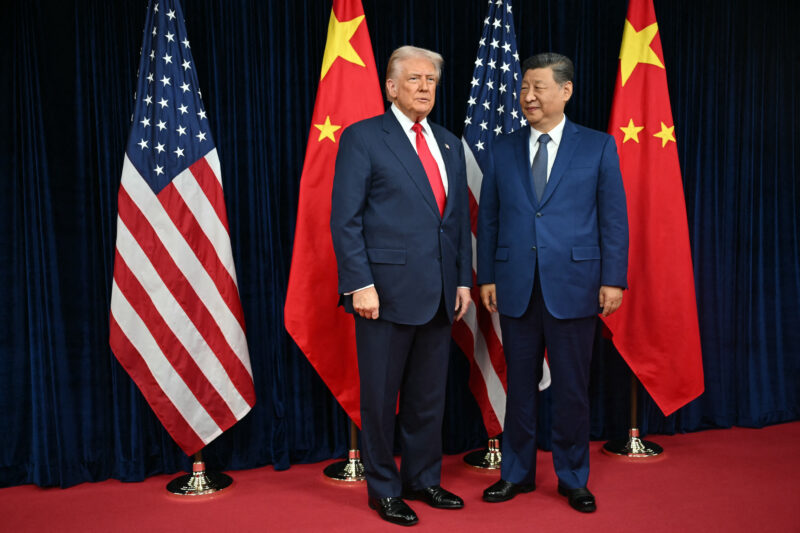
“I hope after that silly visit to China that they [the Trump administration] aren’t now like, ‘Well, we’re going to turn our back to Taiwan,’” he added, referencing the president’s summit in Beijing last month with Chinese President Xi Jinping. “These are all fights for civilization and democracy. I don’t care if it’s in Gaza or Iran, Taiwan against Chinese communism or Russia and Ukraine, it’s the same fight, and that’s why it’s our special responsibility, it’s America’s, to stand with these allies.”
Fetterman pointed to the pressure Democrats faced during the 2024 election to take a firmer stance in opposition to Israel’s war in Gaza due to the high death toll of Palestinians. He argued that those of his Democratic colleagues who had worked to restrain Israel since Hamas’ Oct. 7, 2023, attacks on the Jewish state had damaged their credibility.
“How can you trust these people?” he asked of those Democrats. “Two years ago they were all demanding and pushing for a ceasefire. Can you believe where we would be now if we had a ceasefire? Can you imagine if Israel had to grovel to get their people back? Can you imagine if Iran could be a nuclear power by now?”
“If [there was] a ceasefire in July [2024] based on the pressures from the election in ‘24, [former Hamas chief Yahya] Sinwar would be alive. Hezbollah would be intact. They could launch thousands of rockets at will — and think of the capabilities that Iran could be at now,” he added. “Where’s the outrage? They pretended to be so worried about it. It was politically convenient to try to push Israel into a position that would put Iran on the path to nuclear power, and [leave] their proxies fully intact.”
The president also predicted the operation would be a ‘short-term excursion’

Roberto Schmidt/Getty Images
Special Envoy to the Middle East Steve Witkoff listens as U.S. President Donald Trump speaks to reporters during a news conference at Trump National Doral Miami on March 9, 2026 in Doral, Florida.
President Donald Trump said repeatedly on Monday that he believed the Iranian regime was going to “take over the Middle East” and would have obtained a nuclear weapon “within weeks” had he not ordered the U.S. military operation against Iran.
Trump made the comments from his Doral, Fla., golf club at a press conference while defending his decision to have the U.S. launch its military operation in Iran, noting that Iran had a “number of missiles they were able to buy and make over the last six months, and those missiles were aimed at various countries.”
“When you look at over 1,000 missiles shot at, like the UAE, they were looking to take over the Middle East,” Trump said. “We got there first. We’re lucky.”
“If I didn’t hit them first, they were going to hit our allies first,” he continued. Had the U.S. not struck Iranian nuclear sites last June, “that was definite, because they would’ve had a nuclear weapon within a matter of weeks.”
Trump said that negotiations between the U.S. and Iran on the latter’s nuclear ambitions had reached a stalemate last year because the Iranians told Special Envoy Steve Witkoff “essentially, in a real nutshell, we want to continue to build nuclear weapons.”
“The situation was very quickly approaching the point of no return, and the United States found it intolerable. In my opinion, based on what Steve and Jared [Kushner] and [Secretary of Defense] Pete [Hegseth] and others were telling me, [Secretary of State] Marco [Rubio] was so involved, I thought that they were going to attack us,” Trump said. “If we didn’t do this at the time we did it, I think they had a mind to attack us.”
Trump, who is in Doral for the House Republicans’ retreat, made similar comments while discussing the ongoing U.S. military operation in Iran earlier Monday in a speech to Republican lawmakers and donors.
“Within a week, they [Iran] were going to attack us,” he told the crowd at the Republican Members Issues Conference.
In comments at the retreat and the presser, Trump touted the progress made in the nine days since the U.S. first struck Iran as evidence that the operation had been a “tremendous success” thus far.
“We’re achieving major strides toward completing our military objective, and some people could say they’re pretty well complete. We’ve wiped every single force in Iran out very completely,” Trump told reporters, adding that “most of Iran’s naval power has been sunk” and the regime’s “drones are way down.”
“We continue to target Iran’s drone and missile capability,” he continued. “We’ve struck over 5,000 targets to date, some of them very major targets, and we’ve left some of the most important targets for later, in case we need to do it. If we hit them, it’s going to take many years for them to be rebuilt, having to do with electricity production and many other things. So we’re not looking to do that if we don’t have to.””
About the future of Iran’s leadership, Trump said, “We want to be involved. We don’t want another president that maybe wouldn’t be willing to do what I’m willing to do, for the good of the world, for the good of our nation, to be stuck with a situation in five years or 10 years.”
Speaking to attendees at the GOP retreat, the president described the U.S. attacks on Iran as a “little excursion” that he expected would “be a short-term” operation.
“We took a little excursion because we felt we had to do that to get rid of some evil,” Trump said. “And I think it’s going to be a short-term excursion.”
Trump also acknowledged the broader differences between himself and Vice President JD Vance on foreign policy matters at the presser, but said that Vance was supportive of his decision to strike Iran.
“We get along very well on this. He was, I would say, philosophically a little bit different than me. I think he was maybe less enthusiastic about going, but he was quite enthusiastic.”
"They want to make a deal, but we haven't heard those secret words, ‘We will never have a nuclear weapon,’” Trump said about Iran
Andrew Harnik/Getty Images
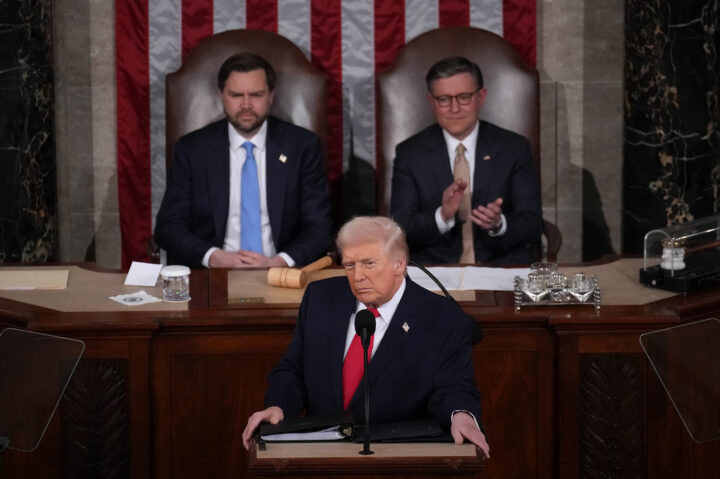
U.S. President Donald Trump, with Vice President JD Vance and Speaker of the House Mike Johnson (R-LA) looking on, delivers his State of the Union address during a Joint Session of Congress at the U.S. Capitol on February 24, 2026, in Washington, DC.
In his State of the Union address Tuesday night, President Donald Trump maintained his tough talk against Iran, reiterating that he will use force to prevent Iran from getting a nuclear weapon, even though he’s willing to explore diplomatic options to resolve the standoff.
Trump did not — as some online had predicted — make a grand televised announcement of United States strikes on Iran during the speech. Nor did he elaborate further on his plans for the growing U.S. military might in the region, or what specifically would trigger the U.S. to utilize that military power.
”They want to make a deal, but we haven’t heard those secret words, ‘We will never have a nuclear weapon,’” Trump said about Iran. “My preference is to solve this problem through diplomacy. But one thing is certain, I will never allow the world’s No. 1 sponsor of terror — which they are by far — to have a nuclear weapon. Can’t let that happen.”
A number of moderate House Democrats — around a third of the Democrats in the chamber — as well as the majority of Republicans stood to applaud those comments from the president. Democrats remained largely passive through much of the rest of Trump’s speech.
Negotiations are set to resume between the U.S. and Iran in Geneva later this week.
Trump also insisted again that the U.S. had “obliterated” Iran’s nuclear program in its strikes last June, and had warned the regime in Tehran not to attempt to rebuild its weapons programs, including its nuclear program, but it has continued those efforts anyway.
“As president, I will make peace wherever I can, but I will never hesitate to confront threats to America wherever we must,” Trump said. “And no nation should ever doubt America’s resolve. We have the most powerful military on earth. … It’s really called ‘peace through strength’ and it’s been very, very effective.”
In addition to Iran’s nuclear ambitions, Trump highlighted the Islamic Republic’s manufacture of ballistic missiles, threatening U.S. allies, troops and potentially the U.S. homeland, and its sponsorship of terrorism.
“Since they seized control of that proud nation 47 years ago, the regime and its murderous proxies have spread nothing but terrorism and death and hate,” Trump said. “They’ve killed and maimed thousands of American service members and hundreds of thousands and even millions of people.”
And he again said the regime had killed 32,000 protesters during a recent wave of demonstrations, though he asserted that the U.S. had prevented the regime, through threats of retaliation, from executing “a lot of” dissidents.
Trump boasted of having ended the war between Iran and Israel last year, as well as the war in Gaza, which he said “is proceeding at a very low level — it’s just about there.” Trump offered praise to White House Special Envoy Steve Witkoff and Jared Kushner for their involvement in those negotiations, as well as Secretary of State Marco Rubio.
Rep. Rashida Tlaib (D-MI), who wore a scarf in the pattern of a keffiyeh with a Palestinian flag at its ends, shouted, “It’s a genocide” during those remarks.
Trump also highlighted the successful return of the Israeli hostages: “Believe it or not, Hamas worked along with Israel and they dug and they dug and they dug. It’s tough — it’s a tough thing to do, going through bodies all over, passing up 100 bodies sometimes for each one they found,” the president said.
Trump added that “nobody thought that was possible” to find the remains of the final hostage, Ran Gvili, but Witkoff and Kushner were able to accomplish it.
“I remember the family of the 28th [hostage of the final group that had remained in Gaza]. They were so — grieved, but they were so happy, as happy as it’s possible to be. They had their boy back,” Trump said. He emphasized that the hostage families all wanted to see the remains of deceased hostages come home “as much as though [they] were living.”
Earlier in the day, top congressional leaders received a classified briefing from the administration on Iran, and Democrats emerged urging the administration to explain its position and plans to the American people.
“It’s very serious and the president has an obligation to make his goals public,” Schumer told Jewish Insider after the briefing.
Plus, CNN terms 'Palestinian-Israeli towns'

Tom Williams/CQ-Roll Call, Inc via Getty Images
CIA Director John Ratcliffe arrives to the U.S. Capitol for a Senate Appropriations Subcommittee on Defense closed hearing titled "A Review of the President's FY2026 Budget Request for the Intelligence Community," on Tuesday, June 17, 2025.
Good Friday morning.
In today’s Daily Kickoff, we report on Iran’s second ballistic missile strike on Beersheba in as many days, and cover CIA Director John Ratcliffe’s suggestion that Iran is like a football team nearing the 1-yard line in its quest for a nuclear weapon. We report on a Democratic primary between a DSA candidate and a more moderate challenger in South Brooklyn, and talk to Rep. Randy Fine, the newest Jewish member of Congress. Also in today’s Daily Kickoff: Rep. Max Miller, Josh Kesselman and Edan Alexander.
For less-distracted reading over the weekend, browse this week’s edition of The Weekly Print, a curated print-friendly PDF featuring a selection of recent Jewish Insider and eJewishPhilanthropy stories, including: Persian Jews in the U.S. watch Israeli strikes on Iran and dare to hope; How a Mediterranean vacation destination for Israelis turned into a displaced persons hub; and Leonard Lauder, who supercharged his family’s cosmetics firm and became an arts patron, dies at 92. Print the latest edition here.
What We’re Watching
- President Donald Trump is convening the National Security Council at 11 a.m. as senior U.S. officials mull American involvement in what has been to date a conflict between Israel and Iran.
- Iranian Foreign Minister Abbas Araghchi is meeting for nuclear talks today in Geneva with his counterparts from France, Germany and the U.K. The European delegation is also set to meet with the EU’s top diplomat, Kaja Kallas.
- The Washington Institute for Near East Policy’s Anna Borshchevskaya, Michael Knights, Farzin Nadimi and Assaf Orion are headlining a virtual event this afternoon focused on the Israel-Iran war.
- The Jewish Democratic Council of America is hosting a briefing on the Israel-Iran war with Reps. Ritchie Torres (D-NY), Adam Smith (D-WA) and Debbie Wasserman Schultz (D-FL).
- Israeli Ambassador Yechiel Leiter is appearing on CBS’ “Face the Nation” on Sunday.
What You Should Know
A QUICK WORD WITH JI’S melissa weiss
On Thursday, NBC News reported a claim from Iran’s Ministry of Health that “over 2,500 injured people were treated in public and university hospitals, with 1,600 discharged and about 500 still hospitalized.” Earlier this week, CBS News reported 224 Iranians were dead from Israeli airstrikes, also attributed to Iran’s Ministry of Health.
There is no free press in Iran, and journalists have been arrested and imprisoned simply for practicing journalism in the Islamic Republic. There is no real way to verify the Iranian Health Ministry’s numbers, and so many journalists report them, unscrupulously.
In a fast-paced, constantly evolving news environment, accuracy is paramount. The ability to try to authenticate a statistic by attributing it to an official government source, while knowing that the source is unreliable, can serve as the basis for an inaccurate narrative with wide-ranging effects.
An ABC News report from earlier this week on violence near humanitarian aid distribution sites in Gaza leads with the headline “More than 30 killed at controversial foundation’s aid distribution sites in Gaza: Health officials,” giving an air of legitimacy to the claim — even though a reader would have to move down to the story before learning that those health officials came from the “Hamas-run Gaza Ministry of Health.” And nowhere in the story does ABC News note that the Gaza Health Ministry doesn’t distinguish between civilians and combatants.
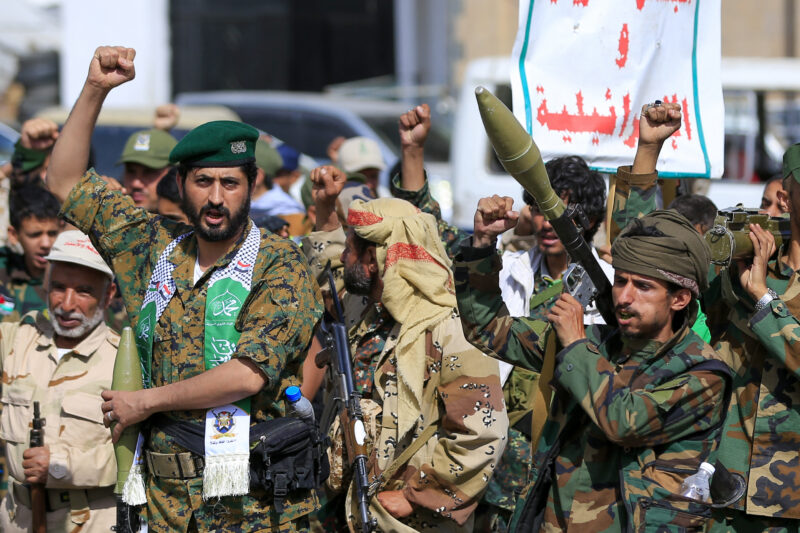
The inclination to publish talking points and statistics from terror groups and regimes incentivizes a playbook for malign actors — from Iran to the Houthis to Hamas — to provide misleading casualty figures for the media to carry that lack the intricacies and nuances necessary in such reporting.
ISRAEL-IRAN WAR, DAY 8

An Iranian missile struck Beersheba, the largest city in southern Israel, for the second consecutive day on Friday, hours after President Donald Trump said he would decide in the next two weeks whether to join Israel in striking the Islamic Republic, Jewish Insider’s Lahav Harkov reports. The IDF unsuccessfully attempted to intercept the surface-to-surface missile from Iran, which injured seven and left a crater at the blast site and damage to buildings in the area of Beersheba’s HiTech Park. One of the sites reportedly damaged is Microsoft’s office in Beersheba, which the Islamic Revolutionary Guard Corps claimed worked in “close collaboration with the Israeli military” and was “part of the system supporting aggression, not merely a civilian entity.”
Trump’s timeline: White House Press Secretary Karoline Leavitt said on Thursday that Trump would take up to two weeks to decide if the U.S. will join Israel’s operation against Iran. Key components of Iran’s nuclear program are in a facility in Fordow built under a mountain, and experts said Israel does not have the capability to destroy it from the air, while the U.S. has Massive Ordinance Penetrators and B-2 heavy stealth bombers, which are thought to be have the capacity to destroy it. “I have a message directly from the president, and I quote, ‘Based on the fact that there’s a substantial chance of negotiations that may or may not take place with Iran in the near future, I will make my decision whether or not to go within the next two weeks,'” the press secretary said at a White House briefing.
THE RED ZONE

CIA Director John Ratcliffe has told colleagues behind closed doors he believes Iran is actively working toward building a nuclear weapon, comparing the claim that Tehran isn’t working on building a nuclear weapon to the idea that football players at the 1-yard line would not attempt to score a touchdown, per CBS News, citing an unnamed U.S. official, Jewish Insider’s Jake Schlanger reports.
Background: Ratcliffe’s reported comments function as a rebuke of other U.S. intelligence assessments that Iran is not actively developing a nuclear weapon, in spite of its accelerating efforts to amass stockpiles of highly enriched uranium in violation of nuclear Non-Proliferation Treaty commitments and construction of ballistic missiles with which a nuclear weapon could be launched.
language choices

After an Iranian ballistic missile struck a home in the northern Israeli city of Tamra, killing a woman, her two daughters and her sister-in-law, news outlets faced an additional challenge beyond the sober responsibility of covering a tragic loss: choosing what language to use to describe these women and their ethnic identity, Jewish Insider’s Gabby Deutch reports.
Media matters: Tamra is an Arab town, with a history dating back hundreds of years. When Israeli President Isaac Herzog visited on Wednesday, he talked about the “shared society of Jews and Arabs” in Israel that “believe in our common life together,” and described the victims as “Muslim women.” Most news reports — in major international outlets including the Associated Press, Reuters, The New York Times and The Wall Street Journal — referred to Tamra as either an “Arab-Israeli city” or an “Arab town in Israel.” CNN, however, chose a different word for Tamra, a city that is firmly inside Israel’s original 1948 borders: Palestinian. “Iranian strikes expose bomb shelter shortage for Palestinian towns inside Israel,” read one headline from this week. The accompanying article described Tamra’s residents as “Palestinian citizens of Israel.” Another story called Tamra a “Palestinian-Israeli town.”
Label politics: “There’s a growing trend going on in the past, I want to say 10, maybe 20, years, of people who are saying, ‘We are going to reclaim our identity as Palestinians, and we’re not going to be ashamed to call ourselves Palestinians,’” said Yasmeen Abu Fraiha, a fellow at the Harvard Kennedy School who is completing a fellowship at Harvard Medical School. She counts herself among that trend: She didn’t use the term “Palestinian citizen of Israel” to describe herself until her late 20s, after she studied at Hebrew University in Jerusalem.
More from CNN: In a segment about Tucker Carlson published yesterday, one of the most vocal critics of the U.S.-Israel relationship, CNN’s Donie O’Sullivan described Carlson as “a frequent supporter of Israel,” and stated that “U.S. intelligence suggests that Iran is years away from a nuclear bomb.”
ROAD RAGE

Rep. Max Miller (R-OH), one of four Jewish Republicans in the House, said on Thursday that his car was run off the road by a pro-Palestinian activist who threatened his and his family’s lives, earlier in the day, Jewish Insider’s Marc Rod reports.
What happened: Miller said in the video that on his way to work in his district on Thursday morning, an “unhinged, deranged man” leaned on his car horn and ran Miller off the road “when he couldn’t get my attention, to show me a Palestinian flag, not to mention ‘death to Israel, death to me’ — that he wanted to kill me — and my family.” He explained in the X post that the man threw a Palestinian flag out of his car before driving off and threatened his life and his family’s lives. Miller did not specify what the individual said. Miller said that he had reported the incident to local and U.S. Capitol Police, and that the individual had been identified and would face consequences.
COUNCIL CLASH

In recent years, Jewish and pro-Israel activists in New York City have been successful in defending favored incumbents while boosting candidates in open-seat local races. But they have struggled to go on the offensive against far-left Israel critics on the City Council aligned with the Democratic Socialists of America, which has gained prominence in some districts. Now, however, some Jewish community activists and pro-Israel strategists are expressing optimism that a competitive City Council election in southern Brooklyn could be their best pick-up opportunity in next week’s citywide primaries, delivering a possible upset that has so far proved elusive at the local level, Jewish Insider’s Matthew Kassel reports.
The players: In one of the city’s most hotly contested local races, Alexa Avilés, a two-term councilmember backed by the DSA, is facing a formidable challenge from Ling Ye, a moderate former congressional staffer making her first bid for elective office with a focus largely on public safety. The race is playing out in a redrawn district that now includes more moderate constituents in Dyker Heights who are likely less receptive to reelecting a socialist, strategists say, fueling hopes among allies of Ye eager to pick off an incumbent whose hostility to Israel while in office has rankled Jewish leaders.
A FINE MISSION

Rep. Randy Fine (R-FL) believes that he was sent to Congress, at least in part, to take a leading role in fighting for the Jewish community against antisemitism. Fine, during a lengthy interview with Jewish Insider’s Marc Rod in his congressional office earlier this month, said he sees himself as having a mostly unique ability among House members to help tackle the rise of antisemitism nationwide, as one of only four Jewish Republicans in the lower chamber.
It’s personal: “I think I can play that role. I’m willing to do it. Certainly happy to share the spotlight with the other three [Jewish Republicans] if they wish to do it, but, but this is deeply personal to me,” Fine said. “This affects my children and so I understand it better than others.” Fine added, “This must be why [I’m in Congress]. This is what He wants me to do. … I think this is one of the reasons that I am here, to solve this problem, much like we did in Florida.”
Worthy Reads
Battle of Wills: The Atlantic’s Eliot Cohen considers the implications of Israel’s preemptive strike on Iran’s nuclear program. “Israel’s current campaign is built around two realities often missed by so-called realists: first, that the Iranian government is determined to acquire nuclear weapons and cannot be deterred, bought off, or persuaded to do otherwise, and second, that Israel reasonably believes itself to be facing an existential threat. … It takes a particular kind of idiocy or bad faith to disregard the speeches, propaganda, and shouts of ‘death to Israel.’ The Israeli lesson learned from the previous century — and, indeed, the Jewish one learned over a much longer span of time — is that if someone says they want to exterminate you, they mean it.” [TheAtlantic]
The Case for a U.S. Attack: In The Free Press, Niall Ferguson and former Israeli Defense Minister Yoav Gallant posit that the U.S. should help Israel destroy the Fordow nuclear facility in order to “shorten the war, prevent wider escalation, and end the principal threat to Middle Eastern stability” posed by Iran. “A nuclear-armed Iran would pose more than a threat to the Israeli people and their state. Its missiles could reach Gulf capitals and Europe. Those missiles could allow Iran to sponsor terror and wage conventional war with impunity. The result would be a nuclear arms race in the Gulf. By destroying Fordow, President Trump would create a new equilibrium in the Middle East and reestablish American leadership. The strike would focus solely on eliminating Iran’s nuclear arms program, but it should be accompanied by a clear message: If Iran attempts to target the United States or its Gulf allies, it will risk the elimination of its regime.” [FreePress]
Back to Begin: In The Wall Street Journal, Amit Segal considers how Israeli Prime Minister Benjamin Netanyahu has employed the “Begin Doctrine” established four decades ago that seeks to keep bad actors from acquiring nuclear weapons. “Persuading the Trump administration to support the attack was a historic diplomatic success. The ayatollahs spread their tentacles throughout the Middle East, but now Iran stands completely vulnerable. If only the free world had adopted its own Begin doctrine against countries like North Korea and Pakistan, so that a dictator’s temper tantrum couldn’t lead to nuclear winter. At least Israel has become the world’s bomb squad, a stroke of good fortune for which we can thank Menachem Begin.” [WSJ]
Word on the Street
The FBI is increasing its surveillance of Iran-backed operatives and suspected sleeper cells in the U.S….
U.S. carriers including United and American Airlines are suspending service to parts of the Middle East, including Qatar and the United Arab Emirates, amid heightened tensions in the region around the Israel-Iran war…
Bloomberg reports on the surprise of Arab states by the timing and speed of Israel’s attack on Iranian nuclear facilities last week; one Gulf official told the publication that it was “beneficial for his own country and the wider region to see Iran’s nuclear program set back or destroyed.” Satellite imagery indicates that Iran has made a concerted push to export oil since the eruption last week or war with Israel…
The Wall Street Journal looks at the rising financial cost of the Israel-Iran war, finding that the costs of interceptors alone can cost Israel hundreds of millions of dollars a day…
Iran is reportedly using Israeli home-camera systems to spy inside Israel and obtain better information about its missile targets…
The Washington Post spotlights Sen. Elissa Slotkin (D-MI), Rep. Mikie Sherrill (D-NJ) and former Rep. Abigail Spanberger (D-VA) as the trio seek to lead the Democratic Party into the next generation; the Post describes the three as “centrist women with national security backgrounds who helped retake the House in 2018 and this year hope to steer their beleaguered party back toward winning”…
Edan Alexander, the Israeli-American citizen who was held hostage in Gaza for more than 580 days, returned on Thursday to his family’s home in Tenafly, N.J….
Josh Kesselman, the founder of the Raw rolling paper company, purchased the cannabis magazine High Times this week for $3.5 million…
The Wall Street Journal reports on the behind-the-scenes efforts that go into planning luxury weddings, ahead of Jeff Bezos and Lauren Sanchez’s upcoming nuptials; luxury event planner Ruth Minkowitz, whose Elite Kosher Events company works with clients in Italy, told the WSJ, “Food, plates, material, everything, it all goes by boat … You need a lot more personnel, just to schlep.”
Rabbi Leo Dee, whose wife and two daughters were killed in a terror attack in the West Bank in 2023, announced his engagement to Aliza Teplitsky…
Pic of the Day

A view of the Khatib family home yesterday in the northern Israeli village of Tamra that was destroyed in an Iranian missile strike, killing four women inside. During a solidarity visit to the family, Jewish Agency Chair Doron Almog said he hoped to connect the Arab town to a Jewish community in the United States, reports eJewishPhilanthropy’s Judah Ari Gross from Tamra. “We have come here to be in pain together with the Khatib family. We are in pain with you,” Almog said, speaking at a mourning gathering with the family. “There is great pain and loss here. And from that pain, I want us to cultivate partnership, to cultivate love, to cultivate hope.”
Birthdays

Writer, director and film producer, he is a two-time Israeli Academy Award winner and the founder of Hey Jude Productions, Dani Menkin turns 55 on Sunday…
FRIDAY: Weston, Fla., resident, Harold Kurte turns 96… Former member of Knesset for the Ratz party, Ran Cohen turns 88… Owner of Schulman Small Business Services in Atlanta, Alan Schulman… Detroit-based pawnbroker, reality TV star, author and speaker, Leslie “Les” Gold turns 75… Chef, baker and author of eight books, she popularized sourdough and artisan breads in the U.S., Nancy Silverton turns 71… Host of “Bully Pulpit from Booksmart Studios,” Bob Garfield turns 70… Former assistant managing editor for politics at NBC News, now an adjunct professor at the University of Florida and FIU, Gregg Birnbaum… Federation leader, co-founder of Brilliant Detroit (helping children out of poverty) and of Riverstone Communities (it owns and operates over 80 manufactured housing communities in 12 states), James Bellinson… EVP of the Orthodox Union, Rabbi Moshe Hauer turns 60… Professor of Talmud at Yeshiva University and rabbi of Congregation Ohr HaTorah in Bergenfield, N.J., Rabbi Zvi Sobolofsky turns 60… Israeli-American screenwriter, film director, writer and producer of 20 films, Boaz Yakin turns 59… Senior legal affairs reporter at Politico, Josh Gerstein… Governor of Pennsylvania, Joshua David Shapiro turns 52… U.S. senator (R-MI), Eric Stephen Schmitt turns 50… Singer, songwriter and hazzan, he is a co-founder of the band Moshav, Yehuda Solomon turns 48… Senior program director of civic initiatives at The Teagle Foundation, Tamara Mann Tweel, Ph.D…. Israeli author of crime and thriller books, Mike Omer turns 46… Journalist, blogger and EMT in NYC, Maggie Shnayerson turns 44… EVP of Moxie Strategies, Pearl Gabel… French-Israeli singer and songwriter, Amir Haddad turns 41… Deputy communications director in the Trump 45 White House, now head of external affairs at Standard Industries, Josh Raffel… Jennifer Bernstein… Photographer, producer and digital strategist, she is a supervising producer at HardPin, Sara Pearl Kenigsberg… Writer, director, comedian, YouTuber, podcaster and mental health advocate, Allison Beth Raskin turns 36… Team captain of Maccabi Tel Aviv of the Israeli Basketball Premier League and the EuroLeague, John DiBartolomeo turns 34… Chief campus officer at Hillel Ontario, Beverley Shimansky… Director of advocacy initiatives at The Centre for Israel and Jewish Affairs, Jaime Reich…
SATURDAY: Former member of the U.S. House of Representatives, Marjorie Margolies turns 83… Investment banker, he was the U.S. ambassador to El Salvador in the Bush 43 administration, Charles L. Glazer turns 82… Philanthropist, she is vice-chair of the Museum of Jewish Heritage, Ingeborg Hanna Rennert… British businessman, co-founder with his brother Charles of advertising agency Saatchi & Saatchi, appointed to the House of Lords in 1996, Baron Maurice Saatchi turns 79… U.K. cabinet minister in both the Thatcher and Major governments, Sir Malcolm Leslie Rifkind turns 79… Retired creditors rights attorney in the Chicago area, David Stephen Miller… Retired managing editor and writer at The Washington Post for 33 years, now chief editor at The Reis Group, Peter Perl… Member of the Knesset since 2013 for the Yesh Atid party, Mickey Levy turns 74… Susan Gutman… CEO of Amir Development Company in Beverly Hills, Keenan L. Wolens… Punk rock singer and songwriter, known as the Gangsta Rabbi, Steve Lieberman turns 67… Washington Institute distinguished fellow and adjunct professor at Johns Hopkins SAIS, David Makovsky turns 65… Chief communications officer at Minerva University until last month, he is a Pulitzer Prize-winning journalist and author, David L. Marcus… Co-founder and executive editor of Axios, Mike Allen turns 61… National education policy reporter for The Washington Post, Laura Meckler… Founder and leader of Beautifully Jewish, Tanya Rebecca Singer… Actor, singer and entrepreneur known for his work on Broadway, television, film and concerts, Aaron Scott Lazar turns 49… Journalist and author, Abigail Krauser Shrier turns 47… Public affairs consultant based in Manhattan, Sam Nunberg turns 44… Co-founder and former CEO of Kaggle, a data science platform acquired by Google in 2017, Anthony Goldbloom turns 42… Former member of the Knesset where she was the first-ever Druze woman, she then became a Jewish Agency shlicha to Washington, Gadeer Kamal Mreeh turns 41… Communications executive at Netflix, she was previously a communications officer at the U.S. Holocaust Memorial Museum, Jacqueline (Jackie) Berkowitz… Chief of staff to the chairman and CEO at Saban Capital Group, Amitai Raziel… Award-winning Israeli classical pianist, Boris Giltburg turns 41… Executive director at Hunter Hillel, Merav Fine Braun… Editor for the global programming team at CNN, Madeleine Morgenstern… Singer-songwriter known as Jeryko, Yaniv Hoffman turns 34… Singer-songwriter and actor, known by his mononym Max, Maxwell George Schneider turns 33…
SUNDAY: A leading securities, corporate and M&A attorney, he is a founding partner of the law firm of Wachtell, Lipton, Rosen & Katz, Martin Lipton turns 94… D.C.-based VP of Israel Aerospace Industries from 1969 until 2017, Marvin Klemow turns 88… Jerusalem-born 2009 winner of the Nobel Prize for chemistry, she is the director of a research center at the Weizmann Institute of Science, Ada Yonath turns 86… Retired U.K. judge, who chaired high-profile hearings on ethics in the media, prompted by the 2011 News of the World phone hacking affair, Sir Brian Henry Leveson turns 82… Winner of the 2016 Nobel Prize for physics, he is a professor at Brown University, J. Michael Kosterlitz turns 82… Justice on Israel’s Supreme Court until 2014, she was previously the Israeli State Prosecutor for eight years, Edna Arbel turns 81… U.S. senator (D-MA), Elizabeth Warren turns 76… Member of the California State Assembly until 2022, now a judge on the Superior Court of Los Angeles County, Richard Hershel Bloom turns 72… Partner at Shibolet & Co., one of Israel’s largest corporate law firms, Yoram Raved turns 69… AIPAC director for Greater Washington, Deborah Adler… Chair of the kindergarten and pre-K division of Bowman Ashe Elementary in Miami, Fla., Cynthia Rosenbluth Huss… Past president of the UJA-Federation of New York, Alisa Robbins Doctoroff… U.S. senator (D-CA), Adam Schiff turns 65… Former member of the Knesset for the Hatnuah and Zionist Union parties, Robert Tiviaev turns 64… Creator of the Android operating system which he sold to Google, Andy Rubin turns 63… Member of the Knesset for the Likud party, now serving as deputy prime minister and minister of justice, Yariv Gideon Levin turns 56… SVP at Red Banyan PR, Kelcey Kintner… Program director at the Harry and Jeanette Weinberg Foundation, Rafi Rone… The Economist‘s Israel correspondent and author of a biography of PM Benjamin Netanyahu, Anshel Pfeffer turns 52… Israeli jazz vocalist and composer, Julia Feldman turns 46… COO of TR Capital Management, Ahron Rosenthal… Retired MLB second baseman, he played for Team Israel at the 2020 Summer Olympics and managed the team at the 2023 World Baseball Classic, Ian Kinsler turns 43… Russian-Israeli Internet entrepreneur, co-founder of Russia’s largest social network VK[dot]com and Selectel network centers, Lev Binzumovich Leviev turns 41… Baltimore-based endodontist, Jeffrey H. Gardyn, DDS… Israeli Muay Thai kick boxing champion, Ilya Grad turns 38… Israeli-born basketball player with 11 NBA seasons, Omri Casspi turns 37… Former outfielder for Team Israel in the 2016 World Baseball Classic qualifier round, now a real estate investor based in Nashville, Rhett Wiseman turns 31…
The CIA director’s alleged comments are a functional rebuke of intelligence assessments that Iran is not actively pursuing a nuclear weapon
Tom Williams/CQ-Roll Call, Inc via Getty Images
CIA Director John Ratcliffe arrives to the U.S. Capitol for a Senate Appropriations Subcommittee on Defense closed hearing titled "A Review of the President's FY2026 Budget Request for the Intelligence Community," on Tuesday, June 17, 2025.
CIA Director John Ratcliffe has told colleagues behind closed doors he believes Iran is actively working toward building a nuclear weapon, comparing the claim that Tehran isn’t working on building a nuclear weapon to the idea that football players at the 1-yard line would not attempt to score a touchdown, per CBS News, citing an unnamed U.S. official.
His reported comments function as a rebuke of U.S. intelligence assessments that Iran is not actively developing a nuclear weapon, in spite of its accelerating efforts to amass stockpiles of highly enriched uranium in violation of nuclear Non-Proliferation Treaty commitments and construction of ballistic missiles with which a nuclear weapon could be launched.
Testimony from the intelligence community to the House and Senate intelligence committees has downplayed the risk of Tehran developing a weapon. Director of National Intelligence Tulsi Gabbard testified as recently as March that Iran’s supreme leader, Ayatollah Ali Khamenei, has not given orders to weaponize Iran’s nuclear technology, and Iranian researchers had yet to restart their research on a delivery system, consistent with assessments from prior administrations.
Ratcliffe’s testimony comes after President Donald Trump publicly disagreed with Gabbard’s testimony. U.S. lawmakers and Israeli officials have similarly disputed Gabbard’s assessment. Ratcliffe’s assessment coincides with reports that Trump has already tentatively approved a U.S. strike on Iranian nuclear sites.
Ratcliffe is reportedly one of a small inner circle of advisers whom Trump is consulting as he mulls U.S. strikes against Iran’s nuclear program, from which Gabbard has been excluded.
The president said he was looking for ‘total complete victory’ over Iran
BRENDAN SMIALOWSKI/AFP via Getty Images

President Donald Trump speaks to the press in the Oval Office on June 18, 2025.
President Donald Trump on Wednesday rebuked Republican isolationists who have argued it’s not necessary to prevent Iran from obtaining a nuclear weapon, dismissing them as not being his true supporters.
“My supporters are for me. My supporters are America First and Make America Great Again,” Trump said from the Oval Office, in response to a question about the foreign policy debates between hawks and isolationists in the GOP base. “My supporters don’t want to see Iran have a nuclear weapon. … Very simple: If they think it’s OK for Iran to have a nuclear weapon, then they should oppose me.”
The president said he believes Iran would use a nuclear weapon if it had one.
“I don’t want to get involved either, but I’ve been saying for 20 years, maybe longer, that Iran cannot have a nuclear weapon,” Trump said. “I’ve been saying it for a long time, and I think they were a few weeks away from having one.”
He highlighted apparent logical inconsistencies in isolationists’ position on the issue.
“The problem is they get themselves into a thing: They don’t want them to have nuclear, but then they say, ‘Well, we don’t want to fight,’” Trump said. “Well, you’re going to have to make a choice because it’s possible that you’re going to have to fight for them not to have nuclear.”
Trump softened some of his previous criticism of Tucker Carlson, a prominent voice in isolationist circles whom the president had rebuked earlier this week for railing against U.S. support for Israel. He said that Carlson had called him to apologize.
Trump said he’d pressed Carlson on whether he would accept a nuclear-armed Iran, and said that Carlson “sort of didn’t like that. I said, ‘Well, if it’s OK with you, then you and I do have a difference,’ but it’s really not OK with him.”
“Therefore, you may have to fight and maybe it’ll end, and maybe it’ll end very quickly, but there’s no way that you can allow — whether you have to fight or not — you can have Iran to have a nuclear weapon, because the entire world will blow up,” Trump continued.
Trump said he planned to hold a meeting in the Situation Room on Wednesday afternoon to discuss the situation in the Middle East, but said he would delay a decision on striking Iran as long as possible.
“I like to make the final decision one second before it’s due,” he said. “With war, things change. It can go from one extreme to the other. War is very bad. There was no reason for this to be a war.”
The president said that the United States is the only country with the capabilities to destroy the deeply buried Fordow nuclear facility, but reiterated that he had not yet made the decision to do so.
Trump said that the success of Israel’s operations on their first night of bombing raids last week had made him more willing to consider possible U.S. involvement and strikes.
He also sent somewhat mixed messages on whether he’s open to continued talks with Iran.
“I had a great deal for them. They should have made that deal. Sixty days we talked about it, and in the end they decided not to do it. And now they wish they did it, and they want to meet,” Trump said. “It’s a little late to meet, but they want to meet and they want to come to the White House … so we’ll see. I may do that. It’s a shame, it could have been done the easy way.”
He said that he’s seeking “total complete victory” over Iran, in which it cannot have nuclear weapons.
“Iran was very close to signing what would have been a very good agreement for them and maybe that could still happen, I guess,” he said, adding that Iranian negotiators’ interest in visiting the White House is “a big statement, but it’s very late.”
Trump also noted that it may be difficult for Iranian negotiators to actually leave the country to visit the White House for negotiations.
The latest comments appeared somewhat less aggressive than Trump’s warnings the previous day that the U.S. could assassinate Iran’s supreme leader, Ayatollah Ali Khamenei.
Trump today was largely noncommittal on the issue of regime change in Iran saying, “Sure, anything could happen. That? That could happen.”
Jennings, stuck indefinitely in Israel until airspace reopens, said Americans ‘need to understand what’s going on here is nothing short of the fight for Western civilization’

Courtesy
Scott Jennings visits the Nova Music Festival site during an AIEF trip to Israel in June 2025.
CNN contributor Scott Jennings traveled to Israel last week to bear witness to the atrocities Hamas committed during the Oct. 7, 2023, terrorist attacks. But in the wake of Israel launching its military operation to take out Iran’s nuclear facilities and prevent the regime from acquiring a nuclear weapon, Jennings is witnessing more than he expected to on his first trip to the Jewish state.
“Not only did I get to fulfill my mission of understanding deeply the horrors of Oct. 7, but being here watching the war unfold against Iran, I feel like I am here at the beginning of the war to defend Western civilization,” Jennings, who is traveling with the AIPAC-affiliated American Israel Education Foundation, told Jewish Insider from his hotel in Tiberias on Friday. “I think this has to end with a complete annihilation of Iran’s ability to make a nuclear weapon,” he said, calling on the U.S. to do “whatever we have to do to achieve that in concert with our special partner, Israel.”
“I had gotten up at about 3 a.m. [Friday morning] to do a CNN appearance on the politics of the day. That’s when our phones went off with the emergency alert,” Jennings recalled. “I went out on the hotel balcony and for the next couple of hours watched the sky and saw lots of jets flying over. It was really the front end of the war watching the Israeli Air Force heading off towards bombing Iran.”
Slated to head back to the U.S. on Saturday but now stuck in Israel while the country’s airspace remains closed, Jennings is making the most of his extended trip. On Sunday, he met with U.S. Ambassador to Israel Mike Huckabee.
Earlier in the week, the group visited Tel Aviv, Jerusalem and Kibbutz Nir Oz, a community where approximately one-quarter of the 400 residents were killed or taken hostage by Hamas on Oct. 7, as well as the site of the Nova Music Festival massacre, where 378 people were killed. They also met with the mother of Alon Ohel, who was kidnapped from the festival and remains held captive in Gaza.
Jennings, who served as special assistant to the president and deputy director of political affairs in the George W. Bush administration, said that his message to Americans amid Israel’s war with Iran is the “need to understand what’s going on here is nothing short of the fight for Western civilization.”
“Israel is the one fighting it and they’re fighting it in their own backyard,” he told JI. “But these people who hate Israel also chant ‘death to America.’ To allow Iran to continue to develop terror proxies and nuclear weapons, it’s just not a possibility for the West. Israel’s taking care of that and we should be fully supportive of that.”
Jennings expressed “continuing rolling disappointment” with Senate Democrats, who have voiced divided responses on Israel’s strikes on Iran.
“This idea that everything must be turned into some sort of anti-[President Donald] Trump narrative is ridiculous,” the conservative commentator said. “I’ve been thoroughly unimpressed. There are a few Democrats who stepped forward and said the right thing,” he continued, mentioning Sen. John Fetterman (D-PA), who on Friday criticized his Democratic colleagues in Congress who have spoken out against Israel’s attack on Iran, calling it “astonishing” to see members of his party treat Israel’s actions as escalatory.
“Looking at this situation — literally looking at it, watching missiles fly over my head,” Jennings continued, “we should be thankful that Israel is willing to take bold, decisive steps to defeat the enemy of the West. We should also be thankful that President Trump participated in this.”
“President Trump has clearly said his policy is that Iran cannot get a nuclear weapon,” Jennings said. “I think President Trump has played this smart so far and if it all ends with a neutered Iran thanks to Israel and the U.S. working together, that’s a great outcome,” he said.
Trump has continued to reject assertions that the U.S. is involved in Israel’s strikes on Iran. “We’re not involved in it. It’s possible we could get involved. But we are not at this moment involved,” the president said on Sunday.
By Monday afternoon, Iran had fired around 350 missiles and several drones at Israel, killing 24 Israelis and injuring almost 600 others.
But amid the chaos and fear, Jennings said he’s observed that Israelis are overwhelmingly united — even across the political spectrum.
“Talking to people, you get a sense of resolve,” he told JI. “They have differences of opinion on certain things but everybody seems to agree — you can’t live with Hamas next door. Everybody seems to agree that Iran is the head of the octopus here. From north to south, what you get a feeling for is this incredible resolve and clarity of purpose when it comes to defeating the enemies of Israel. This is not happening in a faraway land. What happened to them happened in their homes, in their [kibbutzim], at a music festival. It’s up close and personal. You get a feeling that they’re still living with that trauma.”
“You get a real feeling for the camaraderie and sense of purpose,” Jennings said, calling the trip “a real eye-opening experience.”
“I wasn’t sure what to expect,” he continued. “I get the feeling everyone is resolved to endure whatever sacrifices they have to in order to put an end to this existential threat once and for all.”
The former Arkansas governor downplayed his support for Israeli annexation of the West Bank, saying he would follow the lead of President Trump

Kevin Dietsch/Getty Images
Former Arkansas Gov. Mike Huckabee, U.S. President Donald Trump's nominee to be ambassador to Israel, testifies during his Senate Foreign Relations Committee confirmation hearing at the Dirksen Senate Office Building on March 25, 2025 in Washington, DC.
Former Arkansas Gov. Mike Huckabee said he would work to support President Donald Trump’s “maximum pressure” campaign to prevent Iran from obtaining a nuclear weapon during his confirmation hearing to be U.S. ambassador to Israel on Tuesday, saying that he believes “it is better to bankrupt them than it is to bomb them.”
Huckabee made the comments before the Senate Foreign Relations Committee after being asked by Sen. Pete Ricketts (R-NE) if he agreed with the president that Iran must be prevented from having a nuclear weapon, pointing to reports that Trump told Iranian Supreme Leader Ayatollah Ali Khamenei in a recent letter on restarting nuclear talks that the Iranian leader would have two months to reach an agreement “or risk severe consequences.”
“I absolutely believe that the president is taking the right course of action. He did it in his first term. The maximum pressure bankrupted the Iranians. It made it impossible for them to fund the Houthis, Hezbollah, Hamas. They didn’t have the money,” Huckabee said.
“When his term ended and President Biden took office, unfortunately they relaxed some of those pressures and the result was Iran had money again. They didn’t use it to help their people, they used it to murder people in Israel through the Houthis, through Hezbollah and through Hamas. I’m grateful to serve a president who recognizes that Iran cannot have a nuclear weapon and that it is better to bankrupt them than it is to bomb them.”
The former governor received a chilly reaction from Democrats on the committee, who pressed him over his past expressions of support for Israeli annexation of the West Bank and opposition to a Palestinian state. Sen. Jacky Rosen (D-NV), pressed Huckabee on how he reconciled his opposition to a two-state solution when the Saudis have conditioned any normalization deal with Israel on Israeli recognition of a Palestinian state.
Huckabee said a “cultural shift” was necessary on the Palestinian side to allow for lasting peace in the region.
“To see people who are raised up with an irrational hatred toward Jewish people, that cannot lead to any level of peaceful coexistence, whether it’s here, there or anywhere else on the planet,” Huckabee told Rosen.
“There can be no peace and two-state solution if there continues to be education from the time a child is five and six years old, living under the Palestinian Authority that says it’s OK, in fact, it’s desirable to murder Jews and to reward them for it.”
Asked again about expanding the Abraham Accords without a commitment from Israel to support a two-state solution, Huckabee replied that this would occur “through the long process of seeing the culture change.”
“There has to be an admission that Israel has a right to exist. There has to be some recognition that there will be a change in the policy of educating children to hate Jews. That does not lead toward a peaceful coexistence anywhere at any time,” he said.
"We're seeing the results of that antisemitism here in our homeland, which is very distressing to me… To see people who are raised up with an irrational toward Jewish people. And that cannot lead to any level of peaceful coexistence, whether it's here, there or anywhere else on… pic.twitter.com/RFeRqUY8CS
— Jewish Insider (@J_Insider) March 25, 2025
Rosen acknowledged that Huckabee “care[s] deeply about the bonds between the United States and Israel. I have no doubt that if confirmed, you will work tirelessly to strengthen the U.S.-Israel relationship, meet Israel’s defense needs and free all the remaining hostages held by Hamas.”
The Nevada senator added that she was concerned, though, about his willingness to work toward maintaining bipartisan support for Israel in Congress and “encourage steps that could one day lead to a durable, lasting peace in the region, that finally provides Israel with long-term security.”
“To have any chance of achieving what I just laid out, Israel cannot turn into a partisan football here on Capitol Hill,” Rosen said.
Huckabee vowed, in response, to maintain equal lines of communication with Democratic and Republican offices.
Sen. Cory Booker (D-NJ) told Huckabee that he believed his top priority as ambassador needed to be getting the remaining hostages home, pointing to New Jersey native Edan Alexander being the last remaining American in Hamas captivity. Asked by Booker what Huckabee thought he could do in his role to help facilitate his constituent’s release, Huckabee replied that getting Alexander home “has to be the first item of business before anything else.”
Multiple Democrats on the committee pressed Huckabee on his long-standing support for Israeli settlement annexation, with Sen. Chris Van Hollen (D-MD) calling him a “big hero of the Jewish settler movement on the West Bank.” While Huckabee acknowledged that he remains a supporter of annexation efforts, he noted that he recognized his role would not be to create policy but to enforce it.
“If confirmed, it’ll be my duty to carry out the president’s policies, not mine. One of the things that I will recognize — an ambassador doesn’t create the policy, he carries the policy of his country and his president,” Huckabee said in response to a question from Sen. Jeff Merkley (D-OR). “I have previously supported it, Judea and Samaria, but it would not be my prerogative to make that the policy of the president.”
Asked by Merkley if he was supportive of forcibly displacing Palestinians from Gaza, Huckabee said no.
Huckabee acknowledged the concerns of Democrats in his opening statement, telling the panel, “I have no illusion that everyone on this committee agrees with President Trump’s policies or his choices for roles in his administration. It is simply my hope that we will be able to engage in a meaningful discussion. I am not here to articulate or defend my own views or policies, but to present myself as one who will respect and represent the president.”
The former governor received a more receptive tone from committee Republicans, who engaged with Huckabee on his long-standing support for Israel.
Sen. John Boozman (R-AR) praised Huckabee in introductory remarks as “the right person to be our representative to Israel at this critical moment, and I’m thankful to President Trump for selecting such a staunch and passionate advocate for the Jewish state.”
“Mike is not only qualified to serve as our ambassador to Israel, but he is uniquely suited for this role given the way he has championed Israel throughout his entire life, including as a steadfast supporter of Israel’s right to exist and defend itself.”
Asked by Sen. Bill Hagerty (R-TN) to share “how important it is to you that the United States stand arm-in-arm with Israel and not show any daylight between ourselves and our ally,” Huckabee replied: “Right now, Israel needs an ally and the Jewish people need to know that they have friends. And I am proud to have the right, as a Christian, to say to the Jews: You are not alone. We will not walk behind you but alongside you.”
Please log in if you already have a subscription, or subscribe to access the latest updates.
 Continue with Google
 Continue with Apple