






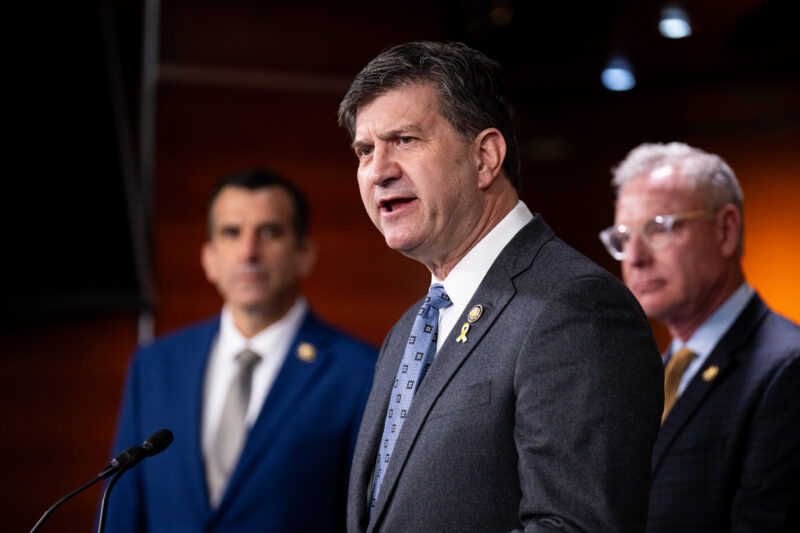

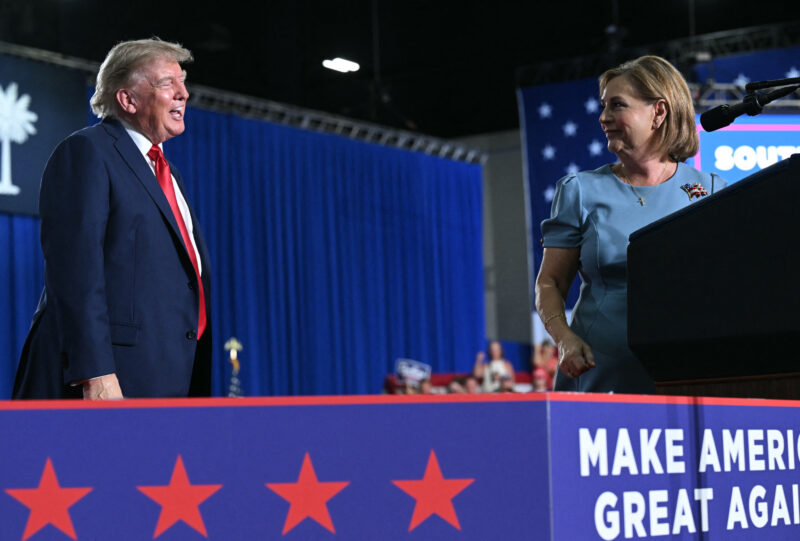

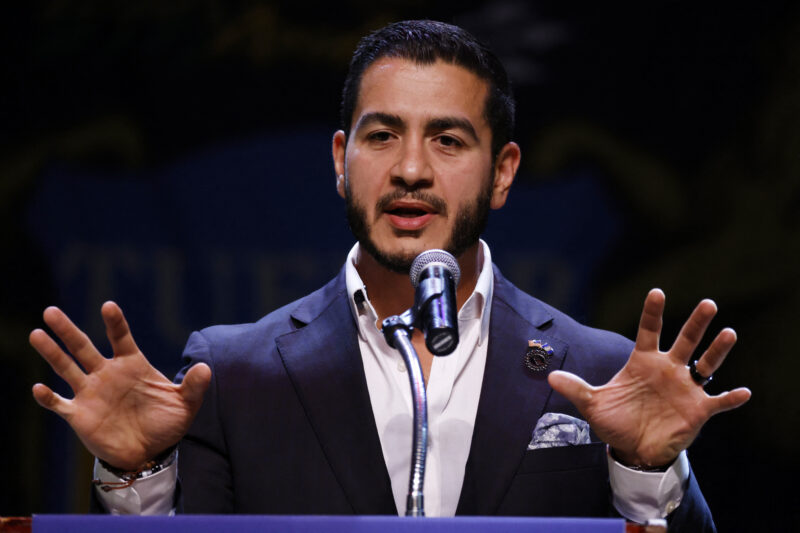







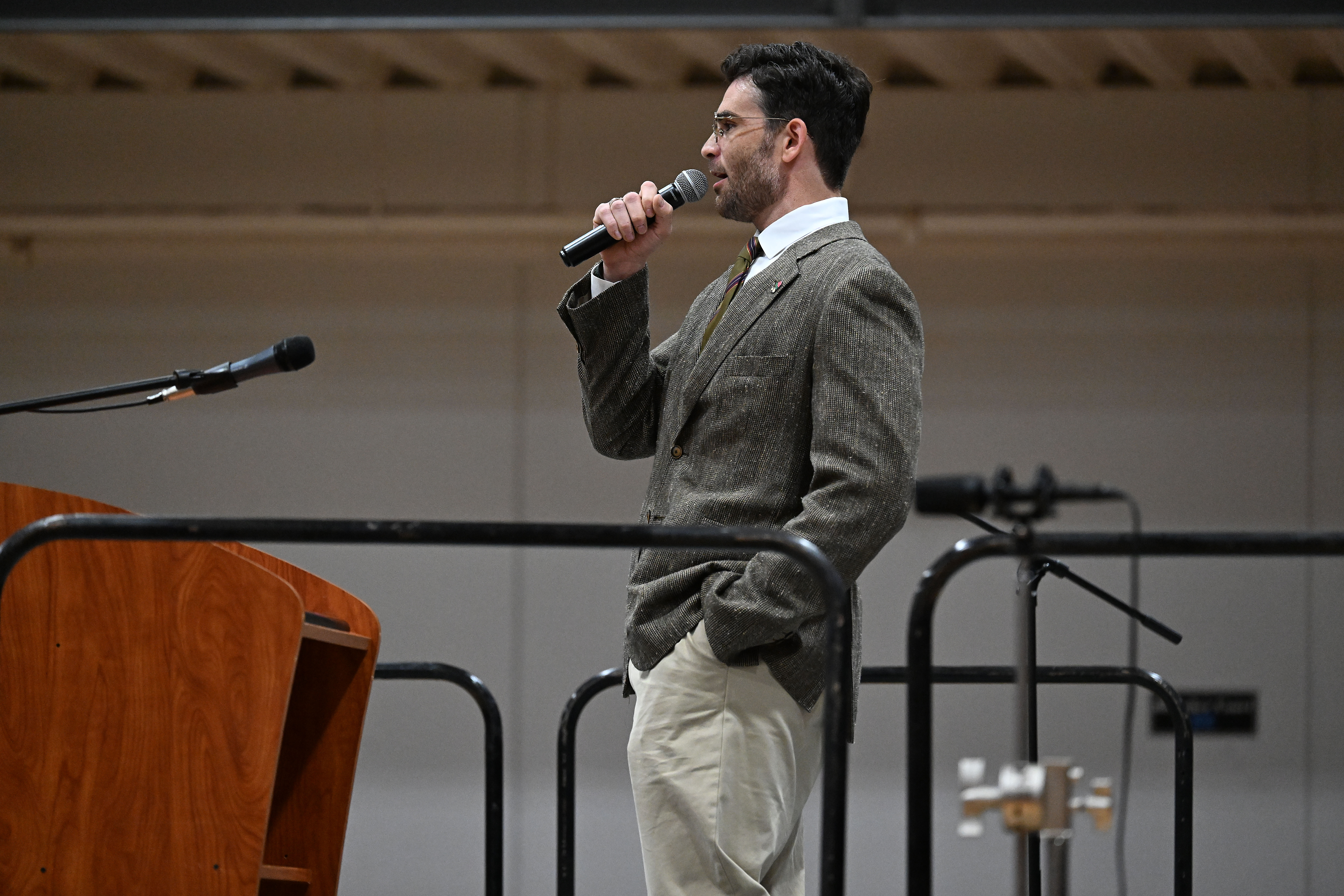








































Senate Democrats voted in lockstep to block a procedural motion to open debate on the 2027 National Defense Authorization Act
Getty Images
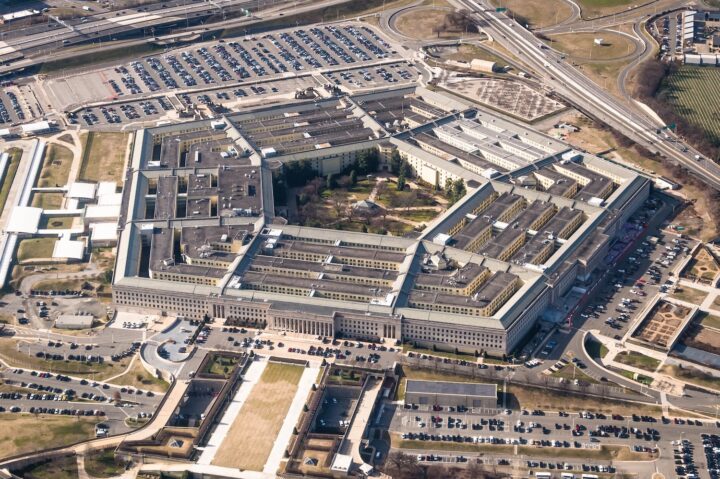
The Pentagon


 Add JewishInsider on Google
Citing concerns about the Iran war and the administration’s elevated defense funding request, Senate Democrats voted in lockstep on Tuesday evening to block a procedural motion to open debate on the 2027 National Defense Authorization Act, despite the bill passing out of the Armed Services Committee with bipartisan support.
The decision to block the start of debate on the NDAA — an annual must-pass bill that typically garners strong bipartisan support — is a rare step by Democrats signaling significant frustrations with the Trump administration’s ongoing war against Iran.
Sen. Jack Reed (D-RI), the top Democrat on the Armed Services Committee, said in a statement that he continues to support provisions in the bill, “but I cannot vote to proceed to a bill that enables an ongoing war against Iran that Congress never authorized and the American people overwhelmingly oppose.”
He said that Democrats are seeking amendments to “require accountability” for the war that have been rejected by Republicans. Reed added that Democrats also cannot support a significant increase in defense spending without more reliable accounting of the costs of the Iran war or “basic information” about it, and without a corresponding increase in non-defense spending.
Sen. Patty Murray (D-WA), the ranking member of the Senate Appropriations Committee, similarly cited the Iran war as a primary reason for her opposition to the bill.
“I will always do everything in my power to take care of our servicemembers and keep our country safe, but this bill authorizes President Trump’s absurd $1.5 trillion defense budget request while doing nothing to put an end to his disastrous war or prevent him from starting more costly conflicts abroad,” Murray said in a statement. “I refuse to endorse President [Donald] Trump’s obscene war budget, and I refuse to move this bill forward as Trump pushes our country deeper into a war the American people oppose”
Sen. Jeanne Shaheen (D-NH), the ranking Democrat on the Senate Foreign Relations Committee, said in a statement that it is “vital that we both pass the NDAA and that we constrain the President’s lawless and costly war against Iran.”
“With the President re-launching his self-defeating war, I voted against the motion to end debate on the NDAA, so we can continue to advocate for greater transparency and an end to this conflict,” Shaheen continued.
She said that amendments to reduce overall spending and withhold any congressional authorization for the Iran war failed along party lines during the closed-door committee markup of the NDAA.
Six progressive Democrats — Sens. Chirs Van Hollen (D-MD), Bernie Sanders (I-VT), Jeff Merkley (D-OR), Peter Welch (D-VT), Ed Markey (D-MA) and Elizabeth Warren (D-MA) — said they would vote against the motion to demand a vote on removing a provision on U.S.-Israel cooperation from the bill, and urged colleagues to do the same.
Though some anti-Israel voices have tried to paint that provision as the reason the Democratic caucus voted en masse against the bill, most Democrats did not cite that in their own statements on the bill.
Sen. John Fetterman (D-PA), the only Senate Democrat who has unreservedly supported the Iran war, was not present for the vote.
Republicans called the Democratic blockade dangerous to national security.
Sen. Chuck Grassley (R-IA) called the vote “SHAMEFUL” and said that the vote demonstrates that Democrats don’t take national security issues, which he described as the most important responsibility of the federal government, seriously.
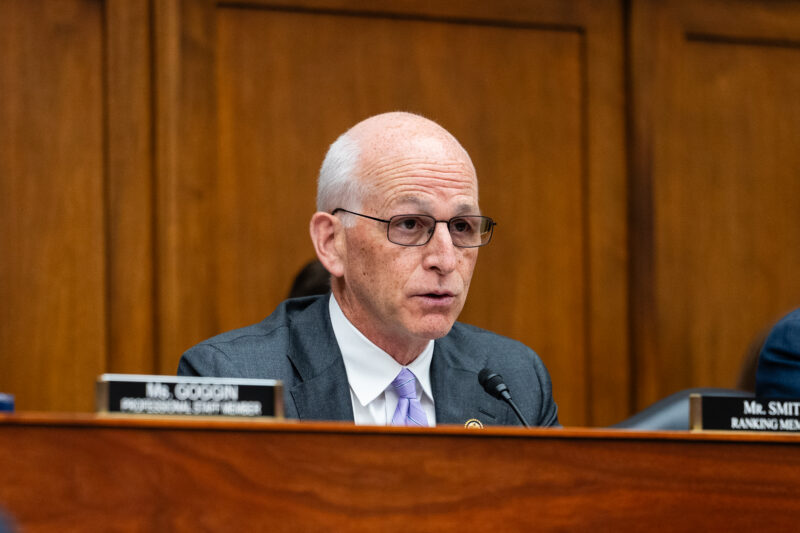
Adam Smith, a reliable supporter of Israel, said he would now join progressives in his party to oppose a provision bolstering a close U.S.-Israel alliance
Eric Lee/Bloomberg via Getty Images
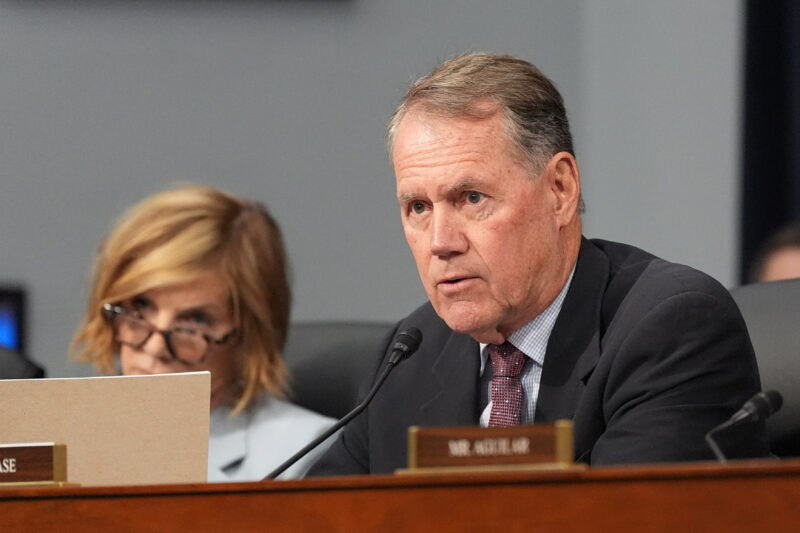
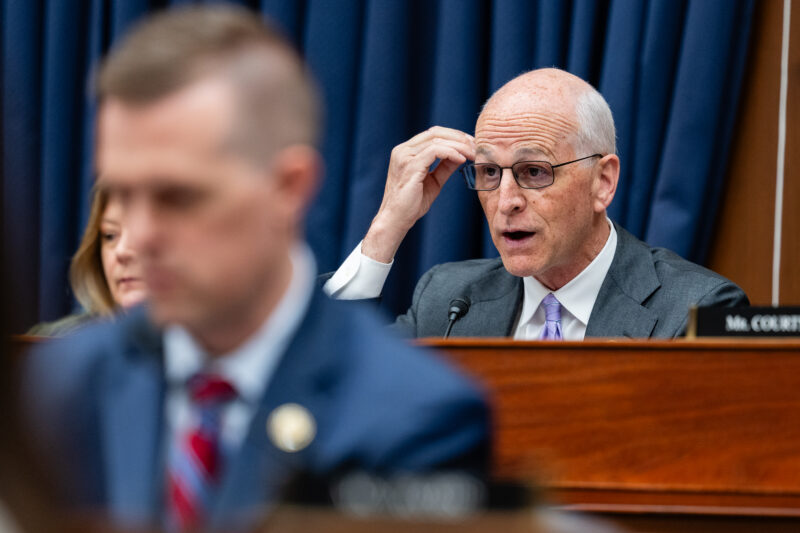
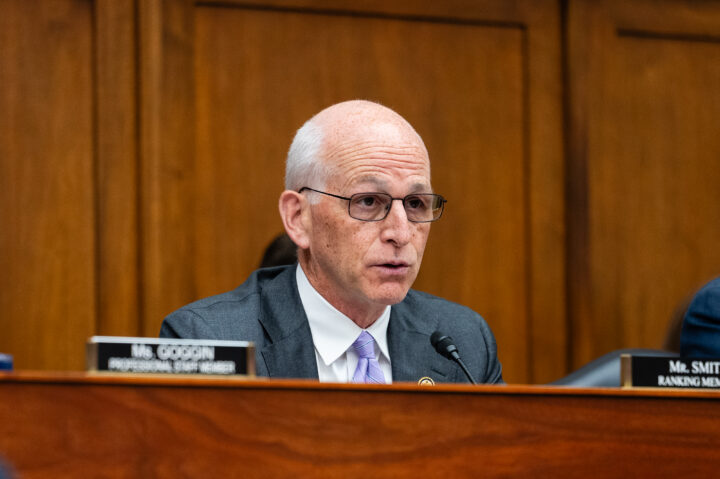
Rep. Adam Smith (D-WA), ranking member of the House Armed Services Committee, during a hearing on May 14, 2026.
Rep. Adam Smith (D-WA), the top Democrat on the House Armed Services Committee, now says he plans to support efforts to strip a provision on U.S.-Israel cooperation from the 2027 National Defense Authorization Act, after arguing strenuously against similar efforts during the committee’s markup of the same bill weeks ago.
The provision, based on the FUTURES Act, is relatively routine, creating a single official to oversee all U.S.-Israel cooperative programs in developing and acquiring defense technologies, and builds on existing programs. But critics have falsely claimed the provision would irrevocably link the U.S. and Israeli militaries and undermine American sovereignty.
Smith himself said during the committee markup that the way critics have described the amendment “is simply not accurate” and that the provision should not be treated as a referendum on the U.S.-Israel relationship.
In a message to constituents viewed by Jewish Insider, Smith said he now supports removing the provision.
“I previously opposed removing Section 224 because I looked at the ways the provision benefits the U.S. and helps us improve our anti-drone and anti-missile technologies,” Smith said in the message. “I still believe that Section 224 is something that primarily benefits the U.S., but after several conversations with constituents, I agree with the position that this provision is about more than just the U.S. working to improve our defense technology.”
Smith described his new opposition as based on Israeli activities in Gaza, the West Bank, Lebanon and Iran — despite arguing just weeks ago that, “taking a step back from using technology that is available to us just because we strongly disagree with where Israel is at right now, I think would be a mistake.”
“In the context of these ongoing conflicts, Section 224 carries meaning beyond the plain text substance of the provision. I want to advocate for peace and pressure Israel to meaningfully work with partners in the region to bring these conflicts to an end,” Smith said. “I cannot support endless conflict even though I support Israel’s right to exist. For these reasons, I will vote to remove Section 224 from the National Defense Authorization Act if it comes to the Floor.”
He emphasized in his message his criticisms of Israel and suggested that constituent feedback on the issue had helped shape his changing position on the subject — an indication of how grassroots pressure in blue districts is pushing traditionally pro-Israel members to the left on Israel policy issues.
Smith said previously that the amendment is ultimately a boon to the U.S. military by allowing it to benefit from Israeli innovations, and that its actual impacts are relatively minor.
“This is not a new framework,” Smith said during the committee meeting, noting that the U.S. already has three existing cooperative programs with Israel to develop new technologies, and that the provision does not create any new programs. “To say that this is us bowing to the bidding of Israel on this is completely inaccurate. The reason we’re doing this is because we benefit from that technology development.”
Smith did not respond to a request for comment about his new position on the provision.
An effort to strip the provision out of the bill did not come to a recorded vote in the committee — they were blocked by a voice vote. But Smith’s newfound support for removing it suggests that a significant number of Democrats will vote similarly.
The amendment failed by a voice vote, as committee leaders from both parties said critics were misrepresenting the legislation

Kevin Carter/Getty Images
The U.S. Capitol Building is seen at sunset on May 31, 2025 in Washington, DC.
The House Armed Services Committee blocked an amendment that sought to strip a relatively routine provision on U.S.-Israel cooperation out of the 2027 National Defense Authorization Act by a bipartisan voice vote.
Leaders of the committee on both sides of the aisle spoke out against the amendment, led by Rep. Ro Khanna (D-CA), saying that critics of the provision — who have claimed it would fuse the U.S. and Israeli militaries or subvert U.S. sovereignty — were misrepresenting the legislation.
The provision, Section 224 of the bill, builds upon existing U.S.-Israel cooperative programs in developing and acquiring defense technologies and requires the Pentagon to designate a single official to oversee all U.S.-Israel cooperative programs.
Khanna said, in introducing the amendment, that the “American people are tired of the arrogance and insolence of Prime Minister [Benjamin] Netanyahu telling America what we should do,” and described the amendment as a handout of additional U.S. support for Israel. He suggested that it would undermine U.S. sovereignty.
He also claimed, falsely, that Netanyahu had written to the sponsors of the NDAA provision praising them for it and framing it as his initiative and a way to subvert congressional oversight and approval.
Despite misrepresentations online, Netanyahu’s letter pertained to a separate piece of legislation endorsing his call to wind down U.S. aid to Israel, though both touch on the idea of expanding U.S.-Israel cooperative programs and co-development.
Lawmakers on both sides of the aisle pushed back.
Rep. Adam Smith (D-WA), the Armed Services Committee ranking member, said he is “very sympathetic” to Khanna’s “frustration … with Netanyahu’s leadership in Israel” but said that “the way this amendment was described is simply not accurate.” And he emphasized that the vote was not a referendum on the U.S.-Israel relationship broadly.
“This is not a new framework,” Smith said, noting that the U.S. already has three existing cooperative programs with Israel to develop new technologies, and that the provision does not create any new programs. “To say that this is us bowing to the bidding of Israel on this is completely inaccurate. The reason we’re doing this is because we benefit from that technology development.”
He explained that the reason such partnerships exist with Israel is because Israel has developed battle-tested and -proven systems that the U.S. can benefit from.
“Taking a step back from using technology that is available to us just because we strongly disagree with where Israel is at right now, I think would be a mistake,” Smith said.
Rep. Mike Rogers (R-AL), the Armed Services Committee chair, emphasized that the provision does not create any new programs but instead improves oversight by designating a single official to be responsible for existing U.S.-Israel cooperative programs.
“Claims that this provision somehow cedes authority to a foreign government are simply ridiculous,” Rogers continued.
Reps. Ronny Jackson (R-TX), Don Davis (D-NC), Don Bacon (R-NE), Joe Wilson (R-SC), Jared Golden (D-ME) and Austin Scott (R-GA) also spoke against the amendment, offering similar arguments. Jackson and Davis were the lead sponsors of the FUTURES Act, on which the provision was modeled.
Jackson and Davis both emphasized that they had not received any communication from Netanyahu about the provision in question, and noted that it builds on an effort that has been established over multiple recent NDAAs.
Jackson noted that the legislation even requires public reporting on the cooperative efforts, including how they benefit the U.S. “Those saying Sec. 224 is a military merger removing U.S. sovereign command simply have not read or do not understand this provision,” Jackson said.
Davis said that the amendment would not stop the existing collaboration between the U.S. and Israel, but would “hinder our ability to cooperate more efficiently” against bad actors globally.
Golden argued, “Opponents of Sec. 224 are really allowing a broader political disagreement and these concerns about Israel … to override a program that fundamentally advances U.S. national security.”
He emphasized that the provision doesn’t reduce U.S. oversight, provide Israel with access to U.S. data, give Israel control over U.S. defense programs or production, create a backdoor for military aid or “fuse” the U.S. military with Israel’s, referencing various arguments made against the program.
Rep. Sara Jacobs (D-CA) was the only member to join Khanna in supporting the amendment, claiming it would “institutionalize and expand U.S. military integration beyond anything in the history of the relationship, fusing our defense industries across research production and emerging technologies,” claiming that the effort contravenes U.S. arms sales laws, though no sales are involved in the provision under discussion.
She also suggested that the Israeli government was a cybersecurity threat to the U.S., pointing to the U.S. sanctions on the private Israeli spyware firm NSO Group.
AIPAC opposed the Khanna amendment, while J Street and a range of progressive groups supported it. Rep. Thomas Massie (R-KY) has said he would introduce an amendment on the House floor to remove the provision if the Armed Services Committee failed to do so.
The committee rejected, by a 26-30 vote, an amendment by Rep. Pat Ryan (D-NY) to block any further funding for operations in or against Iran, except in defense of the U.S. or its allies and partners from imminent attack. Davis was the only Democrat to cross party lines to oppose the amendment.
“It would prohibit the president and secretary of defense from using my constituents’, our constituents’ tax dollars to continue waging this ill-conceived and unconstitutional war in Iran,” Ryan said, describing the amendment as consistent with the House war powers vote to halt the Iran war.
Rogers said that “this incredibly reckless amendment would prohibit our military from defending our service members and our allies against [Iranian] attacks.”
An amendment by Rep. Wesley Bell (D-MO) to instruct the Pentagon to institute a department-wide policy prohibiting the display of hate symbols and setting uniform standards to identify, address and review hate symbols was adopted by a voice vote.
“The department currently relies on a patchwork of service-specific policies governing tattoos, symbols, and workplace displays,” Bell said. “As a result, standards vary across the military, creating inconsistencies, and how hate symbols are identified, addressed, and enforced. That lack of uniformity creates unnecessary gaps and uncertainty where there should be clarity.”
Bell and other Democrats framed the policy as a response to the Coast Guard’s moves last year to reclassify displays of swastikas as “potentially divisive” rather than inherently banned hate symbols.
“The swastika is not politically divisive. It is one of the most universally recognized symbols of hatred in human history,” Bell said. “It represents racial supremacy, it represents antisemitism, violent extremism and the systemic persecution and murder of millions.”
The Anti-Defamation League praised Bell and the committee for passing the amendment.
An amendment by Rep. Seth Moulton (D-MA), which Moulton said sought a full accounting from the Pentagon of the costs of U.S. military operations against Iran, failed in a party-line vote.
However, the text of Moulton’s amendment, as shared by the committee, included language calling for a diplomatic solution to the war in Iran and describing it as a “unilateral war of choice initiated by the president” without support from Congress, the American people or U.S. allies.
A separate amendment by Moulton, which conformed more closely to his description — requesting a report on the total cost of military operations in Iran including replacement value of equipment damaged or destroyed, the cost of munitions used, the costs for repairing or rebuilding damaged military facilities — was approved without incident as part of a bipartisan package of amendments.
As part of another bipartisan amendment package, the committee approved an amendment by Rep. Pat Harrigan (R-NC) would establish a U.S.-Abraham Accords Defense Cooperation Initiative, to improve cooperation between the U.S. and Abraham Accords countries, with a focus on air and missile defenses, missile development, intelligence, reconnaissance, planning special operations force development and joint military exercises.
The effort is aimed at deterring Iran and its proxies.
As part of that same amendment package, the committee added a request for the administration to provide Congress with a refreshed strategy for integrated air and missile defense with Middle East partners, which Congress first requested in a previous NDAA.
In another amendment package, the committee approved an amendment that would withhold 75% percent of U.S. funding for the Iraqi security forces until the Pentagon certifies that the Iraqi government has taken “credible steps” to reduce the influence and power of Iranian-aligned militia groups within the Iraqi security forces.
The committee also approved, as part of amendment packages, provisions requiring the Defense Department to report to or brief Congress on opportunities to expand defense partnerships in the Eastern Mediterranean to combat Hezbollah and other Iranian proxies, biosecurity risks from Iran, Russian influence and bases in Syria, the civilian harm investigation into the U.S. strike on a girls’ school in Minab, Iran, the Iranian drone attack that killed six U.S. service members in Kuwait on March 1 and the feasibility of using current authorities to support the professionalization of Syrian security forces.
The committee approved the amended NDAA by a 44-12 vote — an unusually large number of Democratic “No” votes on a generally bipartisan bill. Democrats had sought cuts to the overall topline funding proposal for the Pentagon in 2027, which Republicans rejected.
Republicans also successfully incorporated a provision to formally rename the Department of Defense as the Department of War, as the Trump administration has done informally.
Former U.S. Ambassador Daniel Shapiro called the provision largely ‘unremarkable,’ countering claims from the extremes that it would mark a surrender of U.S. sovereignty
Zack Frank
Capitol Building
A relatively routine provision that aims to facilitate expanded U.S. cooperation with Israel in the House’s draft of the 2027 National Defense Authorization Act has fueled outrage from the far left and far right, with some prominent figures making inaccurate claims that the provision would subjugate the U.S. military to Israel or otherwise compromise U.S. sovereignty.
The turmoil appears to have begun with an article published in the isolationist Quincy Institute’s Responsible Statecraft journal that claimed the legislation “would all but fuse the two countries’ armed forces together.”
The backlash has gained widespread attention, from current and former lawmakers, anti-Israel commentators and even a celebrity news account with more than 3.5 million followers on X — an unusual series of events for the wonky annual defense policy bill.
Critics are objecting to a provision in the bill, the “United States-Israel Defense Technology Cooperation Initiative,” which aims to expand and accelerate joint U.S.-Israel technological development and industrial cooperation; allow the U.S. to quickly adopt proven Israeli technologies; and promote joint training exercises, information sharing and co-production in areas including defense manufacturing, anti-tunneling, air- and missile-defense and various advanced technologies.
But the U.S. already has established cooperative programs in Israel in many of the areas enumerated in the bill, set up in previous years’ NDAAs and defense budget bills, without much fanfare — so the sort of cooperation laid out in the bill is hardly new, unprecedented or a significant change.
The language also closely hews to bipartisan legislation in both chambers, the U.S.-Israel FUTURES Act, which has 46 co-sponsors in the House and 11 in the Senate. Those bills aim to leverage U.S. and Israeli technology and innovation to assist in the defense of both countries.
“This provision promotes ongoing, and in some ways, expanded cooperation between the United States and Israel in developing key military technologies. It is quite unremarkable,” Daniel Shapiro, a former U.S. ambassador to Israel and senior Pentagon official who is now a distinguished fellow at the Atlantic Council, told Jewish Insider. “Those describing it as promoting ‘integration’ between the U.S. and Israeli militaries are making a mountain out of a molehill. But these days, there are a lot of people trying to make molehills into mountains in this arena.”
Critics on both sides of the aisle are mobilizing against the legislation.
Rep. Thomas Massie (R-KY) suggested that the legislation would undermine American sovereignty and vowed to introduce an amendment to strip it out of the bill if it makes it through the committee process.
Rep. Ro Khanna (D-CA), who sits on the Armed Services Committee, said he’ll try to remove the provision during the committee markup later this week. “Trump can’t kill the Massie/Khanna partnership no matter how much he posts on Truth Social,” Khanna said.
“Looking forward to posting that roll call vote from the Armed Services committee,” Massie responded. “Maybe they’ll go ahead and strip the provision instead of taking the vote, now that people are on to them.”
Anti-Israel commentators have also seized on the provision.
“This is what complete capture to a foreign government looks like and there hasn’t been a single shot fired,” former Rep. Marjorie Taylor Greene (R-GA) declared.
Former State Department official Josh Paul, an anti-Israel activist, claimed the provision would “intertwine our military with Israel’s” and give Israel “incredible leverage over America’s own defense priorities.”
The condemnation of this provision also foreshadows potential objections to future efforts to shift the U.S.-Israel relationship away from direct aid and toward jointly funded cooperative programs.
Indeed, Paul highlighted that likely shift as a reason to oppose this provision in a video on the subject.
In addition to the new cooperation provision, the NDAA draft includes language extending the U.S. weapons stockpile in Israel, counter-tunneling cooperation programs and counter-drone cooperation programs through 2029.
It authorizes $50 million for cooperative programs in emerging technology, as well as $100 million for each of the counter-drone and counter-tunneling programs and an annual $300 million for cooperative air defense systems including Iron Dome. All of that funding would still have to be appropriated separately.
It also praises the U.S. relationship with Jordan and urges efforts to expand cooperation with Amman, including on integrated air- and missile-defense systems and cybersecurity cooperation efforts.
Democrats are likely to push a range of other amendments related to the war in Iran at Thursday’s markup.
Notably, the bill backed by House Republicans also includes several provisions designed to hamstring isolationist-minded moves by the Trump administration, including limiting troop drawdowns from Europe and South Korea. It would also freeze construction of the “Trump-class” battleship until the technology is better developed.
The GOP pushback indicates that a significant number of Republican lawmakers remain concerned about the Syrian government’s conduct
Kevin Carter/Getty Images
The U.S. Capitol Building is seen at sunset on May 31, 2025 in Washington, DC.
A group of 136 House Republicans released a joint statement on Friday calling for increased oversight of and accountability from Syria, days after voting to repeal the last major sanctions package on the country as part of the 2026 National Defense Authorization Act.
The Trump administration had pushed Congress to repeal the so-called Caesar Act sanctions, an action finalized when Trump signed the 2026 NDAA Thursday evening, but some lawmakers on the Hill have harbored continued reservations about the new government in Syria and ensuring it continues to make progress on democracy building.
The statement indicates that a significant number of Republican lawmakers remain concerned about the Syrian government’s conduct going forward. It follows an attack by ISIS affiliates who also reportedly had ties to the Syrian government that killed two U.S. service members and a civilian interpreter in Syria last weekend. The statement has been in the works since last week, shortly after the House voted to pass the NDAA, a source familiar with the situation told Jewish Insider.
“Bringing religious freedom into Syria is the only way the country will fully stabilize. The sanctions repealed by the NDAA will help economically, but violence will not cease until [Syrian President Ahmad] al-Sharaa uses his position to denounce religiously motivated attacks,” Rep. Marlin Stutzman (R-IN), a co-lead of the joint statement, told Jewish Insider.
The lawmakers, led by Stutzman and Rep. Josh Brecheen (R-OK), said in the joint statement that members of Congress interested in protecting religious minorities in the region “worked with the Trump Administration and House leadership to secure assurances that snapback conditions … would be enforced if Syria does not comply with the terms highlighted in the repeal language.”
The NDAA includes language calling for the administration to reimpose sanctions on Syria if a variety of human rights, security and anti-corruption conditions are not met, and for reporting to Congress on those benchmarks — but the language is not binding and the strict and sweeping Caesar Act sanctions could not be reimposed by executive authority without another act of Congress.
The lawmakers said that the “the mass murder of the Syrian Christians, Druze, Alawites, Kurds, and other religious and ethnic minorities must be a thing of the past” and that they are “committed to keeping a watchful eye on the new al-Sharaa Administration to ensure protections for religious and ethnic minorities.”
They said they would like to travel to Syria to see firsthand that religious protections are being upheld, particularly in Suweida, the city with a substantial Druze population where government-aligned forces carried out mass atrocities earlier this year.
“We look forward to confirming that these terms have not been squandered by the Syrian government — whether by their president or by rogue military officials — and seeing for ourselves that the al-Sharaa Administration has created a safe environment for the religious and ethnic minorities historically persecuted in the region,” the statement continued.
The lawmakers also said that House Speaker Mike Johnson (R-LA) and House Foreign Affairs Committee Chairman Brian Mast (R-FL) had agreed to hold a hearing on “the verified change of treatment for religious minorities in Syria.”
Mast himself, who had been the last major roadblock on the Hill to sanctions repeal and pushed for the nonbinding snapback language to be included, is one of the first signatories on the statement.
Sen. Jim Risch (R-ID), the chair of the Senate Foreign Relations Committee, said in a statement that the “unconditional” sanctions repeal is a significant step, while highlighting the congressional oversight and monitoring obligations.
“After long and serious consideration, we have worked closely with the Trump Administration to responsibly repeal the Caesar Act, which played an important role in the fall of the Assad Regime,” Risch said. “This unconditional repeal removes a significant roadblock to U.S. and international commercial investments in Syria. It also increases reporting and monitoring on benchmarks such as ethnic and religious persecution to ensure Syria remains on the path to becoming a U.S. partner that makes America safer, stronger, and more prosperous.”
The U.S. Commission on International Religious Freedom held a hearing with Syrian minority group leaders last month, where representatives of the Syrian Druze, Christian and Alawite communities warned of systemic religious persecution by the new government and urged Congress to place conditions on the repeal of sanctions.
But others, including the Jewish Heritage in Syria Foundation (JHS), a group of U.S.-based Syrian Jews working to restore Jewish sites and relics in Syria, celebrated the sanctions repeal.
“Once President Trump signs the bill into law, we will be able to increase our efforts to preserve Jewish heritage, continue the search for those we have lost, and move forward with healing and restoration,” JHS said in a statement. “We can now begin rebuilding our synagogues, especially the ancient and historic Jobar Synagogue, one of the oldest Jewish sites in the world.”
Other leaders in the Syrian Jewish community have distanced themselves from the leadership of JHS and its affiliates, claiming they do not speak for the Syrian Jewish community in the U.S. at large.
The NDAA will also include a nonbinding provision urging the administration to reimpose sanctions on Syria if its new government does not meet certain human rights conditions, source tells JI
Francis Chung/POLITICO via AP Images
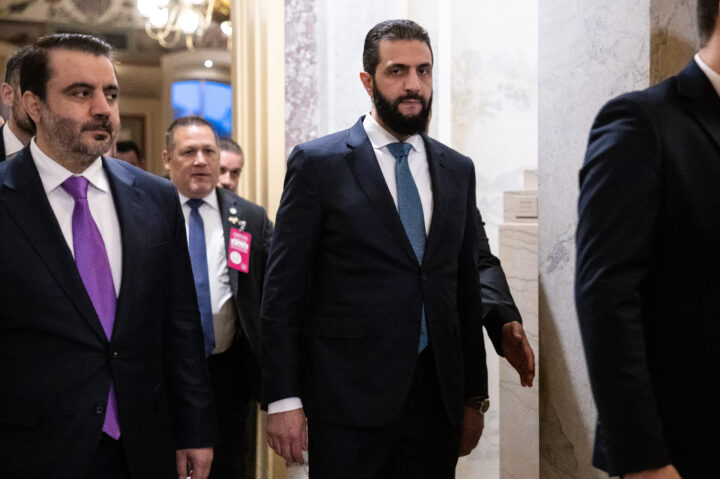
Syrian President Ahmed al-Sharaa departs a meeting in the Senate Foreign Relations Committee hearing room at the U.S. Capitol, Nov. 10, 2025.
A full repeal of human rights sanctions on Syria under the Caesar Civilian Protection Act is likely to pass Congress as part of the 2026 National Defense Authorization Act, after House Foreign Affairs Committee Chair Rep. Brian Mast (R-FL) signed off on the measure, according to a source familiar with the matter.
The NDAA, which Congress aims to finalize in early December after its Thanksgiving recess, will include a full repeal of the sanctions, but also a nonbinding provision urging the administration to reimpose sanctions on Syria if its new government does not meet certain human rights conditions, the source told Jewish Insider. Barring any unexpected developments, the provision should be on track to pass Congress in the must-pass legislation.
The Senate approved similar provisions in its version of the NDAA earlier this year, but the House version of the bill included no such language, and Mast’s approval was needed to incorporate the provision into the final version of the bill being negotiated between both chambers.
President Donald Trump has been urging Congress to repeal the sanctions, an effort supported by many Syrian diaspora activists, including Rabbi Yosef Hamra, the brother of the country’s last chief rabbi, who now lives in the U.S.
But others, including activists from other Syrian minority communities and some lawmakers, have argued that the sanctions should remain on the books to provide leverage and accountability to ensure the protection of minorities and the Syrian government’s cooperation on other matters like counterterrorism.
Mast had been skeptical of lifting sanctions, but indicated to JI his position was softening last week. He met earlier this month with Syrian President Ahmad al-Sharaa in Washington.
Mast told The Hill, which was first to report the news, that his position is that the sanctions should be, “Fully repealed, to have mechanisms, or rather a sentiment that sanctions should be reinstituted if a number of conditions are not met. … Still fully repealed.”
Other passed amendments aimed to counter the BDS movement, strengthen the U.S.-Israel defense partnership and counter the Iranian regime

GETTY IMAGES
A general view of the U.S. Capitol Building from the National Mall, in Washington, D.C., on Thursday, May 29, 2025.
The House passed its version of the 2026 National Defense Authorization Act on Wednesday, including an amendment that would repeal the Authorizations for Use of Military Force that allowed for the Iraq war and the Gulf War.
The House also passed a series of amendments aimed at countering the Boycott, Divestment and Sanctions movement targeting Israel and enhancing defense cooperation with Israel.
An effort to repeal the Authorization for Use of Military Force passed by a bipartisan 261-167 vote, with 49 Republicans voting with 212 Democrats in favor of the amendment.
Rep. Brian Mast (R-FL), the chair of the House Foreign Affairs Committee, said he agreed that there should be sunsets on AUMFs, but said that changes should not be made without discussions with key U.S. military leaders about how the repeal would impact U.S. activities and counterterrorism efforts and whether additional authorities would be needed to re-authorize ongoing U.S. operations.
“These are questions that were not asked, and the answers were not given,” Mast said. “We have, I think, probably large agreement on reasons to sunset things, but it should not be done in absence of doing something of this gravity in the proper way.”
Rep. Greg Meeks (D-NY), the ranking member of the Foreign Affairs Committee, said that the AUMFs are “long obsolete” and that keeping them effective “only risk[s] abuse by administrations of either party to sanction military force that Congress has not consented or approved.”
He said he’s committed to ensuring that the provision remains in the final version of the NDAA agreed to in negotiation with the Senate.
Repeal efforts for the AUMFs have seen substantial momentum in recent previous years.
Other amendments approved by voice votes as part of broader amendment packages aimed to counter international targeting of Israel, including banning the Defense Department from contracting with entities boycotting Israel, instructing the administration to monitor the impact of global arms embargoes, and other sanctions imposed on Israel, and determine how the U.S. can mitigate such issues. They also urged the administration to engage with allies to ensure they do not enforce International Criminal Court arrest warrants against Israeli officials and called on the Pentagon not to participate in defense exhibitions that exclude Israel.
To further reinforce U.S.-Israel defensive cooperation, other amendments would order the creation of a Defense Innovation Unit field office in Israel to engage with the government and private sector there on technological development and mandate that the U.S. and Israel study the possibility of integrating Israel into the U.S. defense industrial base.
Additionally, the House added requirements that the Pentagon report to Congress on the status of integrated air and missile defense cooperation in the Middle East, including lessons learned from recent attacks in the region; on joint U.S.-Israel efforts to increase production of Arrow missile defense interceptors, stockpiles of which were significantly depleted during the Israel-Iran war, including whether further authorizations or funding are needed; on U.S.-Israel joint military exercises, the missions rehearsed and how regional partners can be invited to join; and on the status of pending deliveries of military aircraft and air-launched munitions, including the reasons for any delays and how they can be resolved.
Other amendments would require the U.S, Egypt and Israel to study steps that they can take to block smuggling into Gaza from tunnels in Egypt or via the Mediterranean Sea and the Pentagon to report to Congress on the U.S.-Bahrain partnership agreement and possibilities for expanding it to include other regional allies.
Additional amendments seek to support Iranian dissidents and counter the Iranian regime: requiring a strategy on encouraging and enticing top Iranian officials to defect; requiring the Pentagon to help develop technologies to counter internet blockages imposed by Iran and other adversaries; requiring a strategy to counter Iran and Hezbollah’s operations in South America; and expanding reporting requirements regarding Iran’s terrorism strategy, proxies, relationship with Russia, supply chains and weapons production capabilities.
Another amendment would require the Pentagon to quickly release all files on the Iranian proxy attack on the Tower 22 facility in Jordan that killed U.S. service members in January 2024.
An additional amendment would award a medal to servicemembers involved in the U.S. strikes on Iran’s nuclear facilities.
Two amendments by Rep. Marjorie Taylor Greene (R-GA), which aimed to block U.S. support for Ukraine and Taiwan, were resoundingly defeated 372-60 and 422-9, respectively. An amendment proposed by Greene to strip out programs supporting Israel from the bill did not receive consideration or a vote on the floor.
Greene made similar efforts to block funding for Israel, Ukraine and Taiwan during consideration earlier this year of 2026 Pentagon funding, which were defeated along similar lines.
The amended NDAA passed the House by a 231-196 vote, with just 17 Democrats voting for the bill as most voiced objections to provisions relating to transgender medical care and renewable energy, among other issues. The Senate is considering its own version of the NDAA this week as well.
Among a slew of other issues, a series of proposed amendments aimed at cracking down on Turkey were not approved for consideration on the House floor.
Plus, The New Yorker's Piker problem

ADEM ALTAN/AFP via Getty Images
Turkish President and leader of the Justice and Development (AK) Party Recep Tayyip Erdogan attends his party's group meeting at the Turkish Grand National Assembly in Ankara, on October 25, 2023.
Good Thursday morning.
In today’s Daily Kickoff, we report on a series of amendments to the National Defense Authorization Act targeting Turkey for its support of terrorist groups and hostility toward Israel, and cover The New Yorker’s platforming of antisemitic influencer Hasan Piker at its upcoming festival. We talk to members of the House Foreign Affairs Committee’s MENA subcommittee following yesterday’s closed-door briefing on the West Bank with U.S. Ambassador to Israel Mike Huckabee, and spotlight Iowa Senate candidate Josh Turek’s support for conditioning aid to Israel. Also in today’s Daily Kickoff: Amb. Yechiel Leiter, Rep. George Latimer and Linda Frum.
Today’s Daily Kickoff was curated by Jewish Insider Executive Editor Melissa Weiss and Israel Editor Tamara Zieve, with assists from Haley Cohen and Marc Rod. Have a tip for us? Email us here.
What We’re Watching
- President Donald Trump will convene a call this morning between Ukrainian President Volodymyr Zelensky and French President Emmanuel Macron, who are both in Paris today for a summit of European allies of Kyiv, as well as Australia and Canada, aimed at formulating postwar security guarantees for Ukraine.
- Israeli President Isaac Herzog is at the Vatican today, where he just concluded a meeting with Pope Leo XIV.
- The Middle East Institute is hosting an event this afternoon in Washington, featuring writers Ross Harrison and Mohsen Milani, focused on Iran’s options following its 12-day war with Israel in June.
- In Israel, we’re keeping an eye on high-level government talks about West Bank annexation. More below.
What You Should Know
A QUICK WORD WITH JI’S MELISSA WEISS
Flashback to 2020: As Israel mulls annexation of the West Bank, a prominent Emirati official communicates to an Israeli outlet that such a move could have disastrous consequences for Israel’s positioning in the region.
“Annexation,” UAE Ambassador to the U.S. Yousef Al Otaiba wrote in a Yediot Ahronoth op-ed in June 2020, “will certainly and immediately upend Israeli aspirations for improved security, economic and cultural ties with the Arab world and with UAE.”
Al Otaiba’s op-ed was part of the groundwork laid for the Abraham Accords, announced less than two months later and signed in September 2020. With the normalization agreement in place, Israel’s annexation plans were shelved — at least temporarily — as it deepened its relations with the UAE and Bahrain, the original signatories to the landmark deal.
Five years later, senior Emirati diplomat Lana Nusseibeh, who previously served as Abu Dhabi’s envoy to the United Nations, is issuing a similar warning.
“Annexation would be a red line for my government, and that means there can be no lasting peace. It would foreclose the idea of regional integration and be the death knell of the two-state solution,” Nusseibeh told The Times of Israel earlier this week.
The five years between Al Otaiba’s op-ed and Nusseibeh’s comments have seen seismic shifts in the region: the Israel-Hamas war and the degradation of Iran’s nuclear capabilities and its regional proxy network, particularly with the collapse of the Assad regime in Syria. Israel has shown itself to be the dominant military player in the region, even as it finds itself on the receiving end of widespread criticism across the Middle East and beyond over its war against Hamas in Gaza.
But they have also seen the rise of the Israeli far right as a more significant player in the country’s politics. The ascensions of Finance Minister Bezalel Smotrich and National Security Minister Itamar Ben-Gvir have paved the way for a renewed Israeli effort to annex broad swaths of the West Bank, five years after plans to do so were derailed by peace efforts.
ENVOY INTERVIEW
Amb. Leiter: Nature of U.S.-Israel aid may change in coming years
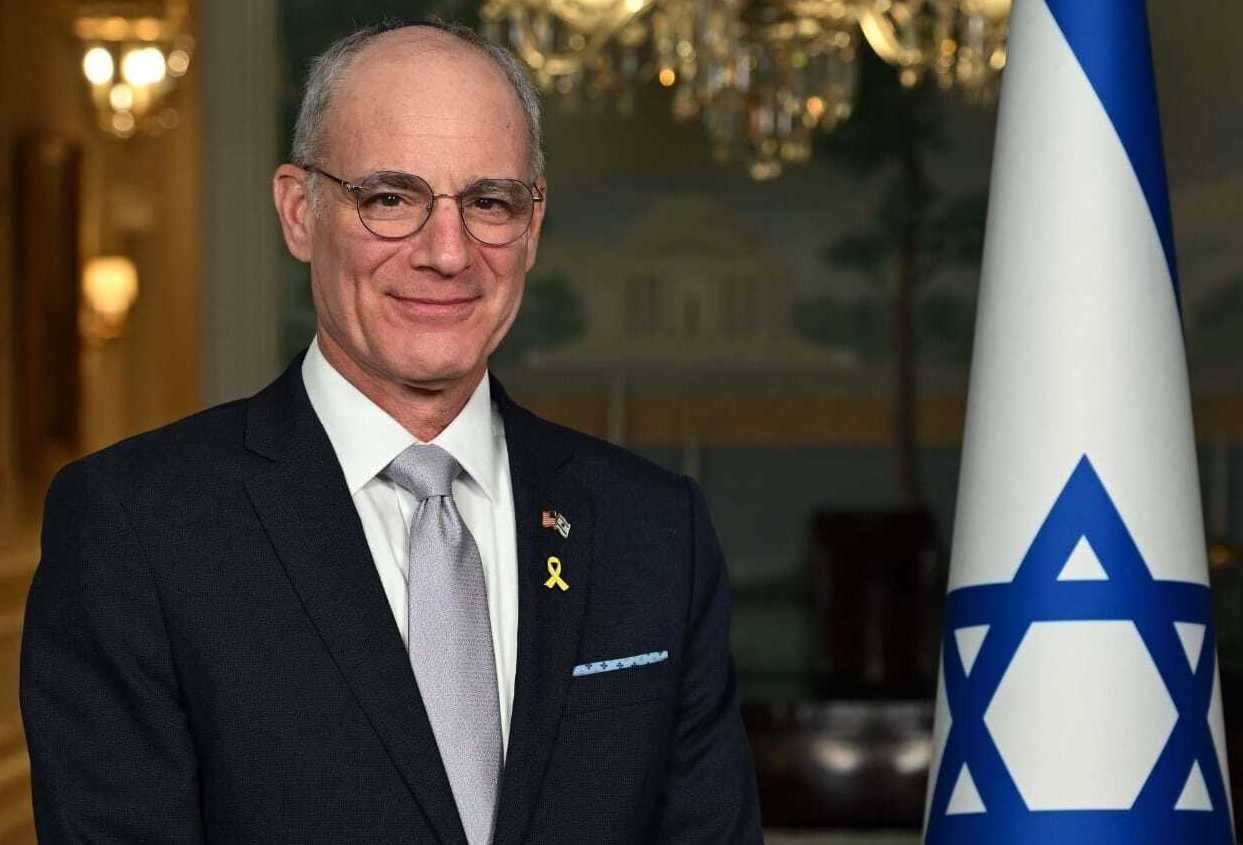
Israeli Ambassador to the U.S. Yechiel Leiter arrived at his post in January as Israel was more than a year into its war with Hamas in Gaza and facing declining American support for the Jewish state. The Trump administration has been much friendlier to the government in Jerusalem than its predecessor, supporting the Israeli war effort in Gaza with no limitations on arms shipments. Yet, the broader political atmosphere is more hostile to Israel than it has been in decades. Leiter spoke with Jewish Insider’s Lahav Harkov and the executive director of the Misgav Institute for National Security and Zionist Strategy, Asher Fredman, on the “Misgav Mideast Horizons” podcast this week about his efforts to engage members of both parties, the future of the U.S.-Israel alliance, what is next in the war in Gaza and more.
MOU musings: Amid these concerning political trends, Leiter said that the U.S. and Israel have started to discuss what will happen after the Obama-era 10-year Memorandum of Understanding between the countries, which currently commits $3.8 billion a year in American defense aid to Israel annually, expires in 2028. While Israel’s official position favors continuing aid, some in Israeli Prime Minister Benjamin Netanyahu’s Likud Party and others on the Israeli right have been advocating for moving from a model of aid to one of collaboration on joint projects. “Maybe we’ll change the nature [of the MOU], where there will be greater [joint] research and development between our two countries, rather than relying on American weapons,” Leiter said.
EYE ON ANKARA
Lawmakers take aim at Turkey in 2026 defense bill

Bipartisan groups of House lawmakers are aiming to crack down on Turkey in the 2026 National Defense Authorization Act, introducing a series of amendments seeking to place further restrictions on U.S. aid to the NATO ally in response to its support for Hamas and hostility toward Israel, Jewish Insider’s Marc Rod reports.
Angles of attack: Groups of House members introduced amendments to the NDAA, set for consideration next week, that would ban any arms sales or transfers to Turkey until the administration outlines how it is ensuring that Turkey is no longer threatening or violating the sovereignty of U.S. allies, providing support to terrorist groups or purchasing any defense systems from U.S. adversaries; impose new, elevated conditions on the sale of F-35 and F-16 fighter jets to Turkey; and protect Israel’s Qualitative Military Edge over Turkey. It remains to be seen which, if any, of these amendments will receive consideration or be incorporated into the House’s final draft version of the NDAA.
HOSTING HATE
New Yorker Festival invites influencer who justified Oct. 7 attacks as speaker

Hasan Piker, the far-left streamer who frequently stirs controversy for using antisemitic rhetoric in his commentary on Israel and Jewish issues, will join a roundtable discussion next month hosted by The New Yorker Festival, the publication announced on Wednesday in a full lineup of events. The conversation on Oct. 26, which will focus on “how the internet has reshaped political life” and its implications “for the future of democracy,” will also feature Saagar Enjeti, a right-wing populist pundit who co-hosts the “Breaking Points” podcast. It will be moderated by Andrew Marantz, a staff writer for The New Yorker, who published a feature story last March about Piker’s popularity among an audience of young, male voters who have recently gravitated to the right, Jewish Insider’s Matthew Kassel reports.
Backlash: His festival appearance drew criticism from the Anti-Defamation League, which denounced The New Yorker’s “decision to platform Piker” as “the latest example of mainstream media normalizing his brand of antisemitism and anti-Zionism.” The streamer’s “toxic and extreme rhetoric opposing Zionism and the Jewish state normalizes antisemitism, reinforces bigotry and launders terror — and it has no place at a conference devoted to prominent influencers,” an ADL spokesperson told JI on Wednesday, arguing that Piker’s “extreme statements” on a range of topics “should permanently disqualify him from appearing at any major media festival.”
MEMBER UPDATE
Huckabee briefs House committee on West Bank, Gaza war

U.S. Ambassador to Israel Mike Huckabee privately briefed lawmakers on the House Foreign Affairs Committee on Wednesday morning on the security and political situation in the West Bank and the war in Gaza, Jewish Insider’s Marc Rod reports. The briefing was organized by Rep. Mike Lawler (R-NY), who chairs the subcommittee on the Middle East and North Africa, in response to efforts by France and other U.S. allies to recognize a Palestinian state. Despite a focus on the West Bank, attendees indicated that the briefing did not provide specific answers on any U.S. policy toward a potential Israeli move to annex all or part of the territory.
In the room: Lawler told JI the briefing had included a “thorough discussion with the ambassador about Judea and Samaria and the challenges and the opportunities,” using the biblical term for the West Bank preferred by the Israeli government and utilized by the Foreign Affairs Committee. “Given the insistence on the part of the French and other Europeans to recognize a Palestinian state, I thought it was important for my colleagues to have a greater understanding of what we’re actually talking about with respect to Judea and Samaria, or the West Bank, and how it is actually governed post-Oslo,” Lawler continued, referring to the peace accords brokered in the 1990s.
TUREK’S TAKE
Leading Democratic Senate recruit in Iowa backed conditions on U.S. support for Israel

Iowa state Rep. Josh Turek, a leading Democratic Senate candidate in the state, supported an amendment in the Iowa Statehouse earlier this year that called for U.S. support for Israel’s ability to eliminate terrorist groups to be conditional, Jewish Insider’s Marc Rod reports.
About the amendment: The amendment, which failed to pass, would have struck language in a pro-Israel resolution supporting Israel’s “sovereignty and right to pursue, without interference or condemnation, the elimination of any terrorist group until all such groups are permanently neutralized and Israelis can live in peace.” It would have instead inserted language that stated that the Iowa House supports Israeli sovereignty and its right to take action to eliminate terrorist threats but added: “However, this support is conditioned upon the State of Israel’s adherence to international humanitarian law and protection of innocent civilian lives. The House of Representatives affirms its commitment to human rights and condemns acts by any party that constitute war crimes, crimes against humanity or indiscriminate attacks against civilian populations.” Turek ultimately voted in favor of final passage of the original, unamended resolution.
ISRAEL INSIGHTS
Rep. Latimer: Israel’s critics are overlooking Hamas’ responsibility for Gaza war, aid crisis

Returning from a trip to Israel, Rep. George Latimer (D-NY) emphasized that Israel’s critics in the United States and around the world are overlooking Hamas’ key role in perpetuating the conflict and contributing to the humanitarian issues in Gaza, strengthening the terrorist group’s position and insulating it from pressure, Jewish Insider’s Marc Rod reports. At the same time, he also said that Israel must do more to pursue an end to the war, make its case to the world and provide aid in Gaza.
Shades of gray: “When you see on the ground, you understand it is not a simple black-and-white situation,” Latimer, a first-term congressman from heavily Jewish Westchester County, N.Y., who sits on the House Foreign Affairs Committee, said. “People come up to me and say, ‘Israel is practicing genocide. What they’re doing is evil and we need to stop it.’ And then you get on the ground and you realize how much more complicated it is than that.” He said that American critics of Israel fail to acknowledge Hamas’ “role in all of this and its contributory actions.”
Worthy Reads
The Case Against Genocide: In The Wall Street Journal, Bernard-Henri Lévy breaks down misconceptions about Israel’s war against Hamas in Gaza. “A genocidal army doesn’t take two years to win a war in a territory the size of Las Vegas. A genocidal army doesn’t send SMS warnings before firing or facilitate the passage of those trying to escape the strikes. A genocidal army wouldn’t evacuate, every month, hundreds of Palestinian children suffering from rare diseases or cancer, sending them to hospitals in Abu Dhabi as part of a medical airlift set up right after Oct. 7. To speak of genocide in Gaza is an offense to common sense, a maneuver to demonize Israel, and an insult to the victims of genocides past and present.” [WSJ]
MAGA’s Nazi Apologists: The Atlantic’s Yair Rosenberg considers the factors motivating far-right influencers, including Tucker Carlson and Candace Owens, who platform antisemites and engage in revisionist history around the Holocaust. “The 21st-century heirs of Lindbergh and Coughlin seek to turn back the clock to a time when such sentiments were seen by many as sensible rather than scandalous. These far-right figures have correctly ascertained that to change what is possible in American politics, they need to change how America talks about itself and its past. Had Carlson and his cohort attempted their revisionism 20 years ago, they would have encountered a chorus of contradiction from real people who had experienced the history they sought to rewrite and know where its conspiratorial calumnies lead. But today, most of those people are dead, and a new generation is rising that never witnessed the Holocaust firsthand or heard about it from family and friends who did.” [TheAtlantic]
Two Roads Diverged…: In Ynet, Nadav Eyal posits that Israeli and Diaspora Jewry are simultaneously at a crossroads that will determine the future of both. “In the Diaspora, Jewish existence is endangered by processes in the surrounding non-Jewish societies. In Israel, Jewish existence is endangered by the region and by the political leadership itself. It is both a junction and a race: which crisis will reach a tipping point first? Because ultimately, one can predict, either the Diaspora will flow into Israel, or Israel will spill into the Diaspora. Actually, both could happen simultaneously. Across the Jewish world, modern Orthodox communities demonstrate increasing aliyah to Israel; this is natural, considering the triangle of hatred built around those who identify as Jews. … It is certainly possible that the antisemitic storm will pass, like a hurricane leaving destruction in its wake, after the war ends. And perhaps Israel will leave behind the current political darkness and commit to major reforms. But what will come first —a positive transformation, or a catastrophe, or both?” [Ynet]
Word on the Street
Former Sen. John Sununu (R-NH) is mulling a bid for his old seat; Sununu served as senator from 2003-2009 before losing his seat to Sen. Jeanne Shaheen (D-NH), who announced her retirement earlier this year…
The Trump administration reportedly offered a position at the Department of Housing and Urban Development to New York City Mayor Eric Adams in an effort to incentivize Adams to drop his reelection bid against front-runner Zohran Mamdani; Adams met with administration officials in Florida earlier this week…
The New York Times looks at Mamdani’s rhetoric shift away from some of his more fringe political positions as the November election nears…
A federal judge in Massachusetts ruled that the Trump administration’s cancellation of billions of dollars in research funding to Harvard violated the school’s First Amendment and due process rights…
Columbia and NYU launched investigations into student conduct violations days into the start of the new academic year; at Columbia, a student protested with a sign accusing classmates of being “IOF [Israeli occupation forces] criminals committing genocide in Palestine,” while at NYU, a mezuzah was ripped off the doorpost of a student dorm…
Cornell University told Jewish Insider it was rescheduling the start of the housing lottery for rising juniors and seniors to begin at 8 p.m. on Oct. 2 after initially causing controversy for scheduling the lottery to begin earlier in the day, during the last few hours of Yom Kippur…
Israeli artist Ilana Goor listed her home on Manhattan’s Upper East Side for $19 million; the carriage house home was previously listed last year for $37.75 million…
Puck cites a source who said that a deal for David Ellison’s Paramount to acquire Bari Weiss’ Free Press is “on the one-yard line”; the agreement reportedly surpasses The Free Press’ $100 million valuation…
Larry Ellison’s Oracle is laying off an unknown number of employees in a handful of states, weeks after laying off hundreds of staffers…
Record executive Scooter Braun and actress Sydney Sweeney are reportedly dating after meeting at the Venice wedding of Jeff Bezos and Lauren Sanchez over the summer…
C-SPAN reached an agreement with YouTube for the streaming platform to carry the nonprofit network’s three channels; the network will also be available on Hulu+LiveTV…
CNN announced the hiring of former Walla journalist Tal Shalev to be a senior reporter for the network and Zeena Saifi as a Jerusalem-based field producer…
A hospital in Belgium suspended a doctor who had described a 9-year-old patient’s condition as “Jewish” after conducting an investigation and finding the medical provider had posted dozens of antisemitic messages on social media…
Jillian Segal, Australia’s antisemitism envoy, suggested that Canberra cut funding to organizations that fail to address antisemitism, making a comparison to the Australian government’s threat to end funding to childcare facilities that do not prevent child abuse…
The Wall Street Journal reviews Operation Wrath of God: The Secret History of European Intelligence and Mossad’s Assassination Campaign, Aviva Guttmann’s new book examining the European role in the Mossad’s efforts to track down those responsible for the 1972 Munich Olympics massacre…
Israeli Prime Minister Benjamin Netanyahu reportedly spiked a planned visit to Israel by French President Emmanuel Macron, conditioning the French leader’s trip on Macron rescinding a previous call for Palestinian statehood…
Israel’s Shin Bet said it arrested Hamas members planning an assassination attempt on National Security Minister Itamar Ben-Gvir…
A report from the International Atomic Energy Agency found that Iran significantly increased its stockpile of weapons-grade enriched uranium in the weeks prior to Israel’s June strike on Iranian nuclear facilities and ensuing 12-day war…
Former U.S. Chamber of Commerce CFO Stefan Freiberg is joining Hillel International as chief financial officer…
Linda Frum was elected as the new board chair of UN Watch…
Artist and writer Rosalyn Drexler died at 98…
Pic of the Day

Former Israeli Ambassador to the U.K. and author Daniel Taub (right) spoke on a panel on Tuesday hosted at Israel’s Foreign Ministry in Jerusalem about Israeli foreign policy and the country’s relationship with world Jewry.
The panel, which was organized by the ministry and the Anu Museum’s Peoplehood Coalition and conducted in accordance with Chatham House Rule, was moderated by eJewishPhilanthropy Managing Editor Judah Ari Gross (left) and also included Shuli Davidovich, head of the Foreign Ministry’s Diaspora and Religions Bureau; Shelly Wolkowicz, who until last month served as CEO of the World Union of Jewish Students; and Dani Dayan, chair of Yad Vashem.
Birthdays

Israeli singer-songwriter David Broza turns 70…
Award-winning computer scientist and philosopher who is a pioneer in artificial intelligence, he is the father of slain Wall Street Journal journalist Daniel Pearl, Judea Pearl turns 89… Israeli architect renowned for designing public buildings across Israel and internationally over six decades, Meir Nir turns 86… Emeritus professor of law and former acting dean at the Benjamin N. Cardozo School of Law, Lester Brickman turns 85… Retired professor at the University of Puerto Rico School of Medicine, Edmundo N. Kraiselburd, Ph.D. turns 82… Saxophonist, flautist and jazz educator, in 2010 he received a lifetime achievement award from the National Endowment for the Arts, David Liebman turns 79… Attorney and political consultant who has served as board president of Louisville, Kent.’s, Jewish Family & Career Services, Mark Steven Ament… Celebrity doctor, he is a board-certified internist, addiction medicine specialist and media personality, known as “Dr. Drew,” David Drew Pinsky, M.D. turns 67… Musician, music producer, audio engineer and corporate speaker, Mark Schulman turns 64… Former member of the House of Representatives (D-NY), Anthony Weiner turns 61… Real estate strategic advisor, political strategist and commentator, E. O’Brien (“Obi”) Murray… Screenwriter best known as the writer of the 2008 film “Vantage Point,” Barry Louis Levy turns 53… Former member of Knesset for the Labor / Zionist Union party, he was the secretary general of Israel’s Labor party until early 2017, Yehiel “Hilik” Bar turns 50… Painter, sculptor, filmmaker, actor, writer, producer, photographer and restaurateur, Andrew Levitas turns 48… EVP and chief corporate affairs officer at BioMarin Pharmaceutical, Marni Kottle turns 47… Former special assistant and personal aide to President George W. Bush, later at Thrive Capital, Jared Weinstein… Television and film actor, he has also written four children’s books, Max Greenfield turns 45… Israeli former professional basketball player and coach, currently serving as an assistant coach for Maccabi Tel Aviv, Guy Pnini turns 42… Development officer at Atlanta’s Jewish Home Life Communities, Melissa Horen Kaplan… Javelin thrower, she won the Israeli national championship seven times, Marharyta Dorozhon turns 38… Television and film actor, Carter Mark Jenkins turns 34…
House lawmakers introduce series of amendments seeking to place further restrictions on U.S. aid on Ankara over its support for Hamas and hostility toward Israel

Burak Kara/Getty Images
Turkey's President Recep Tayyip Erdogan speaks to supporters at his party’s Istanbul mayoral candidate Murat Kurum's campaign rally on March 29, 2024 in Istanbul, Turkey.
Bipartisan groups of House lawmakers are aiming to crack down on Turkey in the 2026 National Defense Authorization Act, introducing a series of amendments seeking to place further restrictions on U.S. aid to the NATO ally in response to its support for Hamas and hostility toward Israel.
Turkey recently announced its plans to close its airspace to Israeli aircraft and cut off remaining commercial ties with Israel. It has long hosted Hamas leaders, and its leadership has been increasingly hostile toward Israel since Oct. 7, 2023, including threatening to invade the Jewish state. The NDAA, Congress’ annual defense and foreign policy legislation package, is set to come up for debate on the House floor next week.
Reps. Josh Gottheimer (D-NJ), Nicole Malliotakis (R-NY), Dan Goldman (D-NY) and Tom Kean Jr. (R-NJ) introduced an NDAA amendment that would ban any arms sales or transfers to Turkey until the administration outlines how it is ensuring that Turkey is no longer threatening or violating the sovereignty of U.S. allies, providing support to terrorist groups or purchasing any defense systems from U.S. adversaries.
Reps. Gus Bilirakis (R-FL) and Brad Schneider (D-IL) introduced a separate amendment to add new preconditions to the sale of F-35 fighter jets to Turkey, including requiring that Ankara cease cooperation with U.S. adversaries, end its military threats to Israel, cease providing support for Hamas, Hamas affiliates and terrorist groups in Syria and stop targeting Kurdish civilian infrastructure.
Bilirakis and Schneider introduced another amendment imposing similar conditions on the sale of F-16 fighter jets or F-16 upgrade kits, also a controversial issue on the Hill, to Turkey.
Currently, the sale of F-35s is banned under U.S. law in response to Turkey’s purchase and continued possession of an S-400 missile defense system from Russia, but Ankara and Washington have been in negotiations for months about potential pathways to lift that restriction and resume the sale process. The State Department recently denied plans to change U.S. policy on the issue.
An amendment by Rep. Dina Titus (D-NV) would require the U.S., in considering military sales to Ankara, to protect Israel’s Qualitative Military Edge over Turkey.
Bilirakis and Schneider introduced other amendments requiring reports to Congress on Turkey’s targeting of civilian populations in Syria and elsewhere, its support for terrorism and cooperation between Turkey and Iran to evade U.S. sanctions.
Goldman, Malliotakis, Gottheimer, Kean, Bilirakis and Rep. Keith Self (R-TX) introduced another amendment requiring a report on Turkey’s relationship with Hamas and the support Ankara is providing to the terrorist group.
And Goldman, Malliotakis, Gottheimer, Bilirakis and Kean proposed an amendment requesting a report on the Turkish occupation of Cyprus and whether any members of Iran-backed terrorist groups are present or active in Cyprus.
It remains to be seen which, if any, of these amendments will receive consideration or be incorporated into the House’s final draft version of the NDAA.
CUFI Action Fund, the advocacy arm of the Christian pro-Israel group, issued a memo on Wednesday backing the Bilirakis-Schneider amendment on F-35 sales and the Titus amendment on Israel’s Qualitative Military Edge.
“Congress should expand the current F-35 ban beyond the narrow question of Turkey’s possession of Russian missile systems,” Boris Zilberman, CUFI Action Fund’s senior director for public policy and strategy, said in a statement. “The broader issue is Ankara’s sustained pattern of behavior: regional aggression, diplomatic sabotage, and support for terrorism. U.S. defense technology should never be placed in the hands of governments that threaten American allies and enable terrorist activity. That standard should be non-negotiable.”
Zilberman argued that Turkey is “not misunderstood” but instead “is making deliberate strategic choices — choices that undermine American security, compromise our alliances and erode regional stability,” calling Ankara a “revisionist anti-Western power.”
“It is time to stop pretending that [Turkish President Recep Tayyip] Erdoğan’s Turkey is still the ally we want it to be — and start treating it as the adversarial actor it has become,” he continued.
Asked about Turkey’s latest anti-Israel moves, including closing its airspace, Sen. Pete Ricketts (R-NE) told Jewish Insider this week, “Israel is fighting an existential war against a terrorist organization and I would ask all nations to understand just how serious a threat Hamas poses to Israel.”
He said that the U.S. has a “key role” in working with Turkey to ensure that it can work with our other allies, including Israel.
Sen. Mike Rounds (R-SD) added that it’s “always of concern when two of our allies are not getting along,” but declined to comment further.
Rep. Seth Moulton (D-MA): ‘We have one commander in chief. It’s not Bridge Colby or Pete Hegseth’

Getty Images
U.S. Capitol Building
Members of the House Armed Services Committee sparred on Tuesday at their annual meeting on the National Defense Authorization Act, the massive annual defense and national security policy legislation, over reportedly rogue actions by Secretary of Defense Pete Hegseth and Under Secretary Elbridge Colby to pause U.S. aid to Ukraine without White House knowledge or support.
In debate on an amendment by Rep. Seth Moulton (D-MA) that sought to block Hegseth from halting Ukraine aid without Trump’s direct authorization, Democrats argued that Hegseth and Colby were subverting the command structure, while Republicans dismissed the concerns and insisted that Trump was in full control of the administration’s policy. The amendment failed along party lines.
“I’ve not been a fan of President [Donald] Trump’s Ukraine policy up until this week … but I do believe in the chain of command and the role of the commander in chief,” Moulton said. “Regardless of my disagreements with the president, we have one commander in chief. It’s not Bridge Colby or Pete Hegseth.”
“When the Department of Defense freelances with lethal aid, it sends mixed signals to our allies and emboldens our adversaries,” Moulton continued.
Rep. George Whitesides (D-CA), also calling out Colby and Hegseth directly, said, “decisions of this magnitude do not belong to a single cabinet official with a political agenda.”
Rep. Mike Rogers (R-AL), the committee chairman, responded that “the president is in full control of America’s Ukraine policy. Yesterday’s announcement to accelerate weapon deliveries with NATO support made that crystal clear. Therefore, this amendment does nothing more than add red tape.”
Rep. Pat Fallon (R-TX) said the amendment is “nothing more than political theater,” “sticking the congressional nose where it does not belong” and “a waste of time.” He said that it’s up to Trump to fire Hegseth if he’s dissatisfied with him, but that the cabinet exists to delegate responsibilities.
The committee also voted down, on party lines, an amendment by Rep. Joe Courtney (D-CT) that aimed to block the conversion of a Qatari jumbo jet into Air Force One as well as its transfer to Trump’s presidential library, as well as several amendments related to Hegseth’s transmission of Houthi attack plans on the unsecured messaging app Signal.
The committee approved several amendments relating to the Middle East in bipartisan amendment packages. The amendments request briefings and reports from the administration on potential risks to the Al Udeid airbase in Qatar, which was attacked by Iran last month, the potential for defense partnership with the new Syrian government, the U.S. weapons stockpile in Israel and its replenishment needs and potential integration of the U.S. defense industrial base with Israel.
Those amendments were led by Reps. Ronny Jackson (R-TX), Abe Hamadeh (R-AZ), Elise Stefanik (R-NY) and Joe Wilson (R-SC), respectively.
It also approved three amendments relating to antisemitism as part of amendment packages.
One, led by Jackson, would ban any funding for colleges and universities that have had antisemitic demonstrations and “failed to take action to mitigate and prevent” future ones, as defined by the International Holocaust Remembrance Alliance’s working definition of antisemitism.
A second, led by Rep. Sarah Elfreth (D-MD), would require a report on antisemitism training and efforts to combat antisemitism inside the Pentagon.
The third, by Rep. Eugene Vindman (D-VA) would request a report on “the threat posed by violent antisemitism as a component of transnational extremist movements,” including the spread of their ideologies and propaganda, the threat they pose to U.S. and the history of violence motivated by antisemitic ideologies.
The bill includes provisions establishing a new program pursuing defense applications of technologies like artificial intelligence, cybersecurity, quantum computing and automation with Israel and other partners; authorizing the U.S. to maintain its weapons stockpile in Israel and its counter-tunnelling cooperation program with Israel through 2028; and expanding an existing U.S.-Israel counter-drone and missile cooperative program to include other types of unmanned systems in addition to airborne threats.
It proposes $35 million for the emerging technology cooperation program, $50 million for anti-tunneling cooperation and $70 million for counter-unmanned systems cooperation, a $15 million boost.
The bill also requests a briefing on the findings that Western components have been used in Iranian attack drones, in spite of sanctions and export restrictions, and ways that the problem can be addressed.
The committee rejected an amendment from Rep. Nancy Mace (R-SC) that would have eliminated Ukraine aid in the bill by a voice vote, and voted 47-10 in favor of an amendment by Rep. Adam Smith (D-WA) that would boost Ukraine aid by $100 million, bringing the total to $400 million.
The Senate Armed Services Committee’s version of the NDAA was also released on Wednesday. That bill includes the same extension of counter-tunneling programs through 2028, but proposes increasing funding to $80 million. It proposes increasing funding for the existing counter-drone and missile program to $75 million, and also extends that program through 2028. It provides $15 million for emerging technology development with Israel.
The Senate bill also instructs the Defense Department to work to provide additional “training, equipment, logistics support, supplies, and services” to Jordan and Lebanon to protect their territorial security.
Amid debate over withdrawing troops from Syria, the Senate bill would require the Defense Department to certify that withdrawing or reducing U.S. troop presence in Syria would not compromise U.S. priorities. It also instructs the Pentagon to “take appropriate measures to support the defenses” of camps in Syria holding ISIS prisoners and report to Congress on the subject.
As previously reported by Jewish Insider, the bill also pushes to advance Middle East air defense integration.
Please log in if you already have a subscription, or subscribe to access the latest updates.
 Continue with Google
 Continue with Apple