













































































Shoshan Haran, who survived 50 days in Hamas captivity, talks to JI about her new memoir and what she calls a campaign to invert the truth about Oct. 7.
(Lev Radin/Pacific Press/LightRocket via Getty Images)
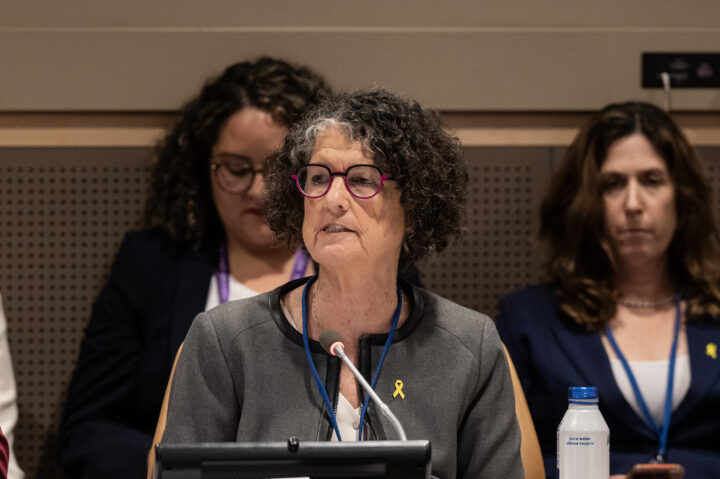
Shoshan Haran, who was kidnapped to Gaza along with her daughter, son-in-law, and their two children, and was released after 50 days speaks at arria-formula meeting on Hostage-Taking at UN Headquarters.


 Add JewishInsider on Google
For two years, Shoshan Haran thought of nothing except the hostages. After surviving 50 days in Hamas captivity, she spent much of the next two years traveling between the United States, Europe and Israel, meeting with lawmakers and government officials and pressing for the release of the remaining captives — including her son-in-law, Tal Shoham, who spent 505 days in Gaza, about half of that time in an underground tunnel.
Now, on the third anniversary of the Oct. 7, 2023, Hamas attacks and with every hostage either returned alive or brought home for burial, Haran is allowing herself to think about what comes next. “This is the first anniversary that we can start looking at the future,” she told Jewish Insider.
Her new memoir, Mission in Captivity: One Woman’s Struggle to Survive and Save Her Family in Gaza, is part of that next chapter — an effort to document what she experienced, mourn what she lost and make her voice heard about the events of Oct. 7 and their aftermath. Originally published in Hebrew, Mission in Captivity was released in English on Tuesday, one day ahead of the third anniversary of the attacks.
“I wrote the book so my voice will be heard,” said Haran, who was kidnapped from her home in Kibbutz Be’eri — the kibbutz her father founded after fleeing Nazi Germany and where she was born. Haran was taken alongside her daughter, Adi Shoham; her son-in-law, Tal; her grandchildren Yahel and Naveh (then aged 3 and 8); her sister-in-law Sharon; and her niece, Noam (then aged 12).The Shohams were visiting Haran to celebrate the holiday of Simchat Torah. Haran’s husband, Avshal Haran, and sister and brother-in-law, Lilach and Evyatar Kipnis, were murdered during the attack.
“It’s a platform and my way to communicate to the world,” Haran said of her book. She’s now living on a small kibbutz in northern Israel called Ma’ayan Tzvi, as Kibbutz Be’eri — where 101 civilians were murdered on Oct. 7, accounting for roughly 10% of the community’s population — is being rebuilt.
Haran initially assumed that Israelis did not need to be told what happened on Oct. 7. But writing the book changed her mind. “I was surprised because when I started to write the book, from my point of view, the goal was to address the world. I thought in Israel people knew what happened. But from the readers’ comments, I learned that it was not true.”
She also sees a vital global need for the book — particularly on Western college campuses, where distorted narratives about Israel have intensified since the attacks.
“For me what’s important is countering the inversion of the truth we are facing. The false campaign is working in a successful way to change the worldview of what happened. They depict the attackers as victims. This campaign started at 6:33 a.m. — four minutes after we heard the alarms on Oct. 7, they launched a heavily financed social media campaign saying Israel is doing genocide in Gaza. They twisted the worldview about what happened. There are two arms that are working against us — the terrorist jihadist arm led by Iran and its proxies: Hamas, Hezbollah, and the Houthis. And then you have soft jihad, spearheaded and financed by Qatar, which wages an awareness campaign designed to mislead the world.”
“I’m not afraid to talk to anyone, although I’m troubled by the aggression from those who call themselves liberals and progressives whenever they encounter facts that contradict their preconceived narrative,” said Haran, who is speaking to Jewish communities on her current book tour, but said she would like to do so at universities as well in the future.
In the book, Haran describes the period before Oct. 7 as one of “double blindness”: Israelis living near the Gaza border knew Hamas posed a threat, but could not imagine the scale of the danger, while the Hamas terrorists who held her captive, she said, had little understanding of why Jews live in Israel or the history of the Jewish people.
“We knew there was terror but we thought it was a small part of the population,” she said, describing life on Kibbutz Be’eri — about 3 miles from the Gaza border — as “98% paradise and two percent hell,” despite the constant missile threat. “Because of our own moral values, we were unable to comprehend that they really wanted to kill us,” she said. “As citizens, we didn’t see protection as our duty. This is the role of the IDF and Mossad.”
Her conversations with her captors revealed a similar gulf in understanding, she said. “They had no idea why Jews are living in Israel. They had no clue about the deep-rooted history of the Jewish people in Israel, and no clue about the Holocaust.”
Haran credits her work pre-Oct. 7, as an agronomist who founded the nonprofit Fair Planet to bring agricultural knowledge to farmers in Africa, for instilling in her the confidence to have those conversations with her captors — all while fighting not just for her own survival, but for the lives of her younger family members.
“At some point, I did tell the captors about Fair Planet,” she recalled. “They asked me, ‘Why don’t you come to help our farmers in Gaza?’ I told them I’d be glad to come once there is peace.”
“Being in Gaza with bombs all over us, with captors pointing guns at us, I was focused on the here and now,” she told JI. “I do think my life experience before Oct. 7 equipped me with the strength to look the captors in the eye and demand respect.”
Haran — who describes herself as someone who believed deeply in cooperation and peace — said her time in captivity changed the way she thinks about the possibility of peace, though she has not lost hope. “If we will be able to stop the funding of terror and change the education system in Gaza and the West Bank — which teaches children to hate Jews and trains them to be fighters from age 5 — peace could be possible. You need to address the roots that nourish the terror.”
“Many people ask me if I see any grounds for optimism,” she continued. “First of all, look at Israel’s Arab population; they make up about 20% of the country. They did not join the attack on Israel and since then, there has been a sharp rise in the number of young Israeli Arabs who join the civil service in Israel. Another reason for optimism is that quite a few Muslim nations are actively seeking ties with Israel. They recognize that ‘pro-Palestinian’ rhetoric often harms Palestinians, and they understand that Iran drives the region’s instability. I hope this momentum continues to build.”
Haran was released on Nov. 25, 2023, alongside Adi and her grandchildren, as part of a temporary ceasefire and hostage release agreement.
For Haran, the hardest part came after she returned home. During her 50 days in captivity, she had little understanding of the scale of the Oct. 7 attacks or what had happened to her husband, Avshal.
“During captivity we did not know the scope of the attack,” she said. “We didn’t know about the Nova music festival or other kibbutzim. And I didn’t know about my husband. I did suspect that my sister and her husband were murdered on the spot because their house was severely shattered. When we returned, we realized how hard it was going to be.”
“The second part is harder,” she said, referring to the aftermath of returning home. Her son-in-law Tal remained in captivity for another 455 days, until his release in February 2025. “That was my whole identity — the fight to release the hostages.”
Instead of being broken by catastrophe, Haran is determined to continue what she calls her “mission” — a nod to the book’s title. That mission now centers on a U.S. book tour speaking to Jewish audiences, which began on Sept. 30.
“I want the world to know what happened and how we got to this point,” she said. “I want readers to base their opinions and actions on facts and an understanding of the complexity of the issue; that’s why I wrote the book.”
The journalist, who spent 491 days in a Russian prison, was ‘astounded’ by Jewish life in Moscow after his parents fled the Soviet Union

Haley Cohen
Evan Gershkovich appears onstage at the Streicker Center with David Remnick on Sept. 29, 2026.
On Tuesday, the day his new memoir about spending 491 days in Russian captivity hit bookshelves, Wall Street Journal reporter Evan Gershkovich reflected on the country he covered for six years — and on how dramatically life there has changed for Russian Jews since the start of the war in Ukraine.
Speaking at the Streicker Center in Manhattan, in conversation with The New Yorker’s David Remnick, Gershkovich recalled being struck by the vibrancy of Jewish life in Moscow when he moved there a decade ago to report on Russia. Gershkovich, the son of Soviet refuseniks, said the war and President Vladimir Putin’s increasingly hostile stance toward Israel changed that.
“Growing up with parents who left the Soviet Union, my mom couldn’t go to certain universities because she was Jewish,” Gershkovich said. “One of the things that astounded me when I moved to Moscow was how Jewish life was thriving.” He added that relations between Russia and Israel, which had been strong for years, “started fading after Oct. 7 because Putin took a stand of supporting Palestine.” Gershkovich said Russian Jews who have left the country appear to have done so for “the same reason a lot of people have left Russia.”
Gershkovich’s comments came at the launch of This Cursed Beautiful Land: A Russian- American Story, his new book detailing his arrest by Russian authorities on charges of espionage while he was covering Russia for The Wall Street Journal in March 2023 and the 16 months in which he was detained before being freed in a prisoner exchange in August 2024. He spoke about the disorientation of returning to ordinary life after months of isolation, describing a period in which he was “relearning how to be an adult again.”
“One of the strange feelings I had was this pull to go back — not to Russia but to prison, because it’s what you know,” he said.
The book also recounts the uncertainty surrounding efforts to secure his release, including the death of Russian opposition leader Alexei Navalny in February 2024, which Gershkovich said underscored the stakes of a potential prisoner swap.
Asked whether he or his family felt the U.S. was moving too slowly to secure his freedom, Gershkovich said, “My family did. I felt like this was a complicated swap and I’m not one to complain — the fact that they were trying to get me out is a great thing. So by the time Navalny dies, I know there is a possible swap coming together.”
As he was freed in a prisoner swap, the Journal reported that Gershkovich requested, in a form he had to complete to finalize his release, a one-on-one interview with Putin.
Gershkovich, who now lives in Berlin, revealed on Tuesday what he would have asked Putin had he been granted that interview — “I’m really curious about his vision for Russia in terms of development 10 years from now, aside from expanding its borders.”
He added, “I’m also curious to ask whether he thought I was a spy. It seems like he did think I was a spy.”
Owens said she wants her readers to feel like antisemitism ‘is happening to a friend’ by the time they reach the essays focused on the issue after chapters focused on divorce and motherhood
Courtesy
Zibby Owen
While Zibby Owens’ latest book opens with her intimate and sometimes humorous essays on divorce, motherhood and midlife weight gain, it gradually reveals a broader, weightier theme — the reality of life as a Jew in post-Oct. 7 America.
“I want them to feel outraged,” Owens told Jewish Insider — the reaction she’s hoping for from readers by the time they reach “How It Feels to Be Jewish Right Now,” an essay in her new collection that names chants like “From the River to the Sea” as warning signs. Her book has a deliberate sequencing, Owens said: opening with universal chapters before turning to antisemitism, so that “by the time they get to the Jewish piece of it, they already are relating and it feels more personal because they might feel like [antisemitism] is happening to a friend.”
“Learning about the numbers of antisemitism [is hard to relate to] when you don’t have a specific example. I want [readers] to feel like they know someone this is happening to,” said Owens.
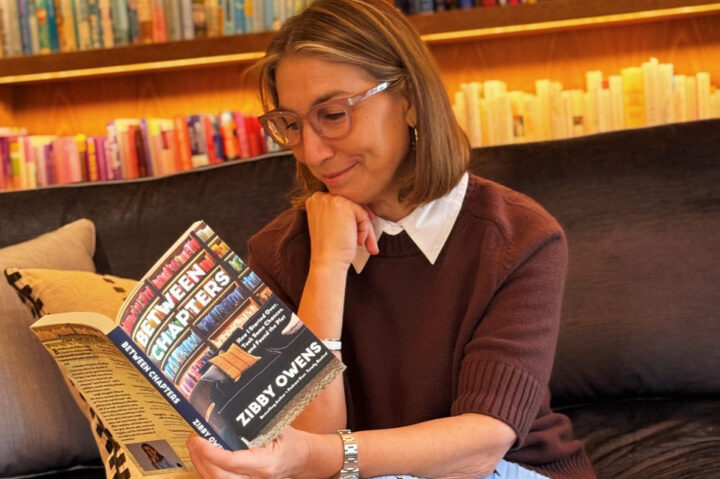
In Between Chapters: How I Started Over, Took Some Chances, and Found the Plot, released on Tuesday, the author, publishing entrepreneur and mother of four weaves deeply personal and universal stories with a candid reckoning of what it means to be “publicly Jewish” since Oct. 7 and before — from a conversation with her children about the Pittsburgh synagogue shooting in 2018 to her own wedding at Central Synagogue in Manhattan, the site of an antisemitic attack over the summer.
Owens, who turned 50 last month, spoke with JI ahead of the book release about why she chose to combine serious discussions on antisemitism with stories about falling in love with her tennis trainer and lessons from her father, Stephen Schwarzman, the billionaire co-founder and CEO of Blackstone. She also shared what she hopes non-Jewish readers take away and why she believes more Jews are choosing to speak out rather than lower their voices.
Owens’ latest book follows the 2024 release of On Being Jewish Now: Reflections from Authors and Advocates, a collection of essays from more than 70 writers and religious leaders that she edited in the aftermath of the Oct. 7, 2023, terrorist attacks. In November 2023, Owens publicly withdrew her sponsorship for the National Book Awards over its “pro-Palestinian agenda.”
But before Oct. 7, Owens’ public work focused primarily on books, authors and parenting (such as her podcast “Moms Don’t Have Time to Read Books”). She describes in Between Chapters as never having planned to be “publicly Jewish” before Oct. 7, and says that while she didn’t hide being Jewish, “it just wasn’t the most salient part” of her personality.
Before Oct. 7, Owens said, her Jewish identity was present but rarely central to her public life. That changed almost overnight. “After Oct. 7, being Jewish became something that eclipsed everything else. It bled into my literary life, not even by choice necessarily,” she continued — including, she noted, rising antisemitism in the book publishing world itself.
As a Jewish woman who is the founder and chief executive of her own publishing house, Zibby Publishing, Owens told JI the rising trend of Jewish-owned publishing houses — new ventures that aim to publish Jewish and Israeli stories that mainstream houses won’t — is “great.”
“I’m eager to read the books that they publish. [Antisemitism in publishing] was particularly intense after Oct. 7. It’s [still] pervasive. Everyday there’s something online that makes me worry,” she said.
That unease extends beyond the publishing world and into Owens’ own sense of safety raising Jewish children in New York City. In an essay written years before Oct. 7, she details telling her twins, then 11, about the Tree of Life synagogue shooting in Pittsburgh that took place the day they were headed to a bat mitzvah, and her son asking if something like that could happen in New York.
Looking back on the reassurance she gave her children at the time, Owens said while she “hoped nothing would happen … having lived through 9/11, I’ve never felt totally secure in New York.”
“Part of my job as a parent is to focus on the things we can control and not make my kids panic,” she told JI. “Unfortunately, I feel less and less safe in New York everyday. The question of whether to leave is always on the table, but I really don’t want to. Also, it’s not just New York, attacks are happening more everywhere.”
“Looking back at that essay, I couldn’t have imagined how much worse things would get so quickly,” she said.
Yet even as many feel their sense of safety erode, “a lot of Jewish people have increased their voices, put megaphones to their voices,” in the aftermath of Oct. 7, said Owens.
That shift stands in sharp contrast to a memory Owens returns to in the book: her mother once quieting down when discussing “Jewish things” — and the line she said in response, “There’s no reason for us to lower our voices,” which became the title of one of the book’s essays.
“I think more people than not have come forward as being outwardly Jewish — wearing Jewish stars, all of the external markers of community,” Owens told JI. “Connecting in the community has made it possible to survive this time. Despite all of the threats, Jewish people are being loud and proud, more so than before.”
“I don’t know that we have the luxury of lowering our voices,” she continued. “This is our instinct as a people. In the Holocaust era, hiding is how people survived. But it’s gotten to a point where to prevent something like that happening again, we can’t hide. We have to call out this type of behavior when we see it, even if that feels like it has no effect.”
Isakowitz’s memoir traces his father’s path from Auschwitz to America and his own journey from grief to growth
Mark Isakowitz's new book Wisdom in the house of Mourning
On Capitol Hill, it’s usually the senators who publish books, not their staffers.
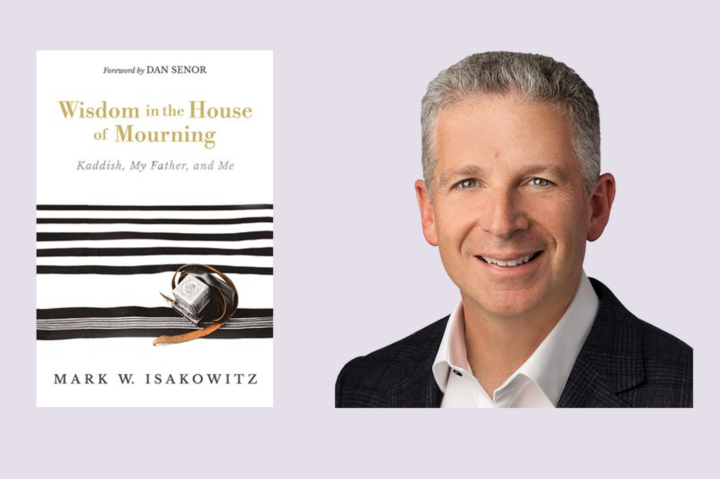
The office of Sen. Dave McCormick (R-PA) has both: Last year, McCormick authored a book on leadership with his wife, Meta President Dina Powell McCormick. Now, McCormick’s chief of staff, Mark Isakowitz, is gearing up to release a book of his own.
Isakowitz’s book, a memoir, is titled Wisdom in the House of Mourning: Kaddish, My Father, and Me. It tells the story of Isakowitz grappling with the loss of his father, who immigrated to America after surviving Auschwitz, and Isakowitz’s daily practice of reciting the mourner’s prayer at a synagogue in Washington.
The book is described as a “father’s path from Auschwitz to America,” and “a son’s journey from grief to growth.” It will be published in January.
Take a look at the banner new releases we’re recommending from this spring, as well as books we’re looking forward to in the coming months
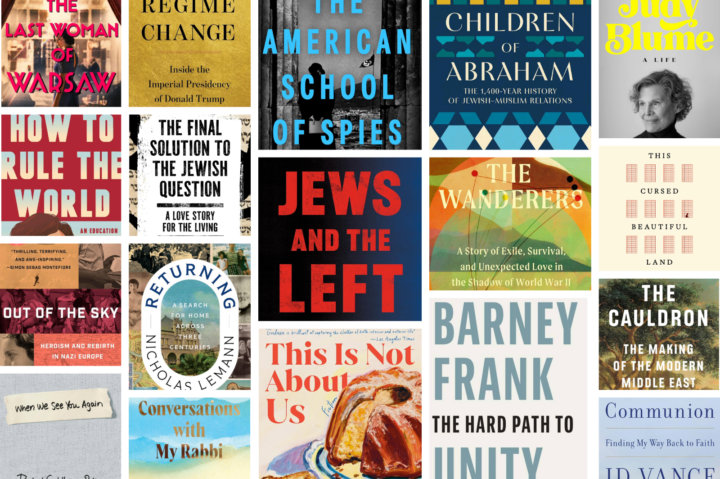
Memorial Day Weekend marks the unofficial summer kickoff, and for observant Jews, the long weekend is made even longer with the two-day holiday of Shavuot, starting Thursday evening, which commemorates the day the Jews received the Torah at Mount Sinai.
Jews mark the day by studying at all-night learning sessions at synagogues and JCCs around the country. We know that many will also use the occasion to jump-start summer reading goals, so the Jewish Insider team has compiled our summer reading list — beginning with some banner new releases from this spring, and looking towards books coming out this summer.
RECENT RELEASES:
Allegra Goodman, This Is Not About Us (February)
The author of several novels with heavily Jewish themes, Goodman returns to Jewish characters in this novel about a decades-long feud between two Jewish sisters that started with a misunderstanding about apple cake.
Mark Oppenheimer, Judy Blume: A Life (March)
The journalist published the definitive biography of beloved YA author Judy Blume, based on more than 100 interviews with Blume and her inner circle — though she disapproved of the finished product.
Nicholas Lemann, Returning: A Search for Home Across Three Centuries (March)
The longtime New Yorker staff writer traces his family’s history from Germany to New Orleans, recounting the ways they reckoned with religion, race and belonging.
Matti Friedman, Out of the Sky: Heroism and Rebirth in Nazi Europe (March)
One of Israel’s most celebrated English-language writers tells the story of the young Jews who had made it to Mandate Palestine but chose to parachute into Nazi Europe to try to rescue their Jewish brethren — ultimately failing in their mission — and examines what motivated them.
Daniela Gerson, The Wanderers: A Story of Exile, Survival, and Unexpected Love in the Shadow of World War II (March)
The journalist recounts the story of how she and her wife discovered that decades before the two of them met, their grandparents had escaped the Nazis through Soviet Russia on the same route.
Judy Batalion, The Last Woman of Warsaw: A Novel (April)
Better known for her nonfiction work, including a 2021 bestseller about Jewish female resistance fighters in the ghettos of Poland, Judy Batalion released her debut novel about the intersecting lives of Jewish women in Warsaw in the late 1930s.
Rachel Goldberg-Polin, When We See You Again (April)
The world got to know Goldberg-Polin when she became a tireless advocate on the global stage for her son, Hersh, who was kidnapped by Hamas on Oct. 7, and killed almost a year later. Her book chronicling her grief, which was published last month, soared to the top of the best-seller list.
Theo Baker, How to Rule the World: An Education in Power at Stanford University (May)
The Stanford student, who chronicled the campus chaos of 2023-2024 with a crucial article in The Atlantic, investigates the ways that Stanford undergrads, located just miles from the tech billionaires of Silicon Valley, are seeking out power, influence and money in place of an education.
UPCOMING RELEASES:
Rabbi Eli Schlanger and Nikki Goldstein, Conversations With My Rabbi: Timeless Teachings for a Fractured World (May 26)
Three years before the rabbi was murdered in the Hanukkah terror attack at Bondi Beach in Australia last year, he got to know Goldstein after praying by her bedside as she recovered from a near-death experience that brought her to the ICU three years earlier. Goldstein, a secular Jew, and Schlanger, a Chabad rabbi, recorded their conversations about faith in the hope of writing a book together. She finished the project after Schlanger’s death.
Batya Ungar-Sargon, The Jews and the Left (June 2)
The conservative journalist examines American Jews’ historic ties to liberal politics and argues that their alliance has been fundamentally broken in the aftermath of the Oct. 7 attacks and the war in Gaza.
Marc David Baer, Children of Abraham: The 1,400-Year History of Jewish–Muslim Relations (June 9)
The professor of history at the London School of Economics and Political Science looks at the centuries of cooperation and coexistence between Jews and Muslims in the Middle East that predated the current regional conflicts.
Stephan Talty, The American School of Spies: The Archaeologists Who Fought the Nazis and Saved the Treasures of Ancient Greece (June 9)
The journalist and novelist recounts the true story of a group of American archaeologists who trained as spies during World War II in order to go undercover and protect Greek artifacts that were at risk during the war.
JD Vance, Communion: Finding My Way Back to Faith (June 16)
The vice president’s forthcoming book — his second memoir, to be published nine years and a political lifetime after the release of Hillbilly Elegy, about his childhood growing up poor in Appalachia — will discuss his connection to Christianity and his decision to convert to Catholicism.
Maggie Haberman and Jonathan Swan, Regime Change: Inside the Imperial Presidency of Donald Trump (June 23)
Two of America’s top White House reporters tell the story of the first year of President Donald Trump’s second term, and how he learned to use political power more effectively than in his first term.
Dara Horn, The Final Solution to the Jewish Question: A Love Story for the Living (Sept. 1)
Her 2021 book of essays reckoning with the curiosities of modern antisemitism, People Love Dead Jews, went about as viral as a book possibly could. She published a children’s book in 2025, but this will be her first book for adults in years. Aside from announcing its scheduled release, her publisher has not shared any information about the project.
Simon Sebag Montefiore, The Cauldron: The Making of the Modern Middle East (Sept. 8)
The British historian presents a history of the last 125 years of the modern Middle Eastern, surveying the key events and narratives — both accurate and misguided — that led to the current state of the region.
Barney Frank, The Hard Path to Unity: Why We Must Reform the Left to Rescue Democracy (Sept. 15)
The trailblazing politician served in Congress for 32 years, representing suburban Boston. The Jewish Democratic lawmaker, who was also the first openly gay member of Congress, died this week at 86. His upcoming book argues that the political left must reform itself so it does not cater to its most extreme adherents.
Evan Gershkovich, This Cursed Beautiful Land: A Russian-American Story (Sept. 29)
The Wall Street Journal journalist who spent over a year wrongly imprisoned in Russia details his harrowing experience in the Russian carceral system against the backdrop of the country’s history and culture.
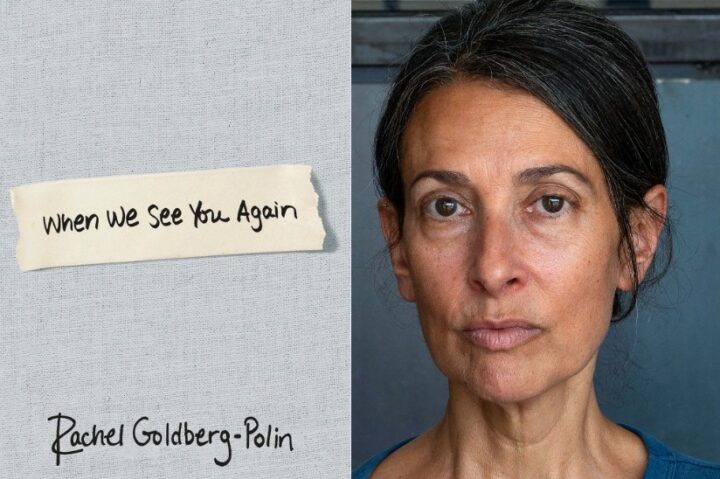
'When We See You Again,' Goldberg-Polin told JI, is ‘a pain-filled love story, or it's a love-filled pain story’
Amazon/AHIKAM SERI/AFP via Getty Images
Book cover/Rachel Goldberg-Polin
On Oct. 10, 2023, Rachel Goldberg, an American Israeli woman from Chicago, told a roomful of reporters in Tel Aviv about her last communications — two text messages — from her son, Hersh Goldberg-Polin, that she had received three days prior.
“The first one said, ‘I love you’ and immediately at 8:11 also it said, ‘I’m sorry,’” Goldberg said. “And so I knew immediately wherever he was, it was a terrible situation.” Hersh, she would soon learn, had been kidnapped by Hamas terrorists near the Nova Music Festival and taken into Gaza.
As Goldberg spoke about the text messages, a man speaking loudly at the back of the room was shushed by someone near him. It would be among the last times anyone would try to speak over Rachel Goldberg.
She would soon become known as Rachel Goldberg-Polin, or, almost as often: Hersh’s mom. And for more than 300 days, she and her husband, Jon, traversed the globe as they worked to secure their son’s freedom from captivity in Gaza before he was killed in August 2024 by his Hamas captors.
In the months after their son’s death, the Goldberg-Polins, who had for nearly a year been the faces of hope and persistence, became the faces of a unique kind of grief — one that they experienced in the public eye.
Goldberg-Polin recounts some of those moments in her new book, When We See You Again, a chronicle of her life before, during and after her son’s captivity and murder.
“I think people don’t know what to expect,” she told Jewish Insider days before the release of When We See You Again, which comes out on Tuesday. “I know that, because people are writing, ‘Oh my gosh, I’m so excited,’ and I’m thinking, ‘Oh gosh, you are not excited. This is, like, not a fun read.’”
When We See You Again is separated into five parts, beginning with “The Before” and “The After,” which follow the Goldberg-Polin family’s life in the U.S. and then in Israel, where they moved in 2008, through Hersh’s murder, until the final day of the shiva.
The later parts — “Lost in The After,” “Still in The After” and “Ever After,” which comprise the majority of the book — detail Goldberg-Polin’s life as a bereaved mother navigating the world as one of what she calls “The Broken.”
“I don’t think of this book at all as a memoir or a tell-all,” she told JI. “It’s like little Tupperware of pieces of a life that was, and then figuring out a life that is, and how do you do this? How do we do this, breathing in a world where we no longer have air?”
She had started writing because she found it therapeutic. “I couldn’t bear the intensity of the suffering that I was carrying; [it] was making my knees buckle and my soul buckle,” Goldberg-Polin explained. “And I just really couldn’t shoulder it on my own, and so I was just writing.” It felt, she said, like “when you’re just drowning because there’s too much [and you have] to just get it out, to spill it out.”
Between the stories and anecdotes from the nearly 11 months she and her husband spent advocating for the release of the hostages, followed by the year of mourning after Hersh’s death, Goldberg-Polin intersperses vignettes from her childhood in Chicago, details about the family’s life as they adjusted to life in Israel and the Jewish teachings that have guided her.
She even reflects on the decision to change her last name to match her son’s, comparing it to the moment the biblical Jacob’s name was changed to Israel, after a tussle with a mysterious figure that causes him to walk with a limp for the rest of his life.
“I think of Jacob becoming Israel as I limp forward,” Goldberg-Polin writes, “noting all of the ways I, too, have been transformed, but also searching for the blessing this crisis must give me, looking for opportunities for birth and light.”
Something that has touched her in the 20 months since Hersh’s death is the vast number of people who have experienced loss who have made contact with her.
“Since Hersh was killed, we’ve had thousands and thousands and thousands of people from all different backgrounds and all different faiths and all different brands and all different spectrums who have reached out to share their pain and not commiserate, but sort of to come together in this enterprise of the human condition of loss.”
She feels especially close to the families of the five others who were killed alongside Hersh in that tunnel in Gaza — a group of young people now referred to as the “Beautiful Six”: Eden Yerushalmi, Carmel Gat, Almog Sarusi, Alexander Lobanov and Ori Danino. When they were found after their executions, Yerushalmi’s body was leaning on Hersh’s lap.
“There are literally five families on earth who’ve walked the path we’ve walked, and I’m grateful that I know they just breathe the way I breathe, so I don’t even have to talk to them every day in order to know that they get it,” she said. “They they know my torture, they know my torment, they know my pain. They know my misery.”
As someone who spent the majority of her life as a private person, she has struggled with the fame that has come with her public fight, which often includes being recognized while out and about with her family. Sometimes it’s a wave from a stranger. Other times it’s a conversation.
“When people do approach us and say these heartfelt, gorgeous words of comfort and connection, I am truly thankful for the benevolence,” she said. “It’s me that’s broken. It’s not them. They’re being human. I am trying to figure out how to behave in a normal way.”
“When people say, like, ‘We’re with you,’ I literally act like a crazy person. Because I am a crazy person. I’m a crazy person. I actually thought, well, I have a disorder, and what is the etymology, the root of ‘disorder’? It is ‘not in order.’ I’m not in order. You know what? Burying Hersh was out of order for me. I didn’t want that order.”
Those who know Goldberg-Polin have known since Oct. 7, 2023, not to ask her, “How are you?” (In the book, she shares that she and her father will jokingly ask the other the question and prompt them, “Lie to me,” garnering the response, “Dandy!”)
For her, the book is the answer to that question. “This book is saying, ‘I know you don’t see it, and I really don’t blame you for not seeing it, and I didn’t see it.’ I haven’t seen it before. I’ve met people who are bereaved, who are grieving, who are suffering, who are mourning, and I didn’t say the right thing because I didn’t get it either.”
“If someone was born blind,” she continued, “they don’t know what the color blue is, and it’s very difficult for someone who knows what the color blue is to describe it to someone who has never seen it. And the book is my attempt to describe blue. It’s my attempt to describe pain.”
“This is simply me giving over my love and my pain, and I hope that maybe people just understand me a little bit more, maybe understand people who are suffering and really in grief and mourning more, and I don’t know that it has to do anything beyond that.”
Ultimately, Goldberg-Polin said, “I think that it’s a book about two things. I think it’s about love and pain. It’s a pain-filled love story, or it’s a love-filled pain story, and that’s what the book is.”
The book, titled 'Where We Keep the Light,' will discuss Shapiro’s family and faith, and details the arson attack at the governor’s residence last Passover
Courtesy
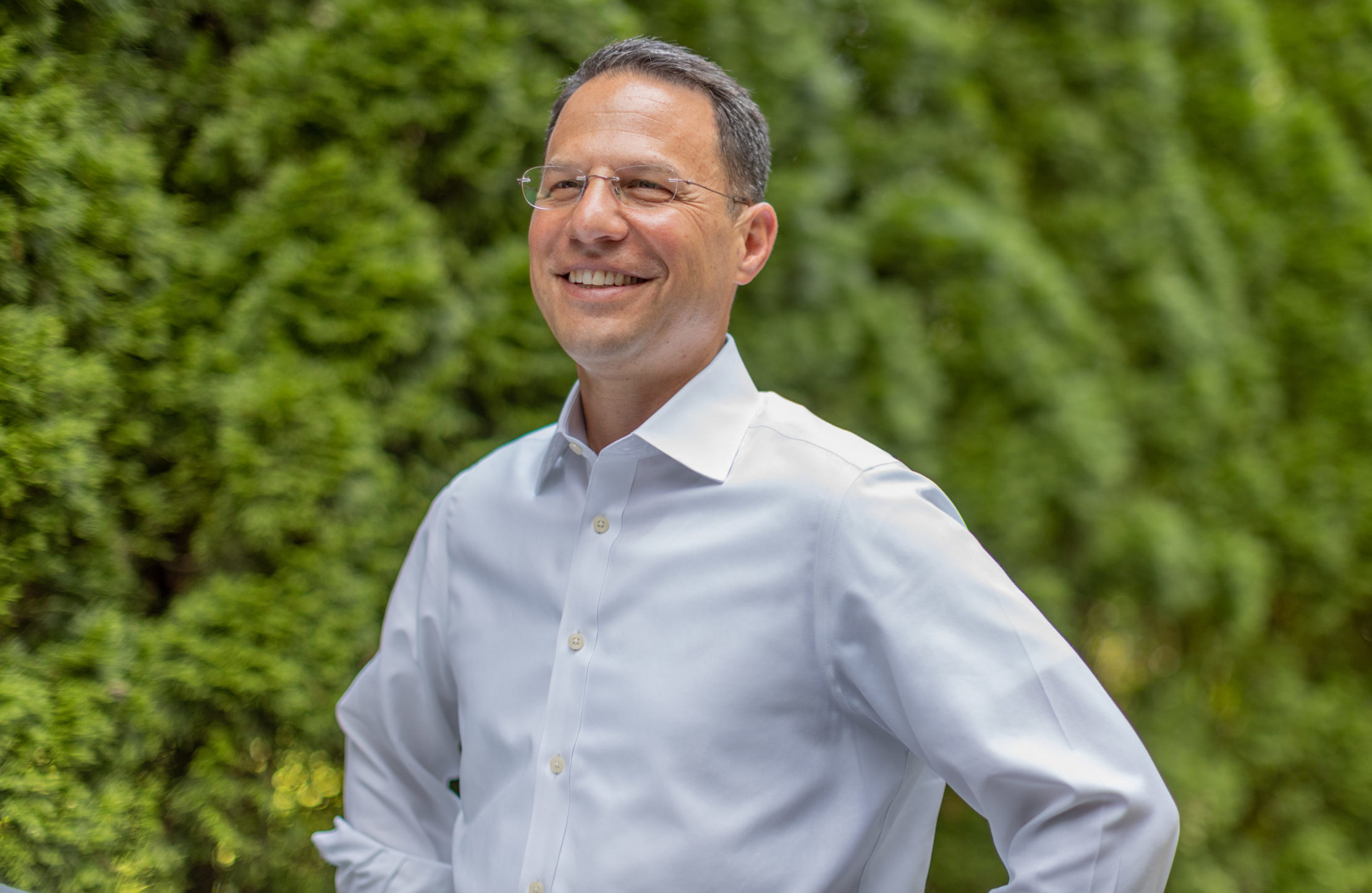
Pennsylvania Gov. Josh Shapiro, widely viewed as a likely 2028 Democratic presidential contender, plans to publish a memoir early next year.
The book, called Where We Keep the Light, is being marketed by publisher HarperCollins as an important story from “a leading voice in the Democratic Party.” For politicians with national ambitions, writing a memoir is generally seen as a stepping stone toward greater name recognition and future campaigns.
In the book, Shapiro will discuss his family and his faith, and remind “us of the faith that guides so many and that there is more that unites us as Americans than divides us.” He will write about his path toward public service and his rise through the ranks of Pennsylvania politics.
A HarperCollins press release said the book goes into detail on the arson attack at the governor’s residence during Passover in April and the period in 2024 when Vice President Kamala Harris was considering naming him her running mate, a topic about which Shapiro has shared very little publicly.
The book will be published on Jan. 27, 2026.
Sharabi’s new book, Hostage, tells the story of his kidnapping and 491 days in Gaza
Lev Radin/Pacific Press/LightRocket via Getty Images
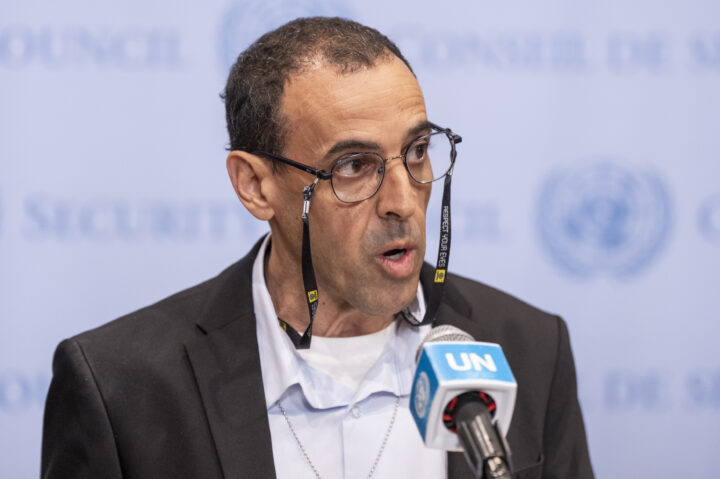
Eli Sharabi speaks to the press ahead of Security Council meeting at U.N. Headquarters.
Freed hostage Eli Sharabi’s new book, Hostage, ends with him visiting the graves of his wife, Lianne, and his daughters, Noiya and Yahel, for the first time after being released from nearly a year and a half of captivity in Gaza, during which he had hoped they were still alive following the Hamas attack on their home in Kibbutz Be’eri on Oct. 7, 2023.
“This here is rock bottom. I’ve seen it. I’ve touched it,” Sharabi writes. “Now, life.”
The memoir tells a horrific story of 491 days of violence, deprivation and starvation.
That final sentence of Sharabi’s memoir — “Now, life” — could sum up his post-captivity self. In an interview with Jewish Insider last month, Sharabi said he was determined to reassert his agency, take action on hostage advocacy and move forward in his life.
Sharabi seemed cheerful speaking about his recovery. He was still slimmer than his pre-captivity self, but no longer as gaunt as he was emerging from the tunnels in Gaza in which Hamas starved him, giving him only a stale pita to eat each day, at most.
“I’m getting stronger every day,” Sharabi said. “I make sure to exercise and have weekly therapy sessions and make sure to take care of myself. I am strong and positive and facing forward.”
Sharabi’s days are filled with meetings around Israel and the world advocating for the remaining hostages to be freed.
“From the moment I got out of Sheba [Medical Center], 10 days after being freed, it has been non-stop action,” he said. “I have a lot of trips abroad, meeting with government officials — presidents, prime ministers, members of parliament, foreign ministers — and a lot of lectures in Israel and around the world, to a lot of Jewish communities. … It’s non-stop, morning to night.”
In his book, he recounts reassuring hostages Alon Ohel, who is still in Gaza, and Eliya Cohen and Or Levy, who have since been released, that he was sure their families were protesting and advocating for their release.
“It was important for Eliya and me to tell Or and Alon, who were more pessimistic about our chances, to get out and thought ‘maybe they forgot us,’” Sharabi recalled. “Eliya and I were very positive and said we had no doubt our families and good friends are not resting for a moment and doing all they could to free us.”
Sharabi said that when his captors would tell him about protests in the streets of Israel, they would say the demonstrations were against Israeli Prime Minister Benjamin Netanyahu, but he and his fellow hostages saw it as “the nation going out to fight for us. It gave us hope.”
When Sharabi was released, he saw that the scale of the hostage advocacy movement was beyond what he had imagined.
“When I got out and understood that it was masses of people in Israel, it excited me,” he said. “I met members of Jewish communities in New York, Chicago, Miami, London, Mexico. I meet Israelis and Jews all around the world and understand what they did all this time. It is very touching. I didn’t expect it at all. I expected my friends and family. I didn’t think that people would have posters of me at their holiday table. It’s heartwarming.”
At home in Israel, however, there have been sharp political divisions about the looming deal to release the hostages in exchange for ending the war in Gaza. Some far-right ministers in Netanyahu’s government oppose President Donald Trump’s plan, which calls to free all 48 remaining hostages — 20 of whom are thought to be alive — within three days, because they call to prioritize defeating Hamas.
“In Israel, everything is political,” Sharabi lamented. “It’s terrible. All of our elected officials, with no exception, are partners in this terrible thing. I think all the people of Israel are sick of everything being political. I think most people in Israel hate this.”
The hostages, Sharabi said, “are not about right and not about left.” His brother, Yossi, was also taken captive and was killed while in Hamas captivity, which the IDF found may have been caused by an IDF airstrike.
Sharabi had an almost paternal relationship with Ohel when Hamas held them captive together in the tunnels under Gaza, and he expressed relief to have seen Ohel in a new hostage video released by the terror group last month.
“He’s amazing,” Sharabi said. “If you told me a week after I met him that he would survive six or seven months alone, after I left him, I would have doubted it. I left him after a very positive process during which he strengthened himself and learned how to survive, that you can’t be nice all the time and can’t be naive. He developed resilience and isn’t shaken by every change and every fear.”
Sharabi emphasized that, while in captivity, it is crucial to “understand that not everything is in our control, but we have the ability to choose how we respond.”
“I’m optimistic that soon we will see [Ohel] united with his family, and soon after, I will reunite with him. I am looking forward to it,” he said.
Sharabi describes his captors in detail in the book. Some were always cruel, while others snuck the hostages extra scraps of food. Some were true extremists, while others appeared to be in Hamas for the money.
“There are no innocent people in Gaza,” he said, “not civilians and certainly not the people in Hamas. In the 52 days that I was aboveground, not in tunnels but with a family in a house, they made sure people outside would not hear or see me, because they thought people would come in and kill me.”
“I recognize that even within Hamas, after spending 24/7 with them for many months and having different conversations with them, I understand who is ideological and who stumbled into it because Hamas controls the financial faucets in Gaza,” Sharabi added. “Does that make them innocent? Of course not. The moment they got the order, I was shackled around my legs. If they were told to shoot me, they would have shot me. … Some did it for money, not ideology, but they starved me, humiliated me and beat me. It doesn’t make them innocent.”
Sharabi also called on the Western world to recognize that Hamas is part of a broader ideology that threatens them, as well.
“I recently got back from 10 days in Australia,” he recalled. “We flew to Canberra to meet the deputy prime minister and foreign minister, both of whom are, at the very least, not pro-Israel. It was important for me to tell them two things.”
“First, disagreements with Israeli policy are fine. I, too, as a citizen, don’t always agree with Israeli policy. That’s what’s good about a democracy… We can say our opinions and disagree. But at the same time, even if they don’t think like Israelis and don’t have to care about me as an Israeli, they are part of the Commonwealth, and my wife and daughters were British and murdered in their homes with their British passports in their hands — the Hamas terrorists knew.”
Sharabi said his captors said to him time after time that “after Israelis and Jews, they will get to France, Britain, America and Spain. The whole world will be Islam.”
Second, Sharabi said he speaks out against antisemitism in his meetings with leaders.
“It cannot be that in 2025, Australian Jews are afraid to go out into the streets. It’s 2025, not 1940. That is [the leaders’] responsibility. They are not speaking out clearly enough against antisemitism. I’m not a politician or a diplomat, so I can say that each one of them is responsible. … Every Jew today is affected by the hate crimes in the world, and that is the responsibility of the government and elected officials,” he said.
Sharabi said his constant activity, including writing his memoir, “has a therapeutic side to it, to deal with [the experience] and not leave it all inside.”
“I don’t like to compare it to the Holocaust, but a lot of survivors didn’t talk, not even to their children,” he noted. “My psychologists, from the beginning, said … they never saw such a huge trauma. It’s not just the captivity, but also the huge loss of my wife, daughters and brother. It’s important to talk. It helps me a lot.”
As to why he doesn’t like to make comparisons between Oct. 7 and the Holocaust, when some Israelis have done so, Sharabi said that during the Holocaust, Jews were “a stateless people, a homeless people, with no government to take care of them.”
“There is a lot of anger in Israel in part because there is a country, there is an address that was supposed to take care of us and our security, and it failed,” he added. “It’s not like the Holocaust, so I don’t like the comparison. There were horrors there that we didn’t see here, like the gas chambers; instead there is a murderous terrorist organization.”
At the same time, Sharabi noted that in the months since his release in February, he has not been exposed to a lot of the details and footage of the Oct. 7 attacks, in which his wife and daughters were among the 132 Israelis murdered in his hometown, Kibbutz Be’eri: “I am being protected like a safe. I haven’t turned on the TV; I don’t watch my own interviews.”
“I have trouble grasping it,” he added.
Even without exposure to the horrors of Oct. 7, speaking and writing about his captivity means going back to the darkest moments of his life, repeatedly.
“I am connected to the pain. I recognize it; I have words for it. Not a day goes by that I don’t cry over it. I hear music on the radio in the car that reminds me of the girls,” he said. “But I also remember them with a lot of smiles, and when I cry, it’s about longing for them, not sadness. I am emotional about the good, when I remember my wife and my girls and their smiles.”
“It’s good for me to talk all the time. It’s important to me. I’m freeing it from my system, instead of leaving it inside,” he added.
The ex-White House spokesperson said she and Josh Raffel later became close friends

Gage Skidmore
In Sarah Huckabee Sanders’s new book, Speaking for Myself: Faith, Freedom, and the Fight of Our Lives Inside the Trump White House, the former White House press secretary describes her relationship with her former colleague Josh Raffel, whose White House communications responsibilities included the Israeli-Palestinian file.
“Josh and I hadn’t known each other before starting in the White House. He was a liberal, aggressive, foulmouthed Jew from New York City who had spent most of his career working in Hollywood. I was pretty much his total opposite,” Sanders writes in the book, obtained by Jewish Insider, in a chapter detailing what happened behind the scenes of President Donald Trump’s first visit to Saudi Arabia in 2017.
Raffel, who also served as a spokesperson for Jared Kushner and Ivanka Trump, was senior vice president at Hiltzik Strategies and head of public relations at Blumhouse Productions before joining the Trump administration in 2017. He left the White House in the spring of 2018.
Sanders writes that “despite our differences, I had grown to love Josh. He is one of the funniest people I know, intensely loyal, and probably the most talented communications strategist I’ve ever worked with. Nobody in the White House could work a story better than Josh, and he was always one of the first colleagues I turned to for help on the toughest assignments.”
Raffel told JI that Sanders “is a close friend.”
In the book, Sanders also describes her close relationship with Ivanka. “When I was home sick with strep throat and high fever Ivanka had matzo ball soup sent over from her favorite deli,” she writes.
Please log in if you already have a subscription, or subscribe to access the latest updates.
 Continue with Google

 Continue with Apple