

























































The Jewish Book Council launched a new subscription service, Nu Reads, which provides six Jewish books per year, modeled on the success of PJ Library


 Add JewishInsider on Google
For Jewish and Israeli authors and the people who enjoy their books, the publishing industry has been a decidedly depressing place over the last two years.
A spreadsheet titled “Is Your Fav Author a Zionist?” went viral on social media and called for readers to boycott so-called “Zionist” authors, a label extended even to some who merely spoke to Jewish audiences. The literary magazine Guernica retracted an essay by an Israeli author in response to protests from staff. LitHub, the preeminent news site dedicated to the publishing industry, has adopted a stridently anti-Israel stance since Hamas’ Oct. 7 attacks two years ago. “A litmus test has emerged across wide swaths of the literary world effectively excluding Jews from full participation unless they denounce Israel,” the author Jamie Kirchick wrote in The New York Times last year.
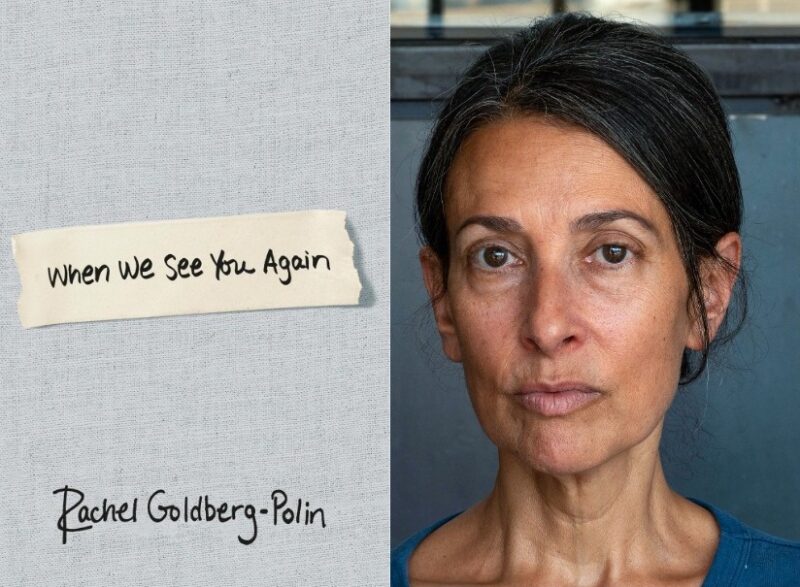
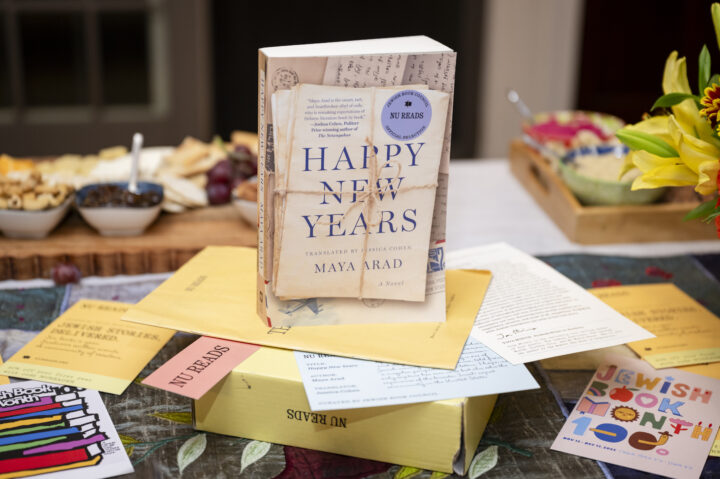
A new initiative from the Jewish Book Council, a 100-year-old nonprofit dedicated to promoting Jewish literature, aims to fight back against the torrent of bad news for Jewish writers. This month, JBC unveiled Nu Reads, a subscription service that will deliver selected Jewish books to subscribers bimonthly. The first book, Happy New Years by the Israeli author Maya Arad, has already shipped to Nu Reads’ inaugural subscribers.
“There’s a chill for our community across the industry,” JBC CEO Naomi Firestone-Teeter told Jewish Insider in an interview this month. “If we care about Jewish literature and we care about these authors and ideas, we need to buy these books. We need to invest in them and support them.”
Curated book subscription services have soared in popularity in recent years. A reinvigorated Book of the Month Club launched in 2016, an homage to the ubiquitous brand of the 1950s and 1960s that helped curious readers find new titles; the new iteration has a reported 400,000 members. More than 230,000 Jewish families in the U.S. and Canada receive children’s books each month through PJ Library, a program modeled on Dolly Parton’s Imagination Library. It was PJ Library — which has transformed young Jews’ experience with Jewish books in the two decades it has existed — that served as an inspiration to JBC.
“I very jokingly suggested that I wish that there was a PJ Library for grown-ups,” said Tova Mirvis, the author of five books and Nu Reads’ writer-in-residence, who helps curate the book selections. “It was just an idea, and I began to think about it. I spent a lot of time thinking about my own experience of reading Jewish books, and how who I am as a person and as a writer is so shaped by my love of Jewish fiction.”
Unlike PJ Library, Nu Reads is not a charity project. It asks consumers to choose to spend their money on hardcover copies of new Jewish books. The founding subscriber rate of $154 includes six books delivered over the course of a year, along with invitations to community gatherings and author talks. Several hundred people have become subscribers in the two weeks since Nu Reads was announced.
At a time when Jewish writers face growing challenges in the publishing industry, JBC hopes Nu Reads will herald Jewish readers’ purchasing power to remind publishers that Jewish books are a good investment, because publishing is, ultimately, a business.
“It’s much harder to get published because there are fewer venues. There are fewer places that review books. We have so many other distractions we use aside from reading books. There are fewer bookstores — all the ways that, I think, the literary world has shrunk, and so of course that affects Jewish writers as well,” Mirvis told JI.
Nu Reads, Mirvis hopes, will serve as “a reminder to the literary world, to publishers and editors, that there are so many people within the Jewish community who love these books. I think it’s a way to galvanize readers to say, ‘I want to read the next generation of these writers.’”
In early 2024, JBC created an online resource for Jewish writers and publishing industry professionals to report instances of antisemitism they had experienced. The organization, which is best known for presenting the annual National Jewish Book Awards, also launched a virtual support group for Jews in the literary world that still meets regularly.
“This is such a competitive industry,” said JBC CEO Naomi Firestone-Teeter. “We’re holding all of that together to try to not be sensationalist about anything, but at the same time, these are real concerns that are valid.”
So far, JBC has received more than 400 reports of antisemitism, with examples including digital harassment and abuse, students kicked out of literary journals because of their views on Israel and writers asked by publishers or marketers to discuss their Judaism only in a particular way.
Still, it’s nearly always impossible to attribute a decision in the literary world purely to antisemitic motives. A book may be dropped by a publisher because of the author’s attitude toward Israel or the Jewish themes it portrays. But it could also be dropped for a near-infinite number of other reasons: limited demand, fewer books being published overall or the book simply not being very good.
“This is such a competitive industry,” said Firestone-Teeter. “We’re holding all of that together to try to not be sensationalist about anything, but at the same time, these are real concerns that are valid.”
Nu Reads’ second selection is Sam Sussman’s Boy From the North Country, a novel about a boy in upstate New York who grows up with a nagging sense that he is Bob Dylan’s illegitimate child. (The book is based on Sussman’s own life, and a glance at a photo of the author reveals more than a passable resemblance to the folk icon.)
As a child in the Hudson Valley, far from other Jews, Sussman had formative encounters with stories by Jewish writers such as Chaim Potok, Philip Roth and Tony Kushner. When he moved to New York City, Jewish book events were how he tapped into the Jewish community.
“We only have so much control over how the wider world receives Jewish literature,” author Sam Sussman told JI. “But I think it’s very important that within the Jewish world, we’re open to stories from Jews of all backgrounds and with all political and cultural perspectives.”
“I really grew up in a part of the world where there weren’t a significant number of other Jews, and literature was a really important way for me to connect to a broader sense of Jewish community,” Sussman told JI.
Sussman has not experienced the kind of pushback or stigmatizing that some other Jewish writers have reported since Oct. 7. Instead, he urged Jewish readers to think about how to ensure that the full diversity of Jewish voices and stories are told and respected.
“We only have so much control over how the wider world receives Jewish literature,” Sussman told JI. “But I think it’s very important that within the Jewish world, we’re open to stories from Jews of all backgrounds and with all political and cultural perspectives.”
Sussman’s story, and the growing positive acclaim for his debut novel, is a reminder that despite the steady drip of negative headlines for Jewish authors, the literary world — an industry Jewish authors and intellectuals helped shape over decades — is not a monolith, and the story of American Jewish literature has not yet reached its conclusion.
“How do we respond to the urgent needs of our community and raise awareness about them and create written documentation around them, but also, how do we find ways that we can just really celebrate our Jewishness and have that propel us forward?” asked Firestone-Teeter. “The ability to hold all these things at once is incredibly inspiring.”
Please log in if you already have a subscription, or subscribe to access the latest updates.
 Continue with Google
 Continue with Apple