
















































The lawmakers said NSGP funds should not be used ‘to reinforce other policy priorities’ as new conditions may require organizations to cooperate with immigration enforcement and curb DEI programs

Kevin Carter/Getty Images
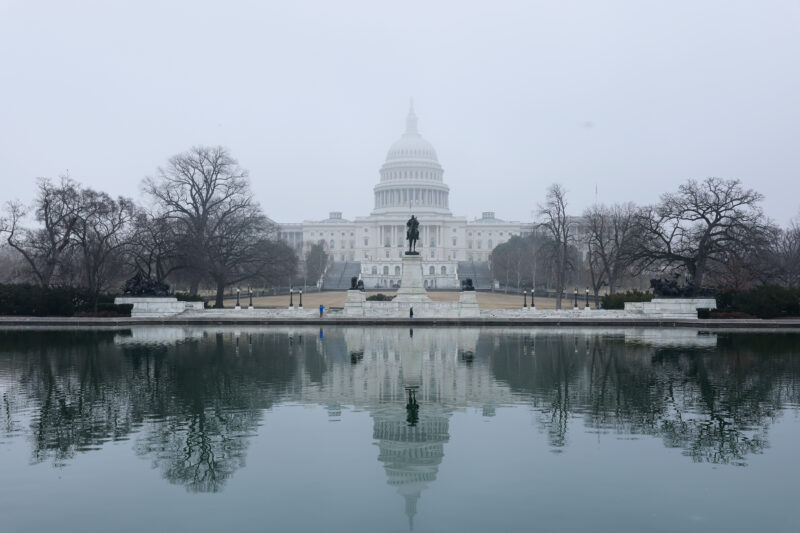
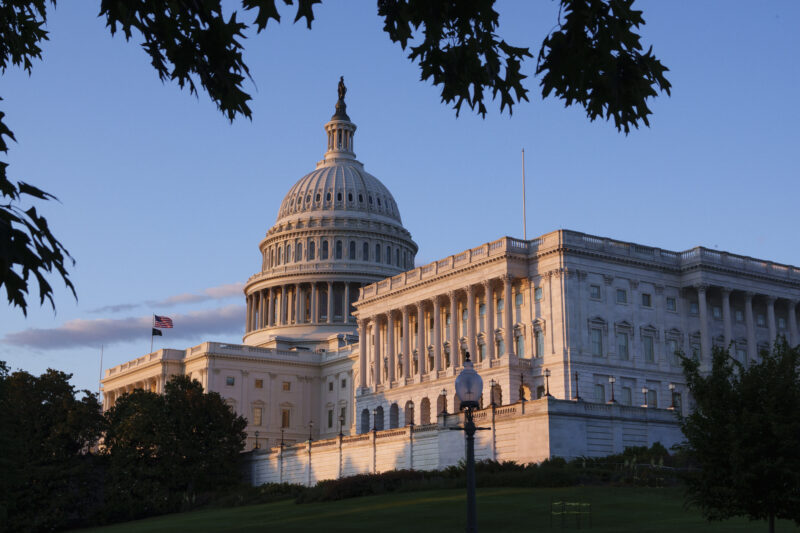
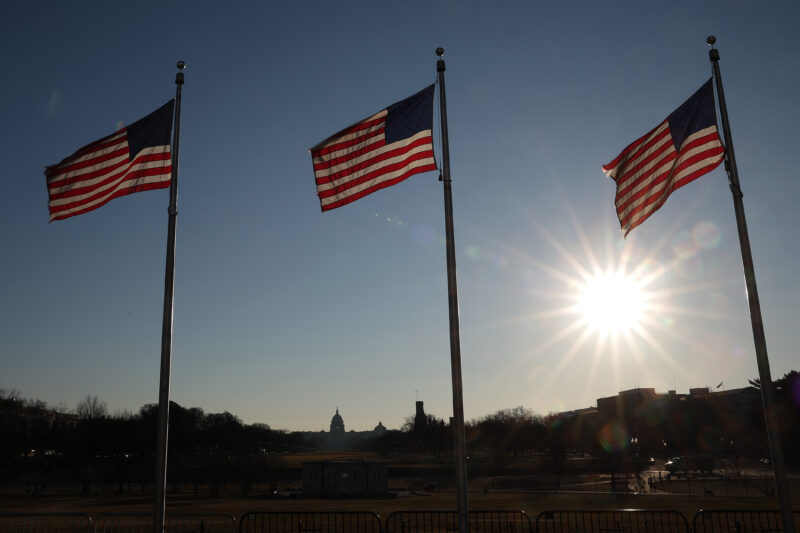
U.S. Capitol Building on January 18, 2025 in Washington, DC.


 Add JewishInsider on Google
A bipartisan group of 82 House lawmakers wrote to Homeland Security Secretary Kristi Noem on Thursday urging her to roll back new conditions placed on applications for the Nonprofit Security Grant Program amid rising antisemitic attacks.
The bipartisan support for the letter is particularly notable given that, while Democrats have been raising concerns about the conditions for months, Republicans have, publicly, been comparatively quiet.
“We are writing to you today to express our desire to ensure that the NSGP is adequately funded and unimpeded by new requirements that are unrelated to the security of grant recipients and their communities,” the letter, led by Reps. Max Miller (R-OH), Brad Schneider (D-IL), Josh Gottheimer (D-NJ) and Michael McCaul (R-TX), reads. “Insufficient funding or unnecessary obstacles to obtaining grants could undermine the right of every religious community to freely and peacefully worship and congregate without fear.”
The letter states that new conditions issued by DHS in April 2025 “create new compliance requirements for recipients that will divert limited funds and restrict the religious conscience of synagogues, schools, and other institutions pivotal to our communities.”
The new conditions may compel religious institutions to cooperate with immigration enforcement activities and eliminate diversity, equity and inclusion programs.
“We encourage DHS to work to make compliance with NSGP requirements as simple and streamlined as possible. We also request that DHS ensures NSGP remains a program designed to protect the security of houses of worship, not to reinforce other policy priorities,” the lawmakers wrote. “In this time of rising antisemitic terror attacks and violence against diverse faith-based institutions, we believe it is crucial that NSGP remains a critical resource for all who seek to worship in safety and free from partisan politicization.”
They called on Noem to issue new guidance that “waives any terms and conditions that do not directly relate to the grant’s purpose, which is to help qualified institutions improve their security against increasing threats.”
The lawmakers emphasized the clear need for and lifesaving impact of NSGP funds in a time of increased hate-motivated violence. They also thanked Noem for her “ongoing support” for the program.
DHS has not yet awarded grants from the 2025 grant cycle, and lawmakers have accused the administration of withholding critical information about which institutions have received funding under separate grant rounds. Democrats have alleged the department is mismanaging the program.
Funding for the grants in 2026 — thought to be finalized just weeks ago — was again thrown into question last week when lawmakers agreed to reopen negotiations over the Department of Homeland Security funding package for the year following the deadly shootings by immigration agents of two U.S. citizens in Minneapolis.
“The Nonprofit Security Grant Program is one of the most vital programs protecting the Jewish community. We continue to encourage every Jewish institution with heightened security needs to apply for these funds,” Jewish Federations of North America CEO Eric Fingerhut said. “We have also heard from our community that the current terms and conditions have had the unintended effect of deterring some organizations from applying, which is why we believe they should be updated appropriately.”
“At a time of rising violence and hatred targeting houses of worship, NSGP is an essential lifeline for synagogues and other faith-based institutions seeking to protect their congregants,” said Lauren Wolman, ADL’s senior director of government relations and strategy. “We are grateful for the bipartisan effort to ensure DHS requirements remain clear, consistent, and focused on what matters most — helping at-risk nonprofits protect themselves from threats. Organizations must be able to access these resources quickly, with confidence, and without unnecessary delays.”
“Jewish and other communities facing violent threats deserve to know that the government is prioritizing their safety, not politicizing it,” Amy Spitalnick, the CEO of the Jewish Council for Public Affairs, said. “Yet the chaos created by these new terms and conditions has only created more vulnerability for communities, who are worried that they’ll be forced to choose between their core religious beliefs and their basic security — a concern we’ve been raising for months.”
“We appreciate Reps. Miller and Gottheimer for helping lead this important bipartisan call to clarify that NSGP should not be used for anything other than the security of our communities,” Spitalnick continued.
Building on the lawmakers’ legislation from 2023, this year’s bill increases proposed funding for U.S.-Israel anti-drone cooperation to $100 million

ATTA KENARE/AFP via Getty Images
A new Shahed-161 drone is displayed during an exhibition showcasing missile and drone achievements in Tehran on November 12, 2025.
A bipartisan pair of House lawmakers will reintroduce legislation on Wednesday to address the threat of killer drone strikes by the Iranian regime and other foreign adversaries through increased cooperation between the U.S. and Israel, Jewish Insider has learned.
Reps. Josh Gottheimer (D-NJ) and Andrew Garbarino (R-NY) are the lead sponsors of the U.S.-Israel Anti-Killer Drone Act, which the duo first introduced together back in 2023. That bill proposed increasing annual funding caps for existing U.S.-Israel counter-drone programs from $40 million to $55 million.
This latest iteration of the legislation increases that annual funding cap to $100 million. It also now includes all unmanned drone systems rather than solely covering aerial drones. The updates to the legislation mirror the expansion of the existing U.S.-Israel counter-drone program to address various types of drones — not only airborne ones — in the 2026 National Defense Authorization Act.
The joint counter-drone program is currently set to be funded at $75 million for 2026, based on the appropriations legislation introduced on Tuesday.
The Gottheimer-Garbarino bill states that it is the sense of Congress that the U.S. and Israel should continue to collaborate and expand their ongoing work in counter-drone technology, increases the proposed funding — though any actual funding allocations would have to be finalized separately — and directs the Department of Defense to report to Congress annually on the program.
The legislation comes as Israeli leaders look to shift the future of U.S. aid to the Jewish state, with Prime Minister Benjamin Netanyahu announcing that he wants to wind down direct U.S. financial support in the next decade.
Analysts and experts have predicted that the next U.S.-Israel memorandum of understanding, and the future of U.S. aid and cooperation with Israel, could focus more heavily on these sorts of jointly funded cooperative programs, which are appropriated through the Department of Defense and aim to benefit both countries, rather than direct financial assistance to Israel.
The bill’s text runs through a litany of incidents of Iranian and Iranian proxy drone attacks and attempted attacks on Israeli and U.S. targets throughout the region; the expansion and advancement of Iran’s drone production capacity; and Iran’s provision of drones to Russia.
Both Gottheimer and Garbarino cited the Iranian drone threat as reason for promoting the legislation back in 2023.
“Iran’s arsenal of killer drones has only grown in recent years, and attacks across the Middle East have killed and wounded Americans — showing once again why the threat of terrorism remains so pervasive,” Gottheimer said at the time. “We continue to see Iran-backed terrorist groups target innocent civilians which is why we must take concrete action to counter their deadly drone capabilities.”
“Time and again, the Iranian regime has used unmanned aerial systems (UAS) to continue its destabilizing behavior, threatening not only the broader Middle East region, but also American troops, interests, and our greatest ally in the region, Israel,” Garbarino said.
The bipartisan group said Lebanon had failed to fulfill its ceasefire obligations to disarm the terrorist organization

Tom Williams/CQ-Roll Call, Inc via Getty Images
Rep. Josh Gottheimer, D-N.J., leaves the U.S. Capitol after the House passed the One Big Beautiful Bill Act on Thursday, May 22, 2025.
A bipartisan group of House lawmakers wrote to the president and prime minister of Lebanon on Wednesday demanding they urgently move forward to disarm Hezbollah, in accordance with the ceasefire agreement signed by Lebanon and Israel in November 2024.
The group accused the Lebanese government of failing to fulfill its promises and obligations to disarm the terrorist group and threatened a withdrawal of U.S. support if it does not change course.
“We write to you with a critical message: disarm Hezbollah now, including by force if necessary,” the letter reads. “Empty promises and partial measures that fall far short of disarming the group are clearly not enough. The lack of real progress has enabled Hezbollah to rearm and rebuild its positions, even in areas south of the Litani River, where it is prohibited from operating under UN Security Council Resolution 1701.”
The lawmakers continued, “Every day your government fails to act in a meaningful way pushes Lebanon closer to renewed war and deeper into the grip of a terrorist organization loyal to Iran, not to the Lebanese people.”
The letter argues that the failure to pursue disarmament has left families in southern Lebanon displaced and endangered, allowed Hezbollah to rebuild and threatened Lebanon’s future. The lawmakers said that the Lebanese government’s continued failure to fulfill its obligations would lead to renewed Israeli strikes and would risk the withdrawal of U.S. support for the Lebanese government.
“The time for empty promises has passed. Lebanon’s obligations under the ceasefire are clear, and so is the risk of continued delay,” the letter reads. “The United States will also find it increasingly difficult to justify continued support for a government that refuses to uphold its own commitments and allows a terrorist organization to dictate its future. The current path of inaction only brings about Lebanon’s ruination at the hands of Hezbollah.”
The letter, led by Rep. Josh Gottheimer (D-NJ), was co-signed by Reps. Jefferson Shreve (R-IN), Don Bacon (R-NE), Gus Bilirakis (R-FL), Mark Messmer (R-IN), Tom Suozzi (D-NY), Claudia Tenney (R-NY), Don Davis (D-NC) and Jared Golden (D-ME).
The bill would create a federal database for security best practices, training materials and grant opportunities for religious nonprofits

Drew Angerer/Getty Images
Rep. Grace Meng (D-NY) attends a bill enrollment ceremony for H.R. 3525, a bill to create a commission to study making a national museum of Asian Pacific American History and Culture, at the U.S. Capitol June 7, 2022, in Washington, D.C.
Senate and House lawmakers on Tuesday are expected to reintroduce the Pray Safe Act, a long-gestating bill that would create a federal database and clearinghouse for security best practices, training materials and grant opportunities for religious nonprofits.
The legislation is being led by Sens. Maggie Hassan (D-NH) and Ron Johnson (R-WI) and Reps. Grace Meng (D-NY) and Maria Elvira Salazar (R-FL) and comes after a series of high-profile attacks at religious institutions, including mass shootings at a Catholic church in Minneapolis and a Mormon church in Michigan.
“No one should ever have to fear for their safety while practicing their faith,” Meng said in a statement. “However, we have seen an alarming rise in vandalism, violence, and terror targeting houses of worship, faith-based organizations, and other nonprofit organizations. It is vital that these organizations have the security resources they need, and ensuring their protection should always be a bipartisan priority.”
“The Federal government should not sit idly by while faith communities experience attacks on their houses of worship. The security needs are only increasing and creating a dedicated resource for communities to improve their security would help stop these incidents before they happen,” she continued.
“The Federal Clearinghouse on Safety and Security Best Practices would be staffed by experts who can walk even the smallest rural parish or synagogue through safety-related resources that meet their community or congregation’s direct needs,” a group of Jewish, evangelical, Catholic and Hindu leaders said in a letter of support to the chairs and ranking members of the Senate and House homeland security committees.
“In a moment when acts of hate seek to divide us, the Pray Safe Act embodies the unifying principle that every American, regardless of creed or tradition, deserves to gather peacefully,” the letter continues. “We respectfully request that you schedule a markup, move the legislation expeditiously out of Committee, and champion its swift passage on the floor.”
Jewish groups that signed the letter include the Anti-Defamation League, Jewish Federations of North America, A Wider Bridge, Agudath Israel, the Orthodox Union, the Rabbinical Assembly, Secure Community Network and the Union for Reform Judaism, joined by Christians United for Israel, the Hispanic Israel Leadership Coalition and Passages Israel.
The letter emphasizes the spate of attacks on places of worship, of various denominations, across the country in recent years.
“Empowering our churches, mosques, synagogues, gurdwaras, temples, mandirs and other houses of worship with the resources and expertise they need, yet often cannot afford, is paramount in this moment of increased violence,” the letter continues. “This support is critical to safeguarding a pillar of the American fabric, freedom of religion.”
The legislators describe the Pray Safe Act as “the most direct, cost-effective path forward” that “will not create a new grant program or impose mandates, it simply streamlines and makes more accessible resources Congress has already authorized, increasing efficiency, and ultimately saving lives.”
“As ADL’s research has shown, antisemitism and other forms of hate continue to fuel threats against faith-based organizations and houses of worship,” ADL CEO Jonathan Greenblatt said in a statement. “We are grateful to Representatives Grace Meng and Maria Salazar, as well as Senators Maggie Hassan and Ron Johnson, for reintroducing the bipartisan Pray Safe Act. This legislation will help ensure that synagogues, churches, mosques, and other faith communities have the resources, training, and best practices they need to stay safe and secure.”
In the first visit by a Syrian government official to Congress in decades, lawmakers discussed efforts at repealing the remaining congressionally mandated sanctions on Syria
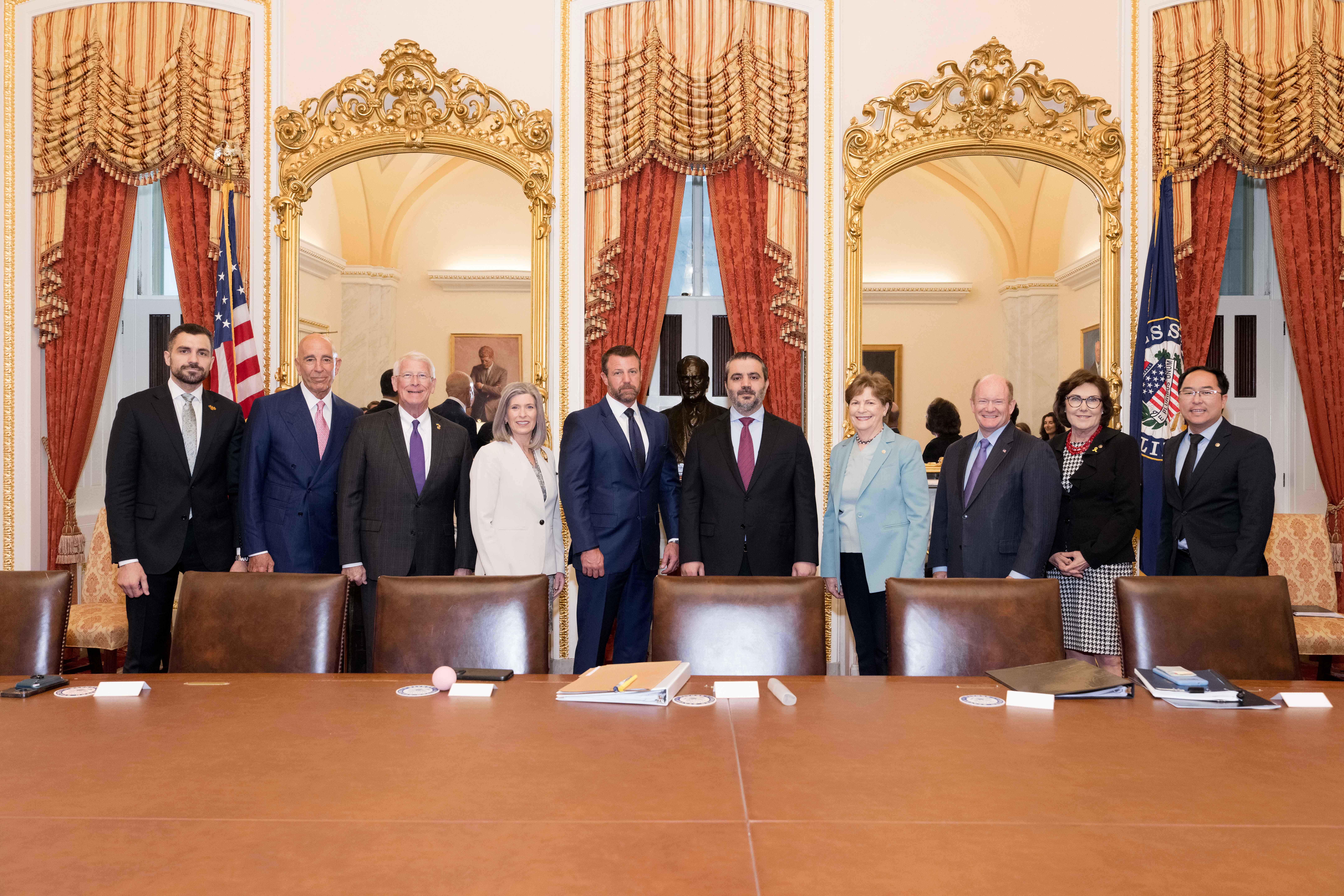
Courtesy Sen. Jeanne Shaheen
Senate and House lawmakers met with Syrian Foreign Minister Asaad al-Shaiban on Capitol Hill, Sept. 18th, 2025
Senate and House lawmakers met Thursday with Syrian Foreign Minister Asaad al-Shaibani, in the first trip by a Syrian government official to the Congress in decades.
Sen. Richard Blumenthal (D-CT) said that their meeting was “very encouraging and constructive.”
“I think we are on a path to eliminate sanctions in a way that safeguards interests of other nations in the region, and at the same time, provides for reconstruction in Syria, in a way that negates the influence of Iran and Russia,” Blumenthal said.
He said there was broad, but inconclusive, discussion about talks between the Syrian and Israeli governments.
Sen. Andy Kim (D-NJ), who worked on Syria and Middle East issues at the State Department, called the trip “historic.” This was his first meeting with officials from the new Syrian government.
“He very much expressed a deep interest in being able to work as partners with us to stand up against ISIS, to stop Iranian reach and meddling throughout the Middle East, to push back on Russian interference,” Kim said. “There’s something really serious here that we need to engage with, and see how we can play a role. I worry that if we miss this opportunity, it could be a long time before we see a chance to be able to reshape the Middle East in a way for greater peace.”
He likewise said that al-Shaibani had said that the Syrian government has had extensive negotiations with Israel and suggested that they had been “positive conversations,” but that no agreements had been reached.
Regarding sanctions, Kim said that al-Shaibani had been “helpful in explaining how these restrictions are hurting” Syria’s reconstruction and recovery. “That’s important for us to hear and it’s important for us to think through what the effects are.”
“There’s a possibility and an opportunity here to reshape the Middle East in a way I could never have imagined,” Kim said.
Along with Kim and Blumenthal, Sens. Jim Risch (R-ID), Jeanne Shaheen (D-NH), Roger Wicker (R-MS), Chris Coons (D-DE), Joni Ernst (R-IA), Jacky Rosen (D-NV), Markwayne Mullin (R-OK) and Lindsey Graham (R-SC) and Reps. Joe Wilson (R-SC) and Abe Hamadeh (R-AZ) met with al-Shaibani.
“We discussed steps that are essential for Syria to ensure their full access to the international economy. Syria has an opportunity to build a stable democracy, something the region desperately needs right now, and I am hopeful they are on the right track,” Risch, the chairman of the Senate Foreign Relations Committee said in a statement.
Shaheen, the Foreign Relations Committee’s ranking member, emphasized in a statement the need to move quickly to repeal the Caesar Act sanctions on Syria.
“Syria’s economy is in crisis, and its authorities need financial resources to maintain basic functions of governance,” she said. “If we are too slow to act, we risk plunging Syrians back into conflict, which is in no one’s interest except for Russia and Iran. We have a small window of opportunity to put Syria on a path toward stability and prosperity. Members of our recent bipartisan congressional delegation to Syria as well as senior Administration officials … all agree: now is the time for the Senate to act by repealing the Caesar Act sanctions.”
Wicker chairs the Senate Armed Services Committee.
Wilson said, “President Trump’s leadership has ushered in a historic opportunity for a new chapter, benefitting ALL. Congress must now act: fully repeal the Caesar Act.”
House lawmakers introduce series of amendments seeking to place further restrictions on U.S. aid on Ankara over its support for Hamas and hostility toward Israel

Burak Kara/Getty Images
Turkey's President Recep Tayyip Erdogan speaks to supporters at his party’s Istanbul mayoral candidate Murat Kurum's campaign rally on March 29, 2024 in Istanbul, Turkey.
Bipartisan groups of House lawmakers are aiming to crack down on Turkey in the 2026 National Defense Authorization Act, introducing a series of amendments seeking to place further restrictions on U.S. aid to the NATO ally in response to its support for Hamas and hostility toward Israel.
Turkey recently announced its plans to close its airspace to Israeli aircraft and cut off remaining commercial ties with Israel. It has long hosted Hamas leaders, and its leadership has been increasingly hostile toward Israel since Oct. 7, 2023, including threatening to invade the Jewish state. The NDAA, Congress’ annual defense and foreign policy legislation package, is set to come up for debate on the House floor next week.
Reps. Josh Gottheimer (D-NJ), Nicole Malliotakis (R-NY), Dan Goldman (D-NY) and Tom Kean Jr. (R-NJ) introduced an NDAA amendment that would ban any arms sales or transfers to Turkey until the administration outlines how it is ensuring that Turkey is no longer threatening or violating the sovereignty of U.S. allies, providing support to terrorist groups or purchasing any defense systems from U.S. adversaries.
Reps. Gus Bilirakis (R-FL) and Brad Schneider (D-IL) introduced a separate amendment to add new preconditions to the sale of F-35 fighter jets to Turkey, including requiring that Ankara cease cooperation with U.S. adversaries, end its military threats to Israel, cease providing support for Hamas, Hamas affiliates and terrorist groups in Syria and stop targeting Kurdish civilian infrastructure.
Bilirakis and Schneider introduced another amendment imposing similar conditions on the sale of F-16 fighter jets or F-16 upgrade kits, also a controversial issue on the Hill, to Turkey.
Currently, the sale of F-35s is banned under U.S. law in response to Turkey’s purchase and continued possession of an S-400 missile defense system from Russia, but Ankara and Washington have been in negotiations for months about potential pathways to lift that restriction and resume the sale process. The State Department recently denied plans to change U.S. policy on the issue.
An amendment by Rep. Dina Titus (D-NV) would require the U.S., in considering military sales to Ankara, to protect Israel’s Qualitative Military Edge over Turkey.
Bilirakis and Schneider introduced other amendments requiring reports to Congress on Turkey’s targeting of civilian populations in Syria and elsewhere, its support for terrorism and cooperation between Turkey and Iran to evade U.S. sanctions.
Goldman, Malliotakis, Gottheimer, Kean, Bilirakis and Rep. Keith Self (R-TX) introduced another amendment requiring a report on Turkey’s relationship with Hamas and the support Ankara is providing to the terrorist group.
And Goldman, Malliotakis, Gottheimer, Bilirakis and Kean proposed an amendment requesting a report on the Turkish occupation of Cyprus and whether any members of Iran-backed terrorist groups are present or active in Cyprus.
It remains to be seen which, if any, of these amendments will receive consideration or be incorporated into the House’s final draft version of the NDAA.
CUFI Action Fund, the advocacy arm of the Christian pro-Israel group, issued a memo on Wednesday backing the Bilirakis-Schneider amendment on F-35 sales and the Titus amendment on Israel’s Qualitative Military Edge.
“Congress should expand the current F-35 ban beyond the narrow question of Turkey’s possession of Russian missile systems,” Boris Zilberman, CUFI Action Fund’s senior director for public policy and strategy, said in a statement. “The broader issue is Ankara’s sustained pattern of behavior: regional aggression, diplomatic sabotage, and support for terrorism. U.S. defense technology should never be placed in the hands of governments that threaten American allies and enable terrorist activity. That standard should be non-negotiable.”
Zilberman argued that Turkey is “not misunderstood” but instead “is making deliberate strategic choices — choices that undermine American security, compromise our alliances and erode regional stability,” calling Ankara a “revisionist anti-Western power.”
“It is time to stop pretending that [Turkish President Recep Tayyip] Erdoğan’s Turkey is still the ally we want it to be — and start treating it as the adversarial actor it has become,” he continued.
Asked about Turkey’s latest anti-Israel moves, including closing its airspace, Sen. Pete Ricketts (R-NE) told Jewish Insider this week, “Israel is fighting an existential war against a terrorist organization and I would ask all nations to understand just how serious a threat Hamas poses to Israel.”
He said that the U.S. has a “key role” in working with Turkey to ensure that it can work with our other allies, including Israel.
Sen. Mike Rounds (R-SD) added that it’s “always of concern when two of our allies are not getting along,” but declined to comment further.
‘It is extremely concerning that FEMA’s reason for not providing Congress with this information is because of a perceived 'security concern,”’ a bipartisan group of lawmakers said
Tom Williams/CQ-Roll Call, Inc via Getty Images
Rep. Josh Gottheimer, D-N.J., leaves the U.S. Capitol after the House passed the One Big Beautiful Bill Act on Thursday, May 22, 2025.
A bipartisan group of more than 70 House lawmakers pressed the Trump administration last week about the supplemental round of Nonprofit Security Grant Program funding awarded to more than 500 Jewish groups in June, saying that the administration is withholding information from Congress about which institutions are receiving funding.
Some nonprofits that applied for grants have not, themselves, been told whether their applications have been accepted either, two sources familiar with the situation told Jewish Insider, complicating their efforts to submit complete and accurate applications for 2025 funding.
The lawmakers said they have “sincere concern” that they have not been provided with the list of institutions receiving funding under the $94 million funding round, as has been standard practice. They added that the absence of that information could impact institutions’ ability to apply for funding from the 2025 NSGP allocation.
“As members of Congress working diligently to ensure there are resources available to faith-based institutions to secure themselves against attack, it is extremely concerning that FEMA’s reason for not providing Congress with this information is because of a perceived ‘security concern,’” the lawmakers said in a letter to Federal Emergency Management Agency Acting Administrator David Richardson sent Aug. 7. “FEMA has not informed Congress of the nature of this threat. This is not the normal course of business”
A Senate aide told Jewish Insider that at least some lawmakers in the upper chamber have similarly been left in the dark about the grant awards.
The lawmakers noted the NSGP has faced other delays this year, including a monthslong freeze on reimbursements for already awarded NSGP funds from previous years’ grants. NSGP applications for 2025 opened last month, months later than usual, with a condensed timeline for organizations to apply for the funding.
“As you are aware, the process to apply for the NSGP is long and arduous,” the letter continued, raising further concerns about the abbreviated timeline for organizations to apply for grants for 2025.
“With the announcement of the awards of the National Security Supplemental delayed until June and awardees unaware if they are recipients of this supplemental funding, non-profit organizations, especially faith-based organizations, face tremendous levels of anxiety and uncertainty,” the lawmakers said. “This is compounded by FEMA’s failure to notify congressional offices of the recipients in our respective districts.”
Nonprofits, the lawmakers said, “are in limbo as they have no way to plan to effectuate the security upgrades they need or know what to apply for before the application deadline, leaving their security posture exposed and vulnerable.”
They called on the administration to “immediately share” the list of funding recipients from the June funding round “as has been the normal course of business for FEMA, so that these non-profits at risk of attack can submit an accurate application before the deadline.”
They said that it is “imperative” for nonprofits, including Jewish organizations, to “have the information they need to submit the best and most accurate application before the deadline.”
The lawmakers provided an Aug. 8 deadline for FEMA to provide the requested information, but it’s not clear if that deadline was met.
The letter was led by Reps. Josh Gottheimer (D-NJ), Nicole Malliotakis (R-NY), Jared Moskowitz (D-FL) and Mike Lawler (R-NY).
“While the release of the FY2025 funding notice is a welcome development, the condensed application timeline presents real challenges. Timely and transparent communication is key to helping communities navigate the process effectively and maintain a proactive security posture,” Michael Masters, the CEO of the Secure Community Network, said in a statement.
“We thank Congressman Gottheimer for leading this bipartisan effort urging FEMA to share the list of awardees with Congress. Transparency and timely information are essential for nonprofits to plan the security upgrades they need to keep their communities safe,” Lauren Wolman, the senior director of government relations and strategy for the Anti-Defamation League, said in a statement.
Republicans praised the strikes, while most Democrats remained skeptical

Satellite image (c) 2025 Maxar Technologies.
ISFAHAN NUCLEAR TECHNOLOGY CENTER, IRAN -- JUNE 22, 2025: 04 Maxar satellite image reveals multiple buildings damaged or destroyed at the Isfahan nuclear technology center after the airstrikes. Charring and roof collapses are visible across the compound.
House lawmakers, like their Senate counterparts, remain divided over the U.S.’ strikes on Iran following a classified briefing Friday morning, with Republicans praising the strikes and most Democrats remaining skeptical.
“This is a historic time that we live in, and this has been an incredible two weeks,” House Speaker Mike Johnson (R-LA) told reporters. “We delivered a major setback [to Iran’s nuclear weapons program[ that resulted in a feeble, face-saving response from Iran and immediately thereafter the ceasefire agreement.”
Johnson said that the U.S. expects that Iran will now join “direct, good-faith negotiations, not through third parties, not through other countries” and agree to a lasting peace deal.
“We’re on the verge of a real peace in the Middle East for the first time in a long time, and that’s because of the decisive leadership in the United States,” the House speaker said.
Rep. Darrell Issa (R-CA) suggested that the factors that prompted the strike would likely have spurred past Democratic presidents into action as well. He argued that the exact timeline of how long the strikes had delayed Iran’s nuclear program is not as relevant as whether the strikes, and the threat of further military action, will convince Iran to give up its nuclear program.
“Everyone agrees that it has set them back substantially. It has destroyed vast amounts of very valuable work, above and below ground,” Issa told Jewish Insider. “Now the question is has it done what it was asked to do, which is to give the Iranian leadership a decision to make — one in which they appear to be, and very well might, have abandoned their nuclear ambitions and be willing to come to the table in a different way than they were at the table for the 60 days that President Trump negotiated.”
He added that, given the widespread destruction of Iran’s nuclear facilities, including the “above-ground stuff that they did need,” the U.S. and Israel would be able to know if Iran attempted to restart its nuclear program, and could stop them.
“If the Israelis are willing to not let them start building again, or punish them when they do, then, in fact, that’s what the Iranian leadership has,” Issa said. “Let’s just say, hypothetically, they’re pushed back one year. Can they get one year of building without the Israelis pushing it back again? And the answer clearly is no. So that’s their calculation today.”
“The debate is not about how long, anymore,” he continued. “It’s about, really, abandonment, or at least a pause in which they take no action.”
Asked whether the briefing had provided any clarity as to the Iranian leadership’s thinking on that issue, Issa declined to say, explaining that that information would be highly classified, but said he’d met with anti-regime Iranian diaspora activists the night before who believe that the 12-day Israeli bombardment was a “wake-up call” for the Iranian regime which could also embolden the Iranian people.
Rep. Scott Perry (R-PA), a member of the House Foreign Affairs and Intelligence Committees, told reporters that the U.S. strikes had “destroyed” their targets — one that he emphasized was achieved without the need for a massive U.S. invasion force or a protracted war.
“This was a spectacular success, spectacular under any measure whatsoever, spectacular with no casualties,” Perry told JI.
He said the briefers had shared information about how much Iran’s nuclear program had been delayed, but said he was not able to share it publicly.
House Democrats remained more cautious about the situation.
Rep. Jim Himes (D-CT), the ranking member of the House Intelligence Committee who is a lead sponsor of a war powers resolution aiming to block further U.S. military action against Iran without congressional approval, said that it is “pretty clear there was no imminent threat to the United States,” beyond the ongoing Iranian threat to the world.
“I have not seen anything to suggest that the threat from the Iranians was radically different last Saturday than it was two Saturdays ago,” that would have justified a unilateral strike without the consent of Congress, Himes told JI.
“The objective here has been a little bit of a moving target,” Himes continued. “And I think we actually got a clear statement of objective today, which was, you know, the secretary of state said it. The objective was to set back or destroy Iranian, Iranian nuclear capability in the service of bringing them to the table. He was clear on that point.”
But he said that the briefing did not indicate that any diplomatic “overtures or discussions” are actually currently underway.
Himes said that the administration has been using “a lot of very sloppy adjectives, like ‘obliterated'” to describe the outcome of the strikes, and said it’s “still too early to tell exactly how much” damage the strikes had done.
He said that the briefing affirmed that the U.S.’ goal in the strikes was not to eliminate Iran’s stockpiles of highly enriched uranium, which “must be accounted for at some point.”
Himes has been publicly frustrated about the administration’s failure to notify him and other senior Democrats about the strike beforehand — he told reporters that he learned about it on X while sitting on his couch on Saturday night — but said that the briefing was “a good start.”
Rep. Greg Meeks (D-NY), the ranking member of the Foreign Affairs Committee, told JI that “90% of what I heard in there is public,” when asked if anything he learned in the briefing had impacted his views on the necessity or justification for the strike.
Meeks is another lead sponsor of the war powers resolution, with Himes.
Another House Democrat, speaking on condition of anonymity to discuss the sensitive briefing, similarly told JI he “didn’t learn anything that was helpful in drawing a judgement,” and that there was “nothing that you walk away thinking, ‘Well, I learned this, and therefore I might consider whether I can draw an independent judgement on whether this was necessary or not.’”
“I got nothing out of it that I didn’t already think I had walking in,” they continued.
The Democrat said that military leaders had “brilliantly” executed the plan they were told to carry out, but there are still questions about the decision-making and judgement of the administration’s civilian leadership.
“One of the problems that you have … is when you pick such highly partisan heads of departments, you don’t know if the person has got sufficient experience to make certain judgements,” the Democrat said.
Rep. Wesley Bell (D-MO), who sits on the House Armed Services Committee, told JI, “It’s going to take time to get a full assessment and understanding exactly, exactly the extent of any damages and timelines and things of that nature.”
Bell added, “In order to effectively ensure that Iran doesn’t have a nuclear weapon, it’s going to have to be a coordinated effort. Obviously, you have to have credible military deterrence, as we’ve seen. Then there also has to be a commitment to the diplomatic side.”
He added that lawmakers agree on a bipartisan basis that Iran cannot have nuclear weapons.
A bipartisan group argued that Albanese’s rhetoric ‘crosses the line from criticism of Israel into antisemitic demonization’

Brian Lawless/PA Images via Getty Images
Francesca Albanese, United Nations special rapporteur on the Occupied Palestinian Territories, during a press conference at Buswells Hotel in Dublin on March 20, 2025.
A bipartisan group of House lawmakers wrote to United Nations Secretary-General Antonio Guterres on Tuesday, again demanding that Francesca Albanese, U.N. special rapporteur for the Palestinian territories, be dismissed from her position.
Albanese, despite alleged private criticism of her by Guterres and public opposition from U.S. and allied officials, recently had her employment and mandate extended.
“This extension sends a signal to the world that the United Nations tolerates and even promotes those who spew antisemitic hatred and harbor long-standing prejudice against Israel,” the letter reads. “This pattern of the United Nations allowing employees to direct vile hatred towards the Jewish people and the obsession with the world’s only Jewish state must end now. Every day that the UN fails to address this systemic bias within its organization, its credibility is undermined.”
The lawmakers argued that dismissing Albanese would be a step to show that the U.N. can address antisemitism in its own ranks.
“We’ve seen over and over again the deadly consequences of this noxious rhetoric like Ms. Albanese’s that crosses the line from criticism of Israel into antisemitic demonization,” the letter reads, linking Albanese’s long history of antisemitic comments to the recent antisemitic terrorist attacks in Washington and Boulder, Colo., as well as the global surge of violent antisemitism since Oct. 7, 2023.
The letter was signed by Reps. Brad Sherman (D-CA), Dan Goldman (D-NY), Jefferson Shreve (R-IN), Maria Elvira Salazar (R-FL), Laura Gillen (D-NY), Brad Schneider (D-IL), Jared Moskowitz (D-FL), Ritchie Torres (D-NY), Debbie Wasserman Schultz (D-FL), Josh Gottheimer (D-NJ) and Tom Suozzi (D-NY).
“Special Rapporteur Albanese has a vile and extensive history of outlandish antisemitic statements and an extreme bias against Israel,” the lawmakers wrote. “Ms. Albanese consistently uses offensive and dangerous rhetoric to absurdly compare Israel’s war on Hamas to the systematic extermination of Jews in the Holocaust … She has also outrageously stated that Israel doesn’t have the right to defend itself and has refused to acknowledge Israel’s right to exist.”
“She has had plenty of opportunities to take responsibility for her dangerous and misguided rhetoric but instead continues to double down every time she has been called out publicly and states that she has been ‘wrongly mischaracterized as antisemitic,’” the letter continues.
It also highlights that she has accepted tens of thousands of dollars worth of free travel from pro-Hamas groups in Australia and New Zealand.
Sherman, who led the letter, recently said that Albanese’s rhetoric and activity had eroded U.S. support for the U.N. and foreign aid in general and would contribute to deaths around the world.
“Instead of demonstrating that the UN can address issues such as antisemitism from within and prevent continued efforts to undermine the UN’s credibility, Secretary General Guterres extended Ms. Albanese’s employment,” Sherman said on X.
Democratic Majority for Israel helped organize the letter.
“Ms. Albanese — whose mandate as Special Rapporteur was recently and inexplicably extended — is an extreme anti-Israel activist pretending to be a neutral UN official,” DMFI CEO Brian Romick said. “She regularly spews antisemitic conspiracy theories and attempts to downplay the horrors of October 7th — all completely at odds with the values of impartiality and human rights the UN is supposed to uphold. This week she even encouraged unauthorized flotillas to enter an active war zone, putting lives at risk in a reckless political stunt. Keeping her in this role further damages the UN’s credibility. We’re proud to back this effort to hold both her and the institution accountable.”
The letter is particularly notable, given that a number of prominent Democrats joined Republicans in holding a hard line against Iran’s nuclear program

Jemal Countess/Getty Images for Protect Our Care
A view of the U.S. Capitol on March 12, 2024 in Washington, DC.
A new bipartisan letter sent Friday by 16 House lawmakers to Secretary of State Marco Rubio and Middle East envoy Steve Witkoff argues that any nuclear deal with Iran must permanently dismantle its capacity to enrich uranium — a notable message particularly from pro-Israel Democrats to the administration.
The letter highlights that an insistence on full dismantlement of Iran’s enrichment capabilities is not only a Republican position, and that President Donald Trump will not be able to count on unified Democratic support for a deal that falls short of that benchmark. Previously, 177 House Republicans said they also demand a deal that does not allow enrichment and some pro-Israel Democrats have expressed the view individually.
“We wholeheartedly agree that Iran must not retain any capacity to enrich uranium or continue advancing its nuclear weapons infrastructure,” the letter, which frames the appeal as an endorsement of Rubio and Witkoff’s public positions on the subject, states. “There is widespread bipartisan support for this requirement and we appreciate your commitment to this essential cornerstone of any agreement.”
The letter highlights the Iran Nuclear Agreement Review Act, which mandates that any agreement with Iran be submitted for congressional review, and emphasizes, “for any agreement to endure, it must have strong bipartisan support. We urge you to engage with Congress as negotiations proceed to ensure that any final agreement commands broad support.”
The lawmakers called on the officials to work with the U.S.’ European allies to “promptly invoke the snapback mechanism” to reimpose United Nations sanctions on Iran if talks fail to yield an agreement that fully dismantles Iran’s nuclear program.
They note that, given the Oct. 18 expiration of the snapback provision, “the process must begin by late Summer at the latest if no deal is reached. Iran’s repeated violations must be met with clear consequences.”
“The Iranian regime must understand that the United States is unwavering in its demand that Iran’s uranium enrichment capability be totally dismantled,” the letter reiterates. “We appreciate your leadership on this pressing matter vital to America’s national security interests and stand ready to work in a bipartisan manner to prevent Iran from obtaining a nuclear weapon.”
The letter, led by Reps. Laura Gillen (D-NY) and Claudia Tenney (R-NY), was co-signed by Reps. Dan Goldman (D-NY), Wesley Bell (D-MO), Joe Wilson (R-SC), Josh Gottheimer (D-NJ), Brad Schneider (D-IL), Don Bacon (R-NE), Eugene Vindman (D-VA), Lois Frankel (D-FL), Debbie Wasserman Schultz (D-FL), Jared Moskowitz (D-FL), Grace Meng (D-NY), Frank Pallone (D-NJ), Ted Lieu (D-CA) and Chris Pappas (D-NH).
Pappas is also mounting a run for the U.S. Senate.
The bipartisan group wrote in their letter: ‘Failure to confront this pernicious ideology harms not only Jewish medical professionals, students, and patients but threatens to destroy the very foundations of our healthcare system’

Nathan Howard/Getty Images
The U.S. Capitol is seen on June 13, 2024 in Washington, DC.
A bipartisan group of House lawmakers is urging colleagues to take steps to address antisemitism in the health care field in the 2026 appropriations process for the Department of Health and Human Services and related agencies.
In a letter sent Wednesday, the lawmakers called on the leaders of the Subcommittee on Labor, Health and Human Services, Education and Related Agencies to demand reports from HHS on the rise of antisemitism in health care.
“Failure to confront this pernicious ideology harms not only Jewish medical professionals, students, and patients but threatens to destroy the very foundations of our healthcare system,” the letter reads. “Dangerous rhetoric from individuals in positions of influence raises fears among Jewish and Israeli students, families, and patients about whether they will receive equitable and compassionate care. Antisemitic hate and bigotry put Jewish patients at risk and undermine the ethical foundations of medicine, where commitment to the patient should be paramount.”
The lawmakers argued that there is growing evidence of a “dangerous erosion of the professional standards that define graduate medical training” and said that medical schools must enforce codes of conduct to prevent antisemitism.
The letter highlights that the vast majority of Jewish medical professionals experienced antisemitism in the year after the Oct. 7, 2023 Hamas attacks, and points to specific incidents which the lawmakers argue have “directly compromised patient care.”
It also highlights issues in medical schools that they say constitute a “dangerous erosion of the professional standards that define graduate medical training” and issues in the mental health field including therapists promoting the view that Zionism is a mental illness and who have blacklisted Jewish patients and providers.
The letter urges the lawmakers, in their 2026 funding bill, to instruct HHS to provide a comprehensive report to Congress on antisemitism and civil rights violations in health care and medical schools, arguing that a lack of comprehensive data makes it difficult to tackle the problem.
It also requests a report on all civil rights complaints in health care and medical schools submitted to HHS in the past two years, including spelling out which cases included antisemitism, and how the complaints were addressed.
The letter was signed by Reps. Buddy Carter (R-GA), Dan Goldman (D-NY), Mike Lawler (R-NY), Greg Landsman (D-OH), Troy Balderson (R-OH), Brad Sherman (D-CA), Brian Fitzpatrick (R-PA), Tim Kennedy (D-NY), Haley Stevens (D-MI), Tom Suozzi (D-NY), Don Bacon (R-NE), Shelia Cherfilus-McCormick (D-FL), Sarah Elfreth (D-MD), Mike Carey (R-OH), Laura Friedman (D-CA) and Jared Moskowitz (D-FL).
“Far too many Jewish health professionals and graduate students face pervasive antisemitism that often goes unaddressed by the very institutions entrusted with their safety and wellbeing,” Rachel Dembo, the senior manager of government relations and engagement for the Jewish Federations of North America said in a statement.
“It’s alarming that today’s current and future providers are encountering environments where antisemitism is treated as acceptable — and where it can even distort or impact clinical care,” Dembo continued. “Compassion cannot coexist with discrimination and bigotry. Jewish Federations of North America are committed to ensuring clinical care is safe and fair for all — because bias can never be part of any patient’s treatment plan.”
Lauren Wolman, the director of government relations at the Anti-Defamation League, said in a statement, “We commend bipartisan Members of Congress for sounding the alarm on this disturbing trend, and we urge the Appropriations Committee to act.”
“From hospitals to medical schools — the mission of medicine is to heal, not to harm. Antisemitic discrimination in clinical and educational environments violates that fundamental principle,” Wolman added. “Providers, students, and patients deserve an environment rooted in equity, dignity, and safety — free from antisemitism and hate.”
Please log in if you already have a subscription, or subscribe to access the latest updates.
 Continue with Google
 Continue with Apple