









































































Gottheimer, Garbarino to reintroduce U.S.-Israel counter drone legislation
Building on the lawmakers’ legislation from 2023, this year’s bill increases proposed funding for U.S.-Israel anti-drone cooperation to $100 million

ATTA KENARE/AFP via Getty Images
A new Shahed-161 drone is displayed during an exhibition showcasing missile and drone achievements in Tehran on November 12, 2025.


 Add JewishInsider on Google
A bipartisan pair of House lawmakers will reintroduce legislation on Wednesday to address the threat of killer drone strikes by the Iranian regime and other foreign adversaries through increased cooperation between the U.S. and Israel, Jewish Insider has learned.
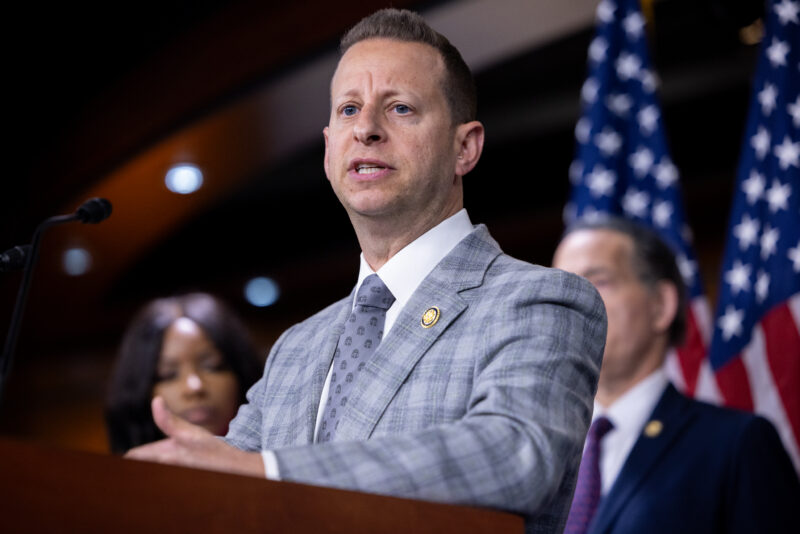
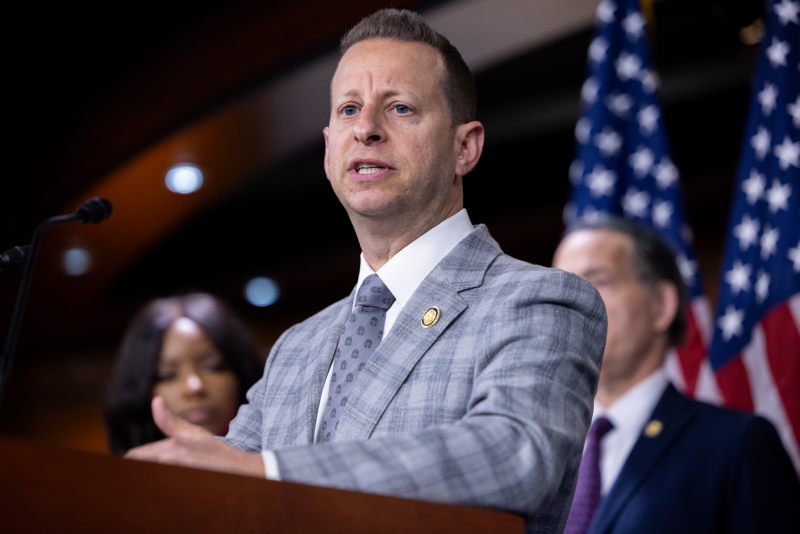
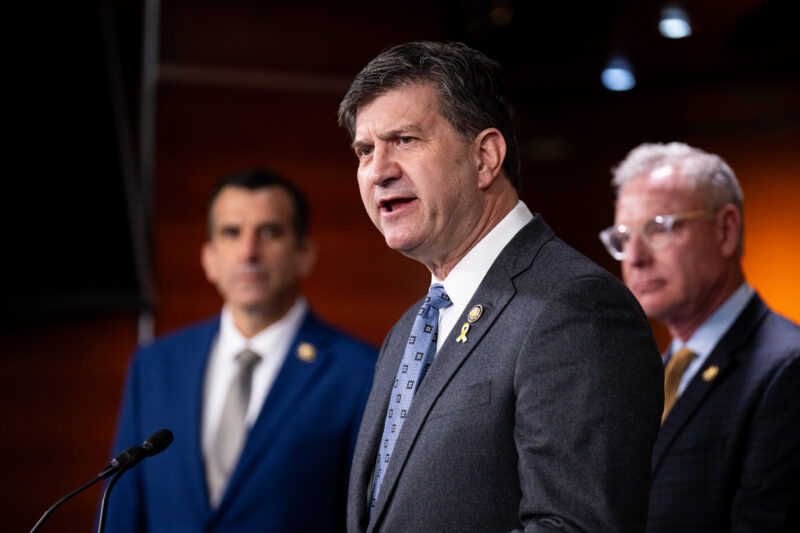
Reps. Josh Gottheimer (D-NJ) and Andrew Garbarino (R-NY) are the lead sponsors of the U.S.-Israel Anti-Killer Drone Act, which the duo first introduced together back in 2023. That bill proposed increasing annual funding caps for existing U.S.-Israel counter-drone programs from $40 million to $55 million.
This latest iteration of the legislation increases that annual funding cap to $100 million. It also now includes all unmanned drone systems rather than solely covering aerial drones. The updates to the legislation mirror the expansion of the existing U.S.-Israel counter-drone program to address various types of drones — not only airborne ones — in the 2026 National Defense Authorization Act.
The joint counter-drone program is currently set to be funded at $75 million for 2026, based on the appropriations legislation introduced on Tuesday.
The Gottheimer-Garbarino bill states that it is the sense of Congress that the U.S. and Israel should continue to collaborate and expand their ongoing work in counter-drone technology, increases the proposed funding — though any actual funding allocations would have to be finalized separately — and directs the Department of Defense to report to Congress annually on the program.
The legislation comes as Israeli leaders look to shift the future of U.S. aid to the Jewish state, with Prime Minister Benjamin Netanyahu announcing that he wants to wind down direct U.S. financial support in the next decade.
Analysts and experts have predicted that the next U.S.-Israel memorandum of understanding, and the future of U.S. aid and cooperation with Israel, could focus more heavily on these sorts of jointly funded cooperative programs, which are appropriated through the Department of Defense and aim to benefit both countries, rather than direct financial assistance to Israel.
The bill’s text runs through a litany of incidents of Iranian and Iranian proxy drone attacks and attempted attacks on Israeli and U.S. targets throughout the region; the expansion and advancement of Iran’s drone production capacity; and Iran’s provision of drones to Russia.
Both Gottheimer and Garbarino cited the Iranian drone threat as reason for promoting the legislation back in 2023.
“Iran’s arsenal of killer drones has only grown in recent years, and attacks across the Middle East have killed and wounded Americans — showing once again why the threat of terrorism remains so pervasive,” Gottheimer said at the time. “We continue to see Iran-backed terrorist groups target innocent civilians which is why we must take concrete action to counter their deadly drone capabilities.”
“Time and again, the Iranian regime has used unmanned aerial systems (UAS) to continue its destabilizing behavior, threatening not only the broader Middle East region, but also American troops, interests, and our greatest ally in the region, Israel,” Garbarino said.
More Stories
PRESSURE CAMPAIGN
Rep. Jared Moskowitz: Pro-Israel Democrats are being ‘ostracized’ in the Democratic Party

Democracy Deficit
New report warns civics education crisis is fueling antisemitism, eroding support for Israel

OCEAN STATE OF PLAY
Antisemitism roils Providence mayoral race

Daily Overtime
Israel hits back at U.K. sanctions

LONDON'S GAMBLE
Former Trump official: U.K. sanctions will render Europe ‘less relevant in Middle Eastern affairs’

Daily Kickoff
Longhorns lock horns over Piker
Please log in if you already have a subscription, or subscribe to access the latest updates.
 Continue with Google
 Continue with Apple