











































In an interview with JI, János Bóka, Hungary’s minister for EU affairs, says the allegation that Orbán is antisemitic is ‘wrong’ and ‘a misunderstanding of what he does.’
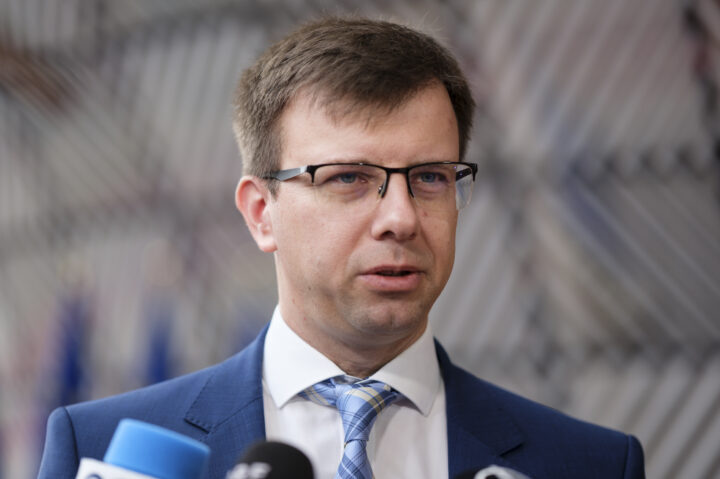
Thierry Monasse/Getty Images
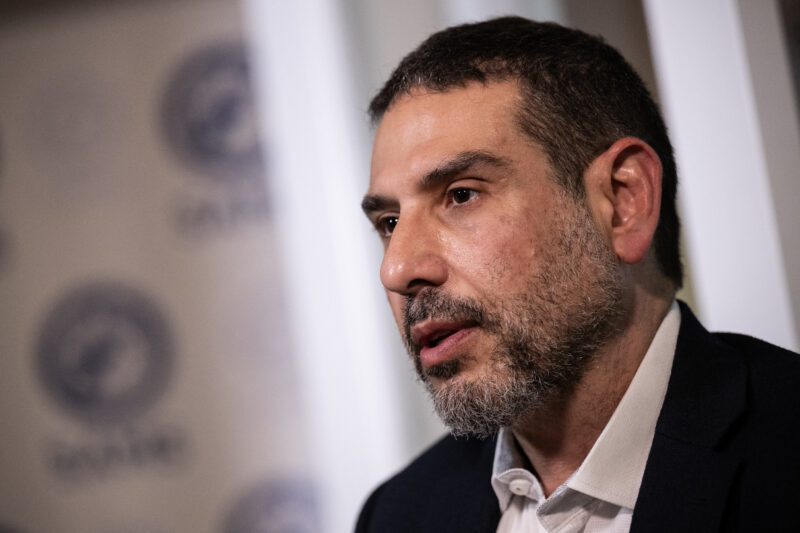
Hungarian Minister for European Union Affairs Janos Boka talks to media prior to the start of an EU General Affairs Ministers Council in the Europa building, the EU Council headquarter on July 18, 2025 in Brussels, Belgium.


 Add JewishInsider on Google
In the last decade and a half, Hungary has gained a reputation as the most conservative European nation, a distinction happily touted by the country’s prime minister, Viktor Orbán, who has been in office since 2010.
In building that reputation, Orbán has courted controversy — with inflammatory comments about racial minorities and the LGBTQ community, by taking measures that critics say erode the country’s democracy and by adopting a more pro-Russia stance than most of the rest of the European Union. His hard-line policies are part of why Orbán and President Donald Trump have been able to cultivate a close relationship, with the U.S. and Hungary now far more aligned than they were during the Biden administration.
“That’s an understatement,” János Bóka, Hungary’s minister for EU affairs, told Jewish Insider with a laugh during a visit to Washington last week.
But if Trump has taken a page from Orbán’s conservative governing playbook, bringing the two countries closer together, Bóka said there is one political trend playing out among American conservatives that he hopes Hungary avoids: the rise of antisemitism on the political right.
“I am aware of the discussion that you are now having in the States on the reviving of antisemitism on the right. One of the added values of my trip in the U.S. is that I can study this firsthand and can discuss this with people so I have a better understanding,” Bóka said. “This phenomenon is something that is very difficult for me to understand, because at least in Hungary and in most parts of Europe, it doesn’t have a parallel, or at least not yet.”
That’s because Bóka says Hungary has all but eliminated right-wing antisemitism and the lingering vestiges of Nazi ideology, or at the very least that the country has made it “politically irrelevant.”
“I cannot pretend the 20th century did not happen,” said Bóka, who as of May also serves as Hungary’s special commissioner tasked with fighting antisemitism. But, he added, “this government has basically expelled political antisemitism from the political discourse.”
The situation in Hungary is more complicated than Bóka let on. Orbán has faced criticism from Jewish organizations for years over his targeting of Hungarian Holocaust survivor and financier George Soros, with the Anti-Defamation League writing in 2018 that the Hungarian campaign against Soros is “chilling.” Deborah Lipstadt, the Holocaust historian who served as the State Department’s antisemitism envoy during the Biden administration, said in 2022 that Orbán’s rhetoric warning against racial mixing “clearly evokes Nazi racial ideology.”
Bóka, who was in Washington to meet with American Jewish communal leaders, said Hungary has adopted a “zero-tolerance policy toward antisemitism,” and said the allegation that Orbán is antisemitic is “wrong” and “a misunderstanding of what he does.”
Similar to Trump, Budapest has adopted the stated goal of combating antisemitism, even if its approach is controversial and targeted toward one particular political ideology. And like Trump, Bóka views the fight against antisemitism as tied to the country’s broader efforts to limit migration.
“We see some elements coming from the far left and as a part of a European network that is becoming more active and vocal in Hungary as well in the past few months. But I think this is very limited,” said Bóka. “We haven’t seen violent incidents that are in any way similar to what we see in some Western European cities because of the strict migration policy we have in place. And also because of the zero tolerance policy on antisemitism, we don’t see radical Islamism as a political factor in Hungary.”
Because his job description includes Hungary’s relationship with the EU, Bóka sees his purview as broader than just antisemitism in Hungary. He called it a “European challenge” that must be addressed together. “Antisemitism exists in all EU member states, including Hungary,” Bóka acknowledged. He thinks he — and Hungary — have something to offer other European nations as they seek to combat antisemitism.
His first lesson to them is about Israel: If you are serious about fighting antisemitism, Bóka argues, attacking Israel’s actions in Gaza in EU forums will undermine that goal. Israel has leaned heavily on Orbán as a pro-Israel bulwark in the EU. Hungary announced earlier this year that it would leave the International Criminal Court to protest its treatment of Israel and Israeli Prime Minister Benjamin Netanyahu, who faces an arrest warrant from the body.
Jewish communities “will never believe that you are credible, that you have a real political commitment for fighting antisemitism, if at the same time you send very mixed messages as far as your relationship with the State of Israel is concerned,” said Bóka. “If you start speaking the language of isolation, sanctions and so forth, then you will lose the opportunity to cooperate with the State of Israel on fighting antisemitism in Europe, which is indispensable.”
During his time in Washington, Bóka met with Rabbi Yehuda Kaploun, Trump’s nominee to serve as U.S. antisemitism special envoy. Kaploun had his Senate confirmation hearing last week but has not yet been confirmed. Bóka also met in New York with Jeff Bartos, the U.S. ambassador to the United Nations for management and reform. He said he is “convinced” that the U.S. and Hungary can collaborate on fighting antisemitism.
“I believe that we have a very similar strategic view on objectives and the ways and means to get there,” said Bóka. “I think there’s a lot of openness on both sides to cooperate.”
Please log in if you already have a subscription, or subscribe to access the latest updates.
 Continue with Google
 Continue with Apple