















































Entrepreneurs Lior Prosor and Michael Broukhim are betting big on Israeli innovation

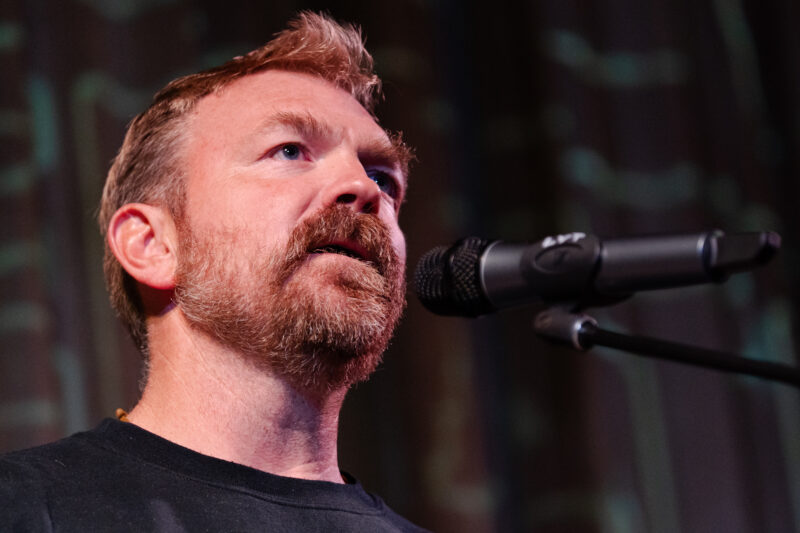
Ohad Kab
Deep33 team


 Add JewishInsider on Google
A new deep-tech investment firm seeking to help Israeli startups fundraise and collaborate with U.S. companies emerged from stealth mode on Tuesday, announcing the launch of its $150 million fund.
Called Deep33 Ventures, the firm will be led by serial entrepreneurs and investors Lior Prosor, who has invested in companies including Via Transportation, Lemonade Insurance and Carbyne, and Michael Broukhim, the co-founder of FabFitFun, who has invested in companies such as SpaceX, Stripe and Hut8.
The fund, which already secured $100 million in capital commitments from its first group of investors, will focus on deep tech — which includes quantum computing, advanced energy and autonomous systems.
“There isn’t a deep tech fund focused on Israel’s ecosystem. One of our biggest differentiators is the overlap of being deep tech and concentrated on Israel,” Broukhim told Jewish Insider.
With offices in Tel Aviv, New York and Los Angeles, the firm aims to create what it calls a U.S.-Israel “allied infrastructure corridor” combining the two countries’ technological strengths to counter China.
“There is a trillion dollars of data center spending happening in the U.S. over the next 18 months, all of the critical industries are reshoring here for the first time since World War II. There’s a very meaningful frontier tech war happening between the U.S. and China. That’s the global catalyst for meaningful innovation,” Prosor told JI. “It all starts on a much more global macro trend than anything specifically Israel related.”
Israel, meanwhile, “has always had the core ingredients in place — amazing academic institutions, conductor industry, an optics industry, radio frequency industry and now the defense industry has been catapulted forward,” following the Oct. 7, 2023, terrorist attacks, continued Prosor.
The launch comes days after Israel and the United States signed a joint statement on artificial intelligence at the City of David in Jerusalem as part of the Pax Silica initiative.
“That is what I would call the bilateral memorandum of understanding to what we’re doing on the ground on the investment side,” said Prosor. “We think there’s really only two major ecosystems, other than China, that have the ability to consistently produce companies in these spaces, and that’s the U.S. and Israel. Israel really becomes a crucial ally in the U.S. frontier tech war with China. That collaboration is going to get closer and closer and Israel is going to punch way above its weight in producing things that are incredibly valuable to the U.S.”
But it also comes amid what Broukhim called a “macro pullback in the venture ecosystem” relative to peaks in 2020 and 2021.
Some of that, he said, is due to international scrutiny that Israeli tech founders face compared to their counterparts from other countries.
“We see that as an opportunity for us,” continued Broukhim.
“Being closer to the ground level, [we see] incredible resilience, incredible companies being built,” he said. “There’s almost an evaluation arbitrage between the same types of companies in the same stages in Israel versus what we’re seeing in the United States. We think of that as an opportunity to have much better returns based on a temporary dislocation market.”
Joining the firm as chairman is Lior Susan, founder of Eclipse Ventures and a pioneer of the “deep tech revolution” in Silicon Valley. Additionally, it will draw on experts in quantum, energy, AI, government relations and autonomous robotics from some of Israel’s top technical and security fields, including Col. (res.) Joab Rosenberg, former senior official in IDF intelligence and quantum physicist from the Weizmann Institute of Science; Ori Amsalem, former technology investor at Arkin Capital; Maj. (res.) Yael Barsheshet, who served in technical leadership positions in IDF intelligence; Yarden Golan, former chief of staff to then-Minister of Strategic Affairs of Israel Ron Dermer; and Elram Goren, who served in significant roles in IDF intelligence and co-founded the robotics platform Fabric.
Broukhim, who is based on the West Coast and describes himself as an “Oct. 8 Jew” — someone who experienced re-connection with his Jewish identity following Oct. 7 — said that the attacks and rise of antisemitism prompted by the ensuing war in Gaza are what brought him “deeper into the Israel ecosystem and planted the first seeds of what blossomed into this fund.”
“We’re an outgrowth of the energy around post-Oct. 7 and making big bets on the future of the Israeli ecosystem,” he said.
The name Deep33 is a nod to the number’s significance in Judaism’s mystical tradition of Kabbalah, where it represents growth and hidden truths.
The holiday of Lag B’Omer, which is the 33rd day of the Omer, is “when the hidden truths of the universe become revealed,” explained Broukhim. “A lot of what we think we’re doing as a firm — and our founders are doing in their companies at the intersection of science and discoveries — is to [reveal] the truth of the world.”
The progressive lawmaker eked out a victory in a politically evolving district that swung heavily to Trump. Now she’s facing a highly touted GOP challenger
Nathan Posner/Anadolu via Getty Images
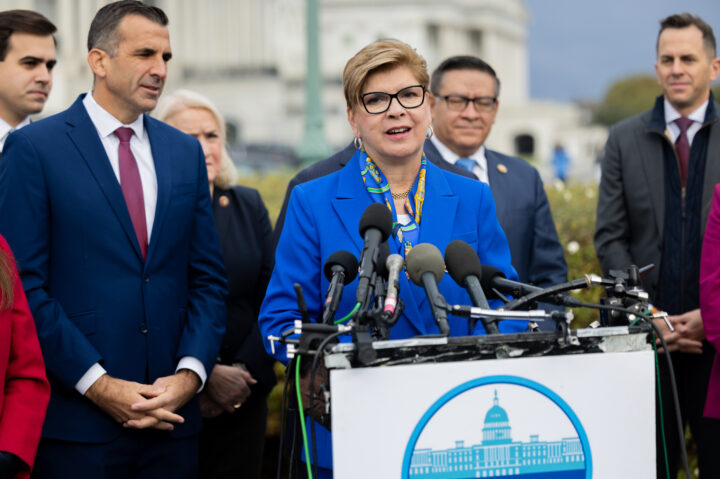
Rep.-elect Nellie Pou (D-NJ) speaks during a press conference introducing new members of the Congressional Hispanic Caucus in Washington, DC on November 15, 2024.
Rep. Nellie Pou (D-NJ) starts out her first re-election campaign at a crossroads: Running in a historically deep-blue district that President Trump surprisingly carried, she’s caught between her background as a liberal leader and the pressures of a purple district that could pull her toward the political middle to preempt Republican opposition.
Pou — who has never faced such a competitive general election in her political career — has generally leaned left while keeping a relatively low profile on the Hill. She joined the Congressional Progressive Caucus and stuck with the majority of her party on many key votes, including some pertaining to antisemitism and Israel that divided the Democratic caucus. She now faces a well-credentialed GOP challenger — Clifton, N.J., councilmember Rose Pino — as the Republican Party hopes to keep her urban north New Jersey district on its target list.
Despite representing a district with a sizable Jewish population, she didn’t join many of the moderates in her party in voting for a Republican-led resolution last month condemning the antisemitic attack in Boulder, Colo., urging stronger enforcement of immigration laws and supporting Immigration and Customs Enforcement.
The Boulder resolution split the Democratic caucus, with 75 lawmakers voting for the resolution and 113 voting against it. Some Democrats objected to the immigration-related language.
Pou, and nearly all other Democrats, voted in favor of a second resolution condemning a series of recent antisemitic attacks without that language.
“Congresswoman Pou believes that the rise of antisemitism in the United States and across the world is alarming and unacceptable. That’s why Congresswoman Pou voted in favor of a resolution on the House floor fully condemning antisemitism,” Pou spokesperson Mark Greenbaum told Jewish Insider. “And it’s why she is using her position on the Homeland Security Counterterrorism and Intelligence Subcommittee to demand increased funding for law enforcement to keep our Jewish communities safe and greater federal grants for synagogues and schools to upgrade their security.”
Pou also voted earlier this year against sanctioning the International Criminal Court, another vote that split House Democrats. Forty-five Democrats supported the sanctions.
But she has joined other efforts to support Israel and the Jewish community during her tenure, including signing a letter urging prompt federal approval of additional flights by Israeli airlines between the U.S. and Israel and calling for $500 million in funding for the Nonprofit Security Grant Program in 2025.
Pou’s district, New Jersey’s 9th, has both significant Jewish and Palestinian constituencies. Rep. Bill Pascrell (D-NJ), Pou’s predecessor who died in August 2024, faced a primary challenge from Prospect Park, N.J., Mayor Mohamed Khairullah, who focused his campaign squarely on criticizing Pascrell’s support for Israel.
Pou was tapped by New Jersey Democratic leaders to replace Pascrell on the ballot after the congressman died during the election cycle — and they assumed she would face little opposition in future elections.
Pou’s district was considered a safe Democratic seat before the election, and Trump’s performance came as a surprise to Democrats, leaving Pou, the former majority leader in the state Senate, on guard as she prepares to defend her seat next year.
Pou told the New Jersey Globe she takes political pressures into consideration on divisive votes, “But I also think it’s [about] doing the right thing.”
“Politics is very important, and I would love to make sure I have the opportunity to return back to Congress,” Pou said. “But I also think that we are here to do a job, and that we should be doing it with the right reasons in mind.”
Pino, a leading GOP recruit, announced her campaign on Thursday. Pino is a longtime local official and the child of Ecuadorian immigrants. Pou herself is the first Latina woman from New Jersey to serve in Congress. The district has a sizable Hispanic population.
Republican Billy Prempeh, whom Pou beat by five percentage points in the 2024 election, is also running again. Prempeh was endorsed by the New Jersey chapter of the Council on American-Islamic Relations last year and supported cutting off U.S. aid to Israel to stop the war in Gaza; opposed Israeli strikes on Gaza, saying in part, “I’m not dying for Israel”; and opposed the Antisemitism Awareness Act.
Andre Sayegh, the mayor of Paterson, N.J., who called his city “the capital of Palestine in the United States of America” and has been critical of Israel, is a potential primary challenger to Pou.
Pou’s re-election campaign raised $500,000 in the second quarter, reporting $780,000 on hand.
Trump won the district by a point, after President Joe Biden won it by nearly 20 points in 2020. Pou’s margin of victory was also substantially smaller than Pascrell’s in previous races, and Republicans see her as a top target in 2026.
“Nellie Pou went to Congress pledging to be a friend of Israel and the Jewish community, but that was a pledge she never intended to keep,” National Republican Campaign Committee spokesperson Maureen O’Toole said. “The truth is, Pou is backed and bankrolled by rabid antisemites, and her vote … makes it clear that she stands with them. Nellie Pou won’t be sitting in her Trump-won district much longer.”
The Democratic Congressional Campaign Committee pushed back, noting her vote in favor of the second antisemitism resolution that passed the House nearly unanimously.
“Congresswoman Nellie Pou has been outspoken on combatting antisemitism and joined Republicans and Democrats in voting for a bipartisan resolution to condemn the horrific attack in Boulder, Colorado,” a DCCC spokesperson told JI. “Nellie is working hard to lower costs and deliver for New Jersey’s 9th District, which is exactly what her constituents elected her to do.”
The DCCC spokesperson also highlighted Pou’s work in supporting police funding and opposing the GOP reconciliation bill.
Please log in if you already have a subscription, or subscribe to access the latest updates.
 Continue with Google
 Continue with Apple