




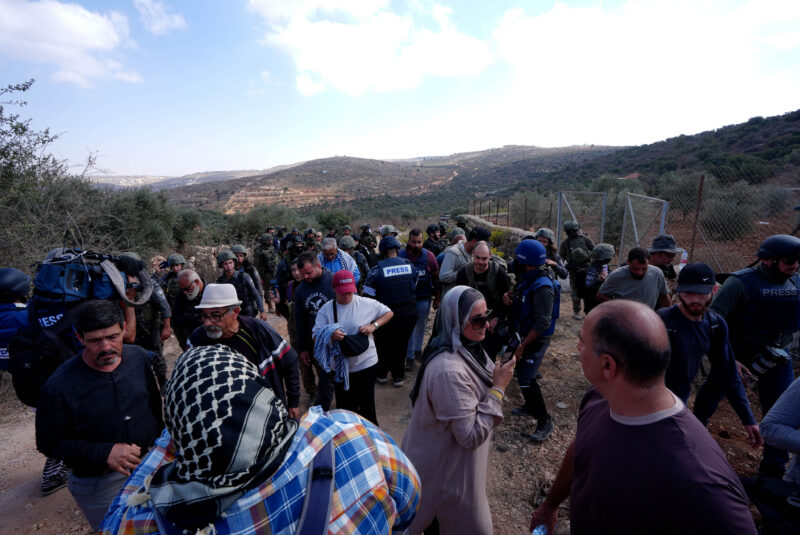













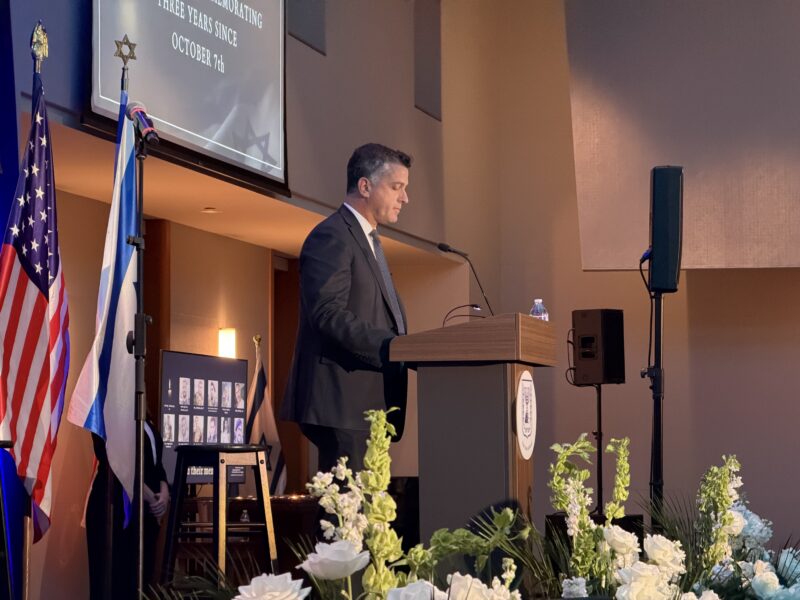

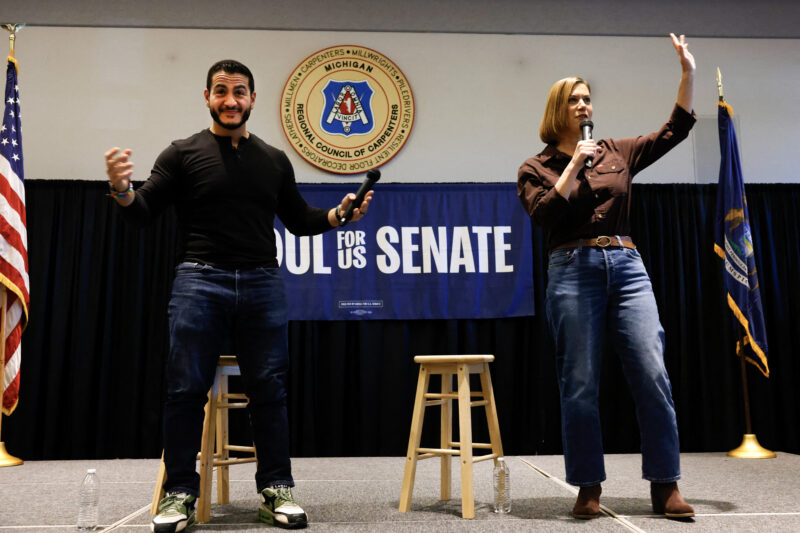
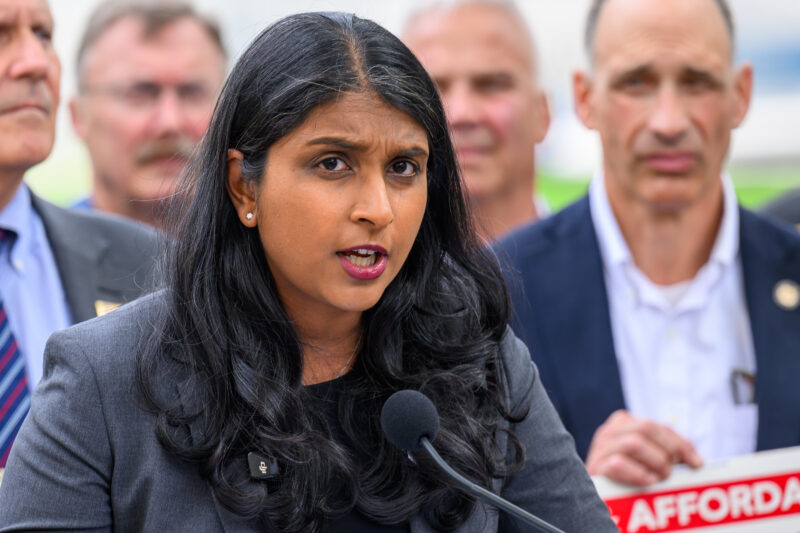
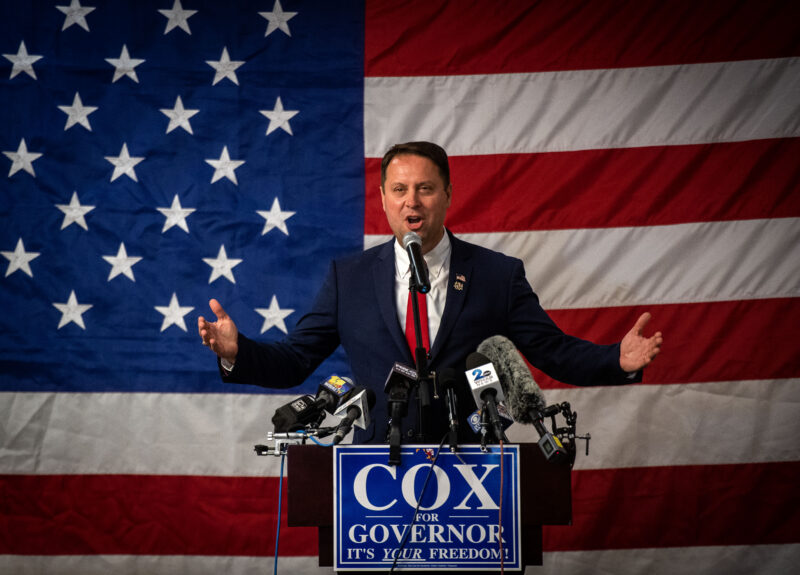







Plus, Pelosi's Al Green light
Patrick T. Fallon / AFP via Getty Images
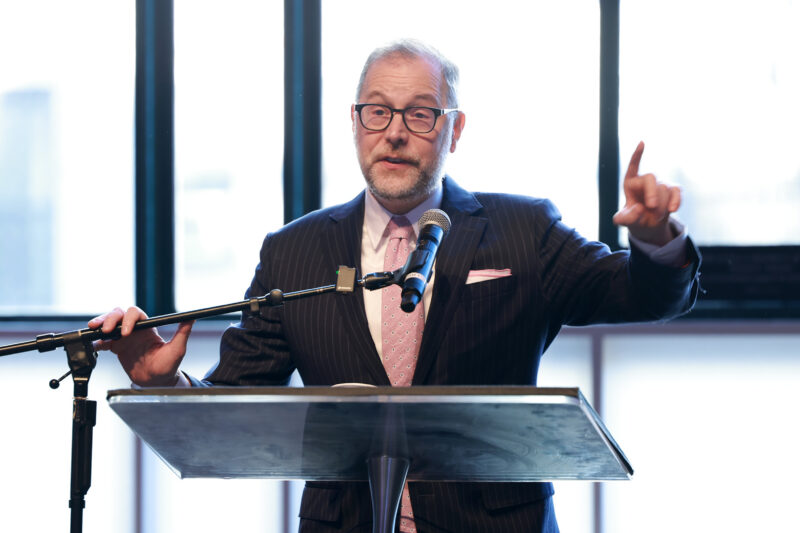
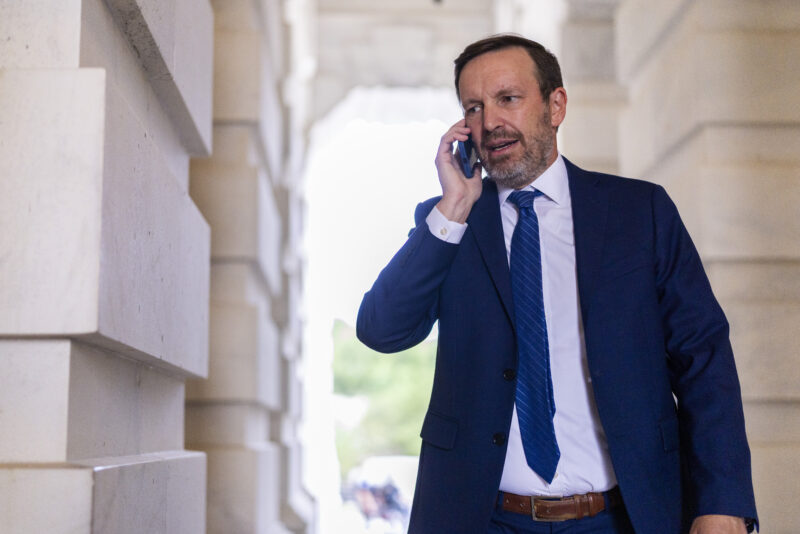
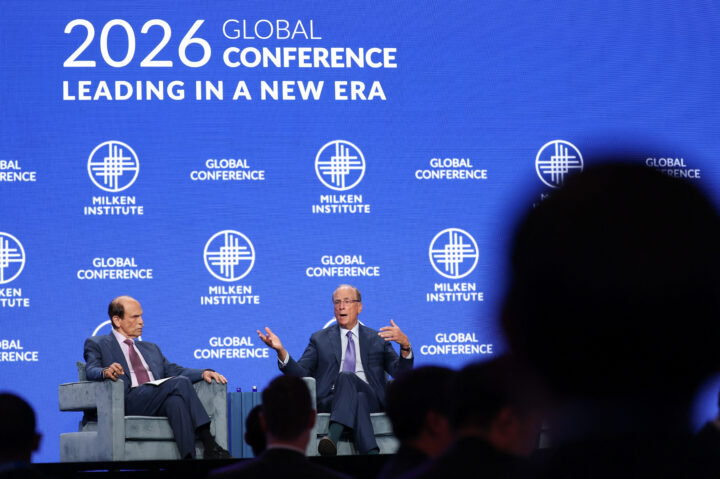
Laurence D. Fink (R), co-founder, chairman and CEO of BlackRock, speaks next to Milken Institute chairman Michael Milken during the 29th annual Milken Institute Global Conference at the Beverly Hilton in Beverly Hills, California on May 5, 2026.


 Add JewishInsider on Google
Good Thursday morning.
In today’s Daily Kickoff, we cover the White House’s new counterterrorism strategy targeting the Muslim Brotherhood, Iran and Islamic State elements in Africa, and report on Rep. Nancy Pelosi’s backing of an anti-Israel congressional candidate in Houston who is at odds with the city’s Jewish community. We cover Georgetown University Law School’s decision to replace a Jewish commencement speaker with a critic of Congress’ antisemitism hearings, and talk to CNBC’s Sara Eisen on the sidelines of the Milken Institute Global Conference. Also in today’s Daily Kickoff: Adeena Sussman, Ken Griffin and Eyal Waldman.
Today’s Daily Kickoff was curated by JI Executive Editor Melissa Weiss and Israel Editor Tamara Zieve, with an assist from Danielle Cohen-Kanik. Have a tip? Email us here.
What We’re Watching
- President Donald Trump is hosting Brazilian President Luiz Inácio Lula da Silva this morning at the White House. The sit-down comes amid continued uncertainty over the state of U.S. negotiations with Iran. Fox News reported that Trump said the parties had a week to reach an agreement — establishing a deadline set to expire at the president heads to Beijing for his summit with Chinese President Xi Jinping.
- Secretary of State Marco Rubio arrived in Rome this morning, and met withPope Leo XIV at the Vatican amid tensions between the Holy See and the White House over the war in Iran. Earlier this week, Trump told Hugh Hewitt that the pontiff’s criticism of the war was “endangering a lot of Catholics.”
- The Washington Institute for Near East Policy is holding its annual policy dinner tonight.
- Magnum Ice Cream Company is holding a stakeholder meeting today, where it will face pressure from NorthStar Asset Management, which is working with Ben & Jerry’s co-founder Ben Cohen, over steps taken in recent months by Magnum, which owns Ben & Jerry’s, to tamp down on the ice cream company’s social activism.
- Voters in the U.K. are casting ballots in local elections around the country, with Prime Minister Keir Starmer and his ruling Labour party expected to face significant losses.
What You Should Know
A QUICK WORD WITH JI’S GABBY DEUTCH
The country’s consummate insiders gathered at the Milken Institute Global Conference in Beverly Hills this week. But far away from the five-star hotels where attendees closed business deals and mingled over salmon bento boxes, there is concern over an anti-elite sentiment that is dominating American politics.
The executives, philanthropists and politicians who attended the gathering took note of this increasingly populist moment while discussing how to remedy some of the legitimate concerns of Americans.
There were sessions focused on protecting the workforce in the face of disruption from AI, and on retirement planning for gig economy workers who cannot contribute to a typical 401(k). Behind the scenes, Trump Accounts — tax-advantaged savings accounts for American children, with $1,000 kicked in from Uncle Sam — were a big topic of conversation.
As some of America’s most important decision-makers discussed the turbulent downstream impacts of the AI boom, and the sense that many people are feeling left behind, a related topic that animated the many Jewish executives and investors who attended the conference.
They worry that the intermingling of populism and antisemitism, already heightened following the Oct. 7 Hamas attacks on Israel two and a half years ago, represents a dangerous combination.
“Antisemitism is a manifestation of extremism and populism,” TD Bank Vice Chair Jeffrey Solomon told Jewish Insider. “Extremism on the left and extremism on the right, neither one of those is good for us as Jews, but it’s not good for a lot of people.”
SPEAKER SELECTION

After a Jewish university leader withdrew as Georgetown University Law Center’s commencement speaker following backlash from anti-Israel student activists, the school replaced him with a professor who criticized congressional hearings on campus antisemitism as a form of “McCarthyism” aimed at chilling free speech, Jewish Insider’s Haley Cohen reports.
Chain of events: In an email to law school students on Wednesday, Joshua Teitelbaum, the interim dean of Georgetown Law, wrote that “in the past week, a number of law students raised concerns” about the speaker selection of Morton Schapiro, an economist and the former president of Northwestern University for over 10 years. Teitelbaum said those concerns were “due primarily to opinion essays [Schapiro] published on Israel and Palestine in the aftermath of Oct. 7, 2023.” Schapiro withdrew after learning of the students’ concerns, Teitelbaum said, and announced that Georgetown Law professor David Cole would replace him.
PROTEST POLITICS
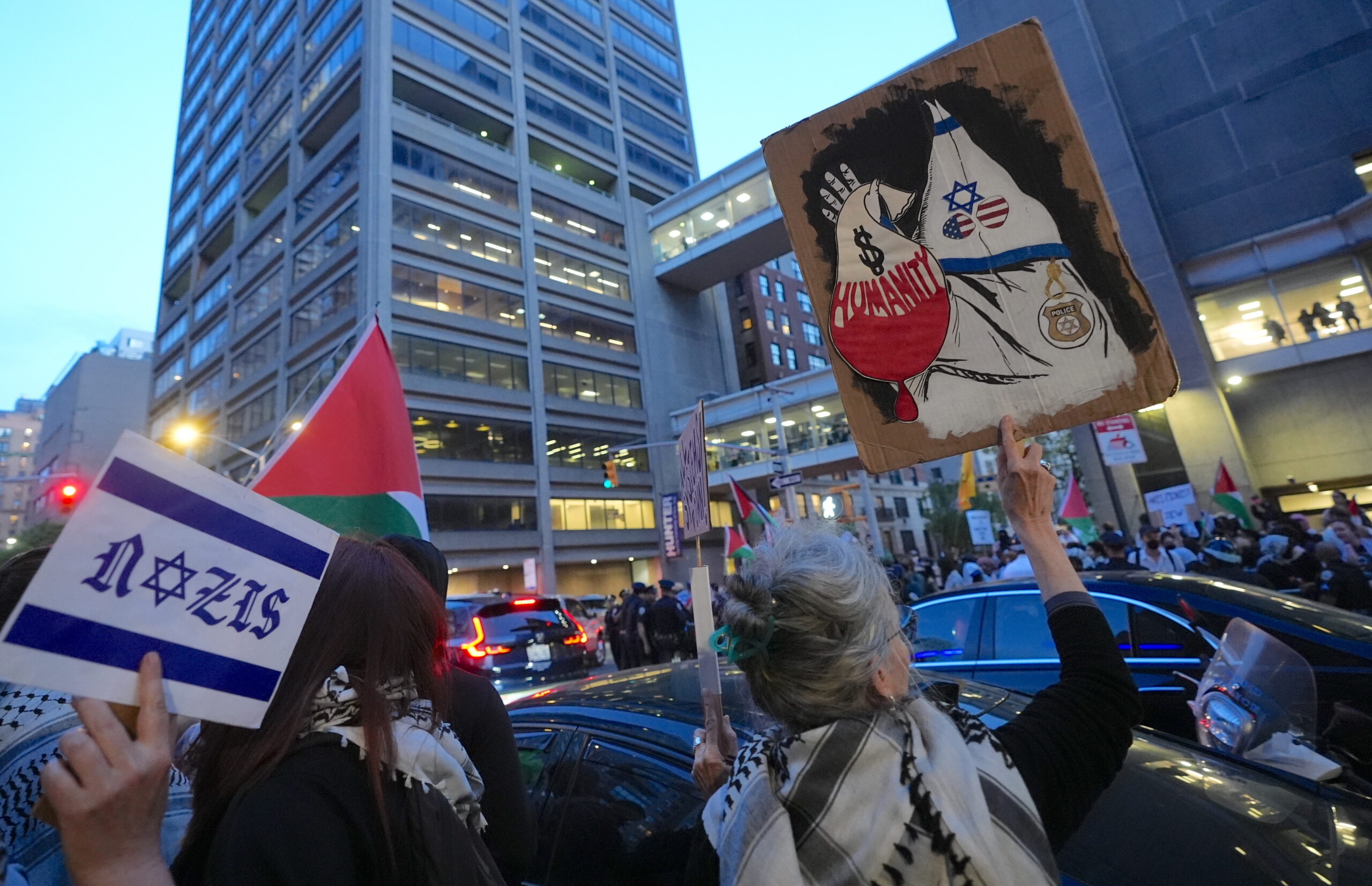
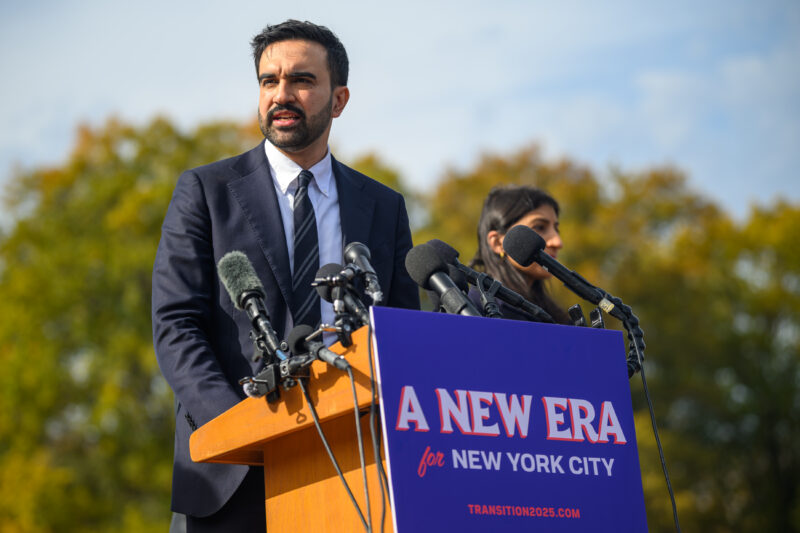
New York City Mayor Zohran Mamdani reiterated on Wednesday his criticism of the “Great Israel Real Estate Event” held at Park East Synagogue the night prior, even as fellow Democrats condemned the extremist speech and actions of protesters who sought to break the police cordon outside, Jewish Insider’s Will Bredderman reports. The event included, among other offerings, advertisements for settlements in the West Bank.
Reiterating his position: Pressed on Tuesday about plans for protests at the Manhattan shul, Mamdani released a statement strictly criticizing the event with no mention of the previous disturbance the same pro-Hamas activist group caused outside Park East last November. Jen Goodman, spokesperson for Gov. Kathy Hochul meanwhile, said, “No one should be intimidated when entering their house of worship.”
Read the full story here with additional comments from Attorney General Letitia James and Council Speaker Julie Menin.
Washington weighs in: Harmeet Dhillon, the Justice Department’s assistant attorney general for civil rights, said the department was investigating an incident in which a Jewish couple appeared to be harassed by protesters near the Wednesday event at the Park East Synagogue.
DOHA DYNAMICS
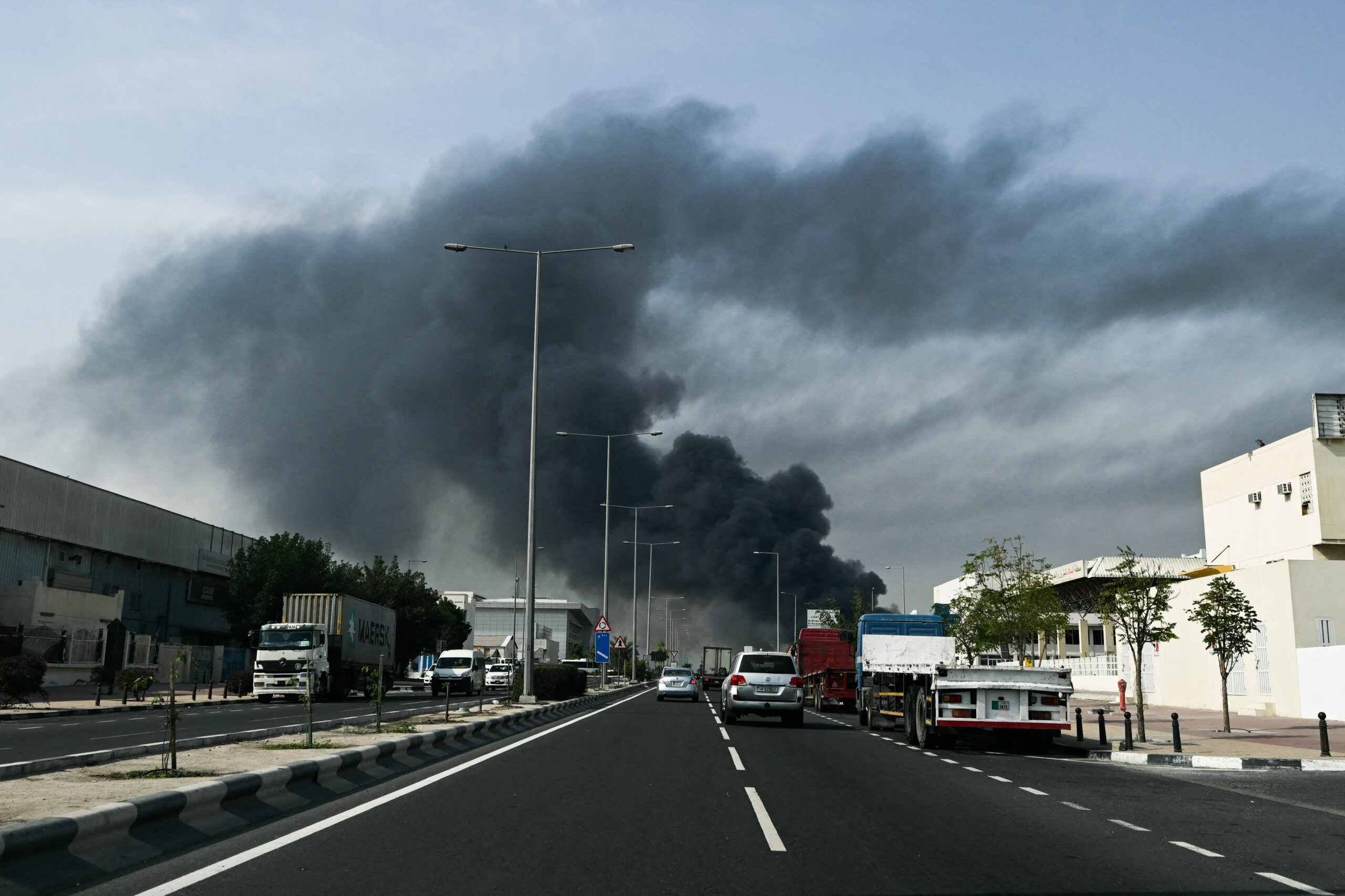
Iranian attacks on Qatar could prompt Doha to reassess its regional alignment and relationship with Tehran, experts said, though they expressed skepticism that the strikes would change Qatar’s antagonistic posture toward Israel, its funding of anti-Israel media or its harboring of Muslim Brotherhood-aligned groups, Jewish Insider’s Matthew Shea reports.
Turning point: “Iran’s strikes have created real fissures,” said Natalie Ecanow, a senior research analyst at the Foundation for Defense of Democracies. “For example, Qatar expelled Iran’s military and security attachés and cracked down on IRGC cells within its borders. Notably, Qatar’s prime minister called Iran’s strikes ‘a big sense of betrayal,’ which is language typically reserved for friends or partners, not foes. That tells you something about Qatar’s mindset before the war.”
TERROR TARGETS
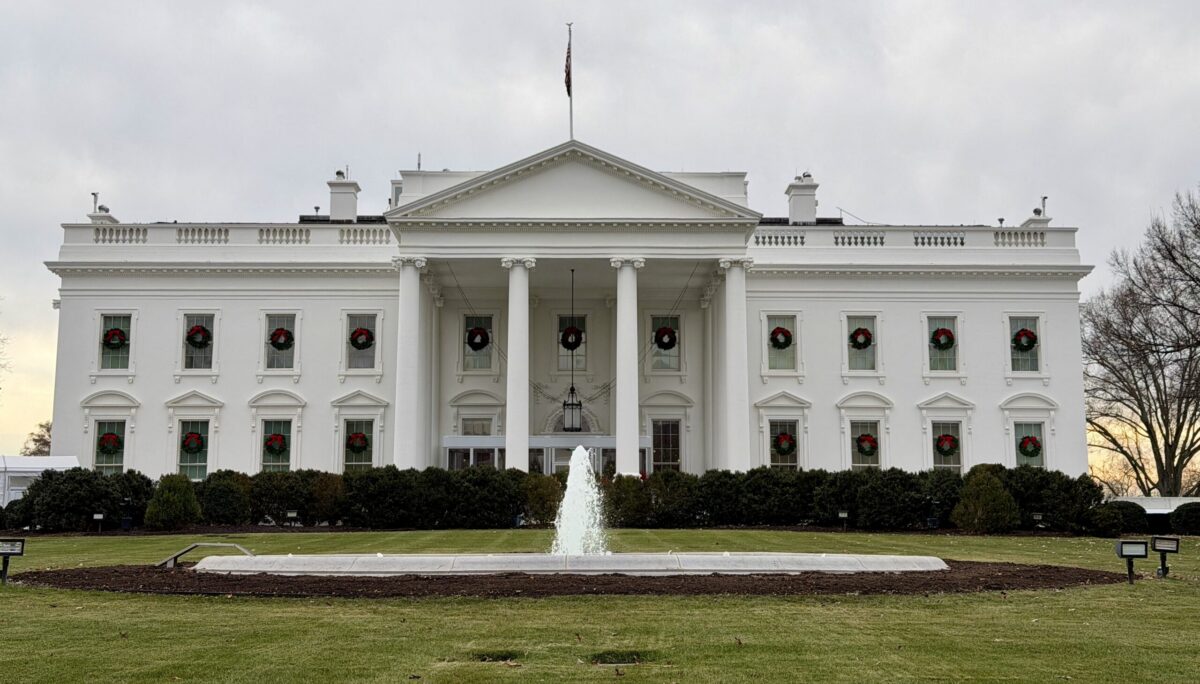
Seb Gorka, the National Security Council’s senior director for counterterrorism, announced while unveiling President Donald Trump’s U.S. counterterrorism strategy on Wednesday that U.S. officials will meet with representatives from several foreign governments this week to ask for assistance in combating terrorism emanating from Iran and elsewhere, Jewish Insider’s Emily Jacobs reports.
What it entails: Gorka, who also serves as a deputy assistant to the president and oversaw the drafting of the strategy, told reporters that as part of the strategy, the U.S. intends to seek more support on the counterterrorism front from allies who want to be “measured as a serious nation” by the Trump administration. The strategy covers how the administration will respond to threats from Islamic terrorist organizations at home and abroad, drug cartels in the Western Hemisphere and domestic political groups accused of inciting violence.
PELOSI’S PICK
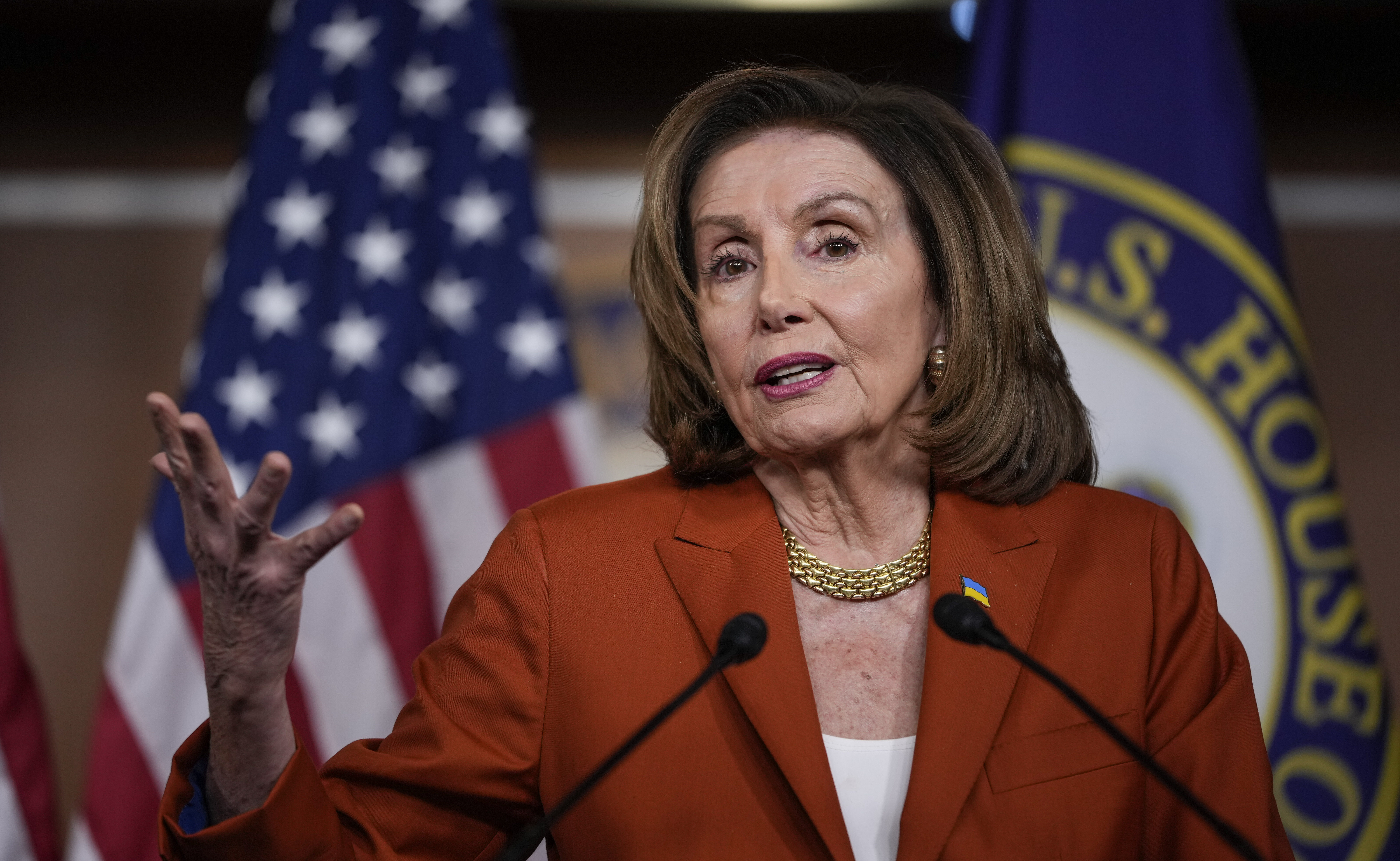
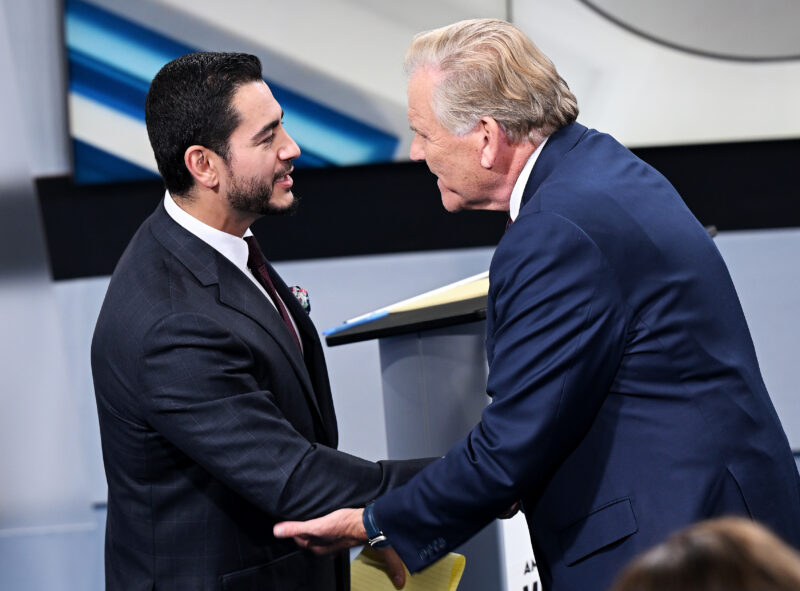
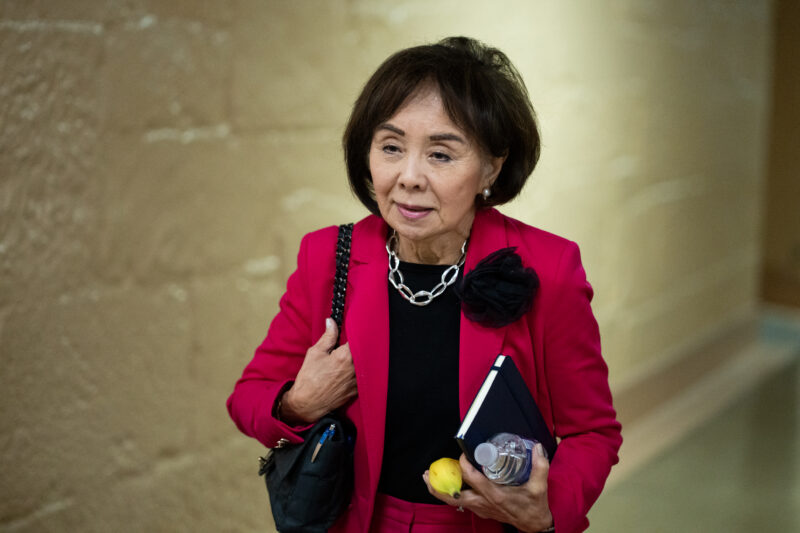
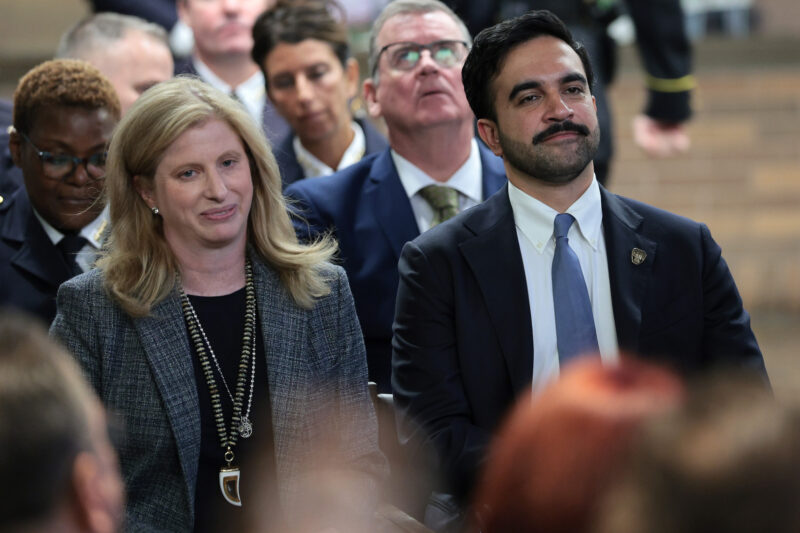
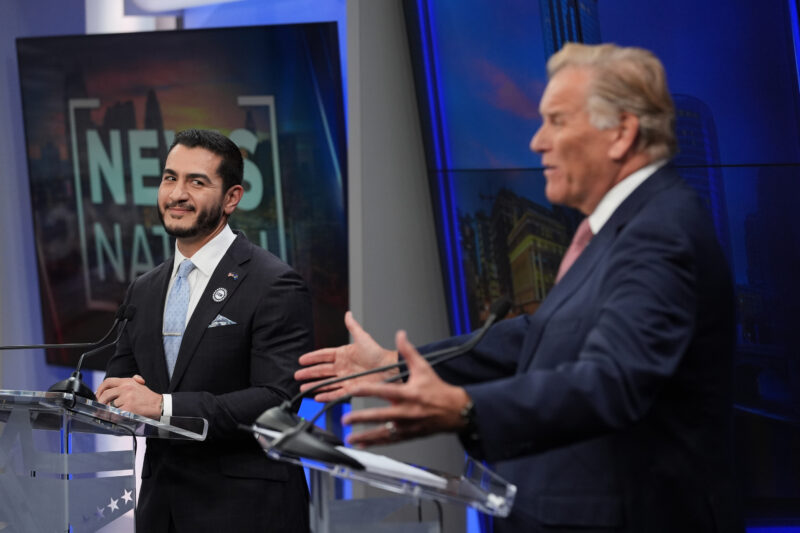
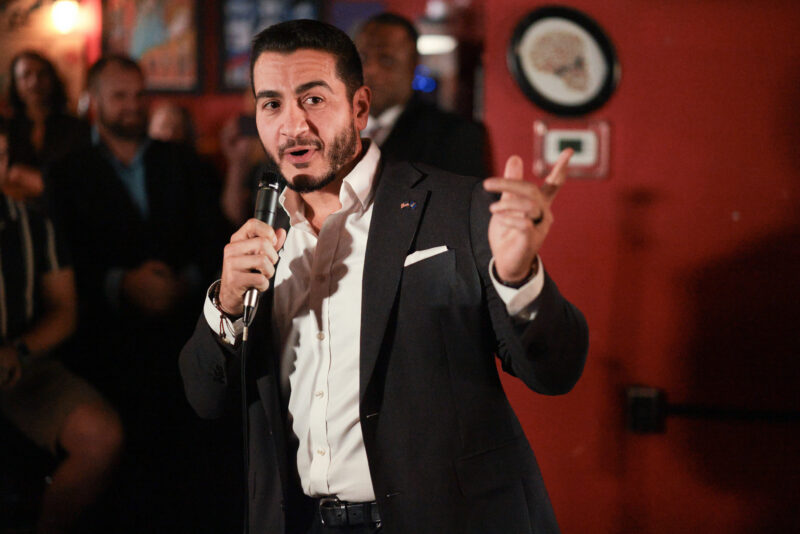
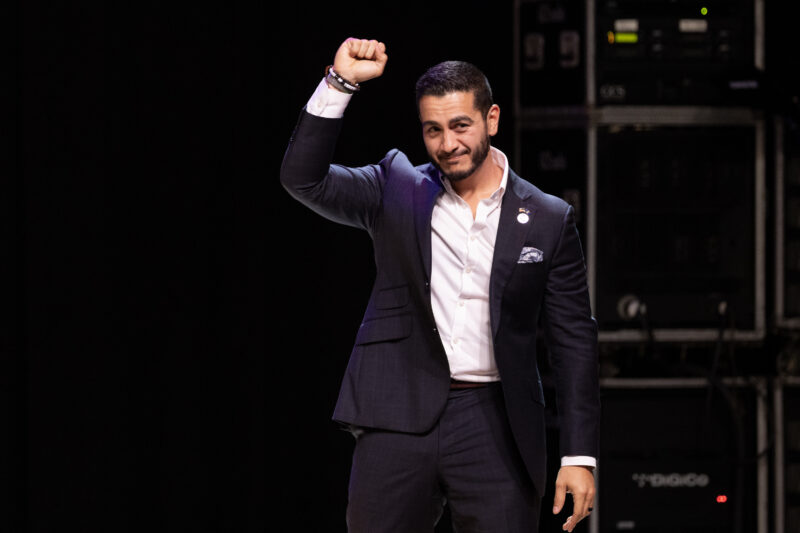
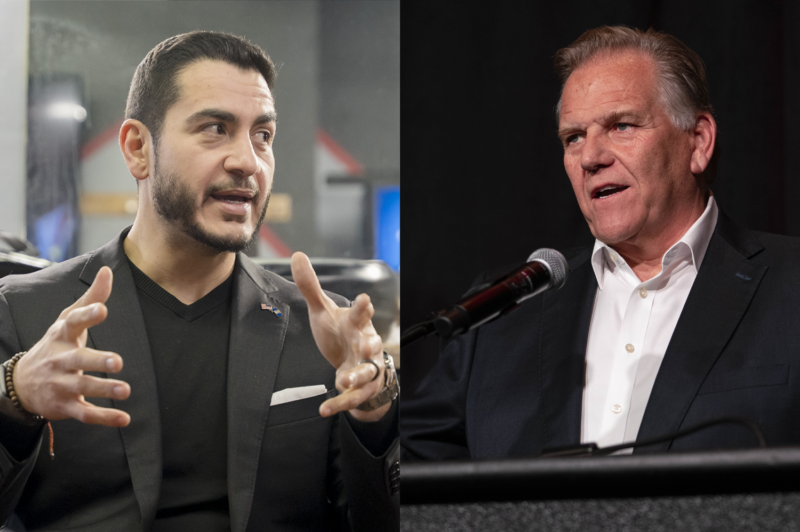
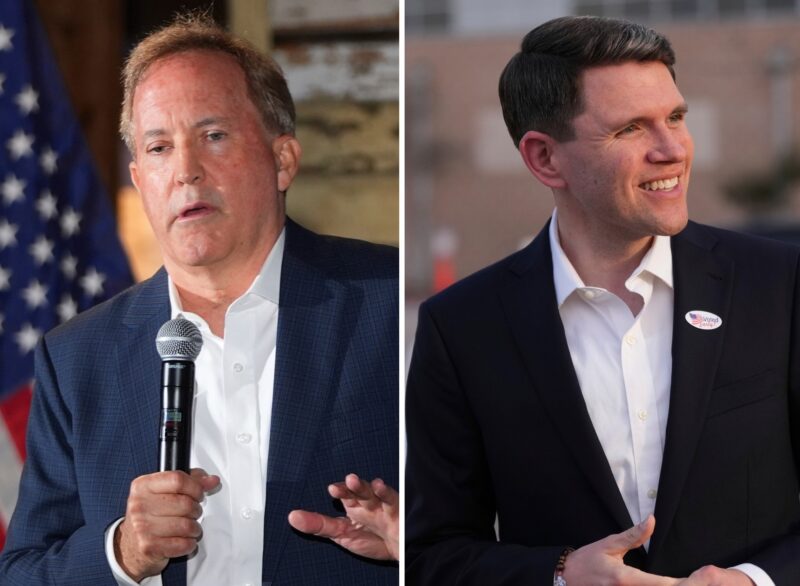
Rep. Al Green (D-TX), a vocal critic of Israel competing in a closely contested runoff against a fellow House Democrat later this month, announced in social media posts on Monday that he had received a coveted endorsement from Rep. Nancy Pelosi (D-CA), the powerful former House speaker, Jewish Insider’s Matthew Kassel reports.
Community reactions: Jewish community leaders in the Houston area were surprised to see Pelosi’s endorsement, especially as it appeared to break with her precedent of declining to engage in member-on-member races. It also fueled ongoing frustrations with Green’s alleged lack of outreach to Houston’s sizable Jewish community — a potentially critical constituency in what is expected to be a close election.
MAKING NEWS
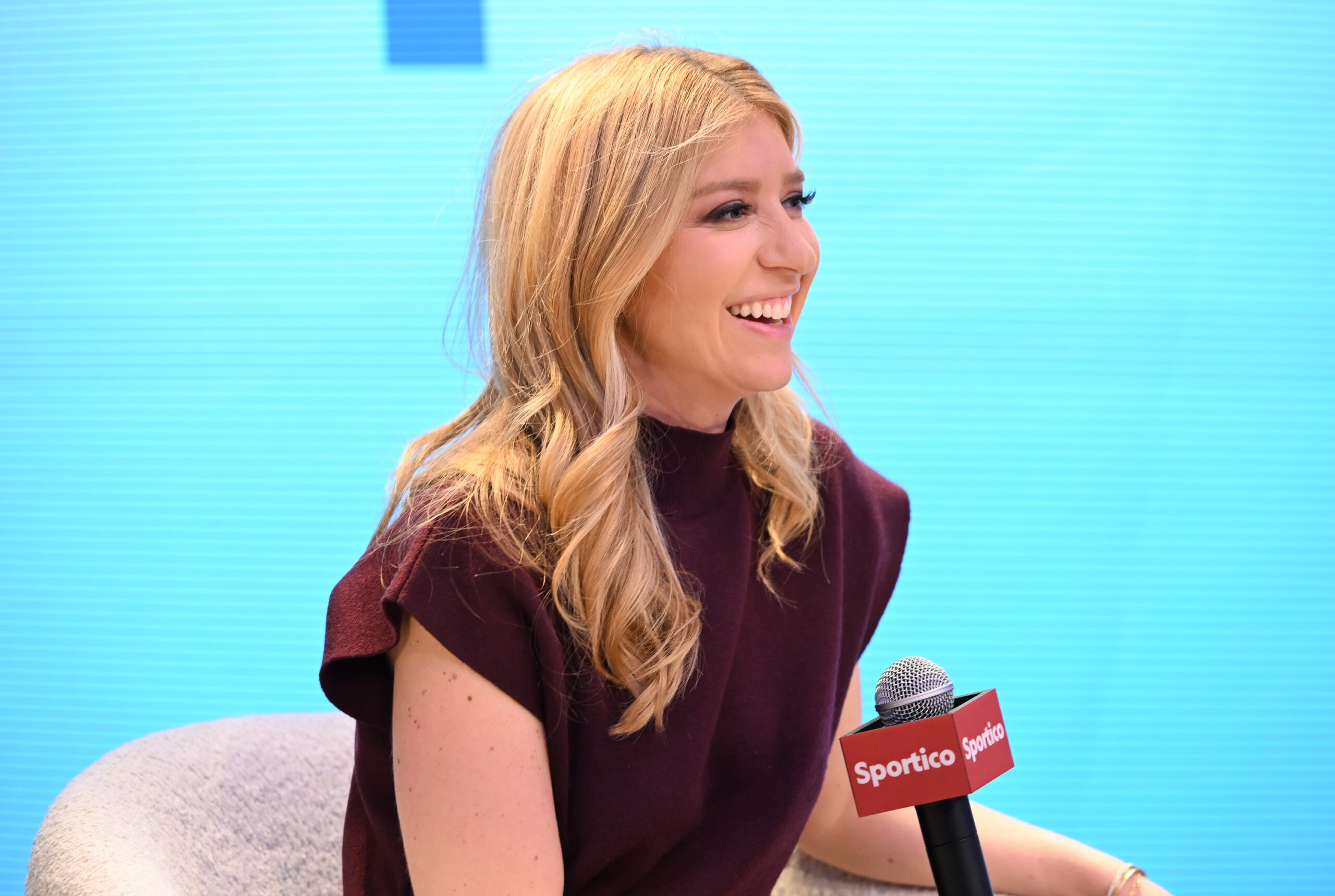
CNBC anchor Sara Eisen is a fixture at the annual Milken Institute Global Conference in Los Angeles, where she moderates marquee events, such as a one-on-one interview on Tuesday with Ken Griffin, CEO of the hedge fund Citadel. But the real reason that Eisen comes to Beverly Hills for the exclusive annual gathering is for the conversations happening far from the main stages. And much of the conversation Eisen is hearing this week, she told Jewish Insider’s Gabby Deutch, has to do with the dramatic rise in antisemitism in recent years.
Sideline conversation: “To a large extent, I reflect a lot of what the sources that I speak to [say]. That’s investors, and it’s business leaders, and it’s private equity leaders,” Eisen told JI. “A lot of these people, Jewish and non-Jewish, talk to me about it. They know about my background. They know my perspective. They see what’s happening in the political world. They see what’s happening in geopolitics,” she continued. “This is the sideline conversation.”
Worthy Reads
Tehran Talks: In Foreign Policy, Menahem Merhavy observes a shift in the rhetoric of senior Iranian officials that he attributes to a “deeper contraction in the regime’s horizon of action” as it struggles in the wake of the war with the U.S. and Israel. “The United States now appears in Iranian discourse less as a fading empire than as a force capable of demanding surrender, while Israel is treated not as a collapsing anomaly but as a resilient and operationally effective adversary. The shift is striking: The same regime that once denied the durability of its enemies now implicitly affirms it. The greater the acknowledged strength of these adversaries, the more meaningful survival can be presented as victory.” [ForeignPolicy]
Lurie’s Lure: In The Washington Post, Max Raskin, a self-identified “Republican who has been investing in San Francisco real estate for the past two years,” praises Mayor Daniel Lurie’s efforts to turn the city around following years of high crime and economic malaise. “Like Nixon in China, Lurie’s disarming charm and Democrat bona fides gave him the political cover necessary to establish these initiatives and make these changes. This is why the country’s most liberal city can experiment with a conservative idea — that if you get crime right, everything else will follow. Foot traffic picks up, which leads to more retail activity, which leads to more investment, resulting in a boom loop.” [WashPost]
Intifada in the Digital Age: In The Free Press, Warren Kinsella looks at Hamas’ use of digital technology to garner support for its cause and antipathy for Israel. “[Counterterrorism expert Khaled] Hassan said that no one should be under any illusion: For Hamas, the main weapon of the war — online and otherwise — is now a smartphone, which provides vital insights into the way Westerners live and how to capture their support. If someone is in the business of fomenting anger, he said, the internet is the best recruitment and radicalization tool in the history of the world.” [FreePress]
Word on the Street
The U.S. Air Force is planning for the Qatari luxury jet being gifted to the Trump administration to be delivered on July 4, to coincide with the U.S.’ Semiquincentennial…
Bloomberg looks at U.S. efforts to pressure the governments of Lebanon and Iraq to crack down on Iran-backed groups in the countries that are threatening the stability of the current ceasefire…
The effort comes amid ongoing clashes between Israel and Hezbollah in southern Lebanon; on Wednesday, Israel struck a Hezbollah stronghold in Beirut for the first time since the ceasefire went into effect, saying on Thursday that Radwan Force commander Ahmed Ghaleb Balout was killed in the strike…
The U.S. halted its short-lived “Project Freedom” effort to help stranded ships leave the Strait of Hormuz after Saudi Arabia denied the U.S. the use of its bases and airspace, NBC reported…
A Washington Post assessment found that Iran had damaged more than 220 installations at U.S. military sites across the Middle East during the recent war…
The Financial Times reports that Iran has increased its rate of executions in recent weeks, using a new legal framework to target Iranians who participated in anti-government protests earlier this year as well as those accused of colluding with the Islamic Republic’s enemies…
The Wall Street Journal spotlights the efforts of Mohamed Arrachedi, the Middle East regional coordinator for the International Transport Workers’ Federation, who with his team serves as a lifeline to the approximately 20,000 sailors in the region and has responded to some 2,000 requests seeking assistance…
The New York Times looks at clashes between German officials and members of the country’s intelligence community over public warnings about the domestic threat posed by Iran, with regional intelligence officials raising concerns that the threat is more severe than Berlin is acknowledging…
Sen. Rick Scott (R-FL) and Reps. Elise Stefanik (R-NY) and Josh Gottheimer (D-NJ) introduced bipartisan, bicameral legislation that would cut federal R&D funding to universities that operate campuses in Iran, China, Qatar, Turkey, Russia, Cuba, Venezuela or North Korea…
Rutgers withdrew an invitation for Arcellx CEO Rami Elghandour to deliver a speech at the school’s upcoming commencement ceremony for its engineering school after some students indicated they would not attend the event over Elghandour’s past anti-Israel commentary on social media…
Pennsylvania Gov. Josh Shapiro’s reelection campaign said the governor raised $3.6 million in the last five weeks, bringing Shapiro’s war chest to $37 million…
Citadel CEO Ken Griffin praised Rahm Emanuel’s tenure as former mayor of Chicago while attacking Illinois Gov. JB Pritzker for his handling of crime and education issues during a panel at the annual Milken Institute Global Conference this week, Jewish Insider’s Emily Jacobs reports…
A senior official at the Jewish Community Relations Council of Greater Washington said that the JCRC is receiving “significantly higher” reports of antisemitism from Montgomery County Public Schools, located just outside of Washington, than others in the region, Jewish Insider’s Haley Cohen reports…
Oaktree’s Howard Marks listed his home in Malibu, Calif., for $38.5 million, five years after purchasing the beachfront property for $31 million…
Adeena Sussman’s newest cookbook, Zariz, was named to The New York Times’ best-seller list in the Advice, How-To & Miscellaneous category; read our interview with Sussman about Zariz here…
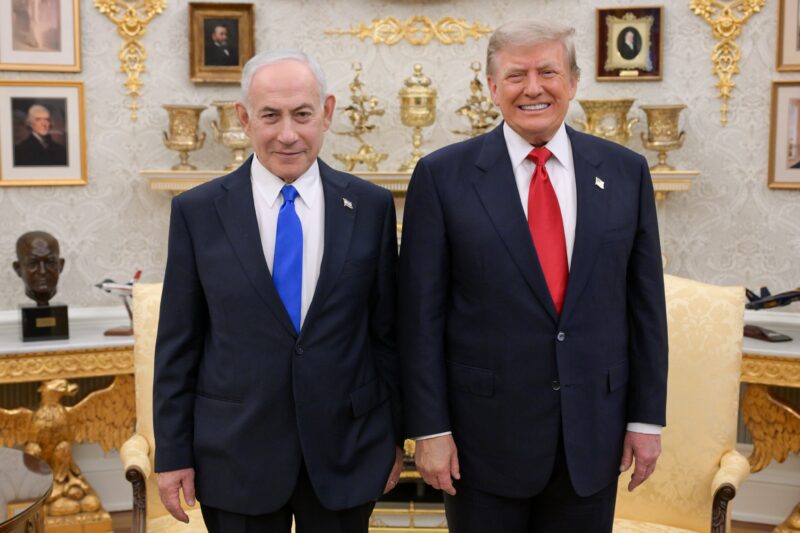
An Israeli court ordered Prime Minister Benjamin Netanyahu to provide medical records detailing his diagnosis and treatment for prostate cancer as part of a libel case against Israeli journalists and an anti-Netanyahu activist who said in 2024 that the prime minister was seriously ill…
Mellanox co-founder Eyal Waldman, whose daughter Danielle was killed at the Nova music festival on Oct. 7, 2023, was heckled by a demonstrator at the Venice Biennale who discovered Waldman was Israeli…
Hamutal Meridor’s defense-tech startup Kela is raising $200 million at a $1 billion valuation in a funding round led by Stripe and D1 Capital Partners that also includes Bill Ackman and Eric Schmidt…
Israel will send jet fuel to Germany following a request from Berlin, amid shortages resulting from the closure of the Strait of Hormuz…
Belgian Prime Minister Bart De Wever criticized U.S. Ambassador to Belgium Bill White for weighing in on an Antwerp prosecutor’s decision to levy charges against three mohels after Belgium barred nonmedical practitioners from conducting circumcisions, in a move that was heavily criticized by the country’s Jewish community…
Pic of the Day
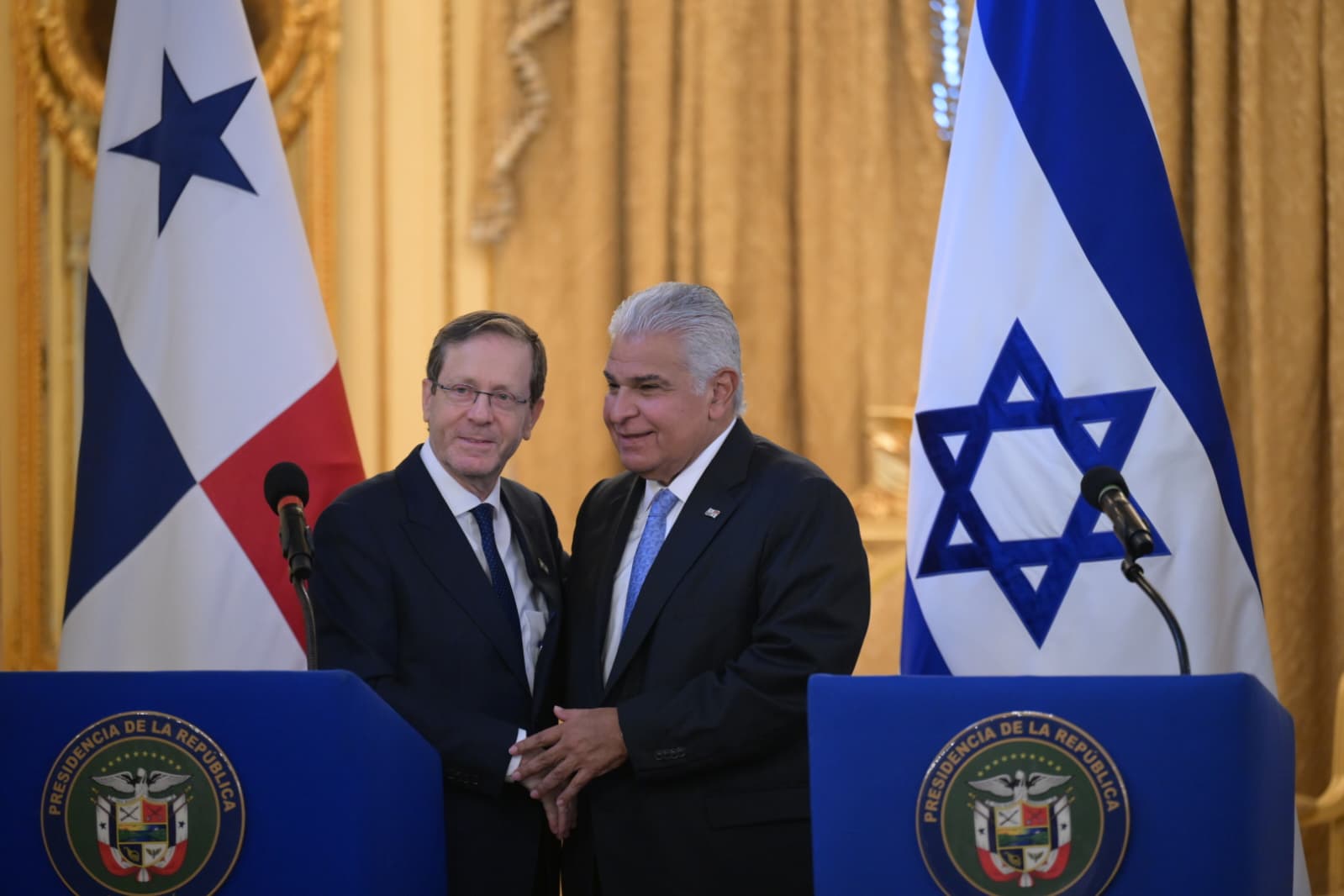
Israeli President Isaac Herzog (left) met on Wednesday with Panamanian President José Raúl Mulino in Panama City, becoming the first sitting Israeli president to visit the Central American country. From Panama, Herzog will travel on to Costa Rica for the inauguration of President-elect Laura Fernández Delgado.
Birthdays
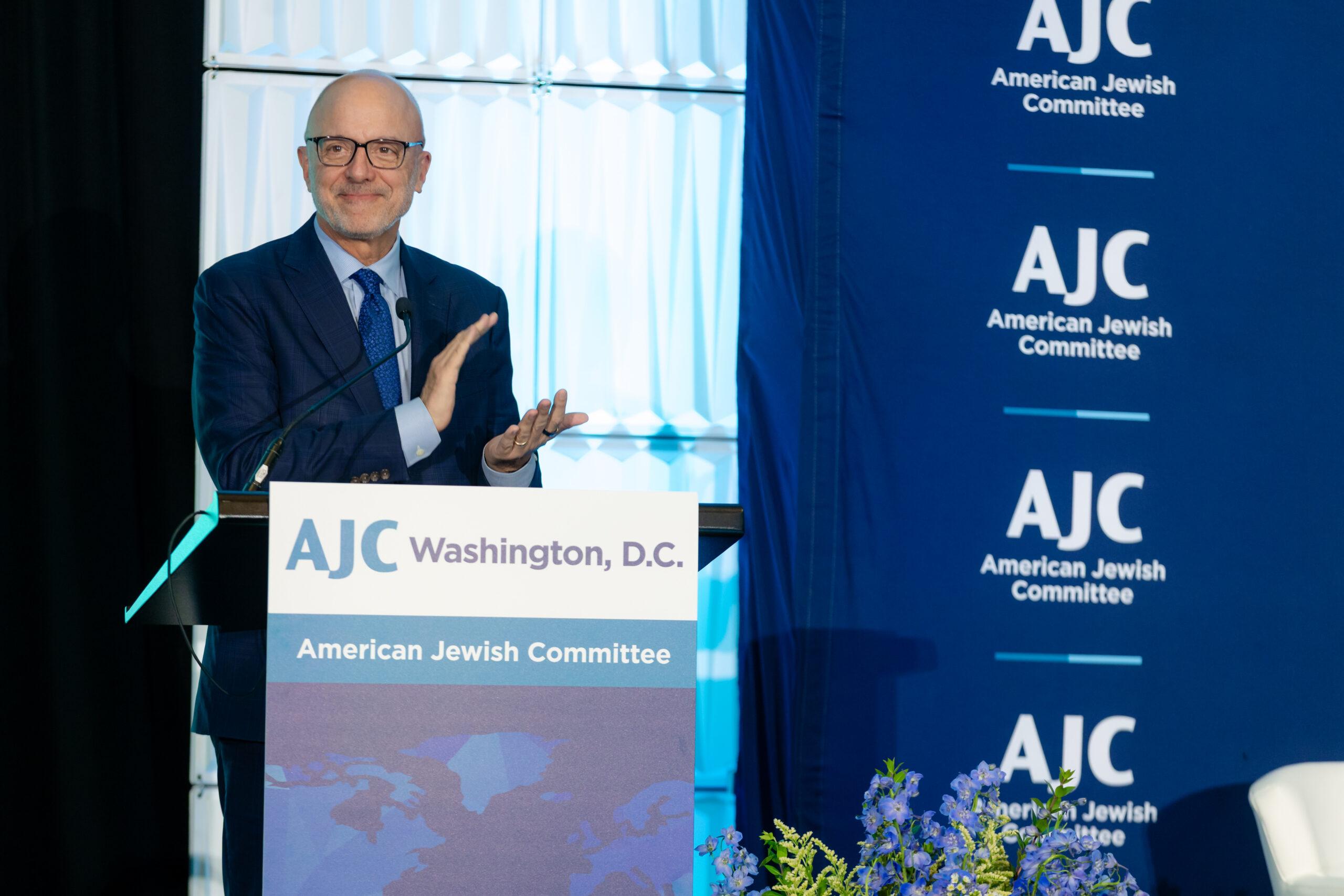
CEO of the American Jewish Committee, he was previously a member of Congress for 12 years, Ted Deutch turns 60…
Member of the New York state Assembly from 1993 to 2022, Sandra R. “Sandy” Galef turns 86… Senior member of the Mobile, Ala., law firm of Silver Voit Garrett & Watkins, Irving Silver turns 86… Napa, Calif.-based media executive and podcast host, Jeffrey Schechtman… Theatrical producer at Press the Button Productions in Monterey, Calif., Jane J. Press… Former member of the Knesset for the Shas party, Rabbi Meshulam Nahari turns 75… Former deputy secretary of state and deputy national security advisor, currently the dean of Johns Hopkins SAIS, James Braidy “Jim” Steinberg turns 73… Director of many commercially successful films including “Fast Times at Ridgemont High,” “National Lampoon’s European Vacation,” “Look Who’s Talking” and “Clueless,” Amy Heckerling turns 72… President of Harvard University, Alan Michael Garber turns 71… Mayor of El Paso, Texas, from 2013 to 2017 and again from 2021 to 2025, Oscar Leeser turns 68… Professional poker player and hedge fund manager, Daniel Shak turns 67… CEO of Rationalwave Capital Partners, a venture capital firm investing in technology companies, Mark Rosenblatt… Emmy Award-winning film, television and music video director, Adam Bernstein turns 66… Mexican actor best known for his work in telenovelas and the stage, Ari Telch turns 64… Co-founder of JewBelong, Archie Gottesman… Chairman and CEO of Hertz from 2022 to 2024, following 28 years at Goldman Sachs, Stephen Scherr turns 62… Former member of the Virginia House of Delegates, Mark H. Levine turns 60… Principal at Cornerstone Government Affairs, Keith Stern… Chief judge of the United States Court of Federal Claims, Matthew Hillel Solomson turns 52… Senior advisor at Lubavitch World Headquarters in Brooklyn, Rabbi Avraham Berkowitz turns 50… Head of congressional affairs at the Embassy of Israel in Washington, Eyal Naor turns 50… Former member of the Knesset who served as interior minister and justice minister, she now chairs Kardan Real Estate Group, Ayelet Shaked turns 50… AIPAC activist, Yana J. Lukeman… VP of sales at Harvey, Robert Warren Saliterman… Head of school at Manhattan Day School, Pesha C. Kletenik… Social entrepreneur, winemaker and CEO of Napa Valley’s OneHope, Jake Kloberdanz turns 43… Director of government affairs for the Port of Los Angeles, Arthur L. Mandel turns 41… CEO of Harris Media, he has worked on several presidential campaigns, Vincent Robert Harris turns 38… Adventurer, dogsled racer, advice columnist and writer, she raced in and completed the 2019 dog sled Iditarod, Blair Braverman turns 38… Las Vegas-based fashion blogger, model, DJ and writer, known as Bebe Zeva, Rebeccah Zeva Hershkovitz turns 33… Film and television actress, Dylan Nicole Gelula turns 32… Actor and singer, Andrew Barth Feldman turns 24… Director of advocacy and public affairs for the Jewish Council for Public Affairs, Ben Suarato… Mayor of Providence, R.I., Brett Smiley…
Counterterrorism official Seb Gorka said U.S. officials would meet with allies later this week to ask for assistance in combating terrorism abroad
Daniel SLIM / AFP via Getty Images
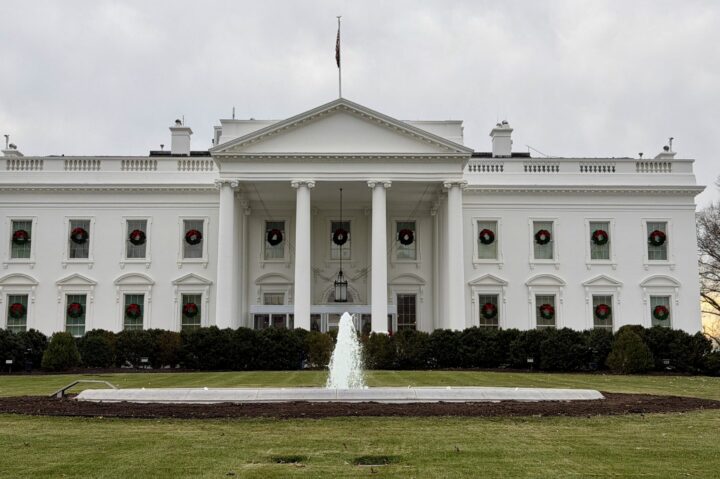
The White House is seen in Washington, DC, on December 17, 2025.
Sebastian Gorka, the National Security Council’s senior director for counterterrorism, announced while unveiling President Donald Trump’s U.S. counterterrorism strategy on Wednesday that U.S. officials will meet with representatives from several foreign governments this week to ask for assistance in combating terrorism emanating from Iran and elsewhere.
Gorka, who also serves as a deputy assistant to the president and oversaw the drafting of the strategy, told reporters that as part of the strategy, the U.S. intends to seek more support on the counterterrorism front from allies who want to be “measured as a serious nation” by the Trump administration.
The strategy covers how the administration will respond to threats from Islamic terrorist organizations at home and abroad, drug cartels in the Western Hemisphere and domestic political groups accused of inciting violence.
On combating threats from Islamist groups, the strategy places a heavy emphasis on Iran, calling the country “the greatest threat to the United States emanating from the Middle East.” It states that “decisive actions by the president … will continue until the regime in Tehran is no longer a threat to the United States.”
The U.S. will use “kinetic, intelligence, and cyber operations against Iranian-backed terror proxies who plot against Americans … Iranian dissidents and Israelis in our country,” it continues.
The strategy further states that the U.S. views the Muslim Brotherhood as “the root of all modern Islamist terrorism,” and says the Trump administration will “continue to designate its branches across the Middle East and beyond as [Foreign Terrorist Organizations] to crush the organization everywhere it operates.”
Gorka detailed to reporters how the U.S. is turning increased attention to Africa amid growing terrorist threats, describing “straggler” ISIS terrorists from Syria and Iran who had migrated to several African countries in search of “ungoverned space” to take over.
The president signed the official document behind closed doors at the White House on Monday alongside senior administration officials.
Gorka announced the strategy’s finalization while speaking at the James W. Foley Freedom awards dinner at the National Press Club on Tuesday evening. Gorka brought a copy of the strategy with him on stage and held it up for the audience of hostage advocates, telling the crowd that Trump had signed the document on Monday and it would be available to the public on Wednesday morning.
Gorka read a brief section of the strategy that referred to the return of U.S. hostages and wrongfully detained Americans abroad as a top priority.
“Countries that wrongfully detain our citizens run the danger of being designated as state sponsors of wrongful detention, with all the attendant consequences that accrue,” Gorka said. “And as the regimes in Iran and Afghanistan know, there are true consequences to that designation.”
The strategy’s signing and release comes as Gorka, who has been one of the most ardent defenders of the U.S. war with Iran in the Trump administration, has been reportedly lobbying the president to consider nominating him as the next director of the National Counterterrorism Center. The role is currently being filled in an acting capacity by Joe Weirsky, a Marine and Army Special Operations Command veteran, following the resignation of former NCTC Director Joe Kent in protest of the war.
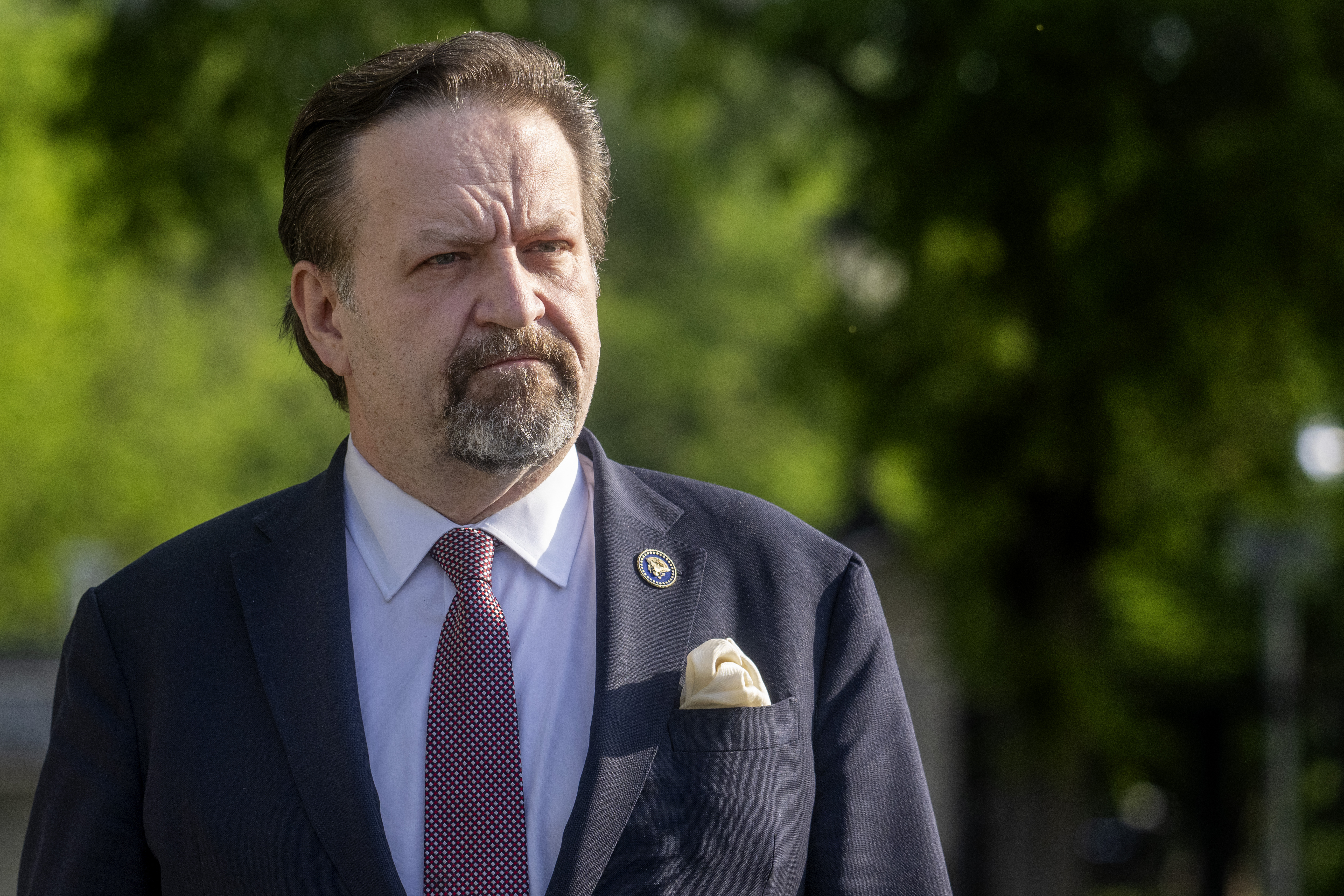
Sebastian Gorka said the administration intends to target other branches with the goal of destroying the entire Muslim Brotherhood
JIM WATSON/AFP via Getty Images
U.S. Senior Director for Counterterrorism Sebastian Gorka walks outside the White House in Washington, DC, on May 7, 2025.
Sebastian Gorka, the National Security Council’s senior director for counterterrorism, defended the Trump administration’s executive order mandating the assessment of certain branches of the Muslim Brotherhood for designation as foreign terrorist organizations, which some critics have argued does not go far enough.
Gorka, speaking at a Hudson Institute conference on antisemitism on Friday, said that the administration is following the procedures and limitations laid out in federal law relating to terrorism designations, and said that the administration fully intends to target further branches of the Muslim Brotherhood with the ultimate goal of destroying the entire organization.
Analysts have criticized the administration for only naming the Egyptian, Lebanese and Jordanian branches of the Muslim Brotherhood for potential designation, not mentioning Turkey and Qatar’s backing of the group and not designating the entire Muslim Brotherhood from the start or explicitly laying out an intention to do so.
“It’s a statement of designation to occur, not a de facto designation, because we follow the law in the Trump administration. We believe in the Constitution and the statutes agreed upon by Congress and signed by the president. We don’t just do stuff because we want to,” Gorka said.
“FTO designation has to be done according to the law. According to the law a foreign terrorist organization must have killed Americans or must have gravely affected the national security of the United States, and that must be proven with predominantly unclassified information that stands up in a court of law and which is less than three years old,” he explained.
The NSC official said that the administration’s executive order had been “woefully misinterpreted and misrepresented by the clickbait prostitutes of social media, some of whom paint themselves as MAGA, who just need the clicks,” making specific reference to “Laura” — likely far-right influencer Laura Loomer, and “Mr. Carlson” — Tucker Carlson.
Gorka said that the three branches named in the executive order are “slam dunk cases,” and that the administration plans to go after additional branches.
“For the record, this is not the end, it is just the beginning, and we are assiduously working on the next tranche of designations right now,” Gorka said.
The executive order, on its own, does not designate branches. It names branches within the three countries to be assessed for potential designation.
“Please read the statute, you cretinous individuals. We’re not designating states, it’s organizations,” Gorka continued. “So if you think, ‘Oh my gosh, you left this country out,’ that’s because you cannot call a country a foreign terrorist organization by American law. Do your homework unless, of course, you’re in it for the ads and the clicks.”
He emphasized that the administration is “committed to one thing: destroying the Brotherhood, its offshoots and global jihadism writ large — and suppressing it to a point at which it is no longer a strategic threat.”
Some allies of the administration like Sen. Ted Cruz (R-TX) have said the administration intends to take a “bottom-up” approach to ultimately designate the entire organization.
Gorka said that the Muslim Brotherhood’s antisemitism is a key part of the reason the administration is going after the group.
“Rejection of the Jew is rejection of the West is the rejection of Christianity as well,” Gorka said.
“The Muslim Brotherhood is the progenitor of all modern global jihadism and the propagator, the transmission belt of the most heinous antisemitic Jew hatred today across the region and sadly in America as well,” Gorka continued.
Addressing antisemitism more broadly, Gorka said that some hide their hatred “behind geopolitics.”
“‘I just don’t like the government of [Israeli Prime Minister] Bibi Netanyahu’ — no, you’re a Jew hater, because there’s only one Jewish state,” Gorka continued. “It embeds itself in international organizations, in the curricula of our colleges and universities, in the voices of some who hide behind social media and even openly espouse this ancient poison. Quote, ‘From the river to the sea.’”
Citing the May murder of Israeli Embassy employees Yaron Lischnisky and Sarah Milgrim just minutes away from the conference’s location in the name of anti-Israel ideology, Gorka characterized antisemitism as a serious security threat to the homeland.
Jewish Insider’s senior national correspondent Gabby Deutch contributed reporting.
The 13 senior police officials were in the midst of their trip when a terror attack occurred at a Jerusalem bus stop
CSI
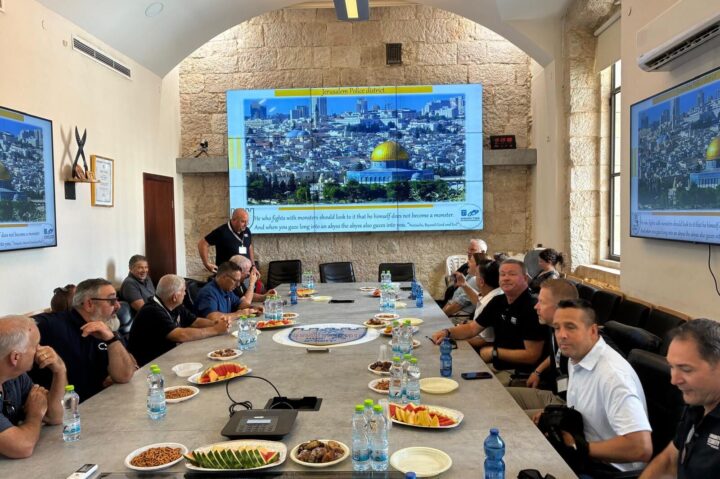
Delegation of New York police chiefs at the Jerusalem Police Headquarters
A delegation of 13 senior police officials from the New York area returned to the U.S. on Friday fresh off an intensive week in Israel designed to increase their counterterrorism training and understanding of antisemitism.
Organized by Israel’s Ministry of Diaspora and Combating Antisemitism, along with U.S. Jewish security groups Community Security Initiative and Community Security Service, the trip included a tour of Mabat 2000, the visual surveillance system deployed by Israel Police and visits to the Nova music festival massacre site and several kibbutzim attacked on Oct. 7, 2023.
“These are all things that these police commissioners will all relate to,” said Mitch Silber, executive director of CSI.
“This trip has enhanced my understanding of Jewish culture, enabled me to observe firsthand the challenges Israeli law enforcement faces and will help us better protect the Jewish community and the county as a whole,” Kevin Catalina, the police commissioner of Suffolk County on Long Island, told Jewish Insider. “The knowledge and experience gained during this trip will no doubt prove invaluable.”
Silber reflected on a tour of Yad Vashem, Israel’s Holocaust museum and memorial — describing it as one of the most meaningful parts of the trip.
“You’ve got American police chiefs from the greater New York area walking through Yad Vashem, hearing about the origins of the Nazi regime and how the Holocaust happened.”
“The goal is to bring New York-area law enforcement and local security partners to Israel for training on antisemitism, how Israel encounters terrorism and [to learn about] the Arab-Israeli conflict,” Silber told JI. “How do you sensitize a police department that’s probably not particularly Jewish and to understand, why is it that they need to have a police car outside of a sukkah? What even is Sukkot? What is Yom Kippur? By helping them to understand the Jewish experience and why Jews seem to be disproportionately the target.”
The delegation was made up of senior police executives, chiefs and commissioners from Long Island, Westchester and Rockland counties and Connecticut. Many were returning to the Jewish state for their second time — following a similar trip that ran in early October 2023, but was cut short due to the Oct. 7 attacks.
“I was on the CSI/CSS trip that experienced Oct. 7 in Ashdod and had to be evacuated,” Mike Kopy, public safety commissioner of Rye, N.Y., told JI. “Even as we headed to the airport that day I saw the resilience of ordinary Israelis as they headed to their bases. I thought it was important to return now in order to better understand the current situation and take what we have learned about antisemitism and counterterrorism home to New York to better protect our Jewish community and residents.”
This trip also provided a firsthand glimpse into some of the challenges Israel Police confront. On Monday, six Israelis were killed when two terrorists opened fire at a bus stop in Jerusalem.
At the time of the shooting, “we were on our way to the Israel National Police Jerusalem command center,” said Silber. “We met with senior Jerusalem police officials to learn how you police a multiethnic, multireligious city like Jerusalem.”
According to data from early 2025, Jews were the target of 62% of all hate crimes in New York City. “Why is that?” Silber said. “Some of the lectures we’ve gotten are about the history of Jewish people in European countries and the trend of at some point a government deciding it’s not worthwhile protecting those communities and those communities have to move. It all depends on whether law enforcement wants to protect them or not.”
Trump’s senior director for counterterrorism: ‘I was worried by this neo-Buchanan isolationism, but I look at President Trump's actions, they have no hold on him’
JIM WATSON/AFP via Getty Images
U.S. Senior Director for Counterterrorism Sebastian Gorka walks outside the White House in Washington, DC, on May 7, 2025.
Seb Gorka, the White House senior director for counterterrorism and a deputy assistant to the president, aired his grievances with the anti-Israel faction within the Republican Party on Tuesday, alleging that the wing of the GOP aligned with podcast host Tucker Carlson is “basically Pat Buchanan in a new guise.”
Gorka made the comments in a conversation on counterterrorism and U.S. strategy at the Hudson Institute after being pressed on the foreign policy disputes within the MAGA movement and Carlson’s grievances with President Donald Trump’s decision to strike Iran’s nuclear facilities in June.
Asked by moderator Michael Doran, a Hudson senior fellow and director of the Center for Peace and Security in the Middle East, if he was comfortable addressing the growth of anti-Israel, antisemitic sentiment on right-wing podcasts and social media, Gorka replied, “Yeah, I am, because it bothers me immensely, but I’ve come to a certain realization with regards to that, that this wing of isolationism is nothing new. We had this 100 years ago.”
“This is just a poor, substandard repackaging of neo-Buchananite isolationism,” Gorka said, referencing Buchanan, the former Nixon communications director who became an outspoken critic of Israel. “It’s actually a more shallow version. Pat is far smarter than this version of isolationism.”
Gorka said that he is “actually in a better place with” the onslaught of anti-Israel rhetoric from Carlson’s wing of the party than he was previously, explaining that he realized that most of the rhetoric was coming from “probably half a dozen very loud people on Twitter and Rumble,” the right-wing video platform.
“You get out of the miasma, the cesspit that is social media, and you talk to representative MAGA voters, of the 80 million that put the president back in the White House, they don’t think that we should pull down the shutters on the Pacific and the Atlantic coast,” Gorka explained. “They don’t think that Israel is the reason for Oct. 7. They actually have a very special place in their heart for Israel, and they don’t think that hospitals being bombed in Ukraine is a good thing because somebody offered NATO membership to Ukraine, allegedly, a decade ago.”
“As an immigrant to this country, a legal immigrant to the United States, one of the most trenchant indicative characteristics for me of the American people is common sense. They understand who is responsible for Oct. 7. They understand who [Russian President] Vladimir Putin is. And as such, I was worried by this neo-Buchanan isolationism, but I look at President Trump’s actions, they have no hold on him,” he continued.
Gorka then pointed to the early days of the first Trump administration, alleging that at the time, then-Defense Secretary James Mattis and Secretary of State Rex Tillerson expressed hesitation about moving the U.S. Embassy in Israel to Jerusalem out of fear that doing so would cause a third world war.
Gorka said that Trump told concerned members of his Cabinet at the time that they were going through with the move because, “A) We promised the people of Israel 23 years ago, and we’ve broken that promise every six months of 23 years. B) I promised the American electorate in the campaign. We’re doing it. And C) It’s the right thing to do.” He argued that the “moral clarity” shown by Trump on issues impacting Israel highlighted the contrast between the president and his detractors on foreign policy matters.
Earlier in the program, Gorka told Doran that the president’s approach to the Middle East was heavily focused on combating Iran.
“You need to understand one thing: When the president looks at the region, he doesn’t slice it down into cylinders of excellence. He doesn’t care if you’re the Syrian desk officer or the natural resources expert. He has one overlay for the whole AOR [Area of Responsibility], and that one metric, that one prism, is Iran, and he’s absolutely right,” Gorka said. “Iran is front and center in everything we do in the region, because they remain the greatest state sponsor terrorism, and the world would be a much safer place if that were not the case.”
Gorka noted that when Trump is asked by reporters about anything related to national security, “more than 50% of the time … the president will bring up Iran,” adding that this was “especially” the case “before [Operation] Midnight Hammer, because it really is on his mind that this is the threat. A nuclear Iran, an ideologically Islamo-fascist regime that wishes to acquire the most dangerous weapons in the world, is a threat to all decent peoples.”
Turning his attention to Israel, Gorka argued that the Jewish state’s “post-Oct. 7 operations have rewritten the map of the Middle East for the next 50 to 100 years.” He praised Israel’s military moves in Syria and Lebanon, crediting the IDF with taking down the Assad regime in Damascus and significantly weakening Hezbollah.
As for whether the U.S. will undertake additional operations in the region to target Iranian proxies, Gorka said the “jury is still out on that,” but praised Trump’s strikes against the Houthis.
“We had great success with our operation against the Houthis. Again, it wasn’t well understood by the so-called experts. For the president, the action against the Houthis was about one thing and one thing alone. When we told him there had been 150 attacks against U.S. vessels going through the Straits and that they’d actually fired on naval vessels as well, he said, ‘Well, that will not be allowed to stand.’ It’s not just about U.S. interests [but] about global freedom of maritime transport. So all of these things are connected,” Gorka said of Trump’s motivation to strike the Iran-backed Yemeni terror group.
Gorka also disputed the notion that the president was tied down by ideological labels, but rather that he’s focused on achieving results and fixing problems: “Here’s the trouble for the Beltway with understanding the current commander in chief: there is no ideological taxonomy into which he will fall.”
Kent has come under scrutiny for past links to white supremacists and neo-Nazis, promotion of conspiracy theories and echoing pro-Russia talking points

AP Photo/Jenny Kane
Former congressional candidate and counterterrorism official Joe Kent speaks during a debate at KATU studios on Monday, Oct. 7, 2024, in Portland, Ore.
Sen. Thom Tillis (R-NC) voted with Democrats against Joe Kent, the administration’s controversial nominee to be director of the National Counterterrorism Center, though Kent was nevertheless confirmed on Wednesday with support from all other Senate Republicans.
Kent has come under scrutiny for past links to white supremacists and neo-Nazis, promotion of conspiracy theories and echoing of pro-Russia talking points, as well as his opposition to the U.S. strikes on the Houthis, though those issues did not feature prominently in his confirmation proceedings.
Tillis told Jewish Insider he voted against Kent because of his past comments on the Jan. 6, 2021 attack on the U.S. Capitol. Kent has defended rioters involved in the attack, claimed the FBI was involved in the attack and said it should be dismantled.
“It’s the Jan. 6 tripwire,” Tillis said. “I don’t even get to the other things that I think probably add an argument. People make comments about conspiracy theory, all that stuff — [Jan. 6] is a red line for me. … I take personal[ly] dismissing something that endangered police officers. So — that simple.”
Tillis has declared his opposition to other Trump nominees for similar reasons, including effectively torpedoing the nomination of Ed Martin to be U.S. attorney for Washington, D.C.
Some Democrats raised concerns about Kent’s extremist ties ahead of the vote.
“I am deeply alarmed that Republicans are charging ahead to put it under the thumb of a conspiracy theorist who espouses white supremacist views, and is patently unqualified for this important role in just about every way imaginable,” Sen. Patty Murray (D-WA) said on the Senate floor. “There’s his track record chumming it up with white supremacists, from discussing campaign strategy with avowed white supremacist Nick Fuentes, to giving an interview to a guy who has defended Hitler, to rallying with the founder of a far-right paramilitary group, and let’s not forget the Proud Boy that he hired as a consultant!”
Democrats also raised concerns about reports that he had sought to manipulate intelligence reports to align with the administration’s political preferences.
Democratic Majority for Israel said that “We cannot trust someone who echoed Kremlin propaganda, courted white nationalists, and invoked antisemitic tropes. The Senate must reject him.”
Sen. Tom Cotton (R-AR), the chair of the Senate Intelligence Committee, said on the Senate floor, “Mr. Kent has 20 years of military service and 11 combat deployments during the war on terror, as well as experience as a Green Beret and a CIA officer. Mr. Kent has dedicated his career to fighting terrorism and keeping Americans safe.”
He also highlighted the fact that Kent’s wife was killed while serving in Syria.
Bipartisan group of experts urges members of the Senate Foreign Relations Near East, South Asia, Central Asia and Counterterrorism subcommittee to keeping engaging with Mideast allies

Leigh Vogel/Getty Images for Concordia Summit
Brian Hook, former U.S. special representative for Iran and senior advisor to the U.S. secretary of state, speaks onstage during the 2021 Concordia Annual Summit at Sheraton New York on September 21, 2021, in New York City.
Members of the Senate Foreign Relations Near East, South Asia, Central Asia and Counterterrorism subcommittee were urged by a bipartisan group of experts on Wednesday to support efforts to keep the U.S. engaged with Israel and other allies in the Middle East. The experts, including former Trump and Biden administration officials, warned that a U.S. retreat from the region would create a vacuum quickly filled by American adversaries.
Wednesday’s proceedings, which marked the subcommittee’s first hearing of this Congress, focused on “U.S. diplomatic strategies for a dynamic Middle East,” and was organized by Sen. Dave McCormick (R-PA), the subcommittee chairman, and Sen. Jacky Rosen (D-NV), the top Democrat on the panel.
Brian Hook, who served as U.S. special representative for Iran in the first Trump administration; Daniel Shapiro, who served as former U.S. ambassador to Israel under President Barack Obama and then as special liaison to Israel in the Biden administration; and Shelly Culbertson, a senior policy researcher at RAND focused on disaster and post-conflict recovery appeared as witnesses. All three concurred that U.S. diplomatic and military engagement was critical for ensuring that mistakes of the past are not repeated.
“The old order in the Middle East is passing away, and a new, better order is coming into view. We have too much proof of a better order to return to the failed strategies that perpetuated the old order. American diplomacy should support the new and dynamic Middle East,” Hook said. “In broad strokes, I think this means diplomacy that stands by our allies in good times and in bad. It means deterring our adversaries, and it means sustaining the incredible gains made over the last two years, especially during the recent 12-day war against the Iranian regime.”
“The United States can help midwife a regional dynamic of sovereign states anchored by Israel and Arab Gulf nations, who together counter extremism, invest in their own citizens and recognize the right of the Jewish people to live in peace alongside their neighbors. President Trump described this vision in his 2017 Riyadh speech. He deserves great credit for realizing this vision across his first term and into the second term,” he continued.
Hook went on to say that the U.S. “should help organize our allies around shared interests.”
“For example, countering Iran’s threats to the U.S. and the region, advancing the peace process through the Abraham Accords and deepening economic and cultural ties. But continued success in the region is not inevitable. American leadership coupled with burden sharing by our partners is essential for this vision to become a reality. We should convert the recent military gains into an enduring balance of power that favors America and her regional allies. The U.S. and its partners should continue resisting Iran’s expansionist, antisemitic designs in the region,” he argued.
Shapiro offered a similar message, telling senators that the U.S. has “a once-in-a-generation opportunity to help reshape the region in ways that will bring more peace and prosperity and less conflict and violence to those who live there and significant benefit to the interests of the United States.”
“President Trump was right to seek a nuclear deal with Iran through diplomacy, but given how close Iran was to a nuclear weapon and its proven willingness to attack Israel directly, I believe a military confrontation was necessary and inevitable,” Shapiro said, praising the president’s handling of the nuclear issue.
“Israeli and U.S. operations caused severe damage to Iran’s nuclear facilities. They’ll be unusable for a significant period of time, and that’s time we can perhaps extend through a range of means. Now, none of this means the threats posed by Iran and its proxies are eliminated. But the significant gains produced by military power now give us the opportunity to use all the tools at our disposal – deterrence, but also diplomacy – to consolidate those gains,” Shapiro continued.
Shapiro urged members to capitalize “on the damage to Iran’s nuclear program and the weakening of the Iranian allied access to secure a long-term improvement in the regional security environment.”
“That means seeking renewed negotiations with Iran to sustain the gains of the military strikes, prevent the nuclear programs reconstitution, secure full access for IEA inspectors, locate and remove Iran’s enriched uranium stockpile, assure zero enrichment going forward, and achieve meaningful limits on Iran’s ballistic missile inventory. It also means maintaining pressure on Iran by coordinating with European partners on the snapback of JCPOA sanctions, increasing efforts to scale back Iranian oil exports to China, and making clear that additional military strikes by Israel or the United States are possible,” he said.
Shapiro warned, however, that no progress could be made “until the Gaza war ends” and encouraged all parties to work toward a 60-day ceasefire that “really must transition directly into the end of the war.”
“That will require Israeli agreement to certain terms, but also intense pressure on Hamas by Qatar and other actors,” Shapiro explained.
Hook told senators he had “never been more optimistic about the future of the Middle East than I am now,” following the degradation of Iran’s nuclear program, while cautioning that he hoped that Israel’s actions to ensure Hamas “is uprooted from Gaza” could be conducted “in a way to maintain support here in the United States.”
Culbertson similarly praised the U.S. and Israel’s operations against Iran’s proxies and the regime’s nuclear program, while arguing that an emphasis on diplomatic efforts was necessary to “set a new course for the Middle East” and allow the U.S. to “reestablish itself as the partner of choice” in the region.
“This means rethinking what constitutes U.S. interests. Civilian displacement, state collapse and economic despair are not peripheral. They’re central to long-term global stability. These are, of course, primarily the responsibility of regional governments, but the United States has powerful tools to support progress. Doing so is not charity, it’s strategy,” Culbertson explained.
“The U.S. has repeatedly sought to reduce its footprint in the Middle East, only to be drawn back in again and again. Every administration since Jimmy Carter has launched new military operations there in response to threats to American interests. This has meant chasing symptoms instead of solving underlying problems. We now have an opportunity to break that cycle,” she added.
Culbertson also said the U.S. should mediate the ends of the conflicts in Gaza, Syria, Lebanon, Yemen and Libya, address the region’s long-term humanitarian and refugee crisis, support and facilitate post-war recovery efforts, help improve governance and job prospects in these countries, and focus on “strategic priority locations” such as Iraq, Syria, the West Bank and Gaza that “could become a model of recovery and partnership.”
Culbertson presented two potential futures, one where “conflicts grind on, economies remain stagnant, Iran, Russia and China fill the vacuum, extremist groups like Hamas and ISIS exploit social gaps, refugees flee and the United States is pulled back in again and again,” and another where “the United States steps forward with strategic leadership. We help end wars. We support governments in rebuilding. Cities recover. Youths find work. The region stabilizes and draws closer to us and our allies.”
“We can choose, at least in part, which future unfolds,” Culbertson argued.
Gorka also discussed efforts to designate the Muslim Brotherhood as a terrorist organization and end Qatari and Turkish support for Hamas
JIM WATSON/AFP via Getty Images
U.S. Senior Director for Counterterrorism Sebastian Gorka walks outside the White House in Washington, DC, on May 7, 2025.
Sebastian Gorka, the White House senior director for counterterrorism and a deputy assistant to the president, said Wednesday at the Foundation for Defense of Democracies that the U.S. is not seeking regime change in Iran, but will maintain its maximum-pressure campaign on Tehran.
Gorka also said that he supports efforts to designate the Muslim Brotherhood as a terrorist organization, suggested that he’s pursuing efforts to convince Qatar and Turkey to cut ties with Hamas and said the U.S. wants to see Syrian minority groups come to the table and join with the new Syrian government.
He said that the Trump administration views Iran as the paramount threat and focus in the Middle East, and that its strategy toward Iran is “max pressure, no regime change,” with the goal of stopping Iran’s nuclear program and ending its support for terrorist proxies.
“We are not in the business of deploying the 82nd Airborne to do regime changes anywhere. We don’t believe in that,” Gorka said.
In the long term, he added, “we would like the people of Persia, including the minorities of Persia, to eventually liberate themselves.”
Trump had publicly floated the possibility of regime change in Iran after the U.S. strikes on the country last month, but subsequently said he does not seek regime change. Some administration officials had also floated the idea of sanctions relief for Iran.
Gorka said he backs efforts to designate the Muslim Brotherhood as a terrorist organization, describing the group as the “granddaddy” of all of the terrorist organizations that have attacked the United States and its allies for decades.
“If we can designate, as we have, Hamas, which in its founding charter from 1984 says, ‘We are a chapter of the Muslim Brotherhood,’ then why haven’t we designated the Brotherhood itself?”
“So what I’ll say right now,” Gorka said, clearing his throat, is, “I like the idea,” he finished in a whisper.
Asked by Jewish Insider about whether the administration is working to end Turkey and Qatar’s sponsorship of Hamas, he said that he is “imminently traveling to that part of the world, so that should tell you something.”
He added that Turkey is an “important nation, it’s a geopolitical nation, it has a role to play with us as a NATO nation, but there are things I will be discussing with Ankara that I find leave me with a sense of unease,” including the Turkish government’s relationship with Hamas as well as reports that ISIS terrorists have been moving through Turkey.
“There has to be a balance between their conceptualization of the PKK threat,” Gorka said, referring to the Kurdish militant group, “and threats that we share, such as ISIS. I think that’s where the rebalance has to come.”
“With regards to Qatar, Qatar has … a very simple choice it has to make. Do you give any kind of succor to those who do not help in the stabilization of the region? That’s all I’m going to say,” he continued.
In Gaza, Gorka said that there “are a lot of good things happening at a tactical and operational level” on the ground, in that the U.S. is working to train anti-Hamas police and security units and that those units are “working quite closely with Israel.”
But, he said, “as far as I’m concerned, none of that goes anywhere until the political leadership changes,” saying that the “cultural issue” of widespread support in Gaza for Hamas and the Oct. 7, 2023, attacks on Israel is a problem that cannot be solved by a police force. “We need some brave men and women to say, ‘I am here to help fix Gaza.’”
Gorka framed President Donald Trump’s proposal for the U.S. to take over Gaza and relocate the Palestinian population as a negotiating tactic to motivate Middle Eastern countries to step up to take responsibility and invest in Gaza — though that investment hasn’t yet come to fruition.
Gorka, who said he regularly watched videos of ISIS and Al-Qaida’s brutal torture and murder of their victims, described footage of the atrocities committed by Hamas on Oct. 7 as far beyond anything he had ever seen before. “Nothing I’d watched in my two decades prepared me for what I saw that day.”
“I praise the government of Israel. I praise the IDF because what they have done in response is a redrawing of the map of the Middle East that will change your politics for at least a century,” Gorka said. “One of the greatest things they have done is to ensure that the strategic threat of Iran is now incapable of resupplying its proxies in the territory of Syria. God bless Israel for doing that. Now we have to finish the job. We have to make sure Iran stops supplying its proxies. We have to stabilize Syria.”
He added that, “despite the ideological way it has been exploited by certain actors here and elsewhere, the response to Oct. 7 has actually benefited us, because people have woken up to the horrors of modern … Jew hatred.”
The White House advisor said that the administration has told Syrian President Ahmad al-Sharaa that the U.S. “want[s] him to make Syria great again,” and that doing so will require bringing all elements of Syria to the table, including Kurds, Christians, Alawites and Druze. Additionally, the U.S. has told those minority groups, including Kurdish allies, that it does not support them making pushes for autonomy.
“Come to the table, because this is your shot,” Gorka said. “Get in on that deal, because it’s the only time it’s going to happen.”
In the short term, he said, the administration wants to make sure those minority communities can protect themselves and to “make sure the state sees an end to the massacre of whichever confessional community.”
Asked by JI about the possibility of Iranian retaliatory attacks in the United States, Gorka said that “because of how we boxed in Iran, they are basically forced to use surrogates. … They can’t deploy their own assets, which is a good thing. Beyond that, we take it very seriously and that’s all I can say right now.”
He highlighted other recent intercepted plots, including one in the United Kingdom, where Iran has attempted to utilize Iranian expatriates to attack the Israeli Embassy, adding that the group has also sought to employ domestic criminal groups to carry out operations on its behalf.
Gorka praised Israel’s operations against Hezbollah in Lebanon, and noted that the country’s new president, Joseph Aoun, studied under him at the National Defense University.
“The relationship is positive but it could be improved in terms of matching verbiage to actual results,” he said.
Gorka previewed U.S. plans for a “series of short efforts, high-intensity efforts to make the leading terror threats to America combat-inneffective, at which point our friends, our allies, our partners in the Middle East and elsewhere pick up the terrorist suppression operations.” The goal, he explained, is to prevent terrorist groups from being able to carry out operations on U.S. soil.
He said that the U.S. does not want to maintain a global presence permanently to counter terrorism, though he added that the U.S. is willing to maintain a “small footprint” in certain locations to address specific threats.
He also emphasized the need for the U.S.’ Muslim partner nations to lead efforts to counter jihadist narratives and recruiting efforts, and poke holes in jihadist ideology.
Jewish organizations typically spend 14% of their budgets annually on security costs, according to a new letter to lawmakers
Noam Galai/Getty Images
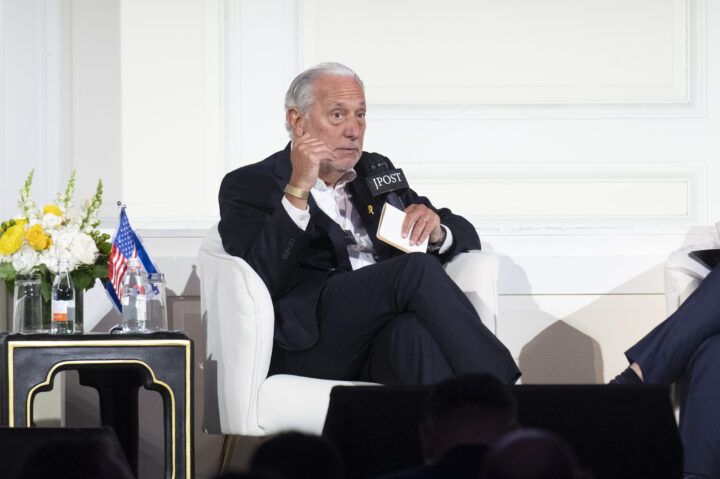
Eric Fingerhut speaks during The Jerusalem Post New York conference on June 03, 2024 in New York City.
In a letter to members of the House Homeland Security Committee’s Counterterrorism and Intelligence subcommittee, the Jewish Federations of North America highlighted the significant security costs facing the Jewish community, as advocates push for additional security assistance from the federal government at a time of heightened antisemitism.
The JFNA letter states that, nationally, the Jewish community spends more than $765 million each year on security expenses, and that 14% of the annual budget of “a typical Jewish organization” is dedicated to security costs.
The letter highlights that each security guard typically costs Jewish institutions $90,000 annually, while a community security director costs $160,000.
“We also know that these measures are critical for Jewish life to flourish, finding that 60% of Jews say that security precautions make them feel safer,” the letter reads. “They see the addition of police, security guards, and hardening of buildings as the most effective.”
“It is a fundamental right for all Americans to practice their faith freely and without threats and intimidation,” the letter continues. “We urge this Subcommittee to advance concrete, bipartisan solutions that address the growing threat environment and reflect the urgent needs of faith-based and vulnerable communities nationwide.”
JFNA has called on lawmakers to provide $1 billion annually for the chronically underfunded Nonprofit Security Grant Program, which helps nonprofits offset security costs. In 2024, 36% of security grant recipients were Jewish institutions, including synagogues and Jewish community centers.
“As you head to your districts for the upcoming recess, we wanted to call your attention to the immense financial burden the Jewish community faces simply to keep itself safe,” the letter reads. “With antisemitic incidents and attacks continuing to grow, it is critical that Congress act to defend faith communities.”
The letter reiterates the NSGP funding request, as well as other issues on which JFNA and other Jewish organizations have advocated, including dedicated federal funding for security guards, expanding efforts to counter domestic terrorism, increasing funding for state and local law enforcement, addressing antisemitism on social media and forcefully prosecuting hate crimes.
“These are not abstract priorities,” the letter states. “They reflect what we hear every day from communities on the ground that are being forced to divert vital resources to pay for armed guards, harden facilities, and live in fear.”
A Homeland Security subcommittee hearing on Wednesday will feature testimony from Jewish groups and the Heritage Foundation including recommendations for the administration to combat anti-Israel extremism

Tom Brenner For The Washington Post via Getty Images
Metropolitan Police Department and Federal Bureau of Investigation officers stand guard at a perimeter near the Capital Jewish Museum on May 22, 2025 in Washington.
The House Homeland Security Committee’s Subcommittee on Counterterrorism and Intelligence will hold a hearing on Wednesday morning probing the rising influence of anti-Israel extremist groups as a threat to U.S. national security.
The hearing is set to include testimony from representatives of the Anti-Defamation League, Secure Community Network, American Jewish Committee and the Heritage Foundation, the conservative think tank behind the Project Esther proposal to combat antisemitism.
Based on written testimony reviewed by Jewish Insider, SCN’s deputy director of intelligence, Kerry Sleeper, is planning to highlight data showing that threats to the lives of Jews are likely to increase 40% in 2025 in comparison with the previous year, that 6,000 violent online threats to the Jewish community were posted following the Capital Jewish Museum murders last month and that domestic antisemitic radicalization has surged in the past year, increasing the likelihood of further attacks.
Sleeper will recommend that the administration put together a national strategy to ensure Jewish security, with input from all levels of law enforcement and Jewish security organizations, to be implemented by a dedicated national task force; improve intelligence sharing among security groups and federal and local law enforcement; establish a dedicated analysis unit at the Department of Homeland Security to monitor antisemitic threats; address the role of online extremist networks; and establish a task force on Jewish security including federal, state and local law enforcement.
Julie Fishman Rayman, AJC’s senior vice president for policy and political affairs, will highlight the threat posed by terrorist and anti-Israel groups to Jewish safety, as well as data showing that Jews are equally afraid of threats from the political left and right, an AJC spokesperson said.
Fishman Rayman will also urge Congress to provide at least $500 million for the Nonprofit Security Grant Program; support the Center for Prevention Programs and Partnerships (CP3) at the Department of Homeland Security, aimed at preventing terrorism through partnerships between law enforcement, the private sector and communities; advocate for an interagency national strategy and coordinator to combat antisemitism; and pass legislation limiting legal protections for social media.
ProPublica recently revealed that the administration picked a 22-year-old recent college graduate who lacks any apparent national security expertise to lead CP3.
Oren Segal, the senior vice president of counter-extremism and intelligence at the ADL, will highlight recent antisemitic attacks tied to anti-Israel extremism and the ways that the attacks have been normalized and justified on social media.
“They fuel an environment where targeted attacks against the Jewish community become increasingly likely,” Segal will say, per his prepared remarks. “While the grievances driving this violence are often framed as opposition to Israel, they frequently include expressions dehumanizing Zionists and Jews, and support for terrorist groups. When Jews are blamed for the policies of Israel, it is not only antisemitic — it is dangerous.”
He will point to the way that the groups Samidoun and Unity of Fields as well as some Students for Justice in Palestine chapters have spread terrorist propaganda and received funding with little oversight or examination.
“Despite years of warnings and mounting data, antisemitism, and the violence it often animates, continues to be dismissed, minimized, and politicized,” he will testify.
Segal will call for Congress to increase NSGP funding, fund programs like CP3, “empower” the administration’s antisemitism task force with a mandate and resources to work across agencies, pass the Antisemitism Awareness Act and the HEAL Act, address antisemitism on social media and crack down on those who provide material support for terrorism.
James Carafano, a senior counselor and fellow at Heritage, will be testifying on behalf of the think tank. Heritage did not provide a preview of his testimony, but directed JI to his past public writings, which have called for refocusing U.S. counterterrorism efforts against Islamist extremism and described the conservative movement as a home for American Jews.
Rep. August Pfluger (R-TX), who chairs the subcommittee, told The Daily Signal that the antisemitic threat level is the highest it’s been in decades.
Pfluger said the hearing aims to analyze potential connections “between this terrorist style mindset, illegal immigration, online radicalization, and those that would perpetrate crimes that are associated with an anti-Jewish, antisemitic type of narrative,” with the goal of understanding the radicalization process.
Please log in if you already have a subscription, or subscribe to access the latest updates.
 Continue with Google
 Continue with Apple