




























The senator said Iran’s interpretation of the deal ‘seems different’ from what U.S. negotiators are claiming
Andrew Harnik/Getty Images
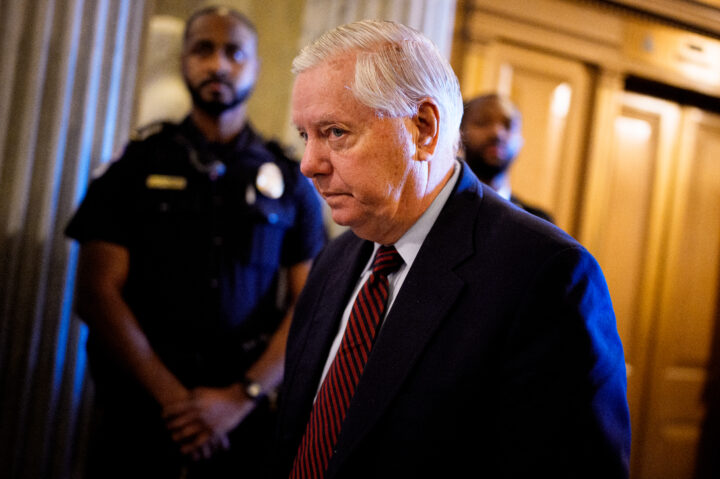
Sen. Lindsey Graham (R-SC) walks into the Senate Chamber on December 11, 2025 in Washington, DC.


 Add JewishInsider on Google
Sen. Lindsey Graham (R-SC) said on Sunday he is “somewhat concerned” that Iran’s account of the U.S.-Iran ceasefire deal diverges sharply from what the U.S. negotiators are claiming, and demanded Vice President JD Vance personally present the deal to Congress.
Iranian state media has claimed that the memorandum of understanding with the United States requires the release of all sanctions on Iran, a $300 billion reconstruction plan financed by the United States and its allies and the release of nearly $30 billion in blocked Iranian funds, and excludes any negotiation of Iran’s missile program or support for terrorism.
“I am pleased to hear the memorandum of understanding with Iran to allow the Strait of Hormuz to open has been agreed to. I will be watching closely the ensuing negotiations regarding Iran’s nuclear program and other matters,” Graham said on X. “I am somewhat concerned that Iran’s view of the agreement seems different than what the American negotiating team is claiming.”
He emphasized that the Iran Nuclear Agreement Review Act (INARA) requires the administration to send any nuclear deal with Iran to Congress for review and a vote.
“I look forward to reviewing the final product and I believe it is imperative that the architect of the deal, Vice President Vance and his negotiating partners, be part of the process in presenting the final deal to Congress,” Graham said. “Congratulations to all in getting us to this point. Time will tell.”
Earlier in the day, Graham also diverged from President Donald Trump on Israel’s strike on Hezbollah in Beirut, which Trump sharply criticized. Graham emphasized that “we must understand who we are dealing with” and that Hezbollah’s strikes on Israel have continued in spite of the ceasefire deal.
“It is clear to me that no matter what deal we sign with Iran, Hezbollah’s stated ambitions of destroying Israel and making Lebanon a caliphate have not fundamentally changed,” Graham said.
He also reposted an X post by Israeli Ambassador to the U.S. Yechiel Leiter, praising Israel for eliminating the Hezbollah commander targeted in the attack.
“To the IDF and all involved in taking out this terrorist with American blood on his hands and a bounty on his head for attacking US troops – thank you. America has no better friend than Israel,” Graham said. “We have common values and common enemies. Israel is a blessing to America’s national security.”
Other Republicans offered more unqualified support for the deal — indicating that Republicans are likely to line up behind the administration when the deal comes before Congress.
While not outright praising the deal itself, Sen. James Lankford (R-OK) said that “President Trump is the first to use both diplomacy and force to bring the terrorist regime to the table,” while emphasizing Iran’s long-running attacks against the United States and against the Iranian people.
“Let’s pray for peace and an end to the nuclear threat from the world’s largest state sponsor of terrorism,” Lankford continued.
Rep. Rudy Yakym (R-IN) praised Trump, saying “President Trump had the courage to act where presidents of both parties only made promises. He has been unequivocal for decades: Iran will never obtain a nuclear weapon. Today, he kept that promise.”
Rep. Mariannette Miller-Meeks (R-IA), who represents a hotly contested swing district, said “Today is a good day for America and for the world.”
“I am glad to see this conflict come to an end,” Miller-Meeks continued. “My hope is that lasting peace is restored in the region, that energy prices continue to fall for American families, and that Iran is never again a nuclear threat to the United States or our allies.”
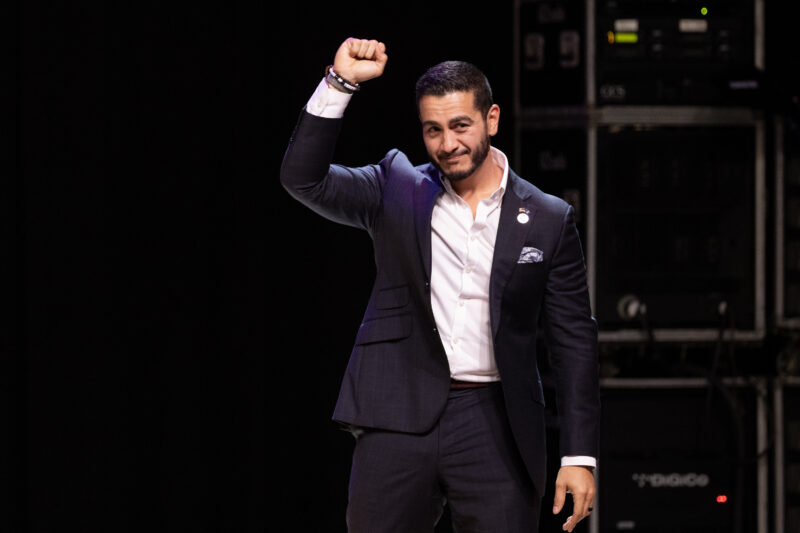
Rep. Greg Meeks (D-NY), the ranking member of the House Foreign Affairs Committee, hailed diplomacy with Iran in general, asserting that it is the only way to restrain Iran, but said he wants to see the details of the agreement.
“As to this current negotiation, the terms, not the press release, will determine whether this serves American interests. Any final agreement must be durable, enforceable, transparent, and subject to rigorous oversight by Congress,” Meeks said in a statement. “The American people deserve more than vague announcements or political spin. They deserve security, clear answers and the confidence that this administration will not repeat the failures that led us into this unauthorized and costly war.”
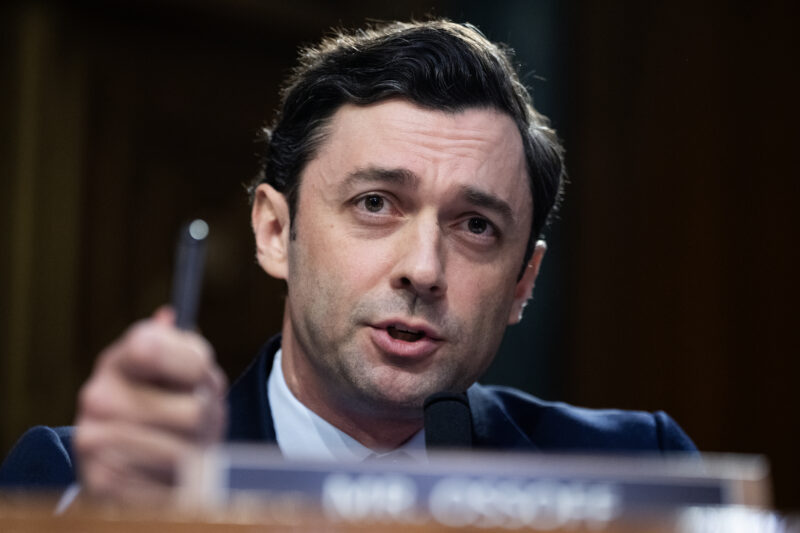
Sen. Chris Coons (D-DE), said the announcement “if true… is a step in the right direction to end the reckless war he started,” but questioned the veracity of the administration’s announcement and the details of the agreement.
“While a ceasefire and negotiations are a positive development, so far this war of choice has only made American service members and civilians less safe and left many key questions unanswered or unaddressed,” Coons said.
Rep. Laura Gillen (D-NY), a moderate pro-Israel Democrat, expressed some reservations about the deal.
“Thankfully the ceasefire with Iran may now alleviate the pain being felt at the pump. There should have been a clear plan from the administration at the outset of this war,” Gillen said on X. “I fear that the leading state sponsor of terrorism will emerge stronger than before as a result. That cannot happen.”
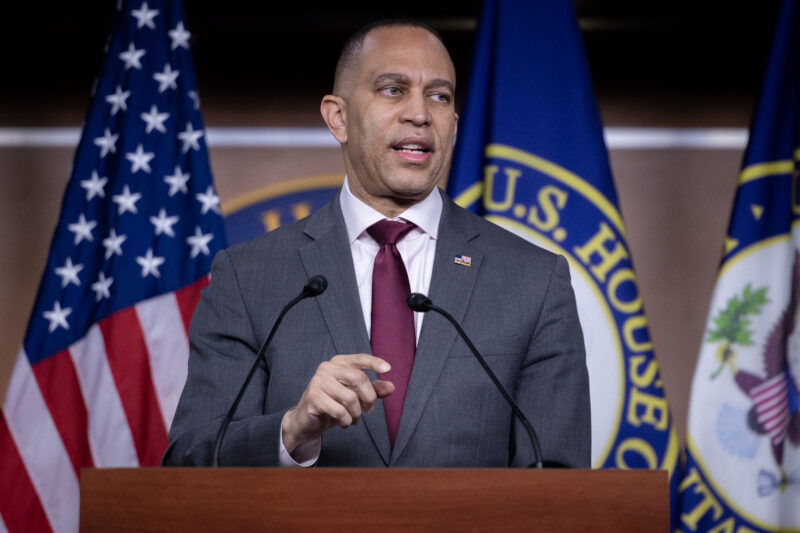
Rep. Ro Khanna (D-CA), a potential 2028 presidential contender who led early efforts to end the war in the House, said “Democrats should support” the agreement and that he’s “glad it includes a provision for mutual respect of the US & Iran’s sovereignty so we do not launch a dumb war of choice again.”
Khanna also said the terms of the deal “seem no better” than the 2016 Joint Comprehensive Plan of Action.
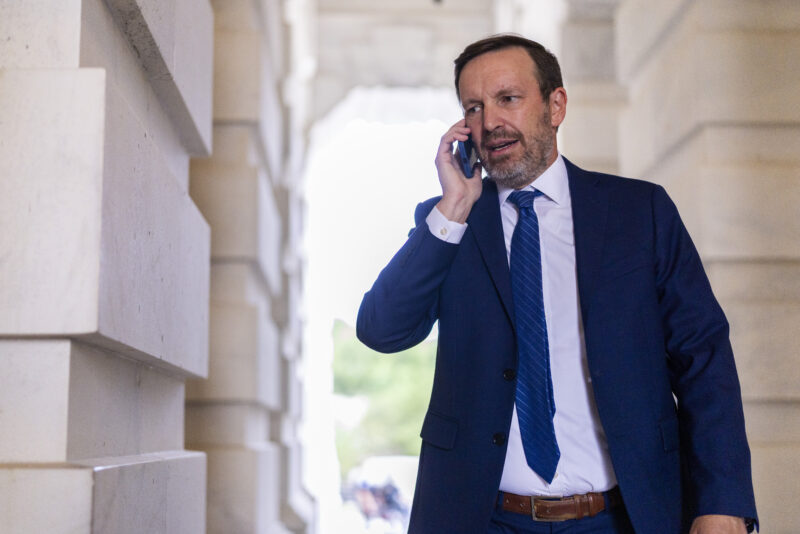
Sen. Chris Murphy (D-CT), another potential 2028 contender, said that it remains uncertain whether there will be a deal, but if there is “it’s essentially a surrender to Iran” but that the U.S. should nonetheless “be glad about it, because every day this insane, illegal war continues, we get weaker.”
Signing ceremony set for Friday in Switzerland; Israeli security officials express concern

Christopher Furlong/Getty Images
President Donald Trump holds up an executive order after signing it during an indoor inauguration parade at Capital One Arena on January 20, 2025 in Washington, DC.
The United States and Iran have secured a ceasefire agreement, President Donald Trump announced on Sunday. The deal is slated to immediately freeze regional military actions, and will lift the U.S. naval blockade and restore commercial shipping through the critical Strait of Hormuz after a formal signing ceremony set for Friday in Switzerland.
“The Deal with the Islamic Republic of Iran is now complete,” Trump posted on Truth Social on Sunday. “I hereby fully authorize the toll free opening of the Strait of Hormuz, and, simultaneously herewith, authorize the immediate removal of the United States Naval blockade.” He later clarified the Strait would open after the deal was officially signed on Friday.
Iran’s deputy foreign minister, Kazem Gharibabadi, also told Iranian media that the agreement had been finalized and stressed that Iran’s “commitments will take effect starting Friday.”
The agreement establishes a 60-day ceasefire extension, during which Washington and Tehran are expected to enter technical negotiations on the scope of Iran’s nuclear enrichment program and the dismantling of its highly enriched uranium stockpiles. The cessation of hostilities extends across the entire region, including in Lebanon, according to Pakistani Prime Minister Shehbaz Sharif, who helped mediate the agreement.
“Following intensive talks, we are pleased to announce that the Peace Deal between the United States of America and Islamic Republic of Iran has been REACHED,” Sharif posted on X. He noted that international mediators will facilitate a “series of meetings” and “technical talks” ahead of the signing ceremony.
Sharif’s statement thanked Qatar, Saudi Arabia and Turkey for their roles in the negotiations, but made no mention of Israel, which had fought alongside the U.S. in the conflict with Iran.
The diplomatic breakthrough followed a tense escalation earlier on Sunday that threatened to derail the negotiations. Israeli forces struck Hezbollah targets in Beirut in response to a Hezbollah drone strike on northern Israel, prompting Tehran to warn it would abandon talks and strike against Israel.
Vice President JD Vance said the U.S. was able to deter an Iranian attack on Israel prior to the deal being reached. “After the Israelis struck Beirut, we saw a lot of evidence the Iranians were going to launch a large number of missiles at…them,” Vance said on Fox News. “[Iran] assured us they were not going to respond to the Israelis. They were going to sign the agreement, and get to peace.”
Writing on Truth Social, Trump criticized the Israeli response as an unnecessary escalation against a “meaningless” initial drone strike, and demanded an immediate halt to all military activity in Lebanon. “There should be no more attacks by Israel anywhere in Lebanon, but there should also be no more attacks by any other party, including Hezbollah, against Israel,” he wrote.
Gharibabadi said the Iranian threats against Israel “helped facilitate progress in the negotiations.” Iranian state media reported that Iran called off the attack on Israel because of “last-minute concessions” offered by Trump, including “preserving Lebanon’s territorial integrity” and Israel’s withdrawal from the Lebanese border. The U.S. did not confirm the reported concessions on Lebanon.
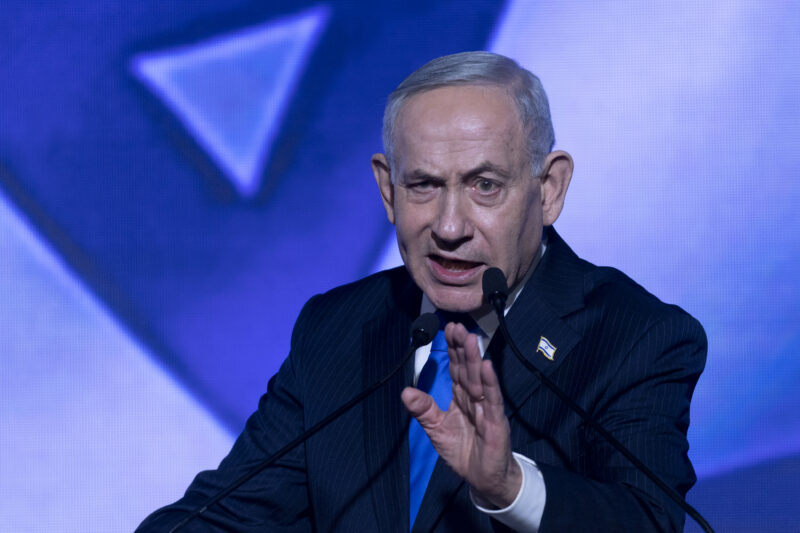
Israeli Prime Minister Benjamin Netanyahu has said that the IDF would not follow such a request and that Israel does not consider itself bound to the Lebanon ceasefire under the agreement. It is unclear whether the Trump administration will pressure Jerusalem to comply.
Israeli security officials have reportedly expressed concern with the deal, warning that it could harm Israeli security interests and leave Iran stronger.
The president said at a lengthy press conference: ‘I can tell you they're negotiating, we think, in good faith. We're going to find out’
Tom Williams/CQ-Roll Call, Inc via Getty Images
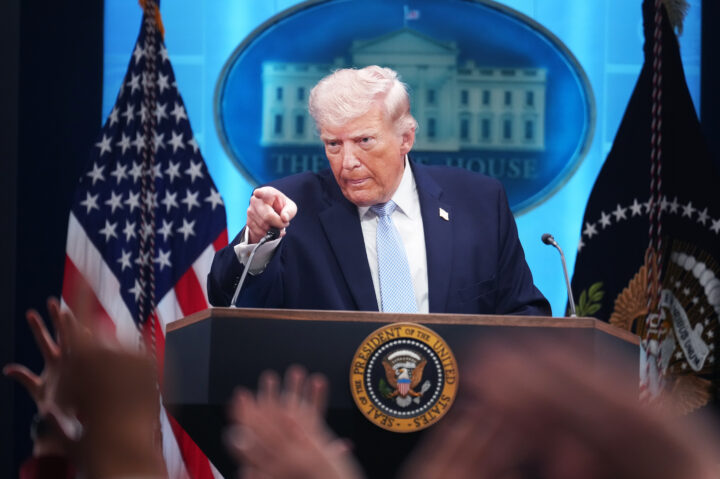
President Donald Trump conducts a news conference in the White House briefing room about the war in Iran on Monday, April 6, 2026.
President Donald Trump doubled down on his threats to escalate the war in Iran on Monday if Iranian leaders do not agree to a broad ceasefire deal that includes reopening the Strait of Hormuz by his Tuesday evening deadline, threatening that the U.S. would target every bridge and power plant still standing in the country.
Trump took a hawkish posture while speaking to reporters at the White House alongside senior U.S. defense officials about the ongoing war and diplomatic efforts to bring it to a close, warning that the U.S. has a plan to take out Iran’s entire transportation and energy infrastructure within “four hours” if Iran did not make a deal.
“I can tell you they’re negotiating, we think, in good faith. We’re going to find out. … After [8 p.m. ET on Tuesday], they’re going to have no bridges. They’re going to have no power plants. Stone ages,” Trump said, referring to the deadline he set for Iran to agree to his terms, which has now been postponed three times.
The president said he extended the deadline from Monday to Tuesday at 8 p.m. ET because he “thought it was inappropriate” to demand a response “the day after Easter.” The comment came hours after telling reporters at the annual White House Easter Egg Roll that the Tuesday deadline was final and unlikely to have any additional extensions.
“The entire country can be taken out in one night and that night might be tomorrow night,” Trump said from the briefing room. “We have a plan, because of the power of our military, [where] every bridge in Iran will be decimated by 12 o’clock tomorrow night, where every power plant in Iran will be out of business, burning, exploding and never to be used again. I mean complete demolition by 12 o’clock, and it’ll happen over a period of four hours if we want it to.”
“We don’t want that to happen. We may even get involved with helping them rebuild their nation. If that’s the case, the last thing we want to do is start with power plants, which are among the most expensive things, and bridges,” he continued. “So do I want to do that? No. Do I want to destroy their infrastructure? No. It will take them 100 years to rebuild. Right now, if we left today, it would take them 20 years to rebuild their country and it would never be as good as it was. The only way they’re going to be able to rebuild their country is to utilize the genius of the United States of America.”
Defense Secretary Pete Hegseth, who took part in the press conference alongside Trump, told reporters on Monday that, “per the president’s direction, today will be the largest volume which strikes since day one of this operation. Tomorrow, even more than today, and then Iran has a choice. Choose wisely, because this president does not play around.”
Trump repeatedly reiterated his commitment to ensuring that Iran can never obtain a nuclear weapon — after saying the country’s nuclear program was “obliterated” last June — and said that any agreement between Iran and the U.S. would need to adhere to his terms, including the reopening of the Strait of Hormuz. “We have to have a deal that’s acceptable to me, and part of that deal is going to be [that] we want free traffic of oil and everything,” the president said.
“They’re not going to have a nuclear weapon,” Trump said of Iran, arguing that his actions were an insurance policy for the U.S. “if somebody that takes my place someday is weak and ineffective, which possibly that will happen, because we had numerous presidents that were weak, ineffective and afraid of Iran.”
The president described the Iranians as “very good bulls*** artists, that’s why for 47 years they’ve been bulls***ing other presidents,” while defending his decision to take military action against the regime.
“I think that 47 years of this stuff is long enough. They’re at the weakest point they’ve ever been,” Trump said, despite Iran’s continued missile strikes across the Gulf and in Israel. “In fact, the biggest problem we have in our negotiations is that they can’t communicate. … They have no method of communication. So we’re communicating like they used to communicate 2,000 years ago with children bringing a note back and forth.”
The president paired threats with optimism, leaning into the current debate with a mix of tough talk and hopes of an 11th-hour diplomatic breakthrough.
SAUL LOEB/AFP via Getty Images
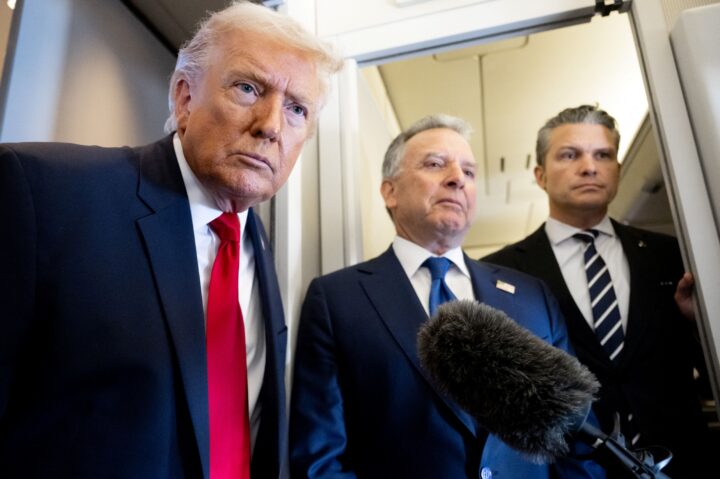
President Donald Trump speaks with the media as Defense Secretary Pete Hegseth (R) and special envoy Steve Witkoff (C) look on aboard Air Force One during a flight from Dover, Delaware, to Miami, Florida, on March 7, 2026.
As the U.S. and Israeli war with Iran extends into its sixth week, the next 36 hours may be some of the most pivotal, offering clarity as to whether an end is in sight — or whether an escalation is imminent.
On the table now, according to Axios, is a proposed two-phased ceasefire deal, lasting 45 days, that would immediately reopen the Strait of Hormuz and give negotiators two to three weeks to reach a broader agreement to end the war. As a signal that the U.S. is open to the agreement, President Donald Trump extended by 24 hours the deadline for Iran to reopen the Strait, setting a new deadline of Tuesday night ET.
The core issues remain: Tehran’s closure of the key waterway, and the fate of the country’s enriched uranium. But a deal between Washington and Tehran would include broader issues, including potential sanctions relief in exchange for Tehran’s promise that it will not pursue nuclear weapons. Iran has signaled that it will not reopen the Strait for a temporary ceasefire and is seeking a more permanent resolution.
The president paired threats with optimism, leaning into the current debate with a mix of tough talk — warning yesterday that strikes targeting Iran’s power plants and bridges would take place on Tuesday in the absence of a deal — and hopes of an 11th-hour diplomatic breakthrough.
Trump doubled down on both sentiments yesterday in a flurry of interviews with reporters. “If they don’t make a deal, and fast, I am considering blowing everything up and taking over the oil,” Trump told Fox News’ Trey Yingst on Sunday morning. Yet the president said there was a “good chance” that a deal would be reached today — even as he posted “Tuesday, 8:00 P.M. Eastern Time!” on his Truth Social site, a reminder of the new deadline he had set for the Islamic Republic to reopen the Strait of Hormuz.
In comments to The Wall Street Journal, the president said that if the Iranians “don’t come through, if they want to keep it closed, they’re going to lose every power plant and every other plant they have in the whole country.”
Trump made the comments on the heels of the daring weekend rescue of an American weapons system operator who had been shot down inside Iran — the details of which the president is expected to share at an afternoon press conference today alongside senior military officials.
A diplomatic agreement would see a winding down of the war that would likely allow Iran to retain some of its ballistic missile capabilities — a compromise that is unlikely to sit well in Israel, which continues to face fire from Iranian forces.
On the other hand, Trump’s threatened destruction of key Iranian infrastructure could further deteriorate conditions in the Islamic Republic, where a regime-imposed internet blackout has ensured minimal on-the-ground reporting on weeks of war. And as always, the president has one eye on the markets, which will open today after the holiday weekend.
The U.S. and Israel have already made serious strategic strides by killing dozens of members of Iran’s senior leadership and severely crippling Tehran’s nuclear program. The question now is whether that will be enough for Trump to declare victory in accordance with the rough timeline he’s given for U.S. operations in Iran — or whether the U.S. will double down on its military operations.
Even as multiple speakers at the three-day summit alluded to antisemitism in their ranks, many talked in broad strokes
(AP Photo/Thomas Beaumont)
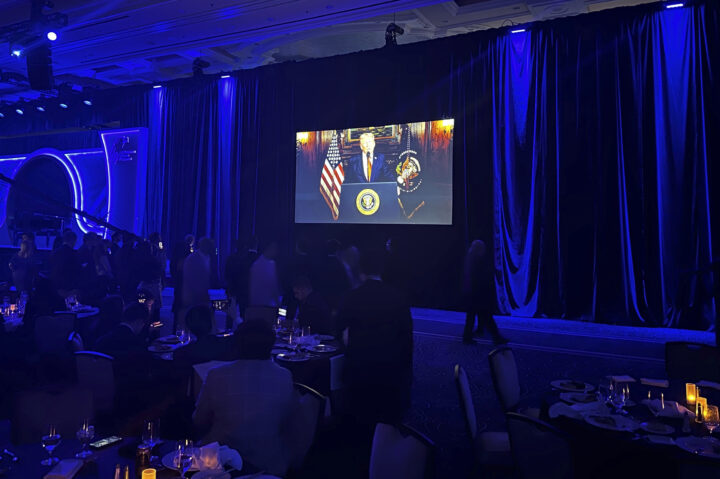
Attendees watch a recorded video address by President Donald Trump during the Republican Jewish Coalition's annual summit at the Venetian Resort in Las Vegas, Saturday, Nov. 1, 2025.
LAS VEGAS — Until last week, the Republican Jewish Coalition’s annual leadership summit was expected to be a triumphant gathering to celebrate President Donald Trump’s accomplishments in the Middle East, chief among them his administration’s recently brokered ceasefire deal between Israel and Hamas.
That all changed after Tucker Carlson hosted the neo-Nazi influencer Nick Fuentes on his podcast for a sympathetic interview, provoking fierce backlash. By the time that Kevin Roberts, the president of the Heritage Foundation, came to Carlson’s defense on Thursday, the RJC recognized its conference would require a thematic update to more forcefully emphasize the urgency of confronting rising antisemitism — and its enablers — within the GOP.
“If there was ever a time for the RJC, this is our time,” Norm Coleman, the organization’s national chairman, said in opening remarks on Friday. “We have been called to this moment to fight the scourge of antisemitism.”
But even as multiple speakers at the three-day summit held at the Venetian Resort — including congressional leaders, conservative activists and media personalities — alluded to antisemitism in their ranks, many talked in broad strokes, didn’t mention Carlson by name or downplayed the issue as confined to the fringes, despite Carlson and Fuentes each commanding a significant number of dedicated followers on the far right.
The speakers also argued that anti-Jewish hatred had become an endemic problem for Democrats — especially in the wake of Hamas’ Oct. 7, 2023, terror attacks. And in a preview of GOP messaging ahead of the midterms next year, many took aim at Zohran Mamdani, the far-left Democratic nominee for New York City mayor and fierce critic of Israel favored to win the election on Tuesday.
Rep. Byron Donalds (R-FL), who is now running for governor of Florida, relied on euphemism to refer to right-wing antisemitism, declaring that the GOP would “not stand idly by” as “some in other parts of politics try to demonize Jewish Americans” and “try to weaken or destroy the relationship between the United States of America and the nation of Israel.”
“I will always call out and confront antisemitism wherever it is and whoever spreads it,” Rep. Lisa McClain (R-MI), the House Republican conference chair, said on Saturday, but shared no examples of such prejudice in her own party.
Some, including Sens. Ted Cruz (R-TX), Dave McCormick (R-PA) and Lindsey Graham (R-SC), more forcefully addressed growing antisemitism on their side of the aisle.
In an interview with Jewish Insider shortly before he took the stage on Friday, Graham described Carlson’s interview with Fuentes as a “wake-up call” for the Republican Party. “How many times does he have to play footsie with this antisemitic view of the Jewish people and Israel until you figure out that’s what he believes?” Graham said of the former Fox News host.
But in his speech later, the South Carolina senator adopted a more sanguine attitude, speaking more like a stand-up comedian as he sought to lighten the mood. “I just want to make it really clear: I’m in the ‘Hitler sucks’ wing of the Republican Party,” he said to applause. “What is this Hitler shit?”
“I feel good about the Republican Party,” he added, saying the GOP “has figured it out when it comes to Israel.”
Cruz also criticized Republicans who refuse to disavow right-wing antisemites in the conservative coalition, though he ultimately didn’t mention any of the offending individuals by name in his RJC speech.
McCormick, in his fireside chat with conservative author Douglas Murray, directly confronted the lack of right-wing voices challenging virulent antisemitism. “This very week, you had an avowed antisemite, Fuentes, given a platform. This is a guy that says Hitler is cool, says Jews should be terminated…and those views went unchallenged,” McCormick said.
In his own speech at the summit, McCormick said: “Let’s face it, antisemitism is running wild on the progressive left and the leaders of the Democratic Party are not confronting it with their new star Mamdani,” McCormick said. “But I’m also sad to say we see that ugliness on the right too, and we must confront it. Jews can’t be slandered, antisemites can’t be given platforms.”
Their comments sidestepped a more deeply rooted challenge for mainstream Republicans following recent controversies in which young party leaders were caught sharing pro-Nazi messages in leaked group chats, and Paul Ingrassia, the controversial Trump ally, withdrew his nomination to lead the Office of Special Counsel after text messages were unearthed where he allegedly made antisemitic and racist remarks.
Vice President JD Vance also faced criticism from Jewish Republicans last week over his recent appearance at a conservative campus event, where he chose not to confront some students who asked questions that invoked antisemitic tropes. While some attendees at the RJC summit told JI that they had been troubled by Vance’s performance, it was not a topic of discussion on the main stage.
Taking the floor on Saturday, however, Rep. Randy Fine (R-FL), a freshman congressman from Florida who is one of four Jewish Republicans in the House, criticized those who focus only on left-wing antisemitism or just broadly talk about anti-Jewish prejudice on the right.
“It’s easy to talk about antisemitism on the left,” Fine said in his remarks. “I want to talk about the dark force rising on our side. Multiple speakers have talked about the rise of antisemitism on the right. But it is not enough to speak in platitudes or generalities about the fight. We must call evil by its name.”
He called Carlson “the most dangerous antisemite in America” and said he did not belong in Trump’s movement — a message that was amplified by a line of student attendees who stood before him holding up posters declaring “Tucker is not MAGA.”
Fine also said that he was canceling a scheduled event with the Heritage Foundation, adding that the group had “no future” in his office. “I will be calling on all of my colleagues on the Republican side to do the same,” he confirmed.
Matt Brooks, the RJC’s CEO, told JI last week that his group would be reassessing its relationship with Heritage, noting that he was “disgusted” by Roberts’ decision to stand with Carlson. The RJC has not yet further clarified how it plans to move forward with regard to Heritage.
As the summit neared its conclusion on Saturday, one RJC member, Jon Tucker of Chicago, voiced optimism that Trump, set to deliver a prerecorded message later that evening, would choose to speak out against what he termed the “ultra-right wing, isolationist” and “anti-Christian Zionist” voices in the Republican Party.
“I would hope the president comes out and has something to say about it, just like Ronald Reagan did back in the ’80s when he, famously, kicked the right wing out of the Republican Party,” he told JI, expressing concern that — in the absence of direct condemnation from the top — “we could lose” the GOP to “radicals.”
When he finally appeared on screen, Trump made no mention of antisemitism’s ascendance within the GOP, instead touting his administration’s efforts to target universities for their alleged failure to address antisemitism while listing his achievements in the Middle East, including the ceasefire deal.
He also credited the RJC with helping him to perform particularly well among Jewish voters in 2024, even as he reiterated his complaint that he should have received more support in light of his pro-Israel policies.
“I can’t imagine we didn’t do better than that after all I’ve done for the Jewish vote, I must be honest with you,” Trump said. “But that’s OK.”
This story was updated on Monday to reflect Sen. Dave McCormick’s comments regarding Nick Fuentes.
Please log in if you already have a subscription, or subscribe to access the latest updates.
 Continue with Google

 Continue with Apple