








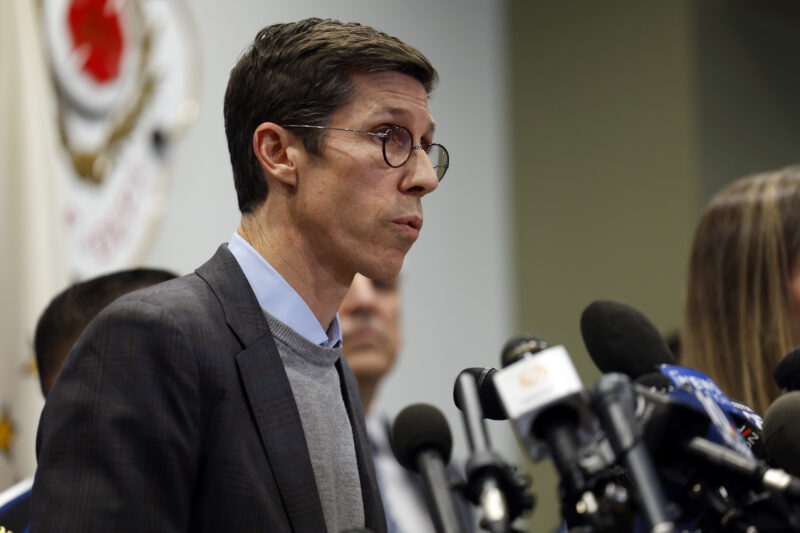
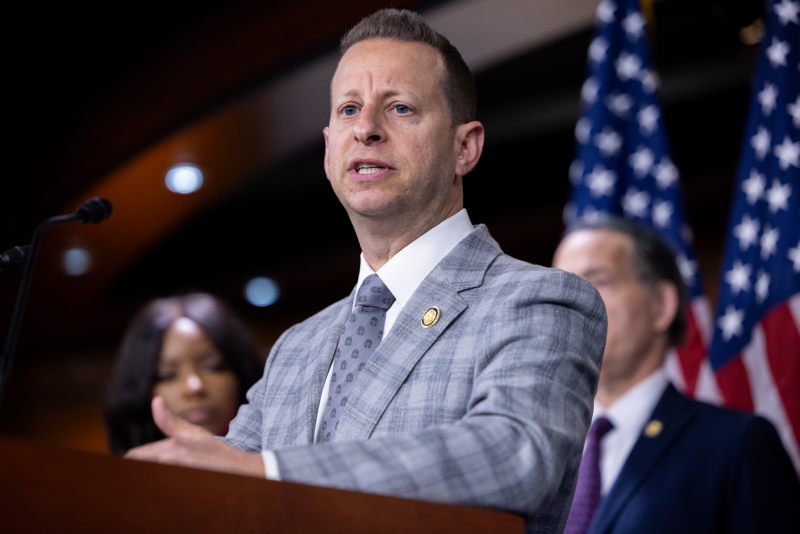
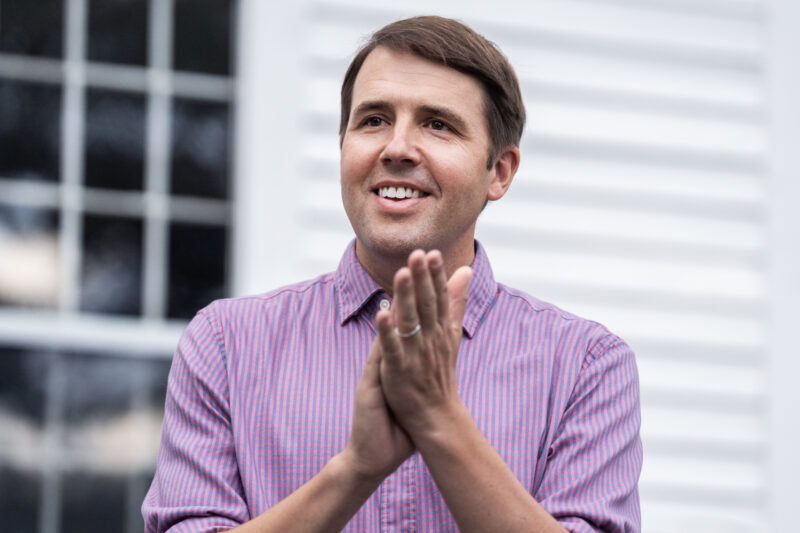
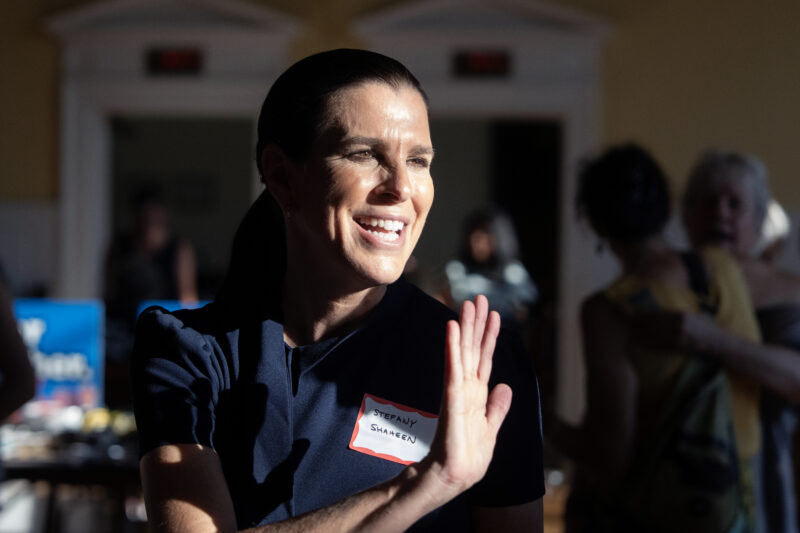





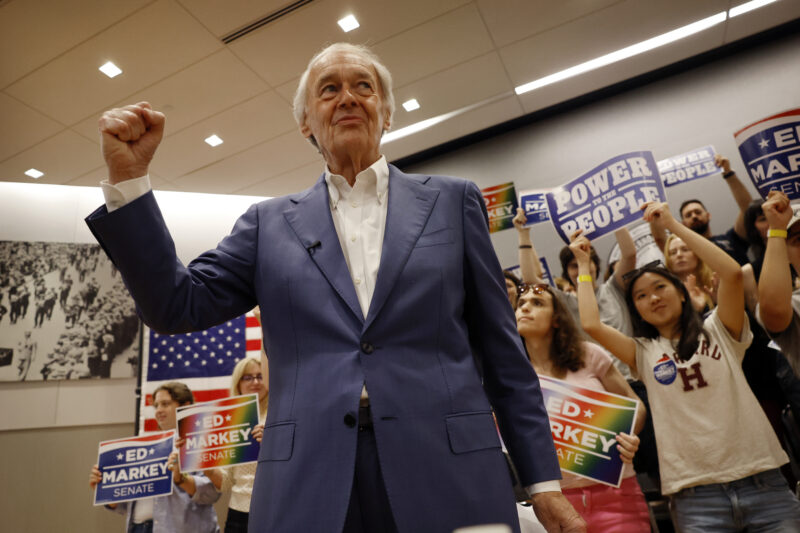




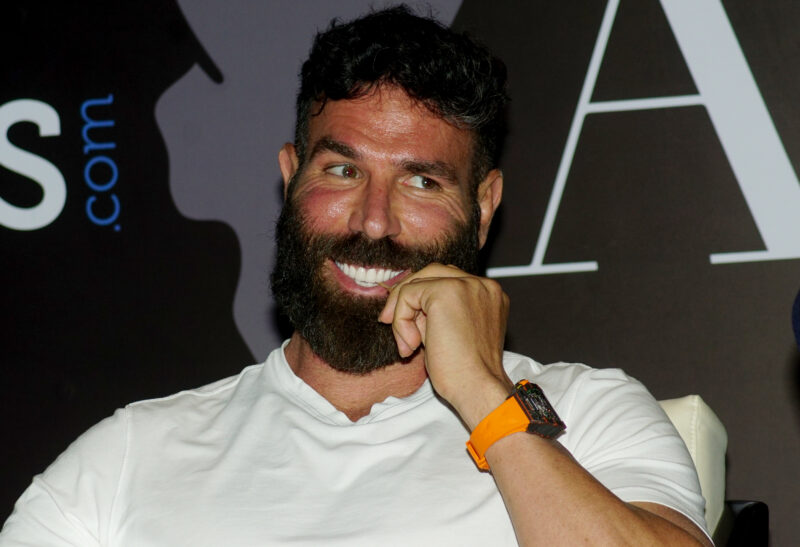







The comment from Ossoff came months after Piker named him as his ‘dark-horse pick’ for 2028, which Ossoff did not respond to at the time
Tom Williams/CQ-Roll Call, Inc via Getty Images
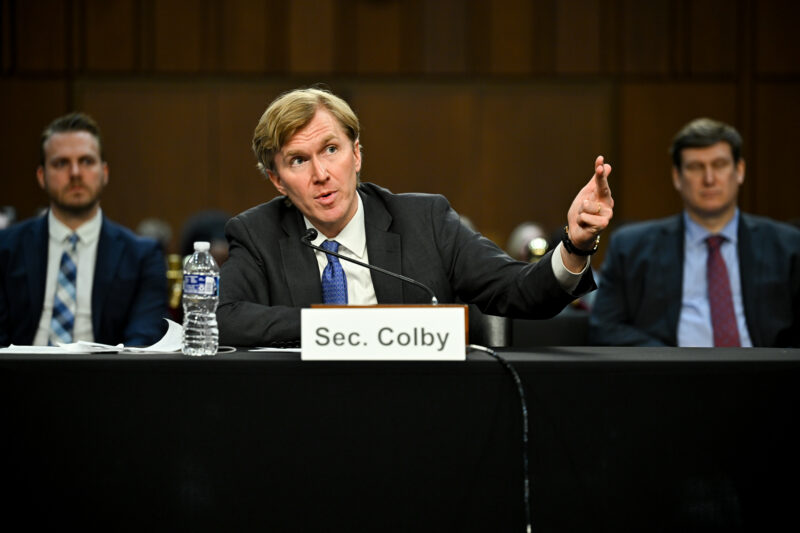
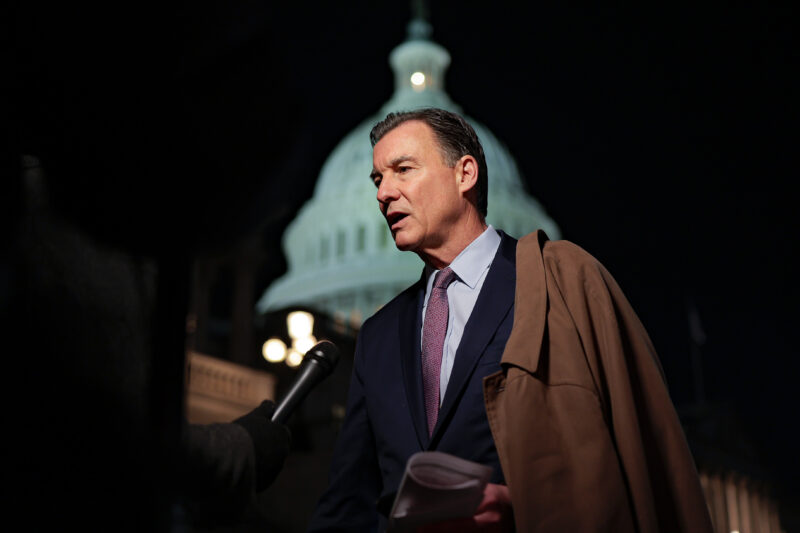
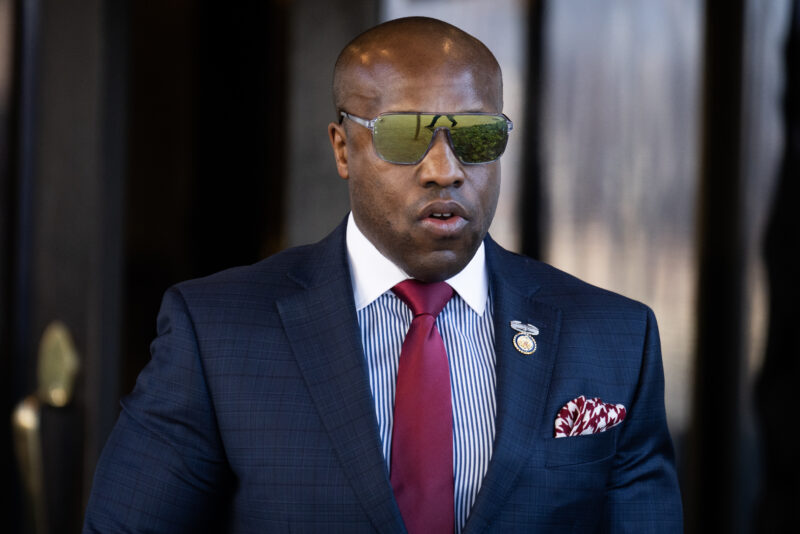
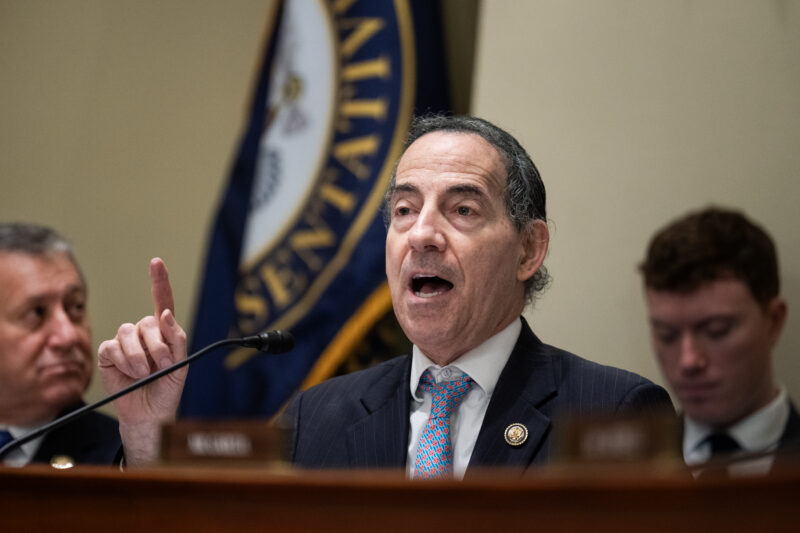
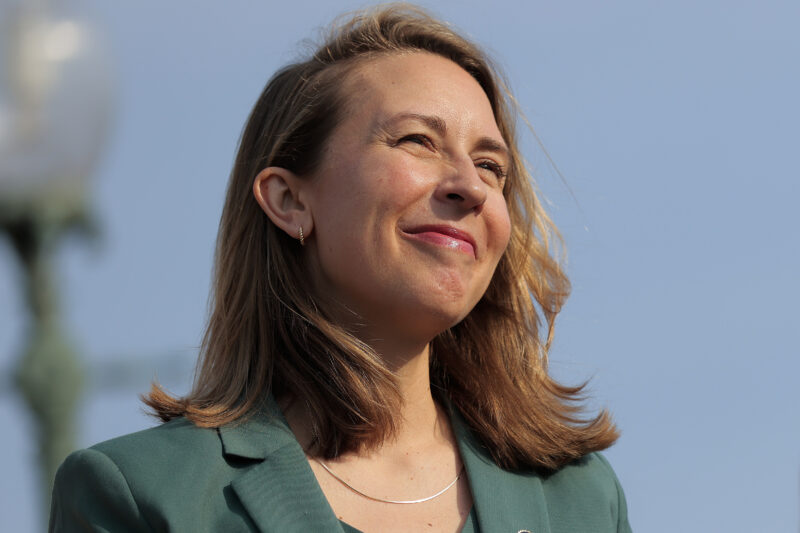
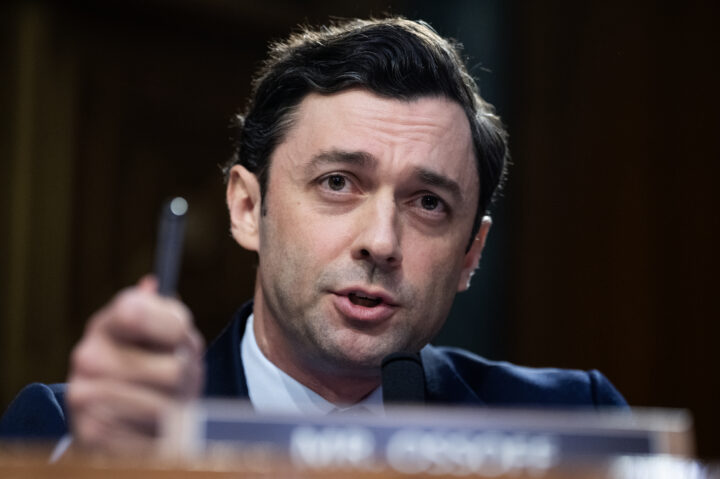
Sen. Jon Ossoff (D-GA) in the Senate Select Intelligence Committee on July 15, 2026.


 Add JewishInsider on Google
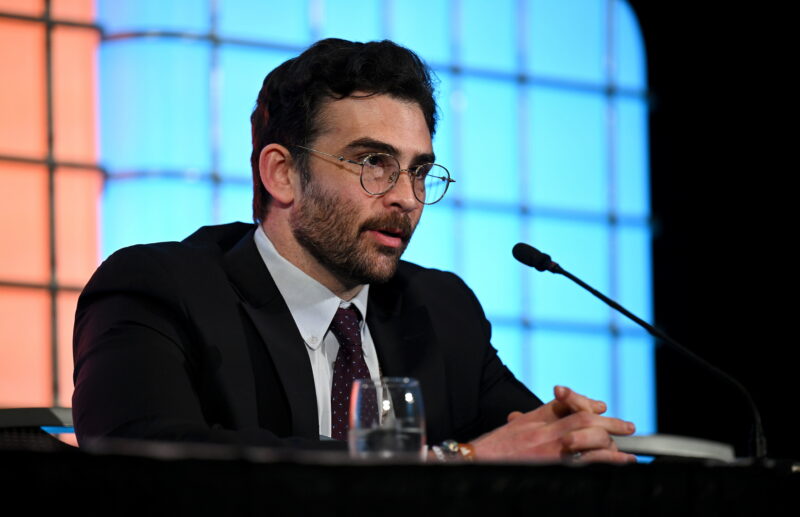
Sen. Jon Ossoff (D-GA) joined the growing list of Democrats condemning far-left streamer Hasan Piker’s recent comments suggesting American Jews bear responsibility for inciting antisemitic attacks due to their support for Israel.
Piker had in March named Ossoff as his “dark-horse pick” for the 2028 Democratic presidential nomination, alongside a series of further-left candidates. Ossoff, at the time, did not respond to questions from Jewish Insider about Piker.
An Ossoff spokesperson told the Atlanta Journal-Constitution that the Georgia senator “unreservedly rejects reckless and dangerous rhetoric suggesting that policy advocacy invites violence against the Jewish community or any community” and that “American Jews and all Americans must have the freedom and security to speak out and petition their government without fear of reprisal.”
The statement as reported by the AJC, which did not explicitly mention Piker, came in response to a question about the streamer’s comments.
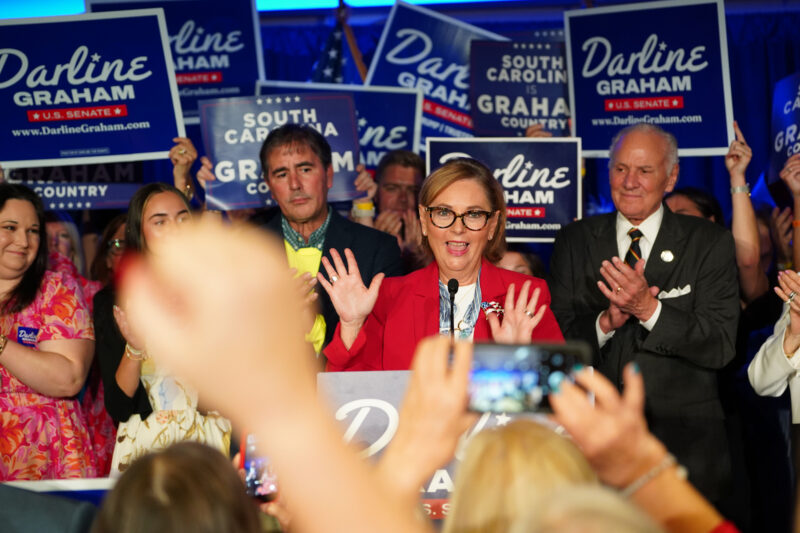
Meanwhile, Ossoff’s GOP opponent, Rep. Mike Collins (R-GA), is again facing criticism over the extremist activity of an associate, following a Washington Post report that a former staffer shared images of a swastika and of himself in a KKK robe.
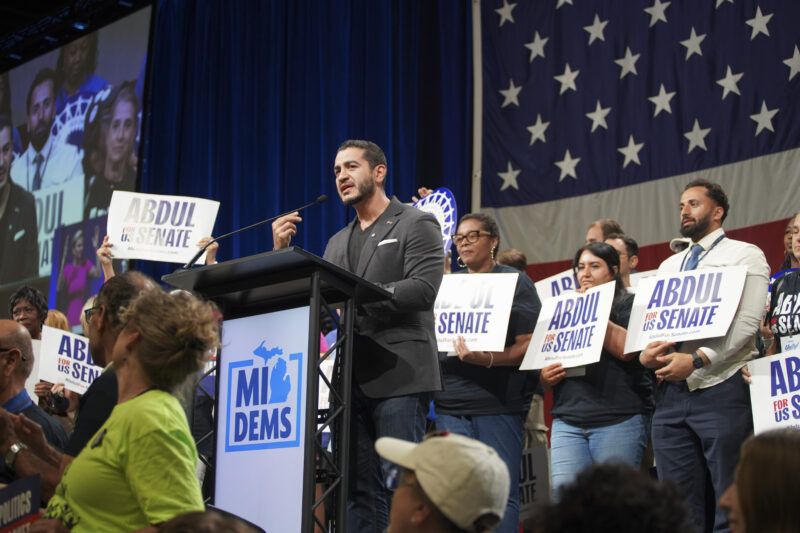
“[Former Collins staffer] Preston Parra has no affiliation with Mike Collins’ office or campaign. The posts are vile, completely unhinged, and Mike Collins unequivocally condemns them,” Meyer Siegfried, a Collins campaign spokesperson said in a statement. “Rep. Collins believes the rise in antisemitism and hate among younger Americans and among Jon Ossoff’s allies like Hasan Piker and [Michigan Democratic Senate nominee] Abdul El-Sayed is equally abhorrent and, unlike Ossoff, has condemned it from all sources directly.”
In recent months, Collins’ son-in-law was revealed to be an antisemitic and white nationalist social media influencer and his former chief of staff was found to be a member of a group chat with prominent white nationalists where he discussed using congressional authority to free a Holocaust denier from prison.
Another former Collins staffer also went on an antisemitic tirade against Rep. Mike Lawler (R-NY) at a Washington, D.C. bar earlier this year, and Collins previously responded approvingly to an X account that attacked a reporter for her Jewish identity.
The Montreal Gazette reported that the blaze was set by a single individual who appeared to be a young man, according to video footage of the incident
B'nai Brith Canada/X
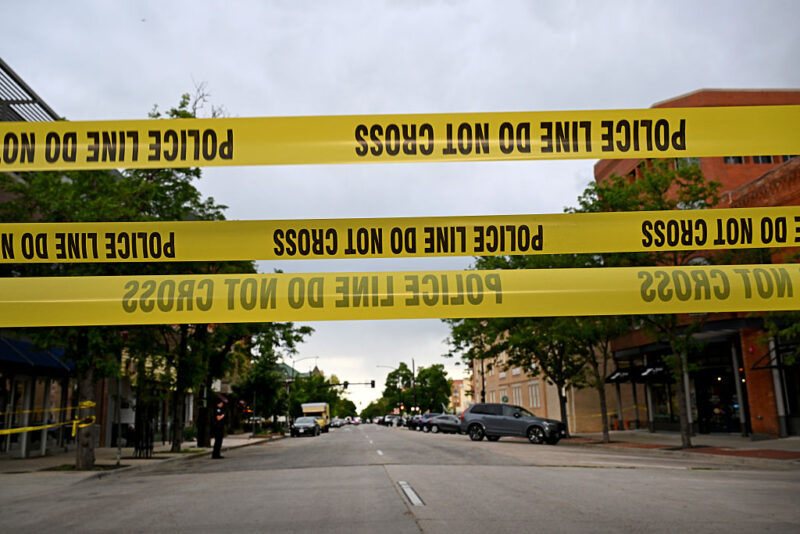
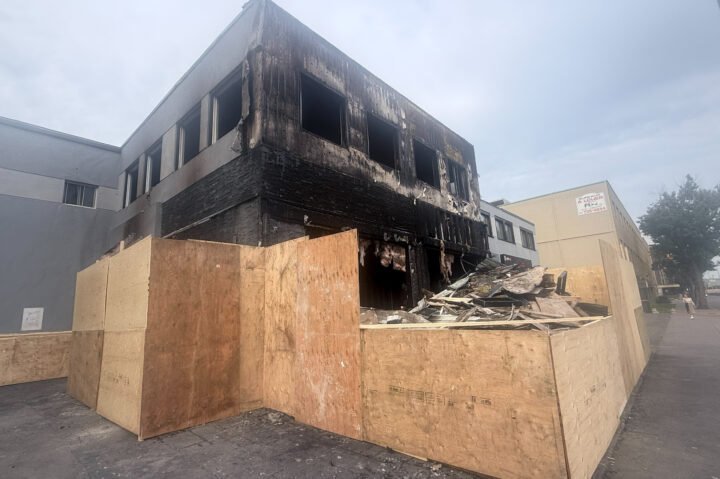
Nöam Restaurant in the Côte-des-Neiges neighborhood, Montreal, burned down on August 1, 2026
A popular Montreal kosher restaurant was destroyed in what police are investigating as a possible arson attack early Saturday morning, the latest in a worsening pattern of antisemitic attacks across the city and throughout Jewish communities in Canada.
First responders were called to Nöam Restaurant in the Côte-des-Neiges neighborhood around 3:15 a.m. Saturday to find the building engulfed in flames. Despite the efforts of roughly 80 firefighters, the two-story building suffered extensive damage. No injuries were reported, and no arrests had been made as of Sunday afternoon.
Montreal police did not respond to a request for comment from Jewish Insider.
The Montreal Gazette reported that the blaze was set by a single individual who appeared to be a young man, perhaps in his early 20s, according to video footage of the incident.
“The Jewish community is in shock,” Tzipi Zeigerman, an Israeli who moved to the neighborhood two years ago, told JI on Sunday. Zeigerman said Nöam Restaurant is “one of the most beloved restaurants in the community” and locals have started raising funds to help it reopen.
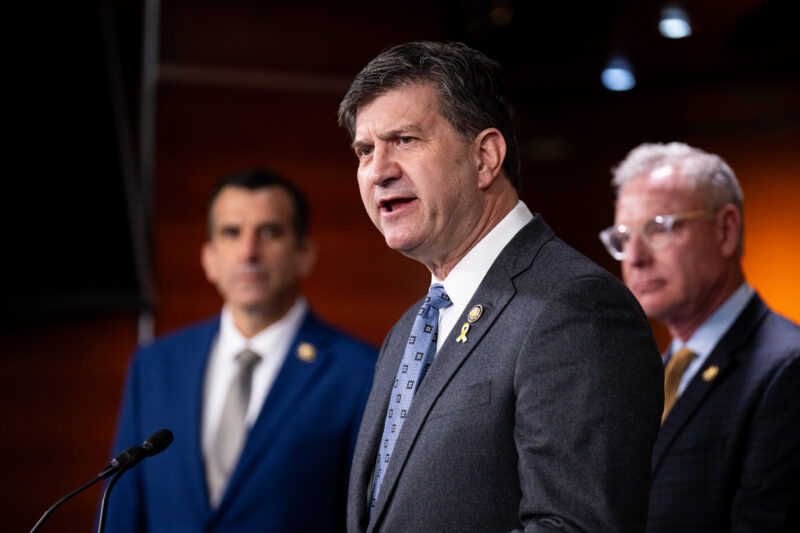
Rep. Brad Schneider (D-IL), co-chair of the Congressional Jewish Caucus, said he and his colleagues “are disgusted and outraged to see yet another heinous attack on a Jewish-owned business, this time an overnight, apparent arson attack that destroyed a beloved kosher restaurant in Montreal.”
Elsewhere in Montreal on Saturday, supporters of the CF Montreal soccer team reportedly heckled an Israeli player for the opposing New England Revolution during a match between the teams, with some Montreal fans reportedly chanting, “Death to Israel” and “Free Palestine.”
The attack comes amid heightened tensions in the Côte-des-Neiges neighborhood, a heavily Jewish area of Montreal where earlier this summer a Jewish civilian and a police officer were killed in a shooting; the suspect was also killed. In his manifesto, the alleged gunman reportedly railed against Jews and Zionists.
Jewish leaders across Canada have warned that law enforcement and the government have failed to properly address a historic rise in antisemitism in the country. The Canadian government eliminated the standalone role of national antisemitism envoy in February.
In April, soon after a spate of synagogue shootings in Toronto that caused damage but no injuries, Irwin Cotler, Canada’s former justice minister, told JI that the incidents were “part of a pattern.”
“We are experiencing not only the highest level of antisemitic incidents since tracking began in the 1970s, but the real disturbing data has been the dramatic increase in hate crimes targeting Canadian Jews,” he said at the time.
Cotler warned that if not addressed quickly, there’s “a ticking bomb here in Canada for what will be the Bondi massacre occurring in Canada,” a reference to the December 2025 mass shooting at a Hanukkah gathering at Bondi Beach in Sydney, Australia, that killed 15 people.
Worldwide, 20 people were killed last year in four antisemitic attacks across three continents
Christopher Furlong/Getty Images
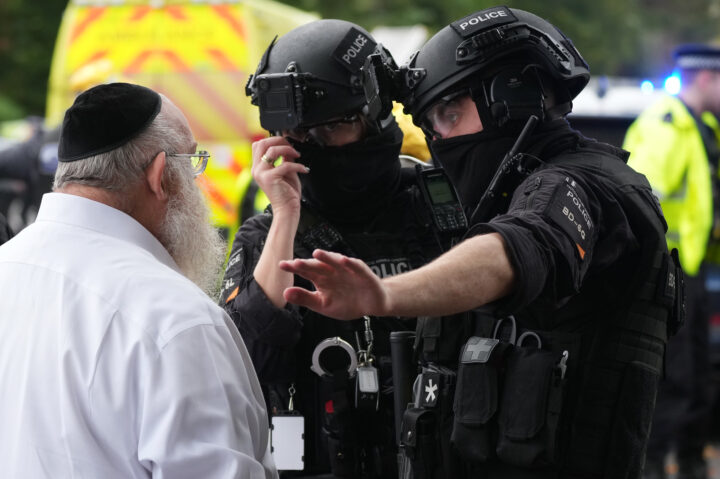
Members of the public and congregants seen as Police and other emergency responders attend the Heaton Park Hebrew Congregation Synagogue, where multiple were injured after stabbing and car attack on Yom Kippur, on October 2, 2025 in the Crumpsall suburb of Manchester, England.
Germany remained the country with the most antisemitic incidents relative to its Jewish population in 2025, among Diaspora countries with major Jewish populations, according to a new report from leading Jewish groups released on Wednesday.
According to the report, nearly 70 antisemitic incidents per 1,000 Jewish residents were recorded in Germany in 2025.
Not since the terror attack on a Jewish community center in Buenos Aires, Argentina, more than 30 years ago has the Jewish Diaspora experienced as deadly a year as 2025.
Worldwide, 20 people were killed last year in four antisemitic attacks across three continents — all in “J7” countries, the seven countries with the largest Jewish Diaspora populations — including deadly incidents in Sydney, Australia, and Manchester, England. Eighty-five people were killed in the 1994 AMIA attack in Buenos Aires, which still marks the deadliest terror attack on Jews outside of Israel.
The data comes from the second annual Report on Antisemitism by the J7 — a global alliance formed in July 2023 by major Jewish organizations representing the seven largest diaspora communities outside Israel: the United States, the United Kingdom, France, Germany, Canada, Argentina and Australia.
Tel Aviv University published a study with the same findings in April.
The J7’s 52-page report tracked over 23,000 antisemitic incidents across J7 countries in 2025 — a 136% total increase and a 97% surge in violent acts compared to 2022, prior to the Oct. 7, 2023, Hamas attacks in Israel.
While the number of antisemitic incidents in the U.S. plummeted by a third last year, assaults with a deadly weapon spiked, according to a May report by the Anti-Defamation League. The May 2025 killing of two Israeli Embassy staffers outside the Capital Jewish Museum in Washington marked the first Jews to be killed in antisemitic attacks on U.S. soil since 2019. One month later, a Jewish victim died from her injuries sustained in a firebombing attack in Boulder, Colo., at a march in support of the Israeli hostages.
Every J7 country’s antisemitic incidents remain dramatically above pre-Oct. 7 levels. Australia saw the sharpest rise of antisemitic incidents since 2021 (+270%), followed by Germany (+215%), the U.S. (+131%) and France (124%). Anti-Zionism was a key motivation behind a significant share of incidents: 48% in the U.K., 45% in the U.S. and 23% in Germany.
The report also features a new “in focus” section highlighting Ireland, which saw 143 antisemitic incidents — a rate of 65 per 1,000 Jewish people — while the country lacks a national strategy to combat antisemitism and dedicated security funding for religious institutions.
“The J7 Annual Report makes clear that antisemitism is no longer a temporary surge, but a sustained global crisis affecting Jewish communities across all seven countries,” said William Daroff, CEO of the Conference of Presidents of Major American Jewish Organizations, which represents the U.S. along with the ADL in the J7. Daroff called on governments, institutions and technology companies to “act with urgency, enforce the law, strengthen security and ensure that Jews can live openly and safely.”
Some will say the writing was on the wall, but there is a difference between knowing something is possible and watching it become real

JUSTIN TALLIS/AFP via Getty Images
Children look at an area cordoned off by police, near the Kenton United Synagogue in Harrow, north-west London on April 19, 2026, the scene of an arson attack overnight.
Kenton — a suburb of northwest London that doesn’t ordinarily get international attention — has become one of the epicenters of the wave of antisemitic attacks sweeping England against Jewish individuals, synagogues and other institutions of Jewish life. It also happens to be where I grew up.
Last month, its synagogue was firebombed, causing some damage to the premises. Thankfully, no one was hurt. It is just one of the many incidents of antisemitic vandalism, harassment and violence across the U.K. that have made Jewish life all the more precarious in what was, previously, seen as a safe, close-knit Jewish community.
I moved to Israel as an adult, and have spent years covering the country as a journalist, most recently as Jewish Insider‘s Israel editor. In that time, the check-in calls have mostly gone one way, with friends from the U.K. touching base after terror attacks and through wars in Israel.
That dynamic has shifted in recent weeks. In a jarring role reversal, I have found myself checking up on Jewish British friends amid an alarming escalation of antisemitic attacks in London.
Some will say the writing was on the wall, but there is a difference between knowing something is possible and watching it become real.
The numbers tell a stark story: Jews make up less than 0.5% of the U.K. population, yet government statistics released in Oct. 2024 found they accounted for a third of all religious hate crimes, amid a spike in antisemitism following the Oct. 7, 2023, Hamas attack on Israel and the ensuing war in Gaza. The most recent Home Office data shows Jewish people experienced the highest rate of religious crime: 106 religious hate crimes per 10,000 Jews — compared to 12 per 10,000 Muslims, who faced the highest absolute number of such crimes but constitute a far larger share of the population. And these statistics were published prior to the accelerated frequency of attacks in the past weeks.
Two weeks ago, it was the firebombing of Kenton United Synagogue — a place I spent many happy moments with childhood friends — one of a string of such attacks on Jewish targets in Finchley, Watford and Hendon, all familiar names to Jewish Londoners. An Orthodox Jewish man was verbally abused and threatened while he was getting about his work in Slough. The situation escalated further on Wednesday, when two Jewish men were stabbed in Golders Green, a suburb of London with a large Jewish population.
Police are investigating whether Iranian proxies are behind the spate of attacks, which began after Israel and the U.S. launched a war against the Islamic Republic at the end of February. Several of the attacks have been claimed online by Harakat Ashab al-Yamin al-Islamia, a terrorist group linked to Iran, which has also claimed responsibility for similar attacks in Belgium and the Netherlands. “I’ve spoken previously about the Iranian regime’s use of criminal proxies, and we’re considering whether this tactic is being used here in London,” Deputy Assistant Commissioner Vicki Evans said last month. Home Secretary Shabana Mahmood said on Thursday, after the group claimed responsibility for the Golders Green stabbing attack, that authorities were investigating whether that claim is credible or “opportunistic.”
On Thursday, the British government appeared to finally shift into a higher gear. The national threat level was raised to “severe,” U.K. Prime Minister Keir Starmer announced several new policies aimed at protecting British Jews, and the government pledged £25 million (about $34 million) for increased security around synagogues, schools and community centers. For many Jews these steps were welcome — but long overdue.
Meanwhile, Jewish Brits are rattled by the frequency and sense of normalization of the attacks.
“The climate here means there are so many people who are suitable for recruiting and radicalizing,” one fellow former Kenton resident, who now lives in another London suburb, told me. “And these attacks are becoming so normal. I am getting scared that the genie is out of the bottle and I am not sure how it is going to go back.” Another friend spoke of a “back-up plan” to living in Britain, while a mother of two described the fear she feels during pickup and dropoff at the Jewish school her daughters attend.
“At the moment, people across the Jewish community are waking up and almost expecting to find there’s been yet another attack,” Justin Cohen, news editor and co-publisher of the U.K.’s Jewish News, told me. “And this has now been going on for several weeks.”
“We’ve literally got to the stage where if there’s not an attack, there’s almost an element of surprise and relief,” Cohen said. “Most British Jews could never have imagined we’d have got to this stage.”
Of the U.K.’s recent move toward designating the Islamic Revolutionary Guard Corps as a terrorist organization, Cohen remarked, “if it was the case that that could be done now, then it also could have been done many, many months ago, when the Jewish community has been warning about this for a long, long time.”
The Jewish newspaper’s front cover made waves on Wednesday, with a collage of platitudes from British politicians surrounding an image of the stabbing in Golders Green, with a banner headline reading “Bull$#@#bingo”.
“After each attack we hear the same words from politicians and other well-meaning figures: clichés like, ‘we’re all in this together,’ ‘thoughts and prayers,’ ‘an attack on Jewish communities is an attack on us all,’” Cohen said. “And while these words are welcome and indeed necessary, it’s time the government and all the authorities go so much further. Words are simply not good enough — and we said that after the arson attack on the ambulances, just down the road from the stabbings.”
“But since then, we’ve not seen further emergency action. The only way this is going to be addressed is by getting ahead of the curve and really addressing the underlying issues at play here,” Cohen continued. “That’s not to say this is going to be easy and there’s no one solution, but emergency, unprecedented action is the only thing that can possibly help address the situation.”
“Otherwise, our front page that has made such an impact and has been felt so deeply by the Jewish community this week, will be out of date by next week and something even worse, sadly, could happen,” Cohen said.
The British PM called for protesters who use the phrase ‘globalize the intifada’ to be prosecuted and for increased security presence in Jewish communities
Leon Neal/Getty Images
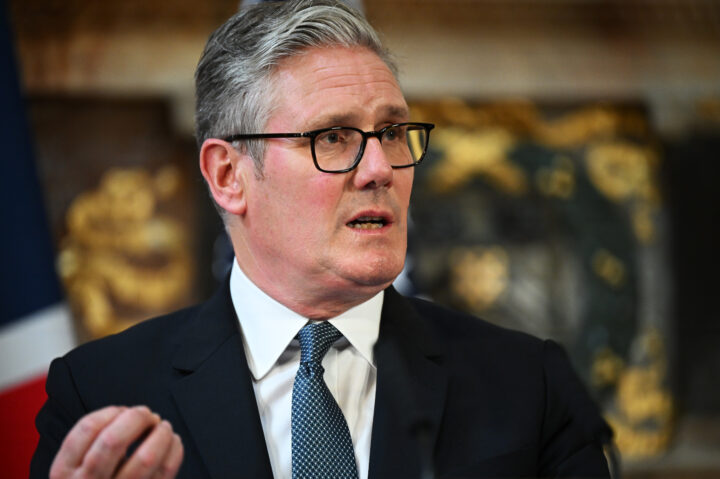
UK Prime Minister Keir Starmer talks at a press conference at Chequers at the conclusion of a state visit by U.S. President Donald Trump, on September 18, 2025 in Aylesbury, England.
U.K. Prime Minister Keir Starmer announced several new policies aimed at protecting British Jews, including a ramped up security presence, a tightening of immigration laws and a crackdown on extremist charities, in a speech on Thursday following the stabbing of two Jewish men in a suburb of London.
Starmer denounced the rise in antisemitic attacks, naming several that have occurred in recent months, and fear that British Jews experience while conducting everyday life. He listed new government priorities including increasing visible police presence in Jewish communities; increasing investments in Jewish security services; introducing new legislation to prevent “hate preachers” from entering the country and speaking on college campuses; and working to speed up sentencing for perpetrators of antisemitic attacks.
Starmer further condemned those who participate in protests with antisemitic themes. “Of course we protect freedom of speech and peaceful protest in this country, but if you are marching with people wearing pictures of paragliders without calling it out, you are venerating the murder of Jews,” he said.
He added that demonstrators who use the phrase “globalize the intifada” are “calling for terrorism against Jews” and should be prosecuted.
As British authorities are investigating whether a recent surge of attacks targeting Jewish institutions in the country is linked to Iran, Starmer added, “We need stronger powers to tackle the malign threat posed by states like Iran because we know for a fact that they want to harm British Jews, which is why we will fast-track the necessary legislation.”
British Jews have been raising the alarm on rising antisemitism in the country and government inaction to combat it. On Wednesday, two Jewish men, one in his 70s and one in his 30s, were stabbed in the heavily Jewish London suburb of Golders Green. Both were hospitalized in stable condition, according to the Metropolitan Police, which declared the attack a terrorist incident.
The stabbing is the latest in a string of violent attacks against Jewish individuals and sites around London in recent months, which U.K. Chief Rabbi Ephraim Mirvis has called a “sustained campaign of violence and intimidation.” He said following Wednesday’s attack that “words of condemnation are no longer sufficient.”
Last week, an arsonist who pleaded guilty to attacking a London synagogue was released on bail. Also this month, two suspects in an arson attack on another London synagogue were similarly released on bail, and a building that used to house the Jewish Futures charity and still bears its name on the side was targeted in a separate arson attack the same week.
Antisemitic attacks in the country have extended beyond London. Last year, during Yom Kippur, two men were killed at the Heaton Park Hebrew Congregation synagogue in Manchester in a car-ramming and stabbing attack. At the time, Starmer promised to do “everything” in his power to protect the Jewish community, including allocating $13 million in emergency funds to provide greater security.
After a series of targeted attacks in Toronto and beyond, Jewish leaders are raising the alarms on Canada’s failure to properly protect its Jews amid ‘systemic’ antisemitism
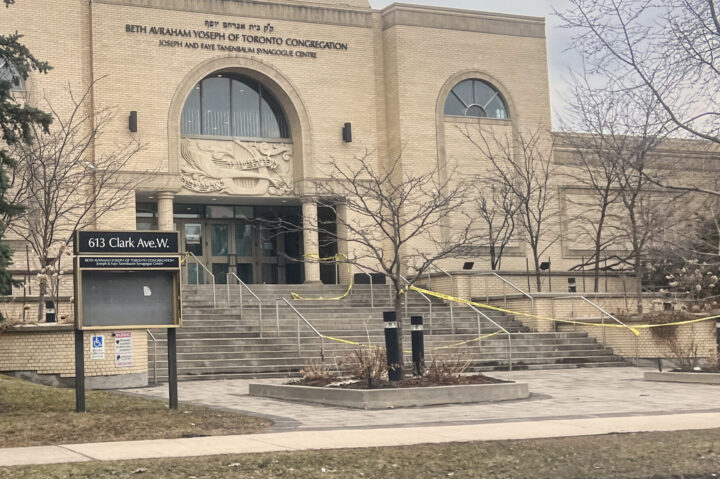
Creative Touch Imaging Ltd./NurPhoto via Getty Images
Police tape is seen outside the Beth Avraham Yoseph of Toronto (BAYT) synagogue following overnight gunshots fired at the building in Vaughan, Ontario, Canada, on March 21, 2026.
As Canadian Jewish families began celebrating the holiday of Passover, a commemoration of Jewish persecution and redemption, many found the ancient narrative colliding with a modern reality of rising fear at home.
Early Friday, a Jewish-owned restaurant in Toronto was struck by gunfire for the second time in weeks — a targeted, 14-bullet assault that police called a “glaring example of domestic terrorism.”
The incident marks the latest in a wave of antisemitic attacks, highlighting what Jewish leaders describe as “systemic” Jew-hatred in Canada. And it is even leading some Jewish Canadians to consider their own kind of exodus from their country, with one communal leader saying that “the promise” that Jews could practice their faith openly in the country “has been broken.”
“There’s a real sense — and I don’t want to overstate it — but that the Jewish community in Toronto has felt under siege since [the Oct. 7, 2023, terrorist attacks in Israel],” Rabbi Debra Landsberg, who leads Temple Emanu-El, a Reform synagogue in Toronto’s North York district, told Jewish Insider.
On March 2, Landsberg’s congregation was shot at several times, as her family and at least one staff member remained near the building following a Purim celebration. No injuries were reported, but the exterior and front lobby sustained significant damage.
The shooting was the first in a series of three synagogue attacks in Toronto last month. One week after Temple Emanu-El was targeted, the front doors of Shaarei Shomayim Synagogue and The Beth Avraham Yoseph of Toronto were shot at in the middle of the night, causing damage to both buildings.
In another recent incident, Canadian law enforcement arrested three Toronto-area men accused of planning violent kidnappings targeting women and members of the Jewish community.
Israel’s ambassador to Canada, Iddo Moed, said that last week’s restaurant shooting “the 12th incident of its kind in the latest wave of antisemitism and violence against the Jewish community in Canada.” UJA Federation of Greater Toronto warned that the incident should cause “all Canadians to be extremely concerned by what’s happening in our country right now.”
Toronto police have responded to the surge of violence by deploying armed officers at Jewish institutions around the city, an effort that was ramped up during the Passover holiday.
Canada has experienced some of the most severe manifestations of the global surge in antisemitism since Oct. 7. — with higher rates of antisemitic incidents than other countries but lower conviction rates.
In the first two months of 2026 alone, 22 antisemitic incidents were reported in Toronto, representing approximately 62% of all reported hate crimes in the country, according to police. Based on population, a Jewish Canadian is 25 times more likely to experience a hate crime than any other Canadian, according to the Centre for Israel and Jewish Affairs (CIJA).
Some Jewish leaders told JI they have come to expect sluggish or nonexistent responses from law enforcement and political leadership, a failure that they say exacerbates the problem.
One month after the synagogue shootings, no arrests have been made. Police say investigations are ongoing.
A spokesperson for the Toronto Police Department told JI last week that “the synagogue shootings are being examined for potential links … information, evidence, and intelligence are being shared to determine whether there are any connections.”
“There has been a systemic failure across jurisdictions to face antisemitism,” said Richard Marceau, senior vice president of strategic initiatives and general counsel at CIJA, an agency of the Jewish Federations of Canada. Marceau asserted that society has “a complete misunderstanding” of what antisemitism is, whether it stems from “the far left, far right [or] Islamic circles.”
“There’s also a reluctance to act,” he said. “There’s a desire to say ‘we’ll just let a little steam out and the pressure will go away.’ There’s no consequences to what’s happening [so] people feel emboldened.”
“In terms of fighting on the criminal legal side, the police are reluctant to press charges and go from a ‘let’s keep the peace’ mentality to ‘let’s enforce the law,’” continued Marceau, a former Bloc Québécois member of parliament. “Charges are dropped by the prosecution for no good reason. Often judges don’t understand what antisemitism is.”
“If there’s one thing that should be clear it’s that Jews are under threat and this type of thing should not take such a long time,” Marceau said of the investigations into last month’s synagogue shootings. “There should be infrastructure to make sure that the people who attack are quickly found and identified.”
“There’s also a reluctance to act,” Marceau said. “There’s a desire to say ‘we’ll just let a little steam out and the pressure will go away.’ There’s no consequences to what’s happening [so] people feel emboldened.”
Marceau noted some positive movement since the Toronto synagogue shootings. Bill C-9, which would amend the criminal code to strengthen penalties against hate-motivated crimes, protect religious spaces and ban public display of hate symbols, passed in the House of Commons last month. Marceau called for the Senate “to quickly pass it.”
“All around, the authorities have been given a failing grade on this. All the lights are flashing on Canada’s dashboard — things need fixing and the fixing needs to happen now,” said Marceau.
Landsberg, former president of the Toronto Board of Rabbis, said that among her congregants, “everybody is just a little jumpier” since last month’s attack. “The police are responsive but not forthcoming with information. Visible police presence has been noticeable here and at other Jewish institutions. The care and concern from our police has been real.”
But many questions remain, said Landsberg. “Whether or not they are able to solve this — and what it will take — and do they have the clear support of political leadership, to make Jews safe and feel safe? As time goes on, one imagines that we might live without ever having someone brought to account for this.”
“The political response has been complicated and underwhelming,” continued Landsberg. “Since Oct. 7 at least, the question of whether laws on the books are being implemented when it comes to hate crimes against Jews is an open question. I don’t know many people who are convinced that the law has been applied during some of these protests when there is classic imagery of Jews as rats.”
Few Jewish institutions have been targeted as severely as Kehillat Shaarei Torah, a Modern Orthodox synagogue that has endured 10 separate attacks in the last two years alone. The congregation is also located in North York, but about 2.5 miles from most of Toronto’s Jewish life.
Geographic distance hasn’t spared the synagogue from becoming a target of antisemitic incidents, the first of which occurred the Thursday before Passover two years ago when “about six or eight of our windows were smashed by somebody with a hammer who came in the middle of the night,” the congregation’s leader, Rabbi Joe Kanofsky, told JI.
“We got through Pesach and then there was another by the same person, judging by the security tapes, who came back to get what he missed,” said Kanofsky. “He missed our doors, he came back to smash our glass doors and some more windows. We had a couple more things throughout the summer into the next year.”
Other incidents included a sign outside of the synagogue calling for the release of the hostages kidnapped by Hamas on Oct. 7 being set on fire and dead animals being thrown onto the property. The windows were also smashed several more times.
Frustrated, synagogue leaders installed a black iron fence around the perimeter of the building in December 2024. That “slowed things down” until November 2025, said Kanofsky, “when we had somebody, possibly the same person, come smash the windows with a hammer again. That was our most recent and brought us up to 10 figures all together.” No arrests have been made in any of the attacks.
Canada operates under three levels of government — federal, provincial and municipal — and Kanofsky expressed dissatisfaction with the political response, noting that certain branches have performed worse than others.
“The municipal government seems to be wishing the problem away,” he said. “If they close their eyes they imagine it’s not so bad and maybe they’ll give a little money for increased security so the Jews can take care of that.” In March, days after the Toronto synagogue shootings, the Canadian government announced a new $10 million investment through the Canada Community Security Program to help Jewish institutions enhance security.
“I haven’t heard much from the provincial government until the three shootings in March happened. Right after that happened, the provincial government called the meeting of rabbis. [Doug Ford,] the premier of Ontario, asked a lot of questions and listened, sharing his plans for beefing up security. After a long time, finally there was some attention from the provincial government, which oversees prosecutions. That’s where things are falling apart, things do not go to trial and if they do they are dropped.”
“From the federal government, our representatives in Ottawa have been fairly supportive. There’s a bit of a degree of ‘it’s somebody else’s job’ and everyone points to someone else,” continued Kanofsky. “But the police are always there for us before and after we call. If the rest of the levels of government were as determined as the police, we probably would not have this problem.”
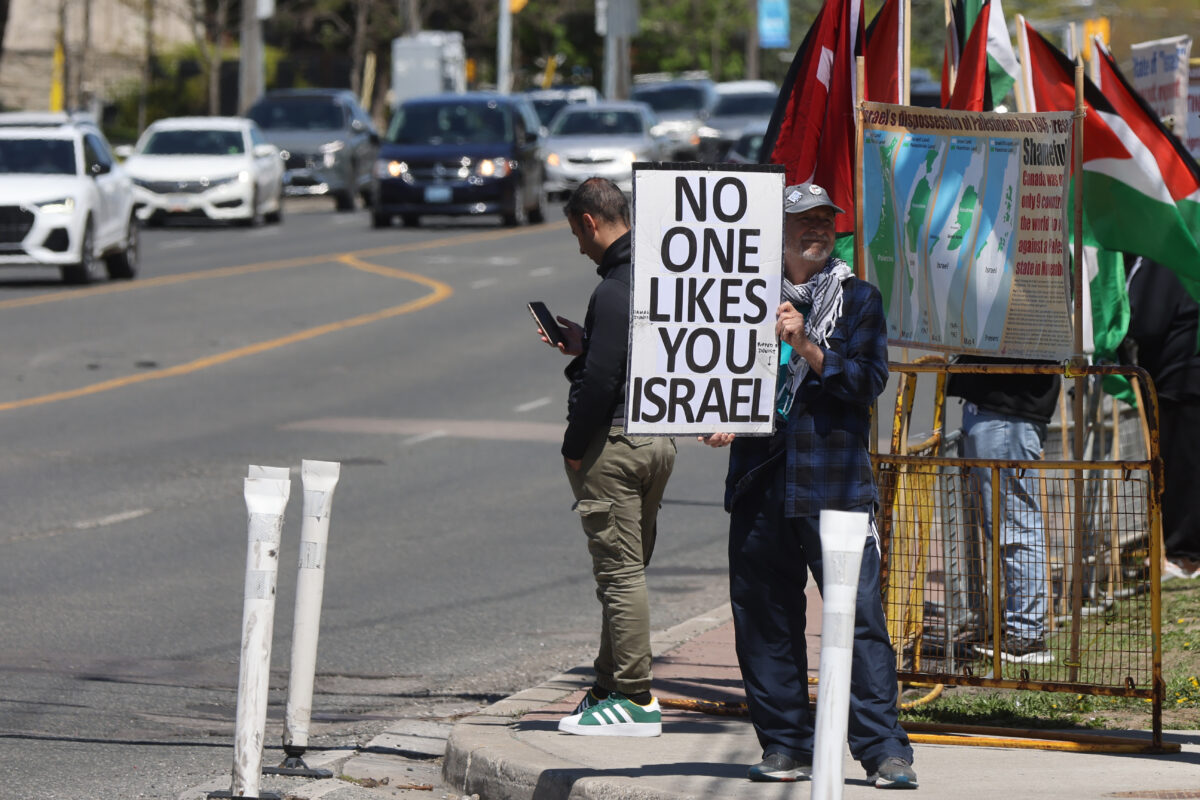
While nearly half of Canadian Jews reside in Toronto — which is home to about 150 Jewish institutions — the problem extends beyond Canada’s largest city. In Ottawa, the country’s capital, a Jewish grandmother was stabbed in August while shopping at a kosher supermarket. In 2024, Jews in Montreal were granted an injunction to prohibit the spate of anti-Israel protests, which included chants of “death to the Jews” in Arabic outside of a school, occurring within 50 meters of dozens of Jewish institutions.
In what The Atlantic recently called “Canada’s Polite Pogrom,” many incidents targeting Jews have been quieter, without broken glass or bones, but disruptive and exclusionary nevertheless.
Eighty percent of Jewish doctors and medical students surveyed by the Jewish Medical Association of Ontario reported experiencing antisemitism at work after the Oct. 7, 2023, attacks. In 2024, more than 100 Jewish doctors stopped acknowledging their affiliation with the University of Toronto’s Temerty Faculty of Medicine in protest of what they saw as the school’s failure to protect Jewish students and faculty. Almost a third of Ontario’s Jewish doctors say they are considering leaving Canada because of hostile work environments, according to the JMAO survey.
A group of Jewish teachers in British Columbia filed a human rights complaint against their own union, accusing the BC Teachers’ Federation of excluding, harassing and silencing its Jewish members. A federal investigation into Ontario’s K-12 schools found nearly 800 antisemitic incidents reported in elementary and high schools since 2023, many stemming from teachers’ conduct. The Toronto International Film Festival briefly dropped a documentary from its lineup that chronicled an Israeli grandfather’s experience rescuing his family from Hamas on Oct. 7, before a global effort successfully pushed for its reinstatement.
Jewish life in Canada wasn’t always this way, said Irwin Cotler, Canada’s former justice minister.
“When I was in the Ministry of Justice, at that time we had nowhere near the levels of antisemitism we’re witnessing now,” Cotler, who served as a member of Parliament, attorney general and Canada’s first special envoy on combating antisemitism, told JI. He called the current situation “an unprecedented explosion.”
“One would have thought that the times since [Oct. 7] would have resulted in actions to combat antisemitism. We’ve had on a public level, tragically almost, denials that Oct. 7 took place or support and justification — even celebration — for it in the public squares,” he said.
Upon completing his term as Canada’s special envoy on combating antisemitism in 2023, just before the Oct. 7 attacks, Cotler recalled reporting that “the conventional paradigm for combating antisemitism on the far right and far left was still true.” But, he continued, “the most important finding I had was that we were witnessing an increasing mainstream normalizing antisemitism and particularly in the campus culture, with an absence of outrage underpinned by indifference and a failure to appreciate that antisemitism is not only increasingly threatening Jews but that it’s toxic to democracies and an assault on our human rights values.”
If not addressed quickly, Cotler warned that there’s “a ticking bomb here in Canada for what will be the Bondi massacre occurring in Canada,” a reference to the December 2025 mass shooting at a Hanukkah gathering at Bondi Beach in Sydney, Australia, that killed 15 people.
“The synagogue shootings here are part of a pattern. We are experiencing not only the highest level of antisemitic incidents since tracking began in the 1970s, but the real disturbing data has been the dramatic increase in hate crimes targeting Canadian Jews. Hate crimes are different from other forms of antisemitism because they are identity crimes that target the whole community and reverberate within the whole community,” continued Cotler.
Cotler described law enforcement and government as ineffective. “Arrests are not made or if they are made then charges are not laid. If charges are laid, prosecutions are not proceeded with, or if prosecutions are proceeded with the courts do not sustain it,” he said.
Canada “needs a wake up call,” continued Cotler, “and it needs a whole government commitment at [all] levels to combat antisemitism. If the government gives a 10 percent increase in community security it’s basically telling Jews to protect themselves and giving a little more money to do that. That’s not a response. If you don’t have leadership at the governmental levels, lack of leadership will trickle down and start to become part of the culture of inaction. What we’re witnessing from the government are performative tweets and virtue signaling, but not effective leadership and action on the ground.”
Last month, frustration with political leadership deepened for many Jews with the election of Avi Lewis, a far-left Jewish anti-Zionist, as the leader of the New Democratic Party, widely described as Canada’s democratic socialist party.
“We are left with a deep sense of sadness,” Marceau and Rachel Chertkoff, senior vice president of community engagement at CIJA, said in a joint statement following the March 29 election. “When a leader declares that Zionism is inseparable from ethnic cleansing, he is not engaging in legitimate policy critique. He is telling Jewish Canadians that a core part of their identity is illegitimate. That is exclusion.”
Cotler, who was friends with Avi Lewis’ father, Stephen Lewis, said the election left him “concerned — not about criticism of Israel, but engaging in obsessive preoccupation in calling out alleged Israeli genocide.”
As a member of Parliament, Cotler said he was “close” with the NDP. “The astonishing difference [is] now we’ve gone down the road where NDP is no longer a place Jews feel they can be at home,” said Cotler. “It’s tragic because of the important role Jews played in the founding of the NDP.”

Landsberg noted that the writing was always on the wall: Canadian Jews would face a harsher reality than their American counterparts.
Canada is “50-plus years slower in reaching integration. In many ways the American story — of freedom and exodus — has been integrated naturally, the early Civil Rights Movement, for example,” Landsberg said. “There isn’t that comparable norming of the Jewish story [in Canada]. The first Jew who made it into a political cabinet position wasn’t until the late 1960s, decades after there were Jews on the Supreme Court in the U.S. Same thing with leadership in medicine and universities. It’s much later here. It’s a much smaller community that is made up of many more immigrants. It’s a different community in that this is home but these are people who have had to flee homes already. Canada’s understanding of Jewish citizens as part of the multicultural story that it has been trying to create has played out differently.”
Marceau, who splits his time between Montreal and Ottawa, has three friends who have left Canada because of antisemitism. “In discussions around Shabbat tables or at synagogue, [fleeing] is a constant conversation that is happening,” he said. “The promise that everyone could be openly themselves in Canada, to practice whatever faith they want — has been broken — certainly for Jews.”
Similarly, Kanofsky said that among his 200-family congregation, “people have already received second or third passports through their parents or grandparents. People are gathering their documents. Younger families are looking into Central America or other places that might be more hospitable. These are people that if you would have asked five years ago would have said they have deep roots and are not going anywhere for the long term. The Canadian Jewish community had a very deep-seated feeling of being part of society and being protected. A lot of that has been deeply damaged by the complacency of the government over the last couple of years.”
“Jewish communities will for sure learn from mistakes from the past and no one will stay longer than is necessary. People in our congregation have already gone on aliyah,” continued Kanofsky. “In a hurry, everybody gained a sense of mobility when they saw the inaction of the government.”
But, even when describing the boarded-up front lobby of her congregation — where leaders are still debating the type of shatterproof glass to install — Landsberg painted a picture of a resilient community with hope for the future.
“This is probably the same for Jews in the U.S.,” she said, “but there’s a sense of clarity that many people are really feeling a deep discomfort with how society here is handling this, and also the sense of strength [because] the Jewish people have been through a lot.”
‘Safeguarding communities at risk of violence is not the responsibility of philanthropic organizations. Rather, it is the government’s responsibility,’ the organization wrote to every member of Congress

Brandon Bell/Getty Images
A law enforcement vehicle sits near the Congregation Beth Israel synagogue on January 16, 2022, in Colleyville, Texas.
Following an attack last Thursday on Temple Israel and its early learning facility in West Bloomfield Township, Mich., the Jewish Federations of North America is making a renewed push for expanded security funding and resources to protect the Jewish community.
Since the Oct. 7, 2023, Hamas attacks in Israel, antisemitic attacks have repeatedly prompted such efforts from Jewish community groups and advocates on Capitol Hill, but funding has remained stubbornly gridlocked. Currently, funding for community security under the Nonprofit Security Grant Program remains in limbo during the Department of Homeland Security shutdown, with no signs of movement in the immediate aftermath of the attack.
In a letter sent to every member of Congress on Friday, JFNA Chair Gary Torgow and President Eric Fingerhut highlighted the significant degree of security support that Temple Israel received from its own membership, from the Jewish Federation of Metropolitan Detroit and JFNA.
“We are grateful that philanthropic funding and security planning played a decisive role in ensuring no harm came to any of the children or staff at Temple Israel,” the letter reads. “However, safeguarding communities at risk of violence is not the responsibility of philanthropic organizations. Rather, it is the government’s responsibility to protect its citizens in their places of worship and communal gathering.”
The letter emphasizes that the “Jewish community is under attack today like no other religious or ethnic group,” as a top target of hate crimes by a significant margin.
The letter urges increased funding for the NSGP at $1 billion and the prompt allocation of funds already appropriated that have not yet been disbursed for 2025. It also requests an end to restrictions on using NSGP funding to pay salaries for security personnel.
“The Jewish Community in Detroit has received important support from the state of Michigan and the Federal Nonprofit Security Grant Program, but the funding levels currently provided across the nation to protect our communities are simply not commensurate with the escalating threat landscape that American Jewish communities face daily,” the letter states.
The letter additionally asks Congress to ensure that NSGP applications are quickly opened and processed and that reimbursements are promptly fulfilled, following significant delays to funding grants and reimbursements last year.
It also calls for additional funding for FBI counterterrorism personnel and field offices that work to protect Jewish communities, and increased federal funding for local law enforcement to protect Jewish institutions, so that those institutions don’t have to pay for such protection themselves.
“Finally, we urge all our political leaders to take action to confront antisemitic-fueled violence in the public discourse and on social media,” the letter concludes. “This virulent ideology surging across the political spectrum utilizes rhetoric that either normalizes or minimizes such hatred, manifesting in dangerous consequences, potentially far worse than what took place today.”
The letter precedes a visit by Torgow, Detroit Federation CEO Steve Ingber, Temple Israel Rabbi Jennifer Lader and Detroit federation security director Gary Sikorski to Capitol Hill on Tuesday. The group is set to meet with both of Michigan’s senators and nearly every member of its House delegation.
The lawmakers said NSGP funds should not be used ‘to reinforce other policy priorities’ as new conditions may require organizations to cooperate with immigration enforcement and curb DEI programs

Kevin Carter/Getty Images
U.S. Capitol Building on January 18, 2025 in Washington, DC.
A bipartisan group of 82 House lawmakers wrote to Homeland Security Secretary Kristi Noem on Thursday urging her to roll back new conditions placed on applications for the Nonprofit Security Grant Program amid rising antisemitic attacks.
The bipartisan support for the letter is particularly notable given that, while Democrats have been raising concerns about the conditions for months, Republicans have, publicly, been comparatively quiet.
“We are writing to you today to express our desire to ensure that the NSGP is adequately funded and unimpeded by new requirements that are unrelated to the security of grant recipients and their communities,” the letter, led by Reps. Max Miller (R-OH), Brad Schneider (D-IL), Josh Gottheimer (D-NJ) and Michael McCaul (R-TX), reads. “Insufficient funding or unnecessary obstacles to obtaining grants could undermine the right of every religious community to freely and peacefully worship and congregate without fear.”
The letter states that new conditions issued by DHS in April 2025 “create new compliance requirements for recipients that will divert limited funds and restrict the religious conscience of synagogues, schools, and other institutions pivotal to our communities.”
The new conditions may compel religious institutions to cooperate with immigration enforcement activities and eliminate diversity, equity and inclusion programs.
“We encourage DHS to work to make compliance with NSGP requirements as simple and streamlined as possible. We also request that DHS ensures NSGP remains a program designed to protect the security of houses of worship, not to reinforce other policy priorities,” the lawmakers wrote. “In this time of rising antisemitic terror attacks and violence against diverse faith-based institutions, we believe it is crucial that NSGP remains a critical resource for all who seek to worship in safety and free from partisan politicization.”
They called on Noem to issue new guidance that “waives any terms and conditions that do not directly relate to the grant’s purpose, which is to help qualified institutions improve their security against increasing threats.”
The lawmakers emphasized the clear need for and lifesaving impact of NSGP funds in a time of increased hate-motivated violence. They also thanked Noem for her “ongoing support” for the program.
DHS has not yet awarded grants from the 2025 grant cycle, and lawmakers have accused the administration of withholding critical information about which institutions have received funding under separate grant rounds. Democrats have alleged the department is mismanaging the program.
Funding for the grants in 2026 — thought to be finalized just weeks ago — was again thrown into question last week when lawmakers agreed to reopen negotiations over the Department of Homeland Security funding package for the year following the deadly shootings by immigration agents of two U.S. citizens in Minneapolis.
“The Nonprofit Security Grant Program is one of the most vital programs protecting the Jewish community. We continue to encourage every Jewish institution with heightened security needs to apply for these funds,” Jewish Federations of North America CEO Eric Fingerhut said. “We have also heard from our community that the current terms and conditions have had the unintended effect of deterring some organizations from applying, which is why we believe they should be updated appropriately.”
“At a time of rising violence and hatred targeting houses of worship, NSGP is an essential lifeline for synagogues and other faith-based institutions seeking to protect their congregants,” said Lauren Wolman, ADL’s senior director of government relations and strategy. “We are grateful for the bipartisan effort to ensure DHS requirements remain clear, consistent, and focused on what matters most — helping at-risk nonprofits protect themselves from threats. Organizations must be able to access these resources quickly, with confidence, and without unnecessary delays.”
“Jewish and other communities facing violent threats deserve to know that the government is prioritizing their safety, not politicizing it,” Amy Spitalnick, the CEO of the Jewish Council for Public Affairs, said. “Yet the chaos created by these new terms and conditions has only created more vulnerability for communities, who are worried that they’ll be forced to choose between their core religious beliefs and their basic security — a concern we’ve been raising for months.”
“We appreciate Reps. Miller and Gottheimer for helping lead this important bipartisan call to clarify that NSGP should not be used for anything other than the security of our communities,” Spitalnick continued.
Jewish groups praised the move for allowing law enforcement to increase its security presence at religious institutions, which is often paid for by the houses of worship themselves
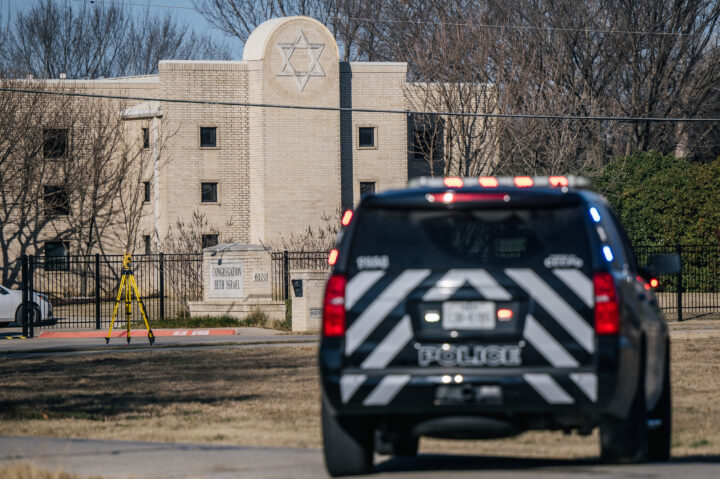
Brandon Bell/Getty Images
A law enforcement vehicle sits near the Congregation Beth Israel synagogue on January 16, 2022 in Colleyville, Texas.
The House and Senate’s negotiated 2026 funding package for the Department of Justice includes funding for state and local law enforcement specifically allocated for protecting religious institutions.
The explanatory report accompanying the bill, released Monday, instructs the Department of Justice to allocate at least $5 million in DOJ law enforcement grant funding to agencies “seeking to enhance security measures for at-risk religious institutions and to address the precipitous increases in hate crimes targeting individuals on the basis of religion.”
Such funding, aimed at providing law enforcement with additional resources to step up their security presence at synagogues and other houses of worship, has been pursued by Jewish community groups particularly amid rising antisemitic attacks in the wake of the Oct. 7, 2023, attacks in Israel.
Nathan Diament, the executive director of the Orthodox Union Advocacy Center, told Jewish Insider the issue is one that the OU has been working on for some time, noting that many police seen stationed outside synagogues are often off-duty and being paid by the synagogues themselves, not their municipalities.
“It always struck us as a little crazy that communities have to pay out of pocket” to ensure police protection, Diament said, while noting that local law enforcement are often low on funding and cannot always spare the personnel. By dedicating some of the pool of federal funds that the Department of Justice provides annually to local law enforcement, police would be able to deploy on regular duty or on overtime, Diament said.
He said that OU had worked with the Justice Department under the Biden administration to issue guidance to police instructing them that they can, but were not required to, use the grant funding to deploy officers to protect religious institutions. He said he’d had discussions with Trump administration DOJ personnel about specifically allocating existing grant funding to that purpose earlier this year, but the officials said that congressional authorization would be needed.
Diament described this language in the report as a first step forward. He said that OU is hoping to see the language incorporated into the bill text itself before passage.
He said that the program could grow in the future depending on needs and the political debates on police funding, and emphasized that — if the bill passes — OU will urge the DOJ to allocate more than the allotted minimum of $5 million.
Diament also noted that providing police protection at no cost to Jewish institutions can help other security funding provided through the Nonprofit Security Grant Program “go further” and be applied to other security needs.
Diament credited Sen. Jerry Moran (R-KS), the chair of the Senate Appropriations Committee subcommittee responsible for Justice Department funding, and Rep. Grace Meng (D-NY), the ranking member of the corresponding House committee, as key champions of the new provision.
Moran cited the killing of Sarah Milgrim, an Israeli Embassy employee and Kansas resident shot and killed at the Capital Jewish Museum last year, in a statement on the effort.
“In the months since then, the Jewish community has been rocked by numerous attacks that have prompted increased police presence at synagogues and houses of worship across the country,” he continued. “The freedom to worship is one of the most fundamental rights enshrined in our Constitution. While it is disheartening that places of worship and faith-based organizations are coming under attack, we have a responsibility to protect these institutions and in doing so, protect the rights of Americans of all faiths.”
“In recent years, there has been a significant rise in attacks on houses of worship of Americans of many faiths, including the Jewish community,” Meng said in a statement to JI. “As Ranking Member of the House Appropriations Subcommittee on Commerce, Justice, Science, and Related Agencies, public safety is a top priority for me. That’s why I was proud to work across the aisle to secure millions in federal funds to make it easier for houses of worship to hire security personnel. This bipartisan win will help stop incidents before they occur and builds on existing programs that help at-risk institutions enhance their physical security.”
The six-point security plan spearheaded by the Jewish Federations of North America and a coalition of more than 40 Jewish groups in response to the Capital Jewish Museum shooting also called for the government to “increase funding for local police and law enforcement to create capacity for both monitoring and protecting Jewish institutions” because “[t]he demands on local and state law enforcement far outpace their capacity to meet the need, which disproportionately affects targeted communities like the American Jewish community.”
“At a time when antisemitic threats are growing more frequent and more dangerous, federal funding to protect at-risk institutions, prevent hate crimes and support Holocaust education are essential,” Lauren Wolman, the Anti-Defamation League’s senior director of government relations and strategy, said in a statement. “ADL welcomes language in the FY2026 Conferenced CJS, E&W, and Interior funding bill that dedicates resources to help law enforcement enhance security for at-risk religious institutions and respond to the sharp rise in religion-based hate crimes.”
“We are pleased to see continued support for key programs that strengthen law enforcement, prevention and education,” Wolman continued. “The reality is that the need far outpaces current investment. Combating antisemitism requires sustained resources, coordination, and accountability across the federal government.”
Eric Fingerhut, the CEO of JFNA, also praised the new funding.
“It is critical that local law enforcement agencies have the resources to protect the Jewish communities they serve. Given the rising threats of violence to Jewish events and institutions, local law enforcement definitely needs federal help,” Fingerhut said. “This appropriation is an important recognition of that need and we look forward to working with Congress to develop the most effective and expansive assistance to local law enforcement possible.”
The negotiated bill also preserves funding for a series of hate crimes prevention grant programs supported by major Jewish community groups, providing $35 million under a series of programs, for which the original House version of the bill had not allocated any funding and which the Trump administration had aimed to slash. The Senate proposal included the $35 million in funding.
It also provides $20 million for the Department of Justice’s Community Relations Service — a cut of $4 million from 2025 funding levels. The House version of the bill and the administration had aimed to shutter the CRS, which is charged with helping to mediate communal conflicts based on various forms of hatred and discrimination, completely.

Jennifer Liseo/ADL
ADL CEO Jonathan Greenblatt
Anti-Defamation League CEO Jonathan Greenblatt on Tuesday bemoaned what he described as a lack of national media attention to a dramatic rise in antisemitic attacks across New York City, saying that the current polarized political environment has made it difficult to meaningfully address the uptick in violence against Jews in the major metropolis.
“The idea that you have 200 incidents [of antisemitism] here in New York City — [that] should be a national news story. It doesn’t belong in the metro section of The New York Times. It belongs on the front page,” Greenblatt told Jewish Insider during a press conference in Brooklyn, N.Y. “But here’s the thing: In a world which is so polarized, so charged, and so political, everything needs to fit to a narrative. You know what? I don’t care how you vote!”
The fight against antisemitism, Greenblatt stated, has to be, in the name of “decency, diversity and dignity,” a national focus. “When you don’t value these things, when you allow hostility to happen, when you sit and ignore intolerance, that is unacceptable.”
The ADL also announced an initiative in partnership with the Brooklyn Borough President’s office that will double the number of schools participating in its “No Place for Hate” program, with a goal of reaching as many as 40 schools in neighborhoods with significant Jewish populations. The move comes in response to a dramatic increase in violent antisemitic incidents across Brooklyn.
The announcement comes the same day as the FBI released its annual report on hate crime statistics. The report noted that anti-Jewish bias was the source of 57 percent of religion-based hate crimes reported in 2018.
“No one should fear for their safety or be victimized because of their religious beliefs,” said Brooklyn Borough President Eric Adams. “Since extremist, hate-filled rhetoric has become awakened and stoked across this country — particularly in Crown Heights right here in Brooklyn — this unacceptable behavior is increasingly becoming the norm for some.”
Greenblatt stressed that a national response, irrespective of political affiliation, is required regardless of who is the target. “Whether you are a borough president, whether you are a school board president, or the president of the United States, all of us have a responsibility to step up and speak out when hate happens on our watch, whether or not it affects us,” he said.
Please log in if you already have a subscription, or subscribe to access the latest updates.
 Continue with Google
 Continue with Apple