




































Where Israel’s parties stand on the Diaspora — in their own words
At an eJP–ANU election panel, representatives of eight Zionist parties laid out plans on aliyah, antisemitism and pluralism; the governing coalition sent no one
Screenshot
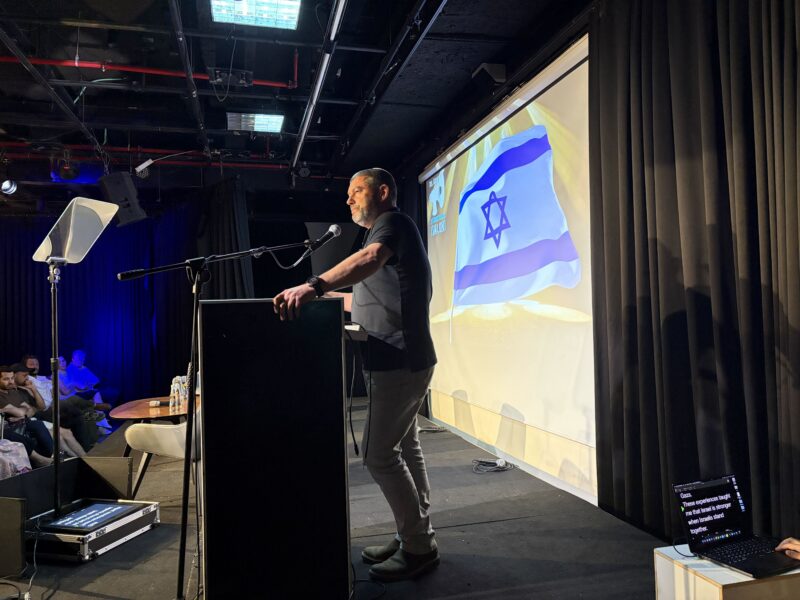
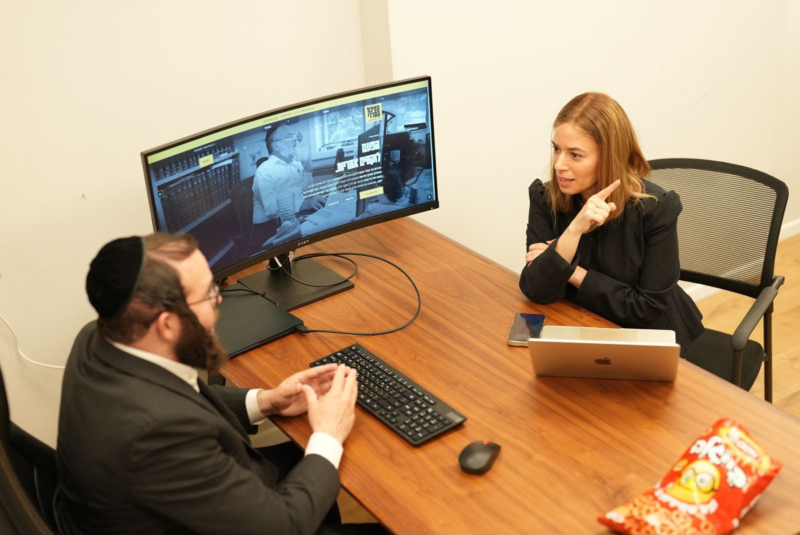
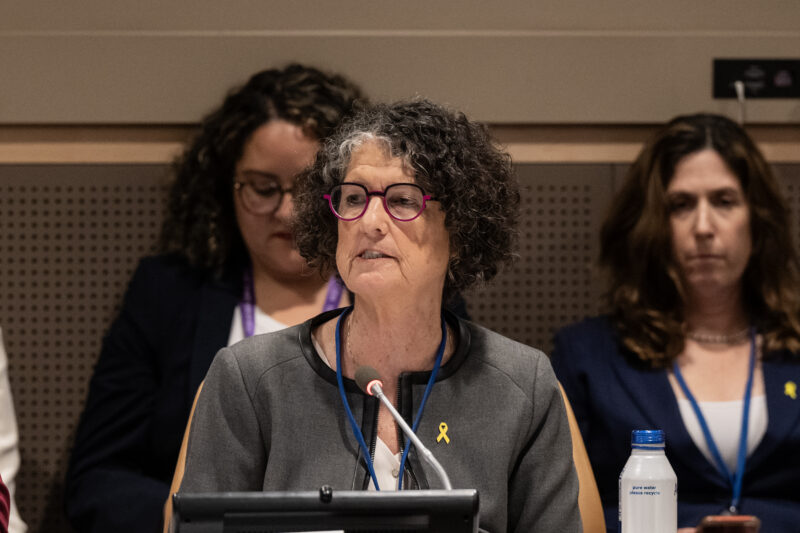
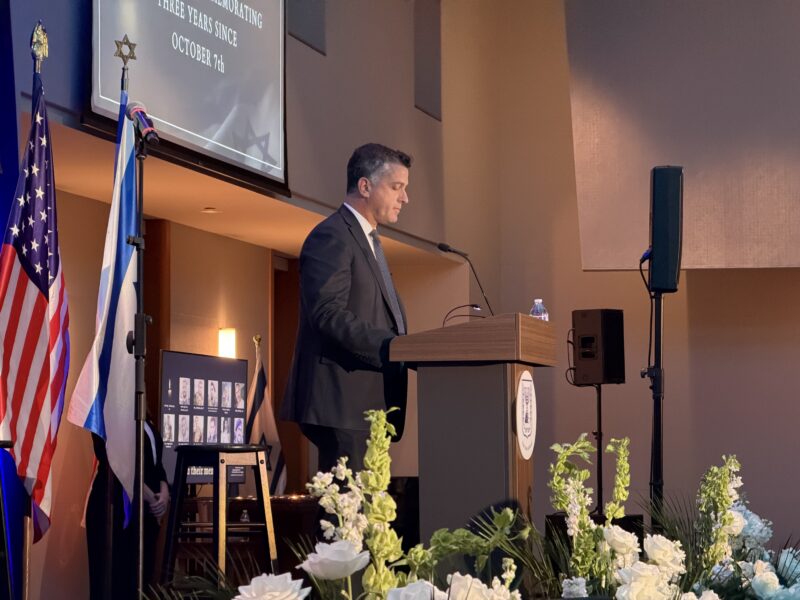
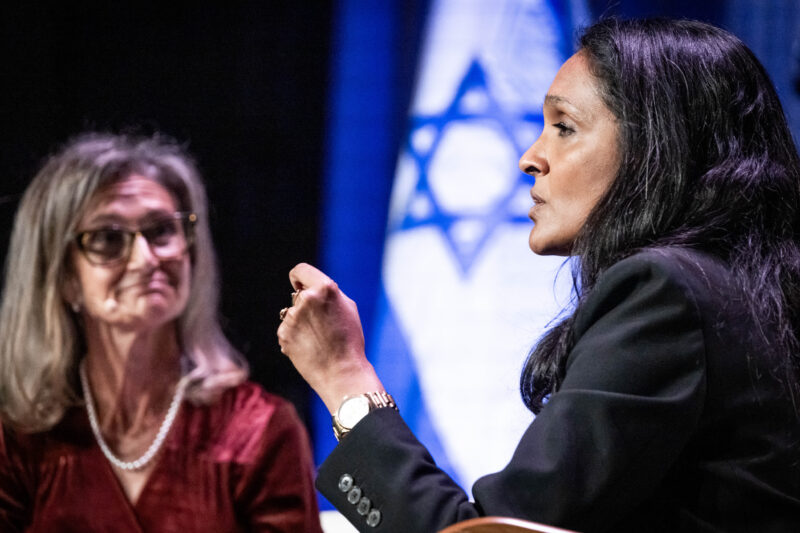
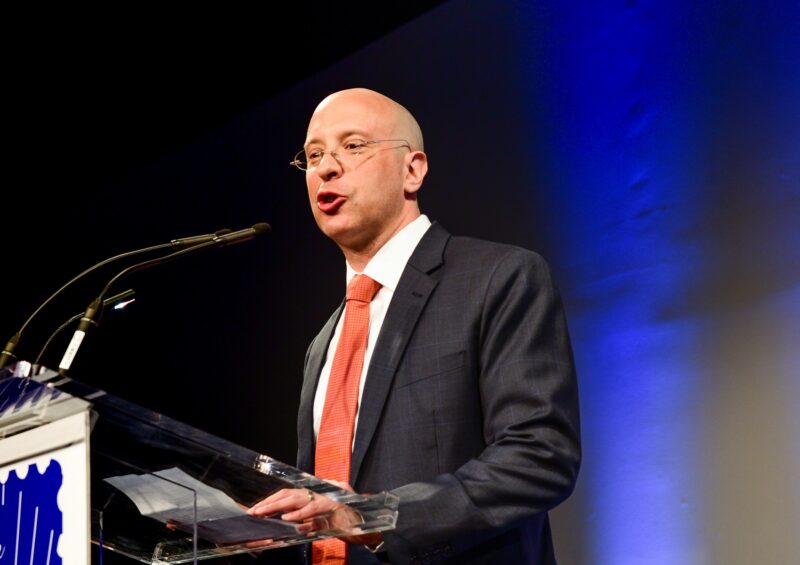
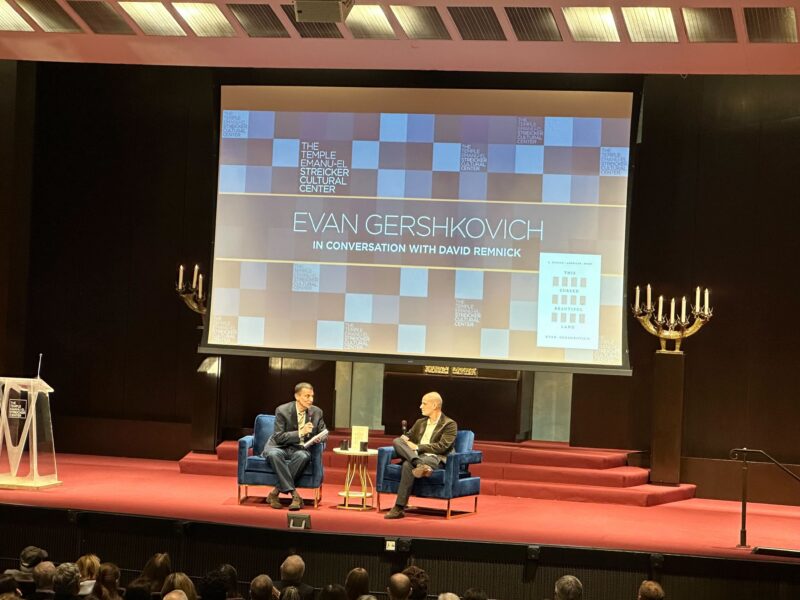
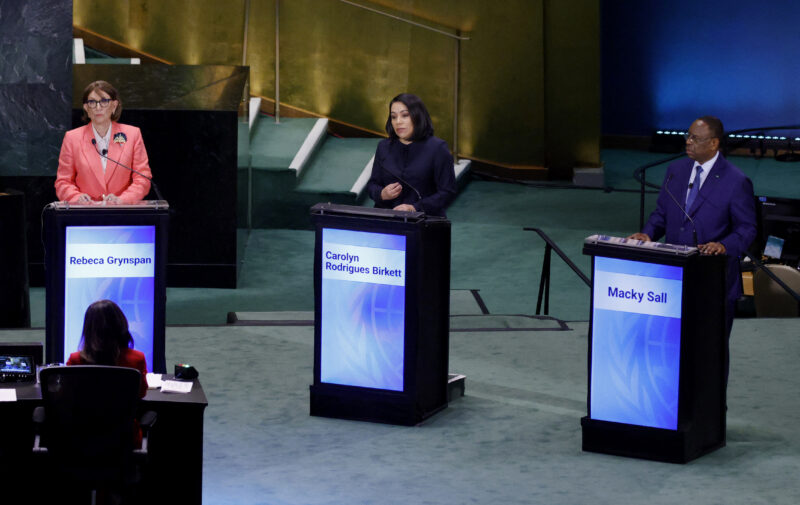
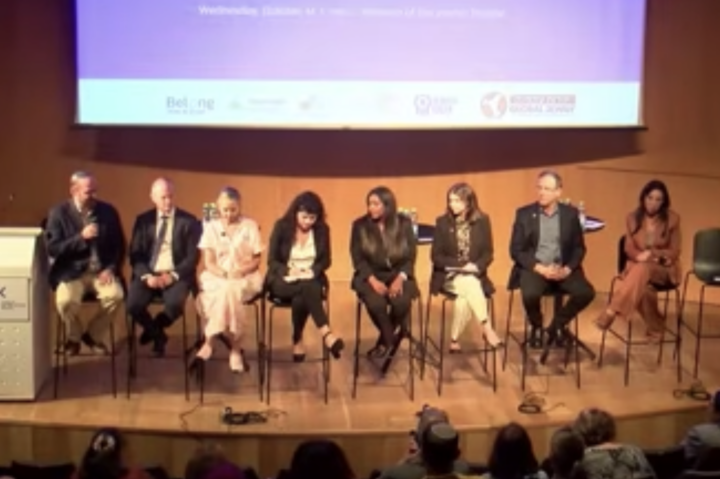
Jewish Insider and its sister publication eJewishPhilanthropy and Anu: The Museum of the Jewish People's Tisch Center for Jewish Dialogue conducts an election panel at the museum on Wednesday, moderated by eJP Managing Editor Judah Ari Gross


 Add JewishInsider on Google
Many Diaspora Jews who care about the future of Israel have been watching the election campaigns in Israel unfold from afar.
And while Diaspora affairs do not rank high in Israelis’ concerns in Oct. 27 election — security and the economy are the top issues — most Zionist political parties have given thought to the issue, whether in their platforms or when candidates are asked about antisemitism and Israel’s connection to world Jewry.
Jewish Insider and its sister publication eJewishPhilanthropy, in partnership with Anu: The Museum of the Jewish People and the Peoplehood Coalition, conducted an election panel at the museum on Wednesday, moderated by eJP Managing Editor Judah Ari Gross, to hear how the parties plan to commit themselves to ties with global Jewry. The event was also supported by Anu’s Tisch Center for Jewish Dialogue, the American Zionist Movement, Global Jewry, Belong, Masa and the Jewish Federation of Tulsa (Okla.).
The following are their answers, condensed for space and clarity:
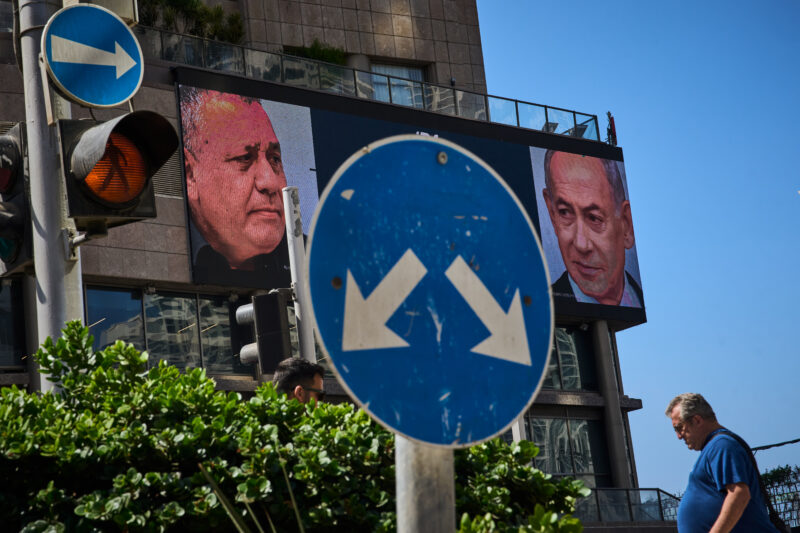
Yashar, led by Gadi Eisenkot:
Alex Rif, who was born in Ukraine in the former Soviet Union and founded an activist movement for Russian-Israelis, spoke about the discrimination and harassment Jews faced in the Soviet Union, but said when they arrived in Israel, they were made to feel “not Jewish enough.”
“My parents would tell me about times when people in the Soviet Union didn’t tell others that they were Jews because they were afraid. Unfortunately, we are going again to these times,” she said.
Rif said that “the issues of aliyah and absorption are in [Eisenkot’s] heart. … We have so many problems today. The antisemitism is rising. … [yet] this government, Netanyahu’s government, tried over and over to change the Law or Return, to cancel the grandchild clause” — meaning that anyone with one Jewish grandparent can immigrate to Israel — “and we’ve defended it.”
Rif called for “an international coalition to fight antisemitism,” to invest more in Birthright and Masa programs and to promote “an inclusive and respectful Judaism,” as well as protect the Law of Return.
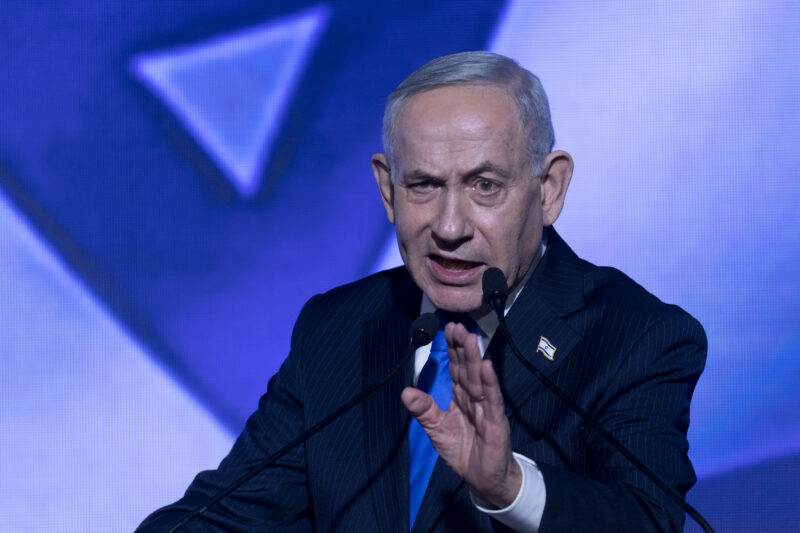
Likud, led by Prime Minister Benjamin Netanyahu:
Diaspora Affairs Minister Amichai Chikli did not attend as planned, and Likud did not send anyone in his place. Otzma Yehudit, Religious Zionist Party, Shas and United Torah Judaism declined to participate in the panel, which meant that the current governing coalition was not represented.
B’Yachad, led by Naftali Bennett:
Moshe Kinley Tur-Paz, a lawmaker from Yesh Atid, one of the parties comprising B’Yachad, was born in Philadelphia but grew up in Israel. He said that he has been “trying to bring the voice of the Jews around the world, of world Jewry to Israel … and because Bennett himself also comes from a family of [immigrants to Israel] this is something very lively and very committed in our party.”
Tur-Paz said that while Diaspora Jews cannot vote in Israel, their position should be brought up in legislative debates, proposing a non-voting 121st Knesset member to represent them in parliament. In addition, he called for funding for more Hebrew learning around the world, and emphasized the need to connect young Diaspora Jews to Israel as well as to educate Israelis about world Jewry, which he repeatedly said was lacking. In addition, he called to form a task force to fight antisemitism.
Tur-Paz said that when he was a principal, he partnered the school in Israel with an Australian school so that the children could learn together online and connect. “Education is everything,” he said.
He also spoke about the Western Wall plan to allow pluralistic prayer services at the holy site, which was proposed and then shelved in the 2010s. “We need every Jew to feel in the [Jewish] Quarter as if it [belongs to] himself. … We will bring it back to the Jews of the world so everyone will feel that this is his land and it is his Kotel.” Asked why his party did not advance the issue when it was in power, Tur-Paz gave what he called a “scoop” that he had been drawing up legislation to do so before the coalition collapsed.
The Democrats, led by Yair Golan:
Gaby Lasky, a former Knesset member best known as a lawyer defending Palestinians and far-left activists against charges in Israel, moved to Israel from Mexico by herself at age 15. “Israel is the state of all the Jews around the world,” she said. “We believe that the connection between the state and Jewish communities outside of Israel is part of our identity, is part of our responsibility.”
The Democrats, she said, “believe in the values of the [Israeli Declaration] of Independence. We believe that Israel has to be a democratic and Jewish state, and for those reasons, we fight for Israeli democracy. … We fight for Israel to be a Jewish state, and that means … all the [denominations] of Judaism, not only Orthodoxy. … We have to change in Israel the fact that only Orthodox [conversion] is accepted. … We all share in common one thing, and that is Tikkun Olam. We believe that we can change this place for the better, and we can only do it if we do it together.”
Yisrael Beiteinu, led by Avigdor Liberman:
MK Oded Forer, a former cabinet minister and the former director-general of the Immigration and Absorption Ministry, said that Israel is “the land of all the Jewish people around the world. You’re a member of the Jewish people — this is your state. Even if you haven’t visited here once.”
Forer said that the mission of encouraging Jews to immigrate to Israel “isn’t complete. We need the majority of the Jewish people to live in Israel. .. I’m sure that we can do it.”
Forer called to help fund security and Jewish education for Diaspora communities. He also expressed appreciation for the generosity of Diaspora communities after the Oct. 7 Hamas-led attacks. Reflecting on both, he said that Israel’s support for world Jewry should be “unconditional” and so should world Jewry’s support for Israel.
Reservists and Economy Party, led by Yoaz Hendel: Writer and former Knesset member (2010-2013) Einat Wilf, whose Oz party merged with Hendel’s, said that she had been one of the small number of Knesset members who devoted time to Diaspora issues and said she had an “absolute, ongoing, unbroken commitment to this relationship … and this will not change whether there are or are not votes in it.”
She called for “more stable, organized, institutionalized, consultative mechanisms by which the Jewish people can have their voice heard and participate in having their voice heard, short of voting.”
“One of the ironic successes of Zionism is that Jews in Israel live in a bit of a bubble, and we do not realize how dangerous what is being built around us in the world,” Wilf said, adding: “We have one side of the political map that believes that changing of government will be enough [to reverse anti-Israel and antisemitic sentiment]; it won’t, and another side who has made [antisemitism] into something permanent. There’s always going to be antisemitism, so there’s kind of fatalist helplessness to it. .. It’s also going to be good for us, that Israeli leaders, coalition and opposition live in a bit less of a bubble.”
Amcha Yisrael, led by Ofer Winter:
Former Jerusalem Deputy Mayor Fleur Hassan-Nahoum spoke of choosing to move to Israel in 2001, and her experience defending Israel in international media, in English and in Spanish: “I’ve been fighting … for three years for the legitimacy of our country, for the legitimacy of a war that we didn’t start.”
“I believe that I’m the candidate that can represent the [English-speaking] voice in this country and Israel-Diaspora relations. We have a wonderful plan for aliyah, for Israel-Diaspora relations and for representing our country and the Jewish people,” she stated.
Hassan-Nahoum also called to reform the World Zionist Organization so that it is a more effective voice of the Diaspora. “Ninety percent of what they do with the money… is just give jobs to their friends, retired politicians. … There are people in this organization who have a job, that don’t show up to work. Most of them can’t even speak English or any [foreign] language. … The infrastructure, the apparatus exists. Let’s clean it up please.”
Blue and White, led by Benny Gantz:
Pnina Tamano-Shata, a Knesset member who was the first Ethiopian-born member of Israel’s cabinet as immigration and absorption minister, said that “the most important experience in [her] life” was when she moved to Israel at age 3, barefoot, with only the clothes on her back.
“We know every step we take impacts the Jewish world,” Tamano-Shata said. “We have to take responsibility [and have] accountability in such a challenging time.”
Tamano-Shata also called to “bring the young generation to be connect[ed] with Israel, to get the tools to deal not only with antisemitism, with a lot of fields — culture, education, the Jewish people and traditions and so much more.”
Tamano-Shata called for an “alternative vote,” without specifying what it would entail, to “give more influence to the Jewish community … [on] important issues that bother the Jews in [the] Diaspora.”
She also referred to the ongoing war in Ethiopia, and said that Jews there, including children, have been killed and kidnapped, and people need to think about them, as well.
Asked about her party’s stance on negotiations with Palestinians and support for a two-state solution — the view held by the majority of American Jews — Tamano-Shata said that while her party yearns for peace, a Palestinian state is out of the question at this point in time, particularly in the wake of Hamas’ Oct. 7 terror attacks.
Israel First, led by Sharren Haskel:
Haskel, a Knesset member and former deputy foreign minister from Likud, was born in Canada and her family moved to Israel when she was a child. She said that having more immigrants in the Knesset helps address the issues that immigrants and Diaspora Jewry face.
Her party has a four-pronged program, beginning with educating Israelis and Diaspora Jews as young as possible to be connected to one another. The second is self-defense, including Krav Maga lessons and leadership programs. The third is strengthening Jewish identity, including free Hebrew lessons in Diaspora communities, and a Hebrew-speaking au pair program. Finally, Haskel called for reducing overhead and streamlining overlapping programs in Jewish organizations that receive Israeli government funding.
Haskel also posited that mixing religion and politics in Israel has been damaging to relations with the Diaspora and called for the separation of religion and state, while strengthening Jewish identity and values.
More Stories

PROBLEMATIC POST
Paxton senior advisor endorsed antisemitic slur on social media
PENSION POLITICS
Former NYC comptroller denounces Levine’s decision not to reinvest in Israeli bonds
analysis
Could these two small parties be Israel’s kingmakers?
ON DEFENSE
El-Sayed dismisses half-sister’s comments about family’s Muslim Brotherhood ties as ‘hearsay’

DIPLOMATIC PUSH
Miliband agrees to host international antisemitism meeting at urging of J7 Task Force

COURSE CORRECTION
ADL, Gratz College launch antisemitism training for college administrators, faculty
Please log in if you already have a subscription, or subscribe to access the latest updates.
 Continue with Google
 Continue with Apple