





































































Jewish Federations of North America confronts ‘challenge and opportunity’ of a much-changed Congress
JFNA senior director of political affairs Josh Nason: ‘Over 100 new House members and possibly 19 new senators — that’s just a huge amount of new relationships to build’

Kevin Carter/Getty Images
U.S. Capitol Building on January 18, 2025 in Washington, DC.


 Add JewishInsider on Google
The sea change on Capitol Hill next year presents a “massive relationship-building challenge and opportunity” for the Jewish community as it works to make connections with the scores of new members set to join Congress in January, Josh Nason, the senior director of political affairs for the Jewish Federations of North America, told Jewish Insider last week.
“Over 100 new House members and at least 17, possibly 19, new senators — that’s just a huge amount of new relationships to build,” Nason said in an interview. Some members will have some familiarity with Jewish communal issues or ties to community members, but others will be completely new to the community. “We’re doing a ton of work right now to try and make sure that our local federations are prepared,” he said.
Nason said that local Jewish federations across the country are working to reach out to and build relationships with the scores of new members — some of whom were “barely on the radar” before Nov. 3. In some cases, local federations and Jewish Community Relations Councils began forging those relationships during the campaign cycle.
“One of the strengths of the Jewish Federation system is that we have the geographic reach — we have 141 federations across North America — which means that, for a lot of these members of Congress, their local Jewish federation is going to be their entry point to the Jewish community,” he continued. “And that has implications both in the policy space and also in how they’re connecting with their local community. … We want to make sure that we’re building a relationship and that they understand the role that Jewish federations play.”
As for the final two months of the current Congress, Nason said that it’s difficult to judge what legislation could pass before the end of the year, given the unpredictable dynamics created by the upcoming flips in the Senate and House and the exodus of so many incumbents.
But he said that JFNA and the community are prioritizing passing the Jewish American Security Act before the end of the year, looking toward end-of-year funding or policy packages as a vehicle to put the bill into law. The group is also looking to boost funding for the Nonprofit Security Grant Program.
Nason said it’s hard to judge what JFNA’s agenda might include in the next Congress without knowing whether JASA will pass this year, but said that security, including NSGP funding, will continue to be the group’s top legislative priority, in addition to JFNA’s health and human services portfolio.
He said that the impending departures of some of JASA’s key champions in the House, Reps. Dan Goldman (D-NY) and Mike Lawler (R-NY), may increase the pressure to get the bill done before the end of the year.
But he also emphasized that the issues — community security funding, campus antisemitism and antisemitism on social media — incorporated into the bill will be subjects that JFNA will continue to work on in the next Congress, with new and returning members, and that JASA still has many other lawmakers who would likely pick up the torch if the bill doesn’t pass this year.
He said that JFNA’s commitment to bipartisanship remains a core principle and its ongoing relationships with key figures on the Democratic side poised to take on leadership roles will be critical.
He said, for instance, that he’s hopeful that House Minority Leader Hakeem Jeffries’ (D-NY) support for increasing NSGP funding to $1 billion will set the tone for the Democratic caucus, and highlighted Senate Minority Leader Chuck Schumer’s (D-NY) long-standing support for expanding NSGP funding and JASA.
Nason also noted that the Democratic wave wasn’t limited to the federal government, but also extended to state and local levels across the country, and said that building relationships with new state legislators, governors and mayors will also be a priority for local federations.
More Stories

Daily Overtime
Trump’s aid bombshell rattles pro-Israel world
AID ADJUSTMENT
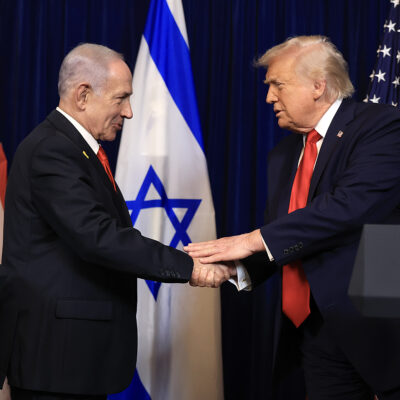
Trump says he made deal ‘months ago’ with Netanyahu to end aid to Israel by end of year
PHILLY PUSHBACK
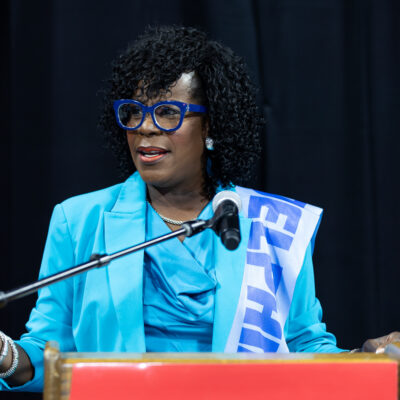
Philly officials join Shapiro in denouncing antisemitic boycott of Jewish businesses
Blue Dogs of War
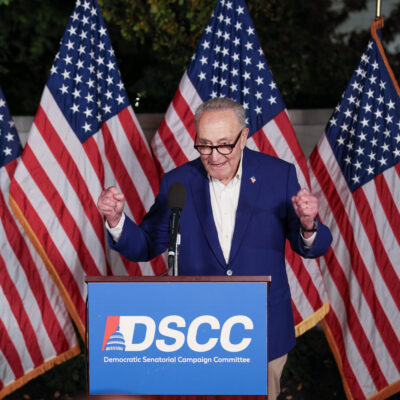
Democratic Senate sweep puts Schumer back in the saddle
OPEN FOR BUSINESS
Philly Jewish restaurant owners say they won’t be scared off by antisemitic boycott campaign
Conscience Call
Haley Stevens explains her ‘decision of conscience’ to endorse Rogers
Please log in if you already have a subscription, or subscribe to access the latest updates.
 Continue with Google

 Continue with Apple