







































































Trump touts ‘positive momentum’ toward ending Iran war after meeting Qatari PM
But reports indicate the U.S. and Iran remain at odds over proposed terms of a diplomatic agreement
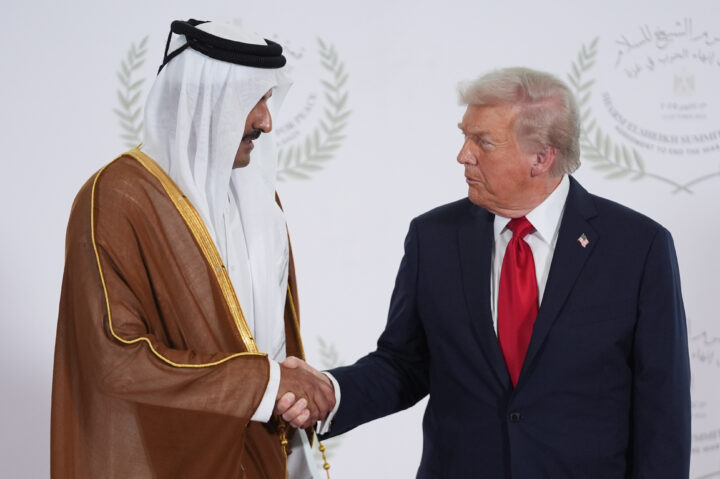
Evan Vucci - Pool / Getty Images
President Donald Trump greets Qatar Prime Minister Sheikh Mohammed bin Abdulrahman bin Jassim Al Thani during a world leaders' summit on ending the Gaza war on October 13, 2025 in Sharm El-Sheikh, Egypt.


 Add JewishInsider on Google
President Donald Trump and Vice President JD Vance met separately with Qatari Prime Minister Sheikh Mohammed bin Abdulrahman Al Thani on Monday in an effort to progress talks to end the U.S.-Iran conflict.
Following Trump’s meeting, which lasted approximately 45 minutes, the president said there was “positive momentum” to end the war and asserted that renewed American military strikes were “quite unlikely,” even as negotiations with Tehran reportedly remain stalled.
“I had an excellent conversation with Sheikh Mohammed bin Abdulrahman bin Jassim Al Thani, the Prime Minister of Qatar, wherein much was discussed with respect to the Islamic Republic of Iran,” Trump wrote on his social media platform Truth Social after the meeting. “Should there be any change with respect to developments in the Middle East, the United States of America is ‘locked and loaded’ and ready to go. At this point, however, that seems to be quite unlikely.”
Despite signaling progress, the president claimed that several Gulf countries — including Qatar, Saudi Arabia, UAE, Bahrain and Kuwait — prefer the “status quo” and support the U.S. maintaining its naval blockade on Iran.
“All have agreed that Iran cannot have a Nuclear Weapon — That is non-negotiable!” he added.
But despite Trump’s optimistic assessment, Washington and Tehran still remain at odds over the terms of a potential agreement.
Iran, through mediation with Qatar, has proposed a two-day framework — condensed from an initial broader seven-term proposal shared with the U.S. via mediators in September as a basis for talks — that would involve the United States lifting its naval blockade and releasing some frozen Iranian funds. In exchange, Tehran would invite international inspectors to visit its nuclear facilities that were bombed by the U.S. and Israel. The Strait of Hormuz would then reopen, followed by broader negotiations over Iran’s nuclear program.
Iranian Foreign Minister Abbas Araghchi said Sunday that Tehran was awaiting Washington’s response to its proposal. Secretary of State Marco Rubio told reporters on Sunday, however, that he had no diplomatic progress to report and described some of Iran’s demands as “outrageous and ridiculous.”
Prior to the Qatari prime minister’s visit, Vance was reportedly speaking with him nearly daily, as well as with other mediators, about advancing negotiations with Tehran.
The renewed diplomatic push follows last week’s midterm elections, in which Republican losses added to domestic political pressure on the Trump administration to wind down the conflict. Democrats, who are set to take control of both chambers of Congress in January, have said they will use funding powers and other authorities to seek an end to the war.
More Stories

Midterm Maneuver
End of U.S. aid to Israel not surprising, but timing of Trump’s announcement rankles
ON NOTICE
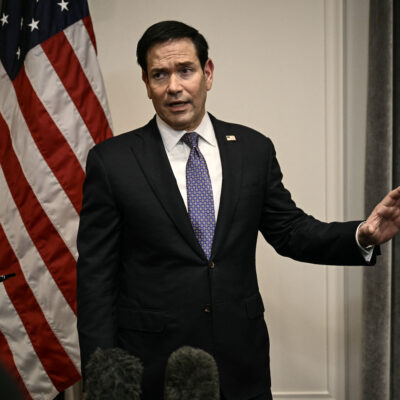
At G7 summit, Rubio puts International Criminal Court in crosshairs
LEADING THE PACK
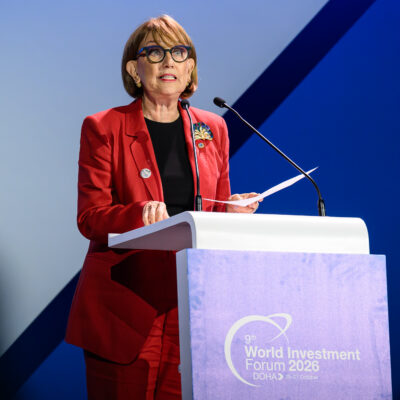
Rebeca Grynspan gains ground in latest U.N. secretary-general straw poll
Hillbilly Alibi
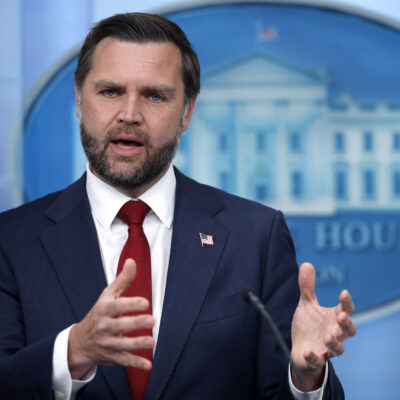
Vance blames GOP’s dismal midterm performance on Iran war, U.S.-Israel relationship
AID ADJUSTMENT
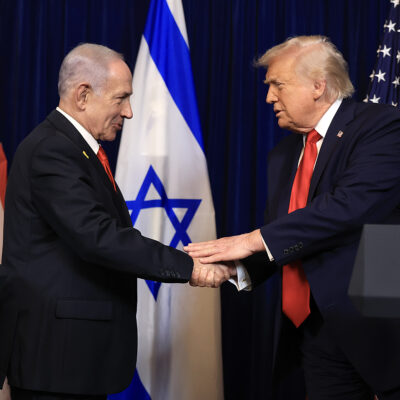
Trump says he made deal ‘months ago’ with Netanyahu to end aid to Israel by end of year
PRESIDENTIAL WARNING
Karl Rove says JD Vance ‘should not be president’ over Israel, Middle East stance
Please log in if you already have a subscription, or subscribe to access the latest updates.
 Continue with Google

 Continue with Apple