

































































Hegseth: If anyone can hit Iran’s Pickaxe Mountain, it’s the U.S. military
The defense secretary indicated at a Senate Appropriations Committee hearing that the U.S. has the capability to destroy the deeply buried site, which experts say may be beyond the reach of even the most powerful conventional weapons

Anna Moneymaker/Getty Images
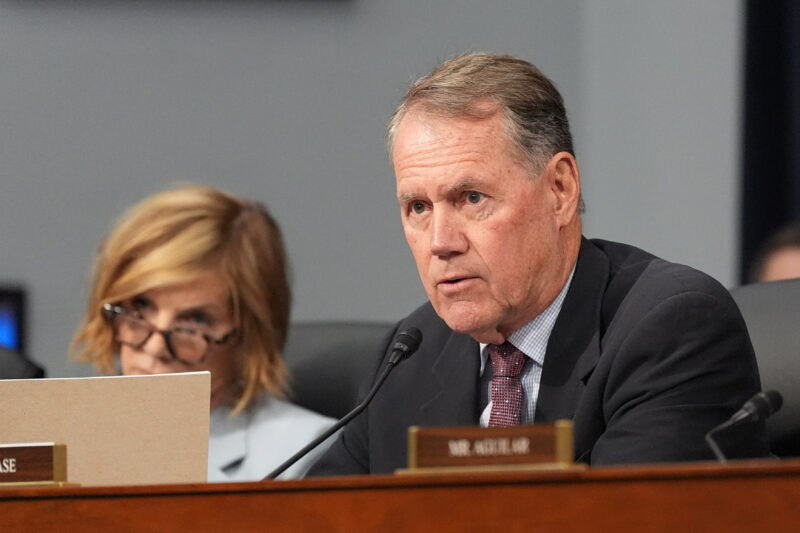
Secretary of Defense Pete Hegseth testifies during a Senate Appropriations Committee hearing in the Dirksen Senate Office Building on Capitol Hill on July 21, 2026 in Washington, DC.


 Add JewishInsider on Google
Secretary of Defense Pete Hegseth indicated at a Senate Appropriations Committee hearing on Tuesday that the U.S. military has the capacity to destroy Iran’s Pickaxe Mountain, the underground site suspected of housing elements of Tehran’s nuclear program, following a series of threats by President Donald Trump to strike the site.
The facility is buried inside a mountain in a manner that experts believe would be difficult to fully destroy, even with the heavy munitions used by the U.S. to target Iran’s Fordow and Natanz facilities last summer.
“A lot of our capabilities are classified,” Hegseth said, in response to a question about whether the U.S. has the capacity to destroy the facility. “But if anybody in the world can reach anything on God’s green earth, it’s the United States military, the most powerful military in the world. It’s all about options and trade-offs.”
"If anybody in the world can reach anything on God’s green earth, it’s the United States military."
— Jewish Insider (@jewishinsider) July 22, 2026
Pete Hegseth indicated the U.S. military can destroy Pickaxe Mountain, suspected of housing elements of Iran's nuclear program.
Read more: https://t.co/wxqcuGwu2t pic.twitter.com/an5VEFu4aZ
Hegseth, during a hearing focused on a nearly $90 billion supplemental funding request to recoup costs from the war, estimated the current costs of the Iran war at $37.5 billion, up from a $29 billion estimate provided by another Pentagon official in mid-May. He said that estimate includes certain expenses such as troop pay through the end of the fiscal year, but does not incorporate other expenditures related to the war.
He did not directly address a question about whether the Pentagon would put forward another supplemental request to repair or rebuild damaged U.S. bases and facilities, which were excluded from the previous Pentagon estimate.
Asked whether China and Russia were assisting Iran in its military operations against the U.S., Hegseth suggested that they were, but declined to discuss the extent of the cooperation.
“There’s definitely adversary alignment — attempts to do so — and there are many ways that we deter that,” Hegseth said. “Some of which are — and the depth and extent of it ought to remain — classified, and it should. But there are ways in which both of those countries are, at different levels, enabling some of the things Iran is doing.”
Sen. Mike Rounds (R-SD) pressed Gen. Dan Caine, the chairman of the Joint Chiefs of Staff, on whether the supplemental would provide sufficient resources to “appropriately end this war favorable to the United States and to take care of this problem permanently.”
Caine responded that such a scenario would be dependent on how Iran responds and behaves.
“I can’t answer the question on what it will cost because the enemy has a vote. What I’ll commit to you as this plays out, we’ll make sure that the Congress is informed,” Caine said. “But because I’m not quite sure how this is going to play out yet, it would be unwise for me to comment on what a future cost may or may not be depending on what they choose.”
Hegseth said that the administration continues to believe it has the authorities necessary to continue the war without congressional authorization, but said he would defer to legal experts on whether passing the supplemental would constitute a congressional authorization for use of military force — an argument made by the Clinton administration during operations against Yugoslavia in the 1990s.
Throughout the hearing, Hegseth insisted that Iran’s capabilities had been significantly degraded, despite its continued attacks on commercial shipping and U.S. bases around the region, several of which have recently resulted in the deaths and injuries of U.S. service members. Hegseth also called the U.S. blockade of Iranian ports “effectively impenetrable.”
“Iran is at the weakest point militarily it has ever been in in the past decade, certainly — maybe in 47 years,” Hegseth said. He said the Iranian regime had built thousands of ballistic missiles to defend its nuclear program “many of which we have destroyed, others of which they have hidden in underground facilities.”
“So I acknowledge they still have capabilities, no doubt,” Hegseth continued. “But the amount of damage that we’ve done to them over the course of these series of operations has put them in the worst place they’ve ever been.”
He didn’t answer questions about whether the U.S. would attempt to impose tolls on the Strait of Hormuz, as Trump recently floated and then walked back.
Caine acknowledged that air power has “limits, and we always have to be mindful of those,” but argued that the U.S. has other capabilities in the diplomatic, informational, economic and military realms. He declined to discuss the possibility of U.S. ground forces being deployed to Iran, but said that his job involves developing a range of options and laying out their risks.
Though the hearing was principally focused on the supplemental request that the administration put forward to cover the Iran war, Hegseth and Caine both repeatedly argued for the full $1.5 trillion military funding request the administration has put forward for 2027.
It’s unclear at this point if or how that request will be fulfilled. Lawmakers had planned to include $1.15 trillion in the base defense budget and an additional $350 billion in a partisan reconciliation bill, but both of those are currently in limbo.
Senate Democrats have largely rejected the $1.15 trillion topline, particularly in the midst of the Iran war, and the House’s third reconciliation bill aims to cover just the Iran supplemental request.
Republicans are now floating the idea of a fourth reconciliation bill — but many Senate Republicans have been skeptical that the current third package can pass, so it’s not clear how realistic another reconciliation bill would be ahead of the midterm elections.
“This request is an urgent, necessary injection of resources to address the immediate needs of our department. The supplemental funding request is not a substitute for the president’s full $1.5 trillion base budget request,” Hegseth said, amid repeated interruptions of his opening statement by anti-war protesters in the chamber. “$1.5 trillion is what the president seeks and what we need to defend the country. The members of this committee understand better than most that long-term strategic dominance cannot be funded through one-off supplementals.”
Hegseth lambasted what he alleged was neglect and gross negligence by the Biden administration, as well as blaming U.S. aid to Ukraine for some of the current deficits, and said that without additional funding, the U.S. would face “critical shortfalls” that would imperil its ability to pay service members, replenish supplies and continue critical operations.
More Stories

ANOTHER ANTISEMITIC ATTACK
Man charged with hate crimes for Manhattan’s Central Synagogue attack

military moves
JINSA calls for change in U.S.-Israel military alliance

analysis
Florida primaries to test antisemitism’s reach in both parties

palmetto state politics
Darline Graham’s foreign policy flub rattles GOP ahead of S.C. Senate runoff

HATE BY THE NUMBERS
Nearly two-thirds of 2025 religious hate crimes in U.S. were antisemitic, FBI data finds

BLAME GAME
Brooklyn Democratic leader who promoted infamous antisemitic tract rips ‘Zionists’ in new video
Please log in if you already have a subscription, or subscribe to access the latest updates.
 Continue with Google
 Continue with Apple