


















































The decision to drop the subpoena was welcomed by the campus Jewish community — which had spoken out against the administration’s initial request

Getty Images
Exteriors of University of Pennsylvania (UPenn) located in Philadelphia


 Add JewishInsider on Google
The Trump administration withdrew its controversial subpoena requesting that the University of Pennsylvania provide lists of Jewish university affiliates and their personal contact information, according to a Thursday court filing.
“With the support of many members of the community who have stood with Penn throughout, the University has been able to protect its employees’ rights and none of the subpoenaed personal contact information was disclosed,” a university spokesperson told Jewish Insider.
The Equal Employment Opportunity Commission had requested, as part of its investigation into antisemitism at Penn, lists of Jewish-related organizations on campus, their membership rosters and contact information for the employees involved, among other information.
The decision to drop the subpoena was welcomed by the campus Jewish community — which had spoken out against the administration’s initial request.
“Over the past year, I have spoken with hundreds of students, faculty, and staff across the University of Pennsylvania regarding this issue,” Rabbi Gabriel Greenberg, executive director of Penn Hillel, told JI. “Every single person expressed objections to the attempt to compel the university to surrender data on Jewish identity and affiliation.
“While many in our community share Penn Hillel’s conviction that campus antisemitism requires urgent, sustained action, demanding ‘lists of Jews’ was a fundamentally incorrect and inappropriate way to address it.”
Rabbi Rick Fox, who leads Meor Penn, told JI, “We are grateful that this resolution protects the privacy and safety of Jewish people on campus.”
At the same time, Fox expressed hope that “this outcome motivates Penn to take every step to ensure that our campus remains free from antisemitism, anti-Israel bigotry and discrimination against students in all forms.”
The decision follows a monthslong legal battle between Penn and the EEOC over the body’s authority to enforce the subpoena issued last July. The EEOC sued Penn in November, saying the subpoena was necessary to obtain contact information for potential victims of antisemitism, but the Ivy League university refused to comply, calling the agency’s methods “extraordinary and unconstitutional.”
In March, Judge Gerald Pappert of Philadelphia’s Federal District Court ordered Penn to comply with the subpoena by May 1, but the school continued to withhold the personal contact information.
The subpoena was highly scrutinized by critics on campus who likened the move to Nazi-era methods of collecting information about Jews. Experts told JI in January that a more typical investigation might involve agency officials interviewing people who issued complaints directly with the agency, then visiting the campus and publicizing their investigation, calling the EEOC’s methods in the Penn case “incredibly unusual, if not completely unprecedented.” In April, EEOC Chair Andrea Lucas defended the move, saying, “There is no other way to protect victims of harassment or discrimination unless you collect information about them.”
The court filing did not explain the government’s decision to drop the subpoena. The Trump administration did not respond to a request for comment from JI.
EEOC Chair Andrea Lucas: ‘At some point, either the government will know information related to individuals’ religion, or we will not be able to enforce the laws on their behalf’
Dillon Meyer Media
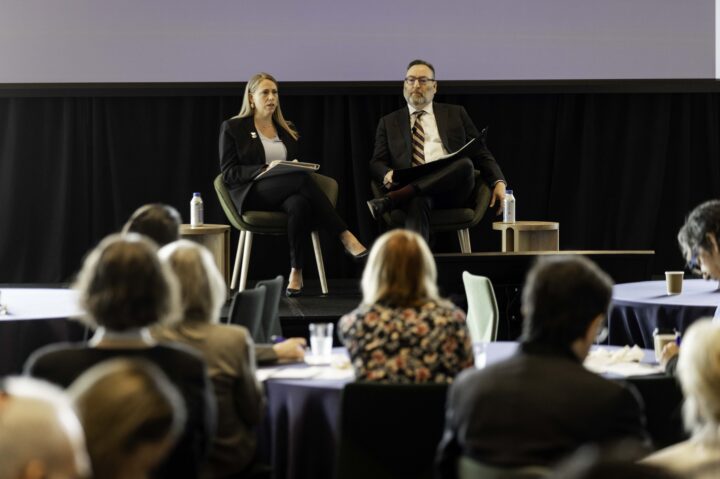
EEOC Chair Andrea Lucas and Brandeis Center founder Kenneth Marcus speak at the inaugural conference on antisemitism and civil rights law at Harvard University on April 16, 2026.
The Trump administration official leading a controversial probe into antisemitism at the University of Pennsylvania told Jewish leaders and legal experts on Thursday that compiling a list of Jewish faculty with their detailed personal information was necessary to identify and protect victims.
“There is no other way to protect victims of harassment or discrimination unless you collect information about them,” Andrea Lucas, chair of the United States Equal Employment Opportunity Commission, said at the Louis D. Brandeis Center for Human Rights Under Law’s inaugural conference on antisemitism and civil rights law, held at Harvard University.
“We never collect information to contact someone on their work system,” she said. “The EEOC’s long-standing practice is to collect personal information because we want to make sure that there is not any clear monitoring of your email systems … that when you speak to a government agency you feel completely not pressured.”
Last month, a federal judge ordered Penn to comply with a subpoena from the Trump administration requesting detailed information about Jewish university affiliates as part of the EEOC’s ongoing investigation into Penn’s handling of antisemitism. The subpoena had requested the school turn over lists of Jewish employees and members of Jewish organizations — including their identifying details and phone numbers — which the school called “extraordinary and unconstitutional.” Critics on campus have likened the move to Nazi-era methods of collecting information about Jews.
During a fireside chat with Kenneth Marcus, founder of the Brandeis Center and former assistant secretary of education for civil rights under the first Trump administration, Lucas noted she was speaking generally and not about the Penn case specifically, as litigation is ongoing.
“At some point, either the government will know information related to individuals’ religion, or we will not be able to enforce the laws on their behalf,” continued Lucas, who is not Jewish but emphasized a personal interest in religious liberty as “a core thing the EEOC needs to be focusing on.”
“I understand the sensitivities around this issue … but fundamentally the Jewish community does have to decide: do you want to have civil rights enforcement in this space? If you do, there is no other way we can get money for victims.”
Experts told Jewish Insider in January that a more typical investigation might involve agency officials interviewing people who issued complaints directly with the agency, then visiting the campus and publicizing their investigation, calling the EEOC’s methods in the Penn case “incredibly unusual, if not completely unprecedented.”
Lucas asserted that the same standard applied for helping members of any race, religion or gender. None of the event’s speakers publicly disagreed with Lucas’ statements.
The daylong conference was born out of last year’s settlement between the Brandeis Center and Harvard over a Title VI lawsuit, and was framed around this year’s U.S. Semiquincentennial.
It opened with an address from Marcus and a benediction from Harvard Chabad’s Rabbi Hirschy Zarchi. Attendees included Harvard community members, Jewish activists, lawyers and scholars.
The plenary session, “Towards a Jewish Civil Rights Movement,” moderated by Marcus, featured William Daroff, CEO of the Conference of Presidents of Major American Jewish Organizations; Elan Carr, CEO of Israeli-American Council and former special envoy to monitor and combat antisemitism; and Miriam Elman, executive director of the Academic Engagement Network.
Carr called the battle against antisemitism “a war for the soul of America and the soul of civilization,” and advocated for a shift in classroom curriculums and federal funding.
“Jew-hatred is history’s greatest barometer of human ruin and suffering. We are fighting for the future of our country and American values. So we need to get serious about teaching American values … we can’t safeguard this republic unless we teach American kids what this republic is, why it was founded, what our values are and constitutional structures are,” he said. “This is a national crisis with national implications. The federal government needs to say ‘no money goes anywhere to any educational institution unless there’s Western values, American civics, basic principles of the United States as part of the curriculum.’”
After the session, Daroff told JI that “today’s conference brought a united American Jewish community together, aligned in action. We are not standing back. We are organizing, building and acting together with shared purpose and resolve.”
The conference also featured a panel titled “Defining Anti-Semitism at America’s 250th: New Challenges for a New Century.” Speakers debated the importance of pushing states to codify the International Holocaust Remembrance Alliance’s working definition of antisemitism, as many mainstream Jewish groups are using resources to do. Critics of IHRA say the definition chills political speech and criticism of Israel.
Nathan Diament, executive director for the Orthodox Union Advocacy Center, said that IHRA is not only important for combating campus antisemitism — as several of the speakers emphasized — but also regarding legislation in Washington.
At the same time, “in the political arena, vagueness around questions [of what is antisemitism] is unhelpful. The most important currency in politics is votes. Advocates and voters need to be able to say with clarity to politicians [what they will and will not support]. This is the most important need for the definition of antisemitism, to draw a line as clearly as we can and make clear to politicians that if they cross this line, there will be consequences,” said Diament.
“Even as the OU has, and continues to, support legislation to codify the IHRA definition, I don’t think at this stage in the game that’s the most important way to further the definition and to use our political capital,” he continued. “We don’t need Congress’ approval of how we want to define antisemitism. We don’t need them to codify it and we don’t need them to give us permission to use it to hold members of Congress and other politicians accountable. We can use the IHRA definition because we say that’s the definition.”
Alyza Lewin, president of U.S. affairs for the Combat Antisemitism Movement and former president of the Brandeis Center, pushed back by highlighting how the law enforcement trainings she provides varies based on local adoption of the IHRA definition. She noted a stark difference between training in states where it is codified, such as Georgia, and those where it is not, such as New York.
Law enforcement in Georgia “has a very concrete reason now to understand and use” the training, said Lewin. “In New York, especially after [Mayor Zohran Mamdani] reversed the executive order on IHRA, I can try to explain it to them but it’s just a nice thing I teach them. They are under no obligation to actually engage with it and utilize it. So I do think on a state by state level, it does make a difference whether or not a state has adopted the IHRA definition.”
In a separate panel, moderated by Anat Alon-Beck, a visiting professor at Harvard Law School, speakers explored new avenues for litigation against antisemitism.
“Nearly two years after the largest massacre of Jews since the Holocaust, the Jewish community still lacks unified messaging, coordinated toolkits and a clear strategy. At a time when antisemitic actors are highly organized and aligned, our disunity is a serious vulnerability,” Alon-Beck told JI following her session. “We need to come together — with clarity, courage and coordination — because the stakes could not be higher.”
According to the Brandeis Center, this conference was the first in an annual three-part series.
Charles Dabda, a third-year student at Touro Law Center and law clerk with National Jewish Advocacy Center, told JI he was leaving the conference with a clear sense that “antisemitism is rising in real time with real consequences across campuses, professional spaces and beyond. At the Brandeis Center, and NJAC, our commitment remains resolute and steadfast; we will confront antisemitism wherever it manifests — through advocacy, and, when necessary, the courtroom.”
The university had argued the subpoena was an ‘extraordinary and unconstitutional’ overreach that resembled nefarious efforts to gather lists of Jews over history
Kyle Mazza/Anadolu via Getty Images
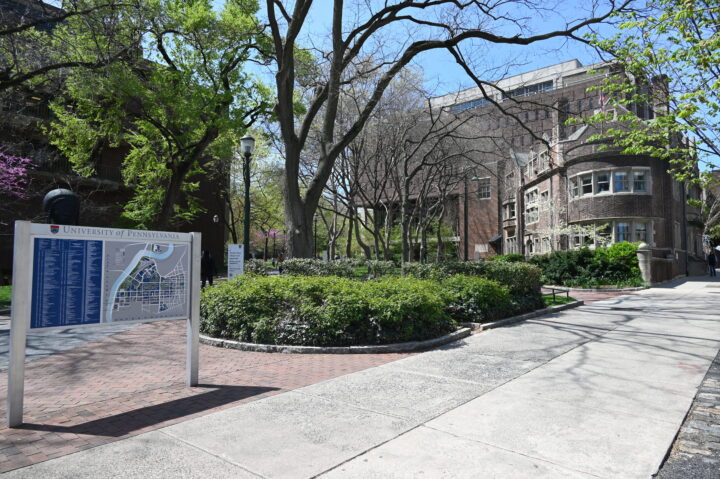
A view from the University of Pennsylvania on April 18, 2025.
A federal judge ordered the University of Pennsylvania on Tuesday to comply with a subpoena from the Trump administration requesting detailed information about Jewish university affiliates as part of the government’s crackdown on campus antisemitism.
The decision follows a monthslong legal battle between Penn and the United States Equal Employment Opportunity Commission’s over the EEOC’s authority to enforce the subpoena issued last July, which stemmed from an ongoing investigation into Penn’s handling of antisemitism.
The EEOC sued Penn in November, saying it had failed to comply with the subpoena, which demands that the university turn over lists of Jewish employees and members of Jewish organizations — including their identifying details and phone numbers — saying the information is necessary for the agency to contact potential victims of antisemitism.
The battle escalated in January when the Ivy League university issued a court filing calling the agency’s methods of investigating whether the school allowed an antisemitic work environment “extraordinary and unconstitutional.”
Judge Gerald Pappert of Philadelphia’s Federal District Court ruled in Tuesday’s brief that “for their legal arguments, respondents contend the charge of discrimination is invalid and the subpoena violates the United States Constitution in various ways. But the charge is valid and the constitutional claims are easily dispensed with.”
Penn has until May 1 to respond to the subpoena, but will not have to “reveal any employee’s affiliation with a specific Jewish-related organization,” Pappert, who was appointed by President Barack Obama, wrote in the 32-page ruling.
A Penn spokesperson told Jewish Insider that the university plans to appeal the ruling. “We remain committed to confronting antisemitism and all forms of discrimination, and have taken multiple steps to prevent and address these despicable events,” the spokesperson said.
“While we acknowledge the important role of the EEOC to investigate discrimination, we also have an obligation to protect the rights of our employees. We continue to believe that requiring Penn to create lists of Jewish faculty and staff, and to provide personal contact information, raises serious privacy and First Amendment concerns. The university does not maintain employee lists by religion. We intend to appeal.”
An EEOC spokesperson declined to comment.
Jewish groups on and off campus, including Hillel, Chabad, Meor and the local federation have asserted that the demands in the subpoena represent a significant overreach in the Trump administration’s nationwide campus investigations into alleged antisemitism.
Turning over the information would disregard “the frightening and well-documented history of governmental entities that undertook efforts to identify and assemble information regarding persons of Jewish ancestry,” the university said in the January legal filing.
Over the past year, the EEOC has played a key part in the Trump administration’s negotiations with several elite universities —- many of which have been related to antisemitism. In July, Penn reached a deal with the White House to restore some $175 million that was frozen over alleged discrimination of a transgender student athlete.
Magill resigned as president from UPenn after a disastrous Capitol Hill hearing where she evaded questioning over whether calling for the genocide of Jews violated school policies

Kevin Dietsch/Getty Images
Liz Magill, then president of University of Pennsylvania, testifies before the House Education and Workforce Committee at the Rayburn House Office Building on December 5, 2023 ,in Washington, D.C.
Liz Magill, the former University of Pennsylvania president who resigned after facing criticism of inaction against campus antisemitism, was tapped on Friday as the dean of Georgetown University Law Center.
Magill left her post at UPenn in December 2023, four days after she appeared at a contentious hearing on Capitol Hill where she evaded questioning over whether students who called for the genocide of Jews violated the school’s code of conduct.
Magill, who maintained her role as a tenured professor at the university’s law school after resigning as president, faced scrutiny following the Oct. 7, 2023 terrorist attacks in Israel over her handling of the subsequent rise of campus antisemitism from many elected officials in the state including Gov. Josh Shapiro. Even prior to Oct. 7, the Philadelphia campus saw increased hostility to Jewish students, including a September 2023 Palestinian Writes literature conference that featured a lineup of antisemitic speakers.
In a campus-wide email, Robert Groves, Georgetown’s interim president, said Magill was selected for her “rare combination of leadership and experience.”
“I am shocked and deeply taken aback by the announcement that Liz Magill will be the new dean of Georgetown Law. For many Jewish students including myself on this campus, this decision feels like a slap in the face,” Julia Wax Vanderwiel, a third-year student in the law school and founder of Georgetown Law Zionists, told Jewish Insider.
“At Penn she failed to protect the students in her charge, choosing instead to engage in what appeared to be a political and semantic exercise at a moment when moral clarity was required. When directly confronted, she refused to acknowledge the harm her institution allowed or the fear Jewish students were experiencing due to cries and chants of calling for the genocide of Jews,” continued Wax Vanderwiel. “At a time when antisemitism on college campuses has surged and Jewish students are looking to their institutions for leadership and protection, this appointment sends a deeply troubling message. It suggests that Jewish students’ concerns are negotiable, contextual or secondary. That is profoundly disappointing.”
Georgetown University — and its law school — have been under scrutiny for alleged inaction against extremism and the more than $1 billion the school has received from Qatar, a Hamas benefactor. In July, Groves was questioned about campus antisemitism by the House Education and Workforce Committee.
Last February, the law school scheduled a discussion featuring a convicted member of the U.S.-designated terrorist organization Popular Front for the Liberation of Palestine. The event, which was organized by Georgetown Law Students for Justice in Palestine, was postponed indefinitely following pushback from both Israeli Prime Minister Benjamin Netanyahu and Rep. Ritchie Torres (D-NY). Weeks after the Oct. 7 attacks, Georgetown Law hosted Palestinian writer Mohammed El-Kurd, who celebrated Hamas as a “liberation movement” and called the massacre a “resistance tactic.”
In a statement, Magill, who will begin at Georgetown on Aug. 1, said, “I know my testimony in Congress left many concerned and distressed, especially Jewish students on the Penn campus. That response matters deeply to me. I failed to convey my compassion and concern for Jewish students. I regret that; it does not reflect who I am as a person and a leader. I want every Jewish student, and all students, to have a secure environment at the law school where they can thrive.”
The Ivy League school called the EEOC’s request for the personal information of Jewish employees as part of its antisemitism investigation ‘extraordinary and unconstitutional’
Getty Images
Exteriors of University of Pennsylvania (UPenn) located in Philadelphia
A burgeoning legal battle between the University of Pennsylvania and the Equal Employment Opportunity Commission escalated last week when the Ivy League university called the agency’s methods of investigating whether the school permitted an antisemitic work environment “extraordinary and unconstitutional.”
The EEOC subpoenaed the university to turn over lists of Jewish employees and members of Jewish organizations, along with detailed identifying and contact information, saying the information is needed for the agency to contact potential victims of antisemitic discrimination. The university’s president and trustees — with the support of Jewish campus organizations Hillel, Chabad and Meor, as well as the Jewish Federation of Greater Philadelphia — refused to do so.
Handing over those names would disregard “the frightening and well-documented history of governmental entities that undertook efforts to identify and assemble information regarding persons of Jewish ancestry,” the university asserted in a legal filing last Tuesday.
What may appear to be an arcane legal issue illuminates the tension at the heart of the Trump administration’s aggressive approach to combating campus antisemitism, with even some of the victims of that discrimination concerned that the methods of countering it have gone too far. While the EEOC said it is committed to doing whatever it can to investigate antisemitism among faculty and staff of the elite university, Jewish faculty and students see something worrisome.
“We are deeply concerned that the EEOC is now seeking lists of individuals identified as Jewish, including their personal home addresses, phone numbers, and private emails, based solely on their affiliation with Jewish organizations on campus — and without their consent,” Hillel and Meor wrote in a social media post in November. “Across history, the compelled cataloging of Jews has been a source of profound danger, and collection of Jews’ private information carries echoes of the very patterns that made Jewish communities vulnerable for centuries.”
Why does the EEOC, which examines complaints of discrimination and civil rights violations at American workplaces, want Penn to provide the lists of Jewish university affiliates? And why are Jewish faculty members — including some who support the federal government’s efforts to investigate antisemitism at their place of work — urging their employer not to comply?
The dispute dates back to December 2023, when the EEOC pledged to investigate whether Jewish employees at Penn had been subjected “to an unlawful hostile work environment.”
The inquiry was opened the same week that then-Penn President Liz Magill testified before Congress about her handling of antisemitism at the Philadelphia university in the weeks that followed the Oct. 7, 2023, terror attacks in Israel. The investigation continued quietly for nearly two years, overseen by EEOC Commissioner Andrea Lucas, who last year was appointed chair of the agency by President Donald Trump.
It spilled into public view in November when the EEOC filed suit against Penn, seeking to force the university to finally compile and hand over the lists of Jewish faculty members and students that the EEOC said are crucial to its investigation.
The sought-after lists would include the members of all Jewish clubs and student groups, the names of everyone who participated in confidential university listening sessions about antisemitism, faculty members who were criticized and doxxed in a social media post from an anti-Israel student group and all employees and faculty of the Jewish studies program. Karen McDonough, deputy director of the EEOC’s Philadelphia office, said in a legal filing that the university’s refusal to turn over the lists has “severely hampered” the investigation.
Penn disagrees. The university called the demand “not only disconcerting but entirely unnecessary,” pledging instead that it would send a message to all university employees telling them how to get in touch with the EEOC to share instances of antisemitism they experienced or witnessed. The university said it has “cooperated extensively” with the agency by turning over more than 100 documents.
A more typical investigation might involve agency officials interviewing people who issued complaints directly with the agency, then visiting the campus and publicizing their investigation, according to Samuel Bagenstos, a law professor at the University of Michigan with expertise in employment law.
“If there are those claims that should be followed up, they should definitely be followed up, and they should be followed up according to usual investigative practices and not this dragnet of, ‘Let’s compile a list of all the Jews at Penn,’” Bagenstos told Jewish Insider last week. “It’s an incredibly unusual, if not completely unprecedented, request. It’s not tailored at all to any particular allegations of discrimination.”
An EEOC spokesperson did not respond to a request for comment.
The agency appeared to follow a similar playbook last year when it investigated antisemitism among staff at Columbia University and the affiliated Barnard College. Employees from both institutions received text messages from the EEOC on their personal phones asking them to fill out a survey identifying whether they are Jewish or Israeli, and if they have faced antisemitic harassment.
In that case, university officials had agreed to hand over employee data. Columbia’s associate general counsel and deputy general counsel told the Columbia Daily Spectator, the student newspaper, that the university complied with a subpoena to share employee information with the EEOC. But because the dispute ended in July with a settlement — and not with legal action — the EEOC’s methods of information-gathering at Columbia and Barnard never became public. (Columbia agreed to pay $21 million to resolve antisemitism charges.)
The Penn faculty members and employees opposed to the efforts by the federal government to obtain the controversial lists are not saying that the university is free from antisemitism. The Penn Faculty Alliance to Combat Antisemitism, which formed after Oct. 7 in response to rising anti-Jewish antagonism on campus, filed a brief supporting the university, and its members said that while they want to see the EEOC’s efforts to combat antisemitism at Penn continue, they oppose the methods being used by the agency.
“While the Alliance supports the EEOC’s efforts to combat antisemitism at Penn, its members are gravely concerned that the scope of the EEOC subpoena, which effectively seeks full lists of Jewish individuals at Penn and their personal information, invokes the troubling historical persecution of Jews, and threatens the personal security of the Alliance’s members,” the group wrote in a legal filing last week.
As the case moves forward in federal court, Penn and the EEOC are poised to test the boundaries of how far a civil rights investigation can go in the name of protecting a vulnerable group.
To mark the second anniversary of the Oct. 7 attacks in Israel, the Jewish Insider team asked leading thinkers and practitioners to reflect on how that day has changed the world. Here, we look at how Oct. 7 changed higher education

JOSEPH PREZIOSO/AFP via Getty Images
Tents and signs fill Harvard Yard in the anti-Israel encampment at Harvard University in Cambridge, Massachusetts, on May 5, 2024.
Elite universities are increasingly turning to task forces to address campus antisemitism. But questions remain over the efficacy and mandate of such groups

JOSEPH PREZIOSO/AFP via Getty Images
People walk through Harvard Yard at Harvard University in Cambridge, Massachusetts on December 12, 2023.
In the aftermath of a surge in antisemitism that erupted following the Oct. 7 Hamas terror attacks in Israel, top universities including Harvard, Yale, Stanford, Columbia, the University of Pennsylvania and Northwestern announced the creation of new bodies tasked with studying antisemitism on campus and identifying how to address it. Their impending work is framed with urgency, and the bodies are generally discussed using language about the importance of inclusivity on campus.
But nearly five months after the environment for Jewish students on these campuses began to rapidly deteriorate, questions remain over the efficacy and mandate of such groups. They will also face the thorny issue of campus free speech as they delve into questions about what, exactly, constitutes antisemitism on campus.
The question over the credibility of these antisemitism task forces was underscored this week at Harvard, following the resignation of business school professor Raffaella Sadun, the co-chair of the presidential task force, reportedly because she felt university leaders weren’t willing to act on the committee’s recommendations.
“They’ve utterly failed to protect Jewish and Israeli students. It’s shameful,” a Jewish faculty member at Harvard told Jewish Insider. They requested anonymity to speak candidly about interactions with students and administrators in recent months. The professor has seen numerous Israeli students kicked out of WhatsApp groups unrelated to politics because they are Israeli. The professor also described widespread opposition, among many students, to topics having to do with Israel — and a corresponding reluctance to act from administrators, who fear pushback from far-left students.
“If you’re an administrator, and you care about your own personal well-being, and you want to keep Harvard out of the news or off social media, you basically try not to engage with these people in a way that will provoke them,” the professor said. “In the end this backfired on Harvard, because their failure to take care of Jewish students contributed to the accusations of institutional antisemitism, the lawsuit, the congressional investigation.”
“I think if the mandate is not clear, if there’s not enough resources, if the council doesn’t have committees and jobs, it’s just going to be window dressing,” said Miriam Elman, executive director of the Academic Engagement Network. “It’s not going to be able to do the work that needs to be done.”
Harvard announced the creation of an antisemitism task force in January, which immediately faced criticism due to comments made by its other co-chair, historian Derek Penslar, suggesting that antisemitism is not a major problem at Harvard. The body’s full membership has now been announced, but the scope and timeline of its work remains unclear.
Interim Harvard President Alan Garber said in a Monday email that he expects the work of Harvard’s antisemitism task force to “take several months to complete,” but he asked the co-chairs “to send recommendations to the deans and me on a rolling basis.” It is not clear if the university will provide updates along the way; or if Harvard’s leadership will accept the task force’s recommendations.
At universities that already had antisemitism task forces prior to Oct. 7, those that achieved the most success generally have a budget to pursue actual work, a clear timeline for their work and strong buy-in from administrators, who must be willing to actually implement the groups’ recommendations, according to Miriam Elman, executive director of the Academic Engagement Network, which works to fight anti-Israel sentiment and antisemitism at U.S. universities.
It’s not yet clear if the newly created task forces — especially those at private universities, which don’t have the same obligation for transparency as public universities — will achieve the needed support from leaders.
“I think if the mandate is not clear, if there’s not enough resources, if the council doesn’t have committees and jobs, it’s just going to be window dressing,” said Elman. “It’s not going to be able to do the work that needs to be done.”
At Columbia University, Shai Davidai, an assistant professor in the business school, said he doesn’t have confidence that a newly created antisemitism task force can succeed unless the faculty on the committee changes to include more Zionist and Israeli voices.
“Stanford is aware of exactly what is going on, and if they cared they would have done something over the last five months,” said Kevin Feigelis, a doctoral student in the Stanford physics department, who on Thursday testified at a House Education Committee roundtable with Jewish students. “The university places people on these committees in one of two ways: either it places people who they think are going to be most sympathetic to the university or they go straight to Hillel and ask them. These are both troubling.”
“At universities, if you want to make sure something doesn’t happen, you set up a task force,” Davidai continued. “The task force at Columbia has done absolutely nothing. They just talk.”
At Stanford University, an antisemitism task force created in the wake of Oct. 7 has, like Harvard’s, been mired in conversations and controversy over its membership. Faculty co-chair Ari Kelman, an associate professor in Stanford’s Graduate School of Education and Religious Studies, had a record of downplaying the threat of campus antisemitism along with recent alliances with anti-Israel groups. He resigned, citing the controversy, and was replaced with Larry Diamond, a pro-Israel professor in Stanford’s political science department. Under its new leadership, the committee also expanded its name and scope in January to include anti-Israel bias.
Despite the updates, Kevin Feigelis, a doctoral student in the Stanford physics department, who on Thursday testified at a House Education Committee roundtable with Jewish students, said that “the task force has still accomplished nothing and it’s not clear that they have the power to accomplish anything.”
In January, Feigelis worked with the campus antisemitism task force to plan an on-campus forum meant to combat antisemitism. The symposium was disrupted by a pro-Palestinian protest that included threats to Jewish attendees.
The task force “was instituted just to appease people,” Feigelis said. “Stanford is aware of exactly what is going on, and if they cared they would have done something over the last five months. The university places people on these committees in one of two ways: either it places people who they think are going to be most sympathetic to the university or they go straight to Hillel and ask them. These are both troubling.”
Feigelis expressed belief that the task force could accomplish more if it consisted of lawyers and more Israeli faculty.
“If you really want to fix the problem, why conflate it with other issues that are going to prolong trying to find a solution to it?” Mike Teplitsky, a Northwestern alum and the president of the Coalition Against Antisemitism at Northwestern, said of the task force’s attempt to also focus on Islamophobia and other forms of hate. “I would call it a bureaucratic distraction from trying to fix the problem.”
“If [the administration cared] the committee would not be made of political scientists and a biologist… lawyers should be the ones staffing a committee that determines what constitutes antisemitism. Instead they picked people who have no idea what constitutes free speech or what the code of conduct actually is.”
He continued, “The task force is currently holding listening sessions, but it’s just not clear what will come of that.”
After Northwestern University announced in November that it would create an antisemitism task force, 163 faculty and staff members at the university wrote a letter to President Michael Schill saying they were “seriously dismayed and concerned” by the announcement, raising concerns that the task force’s work would challenge “rigorous, open debate.” Three of the signatories of that letter — including Jessica Winegar, a Middle Eastern studies professor and vocal proponent of boycotts of Israel — were then named to the task force, which will also focus on addressing Islamophobia.
“If you really want to fix the problem, why conflate it with other issues that are going to prolong trying to find a solution to it?” Mike Teplitsky, a Northwestern alum and the president of the Coalition Against Antisemitism at Northwestern, said of the task force’s attempt to also focus on Islamophobia and other forms of hate. “I would call it a bureaucratic distraction from trying to fix the problem.”
Mark Rotenberg, Hillel International’s vice president for university initiatives and the group’s general counsel, argued that antisemitism has proven to be so severe as to warrant its own mechanisms. The inclusion of Islamophobia “and other hateful behavior” in the group’s mandate would be like if a campus Title IX office, focused on gender-based inequality, was also required to focus on racism.
“Antiracism may be a very important thing, but merging it with the problem of violence in frat houses is not going to signal the women on that campus that they are really taking that problem seriously,” said Rotenberg, who works with administrators at campuses across the U.S. on antisemitism-related issues. “That’s our point about antisemitism.”
Lily Cohen, a Northwestern senior who is a member of the task force, came face to face with antisemitism on campus a year before the Oct. 7 attacks. After writing an op-ed in the campus newspaper decrying antisemitism and speaking out about her support for Zionism, she was called a terrorist and faced an onslaught of hate — including a large banner that was printed with her article, covered by “from the river to the sea, Palestine will be free” in red paint.
“I think it comes from the top,” said Cohen, who noted that, after the op-ed incident, “no strong actions were taken to stand up for Jewish students or protect Jewish students, or even just express that that wasn’t OK. It fostered an environment where antisemitism is tolerated at Northwestern as long as it stays just subtle enough that you’re not saying Jews.”
Afterward, she met with university administrators to talk about what happened to her. “At the end of the day, listening is not enough,” she said. “I don’t think in any of the meetings I had with any administrators, that they actually referred to what happened to me as antisemitism. I think that that’s a huge problem here, is how easy it is to say, ‘We are not antisemitic, we’re just anti-Zionist,’ or ‘We don’t hate Jews, we just hate Zionists. We just hate Israel.’”
The group started meeting in January, and it was asked by the president to finish its work by June, which Cohen worries is not enough time, especially given its broad scope. Administrators at the school have not instilled much confidence in her in the past, but she is choosing to be hopeful.
“Being on the committee, I have to be optimistic that we’re going to do something and that the president will take our recommendations seriously, and will put them into action,” she said. “Because if not, what was it all for?”
Gabby Deutch is Jewish Insider’s senior national correspondent; Haley Cohen is eJewishPhilanthropy’s news reporter.
Students from nine top schools from around the country offered strikingly similar accounts of the explosion of antisemitism on their campuses and their administrations’ failure to respond

Frank Schulenburg
Stanford University
For two hours on Wednesday, lawmakers heard from a parade of Jewish students, each delivering the same message: They do not feel safe on their college campuses.
Speaking to a roundtable organized by the House Committee on Education & the Workforce, Jewish students from Harvard, the University of Pennsylvania, Massachusetts Institute of Technology, Columbia, Rutgers, Stanford, Tulane, Cooper Union and University of California, Berkeley spoke about about the harassment, threats and violence they’ve faced on their campuses since the Oct. 7 attack on Israel.
The students’ accounts were all remarkably similar, despite coming from a range of locations and school types, including openly antisemitic taunts and harassment, angry mobs rampaging through campus and overtaking campus buildings, vandalism and in some cases threats of or actual incidents of violence, all going largely or completely unaddressed by university administrators and campus police, despite repeated and sustained pleas from the students for help and support.
In some cases, the students said professors and administrators were complicit or actively involved in the antisemitic activity. Students said that they feared for their safety and even their lives.
The students, saying they felt abandoned by their universities and had no faith in them to act to protect them, pleaded for action from Congress. They said that they hoped their testimony could serve as a wakeup call to both Congress and the American public.
“As my friends from Harvard and UPenn can tell you, it doesn’t end simply because presidents are replaced. Systemic change is needed,” Kevin Feigelis, a Stanford student, said. “Universities have proven they have no intention of fixing themselves. It must be you, and it must be now.”
Shabbos Kestenbaum — a Harvard student who said he’d contacted the school’s antisemitism task force more than 40 times without a response and had been threatened in a video with a machete by a still-employed Harvard staff member — called Congress and the courts the students’ “last hope.”
Multiple students and lawmakers said that the current events on campus carry echoes of 1930s Germany or the pogroms in Russia.
Some suggested potential courses of action that Congress and other federal branches could take, including leveraging U.S. taxpayer funding or the schools’ tax-exempt statuses, placing third-party monitors on campus and enforcing diversity requirements in Middle East studies departments requiring them to include pro-Israel views.
Students from Harvard, Penn and MIT all said that little has changed on their campuses since last year’s blockbuster congressional hearing on campus antisemitism, which prompted the ouster of Harvard and Penn’s presidents.
Rep. Virginia Foxx (R-NC), the committee’s chair, vowed that she and her colleagues would not stop their efforts to tackle antisemitism on campus.
“I was very emotional,” Foxx told Jewish Insider, “I’m a mother and a grandmother. I have one grandchild who went to college and I’m not sure what I would have done if he had come home to say he felt threatened on his campus like these students feel threatened. No student on a college campus, in this country, in the year 2024, should feel threatened.”
Foxx said that the committee’s antisemitism investigation is proceeding deliberately, but that the schools will be held to account. The committee has already requested documents from Harvard, Penn and Columbia and has now subpoenaed Harvard. Foxx suggested that other schools whose students had appeared Thursday could be next.
Rabbi Hirschy Zarchi: ‘We in the Jewish community are longing for a day that we can refer to the president and all of Harvard as ours.’

Gabby Deutch
Harvard President Claudine Gay lights the menorah at Harvard Chabad's Hanukkah celebration
CAMBRIDGE, Mass. — Standing next to a large menorah in front of Harvard’s historic Widener Library, Harvard Chabad Rabbi Hirschy Zarchi delivered a blistering speech on Wednesday castigating the school for a lack of leadership on antisemitism and bemoaning the difficulties faced by Jewish students in recent months.
Zarchi spoke to a crowd of several dozen students and community members, but the most important person in the audience was Harvard President Claudine Gay. Just a day earlier, Harvard’s governing board had voted to keep her as president after her disastrous handling of congressional questioning about whether calls for the genocide of Jews violate Harvard’s code of conduct.
“The email referred to you as ‘Our President,’” Zarchi said, referring to the subject line of the university-wide email sent on Tuesday by the Harvard Corporation that affirmed Gay’s service as president. “We in the Jewish community are longing for a day that we can refer to the president and all of Harvard as ours.”
Days earlier, the board of the University of Pennsylvania had voted to oust President Liz Magill following her own similarly bungled response to the question about Jewish genocide. Meanwhile, a couple miles away, Massachusetts Institute of Technology had — like Harvard — decided to keep in place President Sally Kornbluth, who had also appeared at the Capitol Hill hearing about antisemitism.
In a 15-minute address, the usually upbeat Zarchi offered a sober assessment of the state of Jewish life at Harvard since Oct. 7. He described an atmosphere of fear for Jewish students and for his own family, who he said had been advised by Harvard’s police department to obtain private security last week after Harvard Chabad hosted a screening of IDF footage from the Hamas terror attacks in Israel. “We were being accused of hosting a war criminal,” Zarchi said, presumably referring to Israeli ambassador to the United Nations Gilad Erdan, who introduced the screening last week.
“We are gathering in a moment when the eyes of the world are upon us. Everybody is looking at Harvard now,” Zarchi said. “It pains me to have to say, sadly, that Jew-hate and antisemitism is thriving on this campus.”
“I don’t feel that they had the back of me and my family and our community,” said Zarchi, the Jackie and Omri Dahan Harvard Chabad Jewish Chaplain. “Twenty-six years I gave my life to this community. I’ve never felt more alone.”
In a story that at first seemed inspiring, Zarchi shared how Harvard had first allowed a menorah to be set up in Harvard Yard more than two decades ago. But quickly, this story, too, took a turn toward the negative when he shocked the crowd by revealing that the menorah does not remain in the Yard at night.
“This bothers me until this very day. You know what happens to the menorah? After everyone leaves the Yard, we’re gonna pack it up. We have to hide it somewhere,” Zarchi said. Harvard “would not allow us to leave the menorah here overnight, because there’s fear that it’ll be vandalized.”
He had never shared that fact publicly before.
“Think about that. We’re trying to fix the world, teach the leaders of the world,” Zarchi continued. “On our campus, in the shadow of Widener Library, we in the Jewish community are instructed, ‘We’ll let you have your menorah. Make your point. OK. Pack it up. Don’t leave it out overnight. Because there will be criminal activity here and it won’t look good.”
Change, he said, will happen “when we don’t have to pack up the menorah.”
Throughout Zarchi’s speech, Gay, flanked by her husband, watched solemnly. He concluded by calling her up to help light the menorah for the seventh night of Hanukkah.
“It’s my hope, and I know I speak for everyone here, that we can work together with you,” Zarchi said. He implored her to speak up when she sees people on campus targeting Jews: “You don’t walk by and say nothing. You speak. You don’t remain silent.”
Gay walked up and lit the shamash, the candle that is used to then light the rest of the flames. At the end of the event, she posed for a picture with the group. But she did not share any public remarks.
With 84 Democrats voting for the resolution and 125 opposing it, it’s the second time in two weeks the Democratic caucus has fractured over a resolution relating to antisemitism

Kevin Dietsch/Getty Images
Claudine Gay, president of Harvard University, Liz Magill, president of University of Pennsylvania, Pamela Nadell, professor of history and Jewish studies at American University, and Sally Kornbluth, president of Massachusetts Institute of Technology, testify before the House Education and Workforce Committee at the Rayburn House Office Building on December 5, 2023 in Washington, D.C.
The House voted 303-126-3 on Wednesday for a resolution condemning the testimony by three college presidents before the House of Representatives last week and calling for Harvard President Claudine Gay and Massachusetts Institute of Technology President Sally Kornbluth to immediately resign.
The resolution was the second time in two weeks that the House Democratic caucus has split nearly down the middle over a resolution relating to antisemitism. Eighty-four Democrats voted to support the resolution and 125 voted against it, with three Democrats voting present. Republican Rep. Thomas Massie (R-KY) also voted against the resolution.
The resolution focuses specifically on responses by Gay, Kornbluth and former University of Pennsylvania President Elizabeth Magill l — who already tendered her resignation in the hearing’s fallout —equivocating on whether calls for the genocide of Jews would violate their campuses’ policies on bullying and harassment.
Some of the Democratic votes against the resolution came in spite of concerns about the university presidents’ comments. Some also came from lawmakers who prominently opposed last week’s resolution describing anti-Zionism as antisemitic. A majority of the votes for the resolution came from more moderate-leaning members of the Democratic caucus but some progressives also supported it.
Rep. Jamie Raskin (D-MD), in a speech on the House floor, called the presidents’ answers to the question about genocide “overly legalistic” and “tone deaf.” He said they also lacked the “common sense” that anyone calling for genocide could pose a physical threat to Jewish students and would also create a “hostile learning environment and deserves disciplinary action.”
But, he argued, using the power of Congress to call on the presidents of private colleges to resign was unprecedented, inappropriate and borderline unconstitutional. And he noted Congress had already voted numerous times since Oct. 7 to condemn antisemitism, including on college campuses.
Rep. Bobby Scott (D-VA), the ranking member of the House Education and Workforce Committee, went further in defending the university leaders.
Scott argued that, while calls for genocide of Jewish people are “reprehensible” and have “no place in reasonable discourse,” the presidents’ answers had been taken out of context and that the presidents had made clear their commitment to fighting antisemitism. He said that their answers were correct, in light of free expression protections, accusing Republicans of acting in bad faith.
Rep. Kathy Manning (D-NC) lambasted the resolution in a speech on the House floor but voted for it anyway.
“I was appalled by the failure of the three college presidents to simply say ‘yes, a call for the genocide of Jews is wrong. Period,’” Manning said. “But I have no interest in meaningless resolutions that do nothing to address the underlying issue of antisemitism… Nonbinding, politically motivated resolutions are not worth the paper they’re written on.”
But unlike in Pennsylvania, leading Massachusetts Democrats aren’t giving Harvard’s Claudine Gay and MIT’s Sally Kornbluth votes of no confidence

Kevin Dietsch/Getty Images
Claudine Gay, president of Harvard University and Liz Magill, president of University of Pennsylvania, testify before the House Education and Workforce Committee at the Rayburn House Office Building on December 05, 2023, in Washington, D.C.
Following Elizabeth Magill’s resignation as the president of the University of Pennsylvania, public attention is now focusing on Harvard and the Massachusetts Institute of Technology, which are facing calls to unseat their own presidents. But Harvard’s Claudine Gay and MIT’s Sally Kornbluth are thus far facing less in-state political pressure for their resignations.
Pressure from Pennsylvania Gov. Josh Shapiro played a role in Magill’s ouster; other Pennsylvania political figures, such as Senate candidate David McCormick and Sens. Bob Casey (D-PA) and John Fetterman (D-PA) were also critical of the former Penn president. But such calls have been less prevalent so far from within Massachusetts.
“Strong, moral leadership should be qualification number one for the president of the world’s leading university, but as a tireless advocate for ending the ‘cancel culture’ so pervasive at Harvard over the past decade, I’m not going to rush to cancel the president,” Rep. Seth Moulton (D-MA), a Harvard alum, said in a statement to Jewish Insider on Monday. “That’s a decision the university’s governing boards should consider carefully.”
Rep. Jake Auchincloss (D-MA) said Friday, “I would say that in the last two months, Dr. Gay has been making a lot of second and third statements when she should have gotten it right the first time. Genocide is unacceptable, period,” but said he’d leave the decision of her resignation to the school’s board.
Sen. Elizabeth Warren (D-MA) said last week, “If you can’t lead, if you can’t stand up and say what’s right and wrong — very much in the extreme cases, and these are the extreme cases — then you’ve got a problem,” but didn’t respond to a question from JI on Monday about whether the schools’ boards should ask their presidents to resign.
Neither did Sen. Ed Markey (D-MA) or Massachusetts Gov. Maura Healey, a Democrat.
Gay came under increased scrutiny over the weekend over accusations she plagiarized portions of her doctoral thesis, which she has denied.
Several prominent Harvard alums in Congress, including Senate Majority Leader Chuck Schumer (D-NY), also did not respond to requests for comment.
Rep. Elise Stefanik (R-NY), who led the questioning at a House hearing last week that fueled outrage toward the three college leaders, renewed her calls on Monday for Gay and Kornbluth to be fired.
“As clear evidence of the vastness of the moral rot at every level of these schools, this earthquake has revealed that Harvard and MIT are totally unable to grasp this grave question of moral clarity at this historic moment as the world is watching in horror and disgust. It is pathetic and abhorrent,” Stefanik said in a statement. “The leadership at these universities is totally unfit and untenable.”
Sen. Ted Cruz (R-TX), who led a letter with Stefanik and other Republican Harvard alums in October raising concerns about the treatment of Jewish students on campus, said on his podcast on Monday, “I think we could easily see all three of these college presidents lose their jobs because of this testimony.”
“Both those institutions are hoping this just blows over,” Cruz continued. “They’re defending them in essence by not firing them right away after they witnessed this testimony.”
Bipartisan letter argued that not removing the presidents from their positions would constitute an ‘endorsement’ and ‘act of complicity’ in the presidents’ ‘antisemitic posture’
Kevin Dietsch/Getty Images
Claudine Gay, president of Harvard University and Liz Magill, president of University of Pennsylvania, testify before the House Education and Workforce Committee at the Rayburn House Office Building on December 05, 2023, in Washington, D.C.
Seventy-four House lawmakers wrote to the boards of Harvard, the Massachusetts Institute of Technology and the University of Pennsylvania on Friday demanding that they immediately fire their presidents in response to widely criticized congressional testimony they delivered on antisemitism on their campuses earlier this week.
The presidents of the three schools have come under increasing scrutiny this week amid growing speculation that their jobs could be on the line following their refusal to say earlier this week that calls for Jewish genocide would violate their schools’ codes of conduct.
“Testimony provided by presidents of your institutions showed a complete absence of moral clarity and illuminated the problematic double standards and dehumanization of the Jewish communities that your university presidents enabled,” the letter reads. “Given this moment of crisis, we demand that your boards immediately remove each of these presidents from their positions and that you provide an actionable plan” to ensure the safety of the Jewish community on campus.
“Anything less,” than the steps they requested, the lawmakers continued, “will be seen as your endorsement… and an act of complicity in their antisemitic posture.”
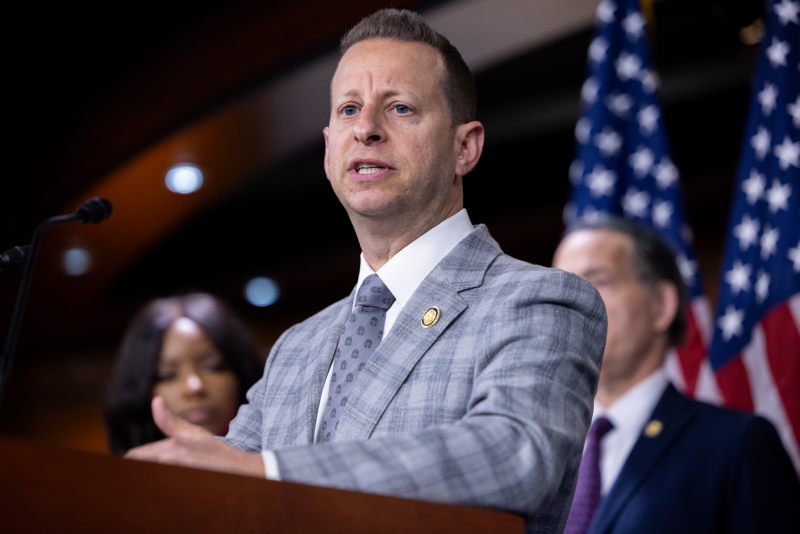
The letter was led by Rep. Elise Stefanik (R-NY), who questioned the presidents on the genocide issue, and Rep. Jared Moskowitz (D-FL). Rep. Josh Gottheimer (D-NJ) is the only other Democrat who signed the letter; the rest are Republicans.
The lawmakers said that the testimony makes it “hard to imagine” any Jewish or Israeli person feeling safe on their campuses when the presidents “could not say that calls for the genocide of Jews would have clear consequences on your campus.”
It adds that subsequent social media statements seeking to clarify or walk back those comments “offered little clarification on your campus’ true commitment to protecting vulnerable students in this moment of crisis,” describing them instead as “desperate attempts to try and save their jobs” and “too little too late.”
Shortly before the Stefanik-Moskowitz letter was released, a group of thirteen House Democrats wrote to the boards of the three schools urging them to re-examine their codes of conduct to make clear that calls for the genocide of Jews are not acceptable.
This second letter, led by Reps. Kathy Manning (D-NC), Jake Auchincloss (D-MA) and Susan Wild (D-PA), includes similar language to the bipartisan letter regarding the presidents’ testimony and how it would make Jewish campus members feel unsafe, but stops short of directly calling for the presidents to be fired.
The lawmakers wrote that they felt “compelled to ask” if the presidents’ responses “align with the values and policies of your respective institutions.”
“The presidents’ unwillingness to answer questions clearly or fully acknowledge appalling and unacceptable behavior — behavior that would not have been tolerated against other groups — illuminated the problematic double standards and dehumanization of the Jewish communities at your universities,” the letter continues. “The lack of moral clarity these presidents displayed is simply unacceptable.”
The lawmakers requested that the schools update their policies to “ensure that they protect students from hate” and describe their plans for protecting Jewish and Israeli community members.
“There is no context in which calls for the genocide of Jews is acceptable rhetoric,” the letter reads. “While Harvard and Penn subsequently issued clarifying statements which were appreciated, their failure to unequivocally condemn calls for the systematic murder of Jews during the public hearing is deeply alarming and stands in stark contrast to the principles we expect leaders of top academic institutions to uphold.”
The letter notes that federal civil rights law prohibits discrimination against Jews on campus, and that criminal law bans hate crimes, violence and incitement to violence.
“Students and faculty who threaten, harass, or incite violence towards Jews must be held accountable for their actions,” the lawmakers wrote. “If calls for genocide of the Jewish people are not in violation of your universities’ policies, then it is time for you to reexamine your policies and codes of conduct.”
Signatories to the Democratic letter include Manning, Wild, Auchincloss, Debbie Wasserman Schultz (D-FL), Lois Frankel (D-FL), Haley Stevens (D-MI), Greg Landsman (D-OH), Grace Meng (D-NY), Brad Schneider (D-IL), Dan Goldman (D-NY), Donald Norcross (D-NJ), Jerry Nadler (D-NY) and Elissa Slotkin (D-MI).
All of the signatories to the Democratic letter are either Jewish or deeply involved with Jewish community issues on the Hill.
Earlier this week, a third letter by six House Republicans from Pennsylvania — Reps. Guy Reschenthaler (R-PA), alongside Congressmen John Joyce, M.D. (R-PA), Mike Kelly (R-PA), Lloyd Smucker (R-PA), Brian Fitzpatrick (R-PA), and Dan Meuser (R-PA) — called for University of Pennsylvania President Liz Magill specifically to be fired.
‘We are shining the spotlight on these campus leaders and demanding they take the appropriate action to stand strong against antisemitism,’ Rep. Virginia Foxx said
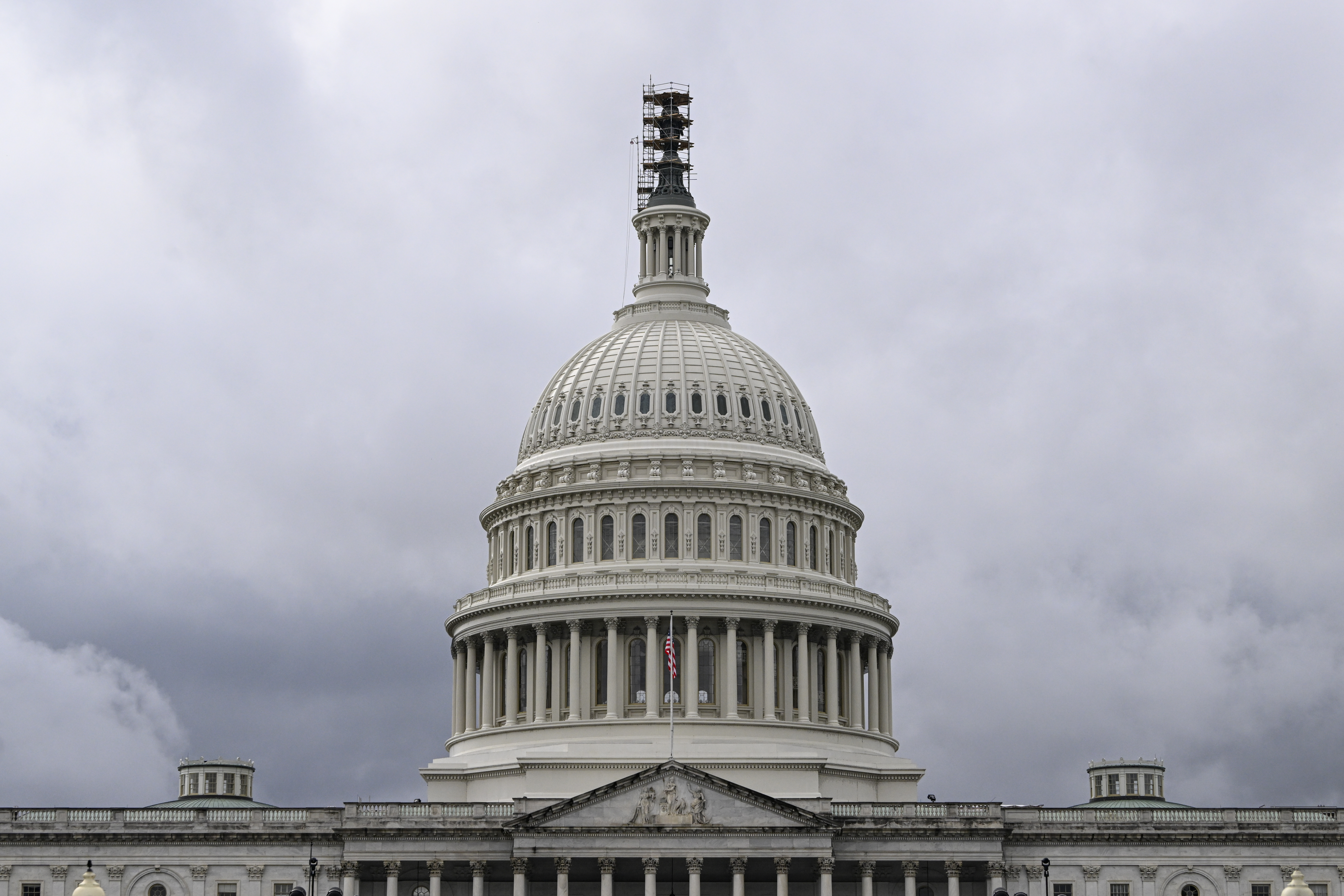
Celal Gunes/Anadolu Agency via Getty Images)
WASHINGTON D.C., UNITED STATES - SEPTEMBER 24: United States Capitol building is seen under construction in Washington D.C., United States on September 24, 2023.
The House Committee on Education and the Workforce is calling a hearing next week with the presidents of Harvard, the Massachusetts Institute of Technology and the University of Pennsylvania, where the university leaders will be asked to answer for antisemitic and violent incidents against Jewish students on their campuses, the committee announced on Tuesday.
“Over the past several weeks, we’ve seen countless examples of antisemitic demonstrations on college campuses. Meanwhile, college administrators have largely stood by, allowing horrific rhetoric to fester and grow,” committee Chair Virginia Foxx (R-NC) said in a statement.
“College and university presidents have a responsibility to foster and uphold a safe learning environment for their students and staff. Now is not a time for indecision or milquetoast statements. By holding this hearing, we are shining the spotlight on these campus leaders and demanding they take the appropriate action to stand strong against antisemitism.”
According to an announcement from the committee, the presidents will be asked to “answer for mishandling of antisemitic, violent protests.”
Harvard President Claudine Gay, UPenn President Liz Magill and MIT President Sally Kornbluth have all faced criticism for their responses to anti-Israel and antisemitic demonstrations and other incidents on their campuses.
Scores of schools across the country have taken similar flak for their responses to antisemitism on their campuses.
A committee spokesperson told Jewish Insider Foxx had chosen these schools because they had been “at the center of the rise in antisemitic protests.” The committee also contacted Columbia University which declined to attend due to a scheduling conflict. All three presidents are appearing voluntarily.
“President Gay has accepted the invitation to testify before the House Education and Workforce Committee on Dec. 5,” Harvard spokesperson Jason Newton told JI. “President Gay looks forward to sharing updates and information on the university’s work to support the Harvard community and combat antisemitism.”
MIT spokesperson Kimberly Allen told JI that Kornbluth “welcomes the opportunity to engage with the Committee Members” and referred JI to past statements on “recent events on campus.”
A UPenn spokesperson said in a statement, “President Magill understands the critical importance of fighting antisemitism and other forms of hate on Penn’s campus and looks forward to sharing the actions Penn is taking at next week’s hearing.”
Please log in if you already have a subscription, or subscribe to access the latest updates.
 Continue with Google
 Continue with Apple