


























The secretary of state acknowledged that granting Iran access to additional funds would risk Tehran using the money for malign activity in the region
Daniel Heuer/Bloomberg via Getty Images
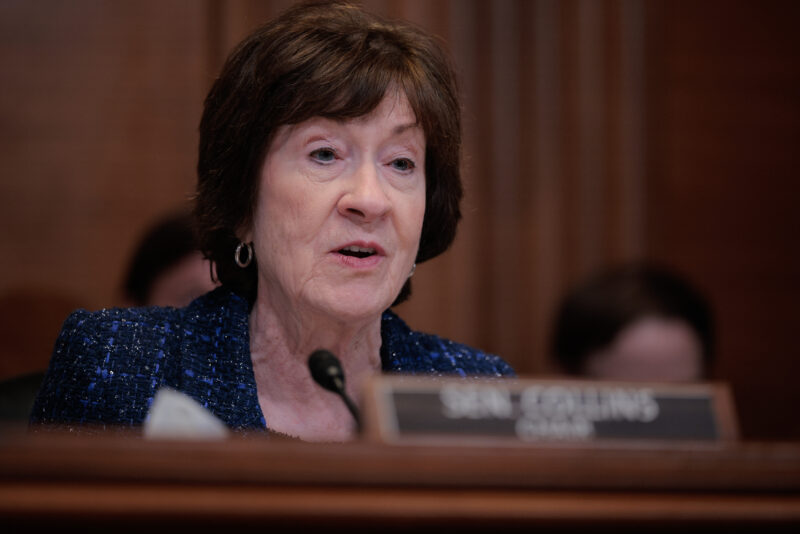
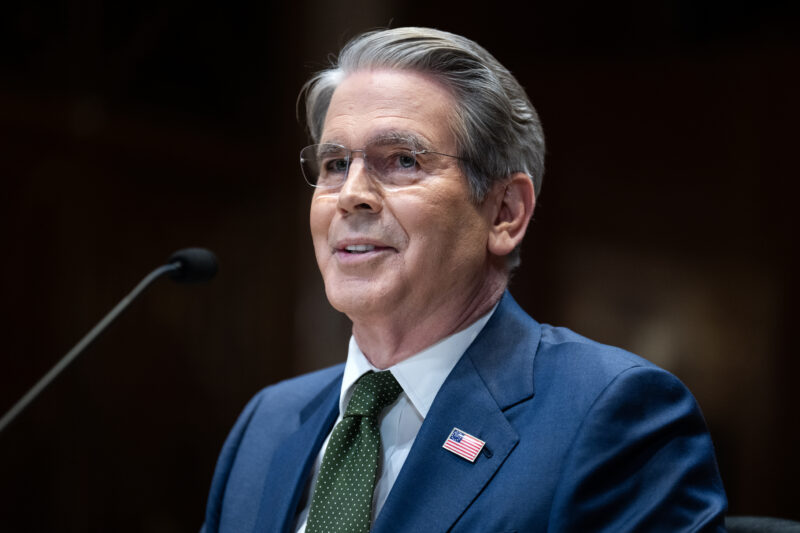
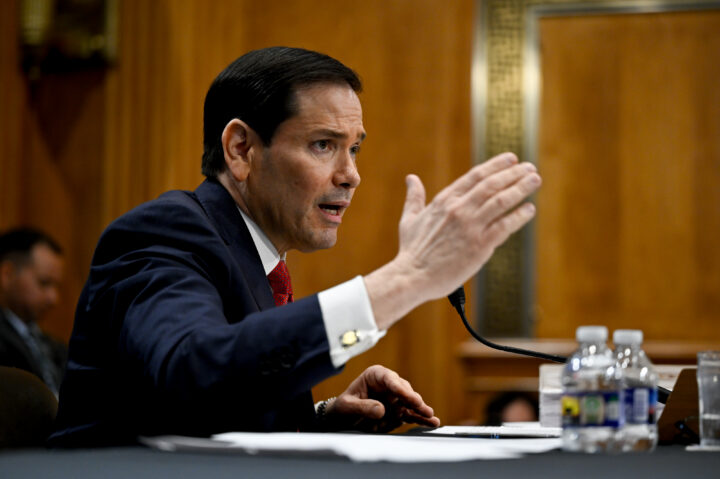
Secretary of State Marco Rubio during a Senate Foreign Relations Committee hearing in Washington, DC, on Tuesday, June 2, 2026.


 Add JewishInsider on Google
Secretary of State Marco Rubio said in testimony to the Senate Foreign Relations Committee on Tuesday that the U.S. is not offering Iran any sanctions relief in exchange for reopening the Strait of Hormuz, and that sanctions relief would only be on the table if the Islamic Republic made concessions related to its nuclear program.
The secretary of state described the diplomatic talks as two-phased: The current phase is focused on getting Iran to agree to reopen the strait and to commit to enter further negotiations on disposing its highly enriched uranium and on “severe and long-term limitations and/or cancelation of enrichment.” In exchange, the U.S. would lift its blockade of Iranian ports.
“For example, they have to commit to say, ‘We will dispose of the enriched uranium.’ And the question now is what are the mechanisms by which we can dispose of it,” Rubio said.
The second phase would entail technical discussions on Iran’s nuclear program and fissile material, in exchange for potential U.S. sanctions relief, and could take months to work through.
“Any sanctions relief is condition-based, which means it has to be in return for the reason why the sanctions are put in place in the first place, which is their nuclear program,” Rubio said. “If they agree to give up [nuclear activities], there will be sanctions relief associated with their commitment and their compliance.”
He said that if Iran complies with U.S. demands including giving up nuclear enrichment and disposing of its enriched uranium, “that’s the place where the frozen assets could be discussed. The more they give, the more they would get.”
But he acknowledged that granting Iran access to additional funds would raise other challenges, including using such funding to support terrorist activities.
Rubio said later during a Tuesday afternoon hearing with the House Appropriations Committee that “if money is going to fund the proxies, it won’t be returned to them,” emphasizing that “there are specific sanctions that are in place related directly to the nuclear program” that could be removed as part of talks.
Republicans cried foul when the Biden administration made similar arguments during its own negotiations with Iran, arguing that any sanctions relief for Iran — even if funds were limited to certain specific humanitarian purposes — would ultimately allow the regime more room in its budget to fund proxy terrorism and other malign activities.
Rep. Lois Frankel (D-FL), who questioned Rubio on the issue, urged him “not to give money to Iran to continue the work of their proxies.”
Sen. Lindsey Graham (R-SC) urged the administration in a Tuesday morning X post to ensure that any deal with Iran forecloses support for terrorism going forward.
“ANY DEAL WITH IRAN MUST CLEARLY STATE THAT IF IRAN PROVIDES FUTURE SUPPORT TO TERRORIST ORGANIZATIONS LIKE HEZBOLLAH, IT WILL RESULT IN CRIPPLING SANCTIONS AND OTHER PUNITIVE MEASURES,” Graham wrote.
Rubio said during the Senate hearing that if Iran refuses to reopen the Strait of Hormuz voluntarily, “then we have other options available to us.”
He added that if the U.S. had refrained from action against Iran because of fears it could close the strait, it would have given Iran effective veto power over U.S. action and acceded to Iran the ability to develop nuclear weapons. “That’s an untenable situation.”
Rubio argued that the U.S. is in the strongest position diplomatically in his memory.
“They have agreed to negotiate aspects of the nuclear program that just a month ago, just a year ago, they were refusing to even mention, much less enter into discussion about,” he said. “That is not a guarantee that it will lead to a deal that is acceptable to the Senate or acceptable to the American people, but we were able to engage them in a process that truly tests the proposition of how far they’re willing to go.”
He insisted that any deal would be stronger than the 2015 Joint Comprehensive Plan of Action agreed to by the Obama administration.
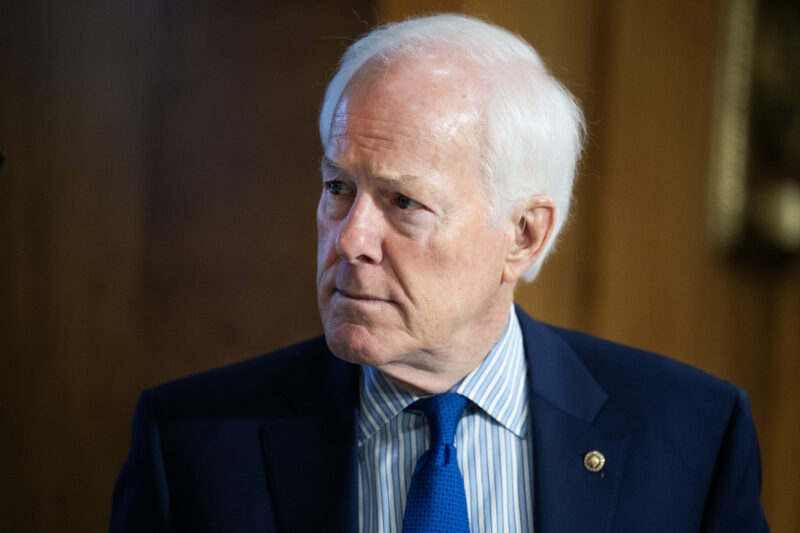
Sen. John Cornyn (R-TX) — who recently lost his primary election to a Trump-backed challenger and may now have more leeway to oppose President Donald Trump’s initiatives for the remainder of his term — suggested he was skeptical of any diplomatic agreement with Iran. Under the Iran Nuclear Agreement Review Act, the administration would be obligated to submit any nuclear deal with Iran for congressional review.
“I do applaud the president’s attempt to try to use some diplomacy here in order to deny them access to the enriched uranium and other weapons that they use against Israel and the West, but tell me, why do you think anything that the Iranian regime agrees to that they will comply with?” Cornyn asked. “What evidence is there that they will agree to anything that they ultimately will stick with?”
Rubio said that any deal will require verifiable steps, and that sanctions relief would come after “they actually do certain things,” not simply in exchange for Iran’s agreement in principle.
He also repeatedly said that issues inside Iran that predate the war, such as the growing economic crisis, have only further accelerated during the war.
He added that diplomatic talks have been slowed by Iran’s internal system and by communications issues inside the country, including divisions between elements of Iran’s government and leadership structure.
The “political class,” Rubio said, would “probably make a deal tomorrow,” but Supreme Leader Mojtaba Khamenei — who was believed to have been injured in the Feb. 28 Israeli strike that killed his father and predecessor, Ayatollah Ali Khamenei — and the Islamic Revolutionary Guard Corps are more insulated from economic and political pressure.
Rubio said that the U.S. has not seen or heard directly from Khamenei, but that there are indications that he is alive and increasingly engaging in governing matters.
Despite urging from Sen. Ted Cruz (R-TX), Rubio said that he is not aware of any U.S. program or plans to arm Iranian protesters against the government.
Rubio also described Operation Epic Fury as “highly successful” in shutting down Iran’s defense industrial base and navy, though he acknowledged that “they still have a lot of drones,” framing that as a challenge that is not unique to Iran.
“There is no Iranian navy. … There’s a bunch of Boston whalers with machine guns on them, but there is no navy,” he said.
Cornyn said that it would be “ludicrous” to suggest that, before the war, Iran’s nuclear program did not pose an imminent threat to the United States. Rubio agreed, adding that if Iran were to develop a nuclear weapon, it “could very well use it,” and even if it did not, having such capability would allow it to hold the world hostage and “hyper-scale” its support for terrorism.
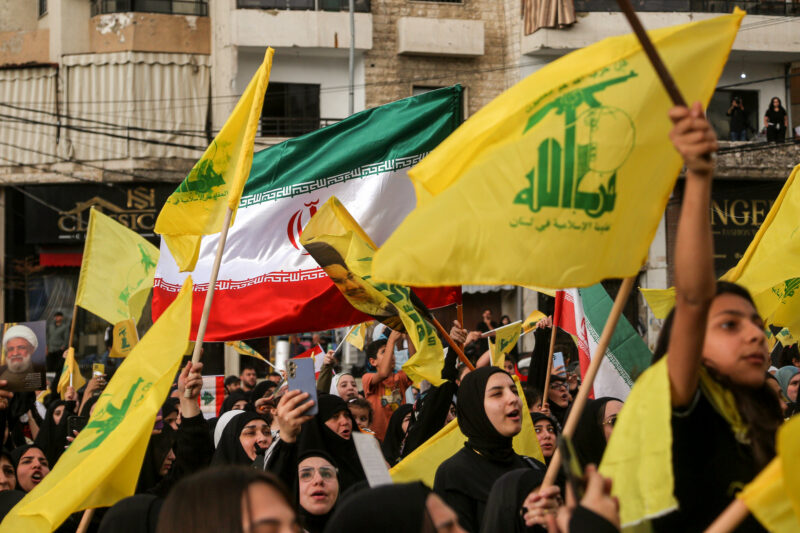
Rubio said that Iran is attempting to drag out the conflict in Lebanon between Israel and Hezbollah by continuing to prop up the terror group. He said the U.S. aims to keep talks over Lebanon separate from negotiations with Iran, while Iran is attempting to merge the two issues.
“The Lebanese government and the Israeli government, they could do a peace deal tomorrow. Israel has no territorial claims in Lebanon, and Hezbollah … has called for the overthrow of the current Lebanese government. The impediment in Lebanon is the fact that Hezbollah has embedded itself in that country and is the reason for all the suffering that’s happening there right now.”
Lebanese and Israeli officials are meeting at the State Department for negotiations on Tuesday.
He said that there are continued difficulties in demilitarizing and defanging Hezbollah, explaining that the Lebanese Armed Forces’ capabilities “are not where they need to be” and that certain elements of the LAF have cooperated with Hezbollah, though he said that there has been progress by the Lebanese government.
Rubio praised the United Arab Emirates as having been “very aggressively cooperative” in the U.S. campaign against Iran and said Kuwait has been “fantastic.” He added that while other U.S. partners have been displeased with Iranian strikes on their energy infrastructure, he called those strikes a “reminder” of the threat they all face from Iran.
Asked about the Board of Peace, Rubio said that the group, which he said is now being structured as an international nongovernmental organization, has just begun to hire staff in the past few weeks. He said the organization aims to remain lean, with just five full-time staff now and a goal of growing to 15 to 20.
He also said that the U.S. has not provided any of the funding it pledged to the Board of Peace and has, for now, walked back the commitment of $50 million that Trump initially offered for the body.
Rubio also flatly denied reports that the U.S. was coordinating with Israel to remove Jordanian custodianship of the Al-Aqsa Mosque complex on the Temple Mount.
The Brandeis Center’s Denna Margolies, who will be testifying, said healthcare unions sometimes ‘use their authority and resources to promote antisemitic and anti-Zionist campaigns’
Zack Frank
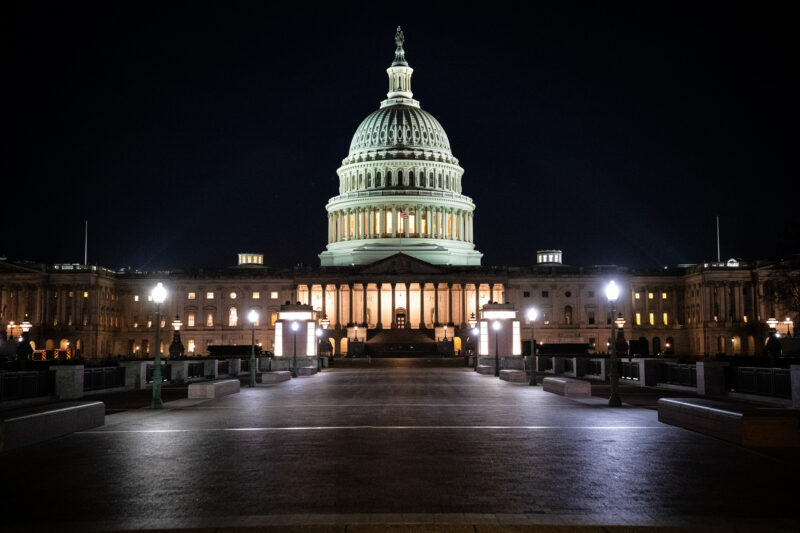
Capitol Building
A House Education & Workforce subcommittee is set to hear testimony on Wednesday on the rising problem of antisemitism in the healthcare space, with a particular focus on the role of healthcare workers’ unions in fueling animus in the field.
Deena Margolies, an attorney at the Louis D. Brandeis Center for Human Rights Under Law, who is set to testify before the subcommittee on Health, Employment, Labor and Pensions, said that Brandeis has seen a significant increase in complaints of antisemitism in healthcare spaces from doctors, medical students, residents, interns, nurses and other staff, as well as in medical school classrooms and psychology and social work spaces.
“When patients are at their most vulnerable, when they’re in an exam room or a hospital bed or an operating room, they need to trust that every member of their team is focused on their well-being,” Margolies said. “If there is shunning or marginalization or harassment towards Jewish or Israeli doctors, it’s going to impact the healthcare and the well-being of the patient, right? It’s going to affect coordination and trust and patient care and safety.”
Other witnesses scheduled to testify include Dr. Jacob Agronin, a cardiology fellow at Temple University Hospital; Eveline Shekman, the CEO of the American Jewish Medical Association; and Jamie Beran, the CEO of the progressive Jewish group Bend the Arc.
Margolies said that she has been representing Jewish and Israeli healthcare professionals and employees facing antisemitic discrimination, as well as some non-Jewish individuals who have experienced similar discrimination because they’re perceived as Jewish or are friendly with Jews.
Noting the hearing’s focus on unions, Margolies said she does not intend to question whether healthcare workers are allowed to hold or express political views.
“It’s when the healthcare unions use their authority and resources to promote antisemitic and anti-Zionist campaigns that are outside their mission,” she said. “It’s when they are demonizing or promoting antisemitic and anti-Zionist campaigns that marginalize and ostracize and alienate and discriminate against Jewish and Israeli healthcare workers.”
She said she’s spoken to numerous members of two major healthcare unions who have felt that they have had to hide their Jewish or Israeli identity to avoid hostility from fellow union members.
The job of unions is to collectively bargain for and represent healthcare workers, not to “help create the hostility that [these employees] are now enduring at work,” she continued. “There should be no place in such unions for [Boycott, Divestment and Sanctions] measures and demonization of Jewish and Israeli colleagues.”
Margolies said that Congress should conduct oversight of healthcare labor unions advancing antisemitic and anti-Zionist campaigns unrelated to their core purposes, and to probe whether unions engaged in such activity can properly represent Jewish and Israeli members.
She said that lawmakers should also press federal agencies to clarify that antisemitic harassment in healthcare workplaces is illegal, regardless of its source.
At previous hearings covering unions’ roles in pushing antisemitic and anti-Israel campaigns, some Democrats have accused Republicans of attempting to use the issue to undermine union organizing and collective bargaining rights generally.
“That couldn’t be further from the truth. The issue for me is not whether healthcare workers can hold political views, and I’m not looking for the union not to be able to collectively bargain,” Margolies said. “The problem really is when they use their authority and resources to promote antisemitic, anti-Zionist, anti-Israel campaigns that are outside their labor mission. … This is not an anti-labor union thing at all.”
‘Free the hostages, remove Hamas, end the war,’ the ad reads
Screenshot/YouTube
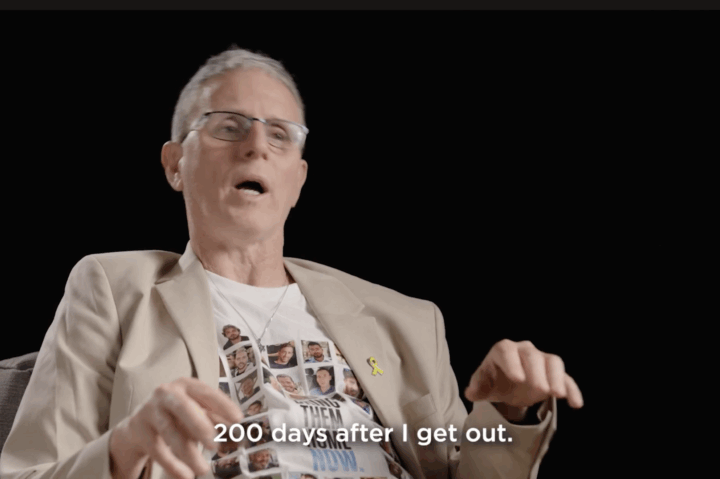
Former hostage Ohad Ben Ami appears in a 30-second AIPAC ad airing on MSNBC.
AIPAC is set to begin airing an ad on MSNBC on Monday featuring testimony from former hostage Ohad Ben Ami, who was held by Hamas in Gaza for 491 days.
The ad — while largely non-political — constitutes a notable outreach from AIPAC to the liberal Democratic base, a demographic that polls show is growing increasingly antagonistic toward Israel.
The ad will air in the Washington area 14 times over seven days, seven times on morning shows and seven times during the evening.
“Doctors said that if I would have stayed another two weeks or three, I would have not survived. We are in the dark, no food, no medicine. Like, you are in hell,” Ben Ami states in the ad. “It is more than 200 days [since] I [got] out. If you want to bring [the remaining hostages home] alive, we must do it fast.”
“Hamas still holds 48 hostages in Gaza,” captions displayed on screen read. “Free the hostages, remove Hamas, end the war.”
Hamas officials are meeting with Israeli negotiators in Cairo on Monday following an announcement from the terror group on Friday that it was willing to enter final negotiations to release the hostages and end the war, along the terms outlined by President Donald Trump’s proposal.
The leaders of Georgetown, CUNY and UC Berkeley condemned antisemitism generally at a Capitol Hill hearing, but struggled to criticize antisemitic professors

Win McNamee/Getty Images
Dr. Robert Groves, Interim President of Georgetown University, Dr. Félix Matos Rodríguez, Chancellor of The City University of New York, and Dr. Rich Lyons, Chancellor of the University of California, Berkeley, testify during a House Committee on Education and Workforce hearing in the Rayburn House Office Building on July 15, 2025 in Washington, DC.
When the leaders of Georgetown University, the City University of New York and the University of California, Berkeley sat down on Tuesday morning to testify at a congressional hearing about antisemitism, they clearly came prepared, having learned the lessons of the now-infamous December 2023 hearing with the presidents of Harvard, the University of Pennsylvania and MIT, each of whom refused to outright say that calls for genocide violated their schools’ codes of conduct.
Georgetown interim President Robert Groves, CUNY Chancellor Felix Matos Rodriguez and UC Berkeley Chancellor Rich Lyons were all quick to denounce antisemitism and even anti-Zionism at Tuesday’s House Education and Workforce Committee hearing examining the role of faculty, funding and ideology in campus antisemitism.
But while the university administrators readily criticized antisemitism broadly, they struggled to apply that commitment directly to their field of academia.
Lyons in particular offered a revealing look at the gulf between a university’s stated values and its difficulty in carrying them out.
He was asked to account for the promotion of Ussama Makdisi, a Berkeley history professor who described the Oct. 7, 2023, Hamas terror attacks as “resistance” and later wrote on X that he “could have been one of those who broke the siege on October 7.” Why, Lyons was asked by Reps. Randy Fine (R-FL) and Lisa McClain (R-MI), did Berkeley announce last September that Makdisi had been named the university’s inaugural chair of Palestinian and Arab studies?
Lyons first defended Makdisi: “Ussama Makdisi, Professor Makdisi, is a fine scholar. He was awarded that position from his colleagues based on academic standards,” Lyons said.
Later, when McClain followed Fine’s line of questioning, Lyons went to great lengths to avoid criticizing Makdisi.
“I want to separate the phrase from the person. If I heard some other person —” he said, before McClain cut him off. What, McClain asked, did Lyons think Makdisi meant with his tweet?
For five seconds, Lyons sat in silence.
“I believe it was a celebration of the terrorist attack on Oct. 7,” he replied slowly.
He shared that he had spoken to Makdisi about the social media post. Pressed to share what the conversation was like, Lyons returned to an earlier line: “He’s a fine scholar,” Lyons said.
Lyons, like Matos Rodriguez and Groves, acknowledged that antisemitism exists at his campus. But they all struggled to reckon with what Republican lawmakers alleged was an explosion in antisemitism at each of the three schools after Oct. 7.
“I believe that most Jewish students feel safe on our campus,” Lyons said, though he also said that he knows some do not feel safe. When asked why they may not feel safe, he demurred.
“Well, I think there are Jewish people that don’t feel safe in lots of parts —” he said, cut off again by McClain, who asked him to speak specifically about UC Berkeley.
“I think there is antisemitism in society,” Lyons said, before he was cut off again.
Lyons repeatedly attempted to make the same point: “I do believe that public universities are reflections of society, and I believe the antisemitism in society is present on our campus,” Lyons said. Asked whether the actions that he takes or that his faculty take can influence the campus environment, he said yes. McClain accused him of “avoiding the question,” and asked: Would he commit to act to make sure all Jewish students and all students feel safe?
“I’m committing to striving to reach that goal,” said Lyons.
Each of the university leaders was asked, at different occasions, to account for faculty members who had shared antisemitic or pro-Hamas rhetoric. Matos Rodriguez, the CUNY chancellor, did not deny that the New York City university system employs antisemitic faculty, though he did not specify whether any action would be taken against them.
“We have faculty that might conduct themselves in antisemitic behavior, and we have no tolerance for it, and we’re clear about the expectations to follow all our rules and policies,” Matos Rodriguez said. “If any individual breaks those rules, they will be investigated, and the appropriate disciplinary action will be taken if warranted.”
Presented with the cases of two faculty members who had shared pro-Hamas content on social media, Matos Rodriguez condemned Hamas, but did not say specifically if their rhetoric violated codes of conduct or led to any consequences.
“I have been very clear that Hamas is a horrible terrorist organization, and we have no tolerance at the City University of New York for anyone who would embrace that support of Hamas,” said Matos Rodriguez. “I clearly condemn the statements, and it’s been my testimony here, and our practice, that if any member of the City University community violates our policies and our code of conduct, we will conduct an investigation, and if discipline is warranted, we will take it, and we will not hesitate to do that, and we have done so.”
Groves, Georgetown’s president, shared early in the hearing that the university had taken action against Jonathan Brown, a tenured professor who faced criticism last month for a tweet calling for Iran to conduct a “symbolic strike” on a U.S. military base after Washington struck Iranian nuclear sites. Brown is no longer the chair of the university’s Arabic and Islamic studies program, Groves said, and he has been placed on leave pending an investigation.
Groves, who faced several questions about Georgetown’s ties to Qatar, pledged to commit to disclosing every dollar that Georgetown receives from foreign sources.
At the same time, he stood by Georgetown’s decision to award Sheikha Moza bint Nasser, the mother of the Qatari emir, with the university’s president’s medal in April. Sheikha Moza has a history of incendiary anti-Israel commentary on social media, including several posts praising the Oct. 7 attacks and Hamas leader Yahya Sinwar, who orchestrated the violence. Rep. Mark Harris (R-NC) asked Groves why Georgetown gave her a medal, given those posts.
The medal was awarded because of her “decades-long work for educating, getting access to education, to the poorest children around the world,” Groves said.
“I don’t support that tweet,” he added, when asked if Georgetown’s values include calls for the destruction of Israel. “That tweet is not consistent with Georgetown policy. We honored her for her decades of work in access to education to the poorest children of the world.” Georgetown would not consider revoking the award, he added.
Groves’ stated commitment to transparency about its sources of foreign funding — the university’s 20-year relationship with Qatar is well-documented and oft-criticized — stood in contrast to Lyons’ response to questions about whether he would disclose all foreign funding to Berkeley.
“As a public university, I am not ready to commit to that on the fly. There are different donors to the university who request anonymity,” Lyons said. “What I’d be very, very happy to be very transparent about is exactly what is our process for vetting those things. We say no to a lot of foreign money. I promise you that.”
He would not give an example of foreign money he had rejected.
Democrats at the hearing mostly used their time to criticize President Donald Trump’s approach to higher education, and his funding cuts that are affecting scientific and medical research at top universities. They highlighted his administration’s massive cuts to the Education Department, including at the Office for Civil Rights, the division tasked with investigating civil rights violations — including antisemitism — at American schools and universities.
Please log in if you already have a subscription, or subscribe to access the latest updates.
 Continue with Google
 Continue with Apple