



































































The New York governor’s decision is likely to build momentum for other Democratic governors to join the program

(Howard Schnapp/Newsday RM via Getty Images)
New York Governor Kathy Hochul speaks at Westbury Middle School on Jan. 10, 2024 in Westbury, New York


 Add JewishInsider on Google
Gov. Kathy Hochul announced Friday that she will opt New York into the new federal scholarship tax credit program, making her the second Democratic governor to do so since the administration published formal regulations for the program.
Hochul’s decision bucks intense opposition from teachers’ unions, but has won her support from the Jewish community, which has been urging governors to opt in. She had previously said that she was inclined to support the program but was waiting to see if the regulations contained any poison pill provisions.
Given New York’s substantial Jewish population, her decision to join the program will be one of the most consequential for the Jewish community. It could prompt action by other Democratic governors as well. Colorado Gov. Jared Polis had been the only Democrat — until Hochul’s decision — to opt into the program.
“I’ve been clear from the start that New York would participate in the federal scholarship tax credit program if, and only if, all schools and students, including those in our public schools, could benefit,” Hochul said in her Friday statement. “After a careful review of the federal regulations, we believe this program has the potential to bring millions of additional dollars to New York students and families without taking a single dollar from public schools or our state or local budgets.”
She said that she would not “leave money on the table when it could help our kids” and that she has been “directly engaging with business leaders, who have committed to use this program to support public school students and their academic needs.”
The program will allow taxpayers to deduct up to $1,700 from their federal taxes through donations to scholarship granting organizations. Some Jewish community groups are supporting scholarship organizations to help students attend Jewish schools, but the scholarships can also help support public school students.
Hochul insisted that her “commitment to public education has not changed, and it never will.” Teachers’ unions have insisted that the program amounts to a federal private school voucher program and will sap funding from public education.
“We thank Governor Hochul for putting New York kids first,” Teach NYS, the New York branch of the Teach Coalition, said in a statement. “This is a historic moment for New York students and a testament to the power of collective advocacy.”
The group thanked the UJA-Federation of New York, Agudath Israel of America and various other groups, including the Catholic community, that have been advocates for the program.
Yeruchim Silber, the director of New York government relations for Agudath Israel of America, said it was a “tremendous day for education in New York.”
“This decision opens the door to millions of dollars in additional educational resources and opportunities for students in public and nonpublic schools alike, without taking a dollar away from public education,” Silber continued. “[Agudath Israel] is deeply grateful to the Governor and her team for recognizing the importance of this opportunity and ensuring that New York’s children and families will be able to benefit.”
Meanwhile, United Federation of Teachers president Michael Mulgrew condemned Hochul and vowed to work to roll back the policy.
“Giving up local control of public education to the federal government through the Trump administration’s private school voucher scheme is a failure of leadership. Gov. Hochul will bear the responsibility, but our students, educators, and families will bear the price,” Mulgrew said.
While Republicans have embraced the program that is being championed by Jewish community groups, only Colorado Gov. Jared Polis has opted in so far among Democrats
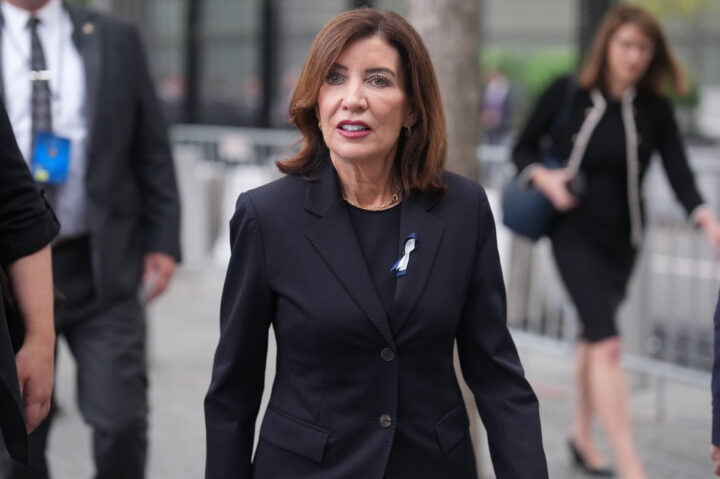
Adam Gray - Pool/Getty Images
New York Gov. Kathy Hochul arrives for a ceremony to commemorate the 25th anniversary of the September 11th terrorist attacks on September 11, 2026, in New York City.
With the publication of regulations on Thursday for the new federal educational tax credit program, governors now have until the end of the year to decide whether to opt their states into the program.
The tax credit program, which has been championed by many Jewish community groups but opposed by teachers’ unions, has presented a choice for blue-state governors, many of whom¸ have been publicly undecided to this point on whether they’d join the program. Several said that they were waiting to see the regulations before they made a final decision.
Among the elements of the new regulations released Thursday is guidance clarifying that governors cannot make state-specific rules governing what scholarship organizations are eligible for donations under the program — such as excluding scholarship programs benefiting public or private schools.
And in states that don’t opt in, donors will be able to contribute to scholarship organizations in other states, and still receive tax credits.
Another major development clarified by the new regulations is that, even when filing jointly, spouses will each be eligible for the $1,700 tax credit, totaling $3,400 per married couple per year, a provision applauded by advocates for the program.
Republican governors have all opted into the program, but among Democrats, only Colorado Gov. Jared Polis has signed up so far, while a handful of governors have already said they will opt out.
Several other Democratic governors told Jewish Insider on Thursday that they’re still reviewing the guidance.
“Governor Hochul is committed to ensuring every student receives a quality education that best meets their needs. If properly implemented, and structured so all students can benefit, the federal scholarship tax credit can expand opportunity without diverting funding from public schools, state or local budgets,” Jonah Allon, a spokesperson for New York Gov. Kathy Hochul, said in a statement. “The Administration is carefully reviewing the proposed regulations to ensure implementation would achieve these goals.”
Hochul had previously expressed her intention to opt in, pending any “poison pills that could harm New York’s education system” in a review of the final regulations.
A spokesperson for Illinois Gov. JB Pritzker told JI that his office is also reviewing the new guidance. “As stated since the federal government announced this program, the Governor’s Office will carefully evaluate the proposed regulations and make a decision grounded in what best supports working families, students, and our public schools,” the spokesperson continued.
A spokesperson for New Jersey Gov. Mikie Sherrill said that her administration “remains committed to ensuring every child in New Jersey has access to a high-quality education and the opportunities they need to succeed.”
“As we carefully review this federal guidance, we are examining who the program would serve, which opportunities are available, and how it could best benefit public school students,” the Sherrill spokesperson said. “The bottom line is clear: put kids first and strengthen New Jersey’s public schools.”
A spokesperson for the District of Columbia’s office of the superintendent for education also said the city is reviewing the new regulations.
“As the state education agency, the vision of the Office of the State Superintendent of Education is that DC learners of all ages and backgrounds are equipped with the knowledge and skills needed to pursue and thrive on the life path of their choice. We are reviewing the temporary regulations and proposed rulemaking that came out today,” the spokesperson said.
Several others including Govs. Josh Shapiro of Pennsylvania, Maura Healey of Massachusetts, Wes Moore of Maryland and Abigail Spanberger of Virginia did not respond to requests for comment. Virginia was opted in by then-outgoing Gov. Glenn Youngkin, but Spanberger could still decide to withdraw before the Jan. 1 deadline.
Democrats are facing pressure from teachers’ unions to oppose the new tax credit program.
American Federation of Teachers President Randi Weingarten called the program a “poison pill for the 90 percent of American children who attend public schools” by diverting taxpayer funding into private hands and depriving public schools of resources.
The credits will apply exclusively to federal taxes and scholarships can be open to public school students for tutoring, special needs services, transportation and some after school activities.
“State governors should reject it — not least of all because they will have no say or oversight over how the vouchers operate,” Weingarten said. “The reality is that for every precious public dollar funneled to private schools — money that could be spent on instruction, lowering class sizes, modern buildings or new books in the library — public school parents will be hunting for pennies on the floor.”
The National Education Association said the program is “robbing students of access to great public schools across the United States” while preventing states’ “ability to protect students or ensure meaningful benefits for public schools.”
National and local Jewish groups, however, are supporting the program and have been lobbying governors to enroll in it.
Rabbi A.D. Motzen, the national director of government affairs for Agudath Israel of America, told JI that the publication of the regulations for the program will allow states that have already opted in to begin implementing the program, and should allow states whose governors have said they’ve been waiting for the regulation to make decisions.
Addressing Hochul specifically, Motzen noted that she had said she wanted to ensure that public school students would be eligible, which the regulations make clear that they are, and argued that the regulations contain no poison pills.
“The big news is that states can move forward, that wanted to move forward, and states that said [they’re] waiting have what they need now to look at and hopefully make decisions sooner rather than later,” he said.
The midterm elections could also have some bearing on the program. Though Jan. 1 is the listed deadline, Motzen explained that new governors who take office at the start of the year should have additional time to finalize lists of eligible scholarship organizations.
He also pushed back directly on the arguments made by the teachers’ unions, emphasizing that 96% of all students will be eligible for scholarships and that the program will not come from state tax budgets.
“That’s just misrepresenting what it does. It helps almost every student in the state,” he said, adding, “the idea that it would financially harm a state is ludicrous.”
“Governors across the country have been telling us they were waiting for the federal guidelines. Well, here they are, and there is no reason left to wait,” Teach Coalition CEO Sydney Altfield said in a statement. “The rules make clear, in firm writing, that public school students can benefit too, with strong standards and real oversight. This doesn’t have to be a partisan issue. For Jewish families, it matters enormously.”
Teach Coalition said it plans to continue working with Hochul’s administration as it reviews the guidelines and to continue pushing other governors to join the program as well. Altfield said that the program can give parents and Jewish schools “meaningful new resources … at a moment when Jewish education has never been more important.”
Sheila Katz, the chief Jewish life officer for the Jewish Federations of North America, said, “With the regulations now released, we urge every governor that has not yet opted in to take the steps necessary to participate. Families should not lose access to these important education scholarships simply because of where they live.”
Katz said the program “has the potential to make Jewish day school more affordable and will drastically increase access to Jewish education for generations to come” and thanked the Treasury for making the program “as accessible as possible.”
A range of national Jewish organizations have endorsed a national scholarship-granting organization to support Jewish day schools, the Opportunity Fund for Jewish Education, and a range of state-level Jewish scholarship organizations are also expected to be launched.
Youngkin, who has been an advocate for the program, wrote in a post on X, “the teachers union was wrong. This scholarship program will not take any dollars from public schools, and public school kids are eligible!”
“Governors, it’s your time now — stand with kids and parents, opt-in to the Education Freedom Tax Credit,” he continued.
Plus, Hollywood stars come out for Israel

Getty Images
👋 Good Thursday morning!
In today’s Daily Kickoff, we look at efforts by Jewish groups to lobby Democratic governors to opt into a new federal education tax credit program, and report on IL-9 congressional candidate Kat Abughazaleh’s comments at a debate last night expressing opposition to U.S. support for Israel’s Iron Dome missile-defense system. We cover D.C. mayoral candidate Janeese Lewis George’s pledge to the DSA that she would reject interactions with the “Zionist lobby,” and report on a new lawsuit filed by Jewish groups against California for its failure to address antisemitism in K-12 schools in the state. Also in today’s Daily Kickoff: Prime Minister Narendra Modi, Rep. Greg Landsman and Jay Solomon.
Today’s Daily Kickoff was curated by JI Executive Editor Melissa Weiss and Israel Editor Tamara Zieve, with assists from Danielle Cohen-Kanik and Marc Rod. Have a tip? Email us here.
What We’re Watching
- White House Special Envoy Steve Witkoff and Jared Kushner are back in Geneva for Omani-brokered talks with Iran. The meeting comes two days after Witkoff, speaking at AIPAC’s Congressional Summit in Washington, said that any future nuclear deal with Iran should last indefinitely — a departure from the Obama administration’s 2015 Joint Comprehensive Plan of Action, which included sunset clauses.
- President Donald Trump will receive an intelligence briefing at 11 a.m.
- Indian Prime Minister Narendra Modi wraps up his two-day visit to Israel today. In a speech yesterday at the Knesset — which was also attended by former New York Mayor Eric Adams — Modi, who was the first Indian leader to address the Israeli body, pledged that “India stands with Israel firmly with full conviction in this moment and beyond.”
- In California, JCRC Bay Area, the Jewish Federation Los Angeles and JPAC are hosting the Jewish California 2026 Governor Candidate Forum at the Skirball Center in Los Angeles. Speakers at the forum are set to include entrepreneur Tom Steyer, Rep. Eric Swalwell (D-CA), political commentator Steve Hilton, San Jose Mayor Matt Mahan and former Los Angeles Mayor Antonio Villaraigosa.
- Jewish Alumni Strong is hosting a screening on Capitol Hill this afternoon of Duki Dror’s 2025 film “Unraveling UNRWA,” about the embattled U.N. organization.
What You Should Know
A QUICK WORD WITH JI’S JOSH KRAUSHAAR
A pair of new polls — one in a Democratic Senate primary in Maine and one in a Republican gubernatorial primary in Florida — should sound alarm bells about the political and ideological trajectory of Gen Z voters, and the younger generation’s creeping tolerance of antisemitism that transcends party ID.
While the top lines from the polls generated the most headlines, the more notable takeaway was just how different the preferences of Boomers and Gen Zers were — even among those affiliated with the same party. The younger voters gravitated toward the candidates with checkered (at best) records on antisemitism.
James Fishback, a 31-year-old Republican investor who made a name for himself with incendiary social media posts attacking Israel and invoking antisemitic tropes, is barely winning a following among most Florida Republicans as he runs for governor. But among younger Republican voters, he appears to be building a growing base of support.
Graham Platner, an anti-establishment oyster farmer who for years had a skull-and-bones Totenkopf tattoo on his chest, a symbol adopted by a Nazi SS unit, is barely facing any backlash from Maine voters in his outsider Senate campaign. (He had the tattoo covered up during the campaign, amid widespread controversy.) Indeed, he may soon become the favorite to win the Senate seat in Maine, fueled by near-universal support among younger Democratic voters.
The polling underscores the dramatic generational disconnect.
TAXING TALK
At the start of a pivotal campaign cycle, Democratic governors will face a politically high-stakes decision this year on a new education policy that President Donald Trump signed into law last year. One provision of Republicans’ sweeping spending package adopted in 2025 — dubbed the “One Big Beautiful Bill” by Trump — was a measure that provides a dollar-for-dollar federal tax credit for people who donate to approved scholarship organizations that can support a range of education expenses, including private school tuition and tutoring. Individual states must opt in for taxpayers to be eligible for the credit of up to $1,700 annually, Jewish Insider’s Gabby Deutch reports.
The dilemma: Democratic governors, skeptical of school choice programs and wary of powerful teachers’ unions, face a tricky choice. They have to opt in by the end of the year for taxpayers to be eligible for the credit. The National Education Association urged lawmakers to vote against the bill last year, and has said that “voucher-inspired schemes” like the federal tax credit program “erode public education, the foundation of our democracy.” (An NEA spokesperson declined to comment on Wednesday.) Orthodox Jewish groups have long supported school choice efforts, including vouchers, while most non-Orthodox groups sat out those matters in the past or opposed them. Now, Orthodox leaders are being joined by the Jewish Federations of North America as the umbrella group urges Democratic governors to support the bill.
Bonus: eJewishPhilanthropy’s Nira Dayanim does a deep dive into the program and how it could impact the Jewish community.
EXCLUSIVE
Rep. Greg Landsman (D-OH) said that the U.S. and its allies “may very well need to take defensive action, targeting military assets in Iran,” in a statement shared with Jewish Insider’s Marc Rod on Wednesday.
Notable quotable: “Targeted strikes on known ballistic missiles and rocket infrastructure and other weapons depots, including nuclear assets, may very well save lives,” Landsman said. “The region and world would be a much safer place if the regime’s military capacity was leveled. These targeted strikes could prevent war, which should be the goal of any effort.” While Landsman didn’t explicitly say in the statement that he intends to oppose the war powers resolution on Iran that may come to a vote before the House next week, his position suggests that he’s skeptical of that effort.
Schedule check: Sen. Tim Kaine (D-VA) told reporters on Wednesday that a Senate resolution blocking the use of military force against Iran without congressional authorization is likely to come up for a vote next week, though it could come as early as Thursday.
Veep’s view: Vice President JD Vance urged the Iranian regime on Wednesday to take President Donald Trump’s diplomatic overtures “seriously,” cautioning that the president has “a number of tools at his disposal” to keep the “craziest and worst regime in the world” from acquiring nuclear weapons, Jewish Insider’s Emily Jacobs reports.
PRAIRIE STATE DEBATE

At a televised debate in Illinois’ 9th Congressional District on Wednesday evening, far-left activist and social media influencer Kat Abughazaleh said she would not support continued aid for Israel’s Iron Dome, dodged a question on Israel’s right to exist and said that President Donald Trump is only considering strikes on Iran because he wants to “bomb more brown people,” Jewish Insider’s Marc Rod reports.
What she said: Asked whether she supports Israel’s right to exist, Abughazaleh responded, “I think that this question is said as if it doesn’t exist. What we need is to ensure that any solution, whether it is a two-state, a single secular state, whatever it is, is negotiated not by America, but by the people that actually live there.” Asked whether she would support conditioning defensive systems like Iron Dome, Abughazaleh responded, “Defensive weaponry is an oxymoron. Weapons are inherently offensive.”
Exclusive: Amid attacks from anti-Israel activists and groups over her support for Israel and backing from pro-Israel supporters, Illinois state Sen. Laura Fine, a Democrat running for an open Illinois House seat, unapologetically championed her backing for the Jewish state in a position paper obtained by Jewish Insider.
DRAWING LINES

Washington, D.C., mayoral candidate Janeese Lewis George told the Metro D.C. chapter of the Democratic Socialists of America that she will not attend events focused on “promoting Zionism and apartheid,” according to a questionnaire from the group that she filled out prior to earning its endorsement earlier this month, Jewish Insider’s Gabby Deutch reports.
Candidate commitments: “I will refrain from going on any political junkets to Israel. I will also not attend events focused on obfuscating the realities of occupation or promoting Zionism and apartheid,” Lewis George wrote in her answers on the questionnaire, which the local DSA group posted to its website. Lewis George described herself as “a proud member of Metro DC DSA.” The DSA questionnaire asks candidates to publicly support the Boycott, Divestment and Sanctions movement, and to refrain from engaging with “the Israeli government or Zionist lobby groups” — a category that it said includes AIPAC, Democratic Majority for Israel, Christians United for Israel and the more liberal J Street.
EDUCATION CONSTERNATION
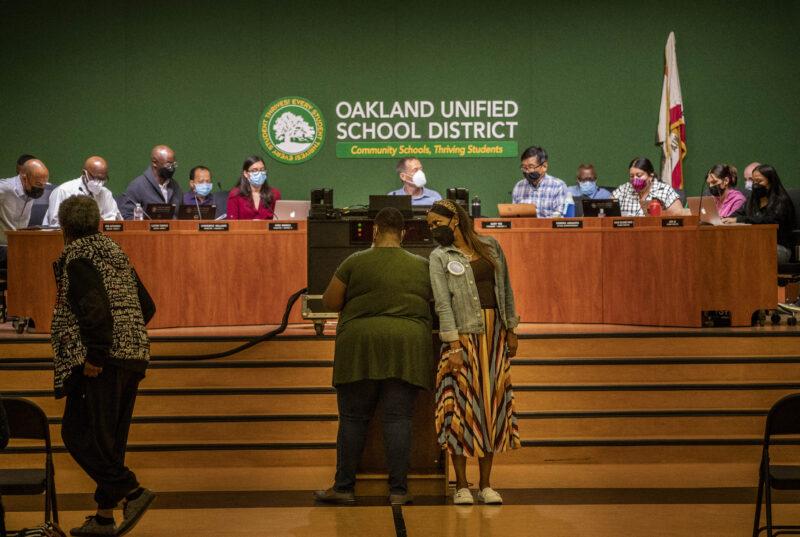
Jewish legal groups filed a lawsuit on Thursday against the State of California over an alleged failure to address antisemitism — some of which is stemming from teachers’ unions — in K-12 public schools across the state. Filed by the Louis D. Brandeis Center For Human Rights Under Law and StandWithUs, with outside counsel from veteran California plaintiffs’ attorney Michael Sherman, the suit also names the California State Board of Education, the State Department of Education and Superintendent Tony Thurmond, Jewish Insider’s Haley Cohen reports.
Details: It highlights several complaints from Jewish parents and children statewide, in school districts including Berkeley, Los Angeles, Santa Clara, San Francisco, Campbell Union, Fremont, Etiwanda and Oakland. In the Berkeley Unified School District, which has been a hotbed for antisemitic incidents since the Oct. 7, 2023, terrorist attacks, a ninth grader said his art teacher displayed a Star of David with a fist punching through it. The same teacher promoted a walkout filled with chants that included, “F*ck the Jews,” according to the complaint, which states that when the student’s mother reported the teacher’s conduct, the school’s solution was to separate the Jewish student from his class in the library and health center.
ON THE STAGE

Call it a mash note to Jewish identity, and to the Jewish homeland. Hollywood heavyweights took to New York City’s world-renowned Carnegie Hall stage on Tuesday night to highlight the link between the Jewish people and the land of Israel, spanning thousands of years, in the form of recounting historic love letters to the Jewish state, Jewish Insider’s Haley Cohen reports.
Letters of legacy: “Letters, Light and Love” made its U.S. premiere in a one-night only performance hosted by UJA-Federation of New York as Jewish celebrities including Amy Schumer, David Schwimmer, Debra Messing, Tovah Feldshuh, Jonah Platt and Michael Aloni read excerpts of letters written about Israel across centuries. The notes came from writers such as Julius Caesar, Maimonides, Golda Meir, Sir Moses Montefiore, Albert Einstein, Harry Truman, John Adams, Winston Churchill and Leonard Bernstein.
On the air: The first episode of “David: King of Israel,” a new four-part Fox Nation docudrama, premieres on Thursday, offering a dramatic reenactment of the biblical coming-of-age story of King David that provides relevant lessons in a time of conflict, actor Zachary Levi, the series’ host, told Jewish Insider’s Haley Cohen.
Worthy Reads
The Brown-Bag Candidate: The Atlantic’s Mark Leibovich interviews former Sen. Sherrod Brown (D-OH) as Brown aims to flip the seat that he — and Democrats — see as a possible pick-up in the midterms. “I asked Brown why he thought Democrats had lost so much credibility with blue-collar, lower- and middle-income citizens. In a historic flip of party identity, voters are now more likely to view Republicans as better attuned to the concerns of working-class people, whereas Democrats are more associated with affluent, college-educated elites. ‘From your perspective, what has that evolution been like over the years?’ I asked. Brown blew off my question. ‘I don’t spend a lot of time thinking about it,’ he said. ‘This might surprise you.’ … But it is perhaps another element of Brown’s appeal that he tends not to get bogged down in hifalutin theories or sociology (his Yale degree notwithstanding). He prides himself on being an unglamorous advocate, who has earned enough trust with enough voters to defy Ohio’s Republican trend lines. At least until he didn’t.” [TheAtlantic]
Angst Over AIPAC: In The Times of Israel, Rabbi Stuart Weinblatt, the chair of the Zionist Rabbinic Coalition, raises concerns about recent pledges by candidates and elected officials not to take donations affiliated with AIPAC. “This approach feeds stereotypes about Jewish money and political influence that can lead to antisemitic targeting of Jews. No other community is similarly vilified for donating money to candidates who support their policy priorities, nor would it be tolerated. Most candidates have no problem accepting funds from special-interest groups or corporations who have a particular cause to promote, including those who overtly advocate for policies from which they will personally benefit. Perhaps the time has come to pay more attention to candidates who support certain oil-rich countries in the Middle East who have sought to buy influence and the source of their funding, rather than American Jews.” [TOI]
Word on the Street
The NYPD declared before the New York City Council on Wednesday that it has “no objections” to Council Speaker Julie Menin’s proposal compelling the department to develop a policy for establishing “buffer zones” outside houses of worship during protests, Jewish Insider’s Will Bredderman reports…
Protests tied to the San Francisco chapter of the Democratic Socialists of America at an event on tax reform with San Francisco Mayor Daniel Lurie included chants to “Tax the rich” that morphed into calls to “Tax the Israel” and at least one person shouting “Tax the Jews”; the X account for Gov. Gavin Newsom’s press office called the incident “[d]isgusting,” while former Obama administration advisor David Axelrod called it “really alarming. Echoes of another, very dark time”…
The U.S. Coast Guard is investigating an incident in which a swastika was found at a recruit training facility in Cape May, N.J.; the incident comes months after the Coast Guard temporarily downgraded the image’s designation as a hate symbol…
Attorneys for rapper Kanye West, now known as Ye, are appealing a lower court ruling that rejected his effort to squash a workplace discrimination lawsuit filed by a former employee who alleged she was subject to antisemitism while an employee of West; attorneys for the rapper are arguing that West’s comments, which including describing himself as a “Nazi” and “Hitler,” are protected as artistic expression…
Former Harvard President Larry Summers will resign from teaching at the university following the release of documents that showed a close relationship between Summers, a former Treasury secretary, and Jeffrey Epstein…
The U.K. is delaying a parliamentary vote on the decision to transfer the Chagos Islands, which houses the U.S.’ Diego Garcia military base that serves as a counterweight to Chinese influence in the region, to the Indian Ocean island nation of Mauritius, following criticism of the deal by President Donald Trump…
The New York Times interviewed dozens of medical professionals in Iran about treating patients who were injured in the recent widespread protests and violently suppressed by the government…
KLM announced a “temporary” suspension of flights between Amsterdam and Israel, effective March 1…
Legislation that would amend Israel’s 1967 Protection of Holy Places Law and effectively criminalize egalitarian prayer at the Western Wall in Jerusalem passed its first legislative reading, eJewishPhilanthropy’s Judah Ari Gross reports…
The U.S. Embassy in Jerusalem announced it will set up for one day later this week in Efrat, the first time the embassy will offer consular services in a West Bank settlement; an embassy spokesperson said the move did not reflect a change in U.S. policy toward the West Bank…
Right-wing Israeli activists staged a third protest in as many weeks outside the home of Lucy Aharish, stemming from comments the Israeli Arab news anchor made earlier this month criticizing the government’s lack of response to a recent uptick in violence in the Israeli Arab community…
The New York Times spotlights the growing popularity in Australia of the One Nation party and its leader, anti-immigration activist Pauline Hanson, amid shifting public attitudes in the country around immigration that spiked following the December 2025 terror attack at a Sydney Hanukkah celebration…
Former Wall Street Journal reporter Jay Solomon is joining The George Washington University’s Program on Extremism as executive head of investigations…
Book publisher Ann Godoff, who led Random House before moving over to Penguin Press, died at 76…
Pic of the Day

Indian Prime Minister Narendra Modi was honored yesterday by Knesset Speaker Amir Ohana with a medal for his “significant contributions to the State of Israel and the Jewish people.”
Birthdays

Founder and editor-in-chief of Tablet, Alana Newhouse turns 50…
Professor emeritus of sociology and Jewish studies at Rutgers University, Chaim Isaac Waxman, Ph.D. turns 85… Businessman, art collector and political activist, he is the president of the World Jewish Congress since 2007, Ronald Lauder turns 82… Professor emeritus in the sociology and anthropology school of Tel Aviv University, Yehouda Shenhav turns 74… Grammy Award-winning singer and songwriter in multiple musical genres, he has sold over 75 million records, Michael Bolton turns 73… Former member of the Knesset for the Labor Party, she is now president of Beit Berl College, Yael “Yuli” Tamir turns 72… Julie Levitt Applebaum… Member of the Knesset for over 30 years, he is the former Israeli national security advisor, Tzachi Hanegbi turns 69… Former U.S. attorney for the District of New Jersey, now a partner at Arnold & Porter, Paul J. Fishman turns 69… Professor of sociology and bioethics at Emory University, he is the older brother of Rabbi David Wolpe, Paul Root Wolpe turns 69… CEO and Chairman at Gilgamesh Pharmaceuticals, Jonathan Sporn, M.D. turns 68… U.S. Sen. Tim Kaine (D-VA) turns 68… Partner at Unfiltered Media, Alan Rosenblatt, Ph.D…. Theoretical physicist who works on astrophysics and cosmology, Abraham “Avi” Loeb turns 64… CEO at Rutgers University Hillel, Lisa Harris Glass… President of MLB’s Miami Marlins from 2002-2017, he was a contestant in the 28th season of “Survivor” in 2014, David P. Samson turns 58… Motivational speaker, focused on anti-bullying, Jon Pritikin turns 53… First violin and concertmaster (since she was 26) for the D.C.-based National Symphony Orchestra, Nurit Bar-Josef turns 51… Member of the House of Representatives (D-NY-10), he is an heir to the Levi Strauss & Co. fortune, Daniel Sachs Goldman turns 50… Entrepreneur, she launched “Student of Life, For Life” in 2020, Rebekah Victoria Paltrow Neumann turns 48… Special assistant to the president and director of Jewish engagement in the White House Faith Office, Martin J. Marks turns 45… Brett Michael Kaufman…
Gov. Jared Polis of Colorado is the only Dem governor so far to opt into the program; other Dem governors actively considering it
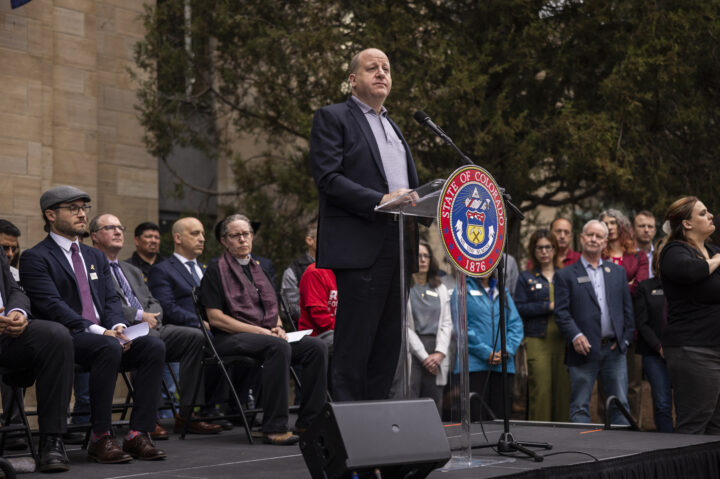
CHET STRANGE/AFP via Getty Images
Colorado Governor Jared Polis speaks during a community gathering at the site of an attack against a group people holding a vigil for kidnapped Israeli citizens in Gaza oin Boulder, Colorado on June 4, 2025.
At the start of a pivotal campaign cycle, Democratic governors will face a politically high-stakes decision this year on a new education policy that President Donald Trump signed into law last year.
One provision of Republicans’ sweeping spending package adopted in 2025 — dubbed the “One Big Beautiful Bill” by Trump — was a measure that provides a dollar-for-dollar federal tax credit for people who donate to approved scholarship organizations that can support a range of education expenses, including private school tuition and tutoring.
Individual states must opt in for taxpayers to be eligible for the credit of up to $1,700 annually.
So far, the policy has been a no-brainer for Republican governors, who already support school choice programs, to allow parents to receive a federal tax credit to support private schools, including religious schools. Twenty-three states have formally opted in as of last month, and at least two other Republican-led states (Florida and Utah) said they plan to do so.
Democratic governors, skeptical of school choice programs and wary of powerful teachers’ unions, face a trickier choice. They have to opt in by the end of the year for taxpayers to be eligible for the credit. The National Education Association urged lawmakers to vote against the bill last year, and has said that “voucher-inspired schemes” like the federal tax credit program “erode public education, the foundation of our democracy.” (An NEA spokesperson declined to comment on Wednesday.)
Orthodox Jewish groups have long supported school choice efforts, including vouchers, while most non-Orthodox groups — including umbrella organizations such as the Jewish federations — sat out those matters in the past or opposed them. Now, Orthodox leaders are being joined by the Jewish Federations of North America as the umbrella group urges Democratic governors to support the bill. The Union for Reform Judaism, which opposed an earlier version of the tax credit that was farther-reaching, ultimately did not come out against the measure.
“We think this should be a priority for the entire Jewish community, to support students, especially in Jewish day schools,” said Rabbi A.D. Motzen, national director of government affairs at Agudath Israel, a major Orthodox organization. “I think it’s very helpful, because in many of those blue states, the more governors see that this is a politically wise idea, and that there is widespread support among different faiths, whether it’s Catholic clergy or Jewish leaders and business leaders, then it will make it easier for them to to opt in.”
Marc Baker, CEO of Combined Jewish Philanthropies, Boston’s Jewish federation, said the tax credit “aligns with CJP’s vision to make day school more affordable and accessible for families in Greater Boston,” and that he plans to discuss it with Massachusetts Gov. Maura Healey, a Democrat.
Part of the pitch that Gil Preuss, CEO of the Jewish Federation of Greater Washington, is making to Democratic leaders in Maryland, Virginia and Washington, is to differentiate the tax credit from more controversial voucher programs.
“I know, particularly for Democratic governors, they place significant value in public education, and we as a Jewish community strongly support public education,” said Preuss. “We don’t believe it’s taking away money from public education, but it is a way for individual households to direct some of their federal taxes.”
Colorado Gov. Jared Polis is so far the Democrat who has expressed the most enthusiasm about the tax-credit scholarship program.
“It supports donors to give more money to our schools,” Polis said in November. “I mean, I would be crazy not to” opt in. A spokesperson for Polis confirmed in December that he plans to add the state to the program.
North Carolina Gov. Josh Stein, a Democrat, has also said he intends to opt in his state once more information is released from the federal government. “School choice is good for students and parents,” Stein said last year. “I intend to opt North Carolina in so we can invest in the public school students most in need of after school programs, tutoring, and other resources.”
A handful of blue-state governors — in Wisconsin, Oregon, New Mexico and Hawaii — have stated they will opt out of the program.
Most Democratic governors, including in states with the largest Jewish communities, are taking a wait-and-see approach, saying they need to see formal regulations from the IRS and the Treasury Department outlining what the funds can be used for and how they can be collected. Activists in the Jewish community working on this issue say they are still in conversation with Democratic governors even though the timeline for implementation is not totally clear.
“The governors that we speak to on a regular basis about this are very clear that they want to see the regulations first, which we don’t hold against them. We think that’s fair. You don’t want to play a game until you see the rules of the game,” said Sydney Altfield, CEO of Teach Coalition, a project of the Orthodox Union that advocates for federal funding for nonpublic schools. “We think that in the long run, it will be a positive outcome, but we understand that there’s no movement yet.”
Rosie Lapowsky, a spokesperson for Pennsylvania Gov. Josh Shapiro, said his administration “is awaiting federal guidance to address key questions about how this program would work, including which students will be eligible, how this federal initiative will interact with existing programs, and more. We look forward to reviewing that guidance.”
A spokesperson for Maryland Gov. Wes Moore said he has not yet taken a position. Alana Davidson, director of communications at the Massachusetts Executive Office of Education, told JI that Gov. Healey “is awaiting official guidance from the U.S. Department of Education and Treasury at this time.”
Jen Goodman, a spokesperson for Gov. Kathy Hochul of New York, took a swipe at the Trump administration while saying Hochul has not yet made up her mind.
“While this proposal doesn’t take effect until 2027, it’s surprising that the federal government continues to fail to share any policy details with states,” Goodman told JI. “Gov. Hochul is supportive of anything that would help students and schools, but given this administration’s record of including poison pills in policies, the state needs to thoroughly review the proposal before making commitments.”
Spokespeople for Illinois Gov. JB Pritzker, California Gov. Gavin Newsom, New Jersey Gov. Mikie Sherrill, Washington, D.C., Mayor Muriel Bowser and Virginia Gov. Abigail Spanberger did not respond to requests for comment.
Spanberger is in a different position from other Democrats, because her predecessor — Republican Gov. Glenn Youngkin — already opted Virginia in last month before he left office, so she would have to formally revoke that permission.
Preuss said his goal at the moment is not necessarily to get area governors in the Washington area to a yes anytime soon, with IRS regulations not likely to come out for a few more months. He just wants to convince them to leave the door open.
“It’s very early on,” Preuss said. “We mostly want to make sure that governors do not come out against it.”
Please log in if you already have a subscription, or subscribe to access the latest updates.
 Continue with Google

 Continue with Apple