




























Jewish and pro-Israel groups seem at pains to clarify how they are now assessing an issue that has long been key to their advocacy — particularly as the conversation around funding and the possibility for a new MOU has rapidly evolved in recent months
Joe Raedle/Getty Images
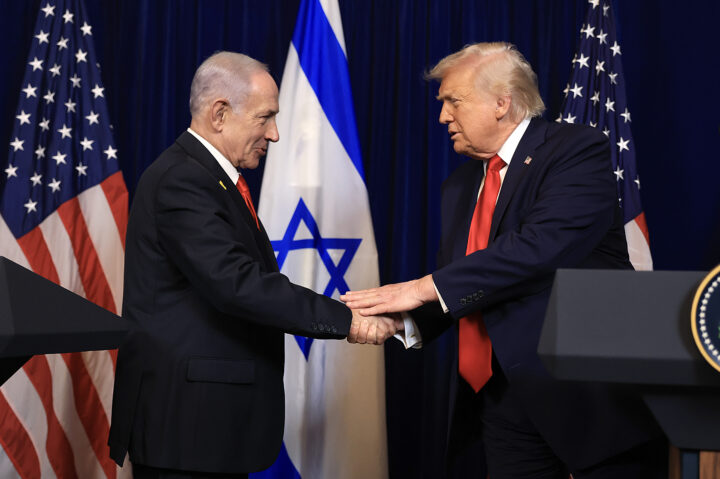
President Donald Trump shakes hands with Israeli Prime Minister Benjamin Netanyahu during a press conference at his Mar-a-Lago club on December 29, 2025 in Palm Beach, Florida.


 Add JewishInsider on Google
Late last month, AIPAC circulated what seemed at first glance like a relatively anodyne memo stressing its support for the current 10-year memorandum of understanding between the United States and Israel, which guarantees $3.8 billion in annual military aid and missile-defense funding to Israel through 2028.
“Congress must fulfill America’s commitment by providing full security assistance and missile defense funding to Israel for the remainder of the MOU,” the group wrote in its missive published on April 28.
The memo was notable, however, for what it left out: calling to negotiate a follow-up MOU — the future of which has been a topic of ongoing speculation among analysts and lawmakers beginning to think about the contours of a potential new agreement in a changing political landscape.
That AIPAC had only urged the implementation of the final two years of the current deal was in many ways a tacit acknowledgement of shifting attitudes against U.S. military aid even among supporters of Israel.
The omission, intentional or not, was otherwise reflective of uncertainty around an agreement that has drawn scrutiny not only among Israel critics on the far left and right but also moderate defenders of Israel in both parties who are openly questioning the necessity of U.S. military assistance to a longstanding Middle East ally.
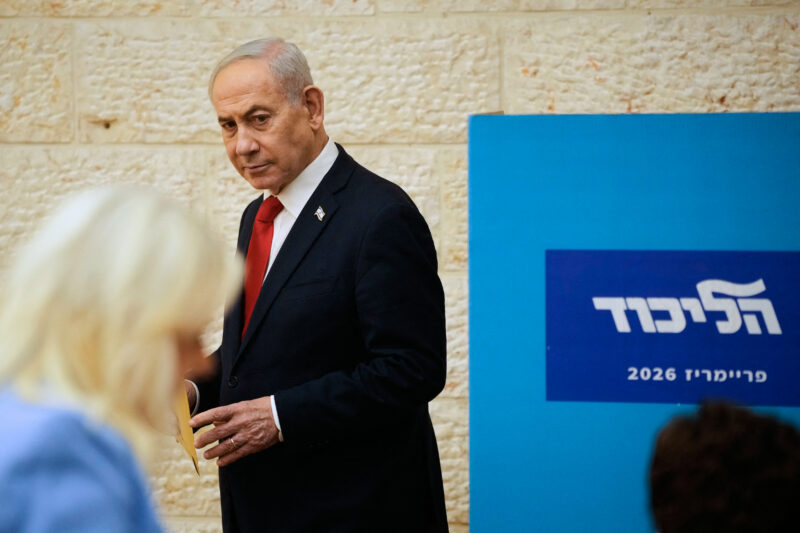
Meanwhile, Israeli Prime Minister Benjamin Netanyahu has called for winding down U.S. financial aid over the next decade, saying that the Jewish state has “come of age” and matured economically to continue on its own. In an interview with CBS’ “60 Minutes” earlier this month, he confirmed that he wanted to immediately begin the process of weaning Israel off of U.S. aid, noting the future of the U.S.-Israel alliance should be focused on joint projects equally funded by Israel and the United States.
“Each U.S.-Israel MOU to date — negotiated by Presidents Clinton, Bush and Obama — has laid the framework for the decade ahead, strengthening an alliance that advances American interests, supports a strong and capable ally in an unstable region, and drives a remarkable ecosystem of joint development and cooperation between two reliable allies,” Deryn Sousa, a spokesperson for AIPAC, told Jewish Insider in a recent statement.
Some pro-Israel Republican lawmakers — including Sens. Lindsey Graham (R-SC), John Thune (R-SD), the Senate majority leader, and Roger Wicker (R-MS) — have welcomed the idea, even as the GOP has long touted its staunch support for such funding. Rahm Emanuel, the former Chicago mayor and Democratic presidential prospect who holds close personal ties to Israel, has advocated for immediately ending military aid to Israel, arguing it is not worth expending the “political capital” to promote spending that is facing mounting opposition in Congress and among voters.
But Jewish and pro-Israel groups seem at pains to clarify how they are now assessing an issue that has long been key to their advocacy — particularly as the conversation around such funding and the possibility for a new MOU, which remains an open question, has rapidly evolved in recent months.
“Each U.S.-Israel MOU to date — negotiated by Presidents Clinton, Bush and Obama — has laid the framework for the decade ahead, strengthening an alliance that advances American interests, supports a strong and capable ally in an unstable region, and drives a remarkable ecosystem of joint development and cooperation between two reliable allies,” Deryn Sousa, a spokesperson for AIPAC, told Jewish Insider in a recent statement.
She added, “We appreciate the Trump administration working closely with the Israeli government toward a new agreement that will strengthen and define the mutually beneficial partnership in the years ahead.”
“We’re figuring it out ourselves,” said Michael Makovsky, the president and CEO of the Jewish Institute for National Security of America, adding that he believed Israel “made a mistake” in choosing to forgo U.S. financial aid. He suggested that the U.S. sign “one more” MOU with Israel to cover the next 10 years and help Israel replenish its munitions stocks amid the war against Iran, which he believes is key to advancing American interests in the region. “It zeroes down at the very end,” he explained to JI.
In lieu of an agreement, Makovsky floated “non-monetary” alternatives, for instance, a U.S.-Israel mutual defense treaty — though he questioned whether such a pact could gain enough support in the Senate, where most Democrats recently voted in favor of resolutions to block arms sales to Israel.
Former U.S. and Israeli officials have also recently called for building closer technological ties between the two countries, in anticipation of an era in which financial aid is not a defining feature of the alliance.
“The model in which Israel is assisted by the United States and receives aid has a very small chance of continuing under any future administration,” former IDF intelligence chief Amos Yadlin said this month while promoting a new strategic technology alliance with Tom Nides, a former U.S. ambassador to Israel. “And perhaps even under the Trump administration, so we need to find a new basis for the relationship that is a transition from aid to partnership.”
Even as analysts had indicated last year that the U.S. should begin considering what the next MOU entails, it is unclear if the process is now seriously underway, as Netanyahu’s remarks have complicated the effort. One Hill staffer to a pro-Israel House member told JI he had no knowledge of discussions at the moment.
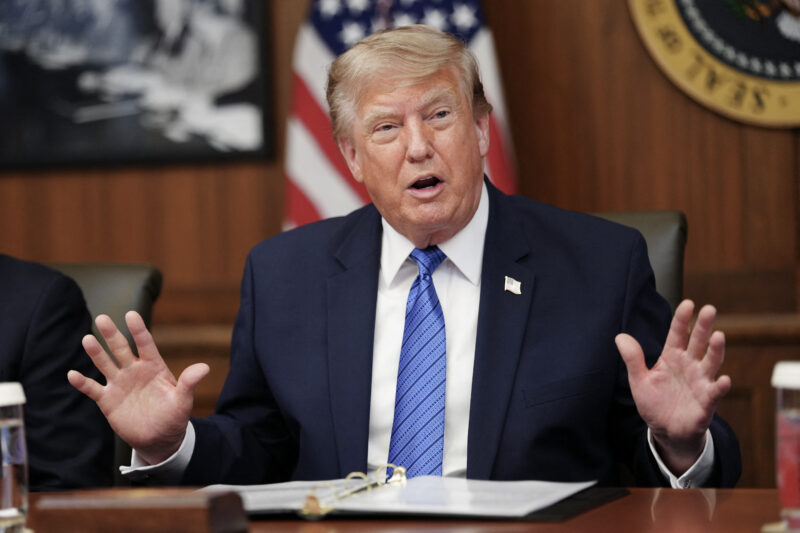
President Donald Trump was initially surprised when Netanyahu first proposed winding down U.S. funding late last year and did not immediately lend support to the move, JI has previously reported.
A White House spokesperson declined to comment on the prospects for a future MOU, the framework for which first went into effect in 1998 during the Clinton administration. The current agreement was finalized in 2016 near the end of the Obama administration — which touted the deal as “the largest single pledge of military assistance in U.S. history” at the time.
Tal Naim, a spokesperson for the Israeli Embassy in Washington, referred JI to Netanyahu’s comments to “60 Minutes” this month.
Looking ahead, Brian Romick, the president of Democratic Majority for Israel, said “there can and should be a discussion about how the U.S.-Israeli security relationship should change with the times, how our partnership must evolve as Israel’s own capabilities grow and its security needs change, and how we can align on a long-term vision for the region.”
“While a new MOU should reflect that Israel’s economy has grown, it should also recognize that Israel’s defense requirements have too, and Israel may struggle to fill the gap in its defense budget that the loss of FMF would create,” Justin Leopold-Cohen, a senior research analyst at the Foundation for Defense of Democracies’ Center on Military and Political Power who specializes in U.S.-Israel security cooperation, said.
But, he added, “that debate must bring a serious analysis grounded in prioritizing America’s interests and Israel’s security. It cannot shift with political changes or in the middle of a war, especially when American troops are actively deployed in the region. Ultimately this will be a negotiated agreement between two democratically elected governments.”
A spokesperson for the American Jewish Committee likewise used broad strokes to discuss a future MOU, saying it is “far more than a financial commitment.”
The agreement “is a cornerstone of a broader strategic relationship that advances both U.S. and Israeli national security interests, strengthens deterrence against shared adversaries, and reinforces America’s commitment to the security of its closest ally in the Middle East,” the spokesperson told JI. “At a time of growing regional volatility and evolving security threats, maintaining strong and sustained U.S.-Israel security cooperation remains critically important.”
Justin Leopold-Cohen, a senior research analyst at the Foundation for Defense of Democracies’ Center on Military and Political Power who specializes in U.S.-Israel security cooperation, said that “there will likely be a new, heavily modified MOU following the current agreement’s expiration.”
Netanyahu, he told JI, “already revealed his desire to phase out American military aid, granted primarily as Foreign Military Financing,” which typically must be used to purchase U.S. defense products and services.
“While a new MOU should reflect that Israel’s economy has grown, it should also recognize that Israel’s defense requirements have too, and Israel may struggle to fill the gap in its defense budget that the loss of FMF would create,” Leopold-Cohen said.
Dan Shapiro, a U.S. ambassador to Israel in the Obama administration who served as a top defense official in the Biden administration, speculated that “the next MOU — if there is an MOU — will look very different from the current one.”
“It will likely phase out FMF, which both Prime Minister Netanyahu and Americans from the left and right are calling for,” Shapiro added. “It will likely emphasize joint research and development, sharing technological advances, and expanded co-production to answer President Trump’s question of what’s in it for the United States. To garner bipartisan support, it should include a consultative mechanism to ensure U.S. weapons are only used in ways consistent with American laws and values and that minimize civilian casualties.”
Daniel Silverberg, a former top foreign policy advisor to Rep. Steny Hoyer (D-MD), characterized the MOU as “mutually beneficial,” saying that “it does not need to be exclusively assistance-based.”
“There are many ways to expand cooperation that involve more than giving aid,” he said. “The MOU is a key framework to do so, and it’s crucial to spell that out for a skeptical U.S. audience.”
But, he emphasized to JI, “We can’t want the MOU more than the Israelis want it.”
The group, organized by the ADL, urged lawmakers to increase NSGP funding and pass the Pray Safe Act and a new bill establishing buffer zones around houses of worship
Sen. Elissa Slotkin/X
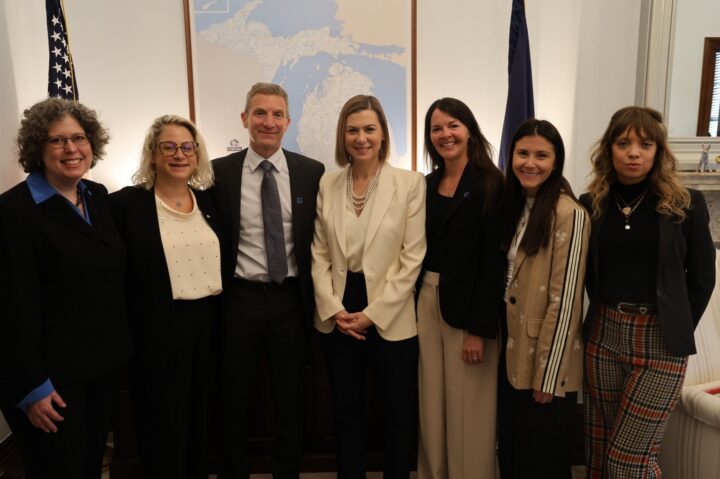
Sen. Elissa Slotkin (D-MI) meets with Jewish communal activists on April 22, 2026.
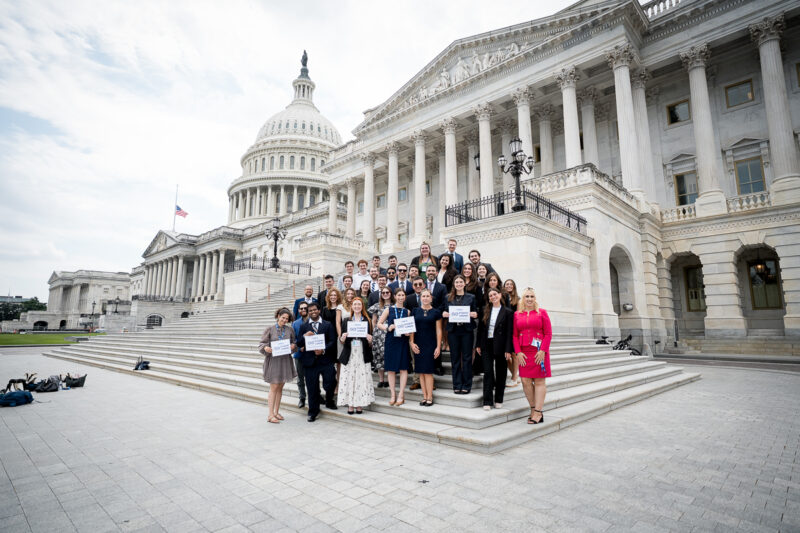
Jewish leaders from communities impacted by antisemitic violence in the past year met with House and Senate leaders on Capitol Hill on Wednesday to advocate for additional federal security assistance. The advocates represented Temple Israel in West Bloomfield, Mich., Beth Israel Congregation in Jackson, Miss., a hostage awareness march in Boulder, Colo. and, the Capital Jewish Museum in Washington.
“I will never forget the phone call. Or the images on the news of smoke rising from the place where I had just left my child,” Taylor Weintraub, a parent of a child who attended Temple Israel, told reporters on Wednesday morning. “Thank God, none of the children were physically hurt. But that wasn’t luck, that was preparation — reinforced doors, trained security, investments made because we knew this could happen. But here’s what keeps me up at night: we are the lucky ones.”
Among other priorities, the group, organized by the Anti-Defamation League, lobbied lawmakers for an increase to $1 billion in Nonprofit Security Grant Program funding in 2027, with Weintraub making the case that the program is “literally saving lives” — at Temple Israel, NSGP funding helped upgrade the synagogue’s cameras.
“Without these resources, more parents will get that phone call saying a terrorist is inside their child’s school,” Weintraub continued. “And no one should have to live through that.”
Cassi Cohen, the director of development at Temple Israel, said that, as a survivor of the attack, she is “living proof that these pieces of legislation work. … If I can be a voice to help ensure that other houses of worship have the ability to get the resources and the funding to prevent something as catastrophic as what we went through, then I’ll do this every day, because I don’t think there’s anything more important right now.”
Elyssa Schmier, a member of Temple Israel and the ADL’s regional director in Michigan, said that Jewish institutions across the state are undertaking reviews of their security and making upgrades — in some cases without the funding to pay for it.
Schmier’s son’s Jewish preschool is expanding its armed guard’s hours to full time — he previously worked part time because the school did not have enough money to pay for more — “and they’re not really sure how they’re paying for it. They’re just doing it.”
Smaller communities farther outside urban areas are especially vulnerable, she added.
Susan Rona, ADL’s Mountain States regional director, said that security has been critical to ensuring that the community feels able to continue gathering and participating in Jewish life.
“When we built the [Jewish Community Center] building, we benefited from the Nonprofit Security Grant Program as well, and it still is present,” Rona said. “We’re almost a year out, and there’s been real impacts to Boulder and our security needs are just getting higher to make sure that we can still create a space for the community to say, ‘Yes, I want to gather in this Jewish space.’”
The group met with the offices of House Speaker Mike Johnson (R-LA), House Majority Leader Steve Scalise (R-LA), House Majority Whip Tom Emmer (R-MN), Senate Minority Leader Chuck Schumer (D-NY), House Minority Leader Hakeem Jeffries (D-NY), House Democratic Whip Katherine Clark (D-MA), Sens. James Lankford (R-OK), Jacky Rosen (D-NV), Elissa Slotkin (D-MI), Michael Bennet (D-CO), Cindy Hyde-Smith (R-MS) and Gary Peters (D-MI) and Reps. Haley Stevens (D-MI), Hilary Scholten (D-MI), Joe Neguse (D-CO) and John James (R-MI).
In addition to NSGP funding, the group advocated for the Pray Safe Act and the SACRED Act, a new bill being led by Rep. Tom Suozzi (D-NY) to create a protected 100-foot buffer zone around houses of worship, similar to legislation being pursued in New York and California.
The next U.S.-Israel memorandum of understanding will need to be secured in a political environment much more hostile to Israel than 10 years ago

GETTY IMAGES
A general view of the U.S. Capitol Building from the National Mall, in Washington, D.C., on Thursday, May 29, 2025.
In September 2016, when President Barack Obama announced that the U.S. and Israel had signed a 10-year deal pledging a total of $38 billion in military assistance to Israel, the news was generally uncontroversial and greeted with bipartisan plaudits — a striking contrast to the nasty presidential campaign playing out across the country at the time.
That deal, known as the U.S.-Israel Memorandum of Understanding, is now close to expiring, and the next one — if there is a next one — will be negotiated in an entirely different political environment. Israel remains deeply enmeshed in a nearly two-year war in Gaza, with little indication of an end in sight, making forward-looking negotiations more difficult.
A new MOU is not a given. U.S. support for Israel has dramatically declined on the left, and it is fracturing in isolationist corners of the right as well. Even some staunchly pro-Israel Republicans have grown wary of foreign aid in general, a shift that could affect U.S. policy toward Israel.
“When many of the threats that have faced Israel in the past have been largely neutralized, Israel will need to figure out how to make the case that it is in need of over half of the U.S. security assistance budget,” a former Biden administration State Department official told Jewish Insider. “They will need to demonstrate the threats that they face in order to warrant this level of funding when Hamas has been decimated, when Hezbollah is a shadow of what it once was, when Iranian air defenses are nonexistent and Israel has proven its ability to be able to infiltrate Iran.”
The conversation about the next U.S.-Israel MOU came to the fore last month, when Pete Buttigieg, the former transportation secretary and a potential 2028 Democratic presidential candidate, became the first prominent Democrat to say the U.S. should not enact another 10-year military aid deal with Israel.
No other potential Democratic presidential contenders have weighed in on the issue, though it could become a litmus test for a party whose base is steadily turning more hostile to Israel.
The current U.S.-Israel MOU, which expires in 2028, is the countries’ third. President Bill Clinton and Israeli Prime Minister Ehud Barak signed the first 10-year MOU in 1999. It was meant as a way to phase out U.S. economic aid to Israel, which Jerusalem no longer needed as an emerging economic and technological powerhouse. Another MOU was negotiated by President George W. Bush and completed in 2007.
“Ten-year MOUs have communicated an ongoing, consistent and bipartisan commitment to support Israel’s security by crossing administrations and demonstrating that it’s an ongoing relationship,” said former U.S. Ambassador to Israel Dan Shapiro. “It allows planning for big ticket acquisitions.”
The long-standing commitment allows Israel to plan to make large purchases that could take several years to acquire, such as fighter jets.
The MOU is not actually a binding agreement, it’s a framework. Congress must still approve the $3.3 billion in military financing and $500 million in missile defense laid out in the MOU each year during the annual appropriations process, and could do so even in the absence of an MOU.
“It’s simply a political commitment that Congress and the president can honor or not honor, and not having an MOU does not necessarily mean that we won’t have foreign military financing,” said Brad Bowman, an analyst at the Foundation for Defense of Democracies and former national security advisor to Sen. Todd Young (R-IN).
“But if we’ve had MOUs with Israel for so long under presidents of both parties, to not have one, I think, would really be quite a political statement about what’s going on with Israel, and would undermine the efforts of both Americans and Israelis to do necessary planning,” Bowman added.
“Both the left and the right are having deep reservations about the U.S.-Israel relationship, and that could very much have negative consequences for the MOU,” a former Biden administration State Department official said.
Congress has in the past weighed in to signal its support for the MOU. In 2016, Congress voted overwhelmingly to endorse the new MOU, with 405 members of the House voting for the measure. Just four representatives — all Republicans — voted against the bill. Only one of them, Rep. Thomas Massie (R-KY), is still in the House.
Since then, American support for Israel has shifted significantly, particularly since Israel’s response to the Oct. 7 Hamas attacks in 2023. A Quinnipiac poll released in August found that 60% of voters oppose sending more military aid to Israel for its war with Hamas, while only about one-third (32%) support it.
Meanwhile, only 13% of Democrats say their sympathies lie more with the Israelis than the Palestinians, a decline from 34% when asked the same question in November 2023. Far more Republicans side with the Israelis — 66% — but that’s down from 80% in November 2023.
“Both the left and the right are having deep reservations about the U.S.-Israel relationship, and that could very much have negative consequences for the MOU,” the former Biden State Department official said.
Congressional efforts to place conditions on American military aid to Israel have gained steam since Oct. 7.
Twenty-seven Senate Democrats voted last month on a resolution to block the shipment of certain weapons to Israel. The measure was largely symbolic and destined to fail in the Republican-led Senate. Still, even with an MOU, Congress would not be prevented from passing a bill further restricting U.S. aid to Israel.
“We continue to have an interest in ensuring that Israel can defend itself. They continue to be an important partner in the Middle East addressing many threats that threaten them, but also threaten us,” said former U.S. Ambassador to Israel Dan Shapiro. “If our relationship with Israel were to become far less supportive and far less intimately connected, we would quickly see a decline in our influence much more broadly in the region. That doesn’t mean we can’t also have critical conversations and use our leverage as a provider of assistance when we have concerns about Israeli military actions.”
That’s not considering the leeway given to the State Department, which approves arms sales. Last year, President Joe Biden held up a shipment of 2,000-pound bombs for months over concerns about Israel’s incursion into Rafah.
The Trump administration, which would be the one to negotiate and sign off on a new MOU before its expiration, has not yet indicated any reservations with the process.
Israel is by far the largest recipient of U.S. foreign military financing. The U.S. and Jordan have their own security MOU, though Jordan receives roughly a tenth of the annual military aid that Israel gets. Shapiro, the former U.S. ambassador to Israel, said the reason for the high level of support goes beyond Israel, and deep into the Middle East. He urged the U.S. to raise concerns with Israel about its conduct when issues arise, but not to cut into the aid itself.
“We continue to have an interest in ensuring that Israel can defend itself. They continue to be an important partner in the Middle East addressing many threats that threaten them, but also threaten us,” he said. “If our relationship with Israel were to become far less supportive and far less intimately connected, we would quickly see a decline in our influence much more broadly in the region. That doesn’t mean we can’t also have critical conversations and use our leverage as a provider of assistance when we have concerns about Israeli military actions.”
It would be tempting for Israel to try to increase its defense production to account for such a turbulent political environment. Israel has grown its military exports substantially in recent years and some Israeli lawmakers have indicated they’d like to phase out reliance on U.S. aid, but it would be very difficult for Israel to domestically produce everything it needs.
“The problem is that’s never going to happen,” Bowman said. “Israel, as impressive as it is, is never going to be completely self-sufficient in producing its own weapon systems. The United States is not. If we’re not, Israel never will be. Israel is a technology superpower. It’s not an industrial superpower.”
Please log in if you already have a subscription, or subscribe to access the latest updates.
 Continue with Google
 Continue with Apple