




































CEO Matt Brooks: ‘Being anti-Israel in today’s Republican Party is not ... a path to success’
RJC
Republican Jewish Coalition CEO Matt Brooks


 Add JewishInsider on Google
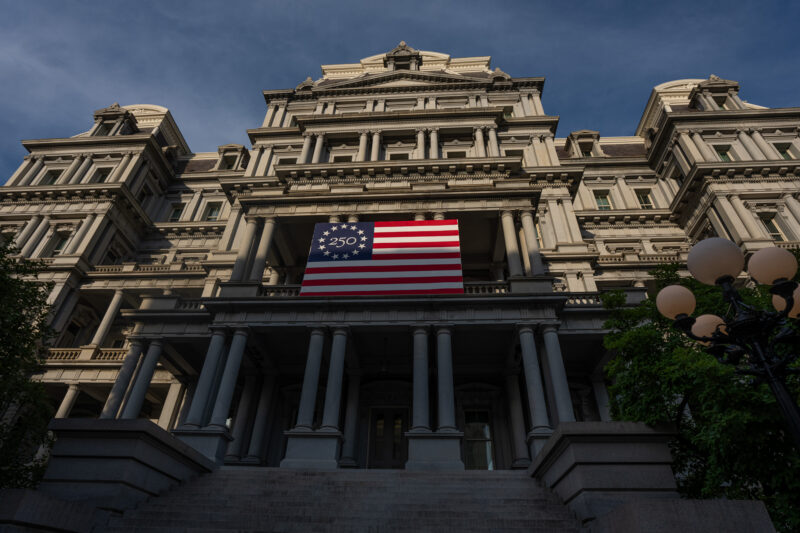
Republican Jewish Coalition CEO Matt Brooks celebrated his group’s role in ousting Rep. Thomas Massie (R-KY) in his primary election earlier this month at the organization’s sold-out “America 250” themed gala Sunday night, held at Chelsea Piers in Manhattan.
Stating that RJC spent more than $5 million to unseat Massie, Brooks told attendees to loud applause, “Let me say clearly tonight, it was a fight worth having and a victory worth celebrating.”
“When someone repeatedly undermines support for Israel, trafficks in isolationism at a moment of global danger and refuses to stand with the Jewish community when it matters most, there has to be consequences,” Brooks said.
“Being anti-Israel in today’s Republican Party is not — unlike the Democratic Party — a path to success,” said Brooks, who called defeating Massie a “critical victory” for the direction of the GOP and conservative movement. “It was a message that needed to be sent and a message that has been received,” he added.
With the midterm elections approaching, Brooks asserted that “the stakes could not be higher.”
“Today, as the Iranian threat remains front and center and antisemitism continues to rise, we are deeply grateful for [President Donald Trump’s] leadership and moral clarity,” continued Brooks.
The gala came as the Republican Party grapples with a growing faction of younger activists, internet influencers and far-right nationalists — often referred to as the “groypers” — who hold extreme antisemitic and white supremacist views. Several speakers at Sunday’s event took the opportunity to distance their party from far-right commentators Tucker Carlson and Candace Owens — as well as anti-Israel elected officials in the GOP.
“I want to thank the RJC for leading the fight, not just to elect Republicans and defeat radical, woke, antisemitic Democrats — but to hold the Republican Party to account as well and eliminate people like Thomas Massie and Marjorie Taylor Greene, to take on people like Tucker Carlson and Candace Owens, because it’s not just pushing back against the Hasan Pikers of the world,” said Rep. Mike Lawler (R-NY), referring to the far-left streamer who has been embraced by elements of the Democratic Party. “If we can’t root it out in our own party — if we can’t call it out, then we don’t have the moral standing to call out the other side.”
Knesset Speaker Amir Ohana, who was in New York City to march in the Israel Day on Fifth parade, said that his participation in the parade — the first-ever by a Knesset speaker — was a direct response to Mayor Zohran Mamdani’s decision to boycott the festivities.
“The mayor of this city is still refusing to condemn genocidal slogans that are aimed at Jews,” Ohana said. “For the first time in more than 60 years, the mayor of New York City did not attend the Israel Day parade, and it is exactly for that reason that for the first time in more than 60 years, the speaker of Knesset did,” Ohana said to cheering from guests — many sporting red “Trump” kippot.
“America’s greatest leaders understood that evil ignored becomes evil empowered. It must be confronted head-on,” said Ohana. “That is why I am so proud to stand with every one of you in this room, who have refused to surrender to antisemites who trade truth for clicks,” he continued. “On behalf of the Knesset — that represents the whole people of Israel — I want to thank you for that.”
Speakers also included Rep. Randy Fine (R-FL); Nassau County Executive Bruce Blakeman, a New York state Republican gubernatorial candidate; and former Auburn University basketball coach Bruce Pearl.
The evening concluded with a panel on antisemitism in the United Nations, featuring U.S. Ambassador to the U.N. Mike Waltz and Israeli Ambassador to the U.N. Danny Danon.
Waltz said rather than walking away from Turtle Bay, “we need to get in there and fight and win.”
“It can be done,” he said. “Just this year, we forced the U.N. to take its first budget cut in its history.”
The group is endorsing candidates Ashely Hinson in Iowa, Mike Rogers in Michigan, Kurt Alme in Montana and Michael Whatley in North Carolina

Andrew Roth/Sipa USA via AP Images
Republican Michigan Senate candidate Mike Rogers attends President Donald Trump's rally in Warren, Mich., on April 29, 2025.
The Republican Jewish Coalition announced Tuesday that it is endorsing four Republican Senate candidates for open seats: Rep. Ashley Hinson (R-IA), former Rep. Mike Rogers (R-MI), former U.S. Attorney Kurt Alme in Montana and former Republican National Committee Chair Michael Whatley in North Carolina.
The group also announced endorsements of sitting Sens. Dan Sullivan (R-AK), Ashley Moody (R-FL), Pete Ricketts (R-NE) and Jon Husted (R-OH), all of whom are up for reelection in November.
“All eight of these incumbent Senators and candidates exemplify what it means to be a true conservative fighter for the American people,” RJC CEO Matt Brooks and National Chairman Norm Coleman said in a statement. “Each has stood firmly against the rising tide of antisemitism, in support of the US-Israel alliance, and for our shared values. The Republican Jewish Coalition knows that these leaders will deliver on the issues of primary concern to the American Jewish community, and we are proud to endorse them.”
The two said that the “frontlines” of the fight to keep the Senate in Republican hands “are in these eight key states” — highlighting the expanding battleground in this November’s Senate contests.
The RJC, in a statement, particularly highlighted Whatley’s work to support Israel and the Jewish community following the Oct. 7, 2023, attacks on Israel, describing him as “outspoken in his support for our greatest ally [who] forcefully condemned Hamas terrorism, and reaffirmed the Republican Party’s unwavering backing of Israel’s right to defend itself.”
RJC was a key backer of Rogers in the 2024 Senate race, and is expected to be strongly involved again in the Michigan race.
The Texas senator called Tucker Carlson ‘the single most dangerous demagogue in this country’
Republican Jewish Coalition
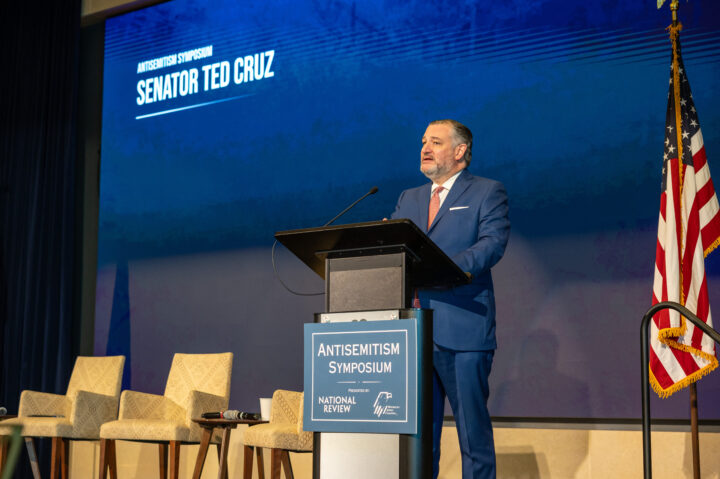
Sen. Ted Cruz (R-TX) speaks at antisemitism symposium in Washington on March 10, 2026.
Antisemitism is rising on the American right, Sen. Ted Cruz (R-TX) warned on Tuesday, expressing concern that efforts to combat it are not doing so quickly or effectively enough.
“I want us to be winning, but I’m not sure it is accurate as a descriptive manner that we are winning right now,” Cruz said at an antisemitism symposium in Washington organized by the Republican Jewish Coalition and the National Review.
Cruz has emerged in recent months as one of the Republican Party’s most vocal critics of right-wing antisemitism. He has targeted influential commentator Tucker Carlson and his strain of isolationist, anti-Israel politics that has in recent months crossed over into overt antisemitism, though Cruz has bemoaned other Republicans’ wariness to criticize Carlson by name.
At the RJC event, Cruz called Carlson “the single most dangerous demagogue in this country.”
But he said that not enough of his colleagues and allies on the right are aware of the extent of the problem.
“I don’t want to wake up in five years and find myself in a country where both major political parties are unambiguously anti-Israel and unapologetically antisemitic, and I think that is a real possibility. If Tucker and his minions prevail, that will happen,” Cruz argued.
Cruz expressed fear that this attitude is not just present but popular among young people on the right, as evidenced by two viral Turning Point USA events last fall where students at Auburn and Ole Miss cheered after deeply anti-Israel questions were asked.
“I worry about the 19-year-olds who say, ‘Oh, that’s what our team believes. That’s who we are.’ Let’s be clear, if you are a young, ambitious Democrat, it is obvious what you should do. You should be viciously anti-Israel,” said Cruz.
He applauded the people who came out to the Museum of the Bible on Tuesday to discuss antisemitism but pointed out that their concern does not reflect how the rest of the country thinks about the issue.
“The fact that this room is persuaded does not mean that the college campus is. It does not mean that the Capitol Hill interns are. It does not mean that the interns at Heritage, at [Conservative Partnership Institute] and every other conservative institution in this country, that they’re persuaded,” said Cruz. “We need to fight and engage it and take on the core premises, because if we lose the next generation, we lose the country.”
Cruz posited that Carlson and other anti-Israel influencers are being paid by foreign nations like Qatar, China and Russia, though he acknowledged that he lacks proof for that theory.
“I don’t believe all of these voices who have suddenly discovered that Israel is the source of all evil, that everything bad in the world was done by the Jews, that America is controlled by the Jews and that radical Islamic terrorists are really nice, wonderful people — I don’t think these people just arrived on this view organically and magically,” said Cruz.
“I think many of these influencers are cashing a check,” he added. “The people in this room could do an enormous service by documenting that. I don’t have the evidence right now to prove it, but Occam’s razor: the simplest explanation is usually the right one.”
The invitation comes amid a sharp rise in antisemitic and anti-Israel rhetoric from the Kingdom

Anna Moneymaker/Getty Images
Saudi Arabia Defense Minister Prince Khalid bin Salman ahead of a meeting with Secretary of State Marco Rubio in the State Department Building on February 25, 2025 in Washington, DC.
Jewish and pro-Israel organizations were invited to a meeting with the Saudi defense minister in Washington on Friday afternoon, four sources familiar with the invitation confirmed to Jewish Insider.
Invited groups included the American Jewish Committee, Anti-Defamation League, Conference of Presidents of Major American Jewish Organizations and Republican Jewish Coalition, though as of Thursday morning it was not clear which invitees would be accepting the invitation.
Foundation for Defense of Democracies is meeting with the defense minister in a separate sit-down Friday morning, FDD CEO Mark Dubowitz confirmed to JI.
Saudi Defense Minister Khalid bin Salman, the brother of Crown Prince Mohammed bin Salman, is in Washington holding meetings with U.S. officials including Secretary of State Marco Rubio and White House Special Envoy Steve Witkoff on Thursday and Friday.
The invitation comes as some Jewish organizations have expressed concerns about the recent rise in antisemitic and Islamist rhetoric out of Saudi Arabia, but they’ve been relatively cautious in their language as they seek to maintain their support for the long-sought but elusive goal of bringing Riyadh into the Abraham Accords.
“This meeting will be complete window dressing,” one Middle East analyst familiar with the invitation and with the larger Saudi pivot in the region told JI. “The Saudis may try and rationalize their way out of their new alignment with Pakistan, Qatar and Turkey and say everything is fine with the UAE when evidence says otherwise.”
“They may also want to send a message to Jewish organizations with absolute clarity that they will not be joining the Abraham Accords until there’s a Palestinian state, especially ahead of a rumored visit by [Israeli Prime Minister Benjamin] Netanyahu to Washington in the next 30 days,” the analyst added.
“If these Jewish organizations do attend the meeting, they should give a stern message to Saudi leadership that their new strategic alliances and promoting antisemitism and being destructive in the region regarding Israel are not helpful.”
Even as multiple speakers at the three-day summit alluded to antisemitism in their ranks, many talked in broad strokes

(AP Photo/Thomas Beaumont)
Attendees watch a recorded video address by President Donald Trump during the Republican Jewish Coalition's annual summit at the Venetian Resort in Las Vegas, Saturday, Nov. 1, 2025.
LAS VEGAS — Until last week, the Republican Jewish Coalition’s annual leadership summit was expected to be a triumphant gathering to celebrate President Donald Trump’s accomplishments in the Middle East, chief among them his administration’s recently brokered ceasefire deal between Israel and Hamas.
That all changed after Tucker Carlson hosted the neo-Nazi influencer Nick Fuentes on his podcast for a sympathetic interview, provoking fierce backlash. By the time that Kevin Roberts, the president of the Heritage Foundation, came to Carlson’s defense on Thursday, the RJC recognized its conference would require a thematic update to more forcefully emphasize the urgency of confronting rising antisemitism — and its enablers — within the GOP.
“If there was ever a time for the RJC, this is our time,” Norm Coleman, the organization’s national chairman, said in opening remarks on Friday. “We have been called to this moment to fight the scourge of antisemitism.”
But even as multiple speakers at the three-day summit held at the Venetian Resort — including congressional leaders, conservative activists and media personalities — alluded to antisemitism in their ranks, many talked in broad strokes, didn’t mention Carlson by name or downplayed the issue as confined to the fringes, despite Carlson and Fuentes each commanding a significant number of dedicated followers on the far right.
The speakers also argued that anti-Jewish hatred had become an endemic problem for Democrats — especially in the wake of Hamas’ Oct. 7, 2023, terror attacks. And in a preview of GOP messaging ahead of the midterms next year, many took aim at Zohran Mamdani, the far-left Democratic nominee for New York City mayor and fierce critic of Israel favored to win the election on Tuesday.
Rep. Byron Donalds (R-FL), who is now running for governor of Florida, relied on euphemism to refer to right-wing antisemitism, declaring that the GOP would “not stand idly by” as “some in other parts of politics try to demonize Jewish Americans” and “try to weaken or destroy the relationship between the United States of America and the nation of Israel.”
“I will always call out and confront antisemitism wherever it is and whoever spreads it,” Rep. Lisa McClain (R-MI), the House Republican conference chair, said on Saturday, but shared no examples of such prejudice in her own party.
Some, including Sens. Ted Cruz (R-TX), Dave McCormick (R-PA) and Lindsey Graham (R-SC), more forcefully addressed growing antisemitism on their side of the aisle.
In an interview with Jewish Insider shortly before he took the stage on Friday, Graham described Carlson’s interview with Fuentes as a “wake-up call” for the Republican Party. “How many times does he have to play footsie with this antisemitic view of the Jewish people and Israel until you figure out that’s what he believes?” Graham said of the former Fox News host.
But in his speech later, the South Carolina senator adopted a more sanguine attitude, speaking more like a stand-up comedian as he sought to lighten the mood. “I just want to make it really clear: I’m in the ‘Hitler sucks’ wing of the Republican Party,” he said to applause. “What is this Hitler shit?”
“I feel good about the Republican Party,” he added, saying the GOP “has figured it out when it comes to Israel.”
Cruz also criticized Republicans who refuse to disavow right-wing antisemites in the conservative coalition, though he ultimately didn’t mention any of the offending individuals by name in his RJC speech.
McCormick, in his fireside chat with conservative author Douglas Murray, directly confronted the lack of right-wing voices challenging virulent antisemitism. “This very week, you had an avowed antisemite, Fuentes, given a platform. This is a guy that says Hitler is cool, says Jews should be terminated…and those views went unchallenged,” McCormick said.
In his own speech at the summit, McCormick said: “Let’s face it, antisemitism is running wild on the progressive left and the leaders of the Democratic Party are not confronting it with their new star Mamdani,” McCormick said. “But I’m also sad to say we see that ugliness on the right too, and we must confront it. Jews can’t be slandered, antisemites can’t be given platforms.”
Their comments sidestepped a more deeply rooted challenge for mainstream Republicans following recent controversies in which young party leaders were caught sharing pro-Nazi messages in leaked group chats, and Paul Ingrassia, the controversial Trump ally, withdrew his nomination to lead the Office of Special Counsel after text messages were unearthed where he allegedly made antisemitic and racist remarks.
Vice President JD Vance also faced criticism from Jewish Republicans last week over his recent appearance at a conservative campus event, where he chose not to confront some students who asked questions that invoked antisemitic tropes. While some attendees at the RJC summit told JI that they had been troubled by Vance’s performance, it was not a topic of discussion on the main stage.
Taking the floor on Saturday, however, Rep. Randy Fine (R-FL), a freshman congressman from Florida who is one of four Jewish Republicans in the House, criticized those who focus only on left-wing antisemitism or just broadly talk about anti-Jewish prejudice on the right.
“It’s easy to talk about antisemitism on the left,” Fine said in his remarks. “I want to talk about the dark force rising on our side. Multiple speakers have talked about the rise of antisemitism on the right. But it is not enough to speak in platitudes or generalities about the fight. We must call evil by its name.”
He called Carlson “the most dangerous antisemite in America” and said he did not belong in Trump’s movement — a message that was amplified by a line of student attendees who stood before him holding up posters declaring “Tucker is not MAGA.”
Fine also said that he was canceling a scheduled event with the Heritage Foundation, adding that the group had “no future” in his office. “I will be calling on all of my colleagues on the Republican side to do the same,” he confirmed.
Matt Brooks, the RJC’s CEO, told JI last week that his group would be reassessing its relationship with Heritage, noting that he was “disgusted” by Roberts’ decision to stand with Carlson. The RJC has not yet further clarified how it plans to move forward with regard to Heritage.
As the summit neared its conclusion on Saturday, one RJC member, Jon Tucker of Chicago, voiced optimism that Trump, set to deliver a prerecorded message later that evening, would choose to speak out against what he termed the “ultra-right wing, isolationist” and “anti-Christian Zionist” voices in the Republican Party.
“I would hope the president comes out and has something to say about it, just like Ronald Reagan did back in the ’80s when he, famously, kicked the right wing out of the Republican Party,” he told JI, expressing concern that — in the absence of direct condemnation from the top — “we could lose” the GOP to “radicals.”
When he finally appeared on screen, Trump made no mention of antisemitism’s ascendance within the GOP, instead touting his administration’s efforts to target universities for their alleged failure to address antisemitism while listing his achievements in the Middle East, including the ceasefire deal.
He also credited the RJC with helping him to perform particularly well among Jewish voters in 2024, even as he reiterated his complaint that he should have received more support in light of his pro-Israel policies.
“I can’t imagine we didn’t do better than that after all I’ve done for the Jewish vote, I must be honest with you,” Trump said. “But that’s OK.”
This story was updated on Monday to reflect Sen. Dave McCormick’s comments regarding Nick Fuentes.
The GOP congressman said he planned to cancel a scheduled event with the Heritage Foundation next week
Tom Williams/CQ-Roll Call, Inc via Getty Images
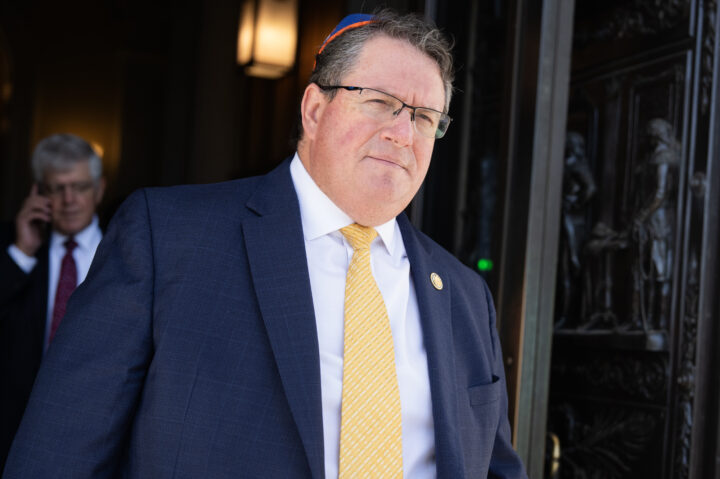
Rep. Randy Fine (R-FL) leaves the U.S. Capitol after the last votes of the week on Thursday, September 4, 2025.
LAS VEGAS — Rep. Randy Fine (R-FL) called Tucker Carlson “the most dangerous antisemite in America” in remarks on Saturday at the Republican Jewish Coalition’s annual leadership conference, in what was an unusually direct rebuke of the far-right commentator who is facing backlash over his recent friendly interview with the neo-Nazi influencer Nick Fuentes.
“He has chosen to take on the mantle of leader of a modern day Hitler Youth,” Fine, a freshman congressman from Florida who is one of four Jewish Republicans in the House, said of Carlson. “To broadcast and feature those who celebrate the Nazis, those who call for the extermination of Israel, to defend Hamas, to even criticize President Trump for stopping Iran’s nuclear ambitions.”
Fine’s remarks came as the RJC now reckons with rising antisemitism within the Republican Party in the wake of the Fuentes interview last week, where Carlson, in a podcast conversation that ran for more than two hours, failed to challenge his guest’s praise for Adolf Hitler and Holocaust denial, among other antisemitic views.
Kevin Roberts, the president of the Heritage Foundation, a leading conservative think tank, has also drawn criticism for standing by Carlson in the days after the interview, even as he has condemned Fuentes.
But while many speakers at the RJC summit have alluded to anti-Jewish prejudice on the right, few have explicitly mentioned Carlson or the Heritage Foundation in their own remarks, instead focusing largely on left-wing antisemitism.
“I can stand up here all day and take shots at the left,” Fine said in a ballroom at the Venetian Resort, standing in front of a long line of younger attendees who lined up before him with red posters declaring “Tucker is not MAGA,” a line he used in his speech.
“But I’m here for the kids down here, because it’s easy to talk about antisemitism on the left,” Fine continued. “I want to talk about the dark force rising on our side. Multiple speakers have talked about the rise of antisemitism on the right. But it is not enough to speak in platitudes or generalities about the fight. We must call evil by its name.”
The congressman said that Carlson’s “fall from grace has been one of the most extraordinary implosions in political history, and the rapidity of it has created real challenges for us all, because our friends don’t have our shared experience.”
“I can deal with this with my colleagues in the House,” he said. “See, they remember the Tucker of five years ago. They don’t live with antisemitism every day. They don’t think about it the way that we do, and it’s jarring for them to try to understand: How did this person become who he is today? But the challenge is, he’s inspired a movement of hate in our midst, and I’m not done calling people out.”
In his speech, Fine also said that he “was supposed to do an event with” the Heritage Foundation next week but had since changed his mind. “They don’t know what I’m about to tell you,” he told the crowd. “Right now we’re canceling it.”
“They have no future in my office, and I will be calling on all of my colleagues on the Republican side to do the same,” he said. “If those who support Tucker Carlson want to see a venomous coalition,” he said, referring to language from Roberts’ recent defense of Carlson, “all they need to do is go look in the mirror.”
In addition to Carlson and the Heritage Foundation, Fine turned his sights on two of his GOP colleagues, Reps. Marjorie Taylor Greene (R-GA) and Thomas Massie (R-KY), both outspoken critics of Israel who have faced accusations of using antisemitic rhetoric.
“Some days, I marvel at their stupidity, other days, at their evil,” he said. “It makes my stomach crawl that I have to sit in the same room with them.”
“Now we have to choose: Will we ignore these embarrassments to our party?” he asked in his concluding remarks. “When we pretend they don’t matter or that they don’t exist, we make the same mistakes that Democrats made so many years ago.”
“Today in this room and at this time, we speak with one loud and convincing truth,” Fine said to cheers from the audience. “We will not let our party fall to this darkness.”
‘I am appalled, offended and disgusted that [Kevin Roberts] and Heritage would stand with Tucker Carlson and Nick Fuentes,’ Republican Jewish Coalition CEO Matt Brooks told JI
Andrew Harnik/Getty Images
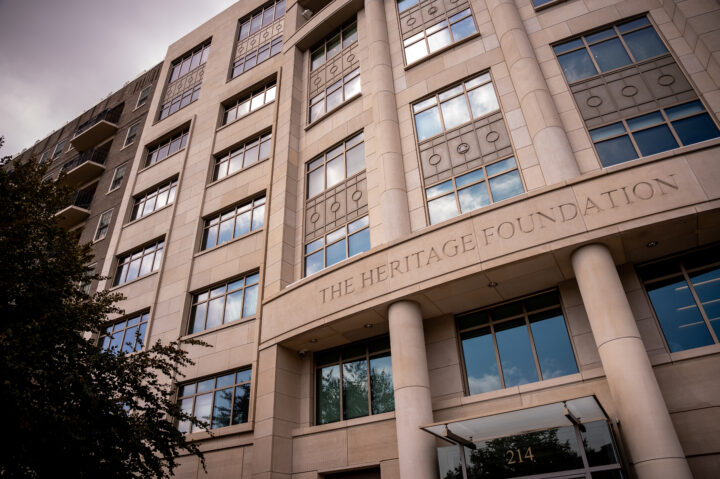
An exterior view of The Heritage Foundation building on July 30, 2024 in Washington, DC.
Conservatives, including the CEO of the Republican Jewish Coalition, condemned the Heritage Foundation and its president, Kevin Roberts, for Roberts’ defense of his “close friend” Tucker Carlson amid criticism of Carlson’s friendly interview with neo-Nazi influencer Nick Fuentes and his general antisemitic and anti-Israel turn.
Roberts also declined to fully disavow Fuentes, saying that “canceling him is not the answer.”
“Watching the statements from Kevin Roberts today, as somebody who has been involved and supportive of the Heritage Foundation since I came to Washington in 1987, I am appalled, offended and disgusted that he and Heritage would stand with Tucker Carlson and Nick Fuentes as somehow being acceptable spokespeople within the conservative movement,” Matt Brooks, the RJC CEO, told Jewish Insider.
Brooks said that Heritage’s defense of Carlson and Fuentes “is a total abrogation of their mission and what it means to be a conservative today.”
He said that RJC has worked with Heritage in various ways over the years, particularly its foreign policy team, “but obviously there’s going to be a reassessment of our relationship with Heritage in light of this.”
Brooks said that “we’ve seen Heritage moving further in this direction,” but that he believes that it is still “well outside of the mainstream of where the conservative movement in the Republican Party is.”
“They’re becoming more like Tucker Carlson and less like Ronald Reagan. Tucker Carlson represents the Barack Obama-Bernie Sanders wing of the Republican Party,” Brooks said. “I believe that there’s still a vibrant Trump-Reagan wing of the Republican Party, and Heritage continues to position itself away from that — I think to their detriment.”
Richard Goldberg, a former Trump administration official, told JI that his “heart goes out” to Heritage staff who have “worked for years tirelessly in defense of both the United States and Israel, and in the defense of both Christians and Jews, and … certainly deserve better than this.”
Their work, he continued, “is fundamentally disconnected from the video that Kevin put out,” which is “really vile” and “filled with canards and straw men in order to try to bait opponents into some sort of imagined conflict that does not exist — I think to create such conflict.”
Goldberg said that unless Roberts plans to conduct mass firings at Heritage of those working on national security and foreign policy issues and the group’s Project Esther antisemitism program to bring the organization in line with the isolationist Quincy Institute, “there is a great deal of disconnect between what he is saying and doing and what his organization is saying and doing.”
The enemies of both America and Israel, “would like nothing more than to see this kind of messaging succeed. This is very much in line with a Marxist-Islamist ideology that really only benefits China, Russia, terrorists and their sponsors,” Goldberg argued.
“I hope we don’t allow this strain to try to break what is core to American values and core to American interests, and that’s Christians and Jews sticking together, and America and Israel sticking together,” Goldberg said.
Joel Griffith, a co-chair of Young Jewish Conservatives and a former research fellow at Heritage, called for Heritage members and donors to speak out against Roberts. Griffth is currently a senior fellow at Advancing American Freedom, the think tank founded by former Vice President Mike Pence.
“As a former Heritage fellow who’s both patriotically American and proudly Jewish, I’m deeply disheartened by Kevin Roberts continued support for Tucker Carlson even as he ridicules allied Christians who believe in the right of the Jewish people to self-determination in their homeland, slanders Israel as genocidal, supports removal of citizenship for young Americans who serve in the IDF, and platforms a Holocaust denier,” Griffith told JI. “I’m hopeful that Heritage members and donors will make their voices heard. Kevin Roberts does not speak for me as a Heritage alum, nor does he represent the views of many allies of Israel who remain on staff at Heritage.”
In his video, Roberts cited comments by Vice President JD Vance at a Turning Point USA event on Wednesday that no other country should come “before the interest of American citizens.” Vance’s comments had come in response to an openly antisemitic question accusing Jews of persecuting Christians, a notion Vance did not directly dispute.
“I wish that Vice President Vance had answered the question differently,” Brooks told JI. “He should know — and if he doesn’t, I am sure there are a number of people who will make the information available to him — that the Israelis have not limited access to any of the Christian holy sites or persecuted Christians in Israel. In fact, things couldn’t be further from the truth.”
“It has been Israelis, since the founding of the State of Israel and even before, that have protected the Christian heritage sites, and have always talked about having Israel as the home to the three major religions and having freedom of access and freedom of religion throughout the country,” Brooks continued.
Goldberg said that Vance’s recent visit to Israel and his trips to Christian holy sites in Jerusalem were “outstanding” and “important for Christians … around the world.”
He urged Vance “not to be afraid to be very direct in shutting down Jew hate and antisemitic tropes when the appear when he is out on the stump or campaigning” — noting that TPUSA founder Charlie Kirk had a record of responding forcefully to antisemitism at his own public events. “I think it would honor Charlie to emulate that style as well.”
Noah Pollak, who is serving in the Trump administration as a senior advisor to the Department of Education, said on X, “I’m genuinely curious what Roberts and people promoting this line of innuendo think they are responding to. Did someone ask you not to be loyal to your faith and country? Who? Can you post a screenshot or something?”
Far-right influencer Laura Loomer, a close ally of President Donald Trump, claimed Roberts’ statement was part of a coordinated “psyop” to “kneecap Trump” before the 2026 midterms.
Rabbi Yaakov Menken, the executive vice president of the Coalition for Jewish Values — one of the few Jewish groups that had partnered with Heritage on combating antisemitism — said that “Heritage has chosen to vocally stand with an antisemite, call his Jewish critics a ‘[venomous] coalition,’ and slander organizations like CJV as if we were slandering Carlson rather than standing up for his victims. The consequences will be far-reaching indeed.”
Strategist and commentator David Reaboi said that it should be “obvious” to anyone who has watched Carlson’s show that his commentary on Israel and other issues goes beyond criticism to “grotesque lies and bad faith distortions” and likewise questioned what “globalists” are “preventing discussion about Israel, or (as you claim) attempting to bully others into supporting it.”
“Are we allowed to take Carlson’s ‘criticisms’ of Israel and its supporters seriously — I mean, as issues of fact to be debated or debunked?” Reaboi continued. “If so, I haven’t seen any evidence for it. All his lies and slander just go into the category of ‘his truth,’ like the leftists with whom he agrees on every foreign policy question.”
Jason Brodsky, the policy director of United Against Nuclear Iran, praised the work that Heritage has done on Iran, Israel and antisemitism, but said that “this video is disappointing and lacks moral clarity” given that Carlson is “obsessed with Jews and traffics in antisemitism.”
The RJC’s decision to back Colby comes even as the group has differed with the foreign policy analyst on key issues — especially Iran

Dominic Gwinn / Middle East Images /via AFP)
Elbridge Colby speaks at the National Conservative Conference in Washington D.C., Tuesday, July 9, 2024.
The Republican Jewish Coalition urged the “swift confirmation” of Elbridge Colby as undersecretary of defense for policy in the Trump administration, according to a new letter, even as he faced scrutiny from pro-Israel conservatives over his dovish views on Iran and frequent calls to scale back U.S. involvement in the broader Middle East.
In the letter, which was sent on Thursday to Sen. Roger Wicker (R-MS), the chairman of the Senate Armed Services Committee, RJC leadership said it was “confident” Colby “will enact the strong pro-Israel policy of” President Donald Trump and Secretary of Defense Pete Hegseth, arguing the nominee “will be an asset to” the administration’s national security team.
“Mr. Colby understands that a strong and secure Israel is in America’s interests as well,” RJC CEO Matt Brooks and Norm Coleman, the group’s national chairman, wrote in their letter backing Colby. “He fully supports the continued robust U.S. political, military and financial support of Israel,” they added, noting Colby has “called Israel a model ally” and “will ensure that Israel can continue to check the aggression of our common enemies in Iran and its proxies in the region.”
The letter suggested the RJC was willing to overlook major potential differences with Colby, as Trump’s allies continued to fall in line behind some of his more divisive nominees awaiting confirmation.
Colby’s possible ascendancy also underscores how a new generation of defense advisors deeply skeptical of U.S. engagement abroad is poised to shape the Trump administration’s foreign policy — overshadowing more traditionally conservative voices raising concerns about recent hires at the Pentagon.
In contrast with the RJC, Colby, a so-called defense “prioritizer,” has voiced a more sanguine assessment of Iran, which he regards as a less urgent threat to U.S. interests than China. Colby has also argued that containing a nuclear Iran “is an eminently plausible and practical objective.”
Colby, who has called the Middle East “relatively unimportant,” has supported a withdrawal of U.S. military forces in the Persian Gulf that have helped defend Israel from Iranian missile attacks, saying that the U.S. can “more efficiently” deter Iran “by bolstering the military capabilities of its partners in the region.”
“If Iran’s provocations need to be answered, Washington must do so in a way that limits military involvement in the Middle East,” he wrote in a 2019 article. “If this means doing less than we might like against Iran, so be it.”
More recently, Colby questioned the Biden administration’s efforts to counter the Houthis, the Iran-backed proxy group in Yemen that has targeted Israel and global shipping lanes. While Colby has voiced support for Israel, he has called for a “reset” on the U.S.-Israel alliance to confront Beijing.
“America should be ready to provide potent material and political support to Israel,” Colby wrote shortly before the Hamas Oct. 7, 2023, attacks. “But at the same time, Israel should understand that the United States, which cannot afford to be enmeshed in another Middle Eastern war, will take a supporting role.”
He has otherwise opposed U.S. military assistance to Ukraine amid its war with Russia, which he has dismissed as a “peripheral conflict” with respect to U.S. national security interests. For its part, the RJC has urged Congress to back aid to Ukraine, saying “it is in America’s national interest to see Russia’s military might diminished and its malign strategic aims thwarted.”
Colby, whose confirmation hearing has not yet been scheduled, served in the first Trump administration as a deputy assistant secretary of defense and more recently worked at WestExec Advisors, a consulting firm co-founded by former Secretary of State Tony Blinken. Colby is an ally of Tucker Carlson, who has also pushed his inclusion in the Trump administration.
Sam Markstein, a spokesperson for RJC, said that “the letter in support of Mr. Colby came about as a result of extensive conversations with” Brooks and Coleman, “as we do with a wide range of various appointees and nominees for key administration positions.”
“After the conversation, in which we asked a wide range of questions and drilled down on his views, his commitment to support for Israel is clear,” Markstein told Jewish Insider on Sunday, “and as we said in the letter, Mr. Colby ‘will be an asset to President Trump’s solidly pro-Israel national security team.’”
Robert O’Brien, a former national security advisor in the first Trump administration, said he believed Colby’s foreign policy approach has “in some ways” been “mischaracterized,” calling Colby a “hawk when it comes to Israel and the Middle East.”
“I think Bridge’s concern is that the United States can only do so much,” O’Brien explained in a recent interview with JI.
Colby did not respond to a request for comment on Sunday.
In addition to Colby, some other Pentagon picks have also recently drawn backlash from pro-Israel Republicans, including Michael DiMino, the newly appointed deputy assistant secretary of defense for the Middle East, who has called for a reduced U.S. presence in the Middle East and said the U.S. does not have any critical interests in the region.
Dan Caldwell, a Pentagon advisor who helped lead the transition process at the Defense Department, has likewise advocated for a more restrained foreign policy that would have the U.S. “significantly” pull back its long-standing focus on the Middle East and regional adversaries such as Iran, while expressing a largely skeptical attitude toward Israel, among other views espoused by a growing isolationist wing of the GOP.
As Colby awaits Senate confirmation, his position is currently being held by a protégé, Alex Velez-Green, who most recently worked as a senior policy advisor at the Heritage Foundation.
One Republican foreign policy expert who served in the first Trump administration recently speculated to JI that Colby’s confirmation will be “a real tough one” — though the RJC’s recent letter could serve as a valuable stamp of approval amid broader skepticism from the pro-Israel community.
Eric Levine, a top GOP fundraiser and RJC board member who has vocally opposed the confirmation of Tulsi Gabbard, Trump’s pick to serve as the director of national intelligence, expressed comfort with Colby in an email to JI on Friday. “I’m with RJC,” he said.
Todd McMurtry is aiming to unseat Rep. Thomas Massie (R-KY), who regularly votes against his own party

Courtesy
Todd McMurtry and his wife, Cari.
Todd McMurtry is a seasoned trial attorney who first received national exposure after representing a student filmed in a confrontation with protesters after last year’s March for Life in Washington, D.C. The lawsuit, filed against media organizations for their coverage of the incident, drew national headlines. But it was President Donald Trump’s tweets on Friday against libertarian Rep. Thomas Massie (R-KY) that put the spotlight on McMurtry, who is challenging the four-term incumbent for his seat in Congress.
Details: McMurtry, who launched his campaign in January, is challenging Massie in the June 23 Republican primary for Kentucky’s 4th congressional district. In 2018, Massie won re-election with 62% of the vote.
Background: McMurtry, 57, grew up in Covington, Kentucky. After graduating from Covington Latin School and Centre College in Danville, Kentucky, he studied law at Salmon P. Chase College of Law, affiliated with Northern Kentucky University. He now works as an attorney focusing on mediating commercial disputes. In 2019, after 28 years of practicing law, McMurtry was selected among the top 50 Kentucky super lawyers. He also spent several years in Washington D.C. as a fundraiser for the Republican National Committee.
Stepping up: In a phone interview with Jewish Insider on Sunday, McMurtry said he was in Dallas, Texas, last fall visiting his daughter and grandchildren when the entire family caught a cold. “So I spent too much time on social media and I saw things that Thomas Massie had posted that were, I thought, pretty upsetting,” he recounted. “I followed him for a long time and saw his questionable votes. And I said we’ve really had enough of this guy and his crazy votes — we have to do something about it. I posted something on Facebook and people started to contact me to run for office. So I did some inquiries and polling and all that stuff and decided that we had a shot and I was going to try it.”
Massie’s move: It was Massie’s push last Thursday for a recorded vote — a move that forced a number of lawmakers to return to Washington amid the coronavirus crisis — that upended the course of McMurtry’s campaign. “[Massie] seems to be generally an attention seeker on libertarian issues, and so we weren’t surprised to learn that he planned another stunt,” McMurtry noted. “But to be honest, the way he self-destructed was surprising I think to everyone. It doesn’t seem to have any logic or reason other than just a pure adherence to libertarian principles, which are not the principles of the 4h district in Kentucky.”
Trump factor: McMurtry told JI that Massie’s recent actions will push away the president’s supporters, estimating that Republicans in the district “are over 90% pro-President Trump. They don’t like to see what [Massie] did. And I think he shot himself in the foot.” As for Trump, “of course, we would welcome his endorsement,” McMurtry said. In an attempt to get the president’s ear when he visited his Mar-a-Lago resort last month, Massie ran a TV ad airing on Fox News in South Florida branding McMurtry a “Trump hater.”
RJC boost: The Republican Jewish Coalition announced on Friday that it is backing McMurtry and will actively fundraise for his campaign, describing Massie as “the only anti-Israel member of the House GOP caucus.” This marks the first time the RJC is supporting a primary challenger to an incumbent. In January, the group’s executive director, Matt Brooks, told Jewish Insider that the RJC will not support Massie — along with three other Republican House members — after they voted against the bipartisan Never Again Education Act, legislation to authorize new funding to help schools teach students about the Holocaust and antisemitism. McMurtry told JI he was “thrilled” and feels “very honored” to get the RJC endorsement, “and we intend to make that endorsement pay off for the RJC by winning this race.”
Massie stands alone on Israel: Massie was the only Republican to vote “no” on a House resolution (H.R. 246) last year condemning the Boycott, Divestment and Sanctions (BDS) movement. In 2014, he was the only member of Congress from either party to oppose the U.S.-Israel Strategic Partnership Act. Later that year, Massie voted against sending emergency aid to Israel to boost the Iron Dome program during Operation Protective Edge in Gaza. In 2016, Massie was again the only House member to oppose extending sanctions against Iran and was the only lawmaker to vote “present” on the 2015 Iran nuclear deal.
McMurtry’s case: The Republican candidate stressed that support for a strong U.S.-Israel relationship “actually plays very well here in Kentucky” and is of “primary importance” for voters. “I know that the people here want their elected representatives to be strong supporters of Israel,” McMurtry said. “I share that support both personally and politically.” McMurtry called Massie’s vote against the anti-BDS resolution “pretty crazy” and “odd.” He said he would have voted “in favor of a resolution opposing and condemning the BDS movement,” as well as in favor of a House resolution reaffirming U.S. support for the two-state solution.
Working across the aisle: “I think what would be great if I got elected, especially for Israel, is that I’ve negotiated so many deals among conflicted parties,” McMurtry said, pointing to his mediation experience. “I have handled cases as an attorney where I’ve been an advocate and then a negotiator. So I do believe that I will be a very effective voice for Israel because of those skill sets. And that would include working with the Democrats to find compromise and mutuality on important issues.”
Please log in if you already have a subscription, or subscribe to access the latest updates.
 Continue with Google
 Continue with Apple