



































































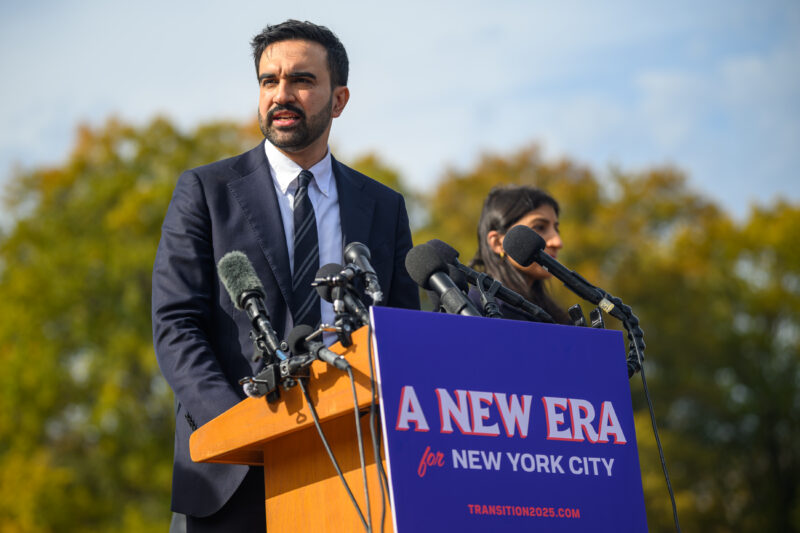










Shapiro has previously been involved in fundraising for state-level races; now, the governor will work to elect Democrats in congressional swing districts
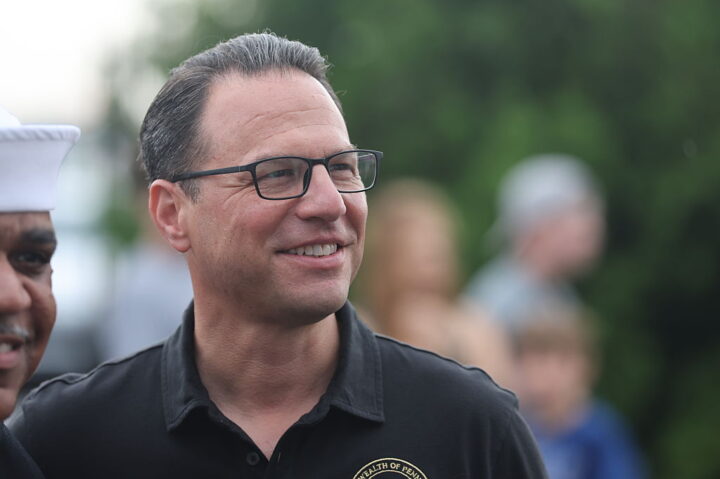
Andrew Mordzynski/Icon Sportswire via Getty Images
Pennsylvania Gov. Josh Shapiro looks on during the NASCAR Cup Series at The Great American Getaway 400 on June 22, 2025, at Pocono Raceway.


 Add JewishInsider on Google
Pennsylvania Gov. Josh Shapiro launched a federal political action committee, New Path PAC, a major potential signal that he’s considering plans for a 2028 presidential campaign.
Shapiro has downplayed any presidential ambitions, but declined to commit, during a debate in early October, to serving out a full second term through 2030.
Shapiro has been a prodigious fundraiser, but has limited his involvement to state-level races. He said that he plans to use the new federal PAC to fundraise for and contribute to Democratic congressional candidates Bob Harvie, Bob Brooks, Paige Cognetti and Janelle Stelson, whom he has been working to elect in key swing districts.
He joins several other 2028 hopefuls, including Govs. Andy Beshear, JB Pritzker and Gavin Newsom, who have previously launched federal PACs.
A clear divide is emerging in the prospective 2028 presidential field over the issues of the U.S.-Israel relationship and dealing with rising antisemitism
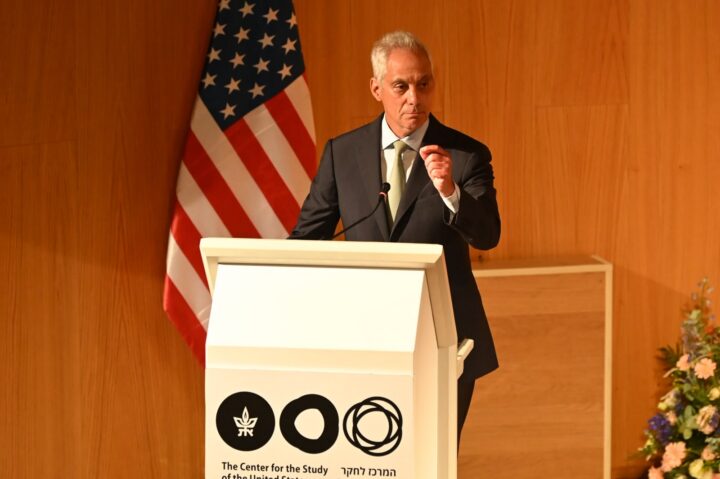
Israel Hadari
Rahm Emanuel speaks at Tel Aviv University on July 8, 2026.
A quarter century ago, when the late Sen. Joe Lieberman was tapped by Al Gore, the Democratic nominee for president, to be his running mate on the 2000 ticket, the question around many a Shabbat table was, “Is he too Jewish to be in the White House?”
There’s a different question being asked, largely in Democratic circles, of today’s Jewish presidential candidates: “Is he the ‘right’ kind of Jewish candidate to be president?” — a question that is almost entirely centered around a candidate’s position on Israel and how openly he identifies with his religious faith.
A long list of Jewish candidates are considering a presidential campaign or are being touted as credible contenders, ranging from moderates like Pennsylvania Gov. Josh Shapiro, Sen. Elissa Slotkin (D-MI) and former Chicago Mayor Rahm Emanuel to progressives like Illinois Gov. JB Pritzker and those who straddle the ideological divide, like Sen. Jon Ossoff (D-GA).
In both 2026 and 2028, the debate over Israel is on the ballot: Congressional primaries are pitting pro-Israel candidates against those who don’t acknowledge Israel’s right to exist as a
Jewish state, and already a clear divide is emerging in the prospective 2028 presidential field over the issues of the U.S.-Israel relationship and dealing with rising antisemitism.
Even in races where Israel policy is not front-and-center, invoking AIPAC has become something of a catch-all slur for progressives attacking the role of outside money in Democratic primaries. California Gov. Gavin Newsom, a likely 2028 hopeful, proudly proclaimed in February that he’d never taken AIPAC money — which of course he hasn’t, given that AIPAC and its affiliated super PAC historically focus on federal, not state, races.
Since soft-launching his presidential campaign last month (in Tel Aviv, no less), former Chicago Mayor Rahm Emanuel has made the Jewish state — and its relationship with the U.S. — one of his top issues in speeches and interviews. Even when his views are well within the mainstream, his signaling that he’s talking tough against Israel is a sign he recognizes his long-standing pro-Israel record is a vulnerability in a Democratic presidential primary.
A week after his Tel Aviv speech, Emanuel appeared on the Council on Foreign Relations’ “The Spillover” podcast in an episode titled “Rahm Emanuel Talks Israel, Midterm Elections, and the Democratic Party.” Two days later, The New Yorker’s “Radio Hour” podcast aired an interview with Emanuel in conversation with David Remnick titled, “Rahm Emanuel Says Israel’s Path Is ‘Not Sustainable Politically.’” Earlier this week, Emanuel appeared on the podcast of anti-Zionist Peter Beinart for a conversation largely focused on Israel.
The polling reality is that despite his lengthy and impressive resume — a former U.S. ambassador, congressman, Chicago mayor and White House chief of staff — Emanuel’s record is out of step with the ascendant progressivism that’s taken hold within the party. (He is currently polling at 0% in most 2028 Democratic primary polls.)
Emanuel could be using his skill as a straight-talking political operative to push his party to the center on antisemitism and Israel, akin to the way former New Jersey Gov. Chris Christie used his anti-Trump bromides against the MAGA-aligned candidates during the 2024 presidential debates. But Emanuel’s candidacy has thus far been an opportunity to push the party leftward on Israel — in essence, kashering an increasingly unfriendly approach to the U.S.-Israel relationship — and throw jabs at Israeli Prime Minister Benjamin Netanyahu, with whom Emanuel has a long and less-than-amicable history.
Both Emanuel and Newsom’s approaches reflect what they see as a political reality as the 2028 race comes into view: criticizing Israel might garner some support, while backing it is a losing argument.
Other leading Jewish Democrats who are considering 2028 bids are opting not to make Israel — and the future of its relationship with the U.S. — a cornerstone of their campaigns. Some, such as Shapiro, attempt to pivot when pressed on Israel questions, focusing instead on the domestic impact of the war with Iran or on U.S. national security. And when they do talk about Israel, criticism is largely focused on Israel’s government and not the country as a whole.
Shapiro, whose Israel stance was reportedly one reason former Vice President Kamala Harris opted against selecting him as her running mate in 2024, has frequently criticized Netanyahu while also legitimizing Israeli security concerns.
“I don’t think that if you are critical of Benjamin Netanyahu, you’re an antisemite,” Shapiro said on the “Higher Learning” podcast earlier this year. “By the way, I’m critical of Benjamin Netanyahu. And I have been for years and years and years, even predating Oct. 7. I think his approach has made Israel less safe.”
Pritzker has similarly kept the message — largely — focused on Netanyahu. In an in-depth New York Times interview in March, Pritzker said he felt Israelis had erred in selecting Netanyahu, saying that his leadership has led the country into “additional wars” and caused excess death and destruction in Gaza. On AIPAC, the Illinois Democrat, who previously supported the group, explained to The Times that his efforts to distance himself from the group were because it had become increasingly partisan and “pro-Trump,” rather than because of Israeli policy itself.
And then there’s Ossoff , who has always held positions on Israel that fall to the left of the others. We wrote last month that many Peach State Jews find themselves in a political no-win situation as Ossoff, who has voted to block weapons shipments to Israel, defends his seat against Rep. Mike Collins (R-GA), who has a history of inflammatory right-wing rhetoric — and a son-in-law who openly espouses white nationalist, antisemitic propaganda.
While all four have tacked left on Israel, they have done so to varying degrees — for example, Shapiro has expressed support for some aid to Israel to be conditioned, while Ossoff has voted to block weapons sales to Israel and Emanuel has called to immediately end all military aid to Israel.
2028 candidates rightfully sense that the party is shifting, not just on Israel but on a range of policies. When Lieberman was on the ticket a quarter century ago, the question was whether Americans were ready to elect a Jewish president (or vice president). Now, the question facing potential Jewish 2028 contenders is different: What do they have to say about Israel to persuade primary voters they are the “right” kind of Jew to become president?
Bashing Israel and a tolerance for antisemitism wasn’t really part of the woke equation in the first iteration of the left’s social justice activism. It’s now a litmus test in this new era, with major implications for American Jews
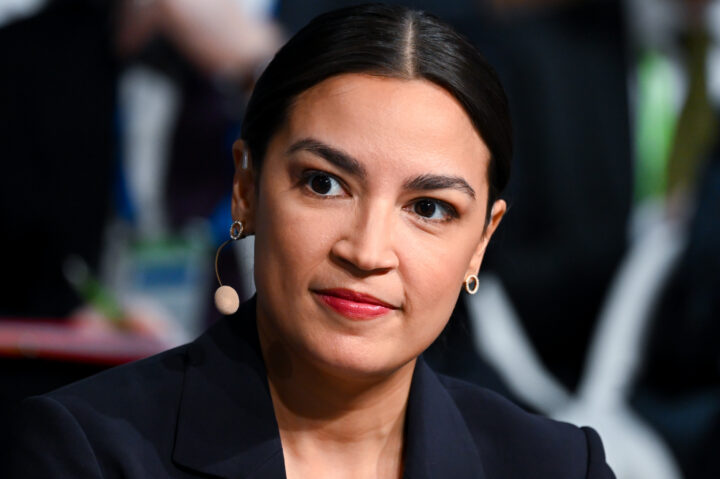
Sven Hoppe/picture alliance via Getty Images
Rep. Alexandria Ocasio-Cortez (D-NY) takes part in the Munich Security Conference.
Rep. Alexandria Ocasio-Cortez (D-NY), openly considering a presidential campaign in 2028, made waves over the weekend when she declared that “Woke 1.0 was crazy” in a nationally televised ABC News interview where she distanced herself from the most unpopular elements of the progressive movement.
Left unsaid during the conversation is what specific policies in the party’s last activist wave does she think were crazy, and does she still agree with any of them? After all, the platform of the Democratic Socialists of America currently outlines many of the same issues that played a role in Democrats’ defeat in 2024 — from progressive candidates’ support for defunding the police to the Biden administration’s open-ended immigration policy that led to the second Trump administration’s harsh crackdown on refugees and undocumented immigrants.
Presumably, she’ll be asked to answer more of the specifics in subsequent interviews. But the implication of her comments was that it’s hard for Democrats to publicly embrace the panoply of left-wing issues that became liberal conventional wisdom around the time of the pandemic without suffering a significant political penalty. Democrats aren’t exactly speaking the language of climate change activists or transgender advocates or supporting watering down penalties for criminals anymore, as was commonplace in 2020.
But they aren’t confronting the far-left forces that drove these issues to the forefront of the conversation for much of the last decade, either. The scandal surrounding Francesca Hong’s view of Thanksgiving as a “colonizer holiday” and Abdul El-Sayed’s comments bashing football, July 4 fireworks and Mackinac Island only underscore the impression that their deeply-held views are at odds with a majority of Americans.
And meanwhile, the DSA faction is as influential as ever in Democratic Party politics.
How did that happen, even as a prominent progressive like AOC now acknowledges the excesses of the far left? It’s because the activists have refocused their attention away from their (still deeply held) unpopular social and cultural positions, and are now singularly focused on demanding candidates label Israel’s war against Hamas in Gaza as a genocide. That’s the biggest litmus test right now. And their efforts are aided by the overall decline in support for Israel within the Democratic Party that’s accelerated in the last year.
By focusing on a foreign policy issue that is less impactful to many Americans than the economy or crime, they’re hoping they won’t suffer as much backlash as they did when they alienated a broad swath of the electorate with outside-the-mainstream proposals that affected people’s day-to-day lives.
Progressive activists have also reframed their socialist messaging around more politically palatable issues, aiming to capitalize on the backlash against data centers, corporate excess and income inequality. You can see that strategy in Abdul El-Sayed’s catchy slogan “get money out of politics, money in your pocket, and pass Medicaid for All.” (It’s the last part — supporting a government-run health care system — that has historically been political poison for Democrats.)
The handful of general election contests pitting mainstream Republicans against activist-aligned Democrats — the Michigan Senate race being the biggest one — will offer a clear test of whether this rebranded (if more radical) iteration of wokeness, focusing on anti-Israel hostility and an accompanying tolerance for antisemitic rhetoric, business bashing and socialized medicine will garner more political support. Historically, these views have also been a tough sell with average Americans.
When AOC is talking about the latest iteration of woke, this is what she’s referring to. Bashing Israel and a tolerance for antisemitism wasn’t really part of the woke equation in the first iteration of the left’s social justice activism. It’s now a litmus test in this new era, with major implications for American Jews.
Jack Cocchiarella’s latest guest was Gov. Gavin Newsom, as Newsom positions himself for a potential 2028 presidential run

Jack Cocchiarella/YouTube
Jack Cocchiarella interviews California Gov. Gavin Newsom in New Hampshire on March 5, 2026.
As Gavin Newsom travels around the country promoting his book — a memoir widely seen as a first step on his journey toward a 2028 presidential campaign — the California governor made appearances in South Carolina and New Hampshire, two early Democratic primary states that are important stops for any likely candidate.
For a trip signaling presidential ambitions, Newsom’s choice of interviewer is revealing. On Thursday night, he was interviewed in Portsmouth, N.H., by Jack Cocchiarella, a self-described “progressive political pundit,” part of a group of Gen Z influencers with growing clout among Democratic voters.
Courting those content creators has been central to Newsom’s efforts to build an engaged national audience.
He’s adopted a go-anywhere media strategy that has put him in conversation with everyone from New York City Mayor Zohran Mamdani, a democratic socialist, to conservative Daily Wire founder Ben Shapiro. On Thursday, at the event with Cocchiarella, Newsom said he would sit for a conversation with the far-left streamer Hasan Piker, one of the most recognizable names among young political influencers — and who has an unshakeable predisposition toward antisemitism.
In recent months, Cocchiarella has adopted a stridently anti-Israel posture that mirrors some of the incendiary rhetoric frequently employed by Piker, though Cocchiarella isn’t yet as prominent as Piker.
But the Columbia University graduate has quickly gone from being a small-time digital strategist for Democratic candidates in Florida to a YouTuber who has scored interviews with some of the most important members of the Democratic Party. In the 20 months since he posted his first YouTube video, he has garnered 1.47 million subscribers, with some of his videos fetching up to 5 million views. Most of them feature Cocchiarella attacking President Donald Trump.
While Cocchiarella has developed a somewhat cheeky style drawing on Democrats’ opposition to Trump, he’s far less aggressive than Piker, and more in line with the talking points of mainstream Democrats. He’s interviewed many of them: Sens. Elizabeth Warren (D-MA), Cory Booker (D-NJ), Ruben Gallego (D-AZ) and Mark Warner (D-VA); House Minority Leader Hakeem Jeffries (D-NY); and Reps. Greg Landsman (D-OH), Robert Garcia (D-CA), Jamie Raskin (D-MD) and Eric Swalwell (D-MA) all appeared in video interviews with Cocchiarella, as did Kentucky Gov. Andy Beshear.
But against this backdrop, Cocchiarella also has a combative streak. In October, weeks after conservative activist Charlie Kirk was killed, Cocchiarella drafted a tweet responding to news that Turning Point USA, the organization Kirk created, would be putting together an “All-American” halftime show to compete with the Super Bowl’s official halftime show, where the Puerto Rican artist Bad Bunny was set to perform. “Shoot him again,” Cocchiarella wrote.
The message was never posted on X, but he shared a screenshot of the draft to a private Instagram story. “Thoughts?” Cocchiarella wrote. He did not respond to a request for comment. (A screenshot of the post was obtained by Jewish Insider.)
Israel did not appear to be an issue Cocchiarella cared much about until last year. “Also f*** Israel just to be clear,” he wrote in a post on X in October. “STOP SENDING MY F***ING TAX DOLLARS TO ISRAEL,” he wrote in December. “Israel is a terrorist state that threatens and kill [sic] Americans,” Cocchiarella posted this week, days after the U.S. and Israel began military strikes against Iran.
In December, Cocchiarella interviewed Newsom and asked him about whether he would accept money from AIPAC, the pro-Israel lobby.
“AIPAC, DMFI [Democratic Majority for Israel], the Israel lobby at large. This has become a big conversation, [for] someone like myself, and I think at this point a broad majority of Democrats are saying we don’t want candidates who are taking money from AIPAC. We don’t want candidates who are beholden to the Israel lobby,” Cocchiarella said.
In response, Newsom said he had never received financial support from AIPAC — which only contributed to federal campaigns — just like he has never accepted donations from the tobacco or oil lobbies.
On Thursday, at the New Hampshire event, Cocchiarella asked Newsom to clarify comments he had made two days earlier suggesting that Israel could be considered an “apartheid state.” Cocchiarella said some online conversation has suggested Newsom is just following the polling, that “you don’t actually believe what you said there,” that “it’s kind of like a shape-shifting move.” But he said it reminded him of Newsom’s decision in 2004, when he was mayor of San Francisco, to give out same-sex marriage licenses — much to the chagrin even of other liberal Democrats in the state who had not yet come out in support of gay marriage.
“History echoes a little bit in the same way,” Cocchiarella said.
In response, Newsom spoke about growing up deeply connected to the Bay Area Jewish community and even traveling to Israel with his family.
“I want to level set on that basis. What I can’t accept today, though, is what Bibi Netanyahu is doing in Israel, and I just can’t countenance that,” said Newsom, who compared his anger at Netanyahu’s efforts to annex the West Bank to the way he felt when same-sex marriage was not yet legal.
“I can’t sit back in the spirit of this book, in the spirit that defined marriage equality, in terms of my values and beliefs, and watch that,” said Newsom.
Before Newsom’s interview with Cocchiarella, a spokesperson said the governor often sits for interviews with people whose views diverge from his own.
“Of course the governor doesn’t agree with every statement of every person he ever sits down with,” Izzy Gardon, Newsom’s communications director, told JI. “He is proud to engage with people across the political spectrum — from Ben Shapiro to Mayor Mamdani. The governor believes in free speech and open debate, something Donald Trump, who dines with neo-Nazis like Nick Fuentes, clearly doesn’t understand.”
Rep. Jared Moskowitz told JI that Kamala Harris’ team asking Shapiro if he’d ever been an agent for Israel, as Shapiro alleges, is ‘totally insane. I don’t know how else to describe insanity’
Andrew Mordzynski/Icon Sportswire via Getty Images
Pennsylvania Gov. Josh Shapiro looks on during the NASCAR Cup Series at The Great American Getaway 400 on June 22, 2025, at Pocono Raceway.
Several moderate House Democrats said they were concerned and frustrated by Pennsylvania Gov. Josh Shapiro’s account, which emerged over the weekend, of being questioned by Vice President Kamala Harris’ presidential campaign, as part of his vetting as her potential running mate, about whether he had ever been an agent of Israel.
Some progressives have defended the questioning by pointing to a subsequent report that the campaign had asked Minnesota Gov. Tim Walz, the eventual vice presidential nominee, about whether he had served as an agent for China, where he once lived.
But Shapiro, who volunteered on a kibbutz and briefly on an Israeli army base while in high school, also said that the campaign had pressured him to walk back condemnations of antisemitism on college campuses, and emphasized that he took offense to the scope and persistence of the questioning he faced about Israel.
“Totally insane,” Rep. Jared Moskowitz (D-FL) told Jewish Insider. “I don’t know how else to describe insanity. Literally insane.”
Rep. Greg Landsman (D-OH) said the questioning was “concerning” and that he was “glad Josh had the courage to say what happened.”
“Hopefully people will appreciate that you shouldn’t do that. … It’s a longstanding antisemitic trope that we’re all agents of the Israeli government, that we’re all working for this global Jewish cabal. And so that’s problematic,” Landsman, who is Jewish, continued. “Antisemitism is complicated. There’s a lot of pieces to it. They all get very dangerous for us. I do think that people should be open to say, if Jews say it’s antisemitic — even if some say it’s not — let’s just assume it is and be done and not do it.”
Rep. Debbie Wasserman Schultz (D-FL) called the revelations “incredibly disturbing,” while saying she didn’t believe Harris would have approved the line of questioning.
“The process that allowed for those kinds of questions to be asked is disturbing to me. I’ve known Josh Shapiro for a really long time, and I understand how he felt and would have felt the same way,” Wasserman Schultz, a former chair of the Democratic National committee, told JI. “It’s a little bewildering that that would be the kind of question line that they would take, given that Vice President Harris’ husband is Jewish. From what I know and experienced of both she and he, separately and together, that doesn’t seem like a line of questioning that she would have approved of. Hopefully it was a rogue question, rather than something that was sanctioned.”
Rep. Brad Schneider (D-IL) praised Shapiro personally and said he took issue with the questions he faced in the vetting process.
“I’ll give you my reaction to Josh Shapiro: This is someone who knows who he is, he’s confident in his identity and proud of where he comes from and strong in what he believes. I think he gave the right answers, and I think it was wrong that those questions were even raised.”
Rep. Tom Suozzi (D-NY) said that the questioning of Shapiro was not appropriate, calling it “very disturbing” and “unfair.”
Rep. Josh Gottheimer (D-NJ) said in a statement over the weekend that Shapiro’s account was “nothing short of outrageous, and, if true, demand[s] an immediate explanation from the Harris campaign.
“That kind of insinuation and targeting is antisemitism, plain and simple. No one should be judged or discriminated against because of their faith. We must do better,” Gottheimer continued.
Rep. James Walkinshaw (D-VA) said on CNN over the weekend, “If that question was asked of Governor Shapiro, it should have been asked to every other candidate who was vetted.”
Others largely withheld criticism of the Harris campaign.
Rep. Jerry Nadler (D-NY), a co-chair of the Congressional Jewish Caucus, said that it sounded like other potential nominees had also been asked about foreign ties, but described the line of questioning as “bizarre.”
Rep. Brad Sherman (D-CA) withheld judgment when asked about Shapiro’s revelations, telling JI, “It’s obviously very interesting. I don’t know whether the person asking the vetting questions really reflected Kamala Harris’ personal opinions at all, so I’ve got to read more about it.”
Rep. Madeliene Dean (D-PA) said she didn’t want to comment on the situation without having read Shapiro’s book coming out next week, in which he describes the encounter, or having been present for the conversations in question, but said that she has known Shapiro for a long time and praised him as a man of “[faith], family and a belief in the American system.”
Shapiro writes in his new book that the Harris team asked if he had ever been a ‘double agent for Israel’

ANDREW CABALLERO-REYNOLDS/AFP via Getty Images
Pennsylvania Gov. Josh Shapiro (L) greets former Vice President Kamala Harris as she arrives at Pittsburgh International Airport in Pittsburgh, Pennsylvania on September 2, 2024.
In the summer of 2024, when Vice President Kamala Harris was vetting potential running mates for her expedited campaign for president, a senior member of her team asked Pennsylvania Gov. Josh Shapiro whether he had ever been a “double agent for Israel,” Shapiro writes in a new book that will be published later this month. “Was she kidding? I told her how offensive the question was,” Shapiro recounts in the book.
The exchange — which Shapiro describes in an outraged tone — has prompted sharp criticism from Jewish leaders, including some who served in the Biden-Harris administration.
“The more I read about [Shapiro’s] treatment in the vetting process, the more disturbed I become,” Deborah Lipstadt, who served as the State Department’s antisemitism envoy under President Joe Biden, said in a post on X. “These questions were classic antisemitism.”
Shapiro suggests in the book that he was being treated unfairly as a Jewish contender for the role of vice president: “I wondered whether these questions were being posed to just me — the only Jewish guy in the running — or if everyone who had not held a federal office was being grilled about Israel in the same way,” he writes.
Anti-Defamation League CEO Jonathan Greenblatt called the line of questioning “barely veiled bigotry,” and said it is “a textbook invocation of one of the oldest antisemitic canards in politics: the smear of dual loyalty.”
The comments also earned criticism from Rep. Josh Gottheimer (D-NJ), who said in a statement that “that kind of insinuation and targeting is antisemitism, plain and simple. No one should be judged or discriminated against because of their faith.”
Shapiro’s Jewish faith and his support for Israel became the object of criticism among far-left activists, who agitated against his selection as Harris’ running mate. Harris has maintained that antisemitism played no role in her decision not to pick Shapiro.
Shapiro’s account of his interactions with Harris’ campaign suggests that his views on Israel did present a problem for Harris. According to Shapiro, Harris asked him to apologize for comments he had made denouncing the actions of some anti-Israel protesters at the University of Pennsylvania. He refused, writing in his book that he felt Harris wanted him to align “perfectly” with her on all issues.
“It nagged at me that their questions weren’t really about substance,” Shapiro writes. “Rather, they were questioning my ideology, my approach, my world view.”
Abraham Foxman, the former longtime leader of the Anti-Defamation League, called it “very disturbing” that Shapiro was asked about being an Israeli double agent. “Aides focused on Israel to the extent he found it offensive. Something very troubling about our current political culture,” Foxman wrote in a post on X.
Shapiro was not the first Jewish official to face a “double standard” during the vetting process, Aaron Keyak, the Jewish outreach director on Biden’s 2020 campaign who later served as Lipstadt’s deputy at the State Department, said in a statement.
“During my vetting process I faced questions in a classified setting that my fellow non-Jewish political appointees did not,” Keyak said. “These sort of antisemitic questions are anti-American and do not represent the best that the Democratic Party offers. Now and especially during the next Presidential campaign we must demand better.”
Minnesota Gov. Tim Walz, who was chosen as Harris’ running mate, was also asked a question about his own ties to foreign nations. The Harris campaign asked Walz — who had previously lived and worked in China — if he had ever been an agent of China, CNN reported.
The adversarial nature of Harris and Shapiro’s relationship during the 2024 campaign was the source of a great deal of speculation. Harris took aim at Shapiro, too, in a book she published in 2025, writing that before they even met, he was asking questions about furnishing and decorating the Naval Observatory, where the vice president resides, should he be selected.
A spokesperson for Harris did not respond to a request for comment.
This story was updated on Jan. 20 with additional comments.
Plus, the 92-year-old trailblazing judge overseeing the Maduro case
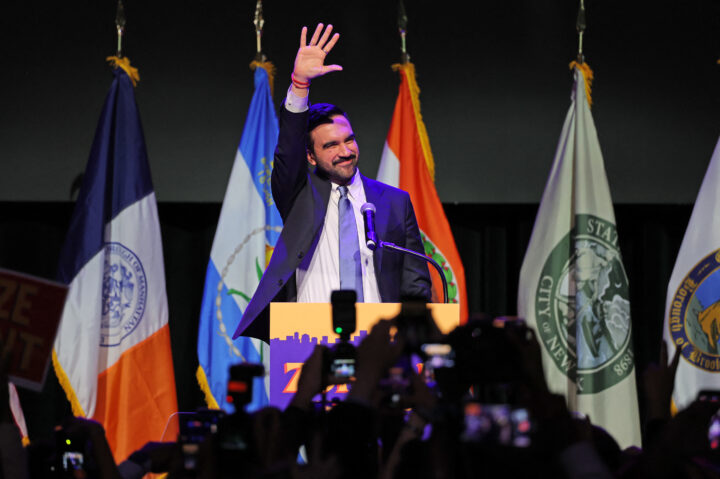
ANGELA WEISS/AFP via Getty Images
New York City Mayoral candidate Zohran Mamdani celebrates during an election night event at the Brooklyn Paramount Theater in Brooklyn, New York on November 4, 2025.
Good Tuesday morning.
In today’s Daily Kickoff, we look at how Minnesota Gov. Tim Walz’s leftward shift during last year’s presidential campaign contributed to his decision, announced yesterday, not to seek a third term, and talk to Jewish leaders in New York concerned about Mayor Zohran Mamdani’s first moves in office. We profile Judge Alvin Hellerstein, the 92-year-old Orthodox Jewish judge presiding over the trial of Venezuela’s Nicolás Maduro, and report on the Department of Justice’s 2026 funding package that will allocate $5 million to protect religious institutions. Also in today’s Daily Kickoff: Blake Blakeman, Jason Miyares and Sally Goldenberg.
Today’s Daily Kickoff was curated by Jewish Insider Executive Editor Melissa Weiss and Israel Editor Tamara Zieve, with an assist from Marc Rod. Have a tip? Email us here.
What We’re Watching
- House Republicans are holding their annual retreat today at the Kennedy Center. President Donald Trump is slated to address the gathering at 10 a.m.
- White House Special Envoy Steve Witkoff and Jared Kushner are meeting with European officials in Paris today for continued talks on the Russia-Ukraine war.
- Israeli Foreign Minister Gideon Sa’ar is in Hargeisa today for meetings with senior officials, after Israel last month became the first country to recognize Somaliland.
- CES 2026 kicks off today in Las Vegas.
- In Florida, former Israeli Strategic Affairs Minister Ron Dermer and “Call Me Back” host Dan Senor will speak in conversation this evening at an event hosted by Palm Beach Synagogue.
What You Should Know
A QUICK WORD WITH JI’S Josh Kraushaar
The political fall of Minnesota Gov. Tim Walz, who just months ago was near the apex of political prominence as Kamala Harris’ running mate in the 2024 presidential election, is an object lesson in the consequences of pandering to the far left of the Democratic Party.
Last year, Walz looked like he was on the fast track in national politics. Now he looks to be ending his career as a disgraced two-term governor.
Walz announced Monday that he’s not running for a third term in office, amid a growing scandal over massive welfare fraud, where dozens of individuals from the state’s Somali diaspora were convicted in schemes involving over a billion dollars stolen from the state’s social services programs.
The scandal offers a snapshot of some of the Democratic Party’s most glaring vulnerabilities. Walz, along with others in the state’s Democratic leadership, oversaw the allocation of generous welfare payments without ample accountability, while turning a blind eye to corruption in a Somali community that’s become a reliable Democratic voting bloc.
A nimbler, and more moderate, politician would have aggressively led the charge against the criminals instead of coming across as a passive bystander. After all, a scandal like this threatens the sustainability of generous social welfare programs that have defined the ethos of the Minnesota Democratic Party. Instead, in his announcement Monday, he decried “political gamesmanship” by Republicans for drawing outsized attention to the issue.
A more pragmatic Walz would also have been comfortable speaking out against scandalous elements within the Somali community (without painting the entire community with a broad brush). Instead, his belated comments speaking out against the fraud typically avoided reference to the perpetrators of the scandal, and he frequently blamed Republicans as racist for invoking their backgrounds. That only dug him into a deeper political hole.
Walz’s sensitivity about not alienating the state’s Somali community also came up in other areas that underscored his progressive instincts. When a leading Somali mayoral candidate (state Sen. Omar Fateh) came under fire for employing virulently antisemitic staffers at the top levels of his campaign, Walz remained silent, even as Sen. Amy Klobuchar (D-MN) spoke up.
Walz also has been supportive of far-left Rep. Ilhan Omar (D-MN) even when she’s faced controversies over using antisemitic tropes and embracing anti-Israel views that have placed her out of the Democratic Party’s mainstream. His selection as Harris’ running mate over Pennsylvania Gov. Josh Shapiro was cheered on by the anti-Israel wing of the party.
MAMDANI MOMENT
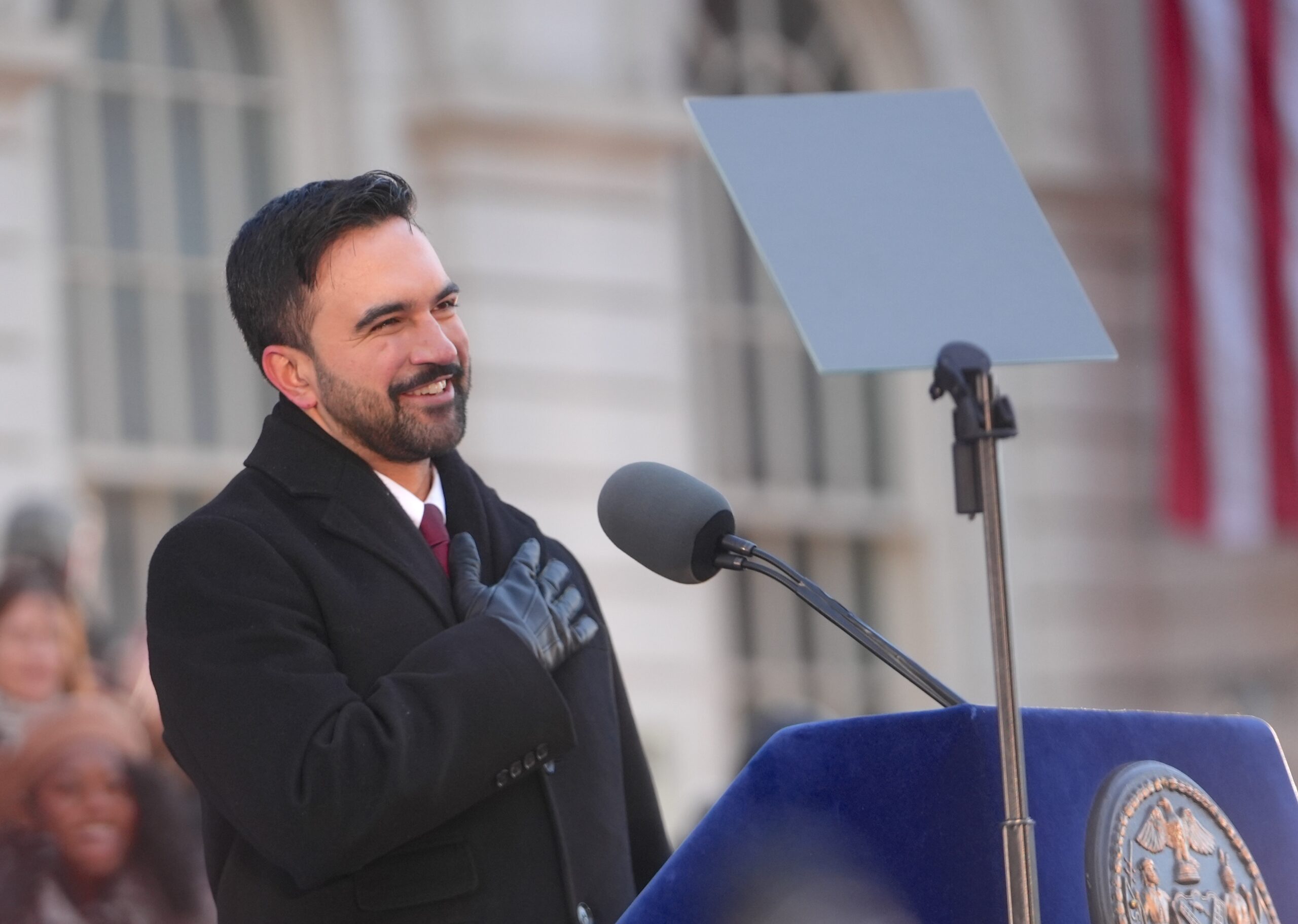
Days into Zohran Mamdani’s first week as mayor of New York City, some Jewish leaders are privately raising questions about whether his fledgling administration is prepared to implement a clear strategy to counter rising antisemitism, one of the key pledges of his campaign. Even as he swiftly moved to revoke two executive orders tied to Israel and antisemitism on his first day in office, Mamdani has yet to disclose how he and his team plan to substantively address what he has repeatedly called “the scourge of antisemitism” in remarks vowing to protect Jewish New Yorkers, Jewish Insider’s Matthew Kassel reports.
Wait and see: The mayor, a democratic socialist and outspoken critic of Israel, faced backlash from leading Jewish groups last week after he repealed executive orders issued by former Mayor Eric Adams, including ones that adopted a working definition of antisemitism used by the International Holocaust Remembrance Alliance and banned city agencies from engaging in boycotts targeting Israel. “He went from giving a speech about unity and collectivism to signing executive orders against the Jewish community,” one Jewish community leader said of Mamdani’s repeals. Rabbi Joe Potasnik, executive vice president of the New York Board of Rabbis who served on Mamdani’s transition committee for emergency response, said he was taking a wait-and-see approach to the first few weeks of the administration. “No further details have been released so there is nothing more to add at this time,” he told JI. “Let’s wait and see if there are changes.”
Bonus: Mamdani tapped Anna Bahr, the communications director for Sen. Bernie Sanders (I-VT) to serve in the same role in the Mamdani administration.
Torah and bench
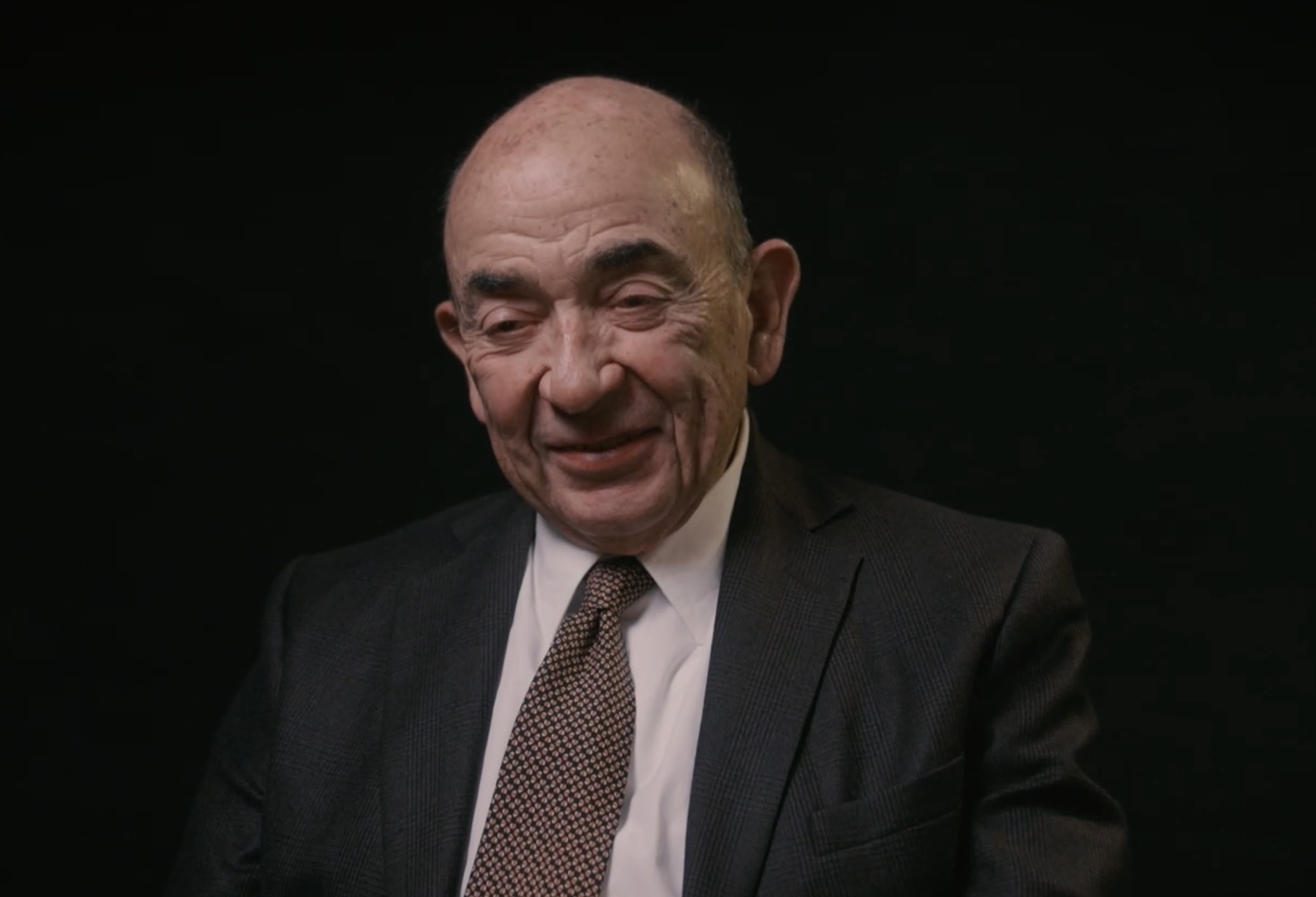
Judge Alvin Hellerstein is 92 years old, and with 27 years on the federal bench in Manhattan, he has presided over some of the most prominent trials in recent memory — including thousands of lawsuits brought in the aftermath of the Sept. 11 terrorist attacks, a suit against disgraced Hollywood producer Harvey Weinstein and, now, the criminal case against deposed Venezuelan President Nicolás Maduro. It’s a remarkable final chapter in a legal career that was once nearly derailed by antisemitism, Jewish Insider’s Gabby Deutch reports.
The way things were: Hellerstein has described his judicial style as being influenced by New York Federal Judge Edmund Palmieri, for whom Hellerstein served as a law clerk in the 1950s. (Ruth Bader Ginsburg, later a Supreme Court justice, clerked for Palmieri a few years later.) But that chapter almost didn’t happen. Hellerstein wanted to work at a law firm, but he ended up applying to clerkships because he said the non-Jewish law firms in New York would not hire him. “As a Jewish boy coming to interview at law firms, you met up with very strong discrimination, some of it overt, most of it implied,” Hellerstein said in an interview in 2020 on the podcast “Behind the Bima.” He ended up working at a Jewish firm — one of the first Orthodox lawyers to be employed at any New York City firm. Read the full story here.
TEHRAN TALK

Senators said on Monday that an additional round of U.S. strikes on Iran remains on the table if the regime makes strides in rebuilding its nuclear program or other malign activities, echoing recent warnings from President Donald Trump. Trump also threatened last week that the U.S. would intervene to protect Iranian protesters if the regime cracked down on nationwide demonstrations, as U.S. officials are watching closely while Tehran reportedly accelerates efforts to restore its ballistic missile capabilities — developments that could spark renewed conflict with Israel and potentially the United States, Jewish Insider’s Marc Rod and Emily Jacobs report.
Military mindset: Republican senators expressed confidence that the president would strike Iranian nuclear facilities a second time if the U.S. determined that Tehran was working to restore its nuclear program. “I think there’s a chance” Trump will strike Iran’s nuclear sites again, Sen. Rick Scott (R-FL) told JI. “If they go forward again and start building up nuclear facilities, yeah, I think Trump’s going to bomb the hell out of them.” Sen. Pete Ricketts (R-NE) told JI, “President Trump is demonstrating that we have the most outstanding military in the world. And if he believes we have to hit Iran again, I believe he will do that.”
Read the full story here with additional comments from Sens. John Kennedy (R-LA), Richard Blumenthal (D-CT) and Tim Kaine (D-VA).
MONEY MATTERS

The House and Senate’s negotiated 2026 funding package for the Department of Justice includes funding for state and local law enforcement specifically allocated for protecting religious institutions, Jewish Insider’s Marc Rod reports.
What it does: The explanatory report accompanying the bill, released Monday, instructs the Department of Justice to allocate at least $5 million in DOJ law enforcement grant funding to agencies “seeking to enhance security measures for at-risk religious institutions and to address the precipitous increases in hate crimes targeting individuals on the basis of religion.” Such funding, aimed at providing law enforcement with additional resources to step up their security presence at synagogues and other houses of worship, has been pursued by Jewish community groups particularly amid rising antisemitic attacks in the wake of the Oct. 7, 2023, attacks in Israel.
WALTZING OUT
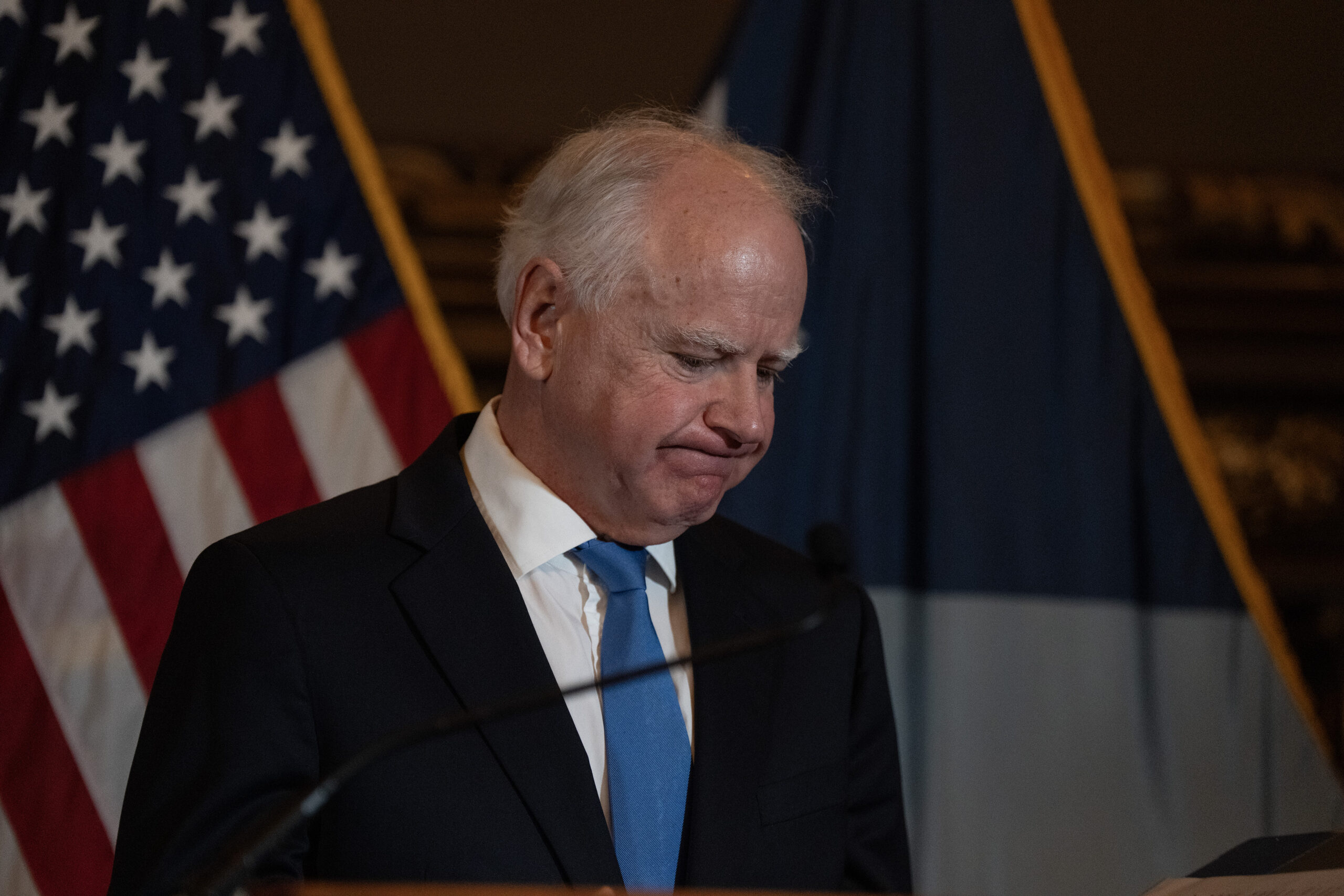
Minnesota Democratic Gov. Tim Walz’s decision to drop out of the 2026 gubernatorial race in a state heavily favored for Democrats marks a significant political fall for the party’s 2024 vice presidential nominee. Walz, 61, said while announcing on Monday that he would no longer seek a historic third term as governor that he had “every confidence” that he could have won his reelection bid — despite facing intense scrutiny for a state welfare fraud scandal that has gained national attention and become a political flashpoint in Minnesota. Still, Walz acknowledged that the fraud allegations, which have mostly been leveled at members of the state’s Somali community, and the broader scandal played a role in him ending his campaign, Jewish Insider’s Emily Jacobs and Marc Rod report.
Walz’s path: The decision to end his campaign means Walz will cap off two decades in elected office next January, less than two years after former Vice President Kamala Harris selected him as her running mate and thrust him onto the national stage. While holding a moderate voting record as a member of Congress, Walz largely governed as a progressive, and was the preferred choice of progressive Democrats critical of Israel in the 2024 veepstakes over Pennsylvania Gov. Josh Shapiro. On the campaign trail, Walz praised anti-Israel protesters and urged the U.S. to exert more leverage on Israel. He also drew scrutiny for appearing at events with an antisemitic and pro-Hamas Muslim cleric. He said last year after the election that war in Gaza was “rightfully” a “central focus” of the 2024 campaign.
DRAWING LINES
Nassau County Executive Bruce Blakeman suddenly emerged as the presumptive Republican nominee for governor of New York in December, with Rep. Elise Stefanik’s (R-NY) unexpected exit from the race against Gov. Kathy Hochul. Now, with the formal endorsement of President Donald Trump, Blakeman, 70, is preparing for an uphill battle in a reliably Democratic state. In an interview with Jewish Insider’s Marc Rod, Blakeman, who is Jewish, vowed to protect the Jewish community statewide against antisemitism, pledging that under his leadership, the state would step in if New York City Mayor Zohran Mamdani fails to do so.
Taking aim: Asked about voices like Tucker Carlson and neo-Nazi influencer Nick Fuentes who are working to mainstream antisemitic ideas in the Republican Party, Blakeman did not mince words in his condemnation, but described them as a small minority of the party and said he sees most antisemitism coming from the left. “Nick Fuentes is, in my opinion, a nut, but a dangerous one, and he has no place in the Republican Party,” Blakeman said. “Tucker Carlson is a big blowhard who has an issue with Jewish people, and it probably emanates from his chameleon-like personality. … He’s very unprincipled and I think he has biases that probably emanated from his youth.”
Worthy Reads
The Hawks are Back: Puck’s Julia Ioffe looks at how the Trump administration’s recent operation in Venezuela has shifted political and policy dynamics among conservatives split between neoconservatism and MAGA-style isolationism. “The affinity for using American military force has, weirdly, thrown Trump into alignment with the same neoconservative camp that he trampled during his ascent to the White House. This cohort, which has praised Trump’s moves in both Venezuela and Iran, has long insisted that Democrats are constitutionally uncomfortable with American power and that they are too scared to use it. In their view, liberals overlearned the lessons of Iraq and, as a result, grew too prone to overthinking and overanalyzing — imagining consequences to military action that are far worse than reality merits.”[Puck]
Digital Detox: In The Wall Street Journal, Vivek Ramaswamy, who is mounting a bid for governor of Ohio, explains why he is ending his personal use of a number of social media platforms. “There’s a fine line between using the internet to distribute your message and inadvertently allowing constant internet feedback to alter your message. That isn’t using social media; it’s letting social media use you. As someone who ran a digitally centered campaign for president, I’ve seen this effect firsthand — on myself and my competitors. Politicians want to respond to voters, and rightly so. But polls are expensive and infrequent. Social media offers a tempting alternative: free, abundant real-time feedback. It creates the impression that you’re hearing directly from ‘the people’ and responding in kind. Modern social media is increasingly disconnected from the electorate.” [WSJ]
Word on the Street
U.S. officials reportedly told acting Venezuelan President Delcy Rodriguez that Caracas must boot operatives from countries — including Iran and Cuba — that are hostile to the U.S….
In one of his final acts in office, Virginia Attorney General Jason Miyares sent a letter on Monday reminding all K-12 superintendents and school boards in the state of their obligation to adopt the International Holocaust Remembrance Alliance’s working definition of antisemitism into their codes of conduct and discrimination policies, Jewish Insider’s Haley Cohen reports…
Maine Senate candidate Graham Platner raised $4.7 million in the last quarter of 2025, despite numerous scandals related to past controversial social media posts and a tattoo that resembled Nazi imagery…
Attorney George Conway launched his bid in the crowded Democratic primary in New York’s 12th Congressional District to succeed Rep. Jerry Nadler (D-NY)…
Harvard President Alan Garber said in a recent episode of the Shalom Hartman Institute’s “Identity/Crisis” podcast that the Ivy League school had erred in allowing faculty members to share their personal views on politically charged issues, explaining that faculty activism had a chilling effect on campus climate…
Oracle Chairman Larry Ellison sold his Pacific Heights, Calif., home for $45 million, more than 10 times what he paid for the property in 1988…
Authorities in Germany are investigating a suspected arson attack targeting the home of the antisemitism commissioner of the state of Brandenburg…
Israel asked the country’s Supreme Court to allow for the continuation of a blanket ban on media access to the Gaza Strip, citing “security reasons” and suggesting that lifting the ban would endanger efforts to locate the body of hostage Ran Gvili; the court is set to rule on the petition, filed in 2024 by the Foreign Press Association as it sought access to Gaza…
The Israeli Communications Ministry approved a deal between Israeli and Palestinian telecom companies that will bring 4G access to the West Bank; the finalization of the agreement, which had been reached in 2022, had been delayed due to the Israel-Hamas war…
TheBank of Israel cut interest rates to 4%, the second straight time the bank has cut rates since Israel and Hamas reached a ceasefire in October 2025…
Israel struck what it said were Hezbollah and Hamas sites in southern Lebanon, days before the commander of the Lebanese Armed Forces is slated to brief officials in Beirut on the army’s efforts to disarm Hezbollah…
The Wall Street Journal looks at how Israel’s early recognition of Somaliland plays into Jerusalem’s broader strategy to establish diplomatic ties in a postwar era…
In an effort to curb ongoing protests around Iran over the country’s economic troubles, government officials announced a program to give approximately $7 per month to every Iranian citizen…
Politico’s Sally Goldenberg is joining The New York Times’ Metro section, covering New York City politics and the Mamdani administration…
David Rosen, the co-founder of Sega, died at 95…
Pic of the Day
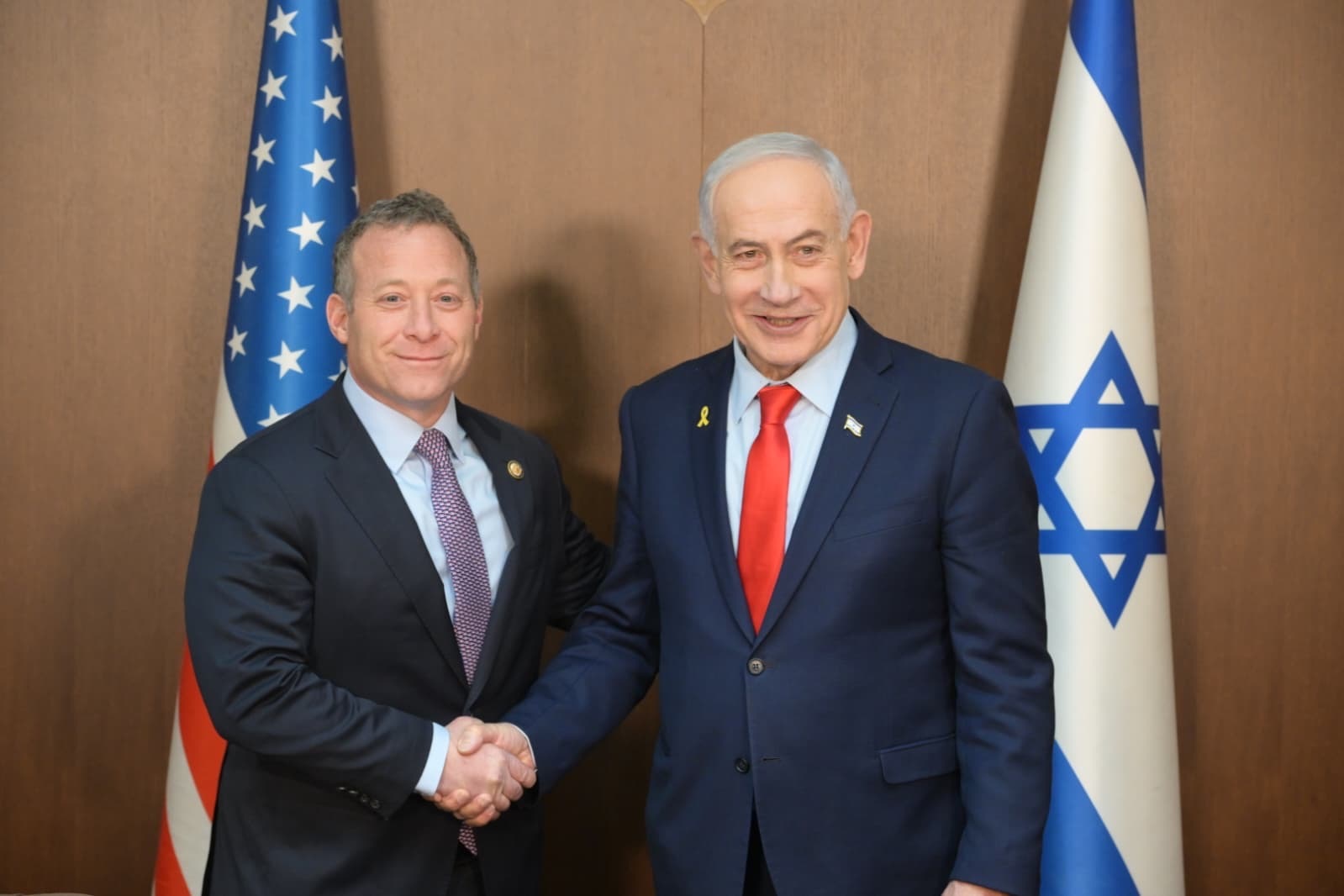
Rep. Josh Gottheimer (D-NJ) met on Monday in Jerusalem with Israeli Prime Minister Benjamin Netanyahu.
Birthdays

English food writer and television cook, Nigella Lucy Lawson turns 66…
Retired EVP and senior counsel of the Trump Organization, George H. Ross turns 98… International businessman and philanthropist, Nathan “Natie” Kirsh turns 94… Canadian businessman, investor and author, seven Canadian universities have a school named for him, Seymour Schulich turns 86… Co-founder of private equity firm Kohlberg Kravis Roberts, Henry R. Kravis turns 82… Chairman, president and CEO of Phibro Animal Health Corporation, he is a past chair of the Israel Policy Forum, Jack C. Bendheim turns 79… Yiddish-language author, journalist, playwright and lyricist, Boris Sandler turns 76… Attorney general of Oregon from 2012 until 2024, Ellen Rosenblum turns 75… Film, theater, and television director, her debut novel was published in 2020, Jan Pringle Eliasberg turns 72… Academic official at Tennessee State University for 10 years, he now serves as a consultant to the Tennessee Bureau of Investigation, Michael Harris turns 70… Retired television executive and political commentator, Mark E. Hyman turns 68… Founder and executive director of Healthcare Across Borders, Jodi Lynn Jacobson… Israeli celebrity chef, Eyal Shani turns 67… Member of the Ukrainian Parliament and president of the Ukrainian Jewish Committee, Oleksandr Feldman turns 66… Daniel G. Slatopolsky… Founder of Pure California Beverages, Sarah Beth Rena Conner… Member of the Knesset for the Religious Zionist Party, she chairs the Knesset’s Labor and Welfare Committee, Michal Miriam Waldiger turns 57… Actor, painter and fashion designer, Greg Lauren turns 56… Author of 13 spy fiction novels and four nonfiction books, Alex Berenson turns 53… President and CEO of United Wholesale Mortgage, he is the majority owner of the Phoenix Suns of the NBA and Phoenix Mercury of the WNBA, Mat Ishbia turns 46… Israeli news anchor and host of the “Jewish Crossroads: Jewish Identity in Times of Crisis” podcast, Tamar Ish-Shalom turns 45… Israeli actress, best known for her role in “The Zookeeper’s Wife,” Efrat Dor turns 43… Award-winning investigative reporter at WCCO/CBS in Minneapolis, Jonah P. Kaplan… Social media program director at the Committee for Accuracy in Middle East Reporting and Analysis (CAMERA), Aviva Slomich Rosenschein… Philanthropic advisor at the Community Foundation for a Greater Richmond, Sarah Arenstein Levy… Rabbinic fellow at NYC’s Park Avenue Synagogue, Aiden Pink… One of the youngest to ever sign a Major League Soccer contract at age 15, he is now a VP at Acacia Research, Zachary “Zach” Pfeffer turns 31… Rock climber for Team USA, he competed at the Paris Olympics in 2024, Jesse Grupper turns 29… Value accelerator lead at Goldman Sachs Growth, Anna Phillips…
Please log in if you already have a subscription, or subscribe to access the latest updates.
 Continue with Google

 Continue with Apple