





















Any potential agreements between Jerusalem, Beirut and Washington will ultimately hinge on whether Hezbollah can be fully disarmed
Andrew Harnik/Getty Images
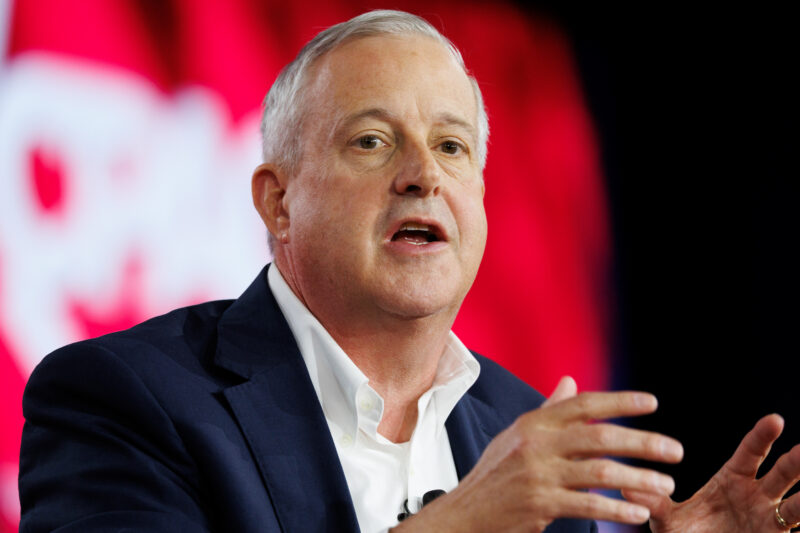
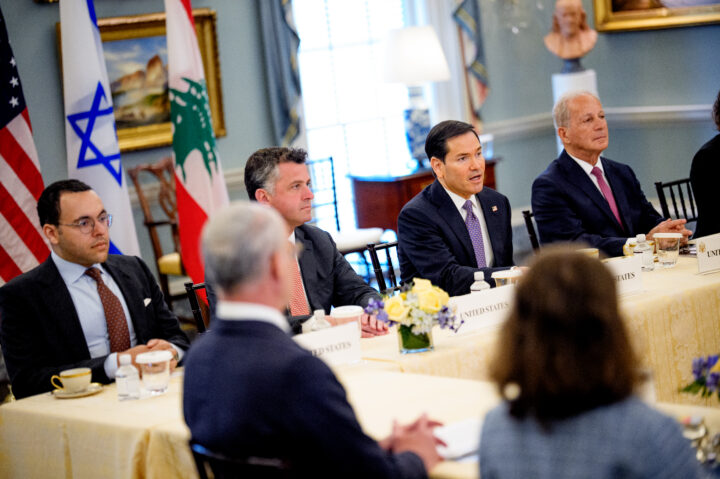
U.S. Secretary of State Marco Rubio (2nd-R), accompanied by U.S. State Department Counselor Michael Needham (C), and U.S. Ambassador to Lebanon Michel Issa (R), speaks as they begin working-level peace talks with Lebanese Ambassador to the U.S. Nada Hamadeh Moawad and Israeli Ambassador to the U.S. Yechiel Leiter at the U.S. State Department on April 14, 2026 in Washington, DC.


 Add JewishInsider on Google
The first round of direct talks between Israel and Lebanon has been received positively by diplomats, pro-Israel lawmakers and experts, who see it as a sign of Hezbollah’s waning influence in Lebanon. But despite the optimism surrounding the discussions, experts caution that disarming the terrorist group remains a daunting obstacle that stands in the way of any meaningful change — one that would require a significant shift from the Lebanese government and its armed forces.
On Tuesday, Israeli and Lebanese leadership convened at the State Department in Washington for the highest-level direct discussions in more than 30 years, aiming to outline a framework for “lasting peace” and a “permanent end” to Hezbollah’s influence, according to Secretary of State Marco Rubio.
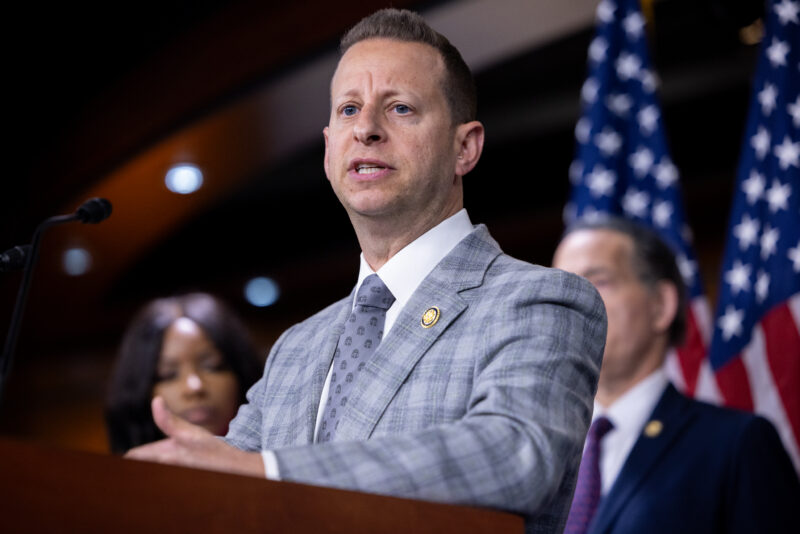
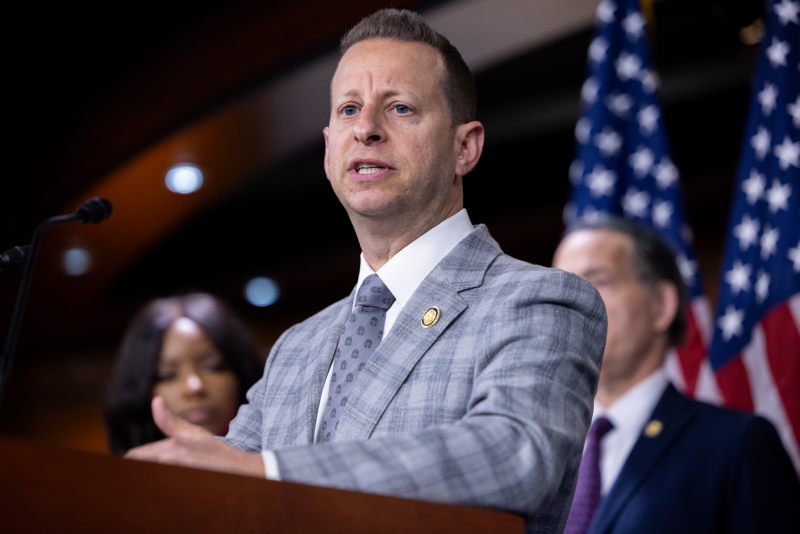
Rep. Jared Moskowitz (D-FL) told Jewish Insider that “it is great” that talks are taking place, expressing hope that “the Lebanese government, the United States and the Israeli government make a deal, and collectively, they push Hezbollah out.”
“That way the Lebanese people can be freed from the Iranian extremism that they have in their country,” Moskowitz said. “The Lebanese people are being held captive by the Iranian government because of Hezbollah. It’s obviously good for the United States, it’s good for Israel, but more importantly, I think it’s good for the people of Lebanon. I think disarming Hezbollah is obviously key to all this.”
Moskowitz added that while the Lebanese government appears to want to disarm Hezbollah, “they probably need help.”
“It’s not going to happen overnight, but I think it’s historic, and this is what the entire region wants,” he said. “This is what the Gulf states want. Everybody wants to come out of the extremism and the terrorism that Iran is trying to spread in the region.”
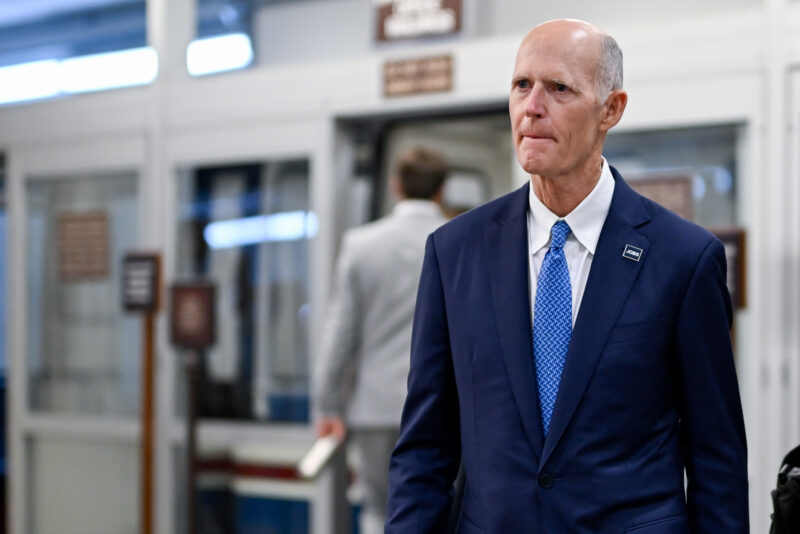
Sen. Rick Scott (R-FL) similarly told JI that Hezbollah disarmament is an important factor in talks.
“Why would you have talks if they [Hezbollah] are not going to disarm?” Scott said. “I’m not the prime minister of Israel but my condition would be that Hezbollah has got to disarm.”
Scott dismissed the notion that the Lebanese government and the Lebanese Armed Forces have not done enough to disarm the group, stating that the main problem is “not caused by Lebanon or by the military of Lebanon, it’s caused by Hezbollah.”
Sen. John Cornyn (R-TX) said that disarming Hezbollah should be a “red line” for Israel in talks. He added that Israel “needs a buffer zone so Hezbollah can’t continue to rain down terror on Israelis.”
“Hezbollah has historically been the best trained, best equipped opponents to Israel,” Rep. Don Bacon (R-NE) said. “Israel’s done a great job with them over the last two years, but they’re hardcore fervent believers in destroying Israel.”
Experts similarly described the talks as a meaningful development. John Hannah, a senior fellow at the Jewish Institute for National Security of America, called the discussions an “important breakthrough” and a sign of Hezbollah’s diminishing influence.
“Everyone should welcome the opening of a direct political dialogue between Israel and Lebanon,” Hannah said. “The fact that [the talks are] occurring at all is an important sign of Hezbollah’s declining hegemony over the Lebanese state.”
Robert Satloff, executive director of the Washington Institute for Near East Policy, described the talks as a “win-win-win” in a social media post, adding that Hezbollah emerged as a “big loser.”
“Today is a day to celebrate — we all saw a glimpse of what is possible after so much violence and conflict,” Satloff wrote on Tuesday. “That is a very good thing.”
Still, experts say disarming Hezbollah, which parties agree is necessary for any lasting piece, remains highly difficult and uncertain.
Even before Tuesday’s opening round of discussions, Hezbollah senior member Wafiq Safa said Hezbollah is “not bound” by any deals reached between Israel, Lebanon and the United States.
“It’s hard to be an optimist when it comes to the core question of Hezbollah’s disarmament,” Hannah said. “Even after all that’s been done over the past few years to weaken the group and its Iranian sponsors — including the loss of its legitimacy in the eyes of a majority of Lebanese — it’s not at all apparent that the raw balance of forces inside Lebanon has shifted sufficiently to favor Hezbollah’s near-term demise.”
Hannah described disarming Hezbollah as “worth trying,” but ultimately a “long shot.”
“Since the war against Iran broke out on Feb. 28, Hezbollah has shown through its sustained attacks on Israel that, while much diminished, its forces retain far more significant capabilities than many believed,” he said. “And in the wake of its battle against Israel, Hezbollah is making clear that if push comes to shove, it’s prepared to burn down the state before surrendering its weapons.”
Blaise Misztal, JINSA’s vice president for policy, said the task cannot be accomplished through Israeli military action alone and will ultimately depend on whether Lebanon and the LAF are willing to act.
“[Disarming Hezbollah] can only be fully done by a strong and committed Lebanese government,” Misztal said. “Israel can secure southern Lebanon with ground operations and strike Hezbollah sites in Beirut or the Bekaa Valley, but that will merely distance and degrade the threat, never fully remove it.”
“The question is whether the Lebanese government is, or can be convinced to be, strong and committed enough to take on the task of asserting its control over its own territory,” he added. “Thus far, it has failed to demonstrate either the political will or military capability to do so.”
Hannah similarly noted that “Israel is rightly unwilling to pay the necessary cost in blood, treasure and diplomatic opprobrium” required to fully dismantle Hezbollah, leaving the responsibility to Lebanon and its armed forces.
“The factor that has truly held Lebanon back from disarming Hezbollah has been Hezbollah’s retention of, as far as we can tell, overwhelming support among Lebanese Shiites,” David Daoud, a senior fellow at the Foundation for Defense of Democracies, said. “Having retained that popular support, it can deter the government from pursuing forcible disarmament by dangling the threat of civil war.”
But experts weren’t optimistic that the Lebanese government and LAF are capable — or willing — to take on that role. Hannah said Lebanon’s military “doesn’t appear to have the stomach to truly confront Hezbollah and dismantle the group’s armed wing,” noting that it has already “failed” to disarm the group in southern Lebanon, “much less the rest of the country.”
“It seems even less likely than before the Iran war that the LAF would now be willing to take on the risk of massively confronting Hezbollah,” he said, “in spite of the misery Hezbollah’s unilateral decision to enter the conflict on Iran’s behalf is now inflicting on the rest of Lebanon.”
David Daoud, a senior fellow at the Foundation for Defense of Democracies, also said Beirut “ultimately holds the key” to resolving the issue of Hezbollah’s disarmament. He said that while Lebanon has taken “immense and commendable” steps in “proscribing Hezbollah’s military activities,” the country’s “unwillingness to act against Hezbollah has been missing from the equation” and has “allowed the group to regenerate in the past.”
He added that Hezbollah still “retains enough military strength to make disarmament daunting” for Lebanese forces and the LAF, and that the group continues to wield significant political power.
“The factor that has truly held Lebanon back from disarming Hezbollah has been Hezbollah’s retention of, as far as we can tell, overwhelming support among Lebanese Shiites,” Daoud said. “Having retained that popular support, it can deter the government from pursuing forcible disarmament by dangling the threat of civil war.”
Daoud also raised concerns about Lebanon’s intentions in negotiations, arguing that Beirut may not truly be seeking meaningful change.
“A good test will be the extent to which the LAF fulfills the Lebanese government’s order from early April to put all of Beirut under its full control,” John Hannah, a senior fellow at the Jewish Institute for National Security of America, said. “Will the LAF truly confront and disarm Hezbollah in the capital or simply repeat the phony disarmament it claimed to have completed in the south?”
“Lebanon is seeking to use the negotiations to return to the status quo, and is willing to ‘pay the price’ of a joint photograph with an Israeli ambassador to achieve that objective,” he said. “This is because the situation in Lebanon is indeed dire — economic collapse compounded by war, the direct impact of the war itself and the emergence of sectarian tensions that could boil over into full-on conflict.”
If those dynamics remain unchanged, he warned that Hezbollah could indefinitely delay disarmament and eventually rebuild its strength.
“A good test will be the extent to which the LAF fulfills the Lebanese government’s order from early April to put all of Beirut under its full control,” Hannah said. “Will the LAF truly confront and disarm Hezbollah in the capital or simply repeat the phony disarmament it claimed to have completed in the south?”
Satloff said the challenge will ultimately require translating diplomacy into “practical steps,” including a shift in how the Lebanese military approaches disarmament.
“While some of this can happen in the negotiating room when the parties meet again, nothing can substitute for strong measures by the Lebanese state to isolate, weaken, delegitimize and disarm Hezbollah while promoting the idea of peace,” he said.
He suggested that turning Beirut into a “true weapons-free zone” is necessary “but not sufficient,” pointing to additional steps such as removing Hezbollah officials from government, expelling Iranian operatives from the country and shutting down the group’s financial and institutional networks.
The order leaves out scrutiny of Qatar and Turkey — a strategy that experts say reflects both legal realities and geopolitical constraints
Yuri Gripas/Abaca/Bloomberg via Getty Images
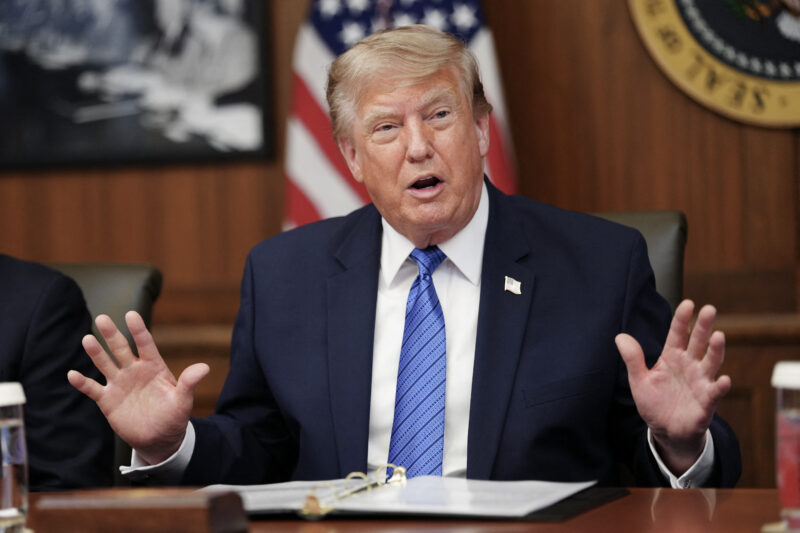
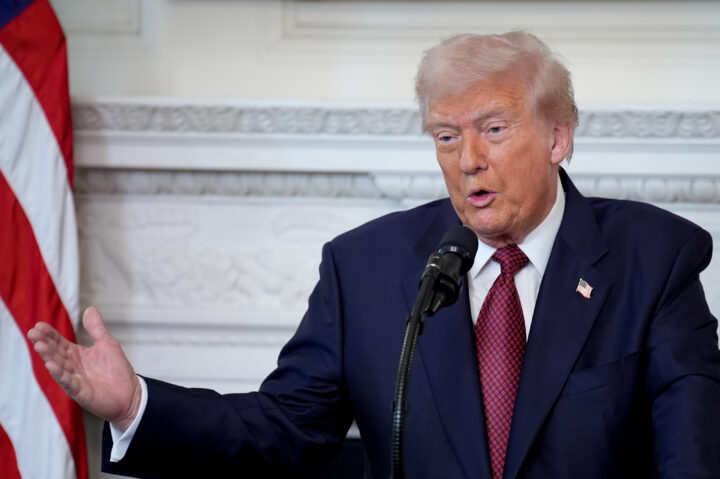
US President Donald Trump during a breakfast with Senate Republicans in the State Dining Room of the White House in Washington, DC, US, on Wednesday, Nov. 5, 2025.
President Donald Trump’s recent executive order directing a review of Muslim Brotherhood chapters for potential terrorism designations is limited in scope, and leaves out scrutiny of Qatar and Turkey — a strategy that experts say reflects both legal realities and geopolitical constraints.
The order, which was signed on Nov. 24, directs Secretary of State Marco Rubio and Treasury Secretary Scott Bessent to identify which branches of the Muslim Brotherhood — with a focus on chapters in Jordan, Lebanon and Egypt — should be designated as Foreign Terrorist Organizations and which should be deemed Specially Designated Global Terrorists.
Rather than apply a terrorist designation to the entire Muslim Brotherhood as a whole, Trump’s executive order first looks at individual branches. This strategy is echoed in a Senate bill, sponsored by Sen. Ted Cruz (R-TX), which requires an assessment of every branch of the Muslim Brotherhood in an effort to designate the organization for its involvement.
The House version of the legislation was modified in committee last week and now more closely resembles the Trump executive order.
Michael Jacobson, a senior fellow at The Washington Institute for Near East Policy, said the approach “makes sense,” adding that a “one-size-fits-all” designation would be unproductive. He also noted that it will allow the administration to more effectively pursue chapters of the organization.
“The bottom-up approach will allow the administration to proceed in a more strategic and calculated fashion,” said Jacobson. “Targeting individual chapters and entities could also open up additional avenues for investigation and action. Once individual branches are designated, the Treasury could then use its authorities to sanction those supporting these branches. I believe that this approach is also more likely to gain support from other governments.”
This same sentiment was echoed by Cruz, who called the “bottom-up” approach the “correct and sustainable strategy.”
“That strategy is built into both the president’s executive order, which was a bold and critical breakthrough in advancing American national security, and my bipartisan legislation,” Cruz told Jewish Insider. “It’s the consensus strategy, and it’s the right one.”
David Adesnik, vice president of research at the Foundation for Defense of Democracies, told JI that while a single designation done in “one fell swoop” might be appealing, it faces legal and factual challenges.
“The administration was rightly concerned that a judge could overturn a designation of the entire organization if he or she assessed that it didn’t meet the legal thresholds. This would have serious consequences in several respects,” said Michael Jacobson, a senior fellow at The Washington Institute for Near East Policy. “If a judge ruled against a Muslim Brotherhood ban, it would be interpreted by some as a signal that the MB is not a terrorist organization, end of story — also a message the administration was likely eager to avoid.”
“This is not a single unified organization,” said Adesnik. “There’s no headquarters, no address, no person who is the head. It’s very hard to make a terror designation if you’re not exactly sure who you’re designating.”
Jacobson said the administration also looked to avoid a blanket designation out of concern that any legal challenges that followed could hurt efforts to reign in the Muslim Brotherhood.
“The administration was rightly concerned that a judge could overturn a designation of the entire organization if he or she assessed that it didn’t meet the legal thresholds. This would have serious consequences in several respects,” said Jacobson. “If a judge ruled against a Muslim Brotherhood ban, it would be interpreted by some as a signal that the MB is not a terrorist organization, end of story — also a message the administration was likely eager to avoid.”
Some critics of the executive order, including far-right influencer Laura Loomer, who is a confidant of the president, have expressed frustration over the administration’s decision not to name Qatar and Turkey in the order.
“The Muslim Brotherhood designation signed by President Trump today doesn’t have any teeth,” Loomer posted on X on Nov. 24. “This designation is probably the weakest designation of the Muslim Brotherhood we could have ever received, as it doesn’t even apply to Qatar and Turkey.”
Both Qatar and Turkey have strengthened ties with the United States during Trump’s second term, however the two countries are also significant supporters of the Muslim Brotherhood and have been known to provide sanctuary for their members.
“Claiming to get tough on the Muslim Brotherhood without a serious strategy to clamp down on the support provided by the movement’s most important state sponsors in Qatar and Turkey is not a serious policy,” said John Hannah, a senior fellow at the Jewish Institute for National Security of America. “Out of consideration for America’s longstanding partnerships with both countries and President Trump’s particular affinity for their leaders, one hopes that there is a plan to bring real pressure to bear on both Doha and Ankara in private to cease and desist their wide-ranging support for MB affiliates across the Middle East and globally.”
But while Qatar and Turkey’s ties to the Muslim Brotherhood are problematic, experts said they were not included because they do not currently have chapters of the organization in their countries, which the executive order focuses on.
“If we’re targeting chapters of the Brotherhood, there are no Brotherhood chapters in those countries,” said Adesnik. “So the real question is, how do you deal with what are effectively state sponsors of the Brotherhood? And does that state sponsorship cross the line into terrorism or sponsorship of terrorism?”
The Senate bill also does not address how Turkey and Qatar would be targeted as state sponsors of the organization.
However, experts and legislators remain wary of the threat posed by the two nations and have expressed that plans to root out the Muslim Brotherhood should account for Turkey and Qatar.
“Claiming to get tough on the Muslim Brotherhood without a serious strategy to clamp down on the support provided by the movement’s most important state sponsors in Qatar and Turkey is not a serious policy,” said John Hannah, a senior fellow at the Jewish Institute for National Security of America. “Out of consideration for America’s longstanding partnerships with both countries and President Trump’s particular affinity for their leaders, one hopes that there is a plan to bring real pressure to bear on both Doha and Ankara in private to cease and desist their wide-ranging support for MB affiliates across the Middle East and globally.”
With the current executive order, the White House is seeking to first designate branches in countries that experts said are involved in violence from within the country. This will also likely include entities that finance other Foreign Terrorist Organizations, according to Jacobson.
In Jordan, Lebanon and Egypt, threats connected to the Muslim Brotherhood have become national issues of concern.
“The Islamic Group [Muslim Brotherhood chapter in Lebanon] clearly built up the ability to carry out attacks against Israel and cooperated very openly with Hezbollah,” said David Adesnik, vice president of research at the Foundation for Defense of Democracies. “Authorities there really aren’t doing anything about it, partly because they lack power and have other issues to address. So it’s a pretty fair point.”
In April 2025, Jordanian authorities arrested 16 individuals and thwarted a plot that was to involve rocket and drone attacks inside the country. The suspects were linked to the Muslim Brotherhood, which is the government’s largest opposition group. Following the arrests, the Jordanian government banned the group entirely.
Adesnik said that while Jordan has initiated a “thorough crackdown” to address the problem, it is notable that there was “clearly a branch that had migrated toward planning for terrorism.”
In Lebanon, he called the Muslim Brotherhood a “persistent issue.”
“The Islamic Group [Muslim Brotherhood chapter in Lebanon] pretty openly built up a capability to carry out attacks against Israel and cooperated very clearly and openly with Hezbollah,” said Adesnik. “Authorities there really aren’t doing anything about it, in part because they don’t have a lot of power and they have a lot of other problems to deal with. So it’s a pretty reasonable case.”
Adesnik called the administration’s targeting of Egypt the “thorniest case from a definitional perspective.” He noted that while Egyptian President Abdel Fattah el-Sissi’s regime in Cairo has spent more than a decade cracking down on the Brotherhood “aggressively,” concerns still remain over the presence of branches such as Harakat Sawa’d Misr, also known as Hasm, which was already designated by the U.S. as a Specially Designated Global Terrorist Entity in 2018.
“The question is just what’s left of the Brotherhood there?” said Adesnik. “Is it doing enough to merit a designation?”
Plus, British Jews fear for future in U.K.
(Photo by Nathan Howard - Pool/Getty Images)
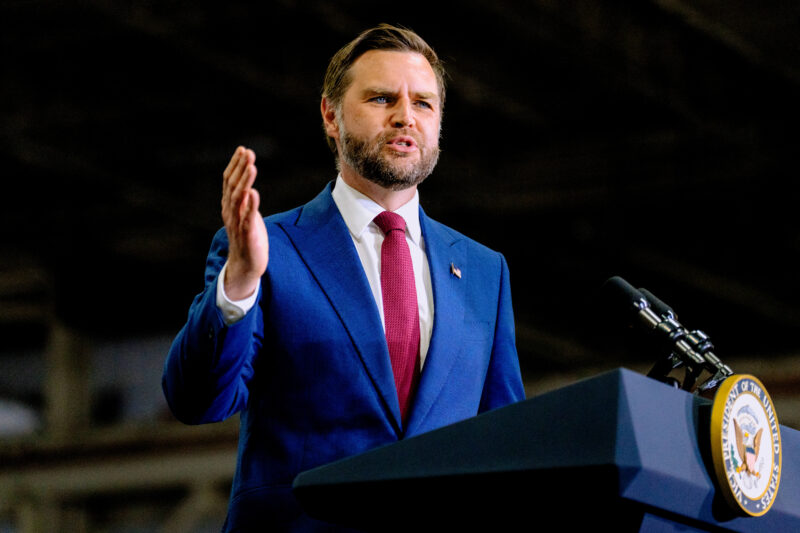
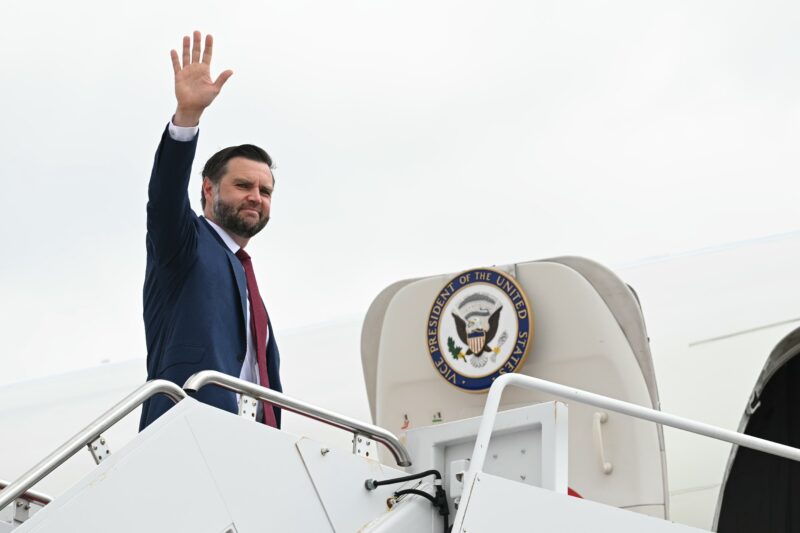
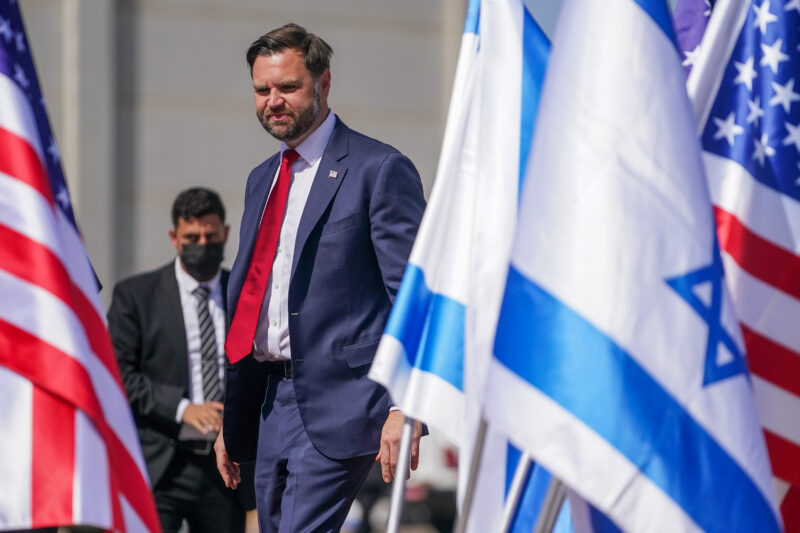
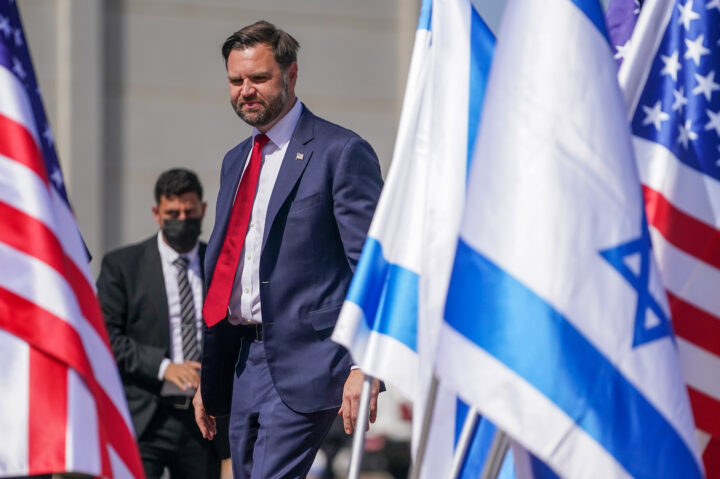
U.S. Vice President J.D. Vance arrives at Ben Gurion airport on October 21, 2025 in Tel Aviv, Israel.
Good Tuesday morning.
In today’s Daily Kickoff, we report on Vice President JD Vance’s trip to Israel, which began today, and talk to Jewish communal leaders in the U.K. about security concerns following the deadly Yom Kippur attack on a Manchester synagogue. We report on an antisemitic comment made at a campaign event by New Jersey gubernatorial candidate Jack Ciattarelli’s Muslim affairs advisor, and cover the Council on American-Islamic Relations’ lawsuit against Northwestern University over the school’s requirement that students watch an antisemitism training video. Also in today’s Daily Kickoff: Sheila Katz, Jodi Kantor and James Snyder.
Today’s Daily Kickoff was curated by Jewish Insider Executive Editor Melissa Weiss and Israel Editor Tamara Zieve with assists from Matthew Kassel and Danielle Cohen-Kanik. Have a tip? Email us here.
What We’re Watching
- Vice President JD Vance is in Israel today, where he joins White House Senior Advisor Steve Witkoff and Jared Kushner, who arrived earlier this week. More below.
- In Washington this afternoon, the Senate Caucus on International Narcotics Control is holding a hearing on Hezbollah’s drug trafficking networks in Latin America. The Washington Institute for Near East Policy’s Matthew Levitt, the Atlantic Council’s Amb. Nathan Sales, the Hudson Institute’s Marshall Billingslea and former FBI official Robert Clifford are slated to testify.
- In New York, Hillel International CEO Adam Lehman will sit in conversation with 92NY’s Rabbi David Ingber to discuss Judaism and Jewish life on college campuses.
What You Should Know
A QUICK WORD WITH JI’S MATTHEW KASSEL
In previous mayoral elections in New York City, a candidate’s meeting with a controversial imam who was listed as an unindicted co-conspirator in the 1993 World Trade Center bombing — and who has stridently opposed homosexuality and condemned America as “filthy” and “sick,” among other extreme remarks — might be expected to meaningfully dent support for his campaign.
But even as Zohran Mamdani, the Democratic nominee, has drawn criticism over his recent meeting with Siraj Wahhaj, a Brooklyn imam who leads Masjid at-Taqwa in Bedford-Stuyvesant, political experts say that such backlash is unlikely to influence the outcome of the Nov. 4 election.
That Mamdani, a 34-year-old democratic socialist and Queens state assemblyman, appears poised to withstand scrutiny over his relationship with Wahhaj, which he has defended, underscores how dramatically the political environment has changed in New York City — where the emotional resonance of the 9/11 terror attacks have long played a central role in campaigns and elections.
“Dead cops and firefighters don’t seem to matter much these days,” Hank Sheinkopf, a Democratic consultant who is leading an anti-Mamdani super PAC, told Jewish Insider on Monday. “I think it’s a generational question,” he added, noting that “the people who are voting for” Mamdani “weren’t even born on Sept. 11.”
While he said that Mamdani’s meeting “isn’t helpful” and could ultimately push some voters concerned about public safety to instead back one of his rivals — including the Republican nominee, Curtis Sliwa, or former New York Gov. Andrew Cuomo, running on an independent line — “the question is whether they can generate a vote,” according to Sheinkopf.
“That’s not clear yet,” he explained, saying the controversy could be “buried under” Mamdani’s continued focus on affordability, which helped drive his upset over Cuomo in the Democratic primary in June.
Both Cuomo and Sliwa have attacked Mamdani for the meeting, with the former governor zeroing in on Wahhaj’s history of homophobic comments — including remarks in which the imam called homosexuality “a disease.”
Mamdani, who would be the first Muslim mayor of New York City if elected, has dismissed criticism of his Friday meeting with Wahhaj — whom he praised as “one of the nation’s foremost Muslim leaders and a pillar of the Bed-Stuy community for nearly half a century.”
TRIP TALK

Vice President JD Vance landed in Israel on Tuesday with the charge to lead efforts to stabilize the fragile ceasefire in Gaza and assist in the implementation of the second phase of President Donald Trump’s peace deal, Jewish Insider’s Washington reporter Matthew Shea reports. The vice president will now step into the conflict, visiting Israel at an important juncture as the Trump administration looks to avoid another breakdown into renewed hostilities and ensure full compliance with the deal. “Hamas is going to fire on Israel. Israel’s going to have to respond, of course. There are going to be moments where you have people within Gaza that you’re [not] quite sure what they’re actually doing. But we think it has the best chance for sustainable peace,” Vance told reporters on Sunday, referring to the peace proposal.
Continuous engagement: The decision to dispatch Vance to Israel is a sign of the Trump administration’s continued engagement in the Middle East after securing the hostage-release deal, according to experts. “We are in a moment of really intense American engagement and influence that have got us to a stage one that no analyst a month ago would have told you was possible, and so there is a moment of opportunity here,” said John Hannah, a senior fellow at the Jewish Institute for National Security of America. “In order to be sustained, it’s a ceasefire and peace process that is going to require intense and continuous U.S. engagement at the most senior levels.”
ACROSS THE POND

Since the terrorist attack on a Manchester, England, synagogue on Yom Kippur that left two congregants dead, British politicians have redoubled their efforts to reassure the country’s Jewish community, which has been increasingly concerned about security issues amid widespread anti-Israel sentiment that has grown in the wake of the Oct. 7, 2023, Hamas terror attacks and ensuing war in Gaza. British Prime Minister Keir Starmer promised to do “everything” in his power to protect the Jewish community, including the recent approval of £10 million ($13 million) in emergency funds to provide greater security. But while the added financial resources for more guards and extra security has been welcomed by the U.K.’s Jewish community, there remains considerable unease and hostility toward the government, something that became starkly apparent the day after Yom Kippur, Lianne Kolirin reports from London for Jewish Insider.
Hostile reception: When David Lammy, the country’s deputy prime minister, attended a vigil close to Heaton Park synagogue the day after the attack, he was booed and heckled with cries of “Shame on you” and “Blood on your hands.” Lammy was foreign secretary when Britain said it intended to recognize a Palestinian state earlier this year. The move was formally announced by Starmer last month, alongside similar action taken by countries including France, Australia and Canada. In his previous role, Lammy imposed restrictions on British arms sales to Israel and twice summoned Israel’s ambassador to the U.K. to criticize him over Israel’s handling of the Gaza war. Lammy and his parliamentary colleagues have also been criticized by the Jewish community for not doing enough to protect them by allowing hostile anti-Israel marches to proceed week after week in British cities. “What David Lammy and his government have done has allowed this to happen,” Melanie, who asked only to be identified by her first name, told JI. The 42-year-old nurse, who was among those who booed Lammy, attended the vigil with her husband and three children, all of whom attend a Jewish school close to the targeted synagogue.
ON THE MIC
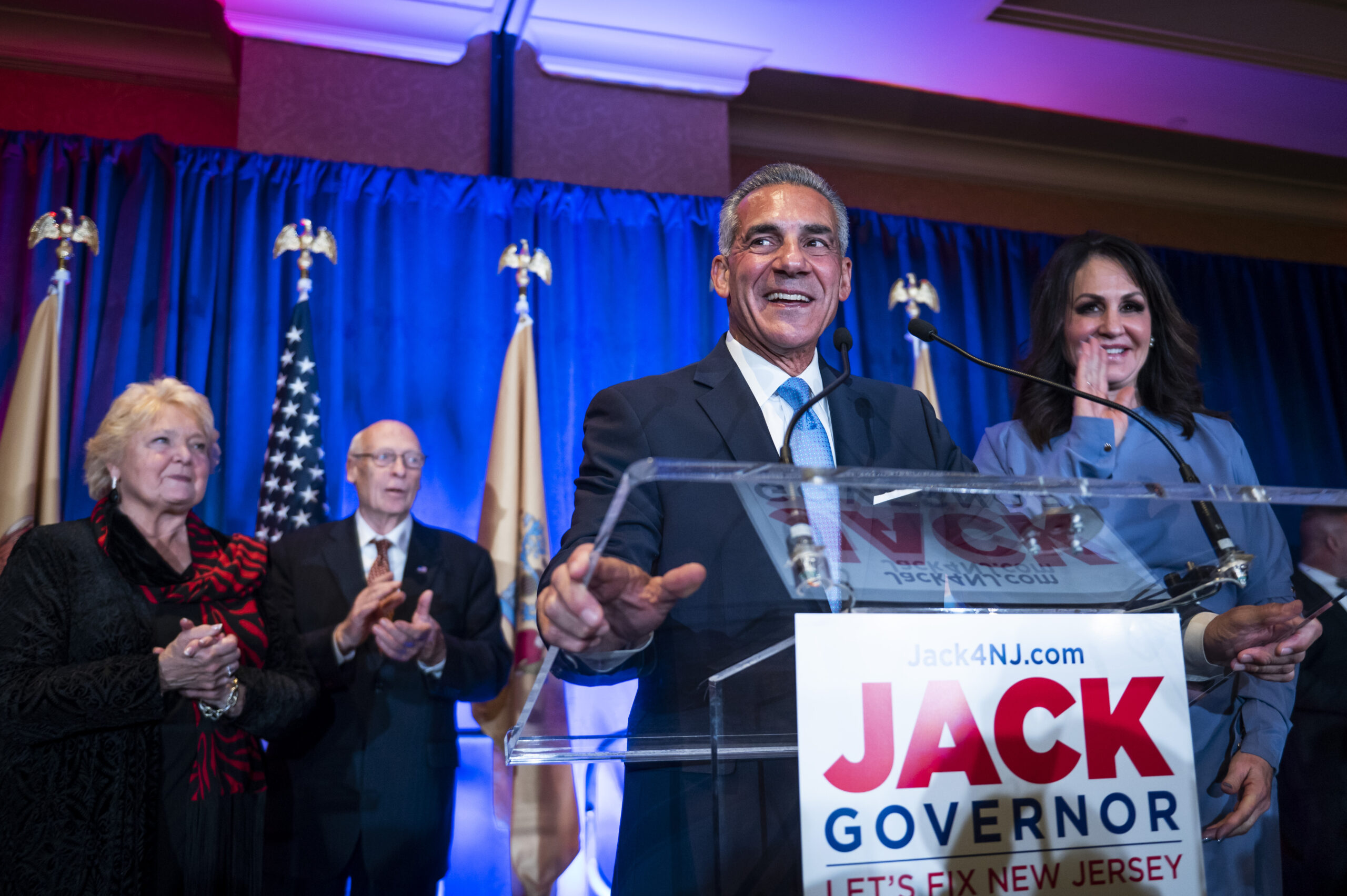
Ibrar Nadeem, a Muslim affairs advisor to New Jersey gubernatorial candidate Jack Ciattarelli, bragged that he wasn’t taking money from Jews at a campaign event last weekend organized by a group called Muslims 4 Jack. Ciattarelli, the Republican nominee, appeared alongside Nadeem on Saturday evening at the event, held in Piscataway, N.J, where he called Nadeem one of his closest advisors. At the event, Nadeem alleged some Muslims in his community had accused him of “taking money from Jews” to support Ciattarelli, which he pointedly denied, Jewish Insider’s Emily Jacobs reports.
What he said: An invitation to the event, which described the gathering as a “community dinner honoring” the GOP gubernatorial hopeful, listed Nadeem’s official title as “executive director” of “New Jersey – Muslim relations.” Nadeem told the crowd, “Every time I got tired, people from my community — when I was blamed that — somebody said ‘You are taking money from Jews.’ I said, ‘I check my bank account every day, brother, it is not there.’”
ACADEMIC ARTBITRATION

A new lawsuit filed by the Council on American-Islamic Relations’ Chicago branch last week alleges that Northwestern University violated Title VI of the Civil Rights Act of 1964 by adopting time, place and manner restrictions on student protest and requiring students to watch an antisemitism training video. The plaintiffs include Northwestern Graduate Workers for Palestine, a doctoral student who “is not Arab, Jewish, or Muslim, but publicly associates with these students” and a doctoral candidate of Syrian and Palestinian descent, Jewish Insider’s Danielle Cohen-Kanik reports.
CAIR’s claims: Title VI prohibits institutions that receive federal funding from discriminating based on a person’s race, color and national origin — understood to include both Arabs and Jews — though the lawsuit claims that “Antizionist Jews are also a cognizable ethnic group” under the statute. The suit also accuses the Chicago-area school of violating Title VI by discriminating against those who “associate with” Jewish and Arab students “who oppose or criticize Zionism.” The suit, filed in federal court in Illinois, claims Northwestern violated students’ rights by requiring them to agree to the school’s code of conduct, which now incorporates the International Holocaust Remembrance Alliance’s working definition of antisemitism, as well as mandatory bias training that includes a video on antisemitism created in collaboration with the Jewish United Fund, the city’s Jewish federation.
Andes to America

Until this month, 21-year-old Agustina Cruz had never left Argentina. Before this year, she had never even been to Buenos Aires, which is more than 900 miles southeast of her hometown of Palpalá, a small city of 60,000 people located in Jujuy, a region known for soaring rock formations. That all changed earlier this year when the university student became the inaugural recipient of the White Rose Award, a prize administered by the U.S. Embassy in Argentina and the Buenos Aires Holocaust Museum. Cruz won the award for advocating for the Romani, a community so marginalized in Argentina that people accused her of “getting into the mouth of the devil” — a Spanish expression — simply for publicly supporting a Roma family in the face of taunting from her classmates. But her planned trip this month to Washington, where she was slated to visit the U.S. Holocaust Memorial Museum and tour the city, almost fell apart due to ignorance and hate, Jewish Insider’s Gabby Deutch reports.
Unexpected hurdle: One of Cruz’s university professors had initially told her that she would get an excused absence for missing class. But once that professor found out that Cruz would be on a trip to learn about the Holocaust, the professor said Cruz could not miss class, because the trip was sponsored by a Jewish organization. “She shouldn’t be discriminated against for doing the right thing herself,” said Marc Stanley, who served as U.S. ambassador to Argentina from 2022 until January of this year. He worked with the Holocaust Museum of Buenos Aires on the award, and accompanied Cruz to Washington earlier this month after she decided to make the trip and risk a failing grade in her course. “In my community, there’s lots of ignorance. They do not respect the Roma community,” Cruz told JI via a translator at the end of an eventful day at the Holocaust Museum in Washington, which included a two-hour private tour and a meeting with a Holocaust survivor.
EXCLUSIVE
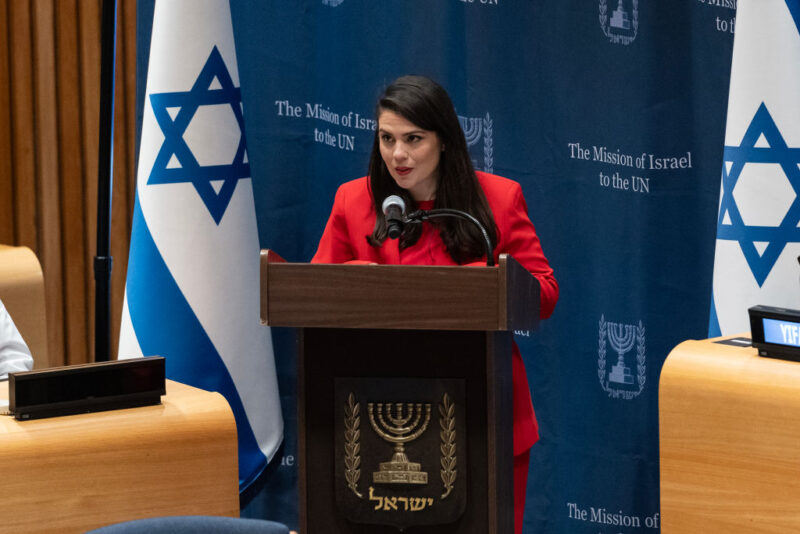
Sheila Katz, the former CEO of the National Council of Jewish Women, will take over as chief Jewish life officer at the Jewish Federations of North America, the organization shared exclusively with eJewishPhilanthropy’s Nira Dayanim. She succeeds Sarah Eisenman, who stepped down last November. Katz will enter the position in December.
Background: Before departing NCJW in early October, Katz led the organization for over six years, spearheading several initiatives supporting women’s reproductive rights, namely Jews for Abortion Access and Rabbis for Repro. Under Katz, NCJW’s membership more than doubled, increasing from 90,000 in 2019 to 250,000 today. Following Oct. 7, 2023, Katz also hosted a session at the United Nations to raise awareness about sexual violence perpetrated by Hamas during the attacks. Beyond NCJW, Katz has also held positions in the nonprofit sector, including serving on the executive committee of the Conference of Presidents of Major American Jewish Organizations, the board of governors of Tel Aviv University and the board of the Leadership Conference on Civil and Human Rights. Katz also worked for Hillel International for 12 years, ultimately serving as vice president for student engagement and leadership.
Read the full story here and sign up for eJewishPhilanthropy’s Your Daily Phil newsletter here.
Worthy Reads
The Trump Doctrine: In The Washington Post, Ned Price, who served in senior roles during the Biden administration, including as State Department spokesman and deputy to the U.S. ambassador to the U.N., looks at President Donald Trump’s foreign policy wins, as well as some stumbles, since returning to office. “First, Trump seems to understand that diplomacy is about engaging with the world as it is, not as we’d like it to be. His administration has employed the diplomatic adage that countries negotiate peace with their enemies, not with their friends. And the administration has spoken with plenty of adversaries — including Hamas, Iran, the Houthis, Russia and Venezuelan strongman Nicolás Maduro. … As we think about America’s next chapter, however, it would be a mistake not to learn from the few elements Trump has gotten right. The challenge for the next administration will be to pair those instincts with principle and purpose, pursuing a foreign policy that consistently delivers for the American people.” [WashPost]
Moral Morass: The Atlantic’s George Packer warns of the “moral collapse” within the MAGA movement — and some elements of broader society — following a series of incidents in which GOP officials’ private conversations, which have included racist, homophobic and antisemitic statements, have been made public. “If the Young Republicans’ texts are seen merely as attacks on the groups they name, then they become the problem of Black and gay people, Jews, and women. But the texts represent a larger atrocity, one that has befallen all of America. Once you base moral judgments on group identity and political convenience, it becomes possible for people on the left to be anti-racist and anti-Semitic, and for people on the right to embrace Muslim haters in Israel and Jew haters in Germany. If moral values aren’t simple and universal — if they require a facility with the language of graduate seminars and single-issue activism — they won’t move the immobilized, alienated, numb Americans who still haven’t given up on their country’s promise. The dehumanization of any group dehumanizes everyone. There will never be an end to learning this lesson.” [TheAtlantic]
Sam’s Club: The Wall Street Journal’s Berber Jin spotlights OpenAI CEO Sam Altman’s efforts to attract tech companies, adding hundreds of billions of dollars to the combined stock prices of some of Silicon Valley’s largest semiconductor and cloud companies. “To achieve his vision of securing seemingly endless computing power for OpenAI, Altman has gone on a dealmaking blitz, playing the egos of Silicon Valley’s giants off one another as they race to cash in on OpenAI’s future growth. The resulting game of financial one-upmanship has tied the fates of the world’s biggest semiconductor and cloud companies — and vast swaths of the U.S. economy — to OpenAI, essentially making it too big to fail. All of them are now betting on the success of a startup that is nowhere near turning a profit and facing a mounting list of business challenges. Investors aren’t bothered.” [WSJ]
Word on the Street
President Donald Trump will appear at a fundraiser for Sen. Lindsey Graham (R-SC) next month, as the veteran senator seeks reelection; the event, a golf tournament, marks Trump’s first in-person fundraiser of the 2026 cycle…
Senate Majority Leader John Thune (R-SD) told reporters that he hoped the Trump administration would withdraw its nomination of Paul Ingrassia to lead the Office of Special Counsel following the publication of racist and antisemitic text messages in which Ingrassia bragged he has a “Nazi streak,” saying that even if a vote were to be held, it would fail…
The Wall Street Journal spotlights the “power struggle” that has emerged between Transportation Secretary Sean Duffy and Jared Isaacman, whose nomination to head NASA was pulled by the Trump administration earlier this year; Isaacman is reportedly back in contention for the role and interviewed last week with Duffy, who has been leading the agency in an interim capacity and wants to continue his leadership of the U.S. space program…
In an interview with J. Weekly, The Jewish News of California, Rep. Ro Khanna (D-CA), who is leading a House push for U.S. recognition of a Palestinian state and has faced recent criticism for his appearance at a conference in which some speakers defended Hamas’ actions as “resistance,” said he believes “that Zionism is self-determination of the Jewish people, and the right for Israel to exist. And I support that”…
Former Sen. John Sununu (R-NH) is expected this week to launch his bid for his old seat, which he lost in 2008…
All but two of the nine universities that were presented by the Trump administration with a “compact” to be prioritized for federal grants in exchange for admissions, programming and staffing concessions declined to endorse the plan; the University of Texas and Vanderbilt University did not reject the proposal outright but appeared to approach it with some hesitation…
Graham Platner, a Democrat running for Senate in Maine, dismissed speculation that a skull-and-crossbones tattoo on his chest is a Nazi symbol; “I am not a secret Nazi,” he told the “Pod Save America” podcast, adding, “Actually, if you read through my Reddit comments, I think you can pretty much figure out where I stand on Nazism and antisemitism and racism in general. I would say a lifelong opponent”…
The New York Times interviews James Snyder, the director of New York’s Jewish Museum, ahead of its reopening on Friday after a two-year renovation process…
The president-elect of the Oxford Union who was ousted in a no-confidence vote that he himself called is disputing the results of the voting…
Tablet looks at the ongoing legal battle over a Baghdad property that had belonged to an Iraqi Jewish family forced to flee during the Farhud that has been used by France as its embassy for more than 50 years…
Israeli Foreign Minister Gideon Sa’ar called for a “renewal” of ties between Israel and Bolivia following the election of Rodrigo Paz as president earlier this week; La Paz severed relations with Israel in October 2023…
Israeli officials identified the body of Sgt. Maj. Tal Haimi, who was killed during the Oct. 7, 2023, attacks and whose remains were repatriated from Gaza on Monday…
The Associated Press reports on satellite images that appear to indicate the construction of an airstrip on Yemen’s Zuqar Island, believed to be backed by anti-Houthi forces in the region…
New York Times investigative journalist Jodi Kantor is moving to the outlet’s Supreme Court team in its Washington bureau…
The Gaza Humanitarian Foundation suspended its operations following the implementation of the ceasefire between Israel and Hamas in Gaza, as it faces financial and leadership challenges, including the departure of Rev. Johnnie Moore as the group’s head…
Ali Shamkhani, the senior Iranian official who led the country’s crackdown on head coverings, is under fire following the leak of video taken from his daughter’s wedding earlier this year, in which he can be seen escorting his daughter, who is wearing a revealing dress and does not have her hair covered, down the aisle; Shamkhani’s similarly dressed wife also appears in the video…
Retired Rear Adm. John Kirby, who served as the national security spokesman during the Biden administration, is joining the University of Chicago as the director of the school’s Institute of Politics…
Chess grandmaster Daniel “Danya” Naroditsky died at 29…
Pic of the Day

King Charles III met on Monday with Rabbi Daniel Walker (pictured) and members of the Jewish community in Manchester, following the deadly attack on the city’s Heaton Park Hebrew Congregation on Yom Kippur in which two people were killed.
Birthdays
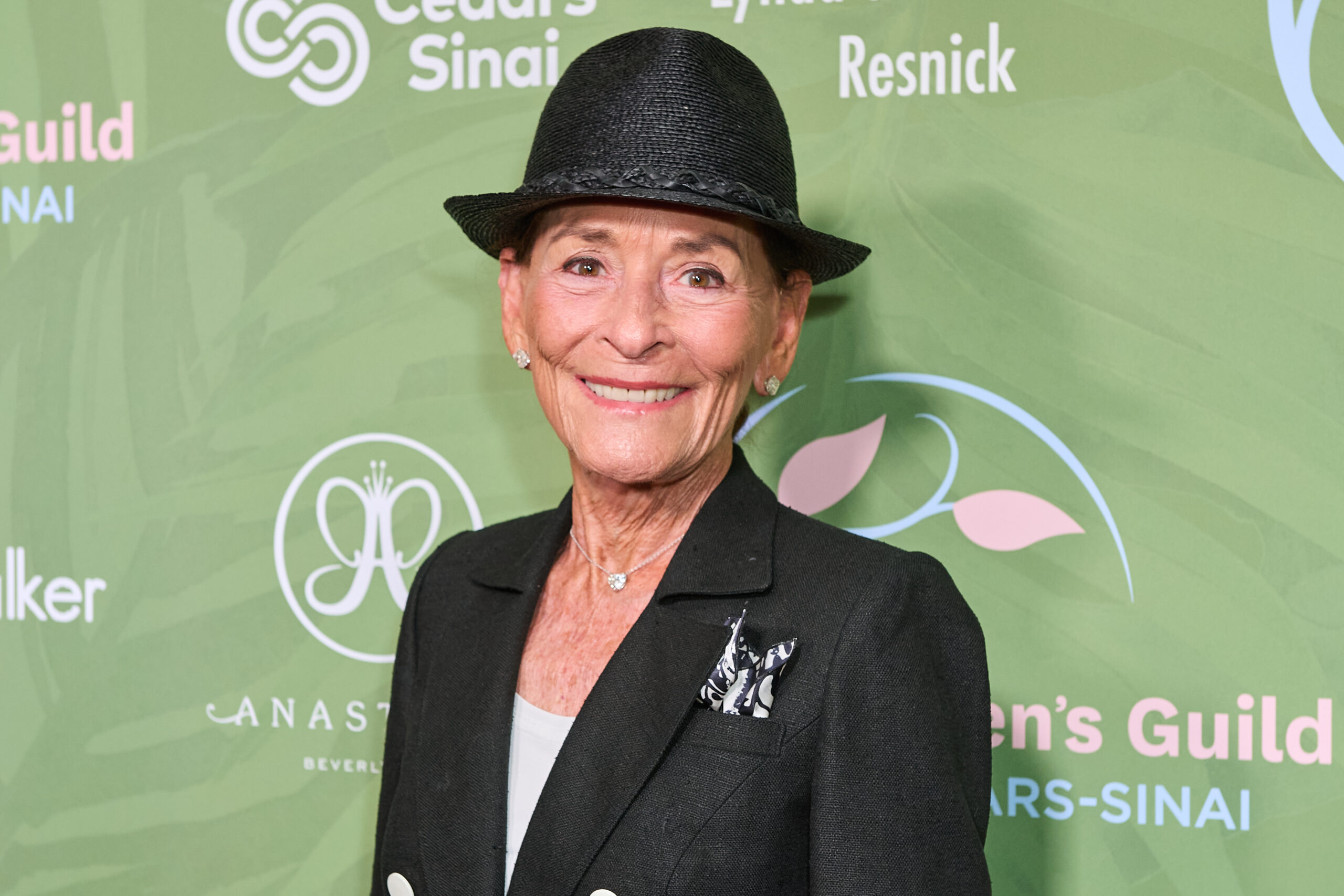
Emmy Award-winning reality courtroom personality, “Judge Judy,” Judith Sheindlin turns 83…
News anchor who worked for 36 years in Philadelphia, and author of three books on the Beatles, Larry Kane (born Lawrence Kanowitz) turns 83… Professor emeritus of Hebrew literature and philosophy at Harvard University, Shaye J. D. Cohen turns 77… Vice-chair of the Architectural and Design Review Commission of Beverly Hills, Terri Smooke… Prime minister of Israel, celebrating both his Hebrew and civil birthdays today, Benjamin “Bibi” Netanyahu turns 76… Novelist, screenwriter, journalist and film producer, Amy Laura Ephron turns 73… Cardiologist and medical director at the Center for Women’s Health at the NYU Langone Medical Center, Nieca Goldberg, MD turns 68… Legislative analyst at InstaTrac, a leading Massachusetts legislative tracking and information service, Brian Rosman… Managing principal and chief investment officer at Penso Advisors, Ari Bergmann Ph.D. turns 64… Chairman and CEO of Pfizer, he was born and raised in a Sephardic family in Thessaloniki, Greece, Albert Bourla turns 64… Austin, Texas-based commercial insurance consultant, Mitchell B. Davis… President and CEO of the North American Values Institute, formerly known as the Jewish Institute for Liberal Values, David L. Bernstein turns 59… Emmy Award-winning television producer, she is best known for her work on “Saturday Night Live” and “30 Rock,” Marci Klein turns 58… Folk and folk-rock musician, he serves as the treasurer of The William Davidson Foundation, Rabbi Ethan Daniel Davidson turns 56… EVP and editorial director at U.S. News & World Report, Dafna Linzer turns 55… U.S. senator (R-NC) since 2023, Ted Budd turns 54… Classical composer, conductor and pianist, she is a graduate of Julliard, Lera Auerbach turns 52… Associate professor at The George Washington University, Alison Barkoff… Mayor of Phoenix, Kate Widland Gallego turns 44… Israeli musician, model and actress, Ninet Tayeb turns 42… Occupational therapist, Yael Hindy Applebaum… VP of external affairs at the Greater Miami Jewish Federation, Joshua Sayles… Dori Tenenbaum… Consultant for nonprofits after stints at the Orthodox Union and then Aish Global, Dan Hazony… Manager of marketing and communications at the Union for Reform Judaism, Eliana Rudee… Actress, model and writer, Hari Nef turns 33… Internal medicine resident at Maimonides Hospital in NYC, Stuart “Shimmy” Jesin…
By Jacob Kornbluh & JI Staff
DEEP DIVE: “How To Lose $1 Billion: Yeshiva University Blows Its Future on Loser Hedge Funds” by Steven I. Weiss in TakePart: “What they couldn’t have known… a decade ago was that the real danger in Yeshiva’s new leadership was not to the school’s spiritual welfare but to its very existence. Over the years to come, the new leadership at Yeshiva would ramp up risk in the school’s investment portfolio, vastly increase spending, and do little to insure against a rainy day. When rainy days did arrive, with the global financial meltdown of 2008, Yeshiva was heavily exposed. Today, its finances are overwhelmed by a sea of red ink. According to a recent announcement by credit ratings agency Moody’s, the school will run out of cash next year. (more…)
Please log in if you already have a subscription, or subscribe to access the latest updates.
 Continue with Google
 Continue with Apple