














































The former vice president criticized her administration's handling of the war and accused Trump of giving Netanyahu a blank check during a speech in South Korea
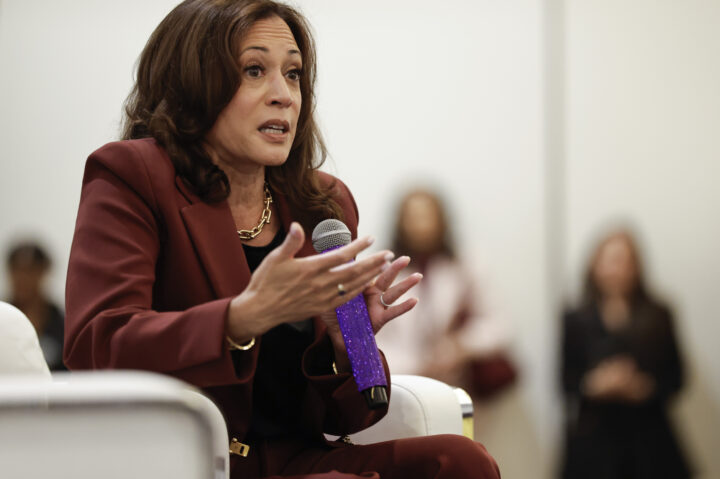
Mario Tama/Getty Images
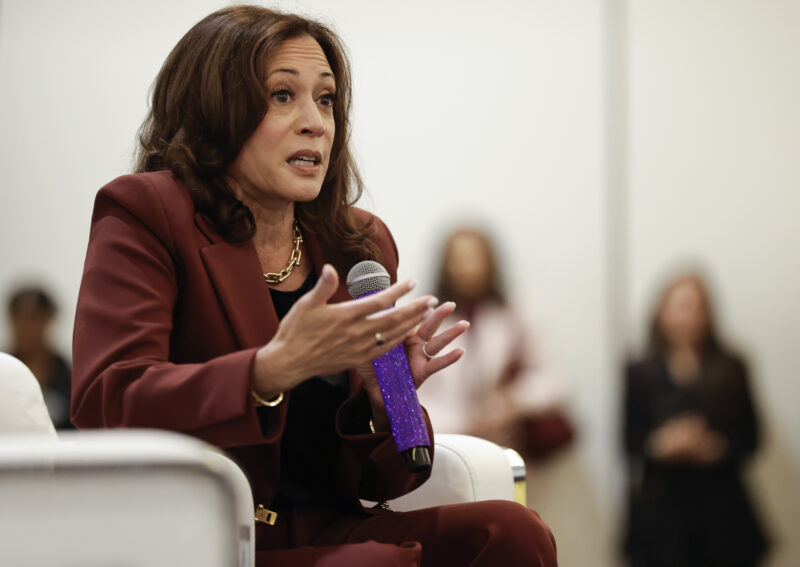
Former Vice President Kamala Harris speaks at the third annual SHE LEADS Conference at SLS Hotel on September 29, 2026 in Los Angeles, California.


 Add JewishInsider on Google
Former Vice President Kamala Harris said Wednesday that the Biden administration should have acted “sooner and more forcefully” to restrain Israel during the war in Gaza, criticizing the Israeli government’s “horrific conduct” and accusing President Donald Trump of giving Israeli Prime Minister Benjamin Netanyahu a “blank check.”
Speaking at the Asan Institute for Policy Studies in Seoul, South Korea, Harris said the United States had fallen short of its “moral obligation to human rights and international law” by failing to use its influence to curb Israel’s actions in Gaza after the Oct. 7, 2023, Hamas attacks. The remarks came during a broader speech focused on American leadership and artificial intelligence.
Harris largely avoided breaking publicly with former President Joe Biden’s policies toward Israel during her unsuccessful 2024 presidential campaign, maintaining her support for Israel’s right to defend itself while expressing concerns about Palestinian civilian casualties.
Since leaving office, Harris has become more critical of the Biden administration’s response to the war.
In her 2025 memoir, 107 Days, Harris criticized Biden’s public remarks about Palestinian suffering, arguing that his expressions of sympathy appeared inadequate compared to his more passionate declarations of support for Israel.
The comments come as Harris weighs another presidential campaign in 2028.
The former secretary of state said a new Israeli government could open the door to more constructive progress, and said peace in the region would require 'tough love’ from Washington
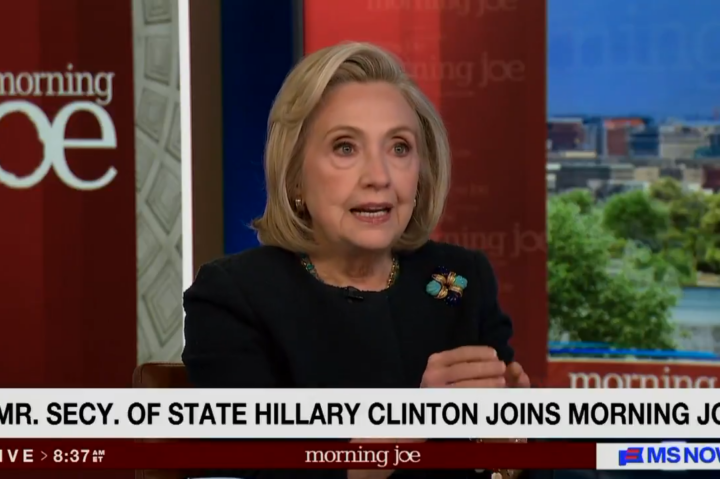
Former Secretary of State Hillary Clinton on "Morning Joe" on Sept. 10, 2026.
Former Secretary of State Hillary Clinton said Thursday that the U.S. should take a “very tough position” if Israeli voters reelect the government led by Prime Minister Benjamin Netanyahu in Israel’s upcoming elections, but said a new Israeli government could provide opportunities for more constructive progress.
“If the Israelis want to vote for that again, then I think the United States has to take a very tough position,” Clinton said during an appearance on MS NOW’s “Morning Joe.” “I think we could work with a new government.”
She argued that it “really does make a difference” who leads the Israeli government and who is in the coalition, highlighting the issue of settler violence in the West Bank.
“There should be no impunity for that kind of violence. It is not just about the death and destruction of the Palestinians, their property, and all the rest of it,” Clinton said. “Any time you let people have that level of violence in a society that you don’t stop, that creeps into the whole society. So it’s unfair, bad and wrong for the Palestinians, and it’s also very dangerous to Israel.”
"If the Israelis want to vote for [Netanyahu] again, then I think the United States has to take a very tough position," former Secretary of State Hillary Clinton said on MS NOW’s “Morning Joe.” “I think we could work with a new government.”
— Jewish Insider (@jewishinsider) September 10, 2026
Read more: https://t.co/xVSAkOpe90 pic.twitter.com/ksUIsfWclQ
The former secretary of state highlighted a report this week in Haaretz that alleged that Netanyahu had been warned that Hamas was planning an attack, and said that Netanyahu “either … didn’t believe it or he — it’s horrible to say — he wanted to see what they could plan so that he could then come down hard and it would enhance his position.” Netanyahu has vehemently denied the reporting.
She called the result a failure of “imagination,” “leadership” and to protect the Israeli people.
Clinton emphasized, “I love Israel and I hate Netanyahu’s government and his policies,” arguing that the current state of affairs is bad for both Israel and the United States.
She said that securing peace would require “tough love” from Washington, “not rejection and not total agreement.”
Clinton also emphasized efforts by her and her husband, former President Bill Clinton, to broker agreements between the Israelis and the Palestinians, which were consistently rejected by the Palestinians.
“We did a lot over many years to try to resolve this very difficult situation,” Clinton said, pointing to her husband’s efforts to broker a two-state solution which were rejected by Yasser Arafat, the late chairman of the Palestine Liberation Organization, and her own work to secure a settlement freeze during her time in office which was met largely with silence from the Palestinians.
“They could not figure out how to take advantage of this opportunity, like they couldn’t figure out how to take advantage of a state that would have been in existence now for 25 years,” she continued.
Can the Israeli electorate overlook the fact that Netanyahu was in charge during the Oct. 7 massacre and was responsible for some of the mistakes leading up to it? That is precisely what Likud is betting on
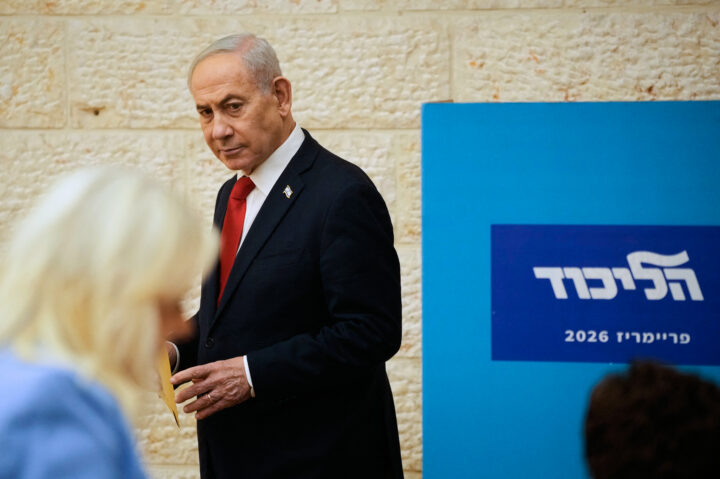
(Ohad Zwigenberg / POOL / AFP via Getty Images)
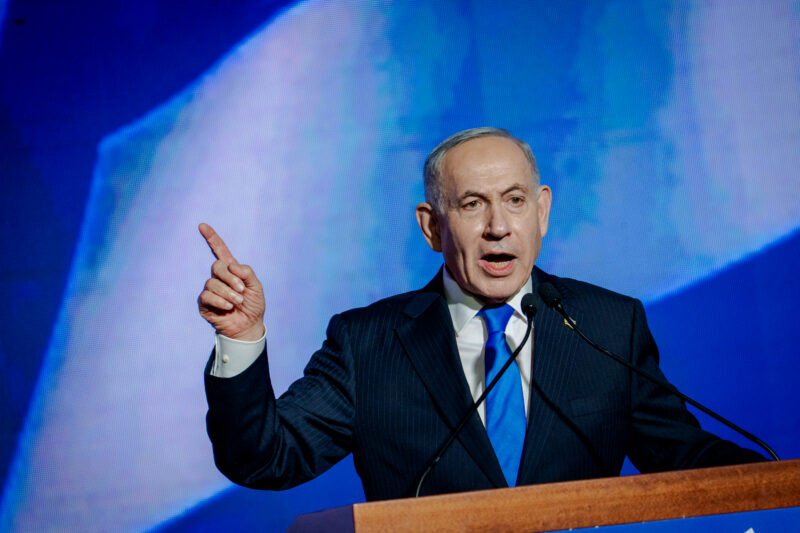
Israeli Prime Minister Benjamin Netanyahu casts his ballot at his party Likud's main polling station during primary elections ahead of Israel's general election in October in Jerusalem on August 17, 2026.
The countdown to Israel’s October elections has begun, bringing with it a central question: Will Prime Minister Benjamin Netanyahu — who, against all odds, remains in office three years after the Oct. 7, 2023, Hamas attacks took place under his tenure — remain Israel’s leader?
Israeli governments have often faced political upheaval after major wars or security crises, but Netanyahu’s current government completed a full term — the first time a government has done so in nearly four decades. But Netanyahu is not out of the woods yet.
“Oct. 7 serves primarily as a reminder that the stakes are genuinely high. Israel is a country where elections are fought over matters of life and death in the most literal sense,” Shmuel Rosner, a pollster and analyst for Israel’s Channel 13, told Jewish Insider.
The leading candidates of the major parties all have defense bona fides: Netanyahu, who has been out of power for only a single year in the last 15 years, has overseen wars in Gaza, Lebanon and Iran; Gadi Eisenkot, who is projected to lead the largest party according to most polls, served as IDF chief of staff from 2015 to 2019 and lost his son, Gal, in Gaza combat; and former Prime Minister Naftali Bennett, who served as a cabinet minister for nearly a decade.
So how is it that the average Israeli voter — with plenty of experience at the ballot box, having endured six election cycles in a decade — is largely maintaining the same voting pattern?
“The discussion is always framed in terms of alternatives. People used to say: ‘What, rockets are being fired at Sderot again and again, and people still vote for Likud?’ It seems crazy, but the answer is yes, indeed,” a political strategist who has worked for Likud and several other parties told JI. “Ultimately, right-wing voters tend to be pragmatic. As a result, they assess the available alternatives. When the alternative is perceived as worse, they will go with the option that feels more natural to them, despite their anger.”
Many Israelis view the upcoming election in this frame of tradeoffs: What is more concerning — another term under a Netanyahu-led government that includes the ultra-Orthodox parties as they continue to push for draft exemptions for their constituents, or a new government that might rely on Arab parties to reach the magic number of 61 members of Knesset needed to form a coalition?
“First, there’s the question of whether a potential voter wants the current coalition to return in an identical or similar composition. Next is whether they want the prime minister to continue in his role. And as usual, there’s the element of fear: How much do they fear the ‘other side’, meaning the possibility of an alternative coalition forming?” Rosner explained. “‘A coalition with Arab parties is the demon of the right; a coalition of ‘extremists’ is the demon of the smaller centrist parties; a ‘coalition with the Haredim’ is the demon of many voters, particularly in the anti-Netanyahu camp, and so on.”
If there is one thing both the Israeli right and left agree on, it is that security issues will dominate this election. In a poll conducted last July and published by Kan 11, voters were asked what key issue would determine their vote in the October elections: One-quarter of respondents cited security issues, while an almost equal share (24%) cited the Oct. 7 failures and the establishment of a commission of inquiry into the terror attacks.
Economic matters trailed in third place at 22%, while judicial reform — an issue that dominated Israeli politics just a few years ago — stood at just 12%.
“Economics isn’t playing a major role in these elections. Security definitely is,” Rosner noted. “Netanyahu faces a challenge partly because he made far-reaching promises that even his supporters realize were not delivered on. If he could show Hamas raising a white flag, or Iran doing the same, or boast a stable peace agreement with Lebanon without Hezbollah on the horizon, he would have something to sell.”
Yossi Tatika, a pollster and strategic consultant at Tatika Consulting and Research, also believes that defense issues remain “the top priority for the Israeli voter, but their meaning has shifted. In my view, the Israeli voter is prioritizing security figures who are not directly tied to Oct. 7. There is a strong appetite for figures perceived as ‘fresh faces.'”
One new candidate on the scene is Ofer Winter, a former high-ranking IDF officer who historically maintained ties with Netanyahu, Avigdor Liberman and Bennett (though some of those relationships have cooled) and has a strong animosity towards Eisenkot, who refused to promote him to a general when he was the IDF chief of staff. Winter announced the launch of his new right-wing party, People of Israel, last week, and some polls project the new contender winning between four and six seats. In an election campaign that feels increasingly unpredictable, he could emerge as the wild card.
Meanwhile, Netanyahu has publicly urged his far-right Cabinet ministers, Finance Minister Bezalel Smotrich and National Security Minister Itamar Ben-Gvir, to merge their parties to hopefully gain more seats in the election, but they have remained defiant.
Still, Netanyahu remains a powerful brand among large segments of the Israeli public, and his entire campaign rests on what he markets as Israel’s achievements over nearly three years of war, including, the assassinations of Hezbollah leader Hassan Nasrallah, Iranian Supreme Leader Ayatollah Ali Khamenei and Hamas head Yahya Sinwar, while touting deterrence this has brought Israel in the region.
Can the Israeli electorate overlook the fact that Netanyahu was in charge during the Oct. 7 massacre and was responsible for some of the mistakes leading up to it? That is precisely what Likud is betting on. The answer will begin to come clear at 10 p.m. on Oct. 27, when the exit polls are released.
The 30 Senate Democrats called on Israel to rescind the settlement construction permits, halt settlement expansion and take action to halt settler violence
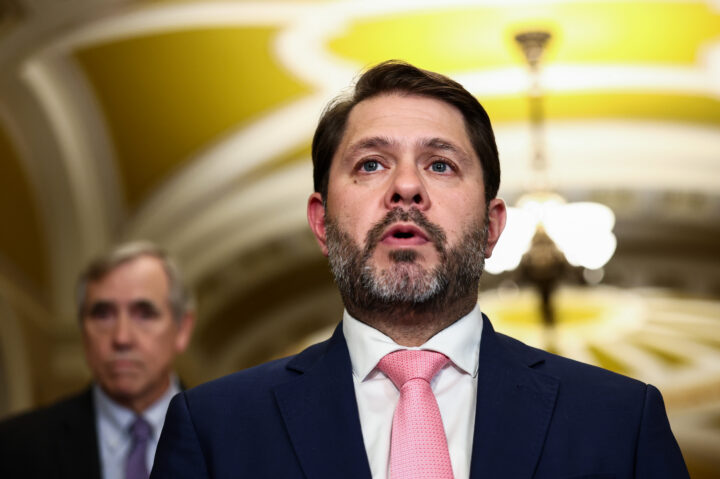
Finn Gomez/Getty Images
Sen. Ruben Gallego (D-AZ) speaks during a press conference on Capitol Hill on July 22, 2026 in Washington, DC.
Sen. Ruben Gallego (D-AZ) led 29 Senate Democratic colleagues on a joint statement on Friday urging the Israeli government to reverse its decision to allow settlement construction in the E1 area, which critics say would imperil the possibility of a contiguous Palestinian state in the West Bank.
“Construction in the E1 area would sever East Jerusalem from major Palestinian population centers and make a viable contiguous Palestinian state under a two-state solution far harder to achieve,” the letter reads. “For decades, Republican and Democratic administrations have recognized that development in E1 would seriously jeopardize the prospects for a Palestinian state. That concern remains just as urgent today.”
The lawmakers called on Israel to rescind the E1 construction permits, halt settlement expansion and take action to halt settler violence. They also called on the Trump administration to take steps to halt such activity including targeted sanctions on individuals and entities.” The lawmakers did not specify who or what should be sanctioned.
“Without a change in course, Israel risks weakening its international standing and undermining its prospects for long-term security,” the lawmakers said.
The lawmakers said that, particularly at a time of “unprecedented” settler violence against Palestinians and Palestinian Americans, moving ahead with construction in the E1 area “risks further destabilizing the West Bank and making a negotiated resolution even more difficult.”
The U.K., France, Germany, Italy, the Netherlands, Canada and Norway issued a joint statement last week similarly condemning the Israeli government’s decision to publish construction tenders for the E1 settlement.
The Texas Democratic Senate nominee said on 'The Breakfast Club' that he ‘would not vote to send weapons to the Netanyahu government’

Brandon Bell/Getty Images
Democratic Texas State Rep. James Talarico speaks during a campaign launch rally on September 09, 2025 in Round Rock, Texas.
James Talarico, the Democratic Senate nominee in Texas, said he would not vote to send further military aid to an Israeli government led by Prime Minister Benjamin Netanyahu, and that aid beyond that should be conditioned on Israeli policies in Gaza and the West Bank.
He also condemned AIPAC, saying it silences criticisms of Netanyahu and Israel.
“I would not vote to send weapons to the Netanyahu government,” Talarico said in an appearance on “The Breakfast Club” podcast last week, adding later in the interview that he wants to stop weapons sales as well.
Pressed on military aid to Israel in general, Talarico said, “I think all of that needs to be conditioned on ending the death and the destruction in Gaza and the West Bank.”
But he continued to decline to describe the war in Gaza as a genocide, citing the ongoing legal case on the subject at the International Court of Justice. He said, however, that there is “certainly evidence to bring those charges” and that the U.S. should “abide by whatever ruling that the court comes to.”
“As a U.S. senator, my job would be to take action,” he continued. “My job would not be to litigate what terms are used. My job would be to stop what’s happening. And that’s why I’ve said I would use every bit of our nation’s diplomatic and financial leverage to protect the lives of Palestinians.”
Talarico has made similar comments regarding aid to Israel earlier in the race, which prompted some Jewish Texans to turn away from him in the primary.
He suggested in the interview that politicians face pressure from AIPAC to not criticize Netanyahu — though even AIPAC-supported Democrats have been highly critical of the Israeli leader.
“The influence of AIPAC in our elections has a chilling effect and people don’t feel like they can speak their minds because they’re worried AIPAC is going to drop hundreds of millions of dollars of money in their race — usually not even talking about the issue of Israel or issues that Jewish Americans face,” he said, referring to AIPAC’s strategy of highlighting issues other than Israel in ads in Democratic districts.
In a statement, Talarico campaign manager Seth Krasne said, “James believes every human life is sacred. His longstanding record combating antisemitism, defending Jewish students on the floor of the Texas House, and supporting Israel’s right to exist demonstrate his steadfast commitment to Jewish safety.”
“He will continue to speak out against Prime Minister Netanyahu’s unacceptable actions that threaten civilians in Gaza — this moral clarity should never be misconstrued as opposition to the safety and security of Israeli civilians and Jewish people around the world,” Krasne continued. “In the coming months, James looks forward to working with Jewish leaders to continue the important work of eradicating hate wherever it rears its ugly head.”
The vice president acknowledged that some conservatives wrongly blame Israel for too many of America’s problems, but argued that pro-Israel advocates are often too quick to accuse critics of antisemitism
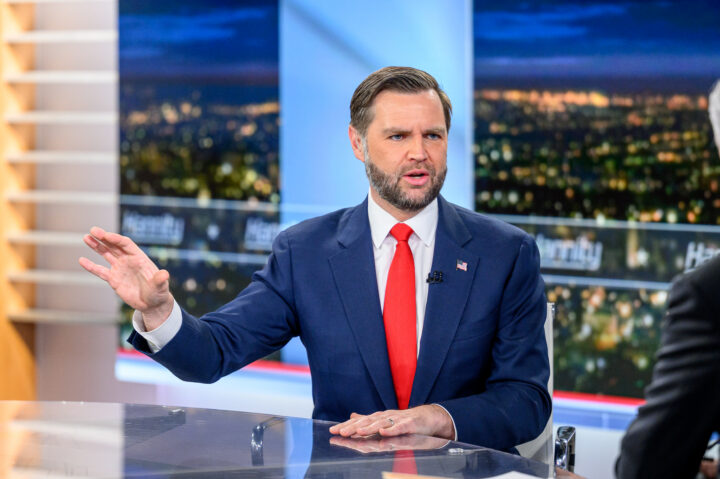
Roy Rochlin/Getty Images
Vice President JD Vance
Vice President JD Vance warned pro-Israel advocates against seeing Israel and the U.S. as always aligned and cautioned against conflating criticism of the Israeli government with antisemitism, saying that “if everything is Jew hatred, then nothing is Jew hatred.”
In an episode of Christian conservative commentator Allie Beth Stuckey’s podcast podcast released on Friday, Vance said that “pro-Israel people in the United States make two critical mistakes. One … is not delineating between America’s interests and Israeli interests, because they’re not always the same.”
“But the second is conflating criticism of a particular government with Jew hatred. Because if everything is Jew hatred, then nothing is Jew hatred,” he continued. “And we have to be very careful not to, you know, in order to serve a certain foreign policy objective, try to criticize somebody as antisemitic when they’re just not.”
Asked by Stuckey if Israel has an “outsized influence in the U.S.,” Vance said, “I certainly think that Israel, like a lot of other countries, tries to influence American politics. I sort of take that as a given. And what I think is that American leaders have to be very careful that when we pursue something, we’re doing it for America’s best interest and not for any other country’s best interest.”
Vance added that the late conservative influencer Charlie Kirk “was very worried about Israeli influence in American politics. He also really disliked antisemitism.”
Stuckey raised the “the obsession that some people have, I would say on the right, with blaming all of their problems on Israel, all of their disagreements with Trump on some secret Israeli influence,” which she said she sees “more prominently on the right than I see the true ‘Israel first’ kind of obsession that you seem to be describing.”
“I see both, and I think both are bad,” Vance responded. But he said he’s “particularly sensitive” to what he views as the elevation of Israel’s interests because he’s “been defending the president’s decision to end the Iran [war], and I find often the arguments are, ‘Well, Israel doesn’t think this is good, therefore it’s bad.’ And my reaction is: Israel’s opinions matter, but fundamentally they are separate.”
“But you’re right. I mean, there are certainly people who take every frustration with the Trump administration, every policy disagreement becomes because of Israel, and that is absolutely wrong. And again, I think that that is one of those things that can bleed into some very dark places,” he continued.
Vance also defended the emerging deal with Iran, prior to departing over the weekend for direct negotiations with Tehran’s representatives in Switzerland. “You do still have terrorist elements within the regime, but you also have pragmatic elements within the regime who are actually affirmatively trying to have a better relationship with the United States,” he said.
Far-left antisemitic streamer Hasan Piker, replying to a video of Vance’s comments about criticism of the Israeli government and antisemitism, wrote on X, “I GOT BANNED FROM THE UK FOR SAYING THIS VERBATIM BTW.”
Armed Services Committee chair Roger Wicker broke his silence on Thursday, warning the deal would make Iran’s Obama-era payoff ‘look like a pittance’

Tom Williams/CQ-Roll Call, Inc via Getty Images
Senate Armed Services Committee Chairman Roger Wicker (R-MS) arrives for a confirmation hearing in Dirksen building on Tuesday, May 13, 2025.
Senate Republicans continued on Thursday to air concerns about the U.S. memorandum of understanding with Iran, in some cases fueled further by Vice President JD Vance’s comments dismissing the effectiveness of U.S. sanctions and lambasting Israeli government officials who have objected to the deal.
Sen. Roger Wicker (R-MS) — the chairman of the Senate Committee on Armed Services — issued a statement ripping into the agreement, saying he’s “concerned [it] negotiates away the victories of Operation Epic Fury in ways that are completely out of step with the president’s goals.” Wicker had for days told reporters he was “withholding comment” on the MOU.
He said that, even though the $300 billion reconstruction fund outlined in the deal is not coming from U.S. taxpayer money, it “would make Iran’s payoff under President [Barack] Obama’s 2015 deal look like a pittance by comparison” and that it “would be an error to force Israel to stand down against Hezbollah.”
He said he also opposes any sanctions relief or unfreezing of funds for Iran “in exchange for Iran’s mere agreement to negotiate for another 60 days. The Iranian regime has not renounced its ultimate goal — ‘Death to America, Death to Israel.’ The regime will invest every penny it receives to further that aim.”
But Wicker pointed ultimate blame for the final shape of the deal at the “intermediaries,” rather than Trump himself.
Wicker told reporters he expects to hear from Vance about the deal but that no briefings have yet been arranged or scheduled.
Reiterating a stance he expressed a day prior, Sen. Ted Cruz (R-TX) said, “History demonstrates giving billions of dollars to theocratic lunatics who want to kill you is an exceptionally bad idea. So I hope we don’t do that.”
Asked about the comments by Vance — a potential candidate in the 2028 GOP presidential primary — Cruz, who mounted his own presidential bid a decade ago and is rumored to be considering a 2028 run, said, “I think the vice president can speak for himself.”
Sen. Thom Tillis (R-NC) said that he plans to go through the agreement in detail to compare it to the 2015 Joint Comprehensive Plan of Action because “what we don’t want to do is repeat that mistake.”
Tillis rejected Vance’s comments that sanctions have not been effective. “You’ve seen all kinds of their behavior changes in reaction to sanctions,” Tillis told Jewish Insider. “To suggest it’s not working would suggest that broadly sanctions don’t work, and we all know that that’s just factually incorrect.”
He told JI that “clearly any sanctions that are subject to congressional approval, he needs to come to Congress. Pretty straightforward. They covered that on ‘Schoolhouse Rock.’”
Tillis, who is retiring, also called the deal a “very important moment” for Vance. “It’s definitely a two-edged sword. Coming up short’s probably not good for him, but it could be a great achievement for him.”
Sen. Mike Rounds (R-SD) told JI he hadn’t heard Vance’s comments on sanctions, but he said that “it seems to me that there are billions of dollars that have been held from Iran, which has not gone to terrorist activities, and I think that is a good thing. So, with regard to that, it clearly had an effect. Whether or not it was completely effective is debatable.”
Rounds said he was concerned that Israel was not a party to the negotiations but “there’s an expectation somehow that there would be a limitation on activity going on in Lebanon that we’re not involved with at all, but that Israel is.”
He emphasized that “the Israeli government has a right to defend its people” from the yearslong ongoing attacks from Hezbollah, “and I don’t see that necessarily correctly addressed within this original memorandum. Perhaps there’ll be more meat on it in an actual agreement.”
The senator said he’s unsure whether the Iran Nuclear Agreement Review Act, which blocks the lifting of sanctions or unfreezing of funds for a congressional review period on any deal pertaining to Iran’s nuclear program, would be applicable, or what legislative steps would be involved if it were.
“We need to learn more about what [Trump’s] intent is and how permanent the two parties expect this to be,” Rounds said. “There’s a lot of questions we don’t have answers to yet, but it’s early in the process.”
He raised concerns about how the agreement would be enforced “particularly if you release all of their funds immediately, they’re allowed to do with it whatever they want. In the past, they’ve used that to fund terrorist activities. The first one that comes to mind is Hezbollah, which sits in Lebanon right now and has been attacking Israel relentlessly for years.”
Sen. John Cornyn (R-TX) said that “everything I’ve heard about it causes me concern” and he believes the president agreed to the deal because he was “concerned about the midterm elections and gas prices and blockage of the Strait of Hormuz.”
“This gets that open, but I think he’s had to pay a very deal price to get that done, and I think we should be clear-eyed and realistic that this isn’t going to persuade the Iranian regime to go in peace,” Cornyn, who is retiring after being defeated by a Trump-backed primary challenger, said.
He said that the steps taken by U.S. military operations to degrade Iran’s ballistic missile program and military-industrial base and delay its nuclear program were positive, but “I think we ought to be realistic about where we are. It’s temporary. It’s certainly not a permanent solution.”
Cornyn said he does not believe that Trump was joking when he said on Wednesday that he would blame Vance if the deal goes awry, and that the outcome of the deal might affect Vance’s prospects in the 2028 presidential race.
Cornyn said he expects that Congress, in its oversight role, will be examining the release of sanctions and whether the administration has the ability to lift those sanctions unilaterally.
Sen. Tom Cotton (R-AR), the Senate Intelligence Committee chair who also had not yet commented on the deal, said on Thursday that he has “concerns” over the MOU, warning that “certain aspects of this deal are a step in the wrong direction.”
The Arkansas senator told Fox News’ “The Story with Martha MacCallum” that Trump “deserves enormous credit for making Iran weaker than it’s been in decades, and we need to make sure that we don’t squander the leverage that we’ve built.” Cotton said he wished that the president “had continued with Project Freedom when it was announced a couple months ago.”
He also called on Trump to “use our military to force the Strait open and to keep it open, in addition to reimposing the blockade in the event that “Iran doesn’t keep its end of the bargain.”
Cotton pointed to the immediate lifting of sanctions on Iran’s oil exports, suggesting the funding would go toward malign activities, and raised concerns about the long-term control of the Strait of Hormuz.
“There’s certain parts of this memorandum that are a bit vaguer about Iran’s ability to access up to $100 billion of frozen funds or whether Iran can impose tolls on the Strait of Hormuz after two months,” Cotton said. “We’ll need more explanation there. I hope President Trump won’t allow those things to happen.”
Sen. Joni Ernst (R-IA) said that lawmakers had “very serious problems” with the JCPOA and the administration will need to come explain the deal because “I don’t want to see JCPOA 2.0.”
Sen. Lisa Murkowski (R-AK) told JI that she expects to find out “a lot more about the real details and particulars in these next 30 days.”
The Alaska senator said Congress needs “to make sure that the way that the president and the United States are interpreting this is in sync with how Iran is interpreting this, and I’m not certain yet that we’re at that place.”
Murkowski said “they can’t tell me” how the sanctions relief and reconstruction funding will work “so I certainly have a lot of questions that have yet to be resolved, but I also appreciate that the agreement allows for this next 30 days to work through reaching it.”
Asked about Trump’s suggestion on Wednesday that he wasn’t opposed to Iran possessing ballistic missiles, Murkowski replied, “That wasn’t helpful.”
Murkowski responded affirmatively when pressed on if those types of comments from the president and senior administration officials gave her pause about what the final agreement could look like.
Sen. Jim Justice (R-WV) said that “if we don’t have absolute assurances” that Iran can never obtain a nuclear weapon “then we lose,” though he said that “there’s still work to be done” in further negotiations.
“If it were to come to pass that we still have all kinds of concerns and no assurances and everything else, then it’s not good at all,” Justice said. “We have to have control one way or another” of Iran’s nuclear materials.
He said he couldn’t address disputes with Israel about the deal directly but said “the Israelis have been wonderful allies, and we’re going to stay arm-in-arm with them, period.”
Democrats, meanwhile, continued to lambast the agreement.
Sen. Richard Blumenthal (D-CT) told JI the administration is “desperate” and “flailing” and criticized the exclusion of Israel from the negotiations given that it continues to face attacks from Hezbollah, from which he said it must defend itself.
He said the agreement’s reliance on the U.N. as an enforcement and verification mechanism also hurts Israel.
“How can Israel trust the U.N.? Working with Israel is simply not in their toolkit. With the hundreds of billions of dollars provided, the unfreezing of sanctions immediately, the lifting of the freeze on assets, I don’t know how Republicans who attacked us with the JCPOA are going to handle that,” Blumenthal said. “This is a regime that continues to call the United States ‘the Great Satan.’ I don’t know what they’re thinking.”
And, he argued, the agreement effectively requires nothing of Iran: “I know the vice president’s line has been, ‘They only get the benefit of the bargain if they keep their side of it,’ but there is no side of it for them. They’re under no obligations here. It keeps the status quo for nuclear arms, lifting sanctions, lifting the freeze on assets, the $300 billion dollars.”
Sen. Chris Coons (D-DE) called the deal “appalling, flawed, pathetic failure” but “the inevitable conclusion of a combination of never making the case to the American people, flawed strategic provision, lack of grasp of the regional dynamics. How many ways can I say bad, bad, bad.”
On the issue of sanctions, Coons told JI, “President Trump cut a horrible deal where he is giving to Iran an enormous amount of released assets that have been frozen, sanctions relief that will generate tens of billions, if not hundreds of billions, and this reconstruction fund In combination, this is a massive infusion of cash to the mullahs and the IRGC. History shows the mullahs will not primarily use this money to build health clinics and schools.”
He said that Vance’s criticisms of Israeli officials are part and parcel of his efforts to sell an unsatisfactory agreement.
“I think JD Vance has been tasked with trying to sell a really bad deal and he is being as aggressive as he possibly can in knocking down one of the more obvious critics — a country that has a lot to lose,” he added. “If their opposition to the JCPOA was in any way principled, then they have to criticize a deal that’s worse than the JCPOA.”
Coons pointed responsibility for countering the deal toward Republicans, emphasizing that Iran will use the funding it receives under the deal for malign purposes. The Delaware senator said that there are “some things” Congress can do including conduct oversight of the congressional sanctions that the deal seeks to lift.
Sen. Cory Booker (D-NJ) echoed colleagues in describing the agreement as an “unconditional surrender” by the U.S. ‘because we get nothing from this deal.”
“All the specific benefits go to Iran. We get vague promises for potentially in the future hundreds of billions of dollars,” Booker said. “We’re allowing an extreme, terrorist supporting regime, that’s more extreme than when we began this, that chant ‘Death to America,’ to have more resources to do more things. So this is perhaps one of the biggest presidential blunders and failures in the last 20 years.”
He said that whether Senate Republicans stand firm and refuse to allow the administration to lift sanctions requiring congressional approval “is going to be the big test.”
“Will they just roll over and lay down for him, or will they stand up and provide the kind of checks, balances, oversight, and accountability when it comes to Iran, that they should be doing?” Booker asked. “They have a lot of levers to pull on the Republican side, where they right now control the Senate and control the House.”
He did not address what Democrats plans’ or role might be.
In the House, pro-Israel Democrats are also outraged by the deal and vowed not to support when it comes before Congress, which they said it must under INARA.
Rep. Josh Gottheimer said he is “totally dumbfounded by this agreement, and, like many, in a state of disbelief,” adding that the U.S. “got nothing” and “not one core objective was meaningfully met.”
He predicted that the next phase of the deal will never come about, and said the U.S. is “selling out Israel” and “kowtowing to Hezbollah terrorists, by tying Israel’s hands in Lebanon.”
Rep. Brad Schneider (D-IL) called it a “surrender agreement” and an “unacceptable capitulation without achieving any of our objectives” that will “facilitate the rebuilding” of Iran’s military and support for proxy groups.
“Unless the agreement is changed to actually close and permanently block Iran’s path to nuclear weapons, I will vote against it,” Schneider said.
Israel’s Foreign Ministry called the piece ‘one of the most hideous and distorted lies ever published against the state of Israel in the modern press’

Avalon/Universal Images Group via Getty Images
New York, United States of America - July 8, 2017. The New York Times building in the west side of Midtown Manhattan.
The Israeli government is initiating a defamation lawsuit against The New York Times following the publication of an opinion column by Nicholas Kristof alleging widespread Israeli sexual violence against Palestinian prisoners, which critics said used dubious sourcing and elevated conspiracy theories.
“Following the publication by Nicholas Kristof in The New York Times of one of the most hideous and distorted lies ever published against the State of Israel in the modern press … Prime Minister Benjamin Netanyahu and Foreign Minister Gideon Sa’ar have instructed the initiation of a defamation lawsuit against The New York Times,” Israel’s Foreign Ministry said in a statement on Thursday.
Israeli Ambassador to the U.S. Yechiel Leiter also responded to the report on Monday with a video statement in which he told viewers not to “buy into” the publication’s “blood libels” and to “watch and find out who’s really behind this narrative.”
The backlash to the piece was swift across the media landscape and Jewish community. In The Wall Street Journal, Rachel O’Donoghue described the piece as a “poorly sourced, fantastical tale.” Media analysts also noted the report leaned heavily on a Hamas-tied advocacy group and a former Palestinian prisoner who has publicly celebrated terrorism.
Despite the criticism, the Times has stood firmly behind its columnist.
“Nicholas Kristof is a two-time Pulitzer Prize-winning journalist who has reported on sexual violence for decades,” the publication’s PR department said in a statement. “He traveled to the region to report firsthand on the stories of Palestinians who suffered abuse, and his article collects accounts in the victims’ own words, backed by independent studies.”
The Michigan Senate candidate also said in the CNN interview that he supports Chris Van Hollen as Senate Democratic leader over Chuck Schumer
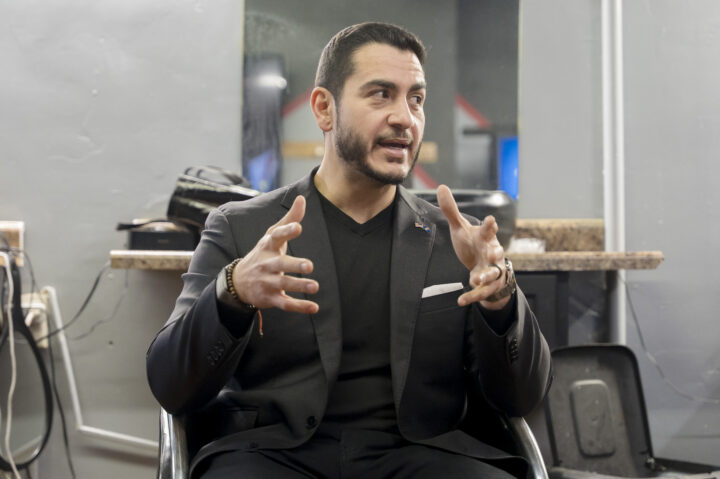
Evan Cobb for The Washington Post via Getty Images
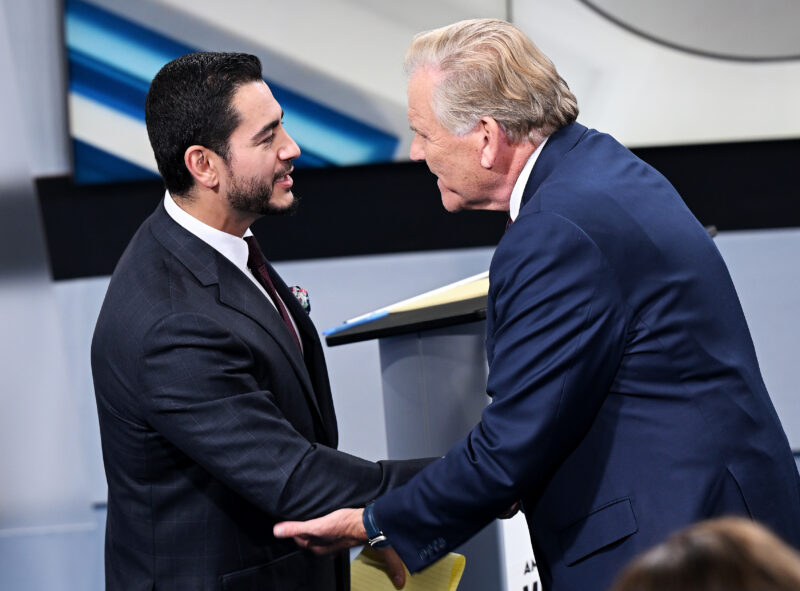
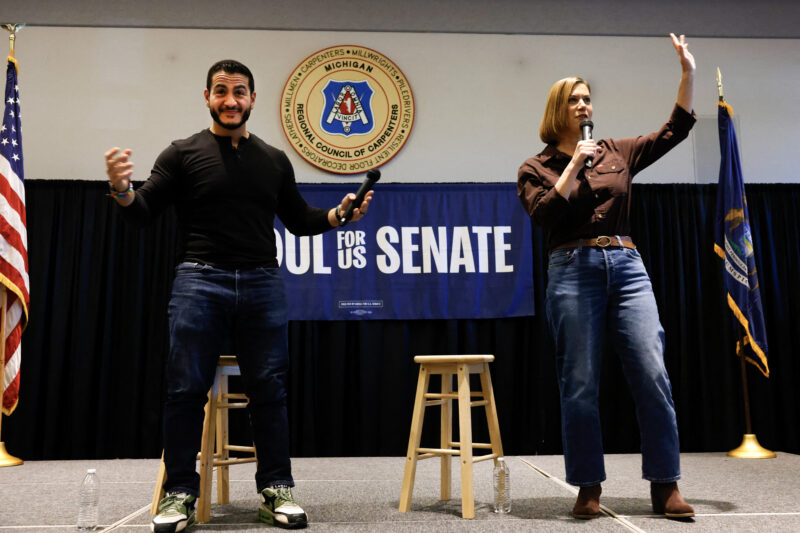
Michigan Senate candidate Abdul El-Sayed speaks with customers and barbers at Blazin Wade Cuts in Grand Rapids, Michigan, on Saturday, Feb. 21, 2026.
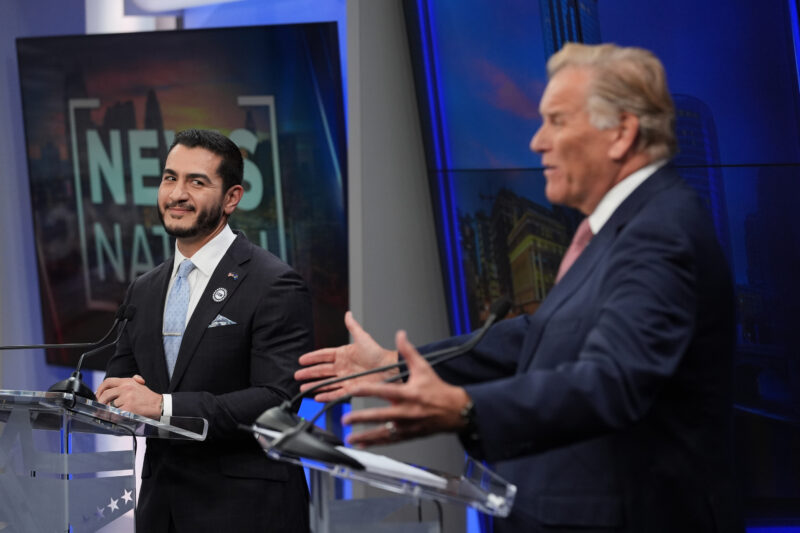
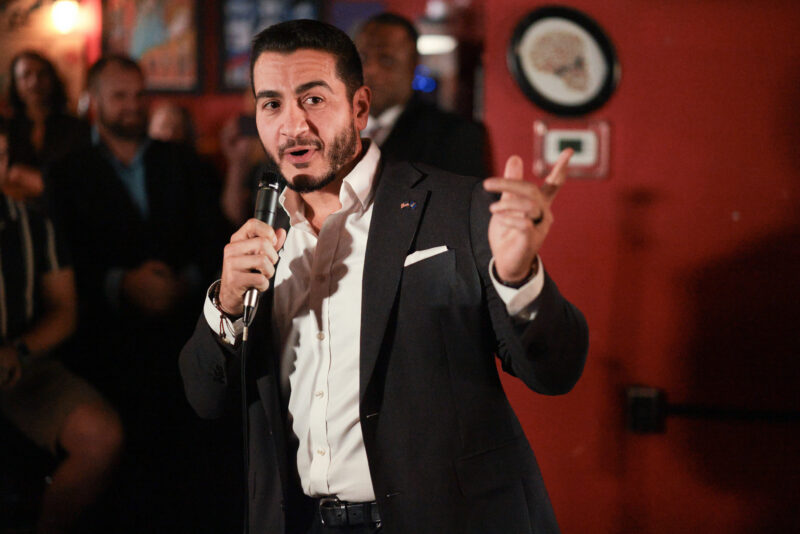
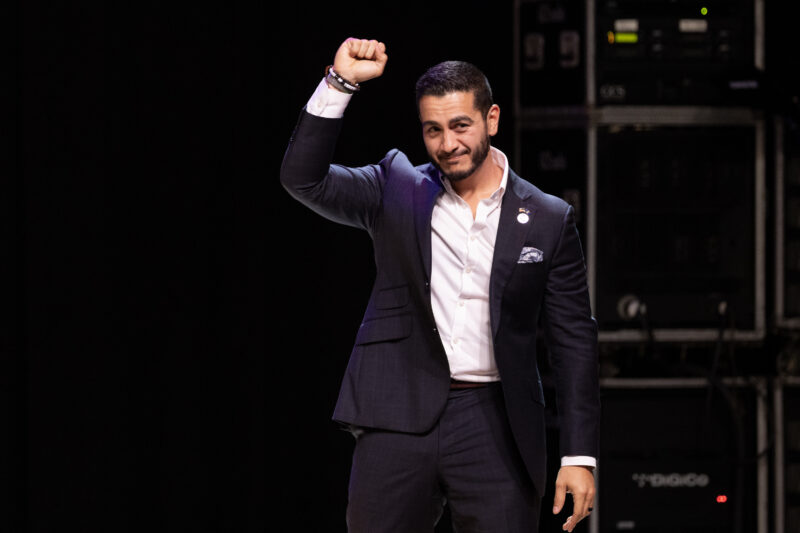
Far-left Michigan Senate candidate Abdul El-Sayed said in an interview with CNN that aired Sunday that he believes the Israeli government is just as evil as Hamas.
Responding to a question from CNN anchor Manu Raju on that issue, El-Sayed answered in the affirmative, adding, “Killing tens of thousands of people makes you pretty damn evil. It’s not, ‘How evil is this one versus that one?’ Hamas — evil. Israeli government — evil. We can say both,” he said.
He also said that he believes Israeli Prime Minister Benjamin Netanyahu is a war criminal and responsible for a genocide.
El-Sayed also defended his decision to campaign with far-left streamer Hasan Piker, brushing off criticisms of Piker as “cancel culture.”
“My understanding of America is, it’s a place where we have freedom of speech. My understanding of America is, it’s a place where we’re willing to have conversations with folks with whom we disagree,” El-Sayed said. “I went on ‘Fox and Friends’ this morning. Is it un-American to go and speak on ‘Fox and Friends’? Or are we drawing certain kinds of lines? And it’s that penchant for cancel culture that I think people hate about Democrats.”
He said that Piker is “having a conversation with a number of folks who feel locked out.”
El-Sayed also said that Sen. Chris Van Hollen (D-MD) should replace Senate Minority Leader Chuck Schumer (D-NY) as the Democratic leader in the Senate, due to Schumer’s continued support for U.S. aid to Israel. Van Hollen is among the most vocal critics of Israel in the Senate.
Michigan has been a closely watched bellwether of the direction of the Democratic Party, and El-Sayed’s candidacy — defined by his virulent anti-Israel rhetoric — will test how hostile Democratic partisans have become toward Israel.
At the state’s Democratic nominating convention on Sunday, which all three Senate candidates attended, Rep. Haley Stevens (D-MI) was booed by a contingent of left-wing activists hostile to her longstanding support for Israel.
Also receiving heckles from a loud contingent of Democratic delegates: a speaker supporting Jordan Acker, who is seeking reelection to the University of Michigan Board of Regents. Acker has been targeted by the university’s anti-Israel activists, facing harassment and vandalism of his home that Michigan leaders have called plainly antisemitic.
Former Vice President Kamala Harris spoke at a party event the day prior to the convention, where she said President Donald Trump “got pulled into” the war in Iran by Israeli Prime Minister Benjamin Netanyahu, adding that the war “has always been [Trump’s] feeble attempt to distract from the Epstein files.”
The statement was issued ahead of Trump’s meeting with Netanyahu
Nathan Posner/Anadolu via Getty Images
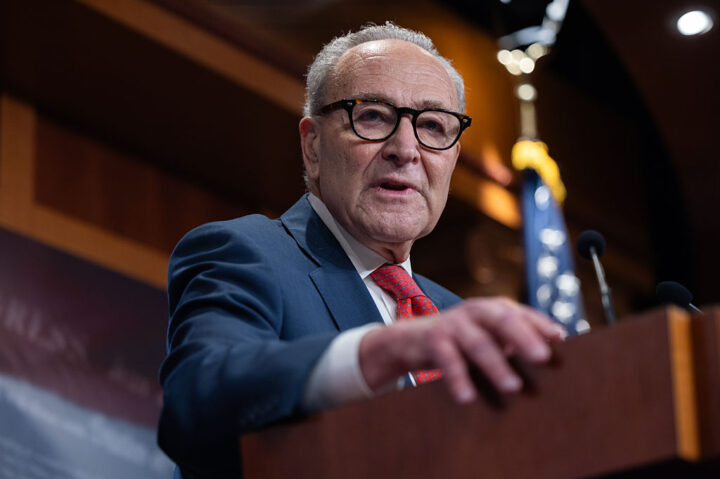
Senate Minority Leader Chuck Schumer (D-NY) speaks at a press conference following recent elections as the government shutdown continues in Washington, DC on November 5, 2025.
A group of eight leading Senate Democrats released a statement on Tuesday evening urging President Donald Trump to “clearly reinforce the opposition of the U.S. government to Israeli government actions that set the conditions for irreversible annexation” of the West Bank when he meets with Israeli Prime Minister Benjamin Netanyahu at the White House on Wednesday.
The statement emphasizes Senate Democrats’ opposition to Israel expanding its control over settlements in the West Bank, which Israel’s Security Cabinet approved measures to help facilitate on Sunday ahead of Netanyahu’s visit to Washington this week.
“We are deeply troubled by the Israeli government’s decision to blatantly consolidate administrative control over and set the conditions to expand settlements into the West Bank,” the senators wrote. “The Israeli government’s actions contravene decades of bipartisan United States policy, including that expressed by President Trump, which asserts the United States supports a two-state solution and that it is not in the U.S. national security interest to support annexation of the West Bank.”
“We have long expressed our concern that these reckless moves make the possibility of a two-state solution, where Israelis and Palestinians can live side by side in peace and security, further out of reach,” the statement continued.
The group said they “urge Prime Minister Netanyahu to reverse course. When President Trump meets with Prime Minister Netanyahu this week, we also urge the President to clearly reinforce the opposition of the U.S. government to Israeli government actions that set the conditions for irreversible annexation.”
The statement was signed by Senate Minority Leader Chuck Schumer (D-NY); Sen. Dick Durbin (D-IL), the Senate Democratic whip; and Sens. Jack Reed (D-RI), Jeanne Shaheen (D-NH), Mark Warner (D-VA), Chris Coons (D-DE), Brian Schatz (D-HI) and Patty Murray (D-WA). The senators who joined Schumer and Durbin are, respectively, the ranking members of the Senate Armed Services Committee, Foreign Relations Committee, Intelligence Committee, the Senate Appropriations Subcommittee on Defense, the Senate Appropriations Subcommittee on State and Foreign Operations and the Senate Appropriations Committee.
Trump has held firm on his opposition to Israeli settlement expansion since saying last September that he would “not allow Israel to annex the West Bank.” Trump reiterated this position in an interview with Axios on Tuesday.
He said following a meeting with Netanyahu at his Mar-a-Lago estate in Palm Beach, Fla., in late December that the two were still on separate sides of the issue, but expressed confidence that all parties would reach “a conclusion,” though he declined to offer specifics.
“Well, we have had a discussion, big discussion, for a long time on the West Bank. And I wouldn’t say we agree on the West Bank 100%, but we will come to a conclusion on the West Bank,” Trump said at the time. “It’ll be announced at an appropriate time, but [Netanyahu] will do the right thing. I know that. I know him very well. He will do the right thing.”
The Oregon lawmaker said the U.S. ‘must send a clear message to Benjamin Netanyahu’ and that his actions ‘have made Jews less safe’
Heather Diehl/Getty Images
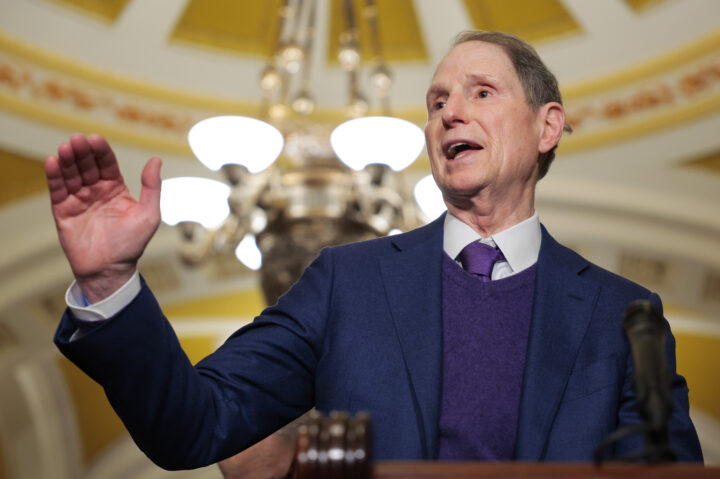
Sen. Ron Wyden (D-OR) speaks to reporters following a Senate Democratic policy luncheon at the U.S. Capitol on December 09, 2025 in Washington, DC.
Sen. Ron Wyden (D-OR) introduced legislation on Wednesday to condemn the Israeli government for allegedly withholding aid in Gaza and to potentially impose sanctions on Israeli government officials.
Under the Accountability for Withholding Aid and Relief Essentials (AWARE) Act, any foreign government officials or those acting on their behalf “found to be restricting, diminishing, undermining, or preventing the delivery and distribution of sufficient humanitarian assistance” would be subject to U.S. financial and visa-blocking sanctions.
The legislation includes a presidential waiver, though that, or the removal of sanctions, can be overridden by a joint resolution of disapproval by Congress. Senior lawmakers would also be allowed to request an assessment of whether a foreign official meets the criteria for sanctions.
The policy would apply globally, but is formulated around the situation in Gaza.
The legislation states that the entire population of Gaza is “facing acute levels of hunger” and that “actual levels of humanitarian assistance remain well below what is needed,” though a U.N. report last week stated that 100% of Gaza’s basic food needs, for the first time since 2023, are now being met.
“The United States must send a clear message to [Israeli Prime Minister] Benjamin Netanyahu and any other leader who would deny food, medicine, and shelter to vulnerable people: If you are complicit in denying humanitarian assistance to Palestinians or others in need, you will face personal consequences,” Wyden said.
Wyden, who is Jewish, has generally not been a prominent critic of Israel in the Senate, and did not vote with a majority of his Democratic colleagues last year to block certain weapons shipments to Israel.
“As Jews, we have a duty to moral leadership. Netanyahu has failed this duty by all counts,” he continued. “As a lifelong champion for Israel’s security, I believe the actions of the Netanyahu government have made Jews less safe and contributed to horrific suffering in Gaza.”
Under the legislation, the administration would also be required to report annually to Congress on any officials violating the policy and justify any case in which sanctions were not imposed — or to explain their reasoning if they fail to add any individuals to the list.
It further states that it will be U.S. policy that “if a government is unable or unwilling to ensure delivery and distribution of sufficient humanitarian assistance to a territory under its control, that government must allow any and all United States and internationally recognized humanitarian organizations to deliver and distribute sufficient humanitarian assistance to the protected persons in that territory.”
Various international NGOs, including Doctors Without Borders (MSF), that are cited in the bill text, as well as the U.N. Relief and Works Agency, have been found by Israel and researchers to have employed members of Hamas and other terrorist groups. Israel recently banned MSF and other international NGOs because they refused to provide information about their staff for vetting.
The legislation condemns both Hamas and Iran, while also condemning Israel for restricting aid flows into Gaza, stating, “actions by the Netanyahu administration that have contributed to the humanitarian crisis and acute suffering of Palestinians are horrifying” and that the Israeli government’s actions are “not consistent with the State of Israel’s core values” and have “eroded the State of Israel’s standing in the world by undermining the rule of law and violating fundamental human rights.”
The legislation is supported by the Friends Committee on National Legislation, New Jewish Narrative, J Street and Refugees International.
“Our Jewish values compel us to stand up against the continued oppressive restrictions on humanitarian aid into Gaza, which exacerbate the destruction inflicted on civilians by two years of war,” J Street President Jeremy Ben-Ami said in a statement. “At a time when humanitarian groups are facing increasing obstacles to providing help on the ground, those who intentionally restrict access to humanitarian assistance must face real consequences.
“Humanitarian aid should never be used as a weapon of war. Nor should the suffering of a people be exploited for diplomatic leverage,” NJN CEO Hadar Susskind said. “Unfortunately, the current Israeli government has a demonstrable record of doing just that. Gazans continue to suffer to this day. By introducing this bill, Senator Wyden is reasserting American values, and backing them up with real consequences.”
Klobuchar: ‘I have supported Israel’s right to defend itself, I always will. But they aren’t changing’

Drew Angerer/Getty Images
Sen. Amy Klobuchar (D-MN)
Sen. Amy Klobuchar (D-MN) said that she voted, for the first time, for resolutions blocking U.S. arms sales to Israel this week to send a message to the Israeli government of disapproval for the humanitarian situation in Gaza, even as she acknowledged that the vote might not make much of an impact.
“I just think it’s really important for people to speak out when they can, even if it’s on a vote that isn’t probably going to make all the difference right now. And it doesn’t mean I’m going to be hard-stop against aid for Israel in the future,” Klobuchar told Punchbowl News.
“At some point, you’ve got to seek change. And I think this is one way you can do it,” she continued. “I have supported Israel’s right to defend itself, I always will. But they aren’t changing.”
She said that she’d tried to communicate her disapproval of the humanitarian situation in Gaza to Israeli Prime Minister Benjamin Netanyahu during his recent visit to Washington, D.C. but said it “didn’t work very well when I said it.”
Klobuchar said in a Senate floor speech several days before the votes that she attended the meeting with Netanyahu “for one reason: in my capacity as No. 3 in the Democratic leadership, and that was to raise the issue of the humanitarian crisis in Gaza.”
“I say to my colleagues you can support the people of Israel. You can be horrified and condemn, as all of us did, the terrorist attack. But we cannot continue to allow people to starve,” Klobuchar said. “Lives are being lost on a daily basis, kids, innocents, and the government of Israel must change course.”
She said that U.S. policy must focus on returning to a ceasefire, increasing humanitarian aid, freeing the hostages and security a two-state solution.
The Minnesota Democrat, a moderate, has historically been a quiet but reliable supporter of Israel. She’s also the No. 3 Senate Democrat, seen as a potential successor to Minority Leader Chuck Schumer (D-NY).
Of the 11 members of Democratic leadership, seven voted for the resolutions on Wednesday.
Klobuchar is running for the No. 2 Senate Democratic leadership slot, competing against Sen. Brian Schatz (D-HI), a consistent supporter of prior efforts to halt weapons sales, and Sen. Patty Murray (D-WA), who, like Klobuchar, flipped her vote to support the Sanders resolutions after previously opposing them.
Biden: 'No democracy should deny entry to visitors based on the content of their ideas'

J. Scott Applewhite
Rep. Ilhan Omar, D-Minn., during a news conference at the Capitol in Washington, Monday, July 15, 2019. All are American citizens and three of the four were born in the U.S.
Democratic presidential candidates universally condemned the decision by the Israeli government to bar two members of the House of Representatives, Rashida Tlaib (D-MI) and Ilhan Omar (D-MN), on Thursday.
The decision came just before the two were scheduled to visit Israel and the West Bank on a trip organized by Miftah, a Palestinian nonprofit organization.
The two were denied entry under an Israeli law that blocks individuals who advocate for boycotting the country. Tlaib and Omar both support the Boycott, Divestment, Sanctions (BDS) movement against Israel.
Former Vice President Joe Biden said he has “always been a stalwart supporter of Israel — a vital partner that shares our democratic values. No democracy should deny entry to visitors based on the content of their ideas — even ideas they strongly object to. And no leader of the free world should encourage them to do so.”
Senator Elizabeth Warren (D-MA) tweeted: “Israel doesn’t advance its case as a tolerant democracy or unwavering US ally by barring elected members of Congress from visiting because of their political views. This would be a shameful, unprecedented move. I urge Israel’s government to allow @IlhanMN and @RashidaTlaib entry.”
This was echoed by Senator Bernie Sanders (I-VT), who argued on Twitter that “banning Congresswomen Omar and Tlaib from entering Israel and Palestine is a sign of enormous disrespect to these elected leaders, to the United States Congress, and to the principles of democracy. The Israeli government should reverse this decision and allow them in.”
Senator Kamala Harris (D-CA) focused on the principle of members of Congress being refused entry to any country. She tweeted: “I don’t believe any nation should deny entry to elected Members of Congress, period. It’s an affront to the United States. Open and engaged foreign relations are critical to advancing U.S. interests. Trump is playing politics as he weakens our global leadership.”
Others, including former Congressman Beto O’Rourke (D-TX) focused on President Donald Trump’s criticism of the two members of congress. “President Trump, you show great weakness every single day — when you attack women of color, when you degrade the office of the president, and when you ask our allies to stoop to your level,” tweeted O’Rourke. This was echoed by businessman Tom Steyer, who said in a statement, “Donald Trump’s demand that Israel bar the entry of Representatives Omar and Tlaib as U.S. officials is an affront to core American ideals. His divisive demands of our allies are contrary to the principles of free speech and open, vigorous dialogue.”
Perhaps the strongest statement came from Washington Governor Jay Inslee, who said on Twitter that the decision was “state sanctioned Islamophobia” by Israel. Both Omar and Tlaib are Muslim.
Please log in if you already have a subscription, or subscribe to access the latest updates.
 Continue with Google
 Continue with Apple