


































































Right and left rail against Israeli plan to seize control of Gaza City to further pressure Hamas
GIL COHEN-MAGEN/AFP via Getty Images
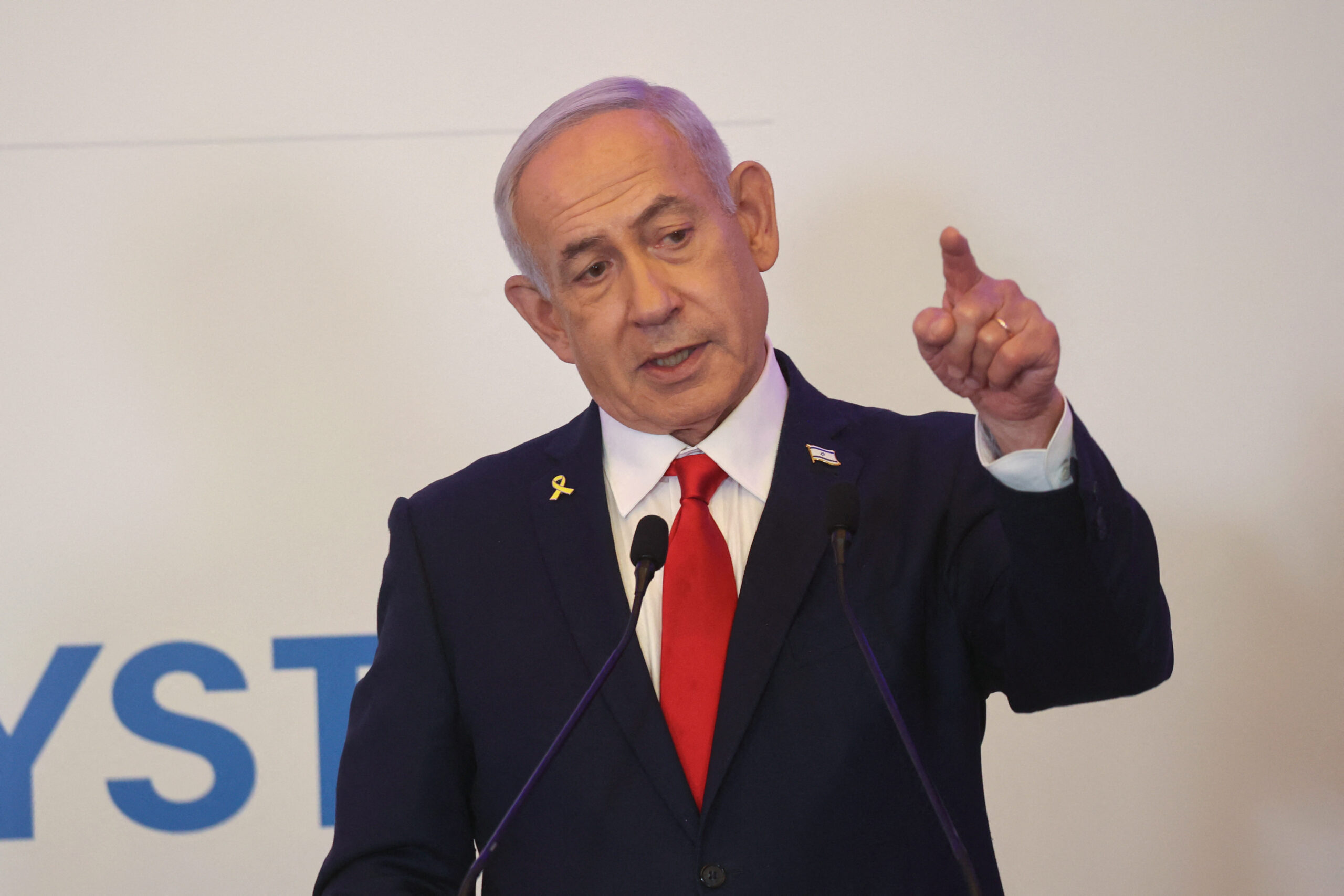
Israel's Prime Minister Benjamin Netanyahu speaks during an event at the Waldorf Astoria Hotel in Jerusalem on July 27, 2025.


 Add JewishInsider on Google
Israel’s decision to take control of Gaza City is meant to prevent further prolonging the war, Israeli Prime Minister Benjamin Netanyahu said on Sunday.
The prime minister’s comments come as elements of the Israeli right and nearly all of the left have railed against the decision, further destabilizing the prime minister’s hold on Israel’s leadership.
In a video statement on Saturday night, Israeli Finance Minister Bezalel Smotrich said he had “lost trust that the prime minister can and wants to lead the IDF to a decisive victory.”
At the same time, tens of thousands of Israelis took to the streets of Tel Aviv to protest against the Cabinet’s decision, calling for an immediate hostage deal.
Speaking Sunday at a press conference for foreign media in Jerusalem, Netanyahu said that “Hamas still has thousands of terrorists in Gaza … Hamas is refusing to lay down its arms, so Israel has no choice but to finish the job.”
”Contrary to false claims,” the prime minister argued, “this is the best way to end the war and to end it speedily.”
Rather than take control of Gaza City, part of the remaining 25% of Gaza that Israel does not control, IDF Chief of Staff Lt. Gen. Eyal Zamir presented to the Security Cabinet on Thursday night a strategy of surrounding those areas, while expressing concern about the safety of the 20 hostages believed to still be alive if a military takeover is attempted.
As to whether Israel’s new plan puts hostages in further danger, Netanyahu said that “the option of just doing a war of attrition from a defensive position has not proved itself. It won’t bring [the hostages] out … [It will lead to a] protracted conflict that won’t bring the war to an end.”
”I don’t want to prolong the war. I want to end the war, and I think the other option would have prolonged the war,” he added. “Prolonging the war means that many of them could be starved to death.”
Netanyahu also emphasized Israel’s “five principles for concluding the war,” authorized by the Security Cabinet, which he said were his “day-after plan” for Gaza. They consist of disarming Hamas, returning the hostages, demilitarizing Gaza, Israeli security control of the enclave and establishing a civilian administration for Gaza led by neither Hamas nor the Palestinian Authority.
Though Netanyahu said in an interview with Fox News last week that Israel plans to take control of all of Gaza, the Security Cabinet decision announced early Friday morning fell short of that.
The Security Cabinet voted early Friday, after a 10-hour meeting that began the previous day, for the IDF to “prepare for taking control of Gaza City while distributing humanitarian assistance to the civilian population outside the combat zones.”
Netanyahu continued to speak of the IDF seizing all of Gaza on Sunday, presenting an image of the “remaining Hamas strongholds” of Gaza City and the “central camps and Moassi,” a second enclave. A spokesperson for the prime minister clarified to Jewish Insider after the press conference that “the decision that was authorized is about Gaza City. Later, if needed, the central camps as well.”
Netanyahu said that, as Israel did before maneuvering into Rafah over a year ago, it plans to move the population out of Gaza City, “safeguard the civilian population and let us go, at last, into the most important stronghold of Hamas.”
Gaza City is only part of the remaining 25% of Gaza not currently controlled by the IDF. Reports indicate that the IDF said it will take two months to move the civilian population out of the city; Netanyahu said he instructed the military to do it in less time because he wants to finish the war as soon as possible.
That two-month window leaves an opening for another ceasefire deal as Qatar, Egypt and the U.S. are reportedly working on reviving negotiations.
The plan was supported by “a decisive majority of Security Cabinet ministers,” according to the Prime Minister’s Office.
Smotrich accused Netanyahu of “making a U-turn” from a plan they devised together “to go all the way,” involving “dramatic moves to bring victory in Gaza, a combination of a quick military victory and an immediate diplomatic move to exact a painful price from Hamas, destroy its military and civilian capabilities, and put unprecedented pressure to free the hostages.”
Instead, Smotrich argued, the Security Cabinet chose to support “an immoral, unreasonable folly,” that would involve “sending tens of thousands of fighters to maneuver in Gaza City while endangering their lives and paying heavy diplomatic and international prices, only to pressure Hamas to free hostages and then retreat.”
“I cannot back this decision. My conscience doesn’t allow it … No more stopping [the war] in the middle … We must make a clear, sharp move to defeat Hamas and bring the hostages home all at once,” he stated.
Despite saying that he lost trust in Netanyahu, Smotrich did not say he was leaving the coalition. Instead, he called for another Security Cabinet meeting to further discuss Israel’s next steps in Gaza.
Israeli National Security Minister Itamar Ben-Gvir, who, like Smotrich, has pushed for more aggressive moves in the war in Gaza, told Army Radio on Sunday that Smotrich turned down his offer to present an ultimatum to Netanyahu to quit the government if it does not accept a plan to “go in, destroy, conquer.” Smotrich and Ben-Gvir have called for Israel to fully occupy Gaza and build Israeli settlements in the enclave.
Smotrich’s outspoken criticism is a signal of the growing leverage he holds within Netanyahu’s volatile government. Netanyahu currently has a minority coalition, holding just 60 out of the Knesset’s 120 seats, making his political situation tenuous. The United Torah Judaism and Noam parties left the coalition last month over disputes relating to sanctions for Haredim who do not serve in the IDF.
Tzvi Sukkot, a lawmaker from Smotrich’s Religious Zionism Party, wrote in a post on X on Sunday morning, “if we are going back to Oct. 6, 2023 and decide to give up on the war aims, it is an existential threat to the State of Israel. If that is the situation, in my humble opinion, we must go to an election.”
Israeli opposition leader Yair Lapid wrote Smotrich a letter asking for his support for a bill to disperse the Knesset, which would trigger an election.
“You admitted that the prime minister’s policy is not bringing a decisive victory in Gaza, is not bringing back our hostages and is not winning the war,” Lapid wrote. “You added that you cannot stand behind the prime minister and back him anymore. In light of this, I call you to join me in a letter to the Knesset speaker in which we can say there was a significant change in circumstances that justifies bringing up the bill to disperse the Knesset again.”
At the same time, the political opposition and the Hostages Families Forum spoke out against the more aggressive approach in Gaza approved by the Security Cabinet, pointing to Zamir’s opposition to the move.
Lapid called the decision “a disaster that will lead to many additional disasters.”
“In total opposition to the opinion of the military and security levels, without consideration for the exhaustion and attrition of the fighting forces, Ben-Gvir and Smotrich dragged Netanyahu to a move that will take many months, will lead to the death of hostages, to many soldiers killed, will cost tens of billions of Israeli taxpayer money and will lead to diplomatic collapse. That’s just what Hamas wants,” Lapid said.
“As we approach the tragic one-year anniversary of the murder of six hostages who were executed by their captors, the expansion of fighting only further endangers those still held in Gaza’s tunnels,” the forum stated. “Hamas continues to exploit military escalation as justification for its brutal treatment of our loved ones … Our government is leading us toward a colossal catastrophe for both the hostages and our soldiers. The Cabinet chose last night to embark on another march of recklessness, on the backs of the hostages, the soldiers, and Israeli society as a whole.”
Tens of thousands gathered for the weekly demonstrations in central Tel Aviv Saturday night, blocking the city’s central artery, the Ayalon Highway. Some of the hostages’ relatives called for a general strike on Sunday and for soldiers to refuse orders.
Shai Mozes, nephew of released hostage Gadi Mozes, said that following the Security Cabinet decision, “the mission you’ll be given is participation in killing the hostages. In this situation, there is no choice but to refuse.”
Several hostages’ relatives expressed support for a general strike, as did Lapid. The Hi-Tech Forum, representing dozens of Israeli tech companies and hedge funds, said they would allow their employees to miss work if a strike is held.
The Histadrut, Israel’s national labor union, declined to support a strike, following a court ruling last year that they can only strike for explicitly labor-related reasons.
Netanyahu also discussed the humanitarian situation in Gaza in the press conference Sunday, saying that Israel’s “policy throughout the war has been to prevent a humanitarian crisis while Hamas’ policy is to create it.”
Israel is working to avoid a humanitarian crisis by designating safe corridors for aid distribution, increasing safe distribution points managed by the Gaza Humanitarian Foundation and continuing airdrops by Israel and other countries, he said.
”The only ones being deliberately starved in Gaza are our hostages,” Netanyahu argued, displaying a screenshot from a video Hamas released last week of hostage Evyatar David and contrasting his emaciated arm with the much thicker one of his captor.
Netanyahu also displayed photographs of children from Gaza who appeared in the foreign media alongside claims that they had been starved by Israel, and listed the congenital diseases from which they suffered that were not originally reported. He said his office is looking into whether Israel can sue The New York Times over the matter.
The prime minister compared the claims to blood libels: “We were said to be spreading vermin in Christian society; we were said to be poisoning the wells; we were said to slaughter Christian children for blood. That was followed by massive violence, pogroms, displacement, followed by the worst of all, the Holocaust.”
”The international press is falling for Hamas propaganda, hook line and sinker,” he added, standing next to the text “Open your eyes to Hamas’s lies.”
Netanyahu also said he had ordered the IDF to allow more foreign journalists into Gaza.
However, he stated, “We will not commit suicide to get a good op-ed.
Please log in if you already have a subscription, or subscribe to access the latest updates.
 Continue with Google
 Continue with Apple