









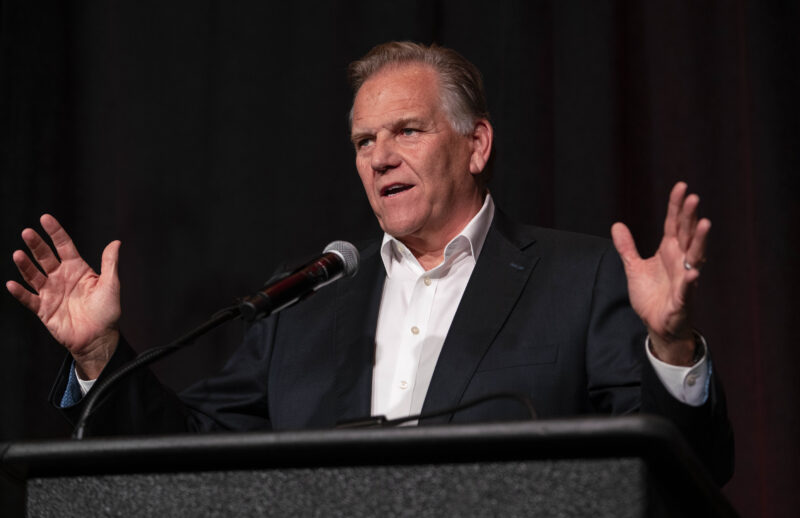






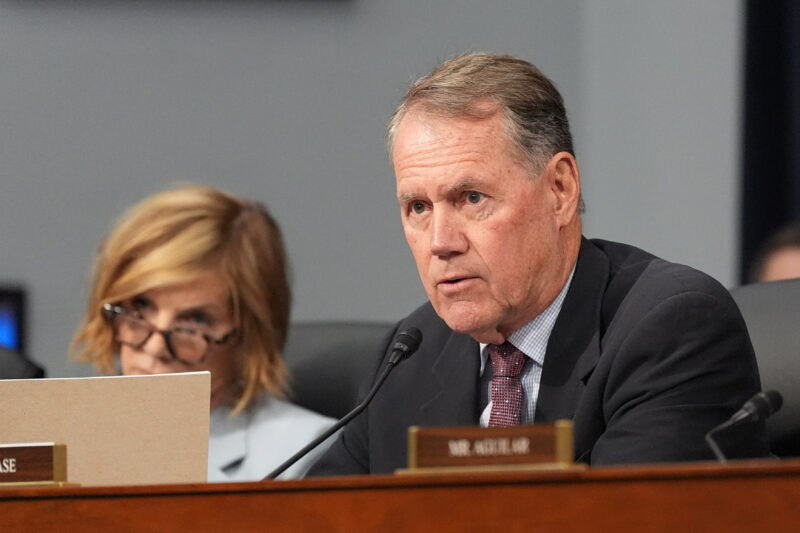
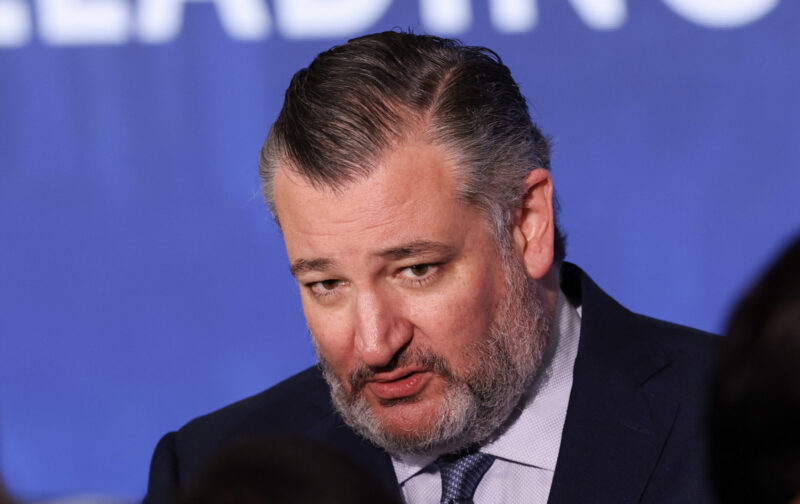
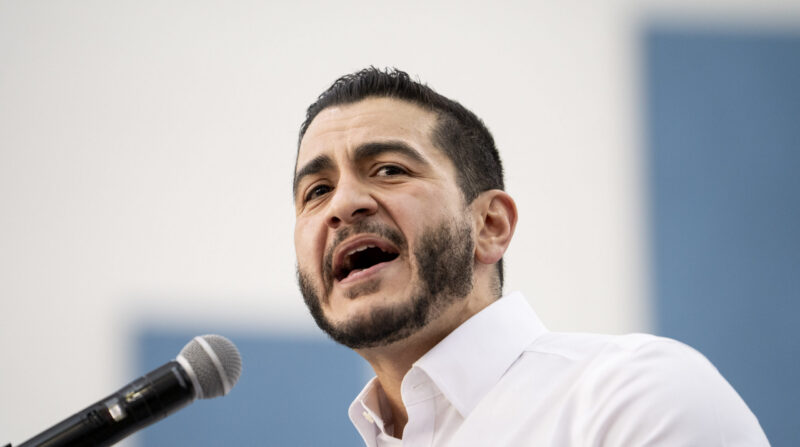















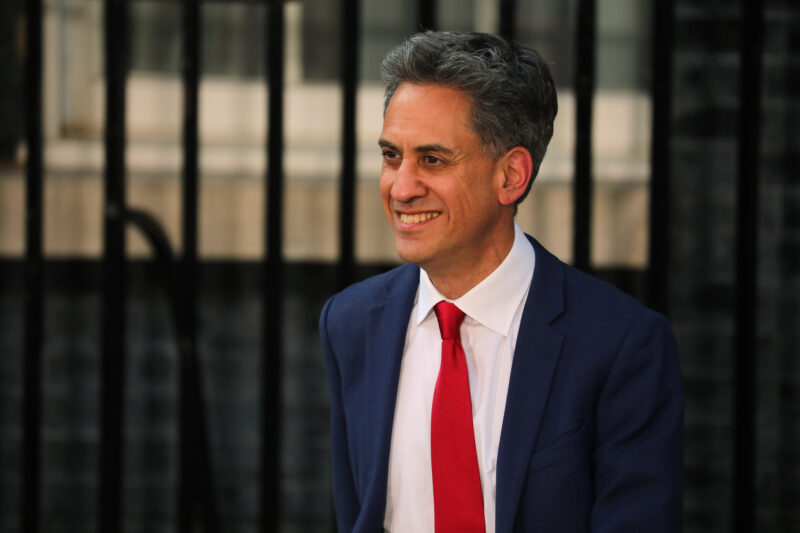











The Oklahoma senator also told JI that his colleagues have more work to do on raising awareness about efforts to designate the Muslim Brotherhood as a terrorist organization

Andrew Harnik/Getty Images
Sen. James Lankford (R-OK) speaks during a news conference on Capitol Hill on May 1, 2024 in Washington, DC.


 Add JewishInsider on Google
As the international community looks to advance the ceasefire plan in Gaza, Sen. James Lankford (R-OK) emphasized the need for continued pressure from countries like Turkey and Qatar on Hamas to comply with the terms of the ceasefire requiring it to disarm.
But he also warned that there should be limits on the ways in which Turkey and Qatar are involved in the future of Gaza, arguing that they should have no role in certain sensitive areas, even as they remain involved in reconstruction work.
Lankford, in an interview with Jewish Insider this week, said that Hamas’ release of the final remaining deceased hostages will be an inflection point necessitating movement into the next phase of the ceasefire plan presented by the United States.
“The requirement for Hamas to disarm is still there. It has to be there, both for the people that live in Gaza that are Palestinian and for the security of the entire region,” Lankford said.
He said that ensuring that Hamas disarms, something it has thus far refused to do, will require military, diplomatic and financial pressure, particularly from countries like Turkey and Qatar that have been Hamas patrons.
“If the Turks want contracts to be able to rebuild in Gaza, which they do, then that’s not going to happen until Hamas is actually disarmed, so Turkey’s got to decide, ‘Do you want those contracts to be able to rebuild or not?’ If they do, then here’s what that requirement is going to be,” Lankford said.
He said that providing a higher level of security and freedom of movement on the Israeli-controlled side of Gaza will also help to increase pressure on Hamas. And he said that any further violations of the ceasefire agreement by Hamas should be met with “immediate, serious consequences.”
Turkey and Qatar’s roles in the future of Gaza should be limited to certain sectors, Lankford added, given the countries’ hostility to Israel and support for Hamas. He said he’s comfortable seeing Ankara assist with reconstruction, but it should not be involved in running hospitals, schools or mosques or in rebuilding the economy.
“We’re going to have to figure out what are roles that they can do and they cannot do,” Lankford said. “There are certain roles they just should not be a part of.”
He said he’s not yet able to name specific countries that he would be comfortable seeing taking on more sensitive tasks — though he noted Indonesia’s interest — and said it’s “going to take a multinational force.”
“It’s going to be a trusted force. It’s not going to be American forces in the middle of that. It needs to be a trusted force from the region as much as possible, but that’s going to have to be somebody that’s tenacious enough to say, ‘No, we’re going to actually bring some stability to this area,’” Lankford said. “And I don’t know who that is yet.”
He said that there are “plenty of Arab countries that don’t like the Muslim Brotherhood and don’t like all of its offshoots” — including Hamas — but the question will be whether they’re “willing to be able to put their sons on the line” to confront the terrorist groups in Gaza.
Asked about efforts to counter the Muslim Brotherhood at home — several of Lankford’s colleagues have introduced legislation to designate the group as a terrorist organization and have pushed for similar action by executive order from the White House — Lankford said that supporters of the effort have more work to do to raise awareness.
“I think the first issue for me is really to keep raising it, to be able to continue to raise awareness of it, because you’re not going to build momentum among 100 senators if it’s the first time they thought about it,” Lankford said. “So we’re going to have to build some of that momentum for a while.”
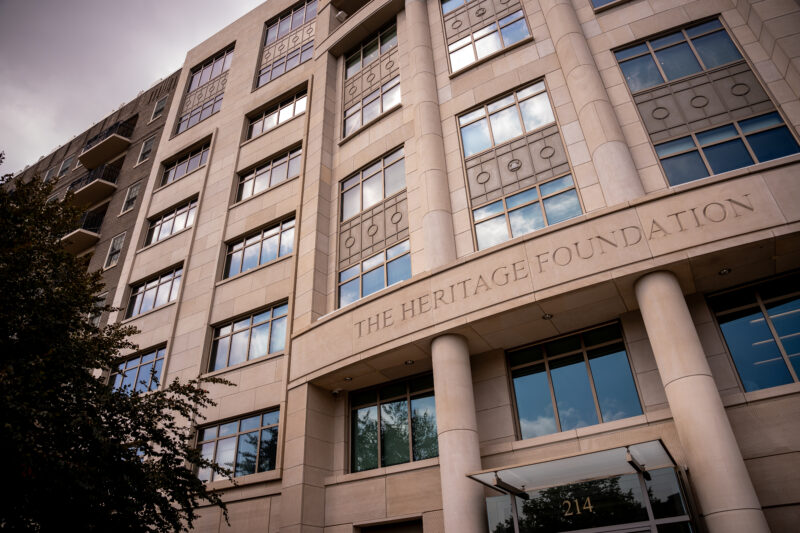
The Oklahoma senator, a co-chair of the Senate antisemitism task force, has also been outspoken about rising antisemitism on the “New Right” and was critical of the Heritage Foundation’s response to neo-Nazi Nick Fuentes’ recent appearance on Tucker Carlson’s podcast.
Asked about Carlson, Lankford said that he “can say whatever he wants to … but we also have a protected right to be able to speak back and to say we disagree on areas.”
“I think the worst case scenario is to just be able to leave it out there,” Lankford continued. He argued that providing counter-narratives to antisemitic talking points is crucial to stemming the tide of antisemitism on both sides of the aisle.
“If you get loud voices that say it and repeat it, people that just see it and don’t see a counter-narrative just accept it,” Lankford said. “We’ve got to make sure a counter-narrative is out there so that people actually hear a different opinion on it.”
Lankford, a Southern Baptist minister, objected to Carlson’s comments condemning Christian Zionists.
“To say those that support Israel that are Christians are ‘heretics,’ and are ‘the worst’ — I guess worse than Hamas and Hezbollah,” Lankford said. “That’s a bit of a bizarre statement to make, and I think we have a responsibility to be able to speak out and say, ‘Hey, I don’t agree with that.’”
“It seems that he is defining what Christianity is. And he has a right to be able to say whatever he wants to, but I also have a right to be able to live biblical Christianity as well, and to be able to see the scripture in the full context of what it says,” Lankford continued. “So I want to speak out on that as well.”
Asked about Vice President JD Vance’s exchange last week with a student who asserted that Jews are seeking to persecute Christians — a narrative that Vance did not address or dispute — Lankford said that leaders, including in the White House and the Trump administration, need to speak up “for the most basic issue of religious liberty.”
He said it’s important for people to be able to hold and live their own faiths and to also protect the ability of others to practice different faiths. “What’s interesting on that dialogue is, I’ve literally not met a Jewish person that wasn’t very protective of religious liberty,” Lankford added. “It’s literally the opposite of that question.”
In an interview with JI, Ambassador Gilad Cohen discusses his push to persuade Japan not to recognize a Palestinian state at the UNGA
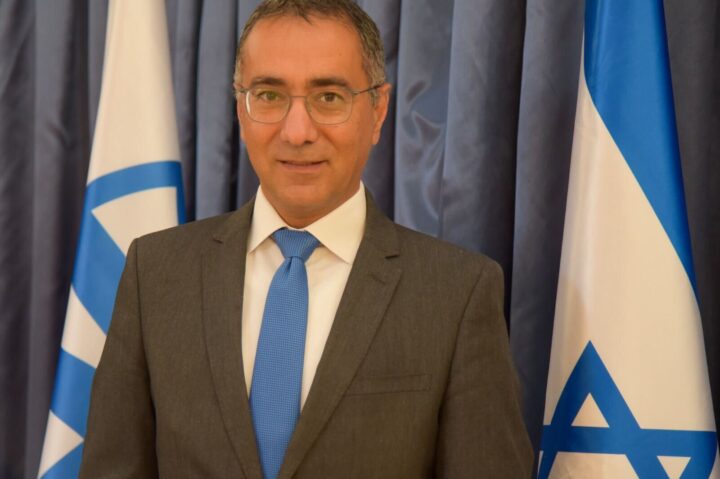
Courtesy Gilad Cohen
Israeli Ambassador to Japan Gilad Cohen
TOKYO — As Japan decided against recognizing a Palestinian state at the United Nations General Assembly on Friday, Israeli Ambassador to Japan Gilad Cohen told Jewish Insider in a wide-ranging interview in Tokyo that he is appreciative of Japan, “an important factor of the international community.”
On Friday evening, Japanese Foreign Minister Takeshi Iwaya called his Israeli counterpart, Gideon Sa’ar, to update him that after weeks of deliberation, Japan decided it will not recognize a Palestinian state at the UNGA.
“Sa’ar appreciated [the] decision and briefed [Iwaya] about Israel’s actions against Hamas chiefs in Qatar and IDF operations in Gaza,” Cohen told JI. “I join my foreign minister in appreciating Japan, a member of the G7, and an important factor of the international community, and for the deep friendship of our nations.”
“A recognition of a Palestinian state would be a reward to Hamas after the Oct. 7 terrorist attacks, would not contribute to peace and would not build on the trust of Israelis in the future,” he said. In recent weeks, Cohen relayed that message to Japanese ministers as the country weighed recognizing a Palestinian state as several governments, including those in Britain, France, Australia and Canada, have announced plans to do at the UNGA.
“This recognition is null and void because when you acknowledge a state there have to be conditions — what are the boundaries? Do you have effective control of the population? Nothing about that works with the Palestinians,” Cohen told JI. “Are they going to dismantle Hamas? Are they going to continue paying salaries for families of suicide bombers? Are they going to continue to have pacts with Iran against Israel? Is there going to be a repetition of Oct. 7 because they have a state? We are the Jewish people, we always have to be concerned and worried.”
For Cohen, who assumed office as ambassador of Israel to Japan in October 2021 following a stint as deputy director general for Asia and Pacific division in the Israel Ministry of Foreign Affairs, Japan’s consideration of recognizing a Palestinian state has been one of only a few disagreements he’s held with local politicians since arriving in Tokyo. In the immediate aftermath of the Oct. 7 attacks, “the Japanese government stood by Israel, called for an immediate and unconditional release of our hostages and said publicly that Hamas should be dismantled,” Cohen said.
“I thank the Japanese for acknowledging that Hamas is a terrorist organization and for saying that Iran is the number one destabilizer of the region. I want to thank the Japanese government for standing on the right side of history.”
When war broke out between Israel and Hamas soon after the Oct. 7, 2023, Hamas attacks on Israel, Japan, as a member of the U.N. Security Council, “was trying to influence the release of the hostages and not to [attack] Israel. They were not mediating, but there were messages Japan was trying to deliver for both sides in order to bring our hostages back,” Cohen recalled.
Looking ahead to the postwar period, Cohen suggested that Japan will contribute to rebuilding the Palestinian economy. “We will welcome any kind of investment in the Palestinian economy to revive it,” he said. “Economy is a major part of the vision of Palestinians living side by side with Israelis in peace and security.”
While tourism from Japan to Israel has seen a decline amid the war, Cohen said that joint business ventures between the two countries have increased over the past two years, as Israeli tech companies engage with Japan’s industrial giants and venture capital networks.
“Investments from Japanese companies in Israel were much higher in 2024 than 2023, including in AI and technology,” he said. “There is a saying that Israel can do things from zero to one and Japanese can take them from one to 10. Israeli innovation and startups can be combined with Japanese wisdom, experience and production ability that Israel doesn’t have.”
When it comes to creating cars, for example, an area that Japan is a global leader in, “Israel should focus on the brain of the car, systems that prevent accidents such as Waze and Mobileye,” said Cohen. “The synergy that we can learn from Japan — and we can share our experience with them — I see a lot of potential in economic relations. Japanese companies are looking at Israeli startups with great interest. In the last two and a half years, there have been direct flights from Israel to Japan, which is important because businessmen and investors do not have time to waste. This is an engine for connecting the people of Israel and Japan.”
Israel is among the handful of countries that Japan has a free trade deal with, an agreement signed by Cohen in March 2023. It allows 200 Israelis to come to Japan annually on a visa for one year of work, study and travel. At the same time, 200 Japanese citizens can come to Israel for one year to do the same.
Cohen sees himself not only as an ambassador of Israel “but also as representing the Jewish people in Japan,” he said, describing a small but vibrant community. Tokyo is home to two Chabad houses and a Jewish community center, which runs a pluralistic synagogue. The cities of Kyoto and Kobe also each have a Chabad. All five centers primarily cater to tourists.
It can be a challenge to navigate Holocaust education and antisemitism awareness in a country with limited historical exposure to those issues, Cohen said, recommending that all Japanese visit the Holocaust Education Center in Fukuyama City, near Hiroshima.
“The Japanese government comes to commemorate our Holocaust memorial days,” Cohen told JI. “They give thanks to [Chiune] Sugihara,” he said, referring to the Japanese diplomat who, while posted in Lithuania, saved thousands of Jews during the Holocaust. “We are participating in ceremonies to commemorate him. In Japan, he became a hero.”
“I see a lot of potential in the future when things calm down in the region,” continued Cohen. “I would like to have future agreements signed with Japan to boost the economy on both sides. I have many things on my agenda, but this will be after Rosh Hashanah.”
AJC statement: ‘The profound risks posed by a full military takeover of Gaza City cannot be overlooked’

Haley Cohen
Ambassador Deborah Lipstadt, U.S. special envoy to monitor and combat antisemitism, and Rabbi Andrew Baker, AJC’s director of international Jewish affairs, in conversation with AJC CEO Ted Deutch.
The American Jewish Committee, one of the leading global Jewish and pro-Israel advocacy organizations, expressed its “deep apprehension” over the Israeli Security Cabinet’s vote to move forward with a military takeover of Gaza City, in a statement released by the organization on Friday.
AJC acknowledged the “extraordinary challenges” Israel faces due to Hamas’ “intransigence” in negotiations and the “failure of the international community to impose sufficient pressure on the terrorist organization.”
“Still,” the statement read, “the profound risks posed by a full military takeover of Gaza City cannot be overlooked.” It highlighted concerns over “endanger[ing] the lives of the remaining hostages” and the possibility of “substantial casualties among both Israeli soldiers and Palestinian civilians,” in particular.
AJC called on the signatories of the New York Declaration — signed last month by dozens of countries including member states of the Arab League and European Union — to “apply maximum pressure on Hamas to agree to a hostage release and ceasefire agreement.”
The Democratic congressman, in a letter rejecting an offer for a staffer to travel to Qatar, said that the kingdom needs to do more to pressure Hamas
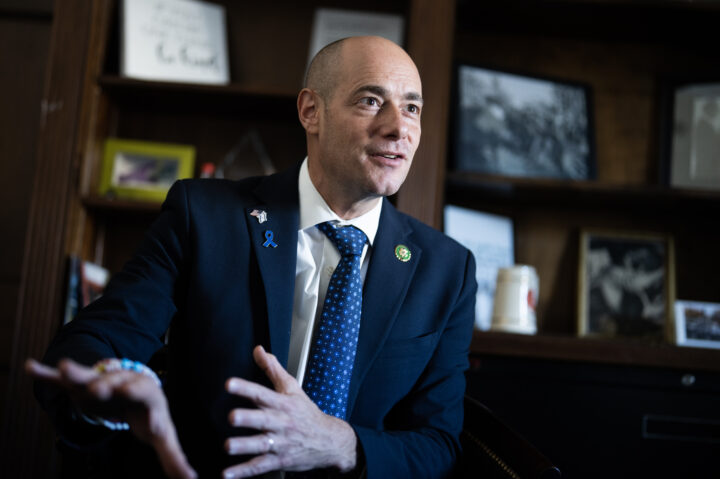
Tom Williams/CQ-Roll Call, Inc via Getty Images
Rep. Greg Landsman (D-OH) is interviewed by CQ-Roll Call, Inc via Getty Images in his Longworth Building office on Friday, November 3, 2023.
Rep. Greg Landsman (D-OH) called on Qatar last week to step up more forcefully to pressure Hamas and bring about a hostage-release and ceasefire deal in Gaza, including taking into custody the Hamas leaders who have long enjoyed safe haven in Doha.
Landsman, in a lengthy X thread about the conflict in Gaza, took aim at various parties, including Qatar, which he called a “huge barrier” to peace given its continued support for Hamas. He revealed that he had rejected an invitation from the Qatari government for one of his staff members to travel to the country.
“It’s time to call the question on everybody, including the Qataris. There are legitimate questions about whether or not they should be doing more, they could be doing more,” Landsman said in an interview with Jewish Insider. “[Hamas] just refuses to engage anymore.”
In light of that situation, Landsman argued that every potential lever to change Hamas’ calculus must be explored and pursued.
He said that Qatar, as “the entity that has the most influence” over Hamas at this point, “has to feel way more pressure from the international community to do everything in their power” to get to a deal. The status quo of Hamas leaders living lavish lives in Qatar “should absolutely be questioned,” Landsman said.
He said he’s heard from Israeli officials and others involved in the hostage talks that the Qataris are “not seen as a trusted partner in this effort to end the war.”
In a letter to the Qatari ambassador rejecting the invitation for his staffer to travel to the kingdom, Landsman offered bracing criticism of Qatar’s role in hostage talks.
“Qatar’s gross mishandling of the hostage crisis in Gaza and failure to sufficiently pressure Hamas into ending the war prevents me from allowing staff to visit your country,” Landsman said. “That you continue to tolerate this obstructionist behavior from your terrorist beneficiary is incomprehensible.”
Calling the Hamas political leaders in Qatar who are representing the terrorist group in hostage talks “useless,” Landsman called on Qatar to detain the Hamas leaders until the hostages are released and other reforms are implemented in Gaza.
He called on Doha to end “future financial support for Hamas and Gaza” until the hostages are released and other reforms are implemented and to take steps to address antisemitic and pro-Hamas content on Al-Jazeera, the Qatari state-run media outlet.
He said he would be glad to send his staff on a trip to Qatar and to work with the country after it had taken the steps he outlined.
Landsman told JI that his conversations with Israeli leaders, on issues such as the need for additional humanitarian aid, produce change — albeit sometimes not as fast as or as comprehensively as he would hope.
With Qatar, he said, “I have had so many conversations and nothing changes.” He indicated that his engagements with Qatar earlier in the war had been more productive, noting that he’d arranged to bring a delegation of hostage families to meet with the Qatari ambassador shortly after the Oct. 7, 2023, Hamas-led attacks during which their family members were kidnapped.
Beyond squeezing Hamas’ leadership in Qatar, Landsman said he wants to see the country step up as not just a meditator and facilitator of dialogue, but as a more active partner in pursuing a two-state solution and regional peace.
He said that Qatar’s lobbying efforts in the United States, its outreach to lawmakers and their staff, its funding of U.S. colleges and universities and other efforts to assert its influence domestically show that the country “care[s] deeply about what we think.”
“That is why I sent the letter and why I’m pushing and doing it publicly,” Landsman said. “I’m sitting here as one member of Congress trying to do everything in my power to end this crisis. … They want the West to like them. They want us to see them as a partner, as an ally.”
In spite of his current criticisms, Landsman did not at this point embrace the idea of moving the U.S. airbase in Qatar elsewhere in the region, arguing that the U.S. should not give up on its relationship with Doha.
“What I am saying is there are expectations of partners, and our partnership will be so much stronger if [Qatar’s] relationship with this terrorist entity ends,” he explained. “That relationship has potential, but it should go in the direction that makes the most sense for our national security and peace and stability in the region, and that means resolving their Hamas issue.”
Landsman also called for shifts in Israel’s strategy in Gaza, saying that the humanitarian crisis is real and that he has spoken directly to Prime Minister Benjamin Netanyahu about the need to increase humanitarian aid.
He said Israel should be doing more to create humanitarian safe zones for civilians and to separate Hamas from the rest of the population of Gaza. And he argued that by sending in an “avalanche” of aid, Israel would diminish the impact of Hamas’ diversion of aid shipments.
He said Israel should also pull back on its large-scale campaign in Gaza and focus on targeted operations to find and liberate the hostages.
Asked about the impact of fellow Democratic lawmakers and the international community blaming Israel for the continuation of the war, Landsman said that there is a place for pressure on Israel to adjust its strategy, “but don’t abandon our ally. This is one of the most important allies we have.”
He also emphasized that Hamas has shown no interest in or willingness to agree to a new hostage deal and that international attacks on Israel will embolden it further.
“If they continue to see people just hammering away at Israel — which they believe is critical for them to achieve their goal, which of course is to destroy the State of Israel — they will continue to [fight],” Landsman said.
Landsman characterized the recent Arab League statement condemning the Oct. 7 attack and calling for Hamas to release the hostages as an important public step in pressuring Hamas.
He said the statement’s public rejection of Hamas mirrors what he has heard privately from Arab leaders for months. “I think this is going to put more pressure on Qatar to figure out a much better path forward with their unique issues with Hamas,” Landsman said.
Against the backdrop of ceasefire and hostage-release negotiations, Israeli actions in Gaza draw widespread condemnation

BASHAR TALEB/AFP via Getty Images
A Palestinian Hamas fighter carries a rifle as terrorists and people gather at the site of the handing over of Israeli hostages at the Nuseirat refugee camp in the central Gaza Strip on February 22, 2025.
It’s a scenario that has played out many times over since Oct. 7, 2023: Against the backdrop of ceasefire and hostage-release negotiations, Israeli actions in Gaza draw widespread condemnation. World leaders call for a ceasefire. Amid that growing criticism, Hamas, sensing increased pressure on Israel, responds by escalating its demands or backing away from negotiations entirely.
This week is no different, with Israel’s launch on Monday of a ground operation in central Gaza’s Deir al-Balah, where it had not previously operated, the same day that more than two dozen Western countries released a joint statement calling for “unconditional and permanent ceasefire.” Hamas negotiators in Doha, Qatar, have reportedly spent the last two weeks dragging out ceasefire talks, over issues ranging from the number of Palestinian prisoners to be released to the areas where the IDF is allowed to operate.
In yesterday’s statement, the countries’ demand of Hamas is only for the “immediate and unconditional release” of the remaining 50 hostages, with no mention of disarmament or the terror group’s removal from power — key Israeli demands since Hamas’ brutal attacks on the Jewish state almost two years ago.
Hamas has since October 2023 faced limited pressure to acquiesce to Israeli and American demands. The terror group’s backers in Doha, where senior Hamas officials have long lived in opulence and security, have similarly faced little international pressure — even as Qatar plays a key role in negotiations. Israel has not been a perfect actor, and at times has walked away from the negotiating table. But Jerusalem’s refusals have been outpaced by Hamas’ intransigence, the latter of which has frustrated White House officials in both the current and former administrations.
At his final press briefing as secretary of state in January, Tony Blinken warned that Hamas benefitted from international pressure on Israel, saying, “Hamas held back [from agreeing to deals] at various points because it saw or hoped that public international pressure was mounting on Israel, and it could just wait it out and that pressure would get to a point where Israel would have to accede to all of Hamas’ demands.”
And in a Washington Post op-ed shortly after leaving the White House, Brett McGurk acknowledged that “throughout the ceasefire negotiations, Hamas consistently held back on a commitment to release hostages and aimed to ensure that it remains in power after the war ends.”
What’s more, McGurk wrote in his op-ed, Israel faced demands in the weeks and months after the onset of the war “that the only way to stop the fighting was for Israel to accept all of Hamas’s terms. Calls to restrict weapons shipments to Israel, or to increase pressure on Israel (rather than on those who kept attacking it), or to back U.N. Security Council resolutions demanding ‘unconditional’ ceasefires with Hamas, discounted this regional equation and the intent of Israel’s adversaries.”
There is a popular adage that insanity is doing the same thing over and over again and expecting different results. For nearly two years, Israel, Hamas and the international community have fallen into an endless cycle of talks, official statements and Hamas backtracking. Far from getting a different result, the world has seen more of the same: the continued captivity of the hostages, deepening global ostracization of Israel, ongoing death and destruction in Gaza and a Hamas that feels emboldened to up its demands.
Please log in if you already have a subscription, or subscribe to access the latest updates.
 Continue with Google
 Continue with Apple