






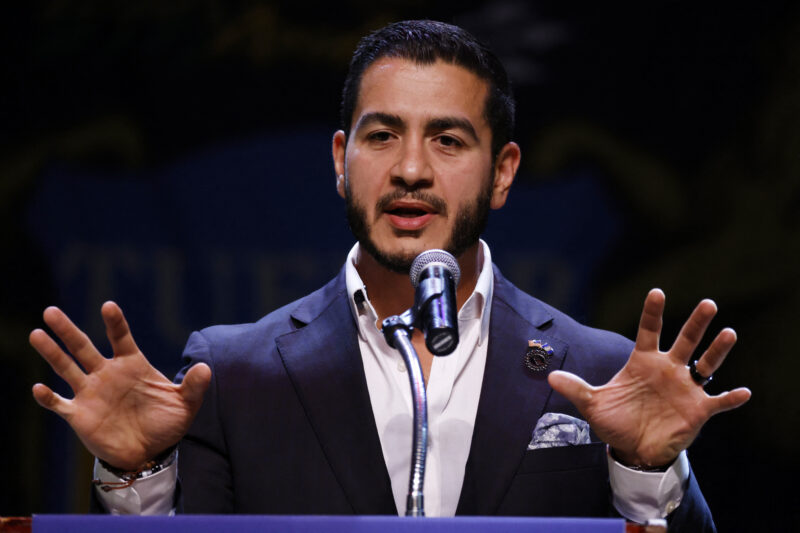












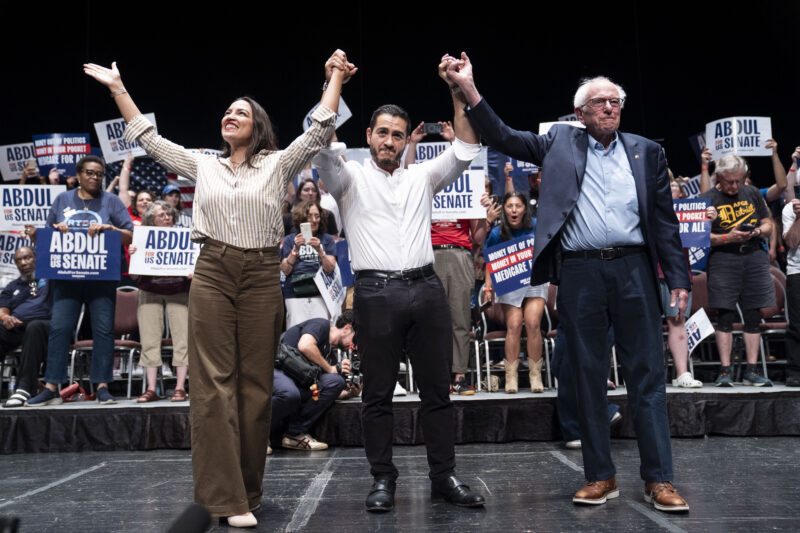





















UDP’s latest ad blitz came in the immediate wake of Michigan’s bitter Democratic Senate primary earlier this month, where the group spent over $30 million on a failed effort to thwart Abdul El-Sayed
Tayfun Coskun/Anadolu Agency via Getty Images
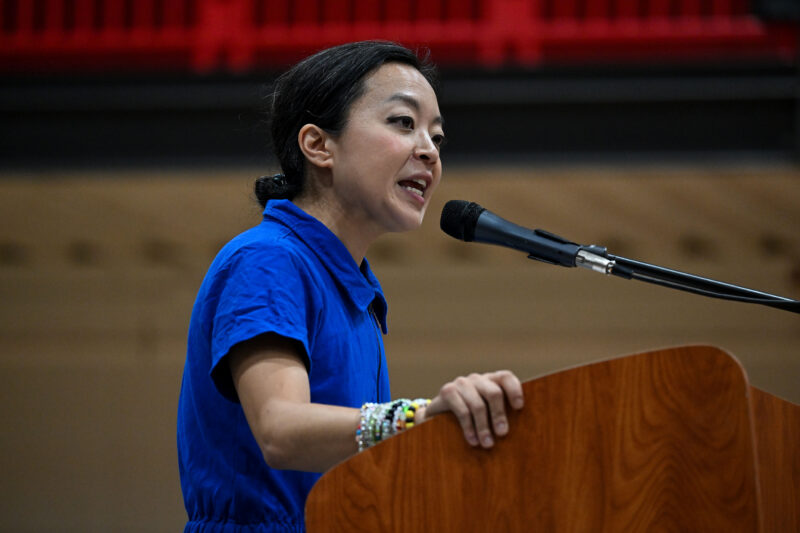
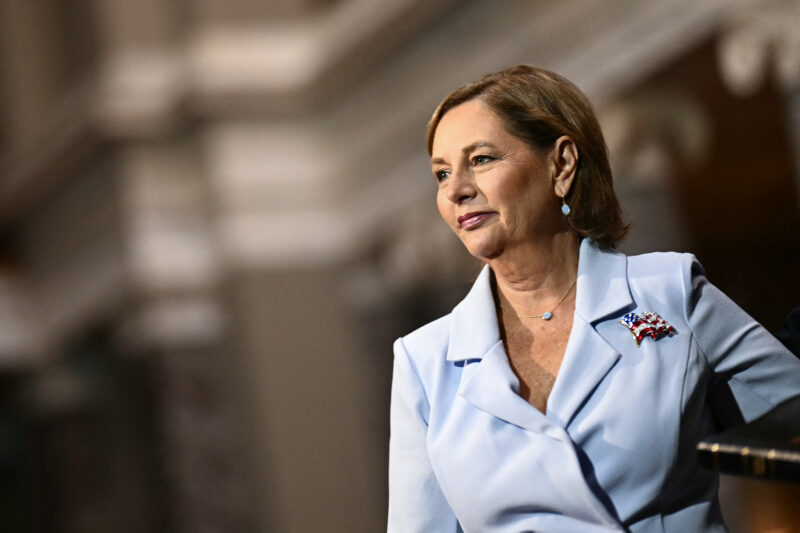
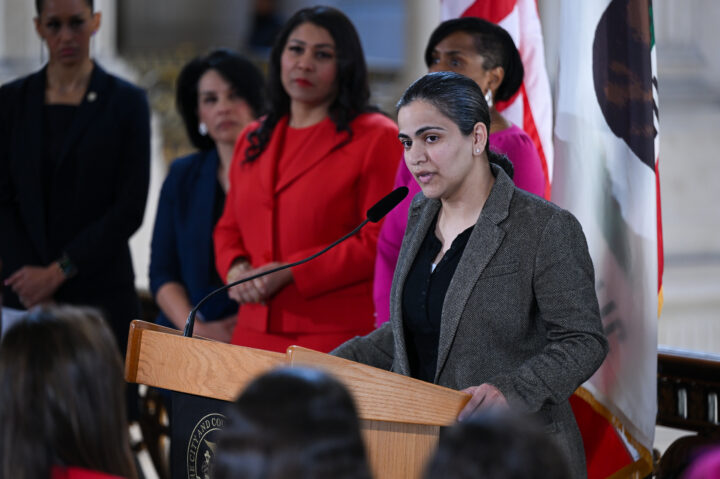
State Sen. Aisha Wahab speaks during the Bay Area Abortion Rights Coalition (BAARC) and commemoration of the 50th Anniversary of Roe v. Wade event at the City Hall in San Francisco, California, on January 25, 2023.


 Add JewishInsider on Google
As primary election season comes to an end, AIPAC is closing out its involvement in a dramatic cycle with an unexpected foray into a low-profile California House race on Tuesday where Israel has not been among the top issues.
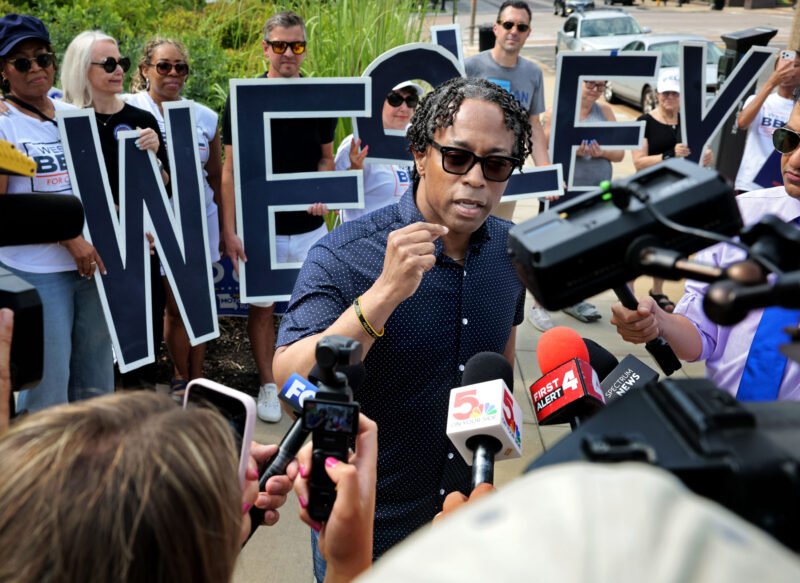
In the last two weeks, AIPAC’s super PAC, the United Democracy Project, has spent nearly $2.5 million in an effort to defeat Aisha Wahab, a progressive state senator competing in a special election runoff against Melissa Hernandez, a moderate Democrat who serves on the Bay Area Rapid Transit board and is the former mayor of the East Bay city of Dublin.
The aggressive maneuver, which appears to be AIPAC’s last investment before the general election, has raised eyebrows among some Jewish leaders and Democratic strategists in the state, who see Wahab as favored to replace disgraced former Rep. Eric Swalwell (D-CA) in California’s 14th District, despite the flood of recent attacks against her from UDP and other allied groups.
Still, one Democratic strategist who is familiar with the runoff said that outside polling has shown a tighter race than some observers are predicting.
In the special election primary, Wahab claimed first place with 43%, while Hernandez had just 17% of the vote. But two Republican candidates on the ballot also tallied about 25% of the vote, with the GOP vote likely to swing heavily to the more moderate Hernandez.
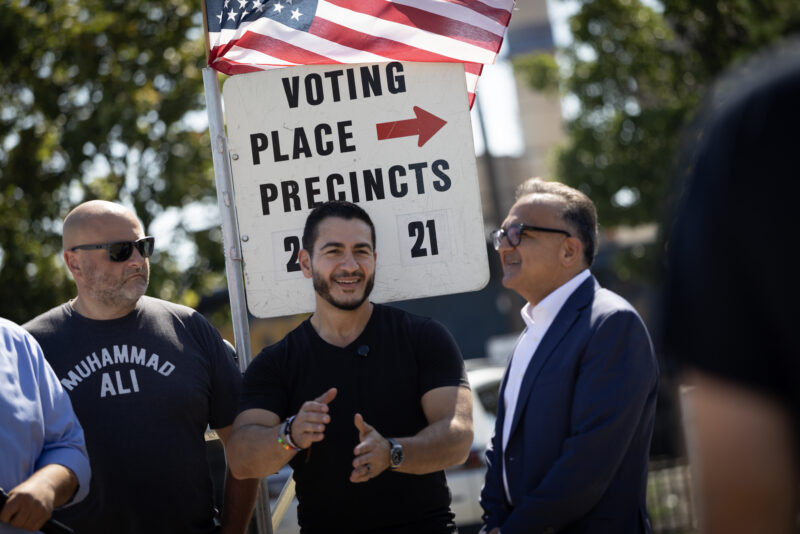
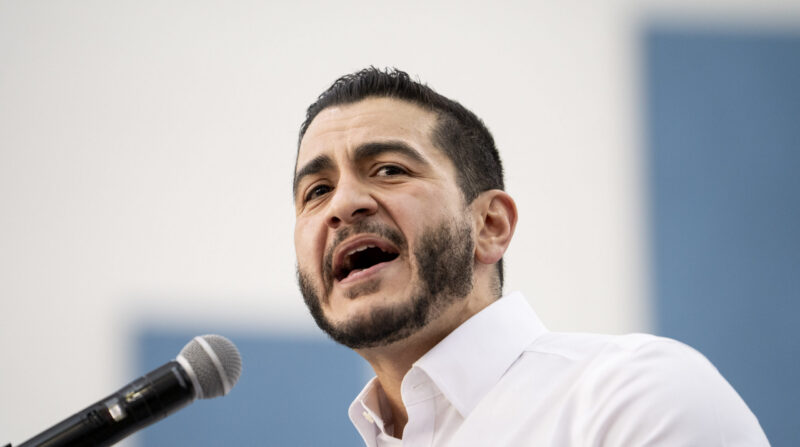
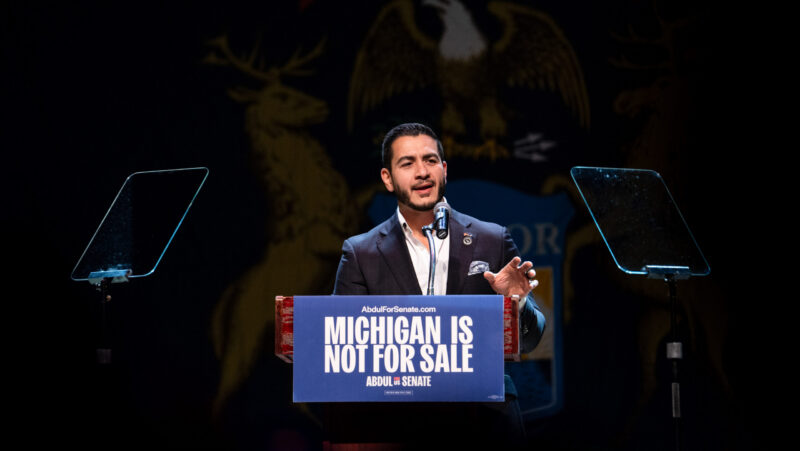
UDP’s latest ad blitz came in the immediate wake of Michigan’s bitter Democratic Senate primary earlier this month, where the group spent over $30 million on a failed effort to thwart Abdul El-Sayed, a far-left former public health official who refused to recognize Israel’s right to exist as a Jewish state. (UDP is likely to return in the general election to help boost former GOP Rep. Mike Rogers, El-Sayed’s opponent, according to sources familiar with its plans.)
The narrow loss in Michigan marked a major blow for AIPAC, whose super PAC has seen mixed results overall in key Democratic House contests this cycle as its involvement runs the risk of backfiring in the party. While UDP notched some key victories in states including Maryland, Illinois and Missouri, the group has faced scrutiny even from some supporters for its strategy in picking other races, such as in New Jersey, where its involvement in one primary helped inadvertently elevate a fierce critic of Israel to a seat in the House.
Some Jewish leaders in the San Francisco Bay Area voiced puzzlement over AIPAC’s engagement in the runoff, saying that its decision to target Wahab had backfired in the progressive-minded district — where she is using its attacks to rally supporters to her campaign while portraying Hernandez as a shill for the group.
One Jewish leader backing Hernandez who has met with Wahab, the first Afghan American and Muslim to serve in the California State Senate, said he feared UDP’s attack ads, which have not focused on Middle East policy, could drive her to embrace more hostile positions on Israel.
During the campaign, Wahab has accused Israel of genocide in Gaza and, in a recent interview with antisemitic influencer Hasan Piker, said she would support the Block Bombs Act, which would impose sweeping restrictions on weapons sales and transfers to Israel.
But the Jewish leader, speaking anonymously to address a sensitive issue, told Jewish Insider that Wahab is “not a member of the Squad,” supports a Jewish state as well as a Palestinian state and “wants a strong relationship with the Jewish community” — even as she has acknowledged disagreements on key issues that have stoked some tensions in the runoff.
“This is not someone who wants to see Israel disappear, and I’m worried this simplistic approach to the primaries is going to push someone like Wahab further away from the community,” the Jewish leader said of UDP’s spending. “There’s a general consensus among the East Bay political class that Wahab is the likely winner,” he said. “We’re all just scratching our heads and we’re not sure what they’re seeing here.”
A spokesperson for UDP declined to comment on its decision to enter the race.
Andrew Lachman, the former president of California Jewish Democrats, told JI that Wahab “has worked well with the California Jewish Legislative Caucus in the past, but the pressures are different when running for Congress because the state legislature does not do foreign policy.”
UDP’s new spending has been met by recent expenditures from J Street, the progressive Israel advocacy group, and American Priorities, a new anti-Israel super PAC created to counter AIPAC’s presence in Democratic primaries — both of which are backing Wahab.
“I hope I’m wrong,” the Jewish leader told JI. “I hope AIPAC is seeing something I’m not and that there is a chance.”
The results painted a picture of a volatile electorate in both parties

(Stewart F. House/Getty Images)
Attorney General Ken Paxton speaks at an election night watch party held by the Lone Star Liberty PAC at the Dallas/Plano Marriott at Legacy Town Center on May 26, 2026 in Plano, Texas.
In last night’s Texas primary runoffs, Democrats successfully prevented a virulent antisemite from becoming the party’s nominee in a battleground House race, while voters also ousted one of the party’s longtime anti-Israel lawmakers for a younger, more pragmatic replacement.
On the Republican side, President Donald Trump’s endorsement of Texas Attorney General Ken Paxton was the decisive factor in Paxton’s sweeping victory over Sen. John Cornyn (R-TX), a widely respected pragmatic conservative who served for years in party leadership.
The results painted a picture of a volatile electorate in both parties. A late push by the Democrats’ House campaign arm and the pro-Israel advocacy group Democratic Majority for Israel helped prevent sex therapist Maureen Galindo, who advocated putting pro-Israel Jews in internment camps as part of her campaign message, from winning a valued nomination in Texas’ swing 35th Congressional District.
Johnny Garcia, a Bexar County sheriff’s deputy long touted by national Democrats as a top recruit, won the Democratic nomination by 28 points (64-36%) despite finishing in second place in the primary. He will face Republican Air Force veteran Carlos de la Cruz in the general election.
DMFI’s political action committee touted its role as an early endorser of Garcia’s campaign, and for being one of the first and few groups to raise the red flag on Galindo’s extreme views. In its victory statement, DMFI also condemned the efforts from a secretive GOP group to spend nearly $1 million on Galindo’s behalf, in hopes of elevating a more vulnerable Democratic candidate to the general election.
On the positive side, an extremist was defeated thanks to leading Democratic Party organizations and officials rushing to condemn her candidacy. It’s a sign of how institutions can use their power to unify in speaking out against hate. On the other hand, she still won over one-third of the runoff vote despite the full-court press from Democrats to oppose her, a sign that it may take aggressive measures simply to stop a crank from prevailing.
Pro-Israel leaders also cheered the resounding defeat of Rep. Al Green (D-TX), who has alienated the Houston Jewish community with his anti-Israel votes in Congress in recent years and lackluster constituent services. Green lost by nearly 40 points to Rep. Christian Menefee (D-TX), who was just elected to Congress in a neighboring district and was forced to run against his colleague as a result of redistricting.
AIPAC tweeted a congratulatory note to Menefee after he prevailed, cheering his “victory tonight over one of the most outspoken anti-Israel voices in Congress.” Menefee, a former Harris County attorney, was generally a critic of Israel’s wartime actions during its campaign in Gaza, but unlike Green, refused to describe its war against Hamas as a “genocide.” He also said during a debate against Green that he understood why a democratic nation would want to wage a war against a terrorist group.
And in a suburban Dallas district that pitted former Rep. Colin Allred (D-TX) against his successor, Rep. Julie Johnson (D-TX), Allred prevailed in the battle of the two experienced politicos. Allred was the party’s unsuccessful nominee for the Senate in 2024 and considered another Senate campaign before pivoting and deciding to run for the House again.
The race generating the most national headlines was Paxton’s resounding victory over Cornyn by 28 points (64-36%) — proving another example of Trump’s endorsement power in Republican nomination fights. Cornyn had been one of the state’s most popular Republican elected officials before facing growing grassroots opposition from the right over his pragmatism and lack of deep MAGA bona fides. Paxton, despite facing considerable personal baggage, sensed Cornyn’s vulnerability with the base — and in the end, parlayed a Trump endorsement to victory.
This month alone, Trump defeated five of seven targeted Indiana state senators for resisting redistricting efforts, ousted Sen. Bill Cassidy (R-LA) and Rep. Thomas Massie (R-KY) in primaries over perceived disloyalty and handily dispatched the battle-tested Cornyn. Trump is struggling to maintain support with many Americans, but within the Republican Party, his grip is still tight.
State Rep. Chris Rabb’s extreme views are alarming Jewish leaders and voters in a Philadelphia-based district with a sizable Jewish constituency
Paul Weaver/SOPA Images/LightRocket via Getty Images
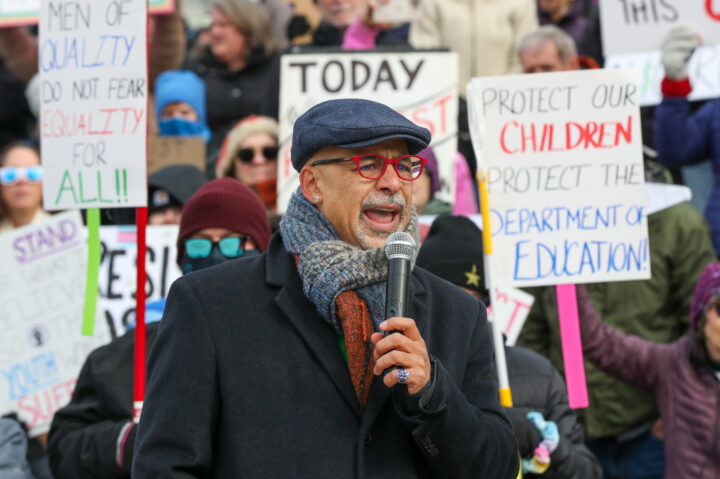
Pennsylvania state Rep. Chris Rabb speaks during a protest outside of the Pennsylvania Capitol.
The wide-open primary race for the most Democratic district in the country is highlighting stark divisions in Israel policy among the leading candidates.
The candidates for Pennsylvania’s 3rd Congressional District — which includes western Philadelphia, Center City and parts of north Philadelphia — include a host of prominent local officials, as well as some outsider candidates, including state Sen. Sharif Street, who recently resigned as state Democratic Party chair, progressive state Rep. Chris Rabb, state Rep. Morgan Cephas and physician Dr. David Oxman.
Dr. Ala Stanford, a local surgeon and activist who gained prominence during the COVID-19 pandemic, is also seen as a likely candidate, and former City Councilman Derek Green may also join the race.
A Rabb victory would be cause for significant concern for pro-Israel voters in the district — which includes some heavily Jewish areas of Philadelphia — and national pro-Israel groups. The state senator has an extensive history, particularly since Oct. 7, of anti-Israel activism, and has accused Israel of genocide.
He posted on social media in Sept. 2024 in support of a Philadelphia teacher who was suspended following a complaint from Jewish parents about threatening social media posts directed toward them.
“I’m here in solidarity with the educators and students who have shown the discernment to understand that discomfort is not the same as danger, animus or even harm. Quite the contrary, without discomfort, we cannot truly learn, grow or heal,” Rabb said on Instagram. “I do not believe that being critical of any political ideology — be it neo-liberalism or Zionism — is being against an entire people or ethnic group. … We must not allow students and educators to be attacked for discussing critical global issues or other international struggles … And there should be no instance when a mere reference to any sovereign nation is reflexively viewed as a proxy for hate or bias.”
Rabb was the only elected official to attend a recent anti-Israel “People’s Tribunal” hosted by a range of far-left groups, which aimed to present a case that U.S. officials including Sen. John Fetterman (D-PA) are guilty of complicity with genocide and war crimes by Israel.
Rabb described the event as a generational moment that would reverberate far into the future.
He called on his state to divest from and cease any investments in Israel until the end of the war in Gaza, and said that advancing a proposed anti-Boycott, Divestment and Sanctions bill would “cause a s*** show of epic proportions that no Democrat wants to see — especially in an election year where the policy choices we make are being scrutinized by a highly skeptical, but vigilant and well organized subset of the electorate.”
Rabb also spoke at a February 2024 protest led by anti-Israel group Jewish Voice for Peace at which he indicated support for protests blocking traffic and opposed arrests of demonstrators at the Pennsylvania Statehouse, comparing anti-Israel protests to the Civil Rights Movement. “This is a radical expression of one’s First Amendment rights,” he said.
He visited and praised anti-Israel encampments at multiple colleges in Pennsylvania and indicated support for BDS efforts targeting the colleges, participated in events with the local Council on American-Islamic Relations chapter and spoke out against detentions and attempted deportations of student activists.
He also condemned school leaders out-of-state, in Maryland, for suspending teachers for anti-Israel, antisemitic or pro-Palestinian comments, one of whom he said was a personal friend.
“I’m irate about how these pro-#censorship folx have maliciously targeted these teachers,” Rabb said. “Being pro-#Palestine is neither a crime, nor anti-Jewish.”
Rabb on Oct. 18, 2023, 11 days after the Hamas attacks, called for a ceasefire as well as the release of “the more than 200 civilian hostages taken back into Gaza and Palestinian political prisoners.”
“I grieve the loss of lives in Israel and Palestine. I condemn Hamas’s brutal attack on October 7th … I also grieve the thousands of Palestinians in Gaza, including hundreds of children, who have been killed by Israeli bombs since then. It is never acceptable to cause the deaths of civilians. All human life is sacred,” Rabb said. “I join my colleagues in Congress who have called for immediate de-escalation, ceasefire, adherence to International Humanitarian Law and humanitarian aid to Palestine commensurate with the devastation wrought upon Gaza.”
Rabb was one of several Democratic state lawmakers who signed onto a Nov. 21, 2023, letter to Pennsylvania’s congressional delegation which delivered a similar message. The chief of staff for the state senator who led that letter had reposted several X posts on Oct. 7 indicating support for the Hamas attacks on Israel.
Street, who is Muslim, has long-standing ties to members of the state’s Jewish community and has spoken out in support of Israel’s right to exist and against antisemitism. He traveled to Israel in 2017 on a trip for Muslim legislators organized by the American Jewish Committee’s Project Interchange, a source familiar with the campaign told Jewish Insider.
“As a Black man and a Muslim, I’ve spent my entire political career fighting for the inherent worth and dignity of every person. That’s why I have stood strong against the growing tide of anti-Semitism in this country,” Street said in a statement to JI. “In Congress, I will work hard for peace in the Middle East based on mutual trust and grounded in Israel’s right to exist and the right of the Palestinian people to live without fear.”
In a November 2023 statement responding to the Hamas attack and ensuing war in Gaza, Street emphasized the right of both Israelis and Palestinians to peace and freedom, and mourned civilian deaths on both sides, while emphasizing the importance of U.S. support for Israel.
“We must affirm the right of Israel to exist. We must affirm the right of the Jewish people to have a sovereign state and we must also affirm the right of the Palestinian people to live in a place where their children are safe and their families are secure,” Street said. “A place where their hospitals and schools are not compromised by Hamas commingling military facilities with hospitals and schools.”
He said that the U.S. “must not abandon its calling to protect the children of the Holocaust” and “must remember why the modern state of Israel was created in the aftermath of World War II. We must remain vigilant in our support of Israel and its right to defend itself.”
Street added that “does not disavow us from having an obligation to the Palestinian people as well,” and ensuring that “food flows plentifully into the land of Palestinian people,” that hospitals and schools are rebuilt and that both Israeli and Palestinian children can live in peace.
He went on to condemn hate crimes in the United States targeting both the Palestinian and Jewish communities, as well as Christians.
Street also offered his condemnation and condolences following the shooting earlier this year of two Israeli Embassy staffers outside the Capital Jewish Museum in Washington.
“As the highest-ranking Muslim elected official in Pennsylvania, I am heartbroken by the senseless act of violence that took the lives of two Israeli embassy staff in Washington, D.C.,” Street said. “I extend my deepest condolences to the families of Yaron Lischinsky and Sarah Milgrim, and to all who are grieving this horrific tragedy. No one should fear for their lives simply because of who they are or where they work.”
“I unequivocally condemn this shooting—and all acts of gun violence, antisemitism, and hatred. We must all stand against violence, wherever it occurs and whoever it targets,” Street continued. “I support the right of Israel to exist in peace and security, just as I support the rights of Palestinians to live with dignity and freedom. A just and lasting peace in the region will never be built on bloodshed. We must do better—here at home and abroad.”
As the Pennsylvania Democratic chair, Street spoke out against the Uncommitted movement that urged voters to oppose President Joe Biden in the 2024 presidential primary over his position on the war in Gaza. “As a Muslim American, I know that President Biden has my back and will fight for our community,” Street said. He also emphasized the need for Democrats to appeal to both Jewish and Muslim voters.
Street did not vote last year on an anti-Boycott, Divestment and Sanctions bill when it passed either the Pennsylvania Senate Appropriations Committee or the full Senate.
Cephas does not appear to have much of a public record of speaking out about the conflict in the Middle East, though in the days after the Oct. 7, 2023, Hamas attack on Israel, she was an advocate for increased state-level funding for nonprofit security funding.
Larry Ceisler, a public affairs executive in Philadelphia, told JI that the race is likely to be highly competitive — a rare opportunity for a Philadelphia elected official to potentially secure a long tenure in higher office.
He described the race as essentially a toss-up and said he could see a scenario for each of Street, Cephas and Rabb to win. Ceisler said that the race could break down, to some extent, along geographic lines.
Street, Ceisler said, has strong name recognition as the son of a former Philadelphia mayor, and represents north Philadelphia. Cephas represents west Philadelphia, and Rabb represents northwest Philadelphia, an area that is very politically active, leans left and usually has high voter turnout in primaries.
Ceisler predicted Rabb will present himself as the furthest-left candidate in the field and noted that he previously beat a candidate backed by the local party apparatus, while Street is likely to lean on more traditional support bases including local party and ward leaders and some organized labor groups.
He said Cephas’ youth, gender and leadership in the Statehouse could also make her an attractive candidate for some voters. And he said that Stanford enjoys high name recognition and goodwill from the COVID-19 era, though she is untested and unscrutinized as a political candidate.
Ceisler noted that he is a Rabb constituent and former supporter who wrote to Rabb to express his disappointment early in the Israel-Hamas war about his post-Oct. 7 positions, saying he felt Rabb was “uninformed” and had accepted false and misleading information, though he said that Rabb should not be “vilified.”
CORRECTION: An earlier version of this story misidentified the name of public affairs executive Larry Ceisler.
Days after Oct. 7, Susheela Jayapal declined to sign onto a statement condemning Hamas and standing with Israel

Susheelaforcongress website
Susheela Jayapal
Pro-Israel activists in Portland, Ore., are bracing for what could be a bitterly divided House race as longtime Rep. Earl Blumenauer (D-OR) prepares to retire at the end of his current term, opening up a rare vacancy in one of the state’s most progressive districts.
The Democratic primary field, which is expected to grow in the coming weeks, has so far drawn two candidates, most prominently Susheela Jayapal, a former Multnomah County commissioner whose younger sister, Rep. Pramila Jayapal (D-WA), leads the Congressional Progressive Caucus and is among the most outspoken critics of Israel in the House.
While the elder Jayapal, 61, had no discernible history of public engagement on Middle East policy until recently, her approach to the war between Israel and Hamas suggests there is little distance between the two siblings on such matters — fueling concerns among local pro-Israel advocates who have yet to coalesce behind a viable candidate.
One major source of contention stems from an emotionally charged county board meeting days after Hamas’ Oct. 7 terror attack, when Jayapal, who stepped down as commissioner last month to launch her campaign, voted to reject a resolution seeking to show unified support for lighting a Portland bridge in blue and white.
“I don’t think I can acknowledge [the] loss of one group when there are Palestinian lives being lost as well,” Jayapal said of the resolution, even as she endorsed illuminating the Morrison Bridge in solidarity with Israel.
Later that day, Jayapal drew heightened scrutiny from Jewish and pro-Israel leaders after she chose not to include her name on a joint statement — signed by two commissioners and the county chair — condemning Hamas and standing with Israel as well as Portland’s Jewish community.
“We were disappointed that she didn’t sign on,” Bob Horenstein, the director of community relations at the Jewish Federation of Greater Portland, told Jewish Insider in a recent interview. “I can only surmise that she didn’t feel like it was balanced.”
Sharon Meieran, the lone Jewish commissioner on Multnomah County’s board, who led the statement, said that Jayapal had initially seemed open to adding her name but ultimately pulled out “at the very last minute,” even after some of the language had been revised at her behest during a strained editing process.
In written comments to JI last week, Meieran alleged that Jayapal had also tried to remove a Holocaust reference from the draft statement, creating further tension behind the scenes. “I was somewhat reassured when Commissioner Jayapal indicated she would consider signing on to the statement,” Meieran said. “But then I heard that she had sought to remove reference to the Holocaust.”
“I refused to remove the reference,” Meieran said, noting that the request had been conveyed by her communications director. “As someone who had numerous family members murdered in the Holocaust, one of the most terrifying aspects of the Hamas attack was the scale and targeting of innocent civilians because they were Jewish. No one affected by the Holocaust could fail to feel the connection.”
Meieran said she could not speculate about Jayapal’s reasons for backing out of the statement but explained that she was “surprised” and “deeply saddened” by her former colleague’s decision. “The situation in the Middle East is complicated beyond measure at every possible level,” she acknowledged. “But issuing a statement seemed like the least our board could do.”
In a statement shared with JI on Sunday, Jayapal said it was “unequivocally false” that she had sought to excise the Holocaust reference. “In fact, I had suggested the language that was ultimately used (‘the deadliest day for Jewish people since the Holocaust’) as an alternative to the original language, which I feel made an equivalency with the Holocaust, which is a singularly horrific event on an incomparable scale,” she countered.
“While working on edits with my colleagues, it became clear that the urgency of the moment superseded the time it would take for us to agree on what words to use to describe our strong condemnation of terror and violence against civilians,” Jayapal continued. “That’s why there were separate statements. My views then and now are largely shaped by my conversations with Jewish community members in Multnomah County.”
Jayapal’s response, which was more broadly worded and released the same day as the joint statement, denounced Hamas while expressing support for the bridge lighting as “a symbol of our absolute condemnation of violence in all its forms, and of our solidarity with the people of Israel in this moment of their grief.”
“My heart breaks for all those across Israel and Palestine who are living in a state of war and continued violence,” Jayapal said in her Oct. 12 statement, which did not mention the Holocaust or explicitly cite the Jewish community, “and for the loss and fear that all their families and friends here in Multnomah County are experiencing. It is unimaginable.”
“What I make of it is that she is running for Congress and is weighing the political implications of what she might say,” said a person familiar with some of the deliberations behind Jayapal’s recent comments on the Hamas attack, who requested anonymity to discuss a sensitive topic. “She was going to try very hard to issue a statement that she hoped would appease both sides.”
Despite her opposition to the board resolution, Jayapal insisted in a separate statement to JI last week that she had been “clear and consistent” about her support for lighting the bridge. “I said so from the dais in the public meeting, I said so in my statement afterwards, and I said so in local news interviews.”
Hannah Love, Jayapal’s campaign spokesperson, clarified in an email to JI that the former commissioner’s “position was that lighting the bridge was within the county chair’s authority, not the board’s.”
As Israel’s war against Hamas shapes the trajectory of several Democratic primaries across the country, Jayapal’s recent maneuvering — and the resulting fallout — underscores the perils some progressive candidates are now facing as they navigate a politically charged issue that is sowing increasingly sharp divisions among party members.
“There are strongly felt perspectives on both sides of the conflict here locally,” said Jake Weigler, a Democratic strategist in Oregon, speculating that Portland’s activist community may push candidates “to stake out a clear position that could then drive national groups to get more involved in the race.”
“What I make of it is that she is running for Congress and is weighing the political implications of what she might say,” said a person familiar with some of the deliberations behind Jayapal’s recent comments on the Hamas attack, who requested anonymity to discuss a sensitive topic. “She was going to try very hard to issue a statement that she hoped would appease both sides.”
The Portland contest is among a few House races in the Pacific Northwest that Democratic strategists and Jewish activists in the region expect to draw spending from leading pro-Israel groups, even as they have yet to disclose their plans.
“There are strongly felt perspectives on both sides of the conflict here locally,” said Jake Weigler, a Democratic strategist in Oregon, speculating that Portland’s activist community may push candidates “to stake out a clear position that could then drive national groups to get more involved in the race.”
But while pro-Israel groups are already setting their sights on House races where far-left incumbents have been among the most strident critics of Israel, it is unclear how such organizations are assessing a growing number of open-seat races fueled by a new burst of impending retirements.
Democratic Majority for Israel is “closely” following the Portland race but is still weighing where it will direct its resources, according to a source familiar with internal deliberations. A spokesperson for AIPAC, meanwhile, said in an email to JI that the group is “in the process of evaluating congressional races” but has “made no decisions at this time.”
With six months to go until the May primary, the race is almost certain to draw more candidates, setting up a potential clash between “an anti-Israel progressive and a pro-Israel progressive,” as one pro-Israel leader in Portland who opposes Jayapal put it in a recent conversation with JI.
One likely candidate who could possibly gain traction within the pro-Israel community is state Rep. Maxine Dexter, who has been characterized as a pragmatic progressive but does not appear to have issued any statements on Middle East policy. In a recent email to JI, Dexter, who is expected to launch a campaign soon, said she has received “strong encouragement” to run and will be announcing her plans this week.
While Dexter did not address questions on her approach to Israel — and local Jewish activists surveyed by JI were unaware of her positions — Meieran said she is “excited about her potential candidacy.”
“I can’t speak to her views on Israel, but I was impressed that she attended an event hosted by Congregation Beth Israel in Portland last night to learn about the Zioness movement,” Meieran told JI on Saturday. “The focus was on intersectional identities and how standing up for social justice and Zionism are not mutually exclusive, but rather are inextricably linked. Showing up and being willing to listen and learn matters, now more than ever, and Maxine walks that walk.”
Eddy Morales, a Gresham City councilman with ties to national Democratic leaders, is also running for the seat held by Blumenauer — who has embraced more critical positions on Israel — for more than 25 years.
In an email to JI last week, Morales, who has visited a kibbutz that was targeted during the Oct. 7 attack, shared his own views on the Israel-Hamas war, which he addressed on social media days before Jayapal released her own statement.
A pro-Israel leader in Portland, who asked to remain anonymous to protect his privacy, said there is growing concern among other like-minded local activists that Jayapal’s Middle East policy positions “will not differ that much from her sister.”
“We must do everything we can to prevent any further atrocities and crimes against civilians, no matter what they look like or where they live,” he said. “Today, as people in Palestine and Israel mourn and seek safety, we must demand that our leaders support immediate steps to help those in danger, like continuing to bring hostages home, preventing and stopping massive civilian deaths and restoring food, water and electricity in Gaza.”
He added that the U.S. “must also demand long-term solutions for people of the whole region, whether they’re Palestinian or Israeli, and support those who simply want to live their lives and raise their families in peace.”
As the race unfolds, the pro-Israel leader in Portland, who asked to remain anonymous to protect his privacy, said there is growing concern among other like-minded local activists that Jayapal’s Middle East policy positions “will not differ that much from her sister,” who faced bipartisan backlash last summer for calling Israel “a racist state,” remarks she later walked back. The progressive leader also drew scrutiny on Sunday for comments that some House colleagues accused of equivocating over Hamas’ use of sexual violence against Israeli women.
For her part, Jayapal’s rhetoric as an aspiring congresswoman has been more carefully worded than that of her sister, who has endorsed her campaign. Still, her comments so far have indicated that they are aligned on hot-button issues including calls for a cease-fire and conditioning aid to Israel.
In a statement shared on social media last week after JI had reached out to her campaign for comment, Jayapal voiced hope that the now-broken truce between Israel and Hamas would be “a step towards a more long-term and mutual cessation of hostilities, or ceasefire.”
During an interview with a local TV station last month, Jayapal, a former corporate lawyer, also suggested that she is in favor of reconsidering the continuation of U.S. funding to Israel, noting that she supports humanitarian and military assistance “where necessary and with appropriate conditions.”
Morales, for his part, did not address requests for comment from JI regarding his positions on such issues. Dexter declined to weigh in on specific policy questions until she makes a decision about whether to run.
The Jewish federation in Portland is planning to organize a forum to hear candidates’ views on Israel and other subjects of interest to Jewish voters in the coming months, according to a spokesperson for the organization.
Elizabeth Mazzara Myers, a Democratic strategist in Portland, said she assumes that the war in Gaza will “play a role” in the race, especially if candidates stake out contrasting views. “I expect many of the candidates in this district are going to be shades of gray in terms of progressive Democrat policy differences,” she told JI last week, “so that actually may be a space where there are differences.”
Please log in if you already have a subscription, or subscribe to access the latest updates.
 Continue with Google
 Continue with Apple